When Tennis Arrived in Australia

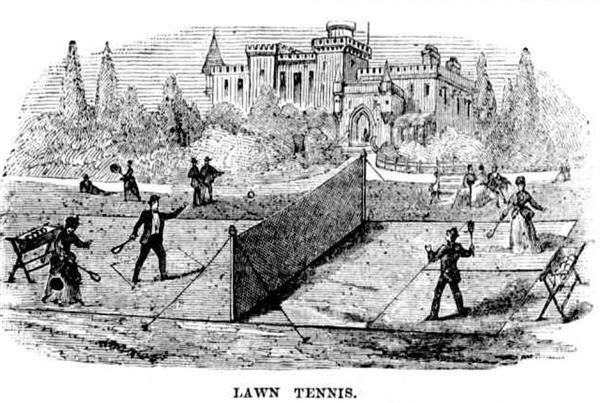
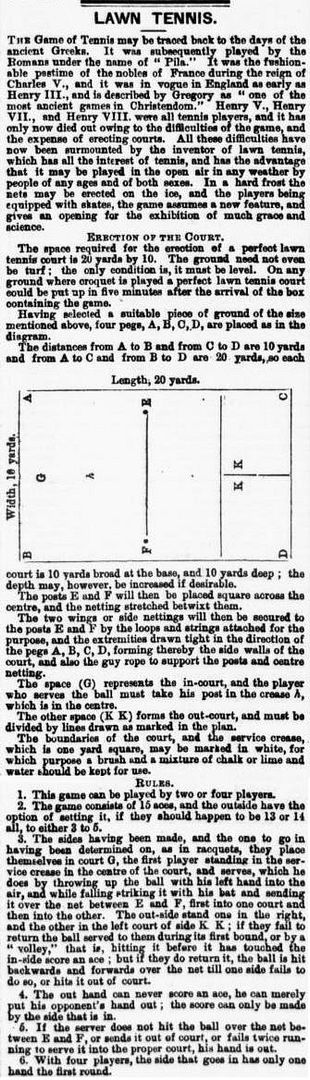
Lawn tennis explained 1874Tennis was established in the UK throughout 1874 thanks to the marketing genius of Major Walter Wingfield, who created the first boxed sets of portable lawn tennis equipment with rules for play on an hour glass shaped court. His brand name for this new game was “Sphairistike” which perhaps wasn’t a great choice since no-one found it easy to pronounce. The MCC took great interest in the early game and wished to reduce confusion surrounding the rules and scoring and working with the Major published a new set of rules based on real tennis scoring, whilst still keeping the hour glass court design.  Having adopted lawn tennis in 1875,  The All England Croquet Club decided to conduct the first major tournament in 1877 (Wimbledon)  and further changed the game by moving to a rectangular court layout .

Tennis equipment would have been purchased from any number of companies already making and selling Royal Tennis racquets at the time and tennis sets would have made there way quite rapidly to the colonies of USA and Australia. Royal Tennis had been played for some hundreds of years and in 1875 in Hobart the first court was constructed and the first English professional arrived, so marginally in Australia, both games found themselves being played at much the same time. I can easily imagine these professionals packing a set of the all new outdoor “lawn tennis” sets. When we started our history of lawn tennis in Australia journey we were unsure if we would find early pointers to tennis arriving here. Luckily, to the left,  we found this article published in the Sydney Mail, Saturday 26th September 1874, in the same year as tennis was launched in the UK by Major Wingfield. News did travel quickly even then. The article from Sydney may well have been shared with other state newspapers, but it clearly establishes the opportunity for NSW sporting retailers already  selling UK/French sporting goods to commence importing the new tennis sets mentioned in the story. Another factor in the spread of tennis was  due largely to Wingfield’s connections with English aristocracy and the military. The Prince of Wales and his family were one of the early buyers of a Sphairistike set and were reported in later years to be extremely competent players.  As the focal point for Australian audiences interested in emulating royalty at home,  this would no doubt have promoted the right “image” for the game. Newspaper articles and stories from home no doubt included mentions of this new game from the 1876-1877 period. Thanks to tennis historian, Clive Oliver, we have learned much about the arrival of tennis in Melbourne which has been published in the book ‘Amazing Grace’, The History of Grace Park Tennis Club. From this book  and supported by Melbourne Cricket Club (also MCC) minutes, we know that a visiting UK player to Melbourne, found a set of tennis equipment in the confines of the MCC store room which in 1877 had remained unused. We also know that this gentleman Mr Robert Balfour-Melville was the brother of a UK  champion tennis /golf player and was clearly well trained in the art of tennis.  Some local Melbourne families already had asphalt courts in 1877 and their skills both surprised and challenged Belfour-Melvilles prowess on the court. Clearly the Melbourne players had developed their skills over a couple of years you would think?  A sale of the Upper Toorak property of ‘Tooronga’ owned by Colonel Ward in May 1876 included the assets lawn mower, roller and lawn tennis which supports the early adoption of the game.  Colonel Ward was the head of the Victorian Branch of the Royal Mint so no doubt was an influential member of Melbourne society at the time.  The popularity of the game in Melbourne comes from an 1889 article identifying that Melbourne and suburbs had upwards 150 courts with the prestigious suburb, Toorak, having 32 asphalt courts. From Queensland, we have found that a private citizen introduced the Sphairistike game in August 1876 followed quickly by the establishment of a club, then clubs and competitions soon followed. See the Queensland section for a wonderful recount written in 1888. From an article published in 1878, the Adelaide Lawn Tennis Club, connected with the Cricket club, was granted permission to use a portion of the oval during winter upon payment of a subscription and that all players were members of the association. The club may well have started in late 1877. The Adelaide Archery Club also offered tennis as a substitute for shooting in 1878. The Wimbledon Museum advised that they have in their possession Major Wingfield’s Day Book, listing all the tennis items that French & Co (his manufacturer) dispatched from their depot in Churton Street, from 6 July 1874 to 26 June 1875. There was no listing of equipment bound for the USA or Australia mentioned so while there was probably no direct order fulfillment, it may well have been a family member returning from England loaded with an array of  trunks of new fabric, fashion, furniture, household items etc that were currently not available in Australia. At the end of the day we are really unsure who brought in the first Lawn Tennis sets into Australia although the strong contenders would include the professionals from the UK who arrived in Hobart in 1875 to coach and manage the newly constructed  (Royal/Real) Tennis facility.  Of course, the well established cricket clubs may well have got wind of the arrival of lawn tennis via the connection with the UK MCC.  Additionally, the UK sporting goods manufacturers already were selling them cricket goods and they were the ideal targets given they could readily afford to buy a set to be included in their next consignment of cricket equipment, they had the expertise to construct the courts and had keen and active members already playing other sports. The earliest documented story is the one about a Brisbane Grammar Head Master arriving from the UK with a set to use at school and in fact this lead to some great stories as tennis evolved in Australia. Note the net height was far higher in the original game.
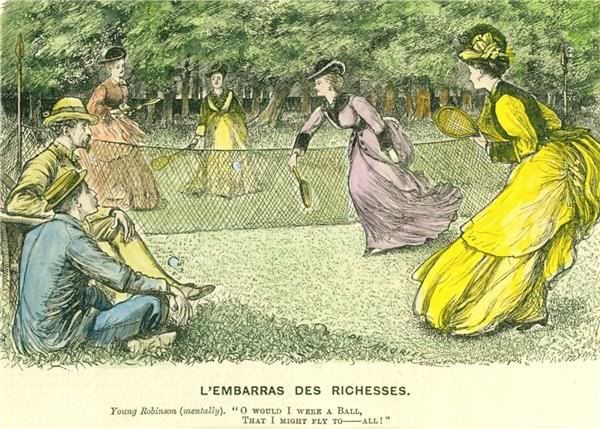
Punch Magazine 1874

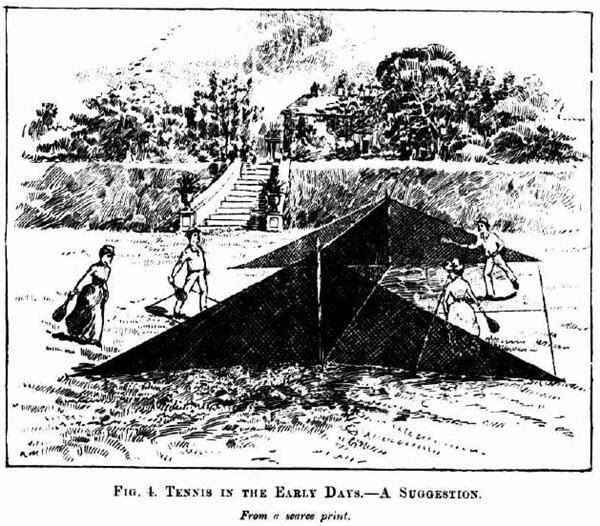
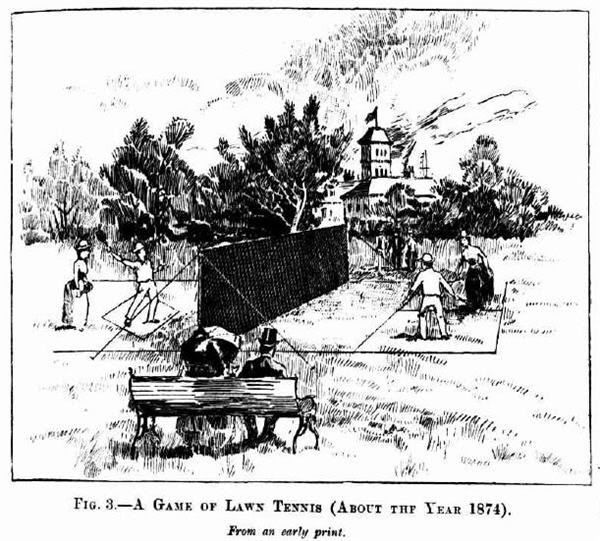
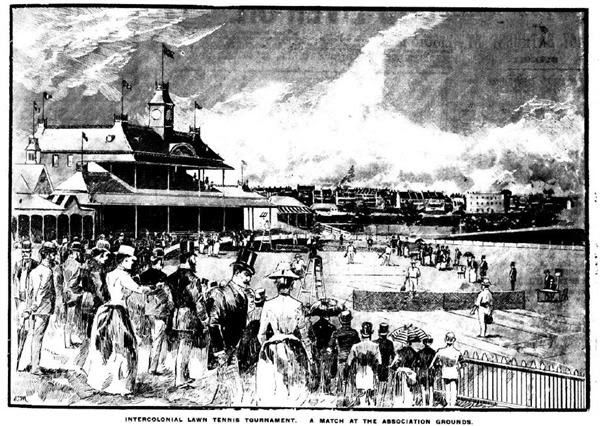
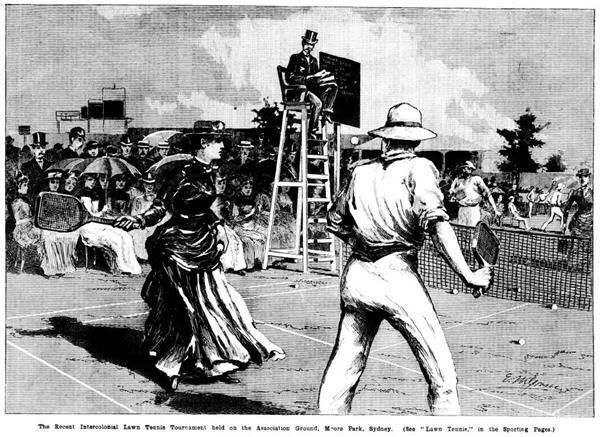
This illustration comes from Punch Magazine, October 10th 1874 and although originally black and white, some devotees  enhance the originals with water colour paints to create a more realistic effect.  Copies of this magazine would no doubt have been available in Australia to further stimulate local interest in the game. In Australia once main competition tennis began between states, the courts were erected on cricket grounds in Sydney and Melbourne. The intercolonial tennis matches attracted large crowds.
This ad above is from the Sydney Morning Herald on the 11th August 1876, and no doubt many sporting goods retailers followed suit.

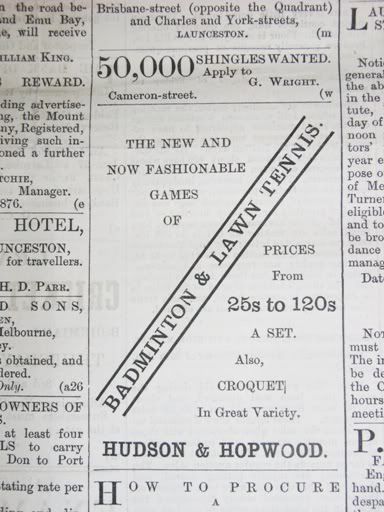
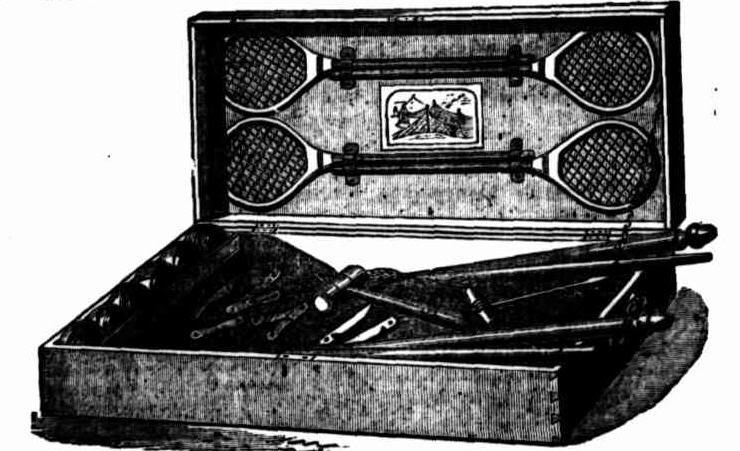
Above, and ad from The Examiner (Tasmania) on January 27th 1876, we have the earliest known retail ad for tennis sets in Australia. But, you have to admit the wording throws up some questions. Had Major Wingfield’s original tennis sets arrived earlier in 1874/75 and was this the now fashionable game. Or, was the unfashionable game perhaps referring to an earlier form of Lawn tennis created in 1872 at Leamington, UK (unlikely). Certainly, it seems from the Queensland experience that Major Wingfield’s set was the first opportunity for locals to experience the game. A third most likely option, supported by The Wimbledon Tennis Museum is that the Tasmanian ad must be referring to the new rules published in May 1875 by the MCC (UK) in a book titled ” The Games of Lawn Tennis & Badminton” which did make tennis and the rules of play more fashionable. This means that the colonies must have had exposure to the unfashionable Wingfield version before the new rules and style was adopted.     The drawing above comes from an 1882 ad for a retailer in Maitland NSW, named Robert Blair. Selling tennis boxed sets from 45s 6d, 65s, 75s 6d, 80s to 95s per set. There are some interesting features of this set. First, is that it seems to be a joint set containing croquet and lawn tennis equipment. Second, the racquets are diagonally strung and perhaps most intriguing is that the small drawing of the court looks like Major Wingfield’s design as charactersied by the side nets. See the complete ad under ‘racquet retailing’.
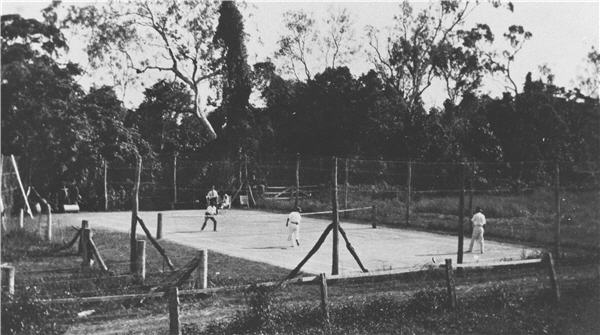
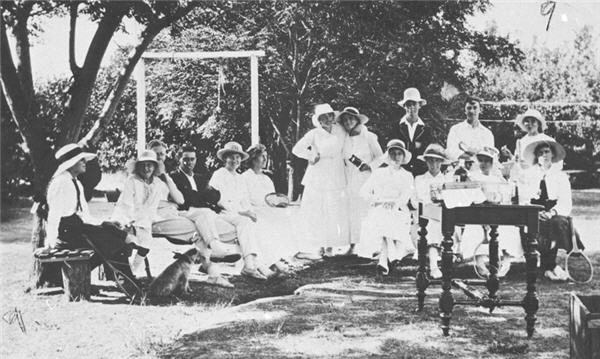
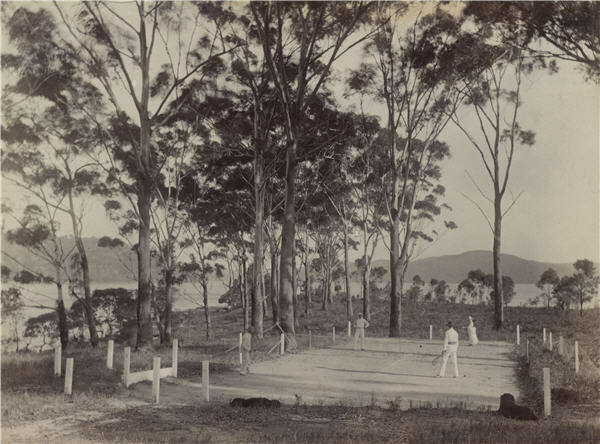
The following photos show some wonderful scenes where tennis courts were created in bushland settings all around the country.  These were downloaded via Trove Images from the NSW, QLD and SA Library collections. The last photo came from the NSW Dangar Historical Society library taken in 1887.

I am pretty sure that the large group shot even has a boxed set in front of them which is the only reference I have ever seen.
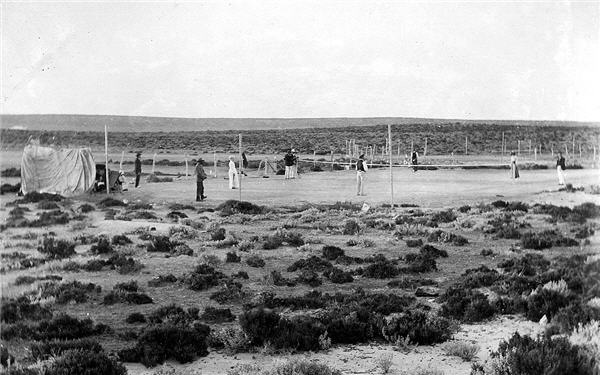
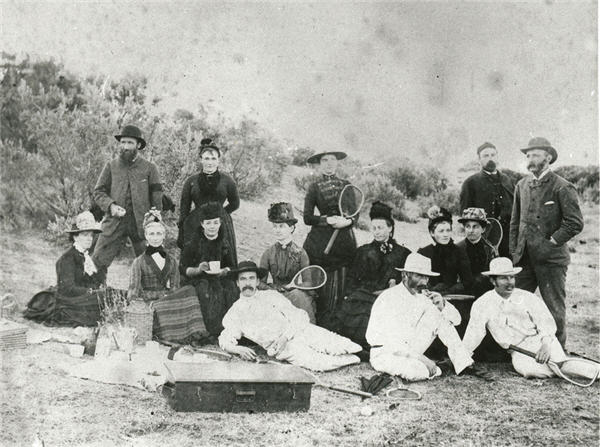
 

OLD TENNIS PHOTO EUCLA TENNIS CLUB SOUTH AUSTRALIA crop OLD TENNIS PIC WITH BOXED SET crop OLD TENNIS COURTS QUEENSLAND crop OLD TENNIS SOUTH AUSTRALIA AUSTRAL TERRACE crop Dangar Island in March 1887 tennis

Tennis Racquet Presses

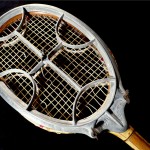
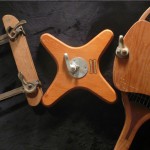
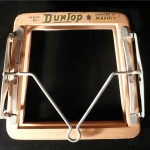
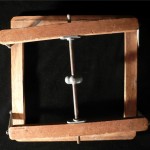
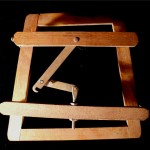
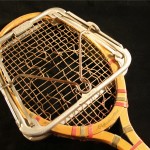
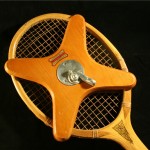
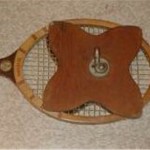
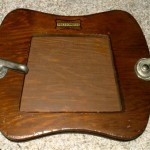
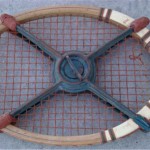
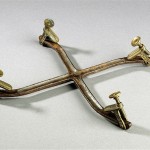
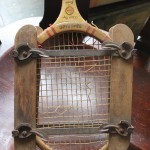
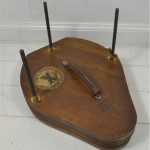
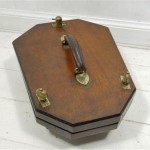
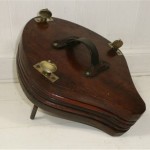
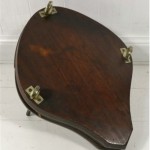
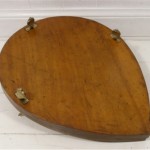
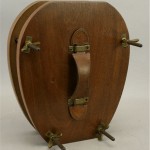
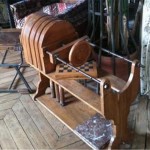
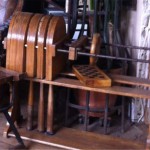
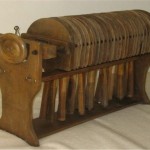
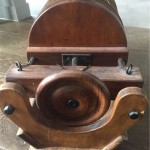
While creative design was certainly evident in the racquet shapes and construction methods, even the humble racquet press came in many shapes and sizes. Presses go back as far as the racquets themselves due to the fact that under enormous pressure from string tautness and combined with often damp or humid conditions racquets would warp or twist out of shape. Presses were essential for longevity of your frame and you will find many racquets have the caution printed on the butt cap, ‘ when not in use store in a press’. Although the ‘one press for one racquet ‘ system was predominant, some of the most highly collectable presses belonged to clubs which held multiple racquets for club players and many touring players had shapely 4-6 racquet presses featuring polished wood and large brass tightening screws.

Stringing Machines

Tennis Stringing was long done by hand using awls to jam strings into holes and using the plucked pitch of a string to test the tension.
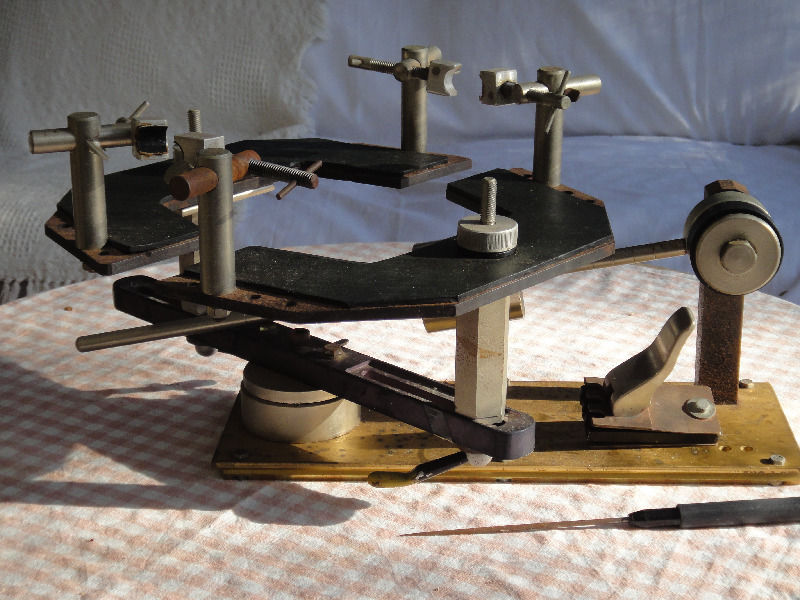
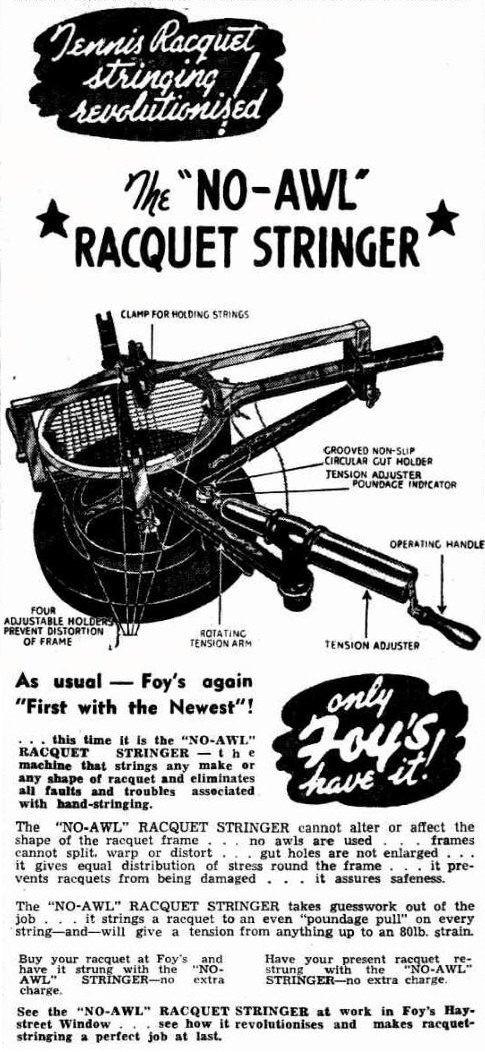
Recently we uncovered a fascinating and very early 1937 stringing machine that shocked us by its quite modern style featuring tension measurement and wind up adjustment.   The machine was called the “NO AWL” hence a very clever name.  It was installed into a Western Australian retail store called FOYS and was advertised as the “tennis racquet stringing revolutionised”.  At this point there is no other reference, no ads, no mention of maker or whether the machine survived past 12 months.
restringing 1933 WW 1

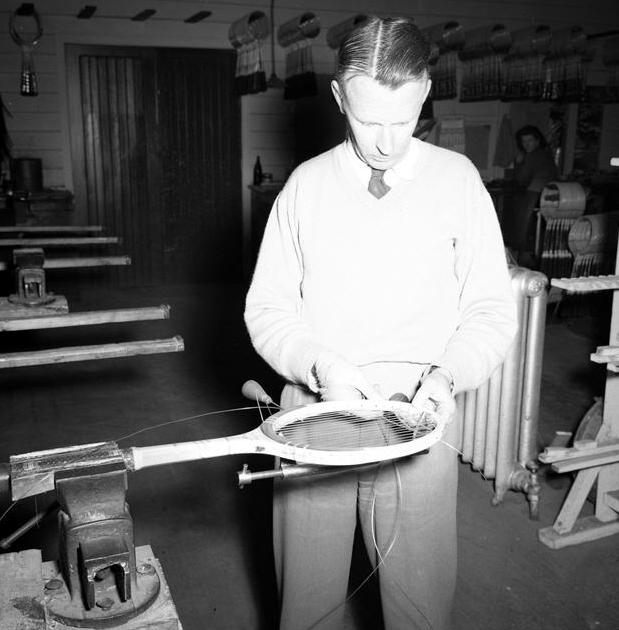
Stringing in the old days was done on a bench by hand as shown here ( Tasmania Library Alexander factory collection)
Then as now, players had there favourite stringers and many experts set up shop separate to the factory environment.

Alexander stringing AB71313371aaa

The creation of a stringing machine delivered  consistent results.

NO AWL TENNIS STRINGING MACHINE 1937

With little known about the above machine. it wasn’t until the 1950’s that Australian designers and engineers developed some more acceptable and portable methods of stringing.

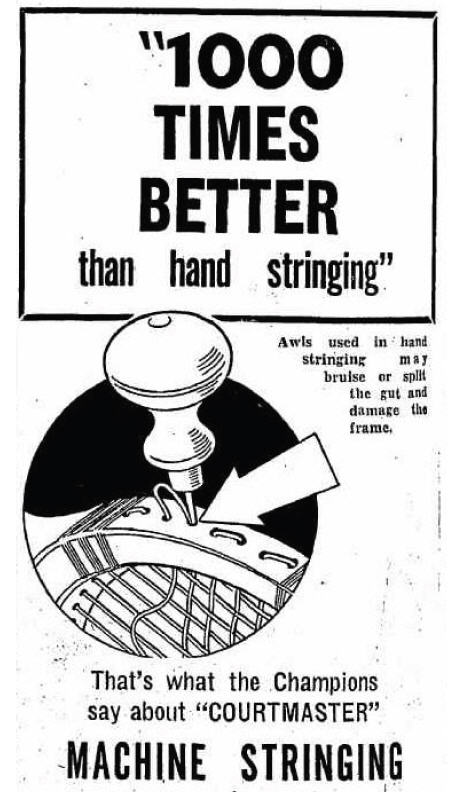
Again some more research is under way, but we believe that the drop weight stringing system was developed in Australia and if not, then most certainly the first bench top, portable dropweight stringing machine was developed by stringers/coaches the Strachan brothers. Another bench type version was also marketed by a gent named Bricker, but these were largely home made.  The Strachan model was called “The Courtmaster” and sold in the thousands.

The first ad comes from a 1954 Davis Cup souvenir noting that the product, called the ACE, was being sold overseas.  The ad from the Argus in 1955 and below this a new improved model.

Interestingly, if drop weight stringing was a new development, it didn’t make it into the ad, but consistent tension was a major benefit.

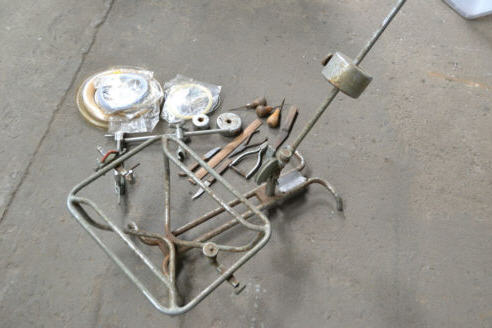
Underneath these photos are some great shots of a very early free standing OLIVER model which were also manufactured in Australia and were sold worldwide.

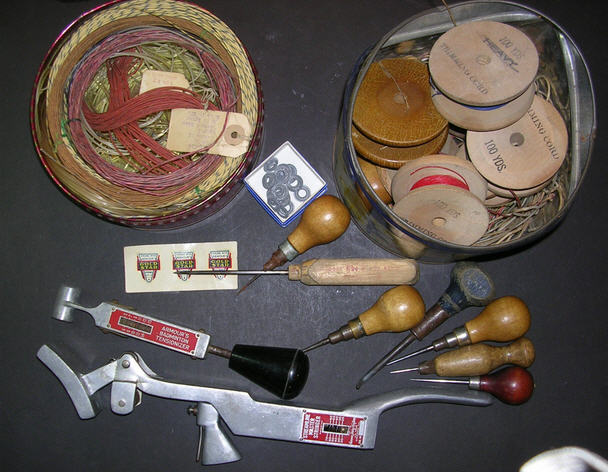
The set of awls and pliers makes for an attractive display enhancement.

ace stringing machine

courtmaster 1

strachan1950's stringing machine

The Courtmaster sold by Strachan Bros. a lightweight unit you could take to tournaments.
It was a drop weight system with clamps.


Master Tennis Racquets

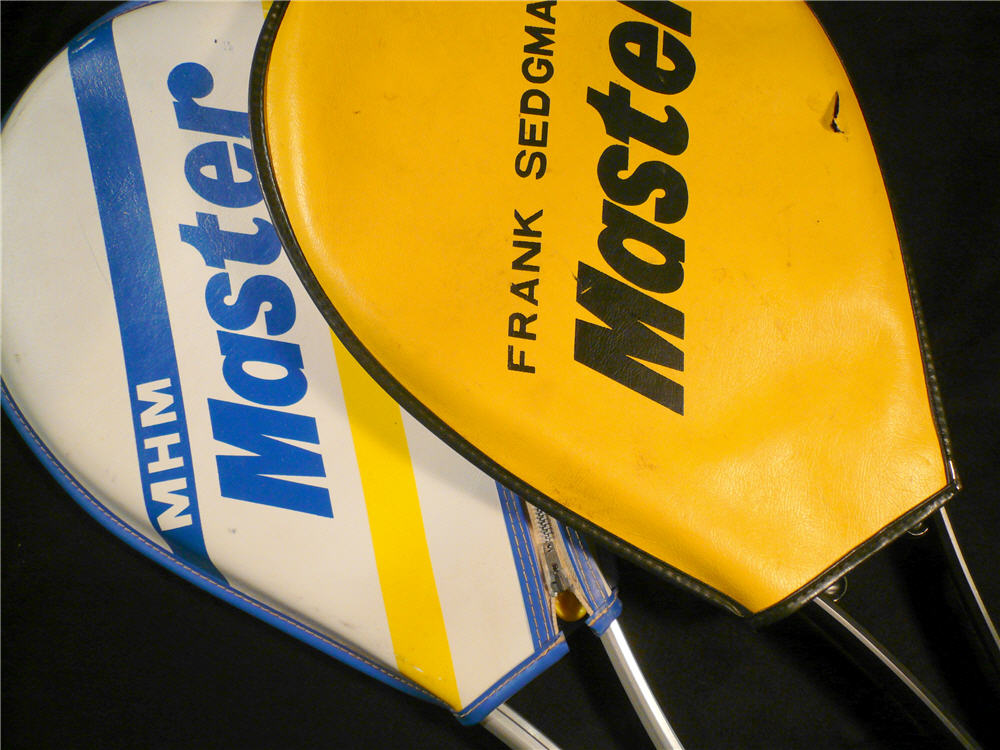
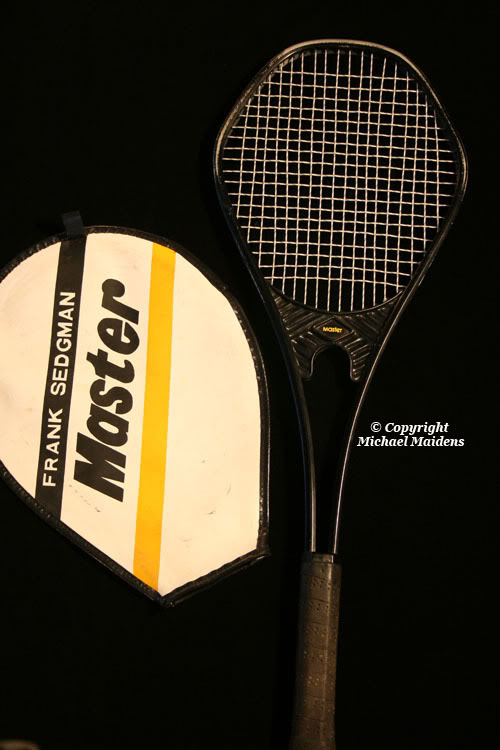
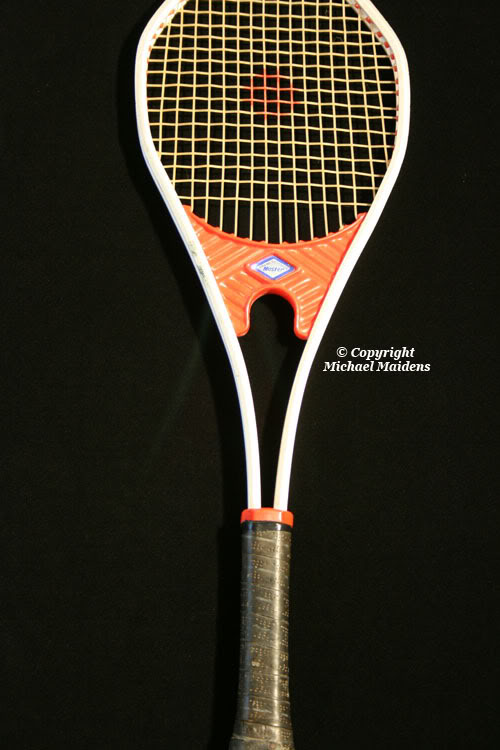
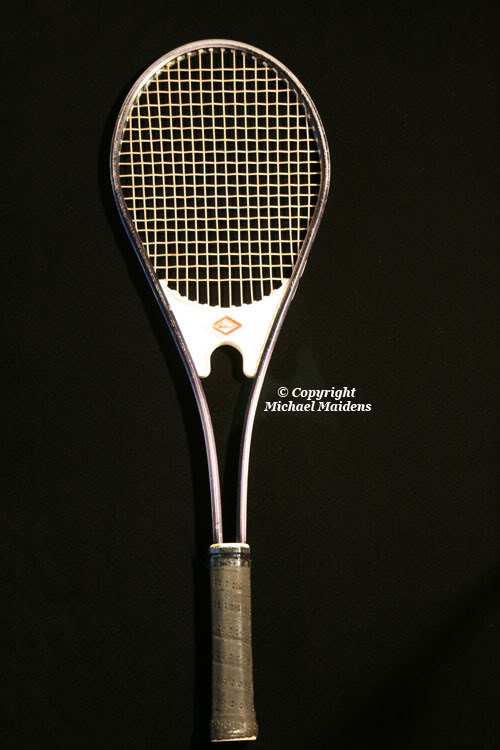
Master Tennis Racquets was established on the Gold Coast in 1977 by Peter Maidens and Wayne Hawker. Together they sourced and manufactured the entire racquet in a small shed at Southport.

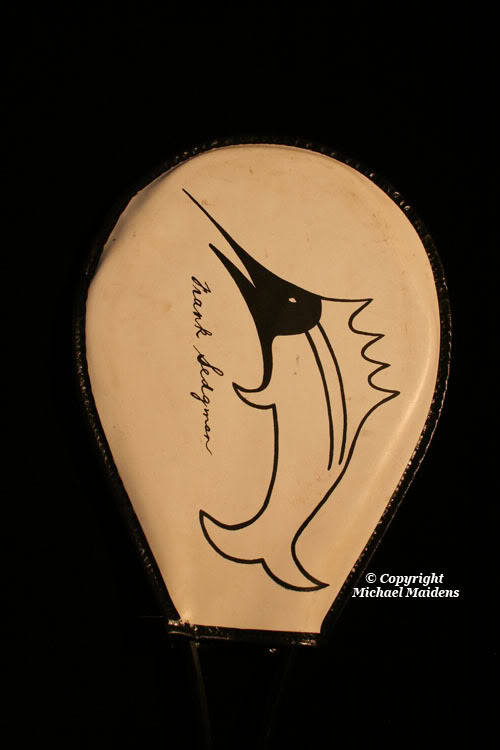
Frank Sedgman endorsed the brand and you will find Tennis Education books at this time in which Frank is pictured using the Master racquets.

The company made a variety of colours and shapes as seen in the photos below.

It was the last locally made brand as by the late 1980’s all the majors had moved production off-shore.


Master Range GC Qld (11)

master qld 2016 (9)

master qld 2016 (1)

master black

master cover

master blue yellow

master red throat

master white throat

History of the Davis Cup

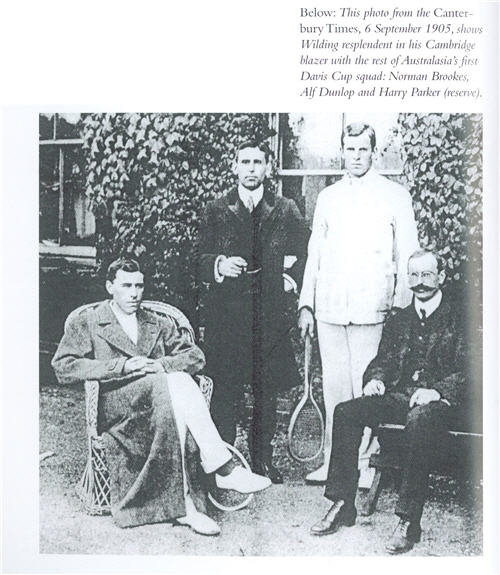
The Davis Cup has long been held as one of the finest events a tennis player can be involved with because it is at a level above the individual. It is the pride of the country, the team and the passion for the game. In 1900, when US player Dwight Davis first donated the trophy and gave his name to a tennis challenge between countries, who would have guessed from the handful of participants back then that the Davis Cup would be hotly contested by literally dozens of countries, so many in fact that the competition was forced into zones just like the World Cup soccer event. To be sure, Australia has done well over the years in the Davis Cup and for this initial stage it is only right to begin in 1905 when the very first Australians and New Zealanders were treading a path to Wimbledon and our first challenge for the Davis Cup. The following shot comes from the book by Len Richardson “Anthony Wilding – A Sporting Life’ kindly supplied from a supporter Virginia Crawford in New Zealand.

After the formation of the National Lawn Tennis associations in both countries it was agreed that an Australasian team could compete and with Norman Brookes, Alf Dunlop and Tony Wilding (NZ). They were defeated in the final round by USA who then lost to the British Isles 5-0. For the British Isles this was a golden era for tennis with the domination by the two Doherty brothers, Reg and Laurie. In 1906 the Australasian team lost to the USA 3-2 with the team of Wilding and L.O.S. Poidevin but 1907 would be different. At this time Wilding and Brookes were finding success. 1906 saw Wilding win the second Australian Championship and Brookes actually won the Wimbledon singles in 1907, the first Australian to do so and also the doubles title with Wilding. In the early Davis Cup challenges, the winning team from the previous year only played the final ‘Challenge Round’ match against the best team from all the challenging countries. The British Isles had been dominant since 1903, however in 1907 Australasia defeated the USA 3-2 in the final round and then went on to the Challenge Round to defeat the British Isles 3-2 in two very hard fought matches.

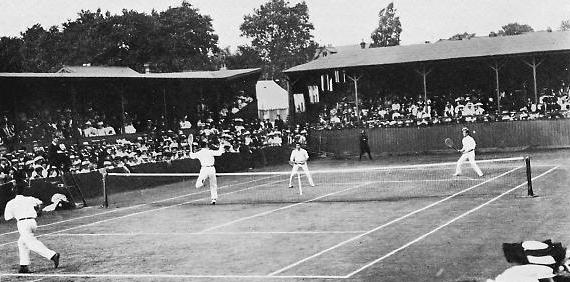
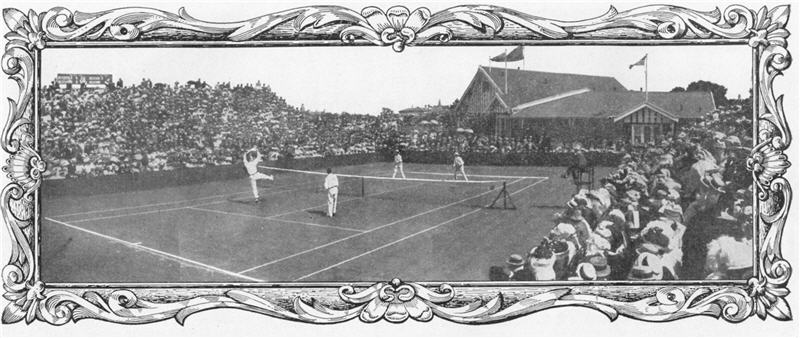
To the victors came glory via public recognition and the opportunity to defend the cup on home soil. In the 1908 Challenge Round, Australasia played the USA in Melbourne at the then named Warehouseman’s grounds (Albert Ground- St Kilda Rd). Once again Brookes and Wilding teamed against American’s B.C. Wright and F.B. Alexander in another close 3-2 affair in front of a 5000 plus gallery.

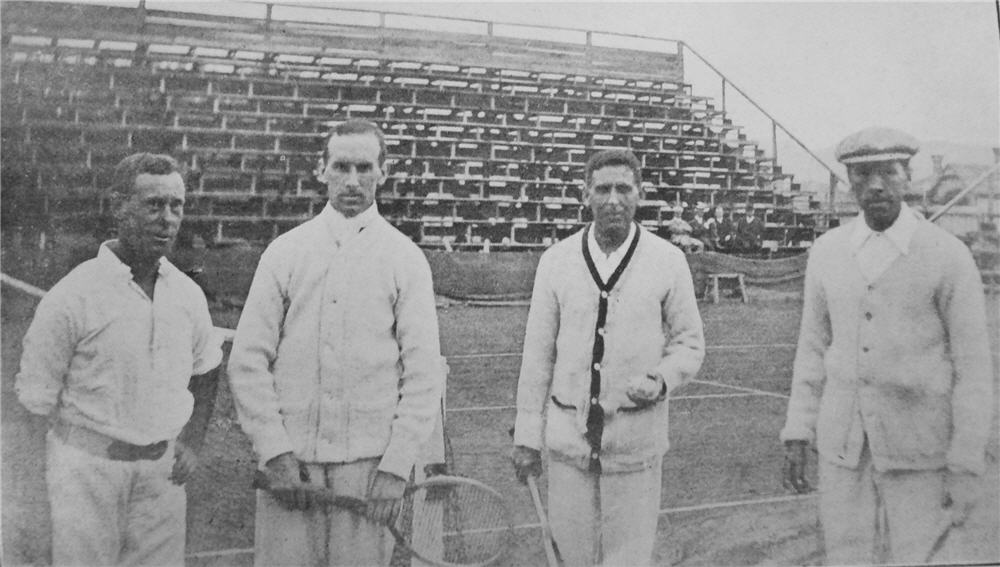
This is one of the only team shots of the 1911 team which played the USA in New Zealand. Anthony Wilding was busy in Europe and elected not to play. Left to right H.Rice, Rod Heath, Alf Dunlop & Norman Brookes.

This photo appears in the book “Lawn Tennis in Australasia” by Austral (R.Kidston)

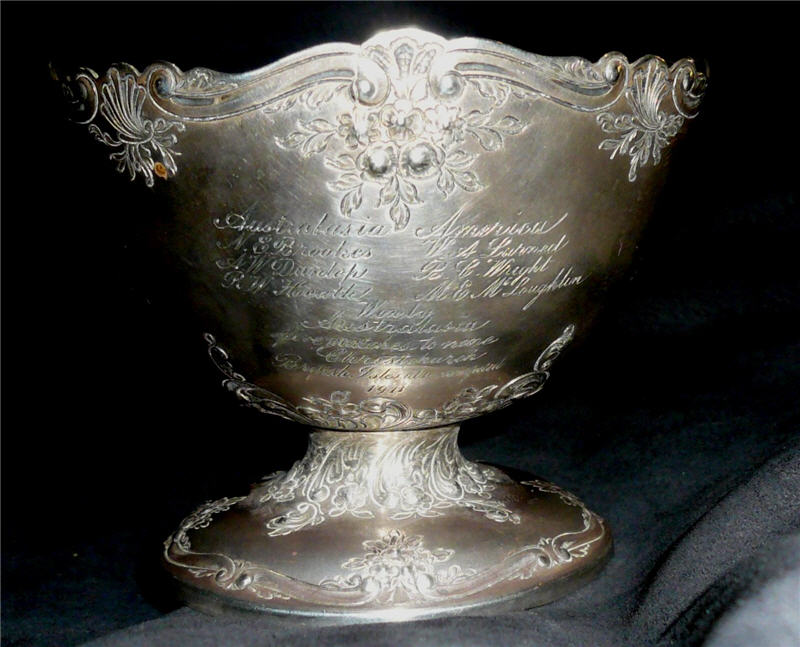
The actual Davis Cup which belongs to the Alf Dunlop family.

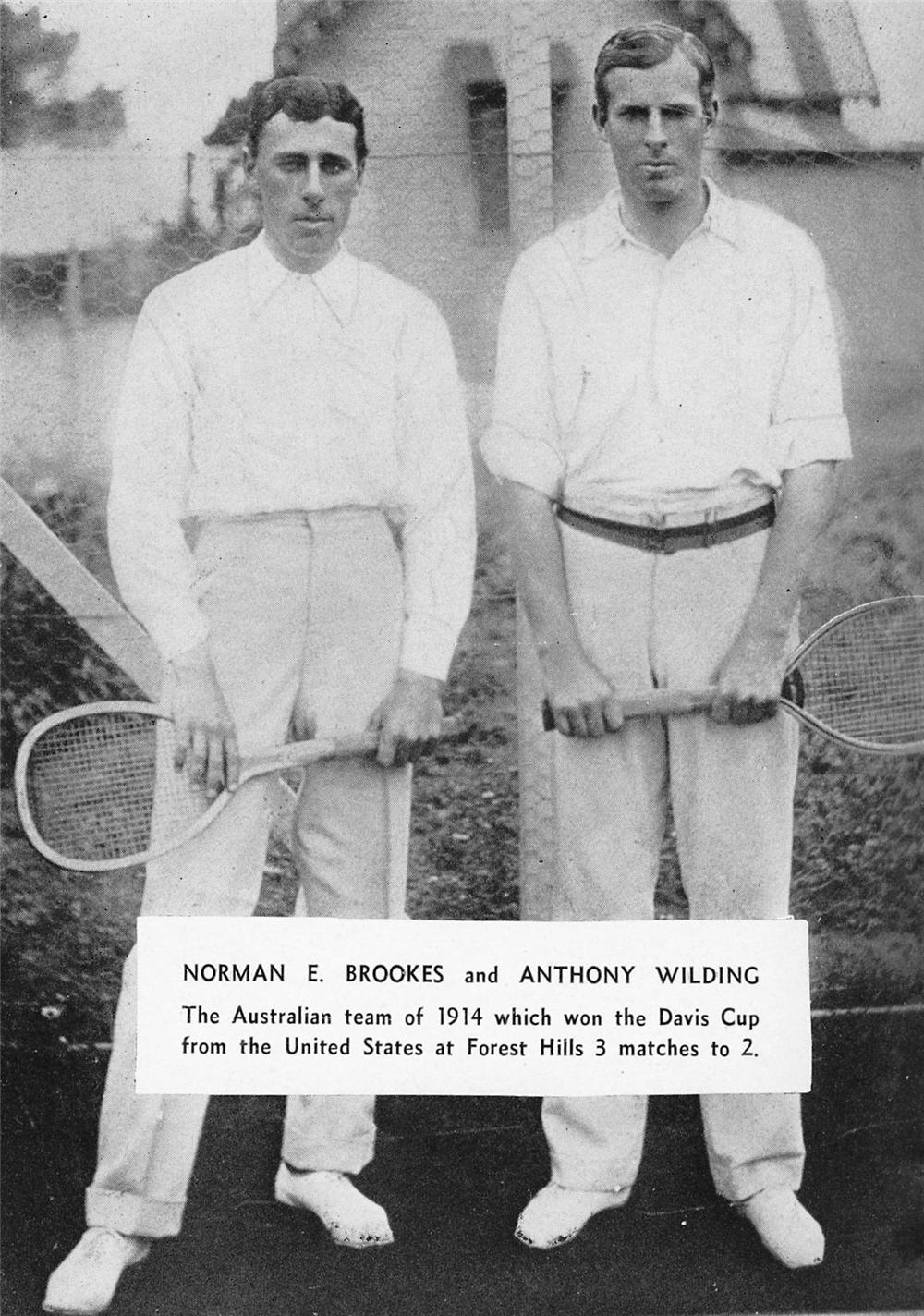
Here is a shot of the 1914 Davis Cup team,  from Len Richardson’s book about Wilding

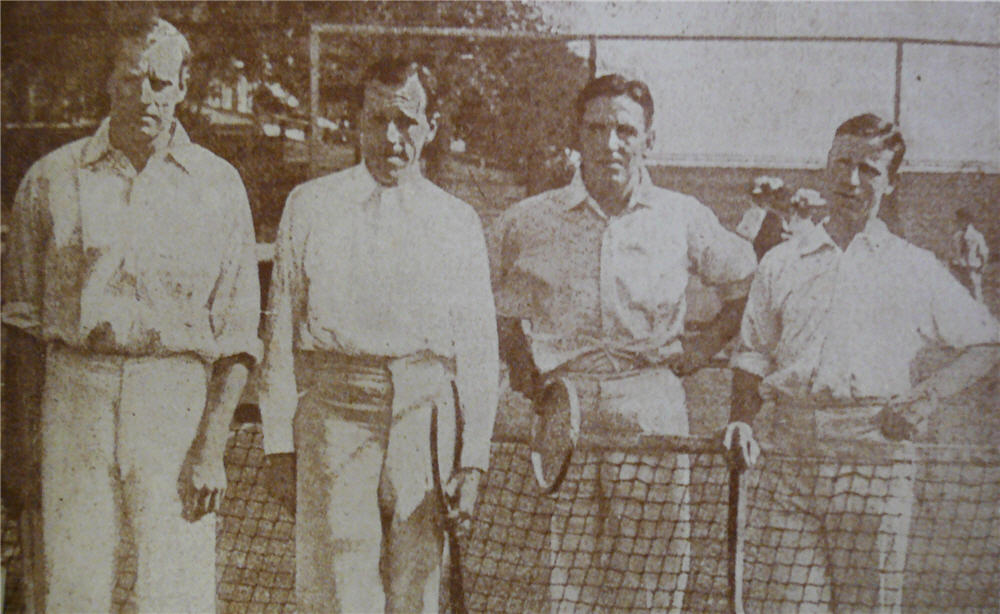
The complete 1914 Team with Alf Dunlop and Stanley Doust

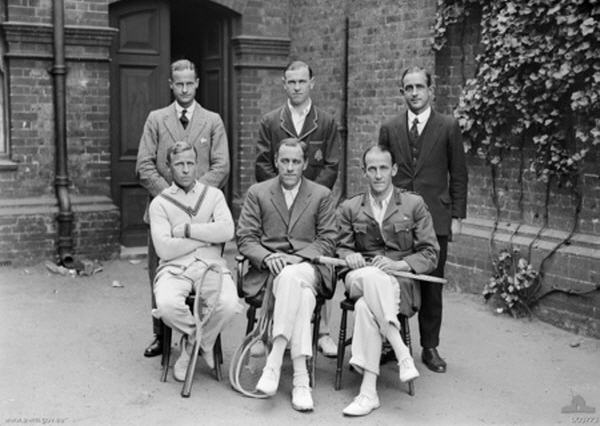
The 1919 team with fellow Australians.  Back R.V.Thomas, Gerald Patterson, Randolph Lycett, Stanley Doust, Norman Brookes and Pat O’Hara Wood Photo courtesy of Australian War Memorial ID D00773

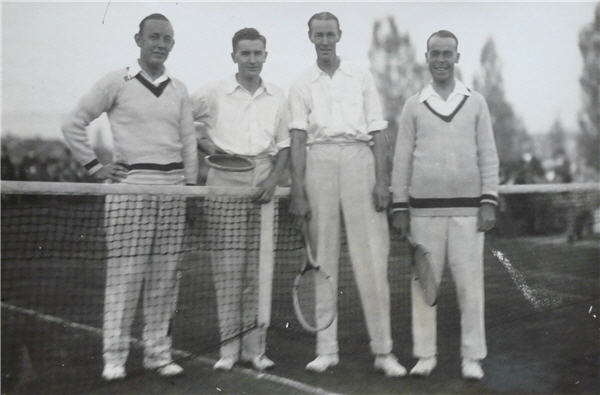
The 1923 Team with J.B.Hawkes, Ian McInnes, J.O. Anderson and R. Schlesinger

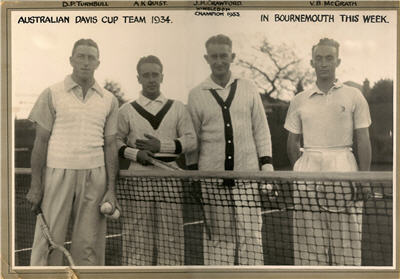
The 1934 Davis Cup Team Don Turnbull, Adrian Quist, Jack Crawford, Viv McGrath

The 1938 Team Adrian Quist, Harry Hopman, Len Schwartz and John Bromwich

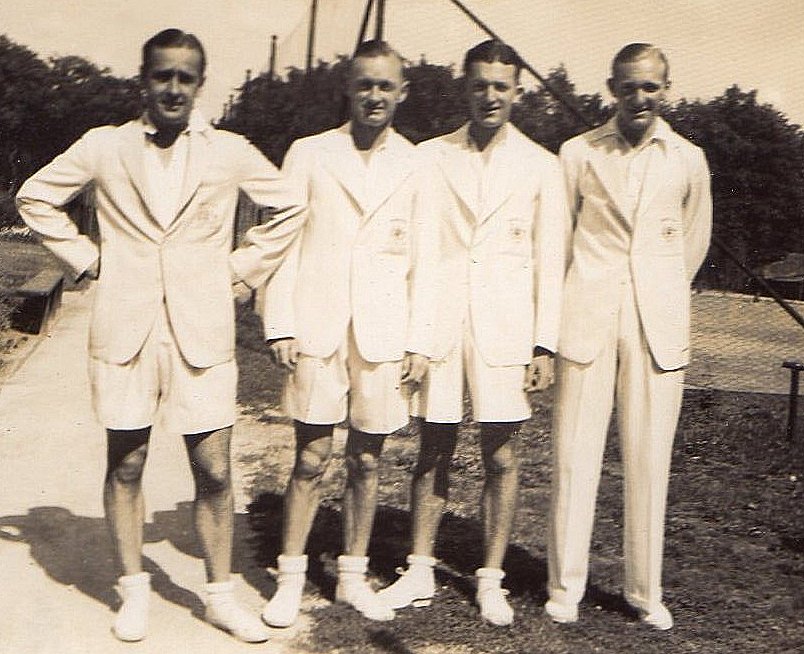
The 1939 Davis Cup team which won in the USA Adrian Quist, Viv McGrath, Jack Crawford and captain Cliff Sproule

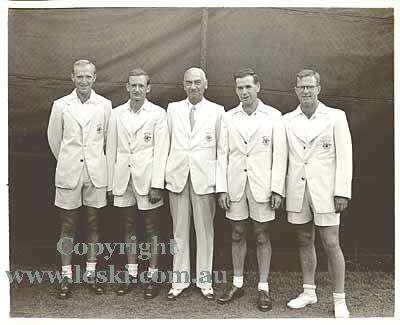
The 1946 Davis Cup team John Bromwich, Geoff Brown, Dinny Pails and Colin Long Photo courtesy of Leski Auctions.

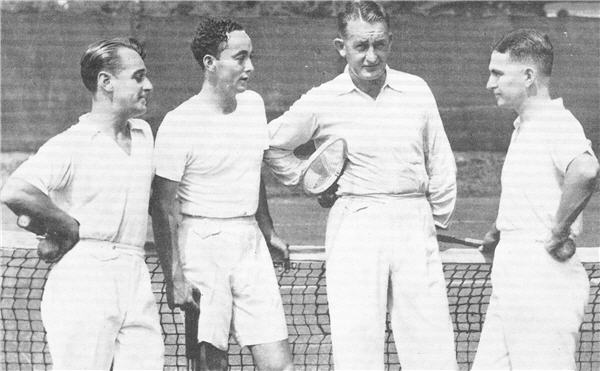
1947 Team , Colin Long, Dinny Pails, JohnBromwich and Geoff Brown

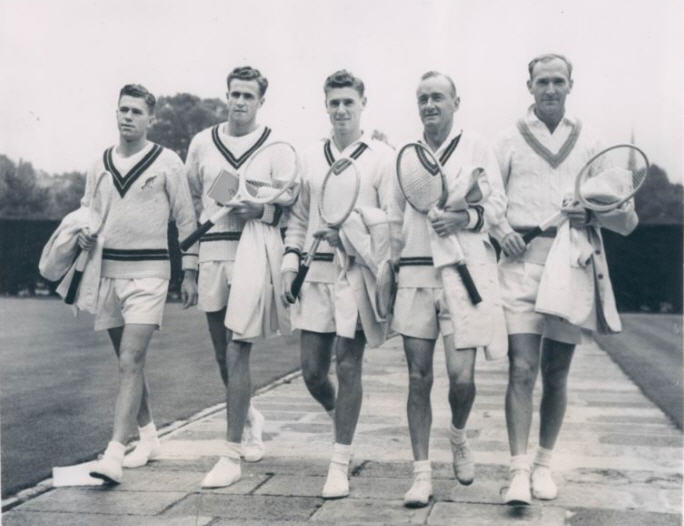
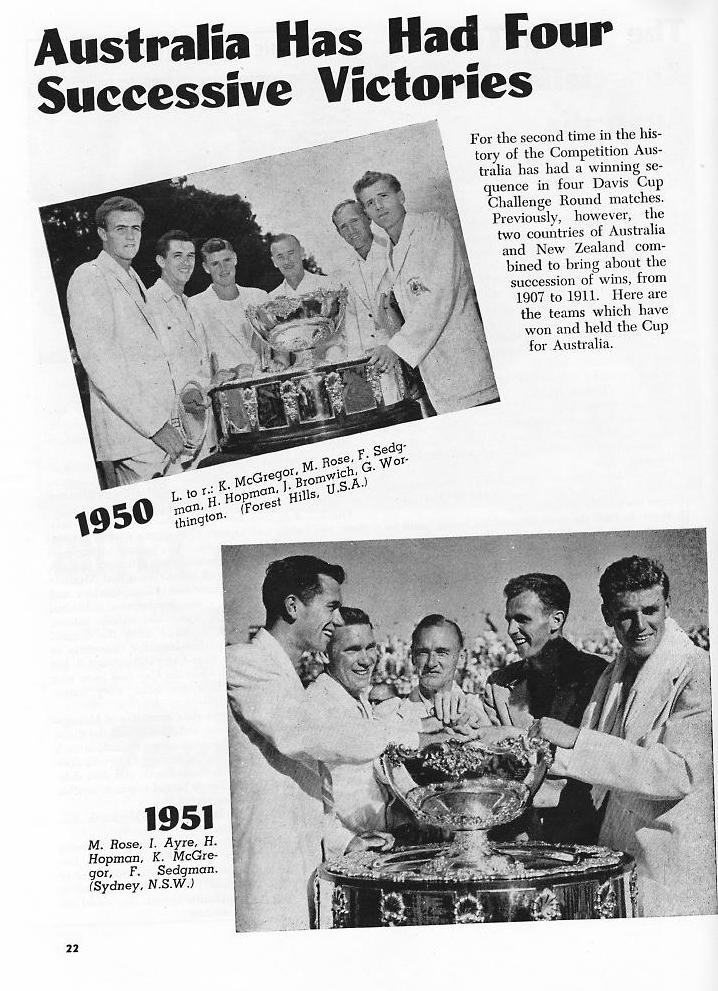
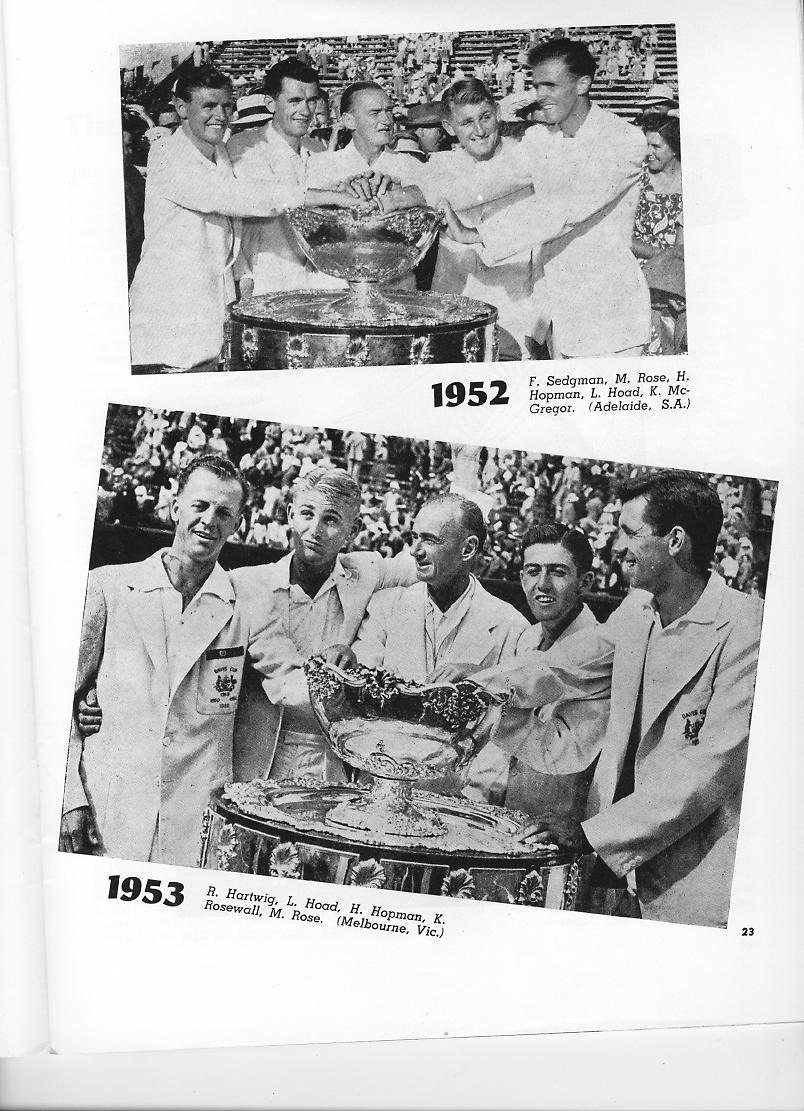
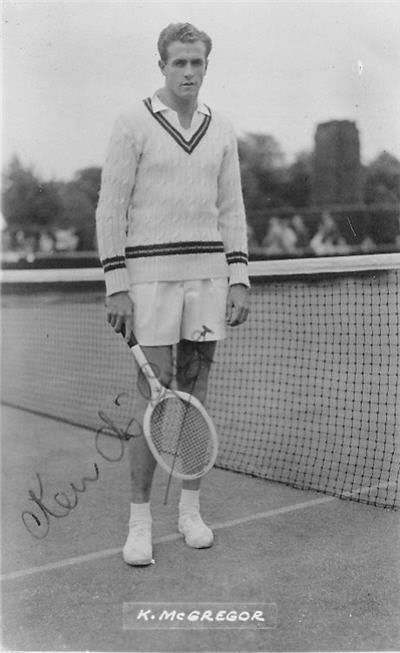
Harry Hopman and Australia were very lucky to bring on the talents of Frank Sedgman and Ken MacGregor in the 1950’s George Worthington, Ken, Frank, Harry, John Bromwich

Good fortune continued through most of the 1950’s and 1960’s

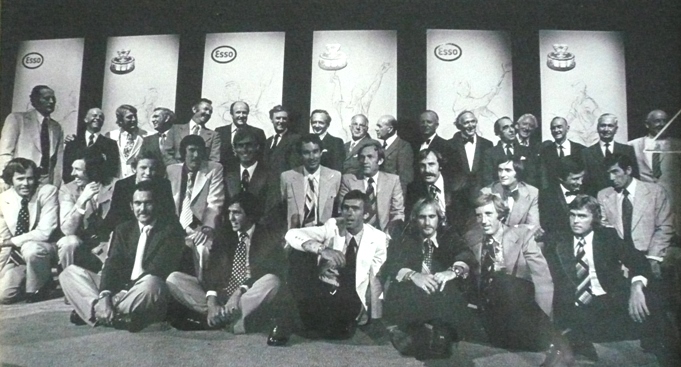
A very nice line up shot of Davis Cup players up to the 1970’s

Tennis Players

Below are some photos of well known Australian Tennis Players in Alphabetical Order. We will continue to load photos as they become available.Please also follow the links to player profiles. Enjoy!


J.O.Anderson (Right) playing against Tilden  – 1920’s

Mal Anderson

Mal Anderson circa 1960’s


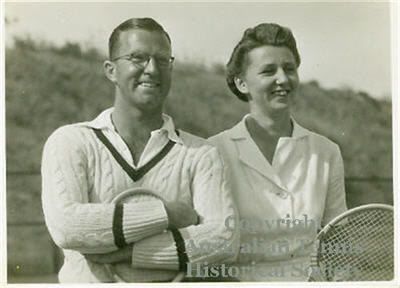
Tennis great Nancye Bolton (Wynne) with Mixed Doubles partner Colin Long.
A great combination in the 1940’s with many Australian Mixed Championship titles.

Some great lady players from 1949 Australian Championships
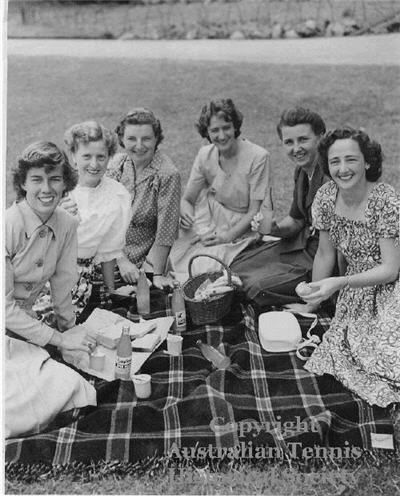
L to R Doris Hart (USA), Nell Hopman, Thelma Long, Joyce Fitch, Nancye Bolton,Marie Toomey


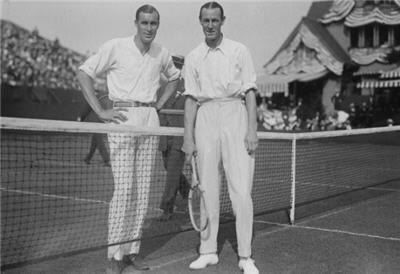
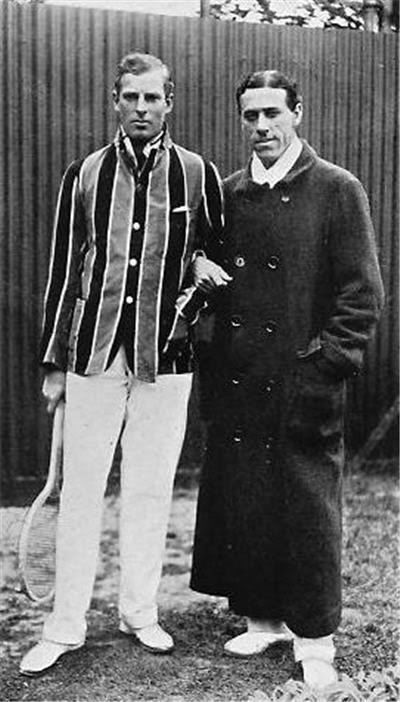
Brookes & Wilding

Anthony Wilding NZ & Norman Brookes won the 1907 Davis Cup and Norman was the first
international player to win Wimbledon. Anthony went onto win it 4 times straight between 1910,1911,
1912,1913 and then lost to Norman in 1914.  Anthony was killed in WW1. Norman went onto become
president of the Lawn Tennis Association of Australia for many decades. The Australian Open Men’s
Singles Cup is named in his honour.


 John Bromwich

John Bromwich late 1930’s and 1940’s Davis Cup and multiple tournament winner with Adrian
Quist in doubles in particular.

Ashley Cooper

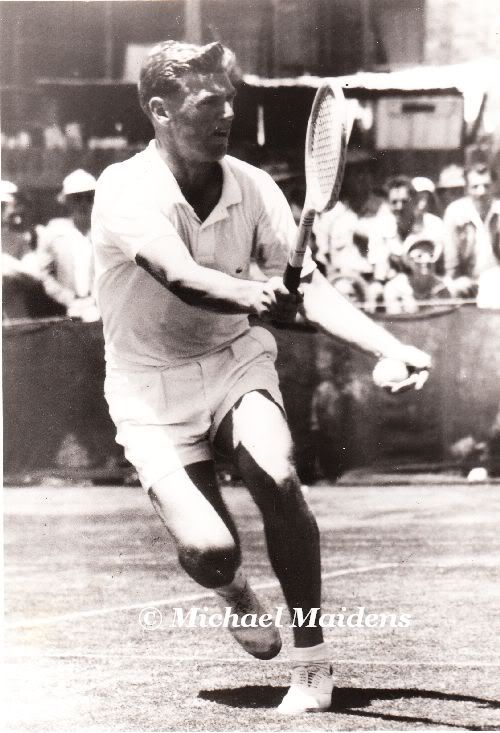
Ashley Cooper makes a backhand return to Bob Howe in his semi final.
20th of March 1957


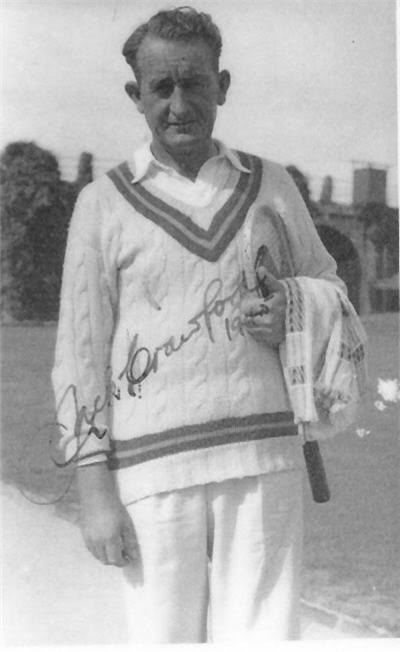
The great Jack Crawford who won Wimbledon in 1933 to again excite a nation.
Plus he won more Australian and State titles than any other man.
Edward Bury Dewhurst

Edward Dewhurst played as a young man against Brookes in the late 1890’s.
He went to the USA to study dentistry and while their won many tournaments including the presitigious Intercollegiate Indoor title.  An author, he wrote “The Science and Strokes of Lawn Tennis”


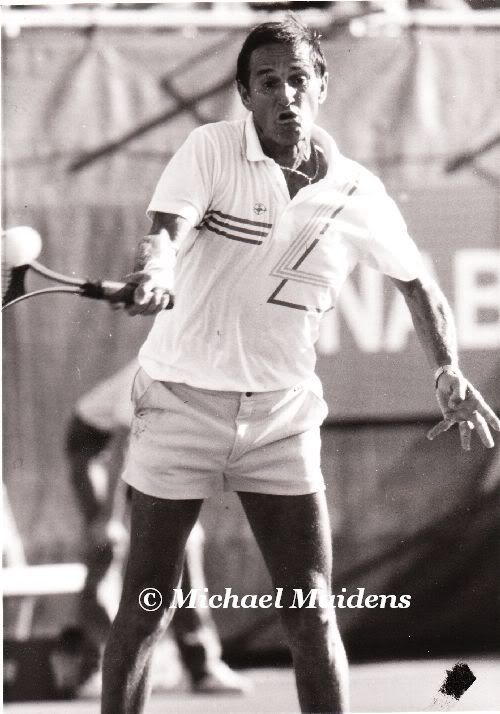
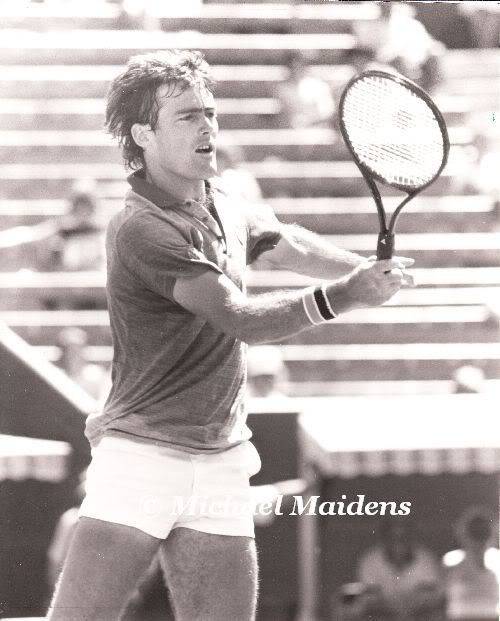
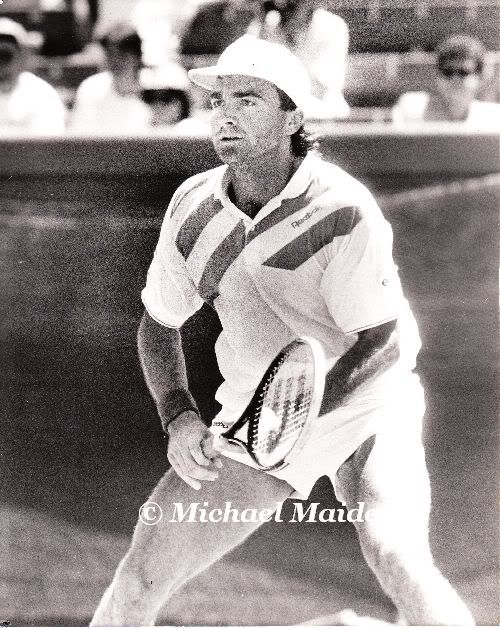
Mark Edmondson

 Roy Emerson

 John Fitzgerald

Victorian Open Kooyong 

29th of February 1984

 Neale Fraser

Neale Fraser


Joan Hartigan mid 1930’s 3 time Australian Champion

Ken Rosewall and Lew Hoad were dominant in the 1950’s as talented 18 year olds
NAA1805CU43 National Library

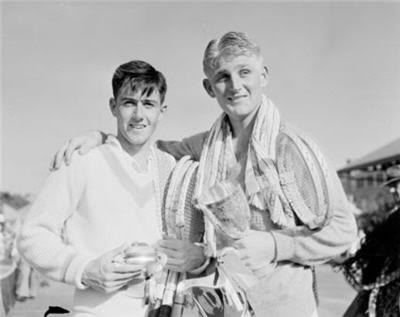
Ken played his best tennis with Frank Sedgman and together they won
the Grand Slam of doubles in 1951 plus others and solid Davis Cup performances.


 Wally Masur


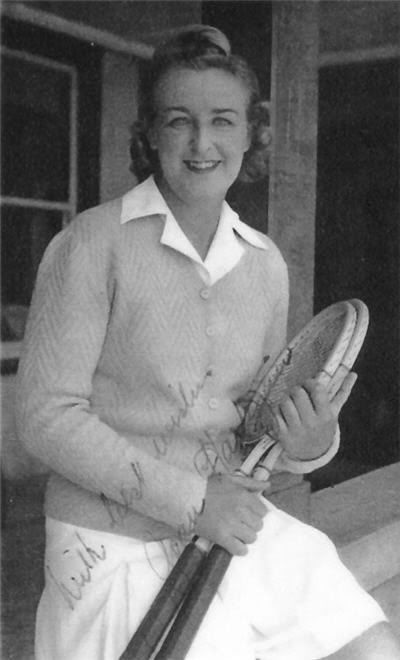
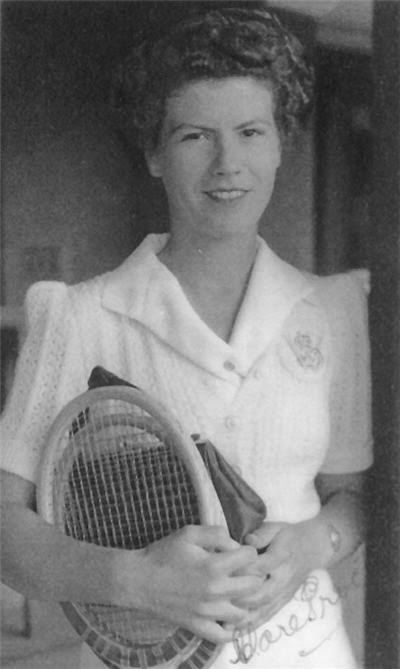
Clare Proctor
Mid 1940’s player with Nancye Bolton et al.

 Frank Sedgman

Frank Sedgman had this shot from Ken Rosewall “well covered” during their match.

Sedgman will meet McGregor in the final tomorrow.

Dudley Webb

Dudley Webb was a major player in the pre 1900 era when the major competitions were a few key tournaments  and the all important Intercolonial clashes.  Dudley started his intercolonial career in Victoria and then moved to play for NSW.  While their he won major tournaments.In Victoria Ben Green became the equivalent player and the battles between them were watched by thousands.

Wooden Racquet Construction

The first wooden racquets which formed the Wingfield set were actually a more symmetrical design with concave throats, but as demand for lawn tennis racquets grew rapidly other makers elected to follow the Real tennis lop-sided shape due largely to the existing players of real tennis looking for a similar design for lawn tennis.

To gain some advantage over their competitors construction design, string patterns, handle styles all developed down many paths. Surprisingly, many designs we see today have all been done before. This photo below represents the design of Lawn Tennis racquets from inception in 1874 to 1889. Courtesy of Rolf Jaeger and his friend in the UK who owns these examples, it provides the collector with a much better reference point for the evolution of the design.  The lob sided racquet design originally came from the Real Tennis styles, but soon the more vertical design won preference.

wimbledon visit 2016 (12)

early tennis racquets Chris Elks


From left… a (lightweight) lobbed racket, circa 1876, by Henry Malings. a Sphairistike racket by French and Co., circa 1875. a (larger framed) lobbed racket by Jefferies, circa 1878. and a more modern (in 1889) square headed and laminated racket by F.H.Ayres, circa 1886.
This lovely Jeffries UK model is a trophy racquet featuring a silver collar dating it to October 1879. It also features looped stringing.

JEFFERIES 1879 CHELTENHAM TROPHY RACQUET (5)
Throughout the 1880’s  we see that most designs featured the convex throat and although flat top models became the rage up until the mid 1890’s there were a host of inventions surrounding grip types, stringing patterns and we even have the first all metal tension adjustment frame created in 1887. The early wood racquets of the 1870’s were often made of one solid piece of timber bent into shape after being submerged in cold water and softened further with steam or boiled water. The timber could then be bent around a shaping block bringing the two end pieces together which would form part of the handle. The throat piece or wedge were often made of harder woods. Given the stress factors applied by the vertical strings and impact during play, wrappings were used to reinforce the throat and many early racquets also have a brass screw holding the joint in place. By the mid 1890’s the concave throat and oval shape became the market preference and the fancy stringing became more normal with exception of the very popular Slazenger patented double mains stringing on two of the mains only. The amount of innovation is quite staggering and the craftmanship exceptional.

Some additional design techniques used included the thicker bow shapes at the throat like the example below from a Harry C Lee Lightning model. The brass throat reinforcement was used by UK maker Jefferies who originally made the Wingfield Sphairistike racquets and sets. In the mid 1930’s we see the develpment of the famed Hazell Streamline (rhs) and slotted shaft models. Also in the USA in the late 1920’s we saw the Craven invention in two forms relating to tension adjsutment. The most preferred timber used was Ash, however may experiments were tried using a range of timbers. Ash when cut along the grain in the correct direction was an easy timber to bend. You can see the grain direction and width of the grain in the photos above. An Australian racquet maker relayed a story that English farmers used to plant a grove of Ash trees for the grandchildren’s inheritance, however as we moved into modern times the practice waned and literally the industry exhausted the supply of Ash forcing it to find alternate sources like Aluminium and steel.

wimbledon visit 2016 (58)

UK visit 2016 (153)

UK VISIT 2 (29)

wimbledon visit 2016 (54)

P1070308

P1070317

P1200130

lillywhite hazell shoot (66)

darsonval trio aa (4)

Arriving in Queensland

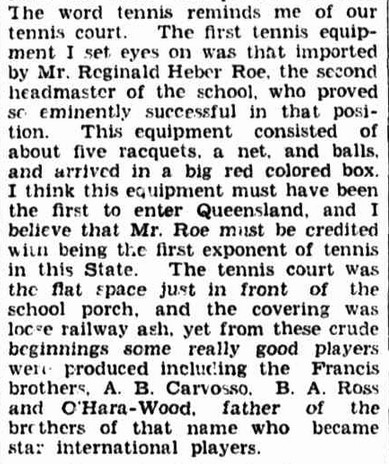
While we have been searching for information on the history of tennis arriving in Australia via some official sporting association whether cricket or croquet, this wonderful story from the 1888 Courier Mail has opened up the simple possibility that a visiting teacher may well have brought the first private tennis set with them for the entertainment of students.

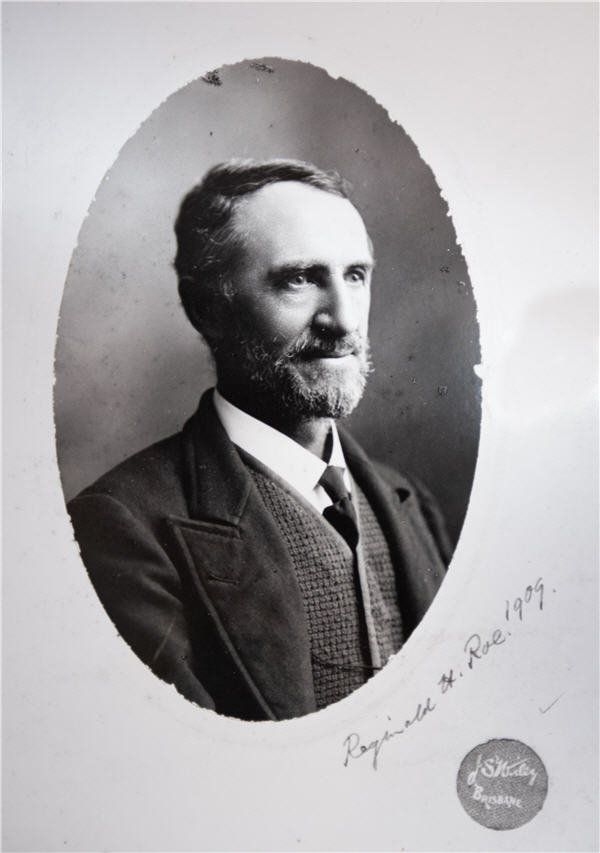
Here we have the first tennis game arriving to Queensland in August 1876, by visiting Brisbane Grammar Schoolmaster, Mr Reginald H.Roe. By comparison, in Tasmania, our earliest reference is January 1876 via a retail store ad, so sometime prior, what happened in Queensland may have equally occurred in Tasmania.

Interestingly from the article it states that by the end of that year, enough players had been assembled to create what may well have been Australia’s first Lawn Tennis Club and they were certainly also very quick to form a tennis association as the number of clubs grew.

CM8-3-1888 QLD tennis arrival1876 roe


We know from subsequent research that Australian Champions Pat and Arthur O’Hara Woods father attended the school when Reginald Roe arrived hence no doubt stimulatíng a tennis family.  Equally, the earliest known Australian to win an overseas major tournament was another Brisbane student from 1876 Arthur Carvosso, who years later studying medicine at Edinburgh University won the 1891 Scottish Open Singles event and other tournaments.

The retail sporting goods trade soon flourished and under the racquet retailing section you will see two Queensland tennis advertisements from late 1877.

Over the next decade various clubs were developed and eventually a state Lawn Tennis Association was formed from which Inter-colonial matches began leading to the Australian Championships. Please read below all the amazing history about the first clubs, courts, location, membership numbers etc. Note that the reference to the net being particularly high and the early scoring to 15 points supports the view that this was a very early “Sphairistike” set designed by Major Wingfield.

Many of the articles on our website come from the National Library’s Newspaper Beta Program which allows online keyword searching. This is a fabulous online service which allows this sort of material to be found, without spending hours (more likely years) in the libraries.

Headmaster R.H. Roe (1)

Photo of Headmaster Roe courtesy of Brisbane Grammar

1937 student recount Brisbane Grammar

Arriving in NSW

After only a few months of the “invention” of Tennis by Major Wingfield, Australian colonies began to receive news information about another craze from England.  This was an era of sporting creation where many games were tried some succeeding and some not.  Lawn tennis was a major success.

In NSW, the growth in tennis began due to the organisational skills of the Sydney Lawn Tennis Club who took the reigns in forging the Interstate Colonial matches which officially began in 1885 and the NSW Championships. These matches were played on the No. 1 cricket ground in Sydney until the NSW Tennis Association was formed and the matches moved to the Double Bay purpose built courts in 1911, pre the eventual move to White City.

From a 1941 article by Dr. McElhone on the development of tennis in NSW, he writes that a farmer by the name of  Mr Bundock from Wyangarie on the Upper Richmond imported a tennis set from the UK in 1876 and could be considered the father of tennis in the Northern Rivers and possibly all of NSW. The racquets were pear shaped and the white tape lines were stapled to the ground. They certainly sound like the original “Sphairistike” type implements.


NSW Tennis History of Development 1941


Sydney Morning Herald 26th April, 1941