Valuable Tennis Links


Overseas Collectors Groups

The two major groups are based in the UK and USA.

UK Tennis Collectors Society  Email Bob Everitt  bobeveritt at virginmedia.com  replace at with @

Tennis Collectors of America can be contacted via web click here


Events & Players

Australian Players List http://en.wikipedia.org/wiki/Category:Australian_tennis_players

Link to player details via this list….

Grand Slam draws round by round, winners and losers etc. terrific resource.
Visit http://www.tennisarchives.com/index.php select tournament,  select winner of that year and you will see the draw of the winner, if you click the YEAR itself, the whole draw will be displayed.

Ladies Grand Slam Table showing all women who reached the final of at least one grand slam.

Mens Grand Slam Table as above. Both are a very easy to analyse. The Mens results start from 1967.

Wimbledon Archive Search (by player name/event/year etc) http://www.wimbledon.com/en_GB/scores/draws/archive/index.html

Davis Cup History https://www.daviscup.com/en/about/history

Davis Cup Player Search https://www.daviscup.com/en/players

Davis Cup Win Loss Record for players 1905-2007 Tennis Australia

Federation Cup History https://www.billiejeankingcup.com/en/more/about/historical-records

Fed Cup Win Loss Record for players 1963 on Tennis Australia

Australian Open http://www.australianopen.com/en_AU/index.html

Australian Open Results (all events) http://www.australian-open-tennis.com/history-mens-singles.php

ATP Site with Individual Player Results history/head to head wins/player search/
tournaments (this site gives you a huge amount of data back to 1973 by tournament)  http://www.atpworldtour.com/Players/Player-Landing.aspx

International Tennis Hall of Fame http://www.tennisfame.com/

Italian Championships Results Men’s and Ladies http://en.wikipedia.org/wiki/Internazionali_BNL_d%27Italia

Rare Video Footage of players

See selected Early Tennis Videos page on this site.

From England www.britishpathe.com

From the USA www.criticalpast.com

 Rare  Inteviews with players

90 Minutes over 2 sessions with Jack Crawford https://nla.gov.au/nla.obj-215084834/listen

180 Minutes over 4 sessions with Adrian Quist https://nla.gov.au/nla.obj-222786454/listen

Equipment

Vintage Tennis Balls – Amazing collection http://www.vintagetennisballs.com/

Wood Tennis: A very good collection of racquets from all eras http://www.woodtennis.com

USA Vintage Wood Racquets (good photo decal section)  http://www.tennisyesteryear.com/

Extensive Australian Racquet Collection https://tennis.merindolhall.com/

Exceptional USA / Global Racquet Collection www.driftwaycollection.com

Italian Vintage Tennis Museum www.tennisvintage.it

Books/ Magazines http://www.tenniscollectables.com/index.htm

Excellent UK collection of tennis memorabilia Jim’s Tennis https://jimstennis.com/contextRoot/html/about/about.html

Tennis Collection from the Netherlands www.vintagetennisgems.nl

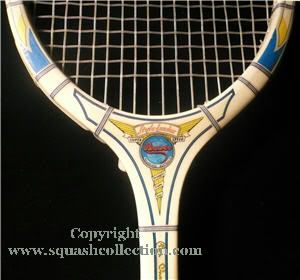
Exceptional Squash Racquet Collection from Australia www.squashcollection.com


General Tennis

Tennis Governing Body ITF (Rules etc)  https://www.itftennis.com/media/4421/2021-rules-of-tennis-english.pdf

National Library Newspaper Search Engine, Trove
Link is to “Lawn Tennis” search  https://trove.nla.gov.au/search?keyword=Lawn%20tennis

UK newspapers from 1870’s (account required for viewing but sources come up in search which is handy http://www.britishnewspaperarchive.co.uk

Australian Tennis Museum (NSW )

Currently in storage
Oversize Wood Racquets

With the development of lighter and stronger frame materials, the size of the racquet head has grown to deliver a string surface area of up to 137sq.in. The reason a larger head area assists is due to the larger sweet spot which can be created making the game far more enjoyable. For those of you who may never have played with a wooden racquet try it some day for fun. You will certainly appreciate the added skill of bygone players who could serve, volley and smash with force not to dissimilar to todays racquets, albeit that modern materials do add power to players in the professional league.

Wooden racquets with larger heads were certainly experimented with.

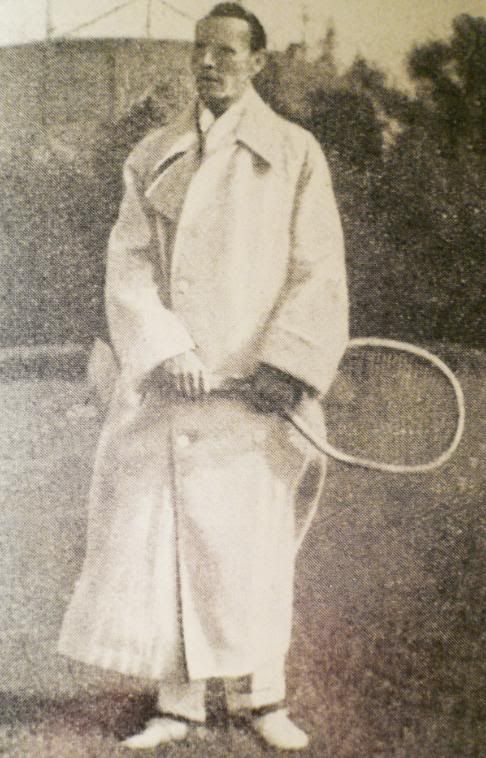
This photo from Siegfried Kuebler’s book shows Frank Donisthorpe who used this oversized, racquet in Wimbledon in 1921 & 1922. It was 3″ all round larger than a standard racquet and was double strung.Oversize Racquet 1921

Oversize racquets never really caught the public imagination until Howard Head, then working for Prince, made popular the oversized metal Prince Classic.

There were however some attempts to compete against the new materials using wood and wood composites in the 70’s.

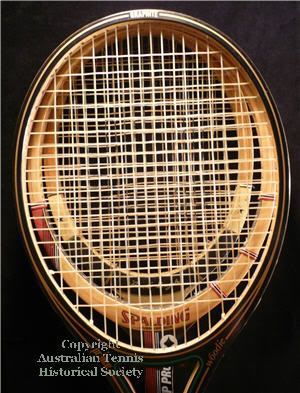
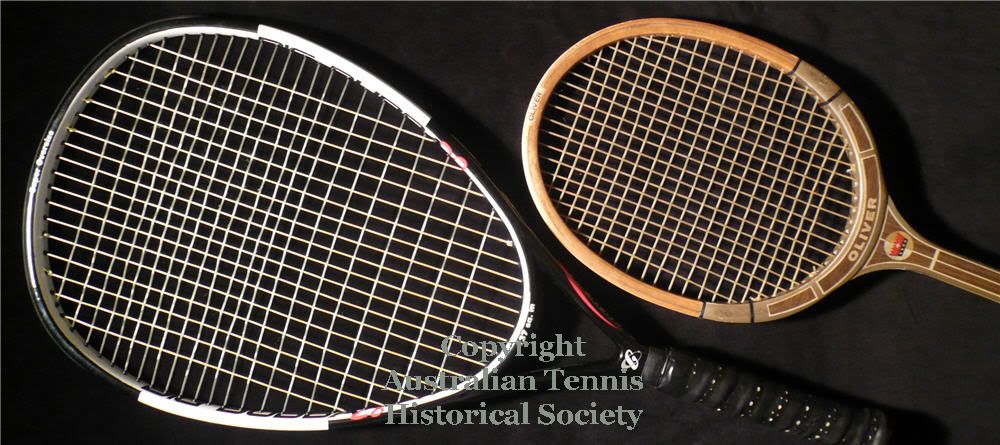
Spalding produced a (made in Belgium by Snauwaert) Challenge Cup Pro which was all wood. Prince also produced the highly collectible Prince Woodie 110sq.in racquet which was a wood graphite combination. The photo below shows the differences between these and a standard woodie.

Racquet Comparison


Below is a photo of a recently acquired Gamma Big Bubba 28″ 137 sq.in. which is legal. In the 1990’s makers also began experimenting with SUPER LONG models up to 32″ in length. The ITF was very concerned and in 1997 introduced rules regarding stringing, frame size and length in order to limit design.

It is amazing how the new graphite, titanium type materials allow larger frames with the strength to deliver sweet spots larger than a complete wood racquet. I hope all the young ones out there appreciate how much harder it was to hit and control a ball with a woodie and why many of the strokes seem more like a slice/push since the objective was to swing with the flight of the ball and use more weight transfer for power. This is still true for today but racquet strength allows for shorter swings and flick shots.

Contact Us & Support

Please feel free to contact us at theteam@tennishistory.com.au to offer any support.

The site has been created by Michael Maidens and Rodney Lack in our ‘spare’ time.

To continue growing the site we invite any assistance such as

  • content creation / writing articles
  • photographs
  • information sources – libraries / past players
  • advertising and sponsorships of the site
  • donations of funds or tennis related items
  • promoting the site

Thanks again and we hope you enjoy the site!

Michael and Rod

Australian Open

Information about the Australian Open will be added soon.

For detailed results of past Australian Open Championships please view the following.

1.  Under Results menu you can view the winners and runners up for all of the major tennis tournaments from the very early days of the late 1880’s onwards by event, player or year.

2 Under “OTHER” there is a terrific links page.

Here is a direct link Australian Opens online record page click here

One of these Grand Slam History is exceptional and every result round by round for all Grand Slam events including the Australian Open is presented.


Federation Cup History- 1963

The Federation Cup, an International Event for Woman’s Tennis was inaugurated in 1963 after considerable effort by Nell Hopman, wife of Harry Hopman.  Individually Harry and Nell were elite tournament tennis players and even played mixed doubles together winning the Australian Open Mixed in 1930, 1936,1937 and 1939. Apart from being great players, they also put back into the sport through Harry and his legendary Davis Cup role through the1950’s and this chapter which sheds light on Nell’s persistence to lift the profile of Woman’s tennis Internationally.

The Wightman Cup played between the USA and the UK annually was the original inspiration to Nell when touring herself overseas in the late 1930’s. She stayed with Mrs Wightman during one of the contests and first discussed an International Woman’s event (Davis Cup style) with her, believing that Tennis administrators would most likely not share the same enthusiasm. Unfortunately, as predicted, this was the case and nothing happened for a further 25 years until 1963 when Nell was still at the forefront of  lobbying and promoting womans tennis to have an International event.

Women’s tennis in Australia fared quite badly compared to the men over these years from 1930-1960. There was no official Australian Womens team sent abroad to play the key tournaments from 1938 -1955 and any women who did go had to fund all of their own expenses.

All this time, Harry and Nell continued to support Woman’s tennis. In 1950 this article appeared once again indicating that behind the scenes negotiations were ongoing. Despite the positive acknowledgment it would still be another 13 years before anything resulted.

article2764695-3-001

One of the key turning points in Australia Woman’s tennis was the 1952-53 tour involving the 18 year old Wimbledon Champion, Maureen Connolly. Such was the interest that crowds flocked to see her play and the media actively promoted her to National prominence.  This was the first time tennis administrators had witnessed massive interest in Woman’s tennis.

Fortunately, by 1960, 17 year old Margaret Smith (Court) had won the Australian Woman’s championships and this included wins over a strong field including the UK’s Wimbledon winner Maria Bueno. Other teenage girls also showing considerable talent at this time were Lesley Turner, Jan Lehane and Robbyn Ebbern.

Thanks to the Australian Wool Corporation, a  5000 pound sponsorship enabled a Woman’s team to travel the 1961 Tour and it was during this trip that Nell realised that Woman’s tennis had significantly developed in France, South Africa, Japan and Italy and that administrators were now taking more notice of woman’s tennis .

At the behest of the LTAA to the International Lawn Tennis Federation in 1962, the decision to conduct the “Federation Cup” was made and under the constitution 16 teams could compete and  elimination rounds were permitted.

Harry Hopman was the President of the LTAV and it is a fitting gesture that Nell Hopman and Harry achieved this tremendous achievement after so many years. In 1963,  the first Federation Cup was conducted at the Queens Club in England, however. three days of rain forced the competition indoors.

In the first round Australia defeated Belgium 3-0, followed by Hungary 3-0, South Africa 3-0 and lost in the Grand Final 1-2 to the USA. Scores in the final were Margaret Smith defeated Darlene Hard 6-3 6-0, Lesley Turner lost a tight 3 set match against Billie Jean Moffat 7-5 0-6 3-6, and together in the doubles they lost 6-3 11-13 3-6.

In the 1964 Fed Cup held in Germantown USA, Australia won against the USA 2-1:  Margaret Smith defeating Billie Jean Moffat 6-2 6-3, Lesley Turner defeating Nancy Richey 7-5 6-1 and in doubles Australia lost to Moffat and Karen Susman 6-4 5-7 6-1.

With this win the cup was to be played in Australia in 1965 for the first time. Pictured below is the official program promoting the event at Kooyong Victoria and luckily it has been signed by Margaret Smith.

fed cup65 cropped

Here are the winners since 1963. Today the event is no longer run in one location over several days but in four regions similar to the Davis Cup, followed by the finals.  During the hey day of Australia’s Women we were well represented in the finals, however the strength of Women’s tennis has become far more even throughout the world and Australia has only managed to make the finals (losing) once since 1985 and hasn’t won the event since 1974.

1963 United States 2, Australia 1
1964 Australia 2, United States 1
1965 Australia 2, United States 1
1966 United States 3, German FR 0
1967 United States 2, Great Britain 0
1968 Australia 3, Netherlands 0
1969 United States 2, Australia 1
1970 Australia 3, German FR 0
1971 Australia 3, Great Britain 0
1972 South Africa 2, Great Britain 1
1973 Australia 3, South Africa 0
1974 Australia 2, United States 1
1975 Czechoslovakia 3, Australia 0
1976 United States 2, Australia 1
1977 United States 2, Australia 1
1978 United States 2, Australia 1
1979 United States 3, Australia 0
1980 United States 3, Australia 0
1981 United States 3, Great Britain 0
1982 United States 3, German FR 0
1983 Czechoslovakia 2, German FR 1
1984 Czechoslovakia 2, Australia 1
1985 Czechoslovakia 2, United States 1
1986 United States 3, Czechoslovakia 0
1987 German FR 2, United States 1
1988 Czechoslovakia 2, Soviet Union 1
1989 United States 3, Spain 0
1990 United States 2, Soviet Union 1
1991 Spain 2, United States 1
1992 Germany 2, Spain 1
1993 Spain 3, Australia 0
1994 Spain 3, United States 2
1995 Spain 3, United States 2
1996 United States 5, Spain 0
1997 France 4, Netherlands 1
1998 Spain 3, Switzerland 2
1999 United States 4, Russia 1
2000 United States 5, Spain 0
2001 Belgium 2, Russia 1
2002 Slovak Republic 3, Spain 1
2003 France 4, United States 1
2004 Russia 3, France 2
2005 Russia 3, France 2
2006 Italy 3, Belgium 2
2007 Russia 4, Italy 0
2008 Russia 4, Spain 0

Inside the 1965  program are a variety of player profiles. (1965)

P1110363


P1110364

Representatives of countries playing in Australia in 1965.

You can learn more from these sites. Also see under LINKS page many other statistical websites.

Federation Cup History https://www.fedcup.com/en/teams/team.aspx

Federation Cup Player Search https://www.fedcup.com/en/players/player-search.aspx

Fed Cup Win Loss Record for players 1963 onwards https://www.tennis.com.au/news-and-events/pro-tournaments/fed-cup/history

Unusual Modern Tennis Racquets 4

In this section we present some of the modern unusual models that designers have been trying to create some differentiation.

As pointed out previously, many different designs have been tried over the years, but still we have today new racquets being launched with unusual features that have been seen before in one form or another. With changing materials that provide greater strength who knows if these designs will create a new niche in the market that others may follow. They are certainly collector items for the future.


Copy of Vortex ES108

The company is called VORTEX www.vortextennis.com

Now while the racquet is pretty much a traditional shape, the reduced string pattern is designed along the Snauwaert Hi-10 lines of the 90’s which works on the theory that fewer strings increase the grip or cut on a ball.

Having just acquired one, I am amazed at how good this racquet feels and being a bit more of an old school player, the sliced backhands and serves are quite something.

x45 pro 2014 (3)

This new racquet picks up where Snauwaert’s Ergonom left off.  Call the X-45 it is pretty much the modern day version with a sleek look and better graphite. Visit www.X-45.com

POWER ANGLE

Powerangle: Diagonal strung low vibration racquets from the USA Company credited with the MADRAQ. Approved by the ITF for tournament play, these racquets do increase sting life and apply greater spin due to the lower string movement on impact with a ball.Visit www.powerangle.net


JENRO 2edit

JENRO 4 edit

Next we have the removeable head concept by JENRO. The head comes away from the handle as attempted by designs from Tretorn, Maynard and Snauwaert.
In the mid 1980’s a foldable racquet model called JEANROT, made by Snauwaert appeared and this is I guess the latest attempt to create a compact carry racquet.

Visit www.jenrosport.com

neoxxline fullaaa

A blend between the famous offset head of the Snauwaert Ergonom, the curved grip concept of Bio Sports ‘The Gripper’ and the Erge from Sweden here we have the NEOXXLINE (CARVING STAR)  tennis and squash racquets.
As of 2011, all websites no longer functioned so sadly the company we think based in Germany has most likely folded.

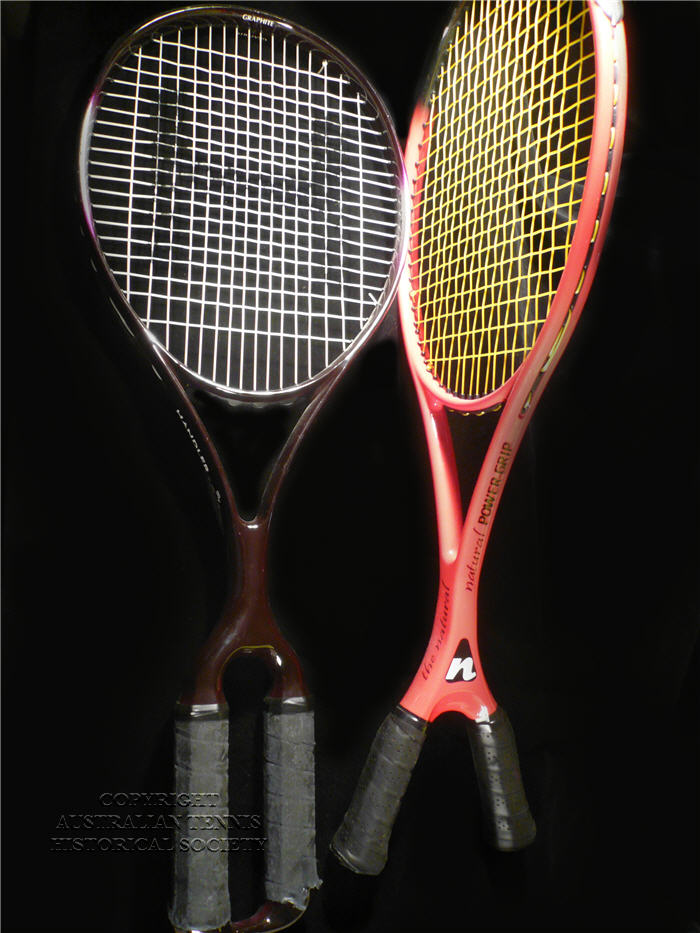
the natural handler 2014 (25) edit

The Double handle models are featured in the other sections but both are still being promoted today.

The Handler and The Natural.  There is a new model from The Natural Tennis Company called the Diamond
http://www.naturaltennis.com/os/diamond-racket/

TOALSON PANDORA (1)

This is the 2015 Toalson PANDORA model with a most odd shape head which 46 sq in. on one side and 52 sq in. on the other. The promise is amazing spin but I have no idea on what basis this happens.


BABOLAT SIDE DRIVERS (7) EDIT

Babolat Side Driver is a very pretty design with an open shoulder design.

uniflex (2)

The Racetrack design PRO SPEX UNIFLEX model is also quite odd.

ojoee (1)

The OJOEE with this pretty but counter intuitive to good play design is another attempt at string equilibrium tried in the Lacoste Equijet design and Spalding’s Orbitech circular shape.


wilson ultra xp 125

The Wilson XP 125 sq. in. frame features a quite odd long string pattern reminiscent of Prince’s Triple Threat RING and the SP.IN models. Apparently, these were recalled possibly due to breakage at the throat area where all the mains are under full pressure on a small surface area.  However as racquets go super attractive.


Hedley’s


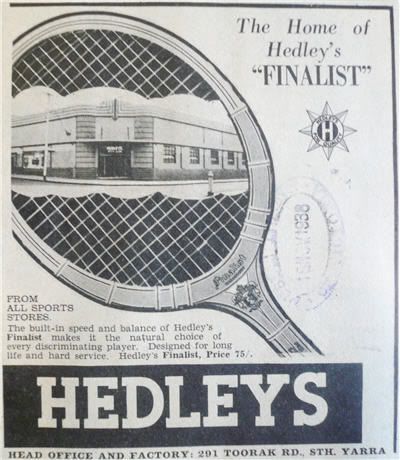
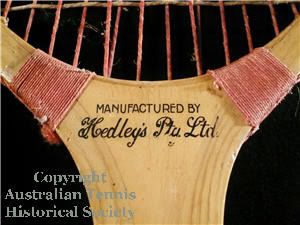
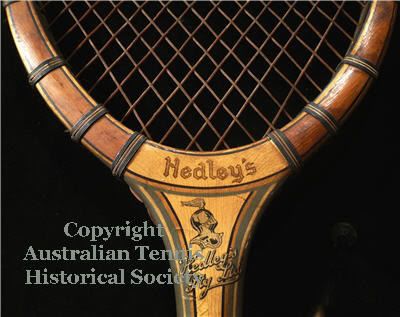
Of all the top brands in Australian tennis history, Hedley’s were a National brand and part of the top five which enjoyed an export business into the USA. In relation to when they began, the earliest reference point we have found is a 1924 annoucement that the firm was entering the tennis racket market under the protection of a 30% tarriff (via UK product) and 45% via all other foreign product. At the 1924 Melbourne Consumer Goods Exhibition they were listed a exhibitors.

The main office was located in Swanston Street, Melbourne, however from 1926 production occurred at 245 Punt Rd Richmond, with a staff of 10. An original owner Mr Robert Hedley retired and the firm was managed by co-founders from the UK with tennis racquet making experience, Percy Tasker and brother George who was in charge of production. This site was followed by larger premises at 27 Alfred Street Prahran and an even more substantial factory and warehouse in South Yarra on the Toorak Road/ River Street corner where the current COMO Channel 10 building now sits. In the late 1950’s they were advertising locally for staff to work in either the racquet or canvas divisions.
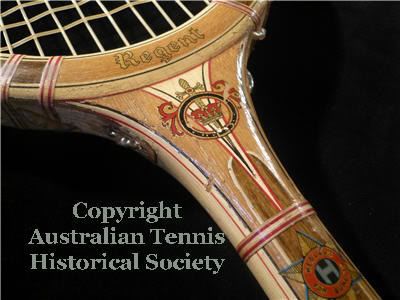
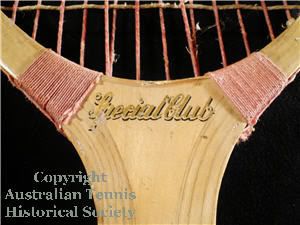
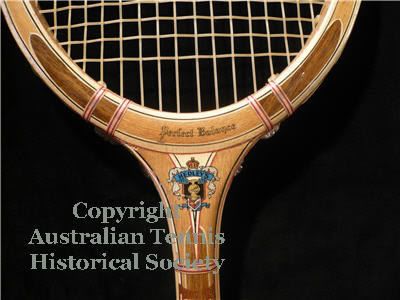
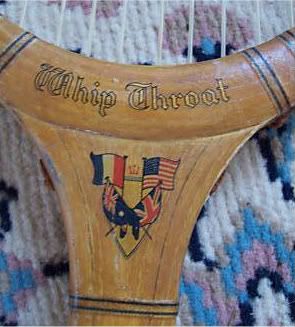
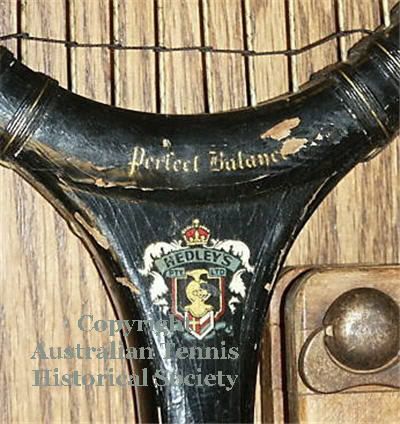
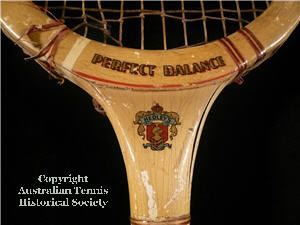
The earliest tennis racquet example we have found is the wood handled “Club Special” and their “Perfect Balance” sub brand extended over a variety of models. Later models of the “Club Special” were also produced.

In some literature Hedley’s is proclaimed to be the first racquet maker in Australia. Perhaps Victoria, but not Australia. While we have had boutique makers from the 1890’s certainly L.W.Dodge in Sydney had a team of UK trained workers on the factory floor in October 1921.

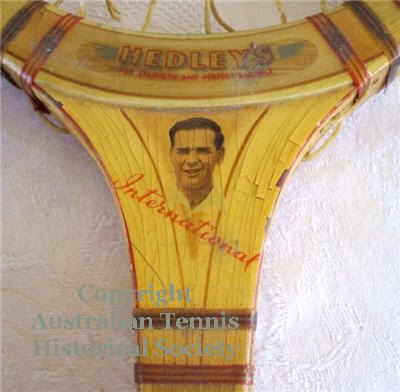
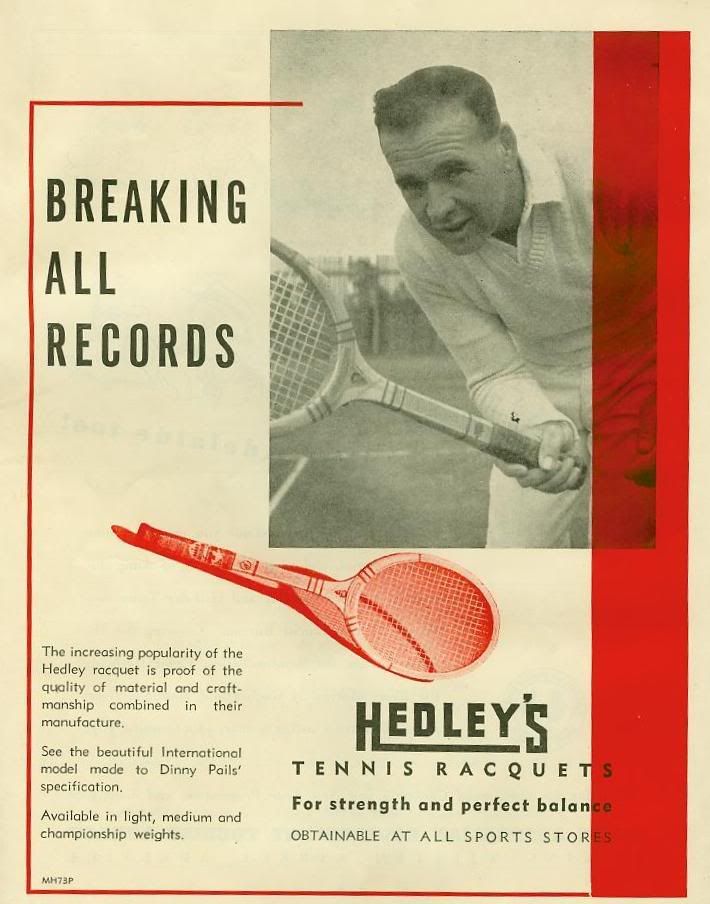
While many of the major companies had a variety of players endorsing product, we have found two examples only from Hedley one in the late 1920’s with Pat O’Hara Wood and the other in the early 1950’s with Dinny Pails picture/signature racquet. Both Pat and Dinny, played Davis Cup for Australia in the 1920’s and late 1940’s.

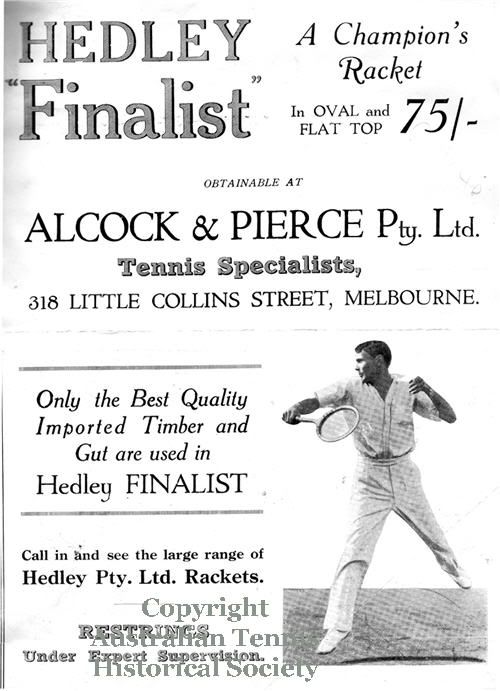
In 1931 we sourced a magazine ad showing a Finalist model featuring a full paint job and leather grip which was the start of an amazing period when Australian makers re defined the graphics of tennis racquets for consumer appeal and which led to thriving export businesses.

Hedley is also attributed to marketing the Krak-Shot range launched in around 1933 by, once again Robert Hedley and John Nelthorpe from Hedley Nelthorpe. This is likely given the similar appearances of the product.

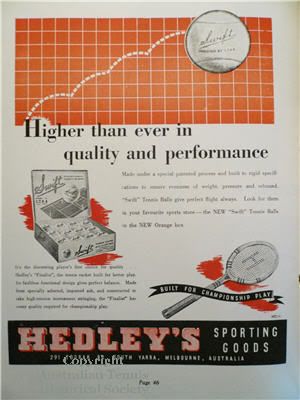
In 1946, Hedley and Swift Tennis Ball Company Director Mr J.G.O’Shannessy announced the formation of Commercial Importers and Exporters Pty Ltd to market sporting goods, amongst other general items, to USA, India, China and the Middle East. Consequently, some Hedley racquets do appear from time to time on Ebay USA.

In 1951 Associated Leathers acquired the shares in Hedley which seems to have operated for another 7-8 years. The Tasker brothers seem to have left the business and formed Tasker to continue the tradition.

Robert Hedley became the sales manager and then Australasian Manager for the Dunlop Sports division from mid 1930’s to late 1950’s so he was working against the brand which adorned his name for well over 35 years.

Enjoy !!!!

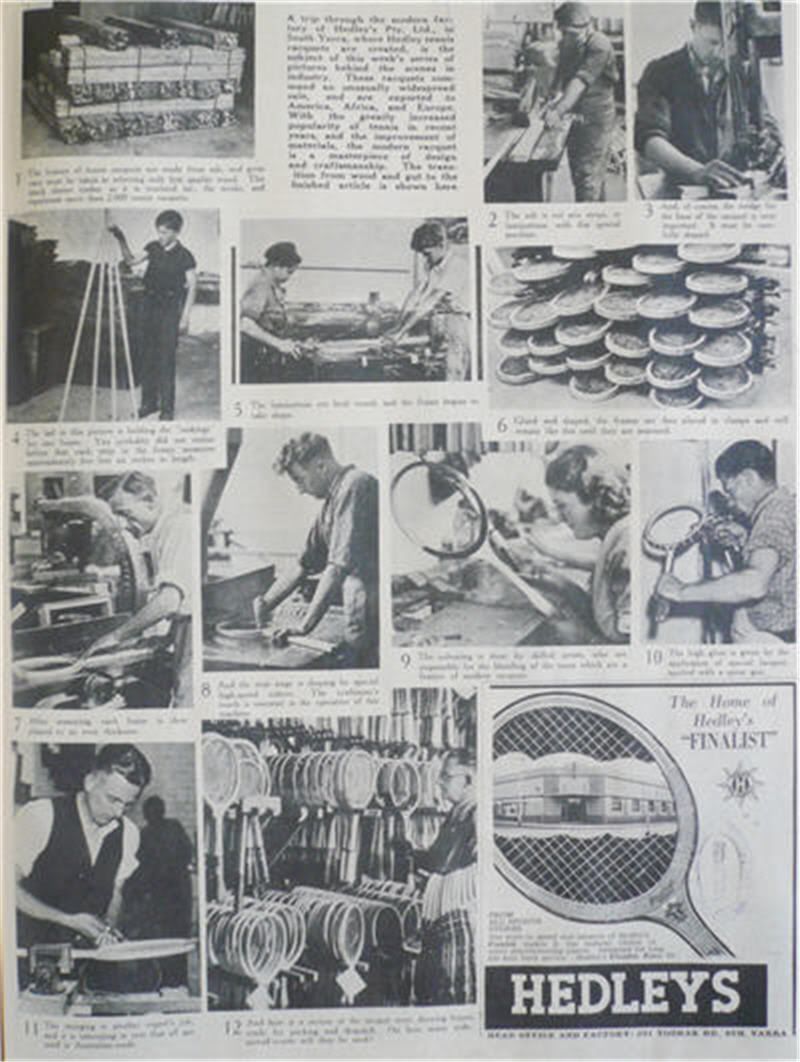
November 1938 from a full page industry review (see below)

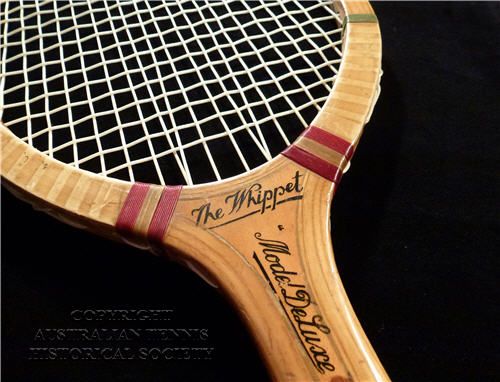
Stunning mid 1920’s racquet with exceptional wrapping. No additional information about this model has been located to date.

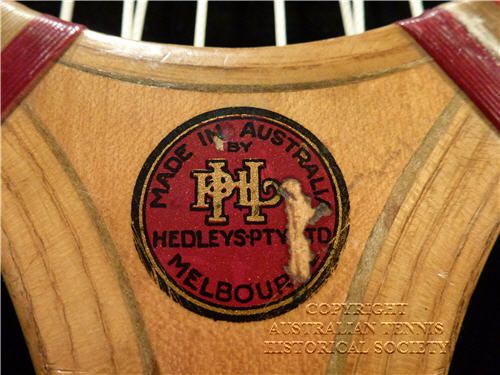
The logo on the Whippet model would seem to have been a later design compared to the Special Club below which is simply stylised text.

Very early Special Club with grooved wood handle c late 1920’s early 1930’s.

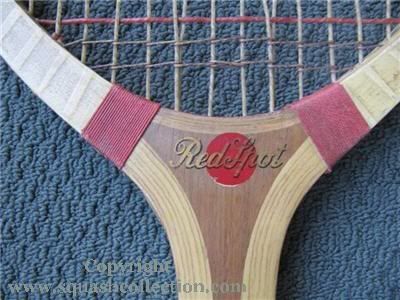
Hedley Red Spot

Hedley Red Spot

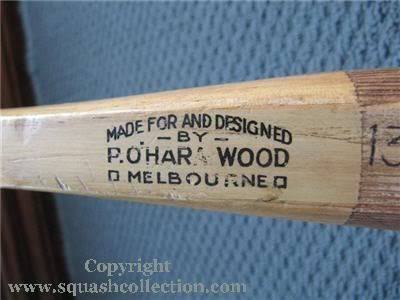
This excellent example of a Hedley Red Spot from the same era as the ‘Special Club’ has
the mention of being designed for Pat O’Hara Wood a very famous Australian player of Davis
Cup and numerous overseas tournaments.

A very nice example of the Regent Model with Perfect Balance was a decal on the reverse.

Perfect Balance was a decal on the reverse. The Black Lance also displays “Perfect Balance”


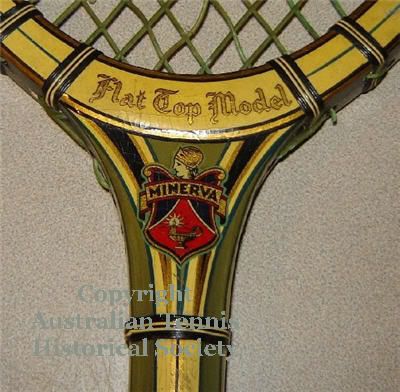
Really nice flat top Minerva with diagonal stringing found in the US and Australian Dinny Pails.
This is one of the few Australian made racquets with an Australian player from the late 1940’s.

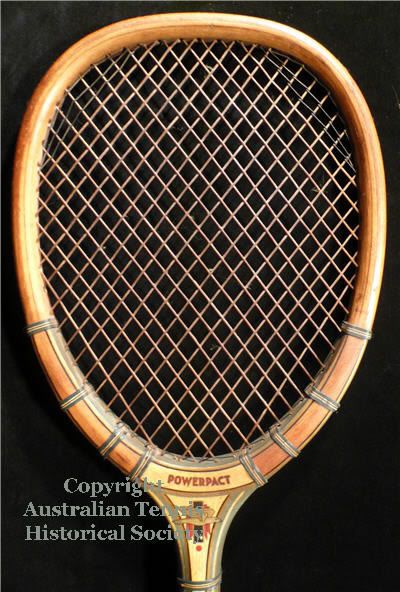
Hedley Powerpact


Hedley Powerpact

This Hedley Powerpact is a wonderful example of diamond stringing. (pics  both sides)


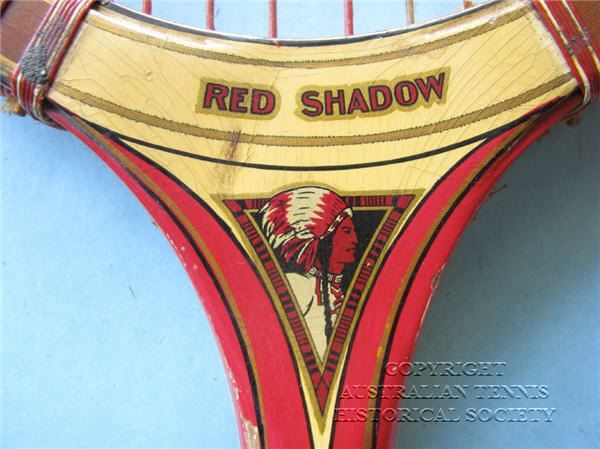
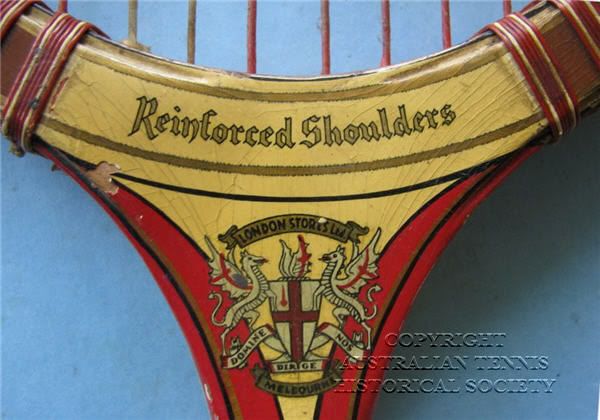
Hedley’s Red Shadow model was made exclusively for London Stores (pics both sides)


Hedley Dinny Pails


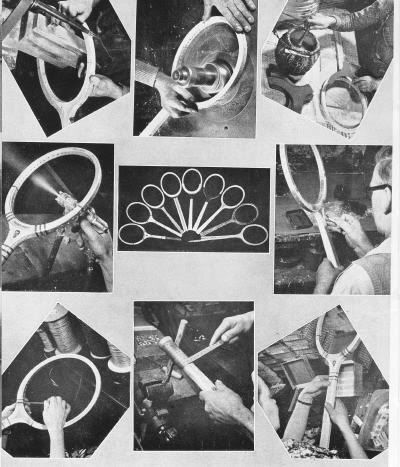
From the weekend magazine of the Argus November 19th 1938 Comes this great article on making racquets with photos from the Hedley factory.


And this shot from Dinny Pails’ book Set Points (1952)  shows the factory making his photo decal racquet.
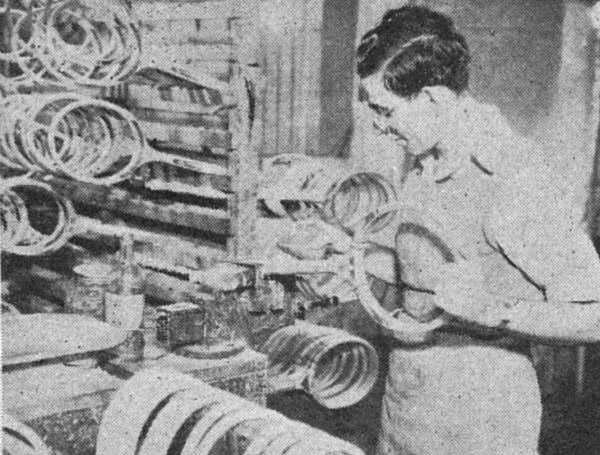
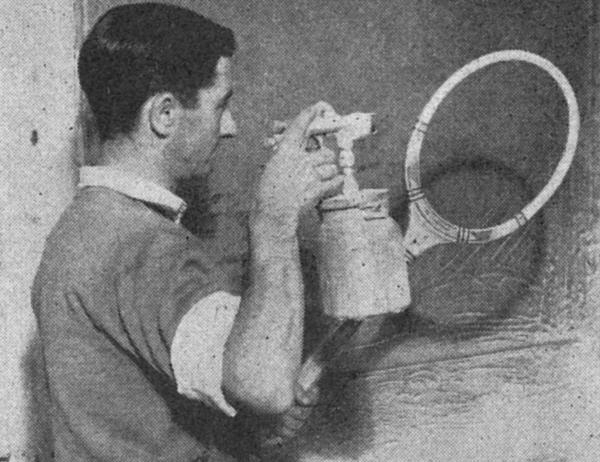
The amount of hand labour and skill involved was significant.


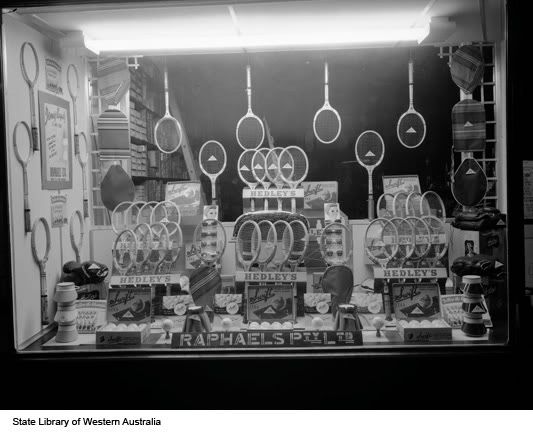
A retail photo of a Hedley display


Brewer

 In the world of small business the personal traits of the entrepreneur can play a big part in the direction of a new business. As with so many other new business people, Albert Brewer had a strong sense of independence and this combined with an aversion to bank loans, an aversion to insurance and an aversion to cartels played a role in shaping the history of the Brewer tennis racquet enterprise.

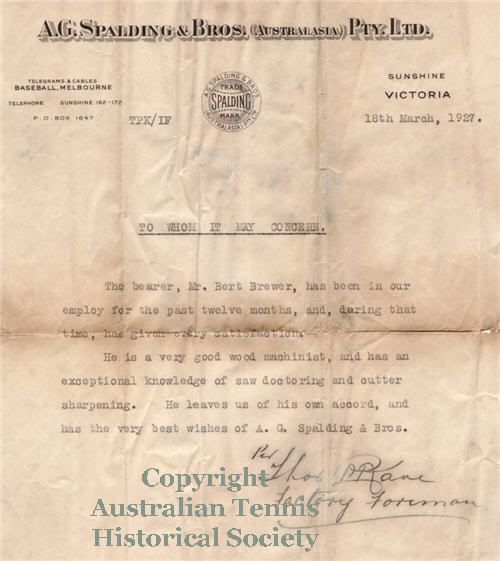
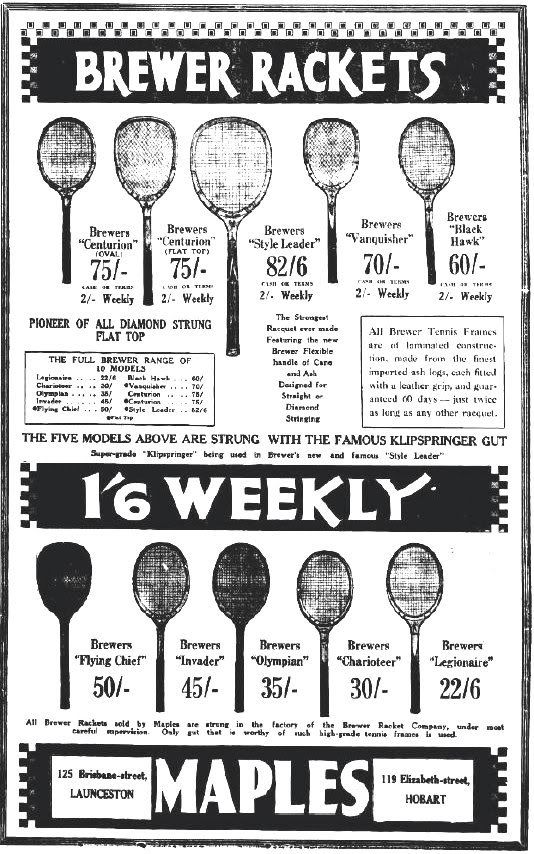
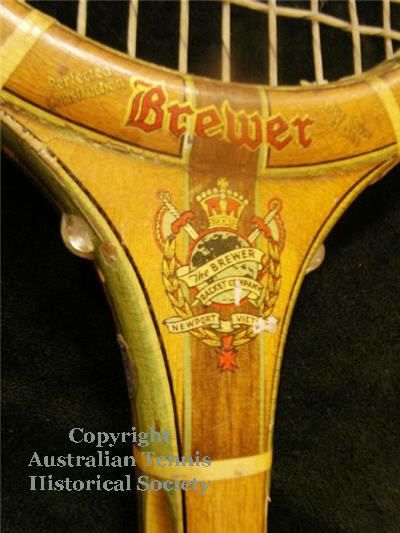
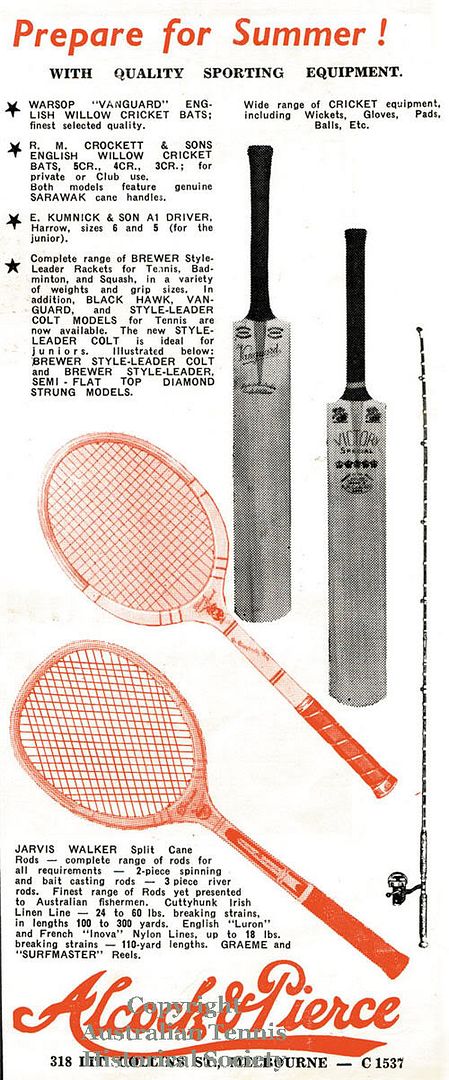
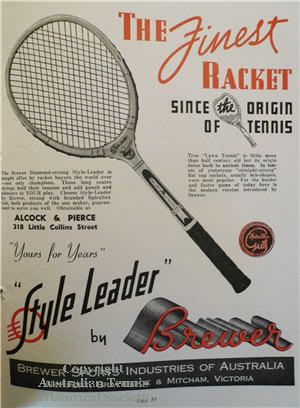
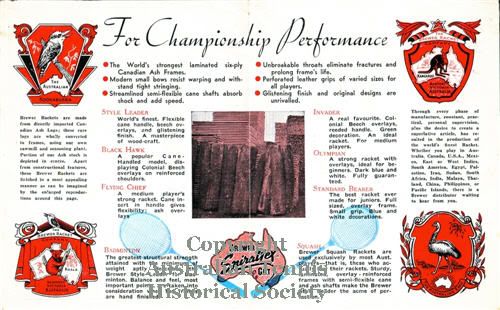
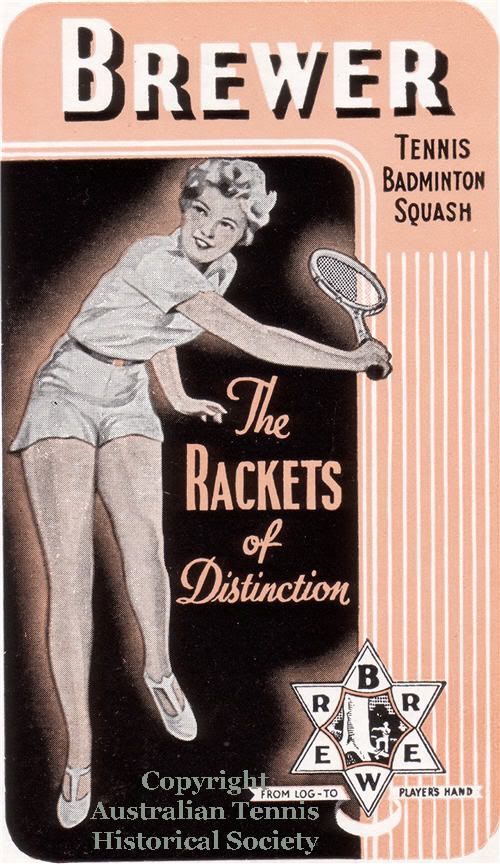
Born in Bendigo in 1905, Albert Brewer came to Melbourne in 1920 to commence work as a furniture factory machinist at Rojos Pty.Ltd. in Little Lonsdale Street Melbourne. With skills developed in moulding timber, he gained twelve months experience in crafting tennis racquets at AG Spalding, then in 1928 bought his own factory in Farm Street, Newport, Victoria. Little did they know that they would soon have a competitor in tennis. Note the telegram address is for Baseball which was Spalding’s primary industry and one which they tried to promote in Australia. Bert began making the signature brand, the Brewer ‘Style Leader’ range of racquets and built up a great export business in an era when Australian manufacturers dominated the equipment market and Australian players dominated the tournaments. This is a 1934 Ad from a retail store in Tasmania. While the export market did well the home market was much more difficult as all other manufacturers formed a cartel (completely legal in those days, before the Trade Practices Act) and prices were fixed. This was completely contrary to Albert Brewer’s principles and he refused to sign the agreement. Hence, the Brewer range of racquets were banned from sale in all stores that made up the Combined Sporting Goods Association. Read more about this under the retailing racquets section.
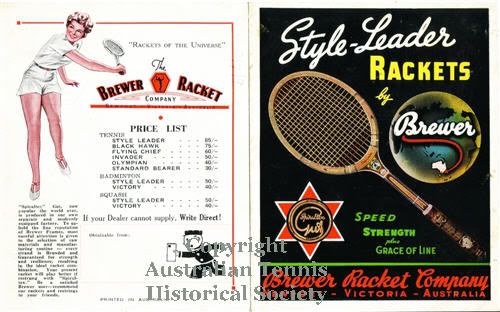
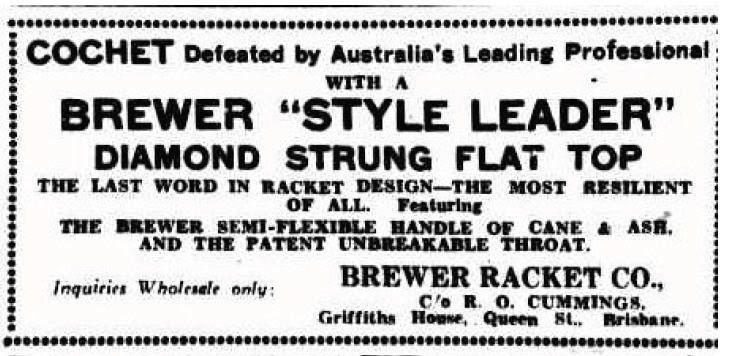
Not quite the sporting gesture, promoting off a players defeat!
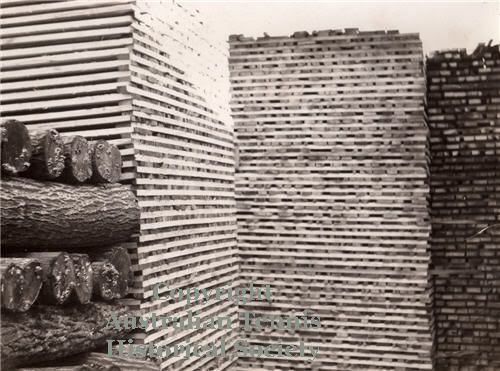
To maintain sales, the answer lay in the purchase of his own retail sporting goods outlet – Alcock and Pierce – in Elizabeth Street Melbourne, which became a well regarded store selling a variety of brands over a number of sports and this store exists today but has no connection to tennis. The war years played havoc with the business as the factory ceased all manufacturing of tennis racquets as part of the war effort and made parts for the Beaufort Fighter aircraft. The factory was well placed to carry out this role as this plane used many moulded timber parts. However it cost very dearly as many of the Brewer racquet contracts were lost. After the war the factory gradually returned to manufacturing racquets. The process involved a great deal of hand labour and most of the machinery was made on site. The Brewer racquet was the only Australian racquet which began with the original Canadian Ash logs arriving at the factory, then sawn into planks, then sawn into laminations. You can see from marketing material and on the racquets themselves that the ‘made from logs’ point of difference was used as a selling feature. Manufacturing racquets involves many individual procedures one of these, the spraying of lacquer to finish the racquet, was a highly flammable job and twice in the history of the business it was the cause of devastating fires which burnt the factory down. Both times there was no insurance coverage, and Albert Brewer had to start again – and both times without the help of a bank loan. But as a testament to his independence the factory always started again. He rebuilt the factories on a hectare of land in Mitcham and the last racquets were made in 1970. However, by this stage the frames were made by Kawasaki in Japan and were finished in Mitcham. Albert Brewer died after a long illness in 1975, and because of no legal/accounting tax minimization in place, the plant and the factories had to be sold to with the large proportion of the proceeds being taken by the government in the form of death duty (abolished in 1976). The family business continues in the name of Alcock and Pierce, owned by Robert Brewer and Elmae Brewer, the son and daughter of Albert Brewer, and is managed by Tim Brewer, Albert’s grandson. A special thanks to Robert and family for the story and shots used here.
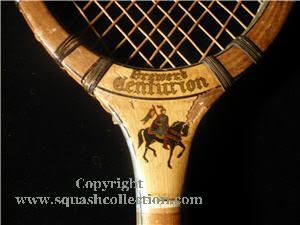
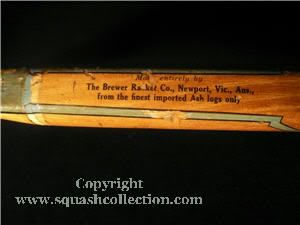
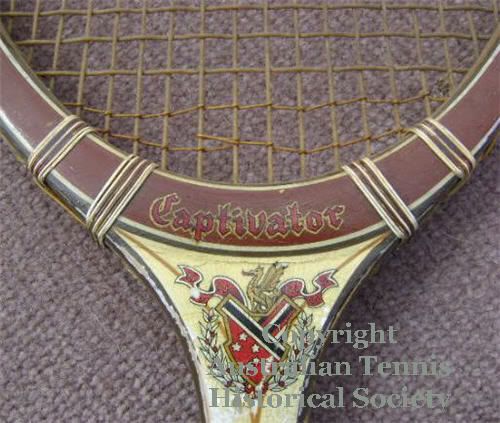
Brewer Captivator

Also from Newport. Note the design has St Kilda and Collingwood Colours. Not sure of any football reference c late 1930’s given shape and cord wrappings.

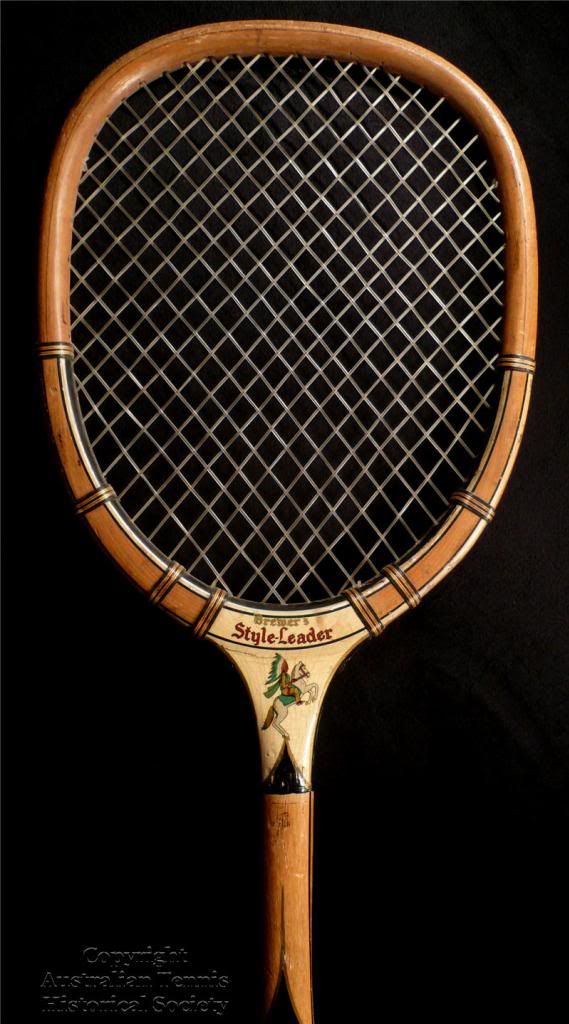
The Style Leader Diamond Strung model was mentioned as being the most expensive racquet on the Australian market in 1936 at  82/6
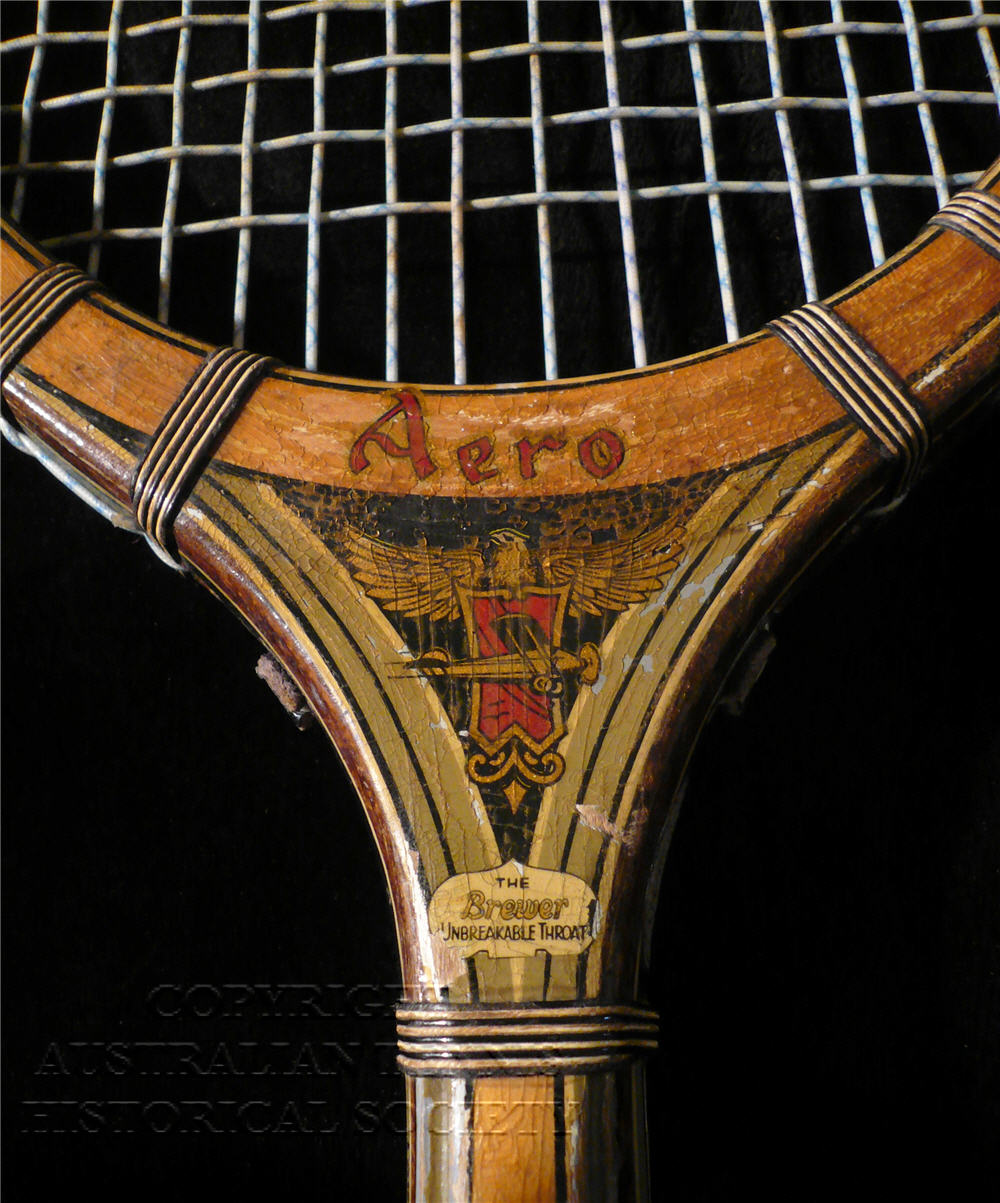
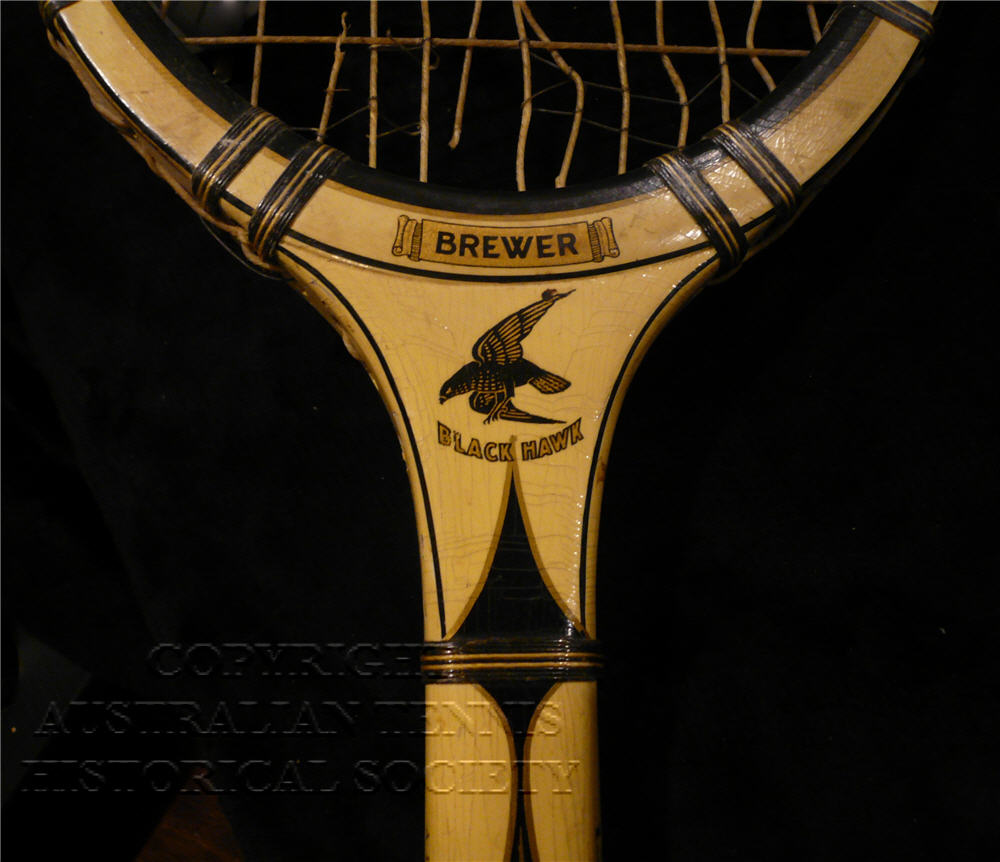
BREWER AERO 1930'S 40S MODEL (14)

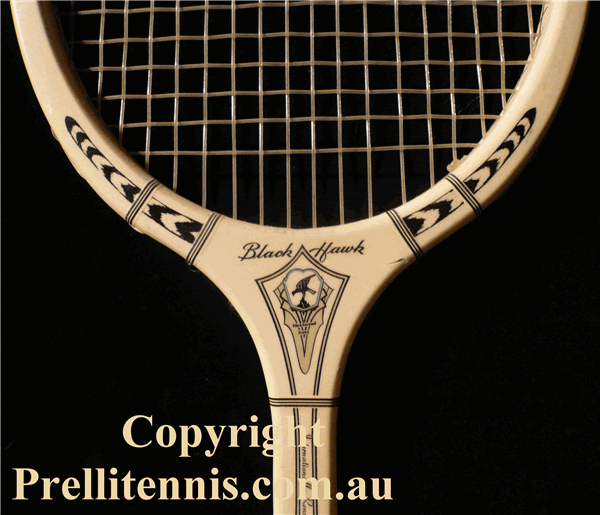
 BREWER BLACK HAWK 1934 OLD LOGO (24)

 Brewer  Black Hawk 1934 as per ad top right

Brewer Style Leader

Brewer Black Hawk

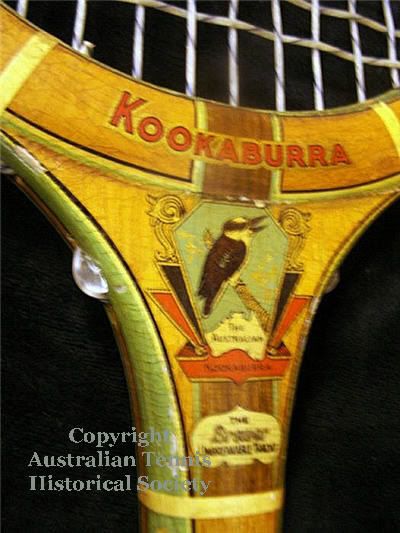
The above photos are of the Brewer Kookaburra from a racquet sold in the USA. Excellent decal treatment. Sorry that one of the photos is a little blurry. Thanks to the US owner who sent them to us.


BREWER SOUTHERN CROSS USE (2)

BREWER SOUTHERN CROSS re touch use (10)

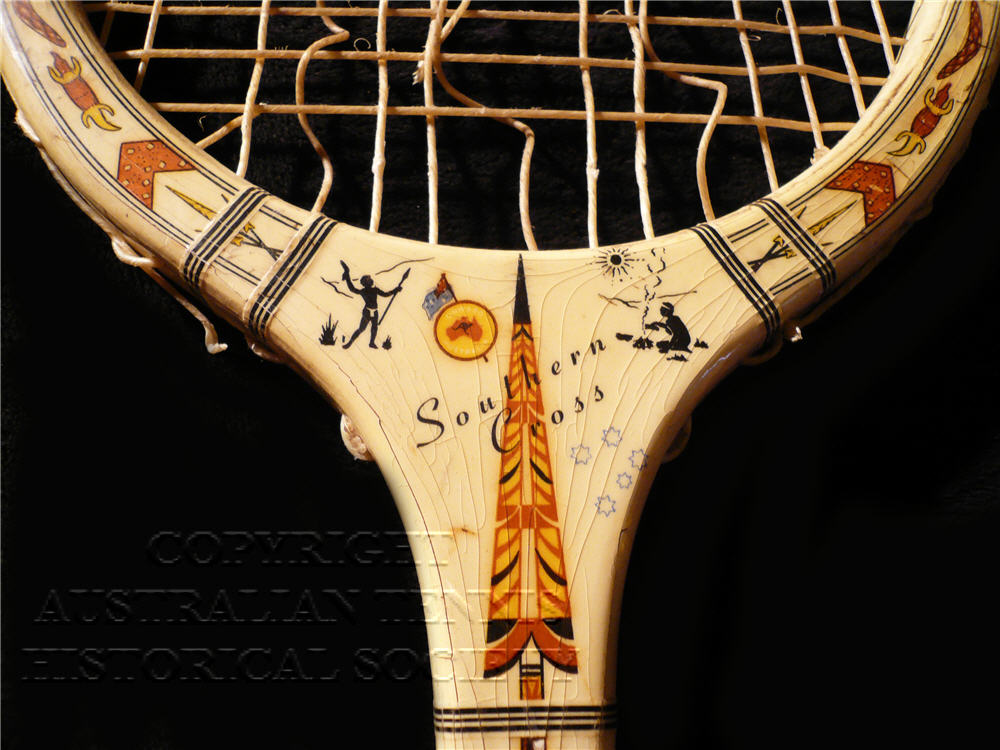
 The above photos are of the Brewer Southern Cross which is the only ‘imitation’ art depicting Aboriginal heritage on a tennis racquet that we are aware of.

BREWER OLYMPIAN (15)

BREWER OLYMPIAN (22)

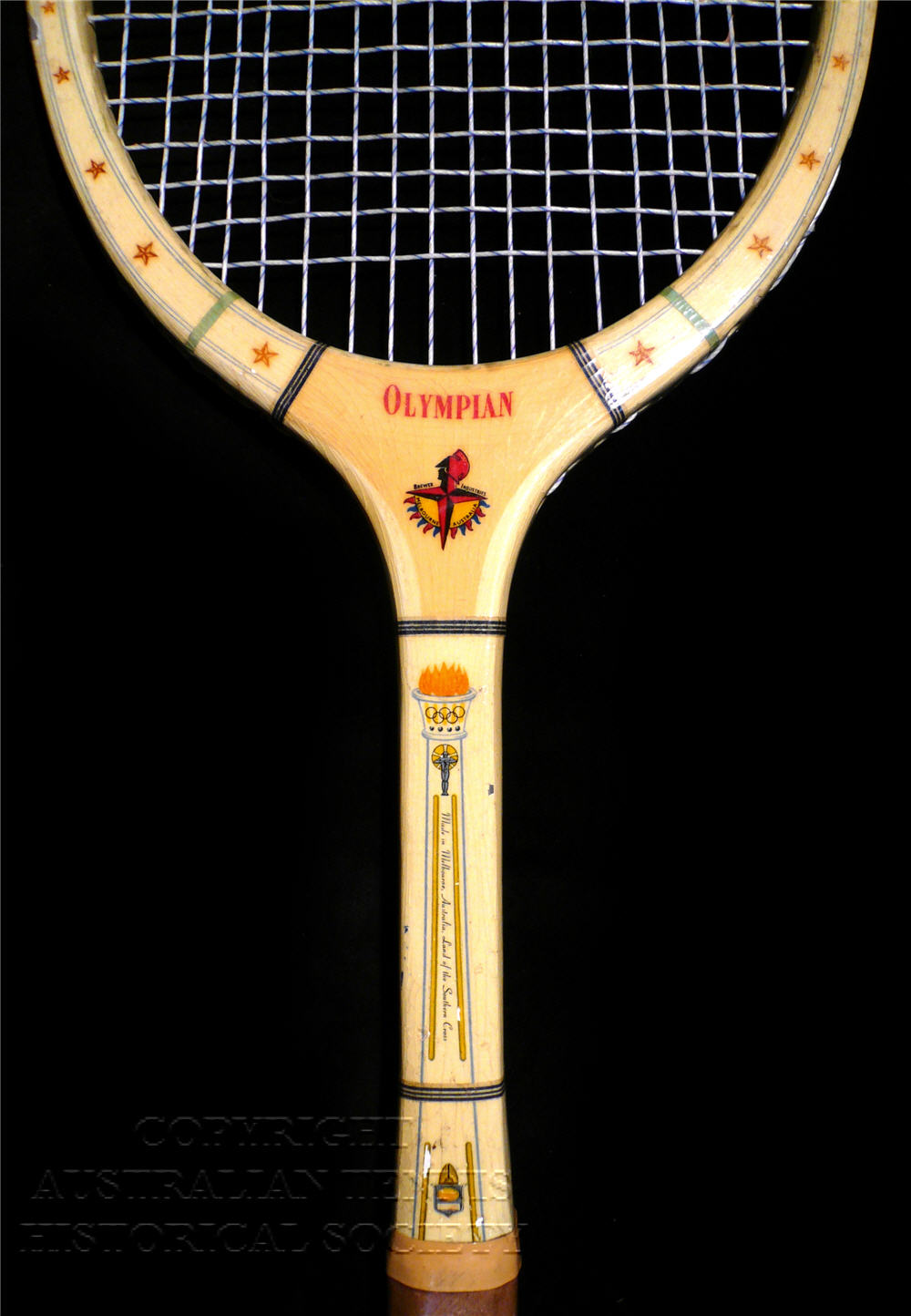
 The Olympian was a model used in the mid 1930’s but we feel this model was a 1950’s version leading up to the Melbourne Olympic games in 1956.

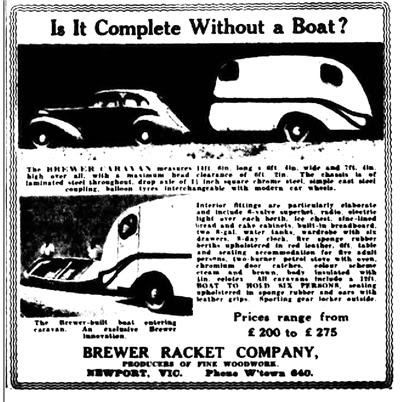
Something different! We found this ad from 23 Feb 1937 in which the Brewer Racket Company developed an innovative caravan into which a boat could be inserted. Looks a tight squeeze, but a nice way to visit the country tournaments where rivers or coastlines provide a relaxation destination.  Quite innovative…. If anyone has one of these, please advise as the Brewer family would be most interested.

Brewer Racket Caravan

Chesterfield

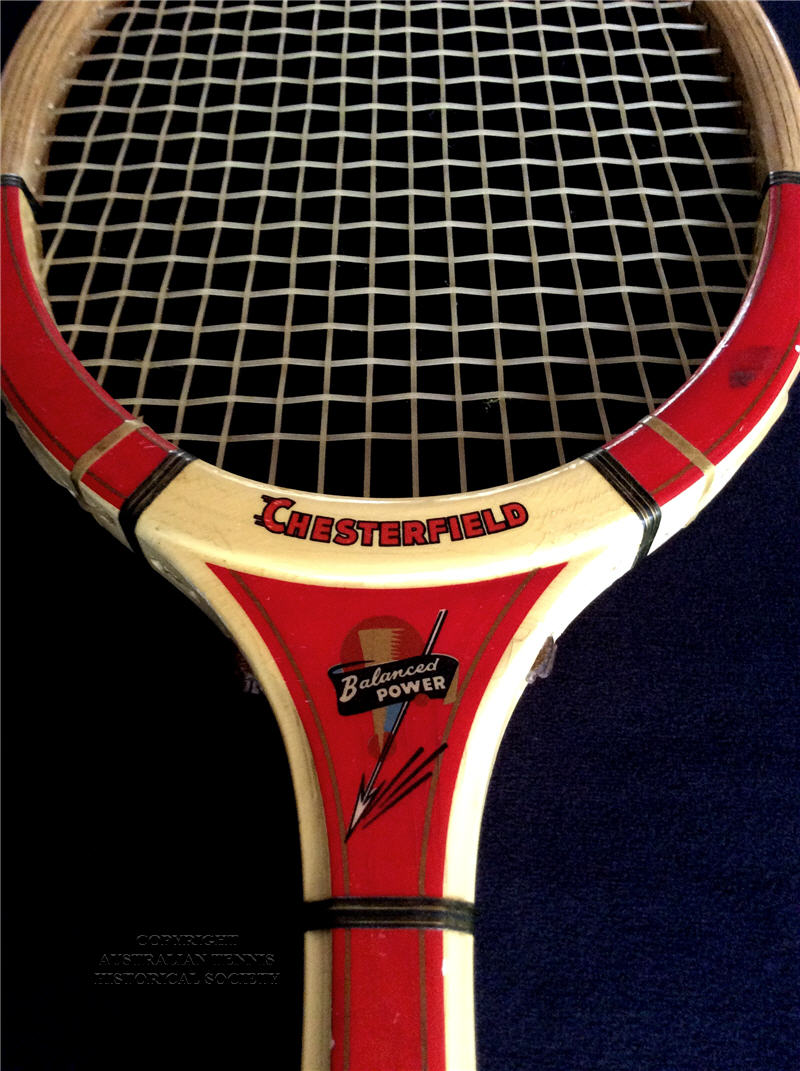
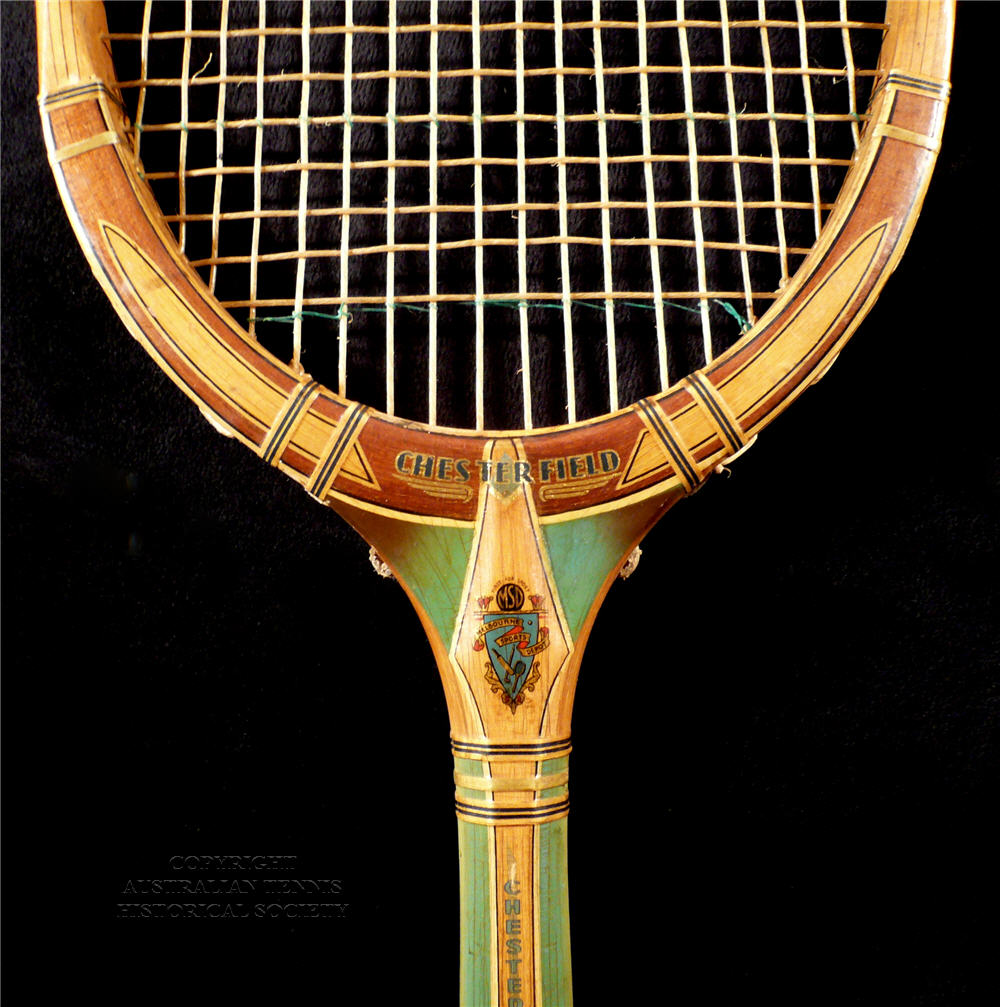
The Chesterfield Racquet factory began c 1923 and was located in Hyde St Alexandria, NSW. In a small article from 1942 there was a fire at their Trafalgar St. Annandale factory.

The primary timber was Canadian Ash, imported as wood blocks. The parent company Best & Gee is still operating today and owns numerous business entities and investment properties. Combined with Chesterfield, the business also manufactured timber shaft golf products and owned Festival Records. Golf products evolved with new metal materials under the brand name PGF (Precision Golf Forging). These divisions were sold to other groups in the mid 1970’s and since golf was the prominent product range, racquet production ceased shortly afterwards.

Since Alexander’s commenced their factory in Tasmania in 1926 and ceased production in 1961, The Chesterfield brand may deserve the title as the longest lasting Australian made brand lasting from 1923-1975 (to be confirmed).

Like many Australian racquet makers, the export market was important for volume sales and an American Tobacco Company, Liggett & Myers, who owned Chesterfield cigarettes became the USA distributor post war. Consequently, you will find racquets available in the USA and ads appearing in tennis magazines with tag lines such as ” On the court it’s flash…in a cigarette it’s taste”

CMAILCHESTERFIELD30-4-1934


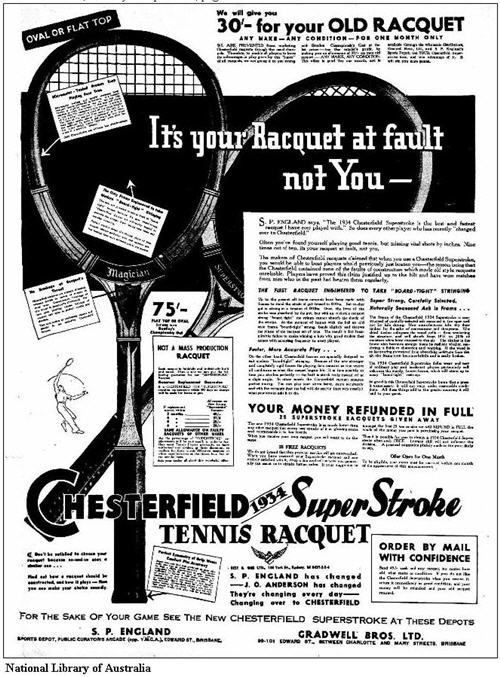
This Ad is from The Courier Mail 30-4-1934.

I really like the aggressive marketing approach via the trade in offer, plus the staggered warranty according to how long you owned the racquet.

They even had a promotion running to giveaway a few racquets.

Down the bottom there is also reference to J.O.Anderson signing on as an endorsed pro after a long association with Alexander’s.

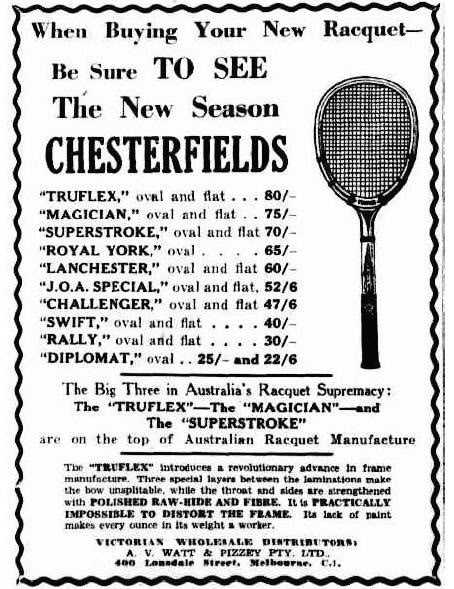
The two brands here are the Magician and the Super Stroke available in oval or flat top models.

Chesterfield28-10-1935


Factory Shots from Australian Tennis Magazine Vol1 No.1 1949

Chesterfield Factory1949 aa


Chesterfield Factory1949 bb


ChesterfieldAustTennisSeptOct54


Chesterfieldaaa


chesterfield bp 1


chesterfield playbat exc (6)

Colin Long

The article below was published August 2008.  Sadly Colin passed away on November 8th 2009. We have elected to leave the article as written.

At aged 90, Colin Long and great mate Jack Noseda, both well known from Spalding Sporting Goods Management kindly gave me some time to discuss Colin’s interesting tennis career. Being nothing at all like his age,Colin has a great memories of his involvement with the Australian Davis Cup Team.

I thought Colin might be the oldest surviving Davis Cup player, but we learnt that Len Schwartz who played in the 1938 Davis Cup team is alive but not so well in Adelaide. We are not sure of Len’s exact age but it is the mid 90’s and we hope he recovers from a current stay in hospital.

What marvellous memories tennis has delivered to Colin. He really appreciates how lucky he has been to be part of this highly traditional and patriotic event.

As School captain at Melbourne Grammar, Colin was a promising junior and won a schoolboys doubles championship with Alistair Righetti in 1936. He joined Dunlop sporting goods for a couple of years having left school and then moved to Spalding in 1939. Back then, many players not wishing to turn professional were employed by sporting goods companies as a technical way around being professional and this argument between tennis administrators and amateur/professional players continued from the mid 1940’s to the mid 1970’s.

In 1939, he was runner up in the Australian Open Doubles with Don Turnbull and in the same year also enlisted in the army. For 5 1/2 years Colin was involved in action around the world. Despite not playing tennis anywhere near enough, he mentioned that while on leave in Egypt he managed to squeeze in their National tennis tournament.

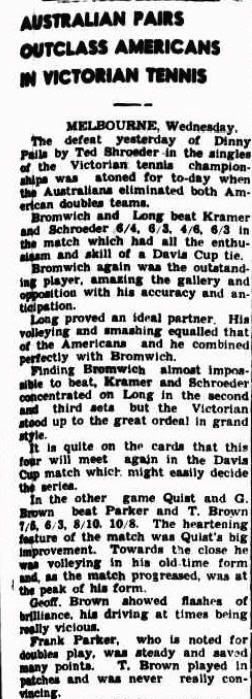
At the end of the war, aged 28 he attracted the eye of team selectors and was included in the Davis Cup squad of 1946. This was done in fine style partnering, with John Bromwich in the Victorian Championships and playing sensational tennis against the visiting US Davis Cup team Kramer /Schroeder (see right). Colin, not noted for being a singles player also defeated Talbert in the same event.(see below).

Despite this good form and making the squad, Colin didn’t play in the 1946 Cup team which was lost 0-5 to the USA fielding the players Frederick, ‘Ted’ Schroeder, Jack Kramer and Gardnar Malloy. Throughout this period the USA team players were rightly rated the best in the world, hence a great performance in the Vic championships.

Having served throughout his formative, development years away from tennis, Colin sees his selection as an amazing piece of good fortune.

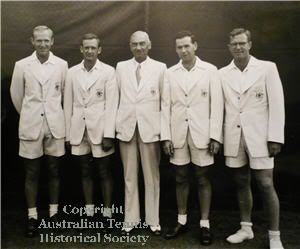
Here we have the 1947 Team- L to R John Bromwich, Geoff Brown, Manager Roy Cowley, Dennis ‘Dinny’ Pails and Colin.

In 1947, Colin played doubles with John Bromwich against Jack Kramer and Ted Schroeder in the challenge round and won in 4 sets again! ( 6-4,2-6,6-2,6-4). He rates this as a highlight of his tennis playing career due to the strength of the Americans and a concern that Bromwich was not 100% convinced he and Colin could win. The US won the 1947 Challenge 4-1.

Colin played in all the 1948 doubles matches which saw the team travel to Cuba (3-0), Mexico (4-1) and again went down to the USA (5-0)in the challenge round. So no wonder winning the one rubber in three years was a highlight.

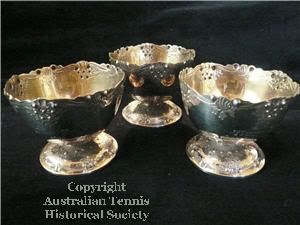
These Challenge Cup trophies in silver were presented
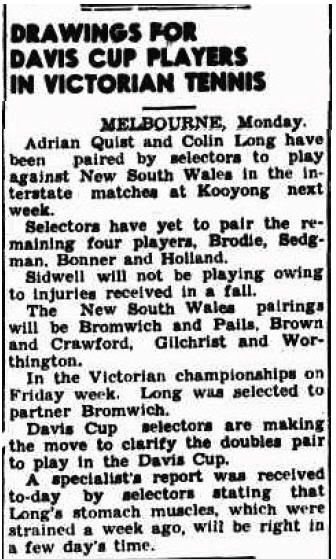
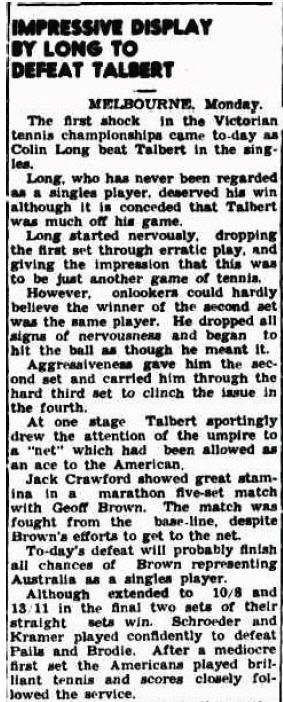
to the losing team members in 1946/47/48. Somewhere
in Jack Kramer’s (& others USA team member ) cupboards
will be the all gold versions.

Colin also had numerous local successes making the 1948 Australian Championships Doubles Grand Final playing with Frank Sedgman and then losing to Bromwich and Quist after leading 2 sets to 0, with a match point in the 3rd and losing the 5th set 8-6 (Colin says this is the worst memory). He also won the Australian Mixed Doubles Championships with Nancye Bolton in 1940/46/47/48 and was runner up in 1938. Pre 1968 Colin was the most prolific male winner of the mixed title event.

Colin has enjoyed tennis all of his life and enjoyed a long career at Spalding, on radio and at Channel 7 as the Tennis, Golf and squash presenter. His main racquet of choice thoughout his career was Spalding ( no surprises there)

Thanks Colin………..a pleasure to catch up and reminisce……. Rod