Len Schwartz

Len passed away 23-11-2010 aged 97.  The article was produced in 2008.

Len Schwartz, was born in 1913 in the Barossa Valley, South Australia.  The other day Len kindly gave me some time to discuss his long and wonderful tennis career. His junior days were spent in country Strathalbyn where he practiced regularly against a brick wall and played at the Milang Tennis Club.

At 18 years old he went to search for a job in Adelaide and found himself employed by one of the largest retail groups, Harris Scarfe who still operate today in numerous states. On the very first weekend, Len dressed himself in his tennis gear, packed a racquet, jumped on his bike and began the search for a tennis club with grass courts. He found his new home at Unley Oval and promptly played in the West Torrence district team in the U21’s. Following good performances he found himself in the Linton Cup Team where he met Adrian Quist and Don Turnbull.  Quist was already a very promising junior having won the 1930 Australian Boy’s Doubles with Don Turnbull however he partnered with Len in 1932 to win the championship for the second time.

Len enjoyed more doubles success than in singles, yet he had match points to almost win the South Australian Championships at least once but appeared in the final four times against Hopman in 1933 in a massive 5 setter (10-8 in the fifth), Quist twice and Bromwich. As a demonstration of his doubles versatility, Len won the doubles event 4 times with four different partners (G.Hone, R Sheppard, John Wright and Adrian Quist) and the mixed event twice.

Len considers his best shot was the backhand volley however he played a constant serve volley attacking game.  He played for the South Australian Intercolonial team which enjoyed a massive public following and acted as an excellent lead-in tournament to the Australian Championships.

While somewhat in the shadow of Crawford who won Wimbledon in 1933, Quist, Viv Mc Grath and Bromwich, Len continued to impress and was selected as the 5th player in the 1937 Davis Cup team.  In those days with the Tennis Association picking up the overseas traveling expenses, it was decided that a five player team was not affordable and Len missed out.

In 1938, Len defeated Jack Crawford in the first round of the Australian Championships in front of his home crowd and then went on to be defeated in the quarter finals by the legendary Don Budge in his Grand Slam year 6-4, 6-3, 10-8. He recalls Budge changing ends saying something to him like “keep up the good work, you’re playing well”.
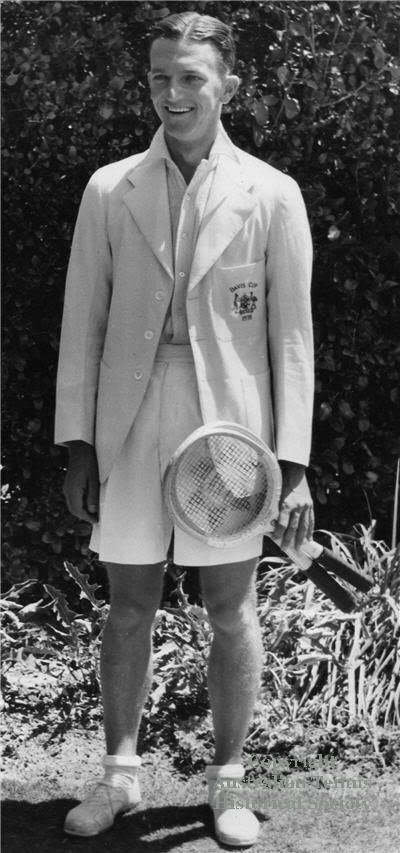
The dominance of Budge and the US team almost lead the LTAA to decide not to send a team in 1938. Luckily they approved a team and Len’s performances pushed him up the rankings and into side with Quist, Bromwich and Harry Hopman as Captain Manager. They toured the USA for 5 months.  The first round played was against Mexico in Kansas City which was a high altitude city and hot. Hopman, gave Len his chance to play his one and only singles match defeating D.Hernandez 6-4,6-1, 6-2.

After defeating Japan in the next round, the Australians went on to win the American Zone and then defeating Germany from the European Zone to meet the mighty US team in the final. It wasn’t the 5-0 whitewash many may have expected. The US team won 3-2 in Philadelphia, playing Riggs and Budge in the singles and Budge Mako in the doubles.Quist and Bromwich won the doubles and Bromwich won the only singles against Riggs.

On the tour Len and Harry used to play and practice alot against Quist and Bromwich. They were the ultimate doubles combination and from 1938 to 1950 with no play during the war, Quist and Bromwich won the Australian Doubles title 8 times (Quist won with Don Turnbull in 1936 1937 so he won it 10 times straight over 14 years. Whilst on tour the Australian team entered and played in the American National Doubles Tournament the feature event in that year.  Len and Harry were defeated by Quist and Bromwich 3-1 in the semi finals who in turn then lost to Budge and Mako in the finals.

The second most prestigious doubles tournament was held in Los Angeles.  Here Harry and Len defeated Quist and Bromwich and went on to defeat Budge and Mako.  Len not only sees this as his best series of wins, but he pointed out that in achieving their performance over the two tournaments they had defeated all four 1938 Doubles Grand Slam winners.

After the war in 1946, Len was asked to once again play in the Davis Cup team, however since he was married and needed a job, Len became a tennis coach and under the restrictive rules of the era that saw many fine players ineligible due becoming “tennis professionals” Len could not be selected.

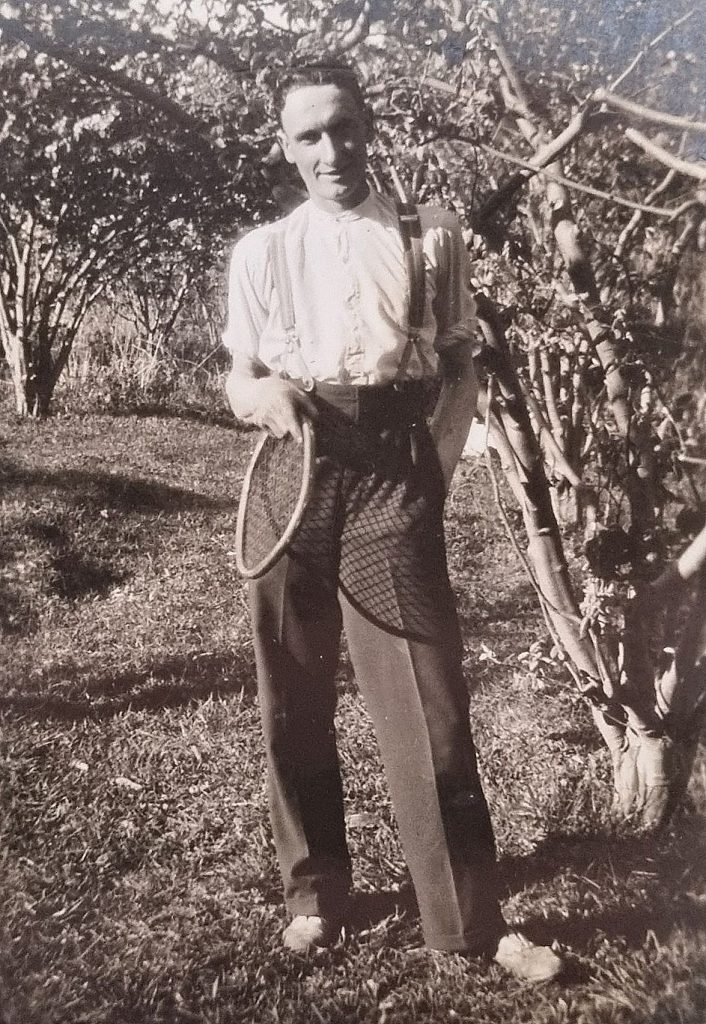
Since we always have an interest in racquets, Len’s first racquet was an English made Prosser that his father gave him and after that as he became more prominent in South Australia he was approached by the local Slazenger representative to work for the company.  He did change to Spalding for a short time thanks to his mate Don Turnbull who worked there but went back to Slazenger and eventually moved to their head office in Alexandria, NSW where he was able to play exhibition matches and promote Slazeneger products to clubs and private homes. Len remained a coach until he was 70 and like many others demonstrated his sporting prowess by playing for the South Australian Lawn Bowling team for 10 years.

As a coach Len recalls teaching John Alexander and has enjoyed the many Davis Cup Dinners Tennis Australia invited him to and fondly remembers meeting fellow South Australian and AFL Crows supporter Lleyton Hewitt.
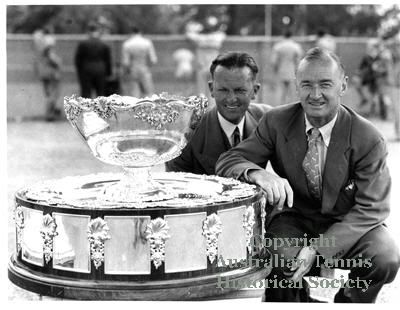
At 95, Len is still very with it and readily recalls his experiences in considerable detail which is a huge blessing. It was a great pleasure to talk with Len and to share these wonderful memories. He is very proud to have played in the Davis Cup team in 1938 and he and his family including 6 grandchildren and 4 great grand children should be thrilled that Len’s name is on the Cup.

Pictures show Len with Harry Hopman and the Cup.

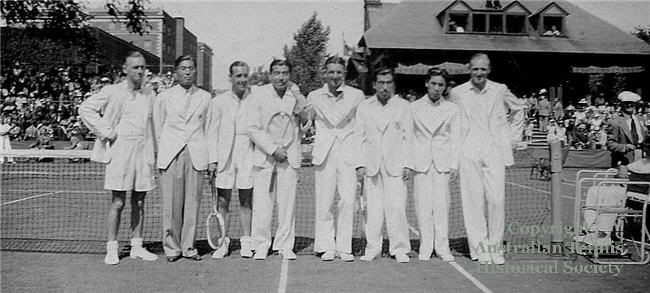
Below, the Australian v Japan Teams in Montreal 1938. Harry Hopman far left, Adrian Quist 3rd left, Len 4th right and John Bromwich far right.


Bill Sidwell

O.W.Sidwell may not be a household name in Tennis, yet Bill who resides in Sydney aged 88, was a great player in the 1940’s era with Adrian Quist, Geoff Brown and John Bromwich.

Today, Bill still leads an active 88 year olds life, playing and organising veterans golf events. Sounding, nowhere near his age we are indeed fortunate that Bill can recount some of his amazing tennis experiences.

At aged 15 a friendship between Bill’s father and the then Managing Director owner of Slazenger Australia, David Blacklock, helped Bill into his first job. Normally, this may sound typical for a young lad in the thirties, however Bill started school at 3, completed his leaving certificate at 15 and majored in advanced mathematics and accounting. To Slazenger, these skills applied to business modelling and management were very desirable and Bill stayed on with Slazenger for 47 years from 1935 to 1982.

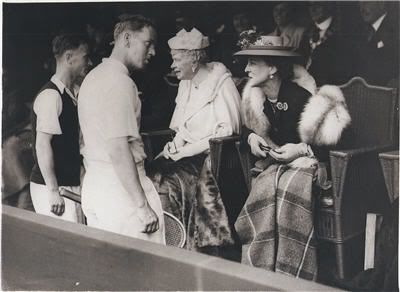
No doubt with the Slazenger experience close at hand, Bill who started playing when he was 7, became a very good tennis player.  In the picture right, post war 1945, the Allied forces played a UK charity match hosted by Queen Mary. Bill found it quite amusing that the US flew in one of their top players, Archie Henderson, especially for the match, however Bill won in four sets.  Bill at the rear is talking with Queen Mary. He was ranked #1 in the British Empire.

1947 was a stellar year, most notably in doubles and Bill came close on three occasions to win 3 of the Grand Slam doubles events. Unfortunately as runner up at Wimbledon with Anthony Mottram, the US Open with Bill Talbert and the French Open with Tom Brown.

The important breakthough came in in 1949 playing with John Bromwich, where they won the US Open Doubles against Frank Sedgman and George Worthington 6-4,6-0, 6-1 which was Bill’s only finals win despite many attempts.

For Australia, in the Davis Cup, Bill played in the 1948 team with Colin Long and Quist in Havana to defeat Cuba, followed by a 4-1 win over Mexico and a very close Inter Zone final against Czechoslavakia 3-2.

Bill considers his Win over Drobny and Cernik (Czechoslavakia) as his pivotal matches. Drobny was ranked #5 in the World and the first rubber 4 set tussle must have been nerve racking 6-3,6-2,9-11,14-12.  At two rubbers all Bill’s final match against Cernik was critical for a win which he did in 3 sets, however it was the Drobny match which gave the “under-dog” Australian side an edge.  Unfortunately, the USA team were very strong and we lost 5-0 in the New York Challenge Round.

Bill recounts that the Challenge round against the USA had created a media frenzy and that a TV station had negotiated film rights with the USA team.  Adrian Quist not happy with this imbalance in finances stormed off to the USA camp to negotiate half the proceeds for the Australian side.  Being subsidised only $5 per day for expenses, by tennis authorities made it very enticing for players to cross over to chase larger pay packets of the professionals.

The 1949 team which introduced Frank Sedgman into the side with Bromwich saw Bill in the USA Challenge Round, again to lose to the USA team of R.Gonzales, F. Schroeder, Bill Talbert and Gardner Malloy 4-1. The only win being doubles between Bill and Bromwich over Talbert and Malloy.

In 1949, Bill was ranked #10 in the World according to the USLTA records. At the 1950 Wimbledon event Geoff Brown and Bill teamed up for the doubles and made the finals to be defeated by the other Australian Team John Bromwich and Adrian Quist.

After this sensational effort both Bill and Geoff left the game to concentrate on  Slazeneger business.

The picture right shows Bill in action against F.Parker at  Wimbledon 1949.

The picture below right shows Bill and Geoff Brown in action against Drobny and USA Bob Faulkenburg also at Wimbledon in 1949.

We will add more information about Bill as we research this era of Australian tennis with his son Terry.

Thanks for the photos and stories from the Sidwell family.

Development of Tennis Balls & Unusual Ball Cleaners

If ever there was a story about the egg coming before the
chicken,the the story of the tennis ball may well be the most relevant.

Throughout the early 1800’s Indoor or Real tennis used balls made from leather stuffed with cotton or central cores twined with cord. Naturally this made use in outdoor situations unimaginable.

However, in the 1830’s in the USA, Charles Goodyear spent considerable time researching techniques to stop rubber from reverting back to being soft and sticky. He discovered the way to vulcanise rubber to maintain its rigidity and over in the UK between the 1850’s to 1870’s further inventions lead to the production of bouncy, hollow rubber balls.

In 1874 the application of cloth surfaces to the rubber ball provided the ultimate solution to allow an outdoor version of lawn tennis to become possible. The other major event critical to outdoor tennis was the invention of the rotary lawn cutter which enabled finely cut grass courts to be prepared and line marked quite readily in gardens around the globe.

Both uncovered and covered balls were used according to different surfaces. On asphalt uncovered balls were used, while covered balls were best on grass. In Burnie, Tasmania a Victorian club team from Grace Park in 1901 played on wooden courts with uncovered balls, so strategy about balls and court surface selection for competition play was alive and well.

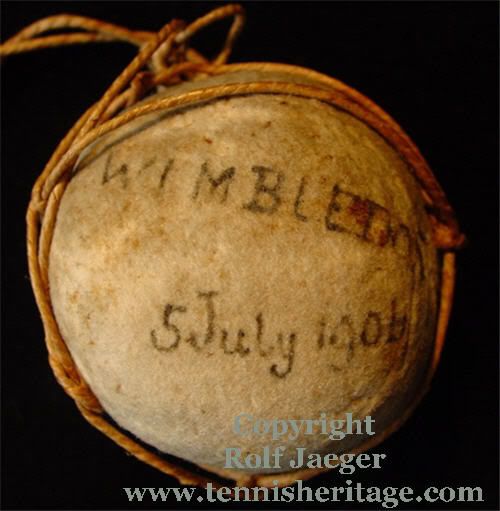
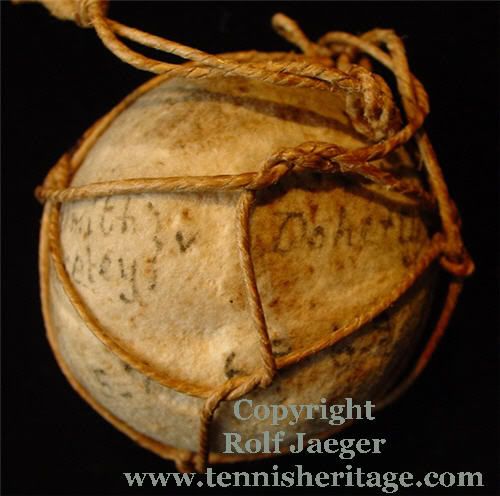
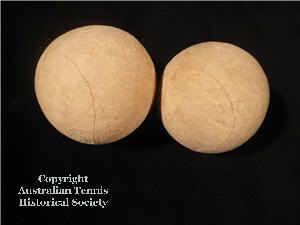
In 1902, Slazenger became the ball of preference at Wimbledon having succeeded F.H.Ayres after a 22 year association. Each ball featured a hand sewn cloth finish. The following years saw dramatic improvements to production techniques that led to more consistent finishes and uniformity. Packaging was changing also to help preserve ball pressures including sealed tins and some other surprising techniques such as wax coatings. The pictures of the 1906 Slazenger ball used at Wimbledon only have string around them as part of a display. Note the match the ball came from had one or both of the Doherty brothers playing.

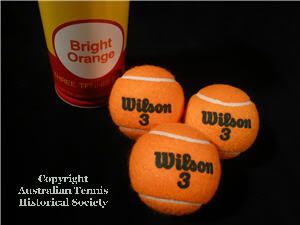
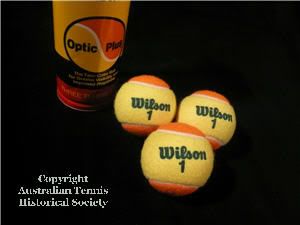
While you might have thought that white tennis balls were the norm until the 1980’s, Slazenger in a 1906 catalogue were promoting a “tropical” lawn tennis ball in all red, blue/yellow, black, red/white, blue/white, yellow/white, red/yellow, red/blue, blue/yellow, red/black. In 1977 Slazenger tried to launch a green ball to increase visibility but it wasn’t until 1982 that the fluoro yellow ball began to be used as the colour of preference over white. Mind you there were many other experiments in colour and two colour balls. I recall a story that Ivan Lendl killed off two colour ball use in tournaments because he claimed players could tell which way the ball was spinning through the air giving an unfair advantage.

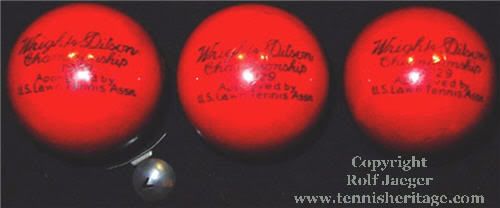
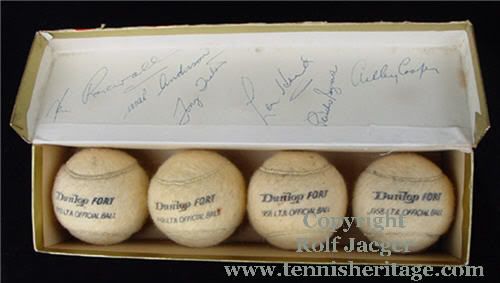
The 1930 balls above, are wrapped in their original wax paper.
These sold for 350 pounds on Ebay 2010.

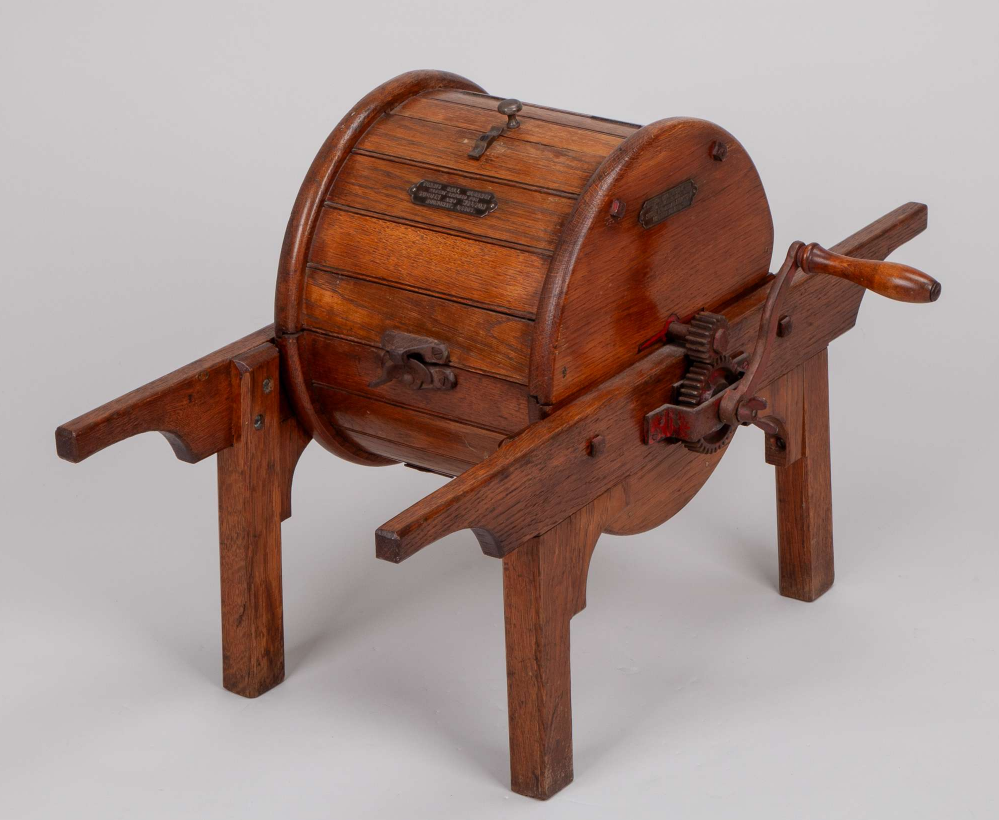
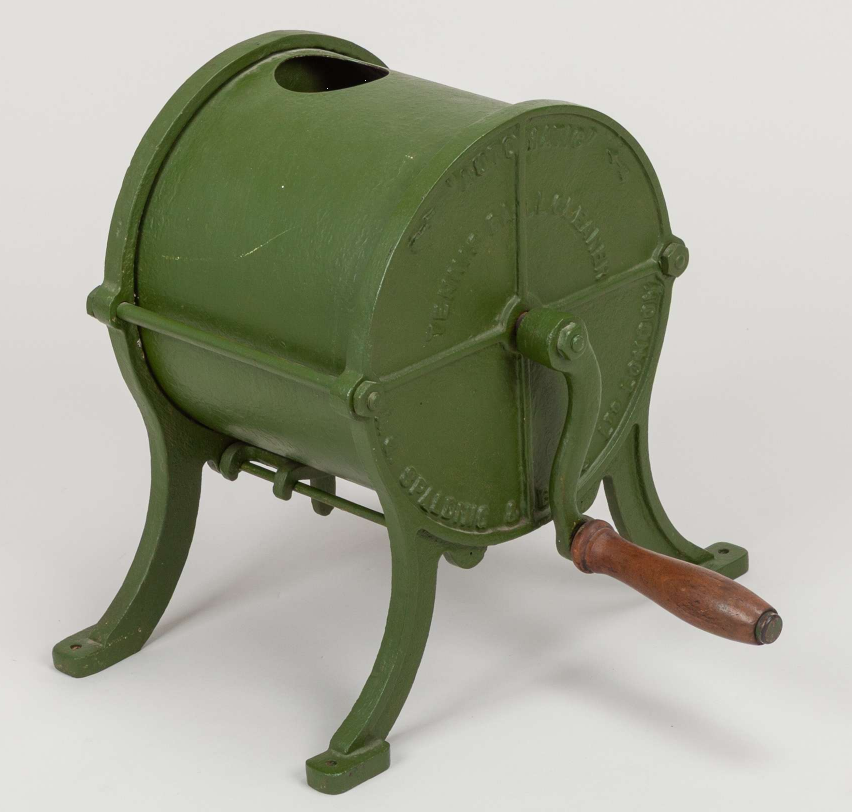
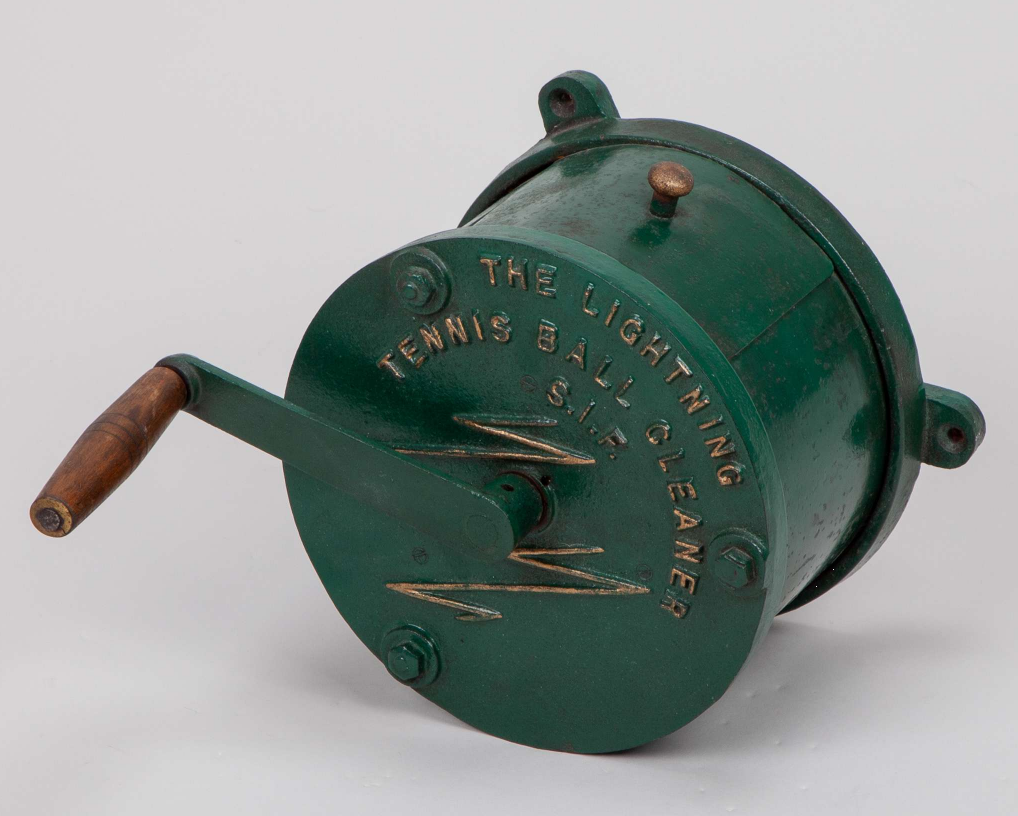
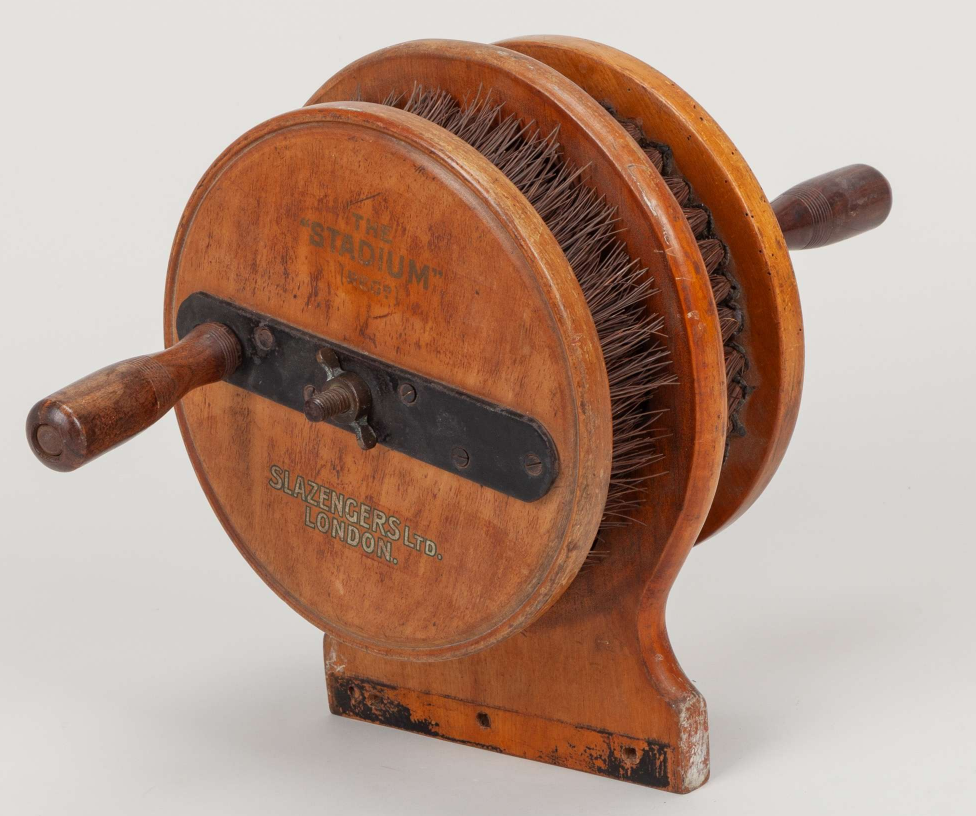
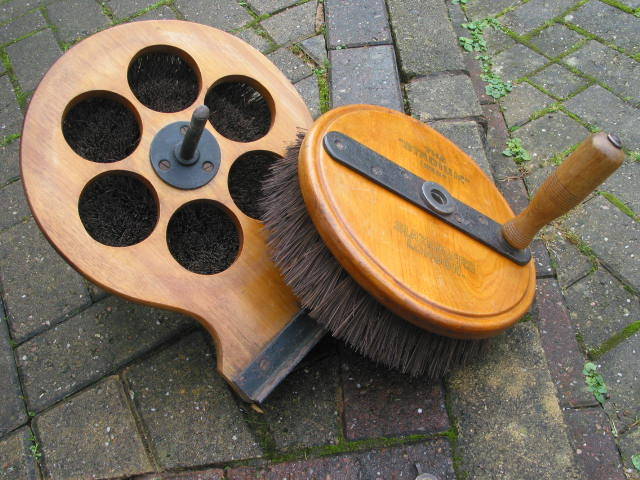
Closely related to the subject of tennis balls is ball cleaning. Early games played on grass and other surfaces combined with the expense and availability of balls meant preserving them for play was essential.  No doubt mud was a major problem and so there are a variety of ball cleaners that were developed. Since they no longer grace the modern day tennis setting most players will have never seen them before.

These shots were obtained from the internet a couple of years ago. I present them in the interest of education only and do not claim copyright or ownership.

Top:  A single ball cleaner. A brand called Kleenball appears for sale from time to time.

Middle:  Wall mounted 6 ball cleaner

A Club ball cleaner. Probably does 20-50 balls at a time. A hatch at the base opens to allow the clean balls to be removed.

Spalding

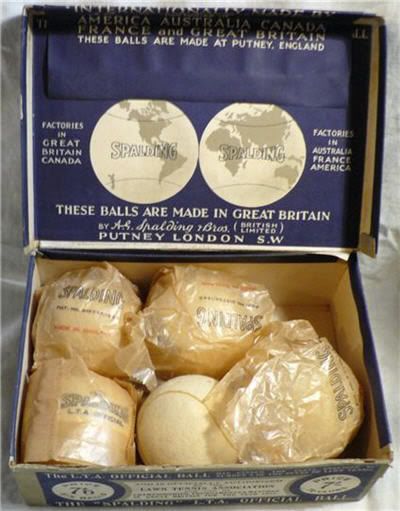
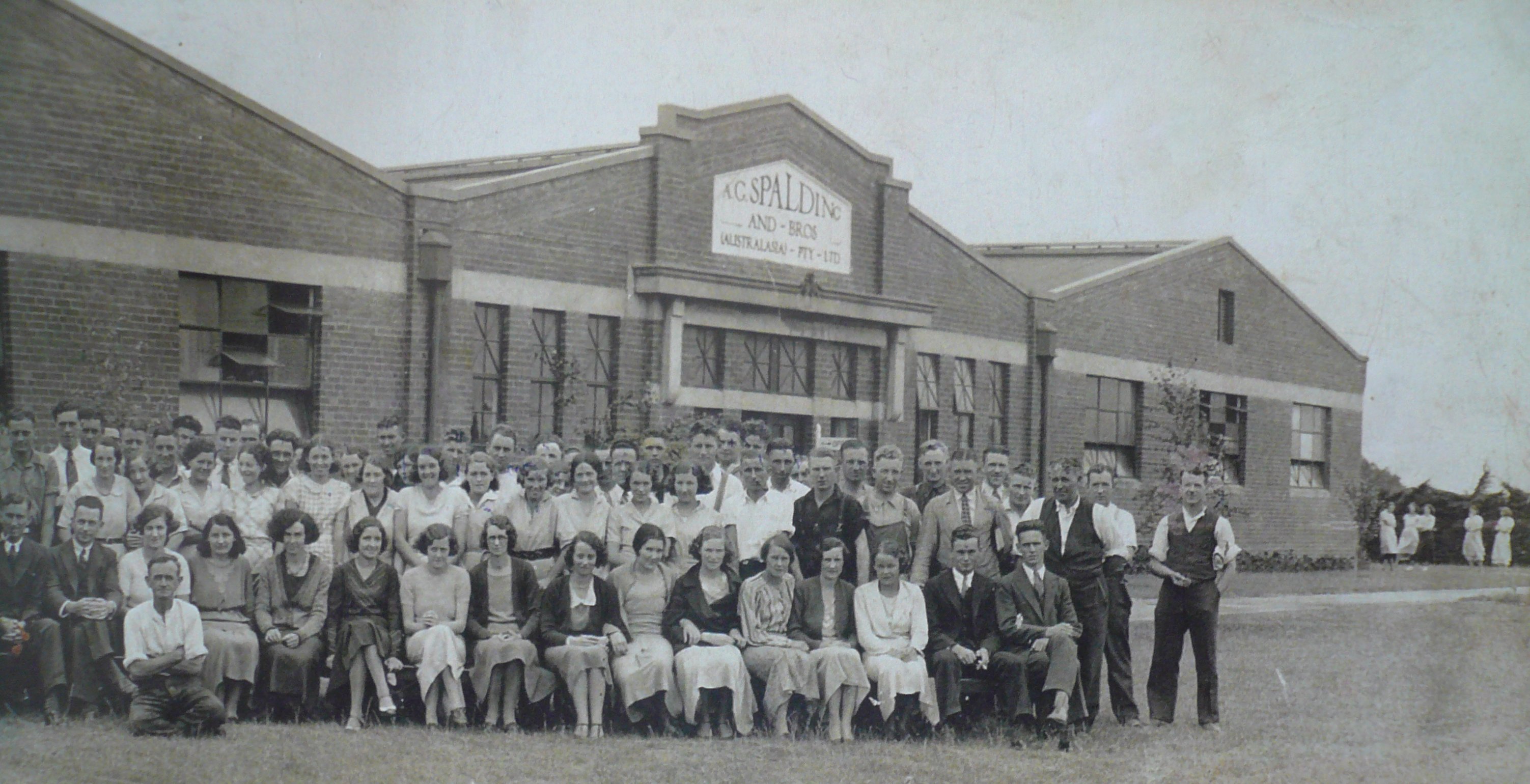
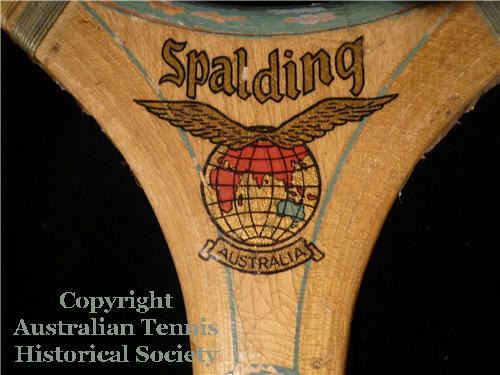
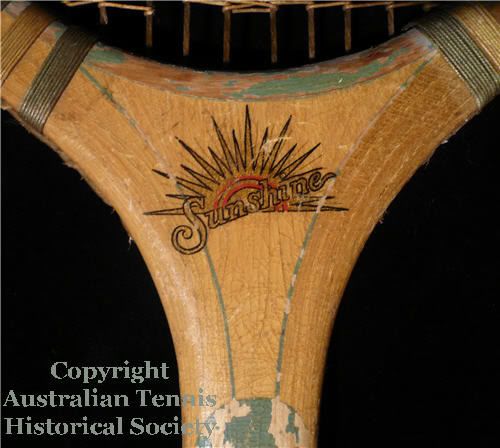
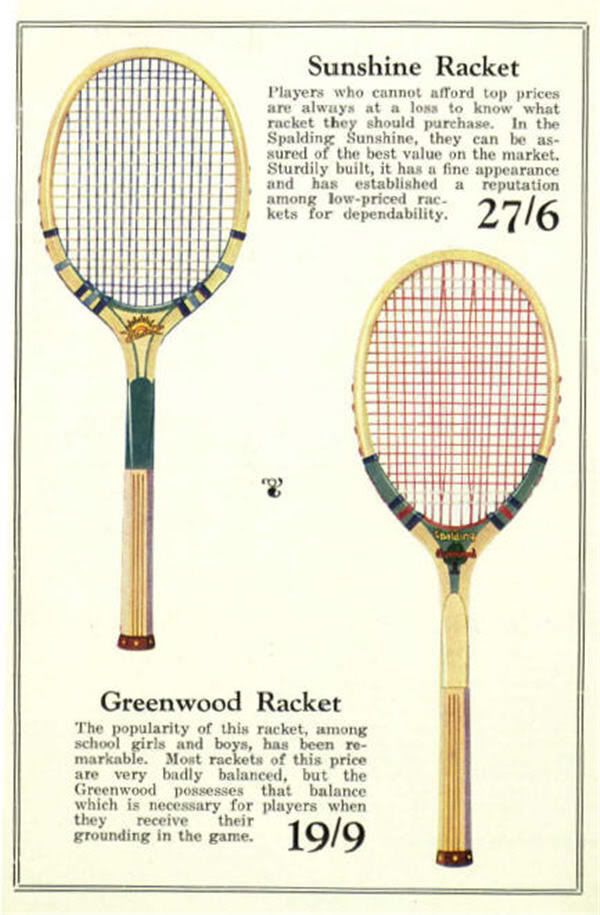
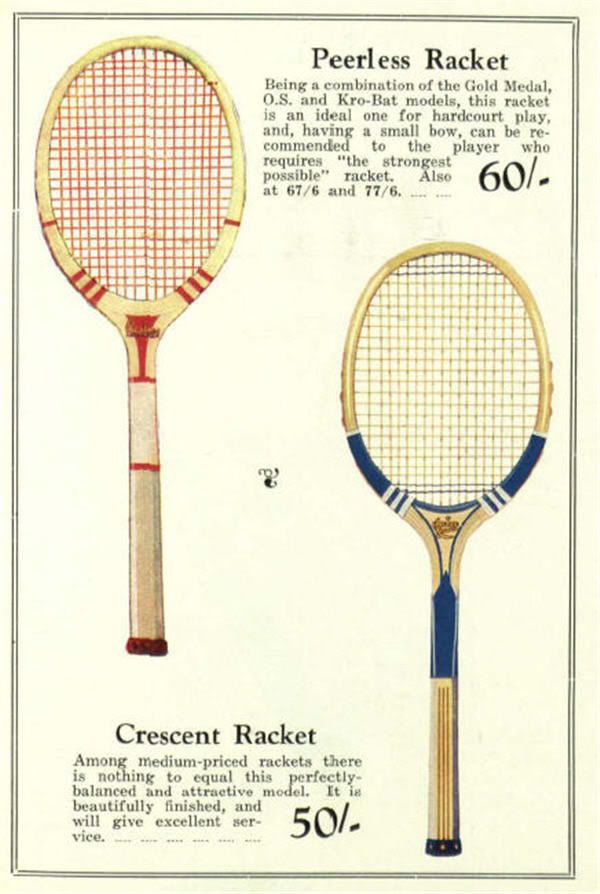
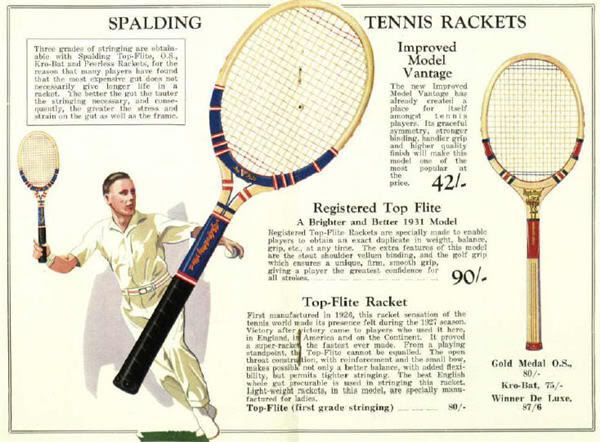
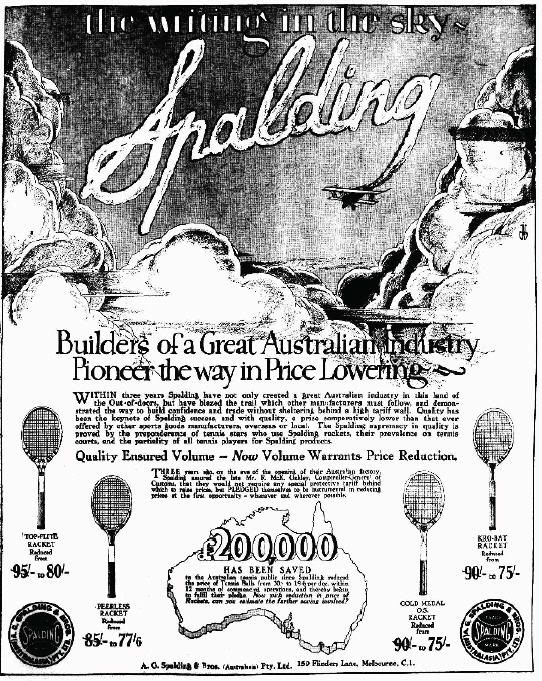
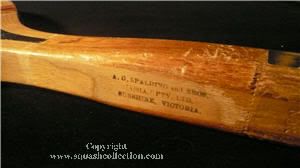
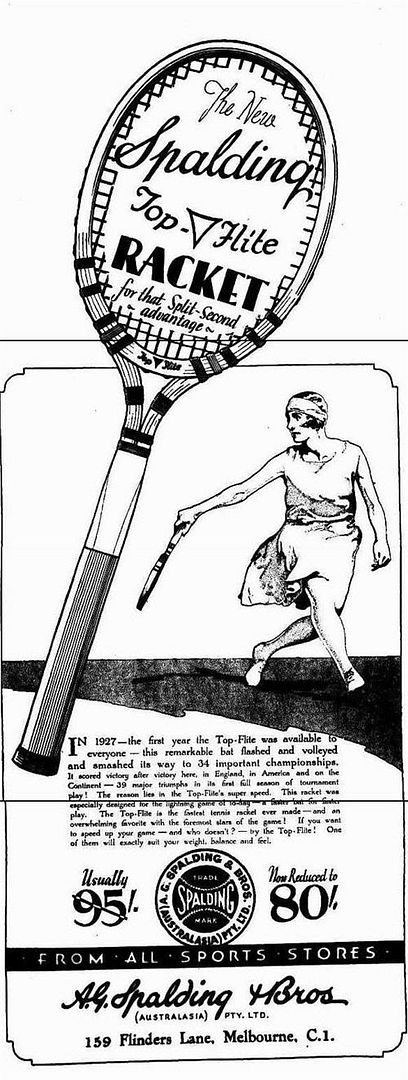
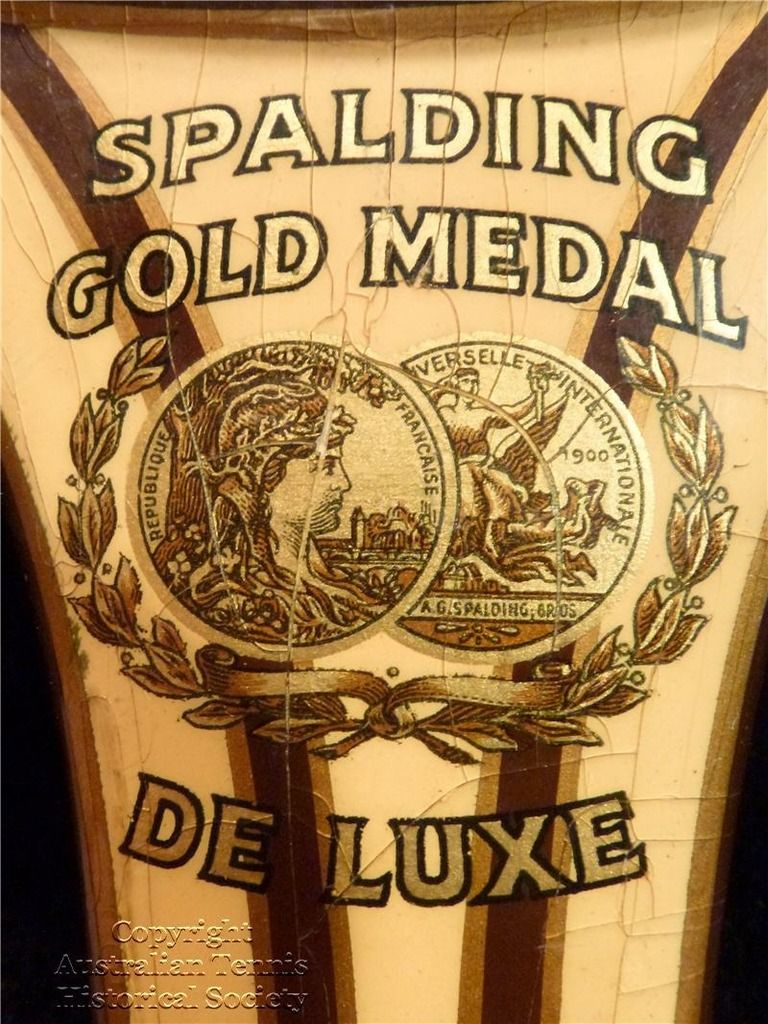
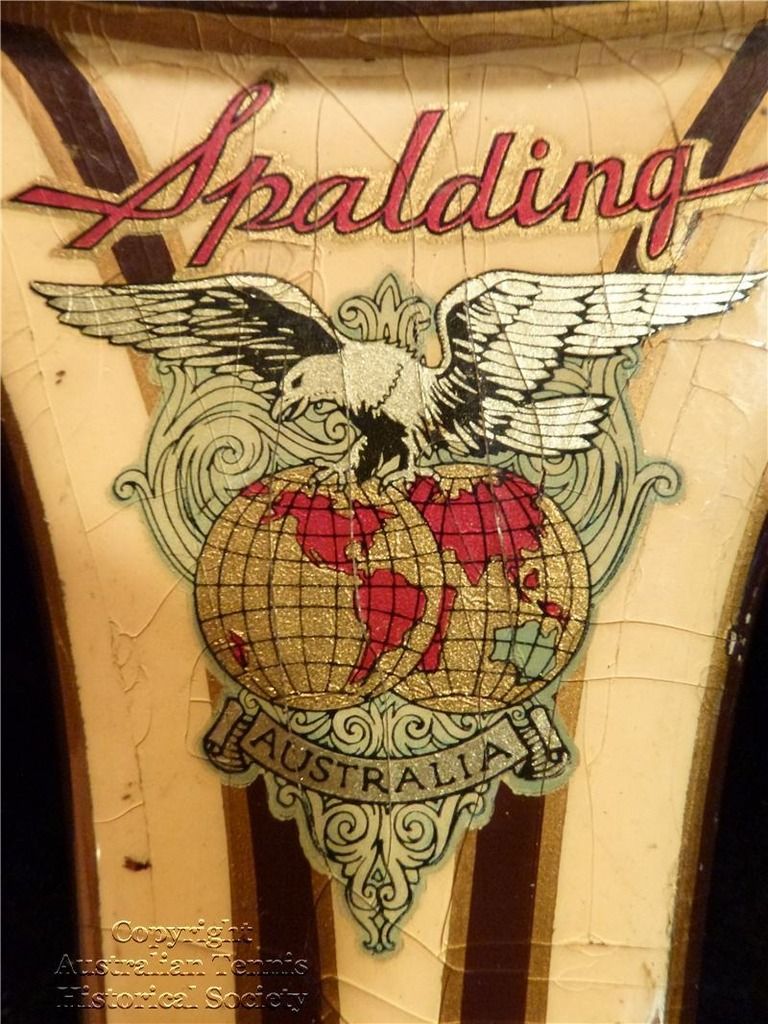
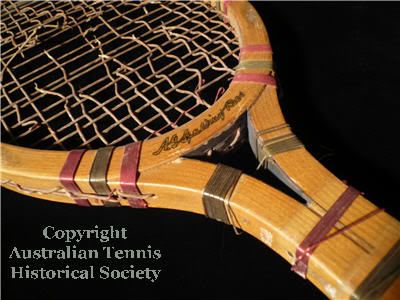
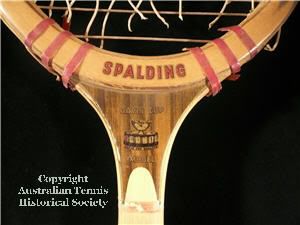
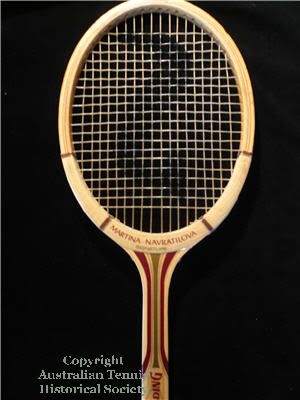
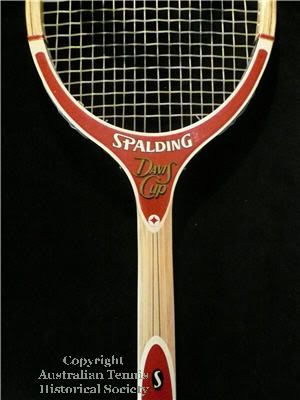
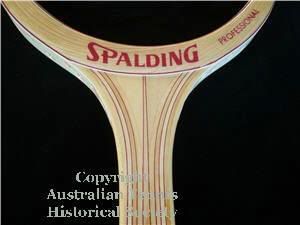
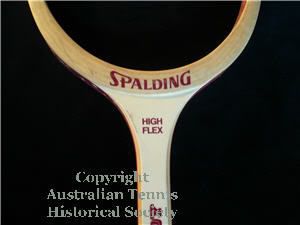
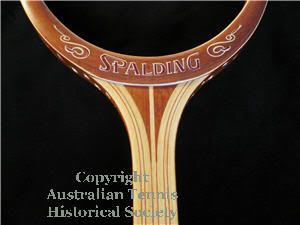
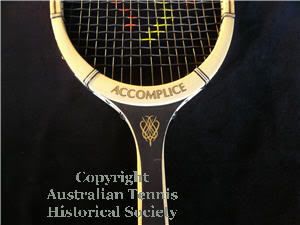
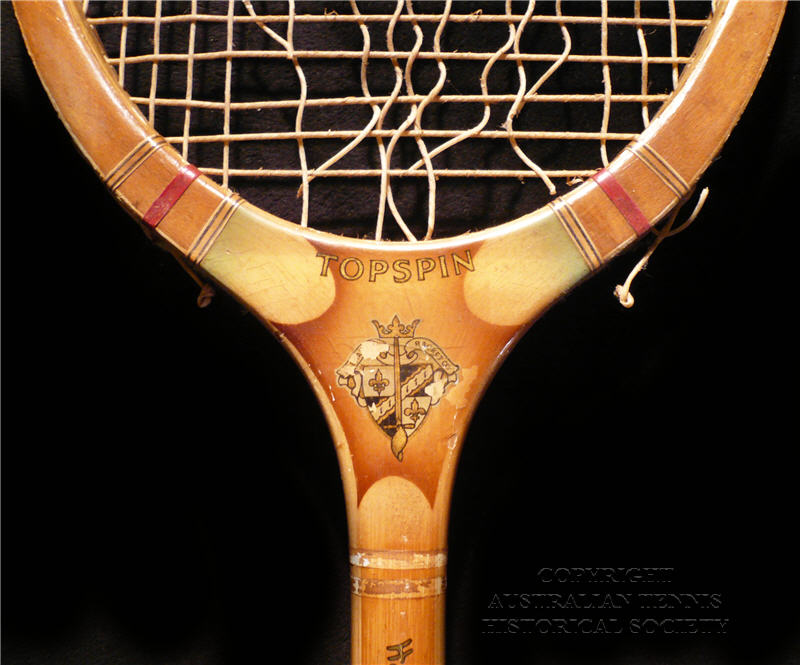
USA Company A.G.Spalding was founded in 1876 by Albert Goodwill Spalding a successful baseball player. While the business was based on baseball the company expanded into a variety of sports, tennis included and sold the famous name “Slocum Tennis Racket” after Henry Slocum who was the second US singles champion in 1888/1889. This racquet was made in Belgium. In 1925, Spalding made the decision to open their fifth plant globally in Australia, adding to those which already existed in the USA, Canada, UK and France. Melbourne was their preferred city and the suburb in which the new plant was constructed was Sunshine. Their decision to set up in Australia was based on the very protective trade tariff conditions which added quite considerably to the retail cost of imported racquets plus the growing popularity of tennis and golf in this country. Companies such as Alexanders and Chesterfield were taking advantage of local production and gearing up for growing demand. The plant was purpose built to make tennis racquets, tennis balls and golf balls. The tennis balls were the new two piece plugless and stitchless type which Spalding had invented. One of the first employees and Victorian Sales Manager was Gerald Patterson a famous Australian player of the era, known for his wins at Wimbledon in (1919 & 1922), the Australian Championship in 1927 and numerous Davis Cup teams. Tennis racquets were imported from the USA in a rough state and then on special machinery they were shaped to the various designs. They did however use Queensland maple and cedar woods for the handles. Projections in the first year were to produce 40,000 racquets. Key 1926 brands were the top of the range Kro-Bat, Gold Medal OS, Gold Medal HIC, Vantage, Greenwood, Crescent and the local (assumed) Sunshine models. Players of the era endorsing Spalding at the time in local advertising were W.Tilden, Bill Johnston and Australians Jack Hawkes, Pat O’Hara Wood and Gerald Patterson. By 1927, the famous Top Flite split throat made an appearance and given Spalding’s global marketing stance, racquets produced in the USA which are in more plentiful supply closely resemble designs made locally. In 1929, there was the Davis-Cup-De-Luxe and by 1930 models included the Peerless and the Endura.

SPALDINGFACTORYtennisracquets9-9-1926
Spalding Factory Don Coupe
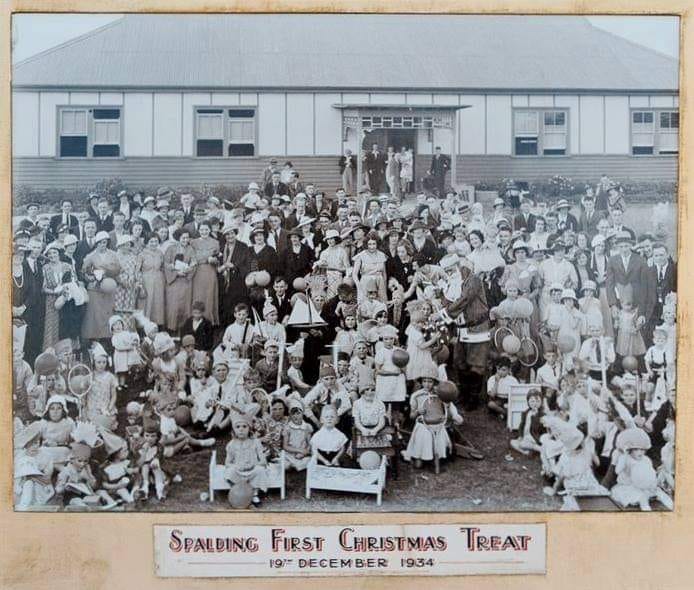
Spalding factory 1934 Christmas Party Treat

Spalding Sunshine Model Spalding Sunshine Model

9th Sept. 1926 This is a very early truly Australian Spalding racquet featuring the suburb of “Sunshine” in the logo. Note Australia is highlighted in green which matched the paint colouring on the shaft. Spalding Hartley Catalogue Spalding Hartley Catalogue Spalding Hartley Catalogue These colourful images were part of the Hartley Retail product catalogue 1930-1931
Couretsy of State Library of Victoria. Note the Sunshine model. Spalding Pat Ohara Wood

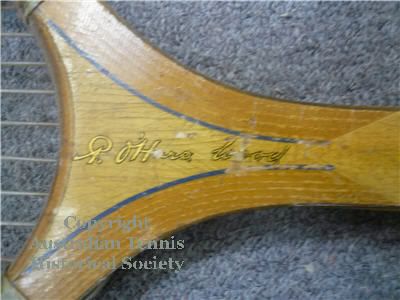
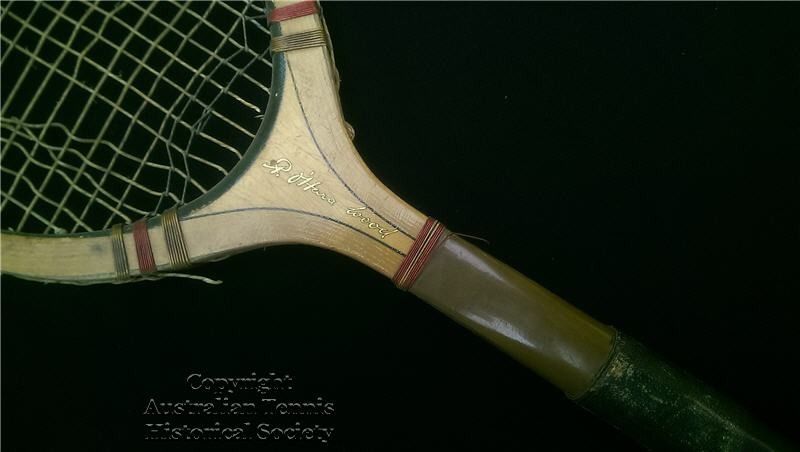
The relationship between Pat O’Hara Wood and Spalding also saw an early signature racquet model being produced.

7th September1929

Spalding Greenwood Racquet made in Sunshine with a similar look and feel to the USA counterpart.

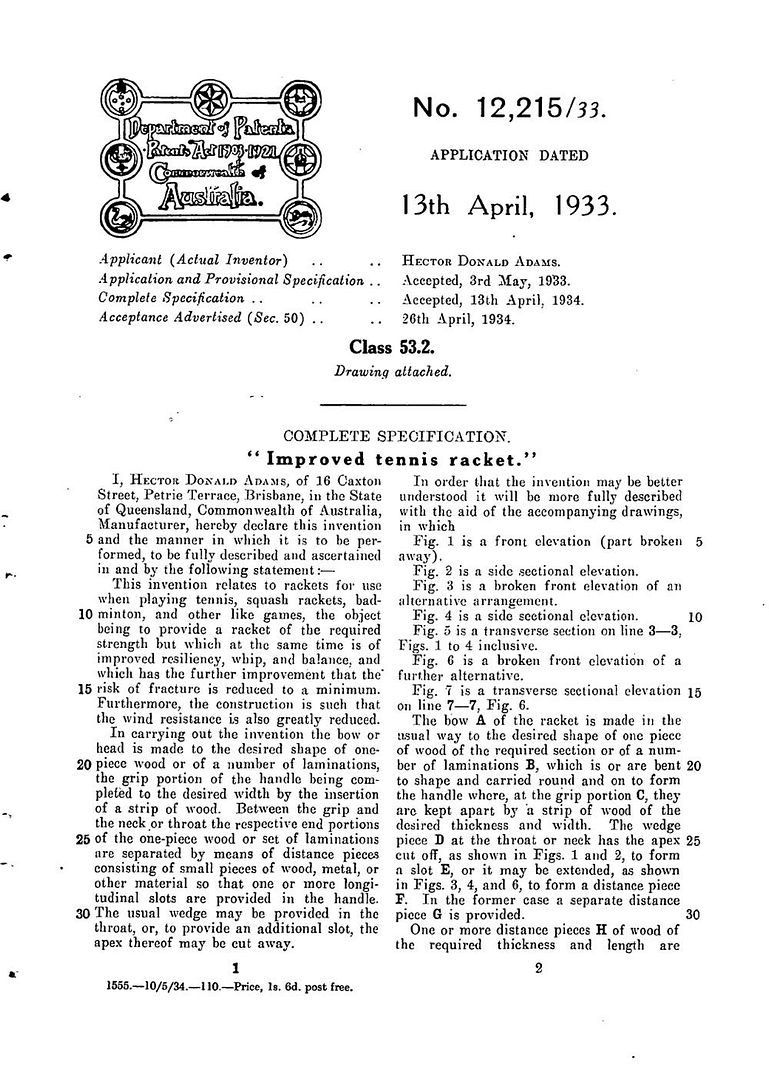
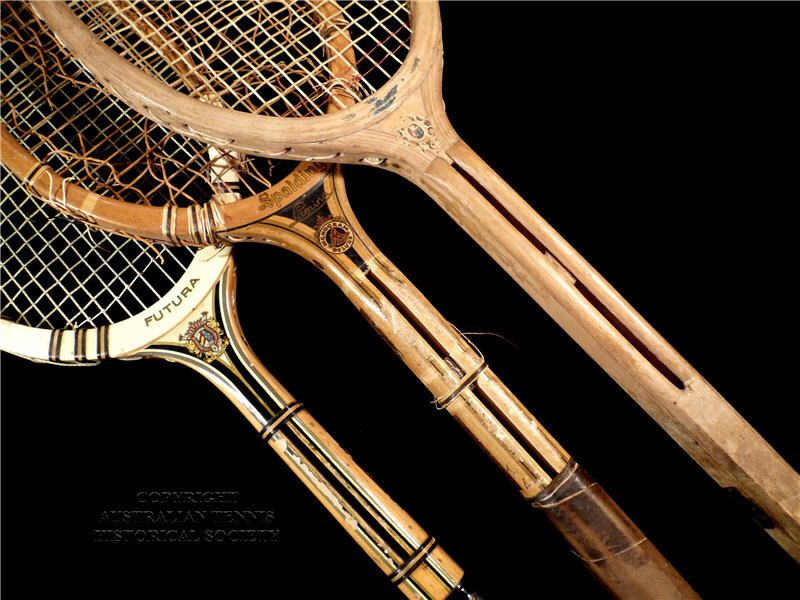
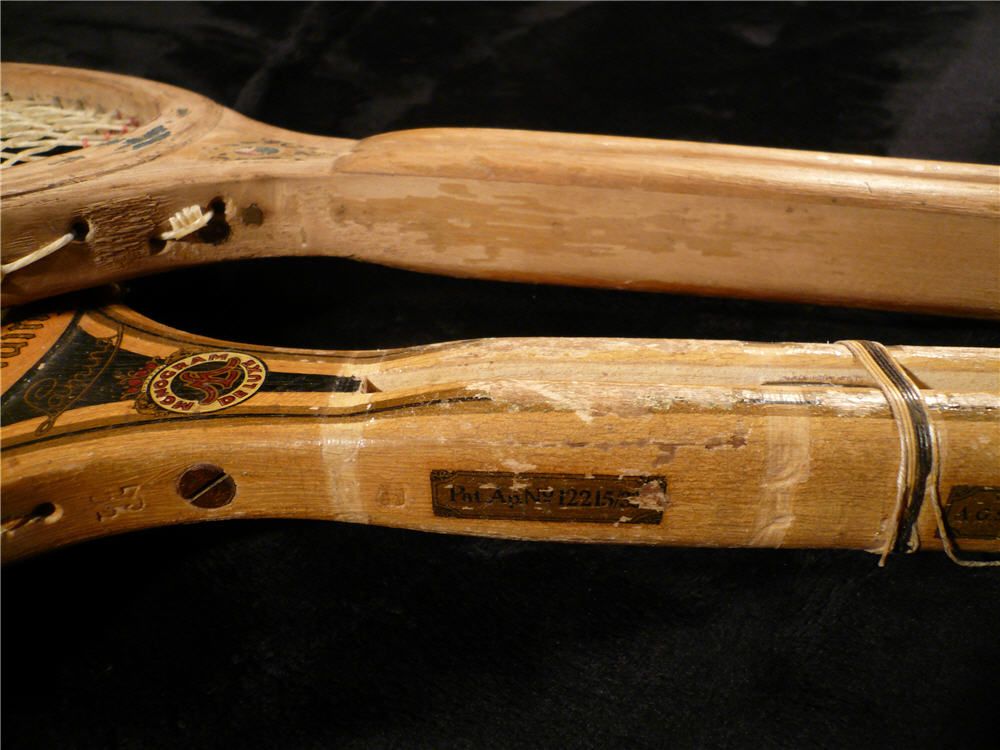
A USA made model but very similar to Australian specification by the look in these ads. In the mid 1930’s Spalding introduced a range of split shaft models against some of the other competitor innovations including balance weight adjustment and semi flat top models. We discovered this new design was invented by a Queenslander, Hector Donald Adams (pic) and patented here in Australia in 1933/1934 patent number 12215/33.

Bluebird proto-type design, below, presumed made in Qld by inventor, Hector Adams.

Another nice uncovering this year was this mid 1930′s Spalding retail store display stand used to hold 5 racquets


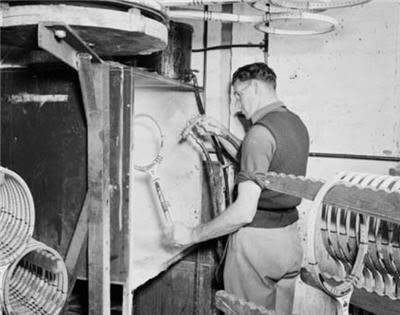
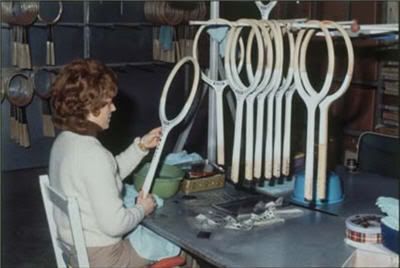
Above and below we have c 1945 shots from the Spalding Factory showing gloss finish application over a seemingly complete racquet and below the decal application process. Photos courtesy of National Archive of Australia above ref NAA A1200, L3187 below ref NAA B4498, 102A1

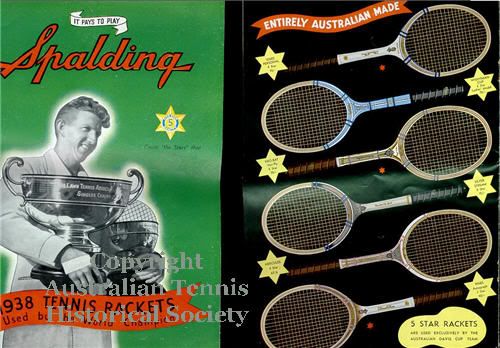
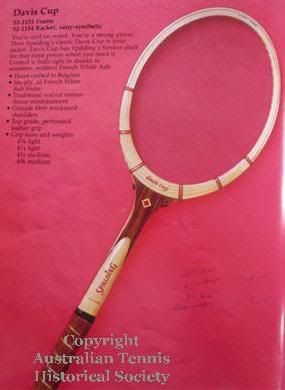
Below we have a shot of the first Grands Slam winner Don Budge who was used extensively as a Worldwide endorsed player. Racquets from the top are Vines Personal, Wightman Cup Ladies Model,Kro-bat Veri Ply, Silver Stream, Hercules (4 star), Vines Autograph (3 star). The first were 5 star as used by the Davis Cup Team.

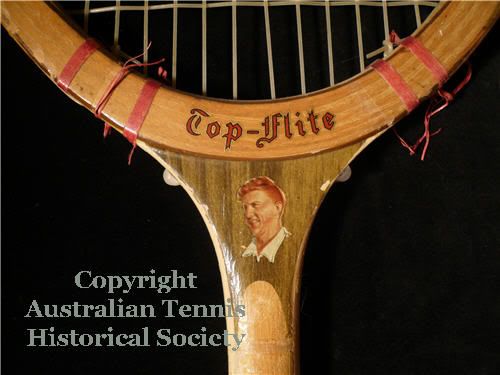
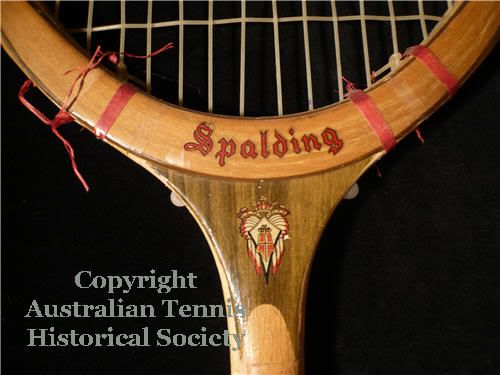
Reverse of Top Flite Don Budge (above) Similar Vintage Davis Cup model


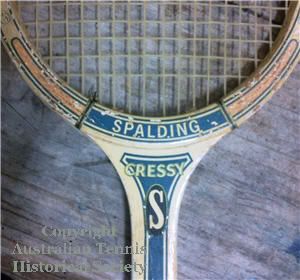
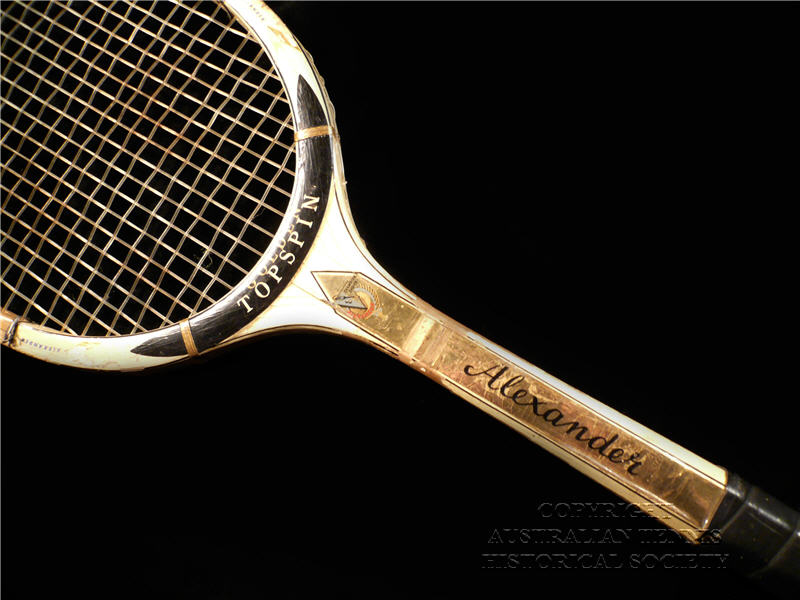
This locally made racquet from the late 1930-1940’s shows champion player Nancye Bolton (Wynne). She won the Australian Open in 1937, 1940, 1946, 1947, 1948, 1951, RU 1936, 1949 Spalding acquired Alexander Tennis Racquets over a period from 1957 to 1961 and integrated the machinery into the Sunshine plant. They even attempted to continue the ‘Cressy’ name with a Spalding model.

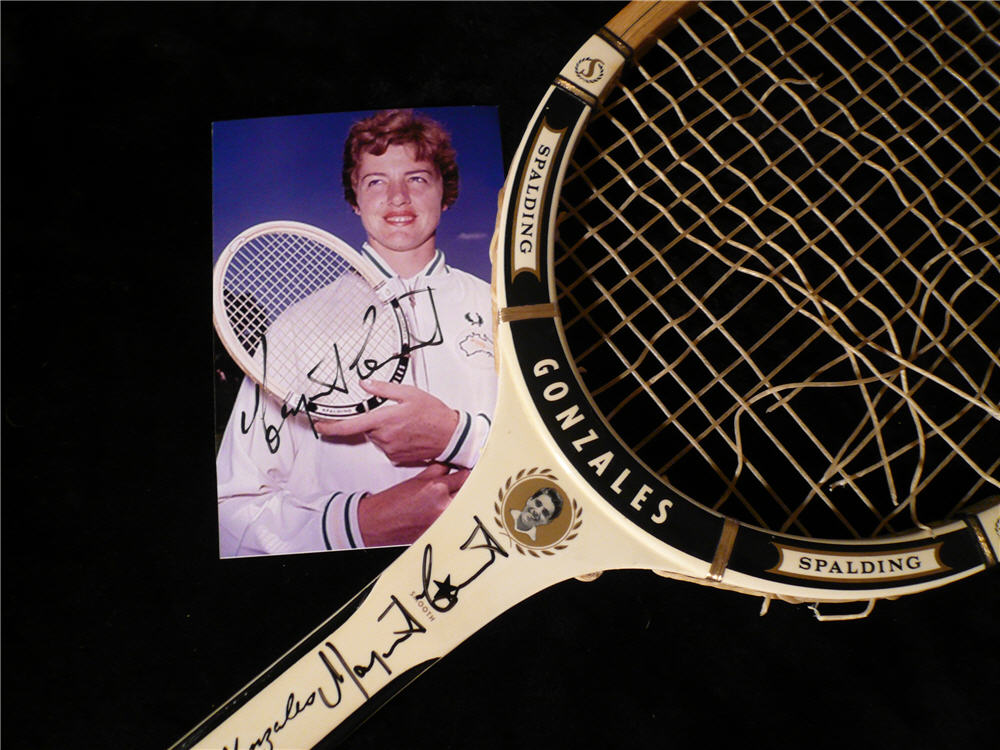
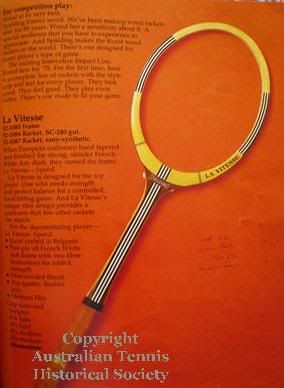
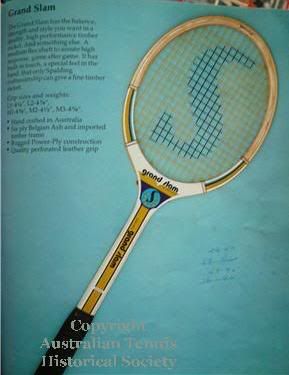
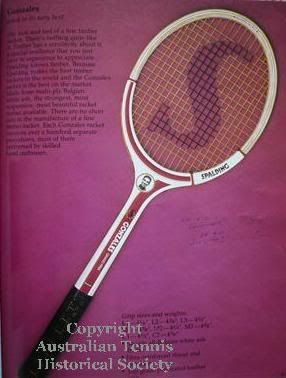
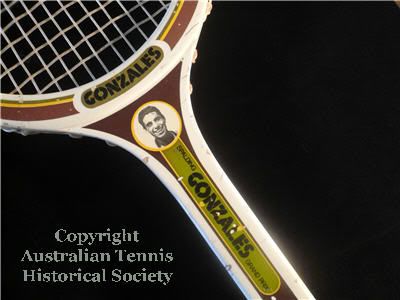
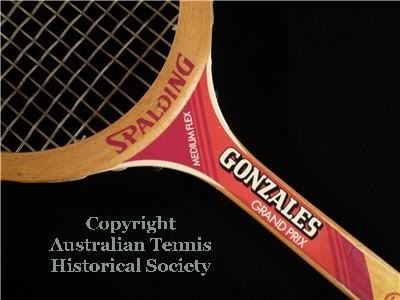
Margaret Smith (Court) won her first Australian Major singles title with a Spalding Gonzales model.

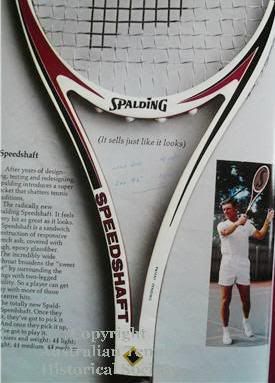
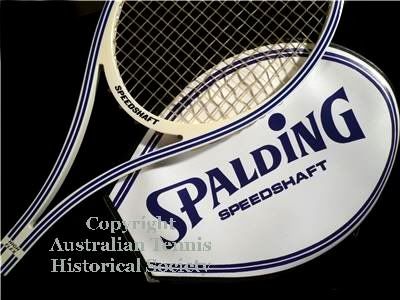
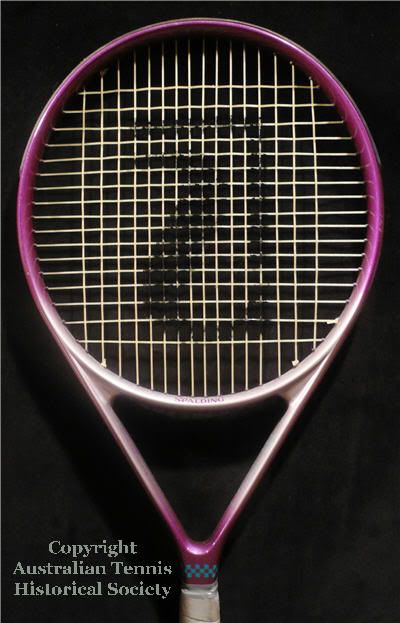
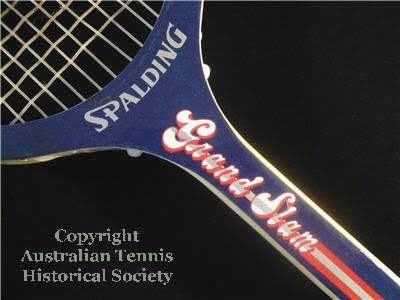
Spalding Speedshaft

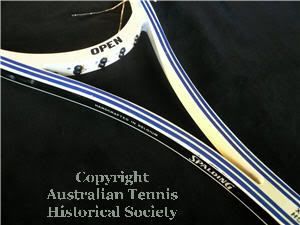
The very attractive Speedshaft racquets were made by Snauwaert in Belgium

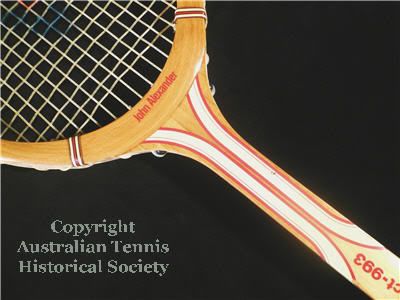
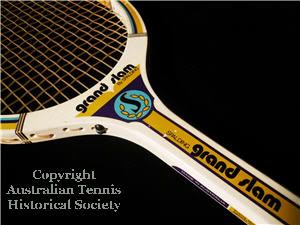
Note the John Alexander model, made in Belgium by Snauwaert which was pretty much the case from the mid 1970’s on.

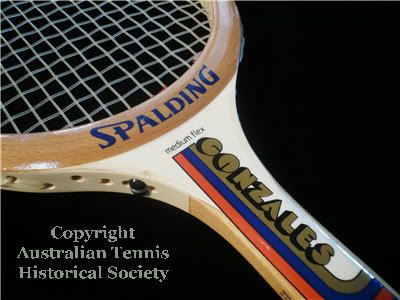
Gonzales Spalding

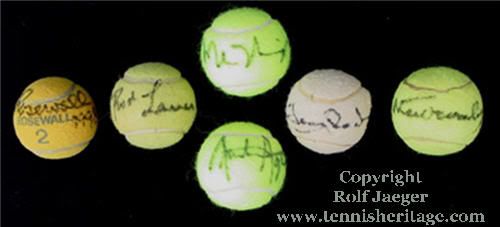
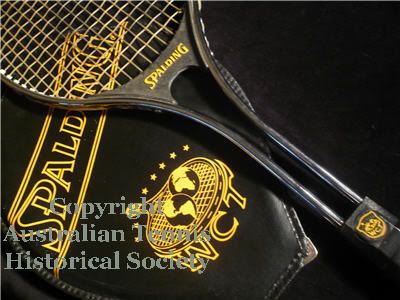
The WCT (World Championship Tennis) was launched with a group of professionals including Newcombe, Laver, Roche and Rosewall plus others. While Spalding made racquets in the mid 1970’s, a clash between the WCT owner, Lamar Hunt and Wimbledon saw all these players banned from the 1972 tournament.

Alexander Racquet Company

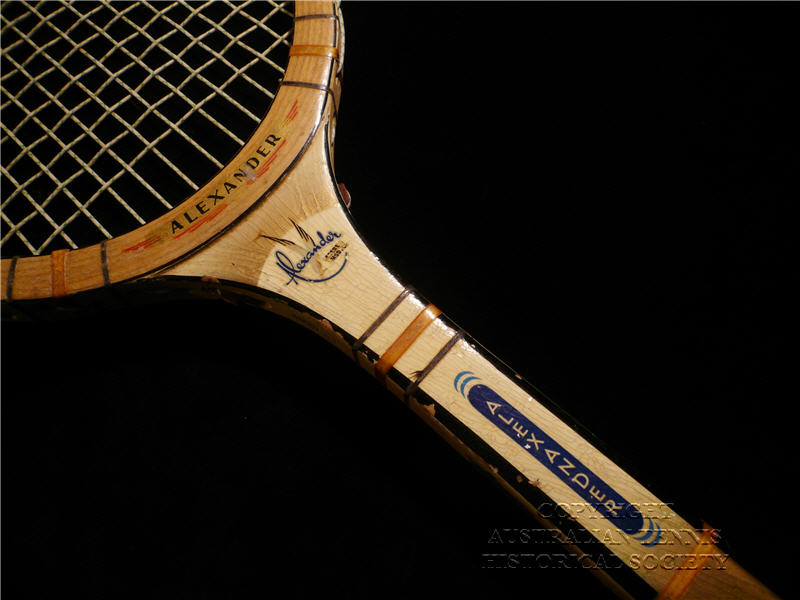
The Alexander Patent Racket Company is probably the most successful homegrown racquet manufacturer beginning in 1926 and operating until 1961. It is largely an untold story and thankfully family members have been researching the history to produce a book for release sometime mid 2011. (What A Racket by Gus Green)

The original owners of the business were first involved with sporting goods retailing and were importing French racquets. However, they met Alfred Alexander who experimented, invented and patented the first form of dry bent timber racquet frame laminating, a process which would change wood racquet construction techniques forever. With this opportunity, the Alexander Patent Racket Company was formed and became one of the Worlds most prestigious brands.

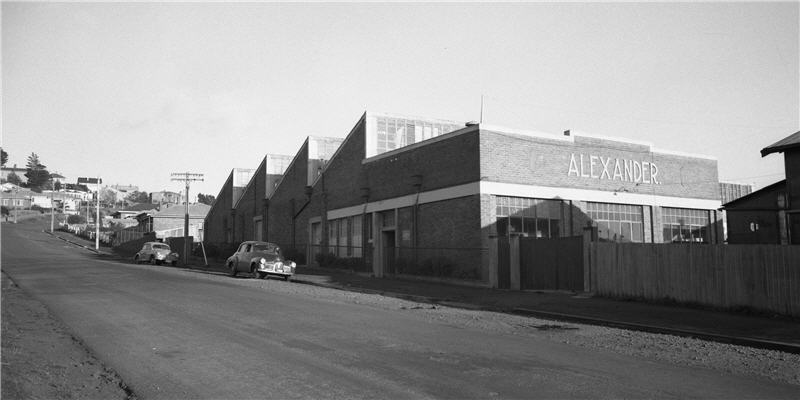
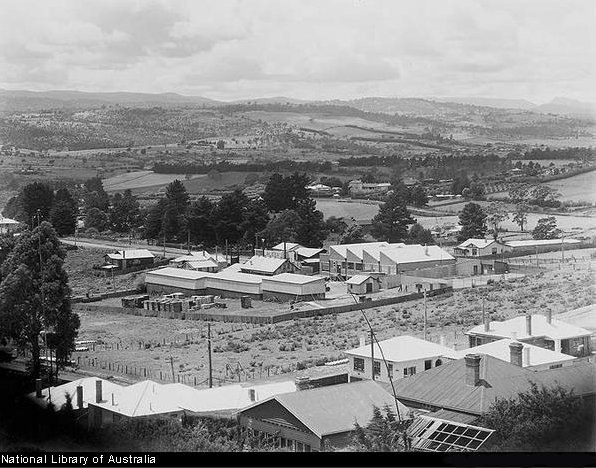
The Incoprorated Pty Ltd company was established in 1925 to acquire the patent and new factory facility commissioned by the existing owners Alfred Alexander and B.B. Hopwood a local sporting retailer opened in 1926.  It was located on the Newstead estate, Launceston on Gunn Street and was powered by electricity to not have a smoke impact on nearby residences.

The original patent was issued on the creation of frames with more than 4 plys and from the outset racquets of 5 plys were being produced. Once formed in a dry bent manner they would take about 16 hours to dry compared to steam bent timber which required months if  not years to dry as logs and then again for months after being shaped as racquets before being completed. The huge advantage with laminates is the speed at which racquets could be completed without tying up capital in inventory. The process revolutionised racquet production. As a laminated product, the company sometimes added Walnut strips in the middle of 4 English ash layers to create a a more attractive end result. Production numbers began at 140 per week with estimates of 530 per week within a few months using all the skills of mass production and modern machinery where possible and a workforce of 13.   Interestingly, the retail policy was only to sell racquets that had been instore for 2 months, I presume to monitor any post production issues. At this time, Australian Made was not always considered high standard compared to the English product players were used to so no mention of location was presented on the early racquets just the Alexander name.

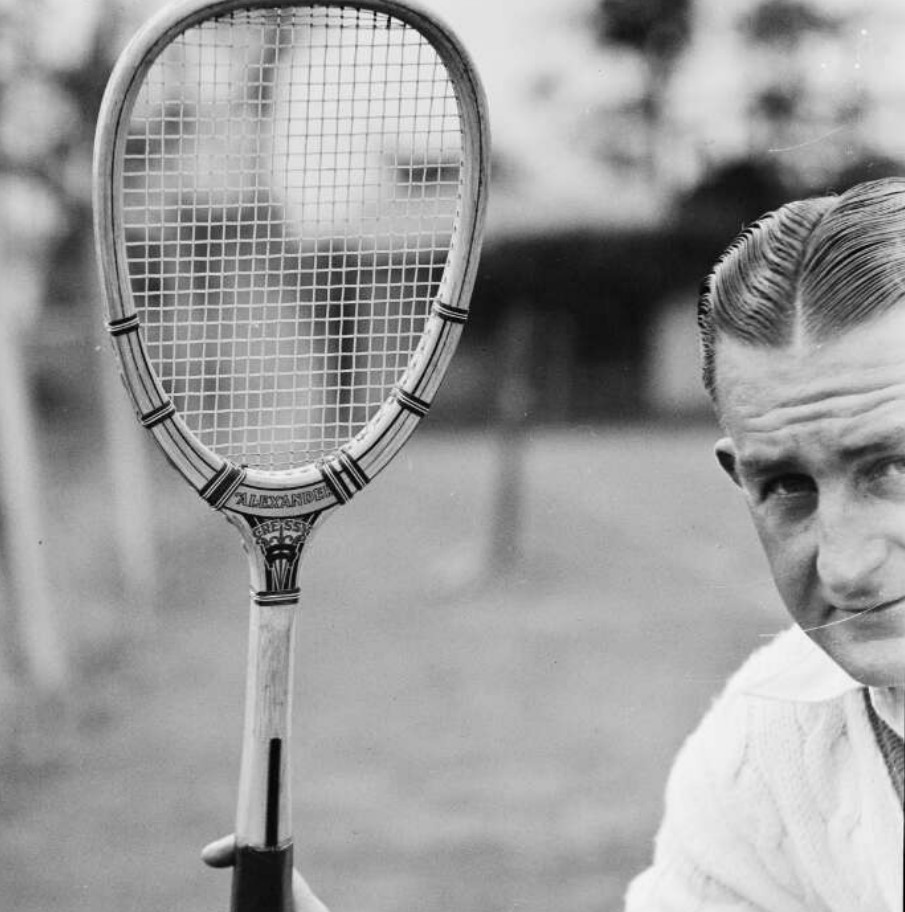
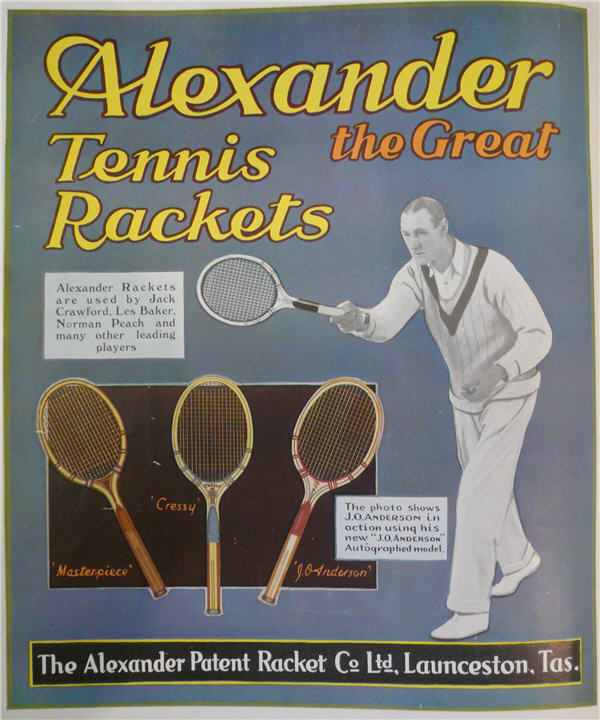
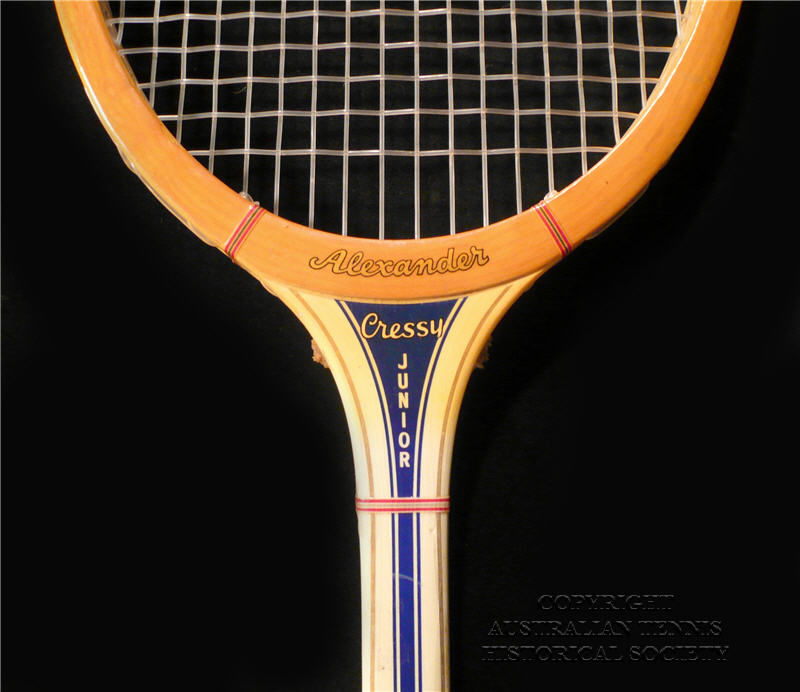
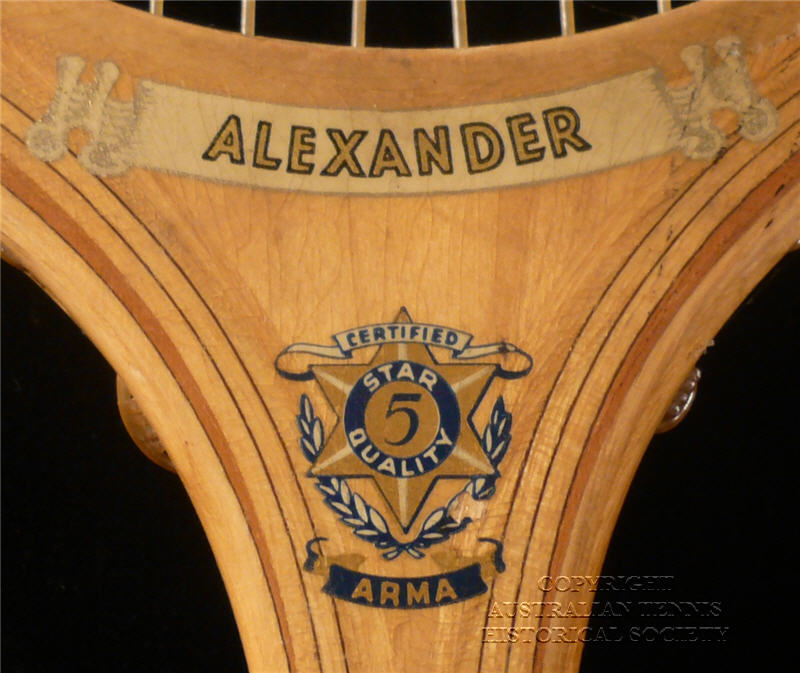
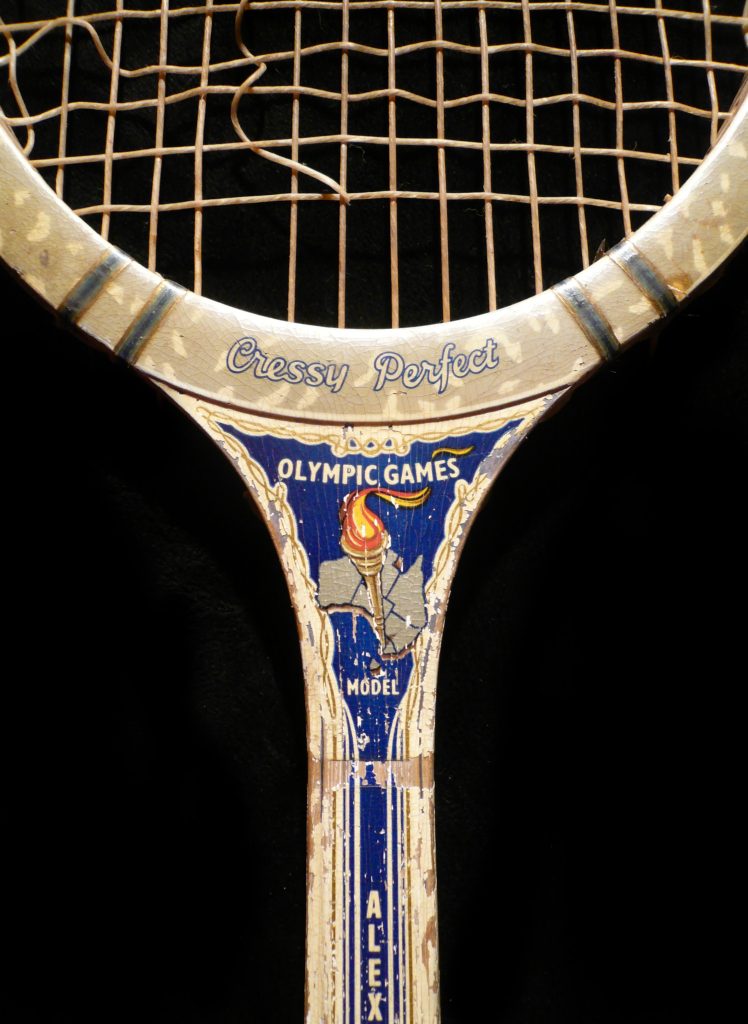
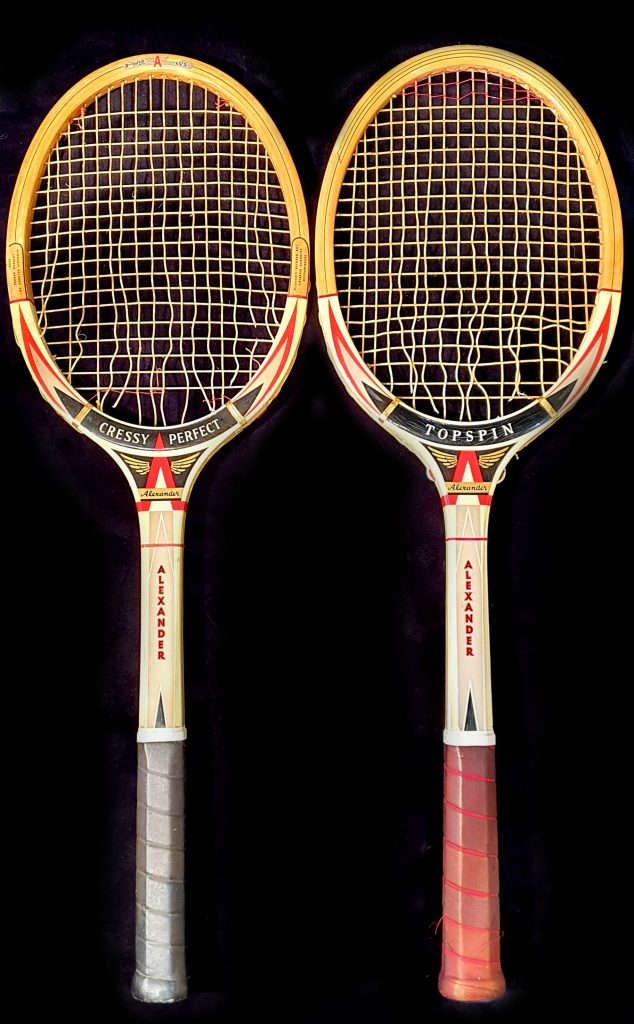
The first models included the: Dover, Murray, Understudy, Hunter, Cressy, Masterpiece, Mersey, Lismore and Red Seal. Naturally, other models followed, but it was the “Cressy” which remained a flag ship brand name from the start to the end. The name ‘Cressy’ is believed to have been derived from small town outside of Launceston which was the birthplace of one of Tasmania’s great champion players. When you think about it, Cressy’s longevity (37 years) as a brand certainly places it in the very rare group of long term brand names which includes the famous Dunlop Maxply model.

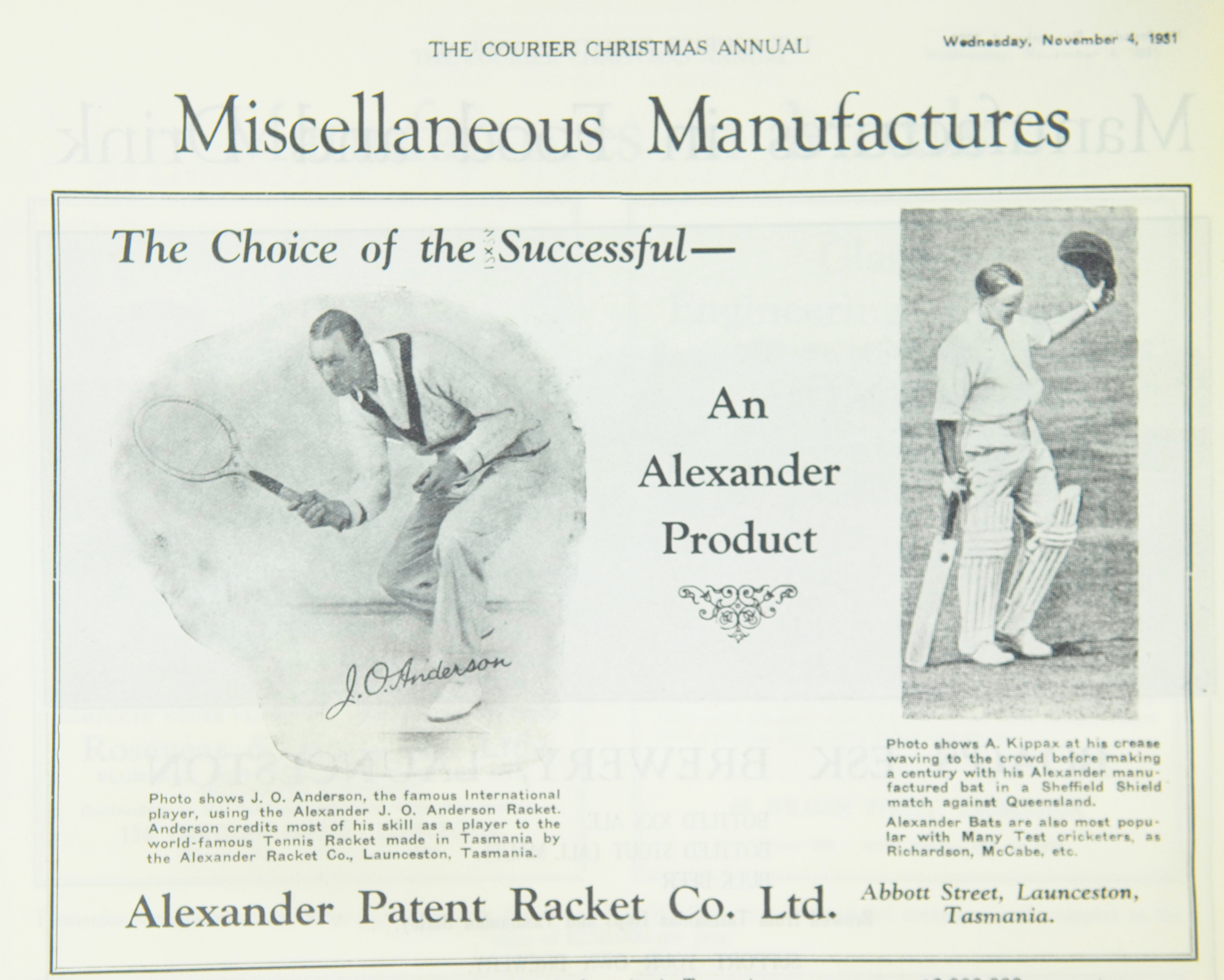
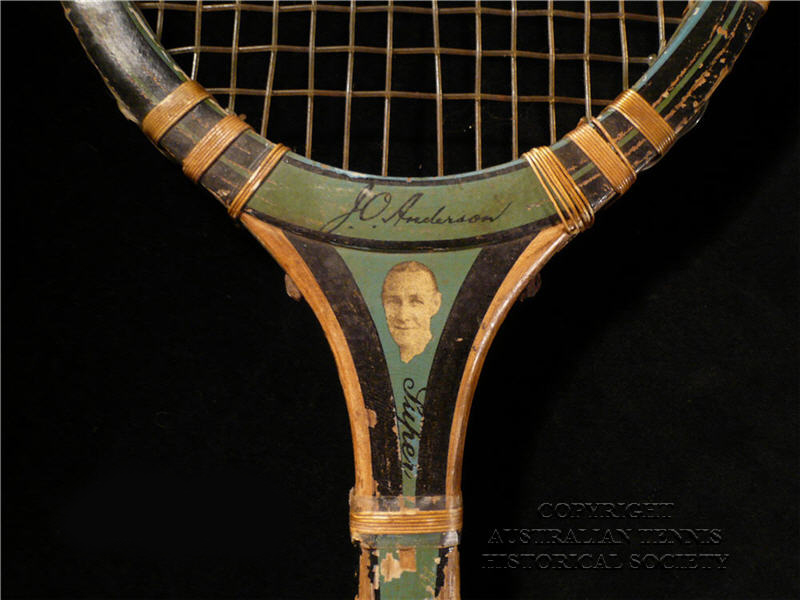
In 1927, a well known local Tennis player, champion and businessman from the area, Mr W.J.Sheehan,  was appointed the Business Manager and it was under his guidance that the firm embarked on new directions in decorating models with more paint, decals and bindings and also opened opportunities to develop player endorsements.  Very early on they signed up Australian Davis Cup and Champion J.O.Anderson and our lady Champion, Daphne Ackhurst. In the early 1930’s they company produced on the earliest known photo decal racquets featuring J.O.A.

The boom years came in the 1930’s & 40’s when Australian Champion, Jack Crawford won Wimbledon in 1933 using a Cressy “Wizard”. Also many of the Davis Cup players were using Alexander racquets as well. Jack Crawford’s racquet had a semi flat-top design reminiscent of the styles popular in the late 1880’s early 1900’s. In the early 1930’s,  Sir Norman Brookes while playing tennis at his Frankston holiday house showed Sheehan his early style racquet he played with in the 1900’s. Jack Crawford, who was also there, like the way it played and so Sheehan went back to the Alexander factory and fashioned a new style of semi flat-top racquet which was given the name “Wizard” from the nickname previously given to Norman Brookes during his Wimbledon winning days. This new flat top design, inspired the entire industry in Australia with many manufacturers producing both oval and flat-top models. Diamond stringing also became fashionable again at this time.

jack crawford flat top alexander 3.crop

The company produced a range of sporting goods including cricket bats, hockey sticks, golf clubs and squash racquets. As a promotional gimmick they produced a 12″ tall miniature “Cressy” replica tennis racquet hand mirror. They also produced a mandolin.

In the late 1950’s the Alexander factory was wound down and sold to Spalding in Victoria. The last racquets produced were in 1961 yet the Cressy name continued for a season under the Spalding banner when it was revived for just one more year in 1966.

The final days of the Alexander company really came about as Spalding, Dunlop and Slazenger dominated the mainland retail scene and also acquired most of the high profile players to endorse their racquets.

ALEXANDER CRESSY SPEDE MODEL (12)

The Cressy Wizard was used by Jack Crawford to win the 1933 Australian, French and Wilmbledon men’s singles titles

J.O.Anderson playing with alexander

This ad from 1931 shows J.O.Anderson the primary sponsored player at this time.

JOA alexander ad


This full page story comes from the Launceston Examiner 14th Jan 1927 and shows the exterior
of the factory with various stages of production.

The actual patent related to the lamination of timber in a cross grain formation.

These words, kindly supplied by Gus Green (relative) are from the patent applied for in 1921 and granted to the company in 1922:

The Alexander Invention

Date line for the Patent application dated 12th July 1921 by Alfred Alexander jun. and his younger brother Douglas Davey Alexander both of Elphin Rd Launceston the complete Specification was accepted on 7th June 1922 and advertised on 20th June 1922

No 2594/21 Class 53.2.

The Complete Specification read  “ Improvements in the construction of rackets for tennis and other like games.”

We, Alfred Alexander, Junior, Technical School Instructor,and Douglas Davey Alexander, Carpenter, both of Elphin Road, Launceston, in the State of Tasmania, Commonwealth of Australia, hereby declare this invention and manner in which it is to be performed, to be fully described and ascertained in and by the following statement:-

Our invention relates to the construction of tennis and other like rackets the rims of which have usually been made of a solid piece of wood bent to the shape of the racket and secured to the handle.

According to this invention, we form the rim of the racket entirely of thin strips of wood or other flexible material that are glued or otherwise secured tightly together. The strips are long enough to extend down-wardly from the rim and to lie against the core of the handle, thus forming part thereof The handle proper is therefore much smaller than the ordinary handle and is flared outwardly at the top where it enters the rim, the joints being reinforced in the usual way.

The strips will be composed, preferably, of long grained and cross grained woods disposed alternately in the rim which, when secured together, provide a strong and satisfactory construction of racket. The gut or strings are stretched between the rim sides as at present.

The rim is made to the usual shape by bending the strips 4 upon a former or mandrill, these strips are then tightly pressed and secured together, the lower portions of the same being upon each side of the handle

This member is really the handle core and extends upwards into the rim, flaring therein to the sides where it can be secured in the usual way. The said core should also be slightly tapered and widest at the lower end. To complete the handle the ordinary covering or filling strips are paced in position, giving the required octagonal shape to the handle, which is finished at the end with the usual leather piece.


Alexander AB71313345aaa


This photo shows the original factory in Launceston, Tasmania (Photos Tasmania Libarary)

NAT LIB Alexander Tennis factory


As imported Ash supplies were becoming in short supply and hotly contested for by every other manufacturer (globally), Alexander’s actually attempted to develop a local industry. The Company acquired the land at Hollybank in the Underwood district in 1933, comprising a total of 170 acres with a target to plant 109,200 English trees.

One hundred 100 acres were to be English Ash, however in the first three years only fifteen acres had been cleared, ploughed and planted with 21,600 trees.

After close monitoring over a period of 10 years, it became obvious that the ash trees were failing to thrive and not growing as expected. Nothing could be done to stimulate the growth of the plantation due mainly to the issue that Ash normally grows in deep, alluvial soils in the Northern hemisphere and that is not what was at Hollybank, the soils were too acidic and moisture was also a problem.

The project was abandoned in 1950 with the sale of land to the Forestry Commission in November 1956 the year of the Olympic Games in Melbourne. The sale price was £2809.

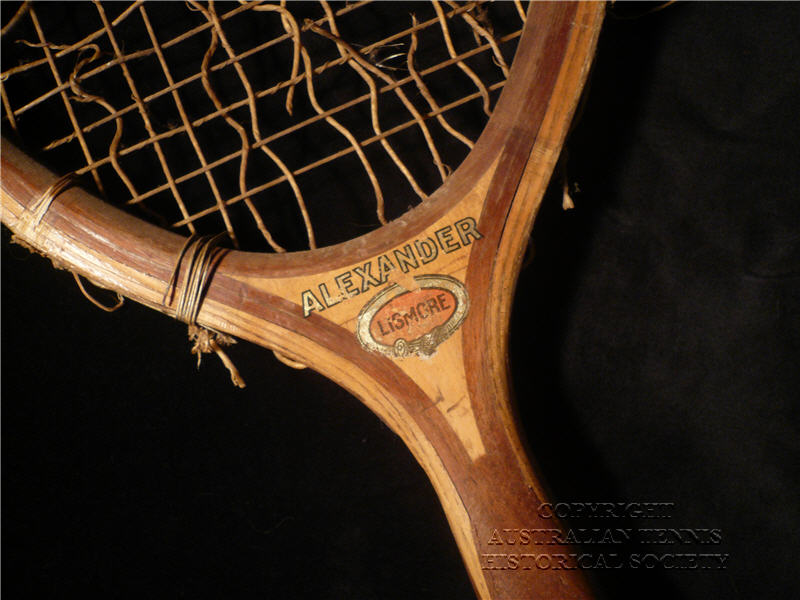
P1140071

The Alexander Lismore is one of the earliest racquets promoted around Australia c1926. The patented lamination system is clearly visible, however, a feature of the design is the much thicker shoulder areas created by the additional layer on top of the wedge. It is advertised with sister racquet the ‘Cressy’ as being used by champions Messrs. Willard, Kalms (both NSW), Les, Baker and Dr. North. While Cressy and Lismore are both townships, we will need to dig around to find out how the Lismore connection came to be.

The workmanship is quite exceptional also due to the amount of contouring and beveling that exists.

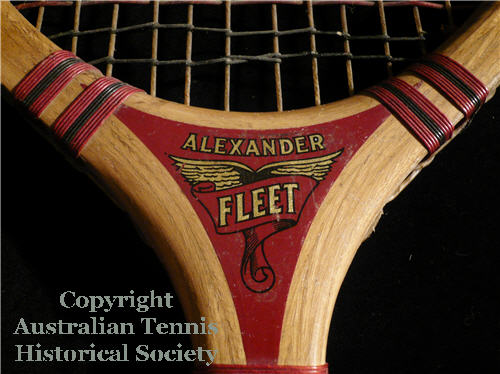
Alexander FLEET 1

The Fleet model was introduced in the late 1920’s. This one is quite early as it has a grooved wooden handle. It has the patent stamped into the handle as was sold by Hartley’s, also stamped into the handle.

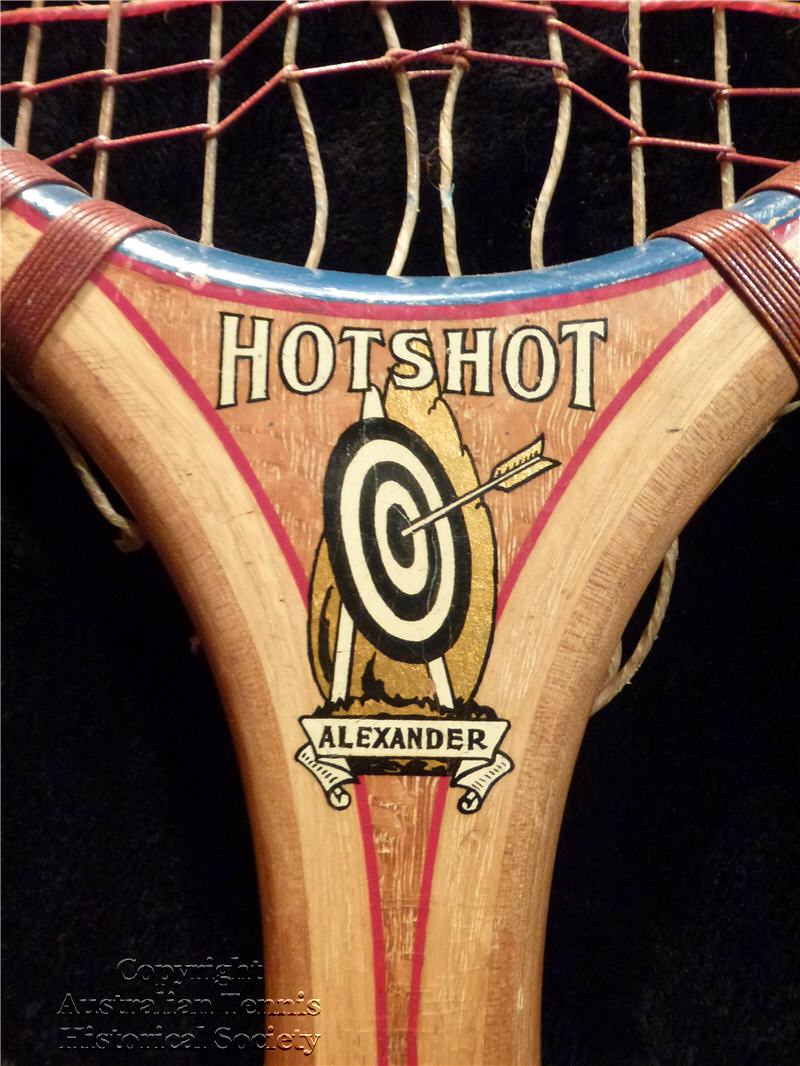
Alexander Hot Shot Close up (1)

The Hot Shot model was introduced in the early 1930’s. This one is quite early as it has a grooved wooden handle.

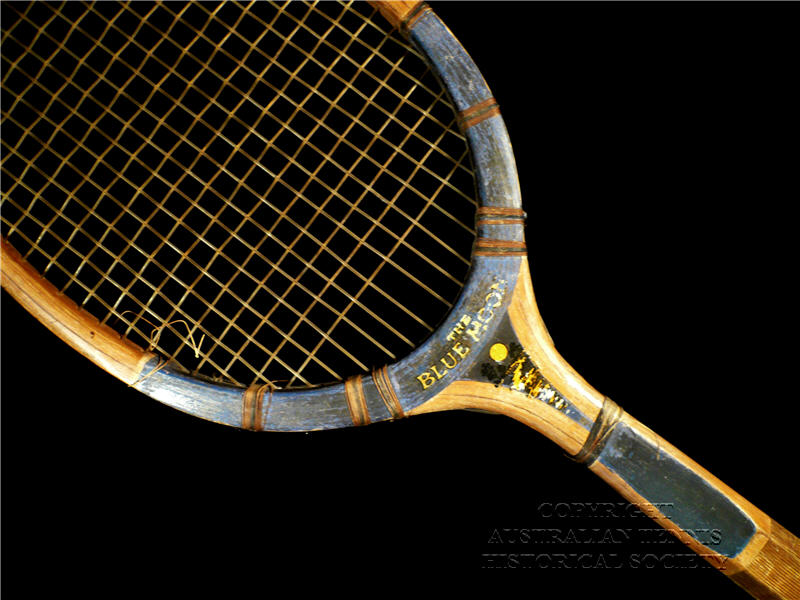
P1100597

This Blue Moon model is one of the more elaborate colour/decal treatments. The night scene with a dark tree silhouette and the moon reflecting over water is hand painted and the Blue Moon wording is a gold transfer. Given this also has a grooved wooden handle it must be late 1920’s early 1930’s. Apart from the graphics, one other very nice finishing item is the leather strip around the base of the handle. This has also been grooved to match the handle.

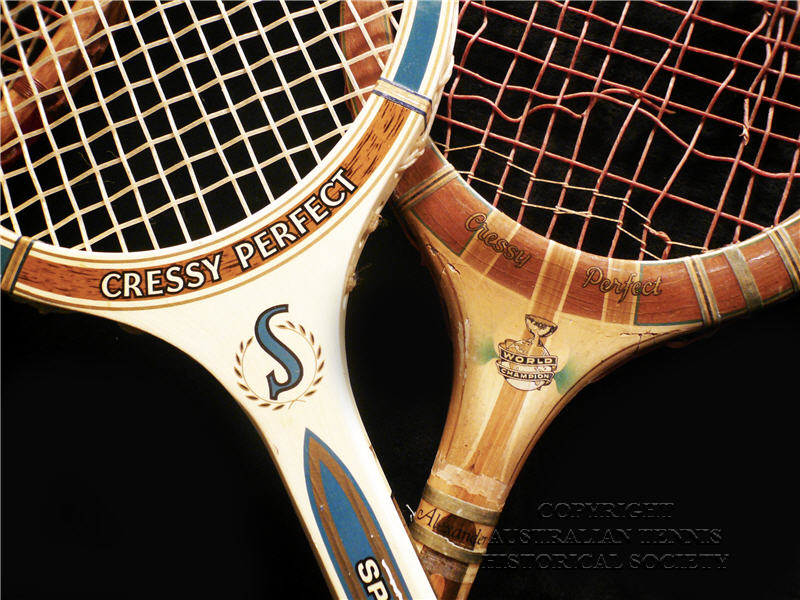
After Spalding took over in 1960, the Cressy name reappeared for a few seasons up to around 1966.

The last photo shows a Spalding Cressy Perfect model