Welcome to so many new members

At the start of the year we decided to change the way the site could be accessed in order to build a database of interested tennis enthusiasts.  Quite frankly we are really impressed with how many new people have joined up and thankyou for doing so.

Today, I just want to show you some pics just added to the site.

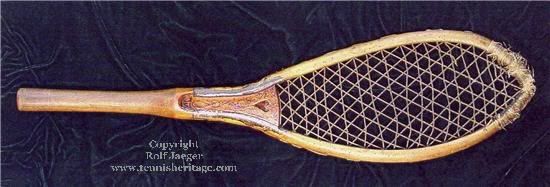
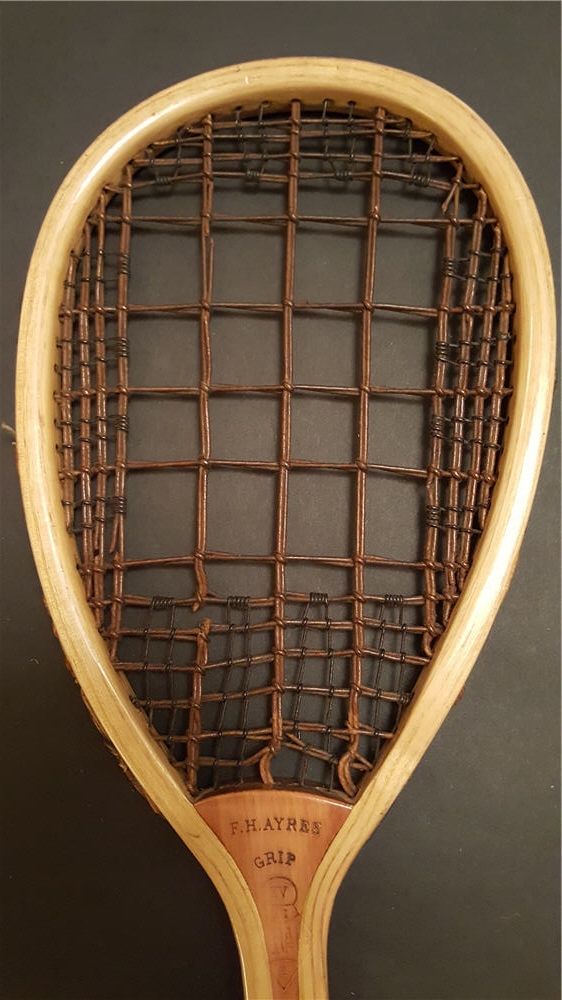
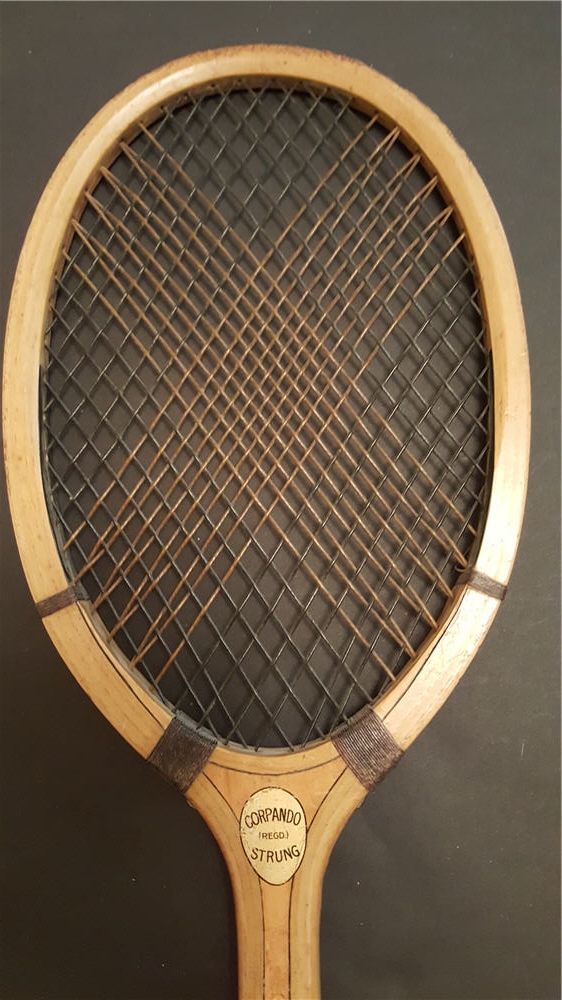
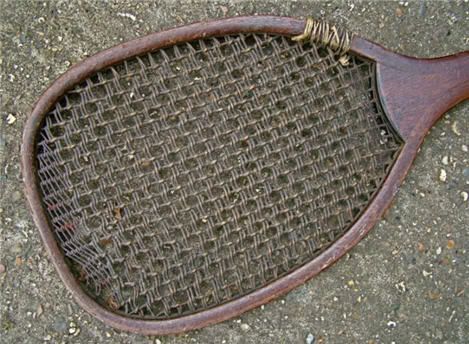
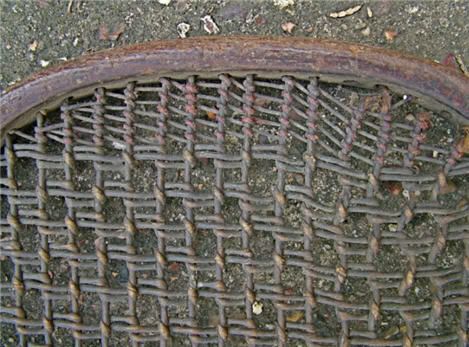
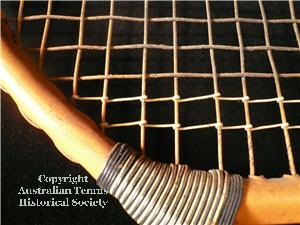
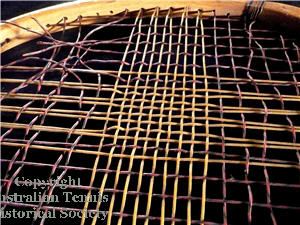
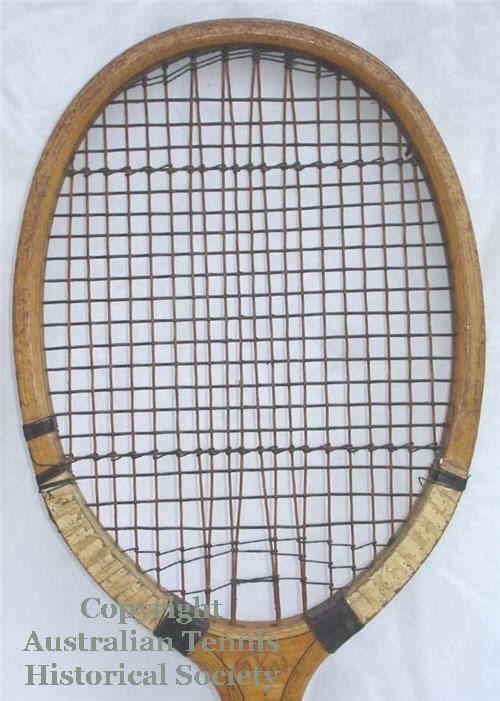
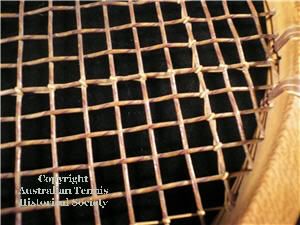
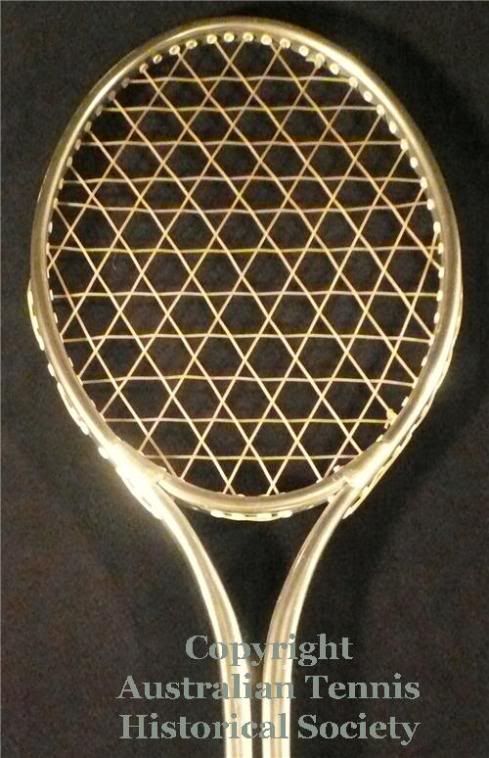
Just in today courtesy of Rolf Jaeger is a racquet which shows how unusual stringing patterns were tried way back early in racquet production which includes pre-tennis.

This is handmade and for those with a more recent MAD RAQ you will see how the patent granted for this stringing design probably should not have been.If you wish to see more visit the page title racquet stringing on the website. It is now owned by Tennis Australia.

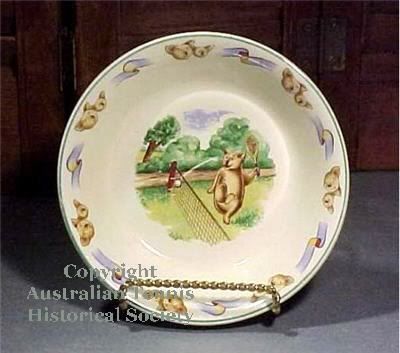
Some months ago we received this great little pic of UK c1910 bowl.  Definitely up there for an Australian flavour. Koalas playing tennis.  This pic is hidden away under the OTHER menu button and the OTHER sub menu button.  Most of you probably haven’t been to this page so you will find some interesting pics there also.

Due to some good luck we found some additional pictures of Edward Dewhurst and most recently we added a section about Wilberforce Eaves.  Who, I can hear you ask (not all of you)?   Well I dare say he probably was the first Australian born player to travel back to the UK to enter Wimbledon in 1890 and then return to Australia on a few trips to play local Interstate tennis for Victoria,  the state championships, and guided local players on some of the tactics and playing techniques he had experienced in the UK and the USA (runner up 1897 US Open). He had a major impact on Norman Brookes before he went to the UK in 1905 & 1907.

Current projects are to complete an article about 1947 Australian Championship player and Davis Cup team member Dennis “Dinny” Pails.  Some exciting phone calls over the long weekend found Dinny’s family and they seem delighted to assist us, so stay tuned.

Regards for now from the Team and feel free to email us with any suggestions or contacts.

Picturesque Tennis Courts

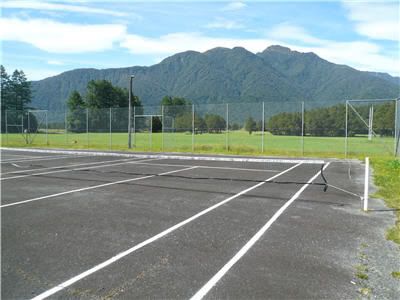
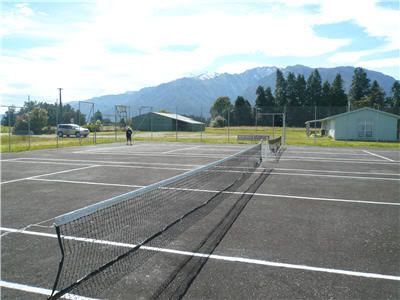
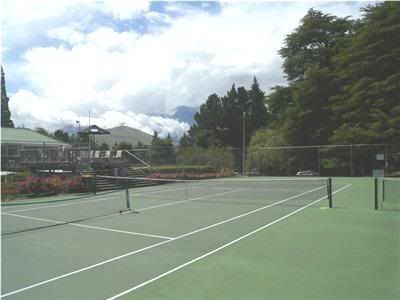
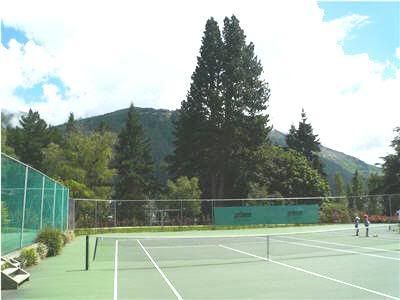
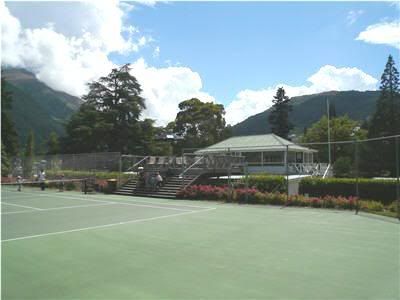
Before heading off on holiday around spectacular New Zealand, I started to think about the wonderful vistas that some lucky tennis players must enjoy. Obviously, there will be some sensational private courts but equally there will be some terrific club courts.  So from this point I am very keen to receive photos of your favourite tennis courts with a view.  This is a global search, and yes we know about the heli-pad court in Dubai!!

Now, back in New Zealand, what better place to start than Whataroa and Queenstown both located in the South Island.  We didn’t make it to Nelson, but I hope some of our New Zealand comrades will be able to organise some additional pics.  Queenstown is really an amazing ski resort area with plenty of activities.

I don’t think these photos do justice to actually being there, but believe me the surrounds are very picturesque.   Enjoy………and can’t wait to see some court pics from Switzerland…..Rod

Whataroa Tennis Courts
Queenstown Tennis Courts

Tennis History Videos and DVD’s

If you have any information or would like to write an article please contact us at theteam@tennishistory.com.au


Videos and DVD’s

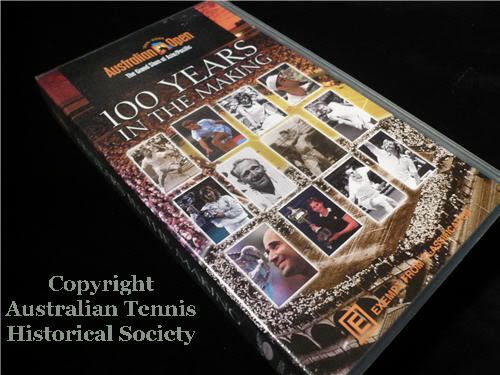
While books are great, you can find some really good videos which depict players from the past.

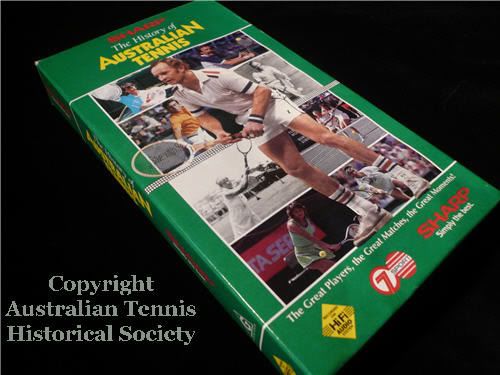
Here are some relating to Australian Tennis.

100 Years tennis history


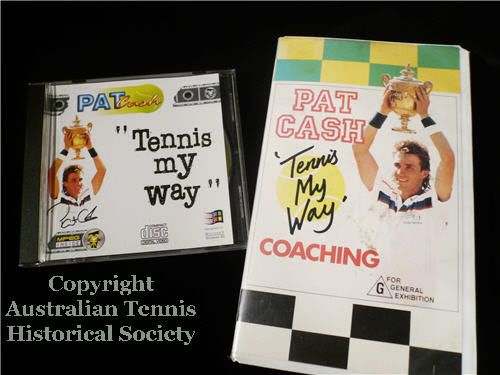
Pat Cash Tennis My Way

The Pat Cash video is one of my favourites given this era matches the coaching methods and playing techniques of my background.  While perhaps considered out of date, I still rate Pat’s volleying ability ahead of any other player within the last 15 years.


Tennis Trophies and Medals

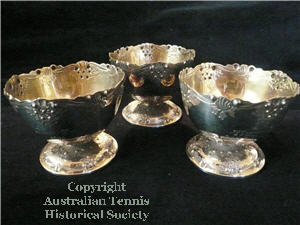
Apart from the sheer history and possibly the value of silver, there are many collectors who look for tennis trophies. These comprise both tournament wins and participation mementos such as those given to Davis Cup players.

This section contains a myriad of tennis “awards” such as trophy racquets and cups. While predominantly lawn tennis we have included some elements from Royal Tennis which commenced in Australia when the first court and UK tennis professional arrived in 1875 at Hobart, Tasmania.

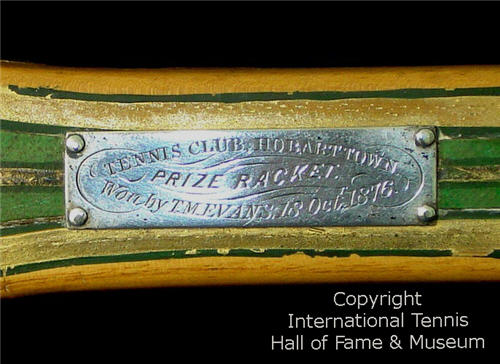
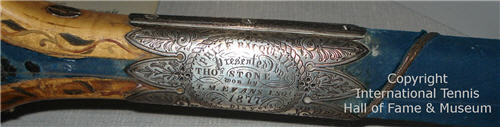
These racquets were awarded to the first Royal Tennis club champion in 1876 & 1877.  They are both in the collection held by the International Tennis Hall of Fame & Museum who kindly gave us permission to use these shots. You will note the elaborate work on the second racquet and this practice moved to Lawn Tennis as well.

Lack, Rodney (66-3-1_inscripaaa

Both of these racquets were the traditional lopsided design first used also in Lawn Tennis.

Lack, Rodney (66-3-2_inscrip) cropped aaa

P2190006bbb

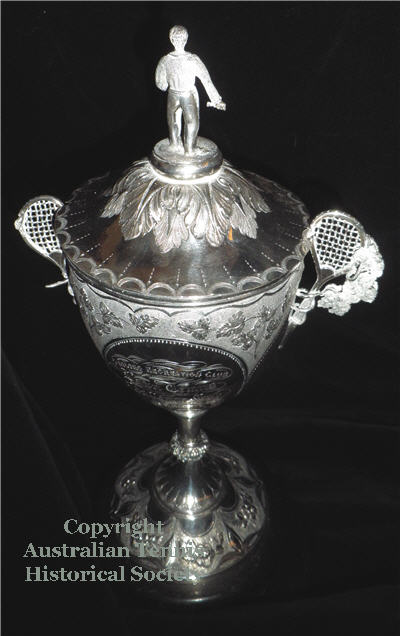
The trophy above comes from 1880 and must be one of the earliest tennis trophies in existence today. The event was conducted by the Geelong Recreation Club and titled the Lawn Tennis Challenge Cup.  Players from Melbourne’s Cricket Club (MCC) traveled down to win both of the 1880 bi-annual tournaments. Francis Highett, won this trophy in October 1880 (the second winner) and again in 1881.  This must have entitled him to keep the trophy for their are no other names other than his and the first winner W. Officer. Francis went onto win the second Victorian Championships a few weeks later which, in actual fact could well be considered the first Australian Tennis Tournament widely advertised event to players in all of the colonies.  Thanks to the Highett family for contacting Tennis History and for taking such good care of the trophy for all these years.  Note the racquets are tilt top styles of the very early game.


strathfield trophy 1892


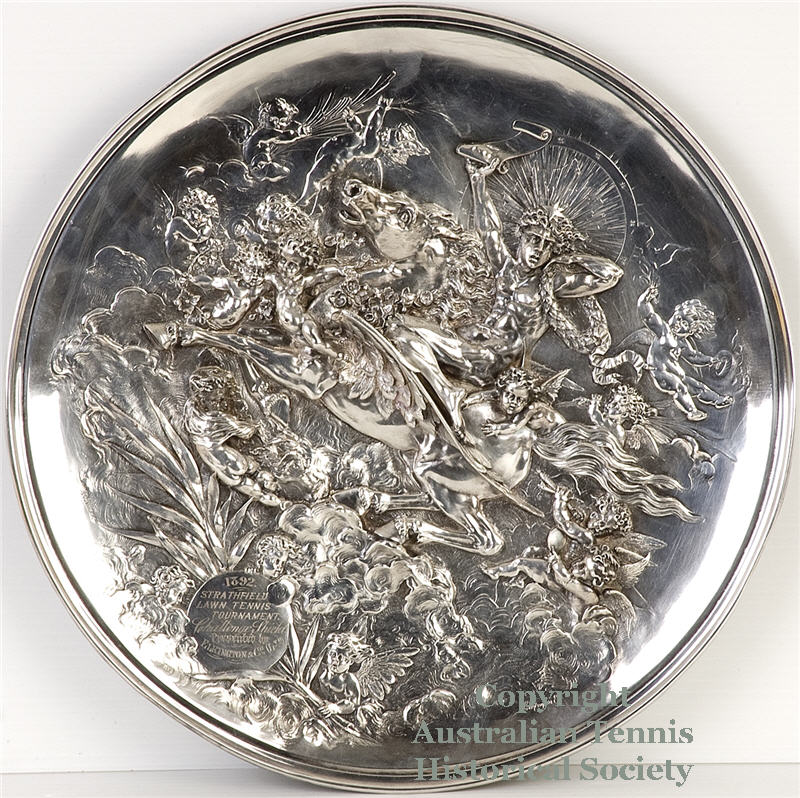
Above is a beautiful 3D silver plate produced in Sydney by Elkington & Co. for the 1892 Strathfield Lawn Tennis Challenge.  This tournament was the preeminent grass court event in Australia and was keenly contested. The winner we presume was Dudley Webb who won the NSW Championships a few times in this era. Tennis Australia now own this plate and to see it on display will be a treat.

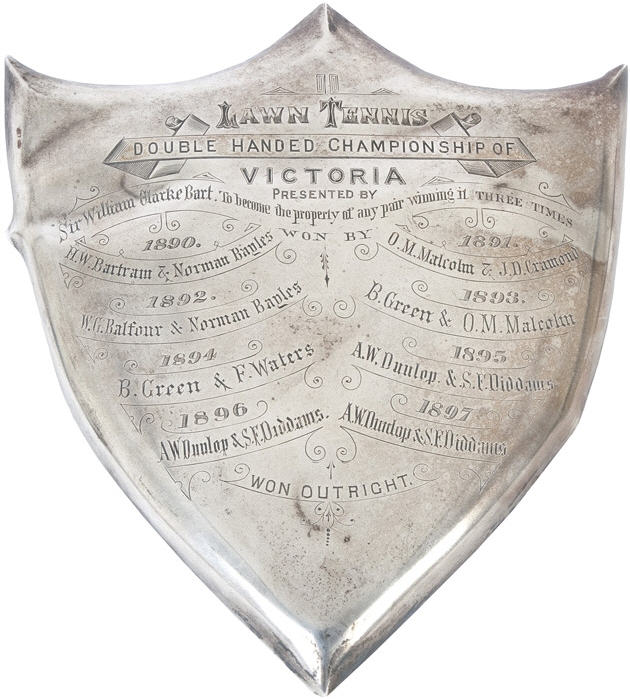
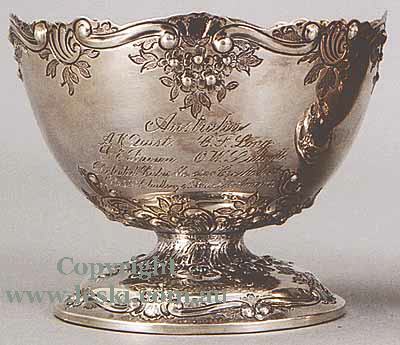
Prior to the Australasian Championships which commenced in 1905, the Colonial State Championships linked to Intercolonial events were the preeminent tournaments.  This particular trophy was won by Alf Dunlop and Stanley Diddams three times in a row from1895-1897 permitting them to retain, or retire the trophy into their possession.  In total, Alf won the Doubles 5 times with Diddams and twice with Norman Brookes and Rodney Heath.  He won the singles twice also.  In relation to major events, Alf went on to play Davis Cup in 1905 as Australasian captain, 1911 and 1912. He won the Australasian Doubles in 1908 with USA Davis Cup foe F.B. Alexander.  Other notable names on this trophy are Ben Green who was one of the Victoria’s great singles /doubles players of this era. See Intercolonial tennis for more stories.

Tennis Victorian Doubles Championships 1897


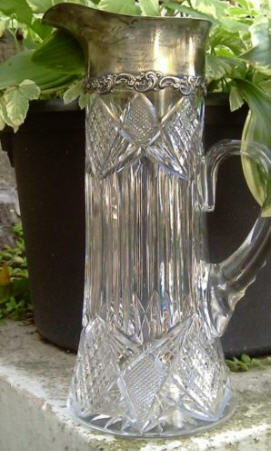
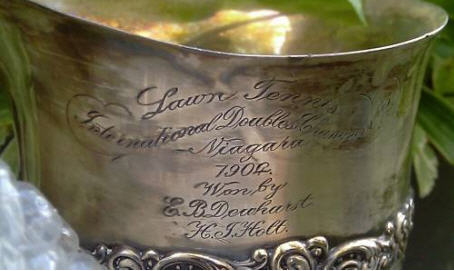
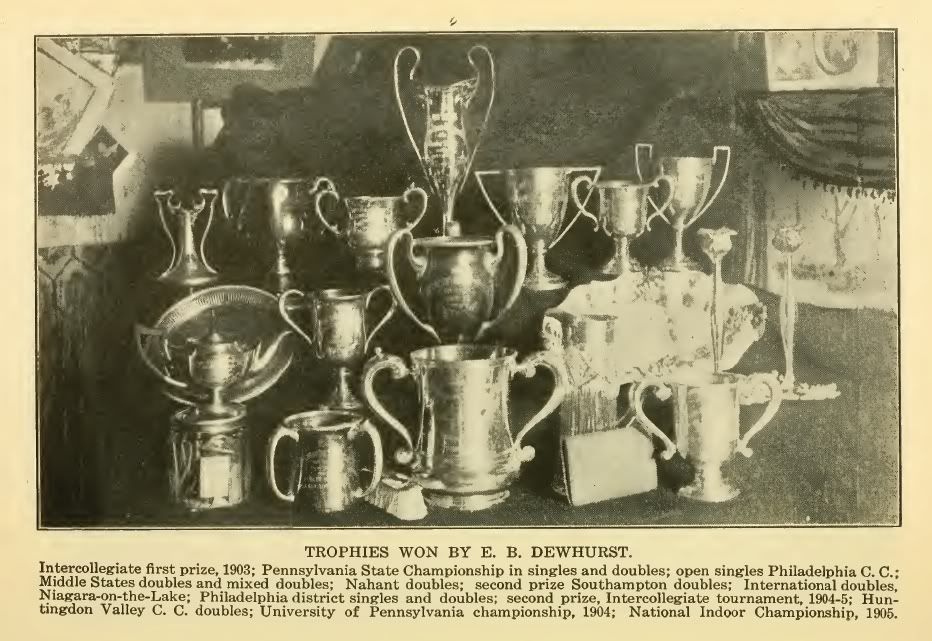
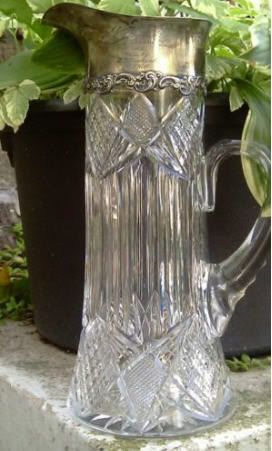
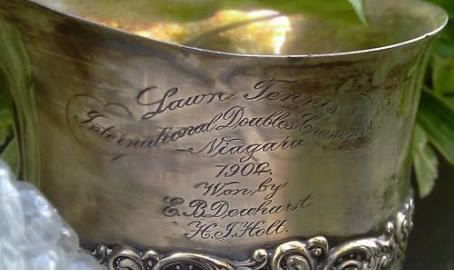
Over in the USA in 1903, 1904, 1905  Australian Edward Bury Dewhurst was studying to become a dentist, but also played tennis for the University of Pennsylvania.  He won many prestigious events and this is one his trophies from 1904.

Niagara Trophy 1904 $5000 US 2010 1

Niagara Trophy 1904 $5000 US 2010 2

TROPHIES_1919RUNNERUP

TROPHIES_1919DOUBLESMEDAL


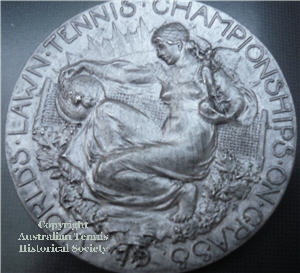
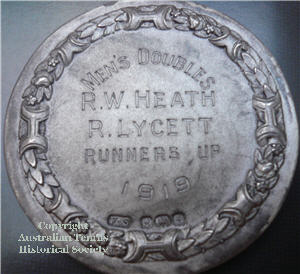
This medal is from Wimbledon 1919.  How many of you of heard of these great Australian players? Not many, but the story is as good as any which could be told by Todd Woodbridge and Mark Woodforde.

You can read more about Randolph Lycett under his own profile article. Rodney Heath won the very first Australian Championships in 1905.

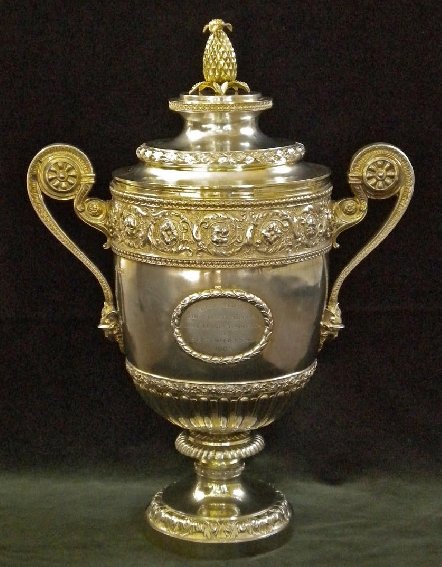
In 1905 the UK Slazenger company donated the “Slazenger Cup” to become the major trophy for the inaugural Australian Open to be held in 1905.  According to the 1933 Australian Championship programme, the winner of the men’s singles was to receive ” The Anthony Wilding Memorial medal and a replica of the “The Sun Challenge cup”. The winner of this event will have the right to hold for one year the Cup presented by the “The Sun” Newspaper Co., which shall become the property of any player winning it three times in succession , or five times in all.”

In actual fact “The Sun”challenge cup was the donated original Slazenger trophy. This is confirmed in the 1928 Australian Championship programme ” The winner’s name will be engraved on the Cup, which was presented to the Lawn Tennis Association of Australasia as a Perpetual Trophy by Messrs. Slazenger Ltd., in 1905″

The Slazenger Cup was designed along very similar lines to that of the Men’s trophy from Wimbledon which is perhaps a tad strange.

Australasian Tennis Tropy 1905-1933 full shot


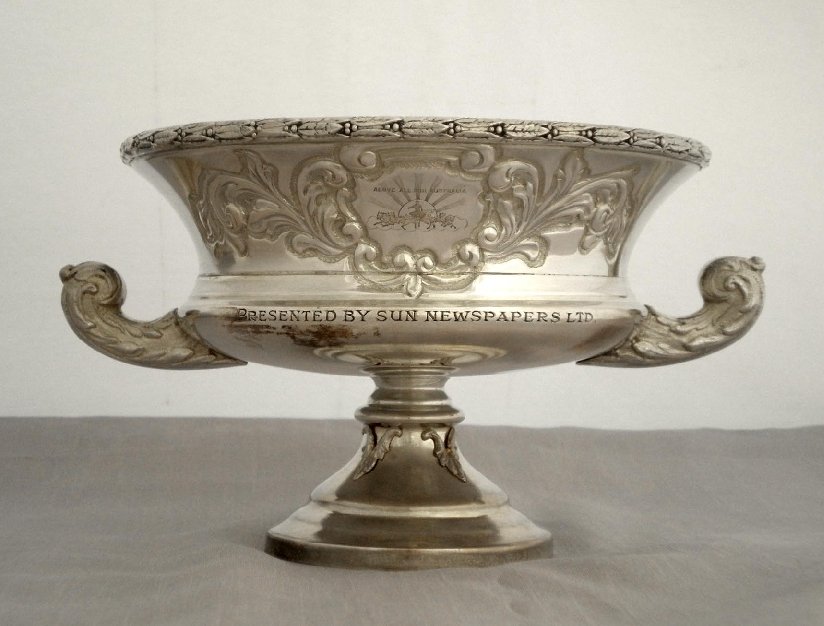
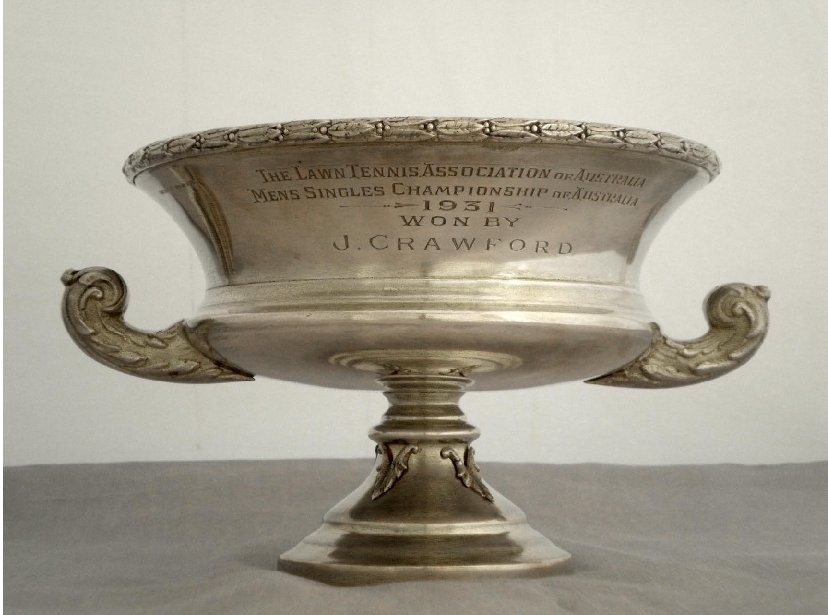
Jack Crawford’s win the Australian singles title in 1933 was the third straight win, so the trophy was awarded to him. Only in 2013, 8o years after being awarded to Jack, this trophy amazingly has been rediscovered having gone missing 30 years ago when Jack sold it off owing to a lack of funds . The pictures below show the individual trophy won in 1931. “The Sun Challenge Cup”. With the main Slazenger trophy now in Jack’s private care,  the tennis association introduced the “Norman Brookes” challenge cup without the opportunity of winning it outright, hence this trophy remains today.

Jack Crawford 1931 Sun Cup 1

Jack Crawford 1931 Sun Cup 2

The Sun Challenge Cup awarded to individual Men’s championship singles winners appears distorted but is in fact the correct shape.
This was warded to Jack Crawford in 1931

jbrom1

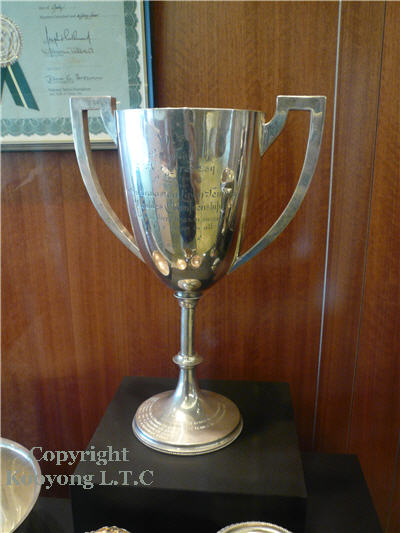
After forming the Australasian Lawn Tennis Association in order to qualify a team into the Davis Cup in 1904, the first National Championships were played in 1905.  Donated by manufacturer F H Ayres, the cup could only be awarded to a doubles players private trophy cabinet if won three times in a row or five times in all.  John Bromwich & Adrian Quist won three times straight in 1938, 1939, 1940, although Adrian had won it in 1936 and 1937 with Don Turnbull.  John and Adrian went onto win 1946-1950 as well in an unbroken, except by WWII, record of 8 straight wins. Photo permission courtesy of Kooyong LTC, Kooyong Foundation and the Bromwich family.

Davis Cup trophies are equally precious.  The small silver cups are given to players who played in the Challenge round of the Davis Cup. Silver to the runners up and gold to the winners.  c late 1940’s three cups, three years of being runners up mainly to the USA.

P1070827

THA 1911 DAVIS CUP

1948 davis cup

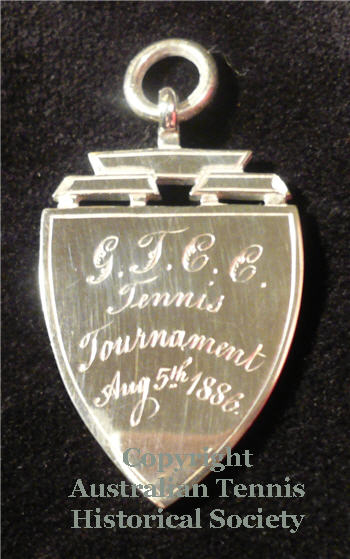
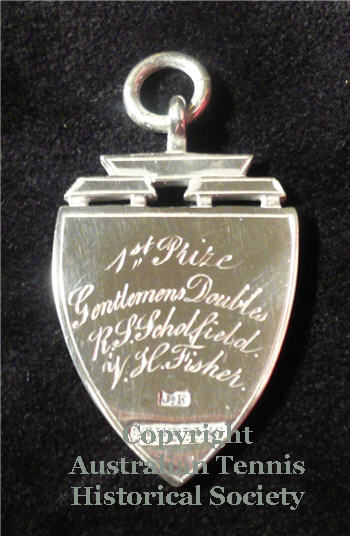
While the above are in the upper echelon of collecting, from the very early days of tennis success in competitions was rewarded with medals and various other trinkets.

These medals were usually given to club champions and they make for an interesting link back to the early days. Who knows, with luck, you might find a recognised player inscribed on the medal or even a medal affixed to a racquet in recognition that the owner was the champion.

P1150070

P1150069


Racquet Stringing

Stringing is an equally fascinating subject given the many patterns tried over the years. The primary strings used were made from the intestines of animals mainly sheep and through the years was known as “cat gut”.
To make a string numerous very fine strips of the stomach lining are twisted and stretched together, then dried and coloured. The techniques used today are the same as back in the 1880’s. Being animal tissue it explains why gut, when wet or placed in humid conditions, can expand and contract to a point where breakages can occur even in storage and frames can be distorted or warped under the immense pressure strings are placed under.

In the 1880’s racquet design for tennis exploded with new shapes, grips and string patterns.

The public was inundated with weird patterns with the promise of more spin, more power, better sweet spots or less breakages.

A sample are presented below.

Looped Stringing

Looped Stringing

While early strings were made of ‘Gut’ often called cat gut, they were indeed made from animal intestines until the plastics and nylons appeared in the 1940-s-1950’s. Original gut was 1.5mm -2mm thick and often they tried different grades and thicknesses between vertical and cross strings to improve performance. The use of two vertical double strings and different cross strings are visible here with original trebling in place. This a common pattern on early racquets.

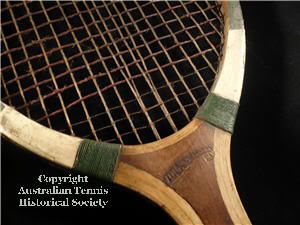
The small strings at the top are called ‘Trebling’. The strings wrapped across the mains and crosses, often in a square pattern around the sweet spot is called ‘Purling’.

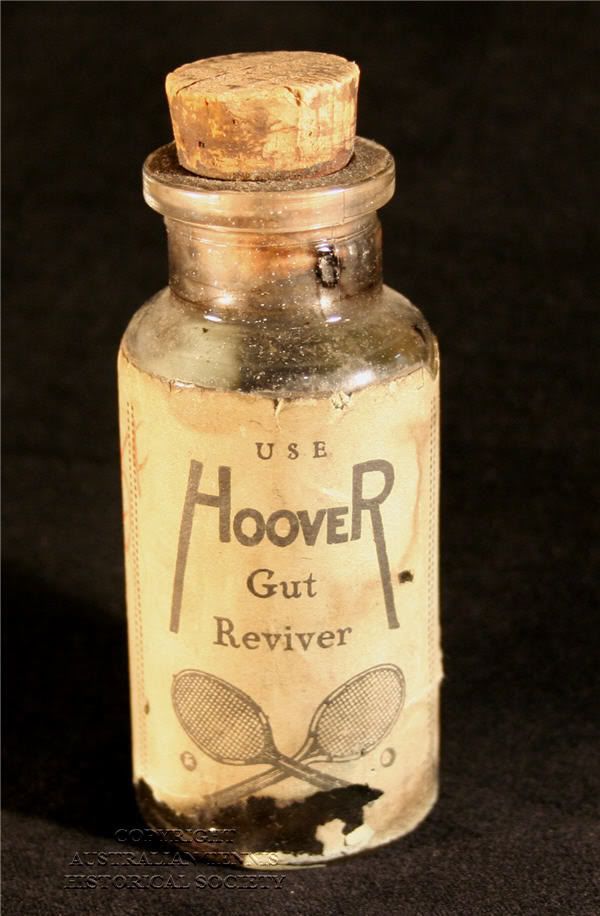
To keep strings in good dry condition was not always easy and one product launched from the mid 1880’s was a product designed to help maintain the strings.  The product as called “GUT REVIVER” and a user would lightly paint the strings with this product acting as a protection from dampness and drying out.

Stringing also changed direction, so to speak, in the 1920’s when the first metal head/wooden handle racquets arrived complete with piano wire stringing. Two well known companies were Birmal Aluminium Co. in the UK who launched an all metal racquet called the ‘Birmal’ followed by a metal wood combination called the ‘Birmal Ace’. Over in the USA, Dayton were very successful with their metal head wood handle products for over 50 years and are very popular with collectors for the variety of head styles and frame colours that became available. The picture below  is a Dayton Flyer with a nice trebling and frame wrap. They were renowned for a wonderful twang when the piano wire made contact with a ball and you can’t imagine how long balls would last.

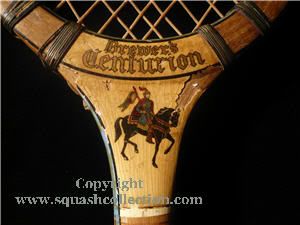
The stringing below is from an Australian Brewer Centurion. Note the green, double trebling and below this  a patented Godfrey (New York, USA c 1929) pattern which uses two different string types double strung in both the mains and cross strings to form a dense sweet spot. Based on the actual patent drawing the string set is close in overall look but not accurate, yet they may well be original.

The photo below shows the additional double strung mains plus the purling strings.

Close up of purling strings

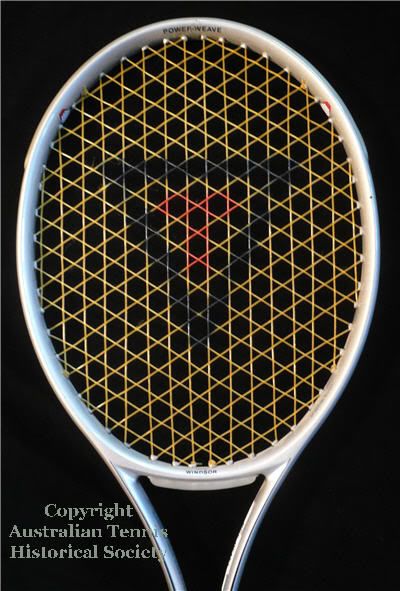
Older style string patterns included diagonals and verticals criss-crossed with diagonals which created a honeycomb style effect. Even today these still appear from time to time and in 2008 we have the recent launch of the ITF approved Power Angle racquets which feature diagonal string patterns. This product comes from the same designer of the Mad Raq stringing pattern that was patented in the early 1990’s. Other desirable diagonal strung racquets include the MacGregor Bergelin, Protagon Diagonal (Germany),  Major Octodiagonal, Geo Star, Aequalis, TAD Davis Top Spin and many from Volkl.

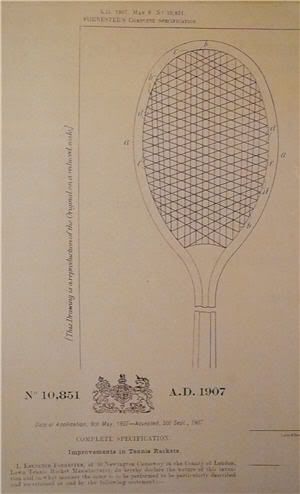
The MADRAQ design is shown below on the left, yet on the right we have a 1907 patent granted to Forrester, courtesy of Siegfried Kuebler’s book. In Jeanne Cherry’s book, ‘Tennis Antiques and Collectibles’ page 34 there is a shot of an equally similar design from 1887 by the Benetfink Co. The photo below these is a very early handmade racquet with diagonal and perpendicular stringing. Photo courtesy of Rolf Jaeger.The actual racquet now resides in Tennis Australia’s Collection.

Wood Tennis Racquet cross strung


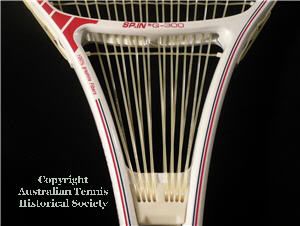
The Sp.in G300/ Roxpro  shows how racquet design has allowed variable string lengths to improve sweet spot performance. Often these designs fall foul of the rules and are either banned or permitted after a review which is apparently what happened to this model.

The mid 70’s metal racquet is a Danlo with a ‘Spider web’ string set up.

A very rare treat is to see the German invented  “spaghetti” stringing system (Vilsbiburger racquets) which was used by Ille Nastase at the Aix-en-Provence tournament in early October 1977 against Vilas. So annoyed at being beaten by this amazing racquet, Vilas lobbied the ITF to have it banned which it promptly was under a ruling that deemed the two layered string pattern was a form of double hitting. The strings as they impact the ball,  slide across the surface to a point where under pressure they spring back delivering an incredible top spin effect, so much so, that on the receiving court the ball would literally bounce over your head.

Read the full story about this German Stringing  Invention from 80stennis.com
The racquets were called Vilsbiburger Tennis Racquets (Spaghetti Strings)
because the white plastic rollers are just like macaroni.

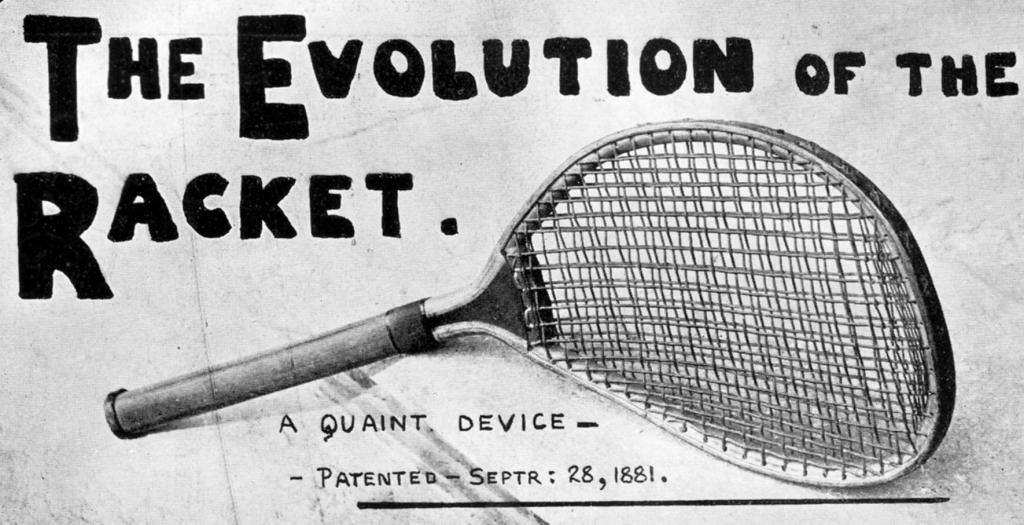
The Blackburne has two full independent sets of strings.
There is no double hitting so it is legal. The gap between the sets is 9mm.
Note that this design is shown in the black and white pic from 1881.
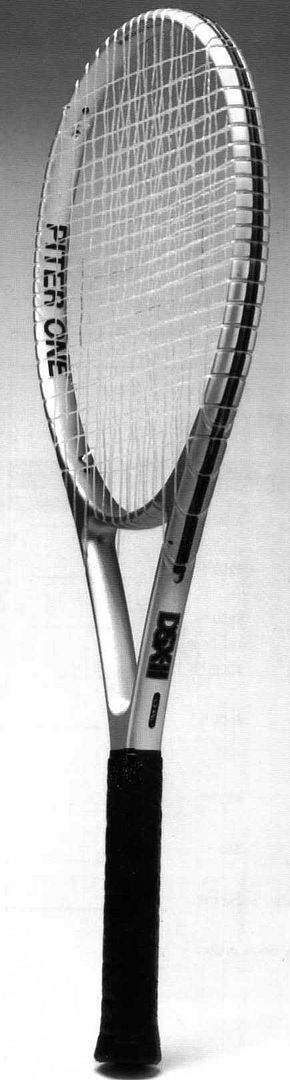
The 2001 racquet below is the DSX 11 which is also doublestrung but with looping strings around the
outside of the frame.
DSX 11 Doublestrung


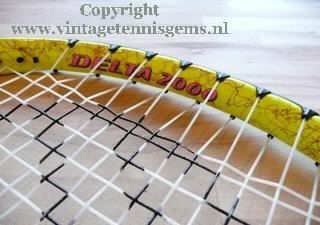
Roxpro Delta 2000


Roxpro Delta 2000

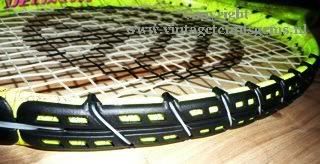
Above  is a Rox Pro Delta 2000 which also features an unusual stringing system.
Photos courtesy of Hans from www.vintagetennisgems.nl

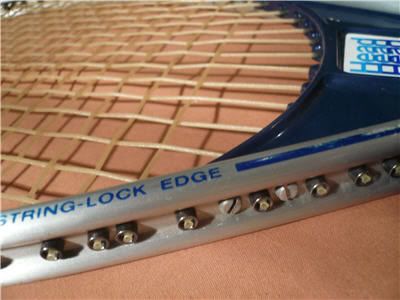
In the early 1980’s, Head marketed this String Lock system which enabled

owners to replace a cross or main as a single short string. No loops here.

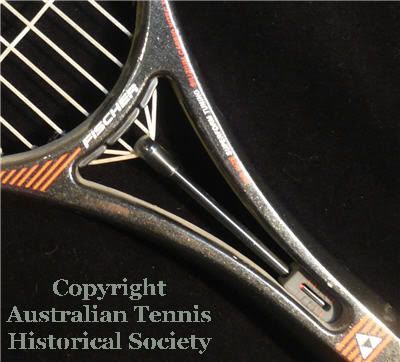
This Fischer Superform Tuning Racquet allows the player to adjust string
tension by using a key lock located in the butt cap.

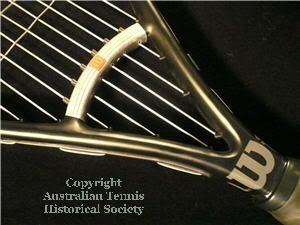
Other examples of Long main stringing by Wilson and Bancroft (Markhill Germany)

It again is interesting to note the new 2010 Prince long string models like the Wilson are on
the market once more.

Micro Stringing

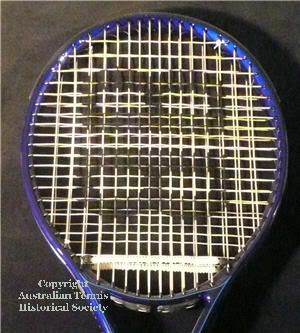
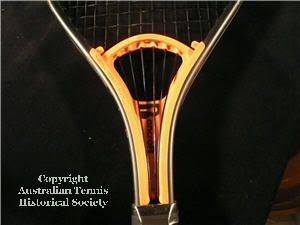
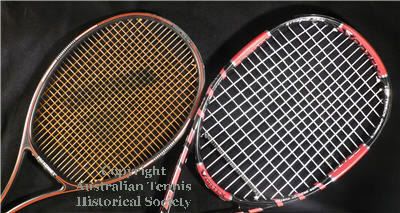
At the very top of this article, you will see how using double stinging in the main and cross strings produces a very tight stringing pattern.  In 1985, Pro Kennex produced a range of Micro Stringing racquets. This one is called the MICRO ACE. This pattern is 28 x 22 compared to the newly released Vortex Extra Spin 14 x16.

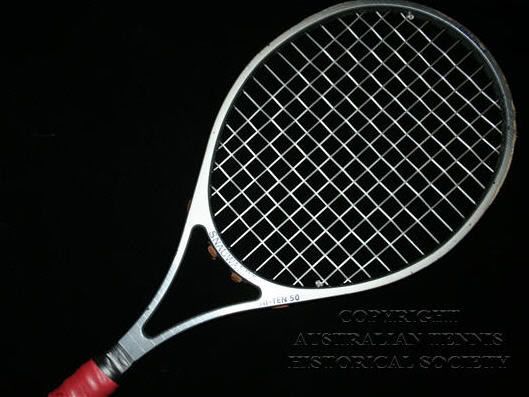
Snauwaert produced this amazing open strung racquet in the late 1980’s early 1990’s.

It is the Hi-Ten 50, graphite model.  The 16 x  12 strings are 1.85mm thick and finding replacement strings is very hard. Apparently whipper snipper grass cutting cord will give the visual effect.


Edward Bury Dewhurst

In the early days of Australian Tennis internationally, much of the focus has centred on performances of our players in England. Most noteworthy of this time were Norman Brookes, Tony Wilding (NZ), Rodney Heath, Alf Dunlop and others. From their arrival in 1905 to play Wimbledon and then the Davis Cup, their impact was significant over the next 8 years.

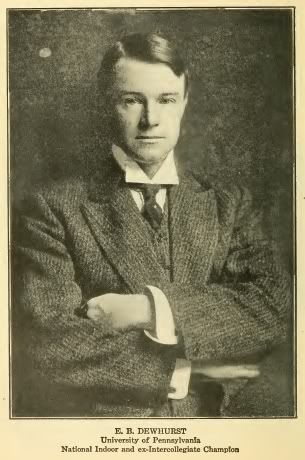
E B Dewhurst

In no way as dramatic, yet still significant, on the other side of the globe in the USA, another lone Australian was also having a noteworthy impact on the game.

Edward Bury Dewhurst was born in Tamworth NSW in 1870. At aged 23, in 1893, he commenced playing with the NSW team against Victoria in the Intercolonial contests and became quite a formidable player. In one notable match he defeated Victorian player Mr. Green who had played in 12 Intercolonial tournaments undefeated until being beaten by Dewhurst in 1895.

Overall he played non consecutively in these prestigious matches from 1893 to 1897 against Victoria and in 1902 against Queensland.

In local tournaments he won the NSW Doubles Championships in 1898 with D.Webb and 1900 with A.Curtis. He also won the Strathfield NSW Metropolitan Championships, singles in 1895 and doubles in 1895, 1897 and 1902.

Circa mid 1903, Edward left Australia for the University of Pennsylvania USA to undertake a tertiary course in Dentistry.

In America, Tennis was also developing quickly and the main events of the time were the Davis Cup which started in 1900, the US Championships which had begun in 1881, the National Intercollegiate Championships which started in 1883 and the USLTA National Indoor Championships which began in 1898.

Representing Pennsylvania University, Edward won the Intercollegiate Singles title in 1903, came runner up in 1904 and won again in 1905 along with the Doubles title playing with H.B.Register. He was team captain in these years and the first Uni. of Penn. winner of the intercollegiate title. The local papers felt that while his performance was an excellent result they were very interested in how Australian tennis was progressing against the USA’s finest players. W. Clothier the current title holder was not able to play so this comparison remained unanswered for the time being. Later Dewhurst did meet Clothier in the 1904 US National Championships and was beaten in the 3rd round.

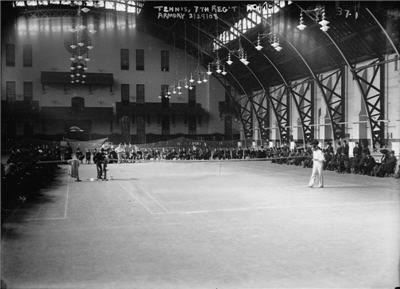
Perhaps his greatest achievement was winning the 1905 National Indoor Championships when he defeated the reigning champion of the previous two years, Wylie Grant 6-3, 8-6, 6-4. The event was played on board courts at the Seventh Regiment Armory and although in relatively poor light, Dewhurst managed to win by returning the serves he could, keeping the ball low and at the feet of Grant. Grant had a big serve and on wood courts the ball would fly through very quickly hence he was aced quite a few times.

E B Dewhurst

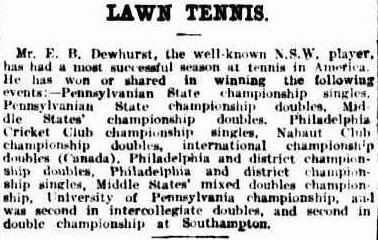
In addition, he also won the Pennsylvania State Championships 1904, 1905, 1908 and Maryland State Championships in 1906 and 1907. The above photo from the 1905 Spalding Lawn Tennis Annual shows what a great year he had in many tournaments.

The Niagara trophy in the display above looks like this in real life.

Edward played was successful at the US Championships as well, reaching the Mixed Doubles final in 1905 with Elisabeth Moore to be runners up and then winners in 1906 partnering with Sarah Coffin. Interestingly, when attempting to pinpoint the first Australian to win “a major” outside of the Australasian championships which commenced in 1905,  Edwards win in 1906 gives him this title.  Norman Brookes did win the Wimbledon  All Comers event in 1905 but lost in the Challenge round for the title.  He did however win all three Wimbledon events in 1907.

Dewhurst Niagara Trophy

Dewhurst Niagara Trophy

The local SMH reported his results in 1905.

In 1906 he was ranked in the USA top 10 at #9.

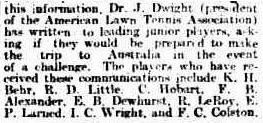
In 1908 with the Davis Cup in Australia and USA leading players Beals Wright and W. Larned expressing a desire to withdraw, being quite tired of International tennis, Dwight Davis was keen to establish a younger squad which also included an invitation to Dewhurst.

The US ended up sending Beals Wright and Fred Alexander to play Wilding and Brookes in what was an amazing challenge.

Edward was highly regarded on the subject of tennis techniques and strategies. In 1910 he published a book titled “The Science of Lawn Tennis” and participated in providing comments for the quite famous book “Methods and Players of Modern Lawn Tennis” published in 1915.

He was also quoted in US papers providing specialist commentary regarding the Australian Davis Cup Teams progressing to the Challenge rounds, often against the US.

According to the New York Times in 1910 Edward was forced out of the top ranks due some form of blood posioning disease. He stayed and lived in America practicing Dentistry and died in February 1941 aged 70.

He was inducted into the University of Pennsylavnia Tennis Hall of Fame along with two other well known tennis players Wallace Ford Johnson and William Tatem “Big Bill” Tilden.

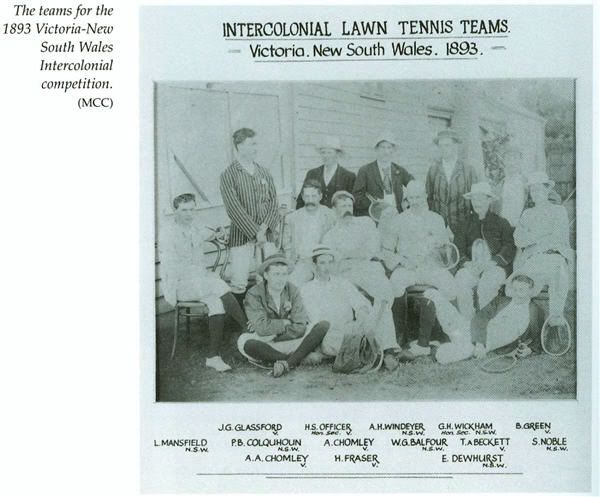
The photo below is taken from the “Serve to Authority” Story of Kooyong Page 14 which shows the 1893 Intercolonial teams of NSW & VIC.

Edward Dewhurst is lying on the ground to the right. We are attempting to source the original for greater clarity.

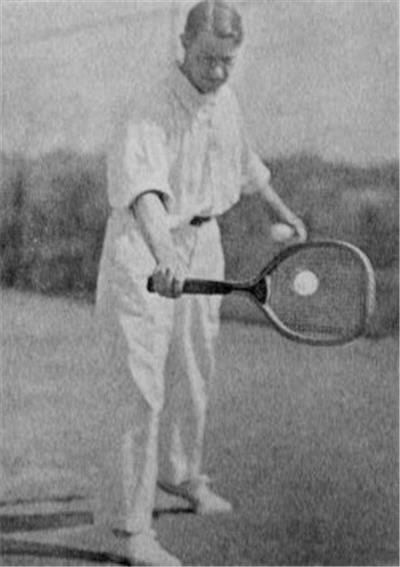
The photo of the 7th Armory iwas taken in 1908 yet it illustrates the setting.  Shots of EB Dewhurst (courtesy of his book in which he is showing readers shot making techniques). A special thanks to the 7th Armory who provided material and Keith Jenkins for information from EBD’s book.

Early Tennis Racquet Retailing

The arrival of tennis was closely aligned to the early sporting goods stores and clubs which already had an association with cricket. Since Cricket was English and quite popular in the colonies and even in the USA, the ease at which tennis sets could be included with orders that were being sent around the world anyway simply led to rapid distribution. Of course, this was also assisted by the fact that many tennis manufacturers were also cricket equipment makers.

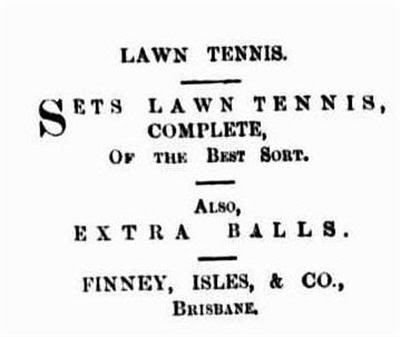
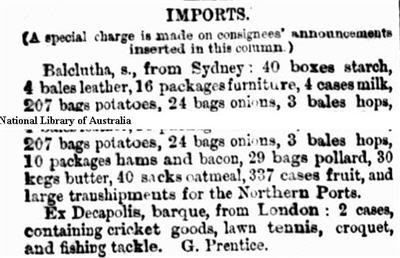
The earliest known retail ad comes from Tasmania in January 1876, but the game flourished quickly as evidenced by these two Queensland ads, the first from The Courier Mail 16-11-1877 and 22-12-1877.

G.Prentice was involved in the local cricket market with his Queensland Cricket Depot in Edward Street and is most likely to have been part of the formation of the Lawn Tennis and Badminton club which met weekly on Wednesdays from early 1878.(happy to be corrected)

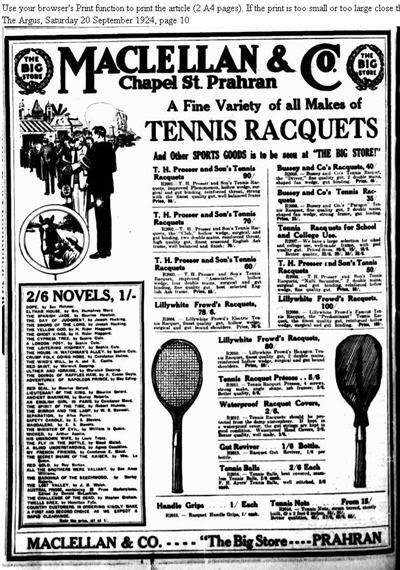
Most racquets came from the UK until the local industry developed. The major brands such as F.H.Ayres, Prossers, Lillywhite Frowds, F.A.Davis, Slazenger were all present and certainly some retailers also produced their own ‘housebrands’.

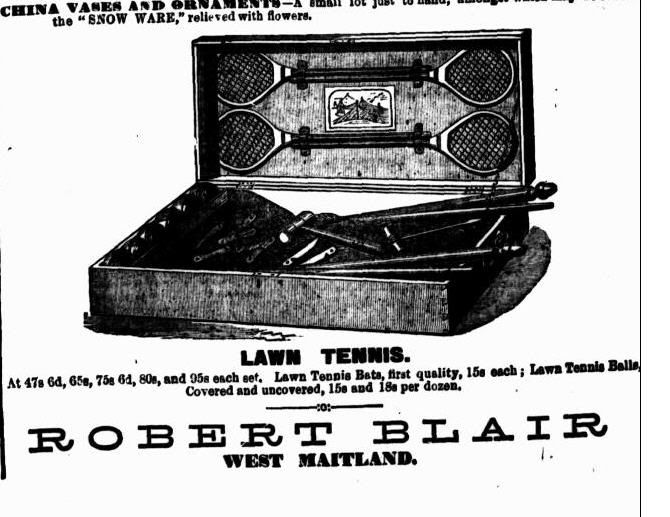
This ad below comes from the Maitland Hunter Valley region of NSW in July 1882 and is the earliest ad we have found with a picture of a tennis set.

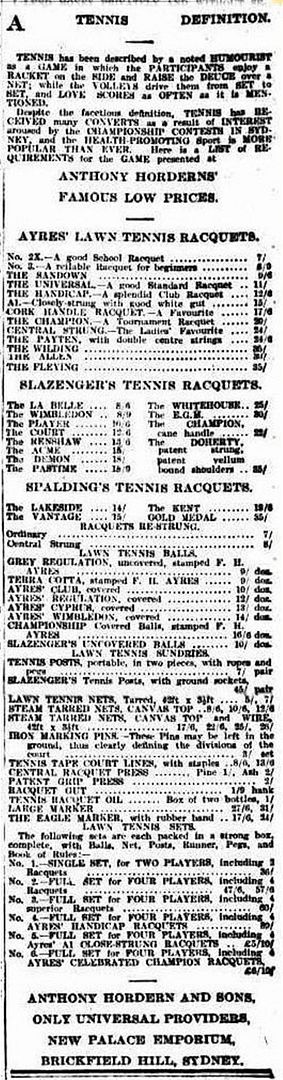
This article/ad from 1909 Sydney provides some social commentary on tennis as it developed interest amongst the population.
Ayres and Slazengers were battling for market share with Ayres having lost the prestigious ball contract at Wimbeldon in 1902 after 20 years to Slazenger.

Players were being sought out to assist with sales of racquets and you will notice the Wilding racquet by Ayres. Anthony Wilding by 1909 had participated in the Australasia Davis Cup wins and was becoming a prominent player. He went onto win Wimbledon in 1910, 1911, 1912, 1913.  Players such as Wilding promoted their racquets at tournaments and received commissions on sales.

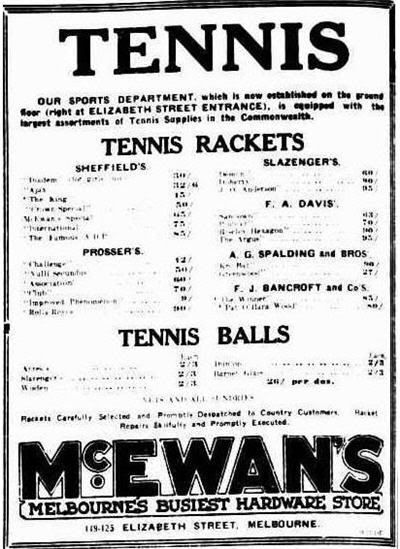
This ad (Argus,March 1918) comes from Alcocks, Melbourne well known for billiard tables and other sports. While you may not be able to read closely here it is most useful to find brand names and the period they were sold. This store went on to become the primary retail store for the Melbourne made Brewer racquets. The racquet photo below is the Austral Special indicated in the ad. This import is quite unusual in that has a more oval shape than normal. Until this ad was uncovered we had few clues to the history.

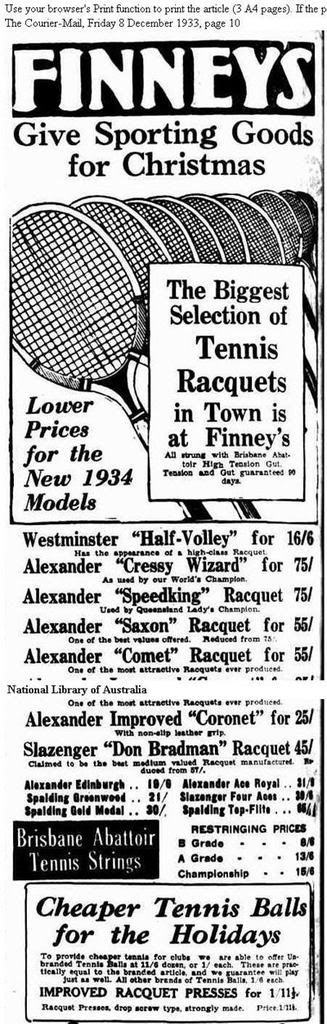
By 1933, we see the Australian brands appearing in ads. Note the Slazenger Don Bradman.
Not sure if this was locally produced but may well have been.

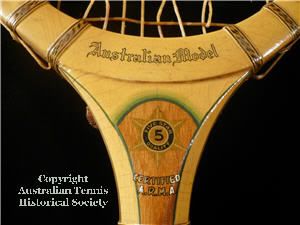
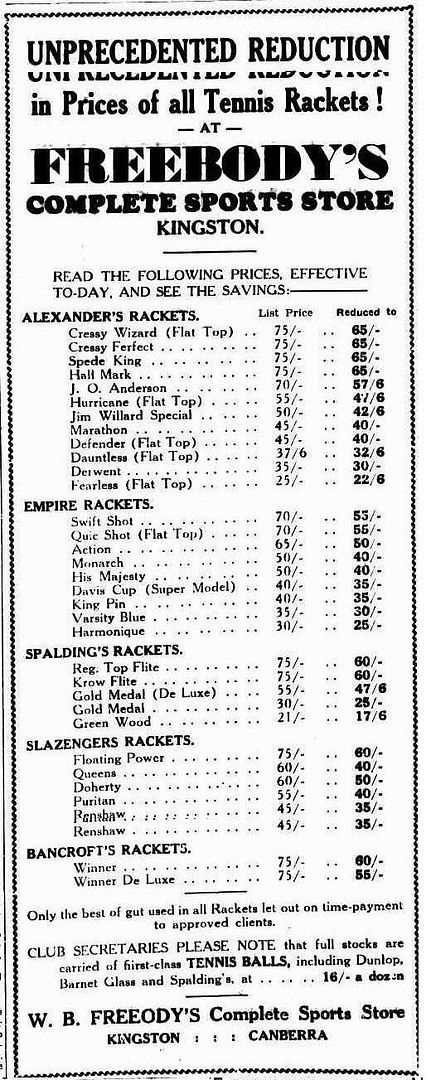
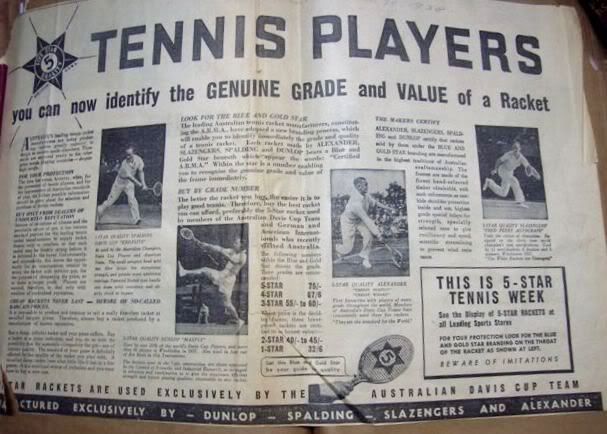
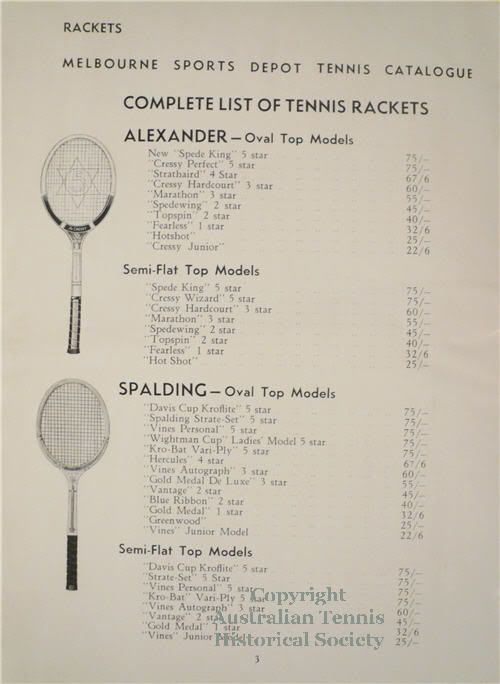
This MSD retail catalogue, below, is from 1938-39 and features Don Budge and Gene Mako on the cover. We are just beginning to learn more about a retail trading cartel which began in this era are under the guise of the ‘Combined Sporting Goods Association’. This body comprised both retail stores and the primary manufacturers and was a direct attempt to limit or prevent competition, which of course today would be highly illegal. Retail stores could veto rival sports stores from opening and manufacturers would simply not supply them directly. In turn, retail stores would only carry racquets from the member manufacturers (Dunlop, Alexander, Slazenger, Spalding) and even retail prices were agreed. You will find the top end racquets displaying the 5 star quality logo CERTIFIED BY THE ARMA (Australian Racquet Manufacturers Association). The set retail price was 75s, as per the newspaper ad launching the program in 1936. This is why other racquets from Brewer, and smaller companies failed to gain distribution beyond a few specialist stores or other non traditional retail outlets. Examples of their racquets are much harder to find for this reason along with the fact that manufacturing of wood racquets was highly labour intensive and with outputs of a couple of hundred per week many of the smaller firms would have struggled to deliver to a mass distribution network. Many Australian owned brands also developed markets overseas, particularly in the USA and examples with US distributor names sometimes appear on Ebay.

ARMA Cartel

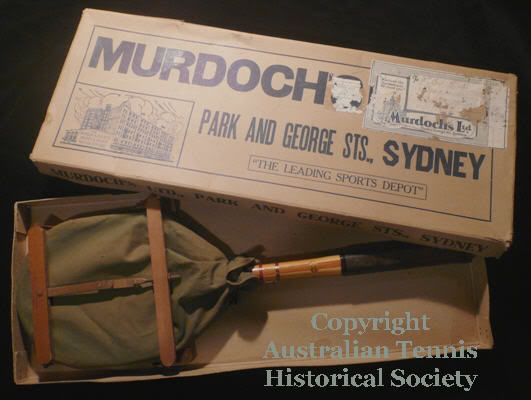
Mail order was also a big business as tennis became popular in all parts of the country. This is a rare example of a retail box.

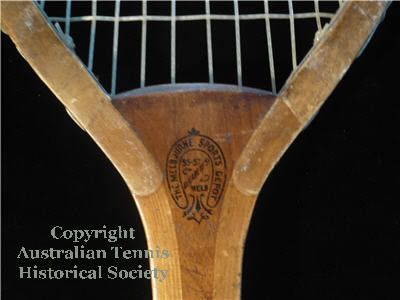
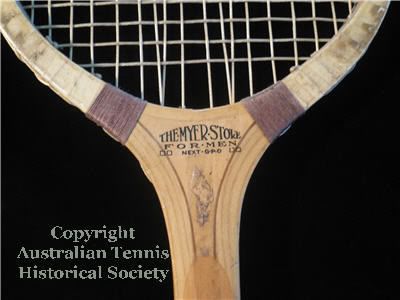
Retailers not only sold branded product from key manufacturers. They often introduced their own brands or imported overseas product and had their name also inscribed.  These two were supplied to Melbourne Sports Depot MSD and the large general commodity retailer Myer.

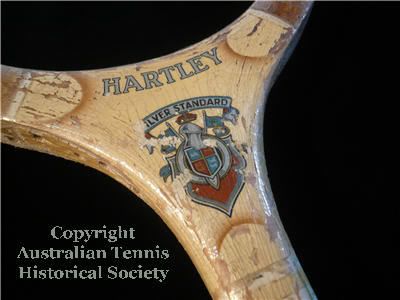
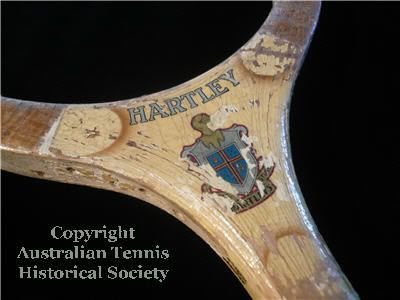
Hartley were a specialist sporting goods store yet they introduced their own racquet which was probably made by Hedley.

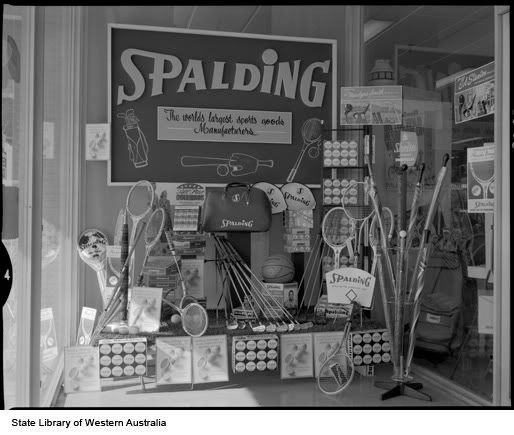
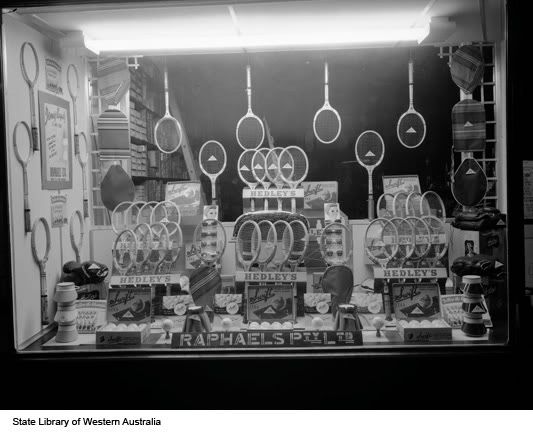
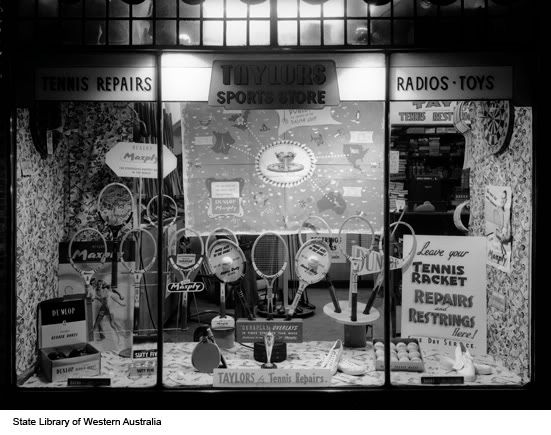
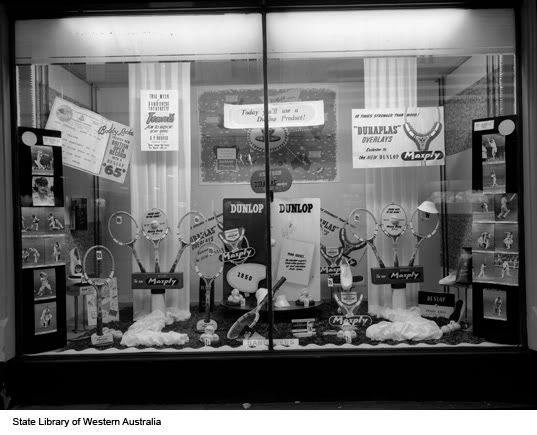
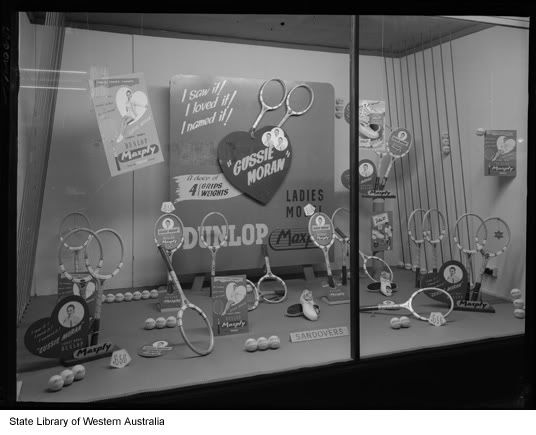
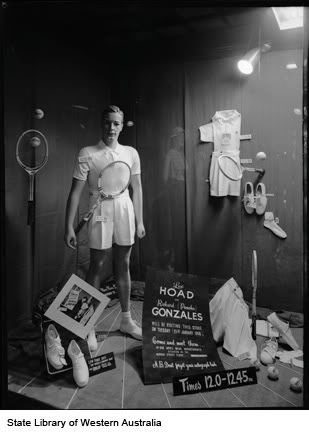
Back in the 1950’s tennis retail stores looked a little different than today. Here are some wonderful photos recovered from the State Library of Western Australia , The Battye Library.

Sporting Goods Salesmen used to visit all the stores to obtain orders and one way a sales rep could show next seasons racquet designs was by carrying scaled down racquets usually around 12″ tall with all graphics and even strings all looking exact.

They are very rare and while this 18″(470mm)  example maybe slightly larger than expected it has been made seemingly in the traditional method with a different wedge insert into the throat, correct cord wrappings, thin strand gut, well drilled holes and graphics.

Another example of unusual tennis memorabilia comes with the large display racquets produced to increase instore branding.

We can guess that these may have first appeared as marketing and advertising was really starting to ramp up within the retail environment.

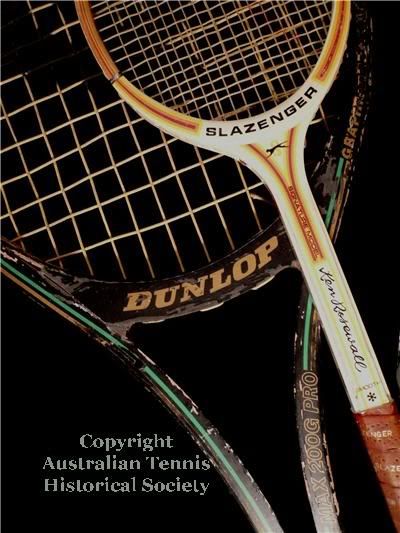
Here is an early 1970’s timber version of the Dunlop Max 200G Pro with a standard racquet for comparison. It stands 1.4 metres and you will find many modern examples in the tennis racquet stores.

Display racquet 200G

Australian Tennis Racquet Manufacture

From the arrival of tennis in the late 1870’s tennis became the social game and courts began to spring up everywhere at bowls clubs, churches, stand alone tennis clubs were formed and home courts became very popular.The tennis boom globally saw the expansion of equipment suppliers and after reading Siegfried Kuebler’s Book of Tennis Rackets, in which there hundreds of racquet makers listed, very little is known about the Australian industry.

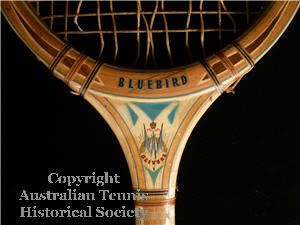
Up to the mid 1920’s most racquets were being imported from England and the USA, but tennis’ popularity reached levels which justified local production of racquets and balls. While there were some boutique racket makers such as A.H.Moore in NSW who promoted his range in the late 1890’s,  the first high volume and successful local maker may well be South Australian firm Stevens & Rowe.  J.T.Stevens was the former head stringer at UK tennis firm F.A.Davis while  E.T Rowe was a local champion player. Based on newspaper articles they produced around a 1000 racquets per year over the 1914 -1924 period  and distributed them around the country. We lose touch with them in the mid 1930’s and possibly they had a connection with Oliver owing to use of the Bluebird name on an E.T.Rowe model in our possession which went onto become an Oliver brand as well.

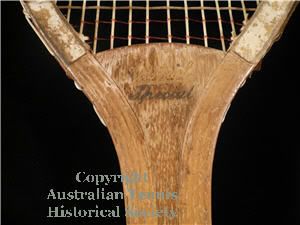
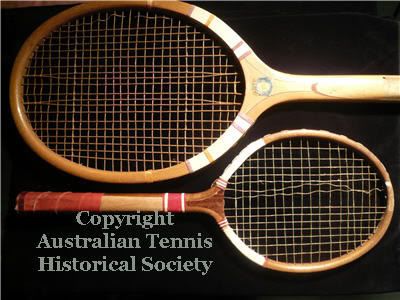
The racquet below was in all probability made in Australia and sold to a Company in France called Orion. Notice that it is a very early flat top and has a kangaroo graphic. Fellow collectors date this from around 1910, although being a 7 ply design it may be mid 1920’s.

The objective of this site is to try and source photos of and list as many models as possible which can be done from old ads, catalogues and even old receipts that people may have at home.
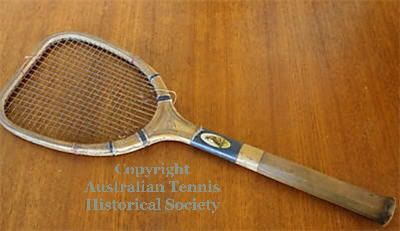
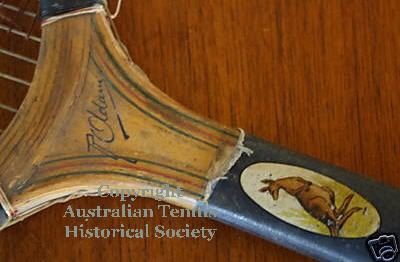
The racquet above was in all probability made in Australia and sold to a Company in France called Orion. Notice that it is a very early flat top and has a kangaroo graphic. Fellow collectors date this from around 1910, although being a 7 ply design it may be mid 1920’s.

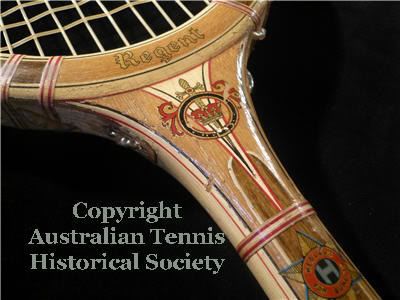
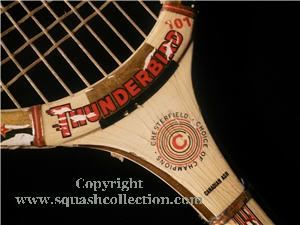
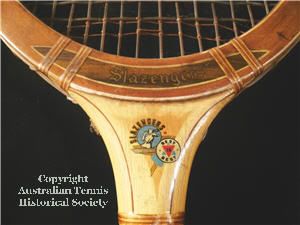
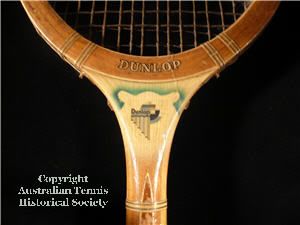
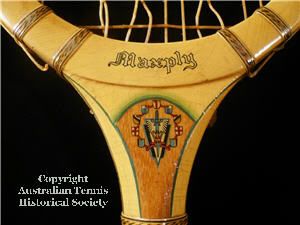
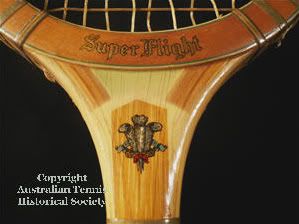
One thing you will notice about the Australian racquets is that many are wonderfully presented with colourful decals or patina often over the frame, throat and shaft. Compared to other countries in the 1920’s-1940’s period, the local racquet industry was experiencing hot competition where customer presentation was concerned and this level of finish, in our view is unique to Australia, with all manufacturers presenting outstanding graphical finishes.

Certainly the Australian racquet industry was creating a booming export market in the 1930’s and both the UK and USA were complaining about the inroads Australian makers were having on sales.

Another really interesting aspect to early wood racquets is the collectability of photo decal and signature racquets. Many players were endorsed by sporting goods companies from the very early days and while you will find many from the 50’s featuring Frank Sedgman, Lew Hoad, Ken Rosewall, Margaret Court, Evonne Goolagong, Rod Laver and John Newcombe on Australian made racquets and many Australians found there way onto USA sold racquets thanks to companies such as Chemold and Rawlings which included other Aussies such as Owen Davidson and Tony Roche.  Very rare,  are the early 20’s & 30’s and 40’s racquets featuring Australian players such as James O. Anderson (photo decal and signature), Gerald Patterson (signature), Pat O’Hara Wood (signature), Jim Willard (signature) , Dinny Pails and Nancye Bolton (photodecal). Heading even further back, Ayres in the UK produced the Wilding and S.N.Doust (Australia) signature models around 1910. Anthony Wilding used to sell his Ayres racquets himself as he journeyed around the UK and Europe.

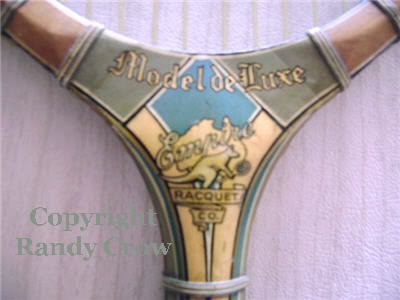
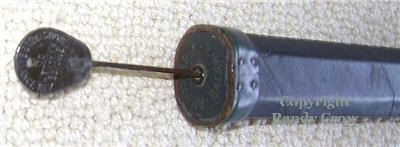
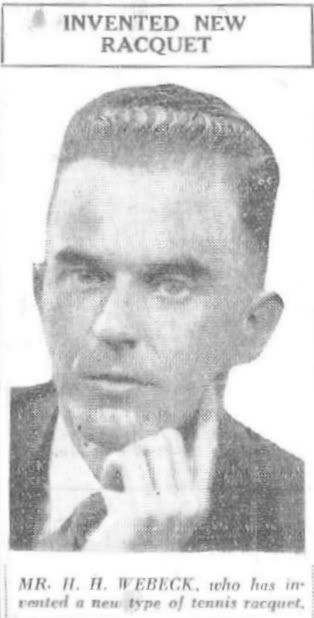
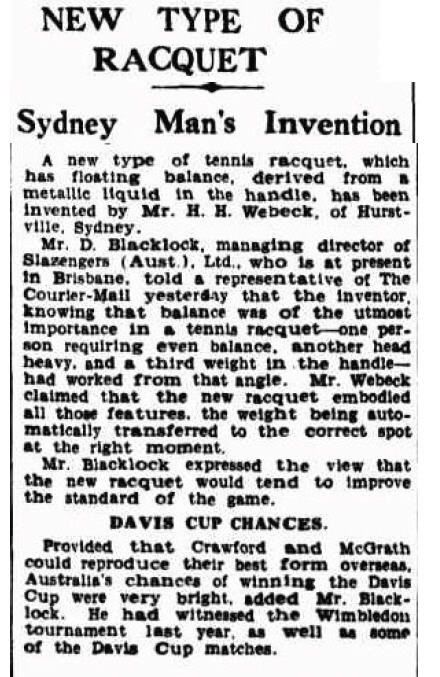
Also alive and well in the 1930’s was inventiveness.  The Empire Racquet company in Sydney created an adjustable balance system inside the racquet handle which featured a wind up device. So did Alexander’s with a model called the “Airstream”. Also, around the same time, Harry Webeck invented a mercury tube system inside the racquet which permitted the weight of the racquet to change during the motion of a shot. Slazenger adopted the patent and introduced models with this feature.  Spalding produced a slotted handle range and this too was designed by a Queenslander and adopted by Spalding in the USA.

Racquet making trends were also being driven from Australia.  More colourful graphics required new skills in air brushing, bindings  and decal making, the semi flat top re emerged thanks to Jack Crawford trying it one day and then using a new model of it to win Wimbledon in 1933.

Towards the end of 1938,  the industry created a pricing cartel under a banner called the ARMA (Australian Racket Manufacturers Association)  which permitted fixed prices based on a 5 star quality programme.

Below is a list of known small and large companies that produced tennis sporting goods in Australia, some photos of various vintage tennis racquets made here and a brand listing from a 1939 Melbourne Sports Depot retail catalogue which is a wonderful record of brands and individual model names.

While we are aware that tradesmen and even some companies made racquets in the late 1880’s to 1900’s we have little any reference at this time, hence the Kangaroo racquet may well be one of the earliest made in Australia.

Here is a list of companies which have come to light from all sources including tennis magazines and newspapers from the era.

Tasmania Racquet Company (pre Alexanders Patent Racquet Company) TAS

A.H.Moore – Sydney NSW (they seemed to sponsor top players of the day in the mid 1890’s)

A.B.Stewart – The Queensland Sports Depot 1891-2 (made, repaired racquets according to ads)

Francis J. Flavell – South Australia (suspect small scale)

The main companies in Australia that produced wood racquets from the 1920’s onwards were:

Alexanders – Tasmania (1921 from a merge between two companies, factory 1926)

Brewers – Victoria (c1928)

Chesterfield – New South Wales (c1923)

Dunlop (late 1930’s)  Created after Baker & McPherson acquired Empire and in turn was acquired by Dunlop

Hedley’s- Victoria (c 1924)

Oliver – Sth Australia (c 1930’s)

Slazenger NSW (c 1928) In the early 1960’s Dunlop and Slazenger merged

Spalding – Victoria (c1925)

Other smaller Australian companies producing locally or which began to market Australian designed racquets produced offshore are listed below. More information and photos are required given the obscurity and short life span some of these Companies. The other factor is whether some of these locally produced wood racquets were actually produced in-house or sub contracted to larger firms for manufacture.

Addison Bros. Melbourne 1924

Anderson Racquets NSW 1925-1930 

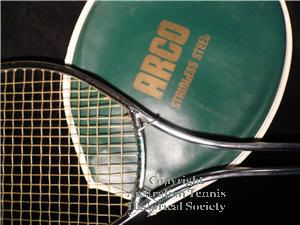
ARCO (Australian Racquet Company) SA – (First stainless steel racquet made in Australia in 1970’s.)

Australian Racket Company (pre-dating ARCO) Other details unknown circa 1930’s-1940’s

Baker & McPherson – New South Wales (Ovalo brand 1920’s)

Campbell’s – Qld

Claude Wood & Co -New South Wales (Seawood Brand 1920’s)

Eastway Brothers – New South Wales (R.E.E Special Racquet, 1920’s)

Empire Racquet Company -New South Wales (late 1920’s 1930’s adjustable weight racquets)

Emrik (c late 1970’s)

Fin- Australian owned Taiwanese made (c early 1980’s)

L.W.Dodge & Co -New South Wales (1920’s)

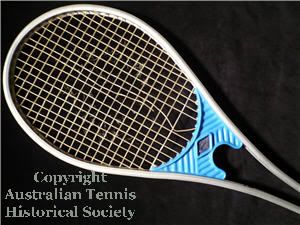
Master Racquets- QLD (First Aluminium extrusion racquets mid 1970’s)

Moon Racquet Company (VIC mid 1930’s)

Olympic Racquet Company (Petersham NSW)

Speedwood Racquet Company (NSW )

Spider Web – Victoria (mid 1930’s-1971 maybe not as long for racquet making)

Star Shot Tennis Company (Laverton, VIC unsure if racquets made)

Stellar- imported from various countries (VIC)

Stevens & Rowe (SA) Claim production started in 1914 and concluded around 1933

Tasker Sporting Goods ( acquired Victorian Racquet Company 1971) – Victoria
(started late 1940’s by ex Hedleys staff- brands Champion & Southern Star)

Waddell’s Racket Co. ( Alexandria, NSW)

Walbow Racquet Company (1930’s) Alfred St Mascot, Sydney

We intend developing sections for each company over time and would appreciate any contributions to the list above and information about the racquets produced, brand names etc.

Learn more under the individual racquet manufacturers headings.

Known Australasian player models with signature or photo decal made and, or sold in Australia.

Anthony Wilding & Sidney N. Doust (signature models F.H Ayres UK 1905-1915)
Pat O’Hara Wood Bancroft and Spalding signature models
J.O.Anderson Slazenger, Alexander, Chesterfield and own brand signature & photo decal models (Alexander photo decal 1932)
Gerald Patterson Slazenger signature model
Jim Willard Alexander Signature model
Aubrey Willard had a named racquet by Chesterfield
Dinny Pails Hedley Photodecal
Nancye Wynne Bolton Spalding photo decal
Frank Sedgman Oliver signature, Oliver Photodecal, Dunlop Photodecal, Oliver signature,         Spalding signature, Master QLD signature, Sfida signature
Lew Hoad Dunlop numerous photo decal
Owen Davidson Spalding Photodecal, Chemold signature
Ken Rosewall numerous Slazenger signature and photo decal
Ashley Cooper Spalding signature
Mal Anderson Oliver and Spalding signature
Fred Stolle Spalding signature
Margaret Court Slazenger photo decal
Evonne Goolagong Dunlop photodecal & signature, Emrik signature
Ken McGregor Slazenger signature
Russell Hedge Photodecal coaching model
John Hillebrand Photodecal (special Spalding production run of a coaching model)
Rod Laver Dunlop Photodecal and signature models
John Newcombe Slazenger Photodecal and signature models
Tony Roche Dunlop signature model
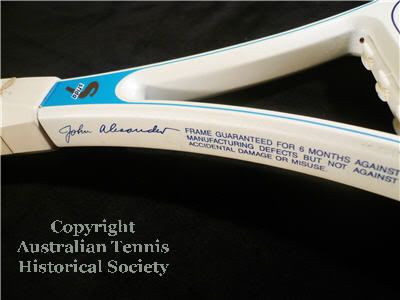
John Alexander had a Spalding named model but a couple Sfida signature models
Kim Warwick named Emrik model

More modern players having names on imported models includes:
Mark Philippoussis Dunlop signature with photo covers
Part Rafter Dunlop signature
Barry Phillips Moore branded models using his hi ten open stringing design

Also found  a Dunlop William Tilden photo decal model and a Slazenger Jack Kramer signature edition which he used here while on tour.
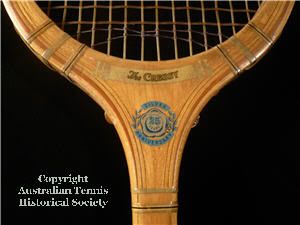
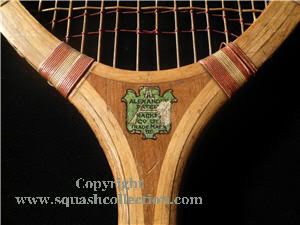
Harry Webeck invented a racquet which contained a mercury tube system that changed the weight distrubution during shot making.Subsequently banned but was tested and patent purchased by Slazenger.They did produce and market the racquet as the “FLOATING POWER” and below all the other pics is an ad in which it appears from 1934.
Subsequently, we found a racquet of a similar design was produced in the mid 1880’s and was called “The Mercury”
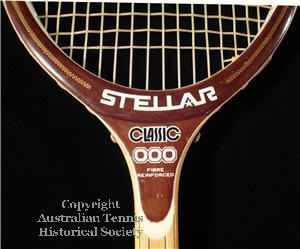
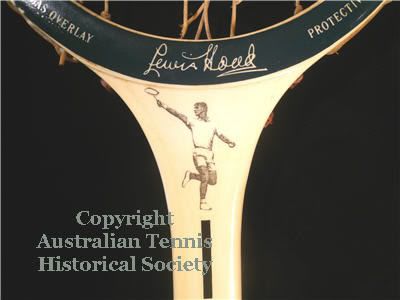
Stellar Taiwan Made as used by Pat Cash.  Dunlop UK Lew Hoad .
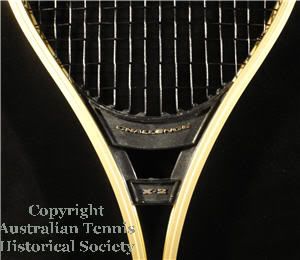
Australian Made Slazenger Challenge XII  with Qld Master Aluminium
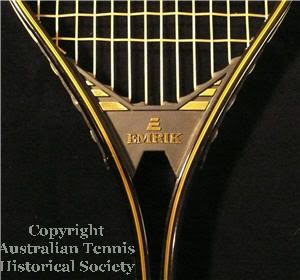
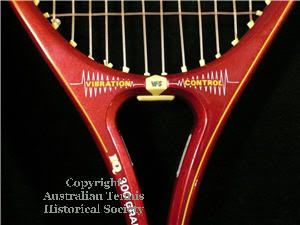
Asian Made Emrik and Fin with unique vibration dampening system
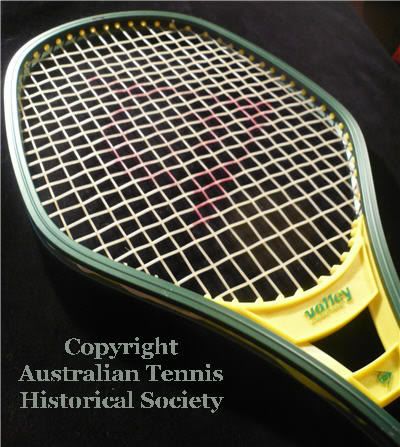
Australian Made Dunlop Volley Aluminium with imported John Alexander Sfida.
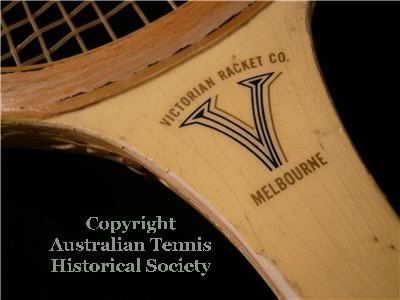
victorian racquet company victorian racquet company

The Victorian Racquet Company evolved from the Tasker (Ex Hedley staff) business.  The primary business was in squash racquets as the ash wood racquets were being phased out due to the wood virtually no longer being available and as the alternate metal materials were arriving from the mainstream makers.
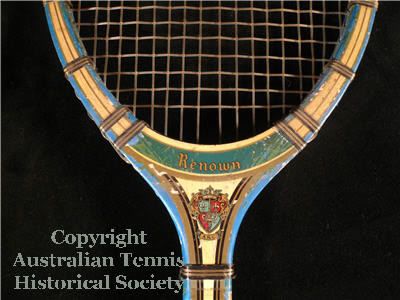
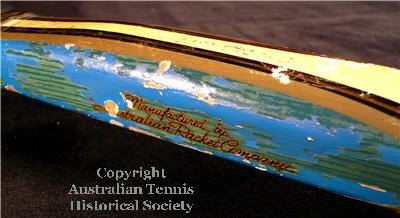
Australian Racket Company RENOWN Australian Racket Company RENOWN

A very obscure, Australian Racket Company model called Renown.  Very little known about this brand.