Other Unusual Racquet Sports

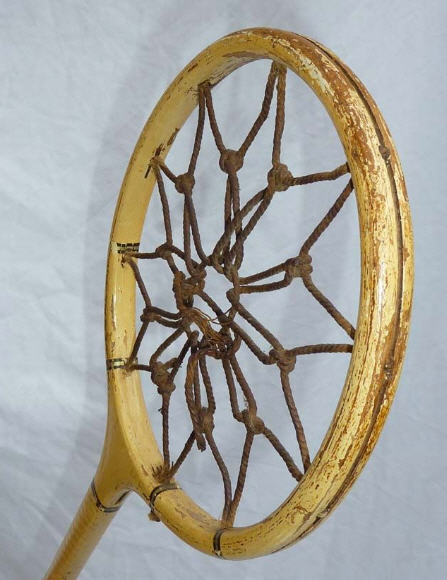
Recently when searching Ebay an unusual looking racquet came up for sale in England. Our good mate in the USA, Rolf Jaeger decided to buy it as part of his second tennis collection, having sold his first to Tennis Australia.  Neither of us had seen this before, but after some quizzing of his UK mate we found the racquet belonged to game played indoors on horse back, a winter polo variation if you will, with the extremely fanciful name “Aviation Pushball”.  The game involved a feather light, air filled ball which could be guided and hit from player to player to score a goal.
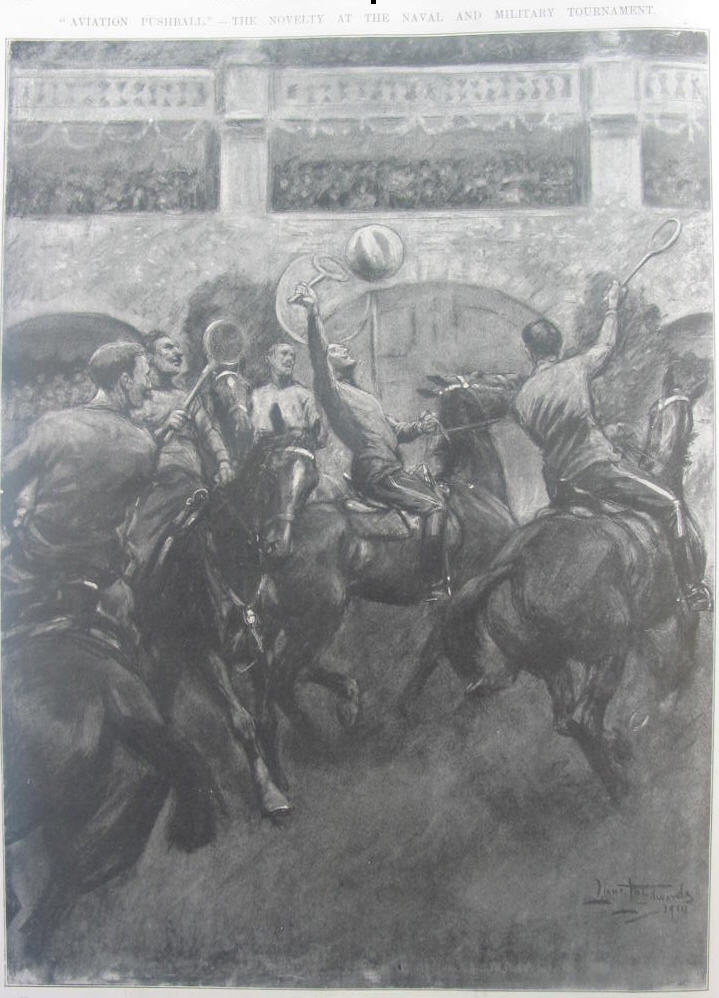
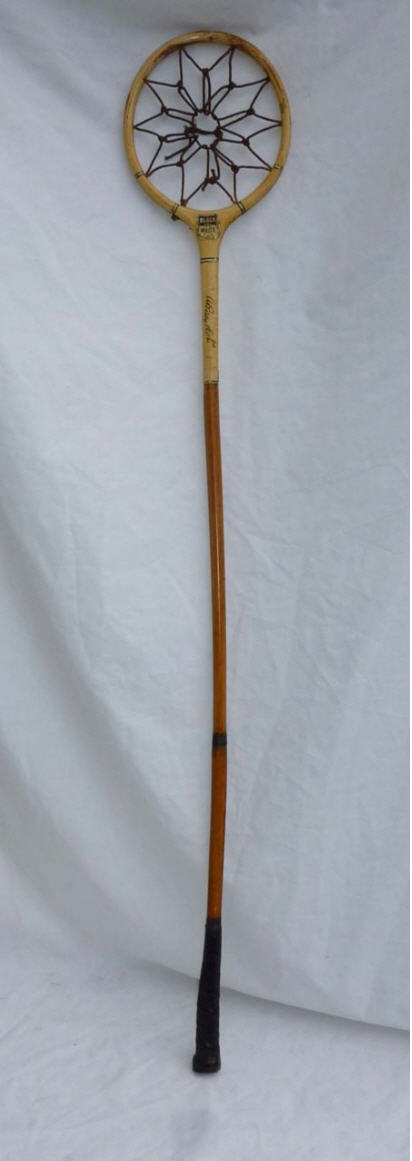
AVIATION PUSHBALL RACQUET pic of game

AVIATION PUSHBALL RACQUETAVIATION PUSHBALL RACQUET 2

Aviation Pushball in action and the racquet right with a very intriguing stringing technique.

Within the Australian newspapers, we found at the same time a new game invented in England in the early 1900’s mainly for women, where in a type of cricket/tennis variation you hit/bowled the ball with a racquet to a batsman with racquet, to fielders with racquets where the ball could be caught using the strings. This game was called VIGORO and amazingly the game survived into the 1930’s when, as with lawn tennis, boxed sets were sold and even more surprising is the existence of Vigoro associations in NSW and Qld today. The racquets have been replaced by bats but it is great to see how other games evolve and survive.  See more at the NSW website www.vigoro.com.au

Finally, and thanks to our UK contributor, we find reference to another racquet sport called “BAGBALL” which it would appear did not survive the journey.

So great fun learning about these marvellous developments.
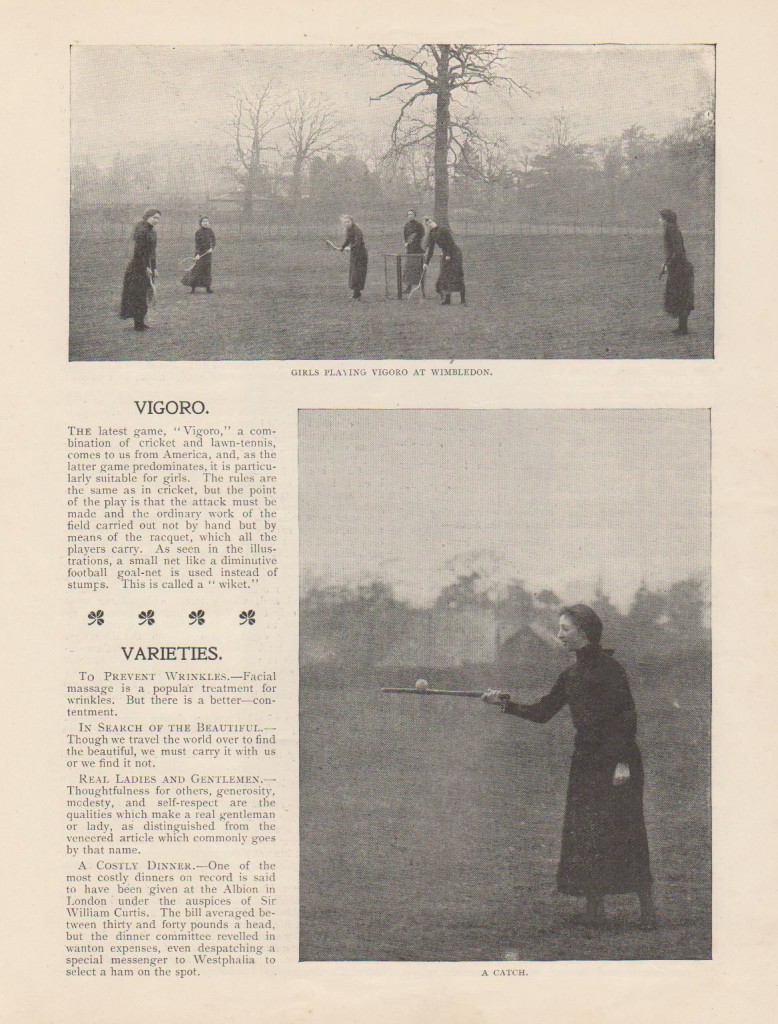
Vigoro

Vigoro in play c1903 & sets sold in 1930…still going strong today.
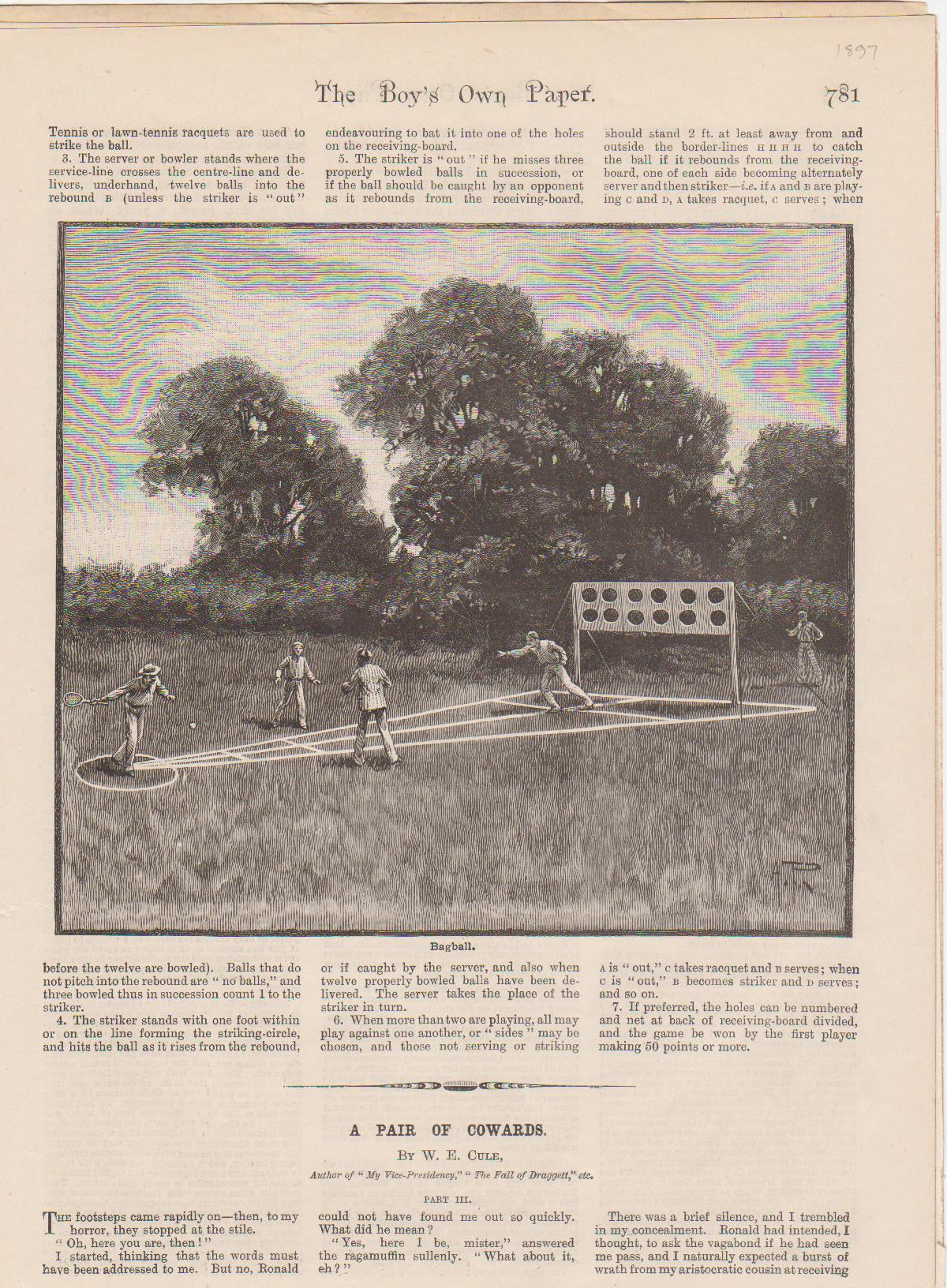
Bagball

Bagball looks like points scored for accurate driving or volleying.

1920’s Metal Racquets in Australia (Dayton and Birmal)

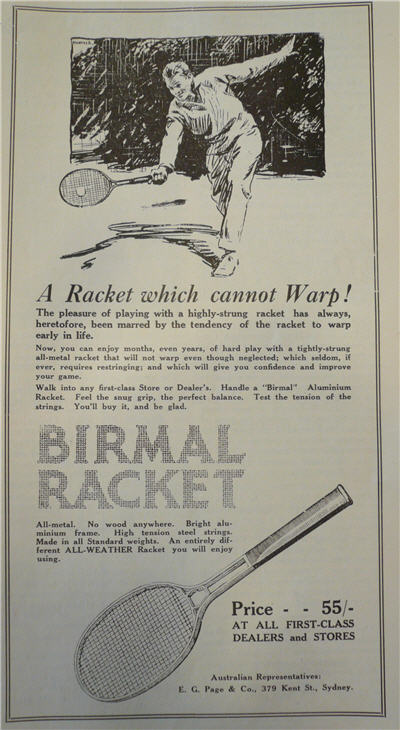
Under unusual racquets there are a couple of early metal racquets shown which made it to Australia.

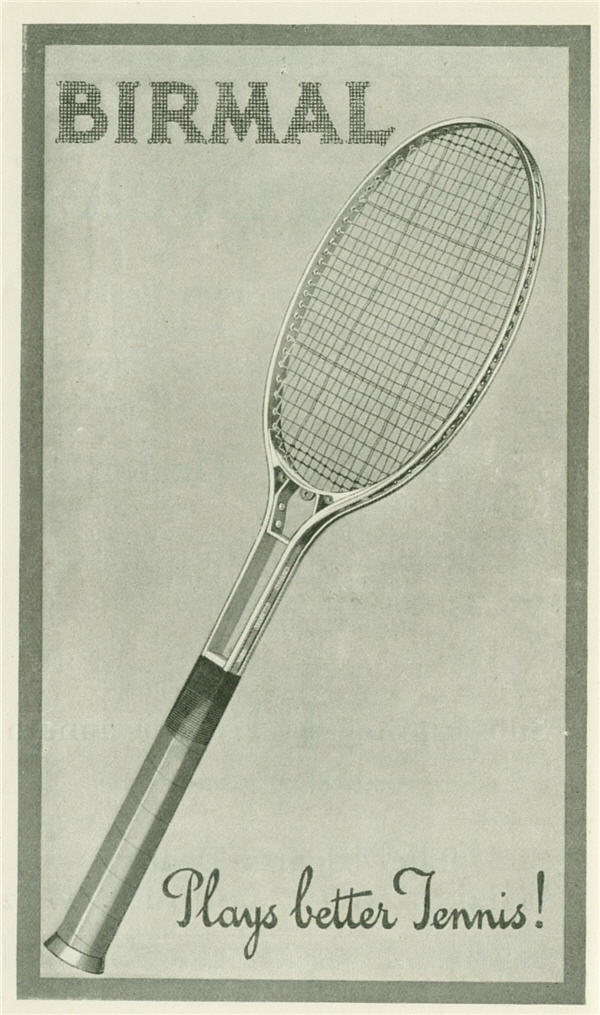
One is the US made Dayton, which commenced in 1922 and closed down after a magnificent span in 1995. The other was the 1924 UK Birmal Aluminium Racquet.

Both were sold in Australia.

Dayton was imported very early in the piece via Gerald Patterson who was one of Australia’s top players at the time having won Wimbledon in 1919 and 1922.

These racquets, as you can read were strung with Piano wire and ideally suited to all weather conditions.  They were also strung with gut if desired.

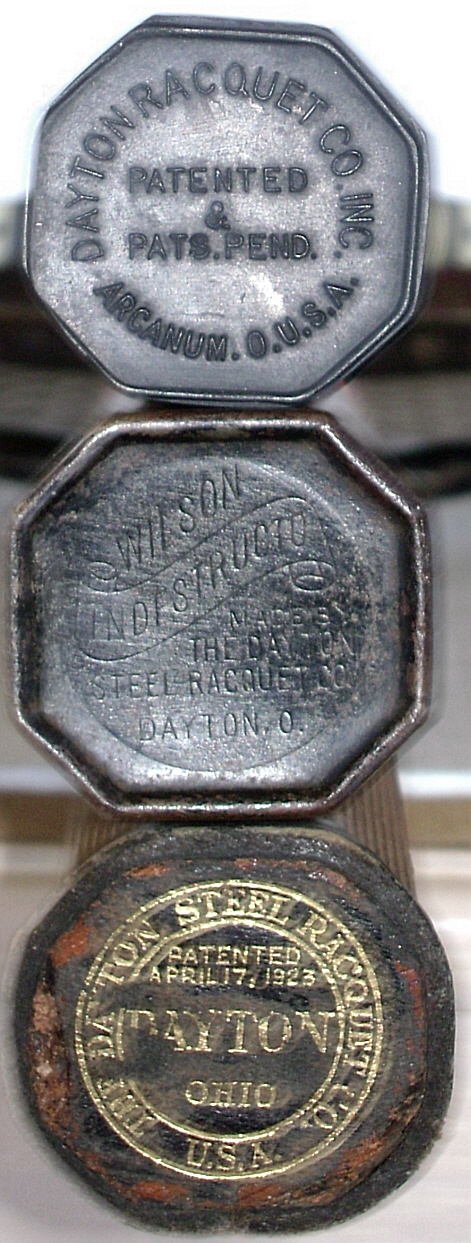
The colourful frames are great for collectors, but the trick is to learn about how to tell which models are older than the others. According to expert Randy Crow from the US Tennis Collectors Society,  if the butt cap has Dayton Ohio it will be 1922-1934,  if “Arcanum O” then 1934-1975 and if three stylised racquets appear on the throat then post 1975.

dayton light blue 2011 (11)

daytonbcaps

DAYTON imported by G Patterson

Gerald Patterson went onto become the MD of Spalding in Australia and also used these Daytons in tournament play, one of the top players to do so.  In 1928, on an international visit Jean Brugnon was intoduced to these during some wet weather play at Royal South Yarra by Pat O’Hara Wood.

The racquets were not that popular amongst the top class players but did prove to be appreciated by schools.

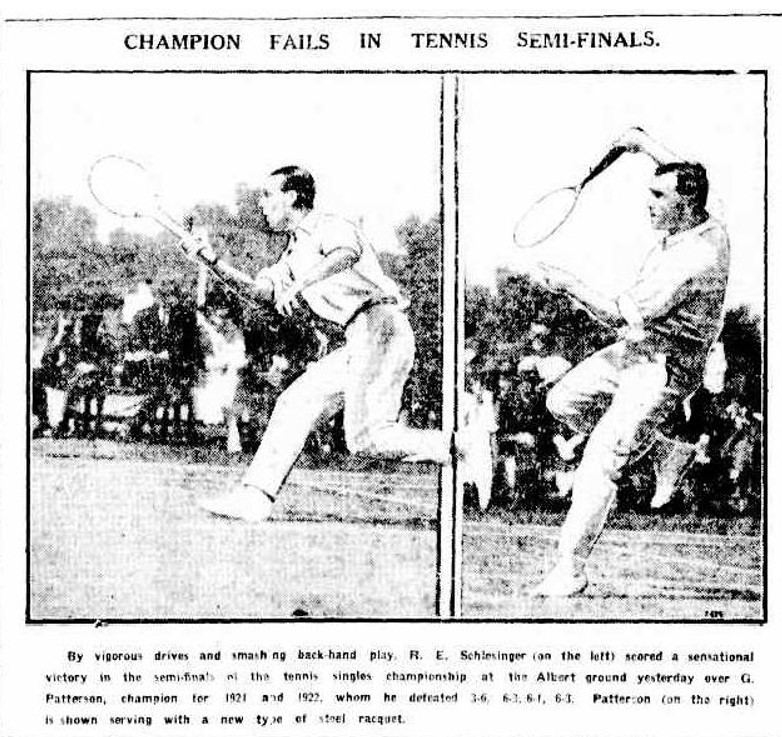
The picture below from 1923 shows Patterson the right playing with his new racquet. The fact he lost what was meant to be a win, perhaps did not help the cause.

patterson using dayton 1923

The Birmal racquet, was aluminium and also strung with piano wire. The grips however were not grooved wood handles like the Dayton but appeared with a wrapped cord grip and later on with a leather grip.

These were promoted most heavily in tropical Queensland and the Northern Territory.

birmal001

birmal002

Birmal Ad ALT 1924

These ads and PR from Australasian Lawn Tennis 1924

Invention of Electronic Scoreboards

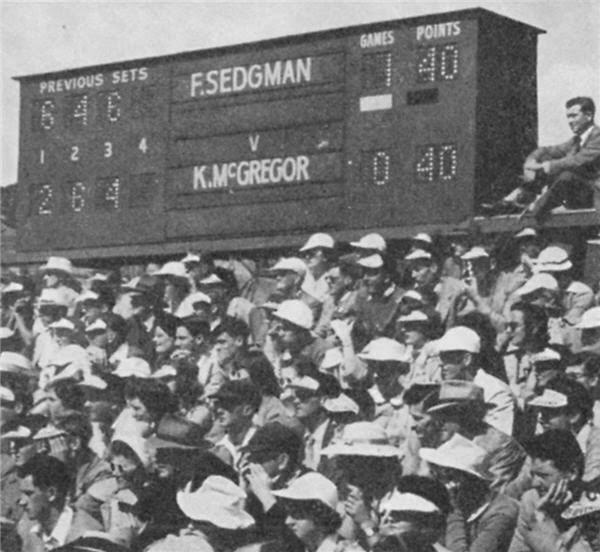
An Australian tennis enthusiast, named Edward Both invented the electronic tennis scoreboard around 1952.  He and brother Don designed and tested the unit in South Australia before its’ launch at the 1952 NSW championships.  The new technology took off and BOTH EQUIPMENT Pty Ltd became the supplier of these scoreboards to other venues including trotting, basketball and horseracing.  The technology with 9000 globes was used for the Melbourne Olympic Games in 1956.Both Scoreboard 1952

Not only were Edward and Don good players but they inherited their interest from R.V.Thomas (their Uncle) who won Wimbledon Doubles with Pat O’Hara Wood in 1919 and the Australian doubles in 1919 & 1920.

Now the scoreboard invention was no fluke, because Edward Both had also designed the World renowned, life saving IRON LUNG.

It took two people to operate, one for the games and the other for points. Looks like a great match between best mates and rivals here!


A.H.MOORE Sydney

With the spread of tennis throughout the colony from 1876 onwards, we have discussed how much of the tennis equipment was imported from existing UK, French and USA sporting manufacturers.

The Australian industry is recognised to have begun in the 1920’s as the popularity of the game moved more from a wealth based past time to a general community game. This saw the start of Alexanders and other Australian developed brands and the commencement of Australian operations for Spalding and Slazenger.

Pre 1920’s we assume that craftsmen here would have readily made racquets for customers, but finding information about these firms is difficult since many never promoted or advertised themselves.

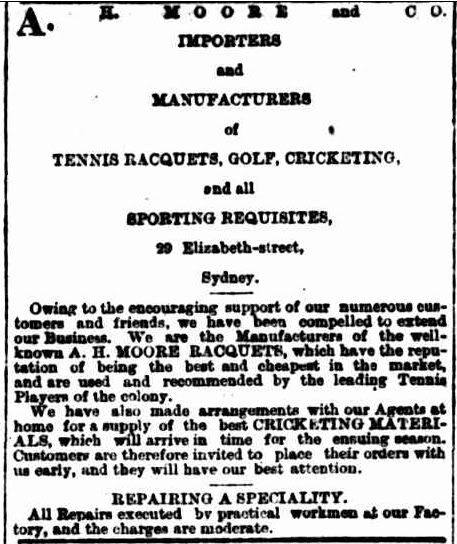
One of the pioneer racquet makers that seemed to have created a niche was Arthur Henry Moore from the firm A.H.Moore in Sydney who commenced business in the early 1890’s.

In 1896, operating from A.H.Moore NSW maker Elizabeth St Sydney the firm was offering both imported and locally prodcued equipment.
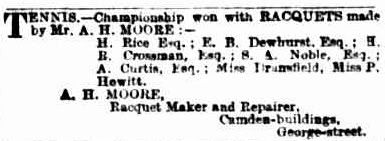
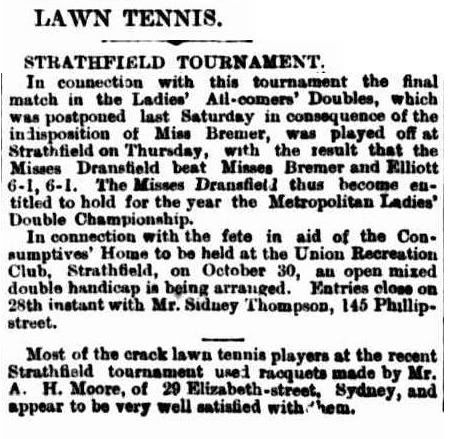
The racquets carrying the firms brand name seemed to have been well accepted and the company was involved with the then top grass court event, ” The Strathfield” Lawn Tennis Tournament.

You can read from the articles how linked with the leading players in the colony and from a different 1897 ad, below, names Horrie Rice and Edward Dewhurst amongst other prominent players who used and won with his racquets.

A.H.Moore NSW maker

In 1901, the factory and workshop were listed as being in Woolwich.

Also in this year, unfortunately, Moore ran into financial difficulties and as the company was heading into legal proceedings an argument over legal fees he couldn’t pre-pay led to him shooting a managing clerk for a solicitor in their Elizabeth St offices on December 6th and then shooting himself dead immediately after. The clerk, shot twice, survived.

A.H.Moore NSW maker