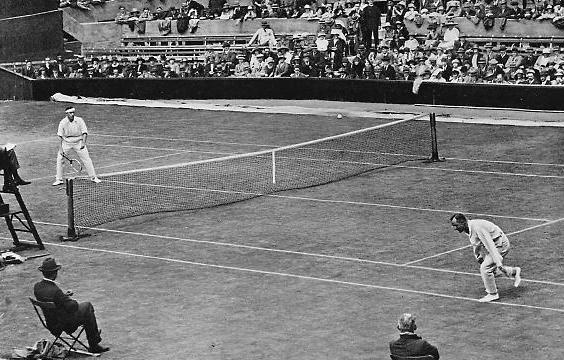
Top Australian Men in the 1920’s

As a consequence of World War 1 and despite the heavy loss of life, including many Australasian  tennis players such as Anthony Wilding, Arthur O’Hara Wood and Jack Addison to name only 3, tennis in the 1920’s got off to a slow start since many of the young up and comers were enlisted and had no opportunity to develop their game.

Many of  potential leading Australians were serving in the forces via the UK and the first post war Wimbledon tournament in 1919, postponed since 1914, became an ideal platform to launch the new Australian Tennis assault. Out of respect for the losses in the war, the USA was most gracious indeed by not sending major players to Wimbledon or the Davis Cup challenge rounds.

Gerald Patterson, Ron.V.Thomas and Pat O’Hara Wood all made it to the Wimbledon quarter finals and Patterson defeated UK champion Kingscote for the right to play Norman Brookes, the 1914 Australian title holder, in the challenge round. At half his age and Norman and not being in good health throughout the later stages of the war,  Patterson won the title without much effort.

In the men’s doubles, seven out of the eight finalists were from Australasia. Brookes – Patterson were defeated by O’Hara Wood and Thomas and Rod Heath and Randolph Lycett made the final which the former won. Lycett won the mixed with US lady E.Ryan.  A great Australian result.

Significantly, Brookes and Patterson & co went onwards to the USA to play in the 1919 US national championships, defeating Tilden and Vincent Richards in the doubles final. In the singles, while all the Australians were knocked out in the fourth round, Patterson lost to eventual winner Johnston in 5 sets, who then went on to defeat Tilden in straight sets in the final.

Pat O’Hara Wood was a fine doubles player and with Ron Thomas won the Australian Doubles championship in 1919/1920 and the singles in 1920 & 1923.

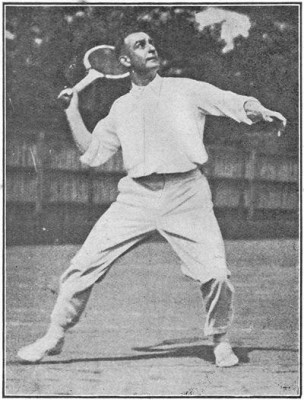
Gerald Patterson was born in 1895 in Victoria and was the nephew of Dame Nellie Melba, Australia’s then world famous opera singer. In 1911, aged 15 his talent saw him as the Senior Blue for tennis in Victoria and in 1912 he played in the Victorian championships against the visiting British Davis Cup team and beat A.E.Beamish.  He played fellow junior from NSW and soon rival, J.O.Anderson in the Public Schools Victorian Championships. He also played interstate tennis with her son George Armstrong. He was 6′ tall and modeled his game on the world champion Norman Brookes except his powerful serve and overhead compensated for his relatively weak backhand.  Norman Brookes in later years rued tremendously inspiring Patterson’s backhand for if he had a stronger all round game it may well have changed tennis results throughout the 1920’s.

James Outram Anderson was born 1894 in NSW so the interstate rivalry was at the fore. He also enjoyed a major victory in 1912 over the strong champion player of the day, H.A.Parker.  J.O beat Patterson in that first Victorian schoolboys tournament in 3 sets.  James had five brothers, all with the middle name Outram and all were competent tennis players. An E.O.Anderson was on the 1913 Australasian Davis Cup selection committee.

Both lads almost won their state championships in 1913 beating notable players on the way and succumbing to slightly older more experienced players Rod Heath (first Australasian Singles  Champion 1905) and Pat O’Hara Wood. Patterson was 2-1 sets up and lead in the final set but lost to Heath and Pat O’Hara Wood defeated Anderson.  Anderson also beat British player P.G.Lowe in that year providing a strong comparative performance to Patterson. Clearly they were destined for greater things.
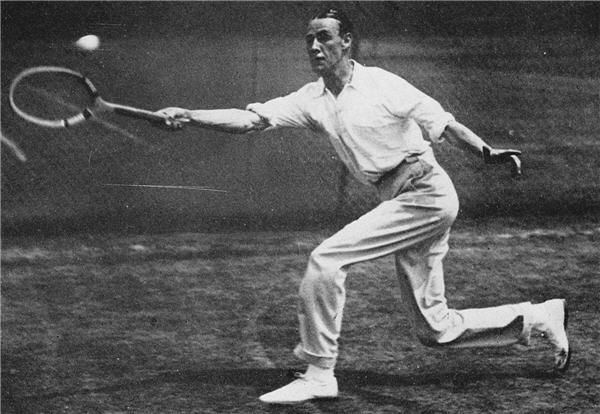
J.O.Anderson
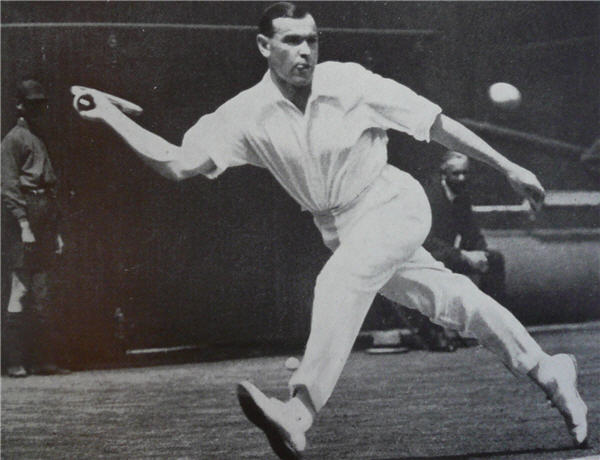
Gerald Patterson

The Davis cup team in 1919 comprised Brookes, R.V.Thomas and new timers Patterson and Anderson. As the cup was retained by Australia through the war, the British Isles sent a team to play in Sydney mid Jan 1920. Australasia won 4-1 with the only loss being Anderson by Kingscote.  Brookes played in the doubles with Patterson.

Over at Wimbledon in 1920, Patterson was defeated by Tilden in the Challenge round, but won the mixed playing with Suzanne Lenglen over Lycett and  Miss Ryan (USA-one of 5 consecutive finals together, 3 wins 2 losses both to Australian male opponents).

The 1920 Davis Cup was conducted in New Zealand as part of the relationship under the “Australasian” banner which shared Davis Cup play between Australian cities and New Zealand.  The team comprised Brookes, Patterson, RV Thomas and Rod Heath.  Brookes and Patterson played the singles and doubles against Tilden and Johnston and lost them all to the USA, scores 5-0 (rubbers). Although Brookes was in his early 40’s he actually provided more competition than Patterson and had he been 10 years younger may well have altered the outcome. Both Aussies took Tilden to 4 sets and while Johnston beat Patterson who won only 4 games, Brookes took Johnston to another tight 4 set match.

After New Zealand the teams came back to Australia for a Melbourne exhibition series against Victoria in mid January 1921. Tilden beat Hawkes 6-3,6-3, O’Hara Wood 8-6, 6-2 and Brookes 6-1,6-4.  Washburn, the USA 3rd player beat Patterson , but Patterson beat Johnston on day 3.  The Australians did win 2 out of the 3 doubles the highlight being Brookes and O’Hara Wood win over Tilden /Johnston 6-4, 7-5, 6-3.

The two teams then traveled to Sydney for a repeat match. The USA players won this 7-2 but again Brookes and O’Hara Wood won against Tilden and Johnston 6-3, 8-6, 4-6, 7-5.  In singles, Brookes took Tilden to three sets losing a close match regarded highly by the 3500 spectators, 4-6, 8-6, 5-7.

Tilden was really starting his career at this time and over the next 5 years would come dominate men’s tennis to the point where he was labelled that best tennis player to have played the game, a badge that would last into the mid 1930’s.

The 1921 year saw the introduction of some new blood into the Davis Cup team.  Norman Peach, the oldest, was named as Captain and the team of “Colts” comprised Clarence Todd,  Jack Hawkes and J.O.Anderson.  While not expected to do as well as a team including Brookes, Patterson and O’Hara Woods, since these players were unavailable the youth policy was well received as a pathway to developing a stronger team to battle the USA.

The team defeated Canada as expected followed by wins over the British Isles and Denmark. Against Japan at Newport, the team lost 4-1 which was disappointing, however the Japanese team of Shimizu & Kumagae were renowned strong players.

A most surprising result was that J.O.Anderson and Clarence Todd won all four of their doubles matches.  Clarence who was a country NSW farmer only occasionally came to Sydney to play the metrop0litan tournaments only played in the one Davis Cup contest and in 1923 purchased a sheep farm and decided to devote more time to the business.  He was highly regarded player through the 1920’s and on his day would beat many of the top ranked players.

A highlight of the tour, other than Anderson making the semi finals of the US singles championship, came later in the month when at the East West Championships in Chicago,  Anderson met Tilden and in what the newspapers described as the best match seen in the USA, Anderson won a marathon 5 set tussle 3-6, 6-4, 6-2, 1-6, 19-17

Early in 1922 Patterson and Anderson were engaging in exhibition matches in preparation for the journey to England to Wimbledon and onto the Davis Cup challenge. Each was beating the other in what would be ding dong type of year.

Other members of the team were J.B Hawkes, R.C Wertheim and Pat O”Hara Wood, his first time in the team. The team on paper looked to be a strong one and it needed to be against ever improving overseas competition. At first both Patterson and Anderson looked doubtful for the tour but satisfactory arrangements and a fund was being established to help Anderson look after his business interests while away on tour.

Although favoured to win Wimbledon, Anderson was defeated by Patterson in the semi finals who went onto beat fellow Aussie at heart Randolph Lycett in the grand final in straight sets, in what was the first year that the All Comers and Challenge rounds were abolished.  Even previous year winners now had to battle through the draw as happens today.

The Davis Cup challenges started well with defeats over Belgium, Czechoslovakia, France and Spain.  In a scare, Anderson was out ill against a strong French team but Patterson and O’Hara Wood beat Gobert and Cochet 4-1 rubbers. Anderson also missed the Final round against Spain where again the score was 4-1 which set up a challenge against the USA.   Patterson and O’Hara wood were tough doubles competitors although they had lost the US Doubles title to Tilden and Richards and few weeks earlier.

The Challenge round saw Anderson and Patterson lose both their singles against Tilden and Johnston with a highlight being, once again, a 5 set thriller where Anderson was 2-1 sets up losing, 4-6, 7-5, 6-3, 4-6, 2-6.  In a reversal of the US Championships,  O’Hara Wood and Patterson defeated Tilden/Richards 6-4, 6-0, 6-3 in doubles. On their return, both Australians pointed to a collective weak and defensive backhand style as being the issue against stronger offensive backhands shown by both the Americans.

1922 ended with the Australian Championships final played at White City between Patterson and Anderson.  The previous two years the Championships were conducted in Adelaide and Perth and traveling often reduced the quality of the field. The NSW tournament was at full strength and the evenness of the players was borne out in the semi finals Patterson defeating Hawkes 8-6, 4-6, 7-5, 3-6, 10-8 and Anderson over Peach 1-6, 6-2, 6-2. 6-4.  The final score was Anderson defeating Patterson 6-0, 3-6, 3-6, 6-3, 6-2 although it was quoted that Patterson was playing with a sore wrist. The first set was over in 10 minutes before Patterson rallied.  In doubles, Hawkes and Patterson defeated Peach and Anderson and remarkably in the middle part of the match the latter lost 12 games straight, scores 8-10, 6-0, 6-0, 7-5.

Having won the Australian Championships, Anderson was to be included in the 1923 Davis Cup team.  Again Patterson and O’Hara Wood were not available, however, Anderson was keen to go with a special condition that funding a business manager substitute in his business would be necessary as he couldn’t afford to leave and pay the salary of the manager for 5-7 months taken for the tour.  On the surface, this gained plenty of public sympathy, for in the 20’s not all players came from wealthy families where touring for expenses only was affordable.  Typically the issue of what defined an AMATEUR came to the attention of the International body, but since a definition was never really established much was overlooked and which as quoted from Wallis Myers, amateur must mean one thing in Australia and another thing here (UK).  However, at the end of the day, not sending a team would be a disappointment to the whole competition.

So the team of Anderson (captain), J.B Hawkes and newcomers Richard E  Schelsinger and Ian D McInnes was selected.  At 23, Schlesinger had come to the attention of selectors during a Sth Australia Victoria match at which he defeated R.V.Thomas and C.Stuart and at an MCC tournament he beat Wertheim, then Patterson and to0k eventual winner O’Hara Wood to a losing 5 sets in the final.  Ian McInnes only 21, had played well in the previous South Australian Championships beating R.V Thomas and then lost to Patterson in the final.
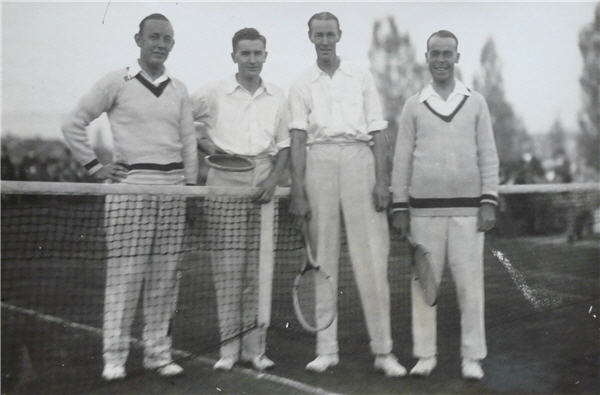
1923 Davis Cup Team:Jack Hawkes, Ian McInnes, J O Anderson & Richard Schlesinger

This was the first year that Australia played without association with New Zealand, primarily because  no New Zealand players were qualifying to make the combined team. The Davis Cup Team traveled direct to the USA for the American Zone playoffs bypassing the Wimbledon tournament.

With wins over Hawaii, Japan and France all rubbers being 4-1, Australia played the USA in the challenge round. Having been given a run in the preliminaries, the older players Hawkes and Anderson took on Tilden and Johnston.

Although losing 4-1 to the Americans, Anderson again proved his skill beating, for the first time in a Davis Cup round, William Johnston in 5 sets 4-6, 6-2, 2-6, 7-5, 6-2. Anderson lost to Tilden in 4, the doubles in 4 and Hawkes was beaten in straight sets comfortably in both singles.The doubles turned into the longest match in Davis Cup history with a win to Tilden/Williams over Anderson/Hawkes 17-15, 11-13, 2-6, 6-3, 6-2.

Hist0rically, it is of note that during this year, Tilden lost his middle finger above the knuckle on his playing hand as a result of an infection caused by a cut.  He spent much of the off season, relearning his grip and shots to minimise the impact.  While it was altering his game, Anderson seemed to think it forced Tilden to concentrate more and make even less mistakes.

In January 1924,  Richard Schlesinger proved a worthy finalist in the Australian Championships at the Albert Ground against Anderson by beating McInnes and Kalms. He lost in 5, 6-3, 6-4, 3-6, 5-7, 6-3.

No doubt, with some satisfaction Norman Brookes with Anderson defeated arguably the best doubles combination of Patterson/O’Hara Wood in straight sets 6-2, 6-4, 6-3.

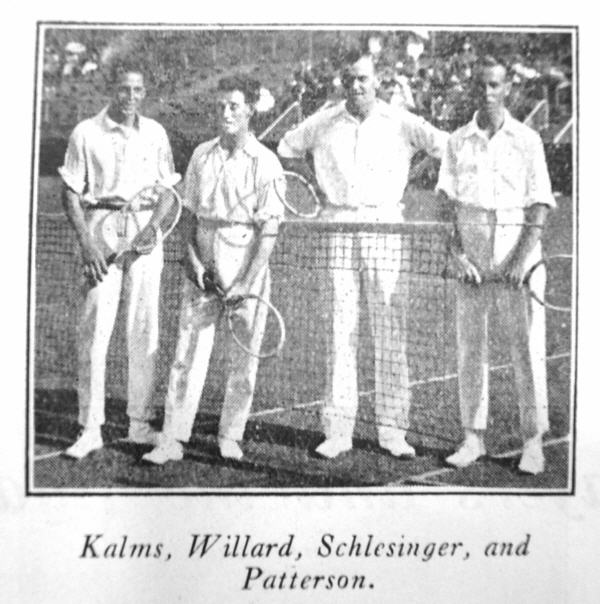
Typically after the championships in January,  Anderson announced again he could not join the Davis Cup team. While a blow, since Wallis Myers had placed Anderson #3 on a World Ranking behind Tilden and Richards,  Patterson and O’Hara Wood made themselves available.  The final team included Fred Kalms and Richard Schlesinger, although neither played in any matches.  Australia defeated France in the interzone finals 3-2 with losses of both singles to Lacoste.  In the challenge round we lost 5-0 winning only one set in the doubles.
Jack Hawkes
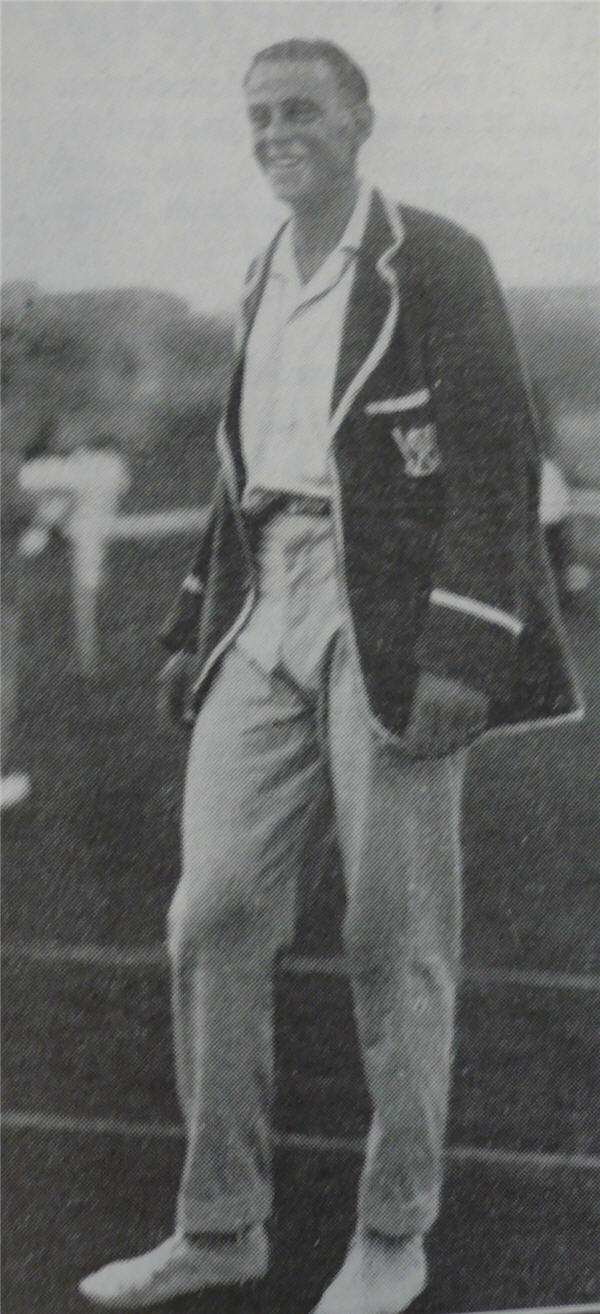
Fred Kalms

While Wimbledon didn’t feature greatly on Australia’s radar,  Norman Brookes provided a highlight.  Twenty years after having first played the tournament he came up against American Frank Hunter the 1923 runner up and seventeen years his junior.  The plucky, Aussie out to enjoy himself while on a holiday had one last sensational way to say goodbye.  Amazingly, he won in 5 sets, old school versus new stylists 3-6, 6-3, 6-04, 5-7, 6-3 Fifteen thousand and the Royal Box were most impressed.

In 1925, to win his 3rd Australian Championship, Anderson defeated Patterson 11-9, 2-6, 6-2, 6-3.  Patterson / O’Hara Wood won the doubles over Anderson and Kalms.  The Davis Cup team was probably the best obtainable with Patterson, Anderson and J.B.Hawkes.   O’Hara Wood was considered as a 4th but finances wouldn’t permit his inclusion unless a public fund could raise 500 pounds.
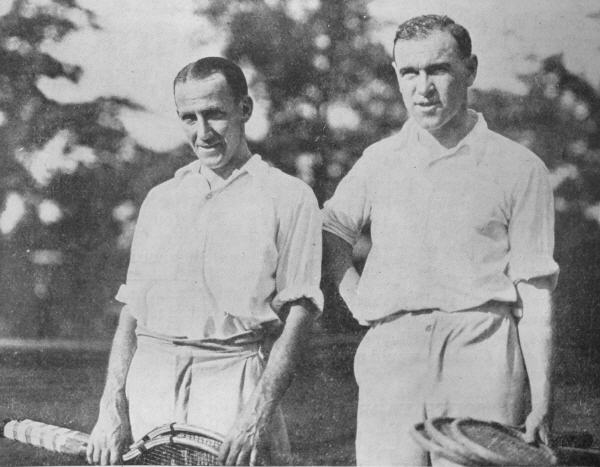
Pat O’Hara Wood and Gerald Patterson
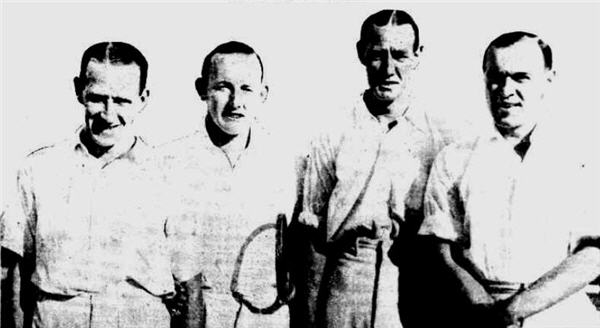
Pat O’Hara Wood, J.B Hawkes, JOA and Gerald Patterson

Traveling to the US via Wimbledon, Anderson made the semi finals, ominously in the company of three Frenchmen. He  lost to the eventual winner Lacoste in straight sets. In the US titles Anderson was beaten by Johnston in the 3rd round.

Australia played France in the Inter Zone final and lost 3-1.  It was close. Patterson beat Lacoste 6-3, 6-2, 6-2 and while Anderson lost to Borotra the doubles was down to the wire as Patterson and Hawkes lost in 5 sets 6-4, 3-6, 6-4, 1-6, 10-8.  It was in this match that a hard hit Patterson smash hit Borotra on the side of the head knocking him virtually unconscious.  France was beaten by  the USA 0-5 in the Challenge Round.

Not making the Challenge round had some financial implications.  Where profits were often expected by the ALTA arising from shared gate receipts, this tour lost 1000 pounds.  Patterson announced his retirement from Davis Cup play, presumably as he was now working for and would become the Managing Director of the newly constructed Spalding factory in Sunshine, Victoria.

J.B Hawkes won the 1926 Australian Championships beating Anderson in the semi finals and Jim Willard in the final in 3 low scoring sets.  Notably, this was the first championships for Jack Crawford and Harry Hopman. Second seed Patterson was bundled out by Queenslander Edgar Moon.  Still, the old guard held ground in the doubles with Hawkes/ Patterson defeating Anderson and O’Hara Woods.

Anderson decided to turn professional and began to coach and from 1923 already had a deal with Slazenger to market tennis racquets bearing his signature.

There was c0nsiderable pondering about sending a Davis Cup team in 1926 for without Patterson and Anderson it was felt the next leading men were not up to International standard and the ALTA didn’t want another financial loss.

This was a logical arrangement so that the aspiring newcomers could learn and practice with Australia’s best.

No Davis Cup team was sent overseas in 1926.

With plenty of gray areas surrounding the definition of amateur,  Spalding managing director, Patterson could play in the 1927 Australian Championships and Anderson couldn’t.  Patterson won the singles over Jack Hawkes in 5 sets and the doubles with Hawkes over Ian McInnes and Pat O’Hara Wood.

In 1927, again Australia passed the opportunity to send  Davis Cup team abroad.

As a professional the NSW Tennis Association entered an arrangement with Anderson to play exhibition games with amateurs like Jack Crawford and others.   They agreed on fixed incomes for Anderson based on whether the gate receipts were above or below 300 pounds.

Under some pressure, Anderson sent the LTAA a letter advising that he wished to revoke his professional status and resume playing as an amateur again.  In early 1928 they advised him he could return to being amateur only after a strict probation period whereby he relinquished his contract with Slazenger.

He seemed to ignore these conditions and continued on as a professional.

In 1928, The Frenchmen known as the “musketeers” visited Australia and Jean Borotra took off the singles title against Ron Cummings and with Brugnon won the doubles over Jim Willard and Gar Moon.

The old guard were now out of the picture and there was a void of talent in comparison to the emerging overseas teams.

Australia sent a Davis Cup team abroad to help bring along some young players.  Patterson was selected with Hopman and Crawford. We played Italy in the European Zone in hope to challenge France who defeated the USA.  Unusually, we lost 4-1 and were out of the cup in round one.   While not unexpected at least Crawford and Hopman were being exposed to International Tennis.

Hawkes and Patterson were runners up in the 1928 Wimbledon doubles beating Tilden and Hunter in a tough 5 set   semi.   Cochet and Brugnon were to strong and won in 3.  No Australians made the quarter finals in the singles, although Jack Crawford and Daphne Akhurst came runners up in the mixed event.    Daphne was one of Australia’s multiple Australian champions also on tour with a ladies team. See the separate story on Women’s team events.

As in 1928,  another foreign team turned up to test out the locals in 1929. This time it was the English including Ian Collins, Bunny Austin, E Higgs and Colin Gregory.

By no means a strong team the Australians capitulated to virtual unknown Colin Gregory who defeated Richard Schlesinger in 4 sets.  Collins and Gregory made the Doubles final, but at least Crawford and Hopman won albeit in 5 sets 6-1, 6-8, 4-6, 6-1, 6-3 coming from 2-1 sets down.

Anderson continued on as  a professional and played Crawford a lot under the deal with NSW tennis whereby Crawford remained an amateur and the association profited from gate receipts.  In addition, he started to play his own pro exhibition matches with ex competitor Les Baker who also turned pro. in support of Anderson and they planned tours of New Zealand and the USA.  He also left Slazenger for Alexander and then in the early 1930’s moved to Chesterfield Racquets. Pat O’Hara Wood also had signature racquets produced by Bancroft in the mid 1920’s and Jim Willard found his way to Alexander with some endorsements in the 1930’s.

Given the financial loss in 1928 and without Anderson, no Davis Cup team was sent overseas in 1929.

Anderson remained professional and Pat O’Hara Wood soon joined him.

The valiant attempts by Patterson, Anderson and their contemporaries to perform on the world stage was indeed admirable.   In Tilden and Johnston, the USA enjoyed a powerful combination that ruled world tennis for much of the first half of the 1920’s.  Towards the end, the French musketeers came to the fore.

Our Australians in this era were dominated more by the players who started junior tennis before the war and seemingly had more skill than many others who started post war.  While the scoreboard doesn’t shine with major successes in the Davis Cup or even Wimbled0n,  our players were certainly up there in the top ranks, particularly in Doubles. It is a pity that Anderson, Patterson, O’Hara Wood, Lycett, Hawkes and other top players like Todd, Kalms, McInnes, Jim Willard etc are not so well known.  They deserve to be, having given exemplary service to Australian tennis at home around the state and country tournaments and particularly on the 6 month plus tours away from business incomes and families.
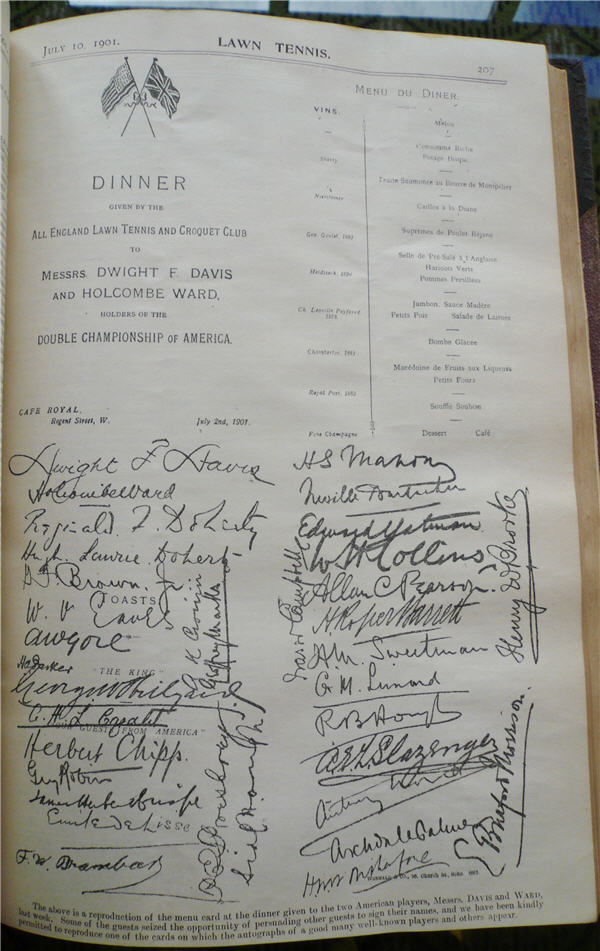
Famous Tennis Signatures

Imagine the surprise of finding this amazing array of (reproduction) signatures celebrating the USA UK pair of Dwight Davis and Holcombe Ward at the Cafe Royal, Regent St West on July 2nd 1901. At least by sharing them with you here at tennishistory.com.au you will be able to compare them against other signatures that may appear in books and elsewhere etc. Some very famous names here without a doubt, including our man W V Eaves. See how many you can identify that were the subject of many stories in this embryonic era of International Lawn Tennis. I guess this extremely valuable document is with AELTC. Imagine if it came up on ebay????

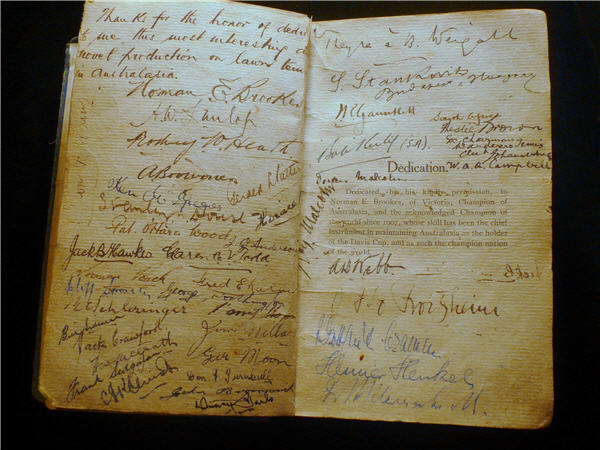
Further below, is a book which came in to our Tennis collecting network which was the author’s own book he took with him around the world.  There are over 200 signatures covering many winners from the 1900 to 1950’s Australian, Wimbledon, US and Davis Cup events.

Truly a magnificent discovery.


USA UK DINNER 1907

P1250669

P1250670


Collecting Tennis Tournament Tickets

Tennis Programmes are excellent tennis collectibles and especially when signed by players who not only attend the event but won the event.  To these we can add tennis tickets and event menus and other autograph cards which players signed fro each other or dignitaries attending major functions.  The programmes provide valuable stories and event history along with player profiles and draw information.  Some have hand written results which is also a nice connection to someone who loved the game as much as we do today.

Obviously, the major events create the most interest with Wimbledon at the top, Davis Cup matches involving Australia, the Australian Open, various state championship events and then the professional tours by Jack Kramer and a host of Aussies who left the amateur ranks to earn an income in the pre 1968 Open era.

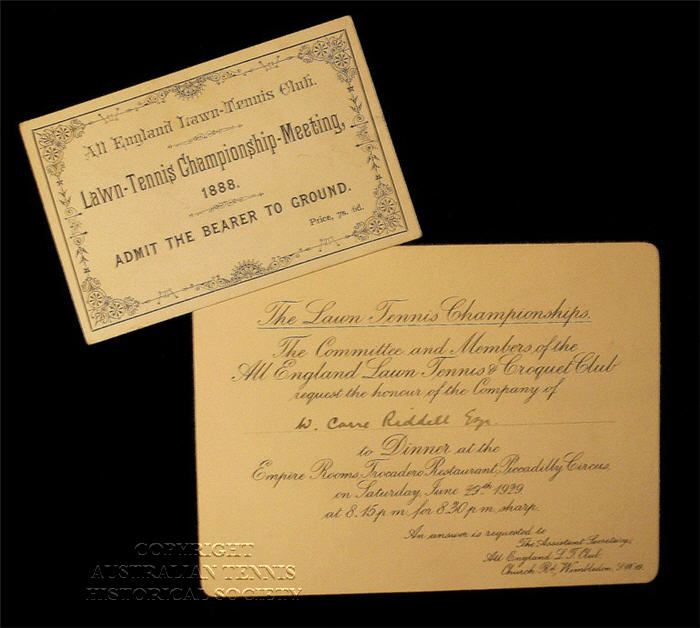
These pictures are tickets belonging to an Australian tennis fan W. Riddell who we assume attended the 1888 Wimbledon Championships.

As an administrator with the MCC and an Interstate colonial player, we can only assume he helped foster discussions about players in the colonies taking on some of the English cracks and may well have caught up with players such as W.V Eaves and Robert Scott ( see relevant sections)

A remarkable find.  The Wimbledon museum only have 1890’s tickets so these are indeed rare also.  Held by State Library of Victoria.

WIMBLEDON TICKET RIDDELL

Wimbledon Ticket RIDDELL STAND

Earliest Known Interclub Tennis Tournament 1880

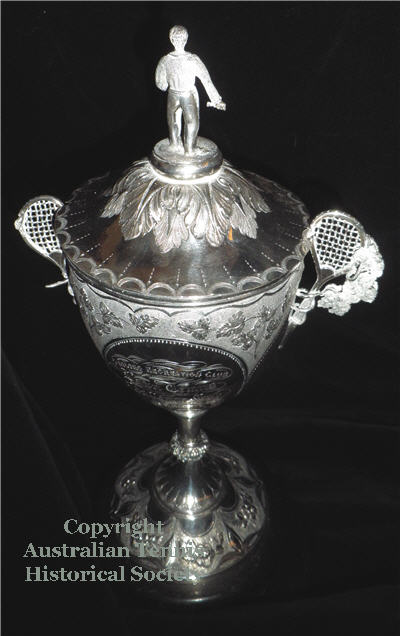
Local interclub competitions were conducted, certainly in 1880 in Melbourne, for we have just enjoyed seeing a trophy awarded to one of Victoria’s early champion players, Francis Highett.  This was the Geelong Recreation Club, Lawn Tennis Challenge Cup.  It was a bi annual tournament and another MCC member won it firstly and then Francis won the second in October 1880 and again in 1881 (first half).  After winning the Geelong tournament, a few weeks later in November he won the second Victorian Championships, which unlike the first was widely promoted to attract players from surrounding colonies.  Arguably, this constitutes a more legitimate Victorian Championship despite the records stating otherwise.
P2190006bbb

Encouraged to find out more about Francis, we stumbled onto some family papers in the state library for W. Riddell who was the secretary at the MCC during this time.

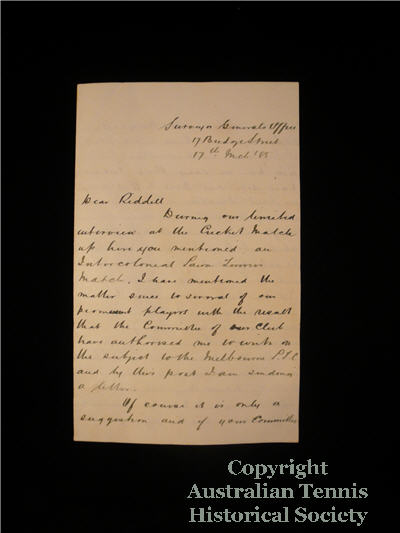
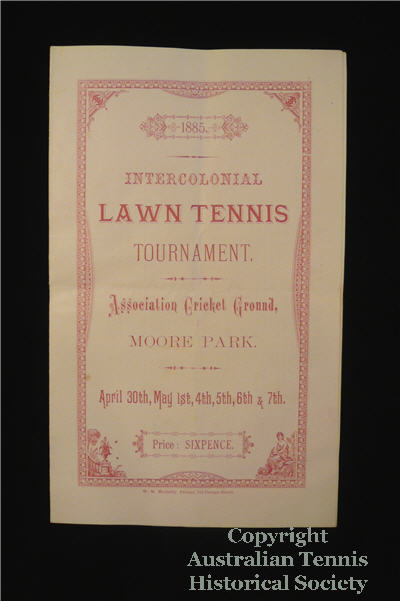
To my astonishment, included in his papers were a considerable plethora of significant tennis history documentation.  This included the letter from C Cropper the secretary of the NSW Cricket Club inviting a Victorian team to Sydney to play the first Intercolonial tennis tournament in 1885.  They even considered an All Comers Open Championship ( aka National Titles 20 years prior to this occurring in 1905).  While this letter is “gold”, the files also contained the original programmes for this first event and subsequent years. Naturally, not even knowing that such printed matter existed this is a truly amazing find. Featured on a page about Intercolonial tennis.

One should note that Intercolonial team events were not new, as Cropper and Riddell had discussed the matter on an earlier cricket contest.  Yet given tennis was still in its infancy, this was significant progress and the crowd reaction and numbers in the thousands proved the game was very popular.

P1190034

The front page of a 3 page letter from Cropper to Riddell inviting the first
Victorian tennis team to NSW in 1885

P1190042

The first major tennis tournament in 1885 which pitted the best of NSW against
the best in Victoria plus an array of other ladies, veterans and handicap
events, including the first NSW State Championships.

See more under the main EVENTS heading EARLY TOURNAMENTS.

Rex Hartwig

Rex Hartwig played in the Australian Davis Cup team from 1953-1955.

This year Keith Jenkins caught up with Rex who is still actively farming in northern Victoria.

Rex was born on September 29th 1929 in Culcairn NSW. His parents both played tennis, his father one of the best in the area, so it comes as no surprise that young Rex took to the game and enjoyed countless hours off the court playing “the wall” which he envisaged to be NSW player Jimmy Matthews and the man to beat. At aged 10, Rex and his father played in a local tournament and won. The little cup they awarded to Rex is naturally one of his most treasured trophies even to this day.

At 13, Rex started to play in regular afternoon competitions and in this journey met Allan Kendall senior and junior, who were related to Jack Crawford and managed the grass courts in Albury. Rex took a job at the courts with Allan Kendall (junior) and they became a solid doubles pair winning the NSW, Victorian and Australian Junior titles. Allan Kendall later wrote the book “Australia’s Wimbledon Champions” in 1995 which is an excellent read.rex hartwig
These performances led Rex and Allan to be included in a country squad that played at White City in Sydney. On the first night out at Luna Park, he went down a slide awkwardly landing on his tail bone making walking and playing the next day very tough. Despite this, he won the mixed event. The junior development scheme designed to scout for up and coming talent claimed Rex was the first player to reach International success.
After playing regionally for the next few years, Spalding promoter Ian Trethowan and Melbourne based president of Lauriston Tennis Club, Les Exelby, enticed Rex to a career with Spalding and a position in the Lauriston A Pennant team. Perhaps not in the overall plan, Rex and Les’ daughter Madge became an item and consequently were married. Every Tuesday and Thursday Rex would leave work early to play tennis at Kooyong, practicing against Frank Sedgman, Ken McGregor and Colin Long among others which greatly added to Rex’s development. The stiff competition also made it difficult for Rex to gain a berth in Victoria’s interstate teams, so his career was comparatively slow to take off compared to the others, even though he was capable of beating all of them.
He was selected to represent Victoria in the Mars Buckely Cup and it was here that Harry Hopman and Rex became more than acquaintances. Rex trained with the 1952 Davis Cup Team and won the South Australian and West Australian Singles Championships. This was his entrée into the 1953 Davis Cup team as the then current tennis heroes Sedgman and McGregor both turned pro. Rex was to play vital roles in the Davis Cup team along with Lew Hoad and Ken Rosewall for the next three years.

The 1953 Davis Cup match against the USA was perhaps one of the most controversial, yet eagerly anticipated events in Australian Tennis Davis Cup history for the reason that the exciting new combination of Lew Hoad and Ken Rosewall both only turning 19 in that year were making their debut together. Lew had been in the 1952 team but had not played and this was Ken’s first time named in the team. Despite their young ages, both had performed very well on the international tournament scene and Australian public interest in the boys was immense. Hoad defeated Seixas in straight sets and Rosewall lost in straight to Trabert showing signs of nerves and sluggish form. The next day for the doubles the selectors dropped a bombshell, deciding to omit Rosewall from the doubles and opted to play Hartwig with Hoad in a combination not tried fully before. Although, Hartwig was probably the top doubles player his regular partner was Rose and this should have been the decision. Hartwig was about to catch a tram back home to collect his wife when he was told only half an hour before the game he was playing in the doubles. The mis-match didn’t inspire either player and this became Hartwig’s first and only defeat in a Davis Cup match.

The swap created public and press consternation, however Hopman in his book “Aces and Places” identified that Hoad and Hartwig had played together at a secret practice session at Royal South Yarra in the weeks leading up the contest. Luckily, Lew and Ken won the return singles to take the tie 3-2.

rex hartwig004ccc

In 1954, Rex unfortunately got the mumps! He was playing better than Lew and Ken and everybody else at the time but the poor timing meant he only was able to get in 2 or 3 practice days before the match started. Even so, “ I beat Lew still! As it turned out I wasn’t picked but I suppose I still got a game. Lew got hurt and I played the last match against Seixas, whom I beat”. Rex was indeed having a good couple of years in 1953 & 1954, being runner up in the Australian and US singles events and winning the doubles in the 1953 US Championships and at the Australian and Wimbledon in 1954. The Wimbledon win was no doubt a good one against familiar foes Trabert and Seixas.

Interestingly, the Hoad/ Hartwig combination was continued in the 1955 contests and in regaining the Davis Cup in 1955, they reversed the 1953 result against Trabert and Seixas.

Hartwig’s form was extremely good. On the USA tour against Mexico, Brazil, Canada, Japan, Italy and the USA, he lost only one service game. The doubles match against Seixas and Trabert rates as one of his best memories with the final score 12-14 6-4 6-3 3-6 7-5 and a record as the longest lasting doubles match in Davis Cup history up until then. They also won the Wimbledon doubles in 1955, the second time for Hartwig, having also won in 1954 with Rose against fellow Aussies Rosewall and Neale Fraser.

This was Rex’s last Davis Cup, for it was then that he turned pro in another bizarre series of circumstances. Jack Kramer had his eyes on Rosewall and Hoad to turn professional and although the youngsters had signed a provisional agreement tennis authorities did everything possible to create a situation to keep them in the amateur ranks. Kramer in desperation flew to Australia only to find the lads had decided not to turn pro. Hartwig saw an opportunity to join with the Kramer troupe and did so. While not a big name per se, Rex played 102 games on the American tour winning 87 and losing 15 with many matches against Pancho Segura, although he rated matches against Pancho Gonzales as the toughest. He came back home after some tours to Europe and South Africa and then only played pro events here, mainly in doubles with Rosewall and then Hoad the following year.

After that, Rex really did retire. He didn’t touch a racquet for close to 16 years.

In 1974, Frank Sedgman persuaded Rex into getting back into the game. The Grand Masters circuit for over 45’s was being developed very successfully into a 22 tournament circuit, mainly in the USA, some in Europe, the Philippines but not in Australia.

His first proper Masters tournament back is a testament to his natural ability and fitness. Only a few weeks after starting up again, he ended up in the finals losing to Frank, and together they won the doubles. From there Rex joined the Grand Masters tour for 5 years.

Canadian Champs with Rex

This suited Rex and his wife for they were treated like tennis royalty and could share the experience together. Unfortunately this was something not possible in the mid 50’s Davis Cup events when the family was just growing up. Australian tennis authorities back then even proclaimed, in writing, that no wives were to be in the same country as a Davis Cup event.

tennishistory.com.au would like to thank Rex for very kindly giving his time and for sharing his memories and recollections.

Thanks also to Keith Jenkins who travelled from Melbourne to interview Rex at his farm.


Rex Hartwig Tennis Records

Singles

Won Swiss International Championship

Coupe De Nations Deauville National Title

French Bordeaux Championship

West Australian State Championship [1952, 1955]

New South Wales State Championship [1954]

South Australian Championship [1952]

Queensland State Closed Championship

New South Wales Metropolitan Junior Championship


Runner-Up Australian Championship [1954]

Australian Hard Court Championship

USA Championship [1954]

Swedish Championship [1954]

Canadian Championship [1953]

Northern Tournament [Manchester, UK.] [1954]

Eastern Grass Court Championship [Orange, USA]

Victorian Hard Court Championship [twice]

Queensland Championship [twice]

Queensland Closed Championship

Tasmanian Championship


Doubles

Won Wimbledon [1954, 1955]

Australian Championship [1954]

US Open Championship [1953]

Queen’s Club Championship – London [1955]


Swedish Championship [1954]

Swiss Championship

Canadian Championship [1953]

Deauville Coupe de Nations National Title [France]

Bordeaux Championship [France]

Pacific South West Championship [1955]

Eastern Grass Court Championship [Orange, USA]

Northern Tournament [Manchester, UK] [1954]


Victorian Championship

Victorian Hardcourt Championship

West Australian Championship [twice]

Tasmanian Championship

South Australian Championship [1952]

Queensland Championship [1953]

Australian Junior Championship [1947]

Victorian Junior Championship

New South Wales Metropolitan Junior Championship [twice]


World Professional Championship – Cleveland, USA [1956]

Australian Professional World Round Robin Championship [twice]

Australian Pro Champs – Sydney, Aust. [1957]

Masters Round Robin Championship – Los Angeles, USA [1958]

Ampol $10,000 International Professional Championship

European Coupe de Nations World Professional Championship

New Zealand Professional Tournament [twice]

South African Professional Tour Doubles Competition

Wembly International Professional Indoor Championship

World Masters Round Robin [Los Angeles]


American Professional Tour Played 102 matches 85 won 17 lost


Runners-Up Wimbledon [1953]

Queen’s Club Championship [London] [1953, 1954]

Victorian Championship

New South Wales Championship

New South Wales Junior Championship


French Pro Champs [1956]

London Pro Indoor Champs – Wembley, UK [1956]


Mixed Doubles

Won Australian Championship [1953, 1954]

Australian Hard Court Championship

Queen’s Club Championship [London] [1953 shared]

Pacific South West Championship [1954]

New South Wales Championship [3 times]

Victorian Championship [twice]

Queensland Championship [1952, 1955]

Western Australia Championship [twice]

South Australian Championship [twice]

Tasmanian Championship

Victorian Hard Court Championship

Queensland Closed Championship


Runners-Up US Open Championship [1953]

Swedish Championship

Northern tournament [Manchester, UK.] [1954]


Davis Cup Represented Australia 1953, 1954, 1955

Singles 6 wins 0 losses def. Seixas, Reyes, Palafox, Main, Kamo, Miyagi,

Doubles 6 wins 1 loss [all with Hoad]

def. Palafox-Guerrero, Falkenberg-Moreira, Bedard-Fontana, Miyagi-Kamo,

Pietrangeli-Sirola, Seixas-Trabert [also only loss]


Winning Davis Cup Team 1953 def USA 3-2

1955 def USA 5-0

Runners-Up 1954 def by USA 3-2


Other Appointed Captain-Manager of Australian team that toured New Zealand in February 1953.

Team consisted of Hartwig, Neale Fraser, Ian Ayre and Clive Wilderspin.


Veterans

1975 Came out of retirement after 16 years and played in the Australian Veterans’ Championships.

1975 Runner-Up Australian Veterans’ Singles

Won Australian Veterans’ Doubles with Mervyn Rose

1976 Won Australian Veterans’ Singles

1977 Runners-Up Wimbledon Veterans’ Doubles with Victor Seixas

1978 Won Wimbledon Veterans’ Doubles with Frank Sedgman

1979 Won Wimbledon Veterans’ Doubles with Frank Sedgman


Grand Masters

1976 Joined the Elite Grand Master Circuit of former World Champions.

Played in 7 of the 10 Grand Master tournaments.

Finished 3rd in the bonus pool in singles.

Won the doubles with Victor Seixas.


1977 Played 20 Grand Master tournaments in Europe, USA and Puerto Rico.

Won the bonus pool and became the No.1 Seed.

Won the doubles with Frank Sedgman, winning 16 tournaments out of the 20 played.


1978 Played 22 Grand Master tournaments in England, Europe, USA and Australia.

Finished 3rd in the bonus pool.

Won the doubles with Frank Sedgman.


1979 Played 22 Grand Master tournaments world wide.

Finished 4th in the bonus pool.

Won the doubles with Frank Sedgman, winning 20 tournaments out of the 22 played.


1980 Played 16 Grand Masters tournaments world wide.

Won the doubles with Frank Sedgman, winning 16 tournaments.


Represented New South Wales in Junior Linton Cup tennis, being the first country junior to ever do so.


Represented Victoria in Interstate matches 1950 – 1955.


Won many major Country Championships in Singles, Doubles and Mixed. These include Albury, Ballarat, Benalla, Central Western Championships, Griffith, Geelong, Wagga Wagga, Wangaratta, numerous Country Week and ‘A’ Pennant titles.


Table Tennis

Played Table Tennis in Albury, starting in 1946 for 4 seasons, then 1 season in Melbourne.


After 13 years break began playing in Wangaratta in 1963.

Won the Wangaratta Table Tennis Championships from 1963 until retired in 1970.


Country Week Table Tennis.

Won the Mixed Doubles Country Championship [3 times], ‘B’ Singles [twice], Runner-Up in the Doubles Championships [twice].


Represented Albury and Border Table Tennis Association in Atlas Shield Competition.


From 1947 to 1970, never lost a singles match in competition play.


Tennis Racquet Collecting

Since we began our journey to present the history of tennis through a website, a world of fellow collectors & historians has become apparent, all with the common interest of preserving and telling the story of tennis and its development through the years.

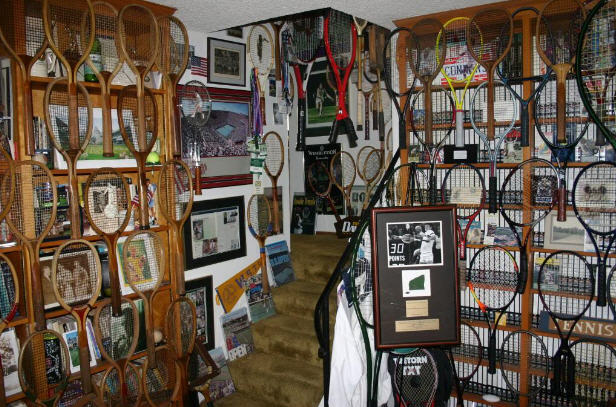
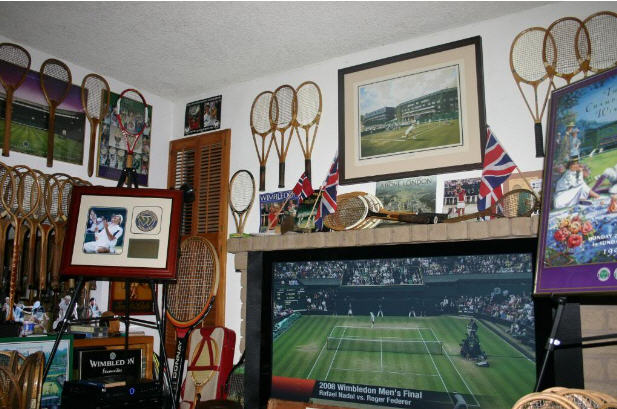
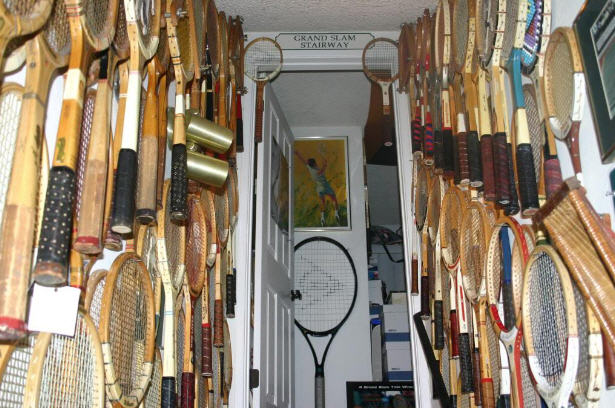
Recently we received some photos from USA collector David.

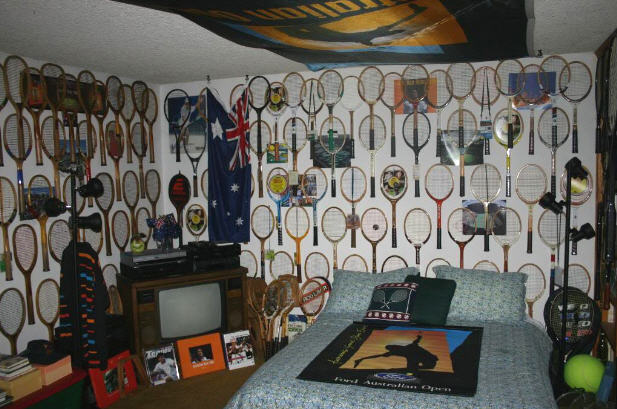
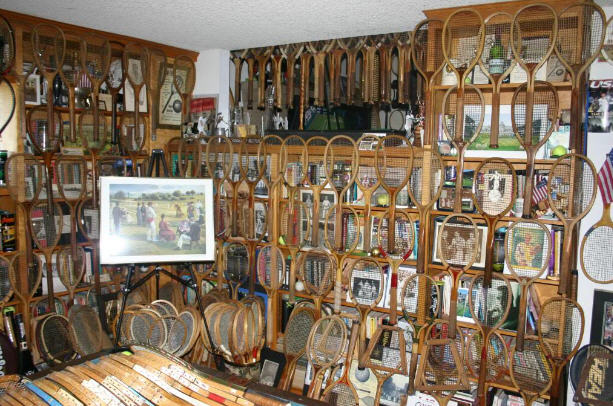
Now this 7000+ collection of racquets from around the world must surely be the largest, although we know of half a dozen collectors in Australia with over a 1000. Themes in the collection vary by country to Hall of fame players, plus there are many unusual racquets as well, plus an array of retail display racquets, POS, balls and other memorabilia.

To my surprise, David is married.  I say surprised only because of my own wife’s (nonplussed) reaction to my modest collection which is in one room only, so I am in awe of David’s negotiation and home management skills.

The effort and cost in developing this fine collection is enormous and we thank David for agreeing to share his passion here at tennishistory.com.au

If you have any questions relating to tennis racquets, memorabilia, players etc please contact us.

DF Collection 8

DF Collection 3

DF Collection 2

DF Collection 6

DF Collection 7

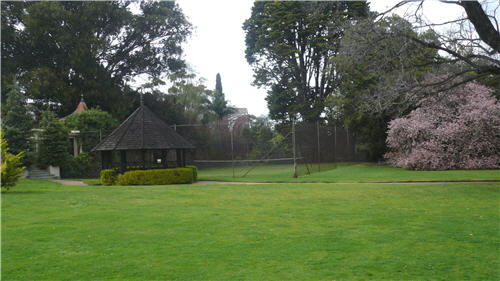
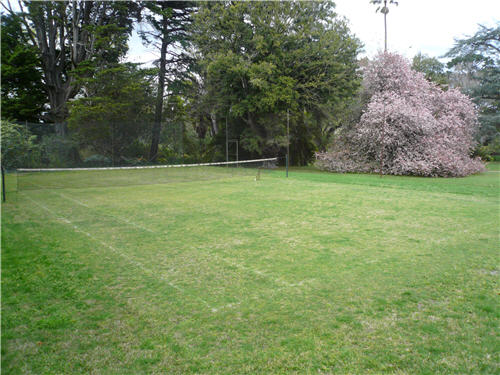
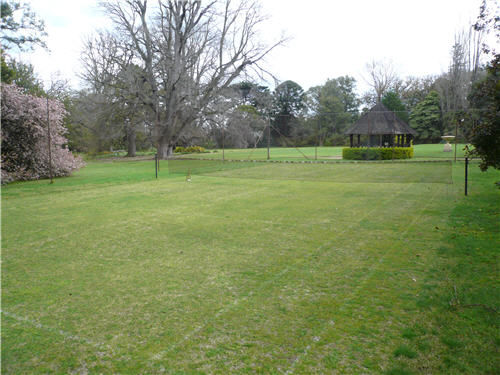
Lawn Tennis Court Hire at Rippon Lea

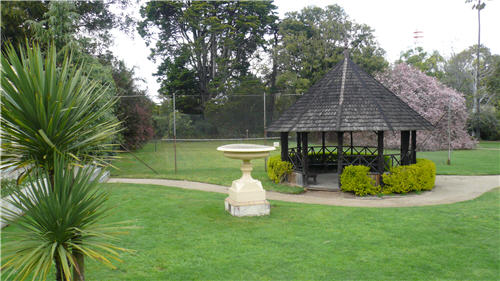
Tennishistory.com.au has negotiated with historic Melbourne Mansion Rippon Lea to hire our supporters their grass court which has been a feature on the property since the mid 1880’s.  If you want to organise a great grass court event either just for the experience on grass, surrounded by magnificent gardens or an olde world event with your woodies and costumes it is up to you.

Please click this link for more information.  CLICK HERE

Bookings essential and availability is conditional.

MENTION TENNISHISTORY.COM.AU when you book for a slightly better hiring rate.

Thanks from the team@tennishistory.com.au


rip 11

rip 9

rip 7

rip 4

rip 1


Dunlop Sports Company (a merger between Empire / Baker & MacPherson)

At some point in the early 1930’s as the giants of the industry, Alexander, Spalding and Slazenger were producing the bulk of the tennis racquets sold in Australia, small boutique firms tried to carve a niche for themselves using technology or simply producing their own limited release racquets with the usual visual design differences.

This page provides an insight into how some early makers evolved into the Dunlop Sports Company.

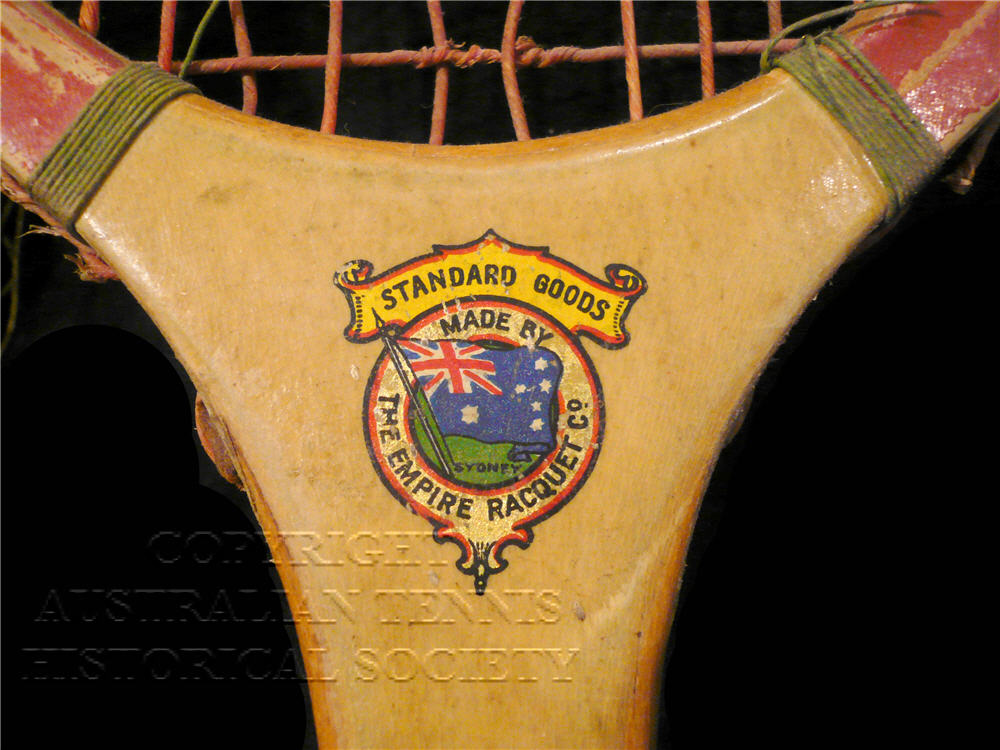
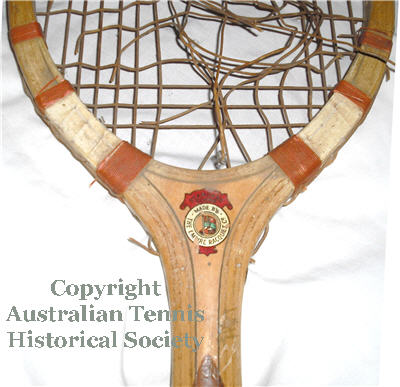
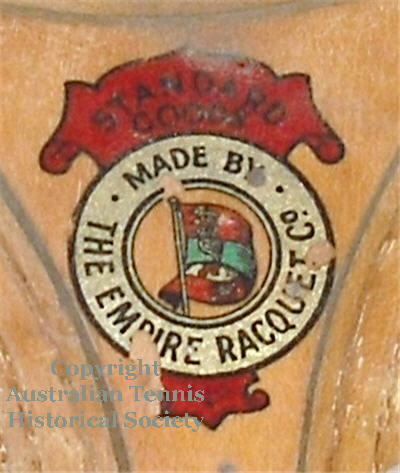
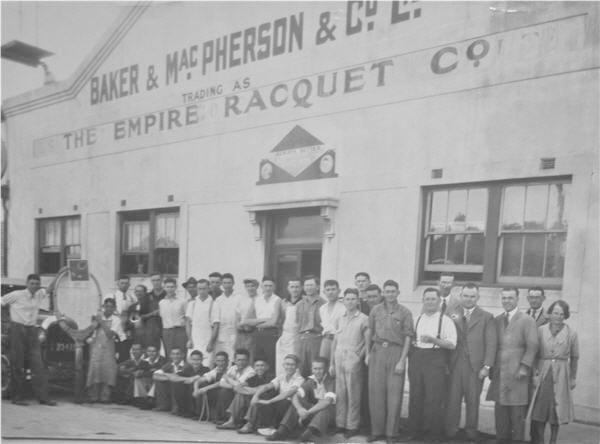
The Empire Racquet Company produced racquets from Brown St, Camperdown in Sydney.  According to Bill Sidwell (Slazenger) they would not have been producing their own frames from scratch, however raw frames may well have been sourced from other Australian makers or even those from overseas, as indeed Spalding were doing from their USA factory.

We know very little about Empire pre 1925.  From a press clipping we learn that in 1925 Baker MacPherson acquired Empire Rackets and based on the signage in the photo below, maintained the Empire branding.   The newspapers record a fire (not uncommon) occurring in December 1926 at the premises of Baker Macpherson in Camperdown causing damage to frames of some 3000 pounds so this picture below may well be of this site originally set up and retained for the manufacture of Empire racquets, as per the sign.

P1560864 P1560871 P1560876

EMPIRE TENNIS RACKET 024 EMPIRE TENNIS RACKET 025

Thanks to Mandie for supplying the photos

In 2011, we received these photos of what must be a very early mid 1920’s-early 1930’s racquet based on the finish and design. The model is called the “RENOWN” and it carries the statement  “Made by Empire Racquet Co” which would suggest they indeed produced racquets locally but most likely after the takeover by Baker MacPherson.

W.B. FREEBODYS CANBERRA 16 NOV 1934 EMPIRE

Baker McPherson Empire Rackets NSW

In 1931 the Empire range sold through the retail group Murdoch’s an ‘APEX’ model for 22/6 which was about half the price of quality racquets on the market at the time.    The ad below comes from a 1934 retailer called Freebody’s in Canberra, so they had a reasonable range in both oval and flat top shapes.
empire swift shot dunlop dura plas 3


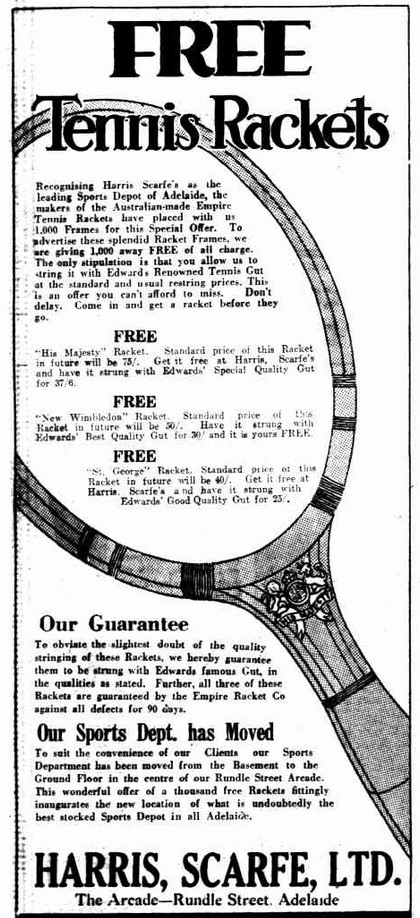
In further efforts to expand their distribution they even worked with retailers to offer FREE racquet frames for the price of stringing only. The offer with one retailer included 200 FREE RACQUETS. Certainly fierce competition.

In 1932, they experienced another fire which destroyed stocks and two of the three floors. Fires in these factories were notoriously fierce due to the oils, resins and lacquers used in production. As a result an auction was conducted on the 22nd August offering 1500-200o tennis racquet frames in various states of completion and Vigoro bats plus other components.

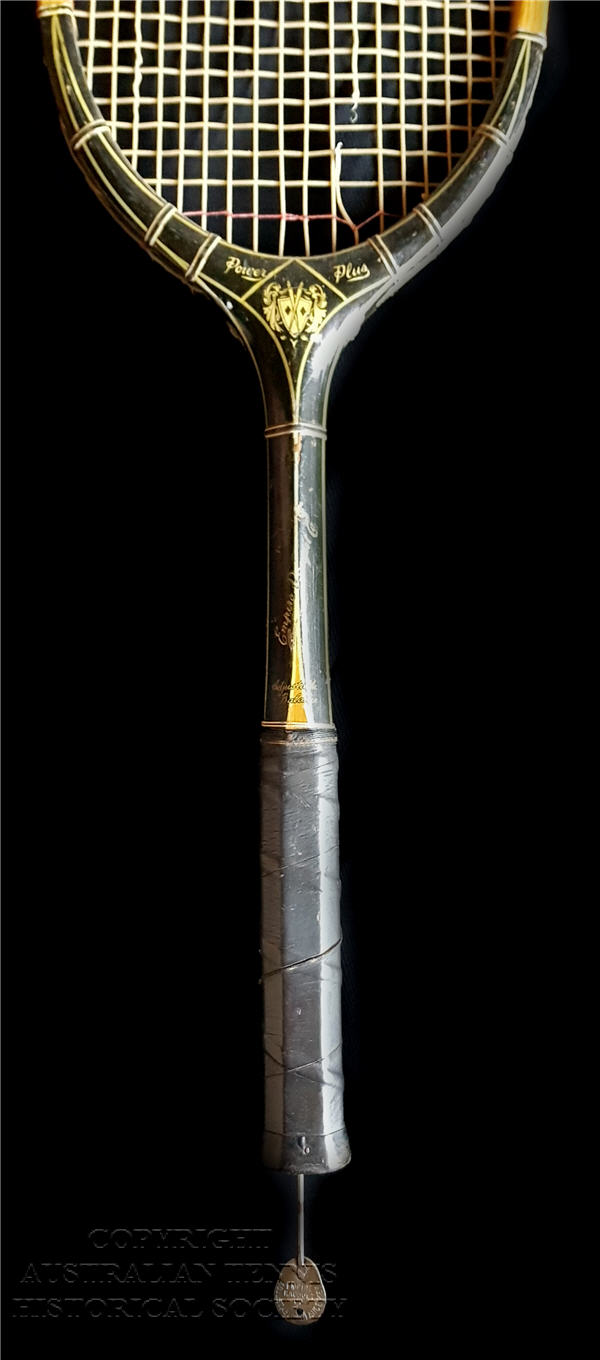
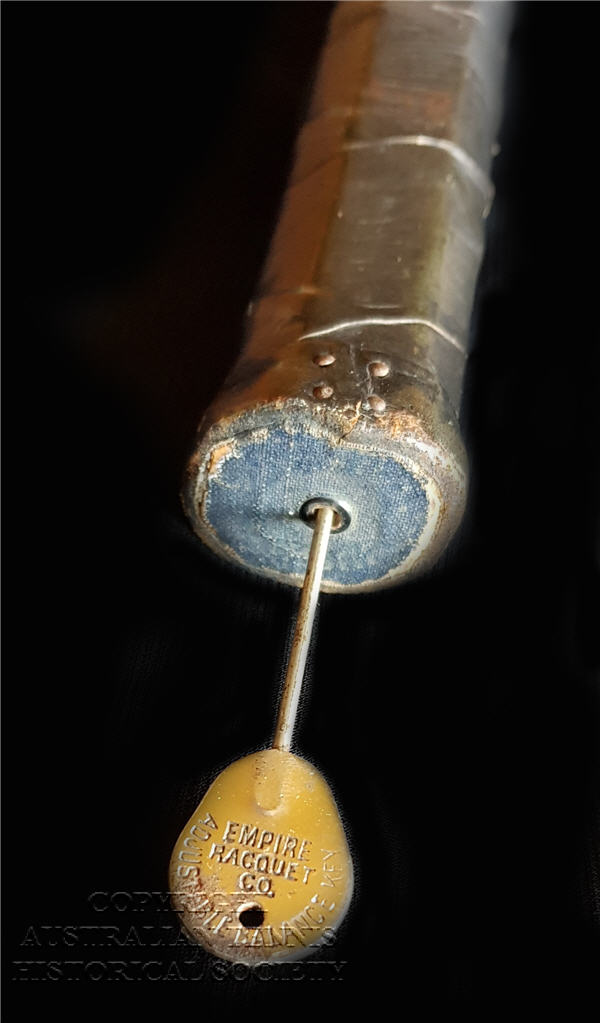
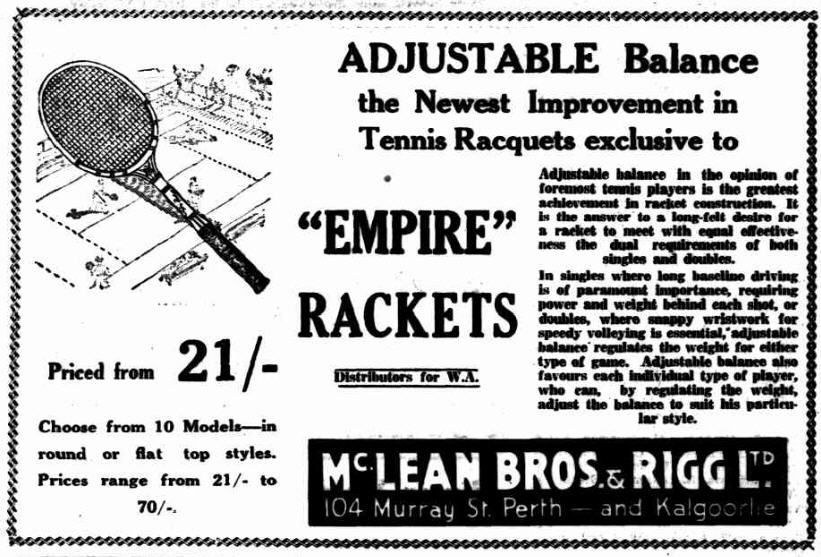
Around the mid 30’s the company developed some new racquet technology based around adjusting the balance of a racquet using a mechanical winding device in the handle. These racquets are very scarce and highly collectable.

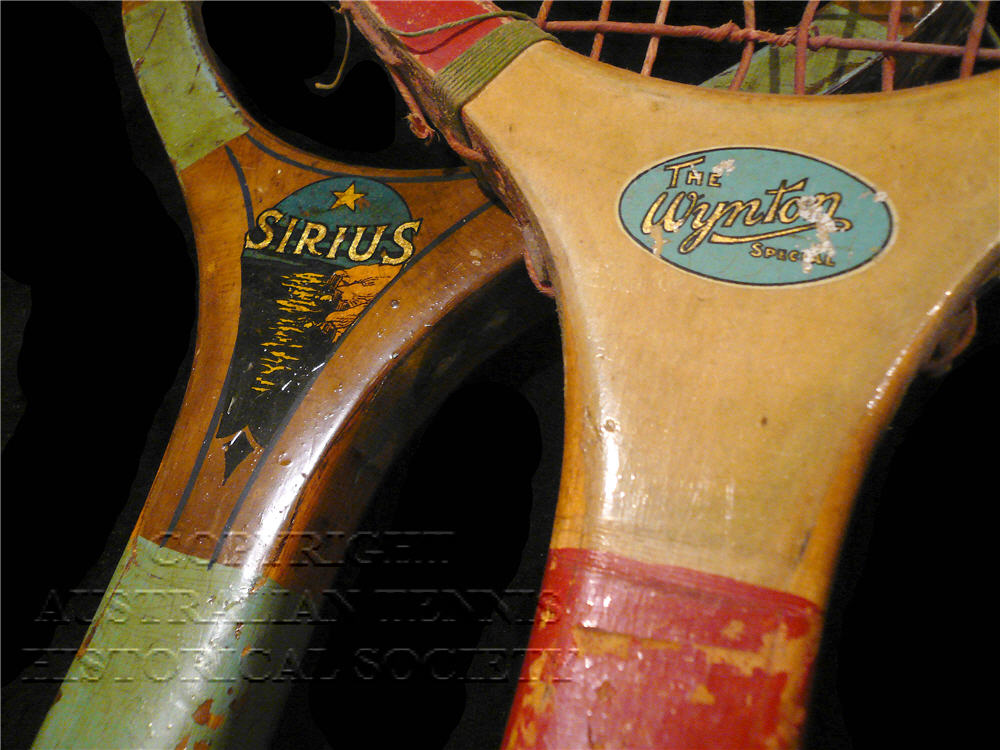
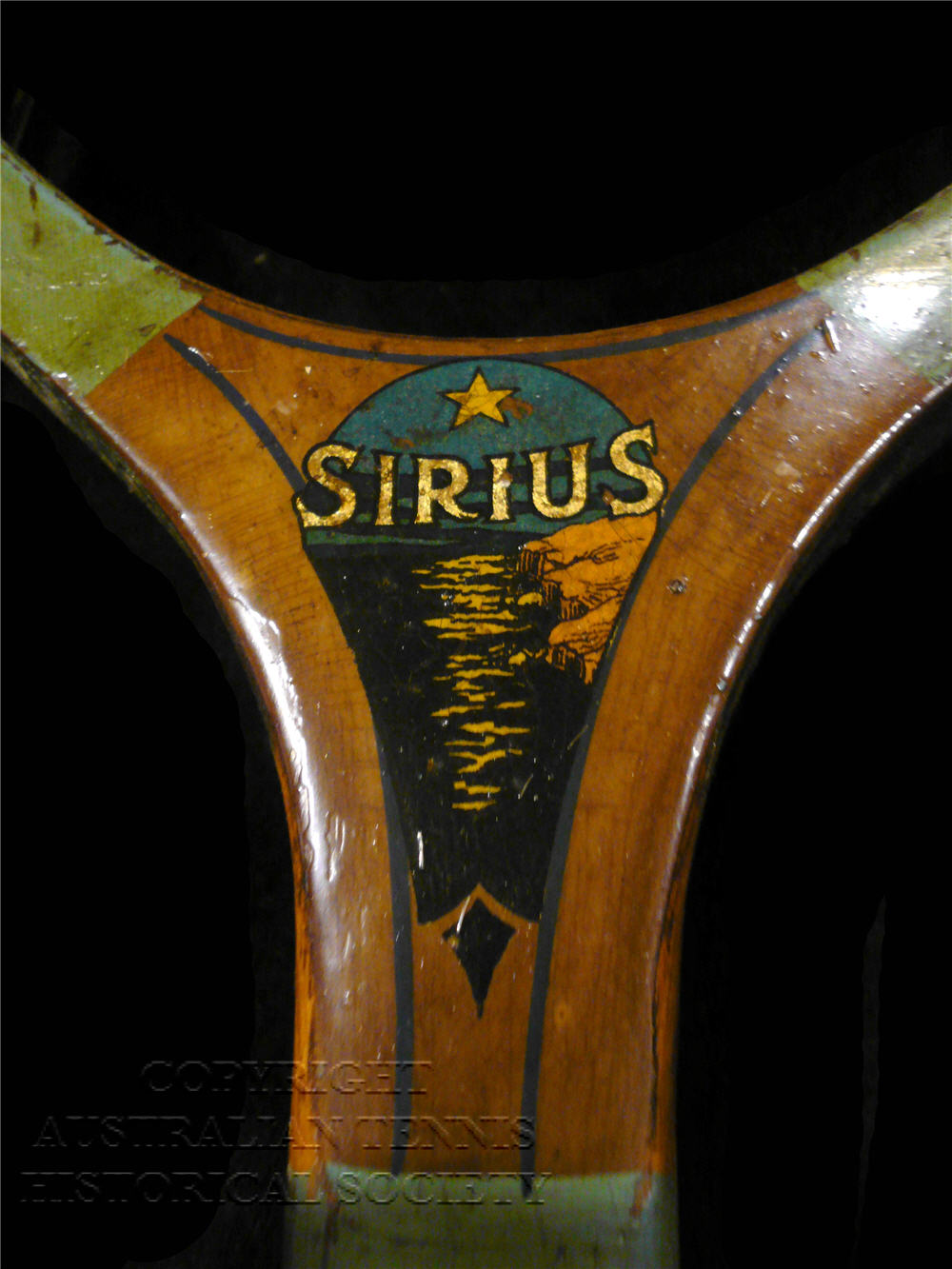
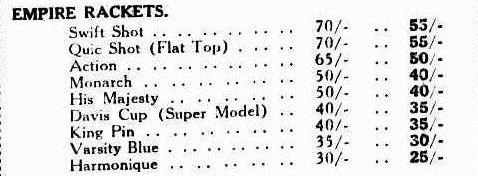
In addition to Empire branded products, retail ads appearing in 1934- 1939 are offering Baker Macpherson racquets of varying models, but it is not clear if they were promoting the manufacturer or the brand, so it is possible that a BM branded racquet may appear with models such as Craftsman, Sirius:  TruBlue & Telopea: Varsity Blue (also Empire model)  His Majesty & Monarch (all 1934).


EMPIRE ADJ SPEED MODEL 1

The first thing to notice about this frame is that the hexagonal shape above the throat was a feature of English and French racquets.


empire adjustable balance modelempire adjustable balance model key


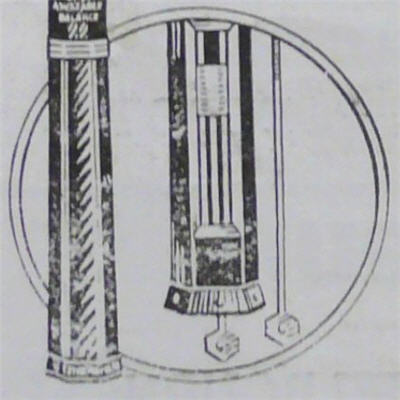
And, below a close up of the key in the handle with an illustration of the weight movement technique via a series of rods built into the handle.


Empire Adjustable Ad close up


The full ad below

FREE EMPIRE TENNIS RACQUETS 16th Oct 1930

1937 Empire Adjustable RangeFrom May 1937 Ad in West Australian paper Geraldton Guardian & Express

Please see the article under Australian racquets which introduces another weight adjustment invention by local inventor, Harry Webeck.  Slazenger purchased the rights and launched this racquet, perhaps to compete against the Empire innovation.

Dunlop in Australia in the mid 1930’s already had a number of Divisions manufacturing tyres and began to expand operations in the locally produced sporting field, owning Bentleys gut stringing and then in 1937, acquired Baker MacPherson in order to produce tennis racquets.

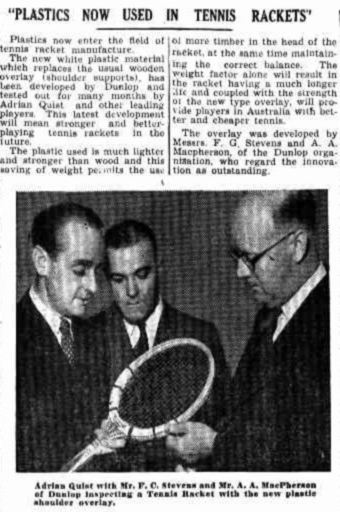
Adrian Quist at aged 24, was appointed a Director of the new Dunlop Sports Company in 1937 which had  a capital value of 100,000 pounds and he moved from South Australia to Melbourne.  Fellow directors included Wallace Bartlett, Henry MacKirdy and Albert Alfred MacPherson (of Baker MacPherson) who presumably sold Empire into the new Dunlop venture in a share swap arrangement.

As Australia’s Number one men’s player during this period Adrian was a logical choice in so far as attracting media attention for the new venture. Also in 1937 Dunlop Sports Co. signed on Nancye Bolton onto the staff although no mention of her role was identified. Neville Quist, brother of Adrian and Max Newcombe were also “employed” giving exhibition matches sponsored by the company. Adrian and Nancye also played together in major titles no doubt as added publicity. A massive fight existed to lure players into our local companies because they would travel the country playing exhibition matches under sponsorship from the manufacturers.

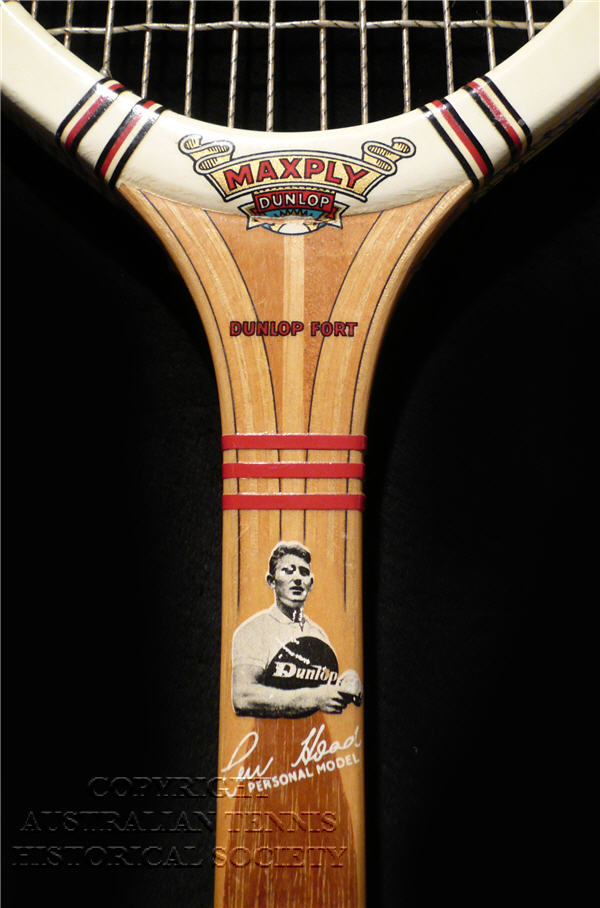
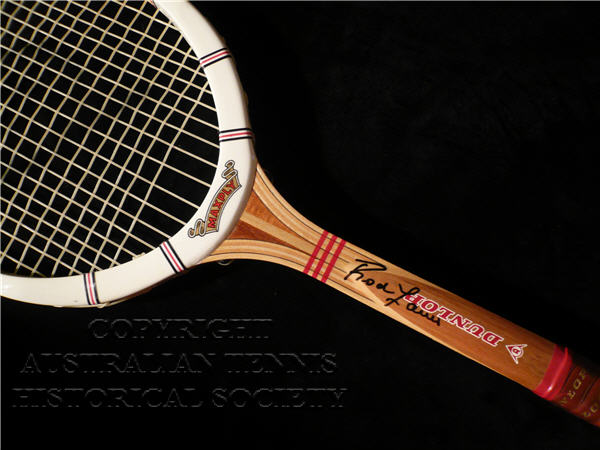
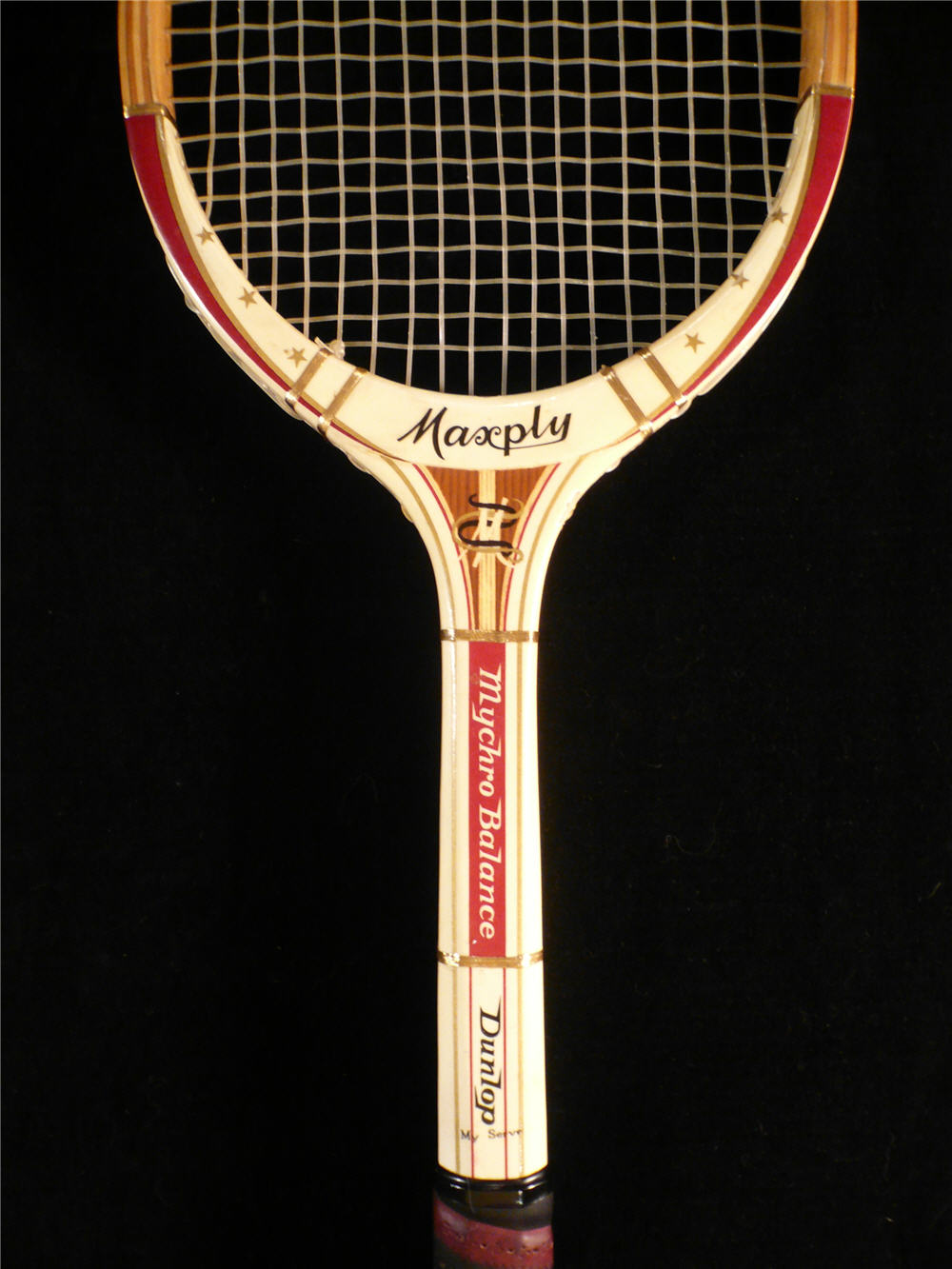
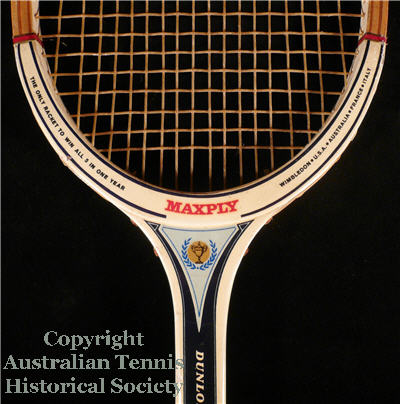
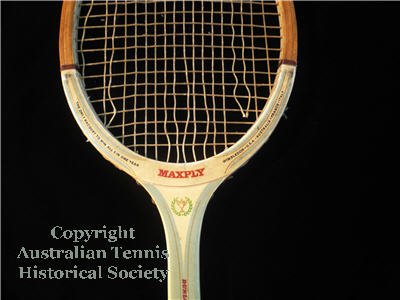
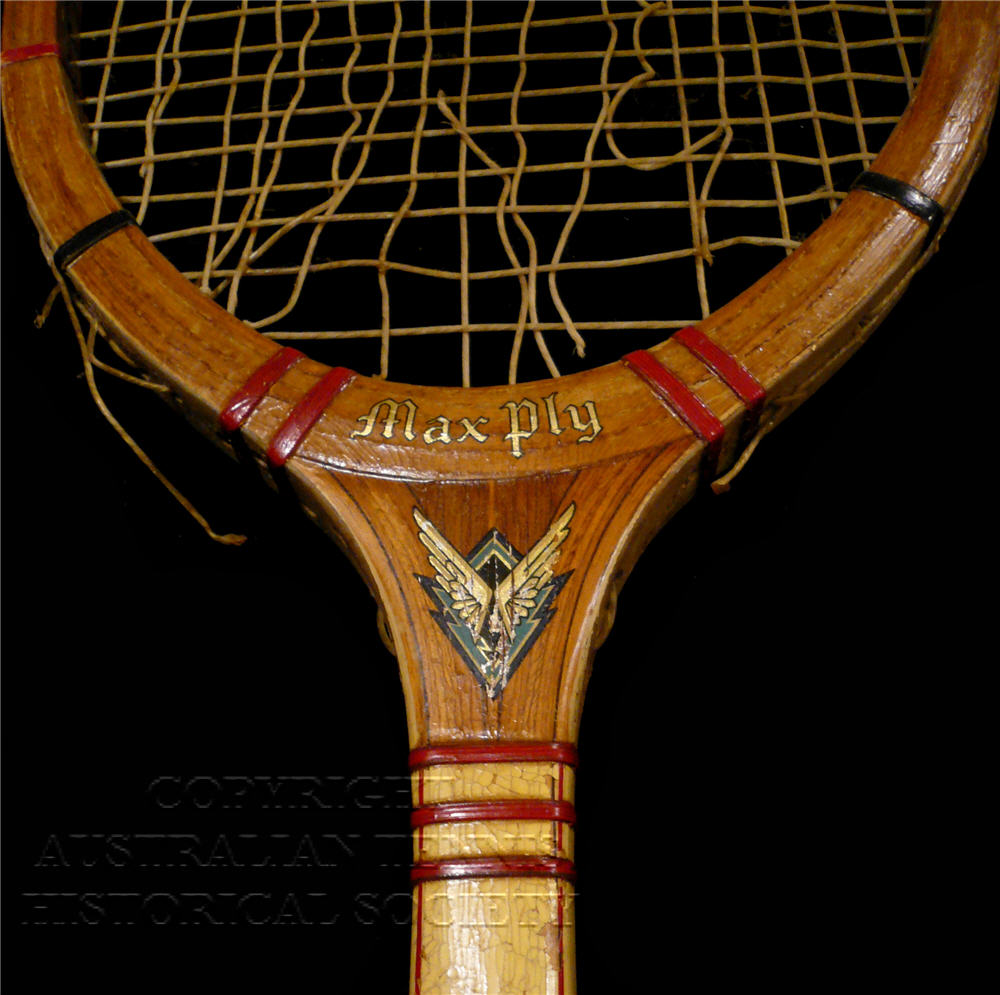
The Dunlop Maxply racquets seem to have been made here in Australia during this late 1930’s and up to the late 1940’s although the company never added made in Australia to their products.  In 1946 the plastic shoulder overlay called DURAPLAS was invented by two Australians, F.G. Stevens and A.A.Macpherson and this development with the statement “ten times stronger than wood” came to be a leading differential with other racquets of the era and given this many of these “duraplas overlay” racquets were being made locally.  These


In 1940, Adrian moved to Sydney taking on the role of NSW  Manager.


P1560895

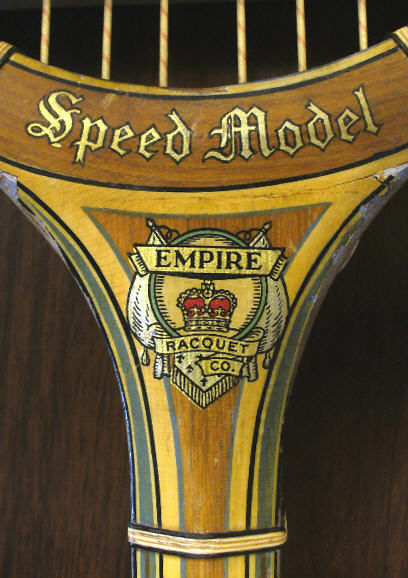
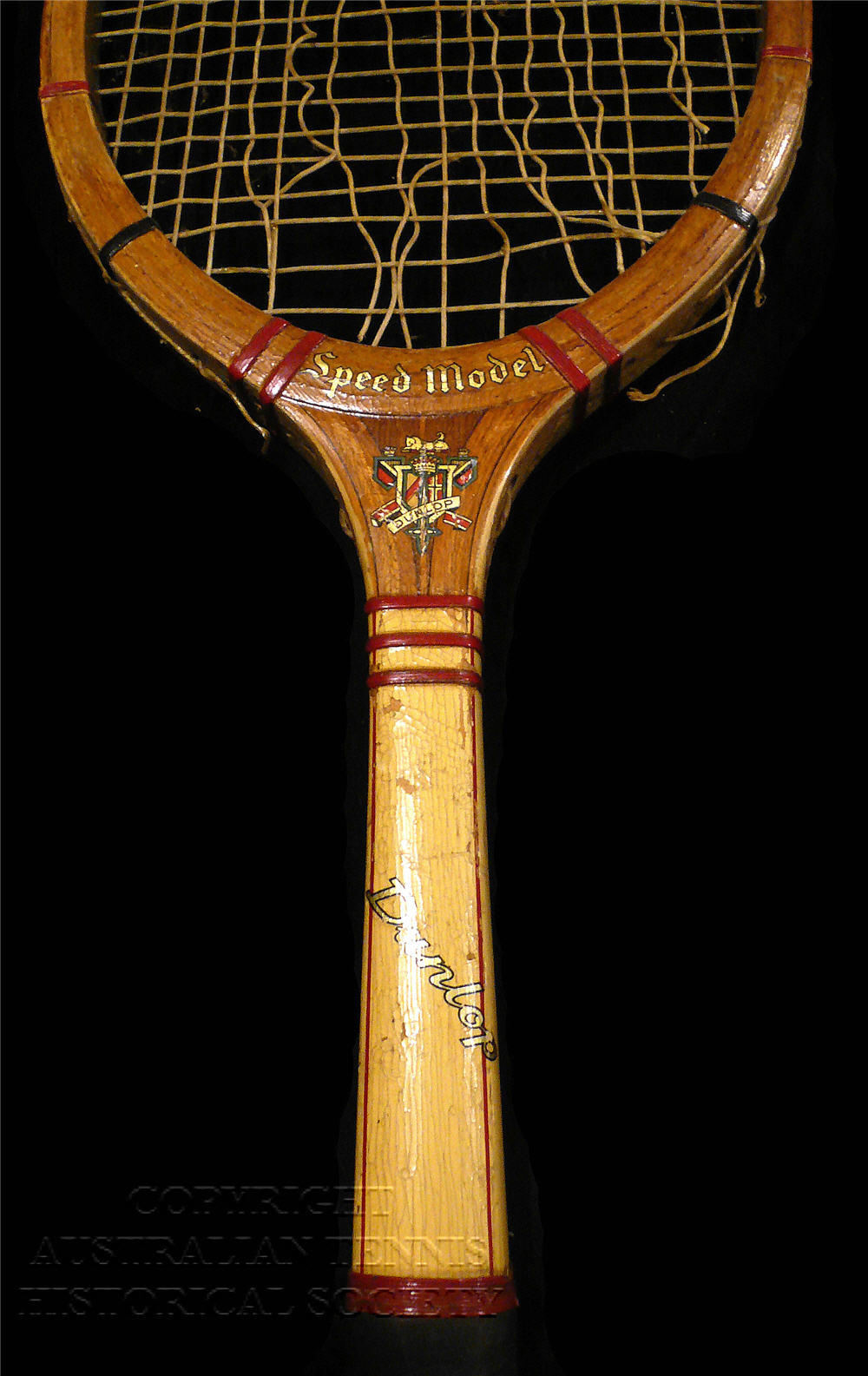
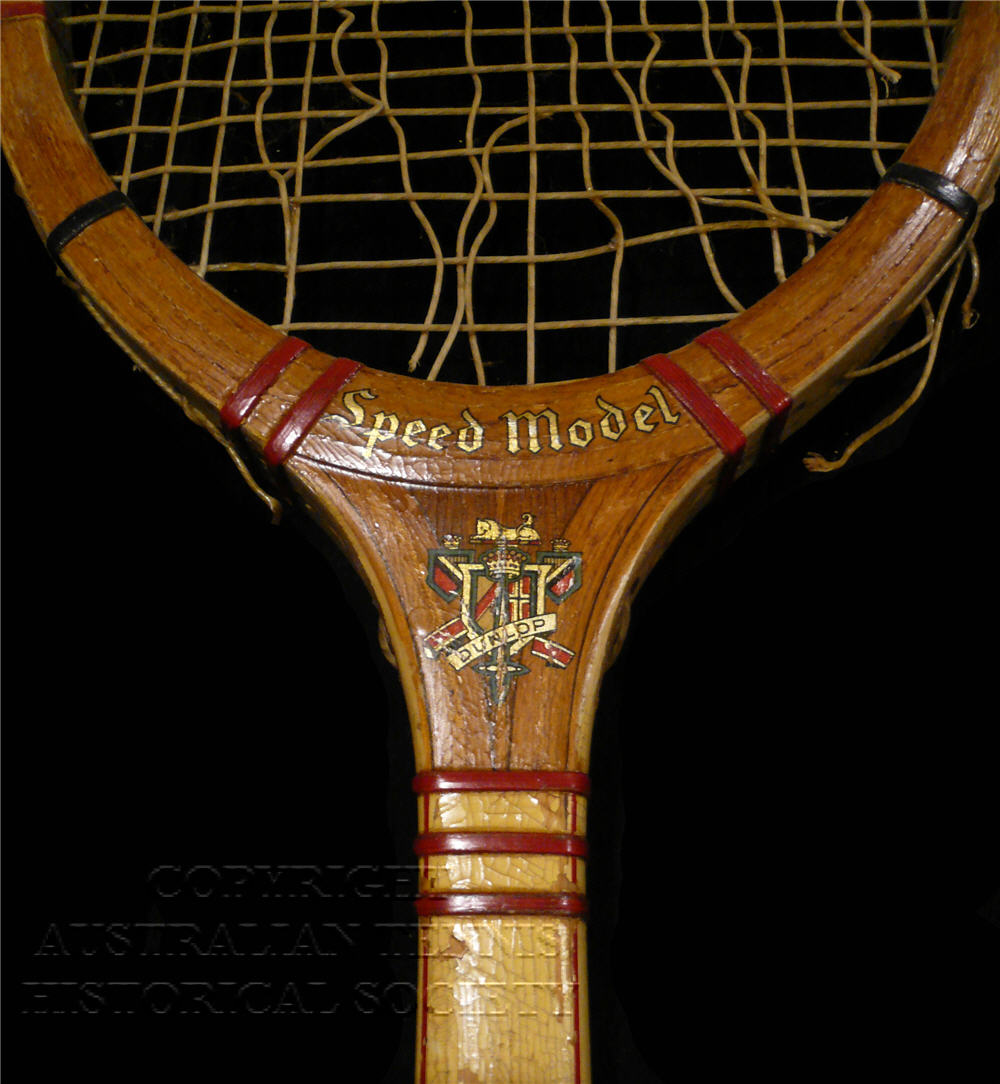
Possibly the first ever variation of the Maxply designed for the Australian market in 1936 as the Speed Model. An ad was found for this edition but it appears to have evolved quickly into other incarnations such as the Australian Model

P1560888 P1560897

DURAPLAS OVERLAY 1946 WITH ARTICLE

dunlop models 2017 (34)

dunlop maxply signed hoad quist USE

RACQUETS_FULL_DUNLOP_OZMODEL

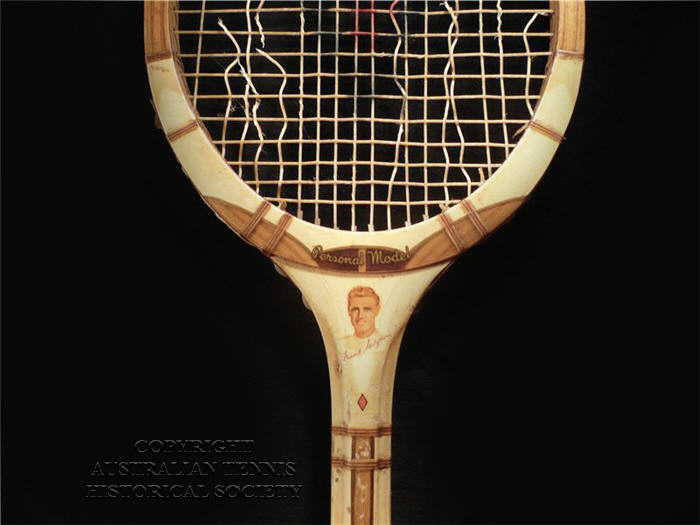
dunlop frank sedgman personal model (9)

dunlop frank sedgman (5)

dunlop gussie moran (35)

dunlop gussie moran blue 7

dunlop maxply lew hoad half body

DUNLOP LEW HOAD aaa

DUNLOP MAXPLY SIGNED ROD LAVER 2020 (8)

dunlop maxply (13)

dunlop Maxply 1962

DUNLOP 1962 ROD LAVER PIC (19)

DUNLOP MAXPLY BR 1

DUNLOP EVONNE GOOLAGONG

Slazenger

The history of Slazenger is indeed a prestigious one for its close involvement with the development of the game, the growth of  the major championships and links to the games champion players.

Slazenger UK began promoting sporting goods in the mid 1880’s adding a range of tennis, cricket and football equipment to their already successful military clothing business.

The Slazenger boxed tennis sets as per the “Wingfield” design were an immediate success given the growth of the sport around the country and joined leading UK competitors Grays, Ayres, Sykes and Gradidge in supplying tennis equipment into Australia. In fact, the owner of Slazengers, Captain Ralph Slazenger visited Australia in 1889 presumably to help establish distribution channels for their extensive range.  He appointed PAIN & TAYLOR in Sydney as their sole agents.

RACQUETS_SLAZ_BLACKEAGLE4

Marketing was alive and well very early in the piece and manufacturers tied themselves to key players and promoted this by producing models with player names. The first two major Slazenger brands were the “Demon” and the “Renshaw” which was named after William Renshaw who won Wimbledon for 6 years straight from 1881 -1886 and again in 1889.  With brother Ernest, the Renshaws put tennis on the map as a spectator sport in the UK and set the standards for other players to aspire to. The “Demon”, pictured on the left, was very popular and this fishtail version is very collectible as are others made under the supervision of master craftsman E.G.Meers with EGM incorporated within the branding.

Slazenger tennis balls commenced production at the Woolwich factory in 1877 but did not replace the Ayres tennis ball which was the official tennis ball at Wimbledon until 1902. Slazenger tennis balls have now been involved with Wimbledon for over 100 years.

After the Renshaws, competitive tennis moved internationally and Slazenger again sponsored two magnificent UK players in Reginald and Laurence Doherty with the named racquets, “The Doherty”. Laurence was the first overseas player to win the US Championships in 1903.

Along with many other English makers, Slazenger started exporting sporting goods to Australia and in the early 1900’s included some local brands called “Colonial” and Kangaroo” into their range. Maybe the photo under Australian racquets picturing a kangaroo is a Slazenger, but there are no identifiable markings to confirm this. In the 1920’s tennis in Australia was booming and local manufacture of tennis equipment was growing quickly not only with homegrown companies such as Chesterfield, Brewers and Alexanders but also with US giant Spalding who commenced production in 1925.

RACQUETS_SLAZ_BLACKEAGLE

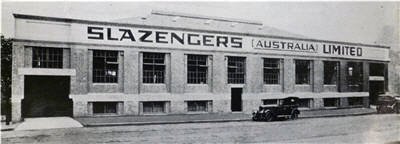
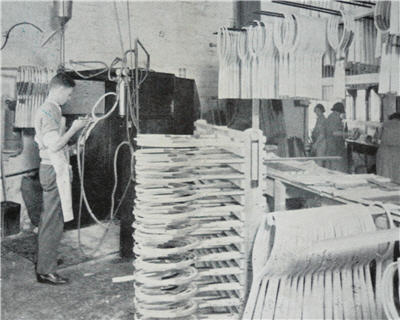
Slazenger decided to open an Australian factory to make racquets in November 1928 in Surry Hills, Sydney. The factory was opened by a Mr F.J. Tatro who arrived from Canada especially for the occasion. In 1930 they added cricket bat production and struck tragedy in May 1932 when a fire started in the ducoing room destroying thousands of racquets. Luckily machinery and papers were saved. In June, MD H.J.Parker must have run into some political storm with the NSW Government for he is quoted in the press as threatening to move the factory to Melbourne if the Lang Government were returned to power. In 1938, a new factory at Bowden Street, Alexandria became the primary manufacturing site for many years but was all but destroyed by the massive hail storm in the late 1990’s which caved the roof in under the massive weight of the hail stones.

Originally, the firm was owned by the  UK Slazenger owners at the time, the McMaster Brothers who sold the business for a short while to the c1935 Managing Director David Blacklock and partner E.S.Wolverton.  They eventually, sold the business back to Slazenger and a factory was also set up in New Zealand which survived from the 1950’s to early 1980’s producing its own designs.

Researching retail ads throughout the 1930’s and 1940’s competition was pretty fierce.  Alexanders were very dominant and had Jack Crawford (1933 Wimbledon winner) as their endorsed player. But slowly, over this period the retail industry saw a huge reduction in imported tennis goods as the Australian industry proved it could turn out racquets of a high quality.This is not meant to say that importing was eliminated for companies could import designs from overseas as required. Dunlop were importing all of their stock and some of the UK Slazenger range, such as Fred Perry branded racquets were imported also.

The battle for market share, relied on four key platforms, product quality/ innovation,player endorsement, junior tennis and who had the most cash. Throughout the war, Slazenger produced a variety of non sporting items for the defence forces and as such became extremely well cashed up.  This permitted them to undertake a variety of promotional projects on behalf of tennis associations such as the management of ticket sales to key events like the Davis Cup and even funding the construction of the massive temporary stands that were erected at White City and Kooyong to support the incredible demand for tickets.

In the 1930’s an Australian inventor, Harry Webeck came up with the idea of inserting mercury into a racquet handle so at the time of impact the weight of the racquet was enhanced behind  the flight of the ball.  Blacklock signed the deal, as much to keep the idea out of competitor hands. The product range was sub branded “Floating Power” and the key brands with this feature also included the DYNAMIC and the GYROFLOW. Recent discoveries show this invention was previously tried and marketed in a tennis racquet made in the UK in 1889. The racquet was called aptly, “The Mercury”.

slaz floating power 2

Many players were employed by sporting goods companies as a way of assisting them to earn wages while questionably allowing them to retain amateur status to play in the tournaments.  It was a fine line, because coaching was considered as being professional and many players left the amateur ranks to play professional tennis.  Other countries not enjoying a local sporting manufacturing industry were at a disadvantage so this practice was often scrutinised by overseas tennis associations.

The big advantage for the tennis players was that by working for the sporting goods companies, they were able to play in exhibition matches around the country as part of so called “product promotions” while keeping their match fitness to peak levels for the major competitions.

Bill Sidwell, Australian Davis Cup player started at Slazenger in 1935 and has been a tremendous source of information for these early days.

A key sales development activity was to visit houses which had tennis courts and they would simply drop in a few sample tennis balls and promote racquets as well.  Bill recalls that in Sydney in the well off suburbs nearly every second house had a tennis court.

Such was the competition that visiting tennis players arriving by ship were often sought out on embarkation for racquet endorsement deals while they played in Australia. One story we heard was that certain company reps managed to get onto a pilot boat, or such other, to meet a ship prior to docking so that all the players they had targeted were stitched up before the other companies had a chance.

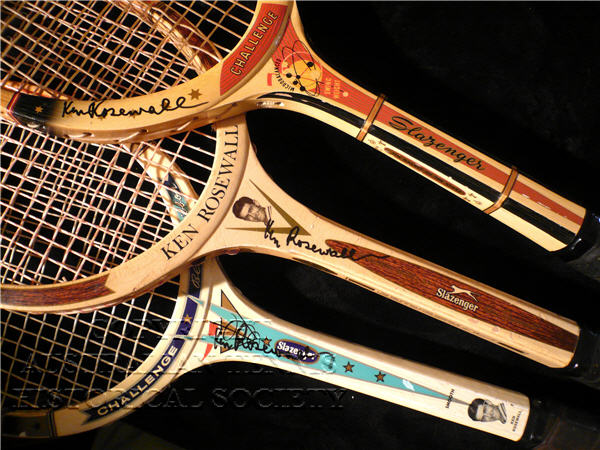
The policy of targeting youngsters paid off also, particularly in the 1950’s for it was the era of Rosewall and others who came into the Davis Cup teams endorsing Slazenger from their very young days that helped keep Slazenger’s high public profile.   Many such as John Newcombe were sponsored by Slazenger so that the players could fund trips to local and overseas events with the hope of becoming a good player.  There were no other formal development programs for youngsters back then and so the manufacturers were investing in juniors for the good of the game and with eye on potential long term marketing.

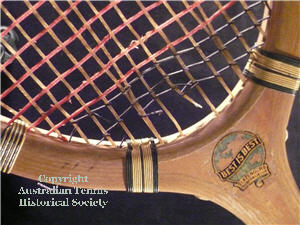
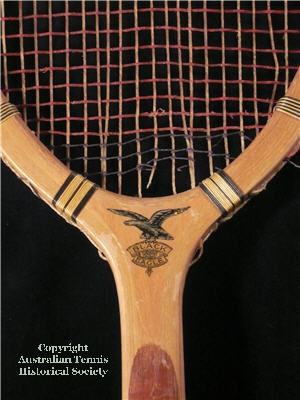
Slazenger 1937 AdOne of the earliest racquets we have from Slazenger Australia is very nice wood handled model called the Black Eagle (pictured) which has the famous “Best is Best” logo and Australia Limited on a decal.

Prior to local production, Slazenger UK already had signed up Australian J.O.Anderson who played in many 1920’s Davis Cup and tournaments. The ad on the right is from 1927 for Melbourne retailer Myer’s. Other racquets available in 1929 included Primoris, Queen’s, I.Z., Renshaw, Doherty, Acme and Demon.

From a 1933 ad from retailer Overell’s in Queensland we learn of the Golden Eagle,  Southern Sun, Premier and the Four Ace Models from 1934.  There were often over 20 racquet brands produced each year, dictated not only by the manufacturers but by the retailers looking for exclusive lines. In 1931 in the UK, Slazenger acquired Gradidges and we have also seen a local Australian version of a Gradidge racquet, presumably made here by the Slazenger factory.

In 1939, from an MSD catalogue we learn of the Perry International and Perry Autograph models,Dynamic, Cavalier, Henri Cochet Personal Model, Doherty, Perry Recision, Renshaw, Eclipse, Player, Garrick, La Belle, all in oval shape and then semi flat top versions of the Perry Autograph, Dynamic,Cavalier,Eclipse and La Belle. As mentioned some of these may have been imported.

The Fred Perry range remained prominent from the early 1930’s to the early 1960’s. In the Book “Game, Set and Glory” (Bruce Matthews 1985) a story is told of how the

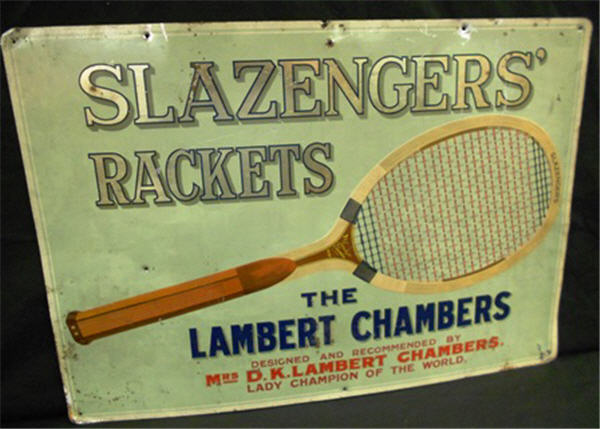
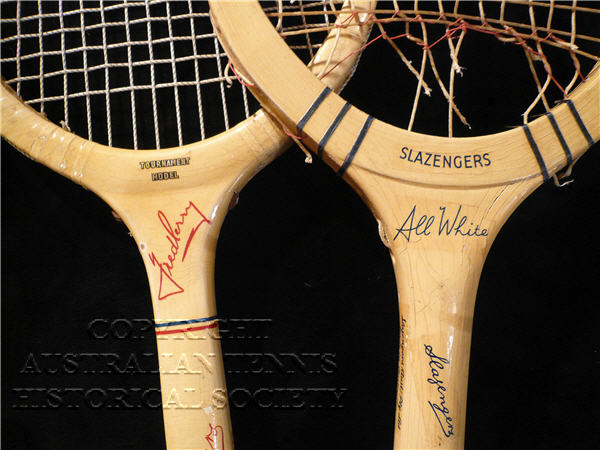
Slazenger sign Lambert Chambers racketfamous Fred Perry “All White” was created in Australia as a way of countering the interest in Jack Crawford’s Semi Flat Top Alexander racquet. When Perry was playing in the 1934 Australian Championships against Crawford, the then sales manager of Slazenger and Perry brainstormed some ideas over dinner prior to the match and struck upon the idea to paint Perry’s racquet all white. At 9:30pm they organised the Slazenger stringer back to the Sydney workshop to strip down and repaint one of Perry’s racquets.  On the next day of the match, after warming up with a normal racquet,as play was about to commence the “All White” was removed much to the amazement of the crowd. Perry recalls the paint coming off and ending up on his face. This model went on to become of Slazengers top brands in 1937. He beat Crawford in this match.

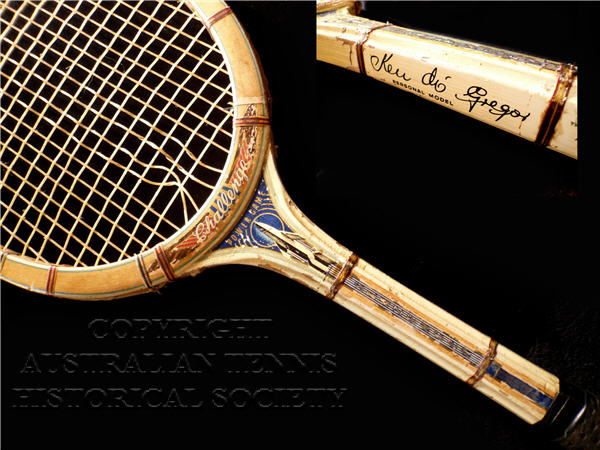
After the war the premium model became the “Challenge” made from imported Canadian Ash. Bill Sidwell used to travel over to Canada to instruct the mill on how to cut the logs in a particular way to prevent buckling.  It took about 2 years before a raw log could be made into a racquet purely to allow the wood to season or mature, plus coming from Canada (cold to warm climates) the timber was given a further 3 months in storage here in Australia before reaching the machinery. Canadian Ash was considered the best in the World for making racquets and also Ice Hockey sticks. Slazenger Australia, used to bring out UK manufacturing experts who often ended up staying here so it wasn’t surprising to learn that the operation here was highly regarded and used to sell many thousands of racquets into the US, in part also, as an offset for the  import licenses required to import the Canadian Ash. Jack Nicklaus wanted Slazenger Australia personnel to set up tennis/ golf production in the US such was his view on the production quality being achieved here.

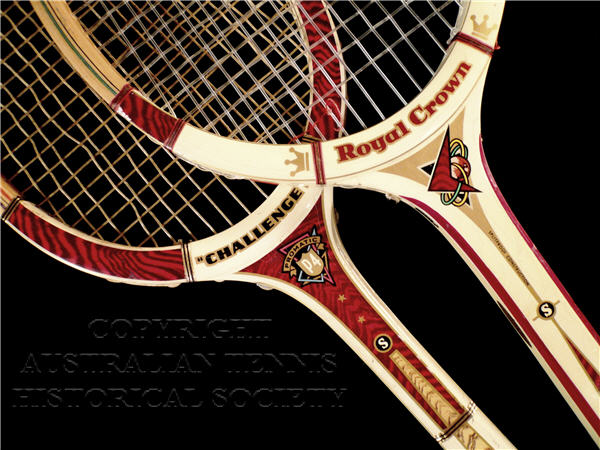
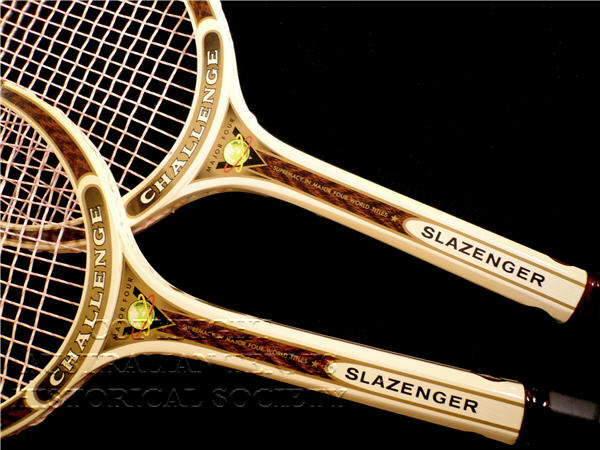
The “Challenge” wooden racquets became the brand of choice for many club players through the late 50’s to the mid 1970’s and the name continued on into the Aluminium era.

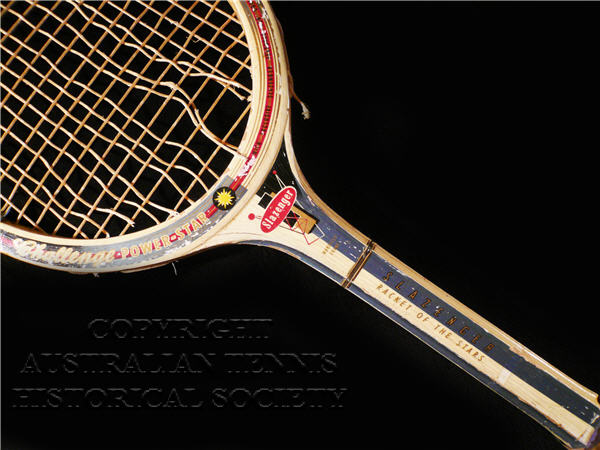
Bill advised that one Challenge design was created by the famous Australian artist Constable which featured a rocket on the shaft.  While the salesmen didn’t like it, MD David Blacklock made the call to run with the design and  it became a best seller.  While we will need to hunt down an example, space, stars and rockets were a feature on many designs along with other sub-names such as the Challenge Constellation given the public interest in the first space flights in the 1950’s through to the moon landing in 1969. We also recently found a Fred Perry “Laurel” racquet made in Australia, using Canadian Ash under the company called the Fred Perry Racquet Company (Melbourne), no doubt a Slazenger subsidiary.

In 1958/59, even after being reported as a corporate objective in 1927,  Dunlop finally acquired and allowed Slazenger to run as an independent company. The company was at another peak.  Between 1960 and 1973 a Dunlop Slazenger racquet won 80 of the 112 Grand Slam events, 38 of them to Slazenger due mainly to the Australians Margaret Court, Ken Rosewall, Roy Emerson, Neale Fraser and John Newcombe.  This also explains why Dunlop was not as strong a brand in Australia,  although Lew Hoad, Tony Roche and Rod Laver were signed with Dunlop. In it’s hey day, Slazenger was producing 500,000 racquets and 6,000,000 balls a year.

From newspaper research, it would appear that in 1968 production of Dunlop and Slazenger products was merged into the one factory.

Competition within the tennis equipment market became very fierce in the 1980’s as new entrants such as Head and Prince joined the market with new racquet production technology from steel, aluminium, fibreglass and  graphite. Asia also became the production hot spot and price competitiveness eventually forced most companies to source from Taiwan and today China.

Production in Australia included Aluminium racquets under both Slazenger and Dunlop names.The factory ceased manufacturing racquets in the mid 1980’s.

The Slazenger brand remains well known within the tennis community, perhaps not so well in tennis racquets but their balls are still considered the best in the marketplace.

The pictures below show a range of Slazenger product sold here, however not all were produced here.

Thanks also to Bill Sidwell and Cedric Mason for providing some valuable information about their days at Slazenger.

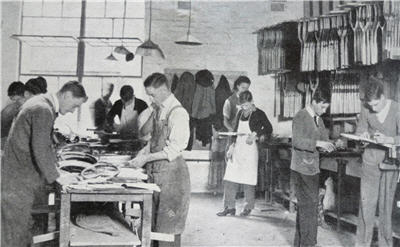
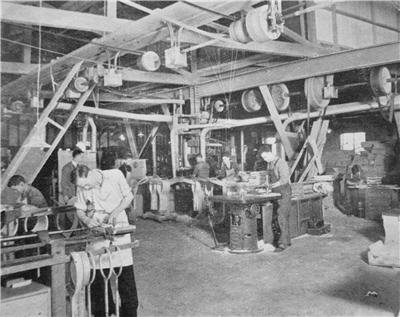
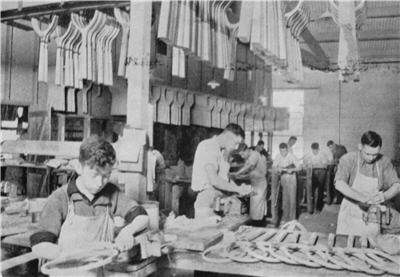
The following factory shots are take in 1930.

slazenger factory 13000 sq ft slaz factory ae slaz factory ad slaz factory ac slaz factory ab slaz factory aa

SLAZENGER GERALD PATTERSON SIGNATURE MODEL RACQUET UK

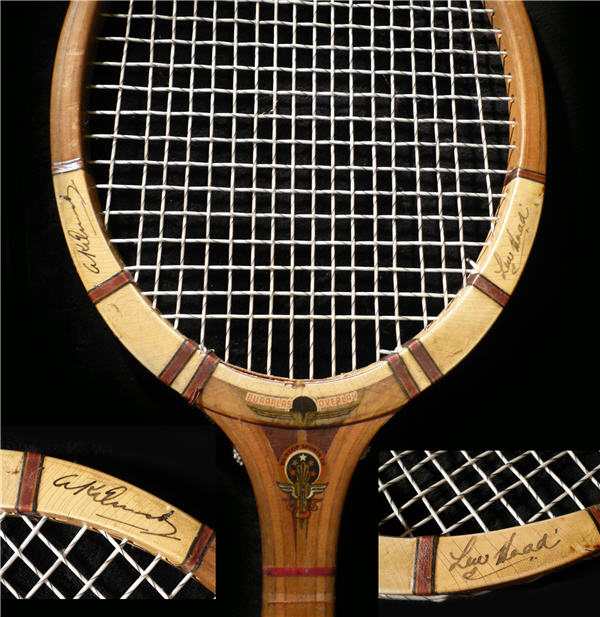
In the mid 1920’s Slazenger produced a couple of Australian Champion player signature models, indeed who were also great rivals at the time.  Gerald Patterson, twice Wimbledon winner  (1919, 1922)  and J.O.Anderson, Australian Champion and Davis Cup Player featured on these Slazenger wood grip models.  J.O.Anderson also ran a sports store and subsequently had signature/photo racquets with Alexander, Chesterfield and his own brand.  Patterson went onto become the MD at Spalding in 1925.

Slazenger J.O.Anderson signature model UK 2019 (8)USE

Slazenger Demon name & logo revived in the 1940’s

Colourful graphics with wrappings were preferred by players and Australian designers led the The famous 1930’s-1940’s Slazenger All White created by Fred Perry at the Slazenger NSW factory in 1934 then produced elsewhere for about 8 years. Fred won Wimbledon with this.

Slazenger All White with Fred Perry (15)
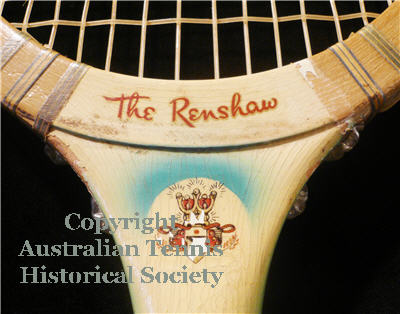
Another famous brand of Slazenger which started with the English Champions Willie and Ernest Renshaw in the 1880’s.They became the first “publicly” recognised champions. Slazenger produced Renshaw racquets from this time and this Australian made model demonstrates the desire to maintain branding over a long period. c late 1930’s early 1940’s model from 1934-1936.

SLAZ RENSHAW 3

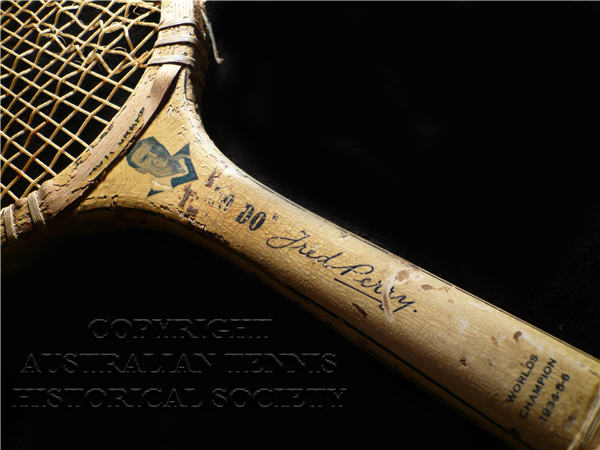
In 1938, visiting player Dorothy “Do Do” Bundy became the first USA woman to win the Australian Championships. This Fred Perry model may well be her personal racquet.

SLAZENGER FRED PERRY DO-DO BUNDY 1937 (4)

Around 1932 the flat top craze returned to Australia with most companies producing both oval and semi flat top models.

slazenger flat top (3) EDIT

Design innovation also included looking at ways to reinforce the shoulders.

slazenger challenge reinforced throat 2015 (9)

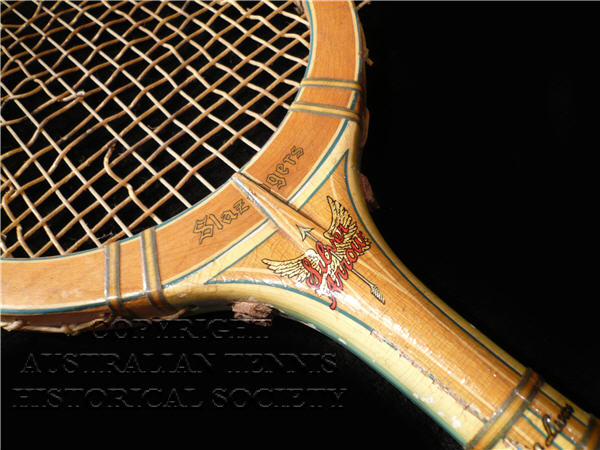
The Silver Arrow featured additional wood work to create an arrow or spear like shape in the throat.

Slazenger Silver Arrow 5

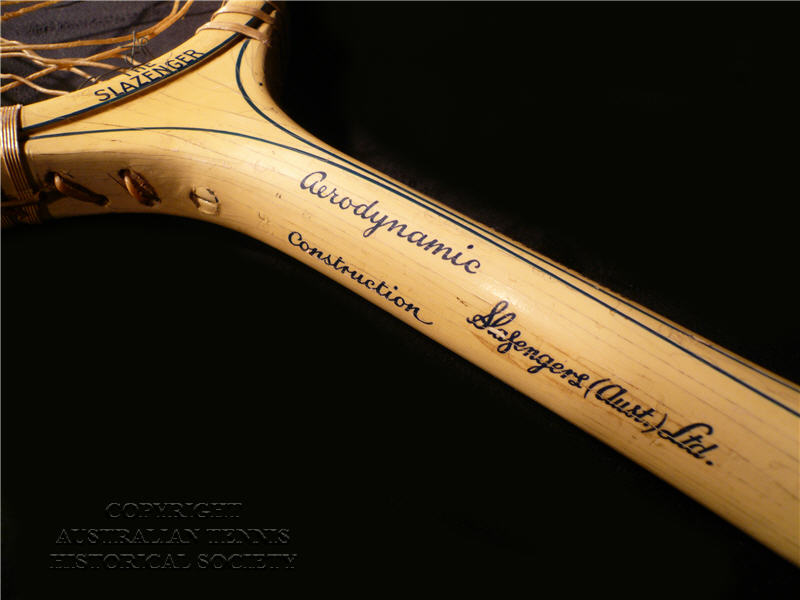
The aerodynamic Streamline was throughout tapered like a tear drop so that one side was wind resistant and the other flatter.

SLAZENGER STREAMLINE 1935 (5)EDIT

slazenger ad 1935 new streamline process

Design innovation also included the mercury filled tube balance adjustment idea, called Floating Power.

Slazenger Ladies model (11)

Slazenger Challenge dc 5 star 2 aaa

slazenger challenge x2 (1)

slazenger power game challenge ken mcgregor (4)USE

slazenger challenge power KR (3)

SLAZENGER POWER STAR 1958 (12)

SLAZENGER KEN ROSEWALL SIGNED X3 2020

Slazenger Royal Crown P4 match up (4)

SLAZENGER MAJOR 4 2017 (23)AA

slazenger T10 nice (1)

Randolph Lycett

To many Australian tennis fans , the name Randolph Lycett is not very well known, yet he played quite brilliant tennis for some three decades within Australia and overseas.

Which country will claim Randolph as their own? The UK seem to have a stake for he was born on the 27th of August 1886 in Birmingham England, however he arrived in Australia as a youngster with his family who became prominent in the Oil Business.

Randolph played at the top level of Australian tennis from the time he was still in his teens until the outbreak of the 1914-18 War. He then decided to remake his life in England and enjoyed a marvelous tennis career through this period also. He did play Davis Cup tennis for the British Isles and so he is often, albeit, in our view mistakenly referred to as a UK player when he really should be considered as Anglo/Australian.

A right-handed player, Randolph had an athletic physique and was on the short side in stature – being 5 ft 8 ins (173 cms) and 11 stone 5 lbs (72 kgs) when discharged from the armed forces in 1919. He retained his athleticism and a trim figure throughout his playing days.

Copy of RL - LT & Badm'ton mag Feb 1935 with obit

He played for Victoria’s second team when still at school, in 1902, having recently turned 16 years of age, and was highly ranked within the State from that time onwards. Weekend to weekend, he played A Grade Pennant for the Albert Park team.

Randolph played for Victoria’s first team in four other seasons (against SA and NSW), and would have played continuously in the State’s first team from 1906 up to the onset of the War had the calls of his job not interfered.

After claiming the New Zealand men’s doubles title in 1904, when only 18 years old with H.A.Parker, Randolph won the inaugural Australasian men’s doubles in 1905 with fellow Victorian player Tom Tatchell, at the age of 19, and won that event again in 1911 with Rodney Heath – immediately after which he gained selection for Australasia’s Davis Cup team, but had to withdraw due to pressures of work.

Since he grew up here from a young child, learned his tennis here developed a business here, was married here and had children and from February 1917 to July 1919 served in the Australian army as a field gunner, I am pretty confident that Australia can stake a solid claim on Randolph Lycett.

Added to Randolph’s achievements as an Australian, after World War 1 he traveled to the UK to play at Wimbledon in 1919 and under the Australian flag played with an AIF team and toured the USA with fellow Aussies. On his first Wimbledon outing he won the Mixed Doubles with USA’s Elizabeth Ryan and came runner up in the Men’s Doubles with Rodney Heath, losing to Aussies Pat O’Hara Wood and R.V.Thomas.

In 1920, he made the quarter finals to be beaten by the eventual winner Bill Tilden and came runner up in the mixed final. Tilden was the era’s best player yet Randolph put up a great fight going down 7-5, 4-6, 6-4, 7-5 which is a mark of his tennis expertise.

In 1921, he made the quarter finals again and lost to Japanese player Shimidzu in 5 sets, won the doubles with Englishman M.Woosnan and the Mixed with Elizabeth Ryan. Of particular note was his singles match which was played on a very hot day. During the 4th set the then 35 year old Lycett organised his trainer to serve champagne between breaks since the serving of beverages was not a regular component of competitive tennis at this time. The media portray Lycett as playing under the influence for it was reported that he fell over several times twisting wildly as he went for some power shots, yet despite having two match points ended up losing in a very closely contested 10-8 5th set. It is perhaps a little unfair to say he was greatly affected by alcohol and it is more likely that rather withdrawing due to exhaustion , Randolph managed to keep himself going in an attempt to win and very nearly did. Two days later, he won the other two finals.

1922 Patterson Beats Lycett

In 1922 he lost the singles grand final to fellow Aussie Gerald Patterson (his second Wimbledon singles title) 6-3, 6-4, 6-2 (photo left running off court), came runner up in the mixed and won the Men’s doubles with Aussie J.O.Anderson beating Pat O’Hara Wood and Gerald Patterson in an awesome 5 setter 3-6, 7-9, 6-4, 6-3,11-9.

In 1923 he made the 4th round in singles, won the mixed again with Elizabeth Ryan and won the doubles with USA’s L.A.Godfree. From 1924 to 1929 he played at Wimbledon regularly, even making the 4th round in the Men’s singles in 1926 losing against the Frenchman, Brugnon.

He amassed a quite amazing Wimbledon record from 1919 through to 1929 (age 33-43). A great effort indeed when you consider the above represents three straight Men’s doubles wins with three different partners and 5 consecutive mixed doubles finals appearances and a singles grand final in 1922.

In relation to Randolph playing Davis Cup for the British Isles, we need to step back for a moment to 1919 when Randolph left Australia to live once more in the UK. He had been charged in a Melbourne court with abandoning his Australian family from a divorce in 1914 upon returning from war service and his business interests had suffered due to a fire at the building he worked at in South Melbourne. So his move to the UK was really starting a new life one suspects.

Australian Tennis Stars Arriving for Games

Randolph (3rd left with) Patterson, Brookes & Rod Thomas

The English were reticent to immediately adopt Lycett into their Davis Cup Team because it was deemed to be unsportsmanlike and unfair to Australia. In 1920, Captain of the UK team Colonel A.F.Kingscote suggested writing a letter to Australia seeking approval for Lycett to join the British Team. Later that year, we presume with some agreement from Australia, the Davis Cup Committee eventually adopted a ruling to suit, allowing a player when as a “bona fide amateur shall be qualified to represent a nation if he shall be born in, be a citizen of or become a naturalised citizen of that country, or shall have resided therein for at least two years immediately preceding a tie, and when one player has represented a nation shall always be eligible for that Nation and no other”. Consequently, Randolph played his first Davis Cup match for the British Isles in 1921 as per the above ruling and therefore could not then play sometime in the future for Australia. Clearly had Randolph played for Australasia in 1911 he would not have been permitted to play for the UK. In the photo above c1919 we have Gerald Patterson, Norman Brookes, Randolph and Rod Thomas.

In England, Randolph later married Joan Austin, the sister of UK tennis great Henry “Bunny” Austin and we can only imagine enjoyed a fine lifestyle on the tennis circuit which included playing in the French Riviera.

Bunny Austin, who played a lot with Randolph in his own formative phase, summed up Randolph’s game thus:

“…his return of service was a joy to see, his overhead work the most deadly in the world. At his best he never missed. To lob him was to court disaster. His normal volley was not brilliant, but his tactics were to return the ball until his opponents either lobbed or hit the ball sufficiently high over the net for him to drive volley it. His drive volley was devastating. Our combination was good so long as they lobbed him. But when they lobbed me it was not so good.”

HW Austin: Lawn Tennis, Bits and Pieces, published in 1930.

Randolph was renowned for having a great time and tennis was the ideal vehicle to deliver a marvelous lifestyle.

He died in 1935 in Jersey aged only 49.

In 2005 a book was published after considerable research by Australian Peter Kettle. Please contact him by email pkettle@bigpond.net.au if you would like to acquire a copy or submit further information about Randolph Lycett. Tennishistory.com.au would like to thank Peter for his assistance in preparing this article.