Invention of Electronic Scoreboards

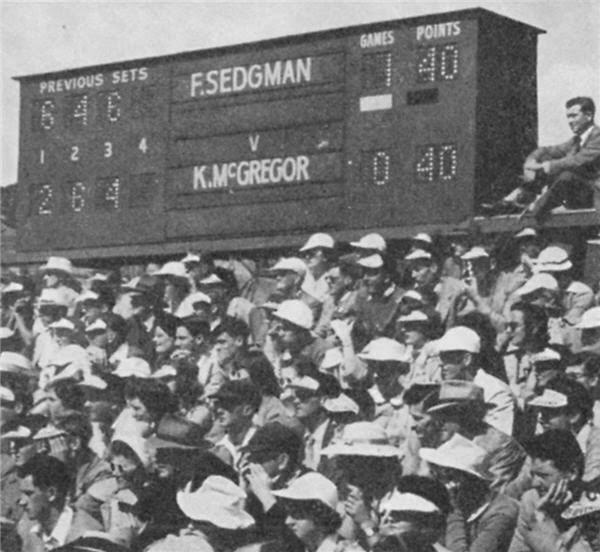
An Australian tennis enthusiast, named Edward Both invented the electronic tennis scoreboard around 1952.  He and brother Don designed and tested the unit in South Australia before its’ launch at the 1952 NSW championships.  The new technology took off and BOTH EQUIPMENT Pty Ltd became the supplier of these scoreboards to other venues including trotting, basketball and horseracing.  The technology with 9000 globes was used for the Melbourne Olympic Games in 1956.Both Scoreboard 1952

Not only were Edward and Don good players but they inherited their interest from R.V.Thomas (their Uncle) who won Wimbledon Doubles with Pat O’Hara Wood in 1919 and the Australian doubles in 1919 & 1920.

Now the scoreboard invention was no fluke, because Edward Both had also designed the World renowned, life saving IRON LUNG.

It took two people to operate, one for the games and the other for points. Looks like a great match between best mates and rivals here!


A.H.MOORE Sydney

With the spread of tennis throughout the colony from 1876 onwards, we have discussed how much of the tennis equipment was imported from existing UK, French and USA sporting manufacturers.

The Australian industry is recognised to have begun in the 1920’s as the popularity of the game moved more from a wealth based past time to a general community game. This saw the start of Alexanders and other Australian developed brands and the commencement of Australian operations for Spalding and Slazenger.

Pre 1920’s we assume that craftsmen here would have readily made racquets for customers, but finding information about these firms is difficult since many never promoted or advertised themselves.

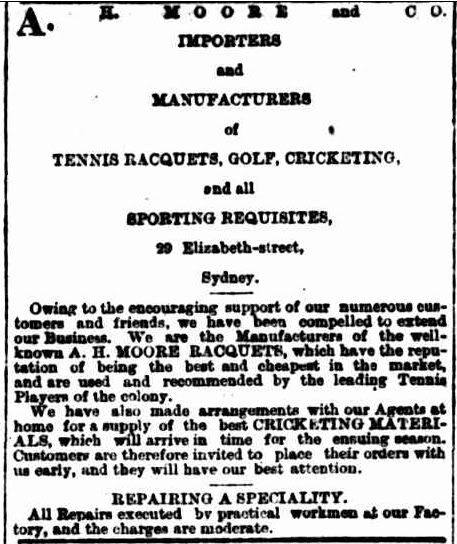
One of the pioneer racquet makers that seemed to have created a niche was Arthur Henry Moore from the firm A.H.Moore in Sydney who commenced business in the early 1890’s.

In 1896, operating from A.H.Moore NSW maker Elizabeth St Sydney the firm was offering both imported and locally prodcued equipment.

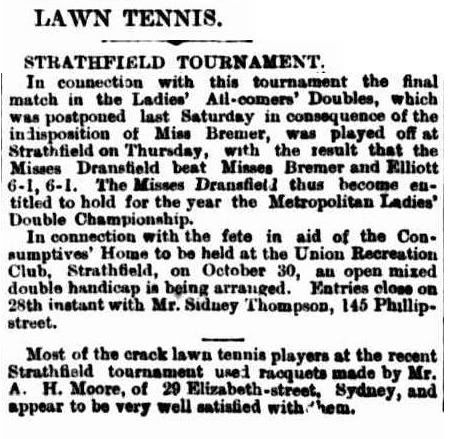
The racquets carrying the firms brand name seemed to have been well accepted and the company was involved with the then top grass court event, ” The Strathfield” Lawn Tennis Tournament.

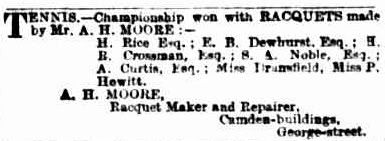
You can read from the articles how linked with the leading players in the colony and from a different 1897 ad, below, names Horrie Rice and Edward Dewhurst amongst other prominent players who used and won with his racquets.

A.H.Moore NSW maker

In 1901, the factory and workshop were listed as being in Woolwich.

Also in this year, unfortunately, Moore ran into financial difficulties and as the company was heading into legal proceedings an argument over legal fees he couldn’t pre-pay led to him shooting a managing clerk for a solicitor in their Elizabeth St offices on December 6th and then shooting himself dead immediately after. The clerk, shot twice, survived.

A.H.Moore NSW maker

Tennis History Sacred Ground

Just in need for a bit of exercise we went for a bike ride today down to St Kilda Rd and Queens Rd in Albert Park, to a location which will hopefully remain a truly sacred site to the Australian Tennis Community nationally.

Down here in Melbourne, the MCC (Melbourne Cricket Club) were the driving force behind the early growth in tennis and the formation of local club competitions  in the late 1870’s. As with cricket, interstate tennis competitions also commenced and in 1892, despite having club courts at the MCG, it was decided to move the Intercolonial Matches to the Warehouseman’s Ground.  Today it is known as the Albert Ground.

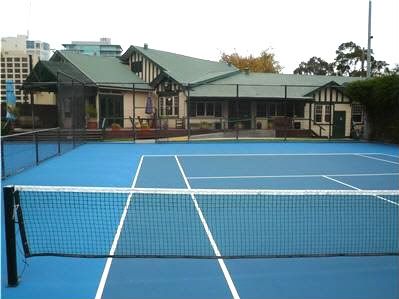
The grounds, courts and clubhouse have been well maintained. The courts are no longer grass but the same surface as that now laid at the Melbourne Tennis Centre to enable tournament players some additional facilities to practice on.

In between, the courts are available for hire.

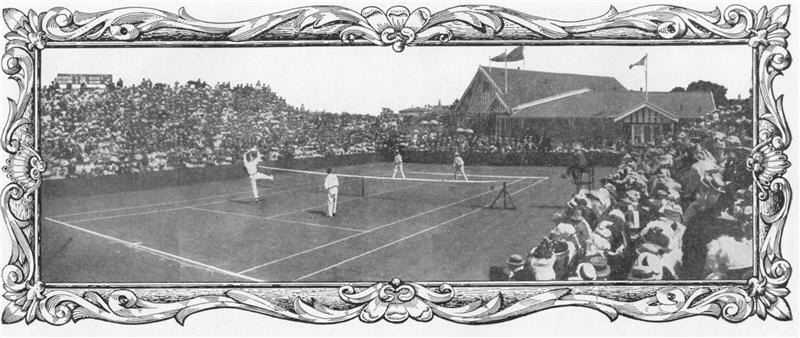
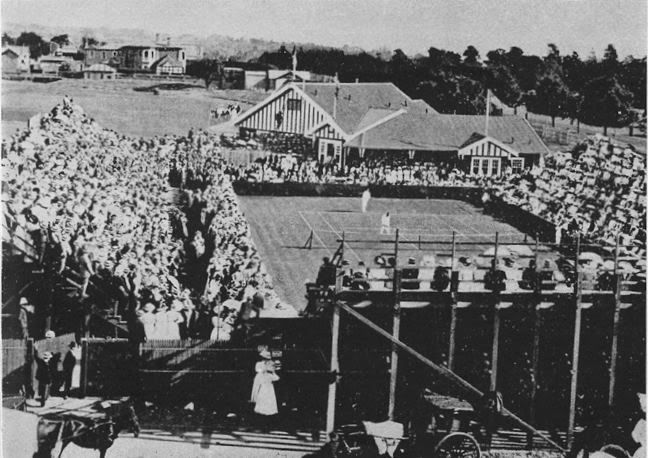
Bot not only were the Interstate tournaments played here, so were the Victorian Championships and eventually the first Australian Men’s Championships in 1905.  Lastly, and at the top of the list, these are the courts on which the very first Davis Cup, was played in 1908 (away from UK & USA), due to Australasia’s win in England in 1907. Here Norman Brookes, who lived just down the road and New Zealander, Anthony Wilding successfully defended the cup which the following year would be played in Sydney. The location was selected in Victoria as an honour to the new Australian tennis hero, Norman Brookes who had also won Wimbledon in 1907.

The clubhouse, with the exception of a new entrance room,  is almost as it was in the early 1900’s so we hope that the administrators continue to value this little corner at least to the point where it is protected from the property developers forever.

Warehouseman's Ground Davis Cup 1908  Warehouseman's Ground Davis Cup 1908

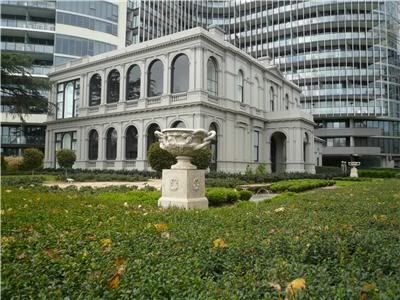
The photo was taken almost exactly where the forehand court would have been. Scaffolding surrounded the Davis Cup Court to accommodate the large number of keen spectators in 1908.  All along St Kilda and Queens Roads were stately mansions like this which have slowly been overun by the multi storey apartment and office complexes.  Thankfully some of these have been saved. Norman Brookes house is now a block of 1950’s style flats.

Davis Cup Melbourne 1908

This photo was copied from the 1953 Davis Cup Challenge Round program as used in a Melbourne Sports Depot Ad. As you can see, the clubhouse is little changed. 

Here is another shot as well. Note the manisons in the background and the cricket ground also exists today.

Davis Cup Melbourne 1908


How Fast can you serve with a Woodie

This seems to be a question often raised around tables, at least when the veterans are sipping on a cup of tea (nee Bundy, Jack Daniels, Beer).

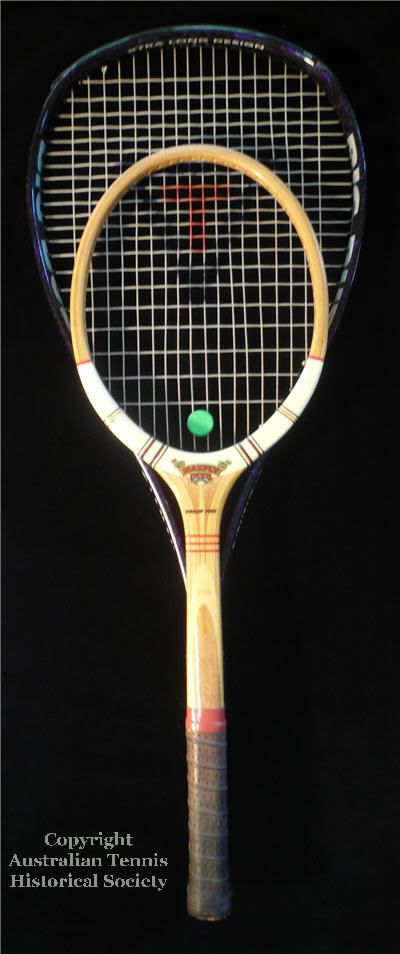
In an article, in USA Tennis Magazine March 1997, written by Tennis Authority Alan Trengove, Mark Phillippousis was given the task of testing out woodies versus a standard graphite (his own) and a superlong.  The reason the article was written was because the ITF had just banned the SuperLong’s being marketed by both Dunlop and Gamma. This meant that all professional racquets had to be under 29″ in length.  I recently saw a Gamma 32″ and it really is a massive racquet with a 137″ head size. See the pic below compared to a standard woodie.  To meet the new rules they just chopped the length back to 28″.

Anyway back to the test. All the racquets were strung by Mark’s personal stringer using the strings and tensions he was used to and grips were adjusted as well.  They were the Dunlop Superlong 29 1/2″, his standard 27″ Dunlop and the recently voted number one racquet of significance over the past 50 years, the wonderful Dunlop Maxply Fort specially flown over from the UK.

The test was conducted at the Melbourne Park, home of the Australian Open.

The results were very interesting.  Wood Ave Speed 122mph, Top Speed 124mph and accuracy 60%.  Standard length 124mph, 127mph, 52% and Superlong 126mph, 127mph, 80%.

On speed it is surprising that only 3 mph separates the woodie from the two hi tech racquets and the woodie even gave Mark some more accuracy over his standard racquet.  Maybe Bjorn should have persisted with his woodie in his infamous come back!!! Then maybe Mark should have tried a Woodie more often!!

In a separate, similar test in the USA, four players confirmed these results but found the woodies accuracy levels very low.  I guess this does highlight the impact of frame strength and sweet spot size.  However, given that these 4 hadn’t played with a Woodie at all or for many years, it also highlights how stroke techniques have changed with racquets.  The importance of hitting with woodies using a more flat stroke and good follow through is certainly not in vogue today as follow throughs are moving across the body or at seems in full circle watching the almost table tennis style forehands seen today.

Were the players of old serving at Speeds like Mark? There may have been some big guns back then, but the rules for foot faulting didn’t allow both feet to be off the ground and over the line, so the level of forward momentum couldn’t have been the same.

The other factor was championship play was continuous so there were no sit down breaks between end changes because there were no chairs and no tie breaks which meant a match could easily go 3-4 hours.  The wise players of the day relied more on accurate first serves with more twist than pace as way of conserving energy.

The conclusion of the test was that while extra longs seem to assist with accuracy, the additional size, weight and therefore swing speed didn’t create the massive increase in serve speed the ITF were worried about preventing.  It is also proves that you really can generate some service speed using an old woodie afterall and suprisingly not that much slower than today’s technologically advanced racquets.

Dinny Pails

Born in Nottingham UK in 1921, Dennis Pails arrived in Australia at the age of 1 and began his boyhood in Enfield, Sydney. Like many players in the late 1920’s, he learnt tennis by playing against that most consistent competitor, the brick wall.  His mother seeing the passion for this pastime, bought him a second hand racquet affectionately known as the “onion bag” and with this racquet he progressed from backyard hitter to playing on a proper court in junior competitions. Without coaching or strategy advice, Dennis did find he could hold his own against the local competition.

His name conversion to “Dinny” came about due some poor handwriting on his part when completing a tournament entry card. He signed the card Denny Pails however it was misread as Dinny and the name stuck.Dinny Pails
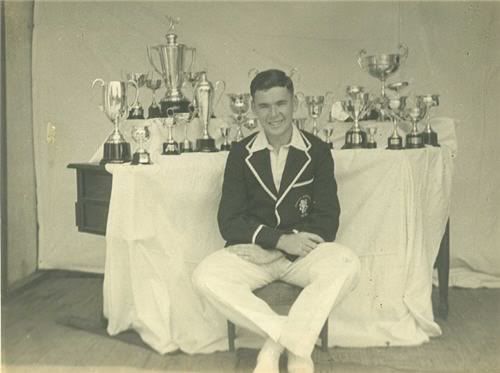
By 1936, aged 15 he was playing A Grade tennis against men in their 30’s. He was soon earmarked in junior development programmes and joined a junior coaching clinic conducted by Pat O’Hara Wood (1920’s champion player and doubles specialist) along with Bill Sidwell and others. Dinny quotes from his book “Set Points” that he felt he wasted the 4 weeks in Melbourne because Pat wasn’t checking grips and offered more advice than practical instruction.  Upon checking this coaching lesson with Bill Sidwell, Bill actually recalls learning a lot because the advice given was about strategy and game play which Bill maintains today did greatly assist him to become a very successful doubles player in his own right.  In an article written by Pat O’Hara Wood, about the juniors clinic he picked Dinny as having great promise, so perhaps the grip and shot making techniques Dinny was hoping to improve were not evidently in need of major repair.  But that was Dinny’s point. Because he had had no formal coaching, he was looking for some fundamental methods to help him improve his shot making. He was particularly conscious of his backhand which he considered his weakness and had to work hard on developing his all round game. Two players who picked up on Dinny’s high bounce backhand weakness were Viv McGrath and Bill Sidwell so he rarely defeated them. Yet, against John Bromwich, Dinny often won, where Bill Sidwell found Bromwich very hard to beat, which is telling about how different styles and strategies can work against some players and not others.

Dinny, like Bill commenced work with Slazengers where youngsters were given the opportunity to develop as players through exhibitions and tournaments at which company products were also promoted. In 1938, Dinny and Bill were attempting to get to the Wimbledon Junior championships, however the ALTA decided upon a policy of trying to prevent “burn-outs” in juniors and so what would have been a 4 month trip was cancelled.

In 1943 Dinny married Mavis,coincidentally on exactly the same day that Colin Long married Florence, so the couples didn’t just have tennis as a common bond and they all remained life long close friends.

In 1946, Dinny came runner up to Bromwich in theAustralian Championships 5-7,6-3,7-5,3-6,6-2, although in 1945, Pails beatBromwich in the NSW Championships 6-1,6-2,6-4. Dinny had a really good year in 1946, having won theManly Seaside Championships, County of Cumberland, Western SuburbsChampionships, Northern Suburbs HC and West Australian Championships.

Dinny played at (post-war) Wimbledon in 1946. Amazingly at 25, Dinnyhad never played a major competitive match against a noted overseas player, due to the war years halting most international tournament events. The ALTA weren’t evenintending to send representatives in 1946, but having won many local statetournaments the Western Suburbs Hard Court Association fund raised on behalf of Dinny, as did the Catholic Association for Geoff Brown.   You need to understand that the ALTA and the English LTA worked hand in hand to permit amateurs to travel only if confirmed by their respective country tennis associations. Sometimes they travelled privately, funding their own expenses, although most often expenses were paid for by the National association. In the case of Dinny and Geoff, the ALTA had to be approached to sanction their right to receive and use the funds raised to enter the Wimbledon tournament.

Despite the political difficulties, the decision to go was fully justified.  Although in good form at home, Dinny found the experience at Wimbledon psychologically difficult due to the high expectations on him from both the media and well wishers at home, most of whom were predicting him as a real chance for taking the title. He also admitted being over anxious to do well which is hardly surprising. Despite not showing the form he had hoped, he did make the singles quarter finals to be beaten by the eventual winner Yvon Petra (Geoff Brown made the final) and in doubles he and Geoff lost the grand final to Kramer and Tom Brown. All in all a great result.  During this first Wimbledon trip an incident may have rattled Dinny immediately prior to his match against Petra. Normally reviewing the tennis court he was meant to play on pre-match to gain some pre-knowledge on wind, light and court conditions, on this day he had missed the underground train to the stadium and became only the second player in history to be late for a match (Susanne Lenglen was the other). On his arrival 8 minutes late he was chastised by  the organising committee and there was conjecture over whether he should forfeit the match. After the rebuke he was permitted to play but what a distraction on the major stage.

1946 also saw Australia defending the Davis Cup for the first time without New Zealand, having won the pre war challenge in 1939 Challenge Round as Australia (only) in the USA. The team comprised Pails, Quist and Bromwich.  The Quist and Bromwich selection was a surprise choice, largely due to the LTAA’s belief that Quist and Bromwich who had helped win the cup in 1939 should help defend it. While Brown had lost to Petra in the Wimbledon finals, Dinny had  had asensational year in 1946 beating many of the top names including Brownand was included in the team on that basis. Meanwhile, the support squad comprising Sidwell, Brown, Long and Brodie could argue better recent performances especially compared to the ageing Quist, hence there were some quarters that felt the team was not as strong as it should have been.  Dinny’s involvement in the Australian 1946 team was well deserved,however the English Davis Cup selectors also had their eye on Dinny fortheir 1946 team, since he was English born. Rejected out of order by the UK committee chairman on the basis that we (they) would  “upset the entire tennis world”,  Pails was quoted as being flattered but unequivocally pleased to be joining the Australian team later in the year.

At the Menzies Hotel in Melbourne where they practised in the weeks leading up to the Sydney Davis Cup Challenge round against the USA,  Australian team officials strictly enforced a healthy three big meals per day regime and Dinny felt like a “prize porker” gaining 7lbs to be the heaviest he had ever been.  In his match against Kramer he only felt his serve improved due to the extra weight behind it and he aced Kramer many times, however he couldn’t keep pace in the rallies. The team managed by Gerald Patterson lost 5-0.

After the Davis Cup loss, Dinny joined the Americans on an Australian exhibition match tour and found the regular, top international play sharpened up his game immensely.  Typically, exhibition matches required constant travel and the boys had a lucky escape from car roll over accident in which only minor injuries were sustained.  Dinny in top form and having lost the weight gained pre the Davis Cup, beat USA #2 Tom Brown in the semis of the 1947 Australian Championships and John Bromwich in the finals to take his only major title in another grueling 5 set final 4-6, 6-4, 3-6, 7-5, 8-6

In 1947, the Davis Cup team comprised Dinny,Colin Long, Geoff Brown and John Bromwich. From Dinny’s perspective he felt the team unity was an issue with he and Colin travelling to the USA by plane and Geoff and John travelling by boat.  Bromwich had always disliked the thought of flying and had travelled by boat always. While critical of Bromwichs attitude to what matches he would and wouldn’t play and the way administrators pandered to him, Dinny was very impressed with the winning performance of Bromwich and Long against Kramer and Schroeder in the challenge round.  Dinny played Kramer in the first match and was beaten 6-1,6-1,6-2 , Bromwich lost to Schroeder.  Although, the strategy was to win the doubles and the two singles against Schroeder losing the first two singles and winning the doubles was going to leave them a difficult task.  In the second singles match Dinny had a match point against Schroeder but couldn’t capitalise so the Australians ended up losing 4-1.1947 Davis Cup Team
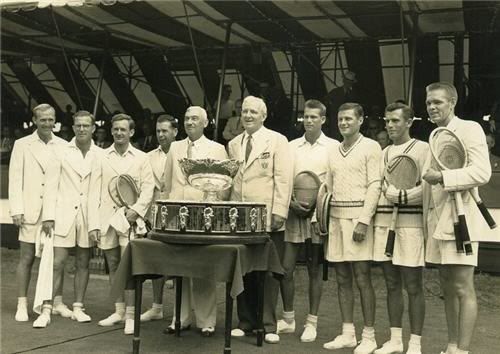
After the Davis Cup Dinny, aware that Kramer was going to turn professional, entered discussions with Kramer to join him on the pro circuit.  Foreseeing an average career path as a junior employee within a sporting goods company that would only last while he was playing top class tennis, he decided to join. This was the beginning of an entirely new era between professional touring players and amateurs, and Dinny led the way which many other top Australian players would follow. Naturally he was concerned about joining so young for it meant being prevented from playing in major tournaments, but he weighed up the options in favour of the professionals and his family’s financial future.

His leaving Australia for the first tour in the USA was clandestine, for he was fearful that his LTAA contract, still in force after arrived home from the Davis Cup, could prevent him from joining Kramer in the USA. Rather than risk the fight, he decided to book his November flight out under an assumed name ” Billy Jones”. With a sense of being a criminal his true identity was uncovered by customs officials checking his paperwork. Although, he had taken only one sporting writer for the Sydney Morning Herald into his confidence, someone rang the press who raced to the airport and next day there were photos of him sitting on the plane prior to departure. Dinny’s decision caused controversy in Australian tennis circles, yet Norman Brookes, in charge of the LTAA, simply wished Dinny well.  There had been rumours from October in the press about Dinny contemplating turning professional and in November Brookes was even quoted as being opposed to holding Dinny to his contract should he decide to turn pro.

The first US professional tennis troupe comprised Bobby Riggs, Pancho Segura, Jack Kramer and Dinny, and was managed by Jack Harris. The first match was played on December 26th 1947 at Madison Square Garden on a freezing night, yet with public transport halted due to heavy snowfalls, 16,000 people braved the icy conditions to watch the matches.  Segura and Pails were the support act and after winning the first set 15-13 (Dinny won) their match was called off so Kramer and Riggs could play. In the first 30 days they played 21 matches travelling through out the night by road and rail.  It was a very successful tour.

From the US they travelled to South America to Segura’s home.  In one particular match against Segura, Dinny did not receive any crowd support for any point well played save for one lone woman who, as it happened, was an Australian married to the US Consul based in Guayaquil. He beat Segura in straight sets, a lonely experience in front of a 6000 strong, very biased crowd. As a wage while in the US both Pails and Segura were being paid $300 per week from which they paid their own travelling expenses. Outside the US tours they were to pick up10% a piece. The tour promoter Jack Harris fell out of favor with theplayers and they decided to manage future tours themselves. In the new deal, after travelling expenses were deducted from gross proceeds, Dinny and Segura ended up with 17.5% each, Riggs 25% and Kramer 40% so a much better deal all round.

They decided to tour Australia in October 1948 and Dinny flew home to organise the event which saw them play in all the major cities and large country centres. Spectator reaction was not as good as in the USA mainly because people didn’t believe the matches were being played on a “Fair Dinkum” level, yet reputations and pride were at stake (plus winning also had financial implications in future tour negotiations). During the Australian tour Kramer started the concept of running junior tennis clinics pre the matches to explain the strokes and techniques, so there may be many tennis fans out there still who might recall meeting the first Australian pro tour players with fond memories.

In 1949, they travelled the UK and Dinny tells of his best tennis experience not just on the specially laid wooden court at Wembley stadium, but for the fact that the night featured an orchestra playing before the event and between sets while dinner was served to the guests. The tour continued throughout Europe.

He moved into full time coaching throughout 1950 starting a clinic at Holmescourt Tennis Courts in Sydney and was employed to train with visiting Davis Cup squads.   In 1951, managed by Charlie Sam, Dinny organised an Australia New Zealand pro tour comprising himself, Don Budge, Pancho Gonzales and Frank Parker.

Although, Dinny started with Slazenger, he stayed only a short while before going to Spalding. In 1951, Dunlop introduced a “Dinny Pails” International Model Maxply and later he also joined Hedleys who produced one of the only locally made player photo decal racquets.
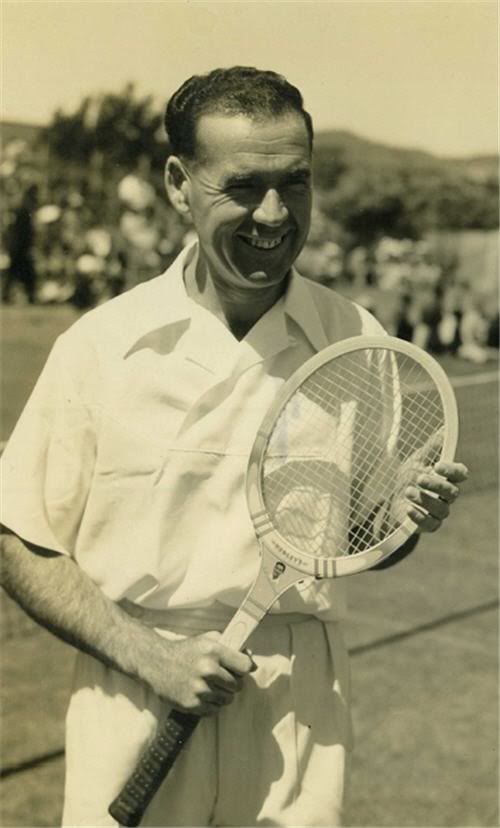
 

Dinny Pails

Dinny with the Hedley photo decal racquet


While attending the 1951 Linton Cup tournament at Kooyong, Dinny wrote a newspaper article expressing great interest in two young 15 year olds lads from Sydney, Lew Hoad and Ken Rosewall. He said that these two were better at aged 15 than any former Davis Cup players he could recall, so a telling prediction.  His media exposure was also enhanced by a regular tennis spot on radio station 2FC in Sydney.

In 1953, Dinny travelled to Italy all expenses paid, to train the Italian Davis Cup team,so he certainly enjoyed seeing the World in his career.  One of my colleagues tells the story of Dinny playing in Rome wearing a Scotch College (Melbourne) tennis jumper he purchased in Melbourne prior to leaving. When quizzed that my friend couldn’t recall Dinny at Scotch he had to advise that it was simply a lovely tennis jumper. I gather badging oneself in school colours wasn’t the done thing in those days. Fancy being ‘caught out’ miles away in Rome.

On the home front Dinny, wrote newspaper articles regularly for the Argus.  In 1953, he started to publicly promote pro tennis in a polictical battle with the LTAA. You can imagine the Norman Brookes raised eyebrows when Dinny’s  headline ” The LTAA is out to kill pro tennis” hit the news stands.  The issues related to revenue splitting between the club and pro’s and venue club member entitlements to free or discounted tickets. Often, the pros ended up playing at velodromes and other non traditional venues.

Also reaching the papers in 1953 was the public desire for a “tennis prize fight” between Pails and Frank Sedgman who had also turned professional and was playing the US tour with Kramer. Frank’s response to news reports that Dinny was keen for the challenge was “I’ll accept that when I get a chance and if I can’t beat Dinny then I will give up”!

They both met on a 1953 European pro tour and without all the scores, we think Frank took the honour and again in November 1954 they met in Perth at Australia’s first Professional Tennis Singles Championship, conducted at Subiaco Oval, West Australia.  The tournament included local player / organiser Max Bonner, Ken McGregor, Frank Sedgman, Dinny, Richard Gonzales and Pancho Segura. Frank one the event, defeating Dinny along the way 6-3,6-3, yet Dinny and Sedgman both beat Gonzales which was no mean feat.

Dinny continued to play tennis into the late 1960’s and also worked as a coach including a Nestle sponsored junior development programme.

Dinny aged only 65, died in 1986.

Although many tennis fans will know little about Dinny, if he hadn’t turned pro so early in his career he may well have won quite a few Australian titles. His skill and talent as a self taught player certainly took him to the heights of Kramer, Gonzales & Segura and co. and deserves a prominent place in Australian Tennis.

As a quick “Dinny” tip to players suffering from blisters on the feet, he used Friars Balsam pre match and found that he never experienced the blisters again.

Thanks to Margaret, Dinny’s daughter for assisting with photos and stories.
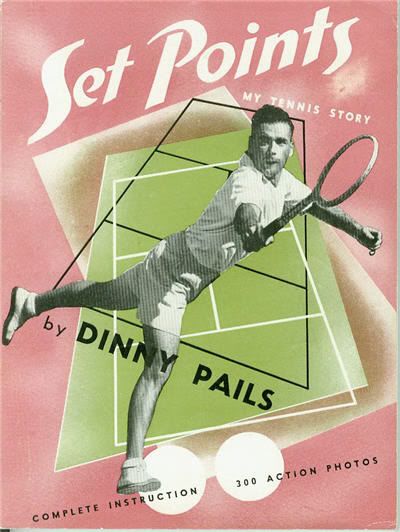
 

Dinny Pails Set Points

Dinny’s book Set Points, My Tennis Story.
Currawong Publishing 1952


Picturesque Tennis Courts

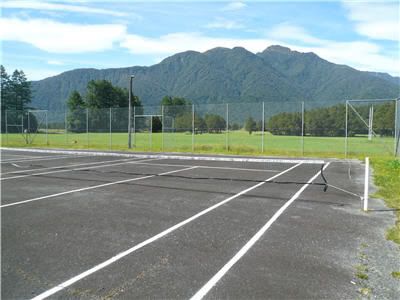
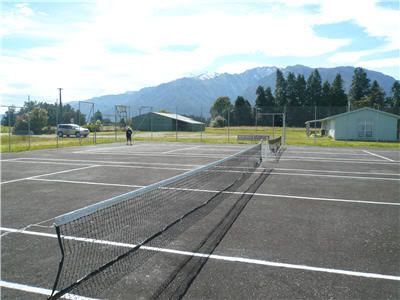
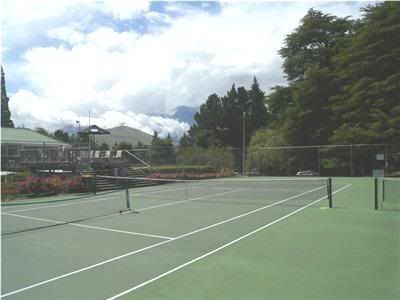
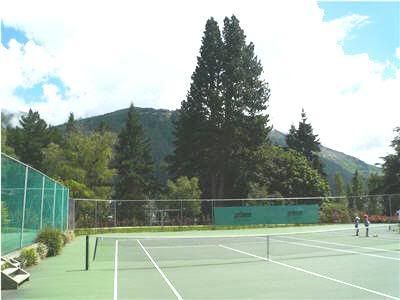
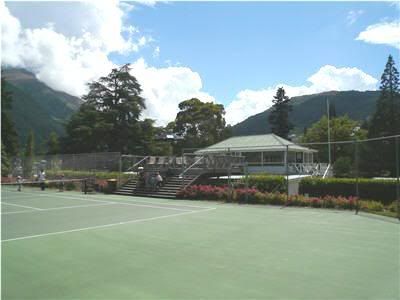
Before heading off on holiday around spectacular New Zealand, I started to think about the wonderful vistas that some lucky tennis players must enjoy. Obviously, there will be some sensational private courts but equally there will be some terrific club courts.  So from this point I am very keen to receive photos of your favourite tennis courts with a view.  This is a global search, and yes we know about the heli-pad court in Dubai!!

Now, back in New Zealand, what better place to start than Whataroa and Queenstown both located in the South Island.  We didn’t make it to Nelson, but I hope some of our New Zealand comrades will be able to organise some additional pics.  Queenstown is really an amazing ski resort area with plenty of activities.

I don’t think these photos do justice to actually being there, but believe me the surrounds are very picturesque.   Enjoy………and can’t wait to see some court pics from Switzerland…..Rod

Whataroa Tennis Courts
Queenstown Tennis Courts

Tennis Trophies and Medals

Apart from the sheer history and possibly the value of silver, there are many collectors who look for tennis trophies. These comprise both tournament wins and participation mementos such as those given to Davis Cup players.

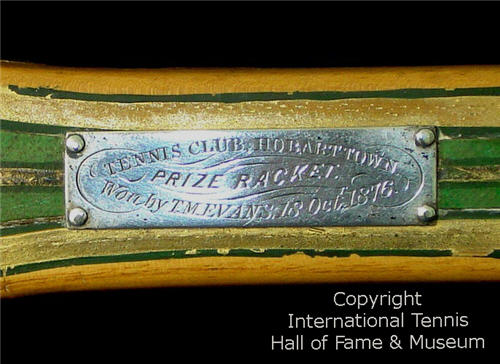
This section contains a myriad of tennis “awards” such as trophy racquets and cups. While predominantly lawn tennis we have included some elements from Royal Tennis which commenced in Australia when the first court and UK tennis professional arrived in 1875 at Hobart, Tasmania.

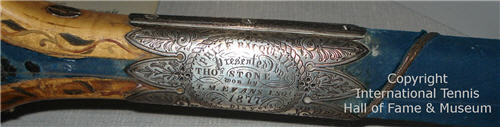
These racquets were awarded to the first Royal Tennis club champion in 1876 & 1877.  They are both in the collection held by the International Tennis Hall of Fame & Museum who kindly gave us permission to use these shots. You will note the elaborate work on the second racquet and this practice moved to Lawn Tennis as well.

Lack, Rodney (66-3-1_inscripaaa

Both of these racquets were the traditional lopsided design first used also in Lawn Tennis.

Lack, Rodney (66-3-2_inscrip) cropped aaa

P2190006bbb

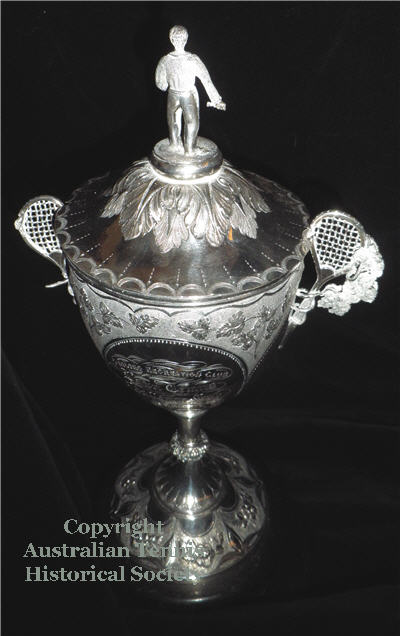
The trophy above comes from 1880 and must be one of the earliest tennis trophies in existence today. The event was conducted by the Geelong Recreation Club and titled the Lawn Tennis Challenge Cup.  Players from Melbourne’s Cricket Club (MCC) traveled down to win both of the 1880 bi-annual tournaments. Francis Highett, won this trophy in October 1880 (the second winner) and again in 1881.  This must have entitled him to keep the trophy for their are no other names other than his and the first winner W. Officer. Francis went onto win the second Victorian Championships a few weeks later which, in actual fact could well be considered the first Australian Tennis Tournament widely advertised event to players in all of the colonies.  Thanks to the Highett family for contacting Tennis History and for taking such good care of the trophy for all these years.  Note the racquets are tilt top styles of the very early game.


strathfield trophy 1892


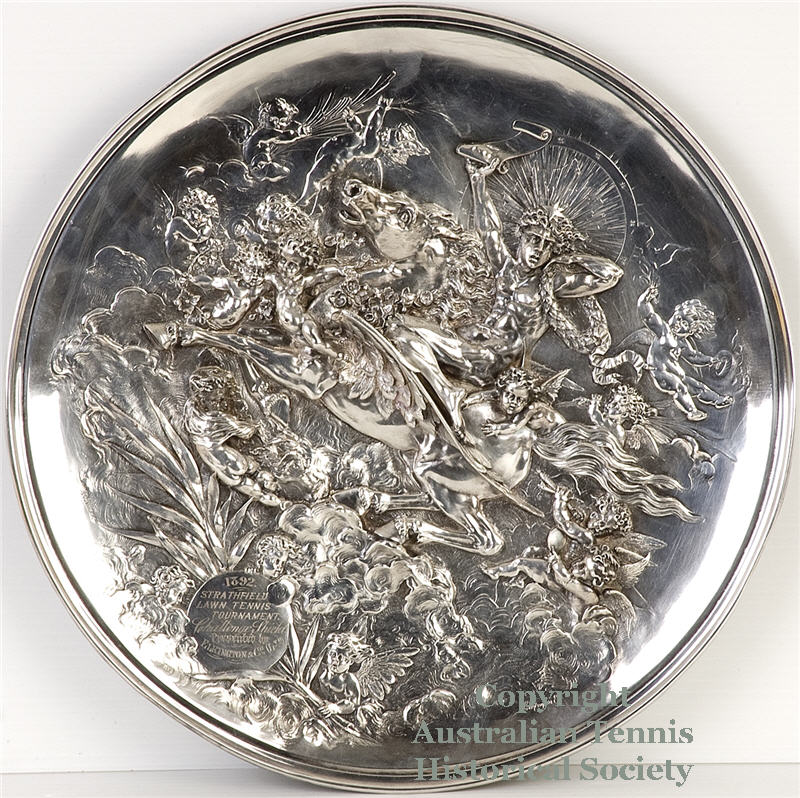
Above is a beautiful 3D silver plate produced in Sydney by Elkington & Co. for the 1892 Strathfield Lawn Tennis Challenge.  This tournament was the preeminent grass court event in Australia and was keenly contested. The winner we presume was Dudley Webb who won the NSW Championships a few times in this era. Tennis Australia now own this plate and to see it on display will be a treat.

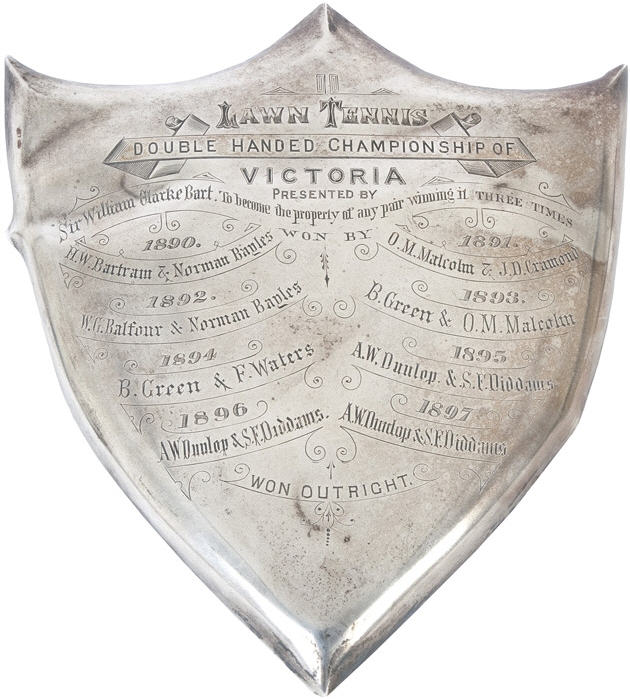
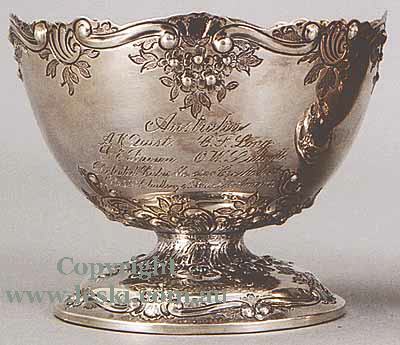
Prior to the Australasian Championships which commenced in 1905, the Colonial State Championships linked to Intercolonial events were the preeminent tournaments.  This particular trophy was won by Alf Dunlop and Stanley Diddams three times in a row from1895-1897 permitting them to retain, or retire the trophy into their possession.  In total, Alf won the Doubles 5 times with Diddams and twice with Norman Brookes and Rodney Heath.  He won the singles twice also.  In relation to major events, Alf went on to play Davis Cup in 1905 as Australasian captain, 1911 and 1912. He won the Australasian Doubles in 1908 with USA Davis Cup foe F.B. Alexander.  Other notable names on this trophy are Ben Green who was one of the Victoria’s great singles /doubles players of this era. See Intercolonial tennis for more stories.

Tennis Victorian Doubles Championships 1897


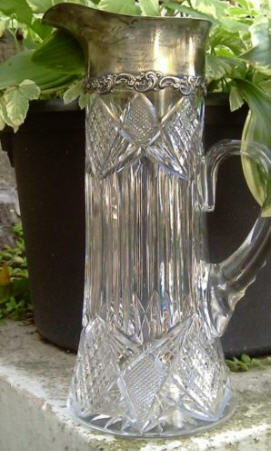
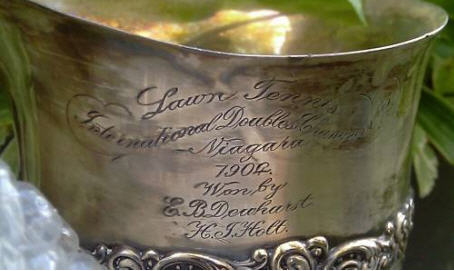
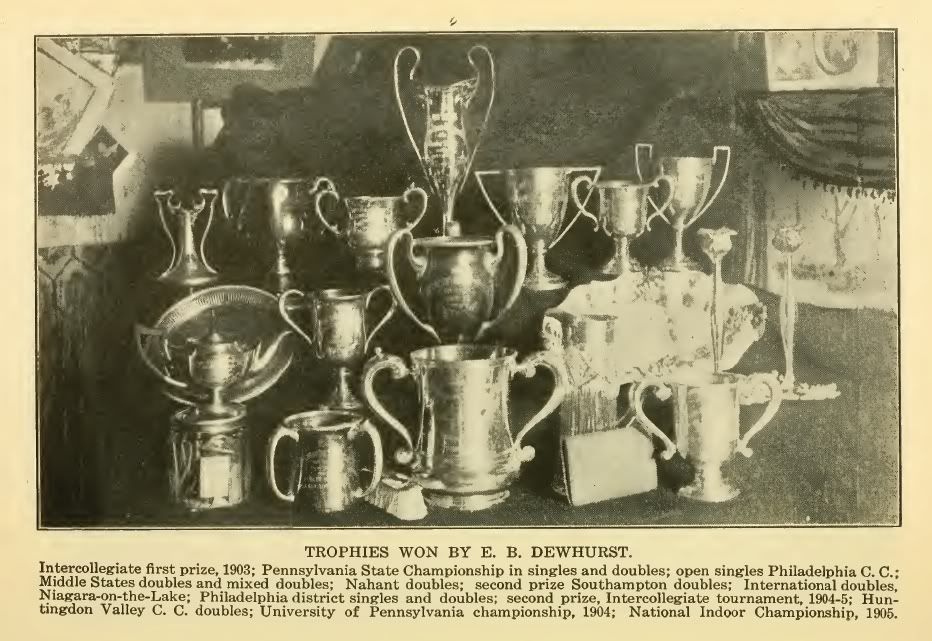
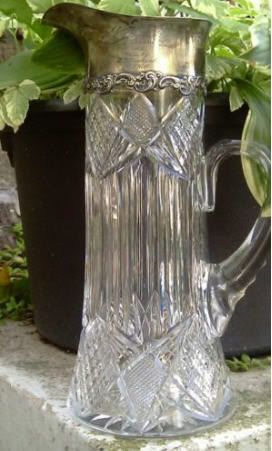
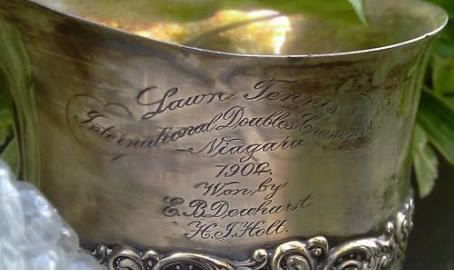
Over in the USA in 1903, 1904, 1905  Australian Edward Bury Dewhurst was studying to become a dentist, but also played tennis for the University of Pennsylvania.  He won many prestigious events and this is one his trophies from 1904.

Niagara Trophy 1904 $5000 US 2010 1

Niagara Trophy 1904 $5000 US 2010 2

TROPHIES_1919RUNNERUP

TROPHIES_1919DOUBLESMEDAL


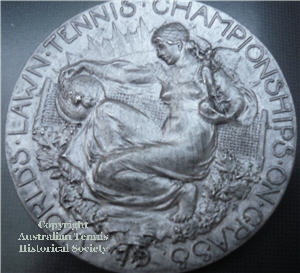
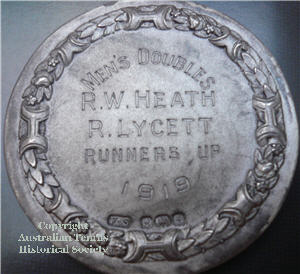
This medal is from Wimbledon 1919.  How many of you of heard of these great Australian players? Not many, but the story is as good as any which could be told by Todd Woodbridge and Mark Woodforde.

You can read more about Randolph Lycett under his own profile article. Rodney Heath won the very first Australian Championships in 1905.

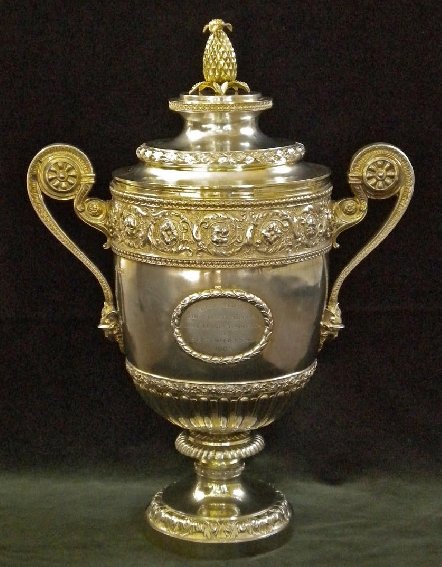
In 1905 the UK Slazenger company donated the “Slazenger Cup” to become the major trophy for the inaugural Australian Open to be held in 1905.  According to the 1933 Australian Championship programme, the winner of the men’s singles was to receive ” The Anthony Wilding Memorial medal and a replica of the “The Sun Challenge cup”. The winner of this event will have the right to hold for one year the Cup presented by the “The Sun” Newspaper Co., which shall become the property of any player winning it three times in succession , or five times in all.”

In actual fact “The Sun”challenge cup was the donated original Slazenger trophy. This is confirmed in the 1928 Australian Championship programme ” The winner’s name will be engraved on the Cup, which was presented to the Lawn Tennis Association of Australasia as a Perpetual Trophy by Messrs. Slazenger Ltd., in 1905″

The Slazenger Cup was designed along very similar lines to that of the Men’s trophy from Wimbledon which is perhaps a tad strange.

Australasian Tennis Tropy 1905-1933 full shot


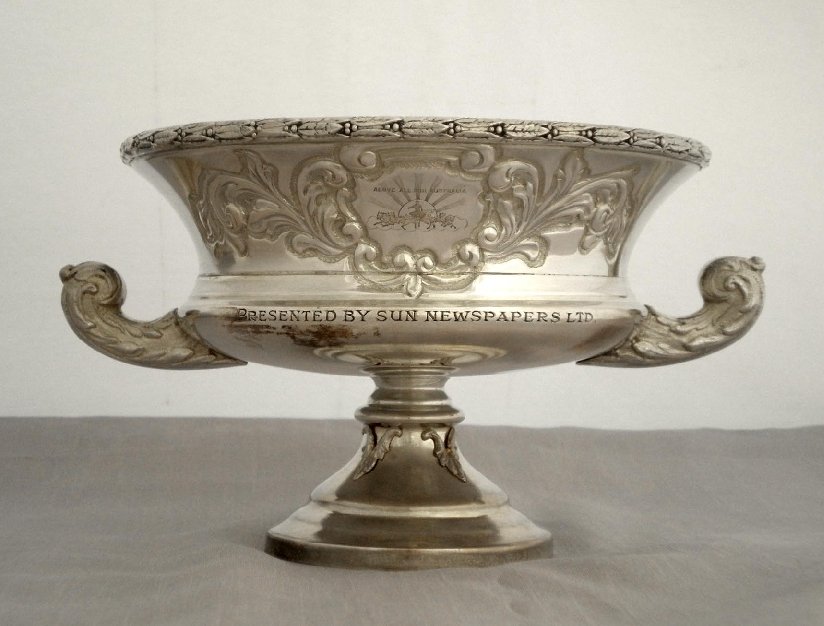
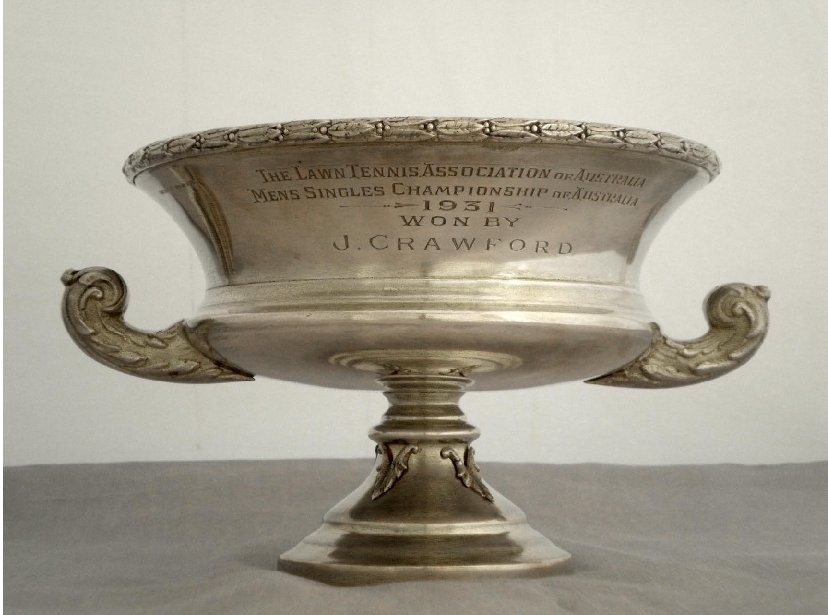
Jack Crawford’s win the Australian singles title in 1933 was the third straight win, so the trophy was awarded to him. Only in 2013, 8o years after being awarded to Jack, this trophy amazingly has been rediscovered having gone missing 30 years ago when Jack sold it off owing to a lack of funds . The pictures below show the individual trophy won in 1931. “The Sun Challenge Cup”. With the main Slazenger trophy now in Jack’s private care,  the tennis association introduced the “Norman Brookes” challenge cup without the opportunity of winning it outright, hence this trophy remains today.

Jack Crawford 1931 Sun Cup 1

Jack Crawford 1931 Sun Cup 2

The Sun Challenge Cup awarded to individual Men’s championship singles winners appears distorted but is in fact the correct shape.
This was warded to Jack Crawford in 1931

jbrom1

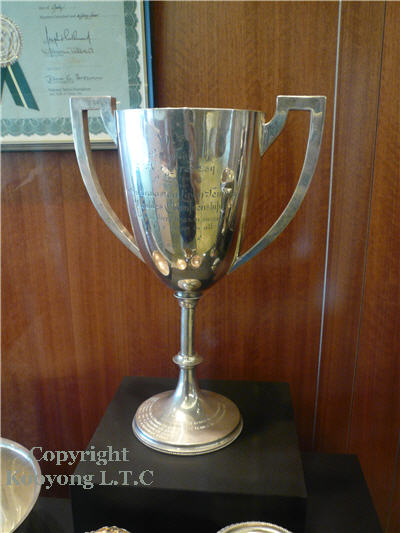
After forming the Australasian Lawn Tennis Association in order to qualify a team into the Davis Cup in 1904, the first National Championships were played in 1905.  Donated by manufacturer F H Ayres, the cup could only be awarded to a doubles players private trophy cabinet if won three times in a row or five times in all.  John Bromwich & Adrian Quist won three times straight in 1938, 1939, 1940, although Adrian had won it in 1936 and 1937 with Don Turnbull.  John and Adrian went onto win 1946-1950 as well in an unbroken, except by WWII, record of 8 straight wins. Photo permission courtesy of Kooyong LTC, Kooyong Foundation and the Bromwich family.

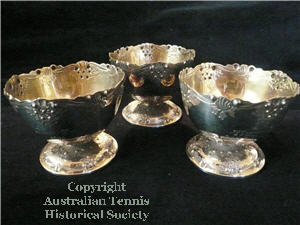
Davis Cup trophies are equally precious.  The small silver cups are given to players who played in the Challenge round of the Davis Cup. Silver to the runners up and gold to the winners.  c late 1940’s three cups, three years of being runners up mainly to the USA.

P1070827

THA 1911 DAVIS CUP

1948 davis cup

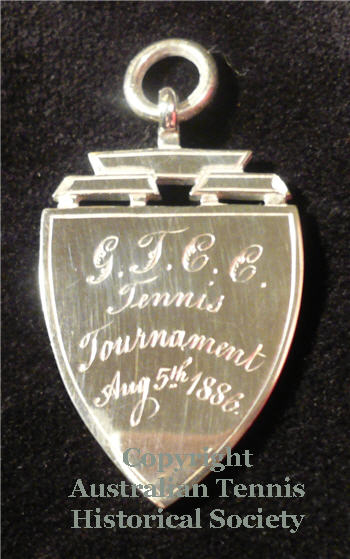
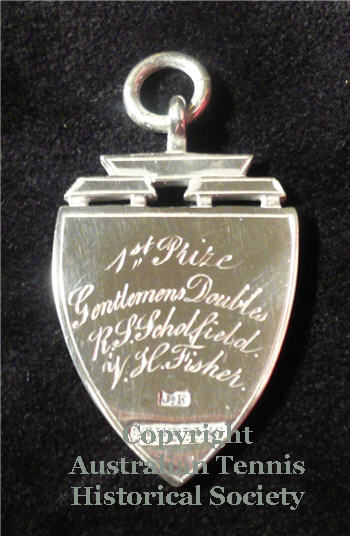
While the above are in the upper echelon of collecting, from the very early days of tennis success in competitions was rewarded with medals and various other trinkets.

These medals were usually given to club champions and they make for an interesting link back to the early days. Who knows, with luck, you might find a recognised player inscribed on the medal or even a medal affixed to a racquet in recognition that the owner was the champion.

P1150070

P1150069


Racquet Stringing

Stringing is an equally fascinating subject given the many patterns tried over the years. The primary strings used were made from the intestines of animals mainly sheep and through the years was known as “cat gut”.
To make a string numerous very fine strips of the stomach lining are twisted and stretched together, then dried and coloured. The techniques used today are the same as back in the 1880’s. Being animal tissue it explains why gut, when wet or placed in humid conditions, can expand and contract to a point where breakages can occur even in storage and frames can be distorted or warped under the immense pressure strings are placed under.

In the 1880’s racquet design for tennis exploded with new shapes, grips and string patterns.

The public was inundated with weird patterns with the promise of more spin, more power, better sweet spots or less breakages.

A sample are presented below.

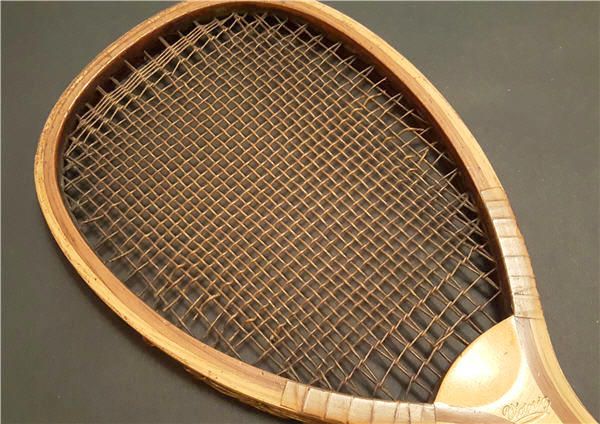
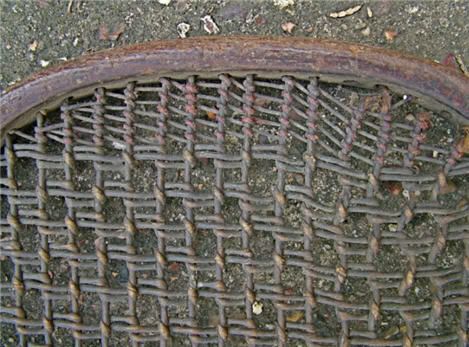
Looped Stringing

Looped Stringing

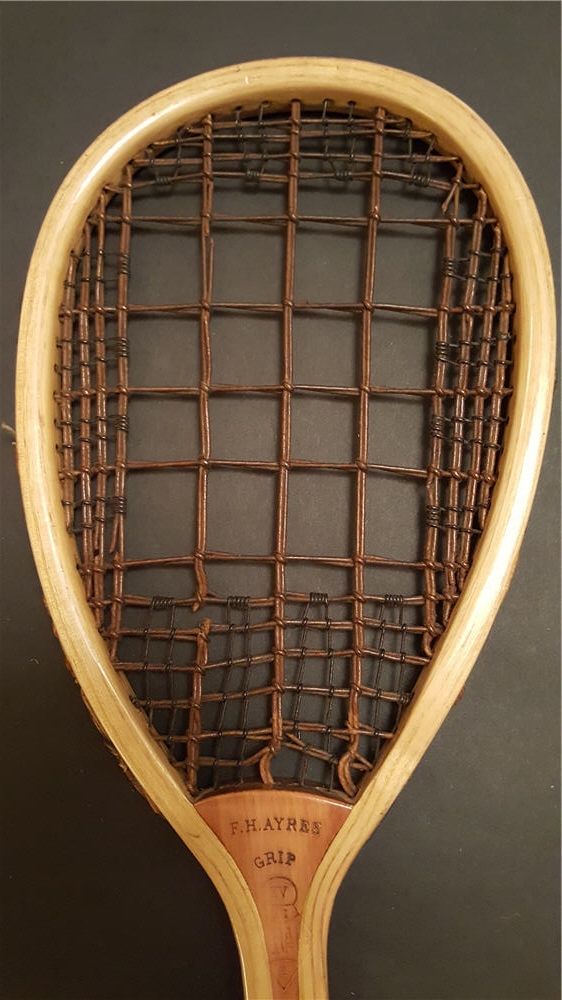
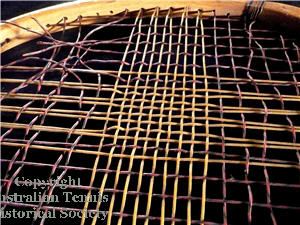
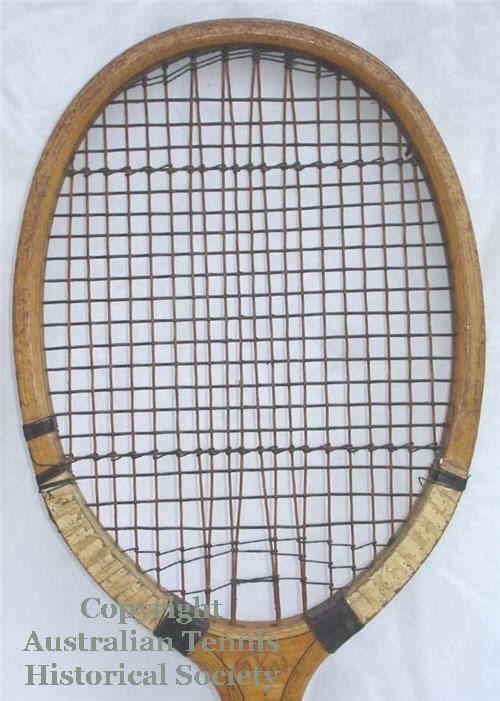
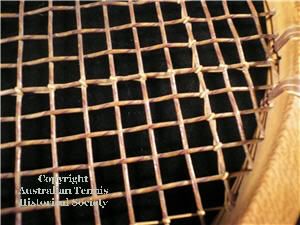
While early strings were made of ‘Gut’ often called cat gut, they were indeed made from animal intestines until the plastics and nylons appeared in the 1940-s-1950’s. Original gut was 1.5mm -2mm thick and often they tried different grades and thicknesses between vertical and cross strings to improve performance. The use of two vertical double strings and different cross strings are visible here with original trebling in place. This a common pattern on early racquets.

The small strings at the top are called ‘Trebling’. The strings wrapped across the mains and crosses, often in a square pattern around the sweet spot is called ‘Purling’.

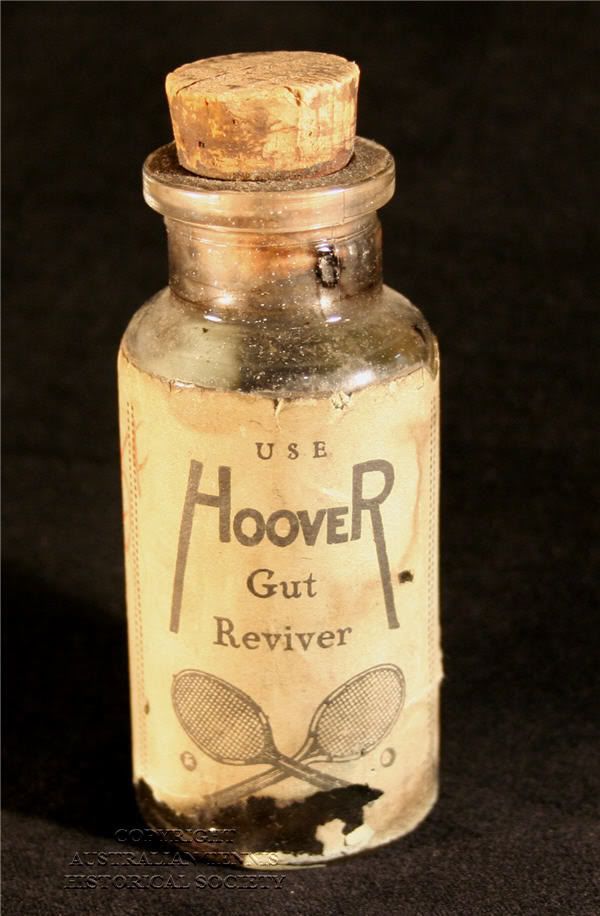
To keep strings in good dry condition was not always easy and one product launched from the mid 1880’s was a product designed to help maintain the strings.  The product as called “GUT REVIVER” and a user would lightly paint the strings with this product acting as a protection from dampness and drying out.

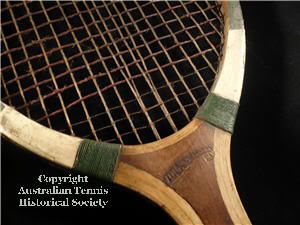
Stringing also changed direction, so to speak, in the 1920’s when the first metal head/wooden handle racquets arrived complete with piano wire stringing. Two well known companies were Birmal Aluminium Co. in the UK who launched an all metal racquet called the ‘Birmal’ followed by a metal wood combination called the ‘Birmal Ace’. Over in the USA, Dayton were very successful with their metal head wood handle products for over 50 years and are very popular with collectors for the variety of head styles and frame colours that became available. The picture below  is a Dayton Flyer with a nice trebling and frame wrap. They were renowned for a wonderful twang when the piano wire made contact with a ball and you can’t imagine how long balls would last.

The stringing below is from an Australian Brewer Centurion. Note the green, double trebling and below this  a patented Godfrey (New York, USA c 1929) pattern which uses two different string types double strung in both the mains and cross strings to form a dense sweet spot. Based on the actual patent drawing the string set is close in overall look but not accurate, yet they may well be original.

The photo below shows the additional double strung mains plus the purling strings.

Close up of purling strings

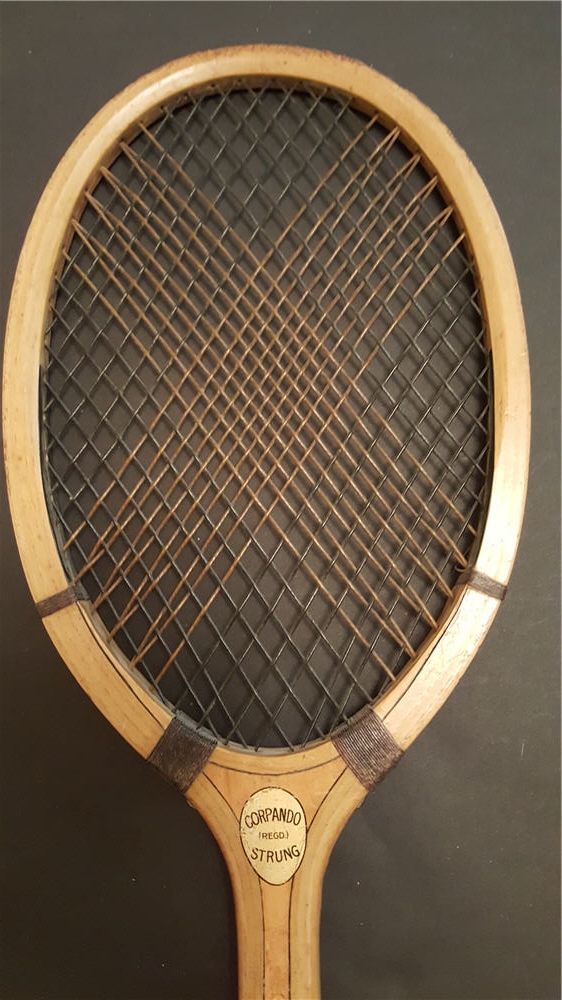
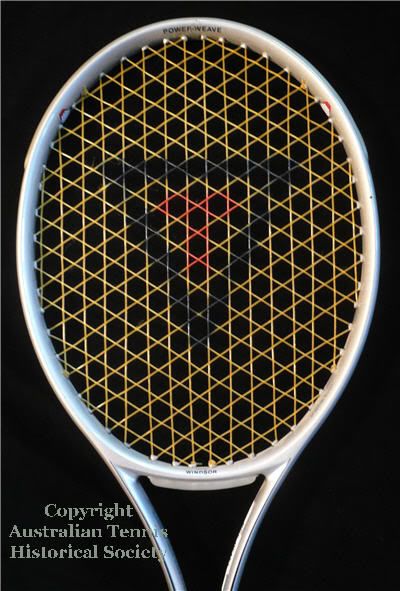
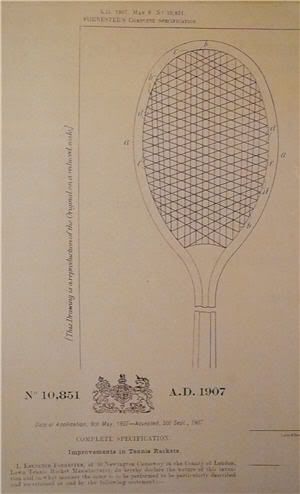
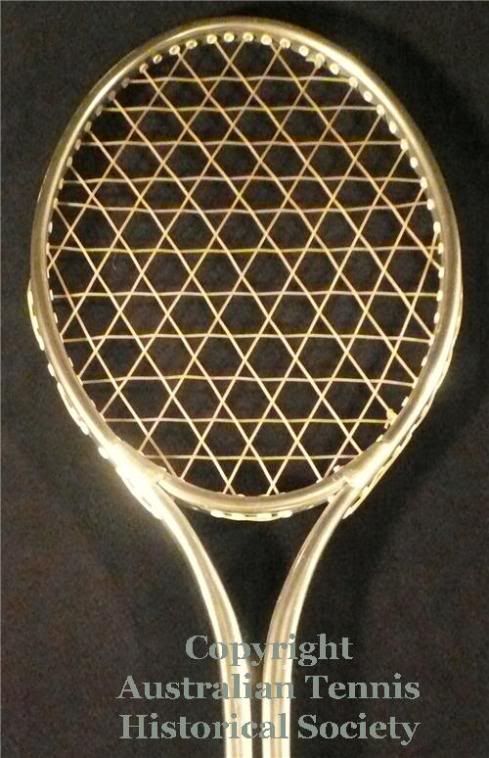
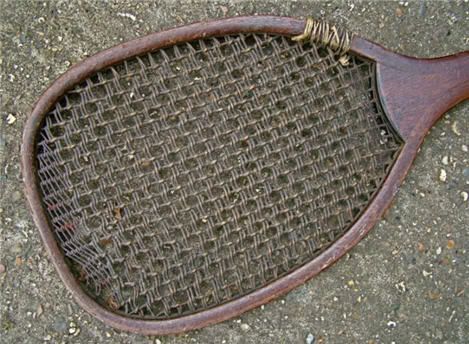
Older style string patterns included diagonals and verticals criss-crossed with diagonals which created a honeycomb style effect. Even today these still appear from time to time and in 2008 we have the recent launch of the ITF approved Power Angle racquets which feature diagonal string patterns. This product comes from the same designer of the Mad Raq stringing pattern that was patented in the early 1990’s. Other desirable diagonal strung racquets include the MacGregor Bergelin, Protagon Diagonal (Germany),  Major Octodiagonal, Geo Star, Aequalis, TAD Davis Top Spin and many from Volkl.

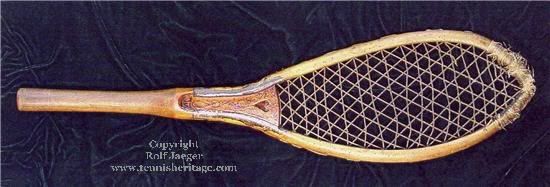
The MADRAQ design is shown below on the left, yet on the right we have a 1907 patent granted to Forrester, courtesy of Siegfried Kuebler’s book. In Jeanne Cherry’s book, ‘Tennis Antiques and Collectibles’ page 34 there is a shot of an equally similar design from 1887 by the Benetfink Co. The photo below these is a very early handmade racquet with diagonal and perpendicular stringing. Photo courtesy of Rolf Jaeger.The actual racquet now resides in Tennis Australia’s Collection.

Wood Tennis Racquet cross strung


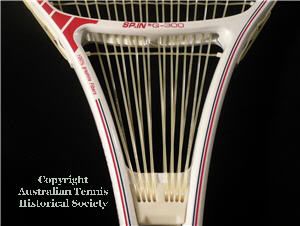
The Sp.in G300/ Roxpro  shows how racquet design has allowed variable string lengths to improve sweet spot performance. Often these designs fall foul of the rules and are either banned or permitted after a review which is apparently what happened to this model.

The mid 70’s metal racquet is a Danlo with a ‘Spider web’ string set up.

A very rare treat is to see the German invented  “spaghetti” stringing system (Vilsbiburger racquets) which was used by Ille Nastase at the Aix-en-Provence tournament in early October 1977 against Vilas. So annoyed at being beaten by this amazing racquet, Vilas lobbied the ITF to have it banned which it promptly was under a ruling that deemed the two layered string pattern was a form of double hitting. The strings as they impact the ball,  slide across the surface to a point where under pressure they spring back delivering an incredible top spin effect, so much so, that on the receiving court the ball would literally bounce over your head.

Read the full story about this German Stringing  Invention from 80stennis.com
The racquets were called Vilsbiburger Tennis Racquets (Spaghetti Strings)
because the white plastic rollers are just like macaroni.

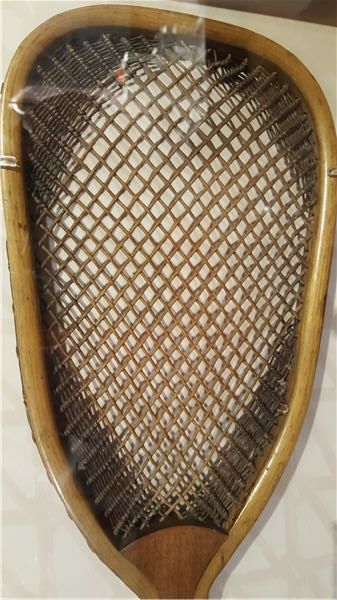
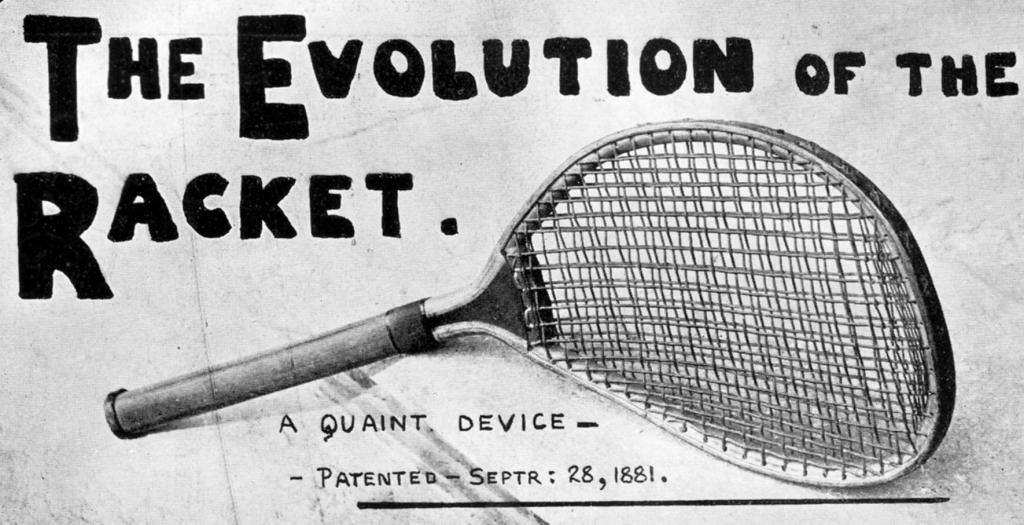
The Blackburne has two full independent sets of strings.
There is no double hitting so it is legal. The gap between the sets is 9mm.
Note that this design is shown in the black and white pic from 1881.
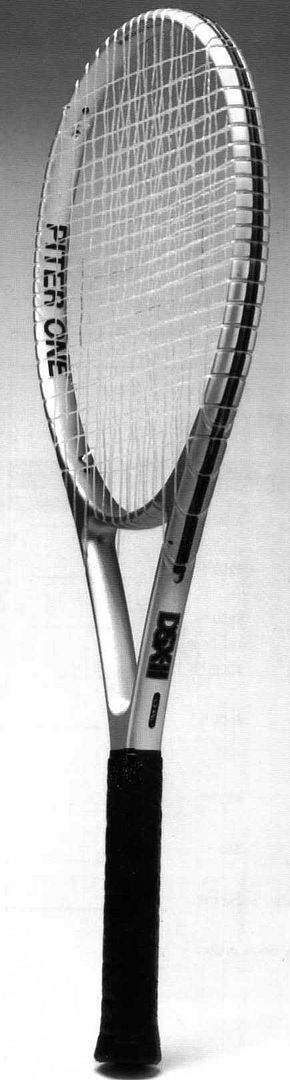
The 2001 racquet below is the DSX 11 which is also doublestrung but with looping strings around the
outside of the frame.
DSX 11 Doublestrung


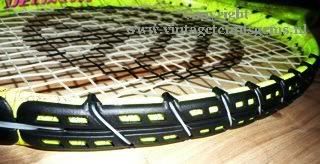
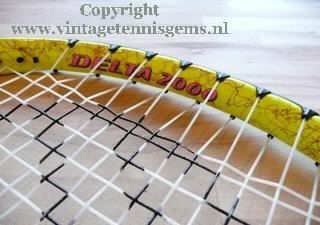
Roxpro Delta 2000


Roxpro Delta 2000

Above  is a Rox Pro Delta 2000 which also features an unusual stringing system.
Photos courtesy of Hans from www.vintagetennisgems.nl

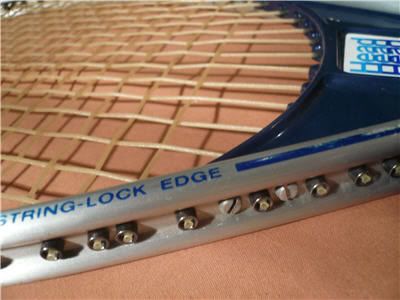
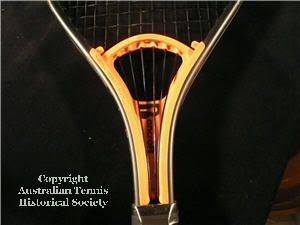
In the early 1980’s, Head marketed this String Lock system which enabled

owners to replace a cross or main as a single short string. No loops here.

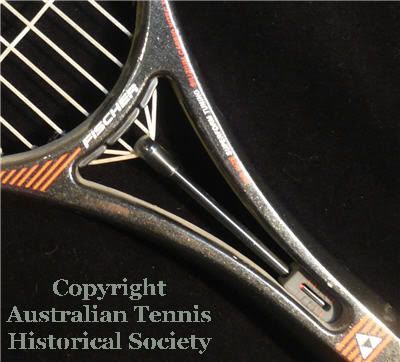
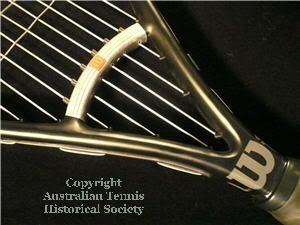
This Fischer Superform Tuning Racquet allows the player to adjust string
tension by using a key lock located in the butt cap.

Other examples of Long main stringing by Wilson and Bancroft (Markhill Germany)

It again is interesting to note the new 2010 Prince long string models like the Wilson are on
the market once more.

Micro Stringing

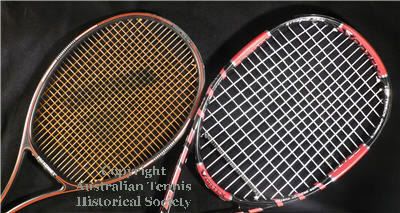
At the very top of this article, you will see how using double stinging in the main and cross strings produces a very tight stringing pattern.  In 1985, Pro Kennex produced a range of Micro Stringing racquets. This one is called the MICRO ACE. This pattern is 28 x 22 compared to the newly released Vortex Extra Spin 14 x16.

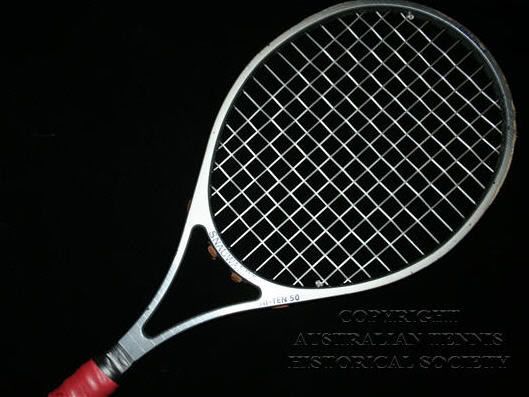
Snauwaert produced this amazing open strung racquet in the late 1980’s early 1990’s.

It is the Hi-Ten 50, graphite model.  The 16 x  12 strings are 1.85mm thick and finding replacement strings is very hard. Apparently whipper snipper grass cutting cord will give the visual effect.


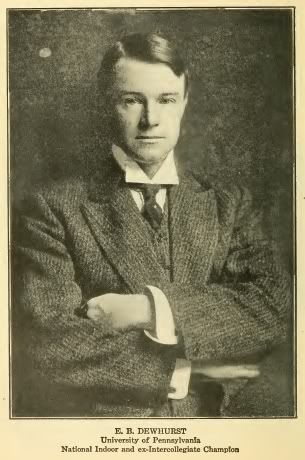
Edward Bury Dewhurst

In the early days of Australian Tennis internationally, much of the focus has centred on performances of our players in England. Most noteworthy of this time were Norman Brookes, Tony Wilding (NZ), Rodney Heath, Alf Dunlop and others. From their arrival in 1905 to play Wimbledon and then the Davis Cup, their impact was significant over the next 8 years.

E B Dewhurst

In no way as dramatic, yet still significant, on the other side of the globe in the USA, another lone Australian was also having a noteworthy impact on the game.

Edward Bury Dewhurst was born in Tamworth NSW in 1870. At aged 23, in 1893, he commenced playing with the NSW team against Victoria in the Intercolonial contests and became quite a formidable player. In one notable match he defeated Victorian player Mr. Green who had played in 12 Intercolonial tournaments undefeated until being beaten by Dewhurst in 1895.

Overall he played non consecutively in these prestigious matches from 1893 to 1897 against Victoria and in 1902 against Queensland.

In local tournaments he won the NSW Doubles Championships in 1898 with D.Webb and 1900 with A.Curtis. He also won the Strathfield NSW Metropolitan Championships, singles in 1895 and doubles in 1895, 1897 and 1902.

Circa mid 1903, Edward left Australia for the University of Pennsylvania USA to undertake a tertiary course in Dentistry.

In America, Tennis was also developing quickly and the main events of the time were the Davis Cup which started in 1900, the US Championships which had begun in 1881, the National Intercollegiate Championships which started in 1883 and the USLTA National Indoor Championships which began in 1898.

Representing Pennsylvania University, Edward won the Intercollegiate Singles title in 1903, came runner up in 1904 and won again in 1905 along with the Doubles title playing with H.B.Register. He was team captain in these years and the first Uni. of Penn. winner of the intercollegiate title. The local papers felt that while his performance was an excellent result they were very interested in how Australian tennis was progressing against the USA’s finest players. W. Clothier the current title holder was not able to play so this comparison remained unanswered for the time being. Later Dewhurst did meet Clothier in the 1904 US National Championships and was beaten in the 3rd round.

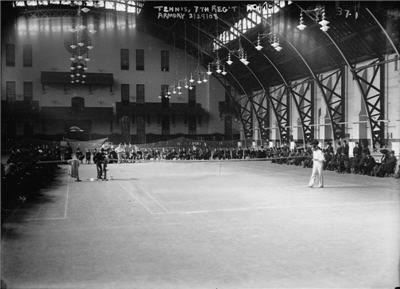
Perhaps his greatest achievement was winning the 1905 National Indoor Championships when he defeated the reigning champion of the previous two years, Wylie Grant 6-3, 8-6, 6-4. The event was played on board courts at the Seventh Regiment Armory and although in relatively poor light, Dewhurst managed to win by returning the serves he could, keeping the ball low and at the feet of Grant. Grant had a big serve and on wood courts the ball would fly through very quickly hence he was aced quite a few times.

E B Dewhurst

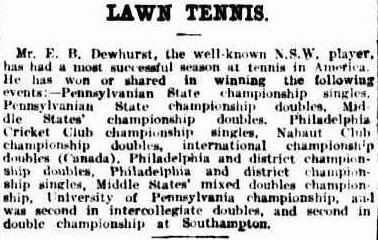
In addition, he also won the Pennsylvania State Championships 1904, 1905, 1908 and Maryland State Championships in 1906 and 1907. The above photo from the 1905 Spalding Lawn Tennis Annual shows what a great year he had in many tournaments.

The Niagara trophy in the display above looks like this in real life.

Edward played was successful at the US Championships as well, reaching the Mixed Doubles final in 1905 with Elisabeth Moore to be runners up and then winners in 1906 partnering with Sarah Coffin. Interestingly, when attempting to pinpoint the first Australian to win “a major” outside of the Australasian championships which commenced in 1905,  Edwards win in 1906 gives him this title.  Norman Brookes did win the Wimbledon  All Comers event in 1905 but lost in the Challenge round for the title.  He did however win all three Wimbledon events in 1907.

Dewhurst Niagara Trophy

Dewhurst Niagara Trophy

The local SMH reported his results in 1905.

In 1906 he was ranked in the USA top 10 at #9.

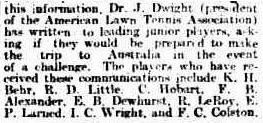
In 1908 with the Davis Cup in Australia and USA leading players Beals Wright and W. Larned expressing a desire to withdraw, being quite tired of International tennis, Dwight Davis was keen to establish a younger squad which also included an invitation to Dewhurst.

The US ended up sending Beals Wright and Fred Alexander to play Wilding and Brookes in what was an amazing challenge.

Edward was highly regarded on the subject of tennis techniques and strategies. In 1910 he published a book titled “The Science of Lawn Tennis” and participated in providing comments for the quite famous book “Methods and Players of Modern Lawn Tennis” published in 1915.

He was also quoted in US papers providing specialist commentary regarding the Australian Davis Cup Teams progressing to the Challenge rounds, often against the US.

According to the New York Times in 1910 Edward was forced out of the top ranks due some form of blood posioning disease. He stayed and lived in America practicing Dentistry and died in February 1941 aged 70.

He was inducted into the University of Pennsylavnia Tennis Hall of Fame along with two other well known tennis players Wallace Ford Johnson and William Tatem “Big Bill” Tilden.

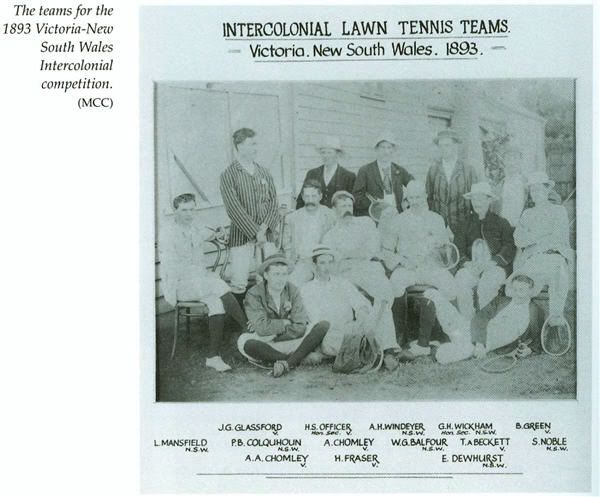
The photo below is taken from the “Serve to Authority” Story of Kooyong Page 14 which shows the 1893 Intercolonial teams of NSW & VIC.

Edward Dewhurst is lying on the ground to the right. We are attempting to source the original for greater clarity.

The photo of the 7th Armory iwas taken in 1908 yet it illustrates the setting.  Shots of EB Dewhurst (courtesy of his book in which he is showing readers shot making techniques). A special thanks to the 7th Armory who provided material and Keith Jenkins for information from EBD’s book.

Early Tennis Racquet Retailing

The arrival of tennis was closely aligned to the early sporting goods stores and clubs which already had an association with cricket. Since Cricket was English and quite popular in the colonies and even in the USA, the ease at which tennis sets could be included with orders that were being sent around the world anyway simply led to rapid distribution. Of course, this was also assisted by the fact that many tennis manufacturers were also cricket equipment makers.

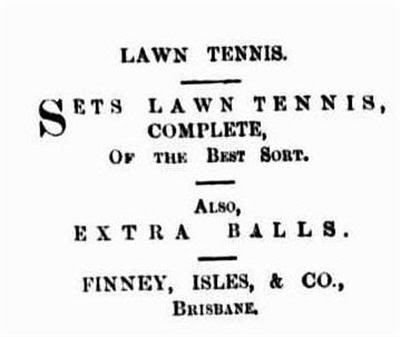
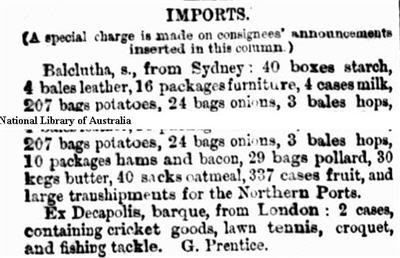
The earliest known retail ad comes from Tasmania in January 1876, but the game flourished quickly as evidenced by these two Queensland ads, the first from The Courier Mail 16-11-1877 and 22-12-1877.

G.Prentice was involved in the local cricket market with his Queensland Cricket Depot in Edward Street and is most likely to have been part of the formation of the Lawn Tennis and Badminton club which met weekly on Wednesdays from early 1878.(happy to be corrected)

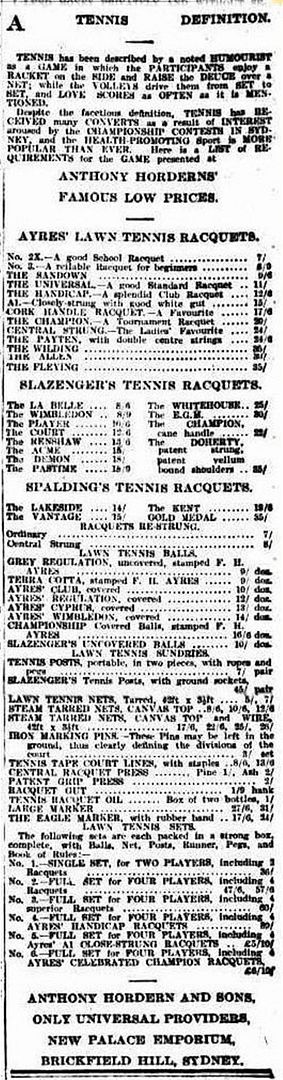
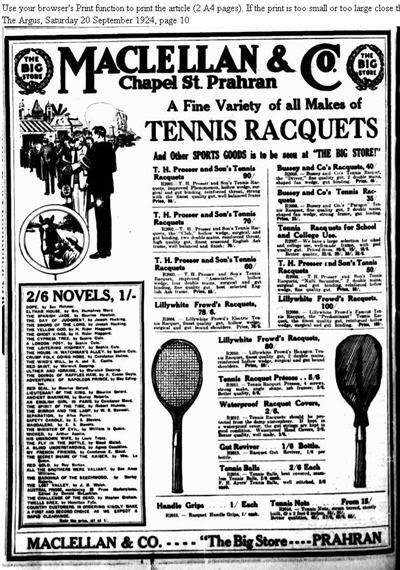
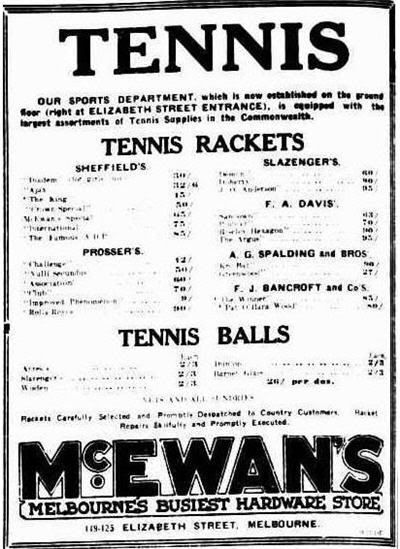
Most racquets came from the UK until the local industry developed. The major brands such as F.H.Ayres, Prossers, Lillywhite Frowds, F.A.Davis, Slazenger were all present and certainly some retailers also produced their own ‘housebrands’.

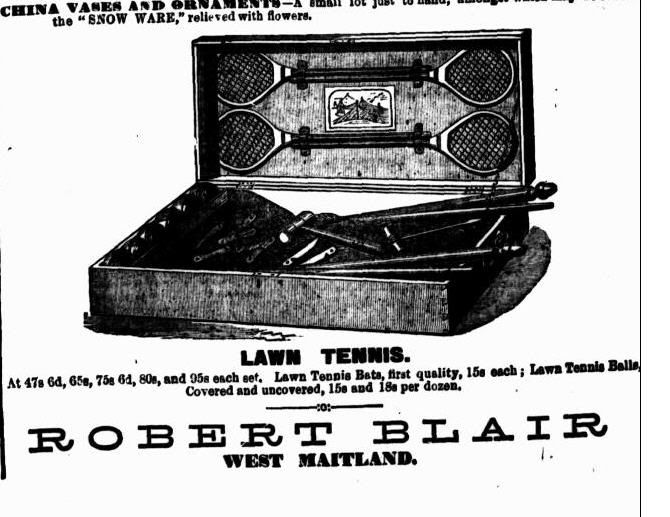
This ad below comes from the Maitland Hunter Valley region of NSW in July 1882 and is the earliest ad we have found with a picture of a tennis set.

This article/ad from 1909 Sydney provides some social commentary on tennis as it developed interest amongst the population.
Ayres and Slazengers were battling for market share with Ayres having lost the prestigious ball contract at Wimbeldon in 1902 after 20 years to Slazenger.

Players were being sought out to assist with sales of racquets and you will notice the Wilding racquet by Ayres. Anthony Wilding by 1909 had participated in the Australasia Davis Cup wins and was becoming a prominent player. He went onto win Wimbledon in 1910, 1911, 1912, 1913.  Players such as Wilding promoted their racquets at tournaments and received commissions on sales.

This ad (Argus,March 1918) comes from Alcocks, Melbourne well known for billiard tables and other sports. While you may not be able to read closely here it is most useful to find brand names and the period they were sold. This store went on to become the primary retail store for the Melbourne made Brewer racquets. The racquet photo below is the Austral Special indicated in the ad. This import is quite unusual in that has a more oval shape than normal. Until this ad was uncovered we had few clues to the history.

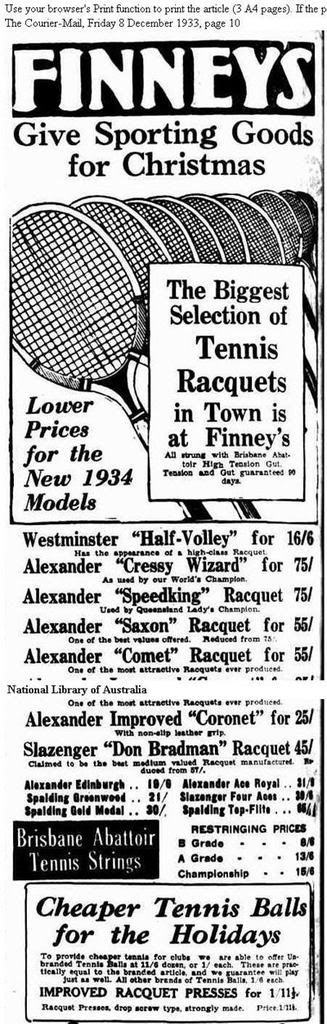
By 1933, we see the Australian brands appearing in ads. Note the Slazenger Don Bradman.
Not sure if this was locally produced but may well have been.

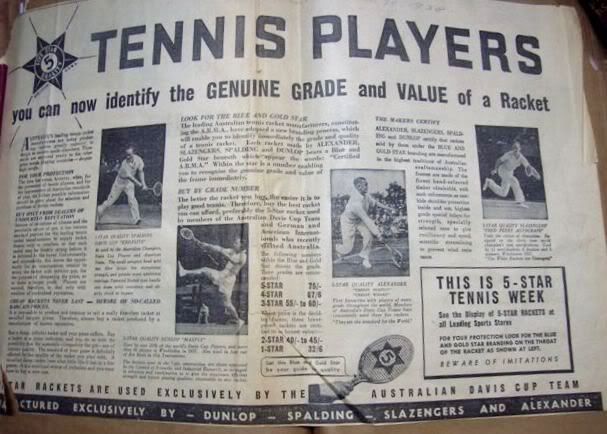
This MSD retail catalogue, below, is from 1938-39 and features Don Budge and Gene Mako on the cover. We are just beginning to learn more about a retail trading cartel which began in this era are under the guise of the ‘Combined Sporting Goods Association’. This body comprised both retail stores and the primary manufacturers and was a direct attempt to limit or prevent competition, which of course today would be highly illegal. Retail stores could veto rival sports stores from opening and manufacturers would simply not supply them directly. In turn, retail stores would only carry racquets from the member manufacturers (Dunlop, Alexander, Slazenger, Spalding) and even retail prices were agreed. You will find the top end racquets displaying the 5 star quality logo CERTIFIED BY THE ARMA (Australian Racquet Manufacturers Association). The set retail price was 75s, as per the newspaper ad launching the program in 1936. This is why other racquets from Brewer, and smaller companies failed to gain distribution beyond a few specialist stores or other non traditional retail outlets. Examples of their racquets are much harder to find for this reason along with the fact that manufacturing of wood racquets was highly labour intensive and with outputs of a couple of hundred per week many of the smaller firms would have struggled to deliver to a mass distribution network. Many Australian owned brands also developed markets overseas, particularly in the USA and examples with US distributor names sometimes appear on Ebay.

ARMA Cartel

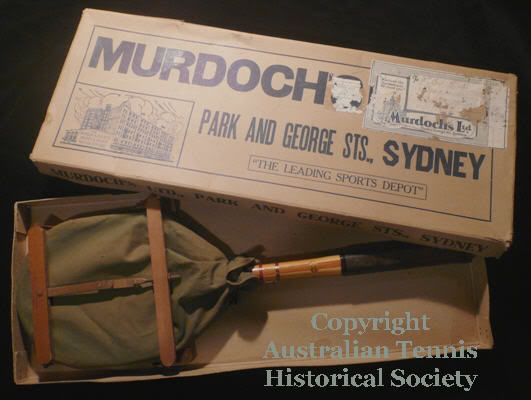
Mail order was also a big business as tennis became popular in all parts of the country. This is a rare example of a retail box.

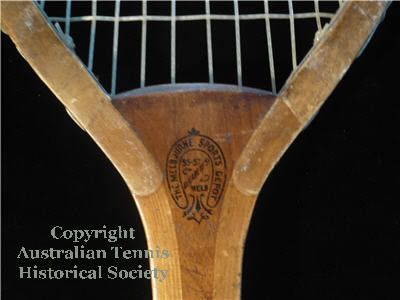
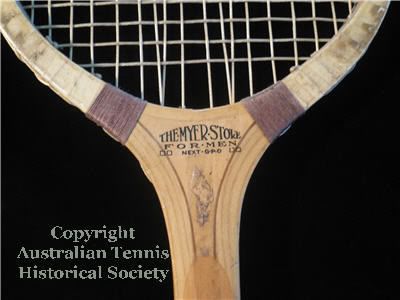
Retailers not only sold branded product from key manufacturers. They often introduced their own brands or imported overseas product and had their name also inscribed.  These two were supplied to Melbourne Sports Depot MSD and the large general commodity retailer Myer.

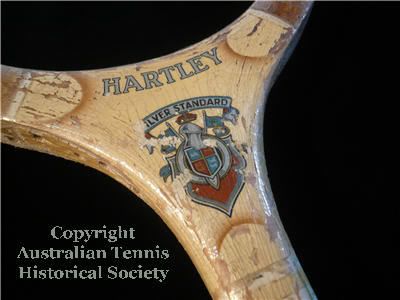
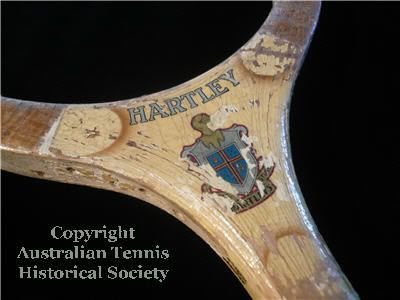
Hartley were a specialist sporting goods store yet they introduced their own racquet which was probably made by Hedley.

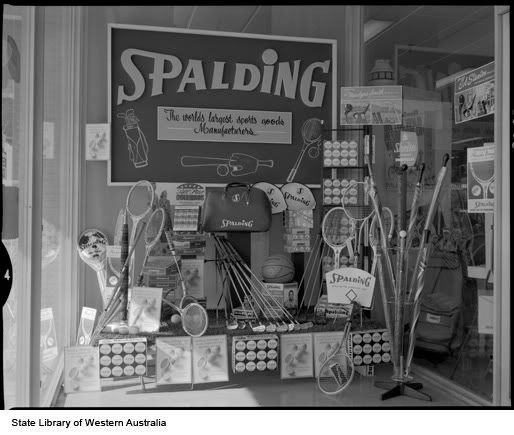
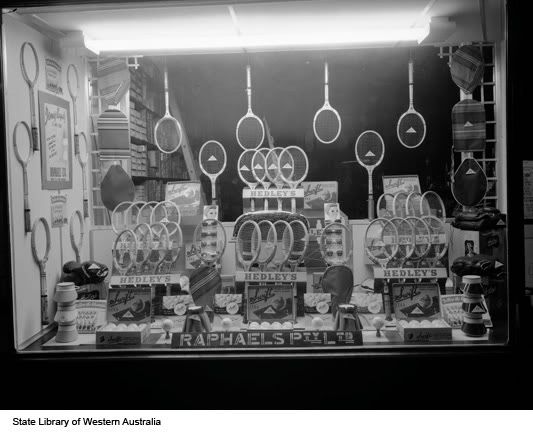
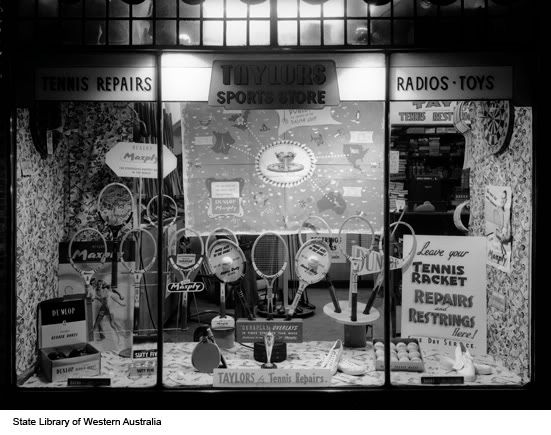
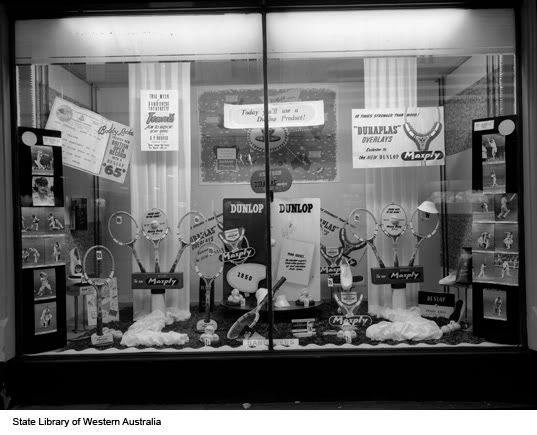
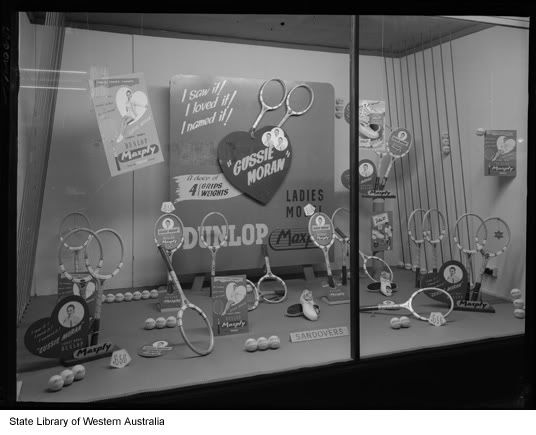
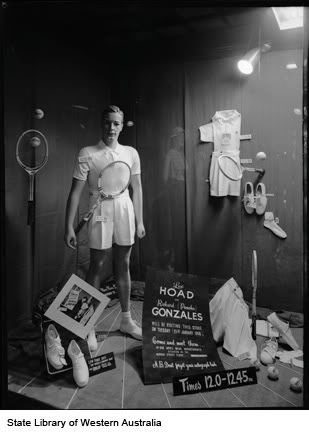
Back in the 1950’s tennis retail stores looked a little different than today. Here are some wonderful photos recovered from the State Library of Western Australia , The Battye Library.

Sporting Goods Salesmen used to visit all the stores to obtain orders and one way a sales rep could show next seasons racquet designs was by carrying scaled down racquets usually around 12″ tall with all graphics and even strings all looking exact.

They are very rare and while this 18″(470mm)  example maybe slightly larger than expected it has been made seemingly in the traditional method with a different wedge insert into the throat, correct cord wrappings, thin strand gut, well drilled holes and graphics.

Another example of unusual tennis memorabilia comes with the large display racquets produced to increase instore branding.

We can guess that these may have first appeared as marketing and advertising was really starting to ramp up within the retail environment.
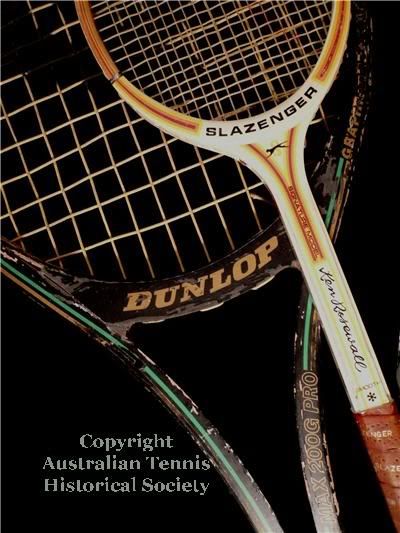
Here is an early 1970’s timber version of the Dunlop Max 200G Pro with a standard racquet for comparison. It stands 1.4 metres and you will find many modern examples in the tennis racquet stores.
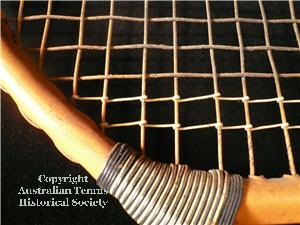
Display racquet 200G