Tennis Heritage Australia Newsletter 2019

Dear Tennis Heritage fans,

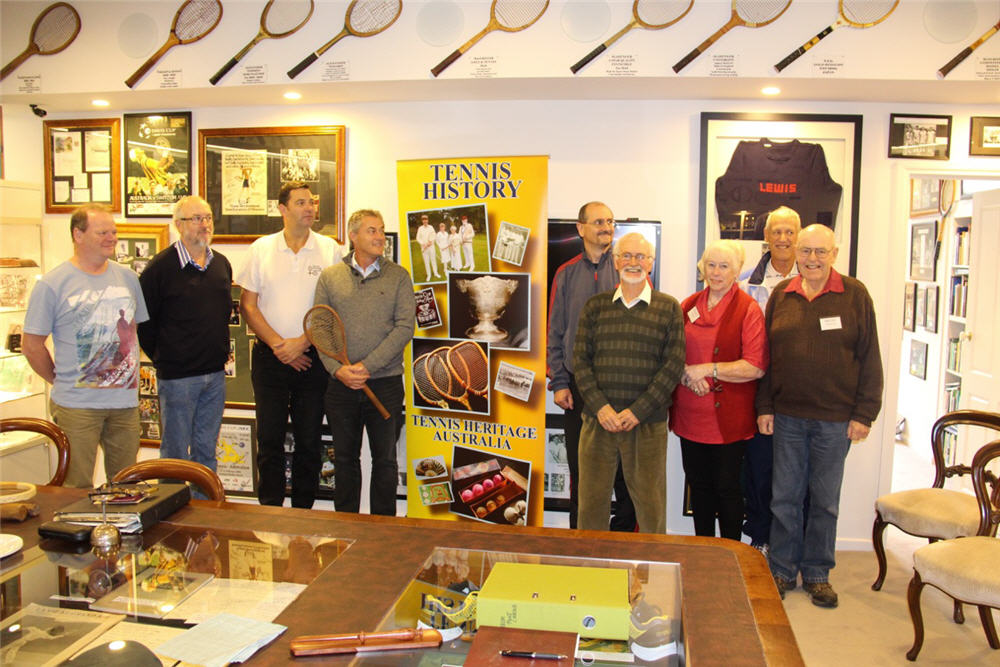
The last time we corresponded was prior to our second National Meeting conducted at Albury last year where we met with 1950’s tennis great Rex Hartwig so this newsletter is a bit of a catch up.

2018 was a fun year thanks to this meeting and a Hong Tennis Heritage Trip pictured later in the newsletter.

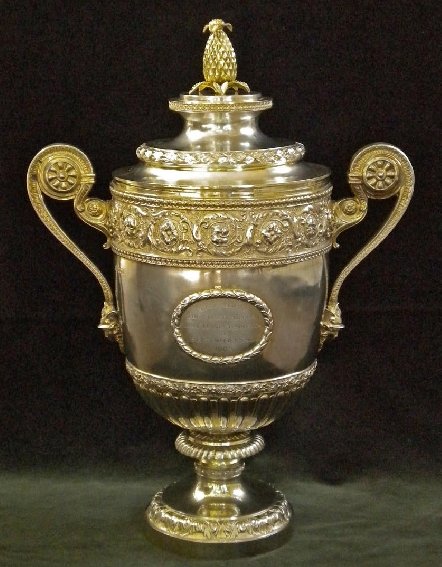
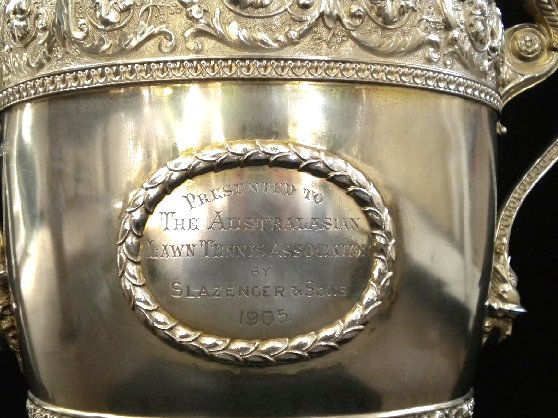
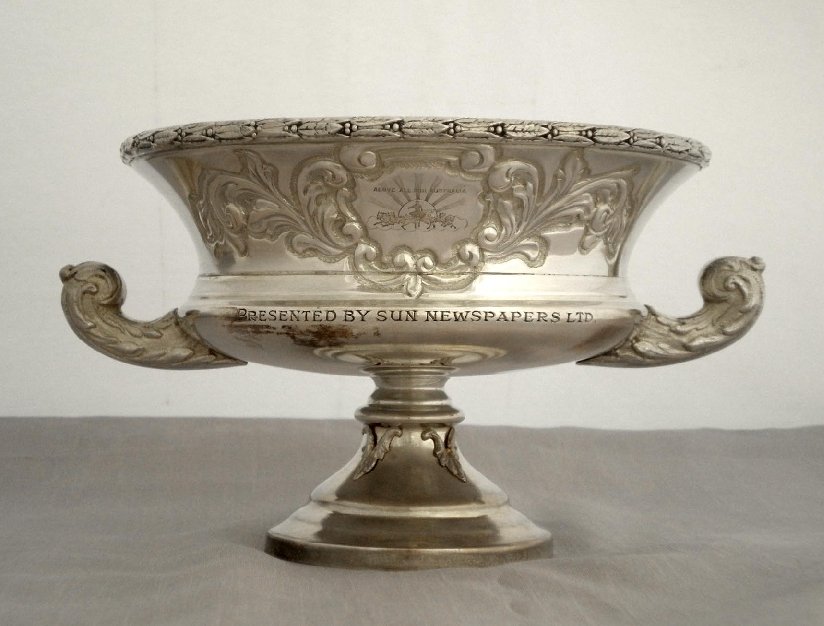
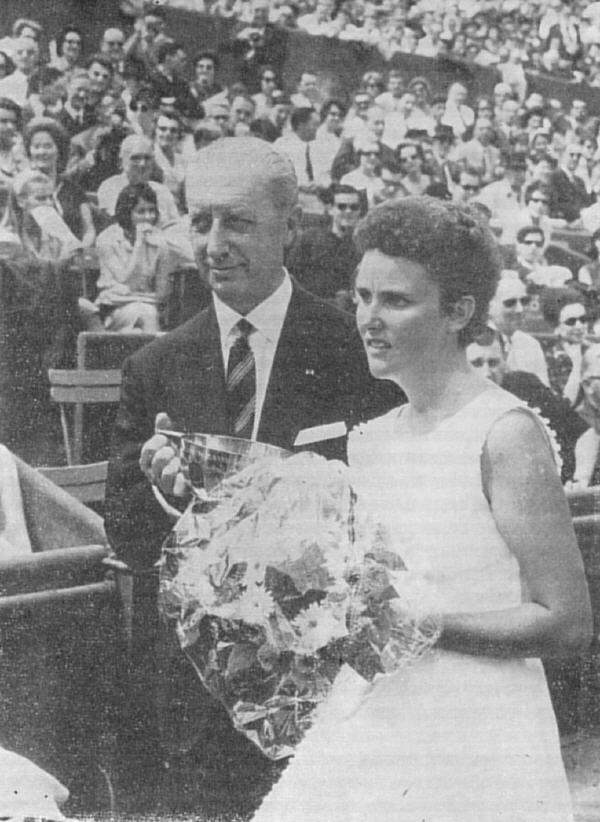
At the Albury event, we had about 20 people attend the meeting to see the fabulous presentation of the (long missing) Jack Crawford trophies which were in fact thought to have been melted down. Thankfully not.  One of these was the original Australasian trophy donated by Slazenger UK back in 1905 for the men’s singles championship.  Remarkably, it looks exactly like the gold trophy we now see being presented at Wimbledon.  As an aside, you will often find early 60’s photos of the winners being presented a silver trophy but the committee thought the gold one looked better on TV.
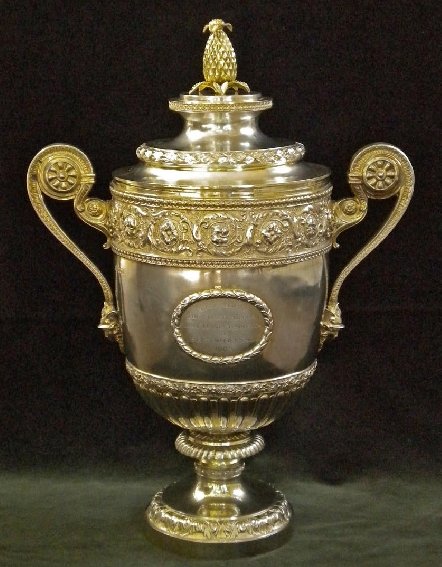
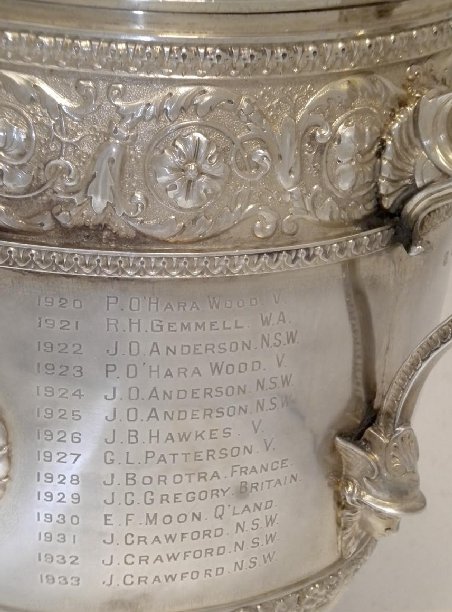
The Australasian trophy 1905 until being retired by Jack Crawford for winning 193,32 & 33.
It was replaced by the current Norman Brookes Challenge Cup.
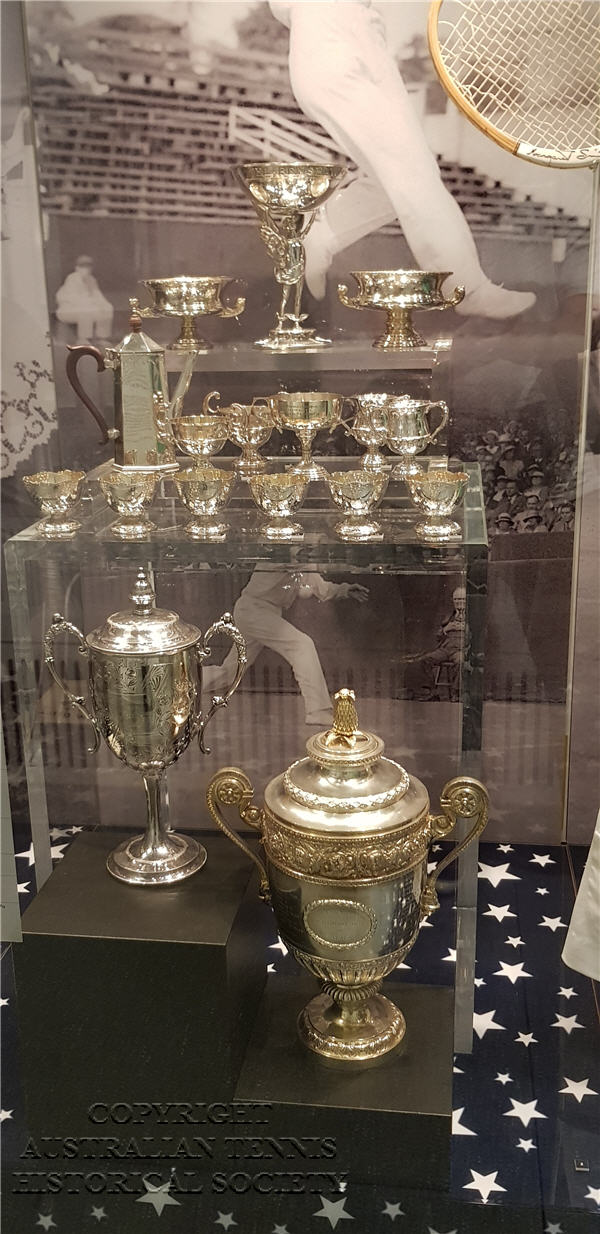
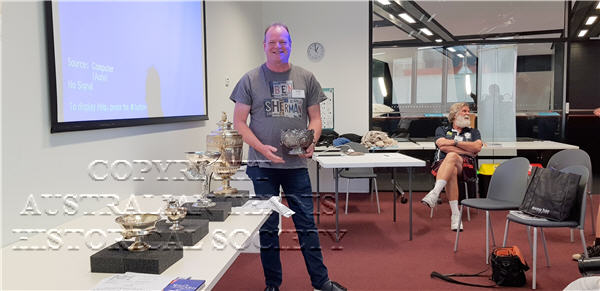
The wonderful trophies owned by Jack Crawford were saved by a jeweller family in Sydney and donated to the museum.

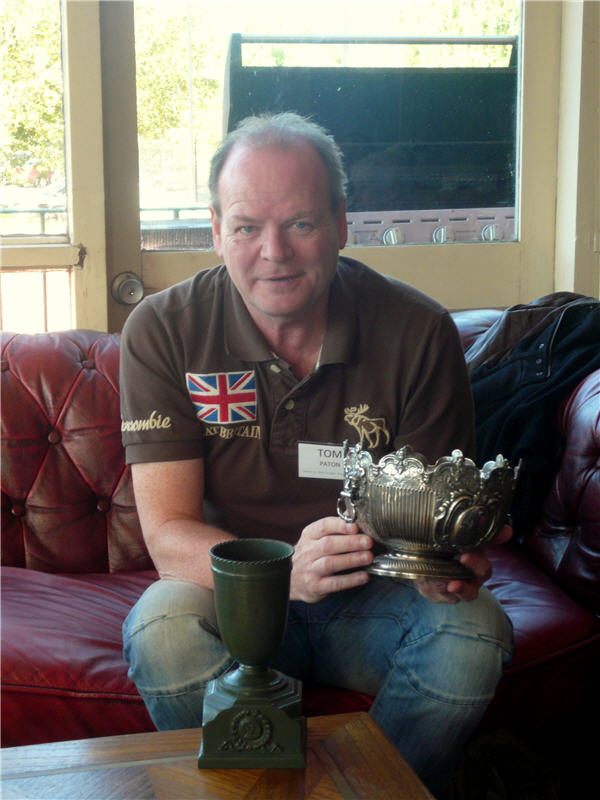
They include Australian Championships, Wimbledon and Davis Cup  trophies.  Tom, above also brought the Jack Crawford junior championship trophy he won outright in the mid 20’s) It was great to see them all together.

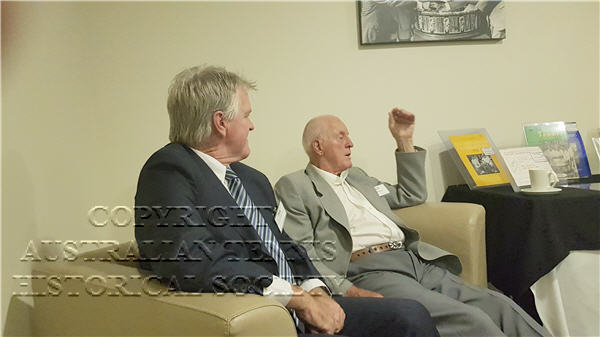
Below is Rex Hartwig being interviewed by organiser and Albury Coach Phil Shanahan at our dinner, ( a huge thanks to Phil and the Margaret Court Tennis Academy, Albury).
Rex played around the globe for Australia in the 1950’s including Davis Cup. He was runner up in the 1954 Australian and US singles and won 4 Major Doubles Titles including the Australian, Wimbledon and US tournaments.
20180428_212621

20180428_140541

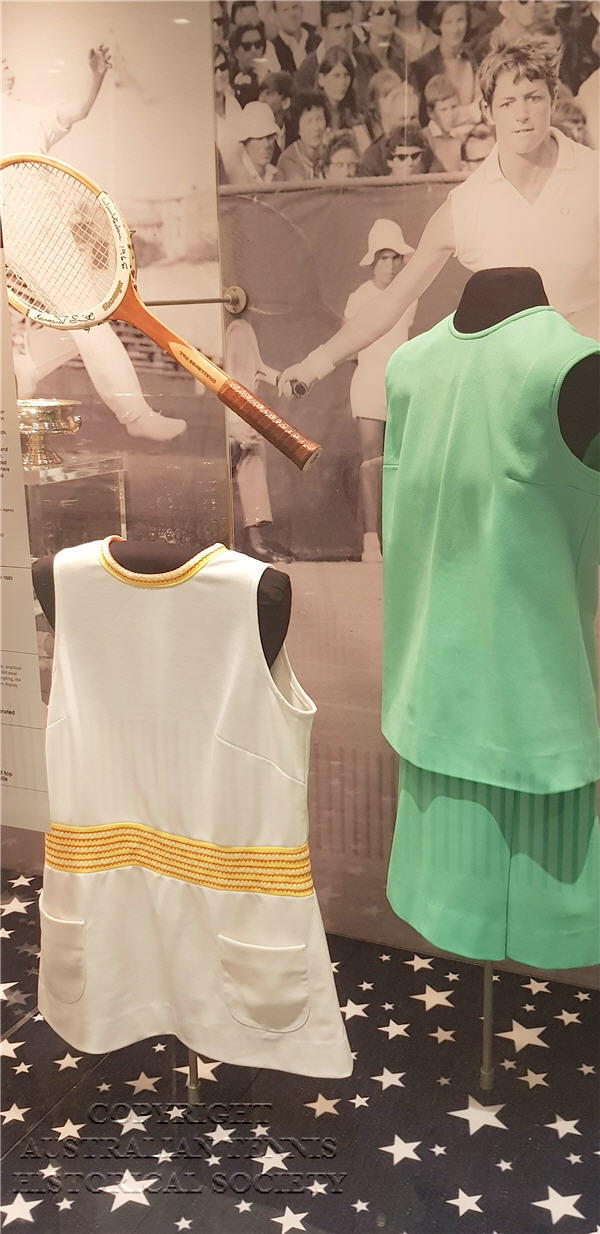
They also have a wonderful Margaret Court collection, although much of her major collection is on display around the Melbourne Park, Margaret Court arena.
Margaret and Rex both grew up and learned their tennis in the Albury region.
20180428_145300

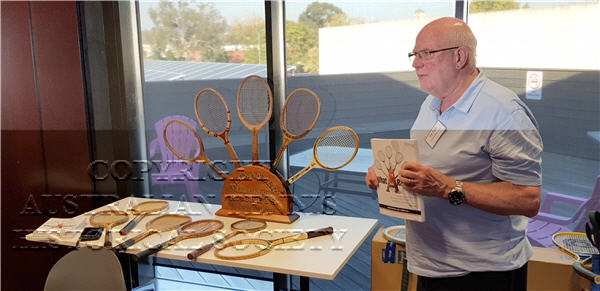
We also enjoyed presentations about the Alexander Patent Tennis Racket Co. by family relative Peter Dowling, which dominated the local racquet making scene from 1923 through to the 1950’s and a great review of a new tennis book, The PROS by Peter Underwood which follows the careers of some of the early overseas and Australian players who moved from amateurs into the pro scene to develop a well paid career.
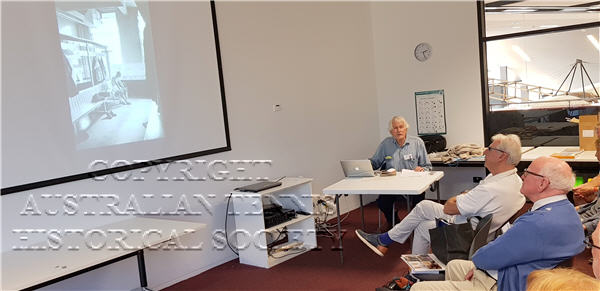
20180428_142609

A slide show from Peter about the Pros.

This 2019 year  also marks the start of an Australian celebration of the Rod Laver 50th anniversary of his 1969 proper Grand Slam win achieved in the OPEN ERA.

It has been great to see Rod received the accolades at the majors he has attended so far which will conclude with the US Open.

Congratulations to Rod on what was his second Grand Slam and of course to Margaret who next year celebrates her 1970’s Grand Slam victories. Hopefully Margaret will receive the same accolades and respect for her sporting achievements without the gay marriage debate being the ongoing argument…..Not sure this will go smoothly despite my hopes for some peace. Tennis Australia needs to take a strong lead on this.
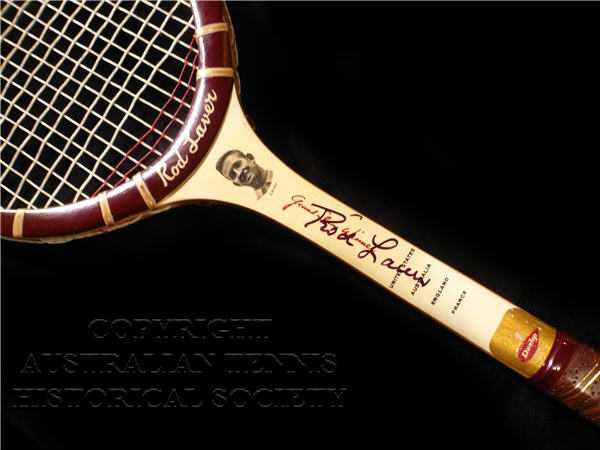
Rod Laver signed racquet

A very nice Japanese made Dunlop Rod Laver Grand Slam tribute model.
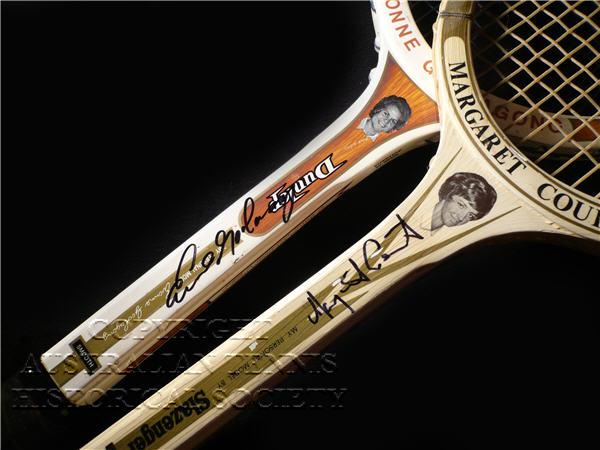
signature tennis racquets evonne margaret (8) USE

A couple of other mid 70’s Championship winning models used by Evonne and Margaret.

Moving along to some other interesting collectibles found over the last 18 months we have a likley French (unbranded multi press).
Not many of these exist in Australia so you need to allow a large freight bill……they do make amazing displays though.
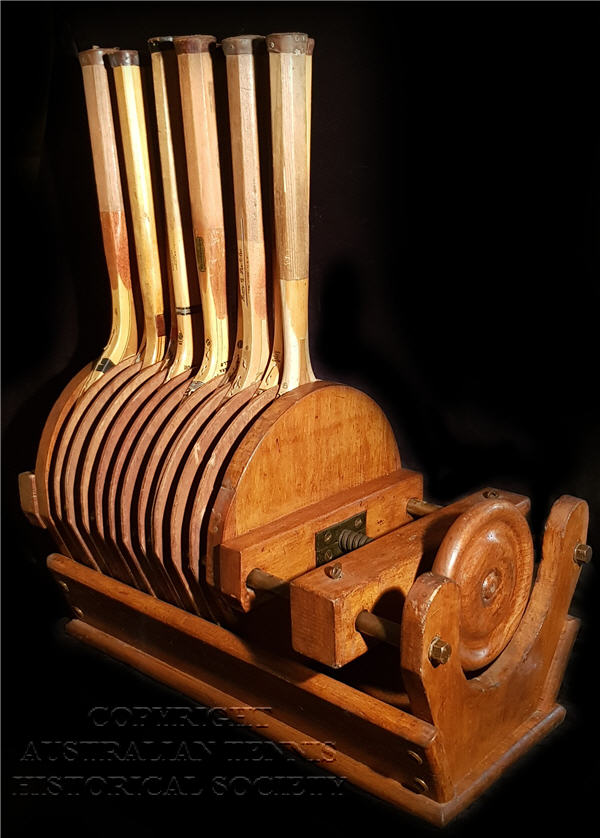
12 racquet multi press.2

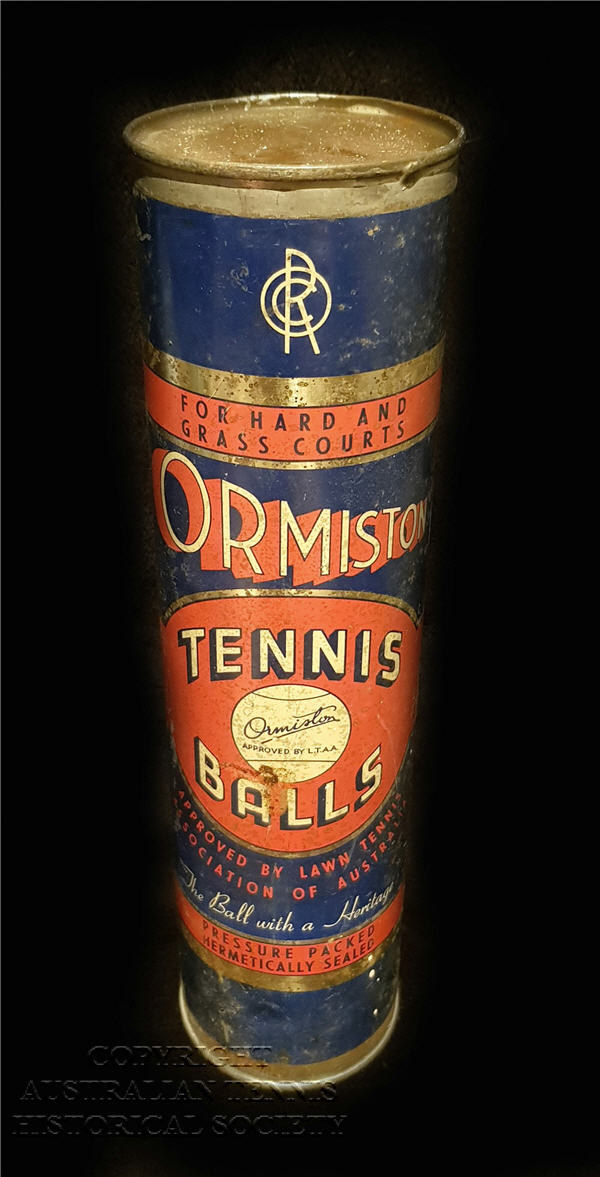
At a local antique centre we found this unopened mid 1930’s can of Ormiston Rubber Tennis Balls. They will remain unopened to protect the value plus there is a picture on the side at any rate.
ormiston tennis ball can (2)

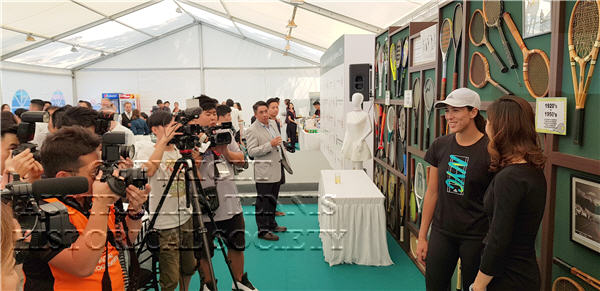
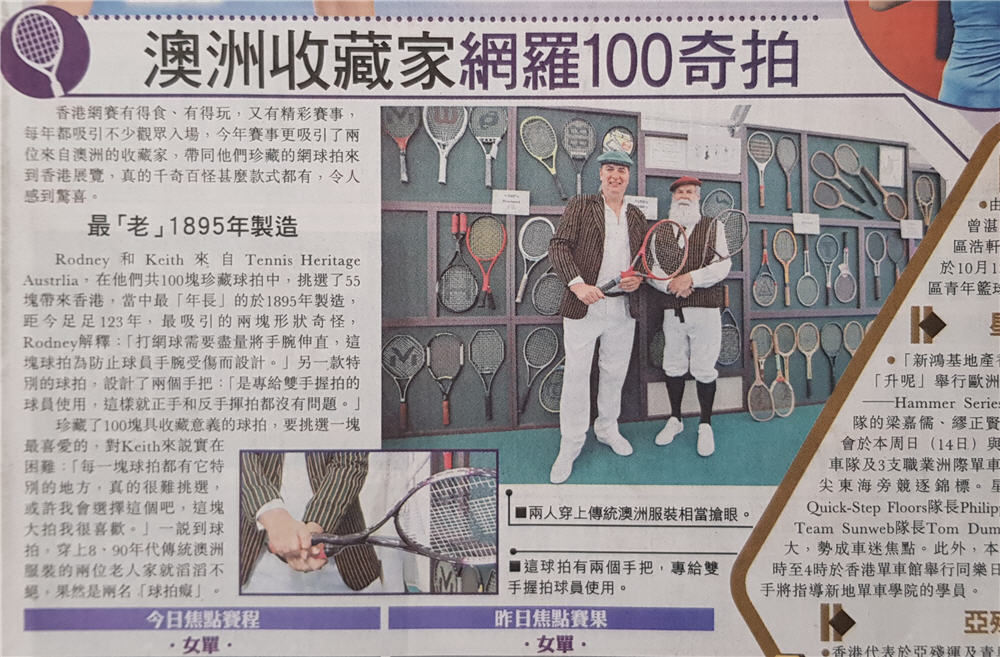
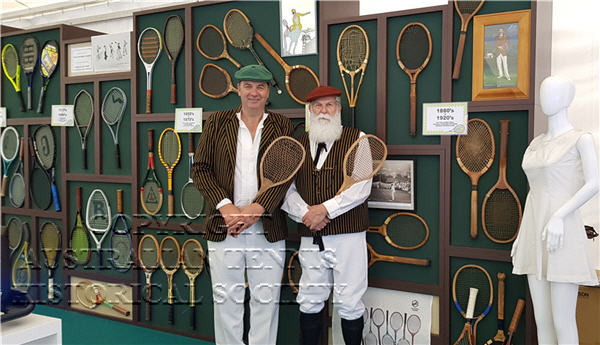
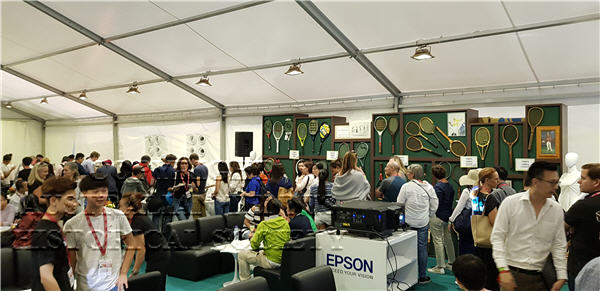
In October 2018, Keith and I were invited to the Hong Kong WTA Open Tournament to display a small part of our collection. This was a lot of fun and follows from our 2013 experience at the Beijing, China Open for their 10th anniversary.

The display frames were built by the organisers so we really only had to mount our racquets.  We were very well looked after and attended the player welcome dinner and had a few players pop in for media shots. Overall we must have seen close to a 1000 people….

As you can see we take the time to dress up and “show and tell” the history to those who come up to say hi……so we manned the stand from 10am to 9pm….. We even made the local papers!!!!!
Hong Kong trip 2018

20181012_193601

20181008_122036

20181012_154809

20181012_144243

Ok well happy collecting.  If anyone has any questions regarding the history of the game in Australia or elsewhere please sing out.

We do follow up alot on Facebook…….

Cheers for now Rod

Tennis Heritage Australia 2015 Year to Date

2015 has been a great year for Tennis Heritage Australia.

In January, one of the elite USA coaches, Ken De Hart caught up with us during his time in Melbourne as guest speaker at the Australian Open Coaches conference. Ken is a collector however his reputation as a great coach and his extensive connections have been of enormous value in helping to build our Facebook presence.

We organised a lunch meeting at Kooyong thanks to Cedric Mason and we had a grand time discussing what we collected individually.

P1300648

In May, we conducted our Inaugural NATIONAL MEETING down and Denis and Liz Tuckers fine Launceston home which in part contains a tennis museum focusing on Championship and Davis Cup/ Fed Cup players.


TAS MEET4

Special guest at this event was TENNIS COLLECTORS USA member Aldo Romeo who Denis has met on previous occasions over at the Newport Hall of Fame and Tennis Museum induction events.  Up until this point most of the rest of use had been discussing collections with Aldo over Facebook.   It was great to have his company not only in Launceston but also the following week in Melbourne where we toured a few tennis destinations that Aldo was pleased to see.

The following day we undertook a tour of the Alexander factory with the relative of the original owners, Gus Green and then played some tennis in the afternoon at the local club.

It goes without saying Aldo is quite a handy player and now has the lead against the all Australian team.

A very special thanks to Liz and Denis who opened their home to us for the weekend and also apart from Aldo coming from America, we enjoyed the company of Geoff from Perth,  Michael from NSW and some couples from Melbourne. Also Phil Bowden President of Tennis Tasmania attended the dinner which was most enjoyable.

It was a far more relaxing stay compared to our normal meetings which are usually 3-4 hour events.

In August  we organised an impromptu TENNIS MEMORABILIA & SWAP MEET at Grace Park Tennis Club. One of our objectives as a group is to try and engage more with the pubic tennis community.  Using only social media we had the support of Tennis Victoria advising club secretaries,  Tennis Australia including the flyer on their social media,  Facebook, Ebay and Gumtree listings plus email to all our TH website database.

It was an interesting experiment with about 50 people arriving between 12-4 pm.  It was certainly a great day meeting everyone including a couple of new members who were keen to downsize their collections.

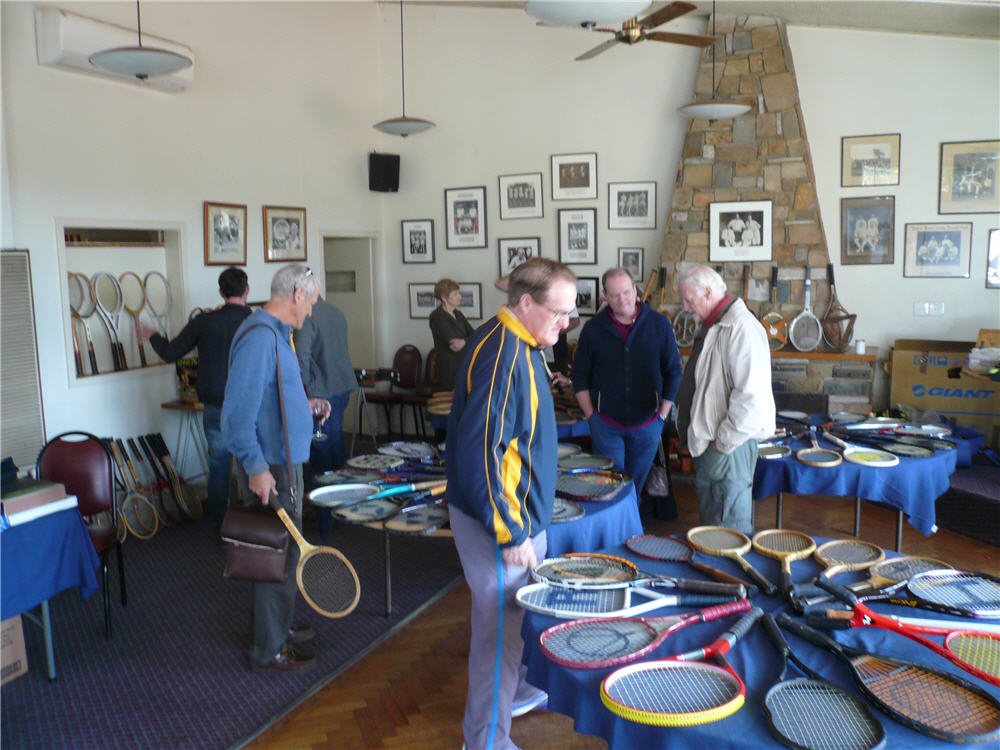
We had a large display of unusual racquets and 5 vendors selling various bits and pieces.

P1330711

Based on the success we will definitely encourage the THA Sydney group to organise an event and in Melbourne we already had an expression of interest from the KNOX CITY TENNIS CLUB to conduct an event out there which is currently being planned for November.

Special guests were Australian Fed Cup player Janet Young, Tennis Australia Director and Peter Cuxson, Tennis Victoria Director.  It was also great to meet other enthusiasts from ebay and some new potential collectors just excited to see what is out there.  1980’s player Cynthia Doerner was visiting family while in Melbourne from the USA. She has recently become connected with our ever expanding Facebook group and it was a delight to meet in person.

Our ambition is to work with Tennis Australia on developing a far more engaging display of tennis equipment and memorabilia through the Open event in 2016.  Talks with TA to continue soon.

Thanks to all the helpers with setting up the tables and equipment and to Grace Park for the venue.

Some interesting collection additions this year include an Alexander PHOTO DECAL racquet which I had only ever dreamt might exist.  The reality is that the company brought out a model in 1932 featuring James O Anderson.  This model has never been seen before by the global community of photos decal collectors and being this early as well, places it with very early models featuring Ellsworth Vines and William Tilden.

Luckily despite their being some paint loss the decal of JOA is remarkable.

alexander joa super photo model (3)

Another very rare racquet from the LILLYWHITE & FROWD UK (1939 era) was this TWINSHAFT model on the left next to an Hazell Green Star Streamline from the mid/late 1930’s


lillywhite hazell shoot (66)

Lost Australian Trophies re-emerge from Jack Crawfords past

Owing to the success of Australian Player, Jack Crawford many famous trophies went missing, whereabouts unknown.

Jack won the Junior Australian Championships in the mid 1920’s three times running and that forced the retirement of  that trophy. He then proceeded to win the Australian Mens Championship in 1931, 1932, 1933 and 1935.  The three straight wins retired the original Australasian Championship trophy originally donated by Slazenger and brought back to Australia by the 1905 Davis Cup Team for the first championship later that year.

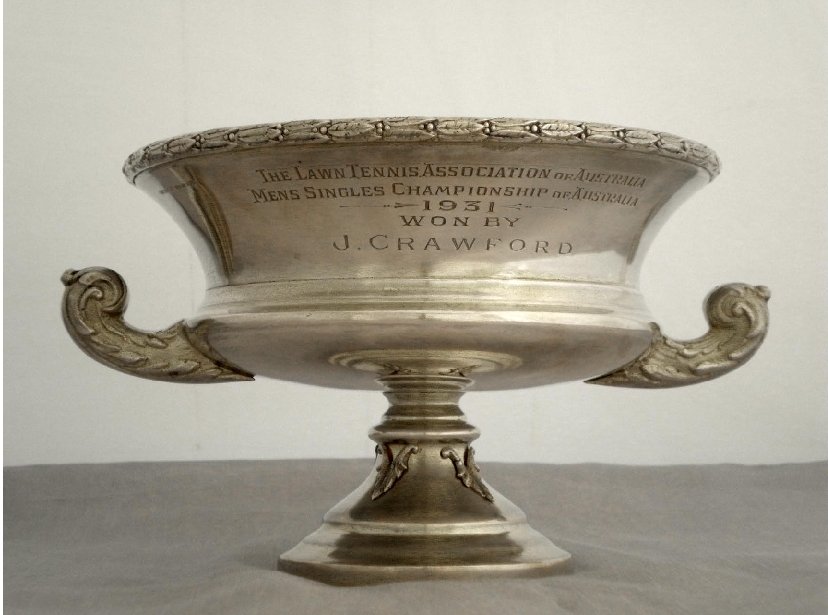
After Jack had taken this into his possession it was replaced by the Norman Brookes Challenge Cup which will never be won outright. In his later years, Jack was not in a sound financial state and so many of his International and domestic trophies were sold. The story goes that Jack took the Australasian trophy to a Sydney based jeweler to melt down for the value of the silver sometime in the 1980’s along with some other prized trophies including the Wimbledon Renshaw Cup, numerous Davis Cups and the Australian Men’s singles trophy for 1931 to name a few. Sadly,  these trophies disappeared off the radar. That was until late last year when the Albury Museum negotiated their donation from  the jewelers family who were keen to honour the region in which Jack was born and developed as a junior player.  So now, Australian Tennis has the full historic record of  the complete span of the Men’s Singles event on the two perpetual trophies.

Australasian Tennis Tropy 1905-1933 full shot

Amazingly, if you did a google search of the Wimbledon Gents Trophy, you would find this one to be almost a replica and was stated as such in newspaper articles explaining that Slazenger had donated such a trophy for our inaugural event.

In addition to having ones name inscribed on the Slazenger Cup, the winner would also receive two other trophies or medals.

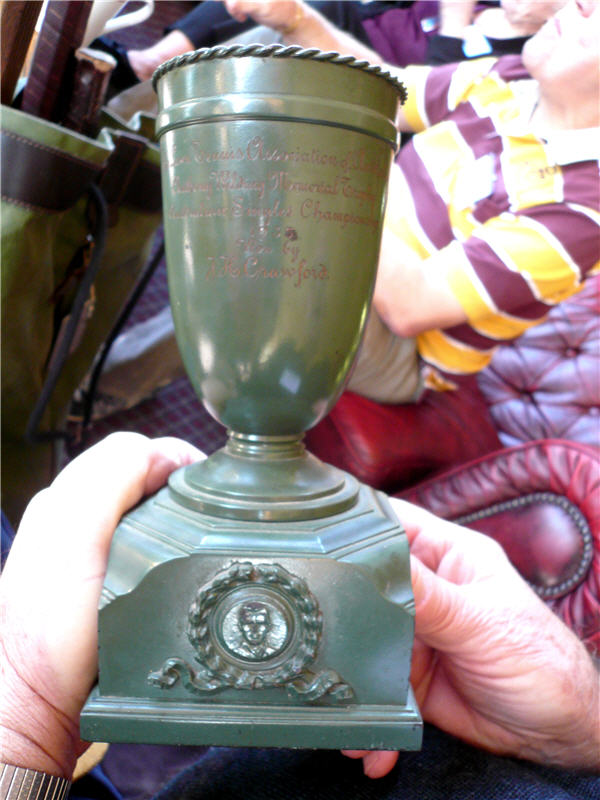
The main cup was called the SUN CHALLENGE CUP and the secondary prize was the Anthony Wilding Memorial gold medal in the 1920’s which switched to a green lead trophy in the 1930’s (see below).

Fellow collector, Tom Paton with the 1935 Anthony Wilding memorial trophy and the Australian Junior Cup won outright by Jack in 1926, 1927,1928,1929. Special thanks to the Albury Museum who acquired quite an array of Jacks lost trophies late last year.

A tennis journey in the Fifties: John (Peter) Cawthorn

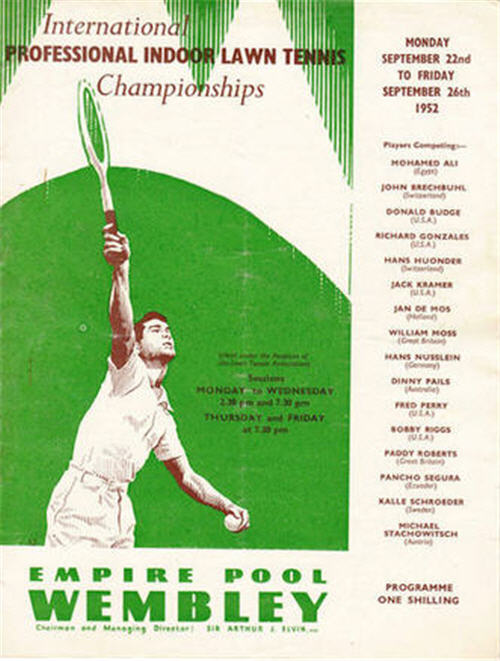
This article started due to finding the name John Cawthorn on UK pro tour programme and wondering who this player was and how he came to be there as a vitrual unknown. We invited John’s brother Tim along to one of our Tennis Heritage Australia meetings  to discuss this “unknown player”. It was, to say the least, a captivating story that interested all those attending.

This is a story about Australian Tennis in the early 1950’s.

Not from a position of Australian Champions but from a perspective of the many other Australians who made great inroads into the International tennis scene but for one reason or another never became household names.

But they could have, had the conditions been different. Sadly, while OPEN tennis was often discussed, even then and before, it wasn’t until 1968 that this occurred. In the interim it meant that amateur players turning pro couldn’t represent their country or play in the large amateur tournaments such as Wimbledon.

John Cawthorn (or Peter), as he was known, represents one of these stories.

Naturally, as a late comer to tennis history,  I had never heard of Peter before and although he died in 2002 we managed to find his brother Raymond (known as Tim, a family thing about names!) to discuss his journey through the tennis world. Tim, was also an A grade pennant player and participant in a few Australian Championships but in all his time as kids perhaps only won a set off Peter. I also found his old partner Don Tregonning to fill in a few gaps as well.

Growing up in Melbourne in the 1940’s Peter attended Box Hill High School, coincidentally the same school as Frank Sedgman. At sport he excelled and as a school prefect captained teams in swimming, football and tennis.

He started playing tennis at 13 1/2 years old. By 17 he was one of the top junior players in Australia having won many of the state junior titles and he played no.1 Linton Cup for Victoria. Players he mixed with included, Merv Rose, George Worthington, Don Tregonning, Brian Tobin, Clive Wilderspin.  Also coming through the junior ranks were the younger NSW pair  Lew Hoad and Ken Rosewall.

However in 1949 Peter Cawthorn was considered Victoria’s top junior and even in some literature as Australia’s top Junior since he won many of the State Junior Championships and the National hardcourt championship.

A p0tential highlight for Peter in 1950 was defeating Lew Hoad in the  Australian Junior Championships at Kooyong to eventually play Ken Rosewall for the title.  The finals match was played after the men’s final and saw Peter in front 6/4, 4/6, 3-1 when rain delayed the entire affair for nearly a week.  With momentum lost, the continuation permitted Rosewall come back to win the 3rd set7/5  and capture the title.

Later that year, Peter headed off to the UK on his own accord to play in various tournaments.  He was only the second player to tour outside of the LTAA touring teams policy so no doubt the administration were not impressed and I suspect Peter didn’t really care either.

Australian Tennis was in its Golden era with a talented list of adult players and the up and coming juniors.

Peter was joined in England by mate Don Tregonning in 1951 and together and separately they won many of the top regional tournaments leading up to Queen’s and Wimbledon. When they got together they were close to broke but making a few finals where they could cash in trophy money plus with expenses paid for by the clubs running the tournaments meant they could sustain themselves by playing around the counties.


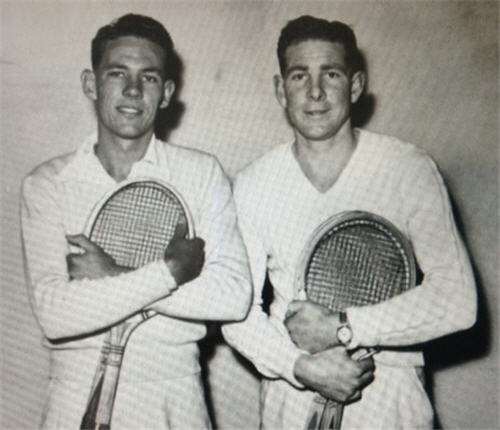
Don Tregonning and Peter Cawthorn

At Birmingham, Peter won the title beating Ignacy Tloczynski, former Polish Davis Cup player, 6-2, 7-9, 6-3.

In another shock win Peter beat Davis Cup hopeful John Horn in the semis 6-0, 6-3 at the Cumberland tournament in April.

He also played British Champion Tony Mottram in the Essex Connaught Club tournament taking the first set much to the shock of local pundits.

At Queens, Peter had the best win of his tour defeating Brazilian champion Almeda Vieira and was eventually beaten by Vladimir Cernik. But,  the Aussies dominated with Rose, McGregor and  Sedgman all making the 1/4’s. Peter and Don also did very well in the doubles.  Frank made the finals but lost to South African Eric Sturgess in the final probably due to not playing as many lead in tournaments as Peter and Don had done.

Peter and Don along with a host of other Aussies played at Wimbledon. Peter made it to the second round in singles and the third round in both Doubles and Mixed. Don and Peter were knocked out by Drobny and Sturgess the eventual losing finalists to Sedgman and McGregor.

1952 was a similar year for Peter and Don. They escaped the UK winter by heading across to India and Paksitan for a couple of months and then onto the Egyptian Tournament. Peter made the  1/4 finals being defeated by Ismail Adel 5/7, 6/3, 6/3. They made the doubles semi finals also, being defeated by Polish player Skonecki and USA’s Straight Clarke.

He played UK Davis Cup hopeful Gerald Oakley in the Cumberland finals and beat him 6/3,6/1 prompting the press to hail him as yet another strong prospect for Australia.

Unfortunately Wimbledon success proved illusive once more. It was the year Frank Sedgman won singles, doubles (2nd time) and the  mixed. Although beaten in the first round of singles and doubles, Peter and Lorna Cornell made the 4th round in the mixed being defeated by Australian Don Candy and USA’s Pat Todd.

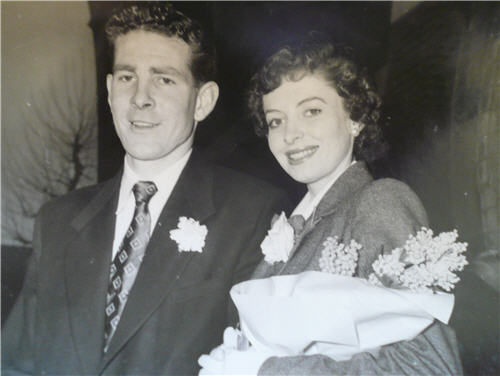
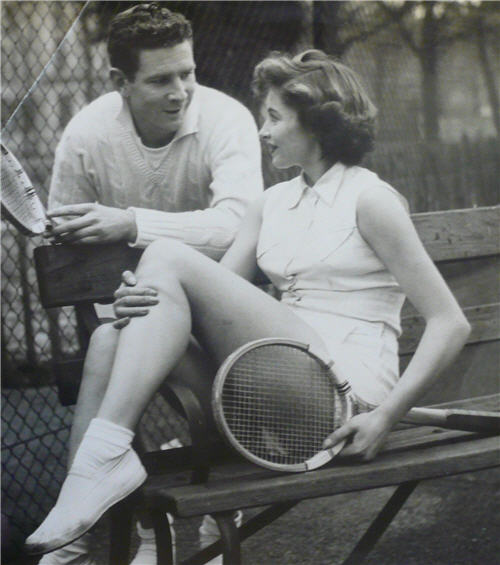
In January 1953, Peter announced his engagement to British heart throb, Lorna Cornell.  Lorna was an exceptional tennis player in her own right having won the Wimbledon Junior Championships in 1949 and 1950.


She was also modelling for Ted Tinling and was capturing attention in the same way as US player / model Gussie Moran.  Lorna appeared in a few editions of Australian Tennis modelling some of the latest Wimbledon wear.

To ensure an income Peter,aged 23. turned pro in February and thus his potential to enter the record books of major tournaments was at an end, probably way to early on reflection, but there was no money in tennis for the players, just some expenses recovery and that was it.

Peter turned to coaching and began a tennis school to which he invited Don Tregonning back from Australia to the UK to help organise. Peter was also coaching his new wife who continued to play the major amateur events and even after three daughters returned to play for the UK in the Wightman cup.

Mid 1953,  he and Don played in the Slazenger Pro tournament at Scarborough and was beaten by the other new Pro to join the ranks, namely, Frank Sedgman.


In November he played at the Pro Tournament at Lyon to be beaten  by Gonzales but not before he had taken the first set 3/6, 6/1, 6/2.  He also played Riggs in Switzerland taking a set off him also.
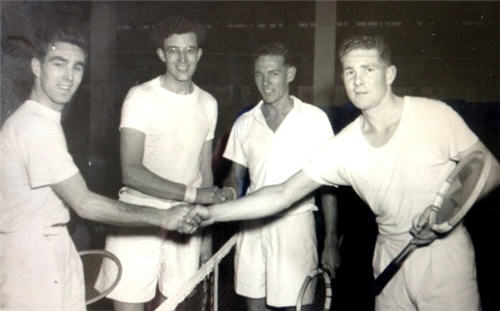
Peter is on the right next to Don.

Against a depleted (few Australian & USA player involvement)  field Peter won the Slazenger Pro Tournaments in 1954 and 1956. In 1954 he beat A G Roberts an ex Davis Cup player 6/4, 7/5, 7/5 and with Don won the doubles.

He was also conducting short term coaching roles for various Davis Cup teams over this period The Irish and Pakistan in 1955, Spanish, Irish and Dutch teams in 1956 and Dutch and German teams in 1958.

In 1958, he played along with Australians Jack Arkinstall, Lew Hoad, Ken Rosewall, George Worthington and Frank Sedgman.  The main stars were Gonzales, Trabert and Segura but Frank won this event.


Australians were prominent in this event 1958

Sedgman and Peter played many pro doubles events and one over 90% of matches.  Against Hoad, he lost in 5 sets in a  pro event conducted in Spain.  He also beat Tony Trabert, having just one Wimbledon in a French Pro event 6/2, 6/2, 6/2.

At the end of 1958, he was convinced by mates like Pancho Segura that the USA was the place to be and Peter headed over to the Rochester Country Club as the club pro, a position he held for 25 years.

Organising tournaments was part of the job and in one encounter with USA Davis Cup player Barry McKay, 15 years his junior, Peter beat him.

He returned to Australia in early 200o to retire, even with a pension from the Rochester Club for valuable services rendered.  Lorna and Peter were divorced prior to his leaving for the USA and he re married a couple of times.

Looking back on Peter,  he was probably unlucky to be an Aussie tennis player. We had so many talented players in the Davis Cup team from 1949 to the 1960’s.  Peter was probably marginally under them all.  He certainly would have made the British Davis Cup team and he clearly had the game to play with the pro’s.  Really, it came down to him turning professional at a young age because he had to finance a family. Who knows if it was the open era we may well have seen Peter in the Davis Cup team photos of the late 50’s.

Thanks to Tim (brother of Peter) and Don.


Tennis Heritage Australia News Q1 2012

Greetings  Tennis Enthusiasts,

This last few months has typically been quite interesting but perhaps a little more so than usual owing to some major finds.

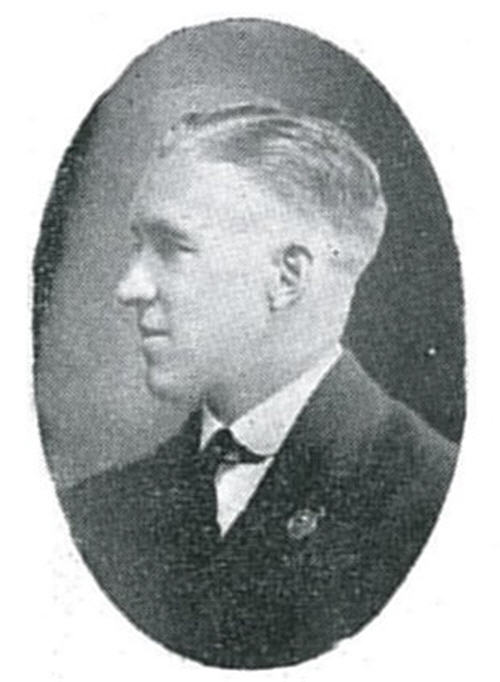
Unknown Australian Wins 1923 Irish Tennis Championships: George Eric Mackay

In January, we found a simple small article about an Australian player who in 1923 won the Irish Championships. We had never heard of him and so this set in motion a challenge to see if we could find out more about him and what happened to a trophy he received.

Having served in WW1 in Egypt in the Medical Corps,upon his return to Australia, he recommenced his medical studies at Ormond College, Melbourne University and while there became the University Captain of the Tennis team which played both Sydney and Adelaide Universities.  Having obtained double first class honours in 3rd year and honours in 4th and 5th year this then enabled him to apply to travel to London to complete the FRCS (Fellowship of Royal College of Surgeons).

Apart from playing for the University, George also represented Victoria in interstate matches against NSW and SA.

While in London between exams, George went to the Dublin Rotunda Hospital for some practical experience and while there entered the Irish Championships of 1923.  Impressively, he won the event defeating 1896 Wimbledon Champion Harold Mahony 1/6, 2/6, 8/6, 6/2, 6/3 with perhaps the advantage of youth against the much older Harold who from the score looked like he gave it all and just fell short in the 3rd set and had no reserve for the last two.

As to why a player of George’s capability won the prestigious event is a tad unclear. There was considerable turmoil in Ireland at that time between the Protestant and Catholic political debate. Many of the well known English players probably stayed away for fear of being caught up in some action off the court.  Although, the existing Irish champions, Cecil Campbell and D’Arcy McCrea were  engaged in Davis Cup matches against India and France in Dublin around early to late June.  In the doubles final four prominent Irish players played for the title so maybe George had some excellent wins leading up to the final.  Hopefully, we will learn more in time.

In September that year, George became very ill, with what was diagnosed as Military Tuberculosis and he sadly died at St Bartholomew’s Hospital London on October 25th.

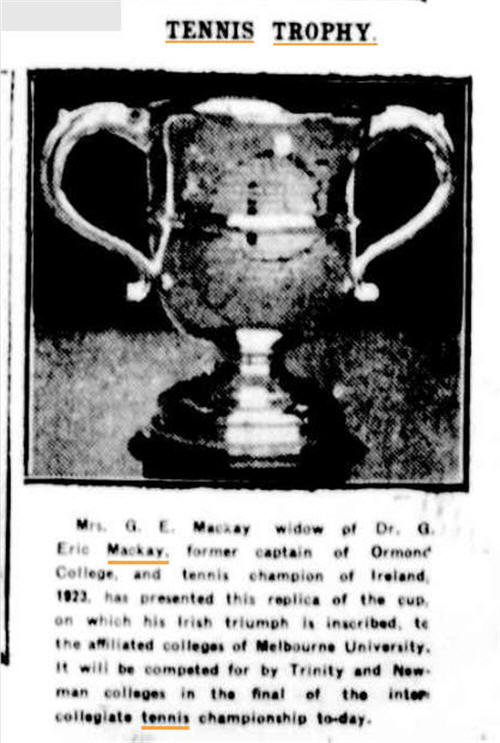
His body was returned for burial to Bendigo and his Irish Trophy, again from a snippet in a newspaper story, was donated to Melbourne University for presentation to the intercollegiate tennis champions.

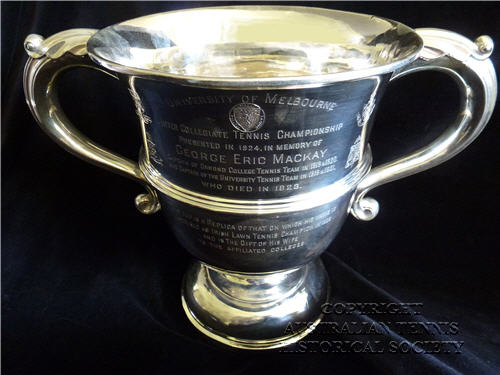
This week, Melbourne University invited us to photograph the trophy which had luckily been found still in use as the donation had intended and was just back from the Silversmiths where it had undergone some repairs and re-plating.  Needless to say it is in close to the  same condition in which it was provided back in 1924 except it it appears to be missing a plinth.

Inscribed

UNIVERSITY OF MELBOURNE INTERCOLLEGIATE TENNIS CHAMPIONSHIP
PRESENTED IN 1924 IN MEMORY OF
GEORGE ERIC MACKAY
CAPTAIN OF ORMOND COLLEGE TENNIS TEAM IN 1919 & 1920
AND CAPTAIN OF THE UNIVERSITY TENNIS TEAM IN 1919 & 1921
WHO DIED IN 1923
THIS CUP IS A REPLICA OF THAT ON WHICH HIS NAME IS INSCRIBED AS IRISH LAWN TENNIS CHAMPION IN 1923
AND IS THE GIFT OF HIS WIFE
TO THE AFFILIATED COLLEGES

One of the newspaper clippings that inspired the search.

Melbourne University has a rich tradition in Melbourne society and many famous early intercolonial and state championship players were taught there.

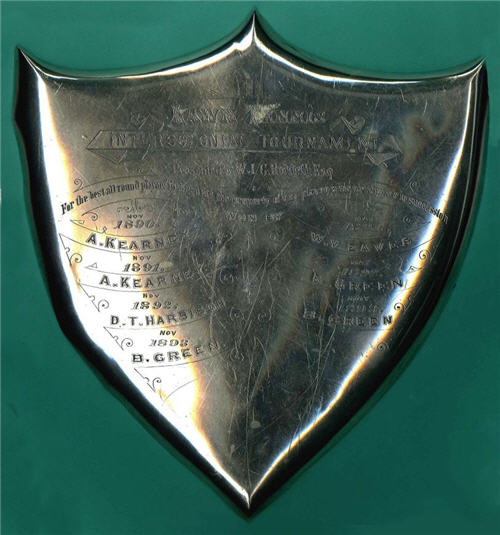
In another very exciting twist in the search for the Irish Trophy,  we also made contact with a relative of a prominent Intercolonial player Ben Green.  Ben was a famous Victorian Champion and when he and NSW champion Dudley Webb played the crowds numbered in the thousands.

This shield was presented to the Victorian team’s most valuable player and the other names inscribed are of equal value and importance to Australian Tennis History.  This wonderful shield measures 20 cm across and 22cm tip to tip.

We feel thrilled to be able to share this with you and thanks to Lesley from Melbourne University for sharing this with us.

Inscribed

LAWN TENNIS INTERCOLONIAL TOURNAMENT
Presented by W.J.C Riddell Esq.  (MCC Tennis Club Secretary & organiser of first event)

For the Best All Round Player. To become the Property of any player winning it twice in succession.

Nov 1890 A. Kearney   May 1891 W.Eaves  Nov 1891 A .Kearney May 1892 B.Green  Nov 1892 D.T. Harbison
May 1893 B.Green Nov 1893 B.Green and his for the keeping.

As a footnote W.V.Eaves was born in Australia and then went back to the UK to also become a doctor.  He won the same Irish Championship in 1897 and was very successful at Wimbledon and other events.  Please read the story about W.V.Eaves elsewhere on this site as he had a major influence on tennis development in Australia and our first Champion Norman Brookes.

Tennis Heritage Australia NSW Branch

Michael Fitzgerald put his hand up to organise the first and second meetings of tennis history fans in Sydney and for those on our database who wish to join the NSW group please email Michael at mffitzgerald@bigpond.com

On May 28th a few of us from Melbourne will be joining the Sydney group and meeting for the first time at the Australian Tennis Museum, Ken Rosewall lunch with this years guest, Margaret Court.

BOOKINGS INFO CLICK HERE

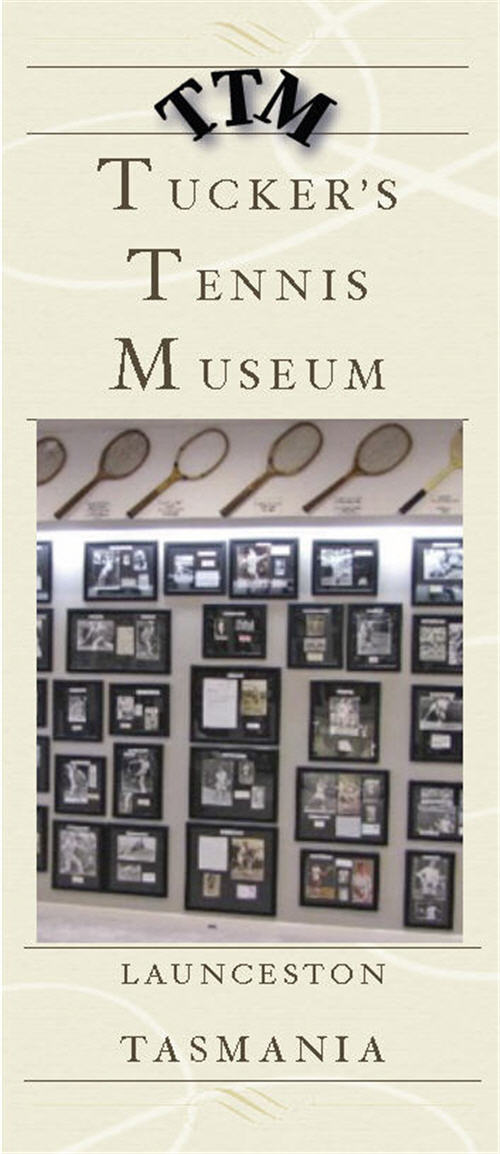
A new Tennis Museum in Tasmania

Denis Tucker has been collecting tennis autographs and memorabilia since he was a young lad.  His passion for tennis led him into state tennis administration and his collection has now reached the point where he would like to share the experience with other enthusiasts.

While the collection includes many racquets, trophies, books and clothing, his autograph collection is simply stunning. With a focus on Australian Championship players, Davis Cup Players and Wimbledon Champions there are a only a few missing and as you can see from the photos they are most impressively displayed.

Denis lives in Launceston and would enjoy hearing from anyone with autographs that might fill in the missing gaps.

Denis can be contacted on 0409 317 804

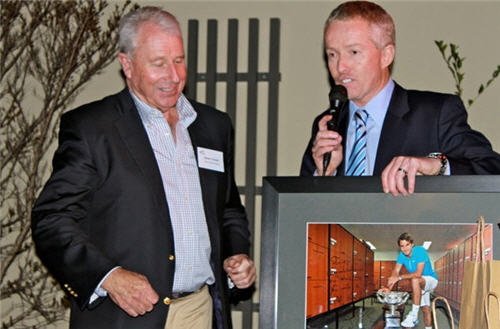
Craig Tiley, Director of Tennis Australia, helps open The Tucker Tennis Musuem and presents Denis with a Roger Federer signed “well wishing” photograph.

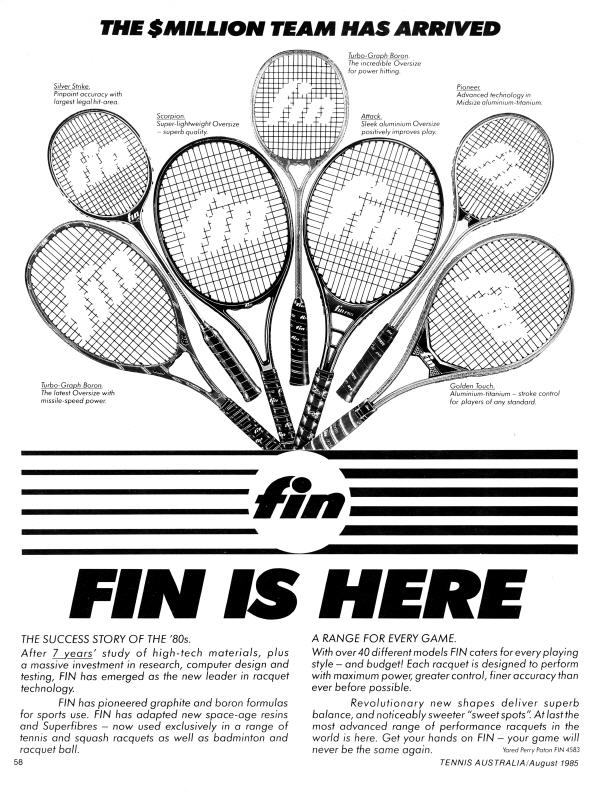
Australian Racquet Marketer of FIN:  Barry Todd

This quarter we found Barry Todd the designer and owner of FIN racquets living in London.  Barry has never really had the success deserved for all his effort in creating some terrific designs for FIN (1980’s)  and DEESSE.  Read more

Male Tennis Champions in the 1920’s J.O.Anderson & Gerald Patterson

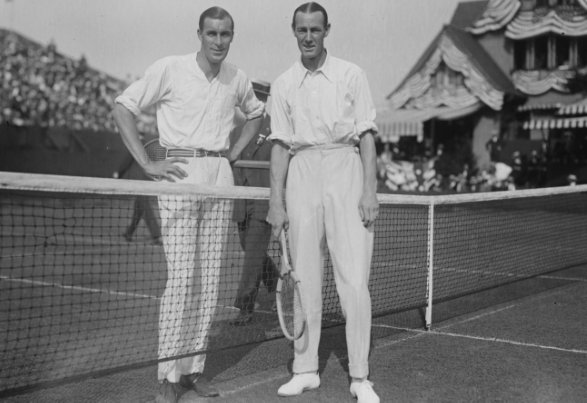
An article on the development of tennis in the 1920’s has been added to the site.  The two great Aussies leading the charge were J.O.Anderson and Gerald Patterson.   While great players this was the era of Bill Tilden and W.Johnston from the USA in the early to mid 1920’s followed by the French Musketeers in the late 1920s’. Success in Davis Cups was hard to come by…..yet on home soil, Anderson and Patterson were great rivals from schoolboy days through to the end of their careers.

Anderson (right) beat Tilden (left) in the USA in a match described as the best ever seen.

Tilden played Davis Cup in New Zealand against Australia and also played exhibition tennis in Melbourne and Sydney with the rest of the team.  Read more

Other Interesting Memorabilia

In this section I will just present some nice tennis items to help educate viewers.

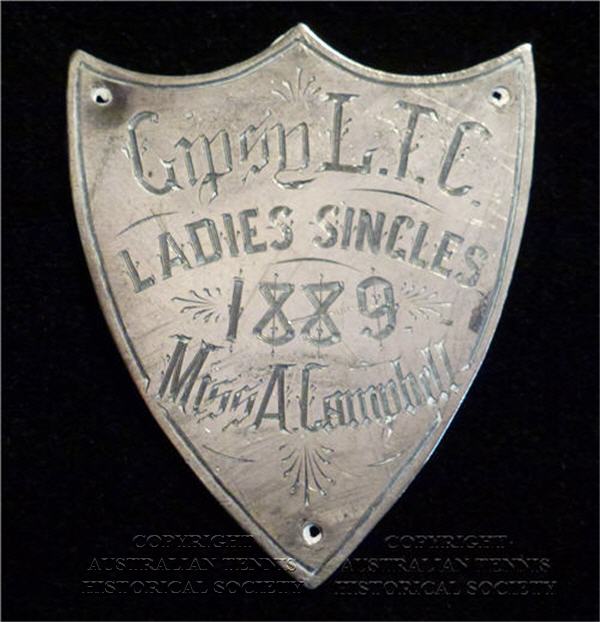
This badge would be mounted to a tennis racquet throat in honour of the win

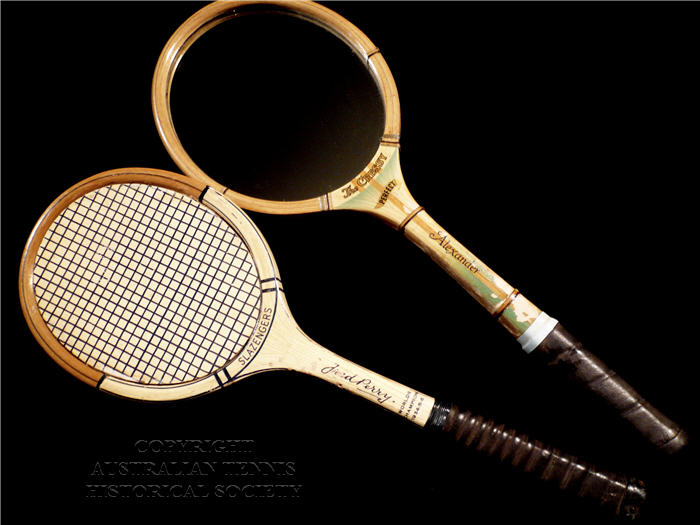
Manufacturer Alexander’s may have started this miniature racquet craze in the 1930’s with their mirrors while the  Slazenger Brush promotes the Fred Perry “All White” Model created in Australia to combat the public interest in Jack Crawford’s Semi  Flat top Alexander racquet.

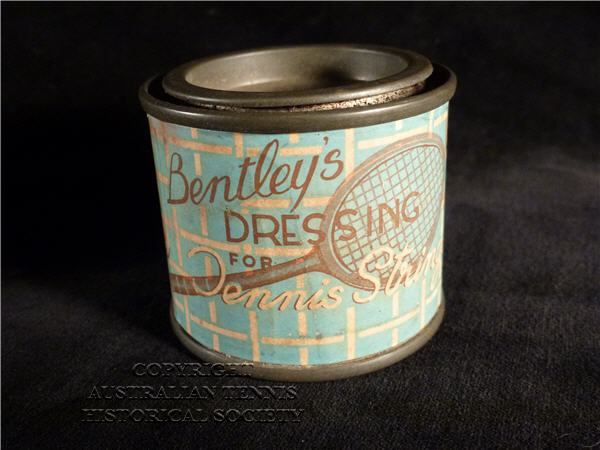
To help pro long gut string life, reviver was sold in order to coat the strings for added protection from moisture.

The product would be brushed on lightly after a game.  Very hard to find bottles and kits so if you do come across one grab it.

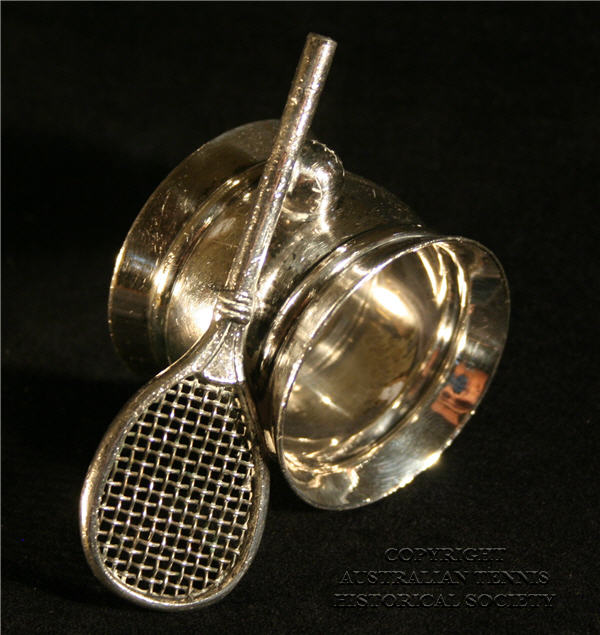
A nice old tennis racquet and ball napkin ring.

Anyone who has some interesting memorabilia or family history that relates to tennis, please contact me rod@tacticalresponse.net.au 0418 362 386

AND PLEASE JOIN AUSTRALIAN TENNIS HISTORY ON FACEBOOK link from here

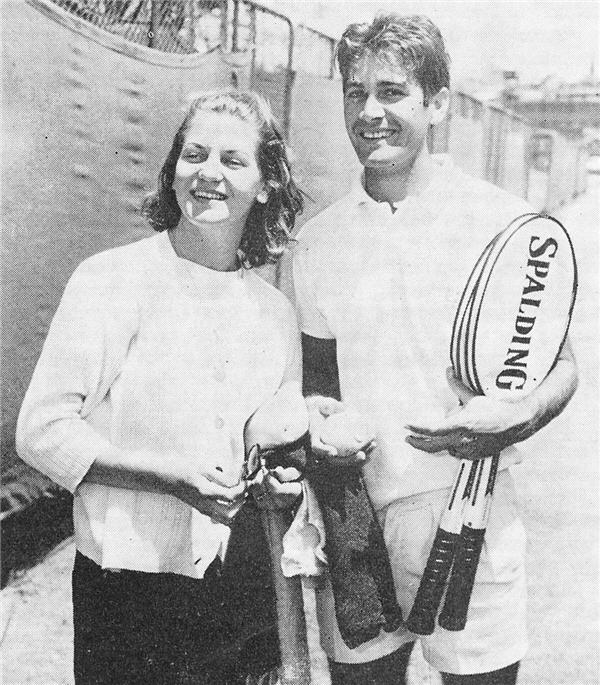
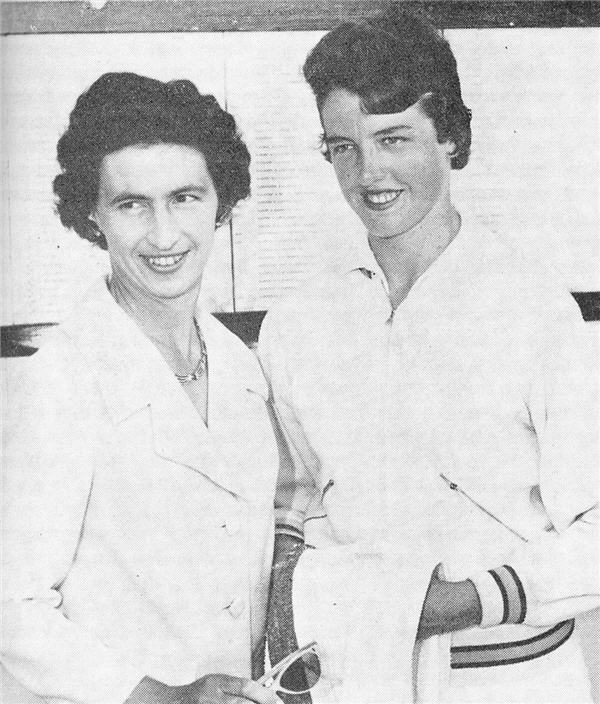
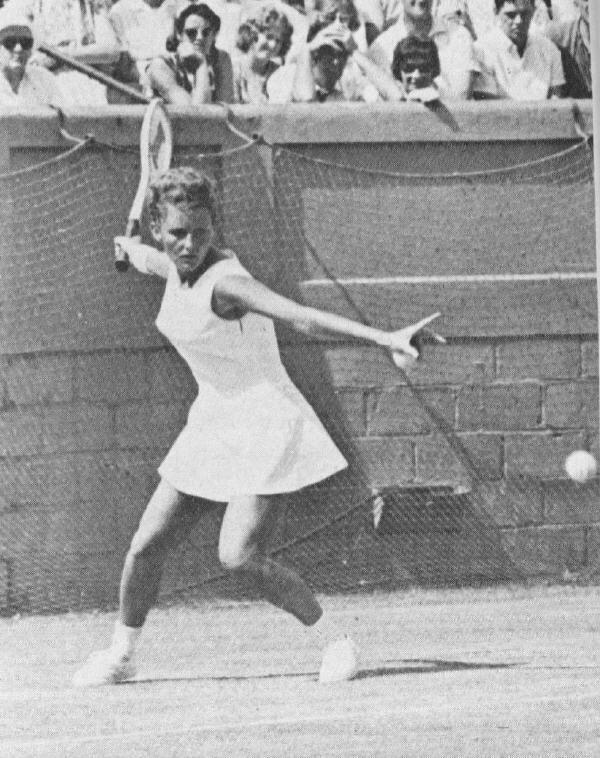
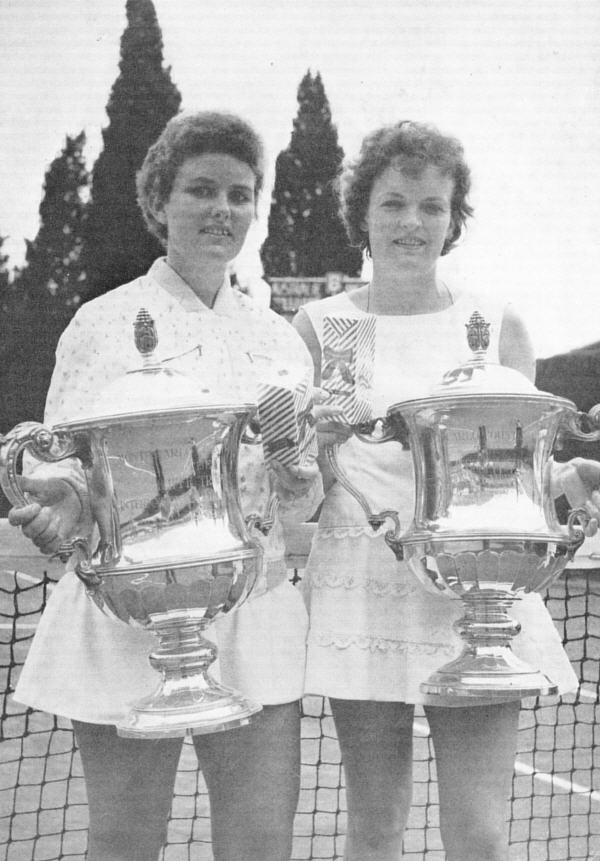
World Tennis Magazine (US) Australians On Tour from 1950’s & 1960’s editions

Recently we received approval from the magazine owner Randolph Walker to scan some photos from some of the early World Tennis Magazines from the 1950’s and 1960’s. In 2011, I was lucky enough to buy a package of magazines from Sydney that spanned late 1950’s to early 1980’s.

Greatly appreciated since copyright laws these days tend to stymie access to any material which deserves to be shared.

Naturally, throughout this period, the Aussies were well represented so it is again with sincere thanks to Randolph that we can present an array of photos not normally available.

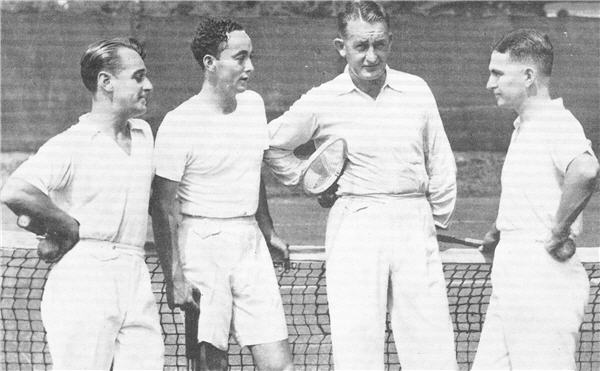
1939 Davis Cup Team Quist, McGrath, Crawford and captain Sproule

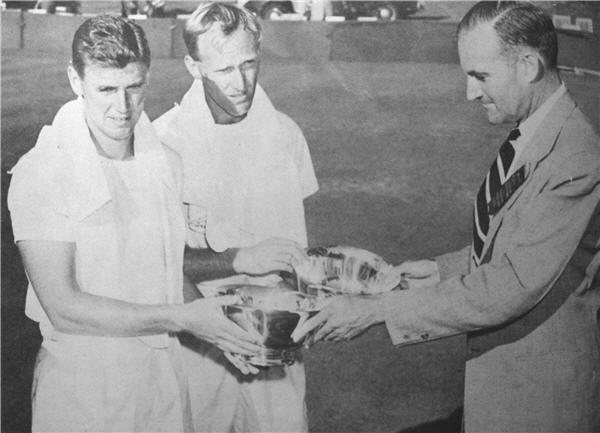
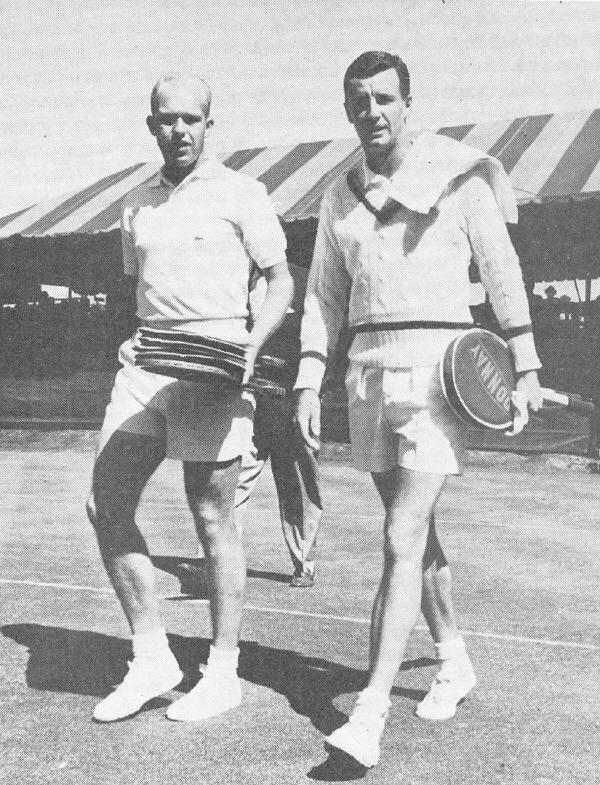
Longwood USA final 1950, Frank Sedgman and John Bromwich

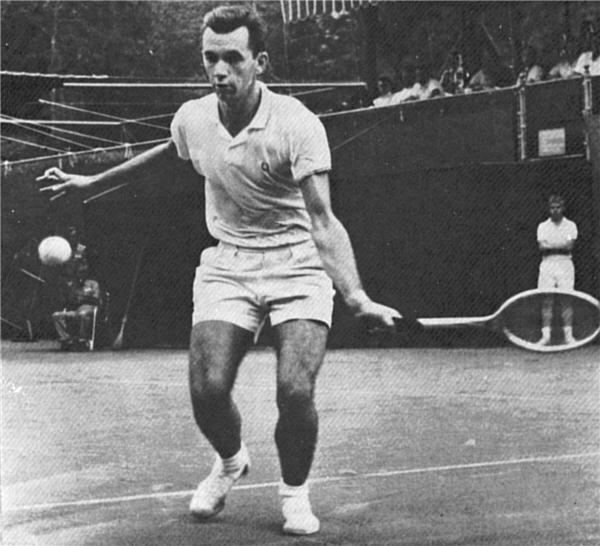
Merv Rose 1957

Thelma Long still playing competitive tennis (right) 1958

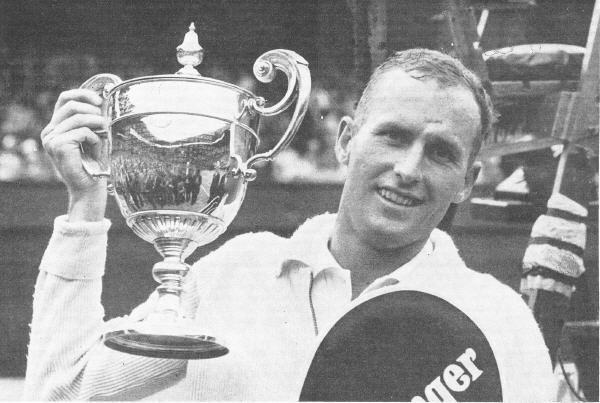
1960, Neale Fraser wins Wimbledon

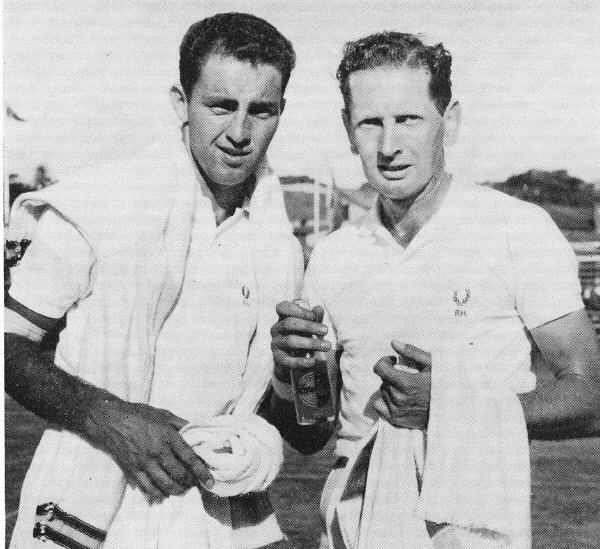
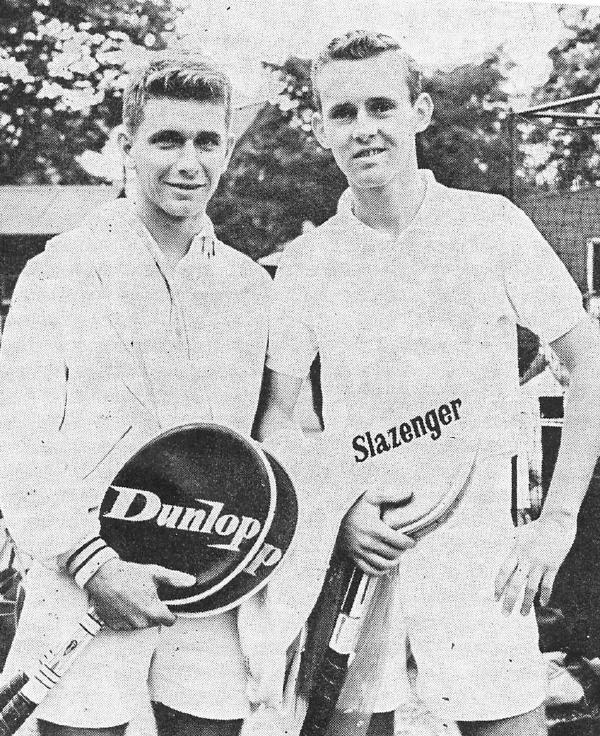
Marty Mulligan with Bob Hewitt 1960

1961 Jack Crawford with Roy Emerson and Neale Fraser

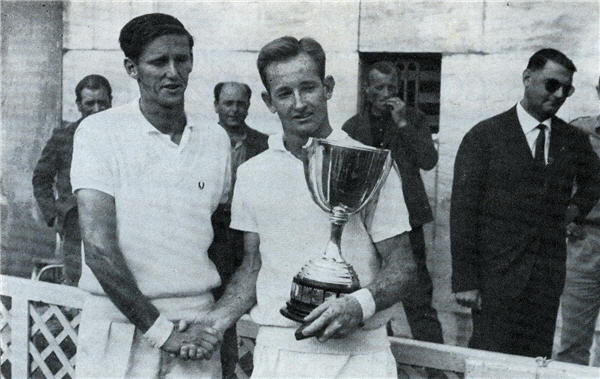
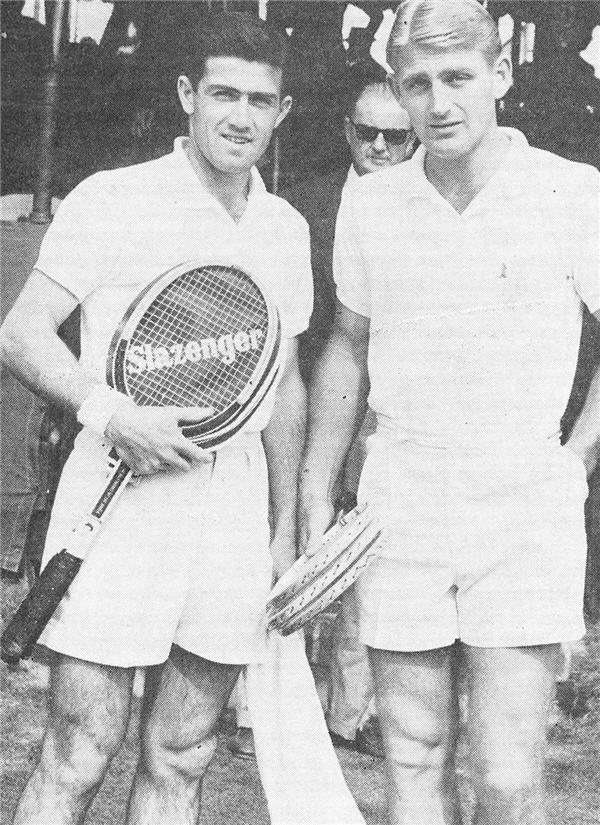
1962 Italian Championships Laver defeats Emerson

John Newcombe, Orange County USA Juniors

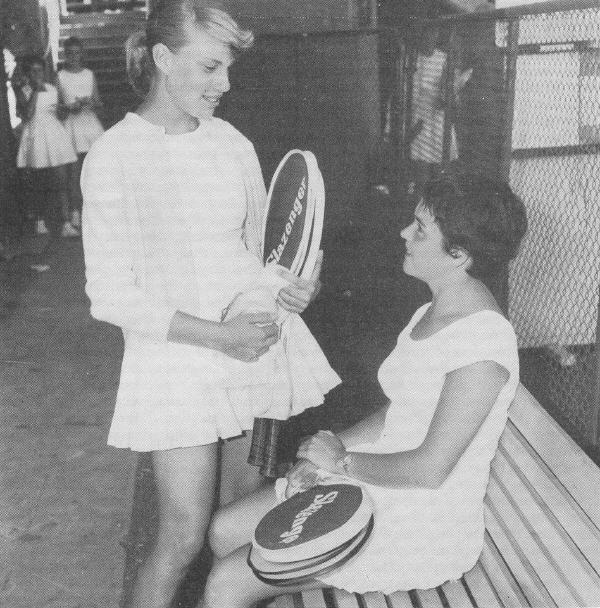
John Sharpe & Jill Blackman

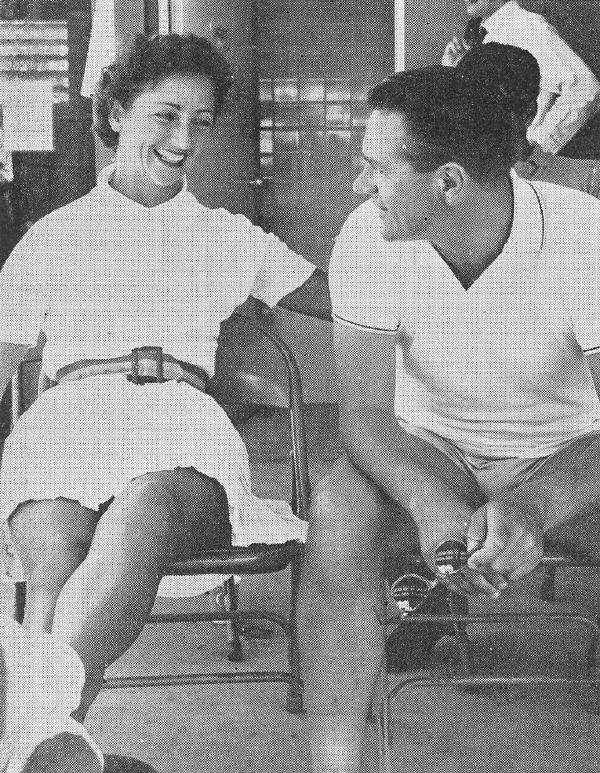
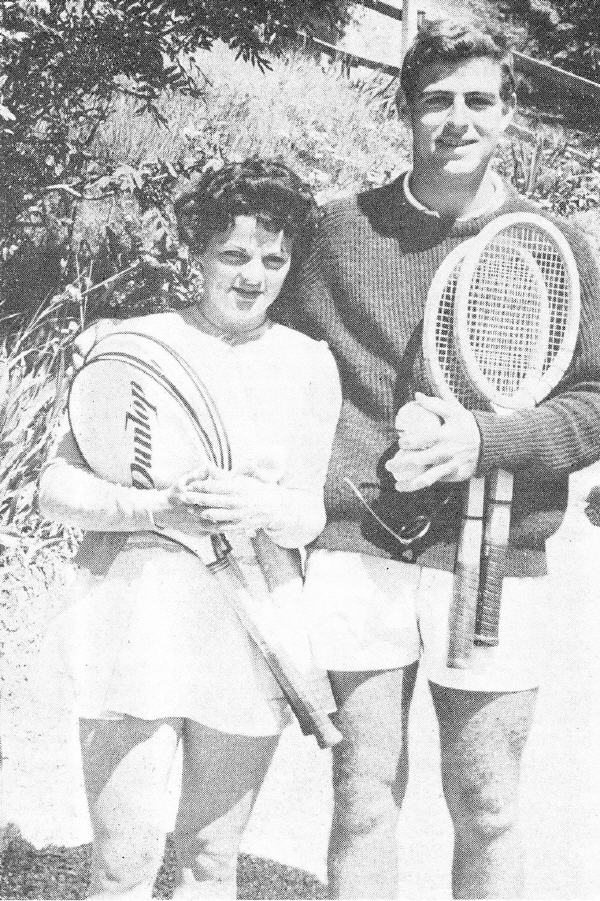
Margaret Hellyer marries Carlos Fernandez 1961

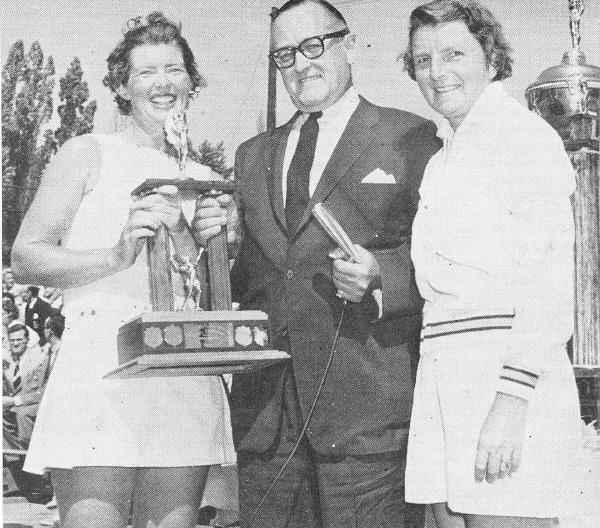
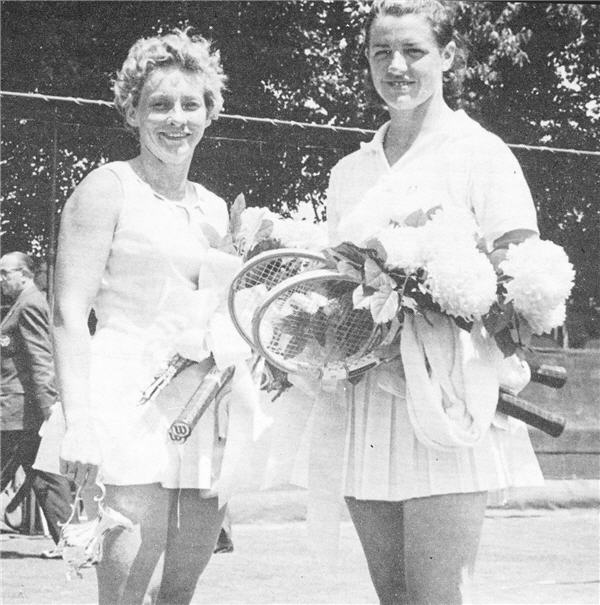
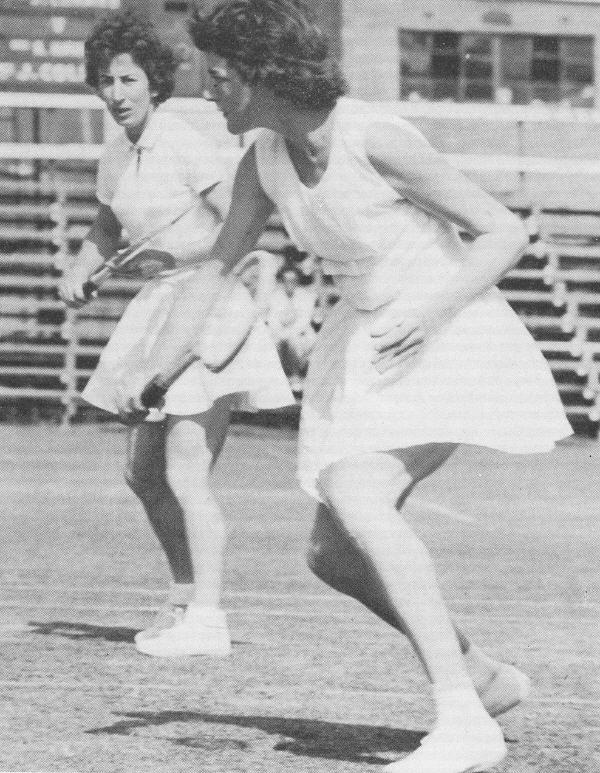
Dulcie Whittaker and Margaret Smith 1961

Lesley Turner defeating Margaret Smith in the Italian 1969

Jan Lehane and Lesley Turner 1963

John Cody, OS Tennis coach 1963

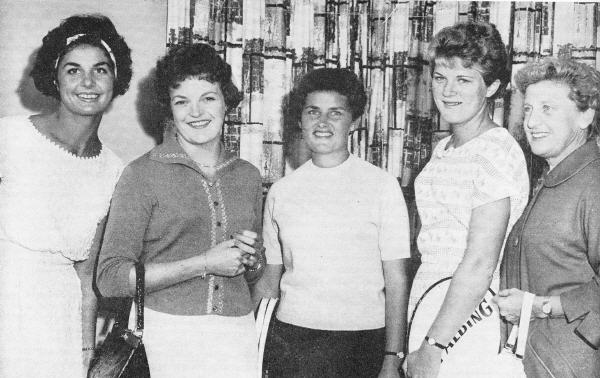
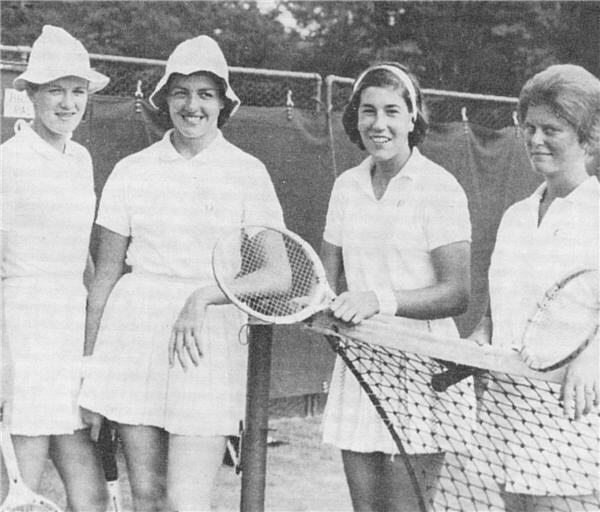
1963 Australian Women’s Team

Lesley Turner wins the French 1963

Roy and Joy Emerson 1963

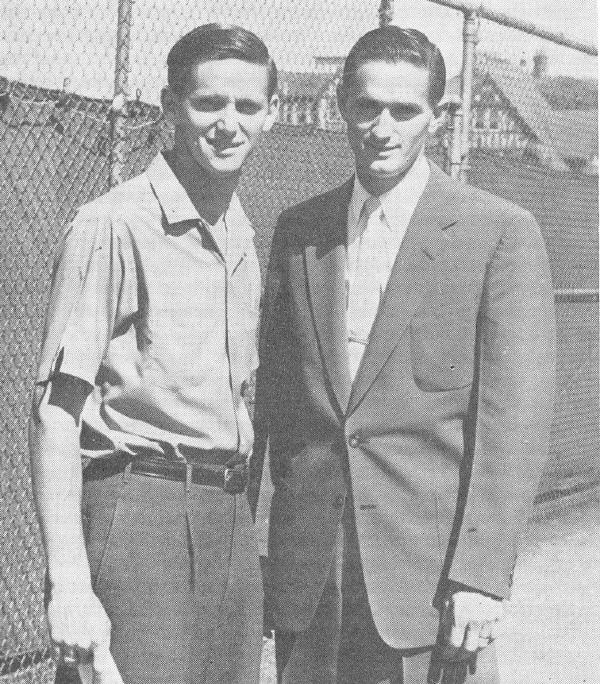
Mal and Roy married sisters to become brothers in law.  They look like brothers don’t they?

Margaret Smith defeating Darlene Hard Orange County USA 1963

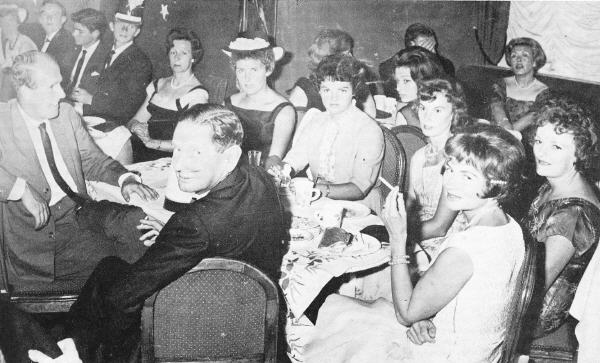
Lesley Turner and Jan Lehane at a flashy dinner party 1963

Robyn Ebbern and Margaret Smith (left) team up

Lorraine Coghlan with Margaret Smith 1960

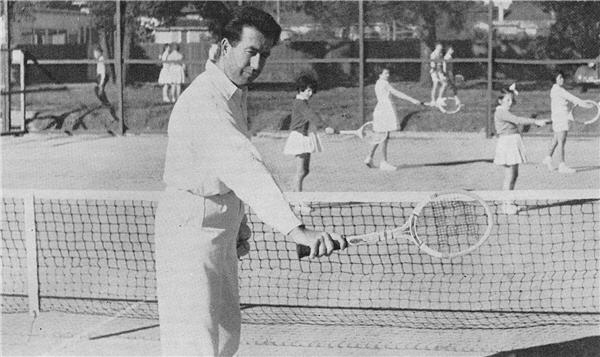
Warren Woodcock (right and below) 1960 played the USA circuit

Rod Laver with Bob Mark 1960
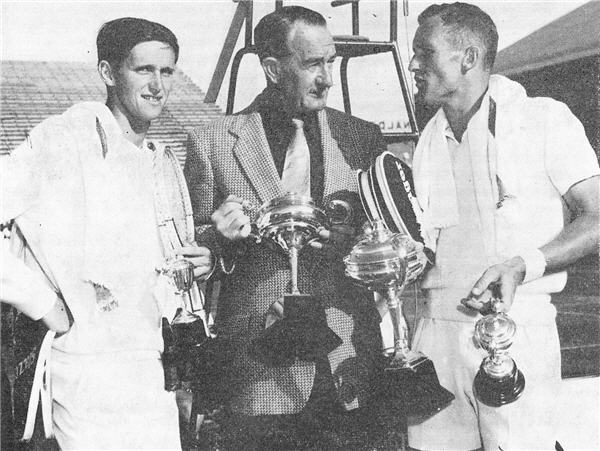
Kay Denning with Val Wicks 1960

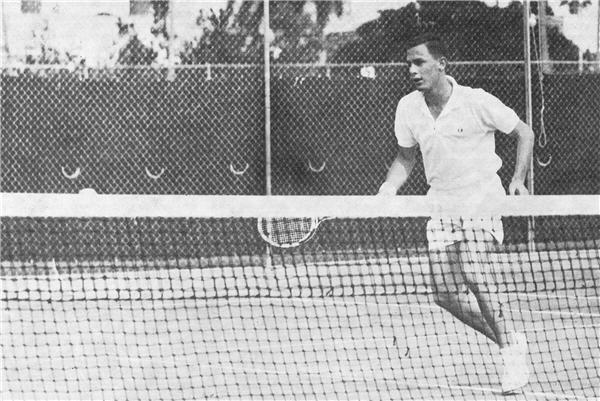
John Sharpe 1960

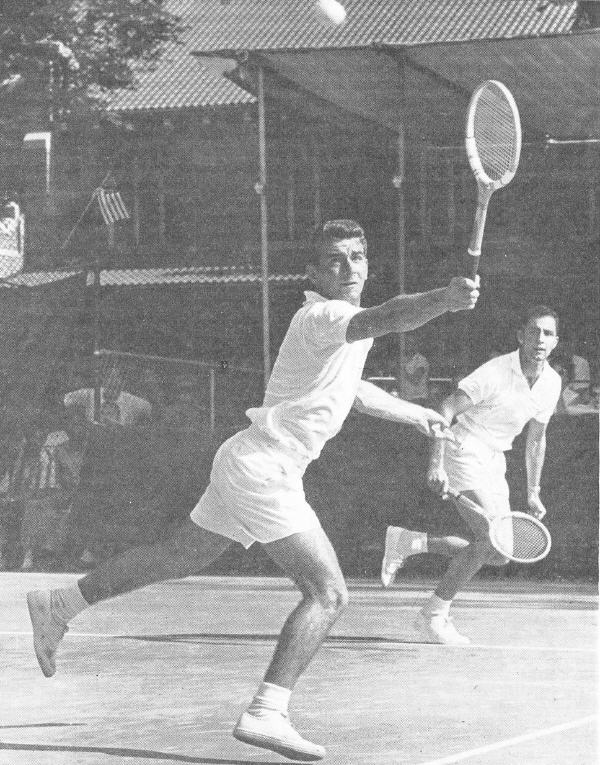
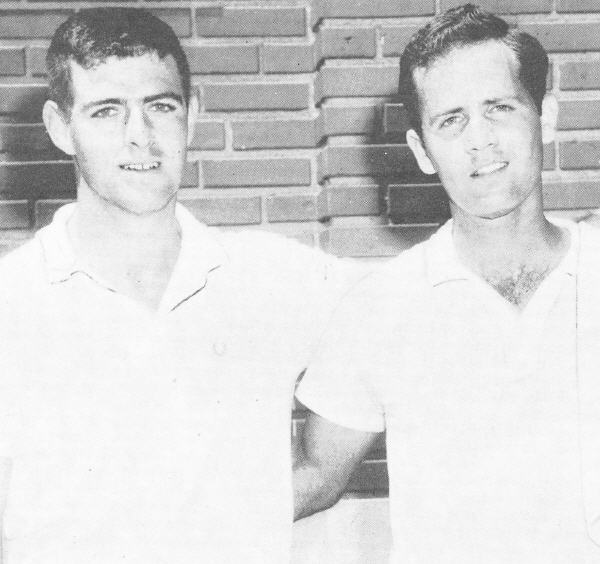
Bob Hewitt and Bob Howe 1960
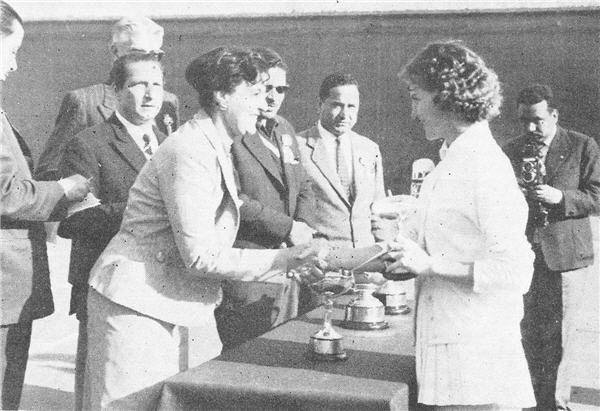
Margaret Hellyer in Egypt 1960

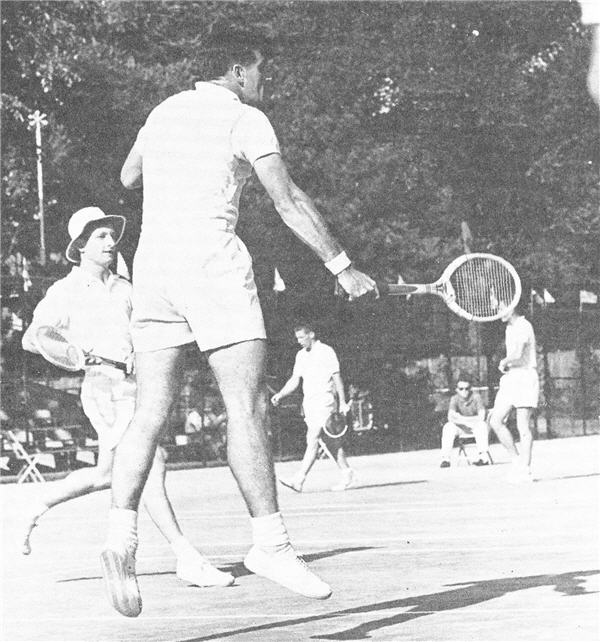
Ken and Lew on the pro tour 1959

Marty Mulligan with Ken Fletcher 1959

Marie Martin 1959

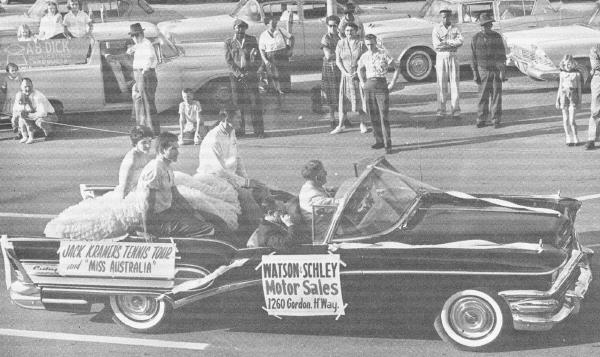
Pro tour procession for Cooper and Anderson 1959

Bob Howe in the New Zealand final 1959

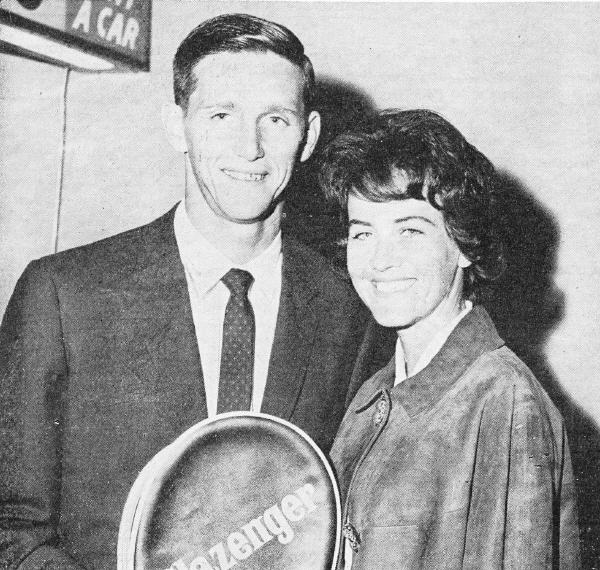
Barry and Anne Phillips Moore 1959

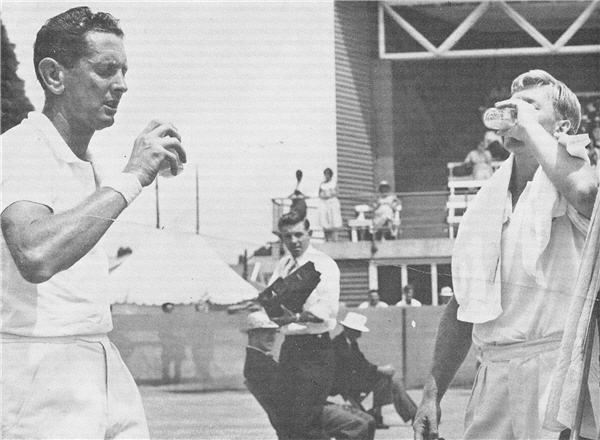
Line Umpires having a joke with Ashley Cooper