Earliest Known Interclub Tennis Tournament 1880

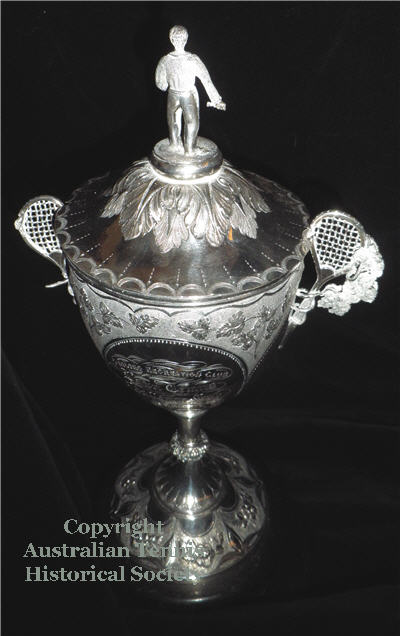
Local interclub competitions were conducted, certainly in 1880 in Melbourne, for we have just enjoyed seeing a trophy awarded to one of Victoria’s early champion players, Francis Highett.  This was the Geelong Recreation Club, Lawn Tennis Challenge Cup.  It was a bi annual tournament and another MCC member won it firstly and then Francis won the second in October 1880 and again in 1881 (first half).  After winning the Geelong tournament, a few weeks later in November he won the second Victorian Championships, which unlike the first was widely promoted to attract players from surrounding colonies.  Arguably, this constitutes a more legitimate Victorian Championship despite the records stating otherwise.

P2190006bbb

Encouraged to find out more about Francis, we stumbled onto some family papers in the state library for W. Riddell who was the secretary at the MCC during this time.

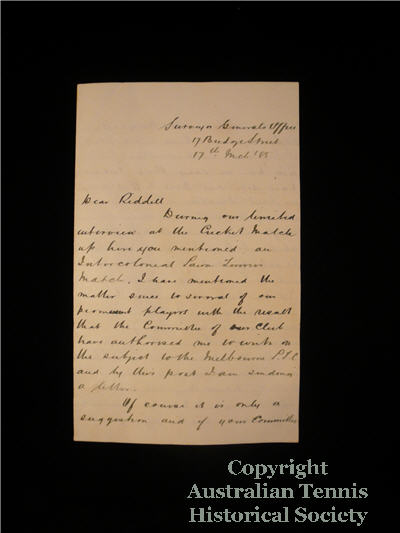
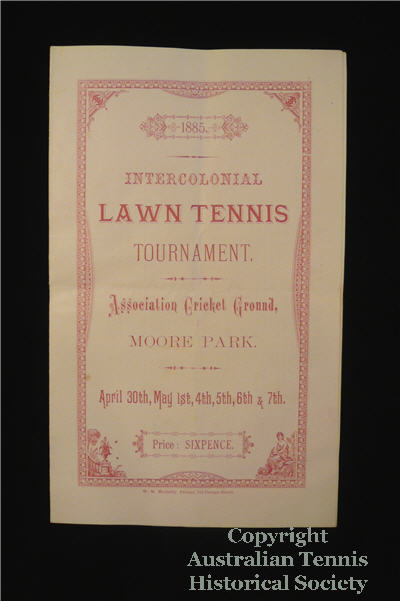
To my astonishment, included in his papers were a considerable plethora of significant tennis history documentation.  This included the letter from C Cropper the secretary of the NSW Cricket Club inviting a Victorian team to Sydney to play the first Intercolonial tennis tournament in 1885.  They even considered an All Comers Open Championship ( aka National Titles 20 years prior to this occurring in 1905).  While this letter is “gold”, the files also contained the original programmes for this first event and subsequent years. Naturally, not even knowing that such printed matter existed this is a truly amazing find. Featured on a page about Intercolonial tennis.

One should note that Intercolonial team events were not new, as Cropper and Riddell had discussed the matter on an earlier cricket contest.  Yet given tennis was still in its infancy, this was significant progress and the crowd reaction and numbers in the thousands proved the game was very popular.

P1190034

The front page of a 3 page letter from Cropper to Riddell inviting the first
Victorian tennis team to NSW in 1885

P1190042

The first major tennis tournament in 1885 which pitted the best of NSW against
the best in Victoria plus an array of other ladies, veterans and handicap
events, including the first NSW State Championships.

See more under the main EVENTS heading EARLY TOURNAMENTS.

Tennis Racquet Collecting

Since we began our journey to present the history of tennis through a website, a world of fellow collectors & historians has become apparent, all with the common interest of preserving and telling the story of tennis and its development through the years.

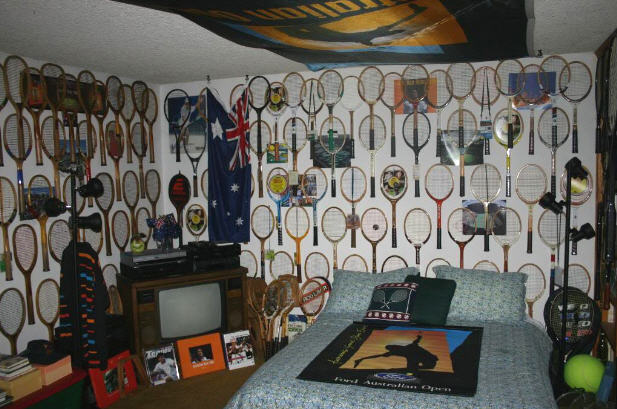
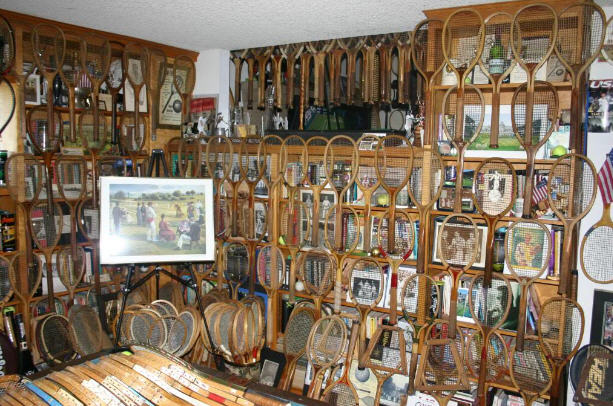
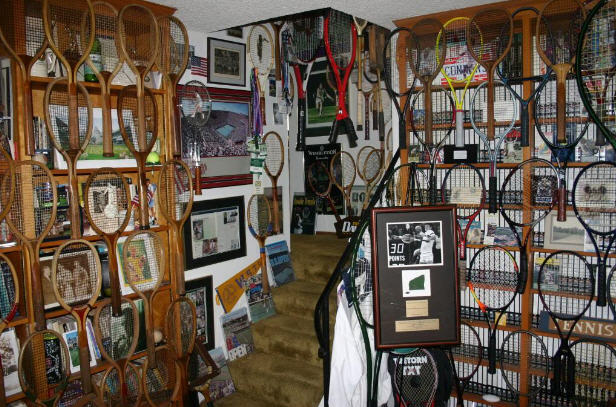
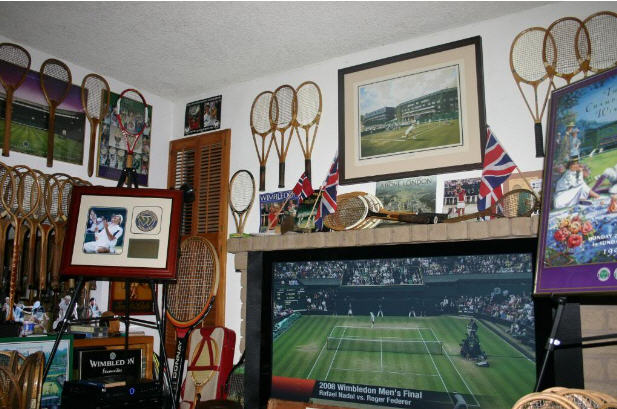
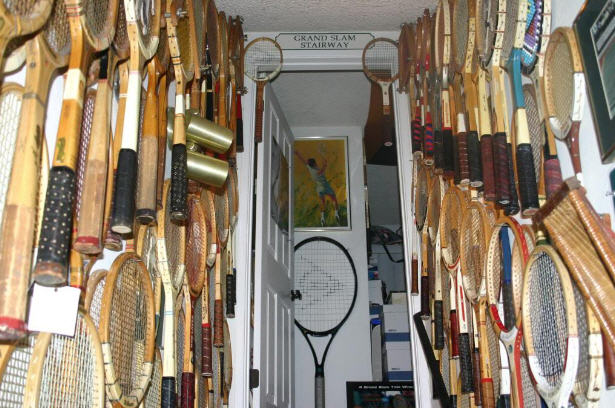
Recently we received some photos from USA collector David.

Now this 7000+ collection of racquets from around the world must surely be the largest, although we know of half a dozen collectors in Australia with over a 1000. Themes in the collection vary by country to Hall of fame players, plus there are many unusual racquets as well, plus an array of retail display racquets, POS, balls and other memorabilia.

To my surprise, David is married.  I say surprised only because of my own wife’s (nonplussed) reaction to my modest collection which is in one room only, so I am in awe of David’s negotiation and home management skills.

The effort and cost in developing this fine collection is enormous and we thank David for agreeing to share his passion here at tennishistory.com.au

If you have any questions relating to tennis racquets, memorabilia, players etc please contact us.

DF Collection 8

DF Collection 3

DF Collection 2

DF Collection 6

DF Collection 7

Lawn Tennis Court Hire at Rippon Lea

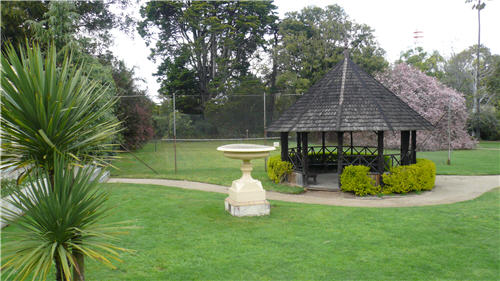
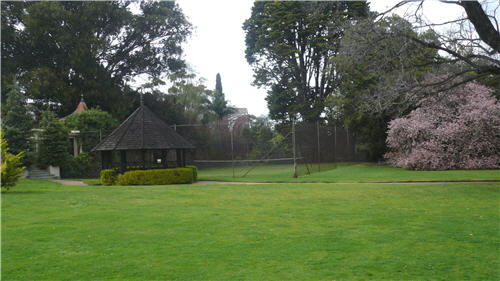
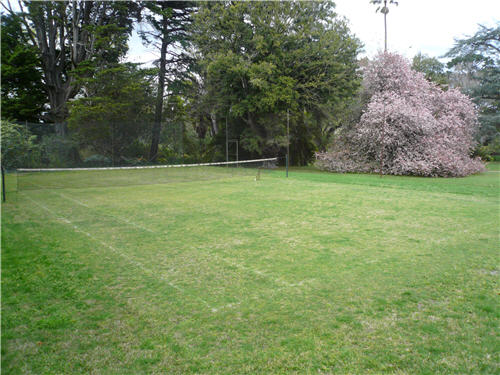
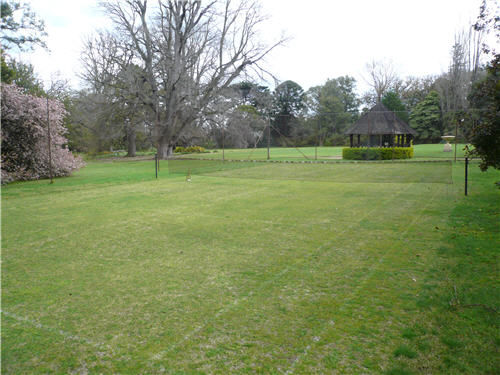
Tennishistory.com.au has negotiated with historic Melbourne Mansion Rippon Lea to hire our supporters their grass court which has been a feature on the property since the mid 1880’s.  If you want to organise a great grass court event either just for the experience on grass, surrounded by magnificent gardens or an olde world event with your woodies and costumes it is up to you.

Please click this link for more information.  CLICK HERE

Bookings essential and availability is conditional.

MENTION TENNISHISTORY.COM.AU when you book for a slightly better hiring rate.

Thanks from the team@tennishistory.com.au


rip 11

rip 9

rip 7

rip 4

rip 1


US Racquet Imports

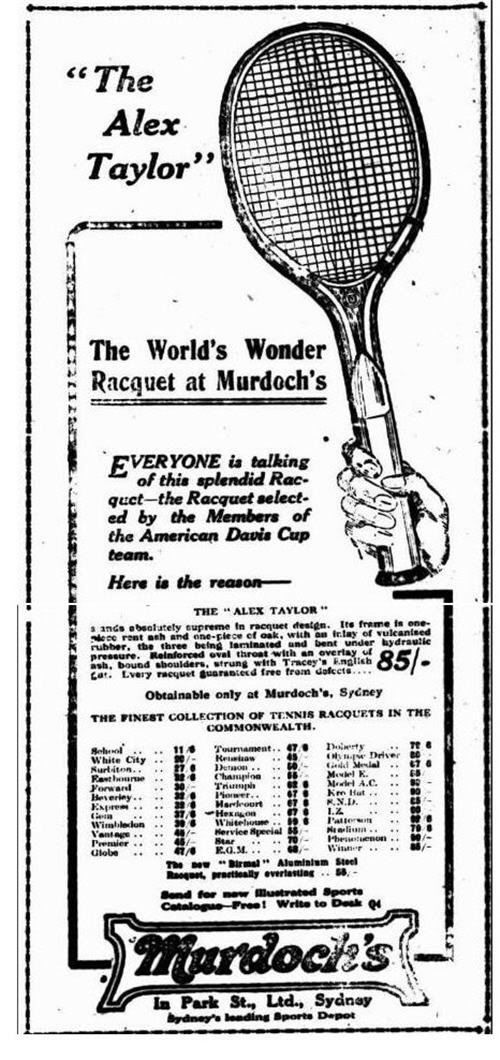
In 1924, the might of the USA on the courts was being felt in Australia. Bill Tilden, Bill Johnston and Vinnie Richards were blasting their way to victory in Philadelphia against Australia in the Challenge round team comprising Gerald Patterson and Pat O’Hara Wood.Murdoch ad 1924

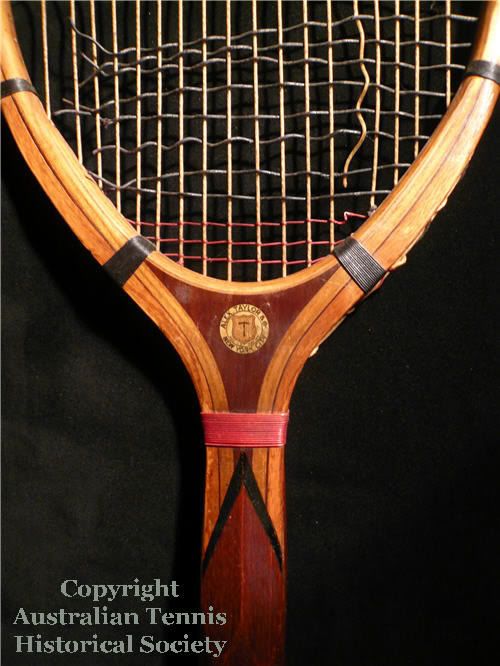
The two “Bills” were also dominating major tournaments, so what better time for Australian retailers to promote the racquet being used by them.    The ad is from a Longreach newspaper  in 1924. While a little hard to read, the Alex Taylor was quite a beautiful racquet made from three layers; rent ash, vulcanised rubber and oak laminated and bent under hydraulic pressure.

Alex Taylor was a New York based manufacturer and the racquets often carried the letter “T” inside a shield. You can perhaps just make this out in the ad.

Whether or not the Alex Taylor was that talked about , who knows, but the price was cerainly at a premium compared to the others available.

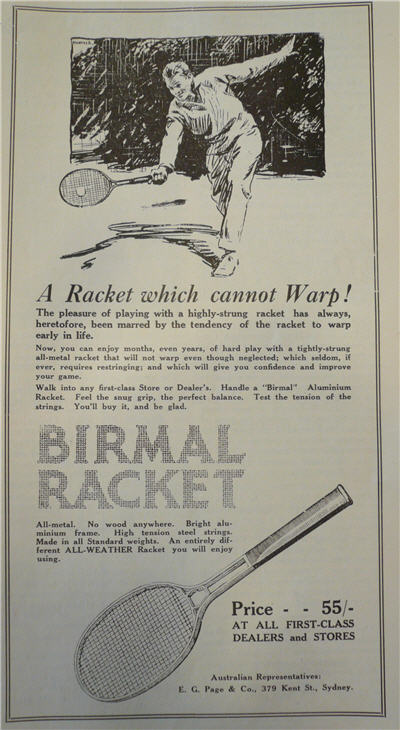
Murdoch’s was one of   Sydney’s large retail stores and they carried an impressive range of imported brands from the UK & USA, however,  please note the mention of the “BIRMAL” (UK) aluminium / Steel strung racquet that is practically indestructible.

Pictured below is an Alex Taylor signature racquet which looks very similar to the one drawn in the ad.

Although without the double mains stringing, you can see that the stringer has used different gauge cross strings compared to the mains which today is now being tried more regualarly in the new racquets.

The handle throat area is wonderfully tapered and with a weight of 14 oz and scored all wood grip of 5″ indicates it was a man’s racquet. Perhaps a big hitter,  given the extra reinforecment added to the handle.  Large grips were common place back then.


Alex Taylor Racquet

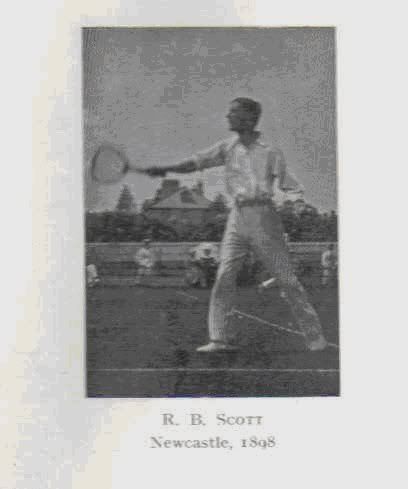
Robert Baldock Scott

If you have viewed the sections on W.V.Eaves and E.B.Dewhurst, you will learn of some early Australian players who travelled back to the UK and USA respectively and accounted themselves on the tennis scene very well.

Recently, one of our researchers and tennis book collector, Keith Jenkins, uncovered the story of yet another Australian that may well have had a significant influence on tennis in the 1890’s in England, not just directly by his own hand, but in deeds which influenced others. I say uncovered because a mention in one sentence in a book was made about an Australian player named Robert B Scott and from there considerable research effort by Keith brought the following story to light.

Thanks Keith, for your stirling investigative journalism.

Robert was born at Geelong, Victoria, Australia, 11 Feb. 1868. He was the son of Thomas King Scott of Kenley, Melbourne, and Emmeline Fincham Baldock. The family owned properties in  Buninyong, Victoria, and Walgett, NSW and on the death of Thomas the probate on his will was some 20,369 pounds, which was a huge amount in those days.

Being obviously from a very wealthy family, Robert was educated at Toorak and Scotch Colleges, attending Scotch from 1876 -1882 [where he also won the Bible Prize in 1880] and then attended Ormond College, Melbourne.

In relation to tennis, Robert was already playing at a top grade in Australia before leaving for the UK.  An R.B.Scott was playing doubles with his brother in an Adelaide tournament at aged 15 and is recorded as playing for Victoria in 1890 in an early Interstate carnival event. While not quite in the top rank, he was a competent all round player.

As many Australian lads did, he travelled back to the UK to further his education and entered Trinity College at Cambridge on 7 Oct. 1892. He graduated with a BA in 1895, but he is not listed among the students who took honours. He is also listed as having studied at Edinburgh.Robert Baldock Scott
At Trinity, there is an early record of an R.B.Scott playing for the second tennis team (Grasshoppers) in 1893 and then going on to play for the first team in the Varsity match. In the 1893 Varsity Match he beat W.V.Doherty 6-4, 7-5, beat J.W.Steadman 6-2, 4-6, 10-8 and lost to A.D.Kelly 2-6,4-6.

He also won two out of three doubles rubbers playing with H.V.Fedden (also of Trinity). They lost to Doherty and Kelly 13-15, 1-6, beat Hinde and Steadman 6-2,6-4 and beat Pritchard and Mears 6-2, 6-4.

While at Cambridge University, R.B. Scott was Hon. Secretary of CULTC (Lawn tennis club)  and in 1894-1895 R.B.Scott was President of CULTC. In the following years, R.F. Doherty was President in (1896) and H.L. Doherty in 1897. Both of these gents after the Renshaw brothers, virtually dominated tennis for a decade and in the process with a huge public following stimulated ongoing interest and growth in Wimbledon and the first Davis Cup matches.

As to Robert Scott’s involvement with these champions, in reading the book, “Fifty Years of Lawn Tennis in Scotland” edited by A.Wallace MacGregor in 1927, Scott is first mentioned as an “Australian player” in the 1892 Scottish Championships. Then MacGregor tells of the 1895 Champs where he played with “RB Scott, then President of Cambridge, one of the finest doubles players I have ever been privileged to partner, and one to whose enthusiasm and advice at Cambridge much of the Dohertys’ devotion to the game was ascribable”.

Apart from a huge enthusiasm for the game, Robert played at Wimbledon (at the same time as Eaves) in 1894 losing in the second round to Harry Barlow 11-9, 4-6, 2-6, 4-6. In 1896 he lost in the first round against top player Charles Allen 6-3, 0-6, 4-6, 6-1, 4-6 and then teamed with H.L.Doherty to lose in the 3rd round against the Allen brothers 6-3, 1-6, 1-6, 2-6.

In the Scottish Championships of 1897, Scott and his partner, R. Hamblin Smith were beaten by the Doherty brothers in the semi finals, losing 1-6, 13-15, 0-6.

Robert was licensed by the Presbyterian Church of Edinburgh May 1899; assistant at St Cuthbert’s, Edinburgh, North Berwick, and to garrison chaplain, Edinburgh; ordained minister at Humbie, 18 Jan. 1905 and was transferred to Rhu 9 Nov. 1922 and died there 7 May 1924.

To assist relatives in contacting us with additional information,  our Robert Scott married on 31 Aug.1904 an Alexa Evelyn MacLeod, born 21 Feb. 1872 died 18 Mar. 1937.  She was the daughter of Rev. John Macleod, D.D., minister of Govan.

Children of RB & Alexa – Mary Alexa Baldock, born 12 Aug. 1908; Celia Helen Baldock, born 9 July 1911.

We only have the one photo and any new information would be gratefully received.


References:

“Fifty Years of Lawn Tennis in Scotland” edited by A.Wallace MacGregor. 1927 [photo]

Cambridge University Lawn Tennis Club – contact Nick Jenkins [no relation!!]

Jonathan Smith – Trinity College Archivist, Cambridge University.

Scottish Ministers – Humbie p.377

“The MacLeods-the Genealogy of a Clan” by Rev. Dr. Donald MacLeod/Alick Morrison 1970, p.33

“Wimbledon Championships” by John Barrett

“50 Years of Wimbledon” by A. Wallis Myers p.37, p.92.

Dr. Jim Mitchell – Scotch College Archivist

The Argus – 4 Jan. 1868 [List of old colonists]

The Argus – 17 Dec. 1880 [Scotch College prize]

The Argus – 27 Aug. 1889 [TK Scott – death notice]

The Sydney Morning Herald 27 Aug. 1889 [TK Scott – death notice]

The Argus – 8 Nov. 1889 [TK Scott – probate]

The Argus – 3 April 1890 [Ormond College concert]

Sydney Morning Herald – 13 Nov. 1890. [Intercolonial Tennis results]

The Argus – 2 Sept. 1904 [Wedding notice]


Soft Tennis

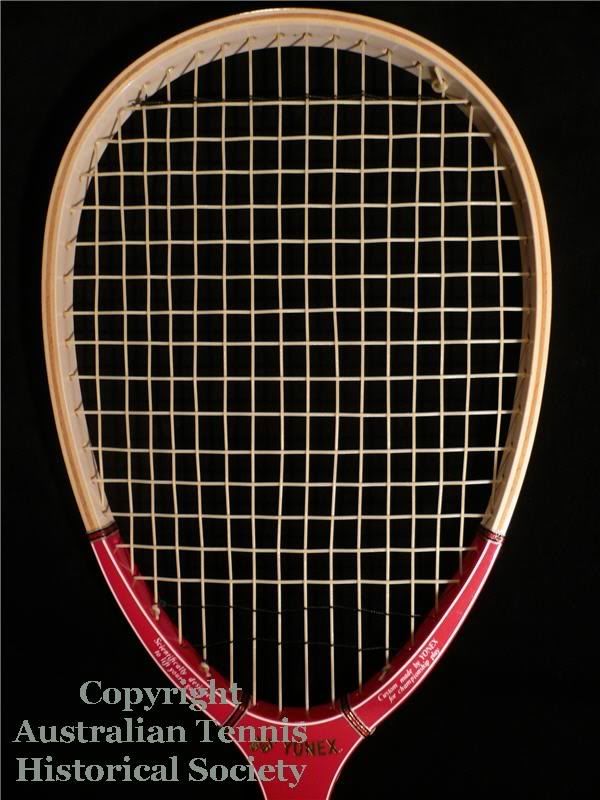
Occasionally a racquet style will come up for sale which perplexes both buyer and seller.  These racquets are the same length as a standard racquet, much the same width but have a narrower frame and lighter weight.  They’re not squash racquets either because the shaft is not as slim.

The answer is these racquets belong to another form of tennis usually played in Asia, called SOFT TENNIS.

It was introduced by a western missionary in Japan in the late 1800’s and given the history, Soft Tennis has become the choice version of tennis for about 40% of tennis players in Japan. It is also becoming increasingly popular in other areas of the world. A slowed down and more strategic version of the standard tennis game, Soft Tennis emphasizes longer rallies and a more exciting performance that is accessible to every age and ability level right from the very first serve.

The key to Soft Tennis is the use of an inflatable soft, rubber ball. Unlike the standard felt-covered version, the pressure can be adjusted. Players can speed up or slow down the game to suit their ability and training objectives. Its composition also makes it more difficult to generate as much force when hitting the ball. This keeps the ball on the court. The result is longer rallies and a focus on cardiovascular fitness, hand-eye coordination, ball placement and footwork.

The racquets are made by many Asian based makers and we have not seen any examples produced by local companies.

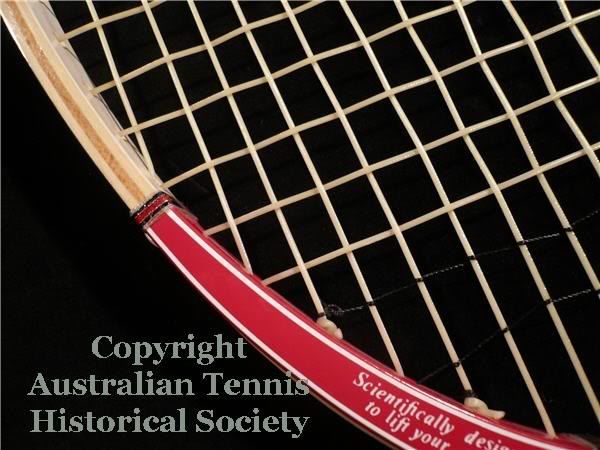
Soft tennis racquet

Soft tennis racquet

This is the YONEX TS 7000 and the thinner frame is evident. Weight is about 10oz.

A google search will find additional information.

Other Unusual Racquet Sports

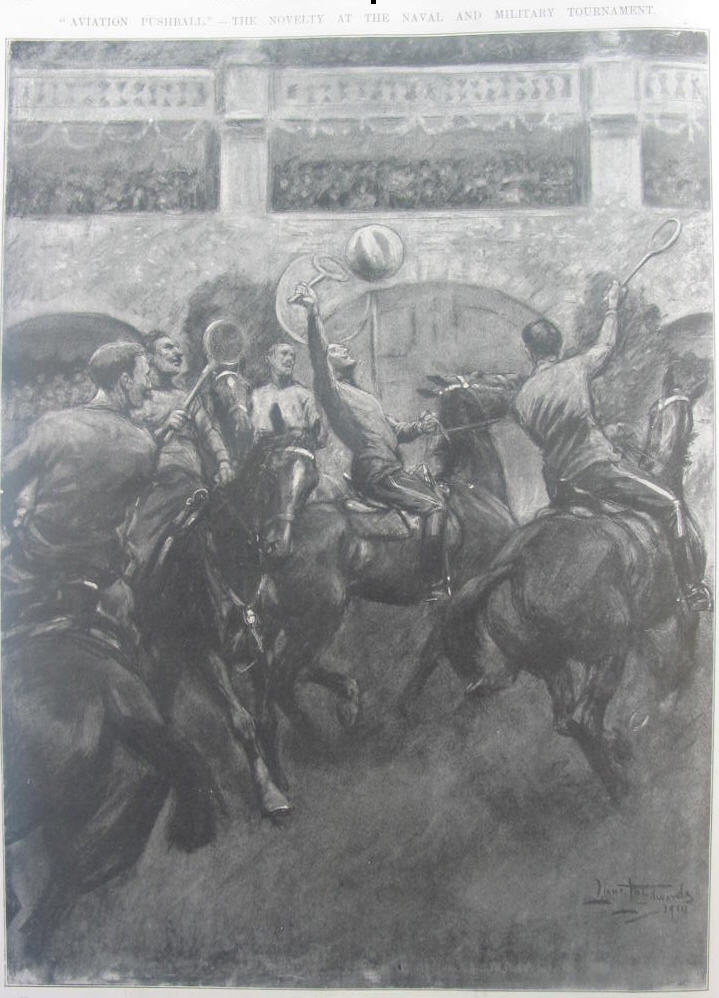
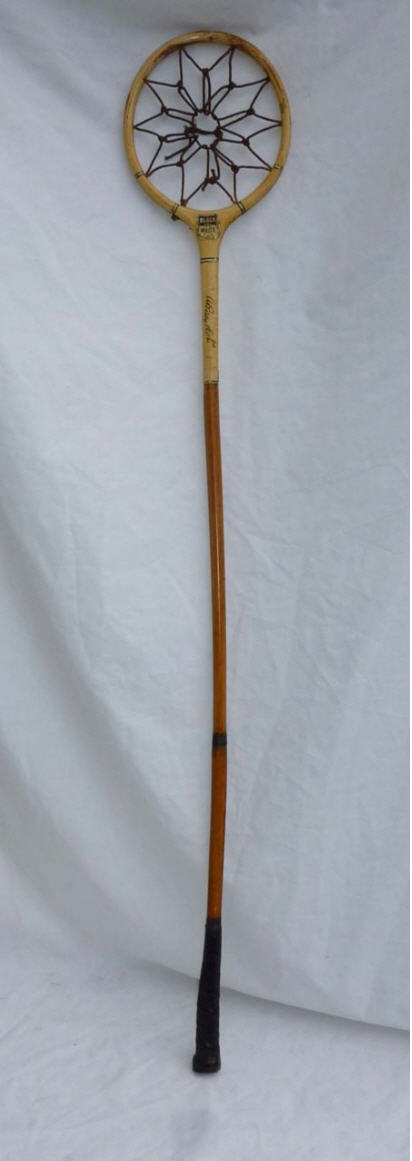
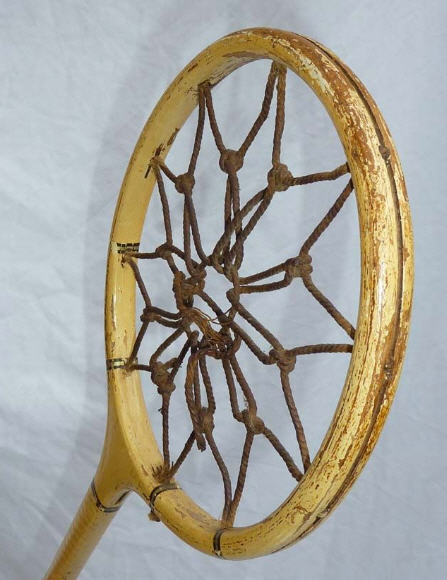
Recently when searching Ebay an unusual looking racquet came up for sale in England. Our good mate in the USA, Rolf Jaeger decided to buy it as part of his second tennis collection, having sold his first to Tennis Australia.  Neither of us had seen this before, but after some quizzing of his UK mate we found the racquet belonged to game played indoors on horse back, a winter polo variation if you will, with the extremely fanciful name “Aviation Pushball”.  The game involved a feather light, air filled ball which could be guided and hit from player to player to score a goal.

AVIATION PUSHBALL RACQUET pic of game

AVIATION PUSHBALL RACQUETAVIATION PUSHBALL RACQUET 2

Aviation Pushball in action and the racquet right with a very intriguing stringing technique.

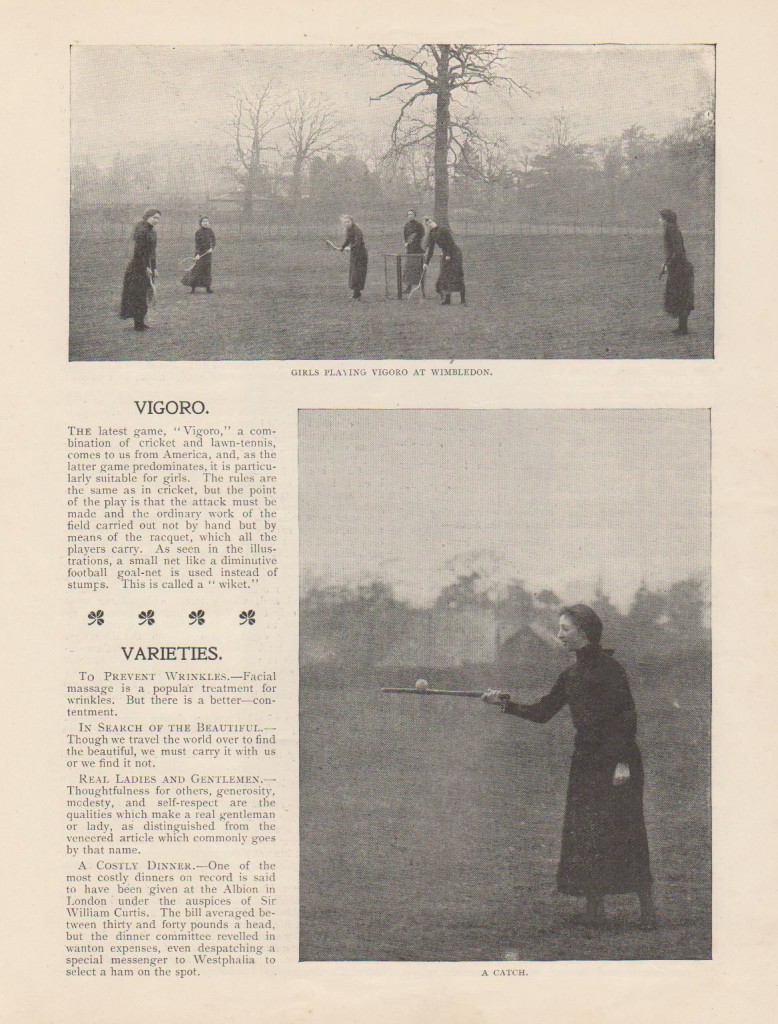
Within the Australian newspapers, we found at the same time a new game invented in England in the early 1900’s mainly for women, where in a type of cricket/tennis variation you hit/bowled the ball with a racquet to a batsman with racquet, to fielders with racquets where the ball could be caught using the strings. This game was called VIGORO and amazingly the game survived into the 1930’s when, as with lawn tennis, boxed sets were sold and even more surprising is the existence of Vigoro associations in NSW and Qld today. The racquets have been replaced by bats but it is great to see how other games evolve and survive.  See more at the NSW website www.vigoro.com.au

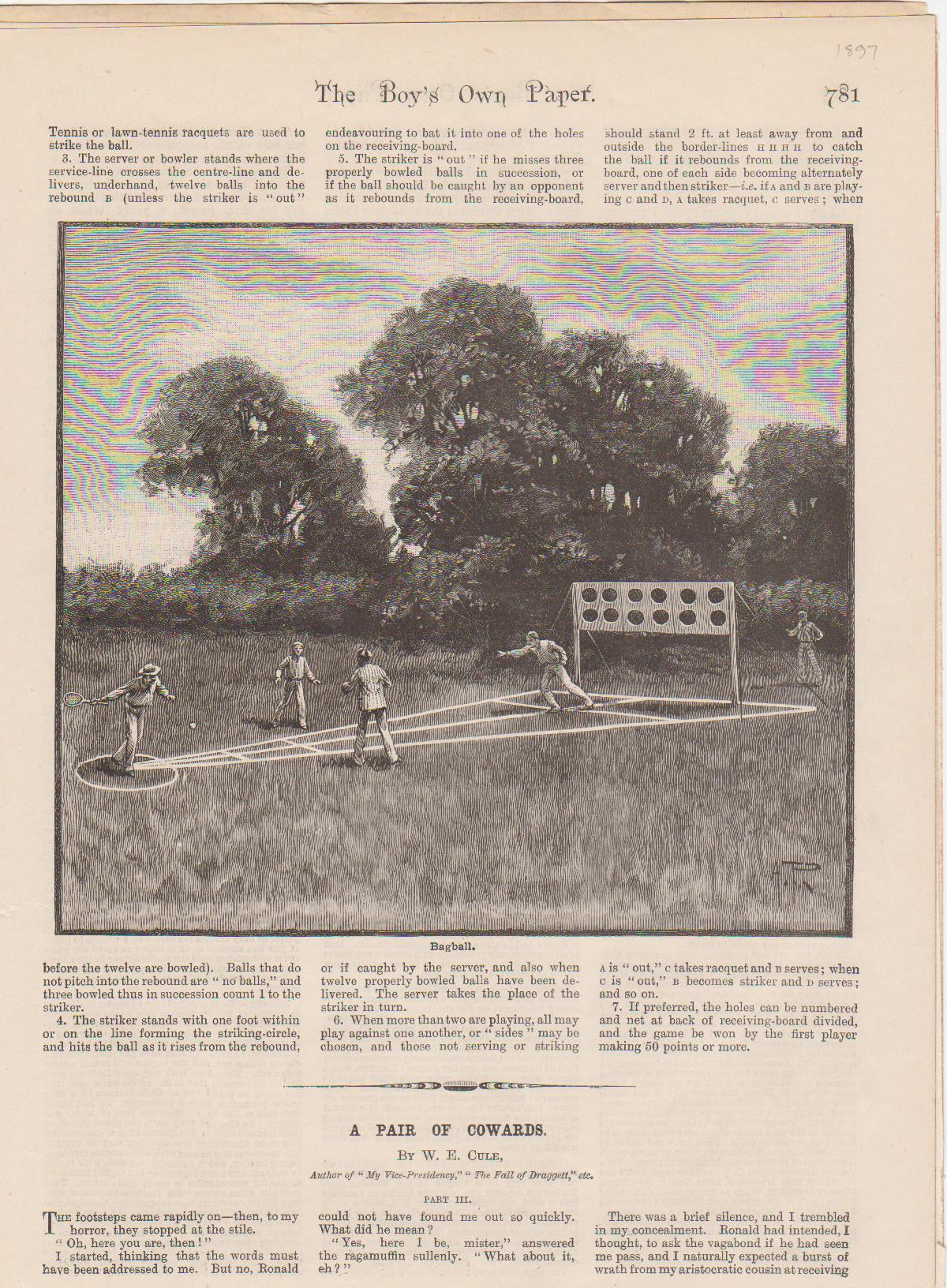
Finally, and thanks to our UK contributor, we find reference to another racquet sport called “BAGBALL” which it would appear did not survive the journey.

So great fun learning about these marvellous developments.

Vigoro

Vigoro in play c1903 & sets sold in 1930…still going strong today.

Bagball

Bagball looks like points scored for accurate driving or volleying.

1920’s Metal Racquets in Australia (Dayton and Birmal)

Under unusual racquets there are a couple of early metal racquets shown which made it to Australia.

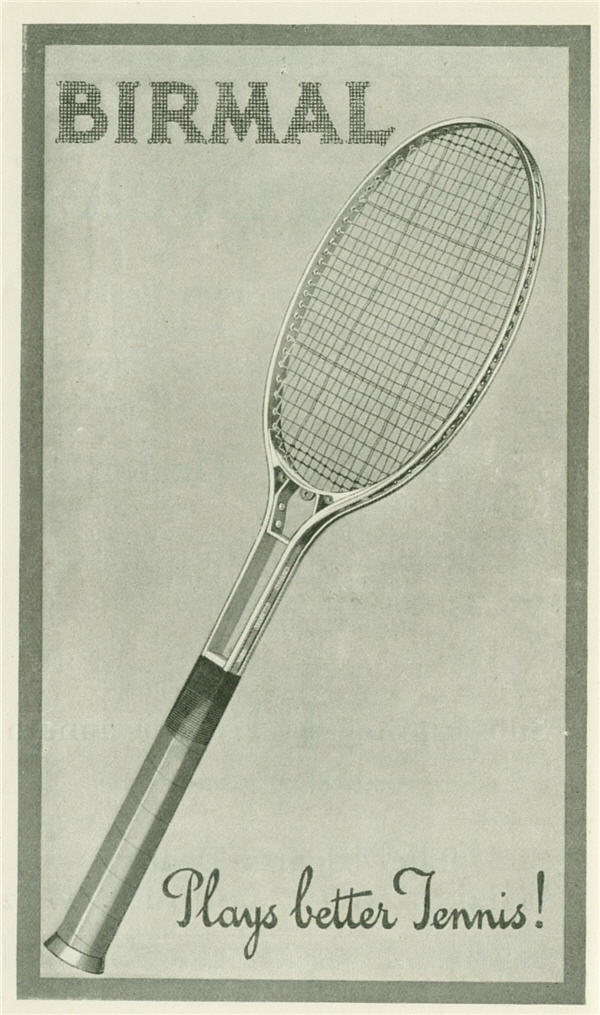
One is the US made Dayton, which commenced in 1922 and closed down after a magnificent span in 1995. The other was the 1924 UK Birmal Aluminium Racquet.

Both were sold in Australia.

Dayton was imported very early in the piece via Gerald Patterson who was one of Australia’s top players at the time having won Wimbledon in 1919 and 1922.

These racquets, as you can read were strung with Piano wire and ideally suited to all weather conditions.  They were also strung with gut if desired.

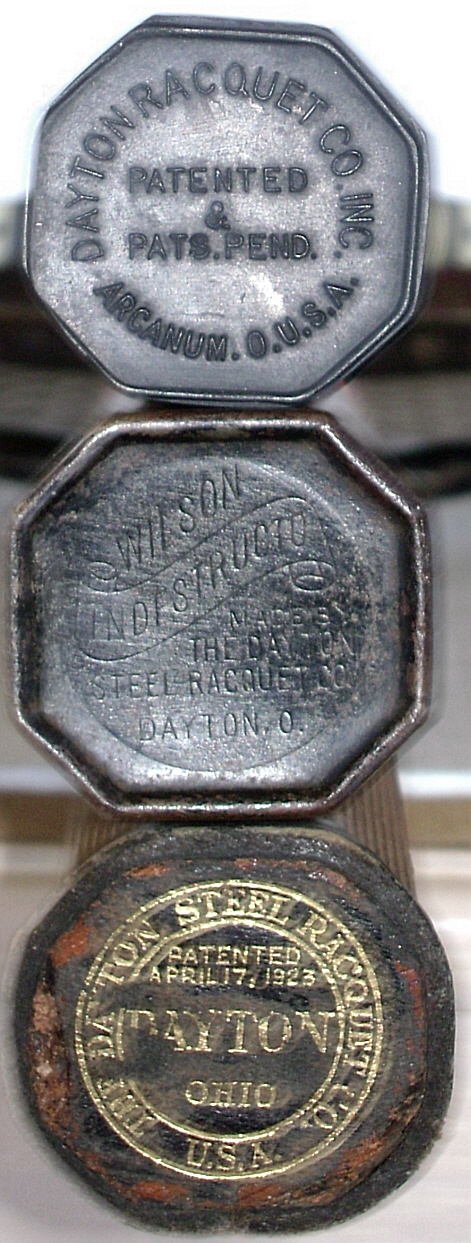
The colourful frames are great for collectors, but the trick is to learn about how to tell which models are older than the others. According to expert Randy Crow from the US Tennis Collectors Society,  if the butt cap has Dayton Ohio it will be 1922-1934,  if “Arcanum O” then 1934-1975 and if three stylised racquets appear on the throat then post 1975.

dayton light blue 2011 (11)

daytonbcaps

DAYTON imported by G Patterson

Gerald Patterson went onto become the MD of Spalding in Australia and also used these Daytons in tournament play, one of the top players to do so.  In 1928, on an international visit Jean Brugnon was intoduced to these during some wet weather play at Royal South Yarra by Pat O’Hara Wood.

The racquets were not that popular amongst the top class players but did prove to be appreciated by schools.

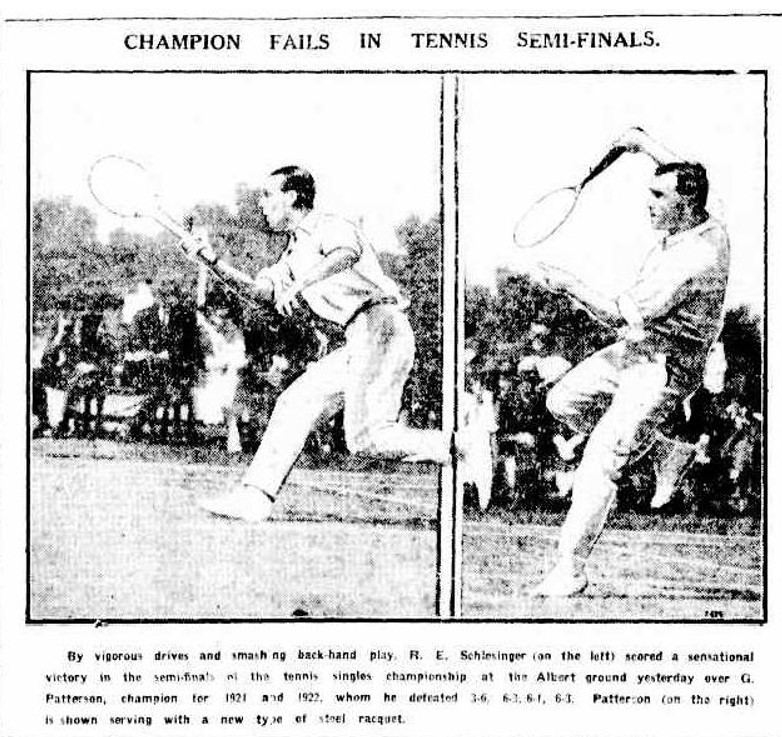
The picture below from 1923 shows Patterson the right playing with his new racquet. The fact he lost what was meant to be a win, perhaps did not help the cause.

patterson using dayton 1923

The Birmal racquet, was aluminium and also strung with piano wire. The grips however were not grooved wood handles like the Dayton but appeared with a wrapped cord grip and later on with a leather grip.

These were promoted most heavily in tropical Queensland and the Northern Territory.

birmal001

birmal002

Birmal Ad ALT 1924

These ads and PR from Australasian Lawn Tennis 1924

Invention of Electronic Scoreboards

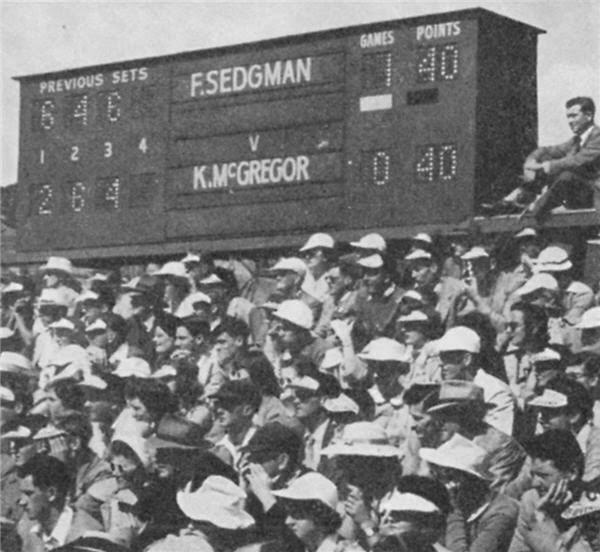
An Australian tennis enthusiast, named Edward Both invented the electronic tennis scoreboard around 1952.  He and brother Don designed and tested the unit in South Australia before its’ launch at the 1952 NSW championships.  The new technology took off and BOTH EQUIPMENT Pty Ltd became the supplier of these scoreboards to other venues including trotting, basketball and horseracing.  The technology with 9000 globes was used for the Melbourne Olympic Games in 1956.Both Scoreboard 1952

Not only were Edward and Don good players but they inherited their interest from R.V.Thomas (their Uncle) who won Wimbledon Doubles with Pat O’Hara Wood in 1919 and the Australian doubles in 1919 & 1920.

Now the scoreboard invention was no fluke, because Edward Both had also designed the World renowned, life saving IRON LUNG.

It took two people to operate, one for the games and the other for points. Looks like a great match between best mates and rivals here!