Tennis History Sacred Ground

Just in need for a bit of exercise we went for a bike ride today down to St Kilda Rd and Queens Rd in Albert Park, to a location which will hopefully remain a truly sacred site to the Australian Tennis Community nationally.

Down here in Melbourne, the MCC (Melbourne Cricket Club) were the driving force behind the early growth in tennis and the formation of local club competitions  in the late 1870’s. As with cricket, interstate tennis competitions also commenced and in 1892, despite having club courts at the MCG, it was decided to move the Intercolonial Matches to the Warehouseman’s Ground.  Today it is known as the Albert Ground.

The grounds, courts and clubhouse have been well maintained. The courts are no longer grass but the same surface as that now laid at the Melbourne Tennis Centre to enable tournament players some additional facilities to practice on.

In between, the courts are available for hire.

Bot not only were the Interstate tournaments played here, so were the Victorian Championships and eventually the first Australian Men’s Championships in 1905.  Lastly, and at the top of the list, these are the courts on which the very first Davis Cup, was played in 1908 (away from UK & USA), due to Australasia’s win in England in 1907. Here Norman Brookes, who lived just down the road and New Zealander, Anthony Wilding successfully defended the cup which the following year would be played in Sydney. The location was selected in Victoria as an honour to the new Australian tennis hero, Norman Brookes who had also won Wimbledon in 1907.

The clubhouse, with the exception of a new entrance room,  is almost as it was in the early 1900’s so we hope that the administrators continue to value this little corner at least to the point where it is protected from the property developers forever.
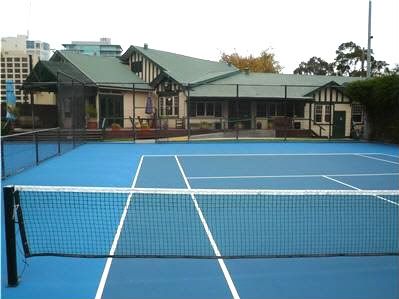
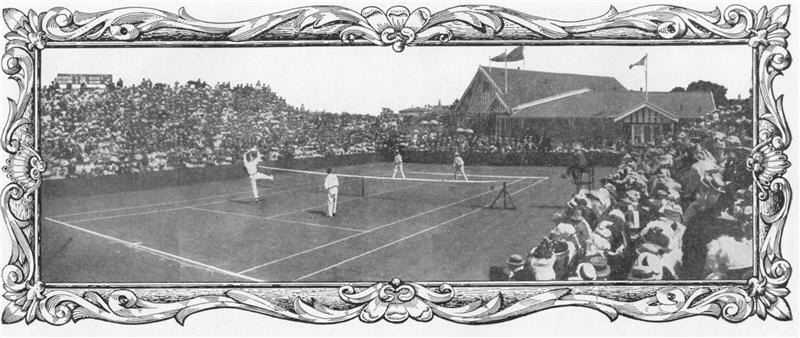
Warehouseman's Ground Davis Cup 1908  Warehouseman's Ground Davis Cup 1908

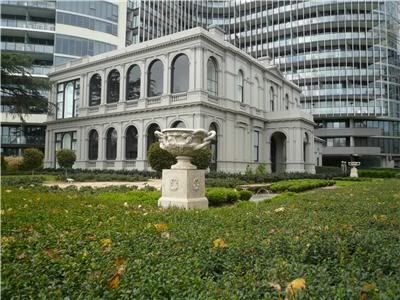
The photo was taken almost exactly where the forehand court would have been. Scaffolding surrounded the Davis Cup Court to accommodate the large number of keen spectators in 1908.  All along St Kilda and Queens Roads were stately mansions like this which have slowly been overun by the multi storey apartment and office complexes.  Thankfully some of these have been saved. Norman Brookes house is now a block of 1950’s style flats.
Davis Cup Melbourne 1908

This photo was copied from the 1953 Davis Cup Challenge Round program as used in a Melbourne Sports Depot Ad. As you can see, the clubhouse is little changed. 

Here is another shot as well. Note the manisons in the background and the cricket ground also exists today.
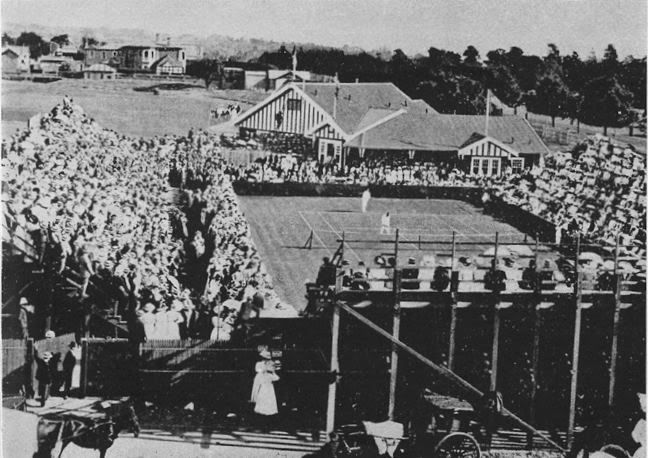
Davis Cup Melbourne 1908


How Fast can you serve with a Woodie

This seems to be a question often raised around tables, at least when the veterans are sipping on a cup of tea (nee Bundy, Jack Daniels, Beer).

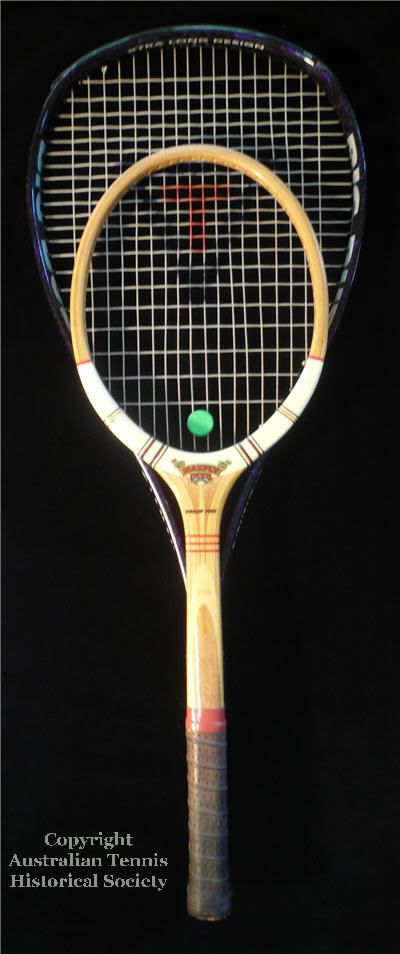
In an article, in USA Tennis Magazine March 1997, written by Tennis Authority Alan Trengove, Mark Phillippousis was given the task of testing out woodies versus a standard graphite (his own) and a superlong.  The reason the article was written was because the ITF had just banned the SuperLong’s being marketed by both Dunlop and Gamma. This meant that all professional racquets had to be under 29″ in length.  I recently saw a Gamma 32″ and it really is a massive racquet with a 137″ head size. See the pic below compared to a standard woodie.  To meet the new rules they just chopped the length back to 28″.

Anyway back to the test. All the racquets were strung by Mark’s personal stringer using the strings and tensions he was used to and grips were adjusted as well.  They were the Dunlop Superlong 29 1/2″, his standard 27″ Dunlop and the recently voted number one racquet of significance over the past 50 years, the wonderful Dunlop Maxply Fort specially flown over from the UK.

The test was conducted at the Melbourne Park, home of the Australian Open.

The results were very interesting.  Wood Ave Speed 122mph, Top Speed 124mph and accuracy 60%.  Standard length 124mph, 127mph, 52% and Superlong 126mph, 127mph, 80%.

On speed it is surprising that only 3 mph separates the woodie from the two hi tech racquets and the woodie even gave Mark some more accuracy over his standard racquet.  Maybe Bjorn should have persisted with his woodie in his infamous come back!!! Then maybe Mark should have tried a Woodie more often!!

In a separate, similar test in the USA, four players confirmed these results but found the woodies accuracy levels very low.  I guess this does highlight the impact of frame strength and sweet spot size.  However, given that these 4 hadn’t played with a Woodie at all or for many years, it also highlights how stroke techniques have changed with racquets.  The importance of hitting with woodies using a more flat stroke and good follow through is certainly not in vogue today as follow throughs are moving across the body or at seems in full circle watching the almost table tennis style forehands seen today.

Were the players of old serving at Speeds like Mark? There may have been some big guns back then, but the rules for foot faulting didn’t allow both feet to be off the ground and over the line, so the level of forward momentum couldn’t have been the same.

The other factor was championship play was continuous so there were no sit down breaks between end changes because there were no chairs and no tie breaks which meant a match could easily go 3-4 hours.  The wise players of the day relied more on accurate first serves with more twist than pace as way of conserving energy.

The conclusion of the test was that while extra longs seem to assist with accuracy, the additional size, weight and therefore swing speed didn’t create the massive increase in serve speed the ITF were worried about preventing.  It is also proves that you really can generate some service speed using an old woodie afterall and suprisingly not that much slower than today’s technologically advanced racquets.

Welcome to so many new members

At the start of the year we decided to change the way the site could be accessed in order to build a database of interested tennis enthusiasts.  Quite frankly we are really impressed with how many new people have joined up and thankyou for doing so.

Today, I just want to show you some pics just added to the site.

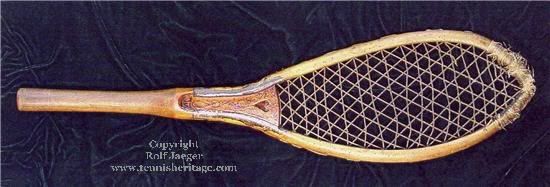
Just in today courtesy of Rolf Jaeger is a racquet which shows how unusual stringing patterns were tried way back early in racquet production which includes pre-tennis.

This is handmade and for those with a more recent MAD RAQ you will see how the patent granted for this stringing design probably should not have been.If you wish to see more visit the page title racquet stringing on the website. It is now owned by Tennis Australia.

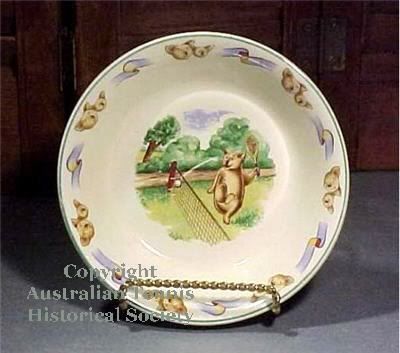
Some months ago we received this great little pic of UK c1910 bowl.  Definitely up there for an Australian flavour. Koalas playing tennis.  This pic is hidden away under the OTHER menu button and the OTHER sub menu button.  Most of you probably haven’t been to this page so you will find some interesting pics there also.

Due to some good luck we found some additional pictures of Edward Dewhurst and most recently we added a section about Wilberforce Eaves.  Who, I can hear you ask (not all of you)?   Well I dare say he probably was the first Australian born player to travel back to the UK to enter Wimbledon in 1890 and then return to Australia on a few trips to play local Interstate tennis for Victoria,  the state championships, and guided local players on some of the tactics and playing techniques he had experienced in the UK and the USA (runner up 1897 US Open). He had a major impact on Norman Brookes before he went to the UK in 1905 & 1907.

Current projects are to complete an article about 1947 Australian Championship player and Davis Cup team member Dennis “Dinny” Pails.  Some exciting phone calls over the long weekend found Dinny’s family and they seem delighted to assist us, so stay tuned.

Regards for now from the Team and feel free to email us with any suggestions or contacts.

Picturesque Tennis Courts

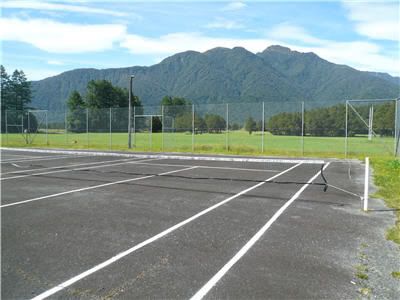
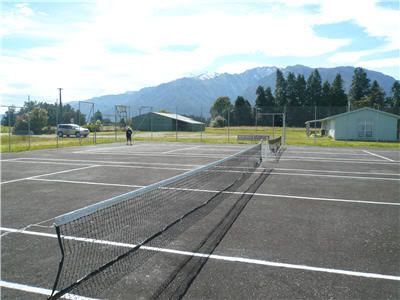
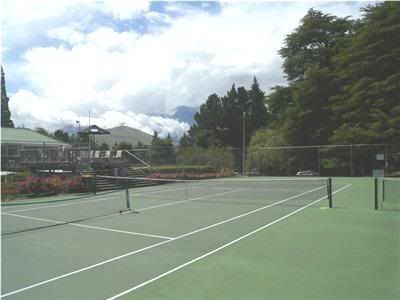
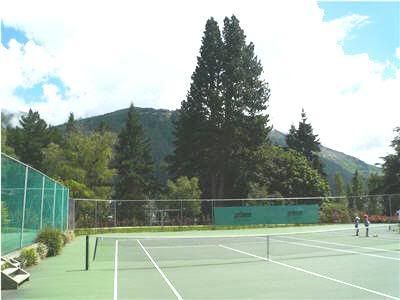
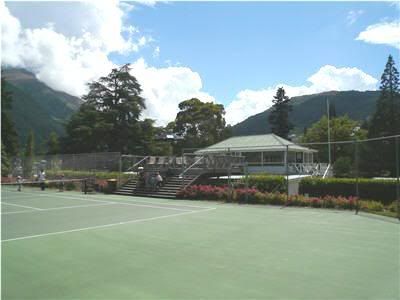
Before heading off on holiday around spectacular New Zealand, I started to think about the wonderful vistas that some lucky tennis players must enjoy. Obviously, there will be some sensational private courts but equally there will be some terrific club courts.  So from this point I am very keen to receive photos of your favourite tennis courts with a view.  This is a global search, and yes we know about the heli-pad court in Dubai!!

Now, back in New Zealand, what better place to start than Whataroa and Queenstown both located in the South Island.  We didn’t make it to Nelson, but I hope some of our New Zealand comrades will be able to organise some additional pics.  Queenstown is really an amazing ski resort area with plenty of activities.

I don’t think these photos do justice to actually being there, but believe me the surrounds are very picturesque.   Enjoy………and can’t wait to see some court pics from Switzerland…..Rod

Whataroa Tennis Courts
Queenstown Tennis Courts