In August 2025, we received an email from a family in NSW regarding a previously unknown racquet making firm called C.O.F.Anderson from Vale lane, Auburn.
Colin Olsen Flett Anderson must have commenced his racquet making skills with another local firm prior to setting up his own company. In 1925, he applied to complete a business course in preparation for the big step forward and you can see he added tennis racquet maker as his career on the course application form.
The firm must have survived for a quite a few years guessing the 1928-1932 era but we do know that the depression forced the closure. Searching Trove for old ads from the company or retailers hasn’t led to any confirmation of the models produced but we do have an actual racquet called the SPECIAL and a sales card referring to the SWIFT. Both Chesterfield NSW and Hedley VIC had a Swift model so it is quite possible that Anderson may have been acquired by one of them.
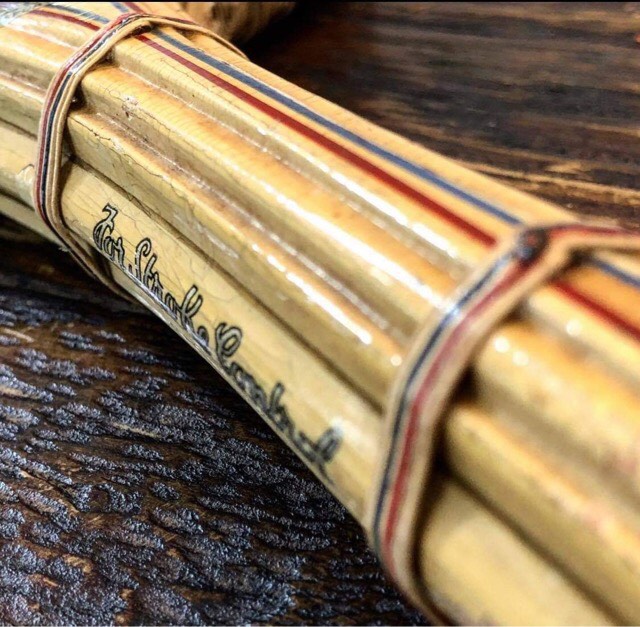
The racquet is well made with a wood scored grip.
Thanks to Robin Buchanan for the information, another addition to the development of the Australian Industry.
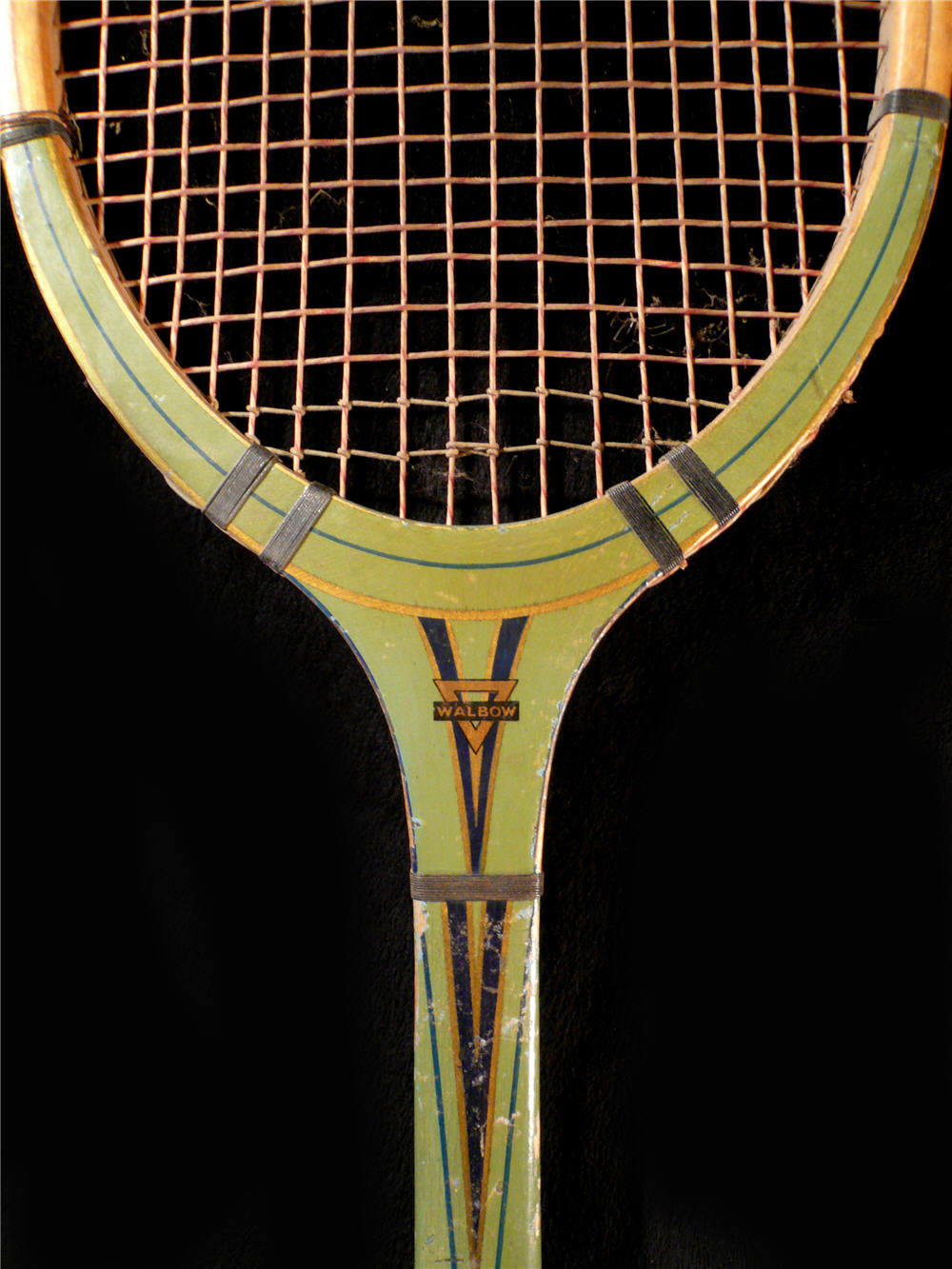
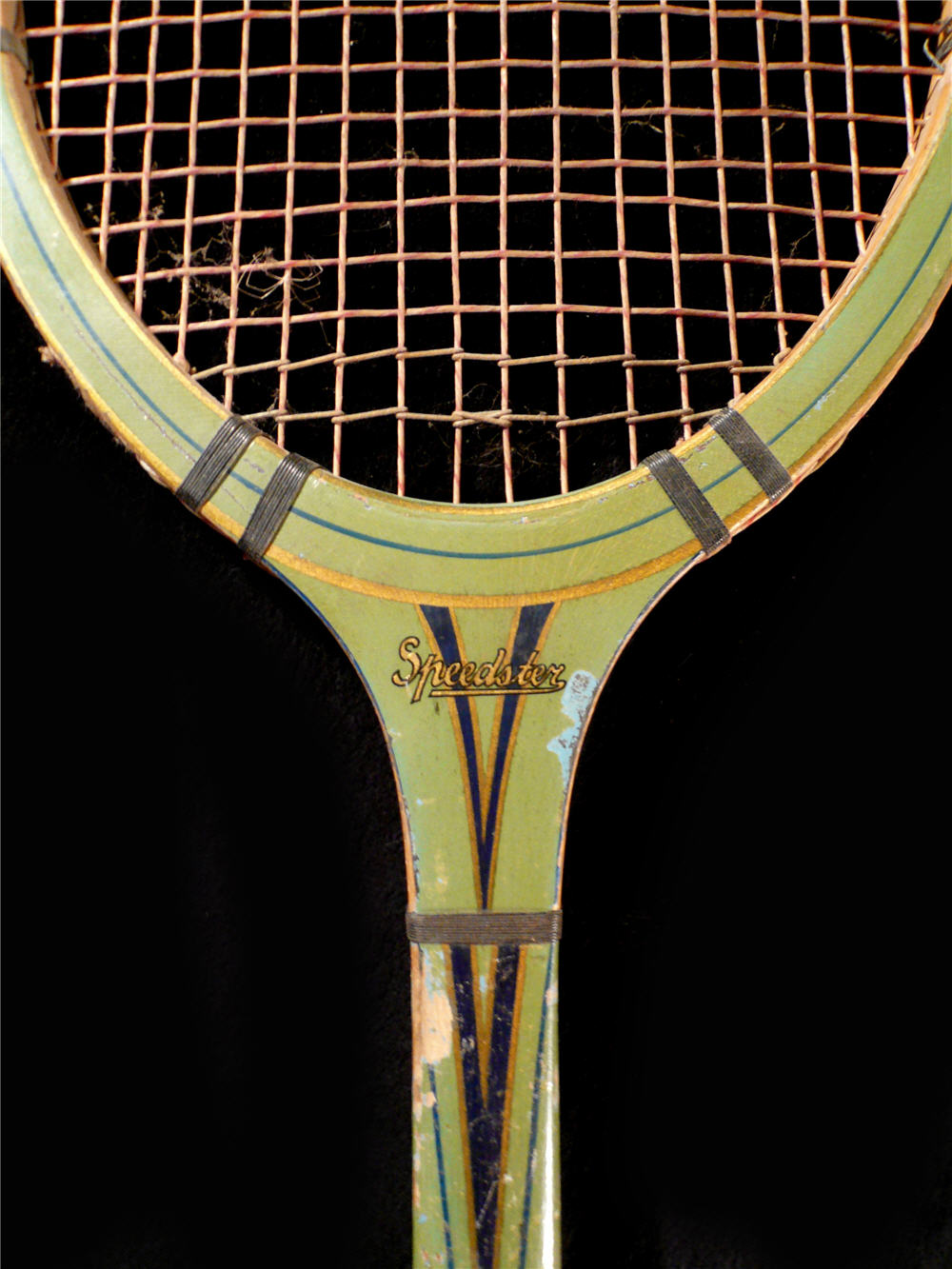
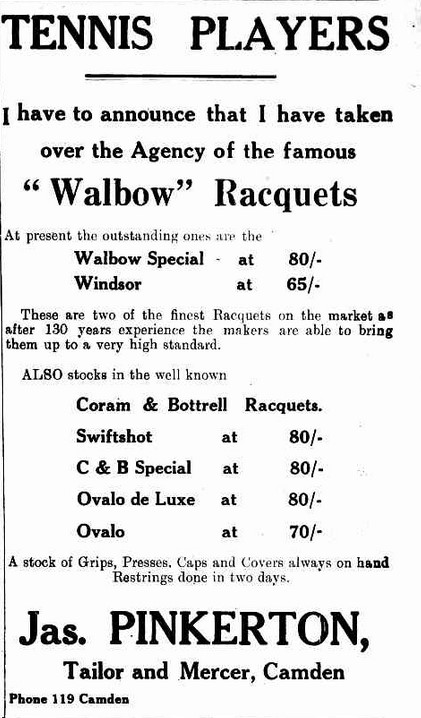
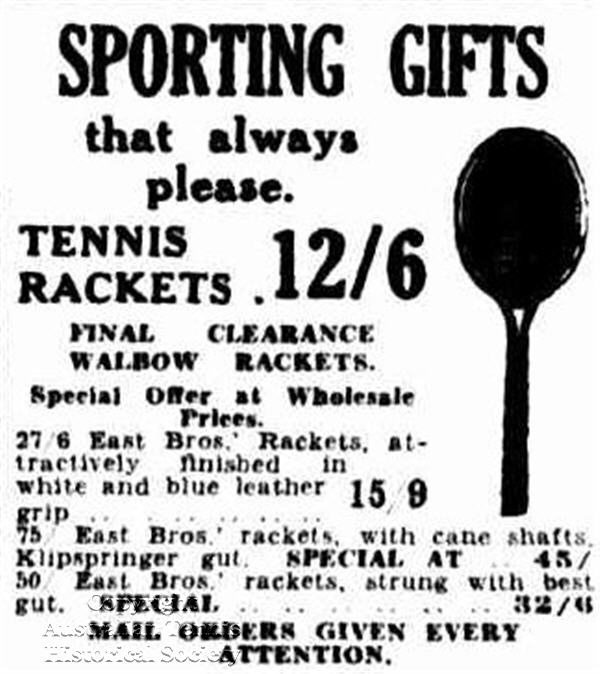
The boom in tennis being played in Australia saw a host of new entrants enter the manufacturing sector. Walbow Racket Company must have started in the 1920’s since the first ad, below comes from 1928. In the mid 30’s it was owned by Lionel Walsh and operated from 20 Alfred St Mascot. It was quite the hub for sporting goods manufacture with Slazenger and Waddell’s in nearby Alexandria. According to the business directory of 1936 there were two new owners Thomas Mitchell and David Chrystal. Later this partnership was dissolved in favour of the Chrystal father and son.
The only example known to date is this nicely produced Walbow Speedster.
Always interesting to find new information about tennis racquet makers.
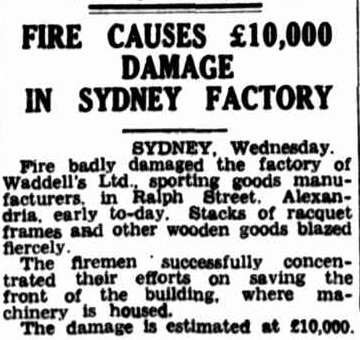
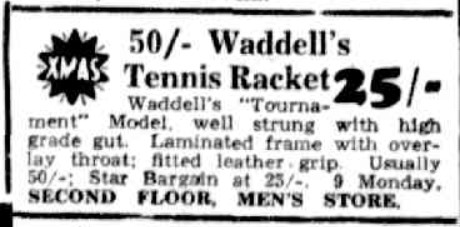
Waddell’s Lt d manufactured sporting goods from a factory in Ralph Street, Alexandria around the corner from Slazenger.
This wonderful example, the Royal Sovereign, shows a very intricate shaft design not appearing on other competitive models.
The logo on this racquet shows a variety of sports so presumably, they made a range of equipment which was sold throughout Australia based on advertising.
Typically, these work places contain some flammable materials and in 1939 they suffered a quite extensive fire and local reports confirm both the factory street address and that racquet frames were damaged.
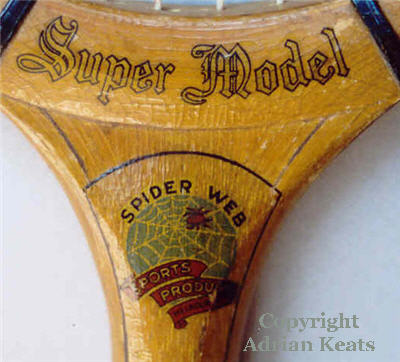
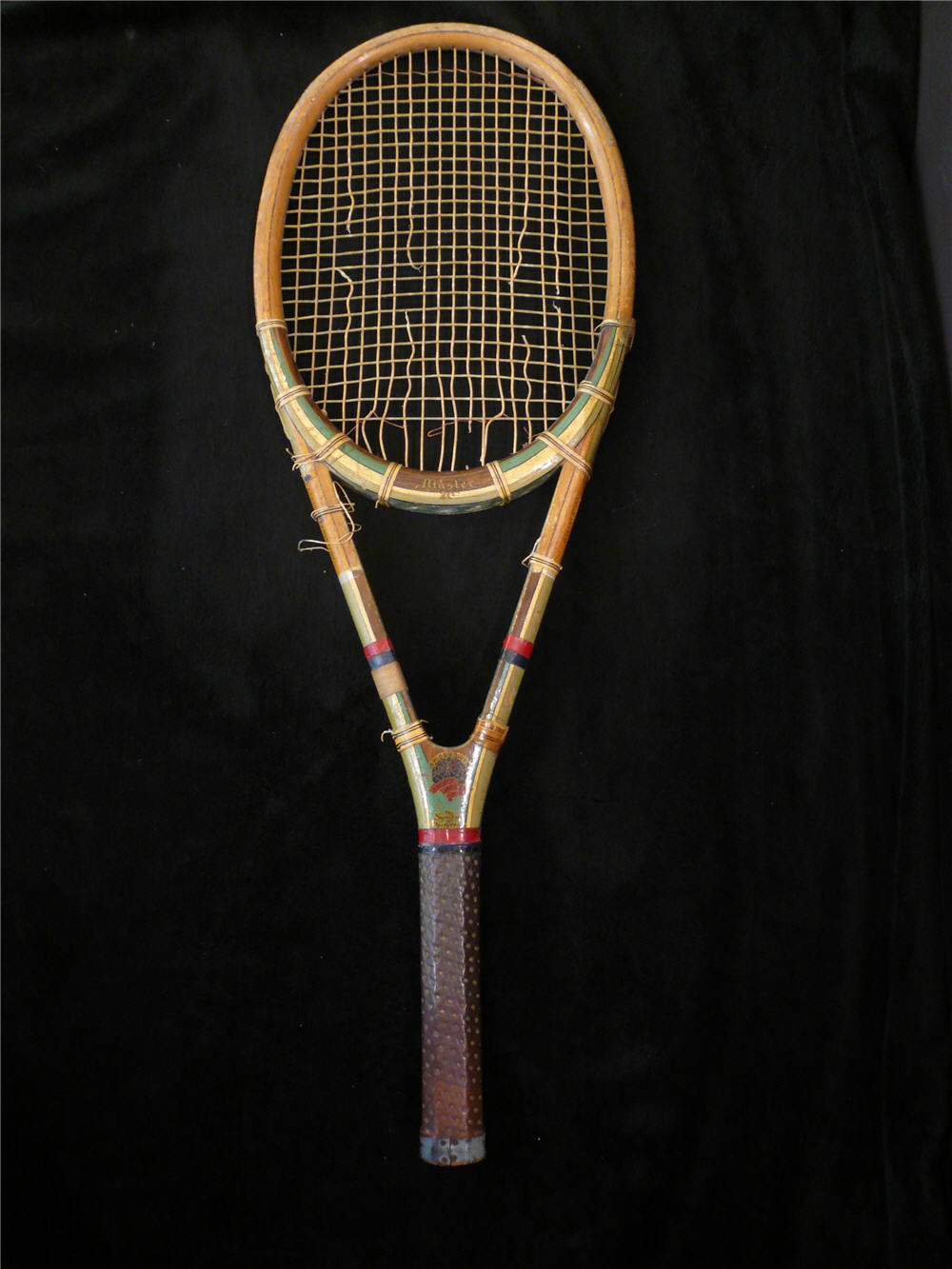
Spider Web Sport Products introduced tennis racquets into the range of archery and hockey equipment in the early to mid 1930’s to take advantage of the games rapidly growing popularity. Spider Web’s owner William Respini was a cabinet maker by trade and the factory was located at 133 Wells Place, South Melbourne, or as it was then known, City South. His son John advises, that he recalls William had to buy some racquets being made at the time and steam them apart to learn how they had been constructed so he could copy them.
Given the trading Cartel of Spalding, Slazenger, Dunlop and Alexander, as a boutique maker creating a distribution channel would have been very difficult. Under the cartel and their Australian Racquet Manufacturers Association ARMA all of the branded 5 Star models were priced the same in all retail stores to prevent price cutting wars. On the only known example of a Spider Web racquet, you will see a cheeky reference to the cartel and one-upmanship where the number 6 appears in a star on the handle.
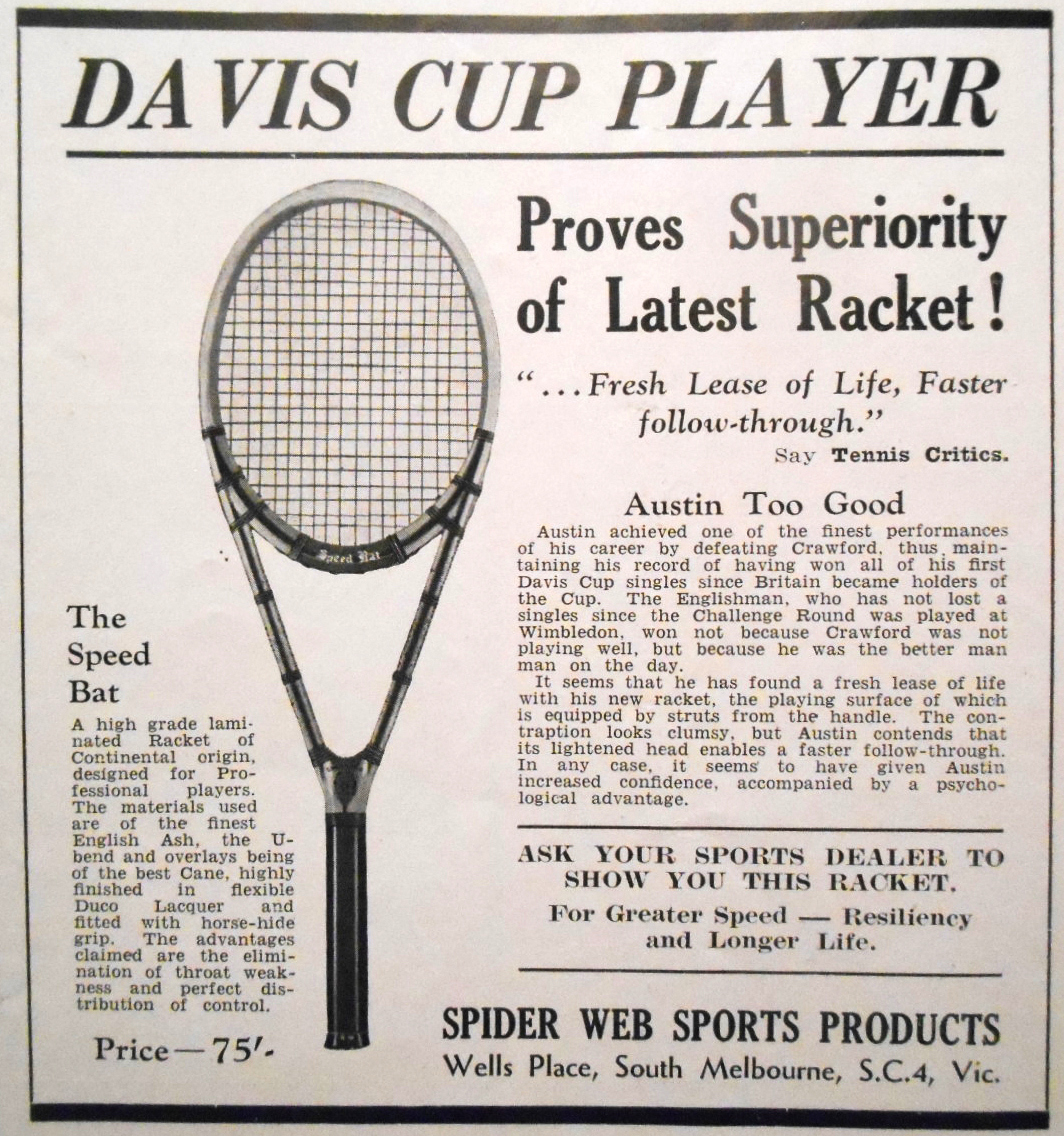
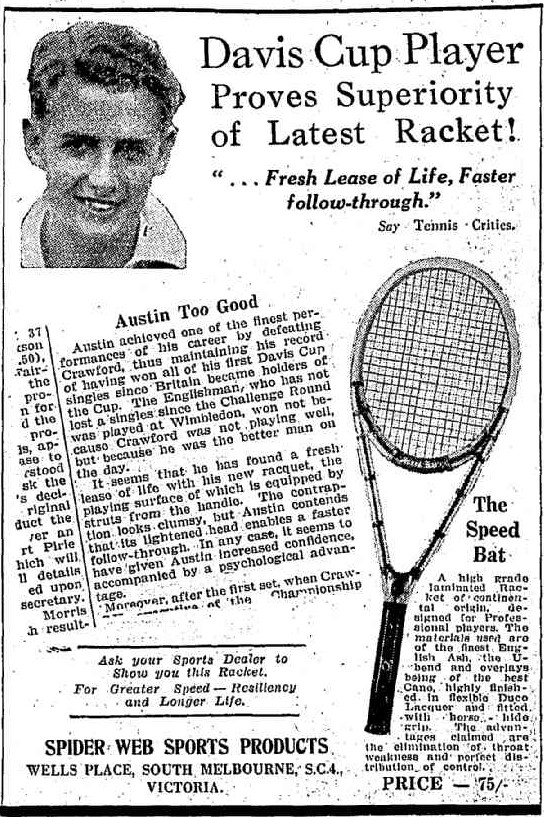
To differentiate, Spider Web also imported a model from Spain, we believe, called the Speedbat which was used by H.W. Austin who made the tri shaft Hazell Streamline famous. Perhaps the designer Donisthorpe also had a hand in the design of the Speedbat but to be sure it was far in advance design wise and towards the current shapes than any other racquet seen from the 1930’s. We finally uncovered an example in 2023 donated to Kooyong via a former president. What a gem!!
In South Yarra, the large retail store Maples in Victoria and Tasmania carried the Spider Web racquets for at least 4 years as evidenced by newspaper advertising, however with the onset of war all racquet makers couldn’t source the Ash timber and much of the production capacity was diverted to the war effort.
Myer Melbourne may also have been a retailer and in those days, and arguably nothing has changed today, retailers had the power and basically told the manufacturers what they would pay for a product and even took settlement discounts when none were offered.
William was also selling direct to a number of tennis centre owners. who by comparison to manufacturing were looking very successful as more and more people played tennis, so he decided to diversify into tennis court management which involved building courts with lights. He also had a hairdressing/ tobacconist business. The tennis enterprise, in these pre television times (1938-1955), was a huge success being open to midnight 6 days a week with no play on Sundays. On weekends people would wait all afternoon and get maybe 2 sets and pay sixpence a set. Frank Sedgman played an exhibition match at the Merri Creek centre and Nancye Wynn Bolton played a season.
Due to high demand he then took on a partner in about 1938 or 1939 to build an additional two courts which were also lit.
His partner was George Cochrane, one of the first professional coaches in Melbourne.
In the mid 60’s William bought out George Cochrane’s share and once again had sole ownership of the centre.
The accounting books for the tennis centre show that purchases were made from Spider Web Sports to the tennis centre from the late 30’s and into the early ‘40s.
We thank John for his recollections and hope to add more information as we find it.
The racquet photos come courtesy of Adrian Keats, Australian Racquet Collector. Click here for Adrian’s website
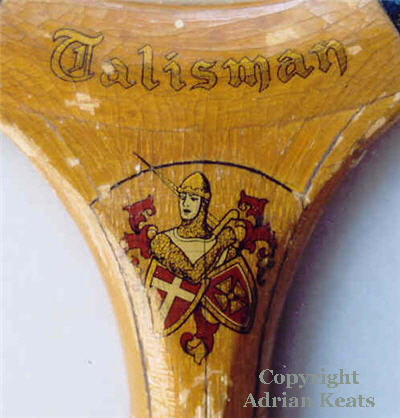
The Spider Web Sport “Talisman”. Looking very much like a Hedley racquet
the workmanship and decorative finishing look great. Note the 6 star decal
to combat the 5 star branding of the major manufacturers under the ARMA banner, representing the
best quality racquets.
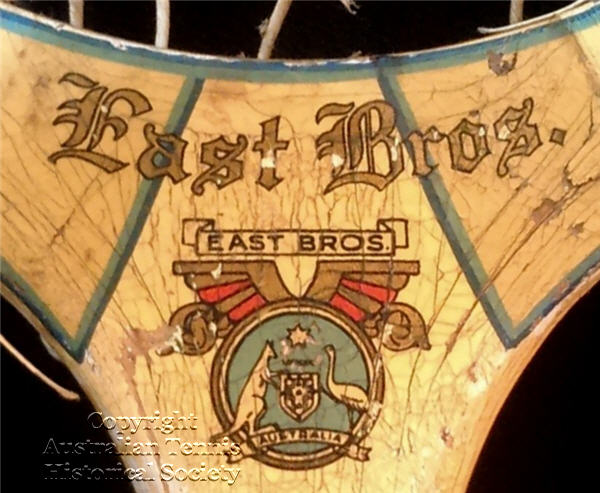
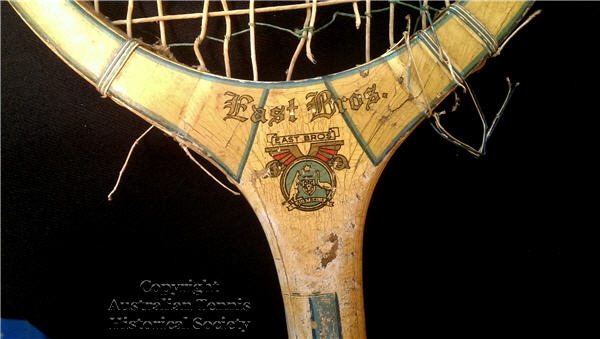
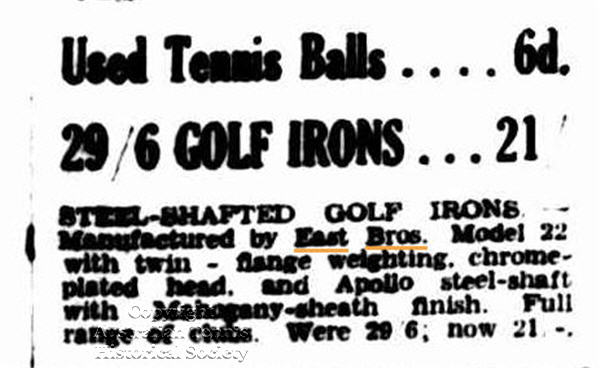
East Bros. were located in Melbourne and only in 2013 did we find a reference to this company given an extremely low level of advertising in the newspapers.
Thankfully we did find this example of a tennis racquet. It would appear they did manufacture golf equipment from a Sydney plant as did other multi sport producers, Slazenger and Spalding. Even Hedley, had a large vinyl sports products division that made golf club bags. It is also likely that there was a connection between East Bros. and Chesterfield who made golf clubs as well. A family member contacted us saying that they didn’t make racquets which lends support to the Chesterfield association.
Given this new information, it is possible that East Bros. made retail specific racquets to make up for a lack of “brand specific” product.
Covered in patent numbers belonging to Alexander Racket Company, Sportsmaster is not really a manufacturer but a second marketing brand most likely. We are unclear at this point if Alexander’s were involved with the company financially. It was suggested that some ex-employees set this business up, obviously with some supply endorsement from Alexander’s.
Olympic Racquet Co. was believed to have produced racquets from a small workshop in Sydney. In the 1947 Business listings they are located at Trafalgar Lane, Annandale. We know very little at this point about how long the company operated for. In a Murdoch retail and mail order company ad from Sydney, Olympic racquets were sold at the budget end given a 20 shilling price tag, well below the main UK / Australian brands.
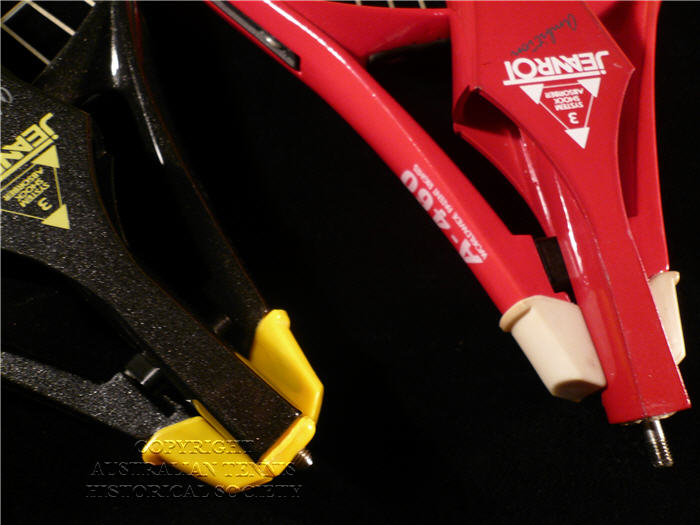
A butt cap unwind system untightens the screw section in the throat allowing the racquet to pivot apart.
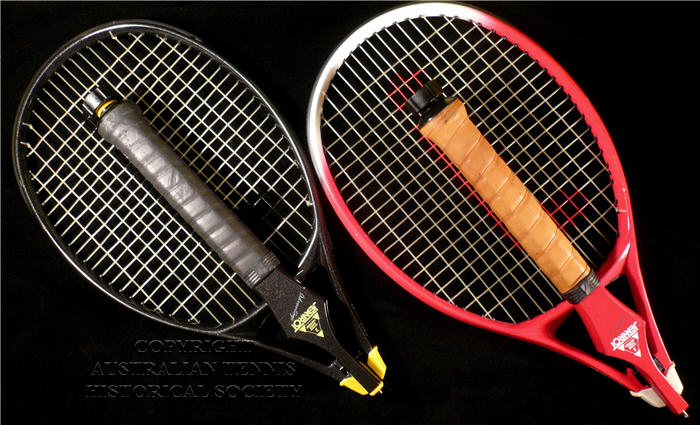
In 2007 a reincarnation emerged called the JENRO which came apart completely for compact packing. This is shown in the Modern Unusual section.
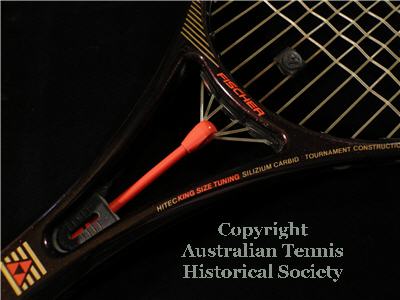
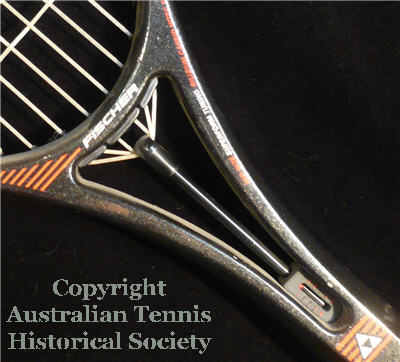
Fischer Superform Tuning c1985
Just like the 1928 Craven racquet above, the rod like device is tightened from the handle and the string tension is adjusted.
The red/deep purple version is the rarer of the two.
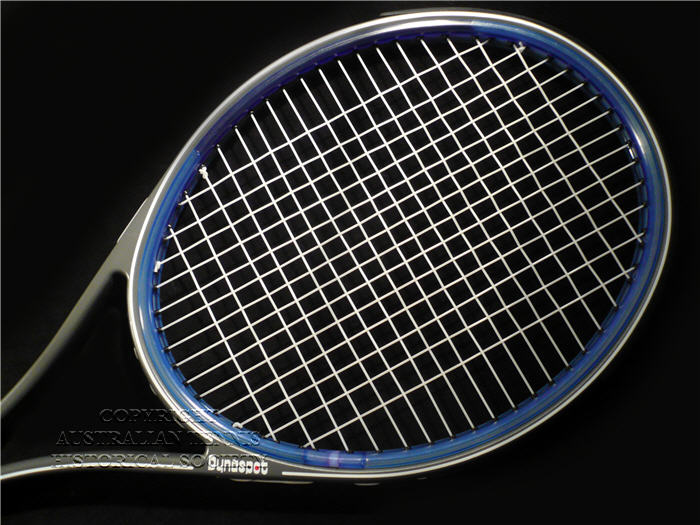
Dynaspot (USA)
c mid 1990’s
Fluid filled tube adjusts weight in the racquet head to counter offset hitting and vibration.
Banned under ITF rules.
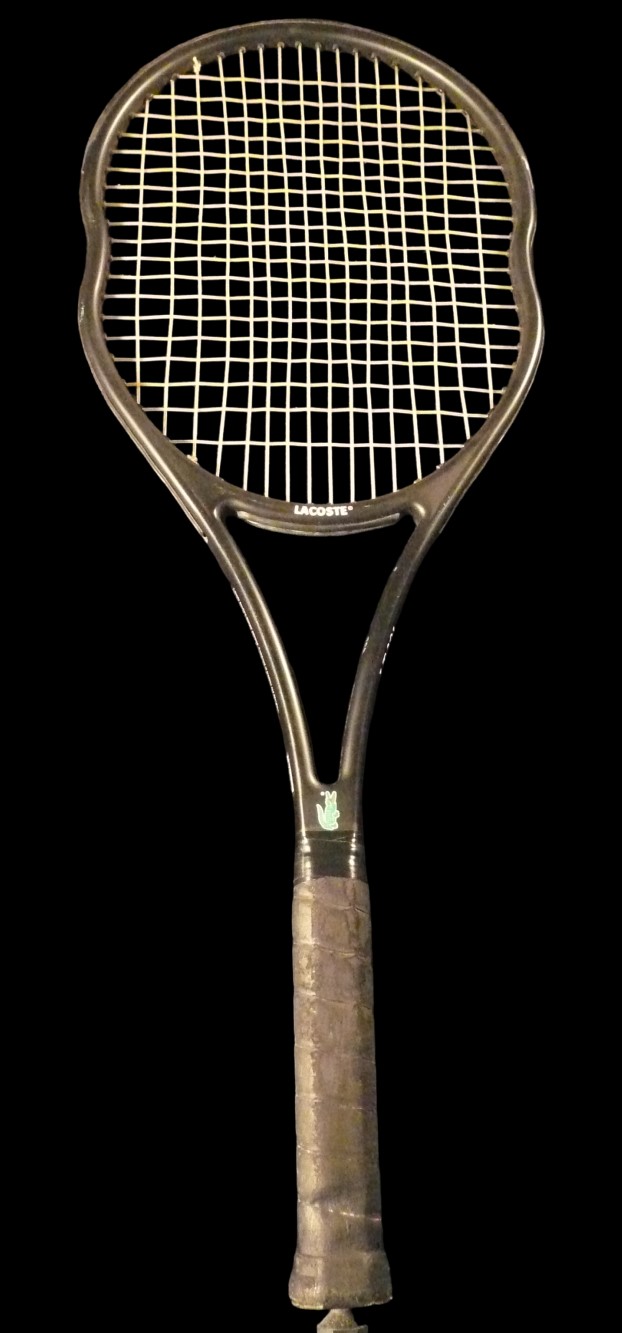
Lacoste Equijet mid 80’s
Used by Guy Forget.
No it isn’t sun damaged! Another interesting Lacoste design which aims to change the sweet spot via altered string tensions. It has a unique Vibration system in the butt cap which carried through to the Wilson T5000 model
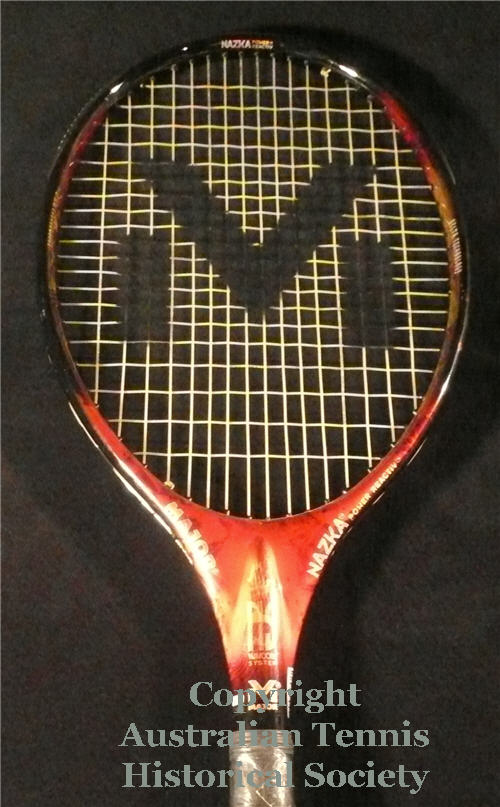
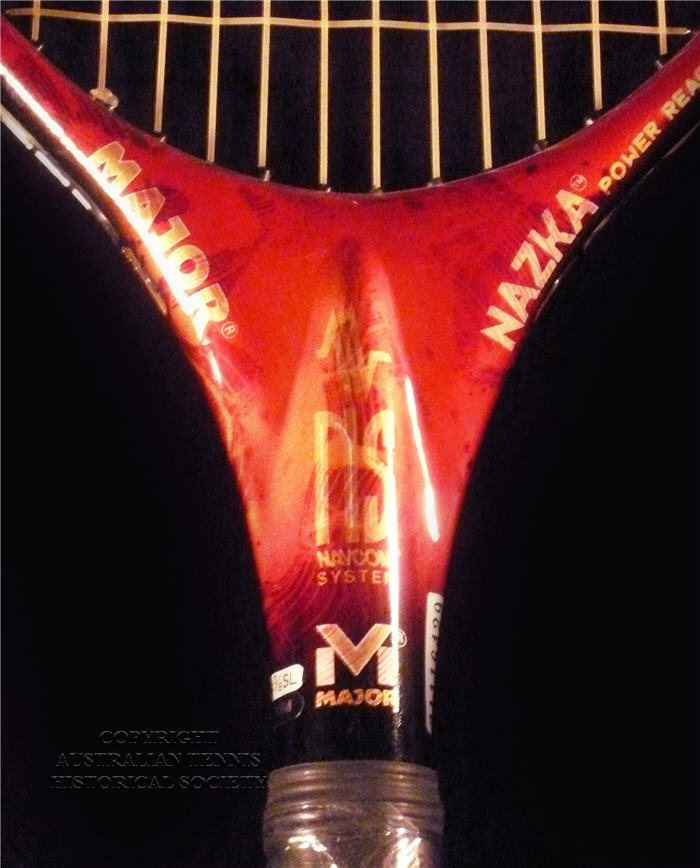
Major Nazka 1990’s
Retro design with vibration dampening system in the middle of the shaft. Graphics and shape are just great
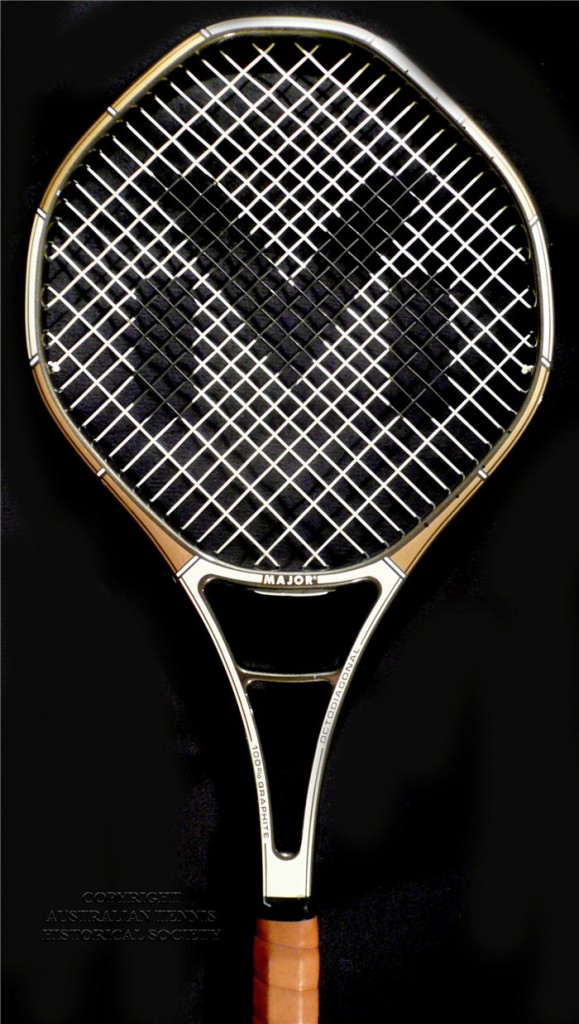
Major Octodiagonal
Terrific shape aka Macgregor Bergelin style.
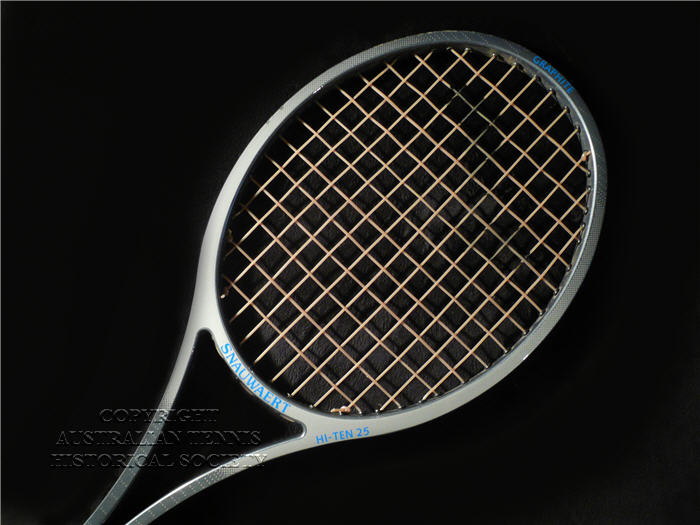
Snauwaert Hi Ten 25 (early 1990’s)
From a 3 range 25,30,50 using open pattern and 1.7mm strings. Designed by Australian player, Barry Phillips-Moore.
This one is a 12 main x 13 crosses. Other models 16 x 12 etc. as the heads get larger.
Mark Woodforde apparently enjoyed these racquets for the huge spin capabilities of the stringing pattern. He went on to use a version of this in a Wilson model. Barry licensed this idea to Josan ( a Yonex Distributor connected brand from Sydney)
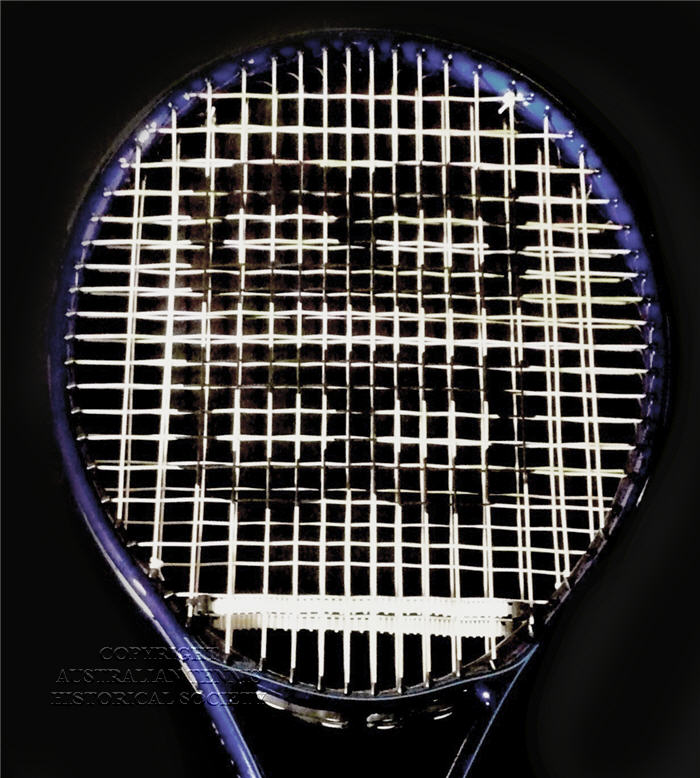
Blackburne Double String Late 1990’s
Racquet with two sets of strings about 2mm from the lip of the frame designed to reduce frame hits. The racquet warps when being strung due to the string pressures on one side and then reverts to shape as the second set is fitted.
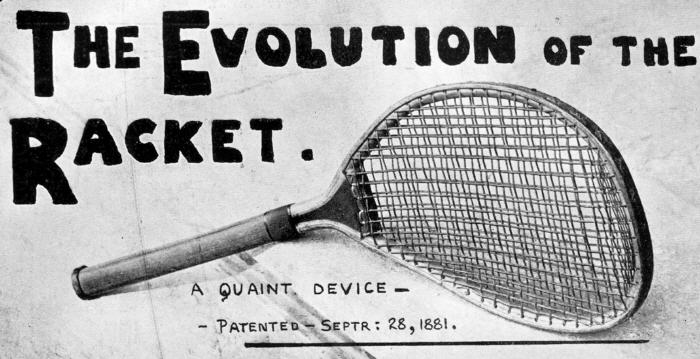
The earliest evidence if a similar comes from 1881 as printed in the UK Lawn Tennis and Badminton Magazine in 1914.
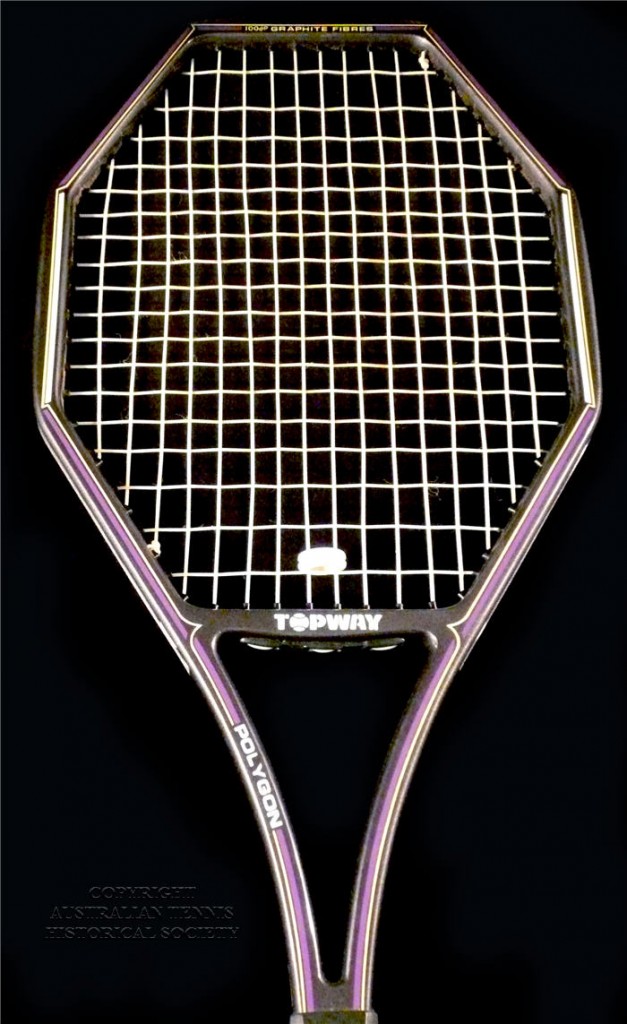
Topway Hexangonal
Very unusual shape made in Taiwan.
Dunlop Japan also marketed this design as their the Polygon model.
Tour Pro (nothing else known) great frame shape dividing the strings on all four sides. Similar concept to a Bjorn Borg signature, Black Crystal racquet.
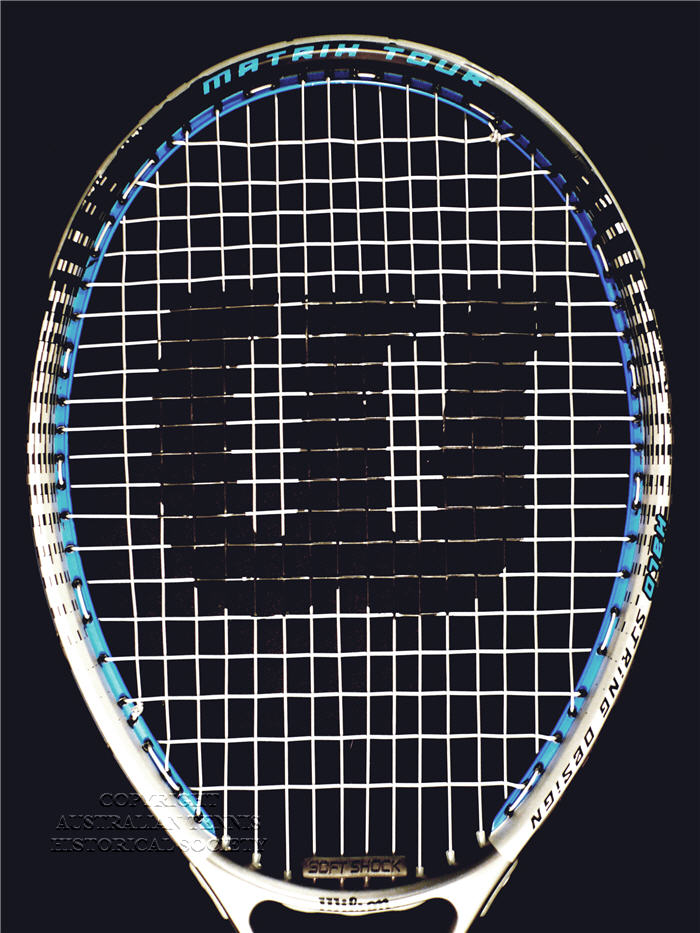
Wilson Matrix internal stringing system along the lines of the Seamco / Seamless model from the mid 1970’s
The Kuebler Phillps Moore c 1980 in Germany
Named after South Australian player and journeyman, Barry Phillips Moore.
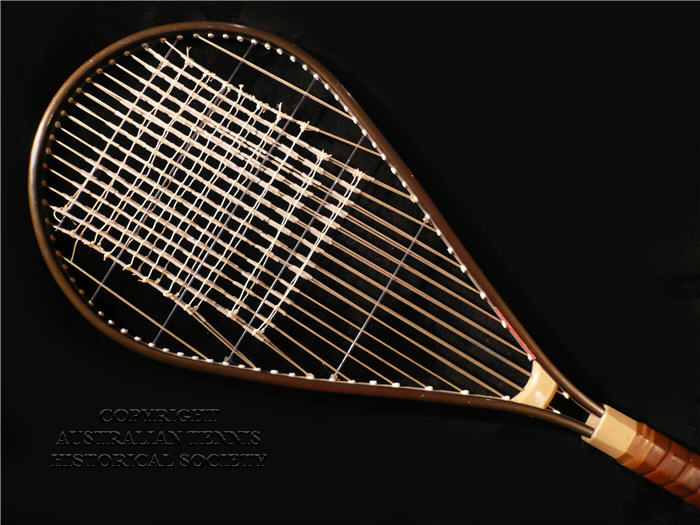
This sample has been strung using a stringing technique called ‘spaghetti’ stringing.
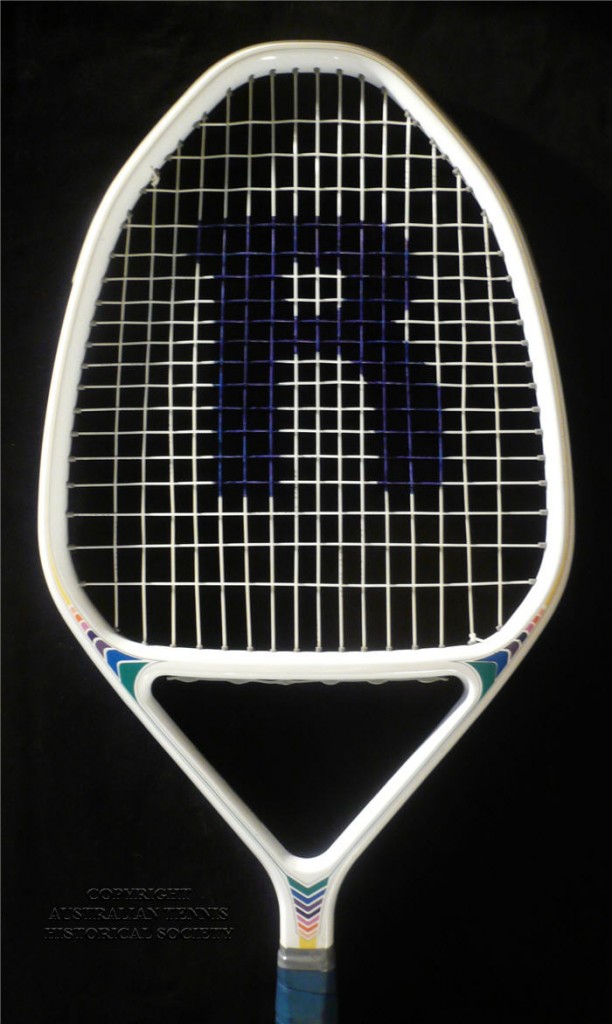
Rival AU 700
Ceramic Composition c1993
The premise behind the shape was that it represented an open hand and was designed to deliver greater feel and control plus bring the sweet spot closer to the bottom of the frame.
There were quite a few models:
AU 100, AU 300MS, AU 400, AU 500 from 1989-1993 and were sold mainly in the USA
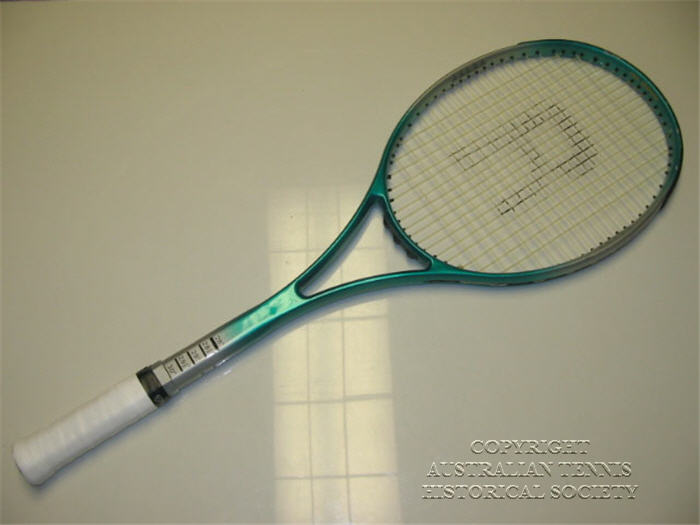
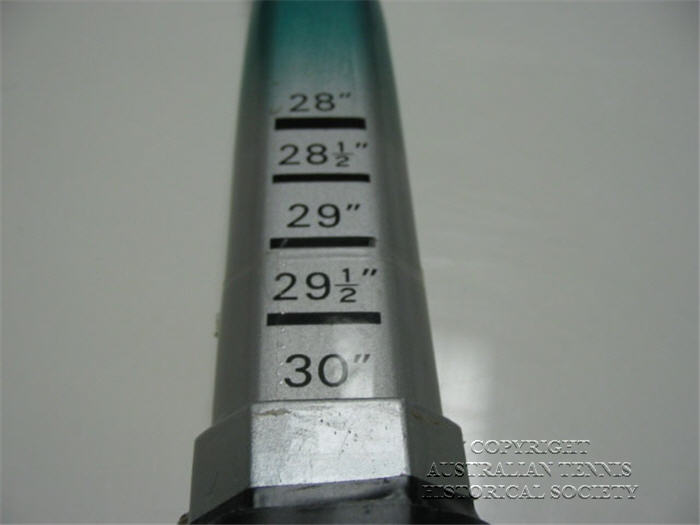
Rayco Ruler c 1980’s?
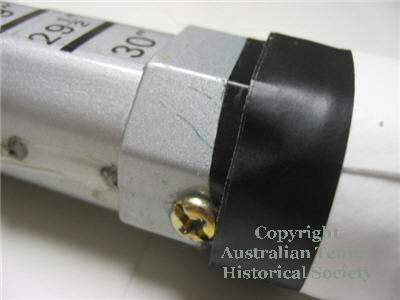
Adjustable racquet length from 28″ to 30″ via an in-handle extension. Just a screwdriver away from extra reach.
Very rare. Not sure how practical or what would happened if the screw broke, net players beware.
Apparently, this was a low cost Kmart style racquet
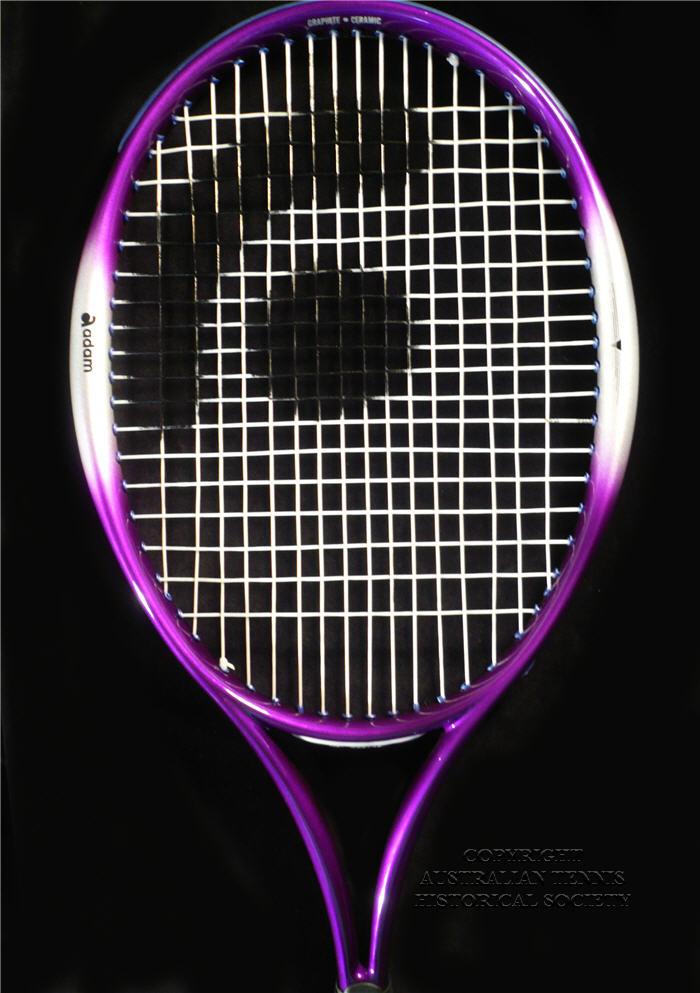
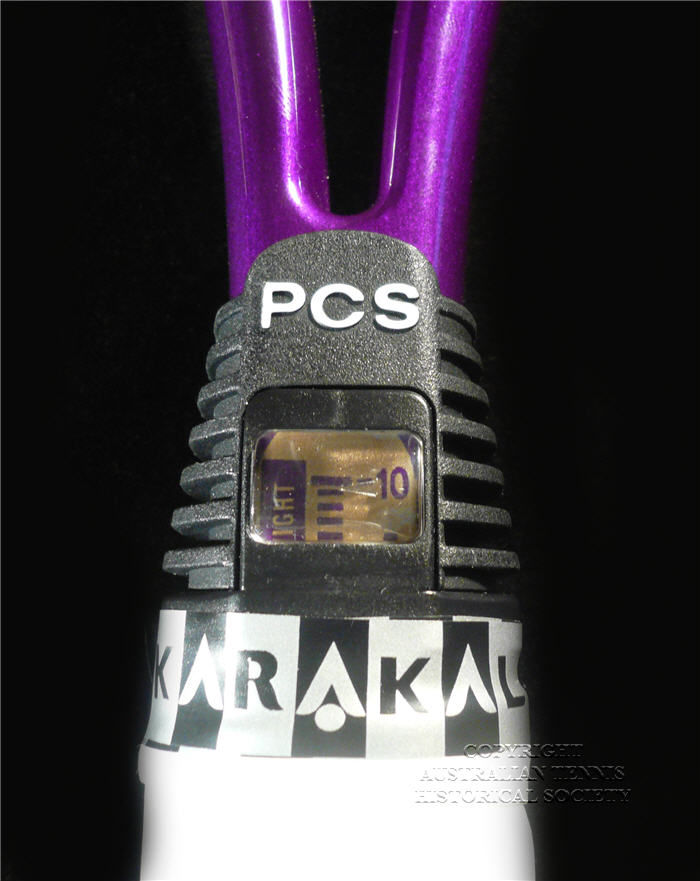
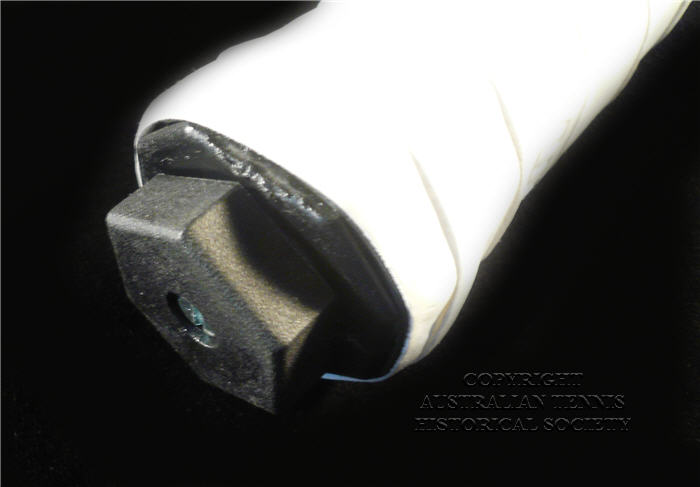
Adam Pro Turbo adjustable length c1989
Adam Gunther was the head designer at Volkl before joining Puma where he designed the Boris Becker PCS. After Puma exited the market, Adams created his own modified version of the PCS with a knob winding system.
The knob in the handle turns to change the length of the racquet and therefore swing weight. The two pics left show the variation.
It is a beautifully balanced racquet with an excellent sweet spot. Notice the wider head areas on the sides.
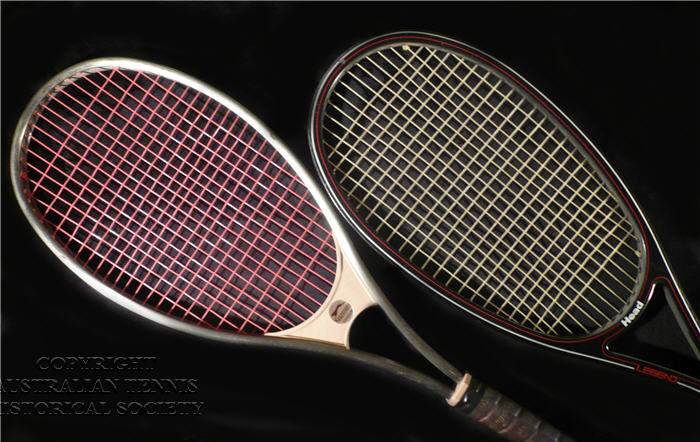
Head Legend c mid 80’s with Slazenger Omega Long head shape models
The elongated head shape really is quite fascinating and totally unique compared with the 65 sq in oval shapes typically seen in the day.
In the 1980’s 1900’s there were also long frame models.
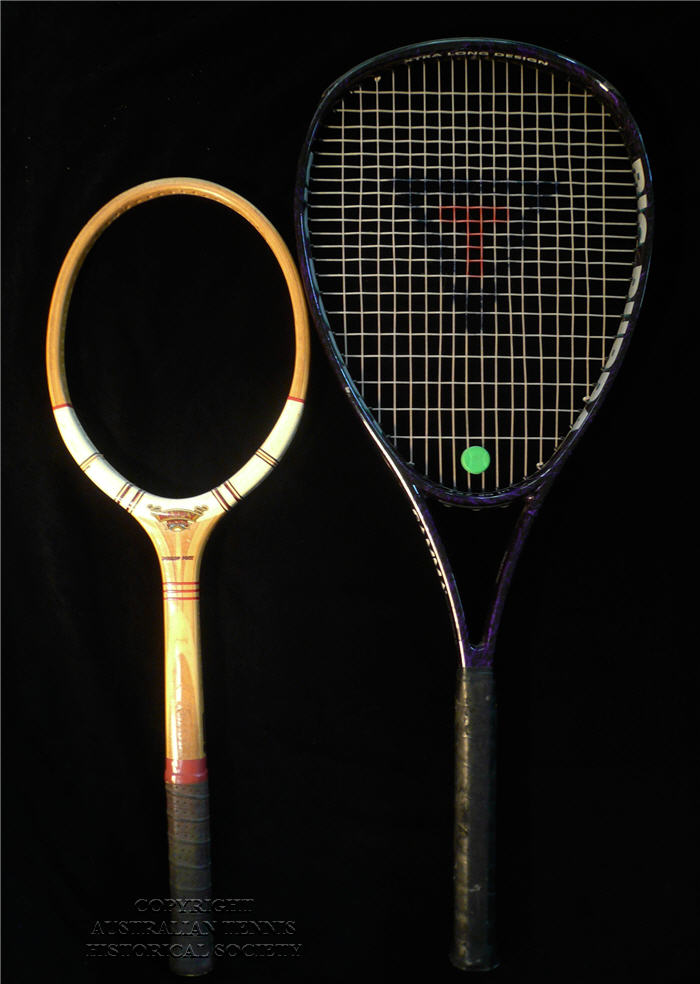
Gamma Big Bubba
32″ tall and 137sq.in head.
An amazing weapon which was banned in 1997 after being approved. Ultimately they simply chopped 4″ off to make it 28″.
Banned because it was thought that the game would end up being all serve and not much else. Our Aussie scud put these to a test against woodies.
Read the story under BLOG ARTICLES and scroll through a few others as well.
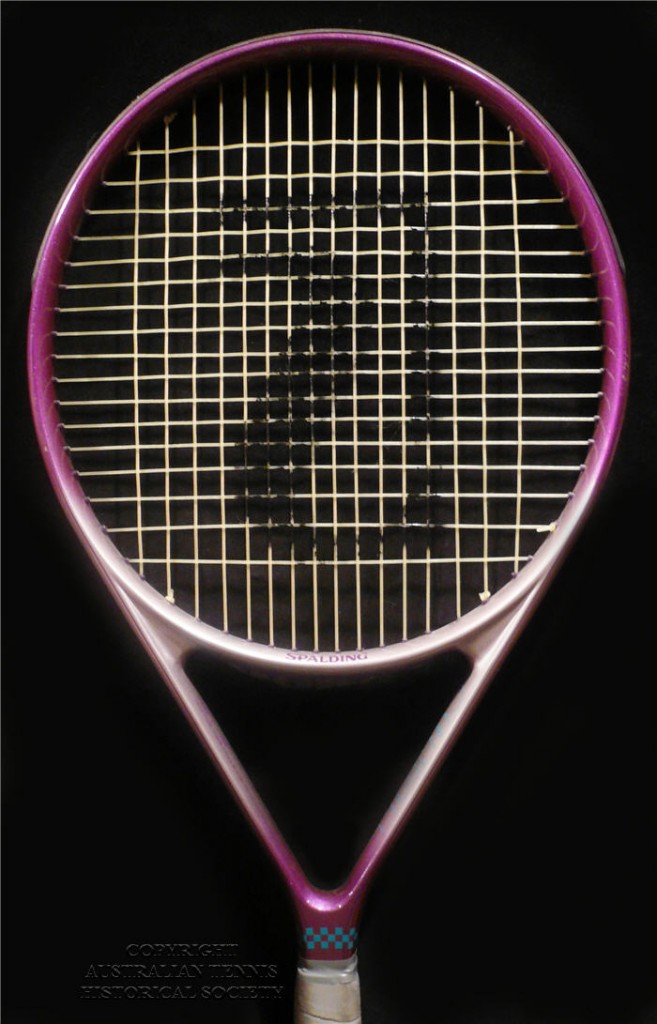
Spalding’s Orbitech was a given a big push in the early 1990’s
This is the XL-105.
Sold in the USA for $190 so an OK mid price racquet for the social players
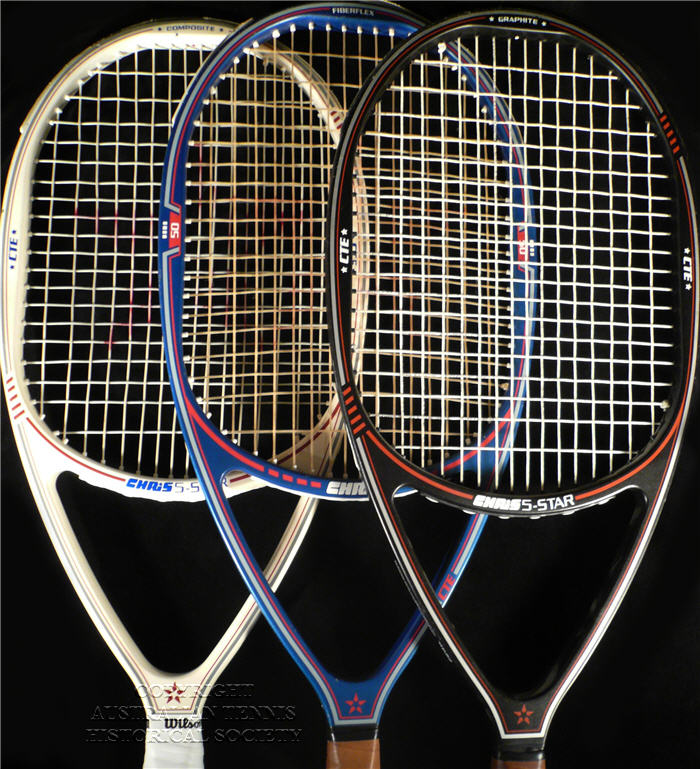
The Chris 5 Star USA mid 1980’s
Another wide bow racquet design.
Grey: Power G model 100% Graphite
White: Competition Composite
Blue: Avenger Fiberflex
Very well balanced and stable due to the wide bow and collectors still really enjoy playing with them even compared to current designs
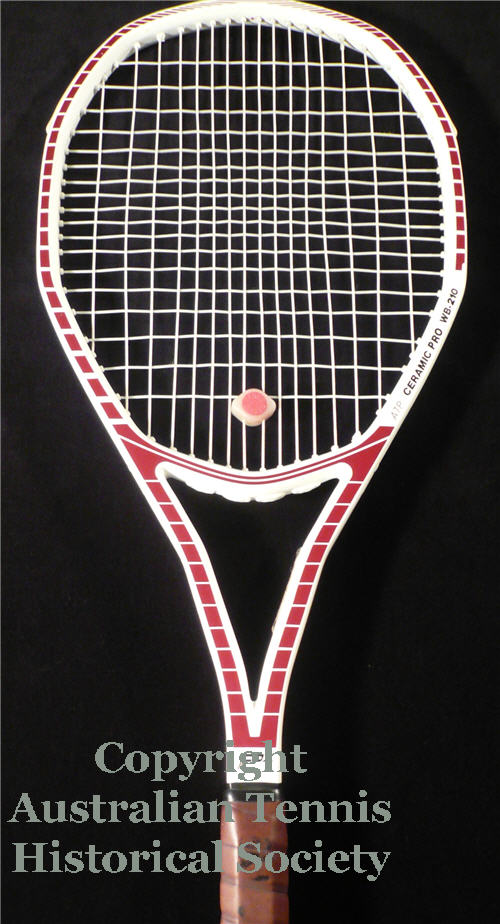
Fox Ceramic Pro WB-210 c 1985
Warren Bosworth was a highly regarded stringer to many professionals and was heavily involved in the design of these and many other Fox racquets. We recently found an Australian branded version of this racquet called CERAMIC PRO of which only 300 or so were made for promotional purposes.
This series are unusual due to their 10 sided shape.
Fox also produced a version model WB-215 traditional head shape long string model.
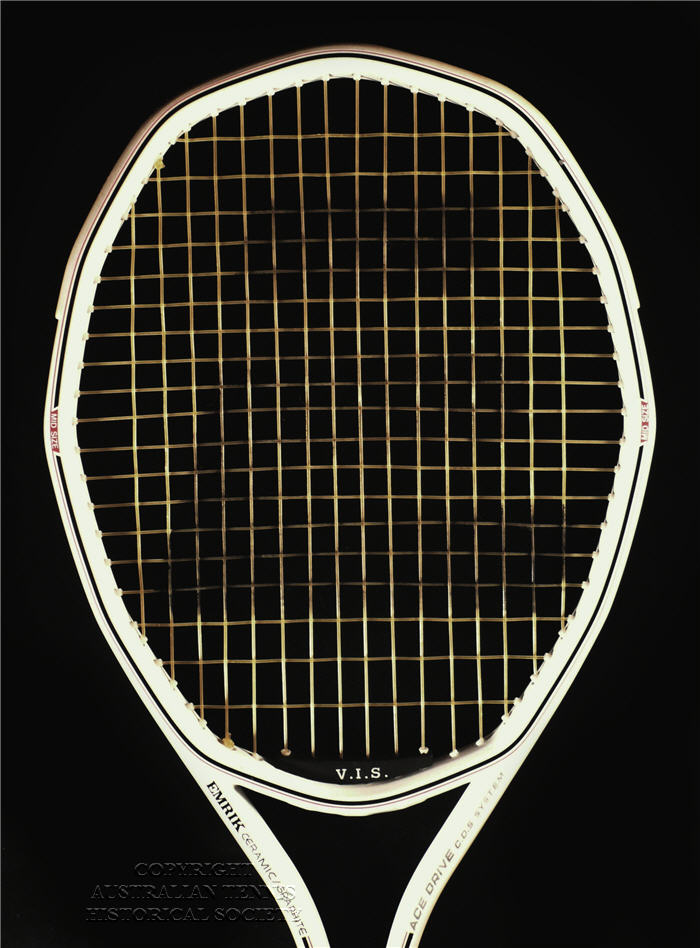
Emrik (Australia) Ace Drive Angular finish
Very rare multi angle model.
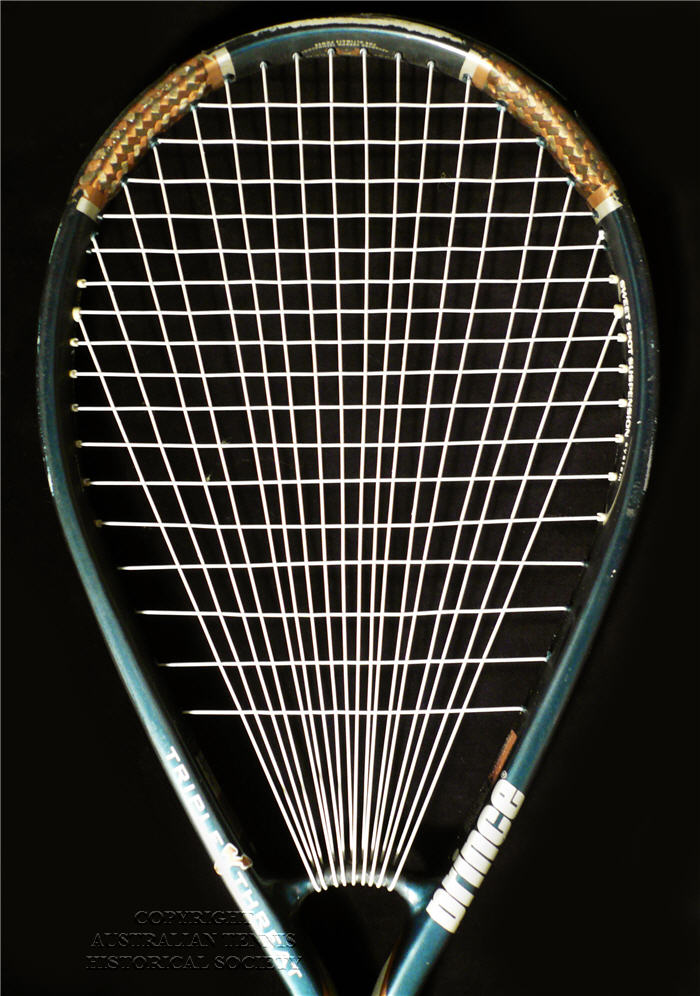
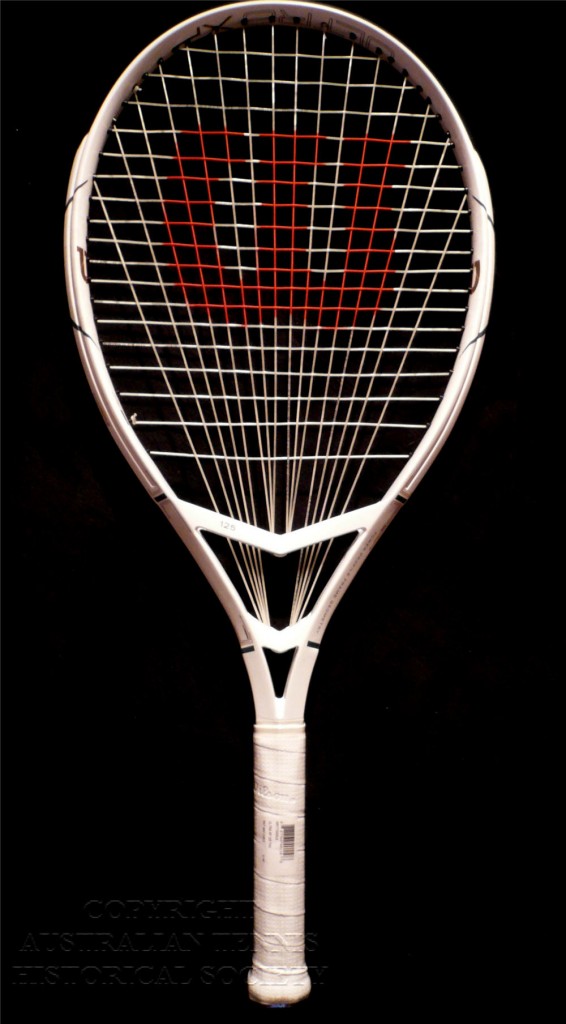
Apart from the SPIN racquet above, other makers have experimented with long string designs.
Pictured is the Prince Triple Threat Ring (1300 power level) and the Wilson Radius with Power Strings Technology.
In 2015 Wilson introduced this ULTRA 125 Long string model which featured an outer long string and central throat stringing. We believe it was withdrawn possibly due to breakage at the throat where considerable tension is applied to the one point.
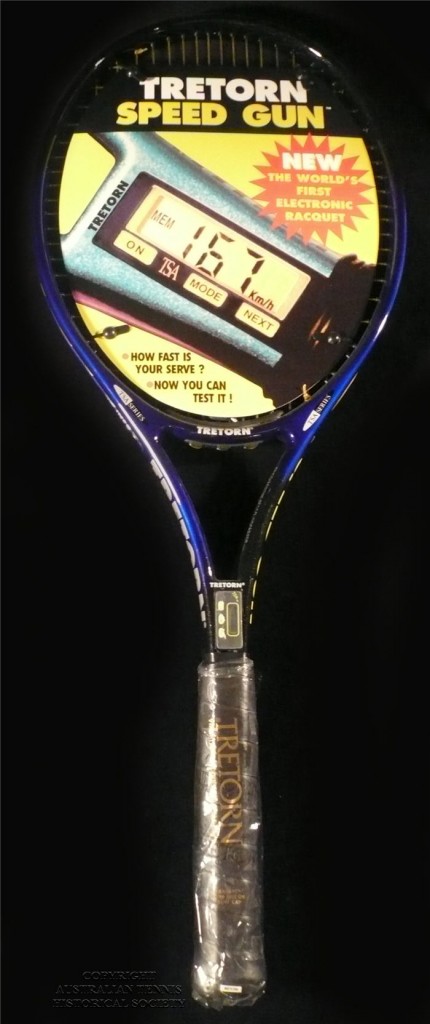
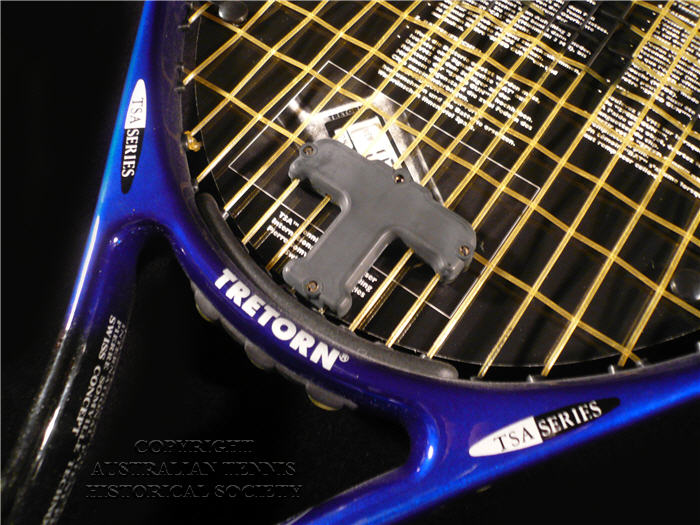
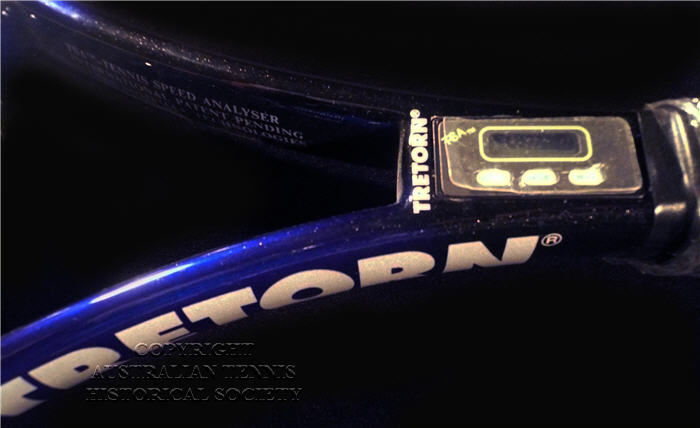
Tretorn Speedgun (Concept racquet) 2005
Computers meet tennis.
A string sensor picks up movement to determine shot speed to within +- 2.5kmh. Play a rally and see the last 10 shots on a screen built into the handle.
Only 1000 were made and they never achieved retail distribution. A rare find indeed and a great tennis brand name. Current ITF rules prevent information being relayed to a player during play.