Unususal Vintage Tennis Racquets 2

santor s pro (6)

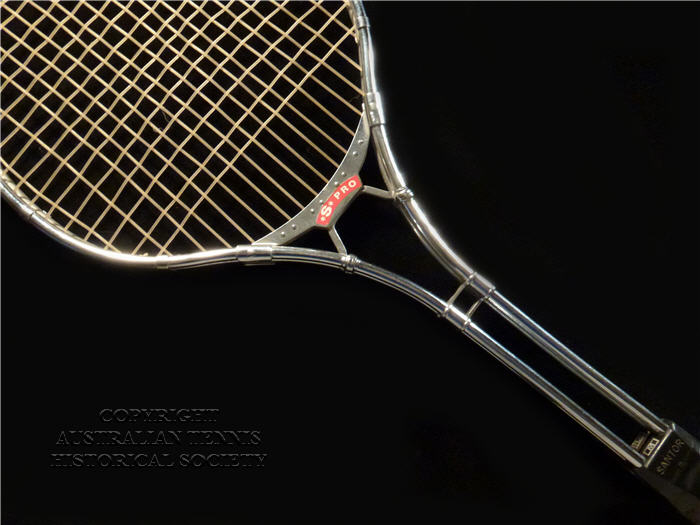
Santor S Pro

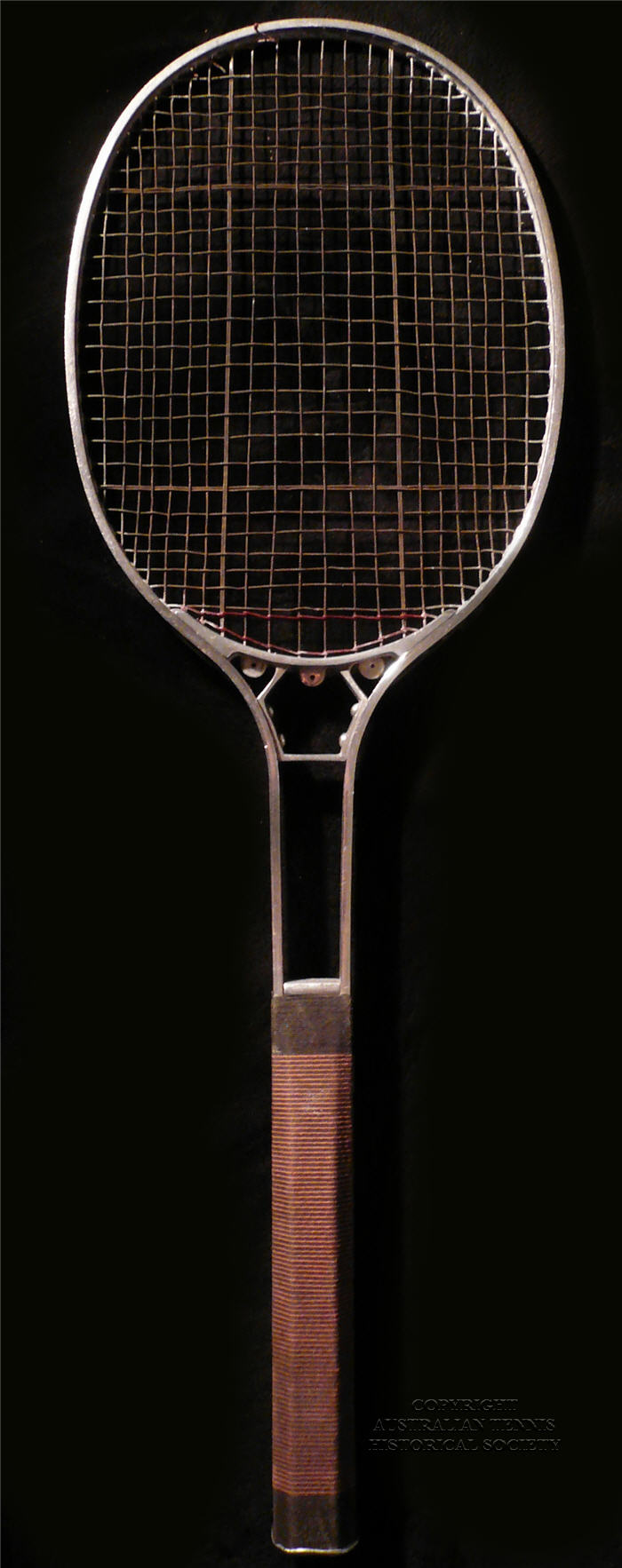
Santor S-Pro Steel racquet with really lovely industrial design cues.

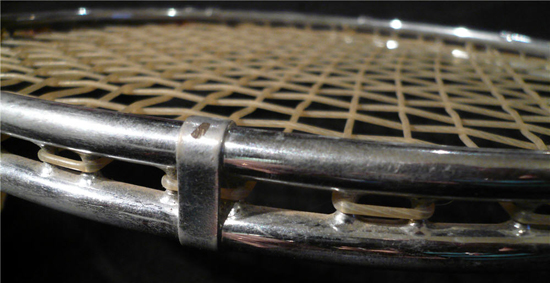
It is essentially two frames joined together with welded or soldered pins.

SEAMKENR11

SEAMKENR5

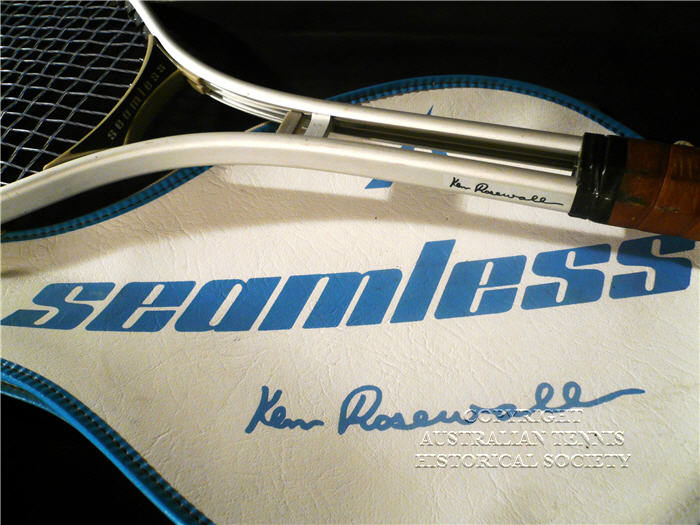
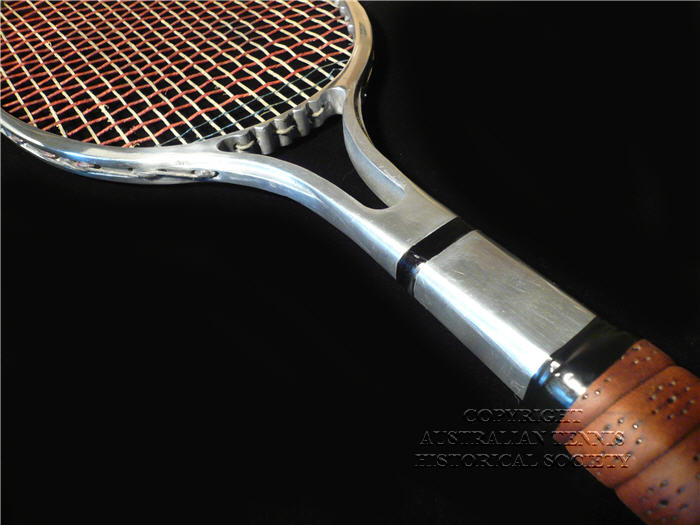
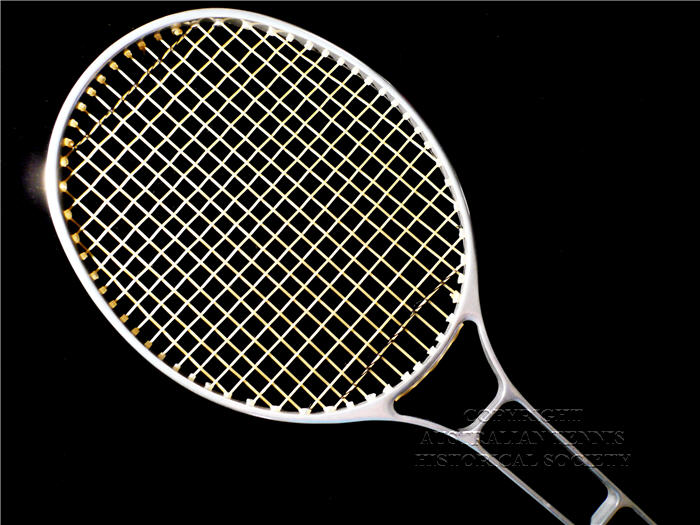
The “Ken Rosewall” Seamless (Seamco) c 1971

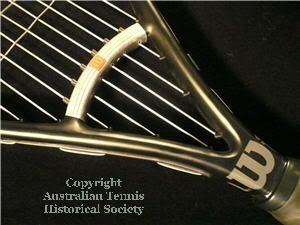
As you can see the string supports are located inside the extruded aluminium

frame leaving a very unusual smooth finish.

Ken was a consultant to the firm hence the interest to Australia.

If you like this smooth look out for a Wilson TX 6000 c1978 which has a smooth finish unlike the channeled look of the T2000.

STEEL SHAFT RANGE

Steel Shaft Models (late 1960’s and 1970’s)

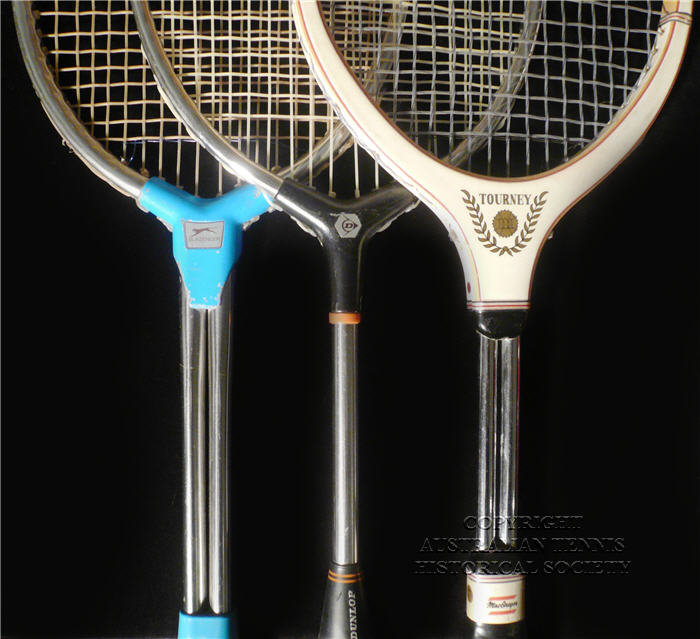
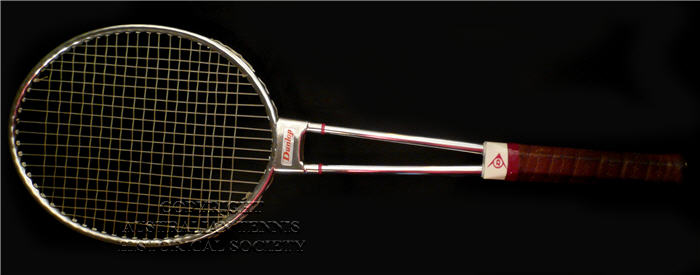
Slazenger twin shaft, Dunlop Monoshaft UK 1972, MacGregor Tourney USA

As the Wilson/Lacoste T2000 was booming, Dunlop produced these very nice looking racquets, often confused for squash racquets.

grays steelmaster (2)

Grays Silver Gray estimated 1954-1974 era (UK)

Steel Shaft with wooden head

tretorn demountable 2

tretorn demountable

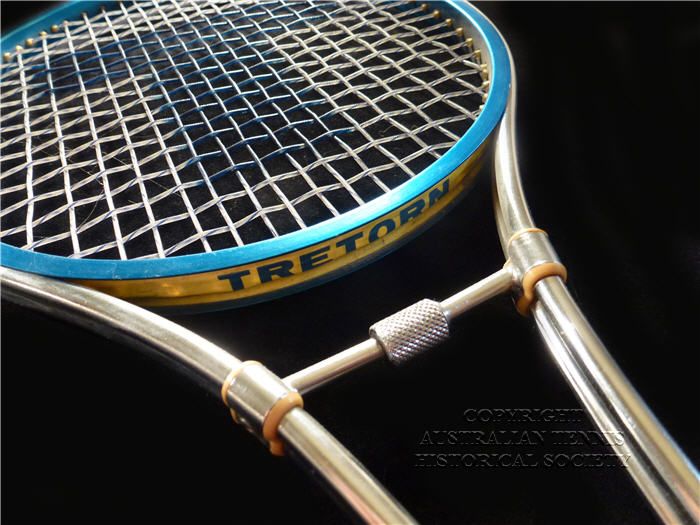
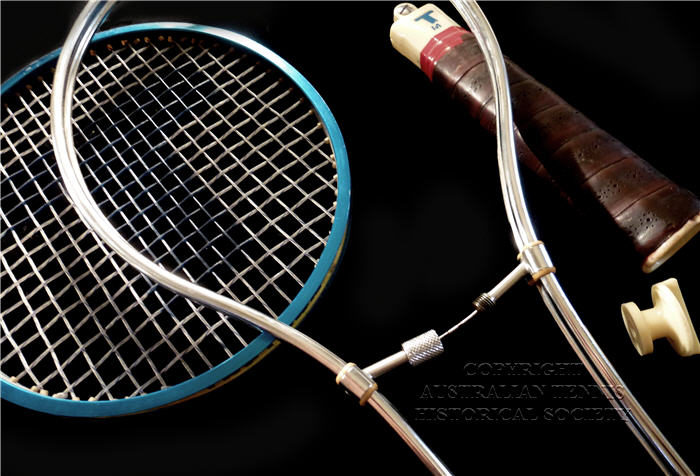
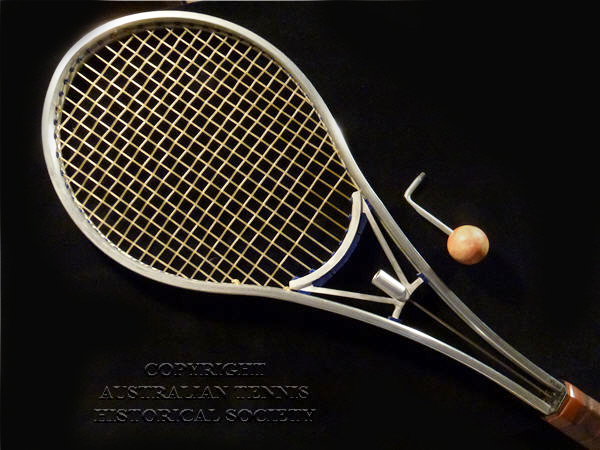
Tretorn ( Demountable) Sweden 1968

String set in the blue aluminium frame can be removed from the racquet frame by undoing the butt cap, sliding off the handle and undoing the spindle in the centre of the cross bar (pictured). This allows the frame to spring open so a new string set can be inserted. Takes a few minutes only.

They often came with 2-3 different string sets with different tensions or as back ups for breakage.

See the Maynard below for another string set removal option.

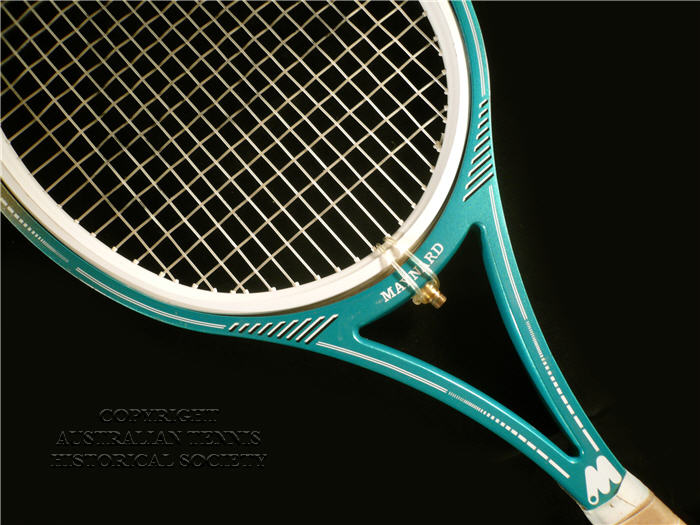
MAYNARD AIR RACQUET 5

Maynard AirPower Racquet c late 1980’s

USA designed, the string set comes on a separate frame which is held in place by a tube filled with air.

Patent filed 1986 # 4 772 021  Michael Maynard

IMG_5652

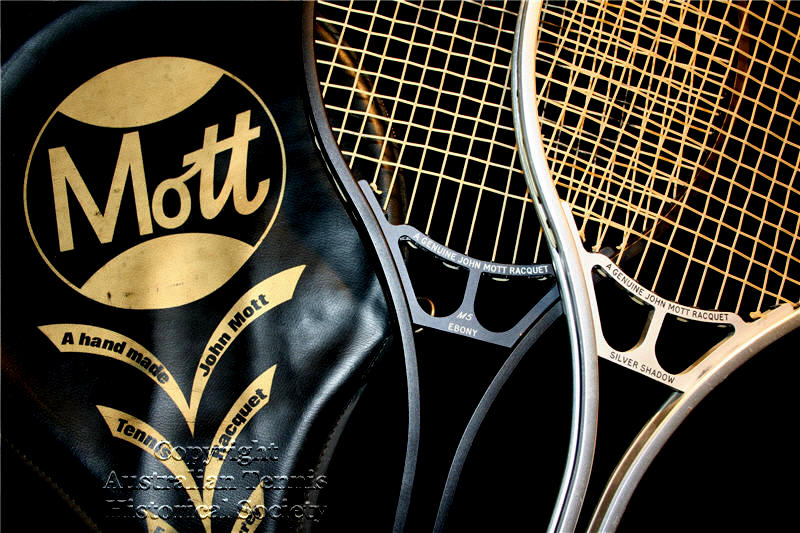
John Mott, Silver Shadow, UK (1980’s)

Hand made in Farnham Surrey.

The factory made tennis and squash racquets for a short time then sold the patents and left the industry.

The finish is superb with no visible rivets and the fit between the throat piece and frame is sheer precision.

We would like to learn more about this company.

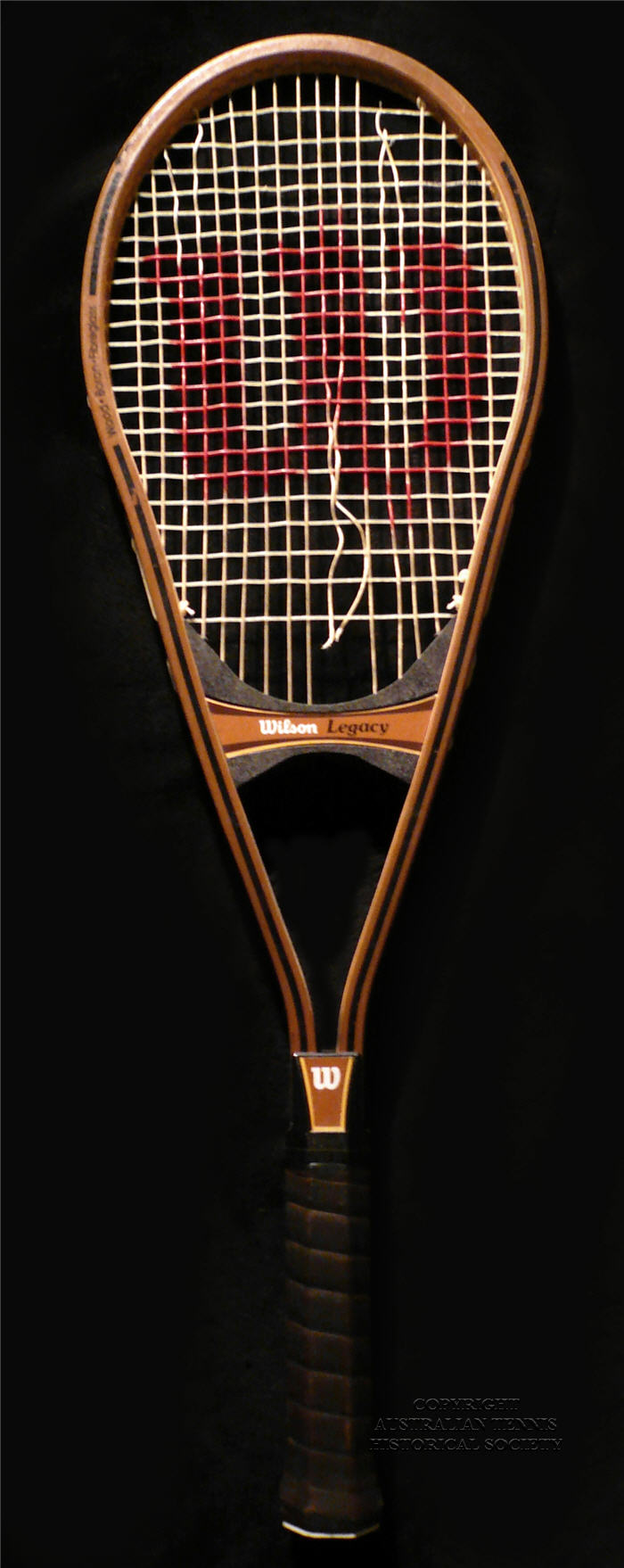
wilson legacy

Wilson Legacy 1983

Rare shape. Wood with plastic throat.

A bit weird, but that’s interesting

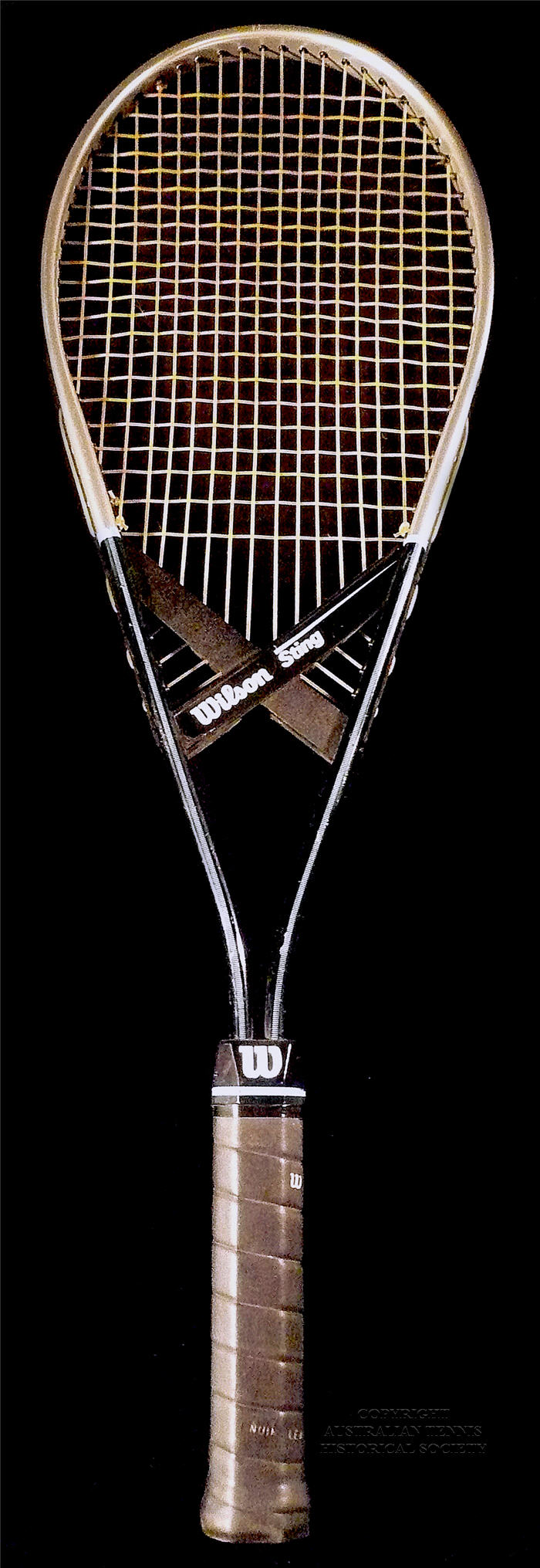
wilson sting

Wilson Sting 1985

Aluminium frame with nice string treatment at the throat.

You can tell they are from the same family as the Legacy above

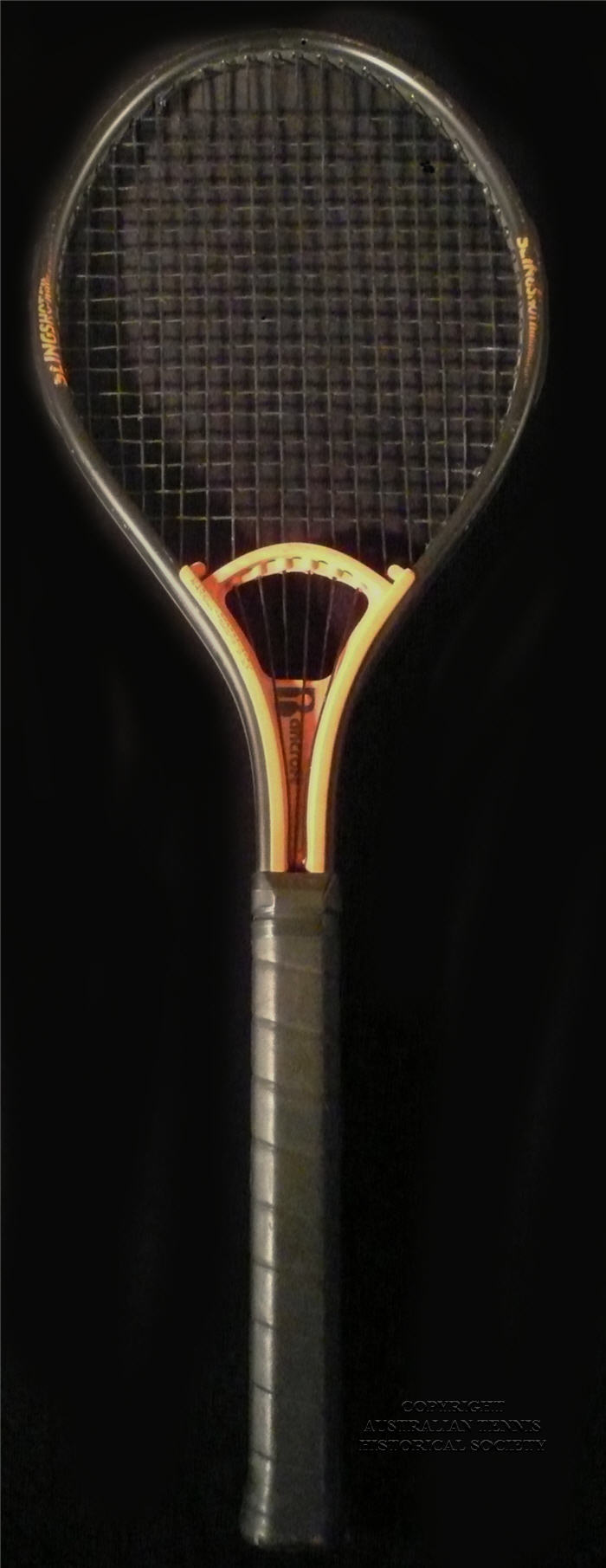
Bancroft Slingshot

Bancroft Slingshot USA 1983

Made in Germany under license by Markhill.

Great extended string pattern to the top of the very long handle

BIO SPORTS GRIPPER

Bio sports The Gripper 1984

A curved grip.

You might think you have seen everything but this is meant to help with tennis elbow by keeping the racquet face up in line with the ball.

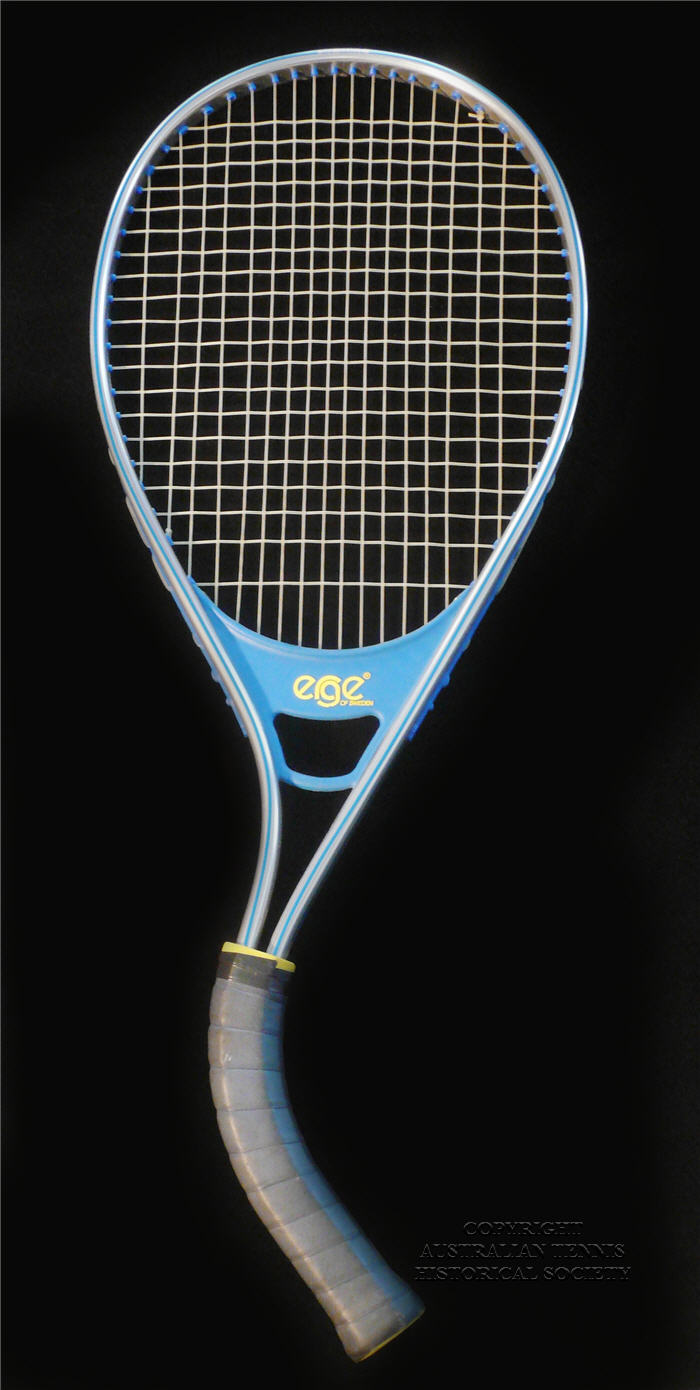
erge2

The Erge (Sweden 1983)

Ergonomic Curved Grip racquet.

Far more pronounced and clearly inspiration for the Neoxxline Range (listed under modern unusual).

Aluminium model came in 1983 followed by a graphite version in 1984

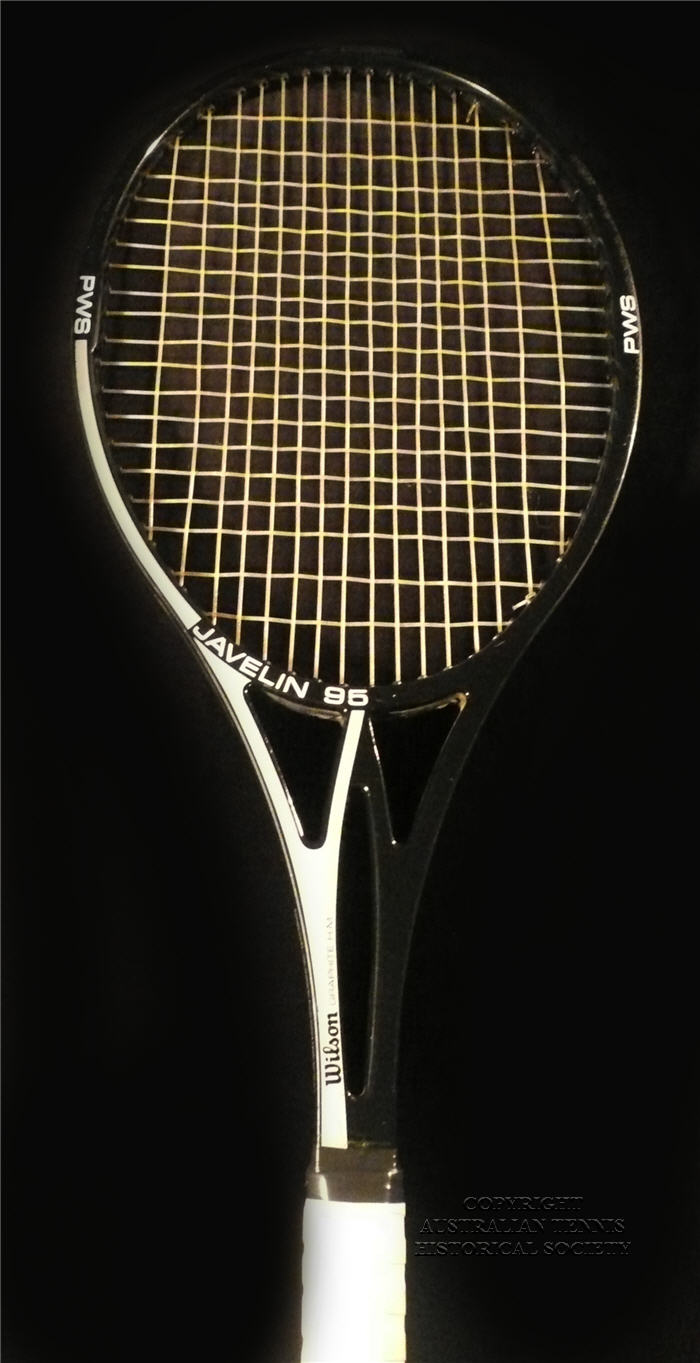
wilson javellin

Wilson Javelin mid 1980’s

A very interesting twin throat design highly sought after by collectors.

acro adjuster (4)

Acro Adjustable mid 1970’s (also s0ld under Hart name)

Two versions this one adjustable via throat piece which pulls the throat down the frame.

Later version moved tightening mechanism to butt cap as per below.

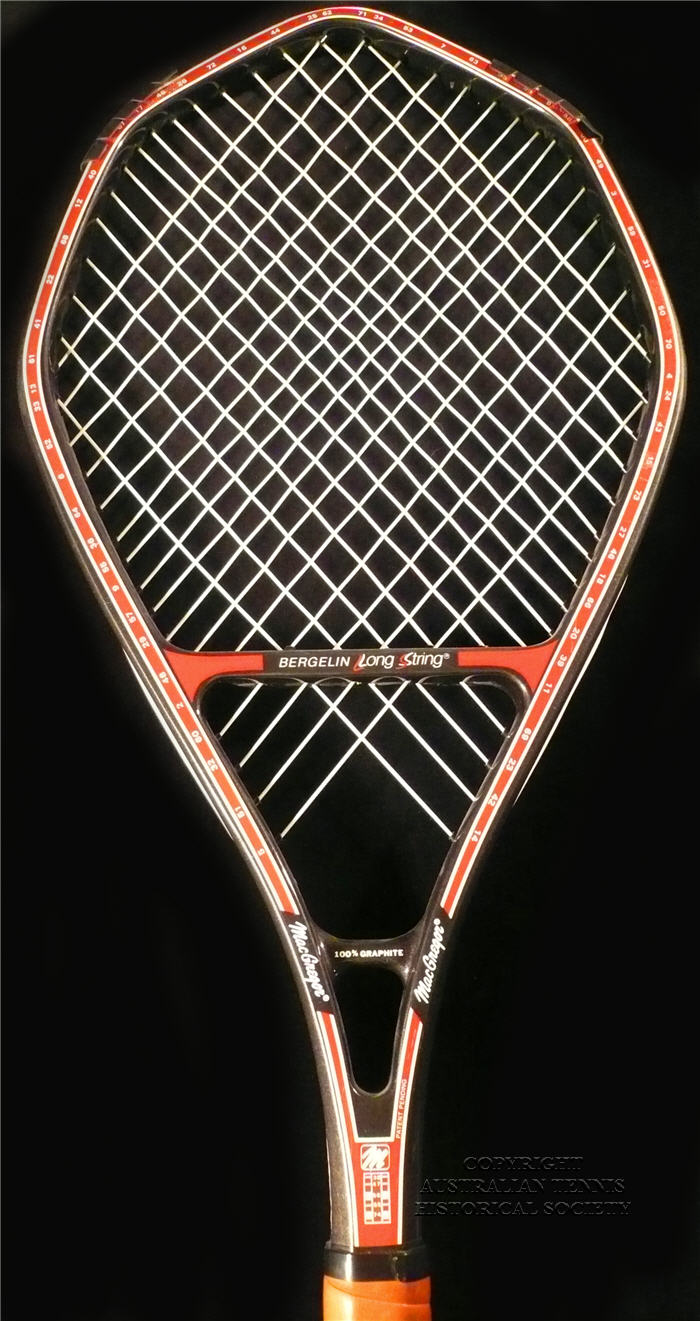
MACGREGOR BERGELIN

Macgregor Bergelin Longstring c 1985

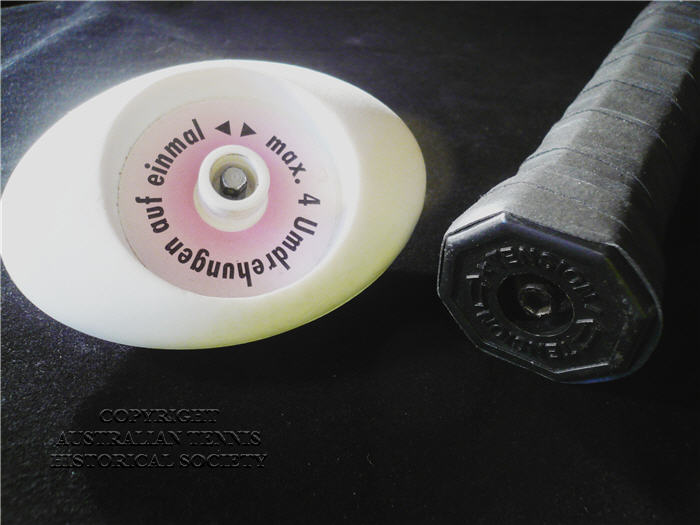
German idea designed by Herwig Fisher (Protagon Sportproukte) and endorsed by Bjorn Borg’s coach Lennart Bergelin. Sold in the USA under license as the MacGregor Bergelin Longstring. Owners can string themselves and then adjust tension via a tightening control system inside the handle. An allen key device connects into the butt cap allowing the owner to adjust tension at any point during a game. Racquet comes with a tension adjustment knob and stringing instructions.

After MacGregor went broke and lost the rights to sell the technology, Protagon went onto launch oval versions called Tension Master and Hi-Con.(page 293-295 Kuebler Book)

protagon (1)

protagon (2)

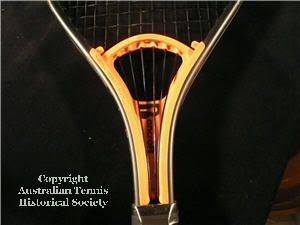
Protagon TM500 with tension adjustment.

The white knob has an allen key insert which is visible. The MacGregor design was similar.

Great diamond stringing also.

Mizuno Sirius

Mizuno Sirius +10 also incorporates an in handle system but not for tension adjustment.
Inside the handle is a movable weight which enables a change to balance and feel.

Rox Pro Space T 1 (1)edit

Rox Pro Space T1

Arms and fan stringing create an unusual combination.

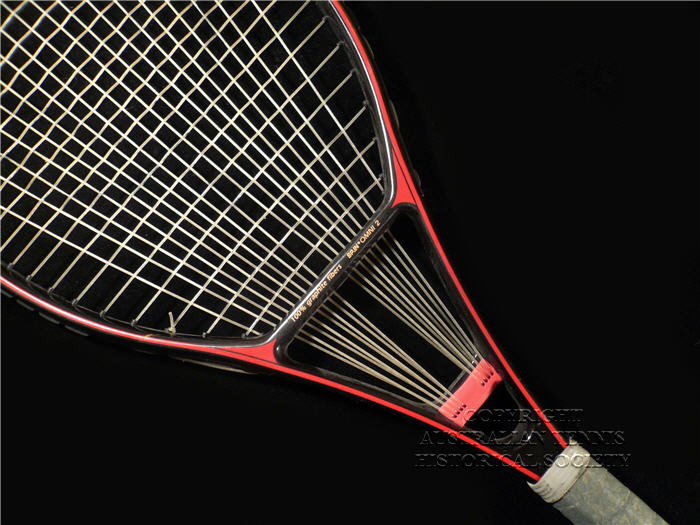
SPIN OMNI LONG STRING

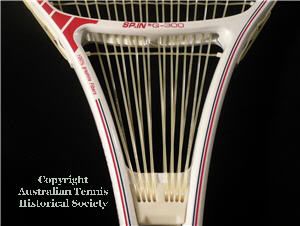
Spin Omni 2 (also G-300 USA & RoxPro Aust.) c 1987

Fancy stringing system with long vertical strings to improve sweet spot performance. Was not within ITF rules but may have received a positive ruling. Also produced a squash racquet with a similar design.

Sold in Australia by Lewis Sports.

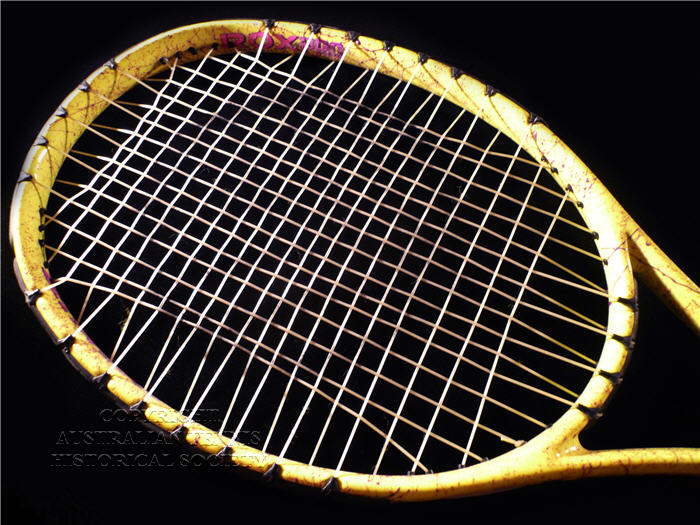
rox pro delta 2000 2011 (10)edit

rox pro delta 2000 2011 (7)edit

Rox Pro Delta 2000

(Also Estusa AmerPro American Pro Jimmy Connors model)

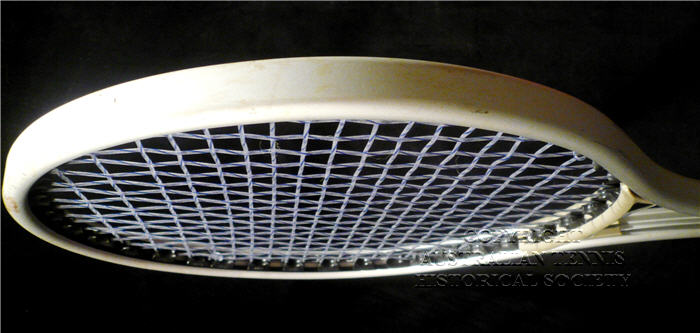
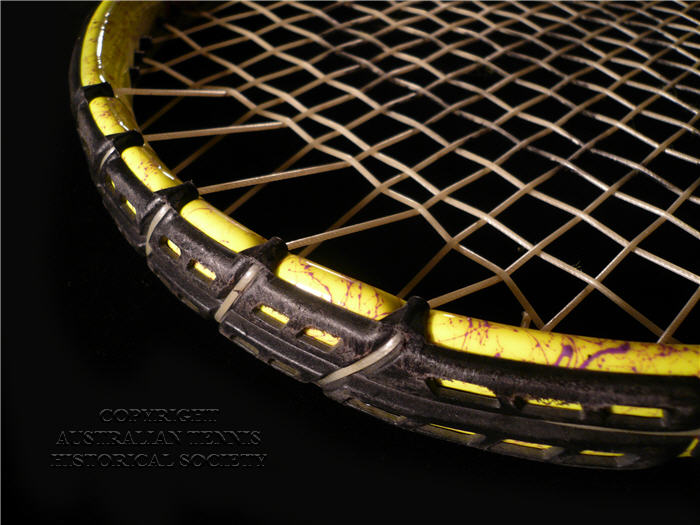
Loop Stringing around the frame not through holes. The added tenison and change to frame dyamics when striking a ball, keeps these strings super tight.

Not a bad idea!

deesse (16)

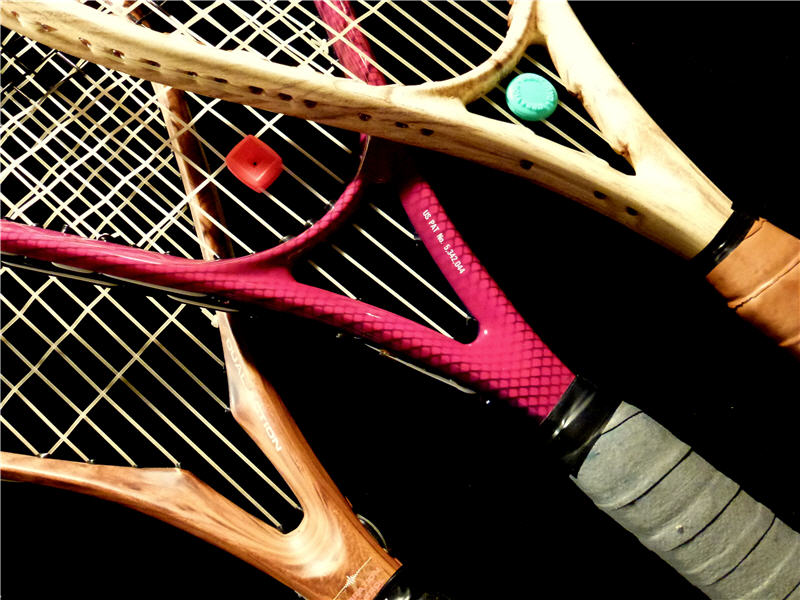
Swiss DEESSE (pronounced Dayus) Wizard Woody Graphite. (made in Korea)

There are 3 versions of this design under brands including ADVANCE SVS & ESQUIRE NT1 both sold in Asia.

The woody walnut burl type finish is really attractive. The whole concept was created by Australian, Barry Todd.

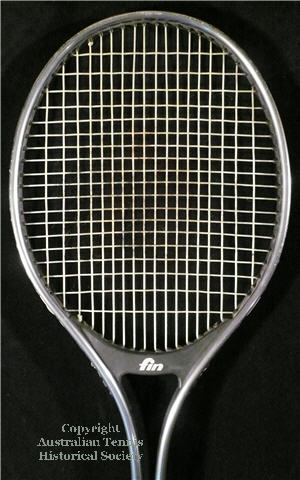
Seen Fin/Deesse story.

the natural handler 2014 (25) edit

Double Handles:  The Handler c 1992 and The Natural (2007)

Two handled racquet to pick up on the latest teaching techniques for double handed players. Much harder to volley and serve due to single hand play being off centre so you might want be a solid baseline player that can run to shots.

This is just one of 3 different versions we have seen trying this concept.

In March 1995 from Tennis Magazine the male designer, Elie Ban-Kheir claimed to have sold about 2000.

The Natural takes a completely different angle along with an offer to customise your existing racquet if you wish.  Watching video of Brian Battistone serving with a volley ball style is recommended viewing.

Gauthier G De G

Gauthier G of G

Bridge design attempts to alter string tension at sweet spot. Very similar to the Spalding Powertech which has two bridges top and bottom. See below.

Gauthier are a recognised French brand, but little is known about this model.

spalding power tech 2015 (11)

Spalding Powertech 80 & 100

Double Inverted Bridge.

Mid 1980’s made in Taiwan.

winsport 2015 (2)

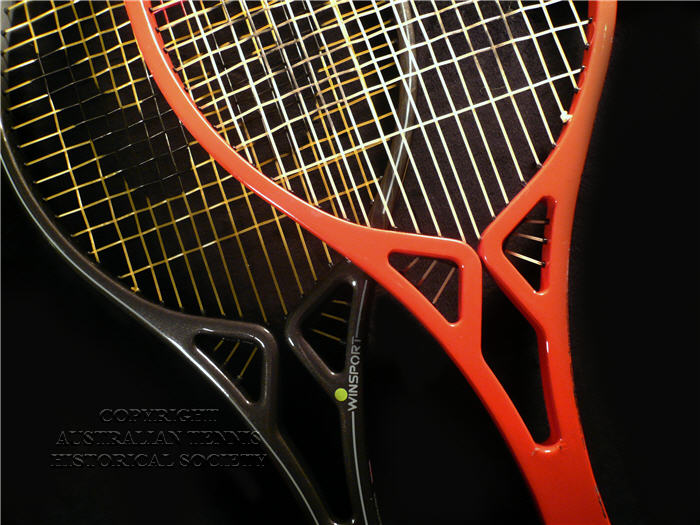
Winsport UK c 1985

Very unusual split throat design.

The Volkl Power Arm is another quite interesting throat treatment that will become collectable in the future.

snauwaert ergonom

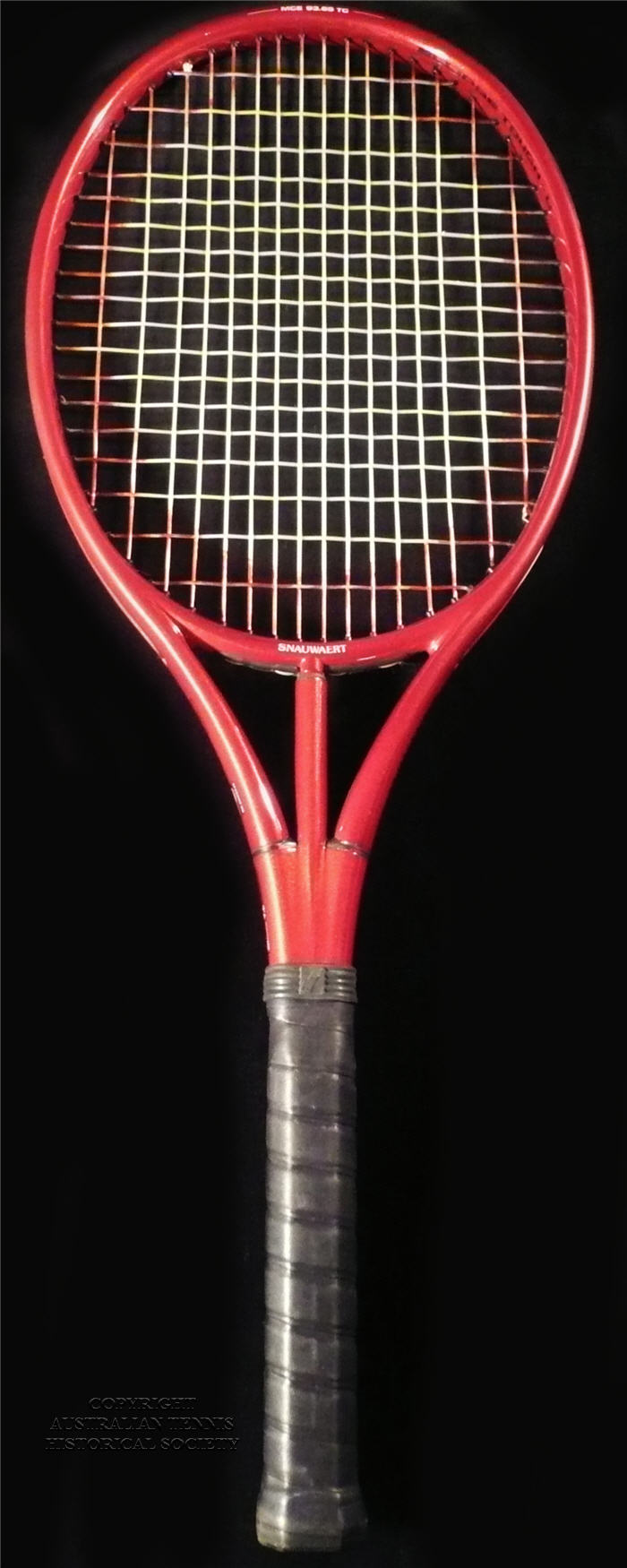
Snauwaert Ergonom 1984 Belgium

Offset head to help players with a tendency to drop the racquet head to still keep the racquet in line with the flight of the ball.

There are a stack of these on ebay and since no-one bought them most are new. If you find a used one it will become a bigger collectors item. Or, I suppose you could buy a new one and try it out for a season.

The local tennis shop advises that being offset the string pattern which hits the ball as diagonal strings would, actually gives a serve that extra bit of top spin for a great kicker.

See the Neoxxline under modern unusual section.

snauwaert ellipse

Snauwaert Ellipse early 1990’s

Tri shaft racquet like the Hazell Streamline.

Head can be removed at the central shaft point but loathe to try this since this one is brand new. The company warranty was void if dismantling occurred so they weren’t designed to be interchangeable like the JENRO (modern unusual section)

Also of interest in this area are the French, Le Coq Sportif tri-shaft racquets made from 1987 and endorsed by pro player Yannick Noah

Unusual Vintage Tennis Racquets 1

Collecting vintage Tennis racquets (rackets) is a wonderful hobby which has been expanded considerably thanks to Ebay. Racquets never seen in Australia can now be purchased and the array of brands and designs is quite staggering. To appreciate the subject we recommend you find a copy of Siegfried Kuebler’s book “The Book of Tennis Rackets”. It is a wonderful testament to the first racquet makers through to the 1990’s. More updates are planned, and presented here are some unusual designs that have broadened the horizon of shape, function, stringing and look. One of the most significant developments in tennis racquet design has occurred due to the new construction materials such as graphite. This has allowed designers to explore a variety of shapes and string surface areas, the latest being 137sq in. 32 inch, (then reduced to 28″ Gamma BIG BUBBA) that earlier wood materials could not withstand.

Some people like paintings, racquet collectors enjoy the skill of fine workmanship in wood, unusual designs and special effects in the very same way and artistically, look sensational along any wall.

This gallery includes racquets made all round the world from the early 1920’s to 2005. Please also see some modern unusual racquets under a separate heading and you will see more unusual designs, such as the variety of wooden handles under other sections devoted to very early and other style wood racquets, strings etc.

lillywhite hazell shoot (3)

grays streamline version 2 (1)

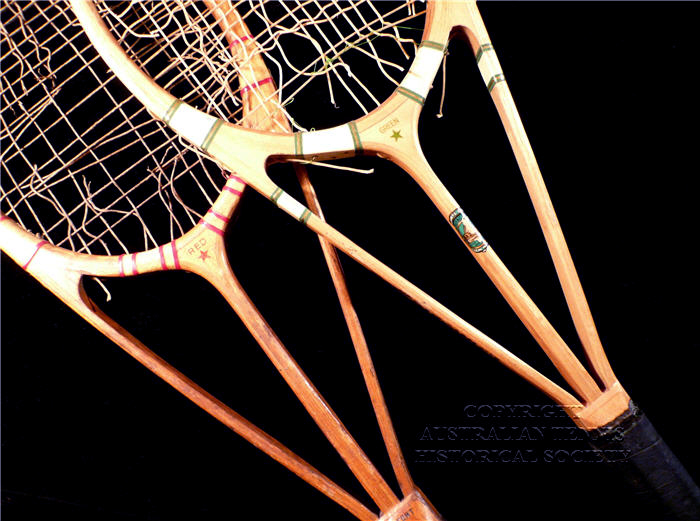
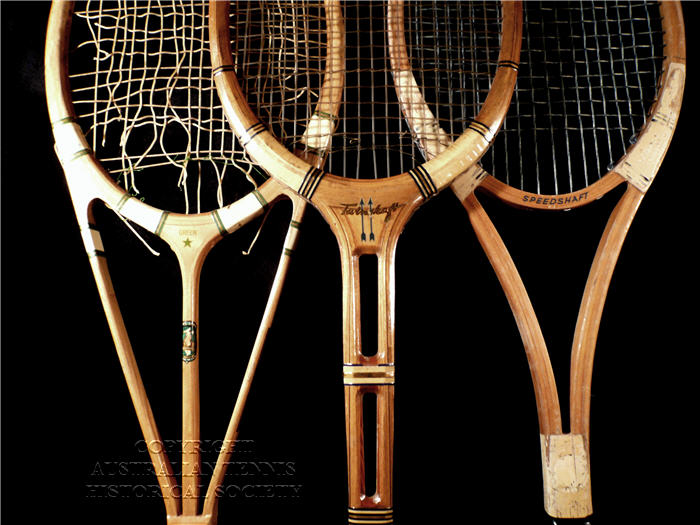
Hazell Streamline UK 1930’s

Made popular by Henry Wilfred “Bunny” Austin who played with these at Wimbledon.

Way ahead of their time, models were also produced for squash and badminton. Models were differentiated by coloured star logos and you may well find green, red, blue and white star examples all of which are very expensive.

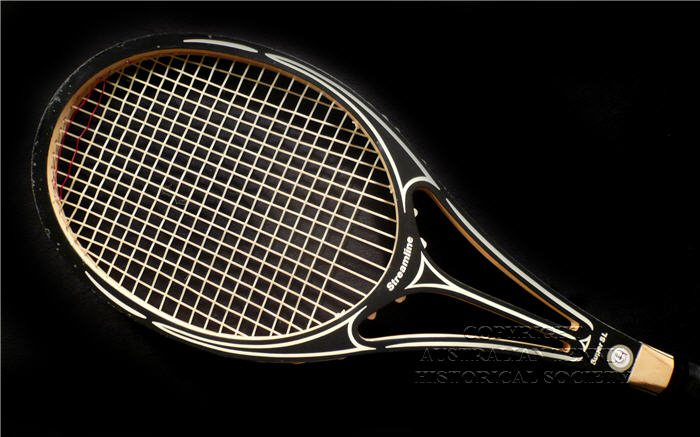
Grays, famous even today for their Royal Tennis racquets acquired Hazell and produced a STREAMLINE version themselves in the 1970’s, also shown above.

In 1937, at around the same time, a very similar looking Snauwaert Triumph model hit the market in possible contravention of Hazell’s patent. Donnay made one in this style in the 1950’s called the Court King.

andreef hazell lillywhite 2016 (9)

Lillywhite & Frowd TwinShaft (1935) Andreef Open Throat (1950’s)

In addition to the Hazell, other wooden innovations were tried including by Frank Donisthorpe of Hazell fame an oversize frame he used at Wimbledon.

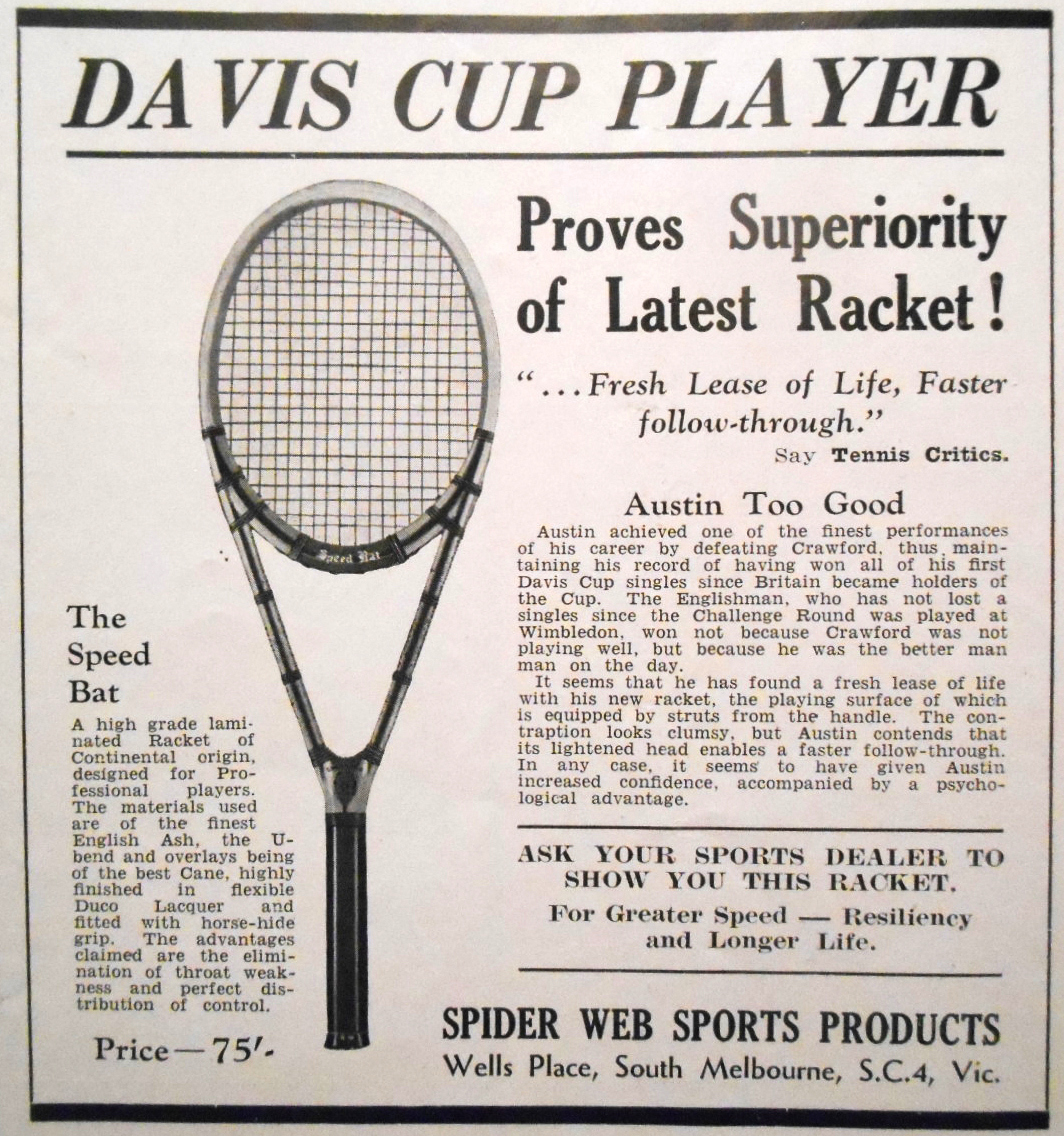
Donisthorpe Speed Bat 1936 ad Mary

Frank Donisthorpe also designed a Spanish made open throat model in the mid 1930’s called SPEEDBAT.  We finally found an example.  See under Spider Web post.darsonval trio aa (2)

Darsonval (France) made some wonderful models throughout the 1930’s.

These split shaft models and even the contoured finish on the standard racquet ooze quality.

celluloid finish (5)

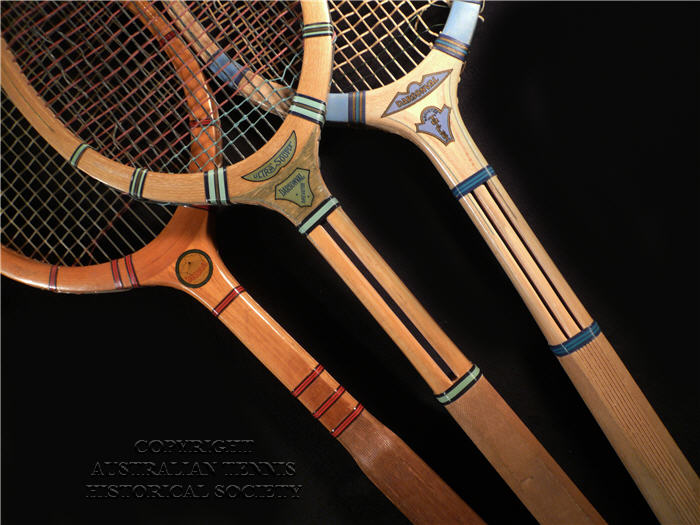
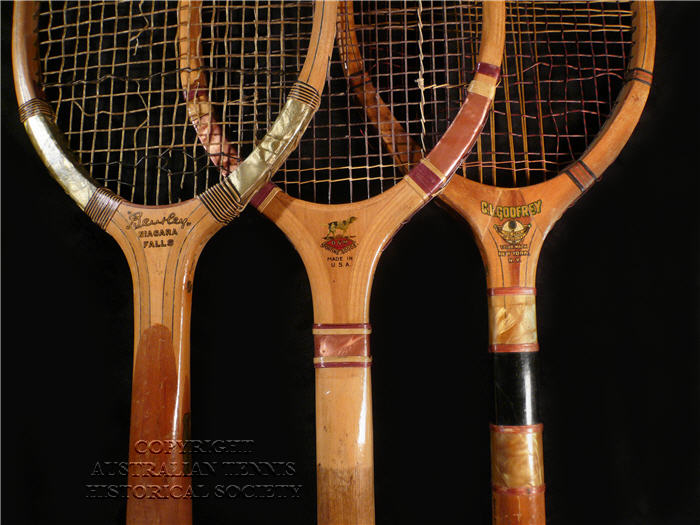
In America, some models in the 1930’s began to use a shimmering celluloid finish to enhance decoration and these three include,  Bentley, Draper Maynard & Godfrey NY

hillman2aa

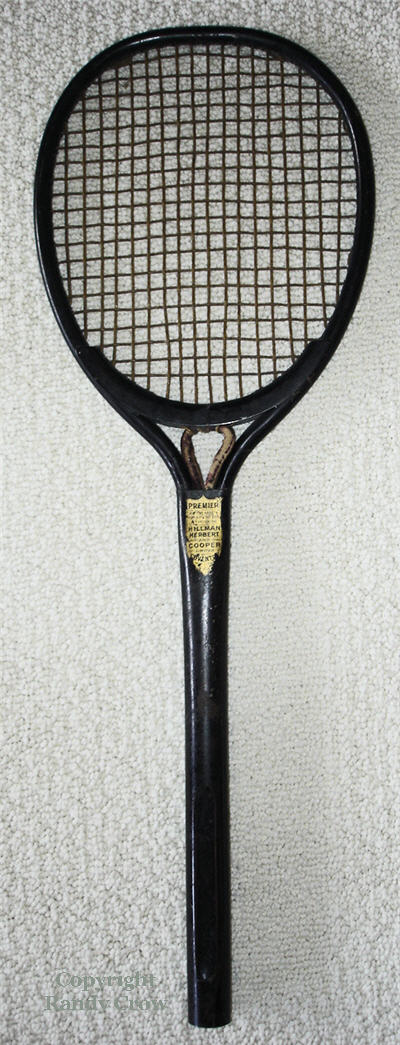
Hillman Herbert Cooper

‘Premier’ Model 1886

Patented tension adjustment system where a leather cord is tightened within the butt cap area. In addition, a steel racquet which may well be one of the earliest. The company was most well known for bicycle manufacture. A very rare item.

Thanks to US Collector, Randy Crow for the photos and history.

Patent # 346 751

As shown in Siegfried Kuebler’s book page 512. In Jeanne Cherry’s book she cites the earliest metal racquets to a Scottish company called the Metallic Racquet Corp. c 1887.

Copy of CRAVENS ADJUSTABLE 2

CRAVENS ADJUSTABLE 7

Craven Adjuster-tite 1928

(very rare)

A very early invention to change the string tension. Designed and patented by Edward Craven, the license was sold to Wilson, Magnan, Kent and Draper Maynard.

As you can see the butt cap permits the internal rod to be tightened or loosened.

Despite a few companies offering such technology, examples are scarce owing to the lack of uptake by customers.

Patent 1927 # 1 663 039

As shown in Siegfried Kuebler’s book page 539

CRAVEN RACQUET 1

Craven Proto-type 1929-1931

(very rare)

While known for the Adjuster-tite method, this design was patented in 1933 by Jacob Kleinmann. The crescent shape would wind down into a slot in the throat.

We are unsure if this ever made into production, but the International model name is a Craven racquet and we suspect they worked on a version.

Patent Application 1929 Given 1933 # 1 912 942

As shown in Siegfried Kuebler’s book page 546

RACQUETS_DAYTONFLYER3

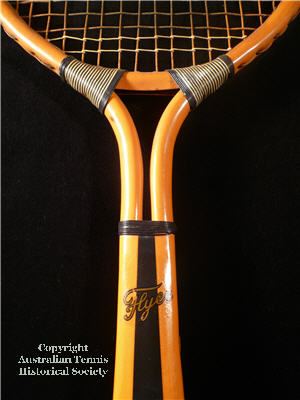
Dayton USA 1922 – 1990’s

One of the first metal head/wood handle combinations. They were strung with piano wire. The factory made this product almost without change, including the wood handles up to 1995.

From Randy Crow, USA collector, comes this valuable research information.

1.If the butt cap has “Dayton Ohio” printed on it, it was made between 1923 and 1934.

2.If the plastic butt cap says “Arcanum O” and the throat doesn’t have the three-racquet logo, it dates from 1934-1974.

3. If the racquet has a logo of three stylized racquets on the throat, it was made after 1974.

There were plenty of models and colours so whilst available the trick is to find them in good condition with not to much rust or paint loss and learn how to differentiate the age of various models.

They were sold in Australia late 1922 and used by Gerald Patterson and Pat O’Hara Wood in local tournaments over 1923/1924. Some of the famous French musketeers visiting Australia in 1929 also were introduced to them by Patterson on a drizzly day at Royal South Yarra Tennis Club.

So rather than importing them from the USA, some lucky collectors may find some local delivered examples.

Please note that the Birmal, below, was also sold in Australia.

birmal reshoot 2

Birmal Aluminium c1923 UK

An all metal, steel strings racquet, which appeared at around the same time as Dayton in the USA. Originally with the pictured cord grip they eventually moved to a wrapped leather grip.   These racquets were sold in Australia in the mid late 1920’s and included in an ad from the Northern Territory on the basis of hot humid conditions and a 1927 McEwans catalogue at a mid price point of 55 shillings compared to 95 shillings for the best wood racquets. This is example was acquired from Australia whereas most are seen from the UK.

SILVER FOX (2)

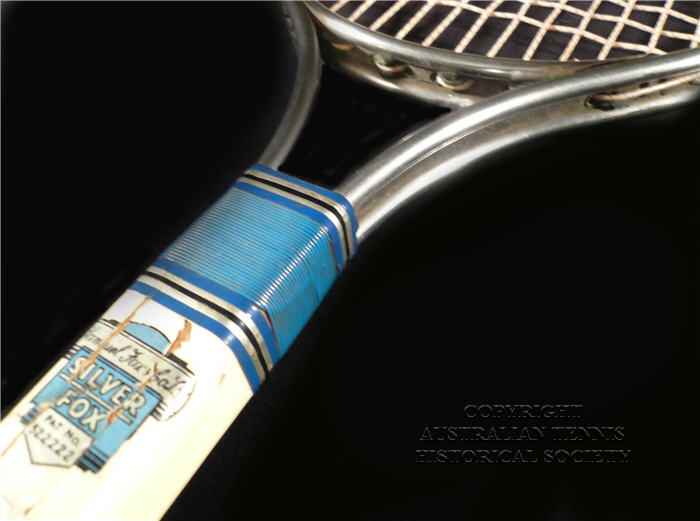
Silver Fox UK c 1930’s

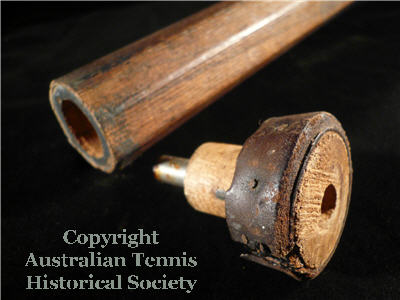
Potentially the first stainless steel metal racquet with a wood combination. Dayton used carbon steel.

A patent number printed with the logo cannot be confirmed as being correct.

Maybe a dummy patent was a good marketing idea back then?

See Arco stainless steel racquets to read about the first full frame welded stainless steel racquet invented in Australia in the mid 70’s

ALLO (assumed) rod lack

‘Allo ‘French Prototype c1940’s

Solid cast aluminium. Might be a one off. Found in a full length Allo bag. Allo were making weapons and car parts c 1940’s and had made wooden racquets from about 1900. The workmanship in the casting is extraordinary and you can see the string waves in the throat and the guides on the inside of the racquet. The strings sit in a protected channel around the frame which deepens at the top where most damage occurs.

A lot of thought has gone into this.

WD aluminium 1933 (1)

Spalding and Wright & Ditson 1930’s (USA)

The US firm produced an Aluminium head wood handle model under a few model names including DURALITE.

pro am (6)edit

PRO AM early 1970’s (USA)

Commenced production of a fully cast Magnesium model racquet under the Centurion brand which then converted to an Aluminium edition under Pro Am.
The Pro Am has twin cross beams.

Designed by Tom Galich and used by Francoise Durr in events around 1973.

Single piece casting with an alloy construction and hollow handle. Not a rivet in sight.

dunlop twin shaft (34)

dunlop twin shaft (1)

Dunlop Twin shaft 1969

Very retro design steel shaft model used by Torben Ulrich in various events.

Fin & Deesse Tennis Racquets

The story about Fin is really a story about an Australian who single handedly set about to make the best possible racquets in Taiwan and launch the low cost of production graphite racquets into the global market and in the process establish himself as the foremost designer and innovator of racquet design with graphite technology.

Barry Todd was looking for a business opportunity in the late 1970’s and a friend had just returned from Taiwan with some metal and wooden tennis racquets.  After three hits the metal welding broke,  the tennis balls were flat,  the wooden laminations started to separate, yet these items were bought only for $6 whereas the current market was paying $30. Appearance wise they looked OK, it was only that their production and materials specifications were all wrong.

The only option was to fly there and start to work with companies to develop better technology that wouldn’t fail. The starting point was Pro Kennex. Barry refined the graphite formulas and techniques to create a range of racquets which he then took to America’s largest trade show and introduced Taiwanese Graphite to Wilson, Prince, Head and Donnay. His expertise included being able to design and produce a new model within 4-6 weeks compared to the usual 12-18 months manufacturers were used to waiting for. Orders rolled in.  Graphite racquets were certainly being made pre Barry visiting Taiwan because Emrik and Stellar were already marketing Taiwanese graphite product while Rossignol, Kawasaki and other brands were using high cost Japanese, European or USA production facilities.

While the first orders were small, Barry was able to manage the business, however as the orders grew in size,  his role as middleman was marginalised as the factories began to deal directly with the large brands.  Unfortunately, this same pattern continued as Barry was forced to leave one firm to assist another in an attempt to forge an income and sadly the “sell-out” process continued.

For two years Barry lived in Taiwan, he forged ahead with numerous innovations including the deep throat designs, the manufacture of synthetic gut and grips all of which were adopted and copied.

The technology advancements also moved into squash racquet design and amid a major backlash which was fought out in the courts (not on them) the International Squash federation was forced to accept the new racquets over the conventional wood.   I can hear my Real Tennis colleagues saying they are glad that their secretive 300+ year sport thankfully remained off the radar.

Barry as a player was no slouch, he used to be up there with Fred Stolle, Bob Hewitt  & company but it was pretty difficult to make a name when Rod Laver and others were at the elite end. While living in Taiwan, he was the only foreigner ever to win the Taiwan Open, for they changed the rules after this to be a “Taiwanese Only” tournament.

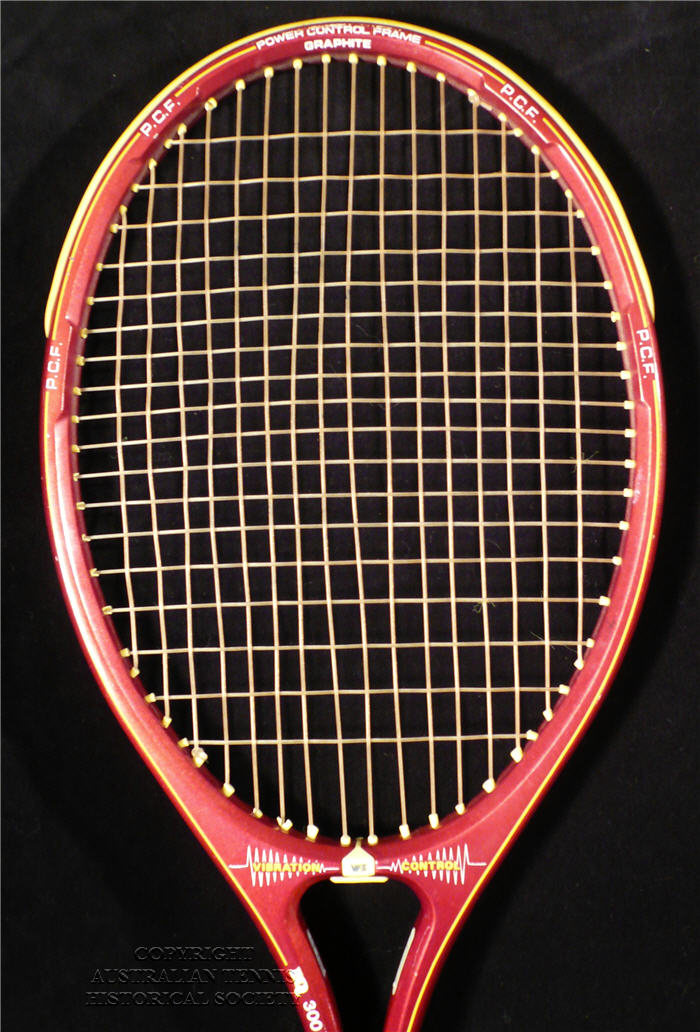
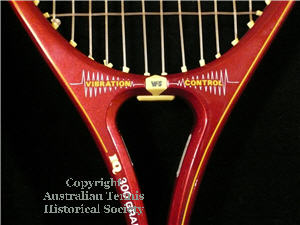
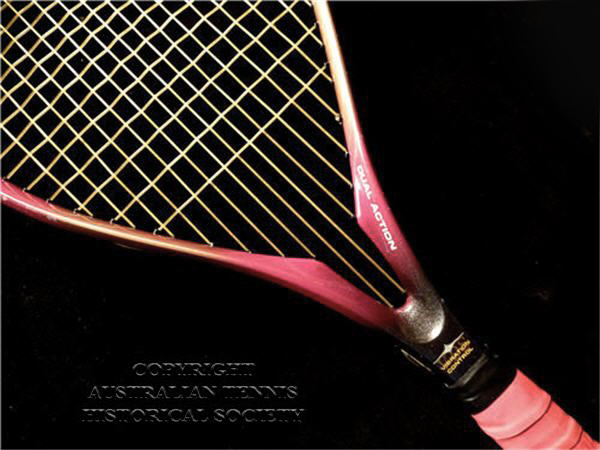
With the limited personal financial success of the introduction of high volume graphite racquets, a variety of consultancy positions and some major brand R&D roles that failed to materialise, Barry decided to create his own brand, FIN.  Given his design expertise he recognised the importance of vibration on tennis elbow  and proceeded to develop the first in-frame vibration dampening system involving a split throat design called “VFS”.  This was introduced into the top end range of the Fin IQ racquets. The racquets received excellent PR particularly in the USA when the publisher of a tennis magazine found he could play again, after years of tennis elbow with the new FIN IQ’s.  Protecting the system also came at a price.  To patent technology globally cost $130,ooo and then you need deep pockets to protect your patent against would be copy-cats.  He also fine-tuned manufacturing to incorporate a range of weight and balancing variations to create a range of racquets for major players.  The biggest name in the Australian market to use Fin was Chris Lewis from New Zealand.

The new range and network of agents was in place for the 1982 German Sporting goods show and in a matter of days Barry and team had amassed a staggering $3 million in orders.

Success comes at a price and Barry had to quickly find a way to fund order production.  The plan involved advertising for funding throughout Europe and 167 offers of support came in.

The one chosen was a group of Forklift truck manufacturers with some $60 million in turnover and with the offer to inject the funds quickly Barry signed a deal giving them 51% and control of  the business.  In yet another disastrous chain of events, this new investor was in fact cash strapped themselves and by the time the letters of credit had been organised with the Taiwan factory, the European summer was over and the orders could not be fulfilled.  Over in Australia, production was on time for the coming summer season, hence the FIN brand managed to grab a foothold in the Australian market.

On the IQ frames the following is labelled, ” This model is part of the new Fin tailor made collection of super performance racquets assembled in Taiwan. The exact cross blend by braiding the fibres together eliminate human error in the manufacturing process giving 100% uniformity throughout the racquet. This process combined with unmatched technology makes these racquets the most responsive racquets on the market today”  Tag line FEEL THE FIN DIFFERENCE.  (s0me Asian grammar retained)

Despite the rocky start, Fin survived for about 6 years even though the company was struggling financially.  In an attempt to resurrect the business Barry began to seek some joint venture arrangements.  One of these was Prince. At the time he was to first meet them, he instead had to return to Australia for his daughters wedding and various Fin UK board members followed him out attempting to negotiate a restructure of senior management.  Barry would have none of this and on his return to the UK found that the board, with control, had decided to sack Barry from his position.  Daft in the extreme since Barry was the technological genius behind the Fin range. The Prince deal never got off the ground.

Regrettably, he had to sit back and watch the financial disaster unfold and Fin went broke along with his 49% share.  No doubt, if the financial gods had been favourable, Fin may well have become, deservedly so, a major racquet brand which may well have been around today.

The next foray into the market was thanks to a mate who owned the Deesse (pro. Dayus) company in Switzerland.  They are today still a large cosmetic company and were keen to develop their own range of sporting goods because  they used sporting wear and equipment in many brand promotions.  Given a solid financial base,  Barry went to Korea this time to develop the range which included the “woody” graphite style which is a quite stunning finish, he also designed the long string concept and the inward angle of the side frame. In two years Deesse racquets were number 1 in Switzerland and then a deal was done for Barry to launch Deesse into the UK as his own business and globally with Deesse into other markets.  Again, another tragedy. Owing to a severe car crash Barry was hospitalised and his potential future involvement with the project was in doubt.  Deesse decided to pull the pin rather than continue without him and cutting it’s losses withdrew from the launch meaning that Barry was once again denied his opportunity.

Barry,  today aged 72 has retired from tennis racquet manufacture but he still owns some major patents available for a price. Sadly the journey has not been kind to Barry financially but the story itself is a great tribute to his Australian ingenuity and his “have a go- never give up” attitude.

He certainly paved the way to the greatest revolution in tennis playing style and techniques for the power generated by graphite racquets has altered stroke making,  ball spin,  court play and the retail market.   Remember that we used to buy one or two racquets a year when we played club tennis now we can own a graphite one for ten years….

From this story, I guess the only irony is that even today the greatest problem facing the racquet industry continues to be what plagued Barry and that is the ongoing knock offs created by rogue factories, not just copying technology but creating full graphics knock offs.

Thanks for your time Barry and sharing your story with Australian Tennis History

Fin metal products were launched with the graphites.

Fin IQ 300 with VFS vibration system

A stunning design all round

 Deesse (pron. Dayus)  Woody Graphite
One of the most attractive racquets made. Barry created the technique to print a wooden finish using various shades.

 An earlier Deesse model called the WIZARD Feather Pro

In a fashion like the Wilson PWS, Deesse used the long string technique
combined with additional frame support as shown here.

Apart from developing the first long string racquets, Barry also produced this alternate stinging system.

If you broke a string, the immediate strings would remain taut allowing you to complete the point.
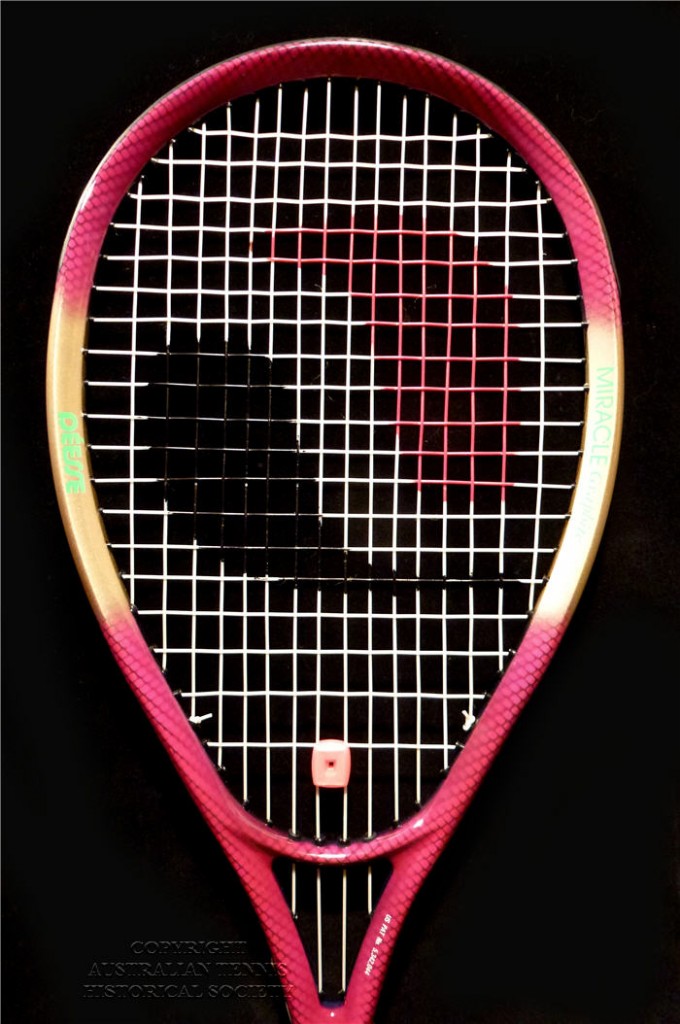
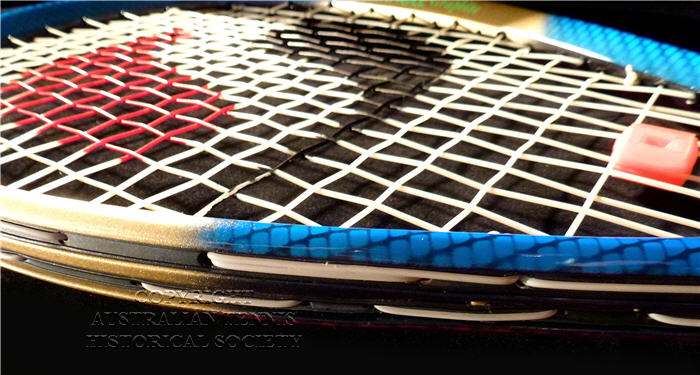
A fine and rare example to include in any collection, called the MIRACLE  (blue one side pink the other)


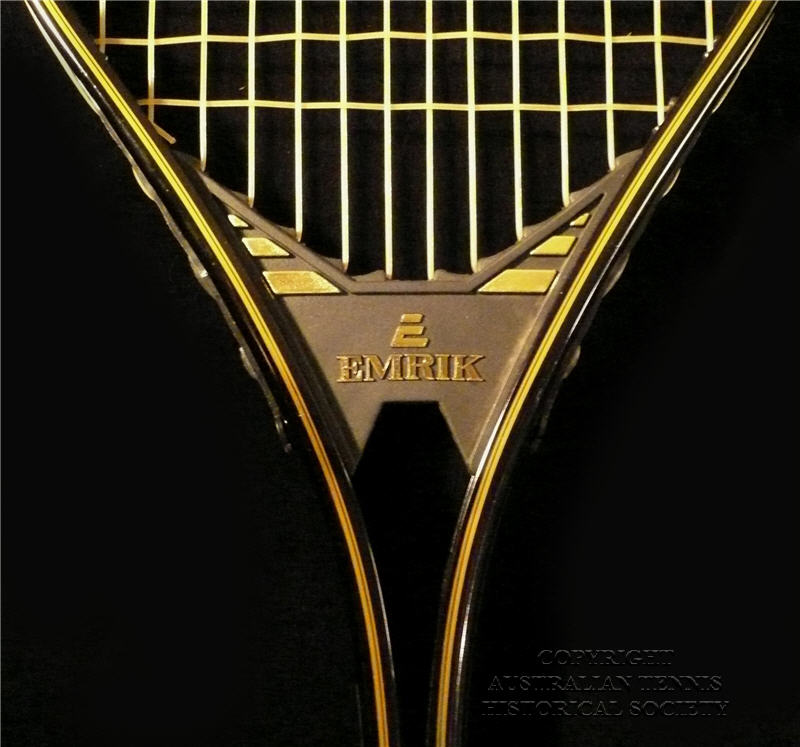
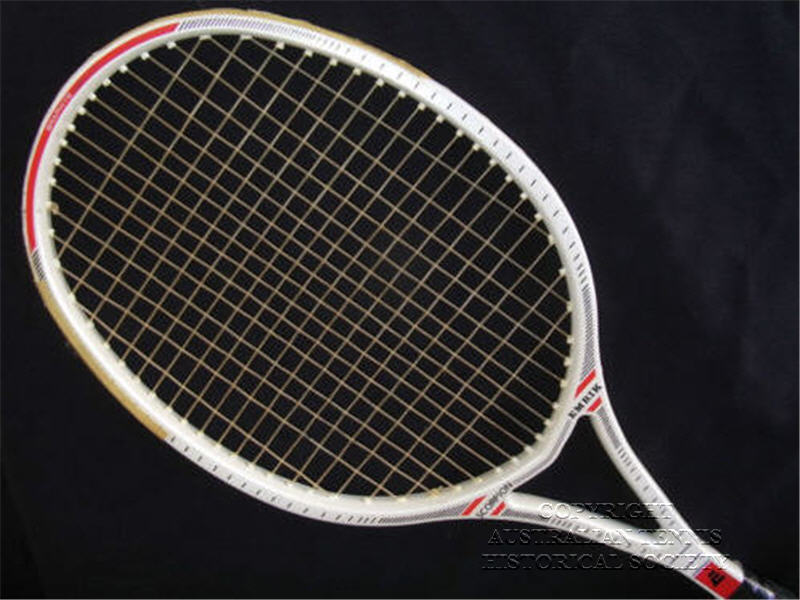
Emrik Racquets

As the transition from wood to graphite racquets took place in the late 1970’s, the established Australian Industry comprising Slazenger, Dunlop, Spalding and Oliver seemed to underestimate the potential of these new space age materials.

Metal racquets while novel were often the cause of tennis elbow and so wooden racquets got a reprieve.  The first graphite racquets were very expensive and so the wood racquets seemingly once again had another reprieve.  This was not to last long.

In Australia, in 1978, Russel Emerick Ekas had left university with an  entrepreneurial desire and while owning his own squash centre, identified a niche market in the Squash Racquets segment and commenced to import the first  EMRIK squash racquets.

Given the size of the squash market in terms of numbers of centres, Emrik forged an impressive name for itself and through running competitions such as the “EMRIK GOLD CUP” became a well regarded brand with a visibility vastly beyond the company’s actual size.

Searching for volume growth and with excellent relationships within the overseas racquet manufacturers, Emrik launched itself into the Tennis market in the early 1981. No local manufacturing was involved. All product was made in Taiwan and Russell often travelled there to oversee quality control.

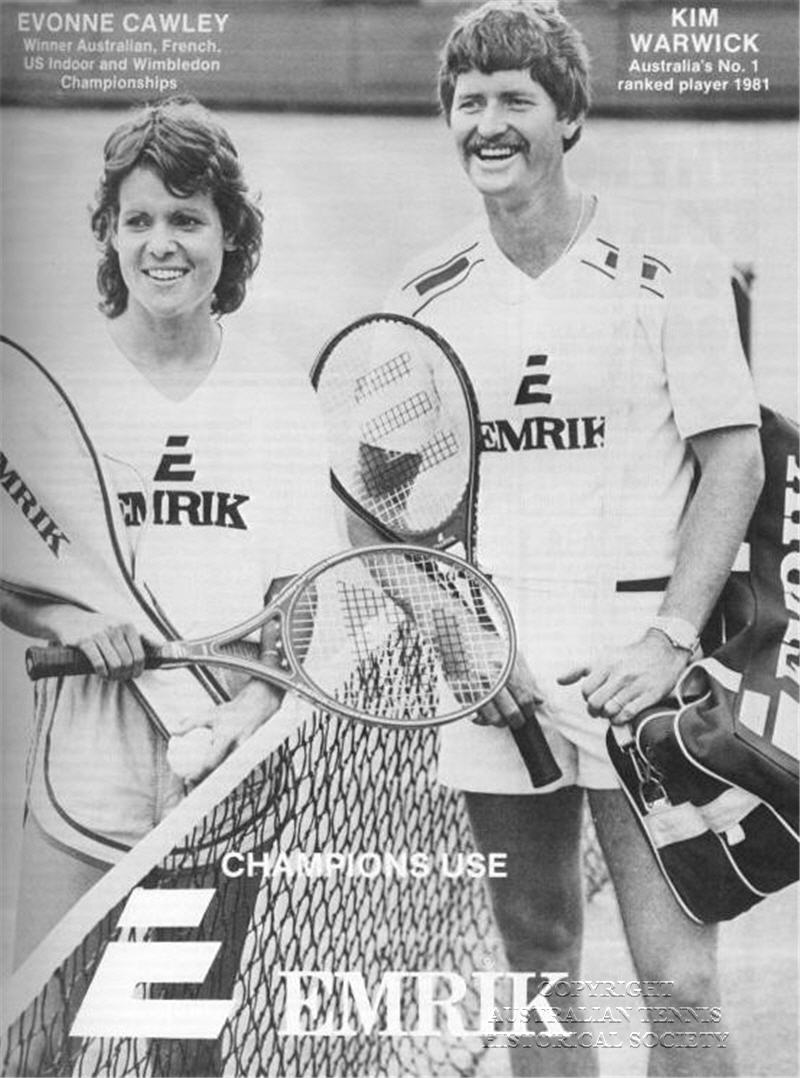
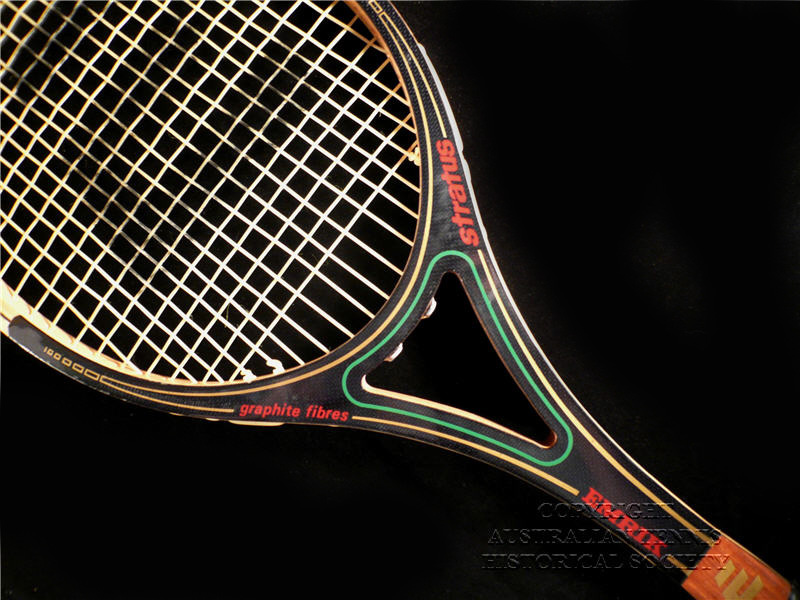
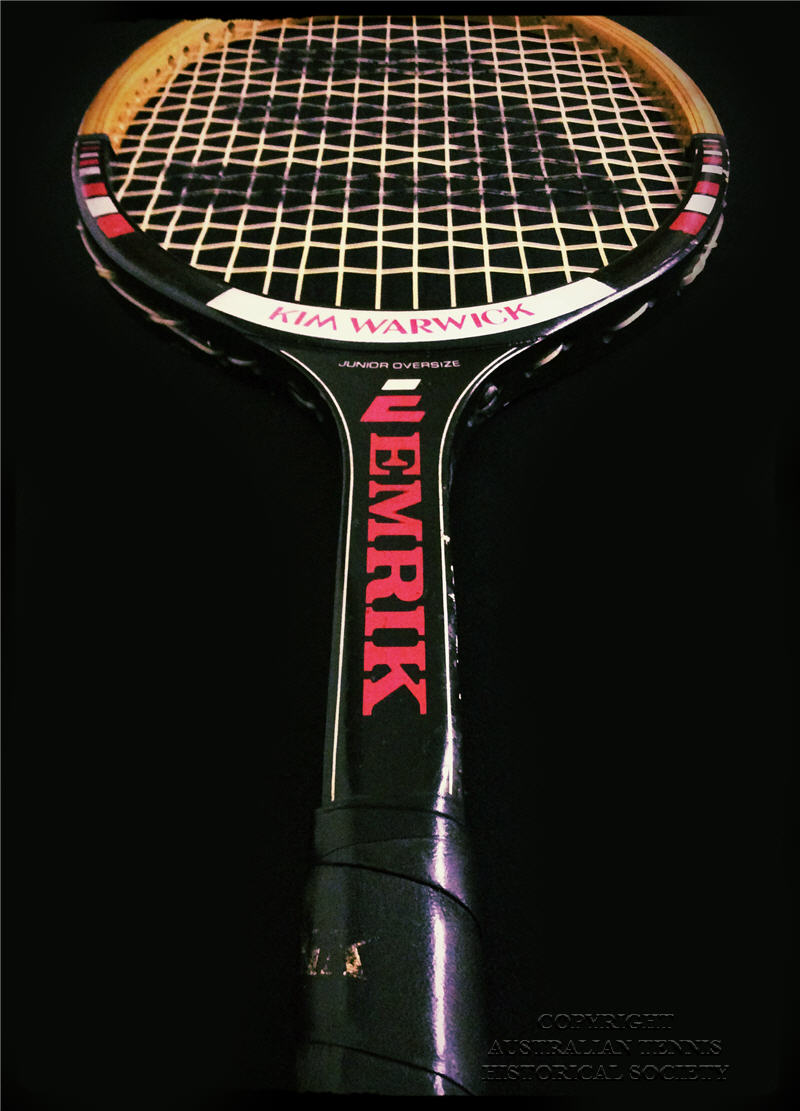
In somewhat of a marketing coup, three key Australian Tennis personalities were sponsored. Kim Warwick, Evonne Goolagong Cawley, then a new mum and aspiring junior Wally Masur.  Kim was the number one man in Australia, Evonne  won Wimbledon in 1980, creating history as being the first mother to win the tournament since the WW1 era, so signing her to the brand was great marketing and g00d timing. Evonne had played with Dunlop for over 20 years however given that Emrik was  an Australian owned company and liked their new mid size racquets she chose to move to Emrik on a five year six figure deal.  Her racquet of choice was the Stratus which was a wood, fibreglass composite. Wally, although an up and coming junior at the time, went onto play Davis Cup Tennis for Australia and also became a household name.

emrik 1982 ecg kw

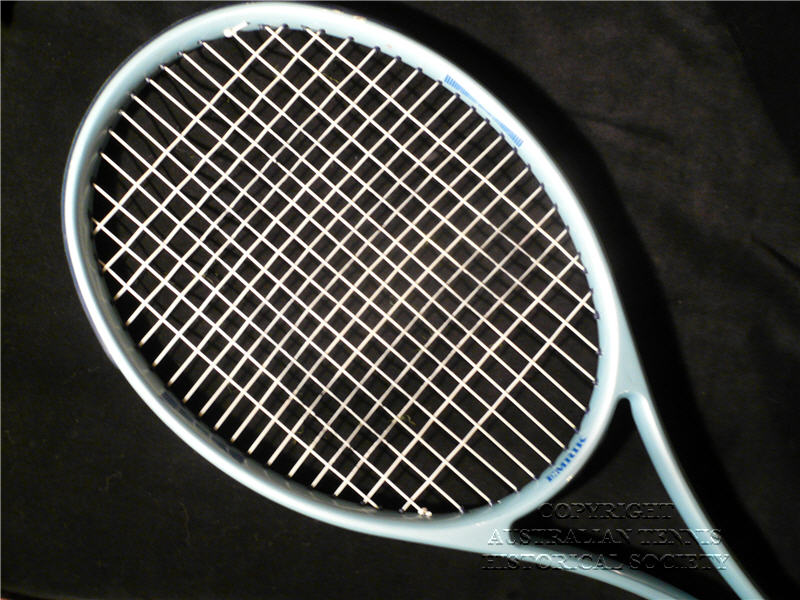
Emrik adopted an approach to build market share using a similar strategy as past companies, by establishing a core group of branded product supported by other custom lines introduced specifically for various retail groups. The company readily adopted the emerging technologies and Russell claims that Emrik was the first company to bring graphite racquets into Australia.

The main factories producing Emrik product was Kunan and Pro Kennex however other companies were used as well.

In its heyday, Emrik sold to 2000 accounts, sold over 1 million racquets and had a market share for graphite racquets of 33%.   It was effectively the market leader in this segment and they also offered wood fibreglass models.

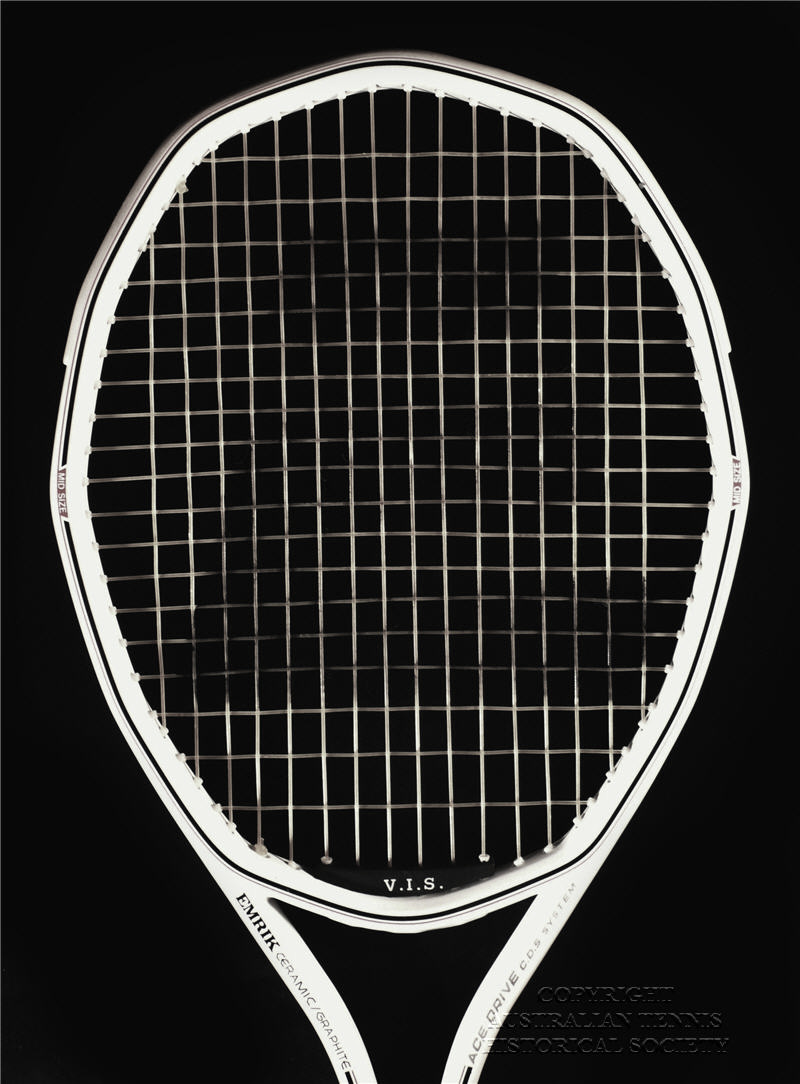
The company also continued to adopt new material technology and didn’t hesitate launching the first ceramic products and other composite graphite variants.

Over time the main brands such as Wilson, Prince and Yonex using global marketing and international player endorsements clawed back their market share and Emrik was sold to the Real Corporation in 1986-87 and as a name and product range survives today. In Canada, the APOLLO EMRIK name is marketing both squash and tennis products. Emrik also evolved back into a stable of brands which included Dunlop Slazenger and also Apollo product.

Emrik products come up in thrift shops all the time so you will find many nice examples.

Are they collectible?  The answer is yes, but not in the same way that Slazenger or Dunlop racquets of the 1950’s and 1960’s are given the connections with Australia’s leading world champions of that era.  Nevertheless, the quality of many of the models is very good and some of the designs are quite unusual.  The potential downside is the sheer number of models and the frequency you might  find them.

The real story here is that Emrik caught the big tennis companies sleeping and had a major influence within Australia du

ring the period when graphite racquets were evolving into the material of preference.

emrikpanza5

EMRIK 1

EMRIK 5

emrik kim warwick 2017 (2)

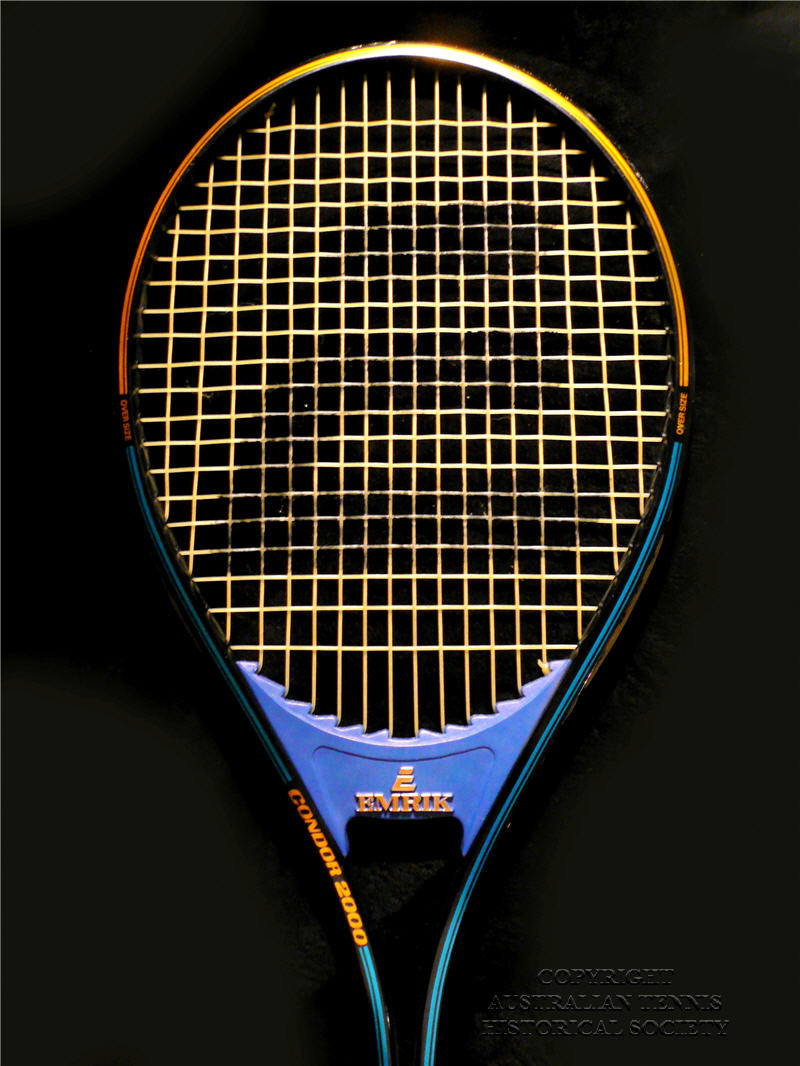
EMRIK KIM WARWICK CONDOR 2000 (3)

EMRIK VOYAGER PROFILE

Emrik Scorpion 2

emrik twin cross bar (15)

EMRIK ACE DRIVE 2

Dunlop Sports Company (a merger between Empire / Baker & MacPherson)

At some point in the early 1930’s as the giants of the industry, Alexander, Spalding and Slazenger were producing the bulk of the tennis racquets sold in Australia, small boutique firms tried to carve a niche for themselves using technology or simply producing their own limited release racquets with the usual visual design differences.

This page provides an insight into how some early makers evolved into the Dunlop Sports Company.

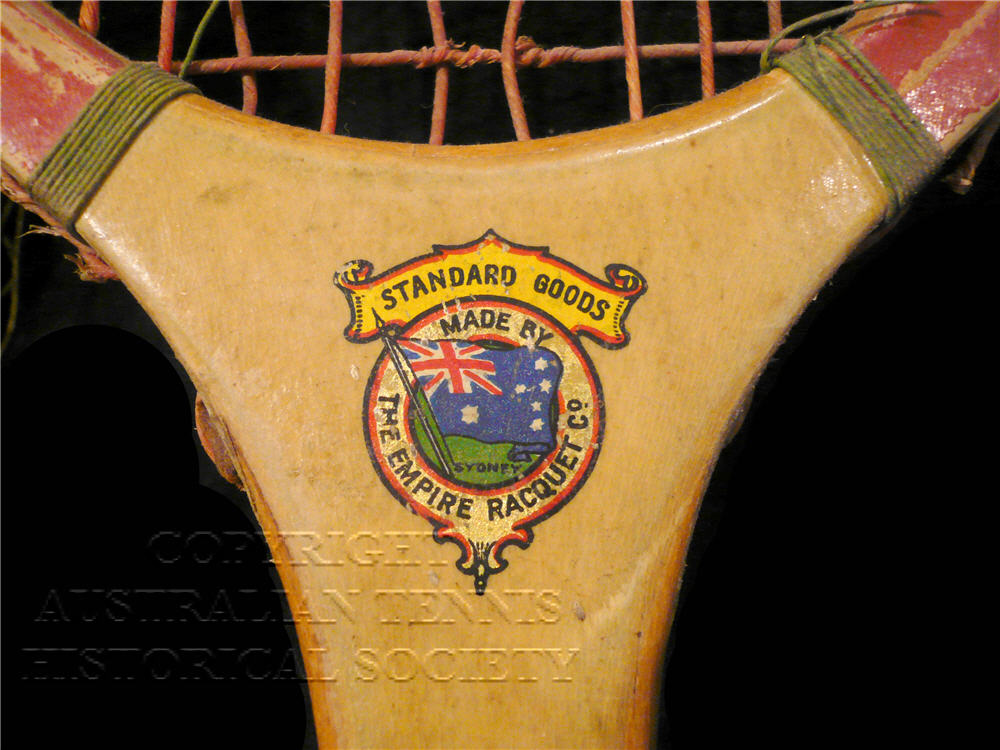
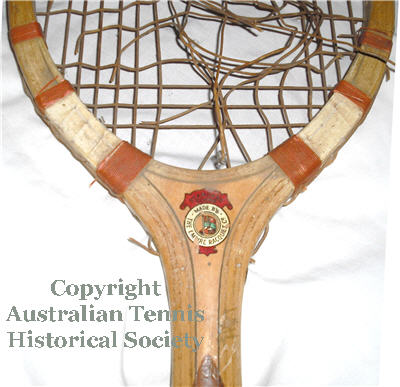
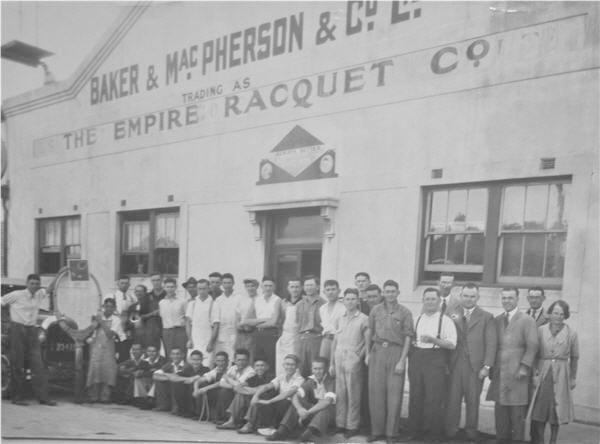
The Empire Racquet Company produced racquets from Brown St, Camperdown in Sydney.  According to Bill Sidwell (Slazenger) they would not have been producing their own frames from scratch, however raw frames may well have been sourced from other Australian makers or even those from overseas, as indeed Spalding were doing from their USA factory.

We know very little about Empire pre 1925.  From a press clipping we learn that in 1925 Baker MacPherson acquired Empire Rackets and based on the signage in the photo below, maintained the Empire branding.   The newspapers record a fire (not uncommon) occurring in December 1926 at the premises of Baker Macpherson in Camperdown causing damage to frames of some 3000 pounds so this picture below may well be of this site originally set up and retained for the manufacture of Empire racquets, as per the sign.

P1560864 P1560871 P1560876

EMPIRE TENNIS RACKET 024 EMPIRE TENNIS RACKET 025

Thanks to Mandie for supplying the photos

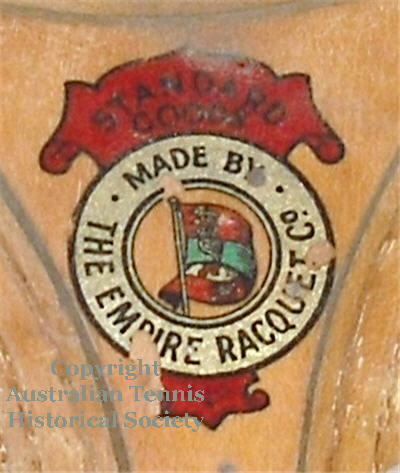
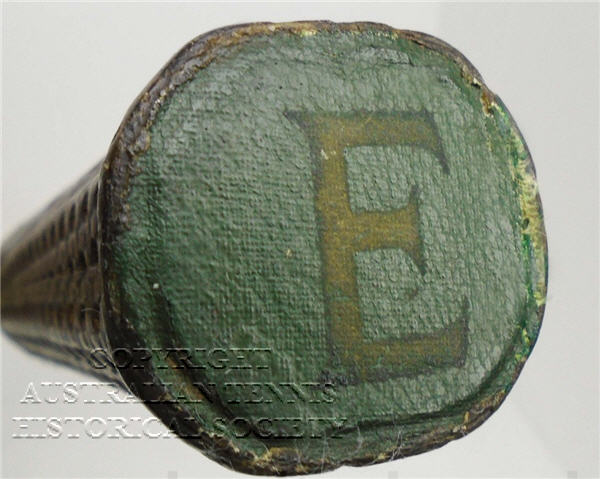
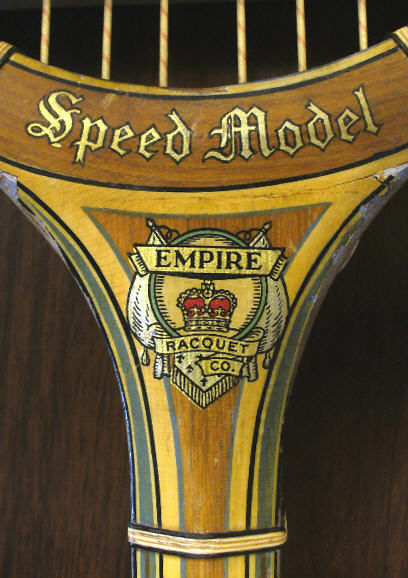
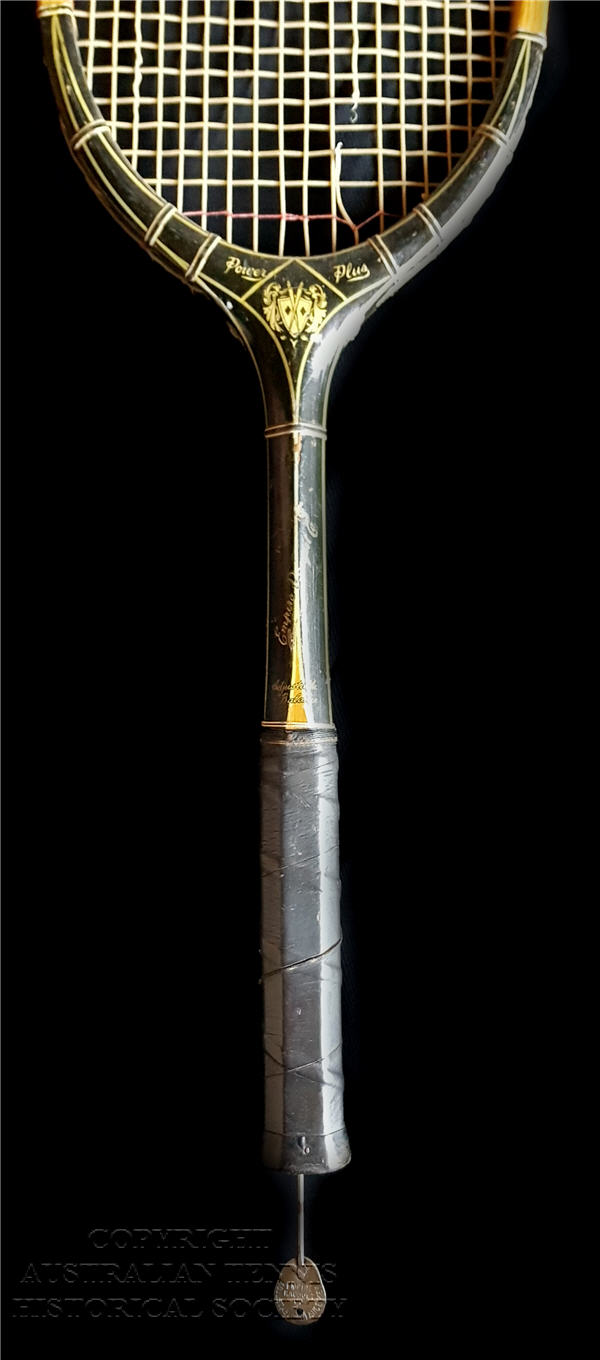
In 2011, we received these photos of what must be a very early mid 1920’s-early 1930’s racquet based on the finish and design. The model is called the “RENOWN” and it carries the statement  “Made by Empire Racquet Co” which would suggest they indeed produced racquets locally but most likely after the takeover by Baker MacPherson.

W.B. FREEBODYS CANBERRA 16 NOV 1934 EMPIRE

Baker McPherson Empire Rackets NSW

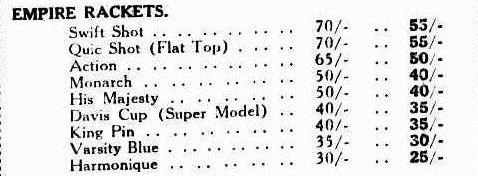
In 1931 the Empire range sold through the retail group Murdoch’s an ‘APEX’ model for 22/6 which was about half the price of quality racquets on the market at the time.    The ad below comes from a 1934 retailer called Freebody’s in Canberra, so they had a reasonable range in both oval and flat top shapes.
empire swift shot dunlop dura plas 3


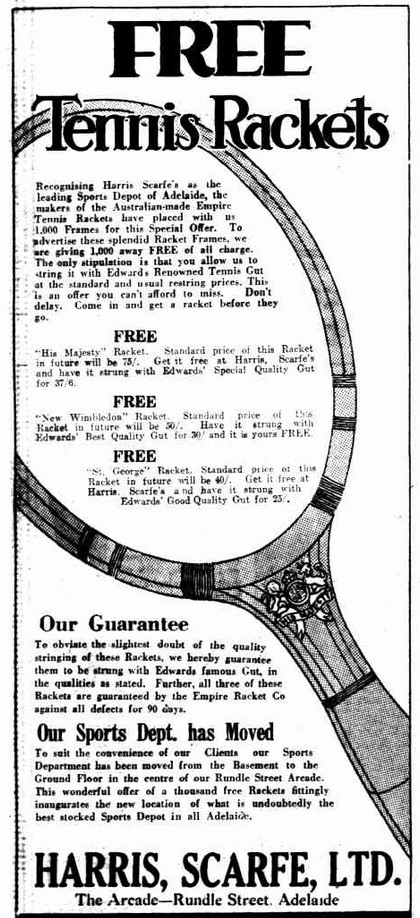
In further efforts to expand their distribution they even worked with retailers to offer FREE racquet frames for the price of stringing only. The offer with one retailer included 200 FREE RACQUETS. Certainly fierce competition.

In 1932, they experienced another fire which destroyed stocks and two of the three floors. Fires in these factories were notoriously fierce due to the oils, resins and lacquers used in production. As a result an auction was conducted on the 22nd August offering 1500-200o tennis racquet frames in various states of completion and Vigoro bats plus other components.

Around the mid 30’s the company developed some new racquet technology based around adjusting the balance of a racquet using a mechanical winding device in the handle. These racquets are very scarce and highly collectable.

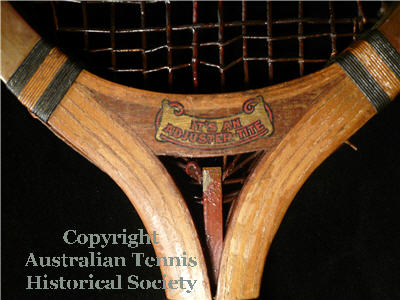
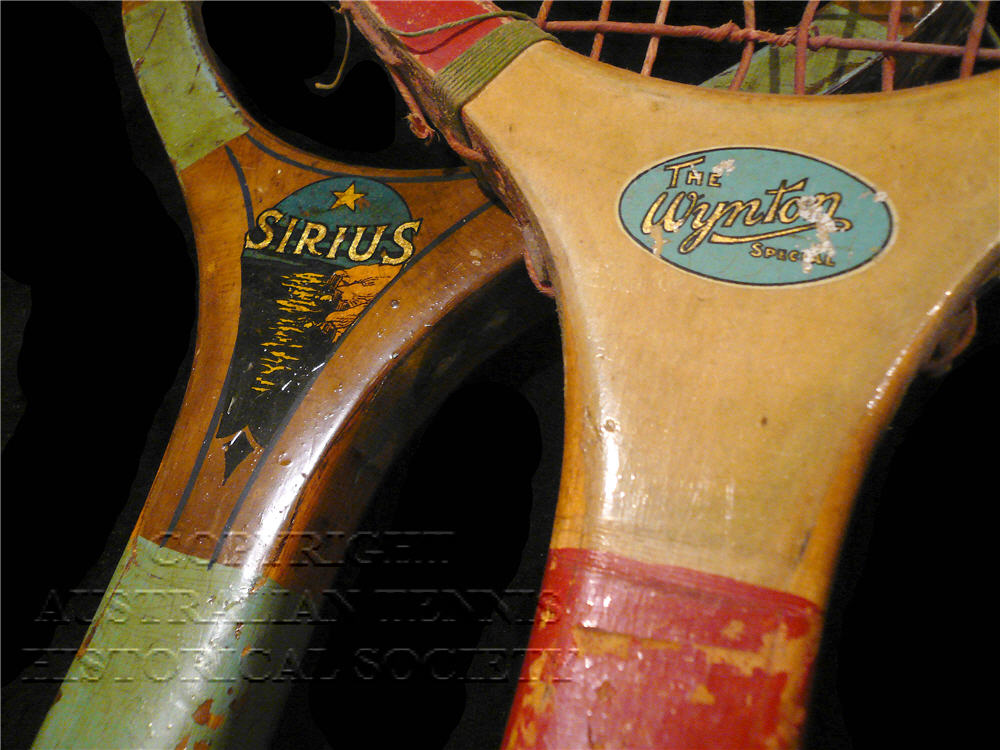
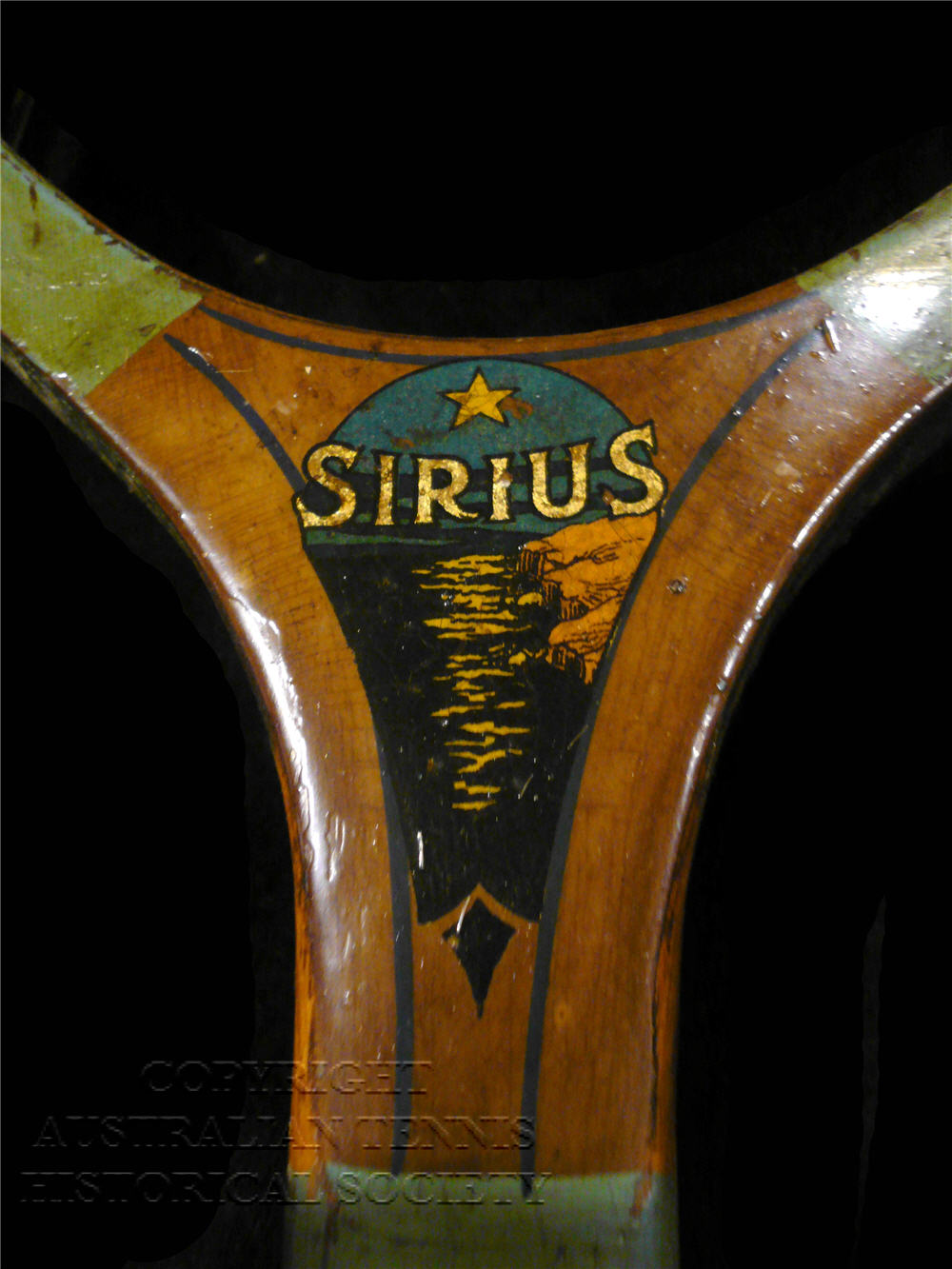
In addition to Empire branded products, retail ads appearing in 1934- 1939 are offering Baker Macpherson racquets of varying models, but it is not clear if they were promoting the manufacturer or the brand, so it is possible that a BM branded racquet may appear with models such as Craftsman, Sirius:  TruBlue & Telopea: Varsity Blue (also Empire model)  His Majesty & Monarch (all 1934).


EMPIRE ADJ SPEED MODEL 1

The first thing to notice about this frame is that the hexagonal shape above the throat was a feature of English and French racquets.


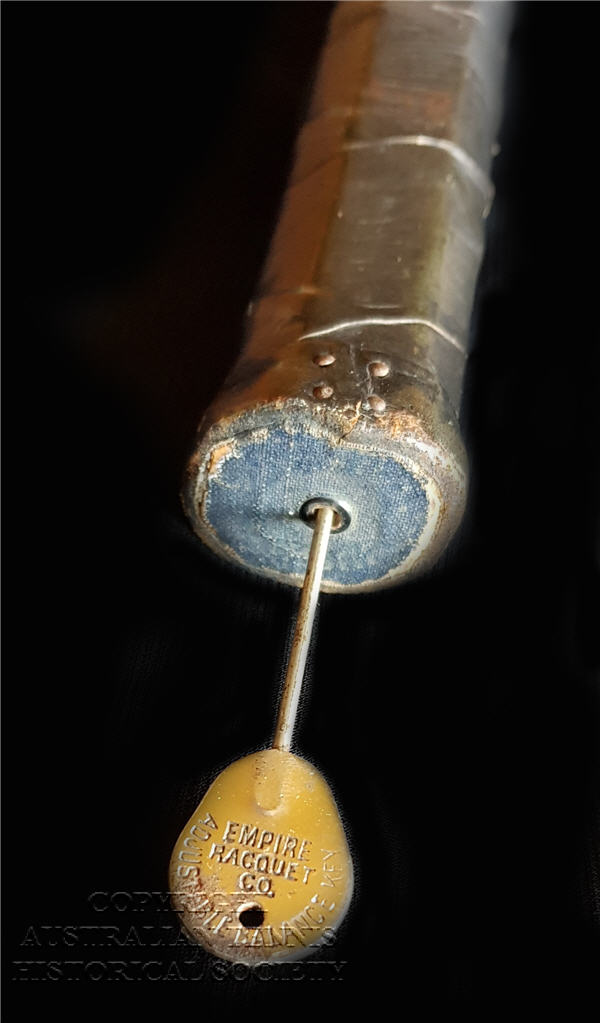
empire adjustable balance modelempire adjustable balance model key


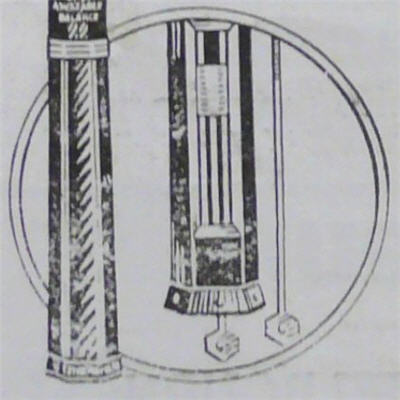
And, below a close up of the key in the handle with an illustration of the weight movement technique via a series of rods built into the handle.


Empire Adjustable Ad close up


The full ad below

FREE EMPIRE TENNIS RACQUETS 16th Oct 1930

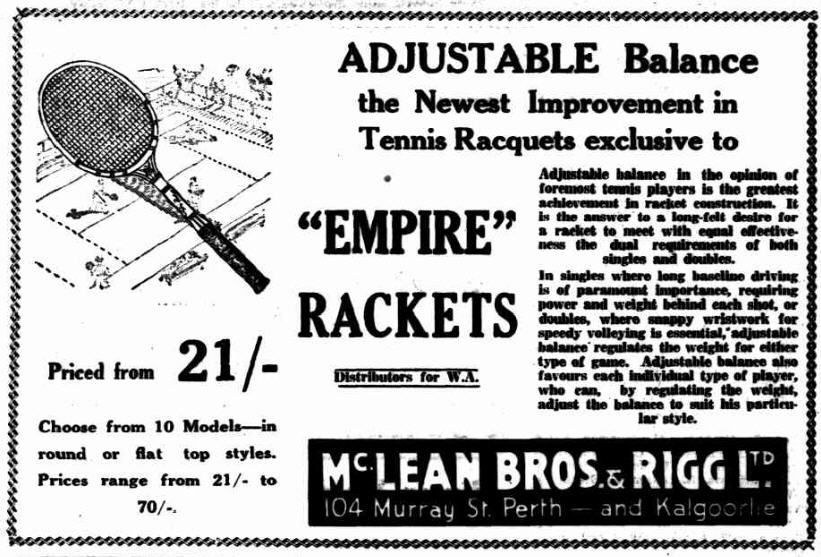
1937 Empire Adjustable RangeFrom May 1937 Ad in West Australian paper Geraldton Guardian & Express

Please see the article under Australian racquets which introduces another weight adjustment invention by local inventor, Harry Webeck.  Slazenger purchased the rights and launched this racquet, perhaps to compete against the Empire innovation.

Dunlop in Australia in the mid 1930’s already had a number of Divisions manufacturing tyres and began to expand operations in the locally produced sporting field, owning Bentleys gut stringing and then in 1937, acquired Baker MacPherson in order to produce tennis racquets.

Adrian Quist at aged 24, was appointed a Director of the new Dunlop Sports Company in 1937 which had  a capital value of 100,000 pounds and he moved from South Australia to Melbourne.  Fellow directors included Wallace Bartlett, Henry MacKirdy and Albert Alfred MacPherson (of Baker MacPherson) who presumably sold Empire into the new Dunlop venture in a share swap arrangement.

As Australia’s Number one men’s player during this period Adrian was a logical choice in so far as attracting media attention for the new venture. Also in 1937 Dunlop Sports Co. signed on Nancye Bolton onto the staff although no mention of her role was identified. Neville Quist, brother of Adrian and Max Newcombe were also “employed” giving exhibition matches sponsored by the company. Adrian and Nancye also played together in major titles no doubt as added publicity. A massive fight existed to lure players into our local companies because they would travel the country playing exhibition matches under sponsorship from the manufacturers.

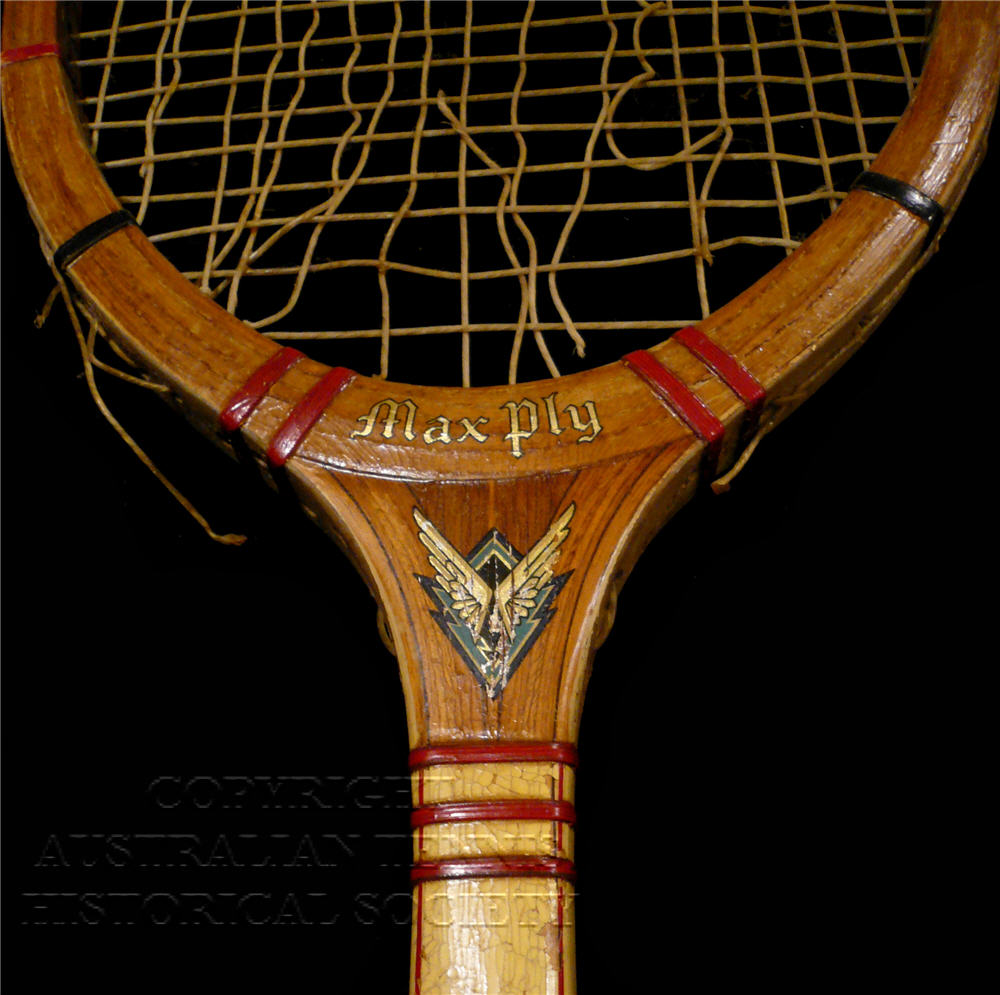
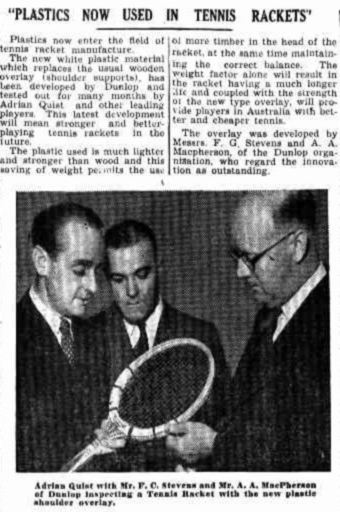
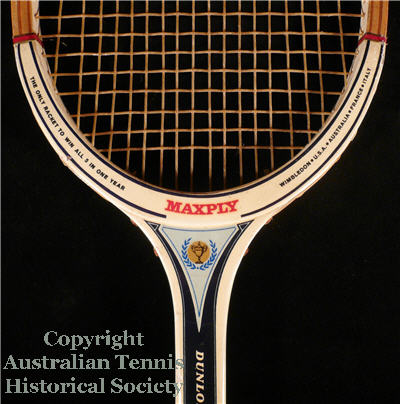
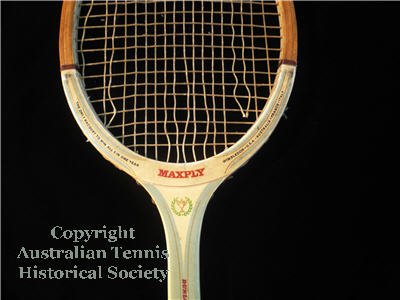
The Dunlop Maxply racquets seem to have been made here in Australia during this late 1930’s and up to the late 1940’s although the company never added made in Australia to their products.  In 1946 the plastic shoulder overlay called DURAPLAS was invented by two Australians, F.G. Stevens and A.A.Macpherson and this development with the statement “ten times stronger than wood” came to be a leading differential with other racquets of the era and given this many of these “duraplas overlay” racquets were being made locally.  These


In 1940, Adrian moved to Sydney taking on the role of NSW  Manager.


P1560895

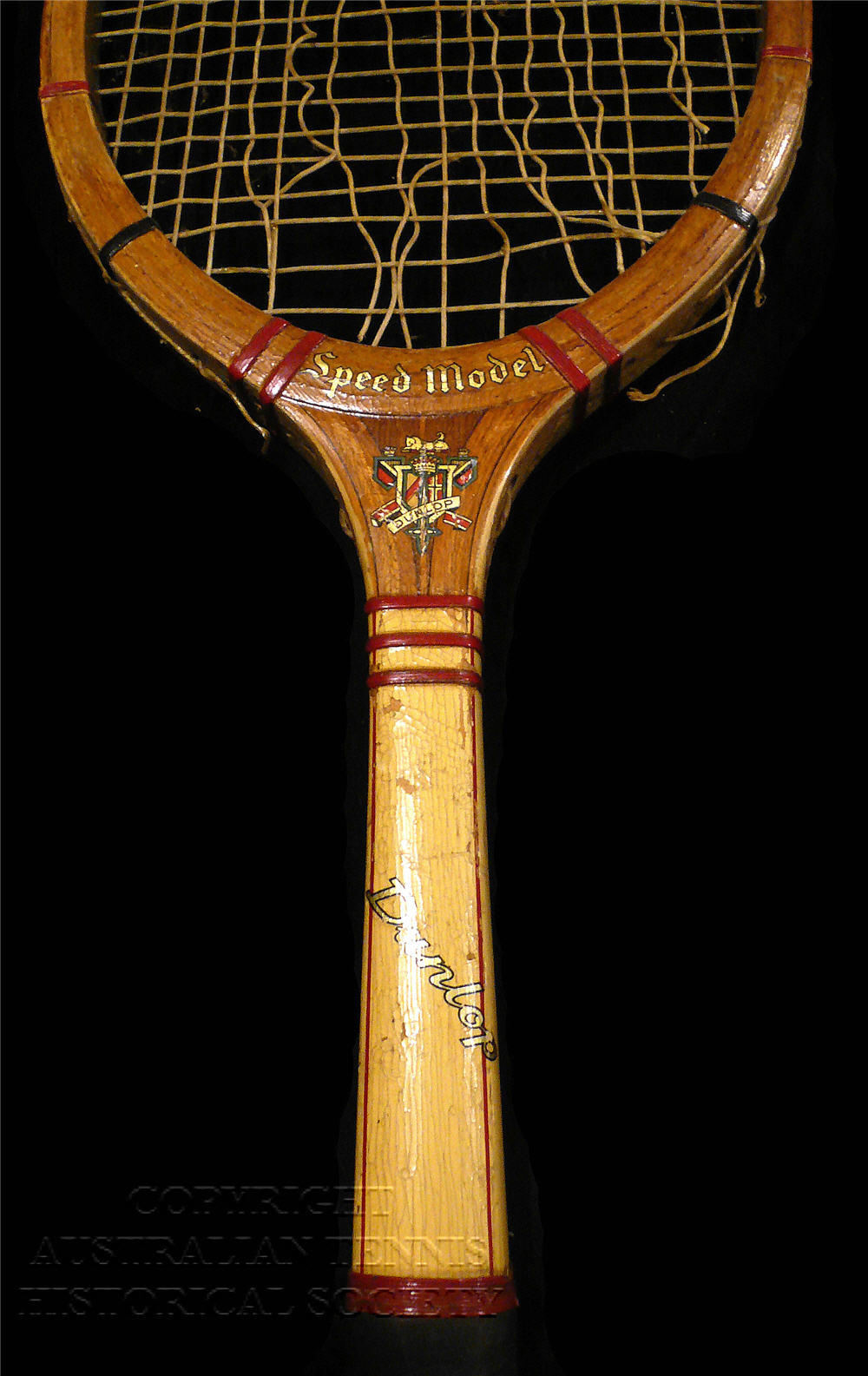
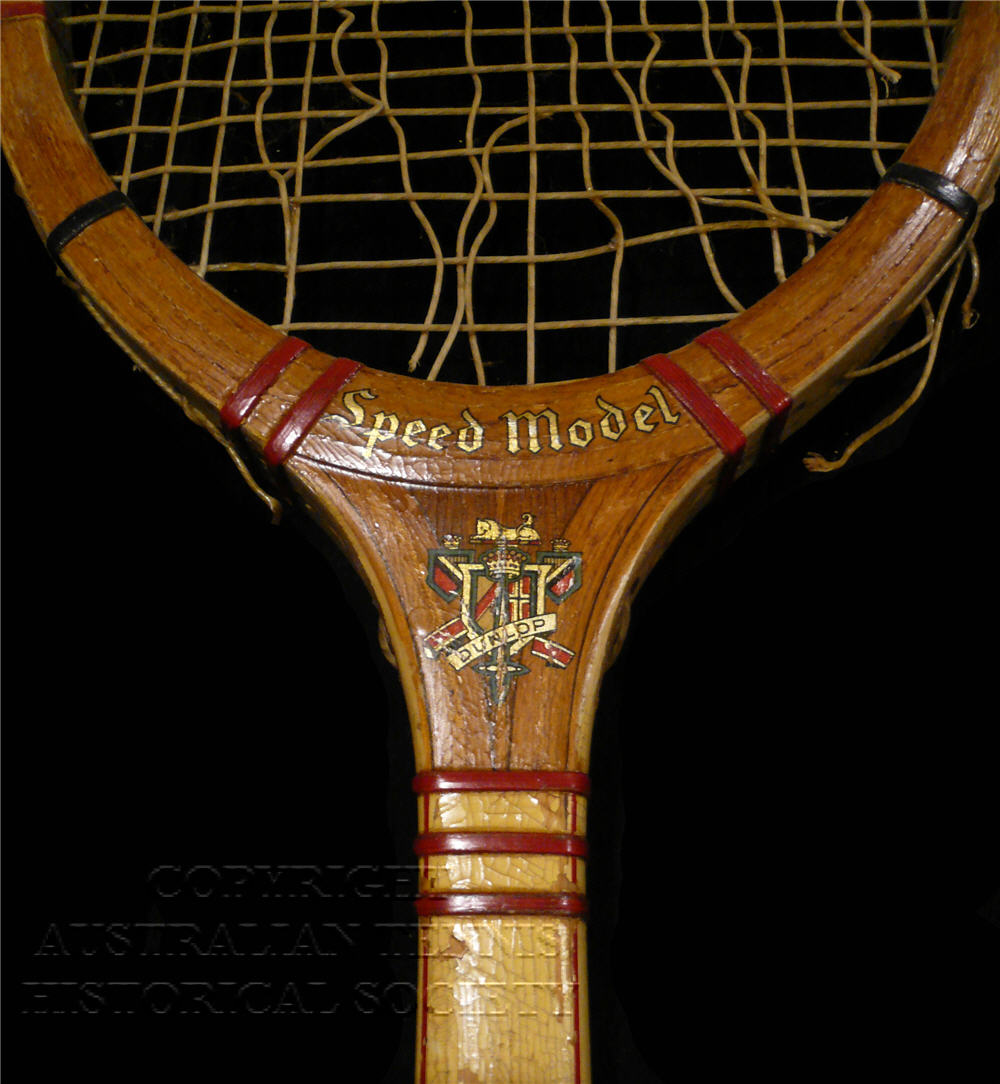
Possibly the first ever variation of the Maxply designed for the Australian market in 1936 as the Speed Model. An ad was found for this edition but it appears to have evolved quickly into other incarnations such as the Australian Model

P1560888 P1560897

DURAPLAS OVERLAY 1946 WITH ARTICLE

dunlop models 2017 (34)

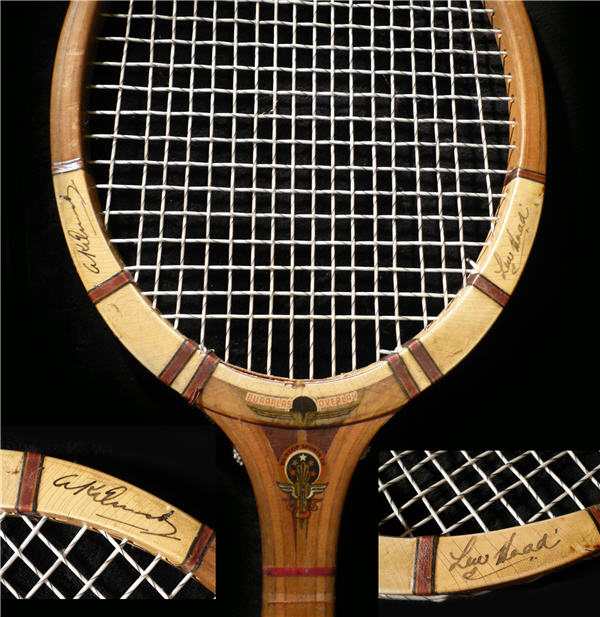
dunlop maxply signed hoad quist USE

RACQUETS_FULL_DUNLOP_OZMODEL

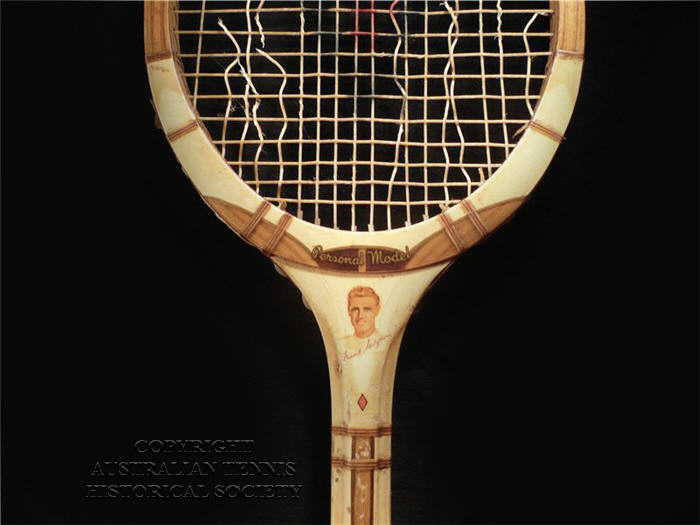
dunlop frank sedgman personal model (9)

dunlop frank sedgman (5)

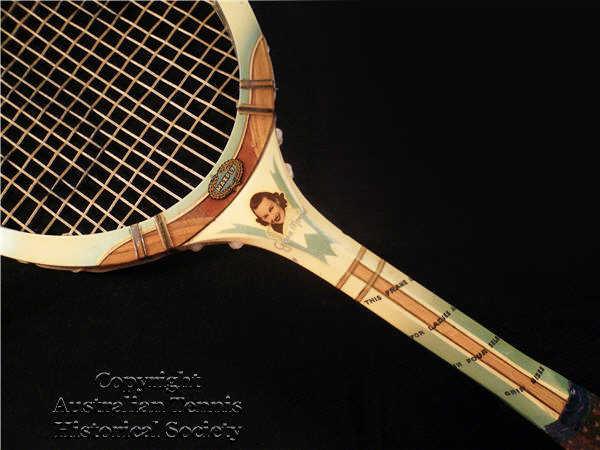
dunlop gussie moran (35)

dunlop gussie moran blue 7

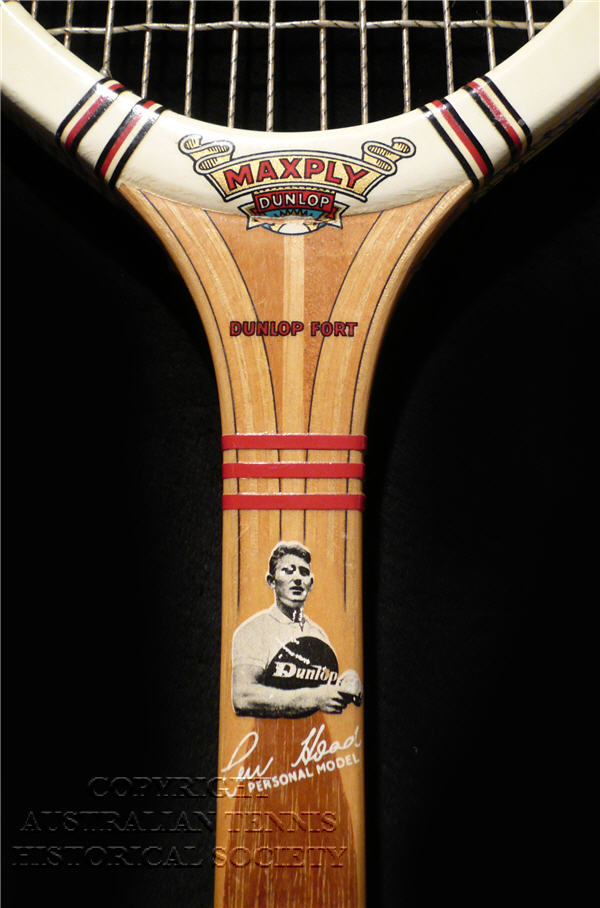
dunlop maxply lew hoad half body

DUNLOP LEW HOAD aaa

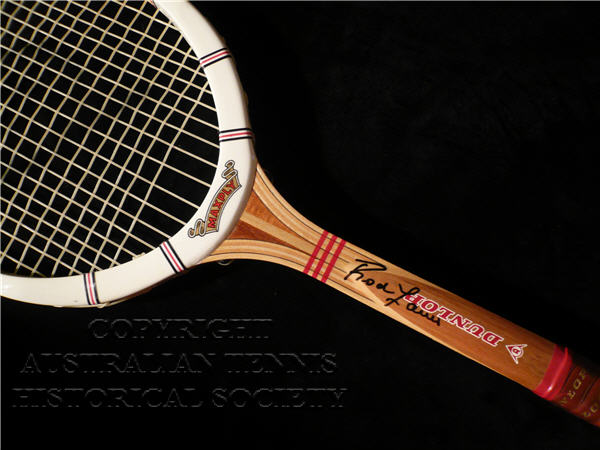
DUNLOP MAXPLY SIGNED ROD LAVER 2020 (8)

dunlop maxply (13)

dunlop Maxply 1962

DUNLOP 1962 ROD LAVER PIC (19)

DUNLOP MAXPLY BR 1

DUNLOP EVONNE GOOLAGONG

Slazenger

The history of Slazenger is indeed a prestigious one for its close involvement with the development of the game, the growth of  the major championships and links to the games champion players.

Slazenger UK began promoting sporting goods in the mid 1880’s adding a range of tennis, cricket and football equipment to their already successful military clothing business.

The Slazenger boxed tennis sets as per the “Wingfield” design were an immediate success given the growth of the sport around the country and joined leading UK competitors Grays, Ayres, Sykes and Gradidge in supplying tennis equipment into Australia. In fact, the owner of Slazengers, Captain Ralph Slazenger visited Australia in 1889 presumably to help establish distribution channels for their extensive range.  He appointed PAIN & TAYLOR in Sydney as their sole agents.
RACQUETS_SLAZ_BLACKEAGLE4

Marketing was alive and well very early in the piece and manufacturers tied themselves to key players and promoted this by producing models with player names. The first two major Slazenger brands were the “Demon” and the “Renshaw” which was named after William Renshaw who won Wimbledon for 6 years straight from 1881 -1886 and again in 1889.  With brother Ernest, the Renshaws put tennis on the map as a spectator sport in the UK and set the standards for other players to aspire to. The “Demon”, pictured on the left, was very popular and this fishtail version is very collectible as are others made under the supervision of master craftsman E.G.Meers with EGM incorporated within the branding.

Slazenger tennis balls commenced production at the Woolwich factory in 1877 but did not replace the Ayres tennis ball which was the official tennis ball at Wimbledon until 1902. Slazenger tennis balls have now been involved with Wimbledon for over 100 years.

After the Renshaws, competitive tennis moved internationally and Slazenger again sponsored two magnificent UK players in Reginald and Laurence Doherty with the named racquets, “The Doherty”. Laurence was the first overseas player to win the US Championships in 1903.

Along with many other English makers, Slazenger started exporting sporting goods to Australia and in the early 1900’s included some local brands called “Colonial” and Kangaroo” into their range. Maybe the photo under Australian racquets picturing a kangaroo is a Slazenger, but there are no identifiable markings to confirm this. In the 1920’s tennis in Australia was booming and local manufacture of tennis equipment was growing quickly not only with homegrown companies such as Chesterfield, Brewers and Alexanders but also with US giant Spalding who commenced production in 1925.
RACQUETS_SLAZ_BLACKEAGLE

Slazenger decided to open an Australian factory to make racquets in November 1928 in Surry Hills, Sydney. The factory was opened by a Mr F.J. Tatro who arrived from Canada especially for the occasion. In 1930 they added cricket bat production and struck tragedy in May 1932 when a fire started in the ducoing room destroying thousands of racquets. Luckily machinery and papers were saved. In June, MD H.J.Parker must have run into some political storm with the NSW Government for he is quoted in the press as threatening to move the factory to Melbourne if the Lang Government were returned to power. In 1938, a new factory at Bowden Street, Alexandria became the primary manufacturing site for many years but was all but destroyed by the massive hail storm in the late 1990’s which caved the roof in under the massive weight of the hail stones.

Originally, the firm was owned by the  UK Slazenger owners at the time, the McMaster Brothers who sold the business for a short while to the c1935 Managing Director David Blacklock and partner E.S.Wolverton.  They eventually, sold the business back to Slazenger and a factory was also set up in New Zealand which survived from the 1950’s to early 1980’s producing its own designs.

Researching retail ads throughout the 1930’s and 1940’s competition was pretty fierce.  Alexanders were very dominant and had Jack Crawford (1933 Wimbledon winner) as their endorsed player. But slowly, over this period the retail industry saw a huge reduction in imported tennis goods as the Australian industry proved it could turn out racquets of a high quality.This is not meant to say that importing was eliminated for companies could import designs from overseas as required. Dunlop were importing all of their stock and some of the UK Slazenger range, such as Fred Perry branded racquets were imported also.

The battle for market share, relied on four key platforms, product quality/ innovation,player endorsement, junior tennis and who had the most cash. Throughout the war, Slazenger produced a variety of non sporting items for the defence forces and as such became extremely well cashed up.  This permitted them to undertake a variety of promotional projects on behalf of tennis associations such as the management of ticket sales to key events like the Davis Cup and even funding the construction of the massive temporary stands that were erected at White City and Kooyong to support the incredible demand for tickets.

In the 1930’s an Australian inventor, Harry Webeck came up with the idea of inserting mercury into a racquet handle so at the time of impact the weight of the racquet was enhanced behind  the flight of the ball.  Blacklock signed the deal, as much to keep the idea out of competitor hands. The product range was sub branded “Floating Power” and the key brands with this feature also included the DYNAMIC and the GYROFLOW. Recent discoveries show this invention was previously tried and marketed in a tennis racquet made in the UK in 1889. The racquet was called aptly, “The Mercury”.

slaz floating power 2

Many players were employed by sporting goods companies as a way of assisting them to earn wages while questionably allowing them to retain amateur status to play in the tournaments.  It was a fine line, because coaching was considered as being professional and many players left the amateur ranks to play professional tennis.  Other countries not enjoying a local sporting manufacturing industry were at a disadvantage so this practice was often scrutinised by overseas tennis associations.

The big advantage for the tennis players was that by working for the sporting goods companies, they were able to play in exhibition matches around the country as part of so called “product promotions” while keeping their match fitness to peak levels for the major competitions.

Bill Sidwell, Australian Davis Cup player started at Slazenger in 1935 and has been a tremendous source of information for these early days.

A key sales development activity was to visit houses which had tennis courts and they would simply drop in a few sample tennis balls and promote racquets as well.  Bill recalls that in Sydney in the well off suburbs nearly every second house had a tennis court.

Such was the competition that visiting tennis players arriving by ship were often sought out on embarkation for racquet endorsement deals while they played in Australia. One story we heard was that certain company reps managed to get onto a pilot boat, or such other, to meet a ship prior to docking so that all the players they had targeted were stitched up before the other companies had a chance.

The policy of targeting youngsters paid off also, particularly in the 1950’s for it was the era of Rosewall and others who came into the Davis Cup teams endorsing Slazenger from their very young days that helped keep Slazenger’s high public profile.   Many such as John Newcombe were sponsored by Slazenger so that the players could fund trips to local and overseas events with the hope of becoming a good player.  There were no other formal development programs for youngsters back then and so the manufacturers were investing in juniors for the good of the game and with eye on potential long term marketing.

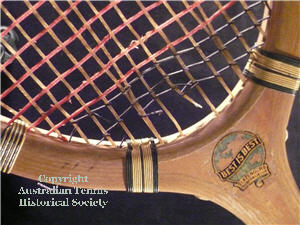
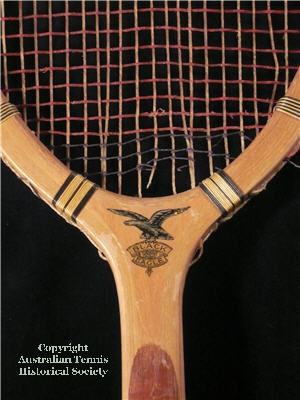
Slazenger 1937 AdOne of the earliest racquets we have from Slazenger Australia is very nice wood handled model called the Black Eagle (pictured) which has the famous “Best is Best” logo and Australia Limited on a decal.

Prior to local production, Slazenger UK already had signed up Australian J.O.Anderson who played in many 1920’s Davis Cup and tournaments. The ad on the right is from 1927 for Melbourne retailer Myer’s. Other racquets available in 1929 included Primoris, Queen’s, I.Z., Renshaw, Doherty, Acme and Demon.

From a 1933 ad from retailer Overell’s in Queensland we learn of the Golden Eagle,  Southern Sun, Premier and the Four Ace Models from 1934.  There were often over 20 racquet brands produced each year, dictated not only by the manufacturers but by the retailers looking for exclusive lines. In 1931 in the UK, Slazenger acquired Gradidges and we have also seen a local Australian version of a Gradidge racquet, presumably made here by the Slazenger factory.

In 1939, from an MSD catalogue we learn of the Perry International and Perry Autograph models,Dynamic, Cavalier, Henri Cochet Personal Model, Doherty, Perry Recision, Renshaw, Eclipse, Player, Garrick, La Belle, all in oval shape and then semi flat top versions of the Perry Autograph, Dynamic,Cavalier,Eclipse and La Belle. As mentioned some of these may have been imported.

The Fred Perry range remained prominent from the early 1930’s to the early 1960’s. In the Book “Game, Set and Glory” (Bruce Matthews 1985) a story is told of how the
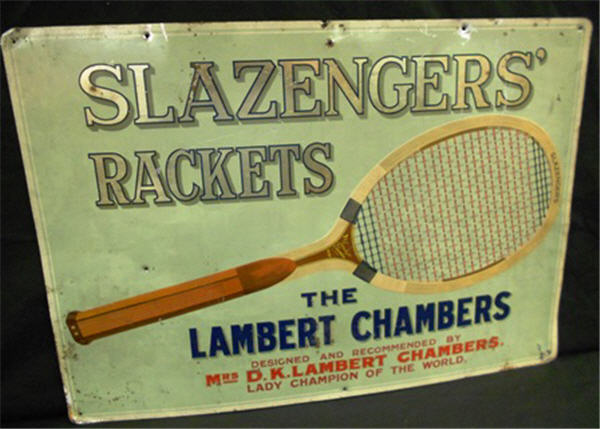
Slazenger sign Lambert Chambers racketfamous Fred Perry “All White” was created in Australia as a way of countering the interest in Jack Crawford’s Semi Flat Top Alexander racquet. When Perry was playing in the 1934 Australian Championships against Crawford, the then sales manager of Slazenger and Perry brainstormed some ideas over dinner prior to the match and struck upon the idea to paint Perry’s racquet all white. At 9:30pm they organised the Slazenger stringer back to the Sydney workshop to strip down and repaint one of Perry’s racquets.  On the next day of the match, after warming up with a normal racquet,as play was about to commence the “All White” was removed much to the amazement of the crowd. Perry recalls the paint coming off and ending up on his face. This model went on to become of Slazengers top brands in 1937. He beat Crawford in this match.

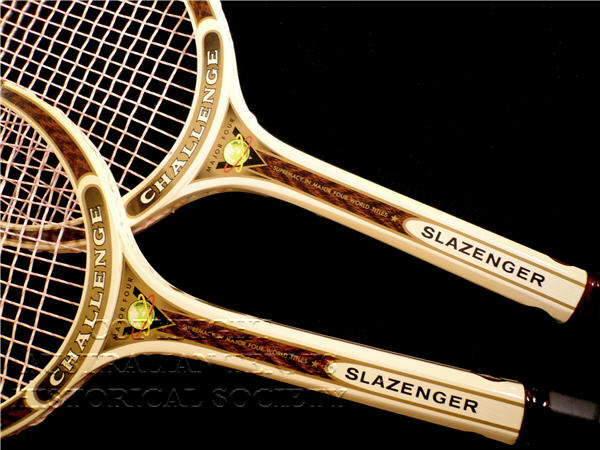
After the war the premium model became the “Challenge” made from imported Canadian Ash. Bill Sidwell used to travel over to Canada to instruct the mill on how to cut the logs in a particular way to prevent buckling.  It took about 2 years before a raw log could be made into a racquet purely to allow the wood to season or mature, plus coming from Canada (cold to warm climates) the timber was given a further 3 months in storage here in Australia before reaching the machinery. Canadian Ash was considered the best in the World for making racquets and also Ice Hockey sticks. Slazenger Australia, used to bring out UK manufacturing experts who often ended up staying here so it wasn’t surprising to learn that the operation here was highly regarded and used to sell many thousands of racquets into the US, in part also, as an offset for the  import licenses required to import the Canadian Ash. Jack Nicklaus wanted Slazenger Australia personnel to set up tennis/ golf production in the US such was his view on the production quality being achieved here.

The “Challenge” wooden racquets became the brand of choice for many club players through the late 50’s to the mid 1970’s and the name continued on into the Aluminium era.

Bill advised that one Challenge design was created by the famous Australian artist Constable which featured a rocket on the shaft.  While the salesmen didn’t like it, MD David Blacklock made the call to run with the design and  it became a best seller.  While we will need to hunt down an example, space, stars and rockets were a feature on many designs along with other sub-names such as the Challenge Constellation given the public interest in the first space flights in the 1950’s through to the moon landing in 1969. We also recently found a Fred Perry “Laurel” racquet made in Australia, using Canadian Ash under the company called the Fred Perry Racquet Company (Melbourne), no doubt a Slazenger subsidiary.

In 1958/59, even after being reported as a corporate objective in 1927,  Dunlop finally acquired and allowed Slazenger to run as an independent company. The company was at another peak.  Between 1960 and 1973 a Dunlop Slazenger racquet won 80 of the 112 Grand Slam events, 38 of them to Slazenger due mainly to the Australians Margaret Court, Ken Rosewall, Roy Emerson, Neale Fraser and John Newcombe.  This also explains why Dunlop was not as strong a brand in Australia,  although Lew Hoad, Tony Roche and Rod Laver were signed with Dunlop. In it’s hey day, Slazenger was producing 500,000 racquets and 6,000,000 balls a year.

From newspaper research, it would appear that in 1968 production of Dunlop and Slazenger products was merged into the one factory.

Competition within the tennis equipment market became very fierce in the 1980’s as new entrants such as Head and Prince joined the market with new racquet production technology from steel, aluminium, fibreglass and  graphite. Asia also became the production hot spot and price competitiveness eventually forced most companies to source from Taiwan and today China.

Production in Australia included Aluminium racquets under both Slazenger and Dunlop names.The factory ceased manufacturing racquets in the mid 1980’s.

The Slazenger brand remains well known within the tennis community, perhaps not so well in tennis racquets but their balls are still considered the best in the marketplace.

The pictures below show a range of Slazenger product sold here, however not all were produced here.

Thanks also to Bill Sidwell and Cedric Mason for providing some valuable information about their days at Slazenger.

The following factory shots are take in 1930.
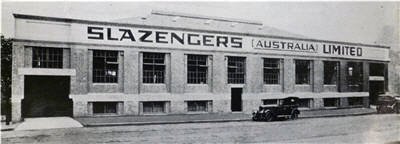
slazenger factory 13000 sq ft slaz factory ae slaz factory ad slaz factory ac slaz factory ab slaz factory aa

SLAZENGER GERALD PATTERSON SIGNATURE MODEL RACQUET UK

In the mid 1920’s Slazenger produced a couple of Australian Champion player signature models, indeed who were also great rivals at the time.  Gerald Patterson, twice Wimbledon winner  (1919, 1922)  and J.O.Anderson, Australian Champion and Davis Cup Player featured on these Slazenger wood grip models.  J.O.Anderson also ran a sports store and subsequently had signature/photo racquets with Alexander, Chesterfield and his own brand.  Patterson went onto become the MD at Spalding in 1925.

Slazenger J.O.Anderson signature model UK 2019 (8)USE

Slazenger Demon name & logo revived in the 1940’s

Colourful graphics with wrappings were preferred by players and Australian designers led the The famous 1930’s-1940’s Slazenger All White created by Fred Perry at the Slazenger NSW factory in 1934 then produced elsewhere for about 8 years. Fred won Wimbledon with this.
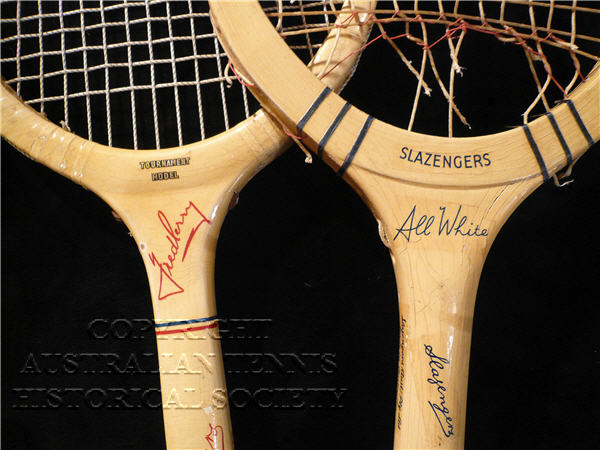
Slazenger All White with Fred Perry (15)
Another famous brand of Slazenger which started with the English Champions Willie and Ernest Renshaw in the 1880’s.They became the first “publicly” recognised champions. Slazenger produced Renshaw racquets from this time and this Australian made model demonstrates the desire to maintain branding over a long period. c late 1930’s early 1940’s model from 1934-1936.
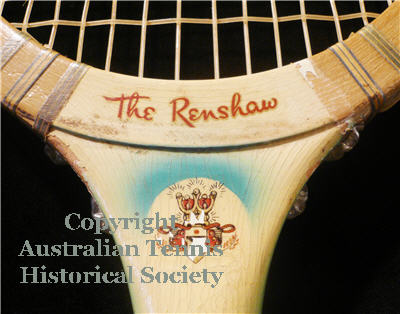
SLAZ RENSHAW 3

In 1938, visiting player Dorothy “Do Do” Bundy became the first USA woman to win the Australian Championships. This Fred Perry model may well be her personal racquet.
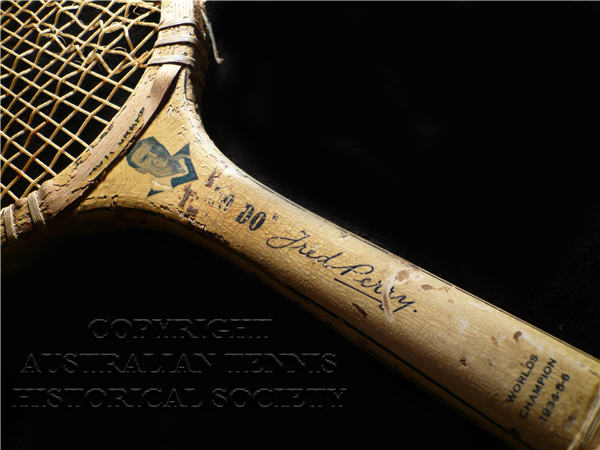
SLAZENGER FRED PERRY DO-DO BUNDY 1937 (4)

Around 1932 the flat top craze returned to Australia with most companies producing both oval and semi flat top models.

slazenger flat top (3) EDIT

Design innovation also included looking at ways to reinforce the shoulders.

slazenger challenge reinforced throat 2015 (9)

The Silver Arrow featured additional wood work to create an arrow or spear like shape in the throat.
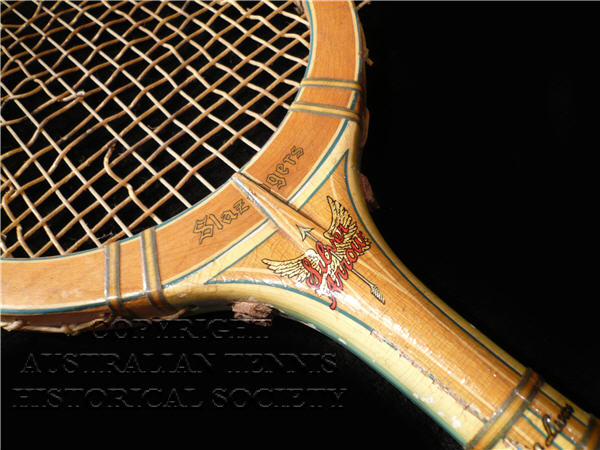
Slazenger Silver Arrow 5

The aerodynamic Streamline was throughout tapered like a tear drop so that one side was wind resistant and the other flatter.
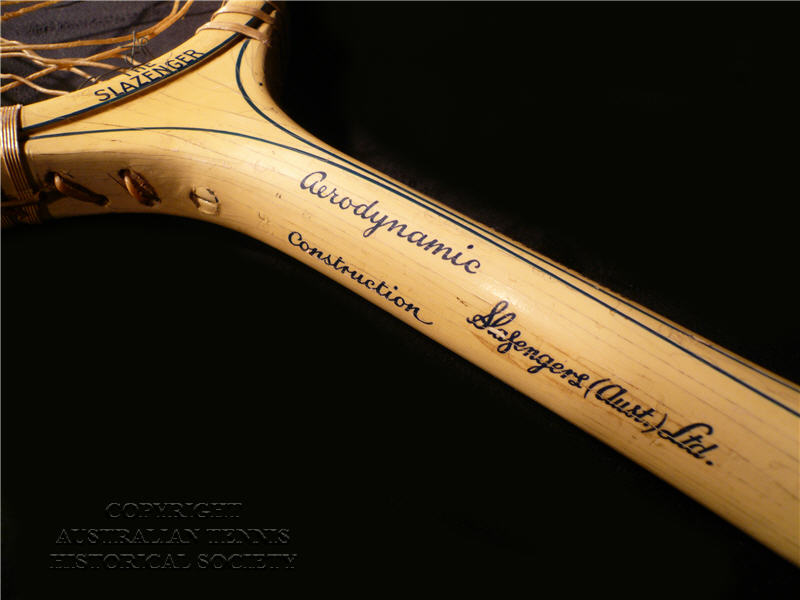
SLAZENGER STREAMLINE 1935 (5)EDIT

slazenger ad 1935 new streamline process

Design innovation also included the mercury filled tube balance adjustment idea, called Floating Power.

Slazenger Ladies model (11)

Slazenger Challenge dc 5 star 2 aaa

slazenger challenge x2 (1)

slazenger power game challenge ken mcgregor (4)USE

slazenger challenge power KR (3)

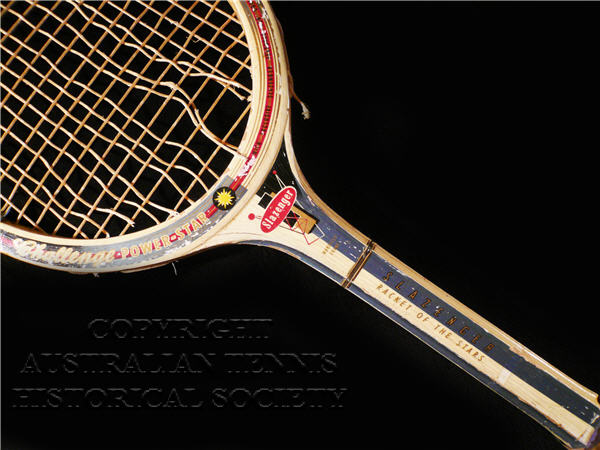
SLAZENGER POWER STAR 1958 (12)

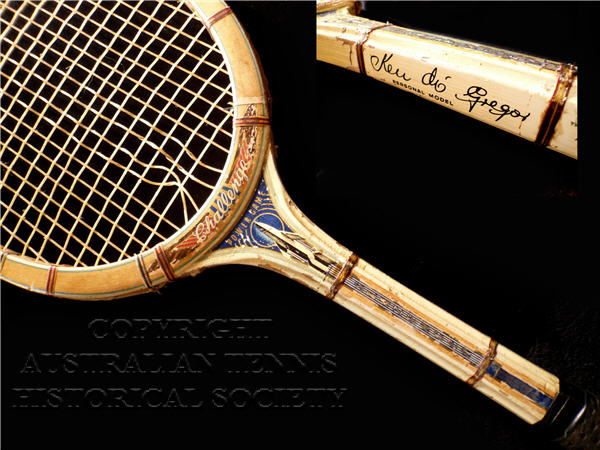
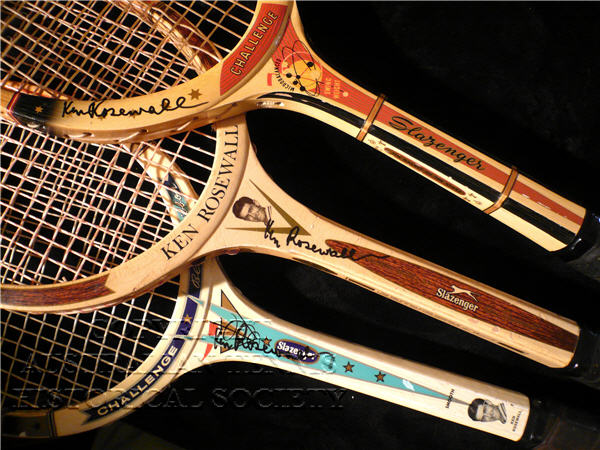
SLAZENGER KEN ROSEWALL SIGNED X3 2020

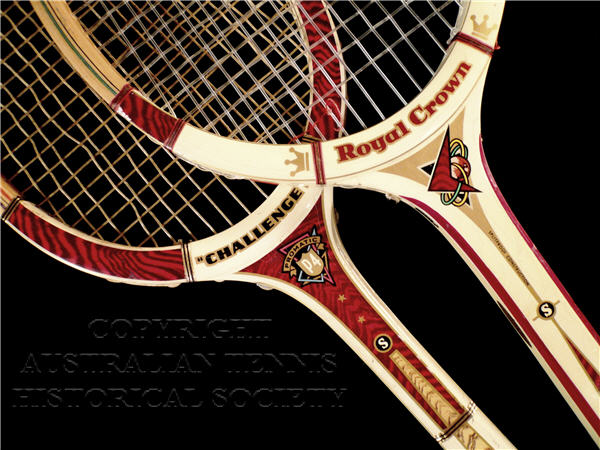
Slazenger Royal Crown P4 match up (4)

SLAZENGER MAJOR 4 2017 (23)AA

slazenger T10 nice (1)

Interesting Tennis Memorabilia

The tennis theme can be found across many product categories and of course autographs are highly sought after. There are so many items with tennis themes and here are some examples.
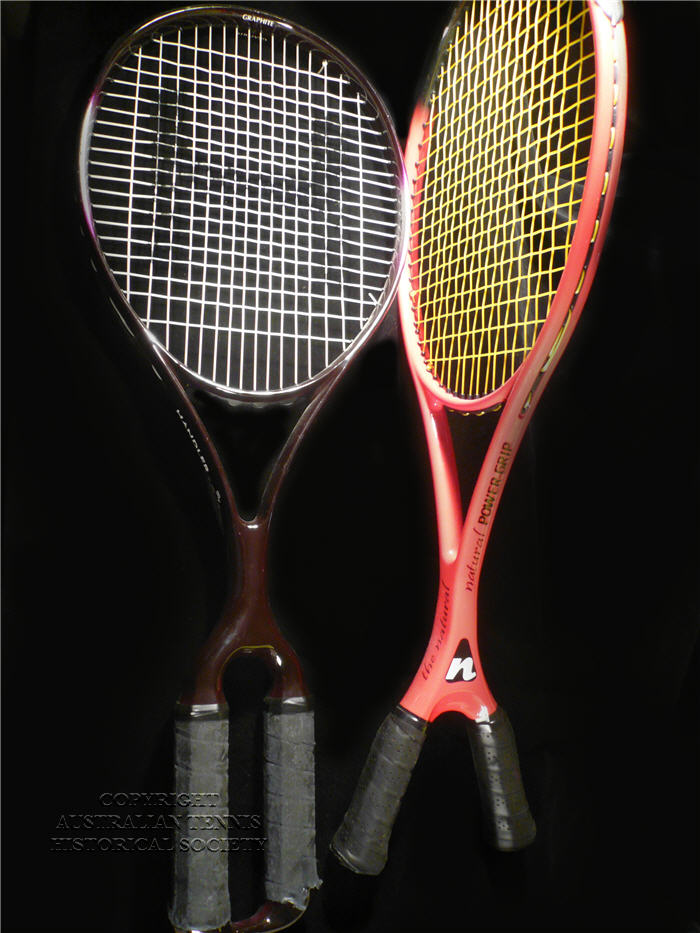
P1180332

Wonderful Tennis Ball cleaner called “Kleenball” c 1905. Two identical halves twist together around the ball to remove dirt.

Another larger model includes cavities carrying white chalk to bring the whiteness back.
The balls were smaller then and modern balls don’t fit.

Ken Rosewall Shoes 3

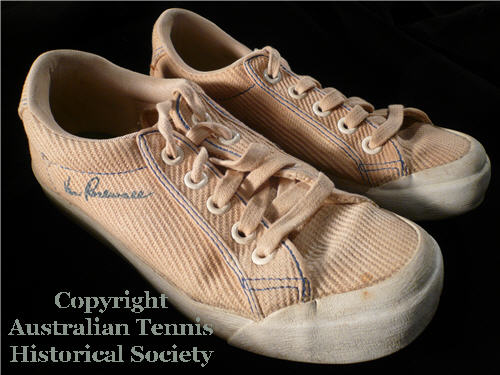
Circa 1960’s or maybe 1970’s, Ken Rosewall signature tennis shoes

tennis ball lighter 3

In 1957, Queen Elizabeth attended Wimbledon for the first time as patron and to commemorate this historic occasion the AELTC produced and presented only 12, or at most 19 to the organising committee members and lawn tennis association representatives. The ball as you can see is very real and true to size.  A beautiful memento engraved with the message

“To mark the visit of her Majesty the Queen”. Very rare and one is held by the Wimbledon Museum.

1912 UMPIRES GIFT WIMBLEDON

Tennis cigarette cases were a popular item also as trophies and awards. This example was awarded to an umpire at Wimbledon in 1912.  A great year with Anthony Wilding winning his 3rd of 4 Singles Titles in a row.

Umpire Awards Wimbledon

Other examples of umpire awards are these letter opener and tape measure (Wimbledon 1904 & 1914)

P1170630

This wonderful plate was made in the UK circa 1891-1907 by Wood & Son. The design shows a young lass with three gents with the tag line “Love All”  which undoubtedly carries the double entendre.  A lovely piece depicting the fashion of the day.

KOALA TENNIS BOWL 1

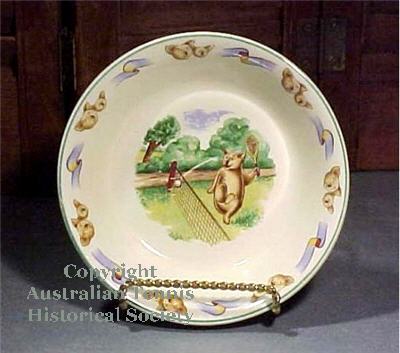
A very nice 1900’s tennis bowl with an Australian theme.

Royal Worcester qty 4000

One of 4000 made by Royal Worcester to celebrate Wimbledon.

spode qty 1977

Only 1977 100 Years of Wimbledon plates were made by Spode.

P1170921

A quite tiny 40mm copper trinket by Halcyon Enamels, this practice has been undertaken since the 1740’s. The collector piece honours the 100 years of the Lawn Tennis Association of Great Britain 1888-1988. A very famous tennis image used on a variety of different items over the years.

Celluloid Photo Album 1

This photo album is quite lovely due to the vibrant colours and if you were looking at storing old tennis photos or postcards you can’t really go past this.

famous player autographs 2015 (28)

Some famous Autographs which come up regularly. Obviously many are genuine but you are generally buying on a leap of faith so just don’t go buying one for hundreds of dollars. Signatures on photos are more desirable than normal unless, like some below, they are together marking an important occasion.

 1962 davis cup teams1

Quite a nice Davis Cup Challenge paddle racquet from 1962, played in Brisbane between Australia and Mexico (5-0). Here we have Neale Fraser, Ken Fletcher, Rod Laver, Roy Emerson, Cliff Sproule and key Mexican players and 3 year US Open Doubles grand finalists, Rafael Osuna and Antonio Palafox with the third member of the squad, veteran Mario Llamas. The final signature belongs to the Mexican Davis Cup Captain, Francisco “Pancho” Contreras. This was Rod Laver’s Grand Slam year and in the next weeks he became a professional which precluded him from the Davis Cup team until 1973. The page above comes from the same 1962 event at the Davis Cup Dinner where some other famous players attended.

r rm o_cigarettecards

Cigarette Cards & other cards.

These cards were collected from cigarette packs from the early 1900’s to late 30’s. Of course other cards have been produced since, but these sets include some of the great players in the 1920’s and 1930’s.These are John Player cards c 1938. Australians are well represented.  Joan Hartigan, Jack Crawford, Adrian Quist, Harry Hopman,Viv McGrath

P1070932

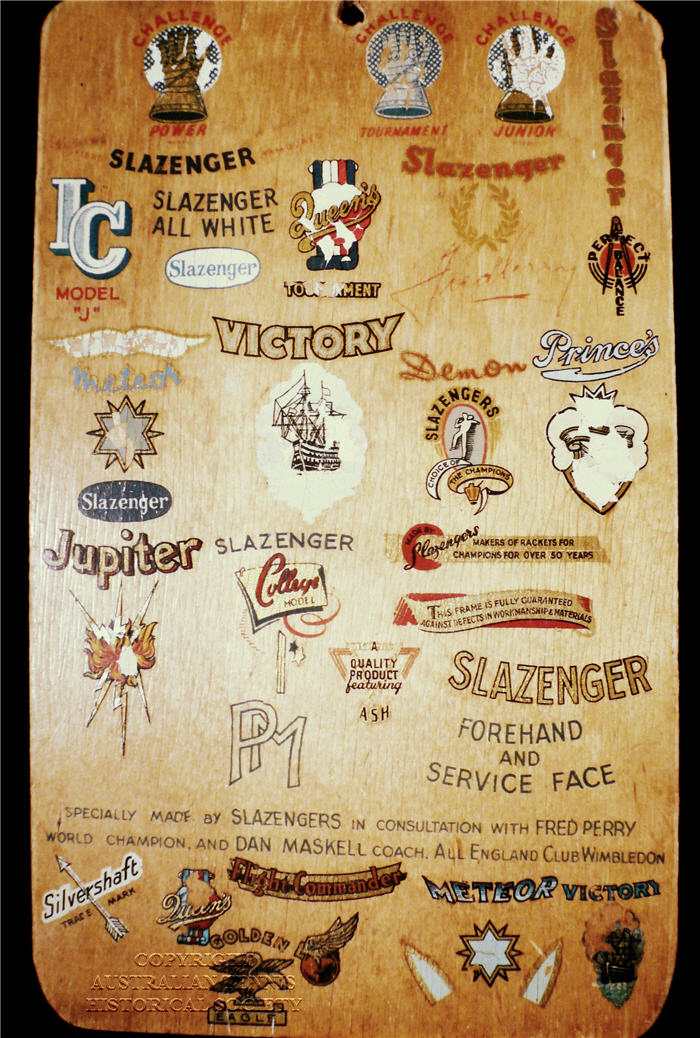
This is a piece of factory memorabilia ex Slazenger UK. Somewhere on the production line hanging on a nail this decal display board probably reminded workers of the selections required. On the reverse are Cricket bat decals.

spalding racquet display (5)

Tennis Racquet & Ball Store Displays and Selling Aids

hall of fame balls (3)

The tennis ball tubes commemorate some famous player inclusion into the Australian Tennis Hall of Fame

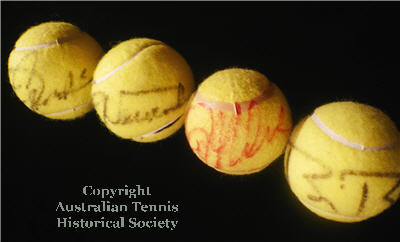
ConnorsNewcMcEnBorg

Signed Tennis balls are a little more interesting than pieces of paper on display  L to R Connors, Newcombe, McEnroe, Borg

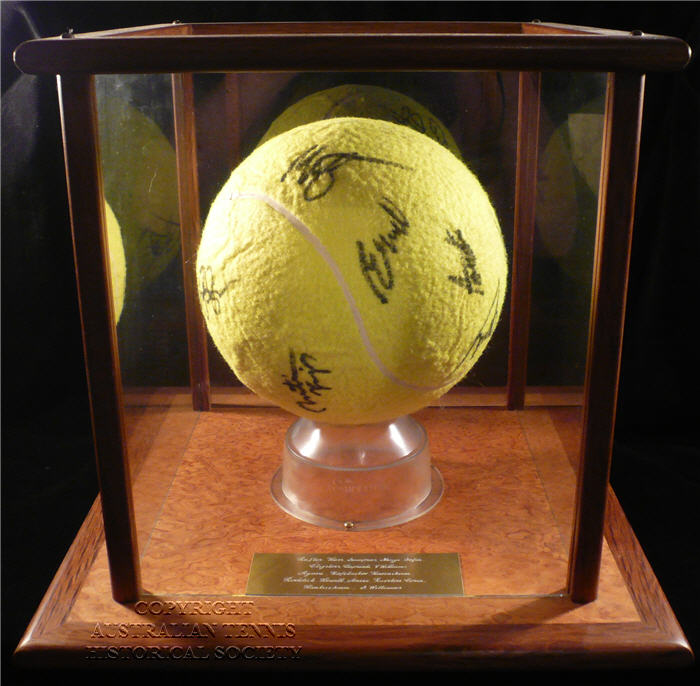
signed large tennis ball 2015 (7)

Signed large tennis ball in a lovely display.

Spalding 1930 balls $352

Vintage tennis balls are even more valuable with well preserved boxes & wrappings.

tennis teaspoon

This very intricate teaspoon design comes from the USA c1890’s.  It is sterling silver and if you look at the tennis set and racquet it seems to be the Wingfield style launched in 1874.  Simply a lovely piece rarely seen.A good luck tennis broach featuring the old style racquets and net shapes age circa 1920’s.

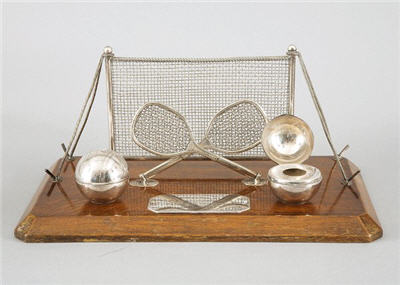
tennis desk set 400 pound

A quite stunning desk tidy.  Similar styled dinner gongs also exist. This sold for UK 400 pounds.

 P1190726

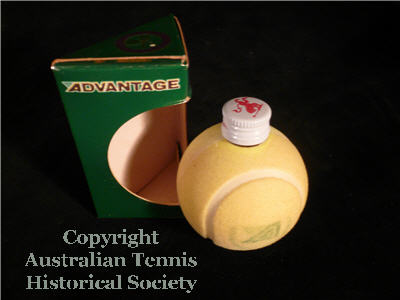
This small bottle of scotch is a novelty product circa 1980’s. The ball is smaller than a real tennis ball but has a felt finish. It is a plastic cover that clips over a small glass bottle and was part of a series which included a golf ball.

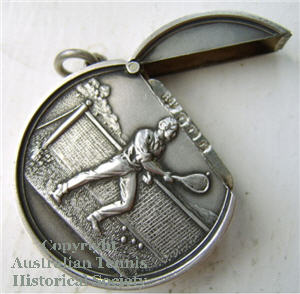
1906 Silver Vesta Match Holder

This fob style vesta carried matches. On the piece is also an area to strike the match. You can see the the loops which might attach the item to a fob chain. Both were made of silver, with hall marks.

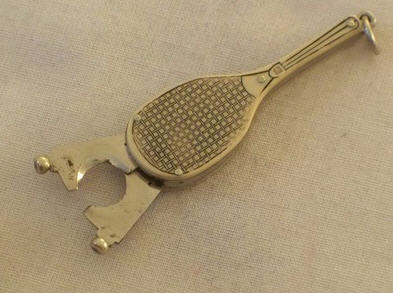
tennis cigar cutter 2

This is a cigar cutter approx 2″ long and was used on a fob similar to a watch.

P1020789

Above, is a tennis themed cigarette lighter and ash tray.

 Img_4422use

A very nice tennis themed napkin holder. No makers mark so estimates of age are circa 1910. They are silver plate and well made.
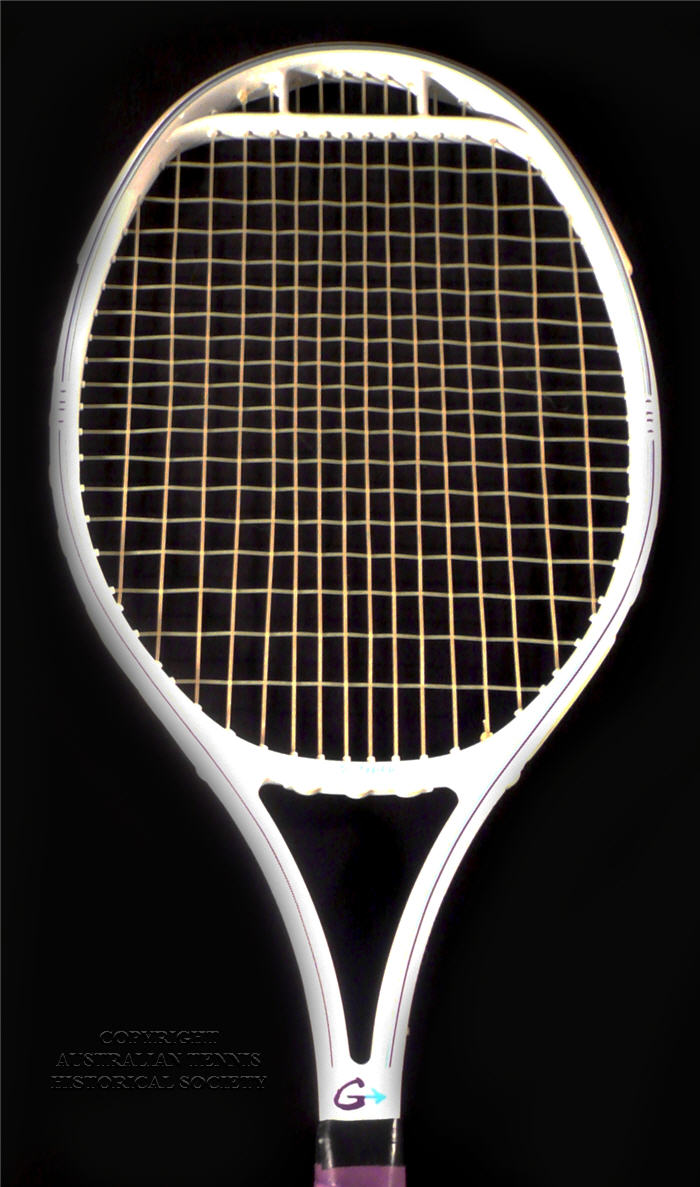
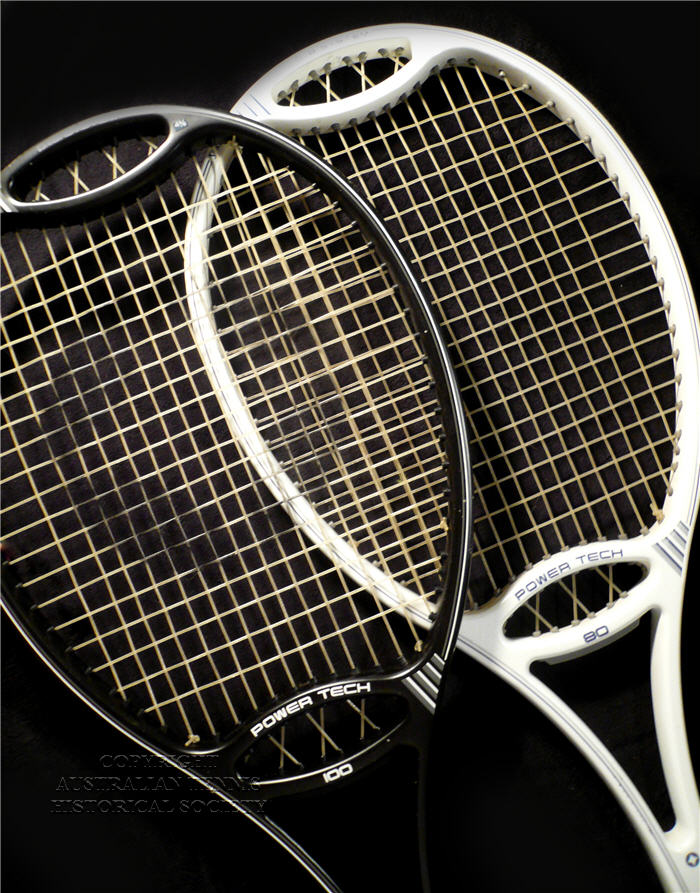
alexander mirror slazenger brush (7)

This is a 12″ Slazenger Fred Perry brush in the shape of a racquet. Note that around the mid 1930’s Alexander also produced a mirror in these proportions. There was enormous rivalry between Slazenger and Alexander at this time. The Fred Perry all white model was created in Australia to create some public impact when he pulled it from his tennis bag for the very first time.


General Tennis Equipment- Court Preparation

Here a few items of interest which help make a tennis display a little more interesting.

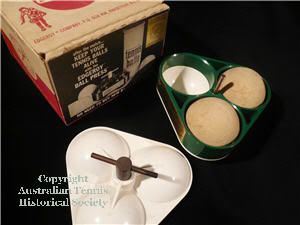
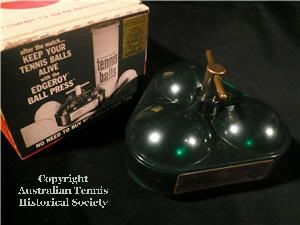
First is a USA made three ball container called EDGEROY. It sayson the box that it meets Official United States Lawn Tennis Association bounce tests. According to a family member who contacted us from the USA, these were made between the late 1960’s and mid 1980’s.  They come in a few colours and in two sections, the screw device is threaded and when tightened creates the seal. The green and white ones are from the mid 70’s and in 1976 a special red/white and blue version was sold.  Prices $ 10-30

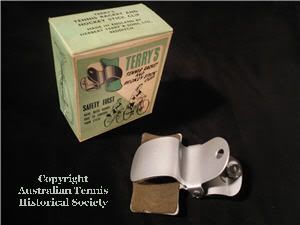
On pleasant weekends, taking the bike down to the courts was a great way to warm up. Being a little clunky to carry the answer is a tennis racquet clip that fits to the bike to hold your racquet.  This UK made TERRY’S clip is new in box. Prices from $10-$30 if you can find one.

Terry tennis clip

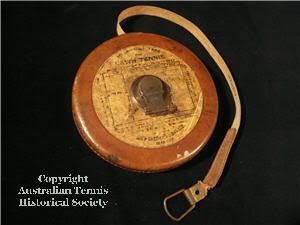
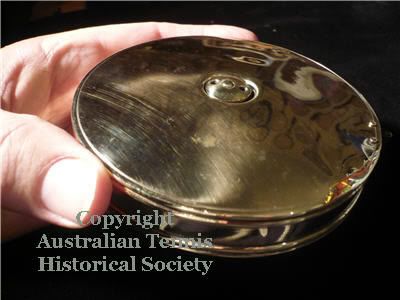
Lawn tennis measuring tapes were required originally for line marking on grass. The tapes had the tennis court measurements printed on the casing (so did some racquet presses).  Some are made from brass and are quite stunning. Others were made from leather. The one below is a US made Rabone and is not a pristine example through wear and tear. Prices $40-$200
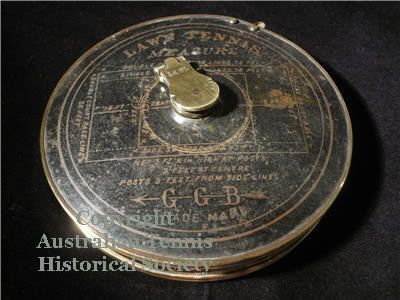
This tape measure, below, was made by G.G.Bussey & Co. UK. (GGB) Bussey were a very reputable firm that
supplied a complete range of tennis equipment. It is very old and made in brass.  It arrived quite dirty, however with a polish the end result is really pleasant.
tennis tape measure

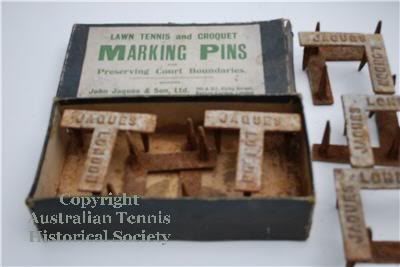
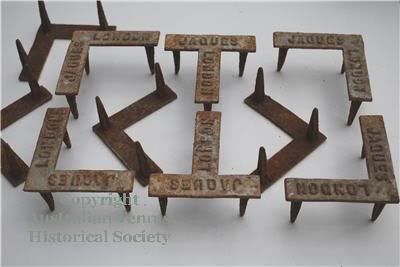
While the tapes were essential to measure out the court, the two other critical components were the white line marking machines and the marking pins used to create the perfect squares and straight lines.

These photos show the John Jaques manufactured marking pins.

marking pins

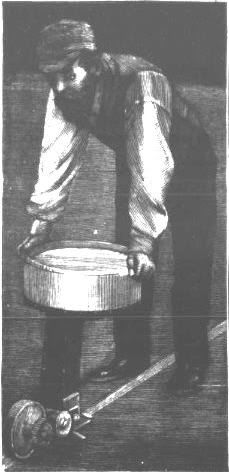
Occasionally, you will find line markers coming up for sale. Here are some visuals found in various Australian newspapers.

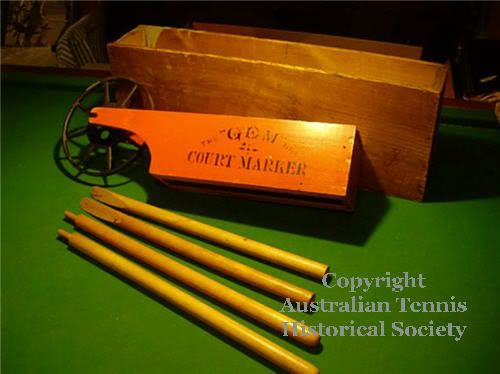
GEM tennis line marking set

Wonderful condition GEM tennis court line marking set circa 1905.

1890's Line Marking

This picture shows the 1890’s solution as shown in the Sydney Mail.

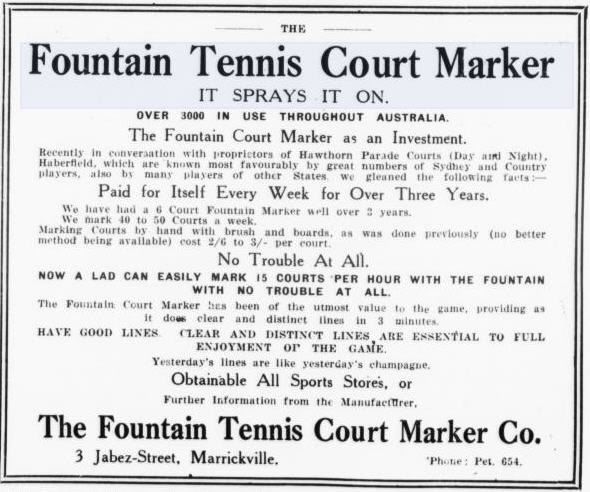
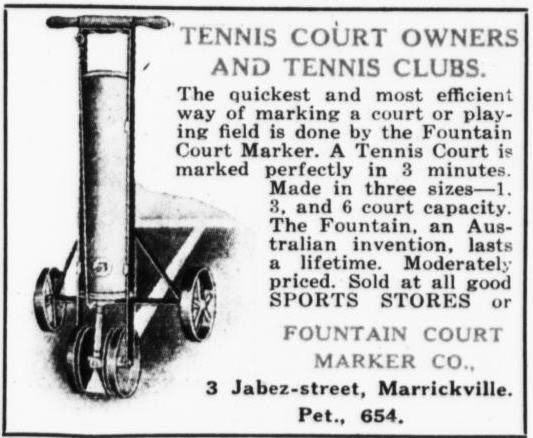
Line Marking

These two ads promote the Australian invented Fountain system in 1928 and above again in 1935. With a 3 and 6 court version it sounds like a good club sized model.

A.H.MOORE Sydney

With the spread of tennis throughout the colony from 1876 onwards, we have discussed how much of the tennis equipment was imported from existing UK, French and USA sporting manufacturers.

The Australian industry is recognised to have begun in the 1920’s as the popularity of the game moved more from a wealth based past time to a general community game. This saw the start of Alexanders and other Australian developed brands and the commencement of Australian operations for Spalding and Slazenger.

Pre 1920’s we assume that craftsmen here would have readily made racquets for customers, but finding information about these firms is difficult since many never promoted or advertised themselves.

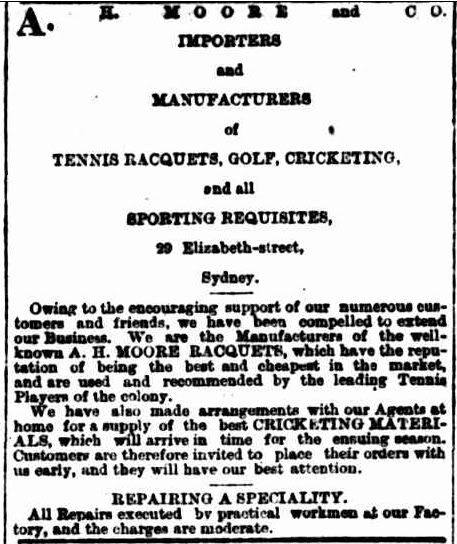
One of the pioneer racquet makers that seemed to have created a niche was Arthur Henry Moore from the firm A.H.Moore in Sydney who commenced business in the early 1890’s.

In 1896, operating from A.H.Moore NSW maker Elizabeth St Sydney the firm was offering both imported and locally prodcued equipment.
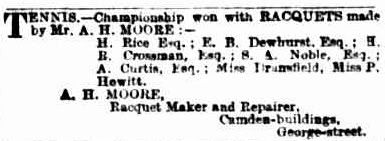
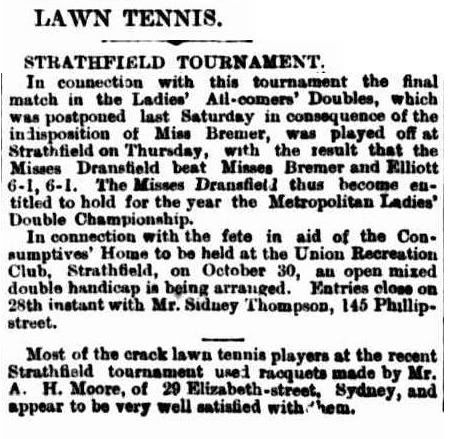
The racquets carrying the firms brand name seemed to have been well accepted and the company was involved with the then top grass court event, ” The Strathfield” Lawn Tennis Tournament.

You can read from the articles how linked with the leading players in the colony and from a different 1897 ad, below, names Horrie Rice and Edward Dewhurst amongst other prominent players who used and won with his racquets.

A.H.Moore NSW maker

In 1901, the factory and workshop were listed as being in Woolwich.

Also in this year, unfortunately, Moore ran into financial difficulties and as the company was heading into legal proceedings an argument over legal fees he couldn’t pre-pay led to him shooting a managing clerk for a solicitor in their Elizabeth St offices on December 6th and then shooting himself dead immediately after. The clerk, shot twice, survived.

A.H.Moore NSW maker

Racquet Stringing

Stringing is an equally fascinating subject given the many patterns tried over the years. The primary strings used were made from the intestines of animals mainly sheep and through the years was known as “cat gut”.
To make a string numerous very fine strips of the stomach lining are twisted and stretched together, then dried and coloured. The techniques used today are the same as back in the 1880’s. Being animal tissue it explains why gut, when wet or placed in humid conditions, can expand and contract to a point where breakages can occur even in storage and frames can be distorted or warped under the immense pressure strings are placed under.

In the 1880’s racquet design for tennis exploded with new shapes, grips and string patterns.

The public was inundated with weird patterns with the promise of more spin, more power, better sweet spots or less breakages.

A sample are presented below.

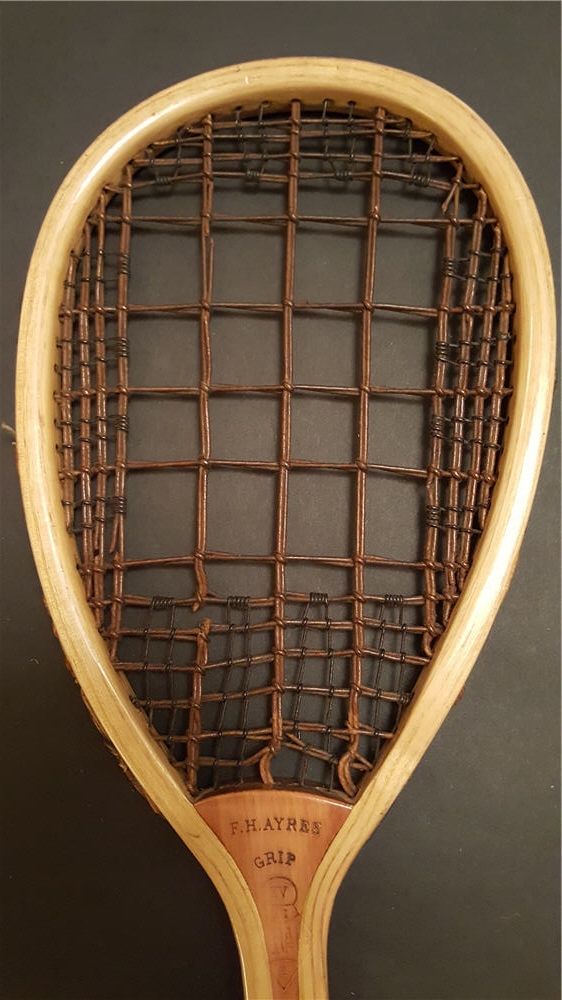
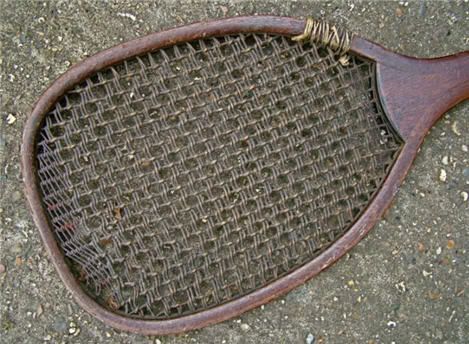
Looped Stringing

Looped Stringing

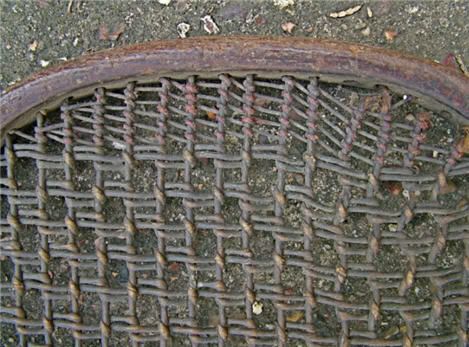
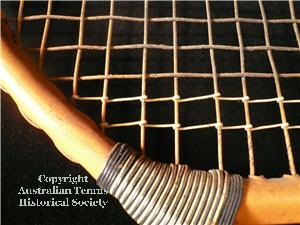
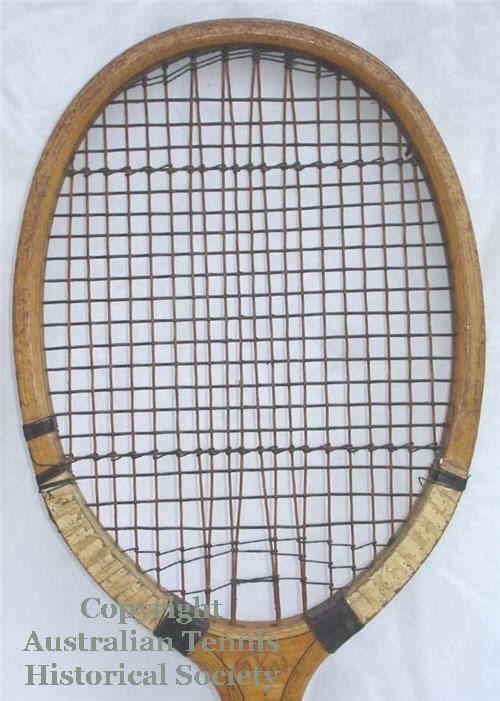
While early strings were made of ‘Gut’ often called cat gut, they were indeed made from animal intestines until the plastics and nylons appeared in the 1940-s-1950’s. Original gut was 1.5mm -2mm thick and often they tried different grades and thicknesses between vertical and cross strings to improve performance. The use of two vertical double strings and different cross strings are visible here with original trebling in place. This a common pattern on early racquets.

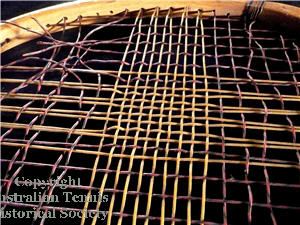
The small strings at the top are called ‘Trebling’. The strings wrapped across the mains and crosses, often in a square pattern around the sweet spot is called ‘Purling’.

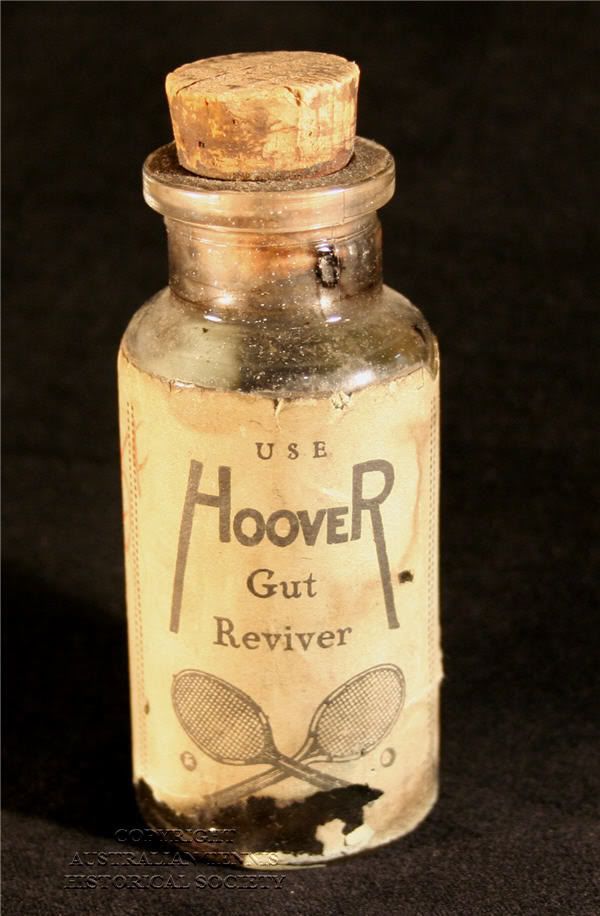
To keep strings in good dry condition was not always easy and one product launched from the mid 1880’s was a product designed to help maintain the strings.  The product as called “GUT REVIVER” and a user would lightly paint the strings with this product acting as a protection from dampness and drying out.

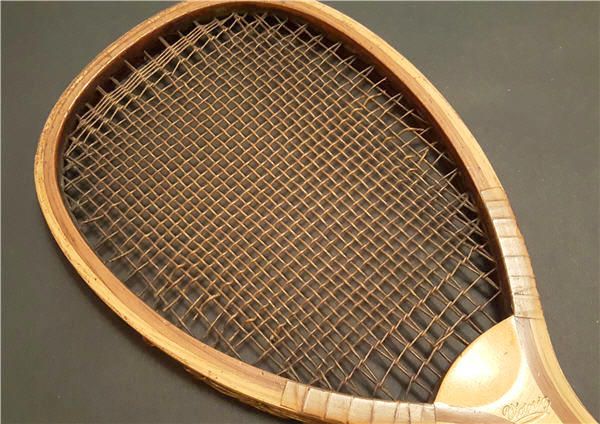
Stringing also changed direction, so to speak, in the 1920’s when the first metal head/wooden handle racquets arrived complete with piano wire stringing. Two well known companies were Birmal Aluminium Co. in the UK who launched an all metal racquet called the ‘Birmal’ followed by a metal wood combination called the ‘Birmal Ace’. Over in the USA, Dayton were very successful with their metal head wood handle products for over 50 years and are very popular with collectors for the variety of head styles and frame colours that became available. The picture below  is a Dayton Flyer with a nice trebling and frame wrap. They were renowned for a wonderful twang when the piano wire made contact with a ball and you can’t imagine how long balls would last.

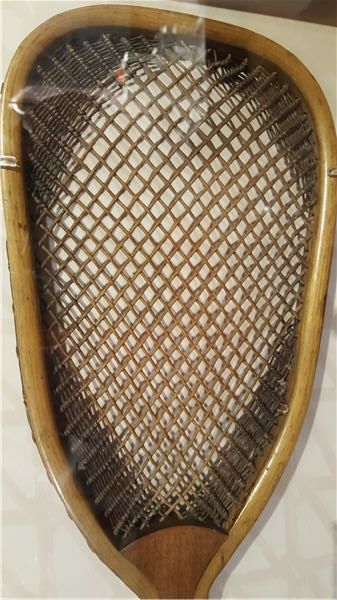
The stringing below is from an Australian Brewer Centurion. Note the green, double trebling and below this  a patented Godfrey (New York, USA c 1929) pattern which uses two different string types double strung in both the mains and cross strings to form a dense sweet spot. Based on the actual patent drawing the string set is close in overall look but not accurate, yet they may well be original.

The photo below shows the additional double strung mains plus the purling strings.

Close up of purling strings

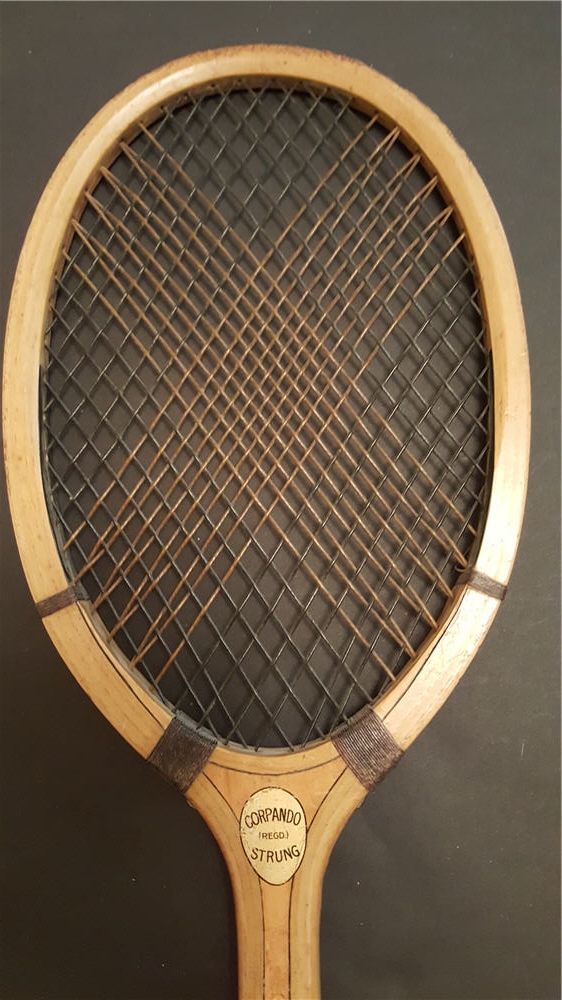
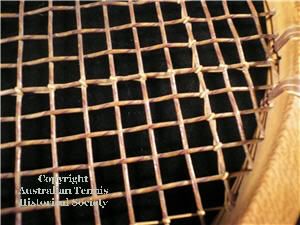
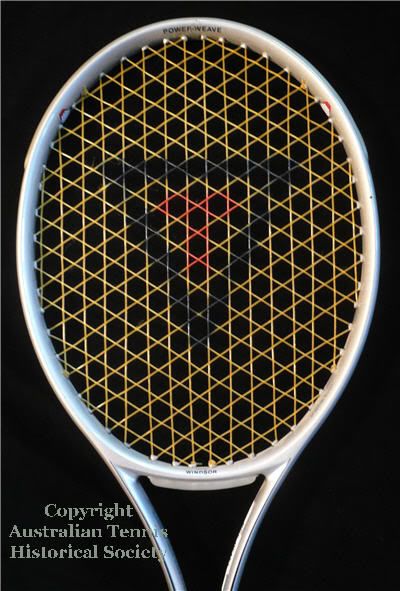
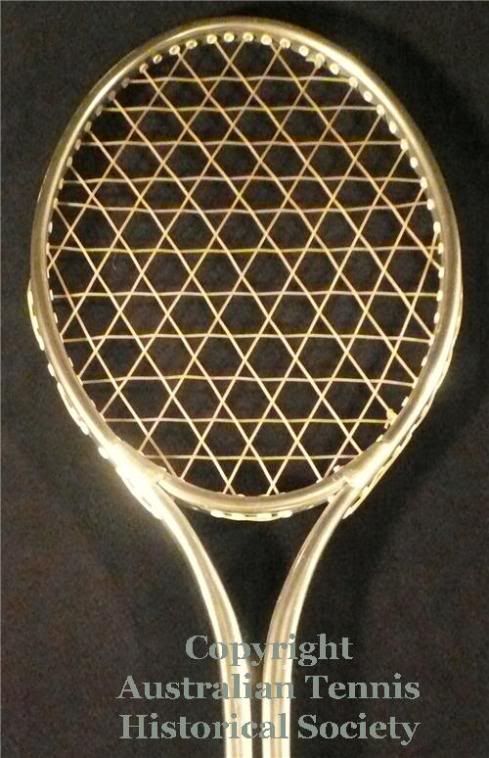
Older style string patterns included diagonals and verticals criss-crossed with diagonals which created a honeycomb style effect. Even today these still appear from time to time and in 2008 we have the recent launch of the ITF approved Power Angle racquets which feature diagonal string patterns. This product comes from the same designer of the Mad Raq stringing pattern that was patented in the early 1990’s. Other desirable diagonal strung racquets include the MacGregor Bergelin, Protagon Diagonal (Germany),  Major Octodiagonal, Geo Star, Aequalis, TAD Davis Top Spin and many from Volkl.

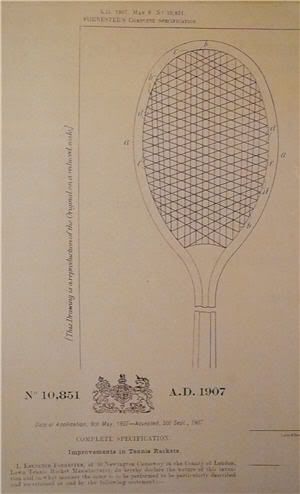
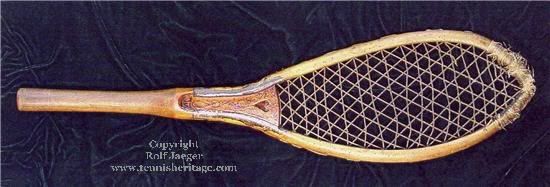
The MADRAQ design is shown below on the left, yet on the right we have a 1907 patent granted to Forrester, courtesy of Siegfried Kuebler’s book. In Jeanne Cherry’s book, ‘Tennis Antiques and Collectibles’ page 34 there is a shot of an equally similar design from 1887 by the Benetfink Co. The photo below these is a very early handmade racquet with diagonal and perpendicular stringing. Photo courtesy of Rolf Jaeger.The actual racquet now resides in Tennis Australia’s Collection.

Wood Tennis Racquet cross strung


The Sp.in G300/ Roxpro  shows how racquet design has allowed variable string lengths to improve sweet spot performance. Often these designs fall foul of the rules and are either banned or permitted after a review which is apparently what happened to this model.

The mid 70’s metal racquet is a Danlo with a ‘Spider web’ string set up.

A very rare treat is to see the German invented  “spaghetti” stringing system (Vilsbiburger racquets) which was used by Ille Nastase at the Aix-en-Provence tournament in early October 1977 against Vilas. So annoyed at being beaten by this amazing racquet, Vilas lobbied the ITF to have it banned which it promptly was under a ruling that deemed the two layered string pattern was a form of double hitting. The strings as they impact the ball,  slide across the surface to a point where under pressure they spring back delivering an incredible top spin effect, so much so, that on the receiving court the ball would literally bounce over your head.

Read the full story about this German Stringing  Invention from 80stennis.com
The racquets were called Vilsbiburger Tennis Racquets (Spaghetti Strings)
because the white plastic rollers are just like macaroni.

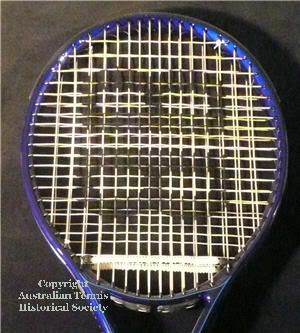
The Blackburne has two full independent sets of strings.
There is no double hitting so it is legal. The gap between the sets is 9mm.
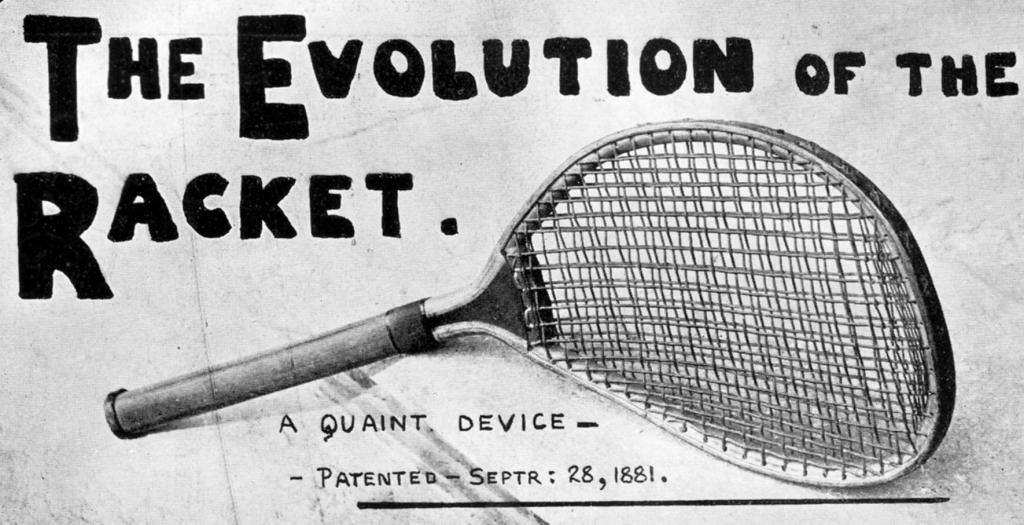
Note that this design is shown in the black and white pic from 1881.
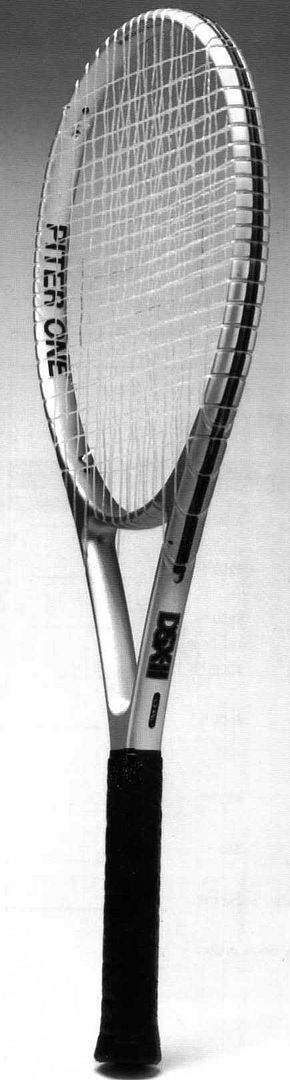
The 2001 racquet below is the DSX 11 which is also doublestrung but with looping strings around the
outside of the frame.
DSX 11 Doublestrung


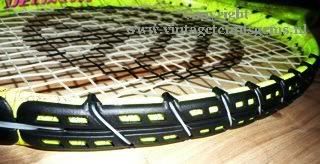
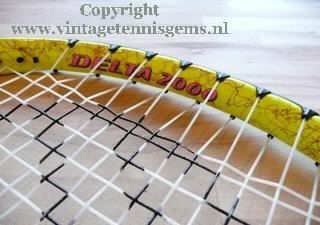
Roxpro Delta 2000


Roxpro Delta 2000

Above  is a Rox Pro Delta 2000 which also features an unusual stringing system.
Photos courtesy of Hans from www.vintagetennisgems.nl

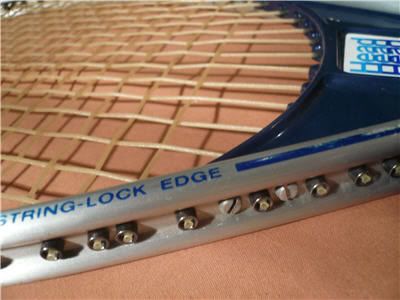
In the early 1980’s, Head marketed this String Lock system which enabled

owners to replace a cross or main as a single short string. No loops here.

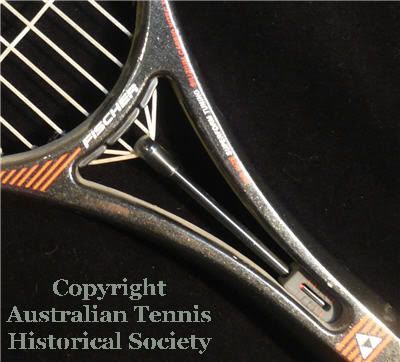
This Fischer Superform Tuning Racquet allows the player to adjust string
tension by using a key lock located in the butt cap.

Other examples of Long main stringing by Wilson and Bancroft (Markhill Germany)

It again is interesting to note the new 2010 Prince long string models like the Wilson are on
the market once more.

Micro Stringing

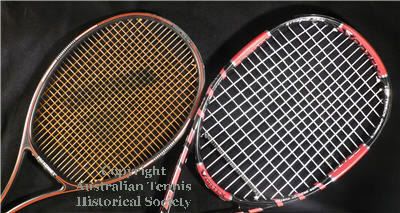
At the very top of this article, you will see how using double stinging in the main and cross strings produces a very tight stringing pattern.  In 1985, Pro Kennex produced a range of Micro Stringing racquets. This one is called the MICRO ACE. This pattern is 28 x 22 compared to the newly released Vortex Extra Spin 14 x16.

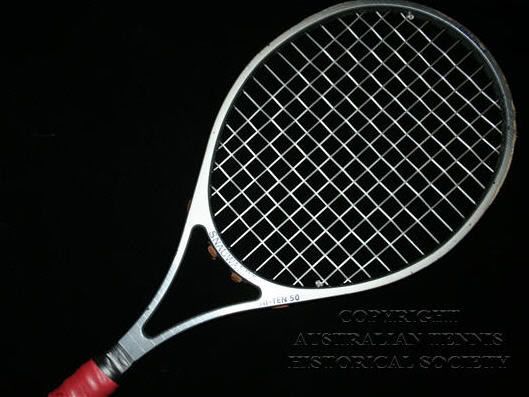
Snauwaert produced this amazing open strung racquet in the late 1980’s early 1990’s.

It is the Hi-Ten 50, graphite model.  The 16 x  12 strings are 1.85mm thick and finding replacement strings is very hard. Apparently whipper snipper grass cutting cord will give the visual effect.