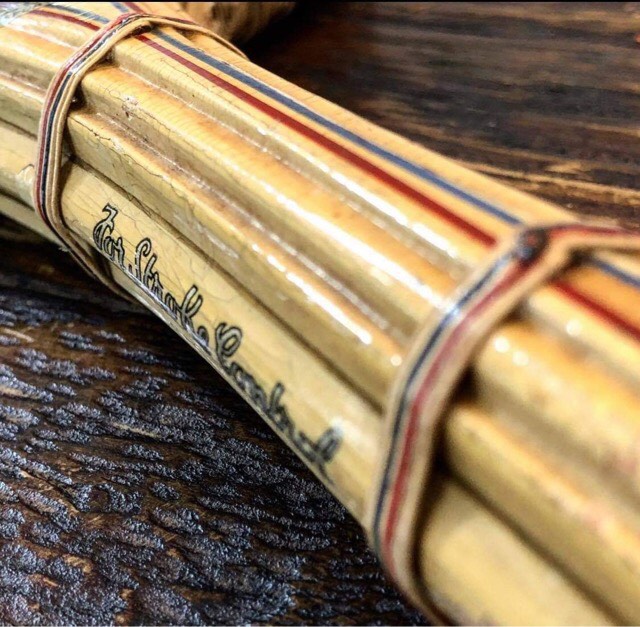
In August 2025, we received an email from a family in NSW regarding a previously unknown racquet making firm called C.O.F.Anderson from Vale lane, Auburn.
Colin Olsen Flett Anderson must have commenced his racquet making skills with another local firm prior to setting up his own company. In 1925, he applied to complete a business course in preparation for the big step forward and you can see he added tennis racquet maker as his career on the course application form.
The firm must have survived for a quite a few years guessing the 1928-1932 era but we do know that the depression forced the closure. Searching Trove for old ads from the company or retailers hasn’t led to any confirmation of the models produced but we do have an actual racquet called the SPECIAL and a sales card referring to the SWIFT. Both Chesterfield NSW and Hedley VIC had a Swift model so it is quite possible that Anderson may have been acquired by one of them.
The racquet is well made with a wood scored grip.
Thanks to Robin Buchanan for the information, another addition to the development of the Australian Industry.
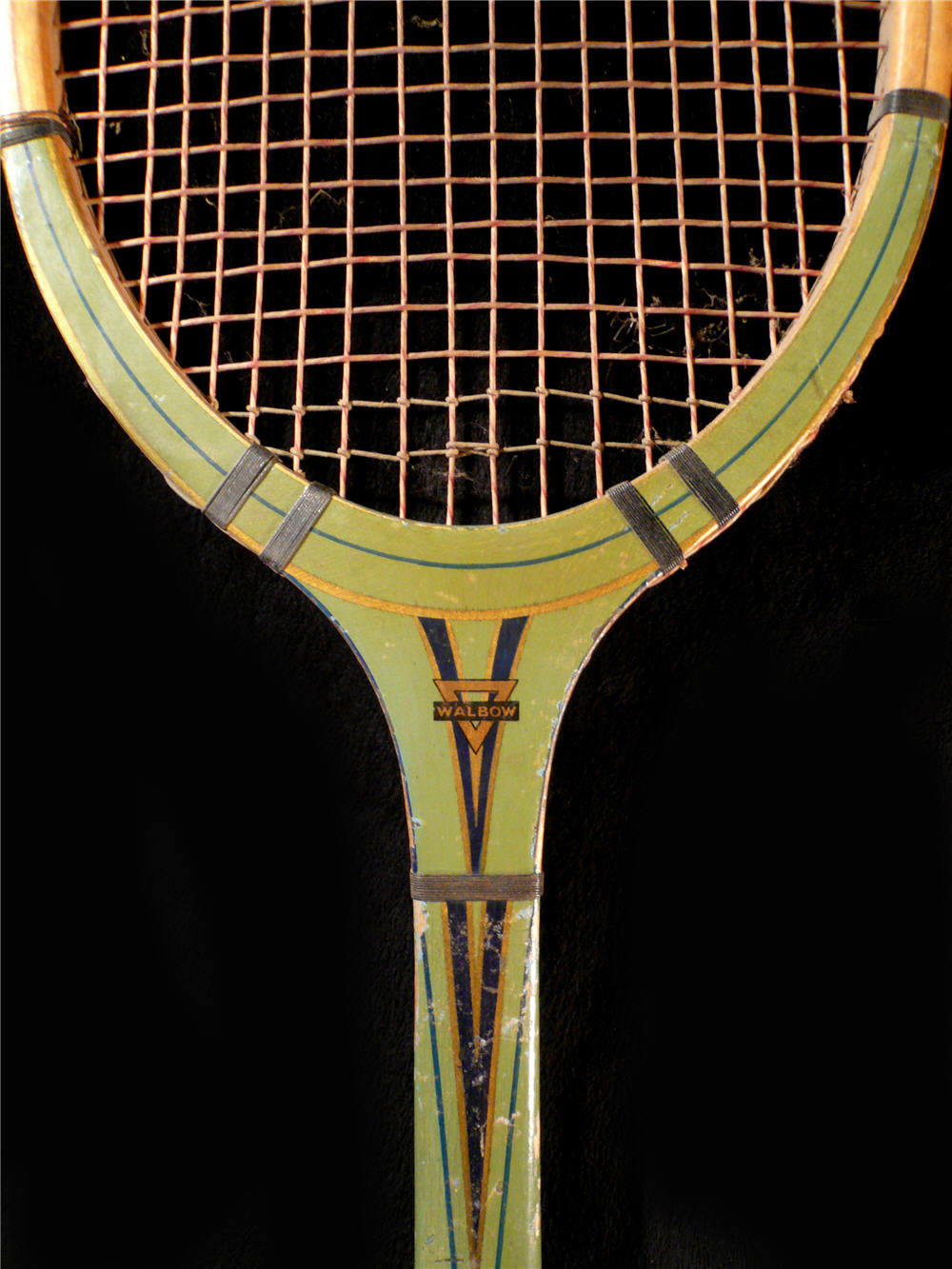
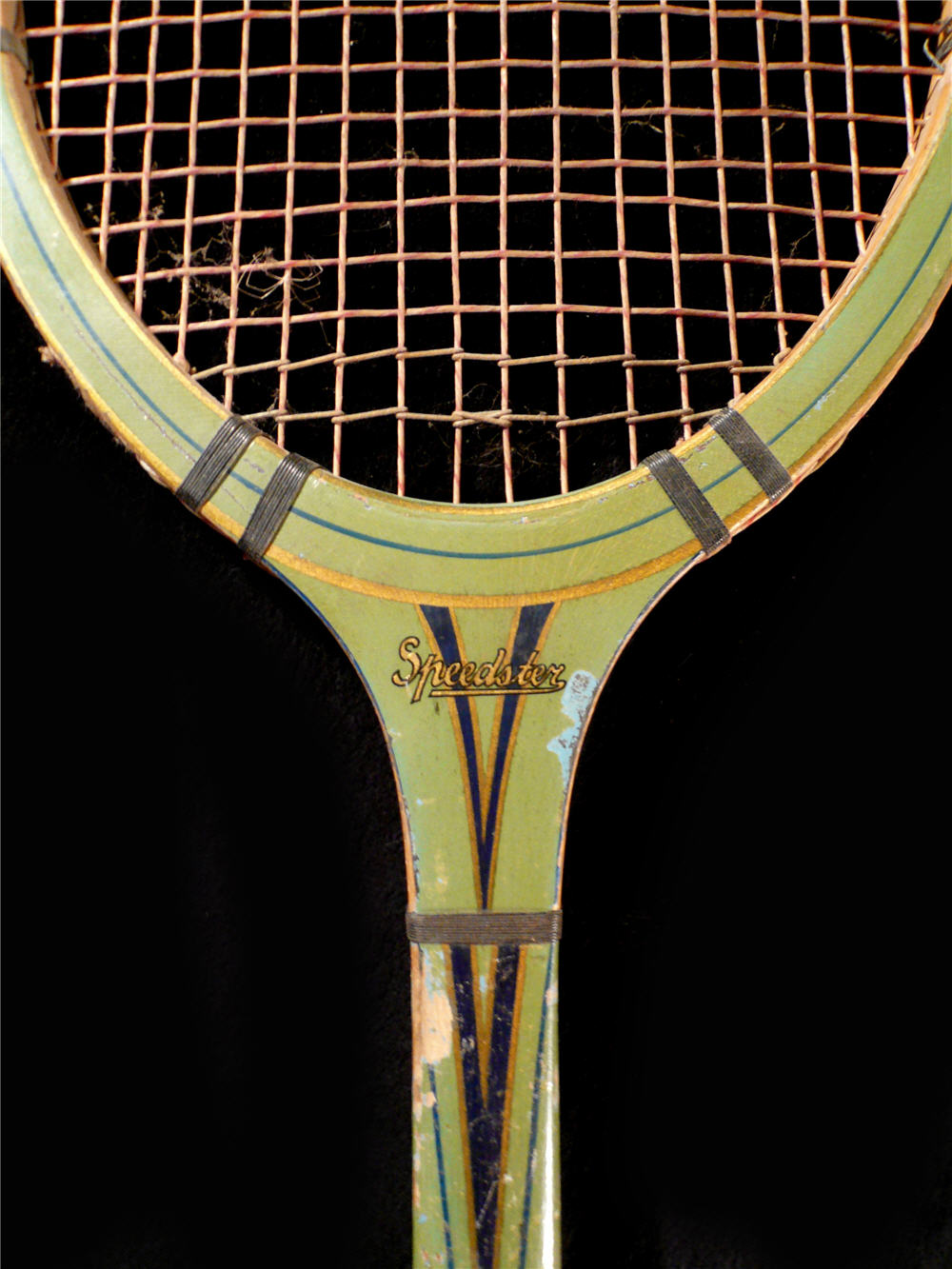
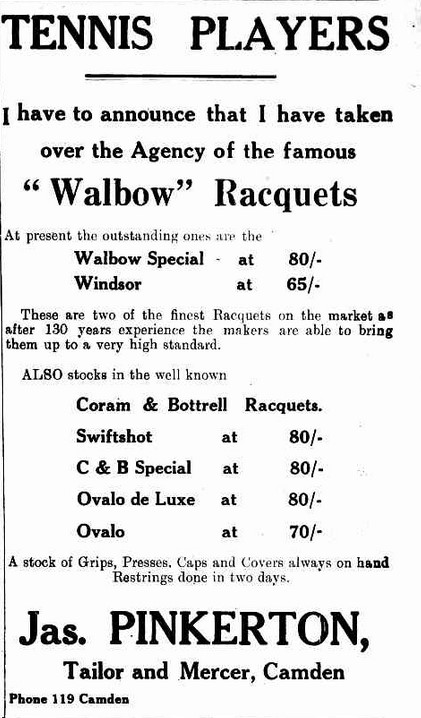
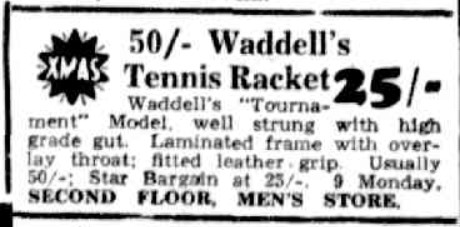
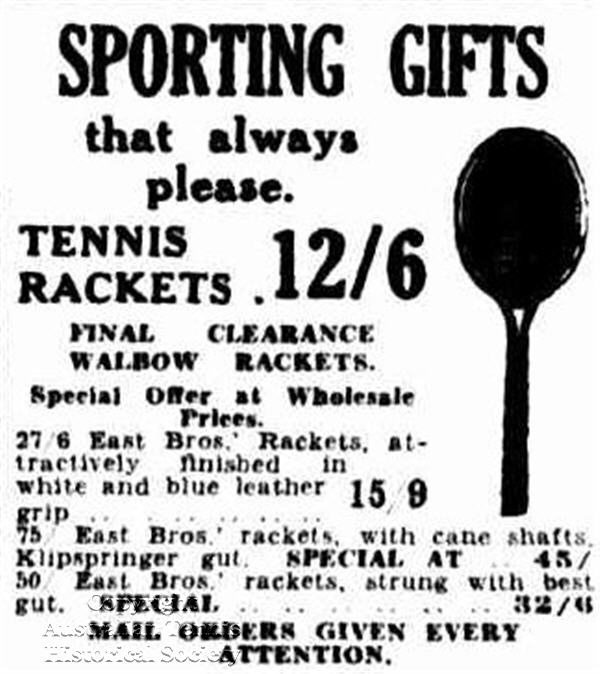
The boom in tennis being played in Australia saw a host of new entrants enter the manufacturing sector. Walbow Racket Company must have started in the 1920’s since the first ad, below comes from 1928. In the mid 30’s it was owned by Lionel Walsh and operated from 20 Alfred St Mascot. It was quite the hub for sporting goods manufacture with Slazenger and Waddell’s in nearby Alexandria. According to the business directory of 1936 there were two new owners Thomas Mitchell and David Chrystal. Later this partnership was dissolved in favour of the Chrystal father and son.
The only example known to date is this nicely produced Walbow Speedster.
Always interesting to find new information about tennis racquet makers.
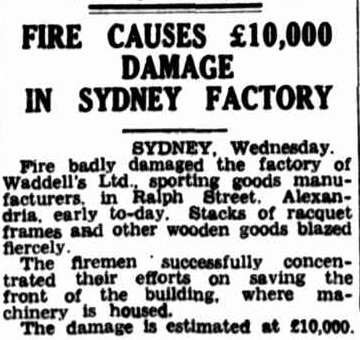
Waddell’s Lt d manufactured sporting goods from a factory in Ralph Street, Alexandria around the corner from Slazenger.
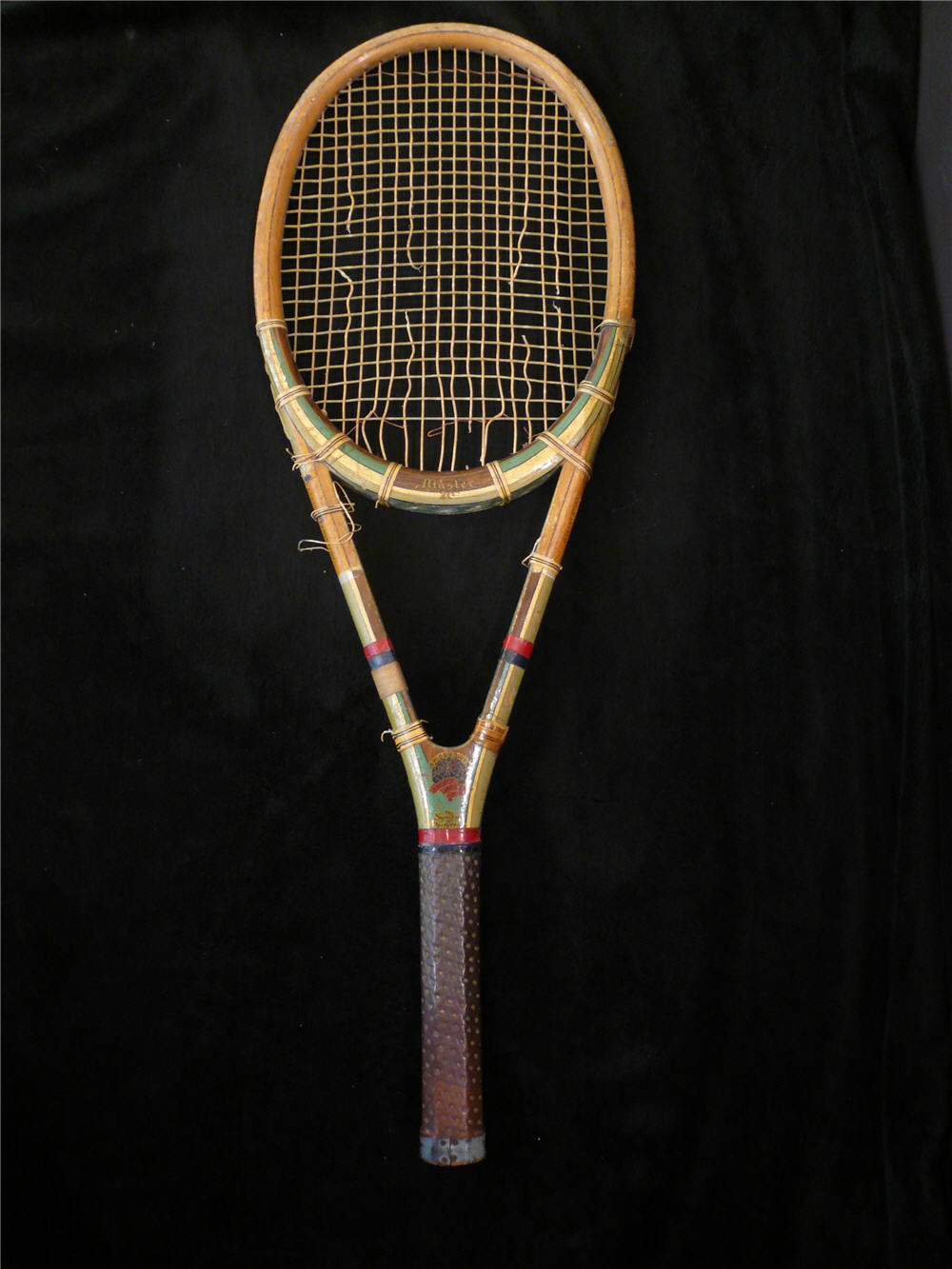
This wonderful example, the Royal Sovereign, shows a very intricate shaft design not appearing on other competitive models.
The logo on this racquet shows a variety of sports so presumably, they made a range of equipment which was sold throughout Australia based on advertising.
Typically, these work places contain some flammable materials and in 1939 they suffered a quite extensive fire and local reports confirm both the factory street address and that racquet frames were damaged.
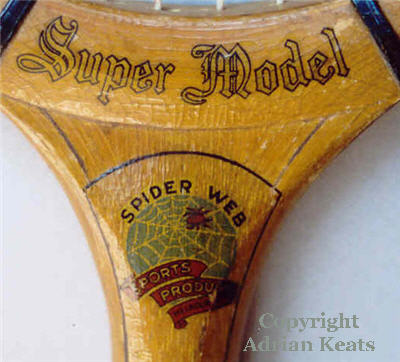
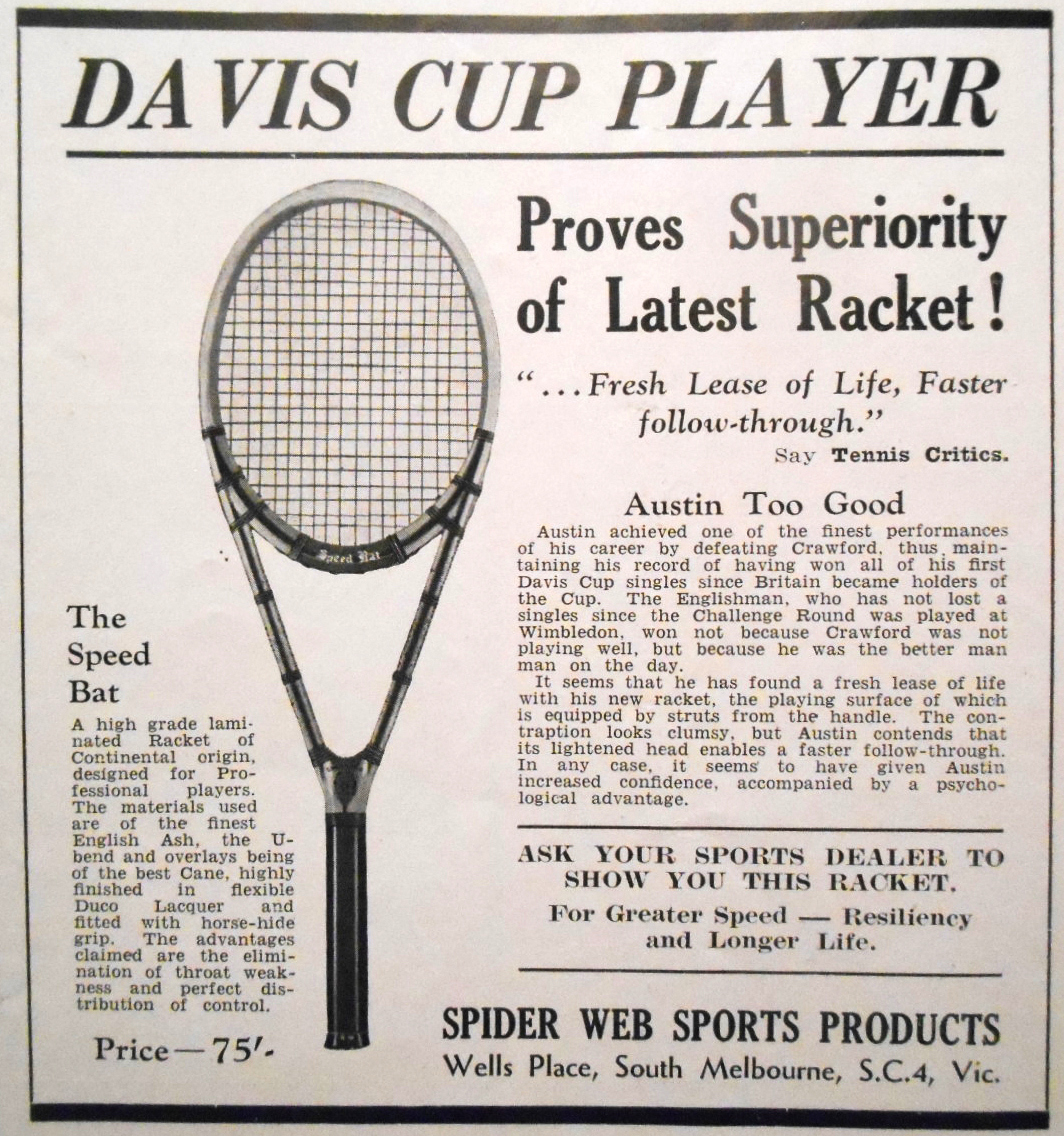
Spider Web Sport Products introduced tennis racquets into the range of archery and hockey equipment in the early to mid 1930’s to take advantage of the games rapidly growing popularity. Spider Web’s owner William Respini was a cabinet maker by trade and the factory was located at 133 Wells Place, South Melbourne, or as it was then known, City South. His son John advises, that he recalls William had to buy some racquets being made at the time and steam them apart to learn how they had been constructed so he could copy them.
Given the trading Cartel of Spalding, Slazenger, Dunlop and Alexander, as a boutique maker creating a distribution channel would have been very difficult. Under the cartel and their Australian Racquet Manufacturers Association ARMA all of the branded 5 Star models were priced the same in all retail stores to prevent price cutting wars. On the only known example of a Spider Web racquet, you will see a cheeky reference to the cartel and one-upmanship where the number 6 appears in a star on the handle.
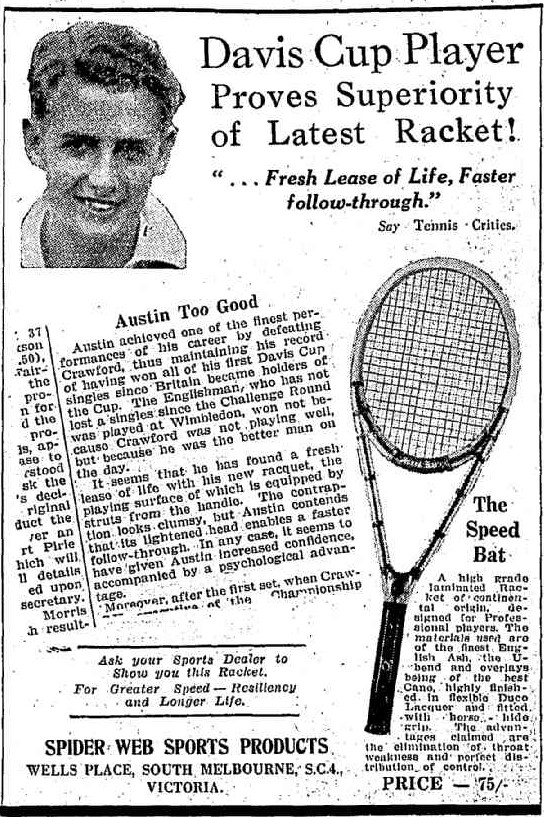
To differentiate, Spider Web also imported a model from Spain, we believe, called the Speedbat which was used by H.W. Austin who made the tri shaft Hazell Streamline famous. Perhaps the designer Donisthorpe also had a hand in the design of the Speedbat but to be sure it was far in advance design wise and towards the current shapes than any other racquet seen from the 1930’s. We finally uncovered an example in 2023 donated to Kooyong via a former president. What a gem!!
In South Yarra, the large retail store Maples in Victoria and Tasmania carried the Spider Web racquets for at least 4 years as evidenced by newspaper advertising, however with the onset of war all racquet makers couldn’t source the Ash timber and much of the production capacity was diverted to the war effort.
Myer Melbourne may also have been a retailer and in those days, and arguably nothing has changed today, retailers had the power and basically told the manufacturers what they would pay for a product and even took settlement discounts when none were offered.
William was also selling direct to a number of tennis centre owners. who by comparison to manufacturing were looking very successful as more and more people played tennis, so he decided to diversify into tennis court management which involved building courts with lights. He also had a hairdressing/ tobacconist business. The tennis enterprise, in these pre television times (1938-1955), was a huge success being open to midnight 6 days a week with no play on Sundays. On weekends people would wait all afternoon and get maybe 2 sets and pay sixpence a set. Frank Sedgman played an exhibition match at the Merri Creek centre and Nancye Wynn Bolton played a season.
Due to high demand he then took on a partner in about 1938 or 1939 to build an additional two courts which were also lit.
His partner was George Cochrane, one of the first professional coaches in Melbourne.
In the mid 60’s William bought out George Cochrane’s share and once again had sole ownership of the centre.
The accounting books for the tennis centre show that purchases were made from Spider Web Sports to the tennis centre from the late 30’s and into the early ‘40s.
We thank John for his recollections and hope to add more information as we find it.
The racquet photos come courtesy of Adrian Keats, Australian Racquet Collector. Click here for Adrian’s website
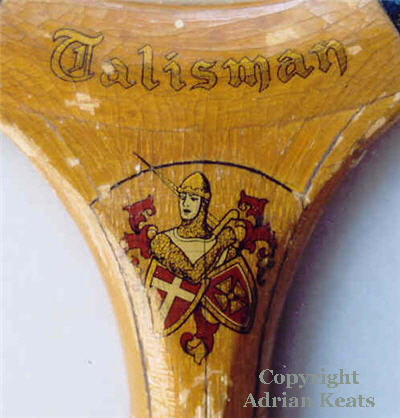
The Spider Web Sport “Talisman”. Looking very much like a Hedley racquet
the workmanship and decorative finishing look great. Note the 6 star decal
to combat the 5 star branding of the major manufacturers under the ARMA banner, representing the
best quality racquets.
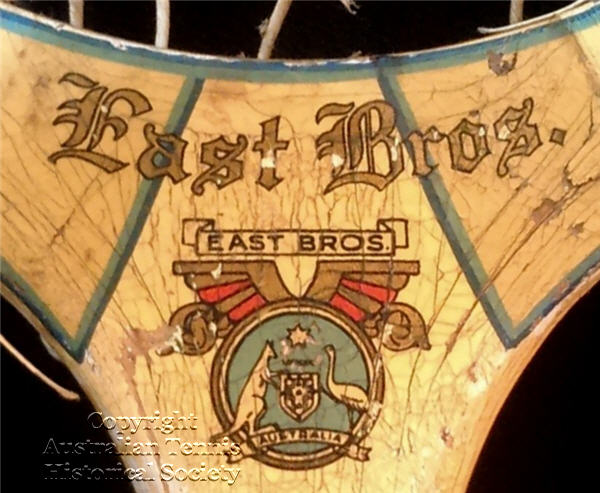
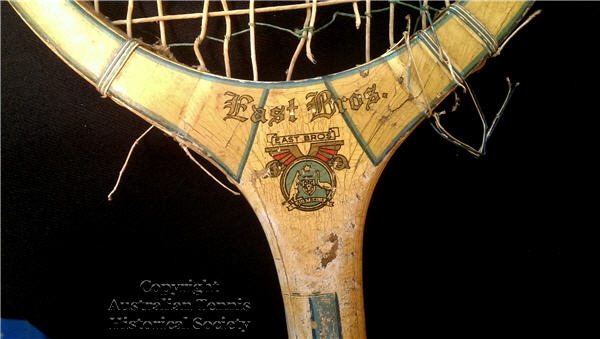
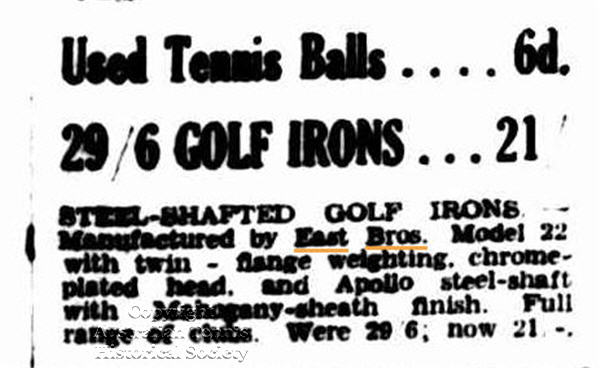
East Bros. were located in Melbourne and only in 2013 did we find a reference to this company given an extremely low level of advertising in the newspapers.
Thankfully we did find this example of a tennis racquet. It would appear they did manufacture golf equipment from a Sydney plant as did other multi sport producers, Slazenger and Spalding. Even Hedley, had a large vinyl sports products division that made golf club bags. It is also likely that there was a connection between East Bros. and Chesterfield who made golf clubs as well. A family member contacted us saying that they didn’t make racquets which lends support to the Chesterfield association.
Given this new information, it is possible that East Bros. made retail specific racquets to make up for a lack of “brand specific” product.
Covered in patent numbers belonging to Alexander Racket Company, Sportsmaster is not really a manufacturer but a second marketing brand most likely. We are unclear at this point if Alexander’s were involved with the company financially. It was suggested that some ex-employees set this business up, obviously with some supply endorsement from Alexander’s.
Olympic Racquet Co. was believed to have produced racquets from a small workshop in Sydney. In the 1947 Business listings they are located at Trafalgar Lane, Annandale. We know very little at this point about how long the company operated for. In a Murdoch retail and mail order company ad from Sydney, Olympic racquets were sold at the budget end given a 20 shilling price tag, well below the main UK / Australian brands.
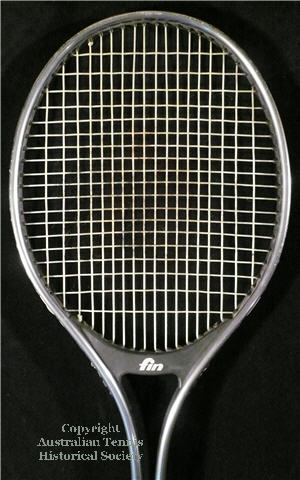
The story about Fin is really a story about an Australian who single handedly set about to make the best possible racquets in Taiwan and launch the low cost of production graphite racquets into the global market and in the process establish himself as the foremost designer and innovator of racquet design with graphite technology.
Barry Todd was looking for a business opportunity in the late 1970’s and a friend had just returned from Taiwan with some metal and wooden tennis racquets. After three hits the metal welding broke, the tennis balls were flat, the wooden laminations started to separate, yet these items were bought only for $6 whereas the current market was paying $30. Appearance wise they looked OK, it was only that their production and materials specifications were all wrong.
The only option was to fly there and start to work with companies to develop better technology that wouldn’t fail. The starting point was Pro Kennex. Barry refined the graphite formulas and techniques to create a range of racquets which he then took to America’s largest trade show and introduced Taiwanese Graphite to Wilson, Prince, Head and Donnay. His expertise included being able to design and produce a new model within 4-6 weeks compared to the usual 12-18 months manufacturers were used to waiting for. Orders rolled in. Graphite racquets were certainly being made pre Barry visiting Taiwan because Emrik and Stellar were already marketing Taiwanese graphite product while Rossignol, Kawasaki and other brands were using high cost Japanese, European or USA production facilities.
While the first orders were small, Barry was able to manage the business, however as the orders grew in size, his role as middleman was marginalised as the factories began to deal directly with the large brands. Unfortunately, this same pattern continued as Barry was forced to leave one firm to assist another in an attempt to forge an income and sadly the “sell-out” process continued.
For two years Barry lived in Taiwan, he forged ahead with numerous innovations including the deep throat designs, the manufacture of synthetic gut and grips all of which were adopted and copied.
The technology advancements also moved into squash racquet design and amid a major backlash which was fought out in the courts (not on them) the International Squash federation was forced to accept the new racquets over the conventional wood. I can hear my Real Tennis colleagues saying they are glad that their secretive 300+ year sport thankfully remained off the radar.
Barry as a player was no slouch, he used to be up there with Fred Stolle, Bob Hewitt & company but it was pretty difficult to make a name when Rod Laver and others were at the elite end. While living in Taiwan, he was the only foreigner ever to win the Taiwan Open, for they changed the rules after this to be a “Taiwanese Only” tournament.
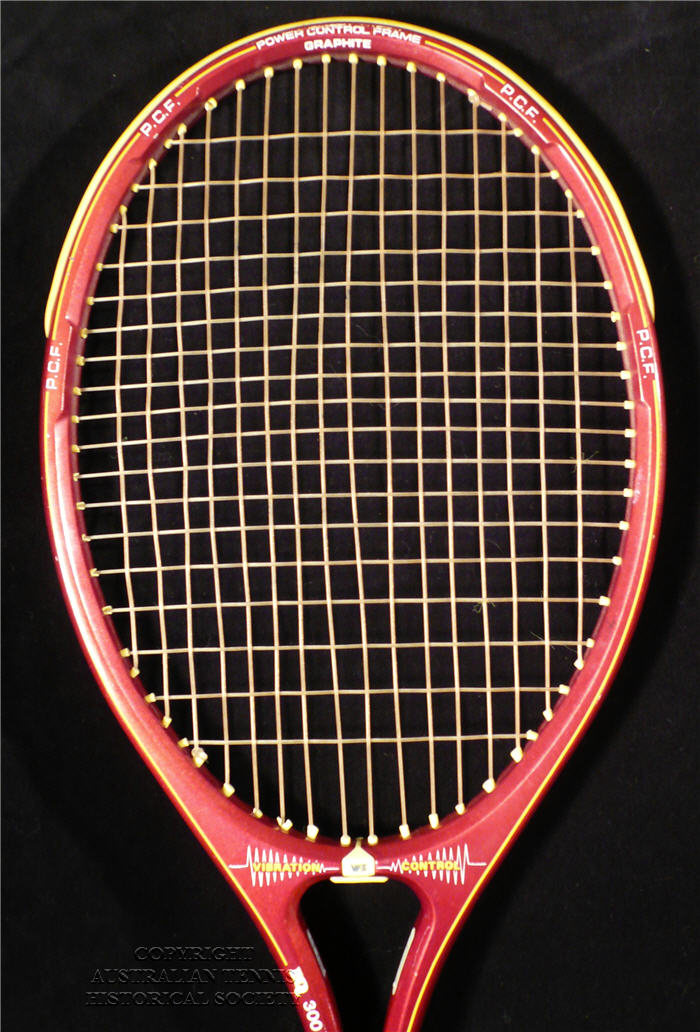
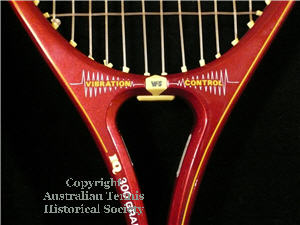
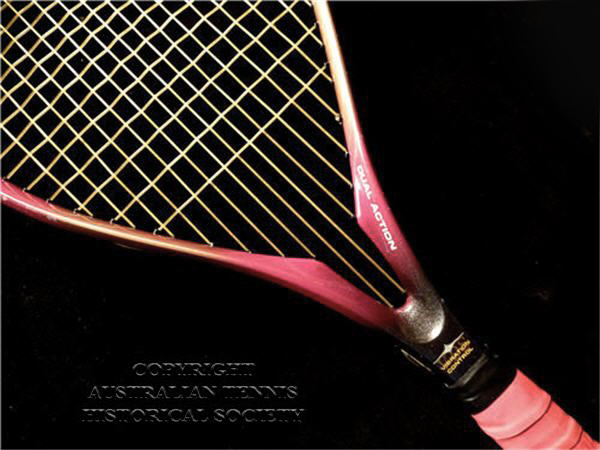
With the limited personal financial success of the introduction of high volume graphite racquets, a variety of consultancy positions and some major brand R&D roles that failed to materialise, Barry decided to create his own brand, FIN. Given his design expertise he recognised the importance of vibration on tennis elbow and proceeded to develop the first in-frame vibration dampening system involving a split throat design called “VFS”. This was introduced into the top end range of the Fin IQ racquets. The racquets received excellent PR particularly in the USA when the publisher of a tennis magazine found he could play again, after years of tennis elbow with the new FIN IQ’s. Protecting the system also came at a price. To patent technology globally cost $130,ooo and then you need deep pockets to protect your patent against would be copy-cats. He also fine-tuned manufacturing to incorporate a range of weight and balancing variations to create a range of racquets for major players. The biggest name in the Australian market to use Fin was Chris Lewis from New Zealand.
The new range and network of agents was in place for the 1982 German Sporting goods show and in a matter of days Barry and team had amassed a staggering $3 million in orders.
Success comes at a price and Barry had to quickly find a way to fund order production. The plan involved advertising for funding throughout Europe and 167 offers of support came in.
The one chosen was a group of Forklift truck manufacturers with some $60 million in turnover and with the offer to inject the funds quickly Barry signed a deal giving them 51% and control of the business. In yet another disastrous chain of events, this new investor was in fact cash strapped themselves and by the time the letters of credit had been organised with the Taiwan factory, the European summer was over and the orders could not be fulfilled. Over in Australia, production was on time for the coming summer season, hence the FIN brand managed to grab a foothold in the Australian market.
On the IQ frames the following is labelled, ” This model is part of the new Fin tailor made collection of super performance racquets assembled in Taiwan. The exact cross blend by braiding the fibres together eliminate human error in the manufacturing process giving 100% uniformity throughout the racquet. This process combined with unmatched technology makes these racquets the most responsive racquets on the market today” Tag line FEEL THE FIN DIFFERENCE. (s0me Asian grammar retained)
Despite the rocky start, Fin survived for about 6 years even though the company was struggling financially. In an attempt to resurrect the business Barry began to seek some joint venture arrangements. One of these was Prince. At the time he was to first meet them, he instead had to return to Australia for his daughters wedding and various Fin UK board members followed him out attempting to negotiate a restructure of senior management. Barry would have none of this and on his return to the UK found that the board, with control, had decided to sack Barry from his position. Daft in the extreme since Barry was the technological genius behind the Fin range. The Prince deal never got off the ground.
Regrettably, he had to sit back and watch the financial disaster unfold and Fin went broke along with his 49% share. No doubt, if the financial gods had been favourable, Fin may well have become, deservedly so, a major racquet brand which may well have been around today.
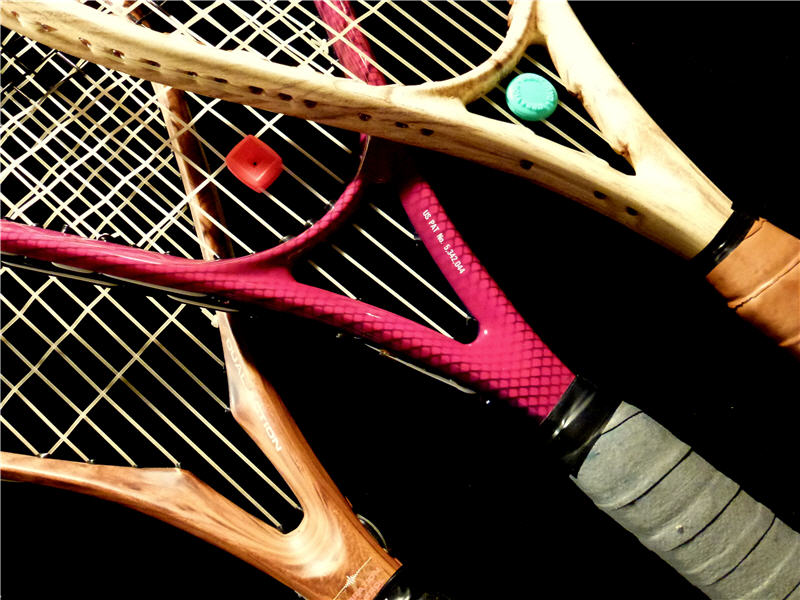
The next foray into the market was thanks to a mate who owned the Deesse (pro. Dayus) company in Switzerland. They are today still a large cosmetic company and were keen to develop their own range of sporting goods because they used sporting wear and equipment in many brand promotions. Given a solid financial base, Barry went to Korea this time to develop the range which included the “woody” graphite style which is a quite stunning finish, he also designed the long string concept and the inward angle of the side frame. In two years Deesse racquets were number 1 in Switzerland and then a deal was done for Barry to launch Deesse into the UK as his own business and globally with Deesse into other markets. Again, another tragedy. Owing to a severe car crash Barry was hospitalised and his potential future involvement with the project was in doubt. Deesse decided to pull the pin rather than continue without him and cutting it’s losses withdrew from the launch meaning that Barry was once again denied his opportunity.
Barry, today aged 72 has retired from tennis racquet manufacture but he still owns some major patents available for a price. Sadly the journey has not been kind to Barry financially but the story itself is a great tribute to his Australian ingenuity and his “have a go- never give up” attitude.
He certainly paved the way to the greatest revolution in tennis playing style and techniques for the power generated by graphite racquets has altered stroke making, ball spin, court play and the retail market. Remember that we used to buy one or two racquets a year when we played club tennis now we can own a graphite one for ten years….
From this story, I guess the only irony is that even today the greatest problem facing the racquet industry continues to be what plagued Barry and that is the ongoing knock offs created by rogue factories, not just copying technology but creating full graphics knock offs.
Thanks for your time Barry and sharing your story with Australian Tennis History
Fin metal products were launched with the graphites.
Fin IQ 300 with VFS vibration system
A stunning design all round
Deesse (pron. Dayus) Woody Graphite One of the most attractive racquets made. Barry created the technique to print a wooden finish using various shades.
An earlier Deesse model called the WIZARD Feather Pro
In a fashion like the Wilson PWS, Deesse used the long string technique combined with additional frame support as shown here.
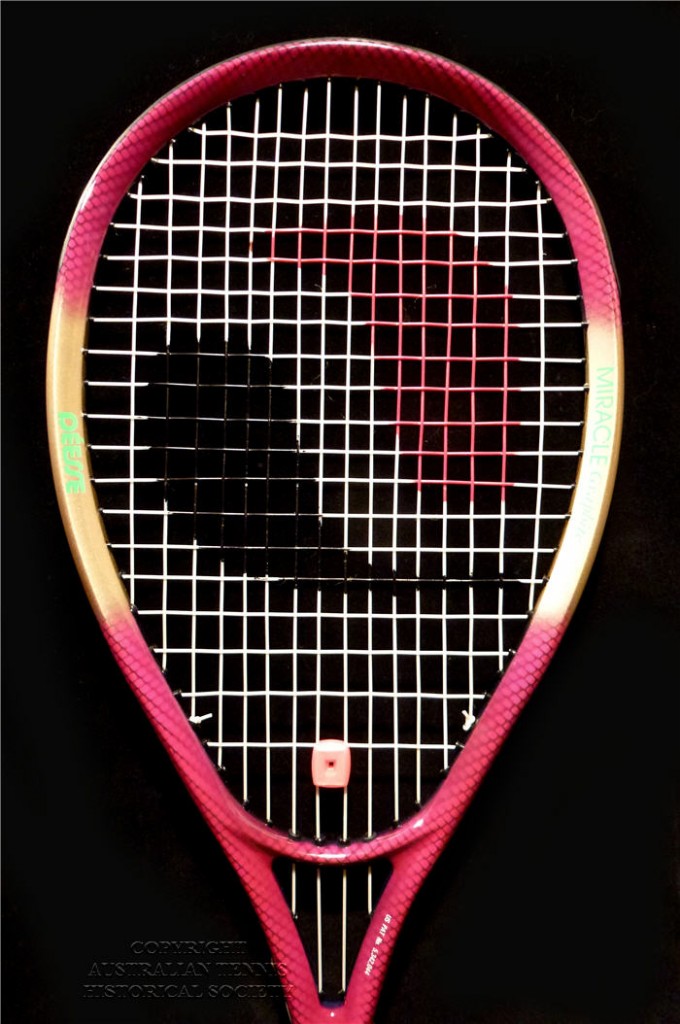
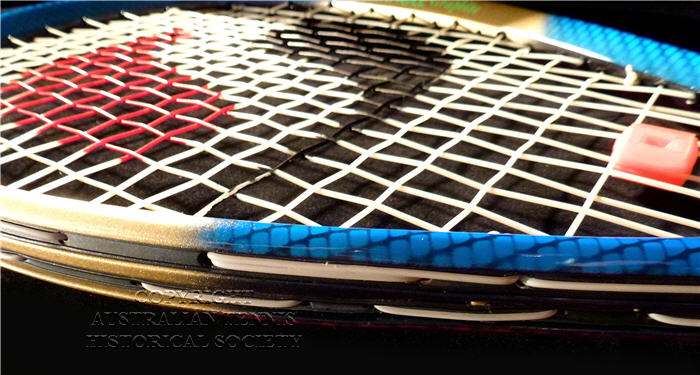
Apart from developing the first long string racquets, Barry also produced this alternate stinging system.
If you broke a string, the immediate strings would remain taut allowing you to complete the point. A fine and rare example to include in any collection, called the MIRACLE (blue one side pink the other)