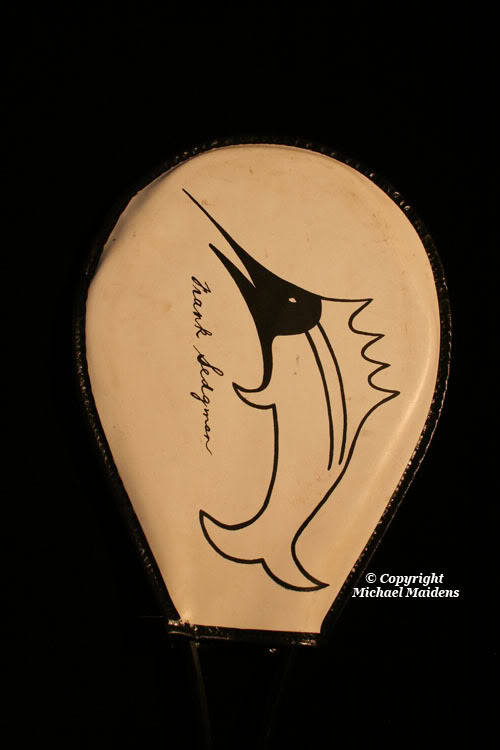
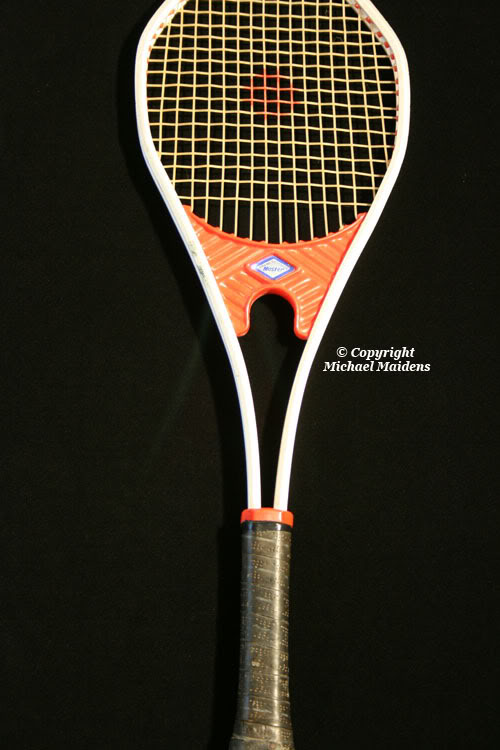
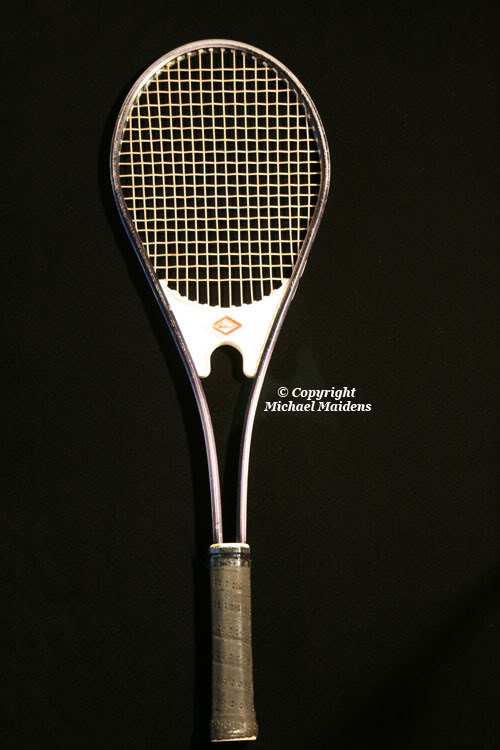
Of all the top brands in Australian tennis history, Hedley’s were a National brand and part of the top five which enjoyed an export business into the USA. In relation to when they began, the earliest reference point we have found is a 1924 annoucement that the firm was entering the tennis racket market under the protection of a 30% tarriff (via UK product) and 45% via all other foreign product. At the 1924 Melbourne Consumer Goods Exhibition they were listed a exhibitors.
The main office was located in Swanston Street, Melbourne, however from 1926 production occurred at 245 Punt Rd Richmond, with a staff of 10. An original owner Mr Robert Hedley retired and the firm was managed by co-founders from the UK with tennis racquet making experience, Percy Tasker and brother George who was in charge of production. This site was followed by larger premises at 27 Alfred Street Prahran and an even more substantial factory and warehouse in South Yarra on the Toorak Road/ River Street corner where the current COMO Channel 10 building now sits. In the late 1950’s they were advertising locally for staff to work in either  the racquet or canvas divisions.
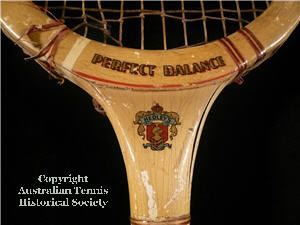
The earliest tennis racquet example we have found is the wood handled “Club Special” and their “Perfect Balance” sub brand extended over a variety of models. Later models of the “Club Special” were also produced.
In some literature Hedley’s is proclaimed to be the first racquet maker in Australia. Perhaps Victoria, but not Australia. While we have had boutique makers from the 1890’s certainly L.W.Dodge in Sydney had a team of UK trained workers on the factory floor in October 1921.
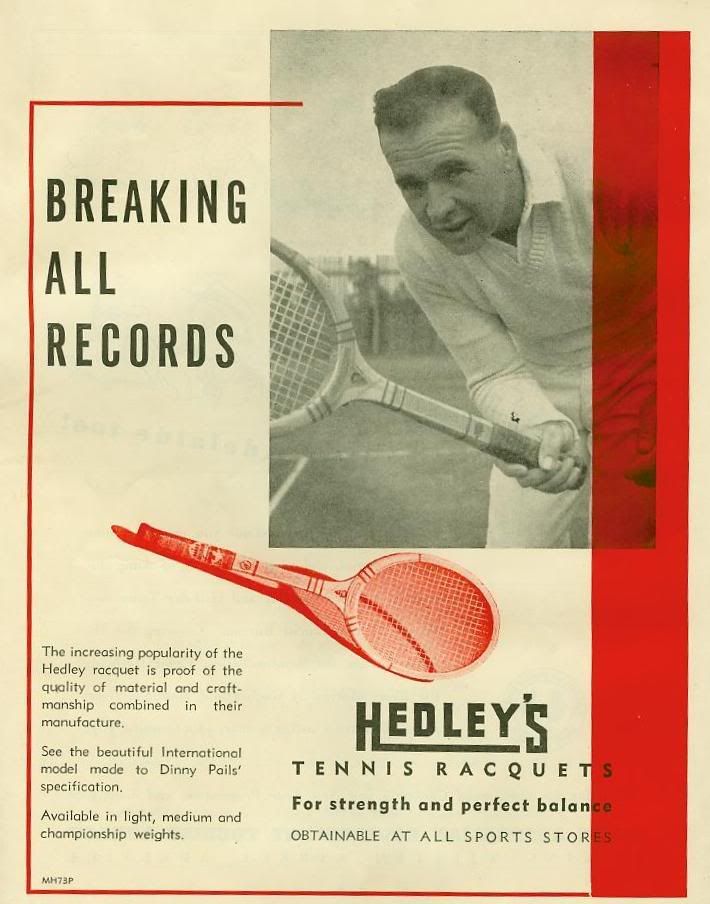
While many of the major companies had a variety of players endorsing product, we have found two examples only from Hedley one in the late 1920’s with Pat O’Hara Wood and the other in the early 1950’s with Dinny Pails picture/signature racquet. Both Pat and Dinny, played Davis Cup for Australia in the 1920’s and late 1940’s.
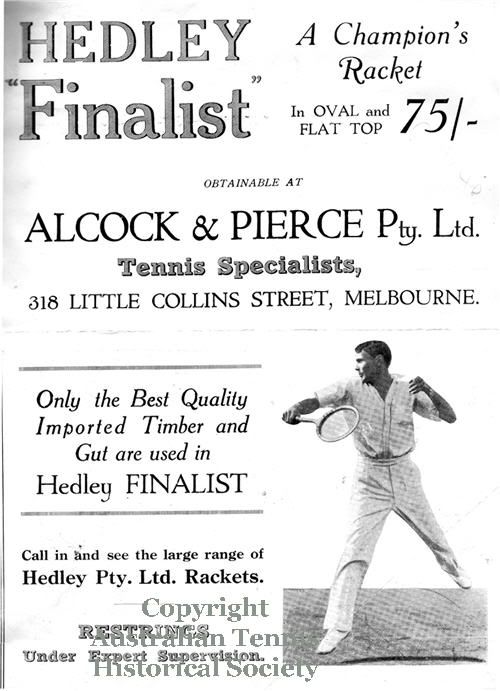
In 1931 we sourced a magazine ad showing a Finalist model featuring a full paint job and leather grip which was the start of an amazing period when Australian makers re defined the graphics of tennis racquets for consumer appeal and which led to thriving export businesses.
Hedley is also attributed to marketing the Krak-Shot range launched in around 1933 by, once again Robert Hedley and John Nelthorpe from Hedley Nelthorpe. This is likely given the similar appearances of the product.
In 1946, Hedley and Swift Tennis Ball Company Director Mr J.G.O’Shannessy announced the formation of Commercial Importers and Exporters Pty Ltd to market sporting goods, amongst other general items, to USA, India, China and the Middle East. Consequently, some Hedley racquets do appear from time to time on Ebay USA.
In 1951 Associated Leathers acquired the shares in Hedley which seems to have operated for another 7-8 years. The Tasker brothers seem to have left the business and formed Tasker to continue the tradition.
Robert Hedley became the sales manager and then Australasian Manager for the Dunlop Sports division from mid 1930’s to late 1950’s so he was working against the brand which adorned his name for well over 35 years.
Enjoy !!!!
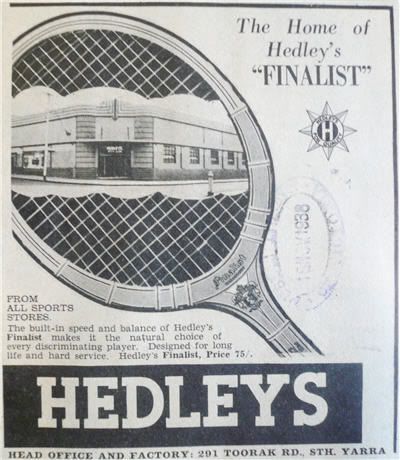
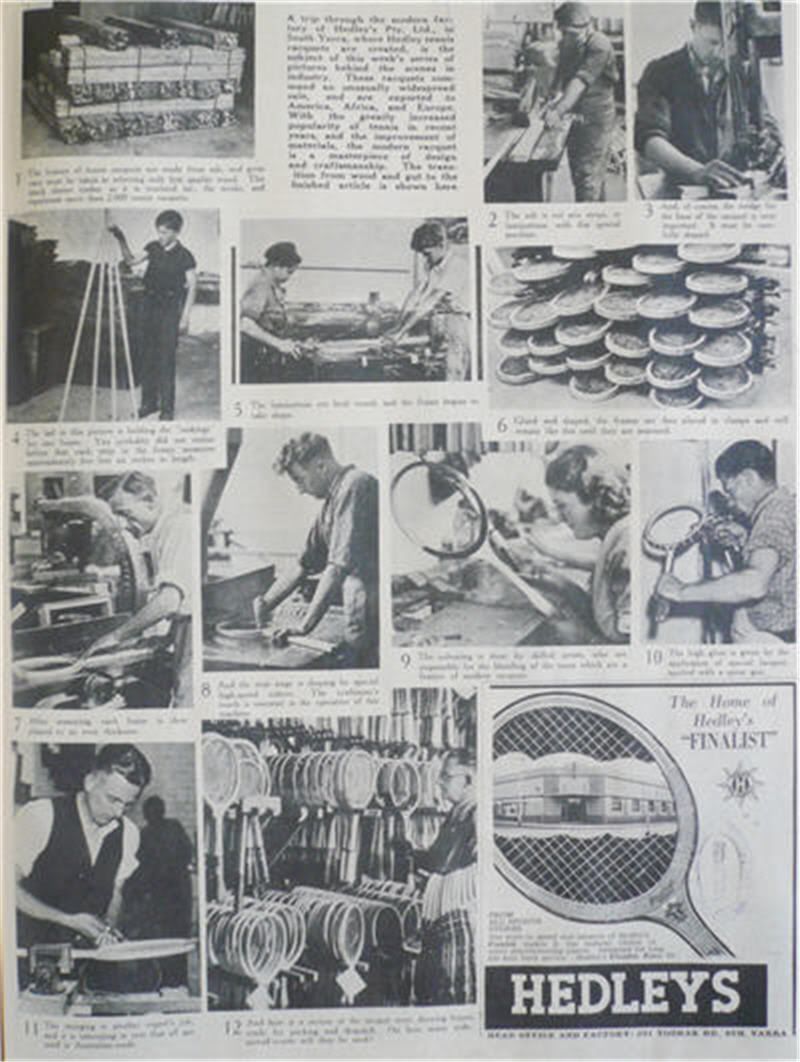
November 1938 from a full page industry review (see below)
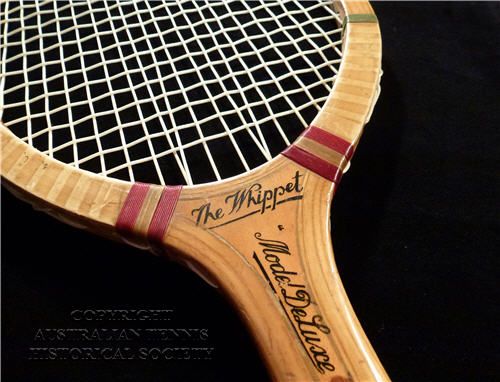
Stunning mid 1920’s racquet with exceptional wrapping. No additional information about this model has been located to date.
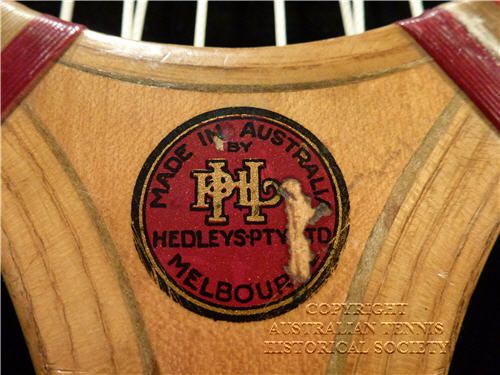
The logo on the Whippet model would seem to have been a later design compared to the Special Club below which is simply stylised text.
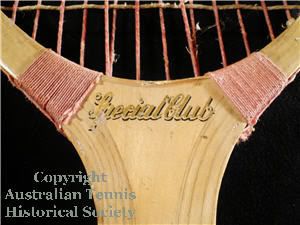
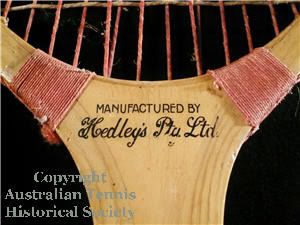
Very early Special Club with grooved wood handle c late 1920’s early 1930’s.
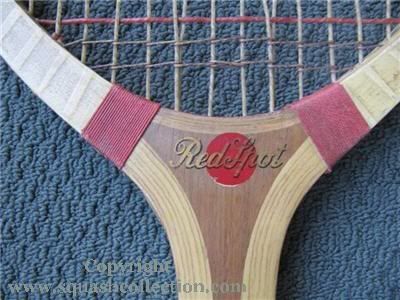
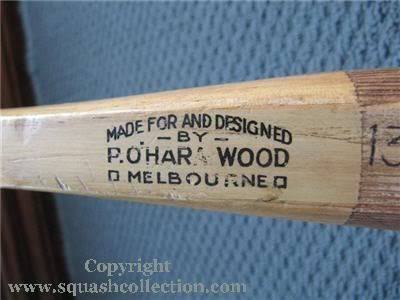
This excellent example of a Hedley Red Spot from the same era as the ‘Special Club’ has
the mention of being designed for Pat O’Hara Wood a very famous Australian player of Davis
Cup and numerous overseas tournaments.
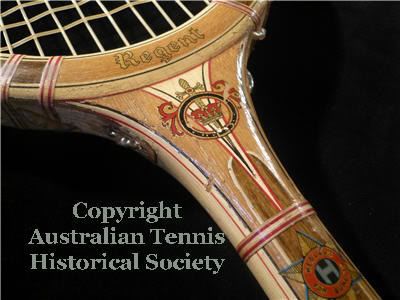
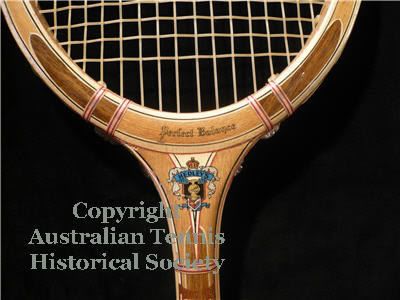
A very nice example of the Regent Model with Perfect Balance was a decal on the reverse.
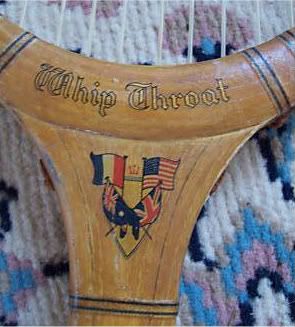
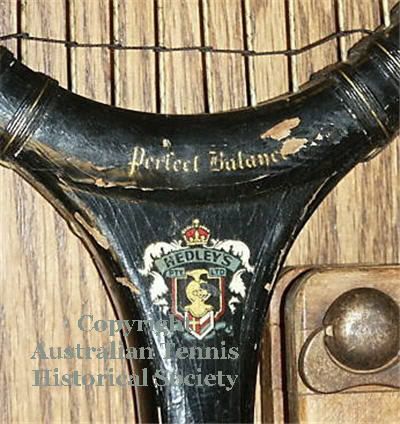
Perfect Balance was a decal on the reverse. The Black Lance also displays “Perfect Balance”
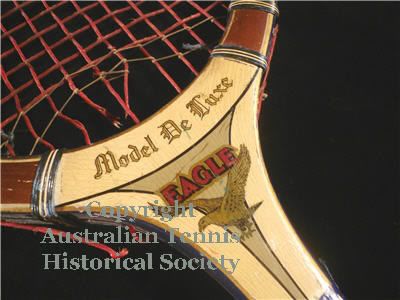
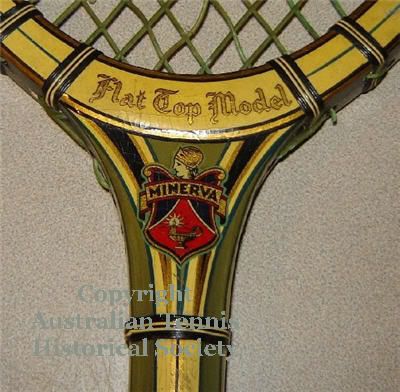
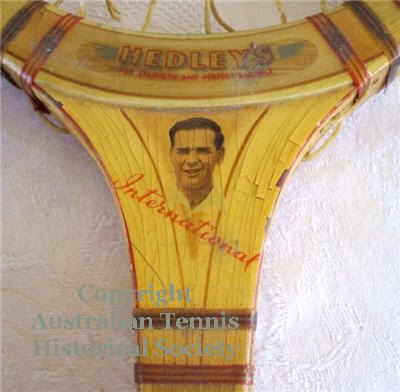
Really nice flat top Minerva with diagonal stringing found in the US and Australian Dinny Pails.
This is one of the few Australian made racquets with an Australian player from the late 1940’s.
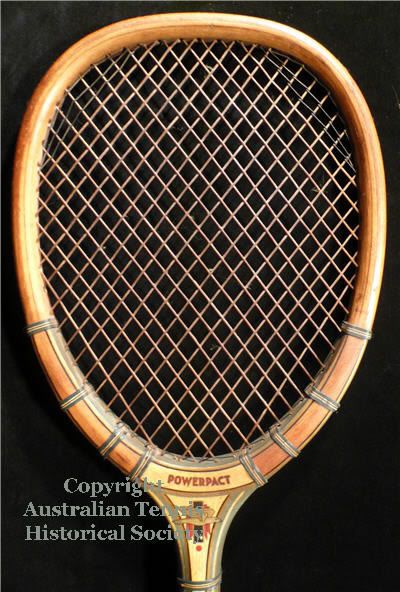
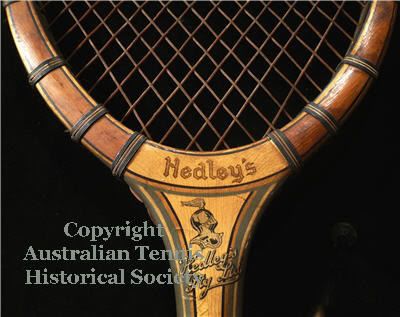
This Hedley Powerpact is a wonderful example of diamond stringing. (pics both sides)
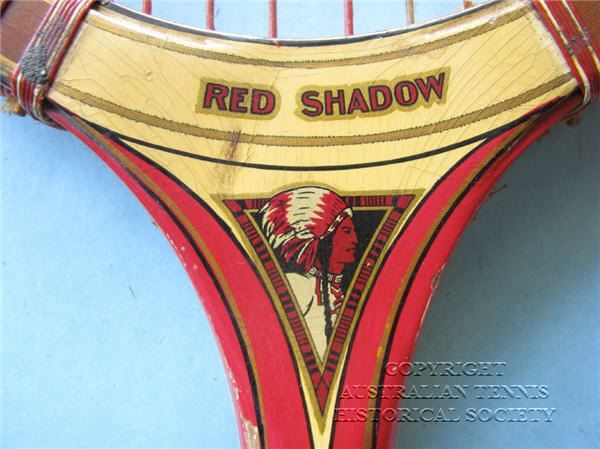
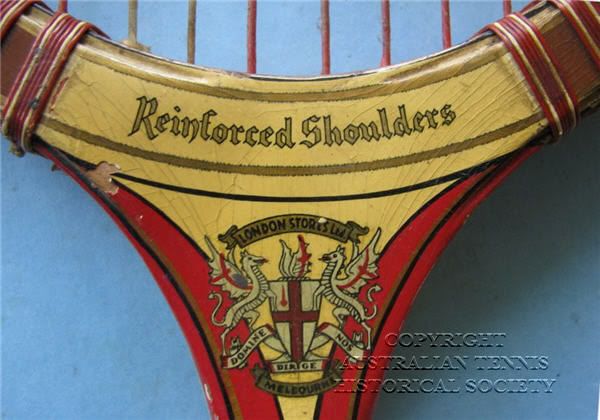
Hedley’s Red Shadow model was made exclusively for London Stores (pics both sides)
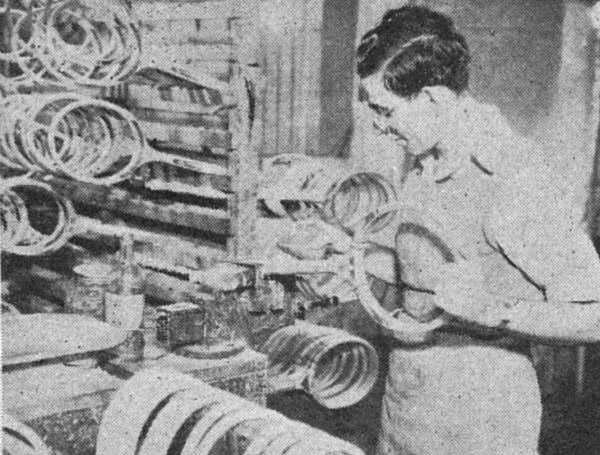
From the weekend magazine of the Argus November 19th 1938 Comes this great article on making racquets with photos from the Hedley factory.
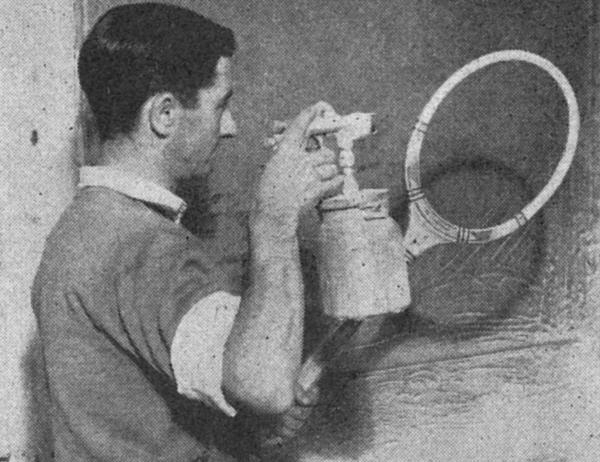
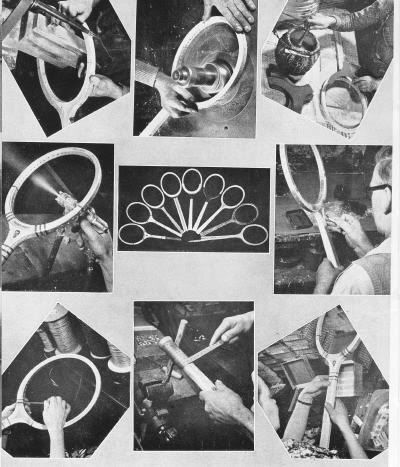
And this shot from Dinny Pails’ book Set Points (1952) shows the factory making his photo decal racquet.
The amount of hand labour and skill involved was significant.
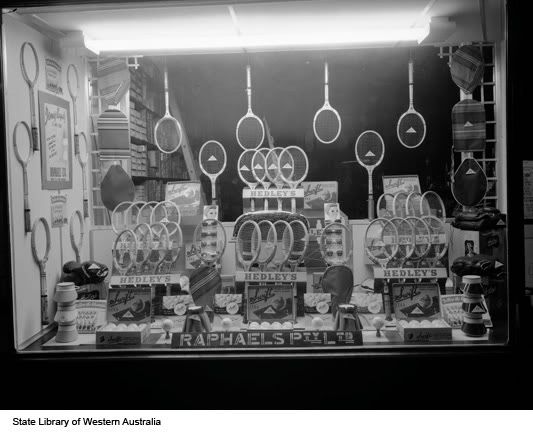
A retail photo of a Hedley display
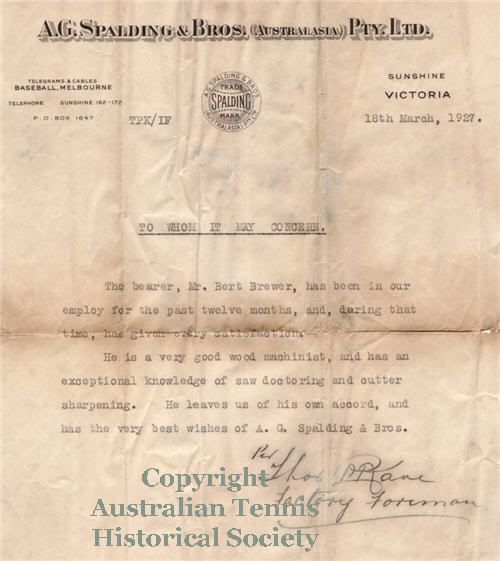
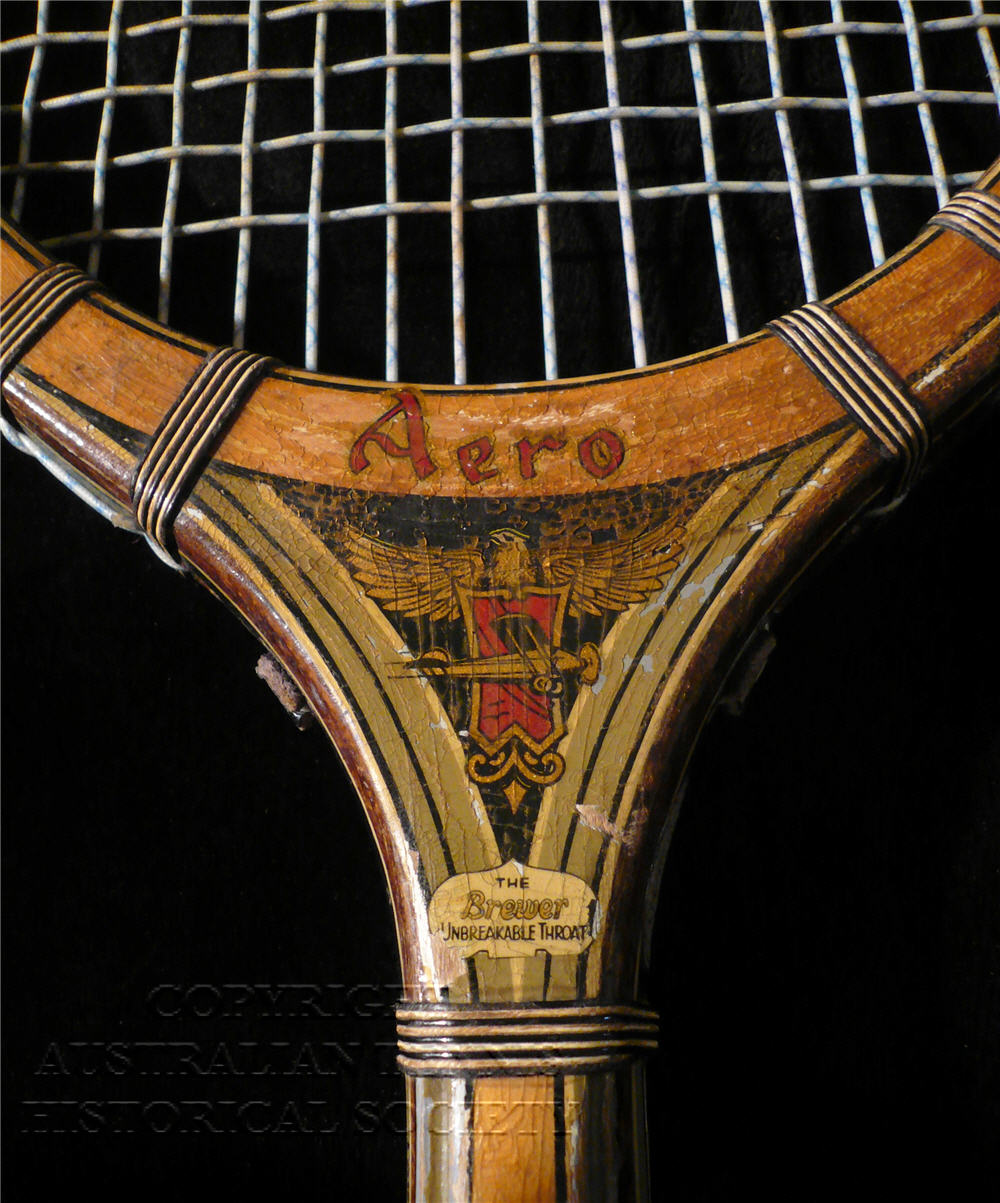
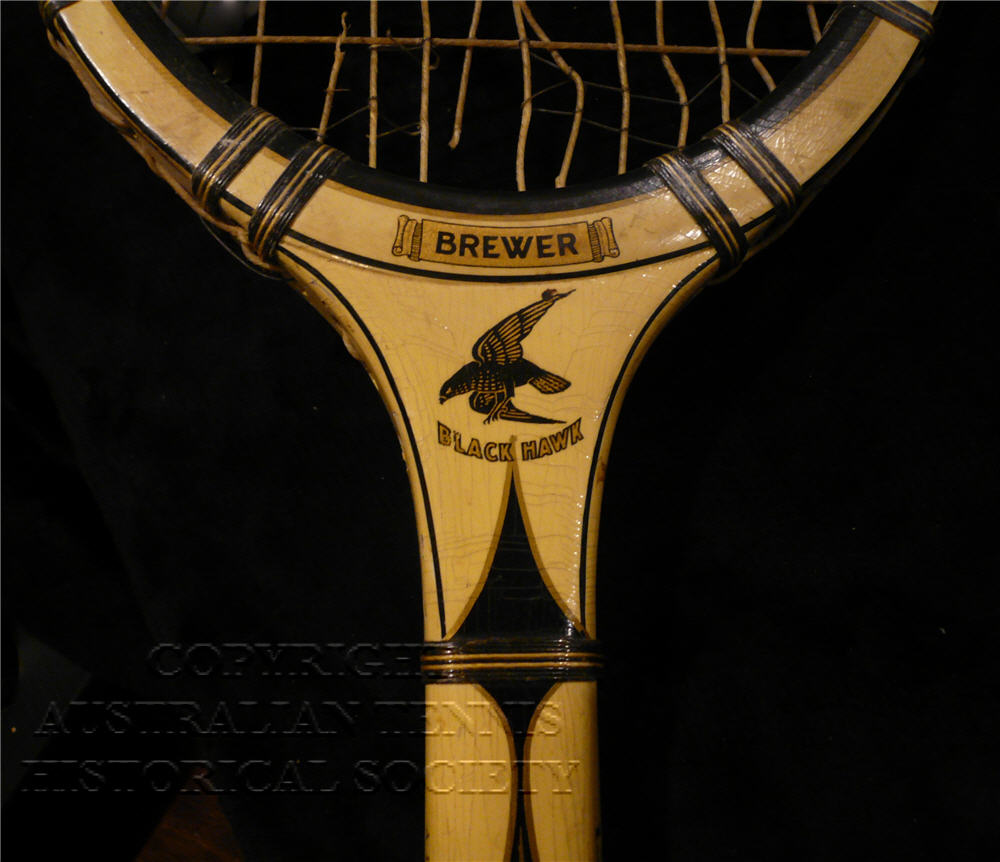
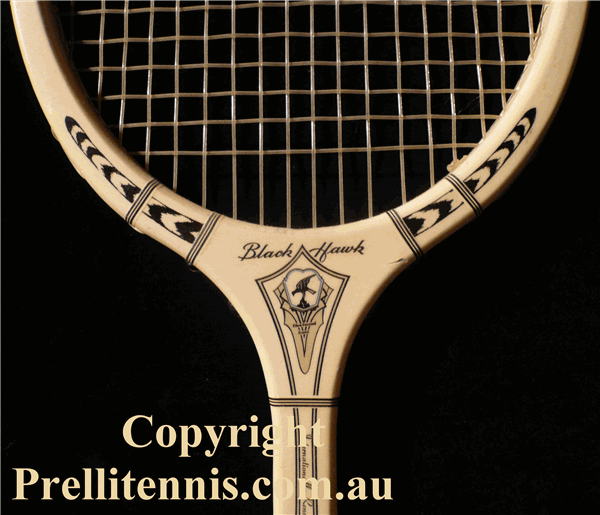
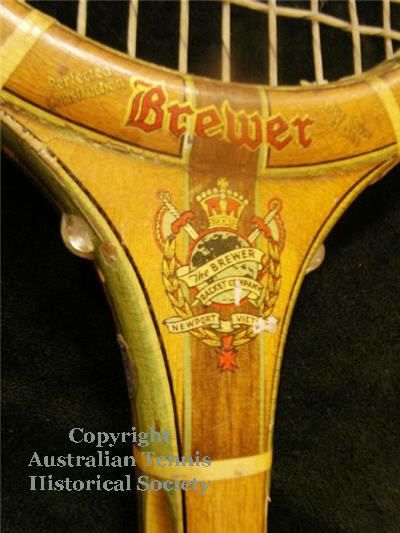
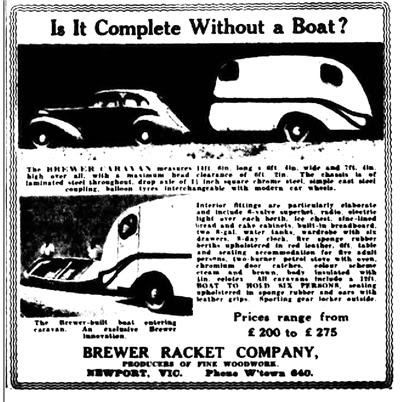
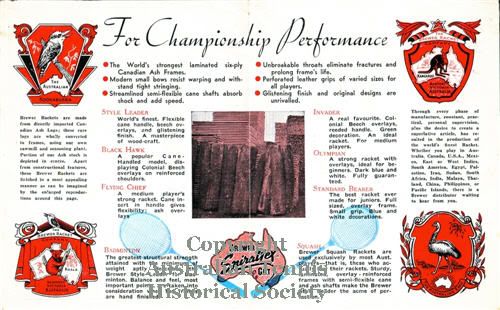
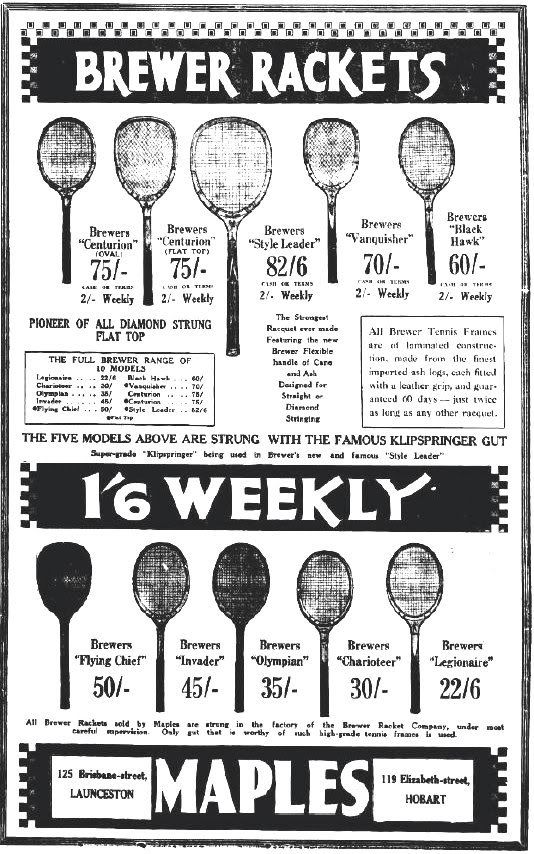 While the export market did well the home market was much more difficult as all other manufacturers formed a cartel (completely legal in those days, before the Trade Practices Act) and prices were fixed. This was completely contrary to Albert Brewer’s principles and he refused to sign the agreement. Hence, the Brewer range of racquets were banned from sale in all stores that made up the Combined Sporting Goods Association. Read more about this under the retailing racquets section.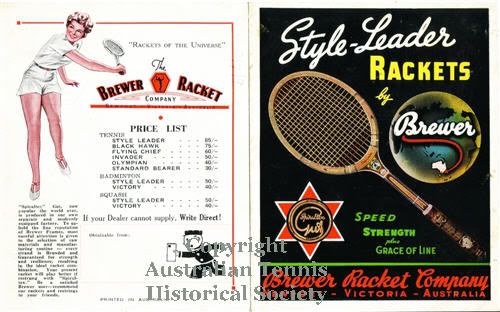
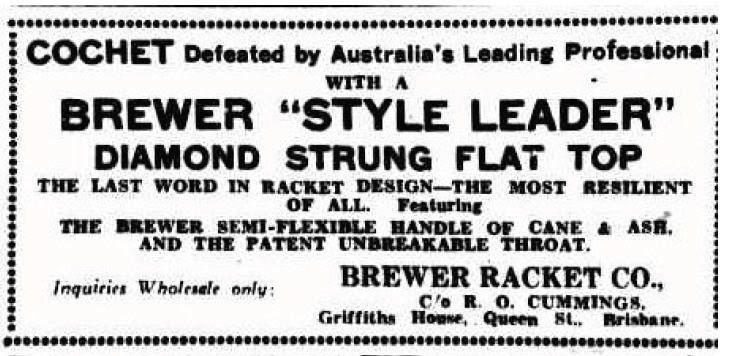 Not quite the sporting gesture, promoting off a players defeat!
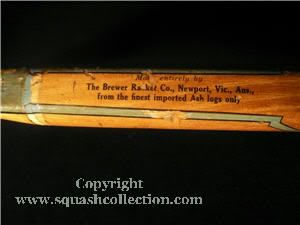
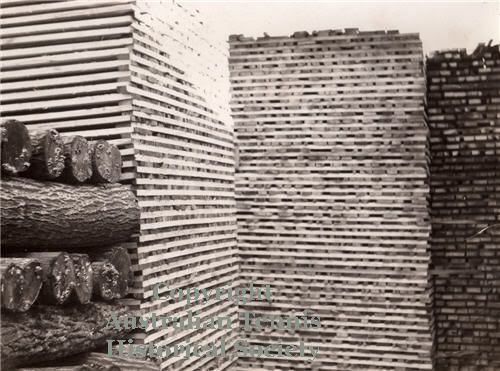 After the war the factory gradually returned to manufacturing racquets. The process involved a great deal of hand labour and most of the machinery was made on site. The Brewer racquet was the only Australian racquet which began with the original Canadian Ash logs arriving at the factory, then sawn into planks, then sawn into laminations. You can see from marketing material and on the racquets themselves that the ‘made from logs’ point of difference was used as a selling feature. Manufacturing racquets involves many individual procedures one of these, the spraying of lacquer to finish the racquet, was a highly flammable job and twice in the history of the business it was the cause of devastating fires which burnt the factory down. Both times there was no insurance coverage, and Albert Brewer had to start again – and both times without the help of a bank loan. But as a testament to his independence the factory always started again. He rebuilt the factories on a hectare of land in Mitcham and the last racquets were made in 1970. However, by this stage the frames were made by Kawasaki in Japan and were finished in Mitcham. Albert Brewer died after a long illness in 1975, and because of no legal/accounting tax minimization in place, the plant and the factories had to be sold to with the large proportion of the proceeds being taken by the government in the form of death duty (abolished in 1976). The family business continues in the name of Alcock and Pierce, owned by Robert Brewer and Elmae Brewer, the son and daughter of Albert Brewer, and is managed by Tim Brewer, Albert’s grandson. A special thanks to Robert and family for the story and shots used here.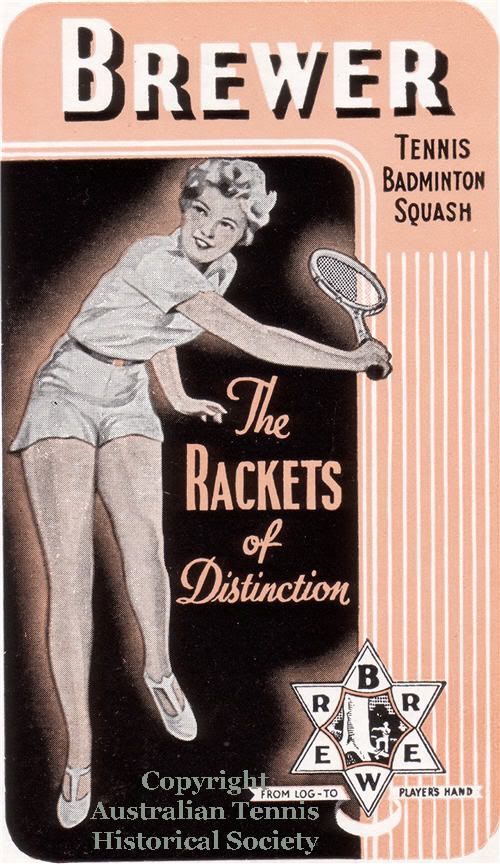
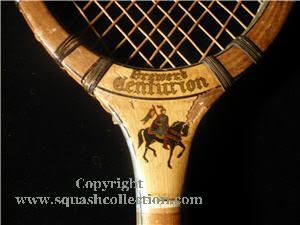
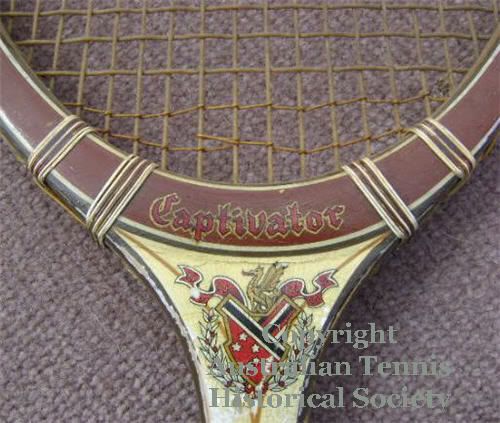
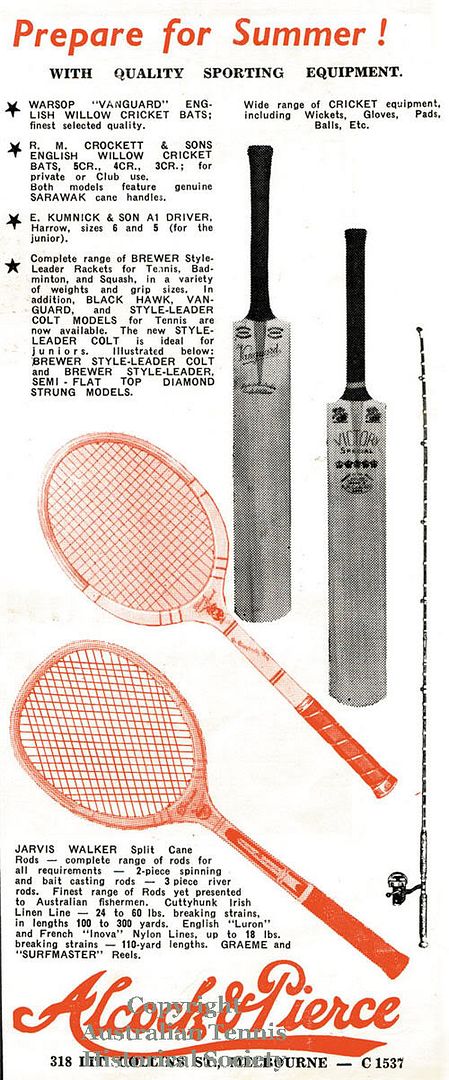
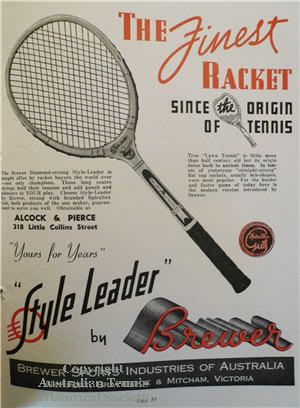
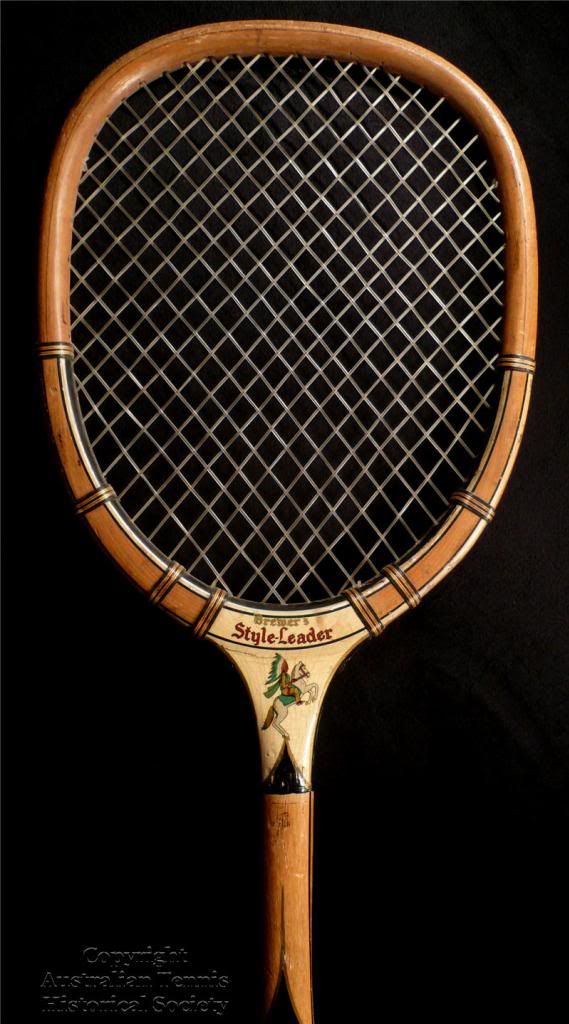 The Style Leader Diamond Strung model was mentioned as being the most expensive racquet on the Australian market in 1936 at 82/6