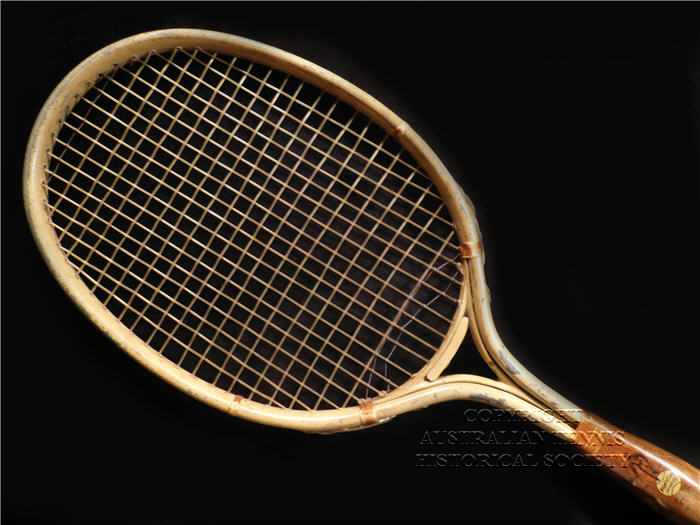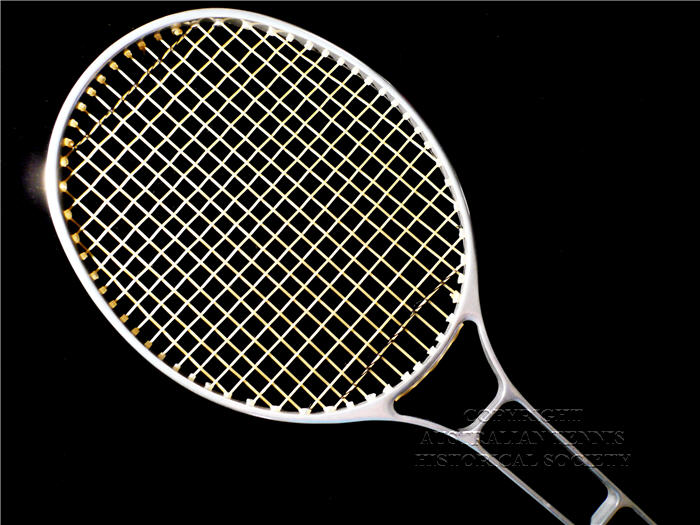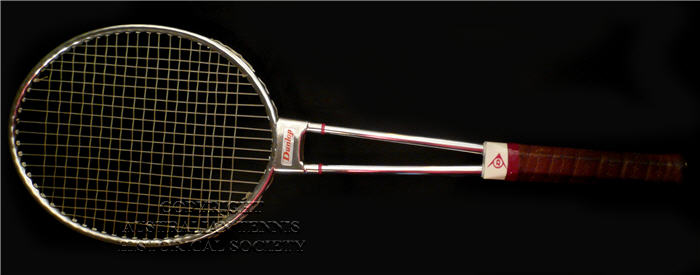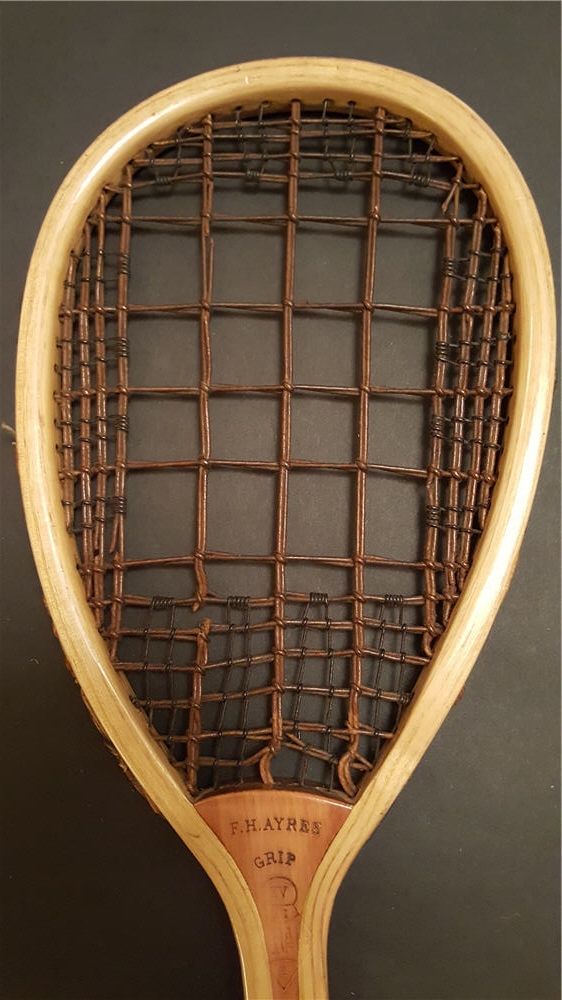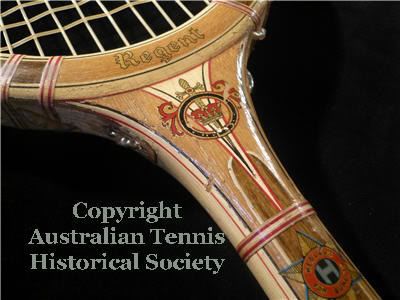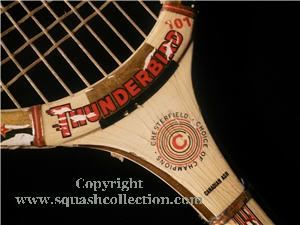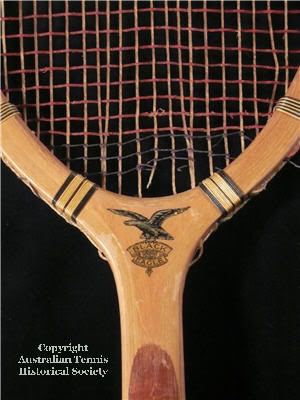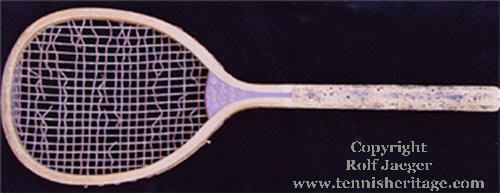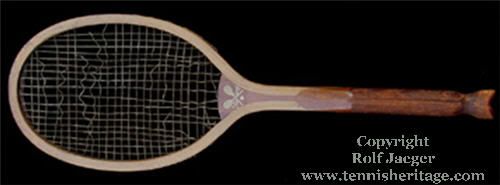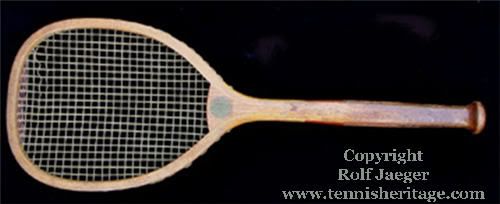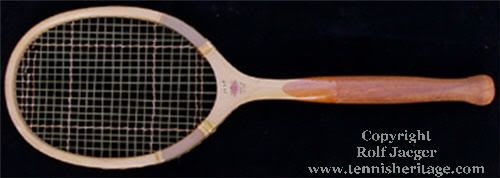
Unusual Vintage Tennis Racquets 3


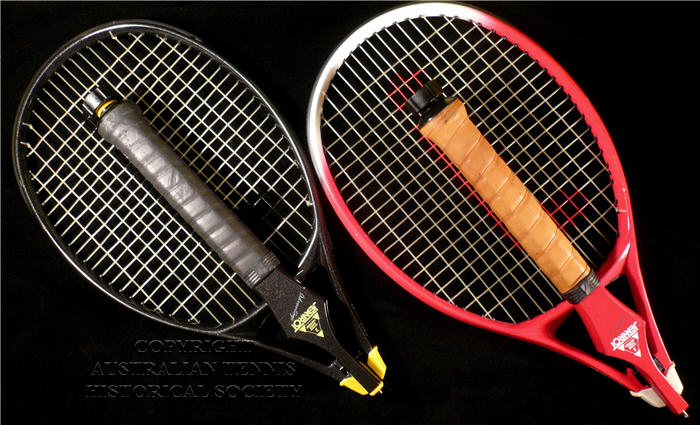
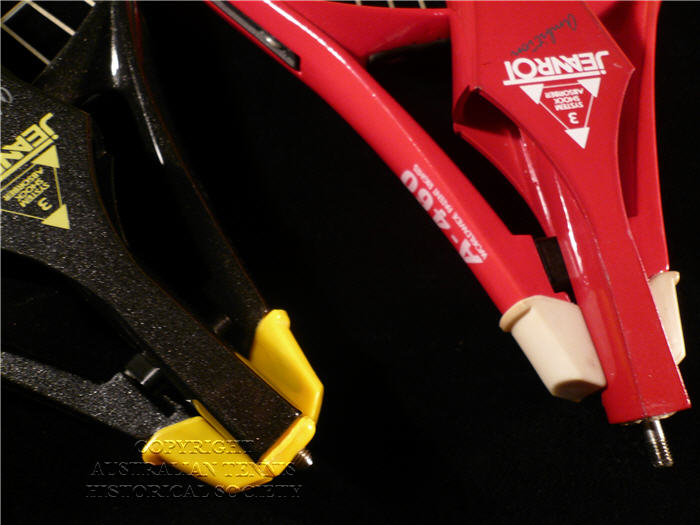
 The Jeanrot Foldable  Racquet c 1985

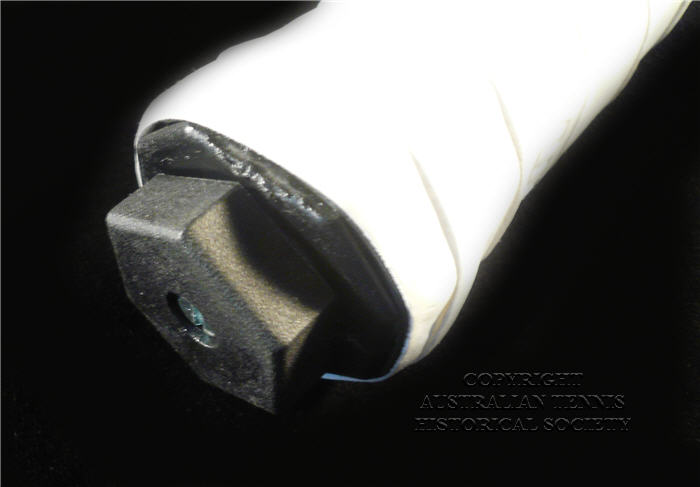
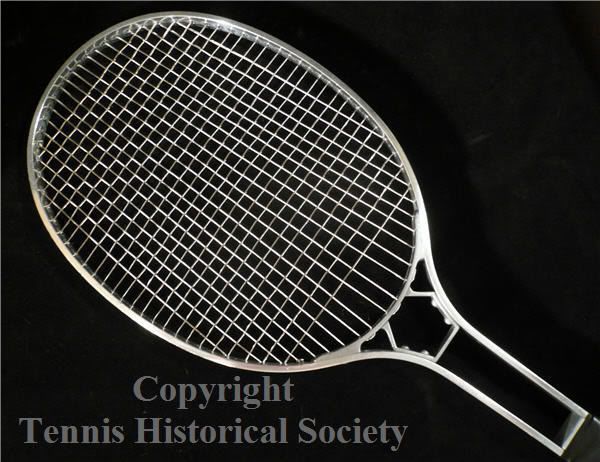
A butt cap unwind system untightens the screw section in the throat allowing the racquet to pivot apart.

In 2007 a reincarnation emerged called the JENRO which came apart completely for compact packing.
This is shown in the Modern Unusual section.
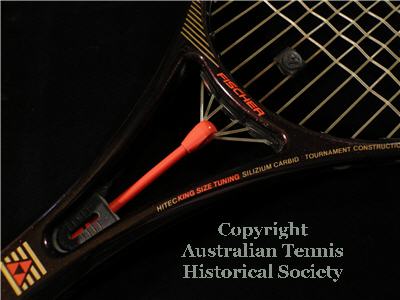
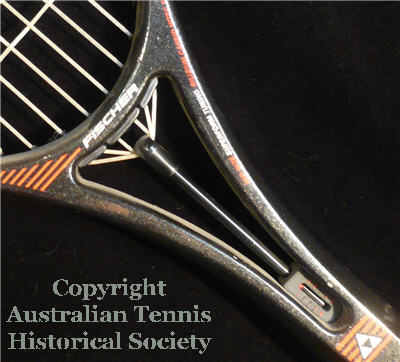


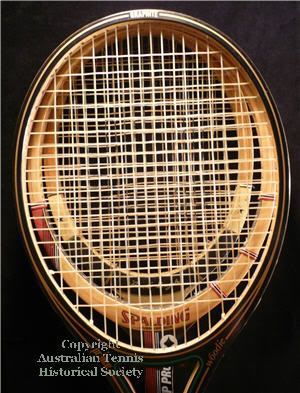
Fischer Superform Tuning c1985

Just like the 1928 Craven racquet above, the rod like device is tightened from the handle and the string tension is adjusted.

The red/deep purple version is the rarer of the two.
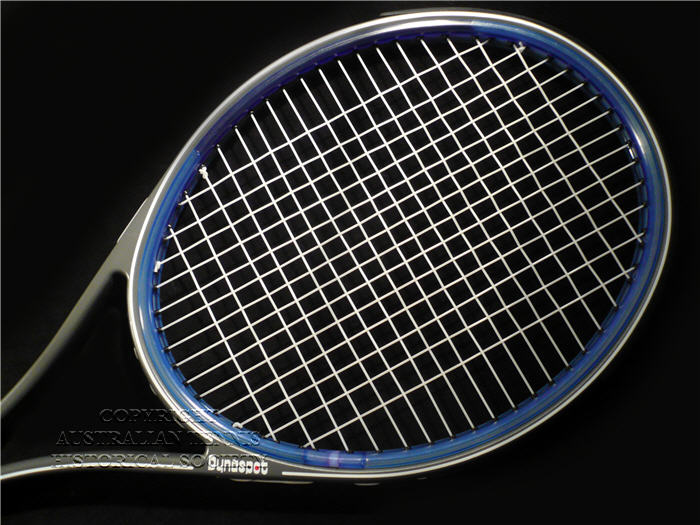
 

Dynaspot (USA)

c mid 1990’s

Fluid filled tube adjusts weight in the racquet head to counter offset hitting and vibration.

Banned under ITF rules.
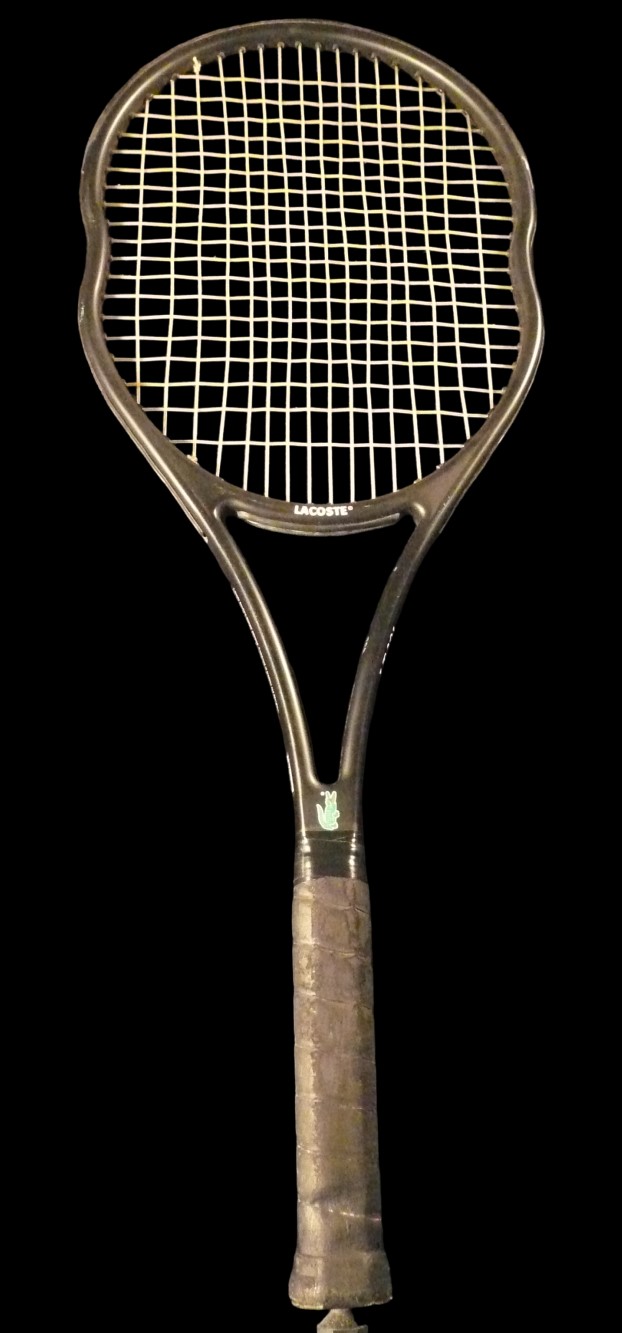
 Lacoste Equijet mid 80’s

Used by Guy Forget.

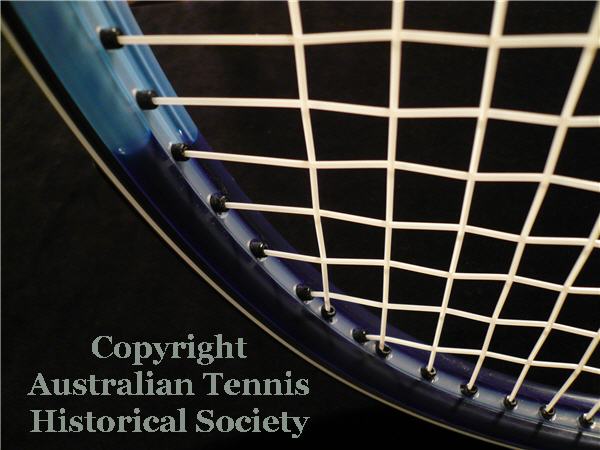
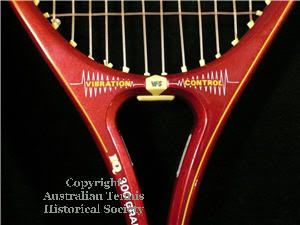
No it isn’t sun damaged! Another interesting Lacoste design which aims to change the sweet spot via altered string tensions. It has a unique Vibration system in the butt cap which carried through to the Wilson T5000 model
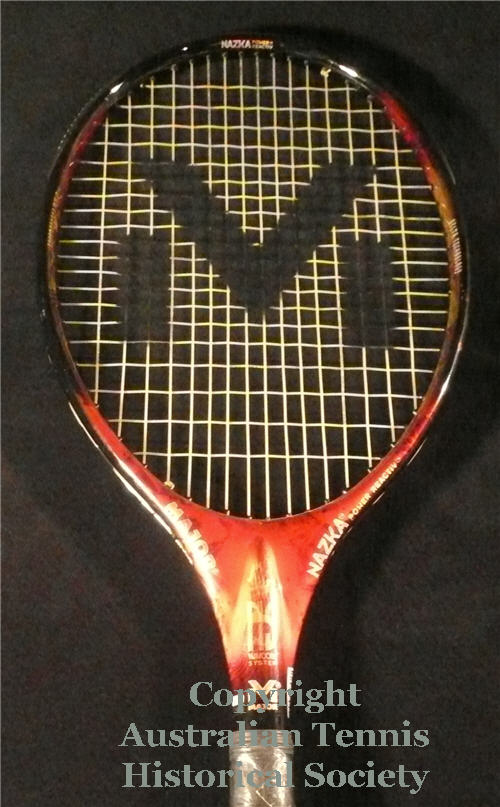
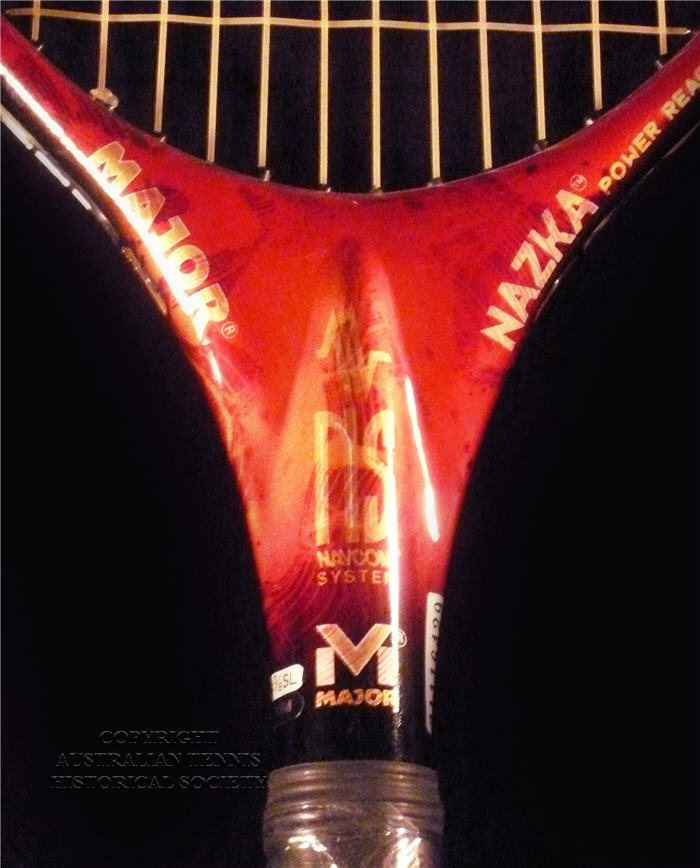
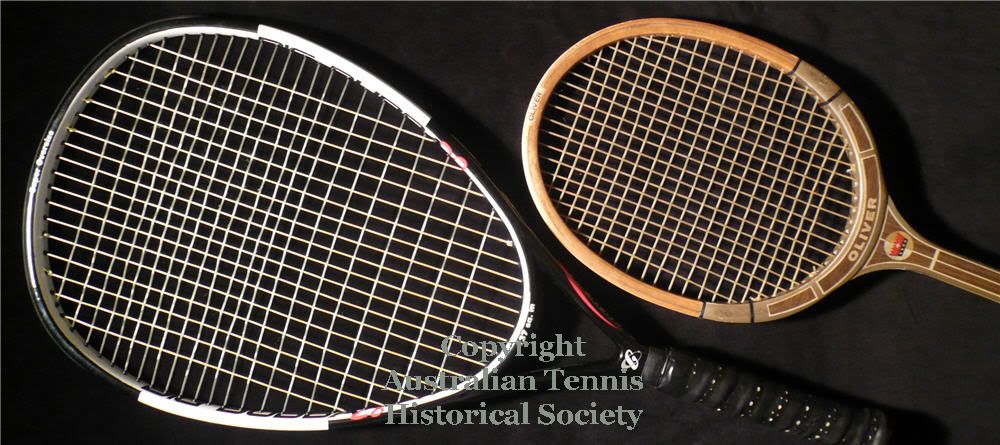
Major Nazka 1990’s

Retro design with vibration dampening system in the middle of the shaft. Graphics and shape are just great
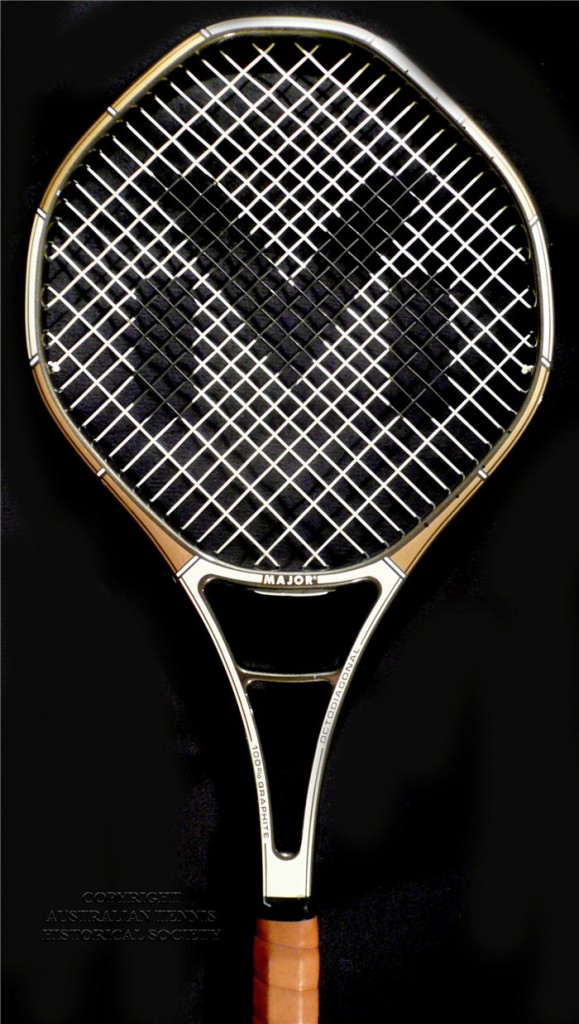
Major Octodiagonal

Terrific shape aka Macgregor Bergelin style.
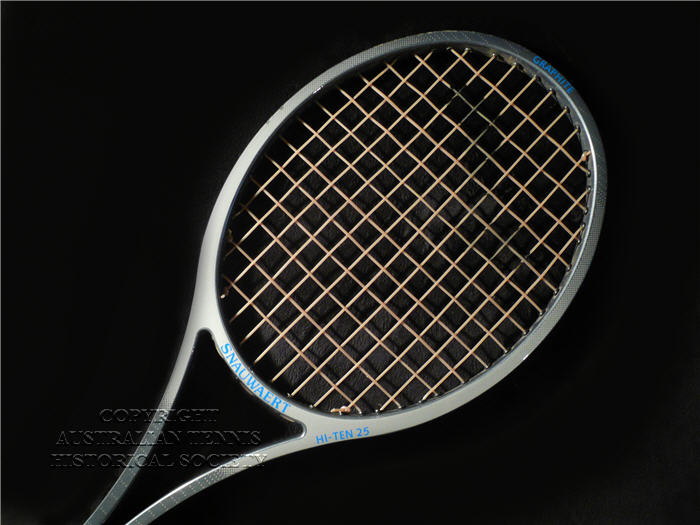
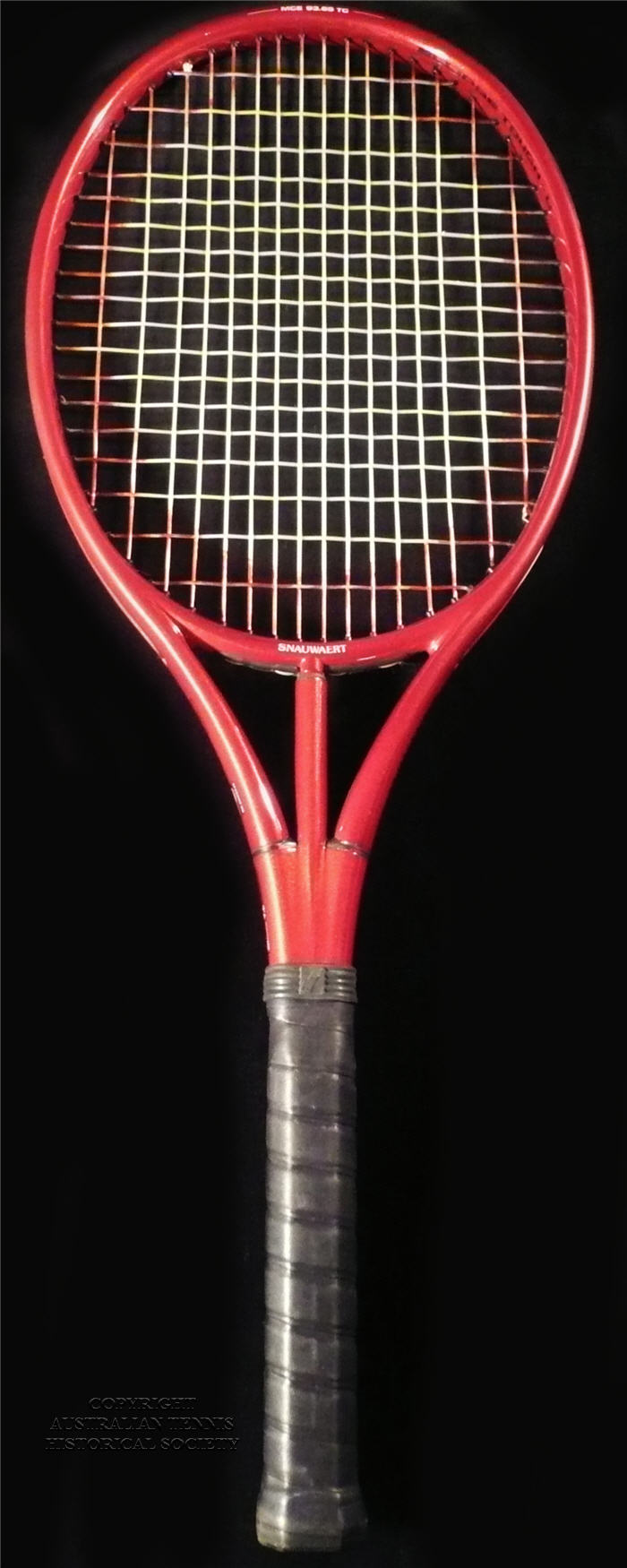
Snauwaert Hi Ten 25 (early 1990’s)

From a 3 range 25,30,50 using open pattern and 1.7mm strings. Designed by Australian player, Barry Phillips-Moore.

This one is a 12 main x 13 crosses. Other models  16 x 12 etc. as the heads get larger.

Mark Woodforde apparently enjoyed these racquets for the huge spin capabilities of the stringing pattern. He went on to use a version of this in a Wilson model. Barry licensed this idea to Josan ( a Yonex Distributor connected brand from Sydney)
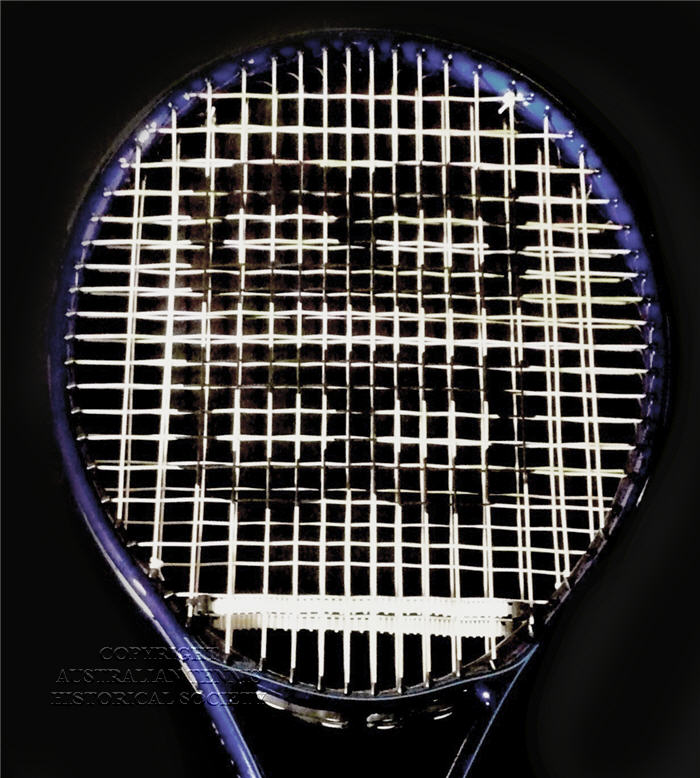
Blackburne Double String Late 1990’s

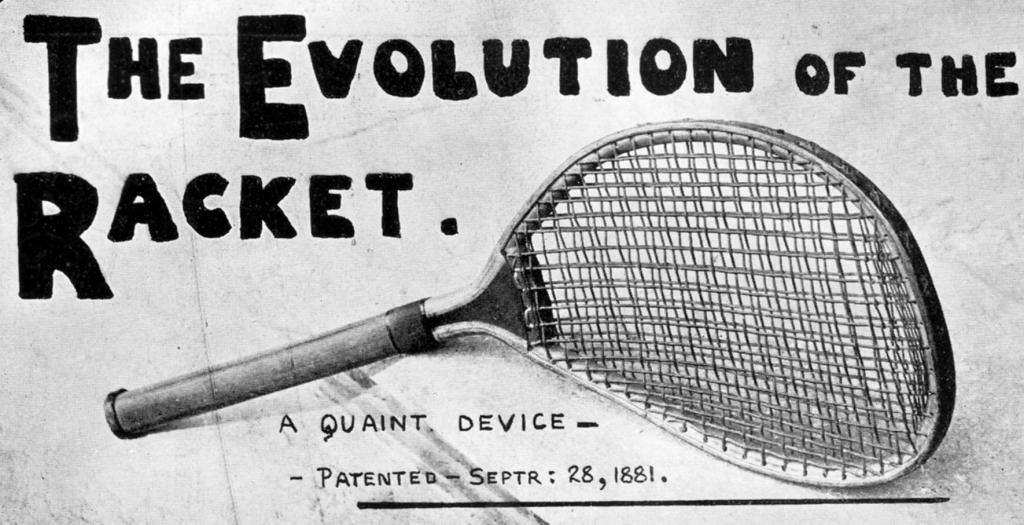
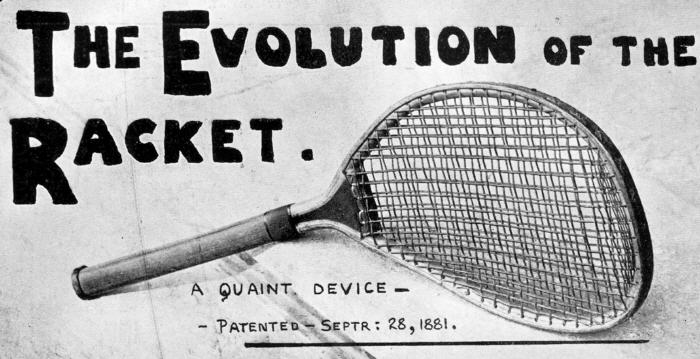
Racquet with two sets of strings about 2mm from the lip of the frame designed to reduce frame hits. The racquet warps when being strung due to the string pressures on one side and then reverts to shape as the second set is fitted.

The earliest evidence if a similar comes from 1881 as printed in the UK Lawn Tennis and Badminton Magazine in 1914.
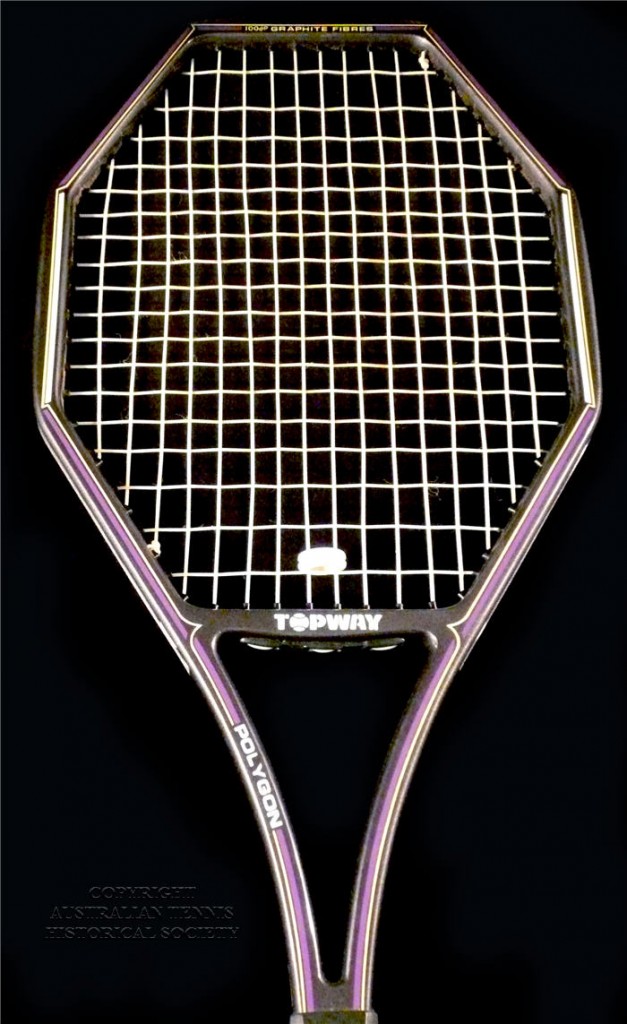
Topway Hexangonal

Very unusual shape made in Taiwan.

Dunlop Japan also marketed this design as their the Polygon model.
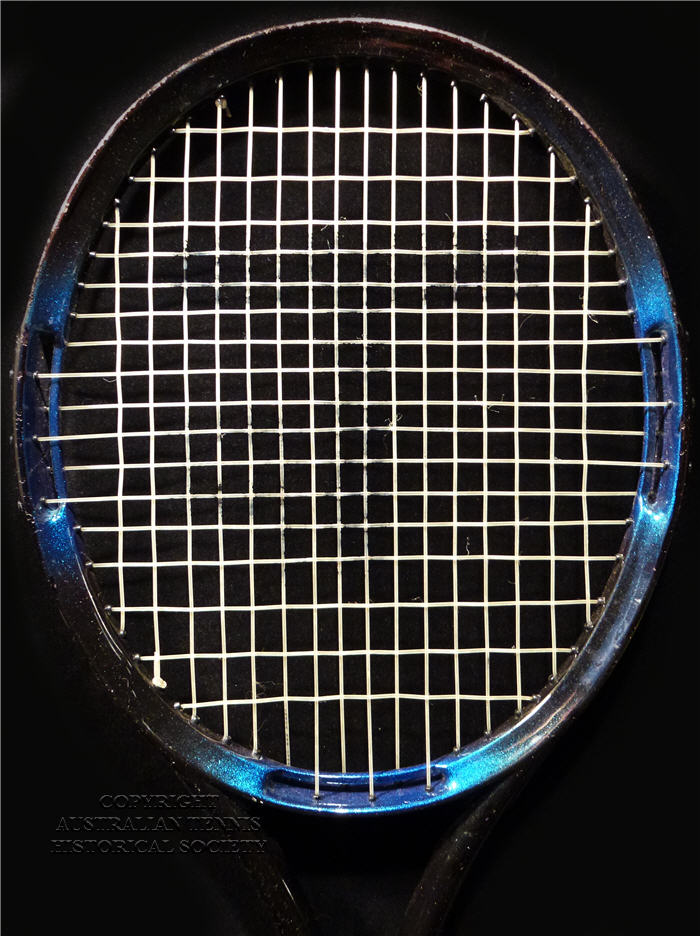
Tour Pro (nothing else known) great frame shape dividing the strings on all four sides.
Similar concept to a Bjorn Borg signature, Black Crystal racquet.
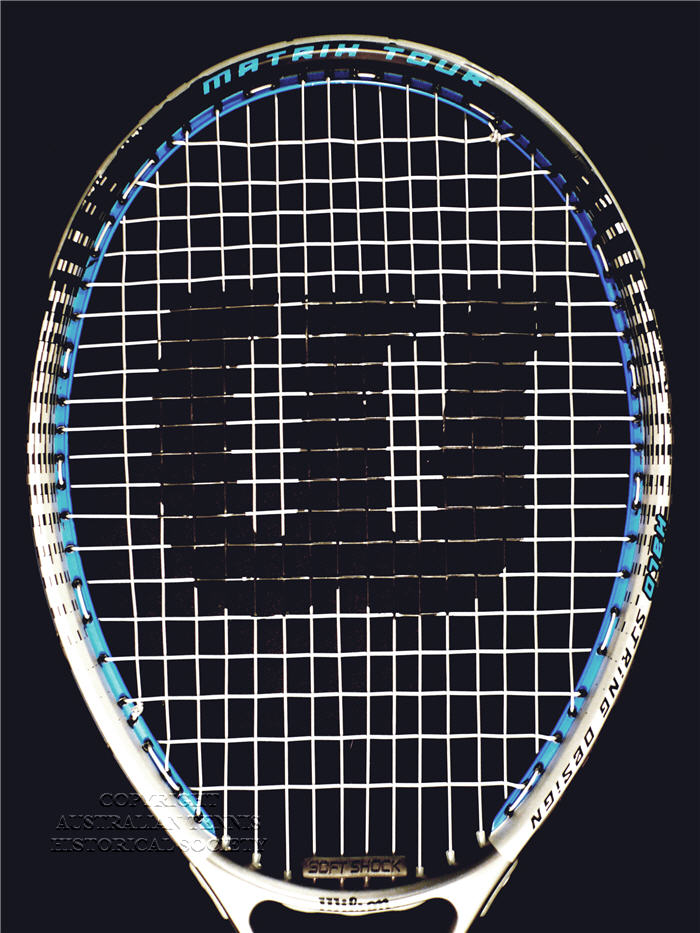
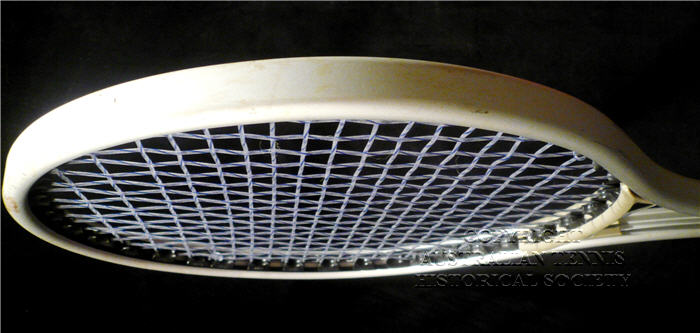
Wilson Matrix internal stringing system along the lines of the Seamco / Seamless model from the mid 1970’s
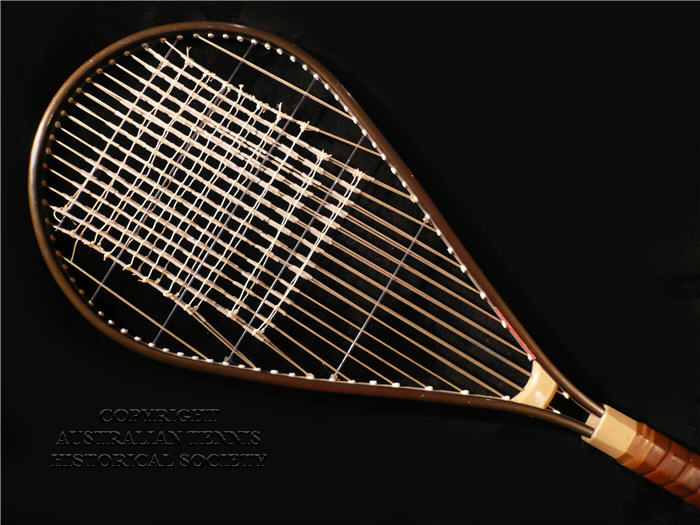
The Kuebler Phillps Moore c 1980 in Germany

Named after South Australian player and journeyman, Barry Phillips Moore.

This sample has been strung using a stringing technique called ‘spaghetti’ stringing.
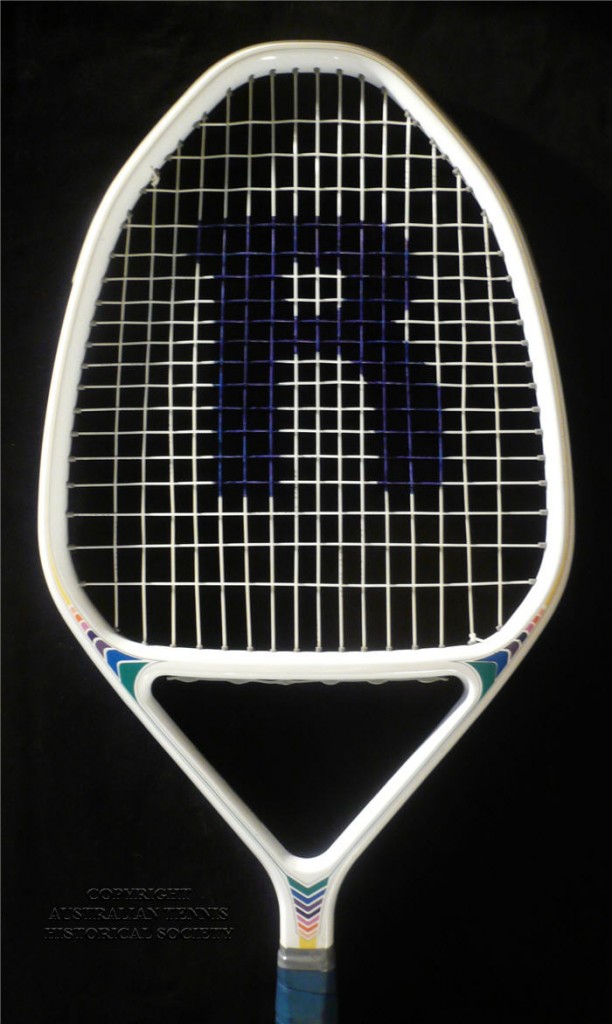
Rival AU 700

Ceramic Composition c1993

The premise behind the shape was that it represented an open hand and was designed to deliver greater feel and control plus bring the sweet spot closer to the bottom of the frame.

There were quite a few models:

AU 100, AU 300MS, AU 400, AU 500 from 1989-1993 and were sold mainly in the USA
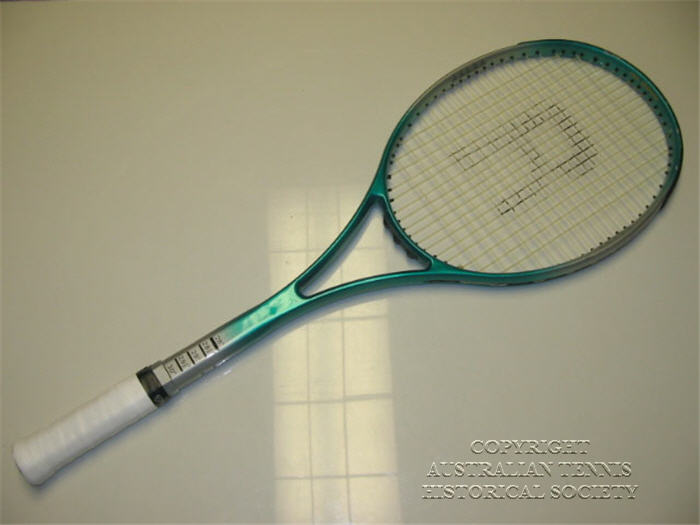
         

Rayco Ruler c 1980’s?

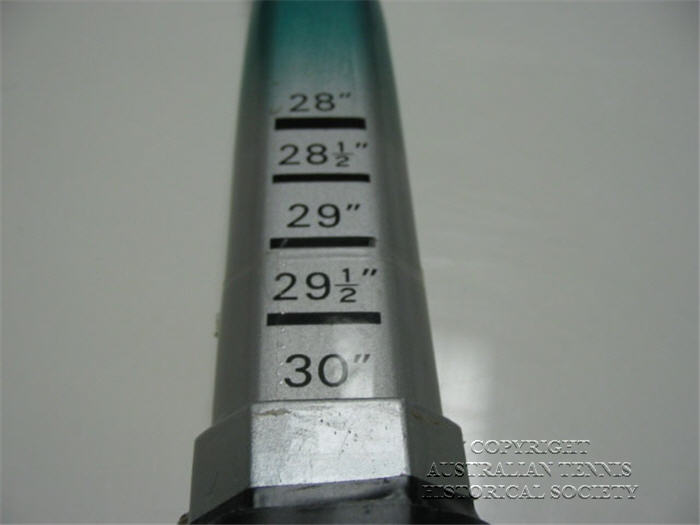
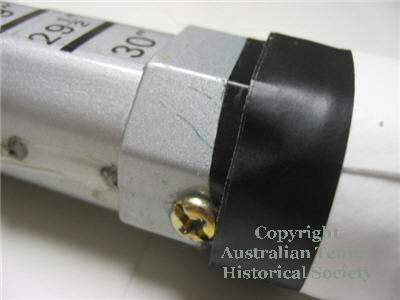
Adjustable racquet length from 28″ to 30″ via an in-handle extension. Just a screwdriver away from extra reach.

Very rare. Not sure how practical or what would happened if the screw broke, net players beware.

Apparently, this was a low cost Kmart style racquet
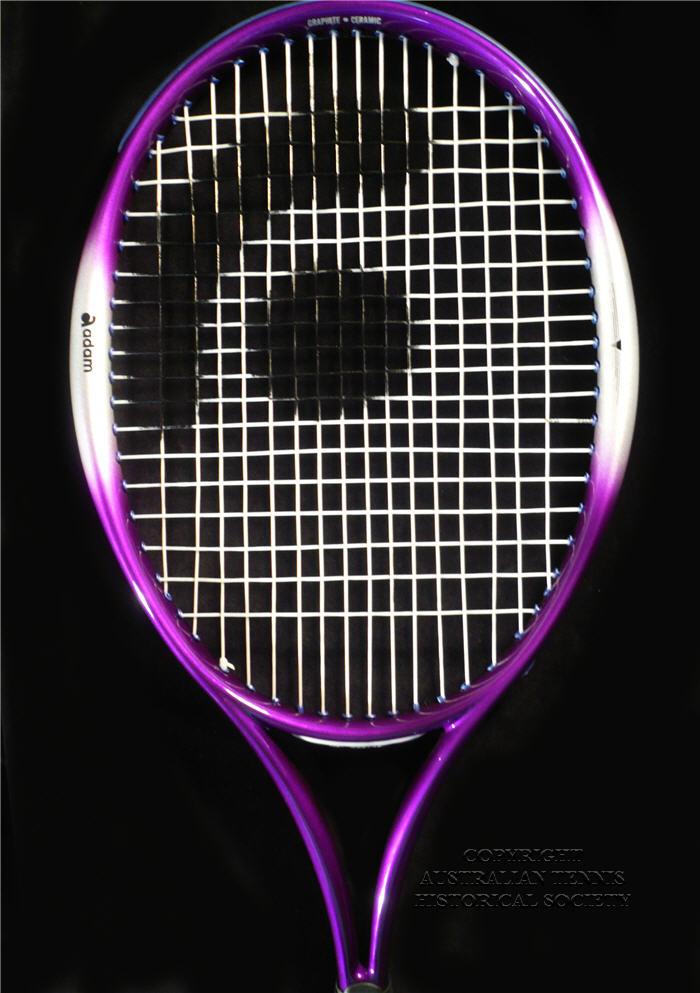
ADAM 4edit

 Adam Pro Turbo adjustable length c1989

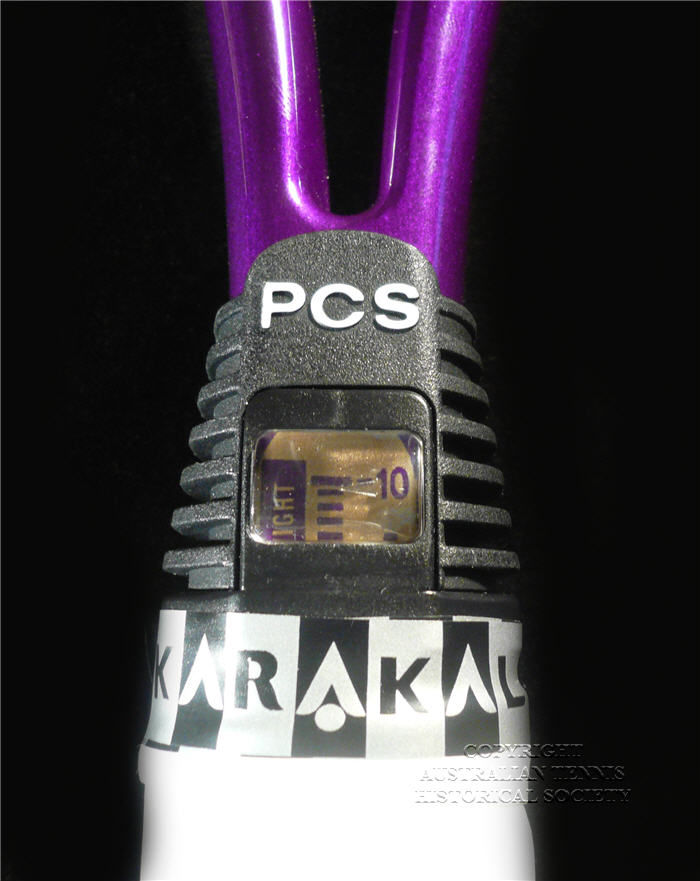
Adam Gunther was the head designer at Volkl before joining Puma where he designed the Boris Becker PCS. After Puma exited the market, Adams created his own modified version of the PCS with a knob winding system.

The knob in the handle turns to change the length of the racquet and therefore swing weight. The two pics left show the variation.

It is a beautifully balanced racquet with an excellent sweet spot. Notice the wider head areas on the sides.
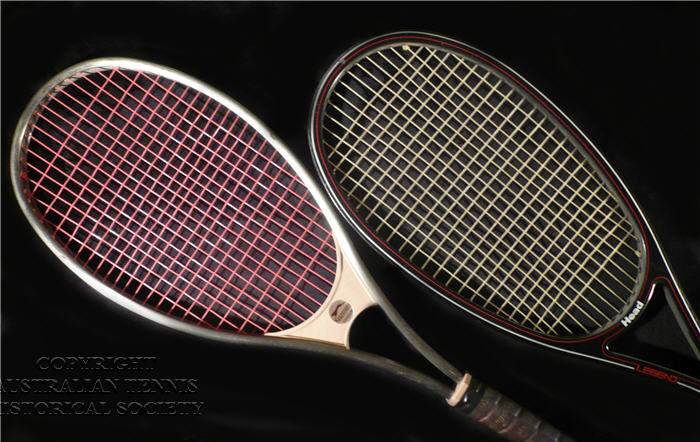
Head Legend c mid 80’s with Slazenger Omega Long head shape models

The elongated head shape really is quite fascinating and totally unique compared with the 65 sq in oval shapes typically seen in the day.

In the 1980’s 1900’s there were also long frame models.
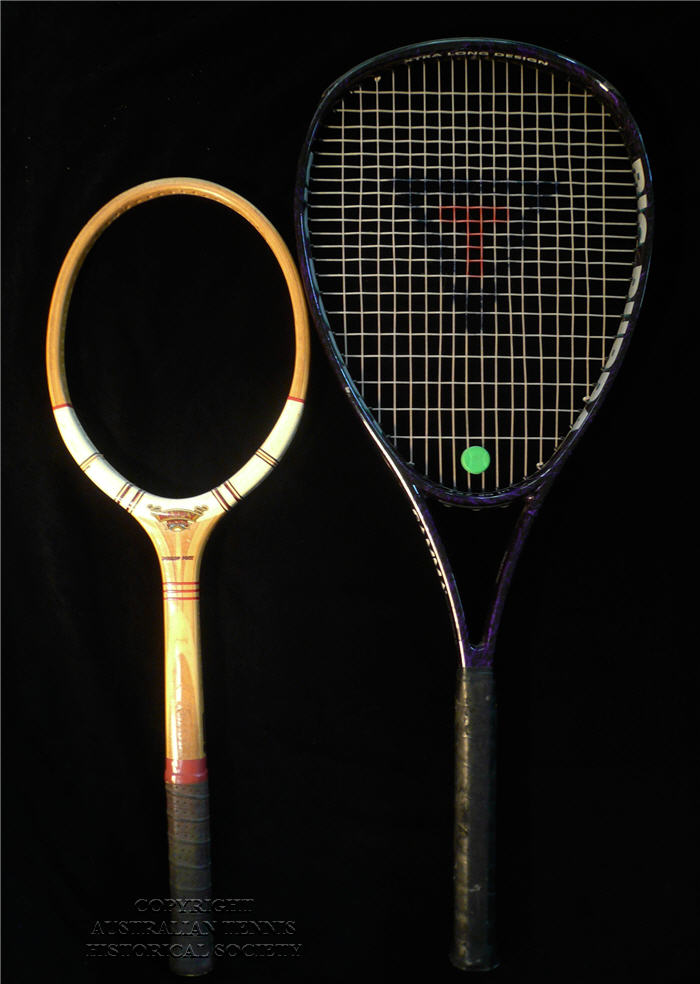
Gamma Big Bubba

32″ tall and 137sq.in head.

An amazing weapon which was banned in 1997 after being approved. Ultimately they simply chopped 4″ off to make it 28″.

Banned because it was thought that the game would end up being all serve and not much else. Our Aussie scud put these to a test against woodies.

Read the story under BLOG ARTICLES and scroll through a few others as well.
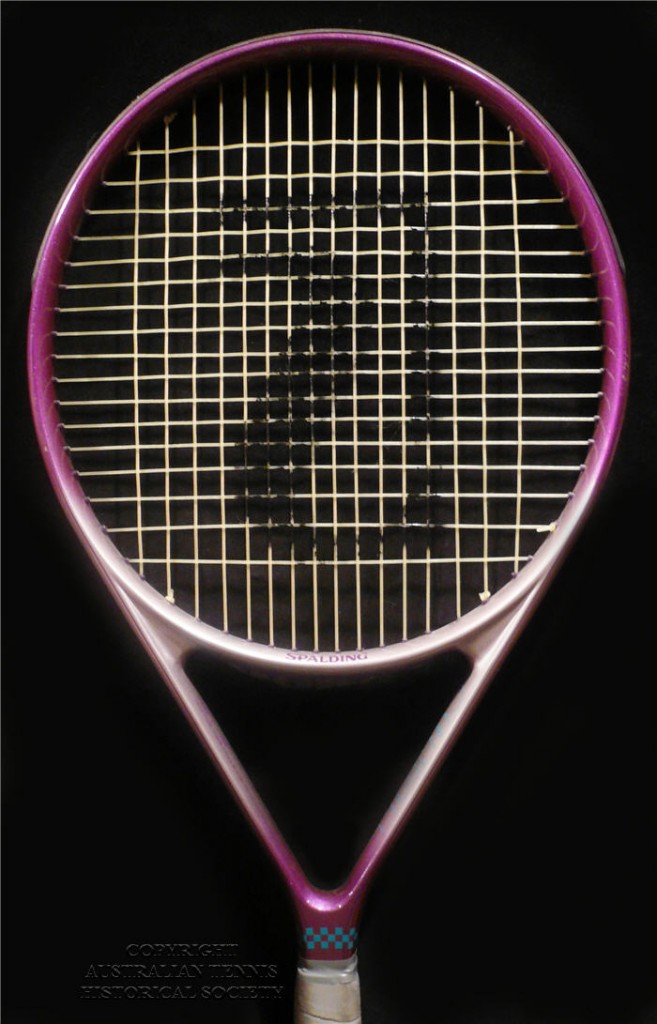
Spalding’s Orbitech was a given a big push in the early 1990’s

This is the XL-105.

Sold in the USA for $190 so an OK mid price racquet for the social players
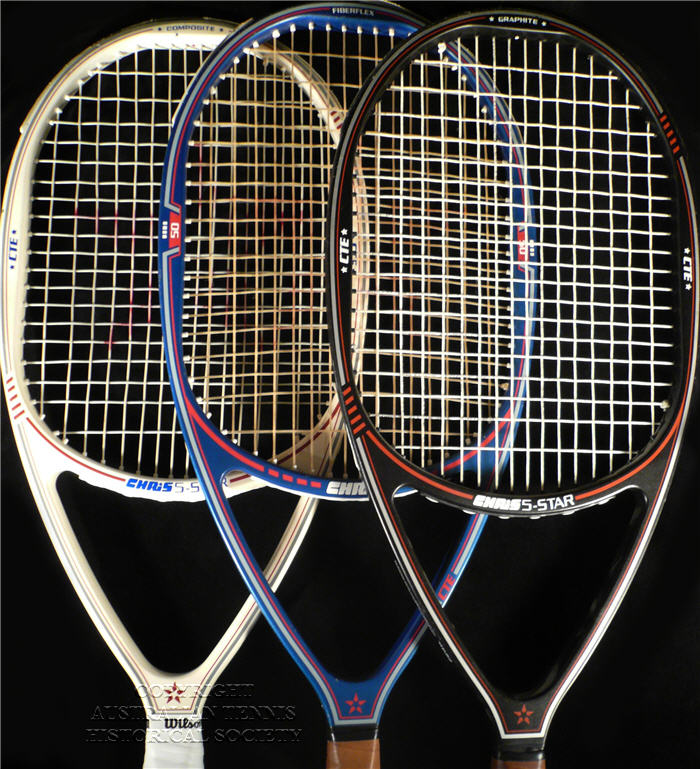
The Chris 5 Star USA mid 1980’s

Another wide bow racquet design.

Grey: Power G model 100% Graphite

White: Competition Composite

Blue: Avenger Fiberflex

Very well balanced and stable due to the wide bow and collectors still really enjoy playing with them even compared to current designs
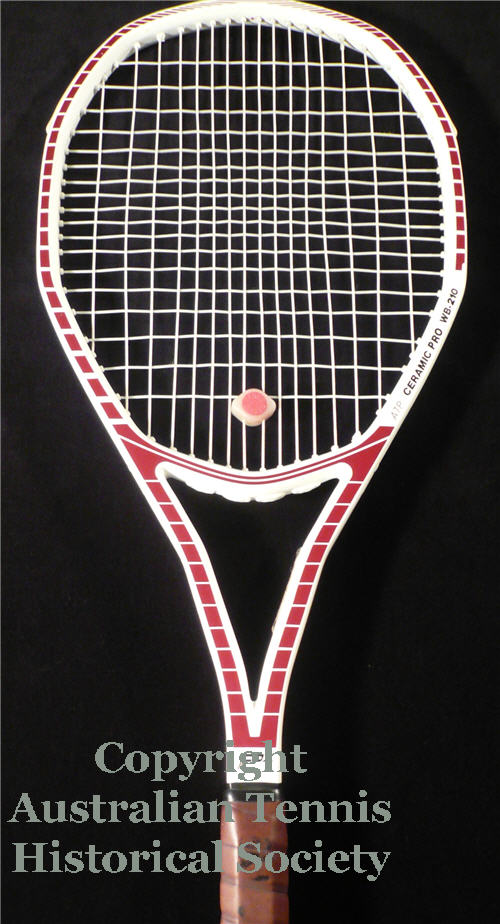
Fox Ceramic Pro WB-210 c 1985

Warren Bosworth was a highly regarded stringer to many professionals and was heavily involved in the design of these and many other Fox racquets. We recently found an Australian branded version of this racquet called CERAMIC PRO of which only 300 or so were made for promotional purposes.

This series are unusual due to their 10 sided shape.

Fox also produced a version model WB-215 traditional head shape long string model.
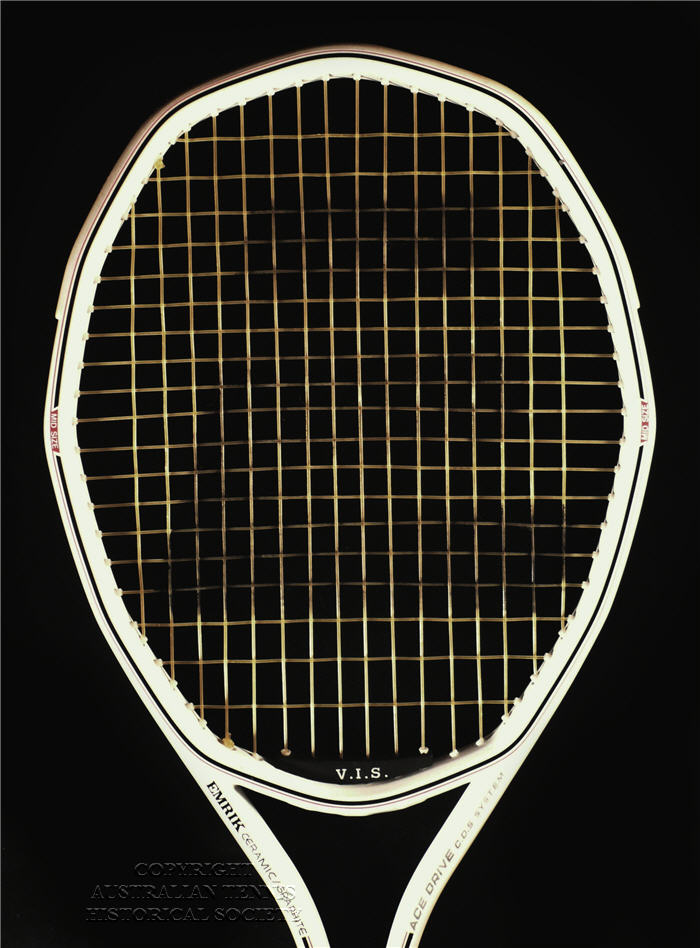
Emrik (Australia) Ace Drive Angular finish

Very rare multi angle model.
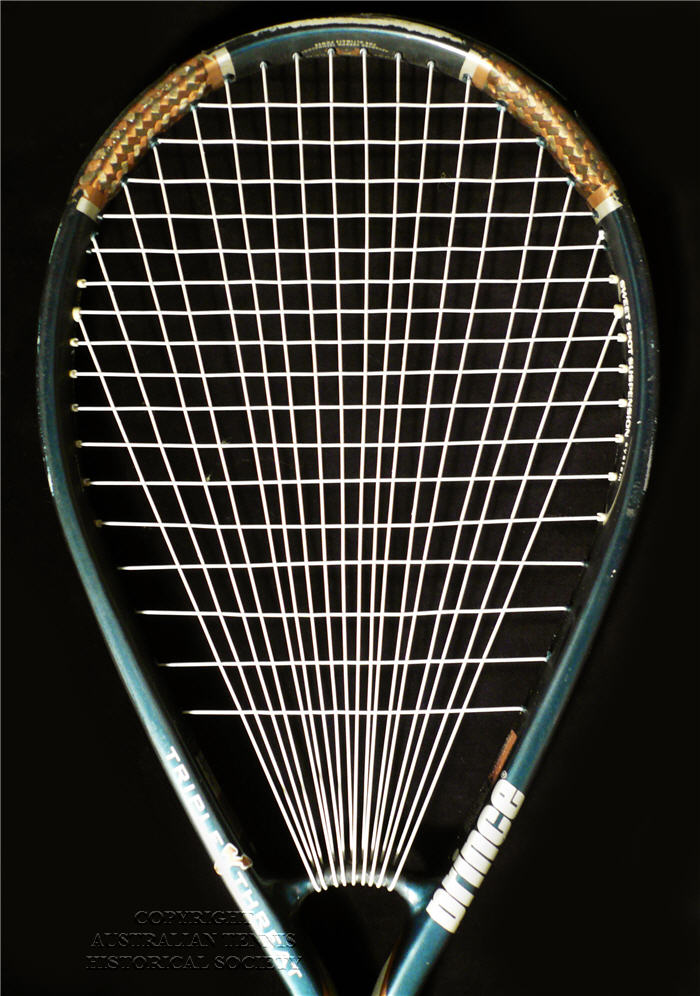
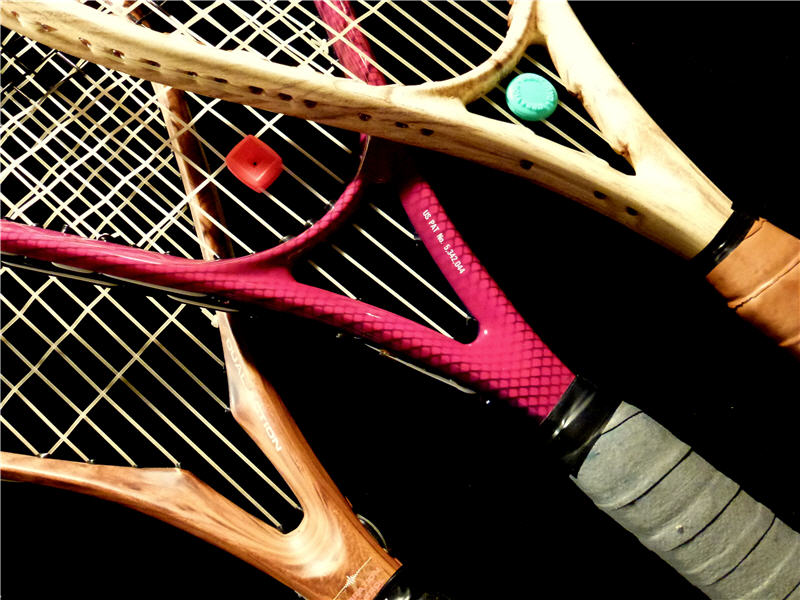
Apart from the SPIN racquet above, other makers have experimented with long string designs.

Pictured is the Prince Triple Threat Ring (1300 power level) and the Wilson Radius with Power Strings Technology.
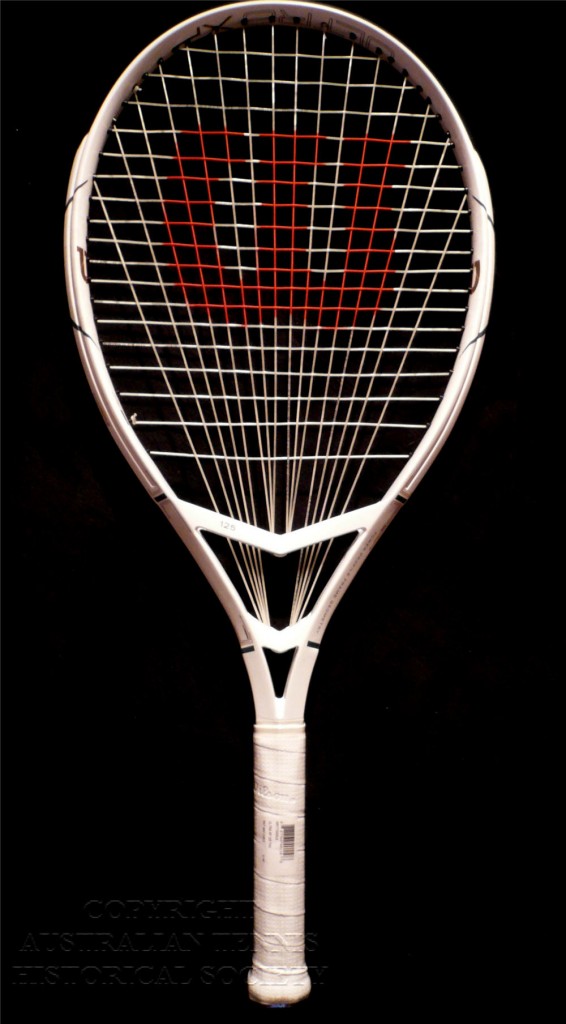
In 2015 Wilson introduced this ULTRA 125 Long string model which featured an outer long string and central throat stringing.
We believe it was withdrawn possibly due to breakage at the throat where considerable tension is applied to the one point.
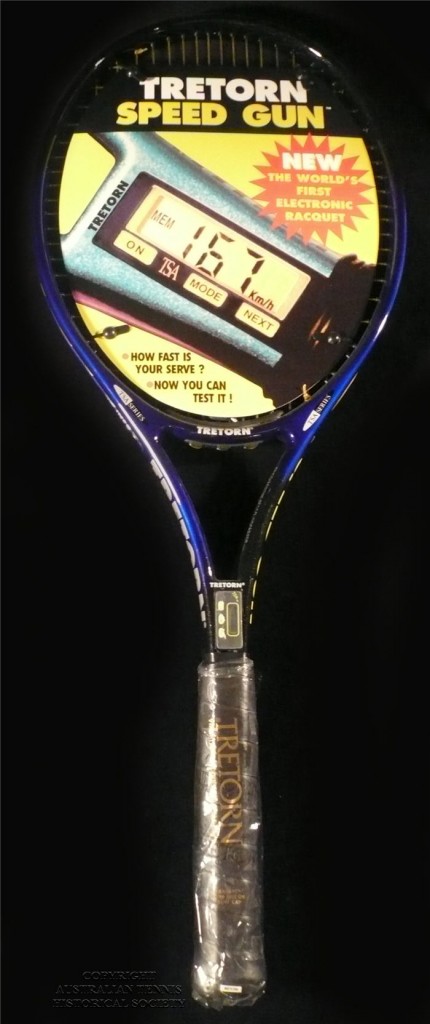
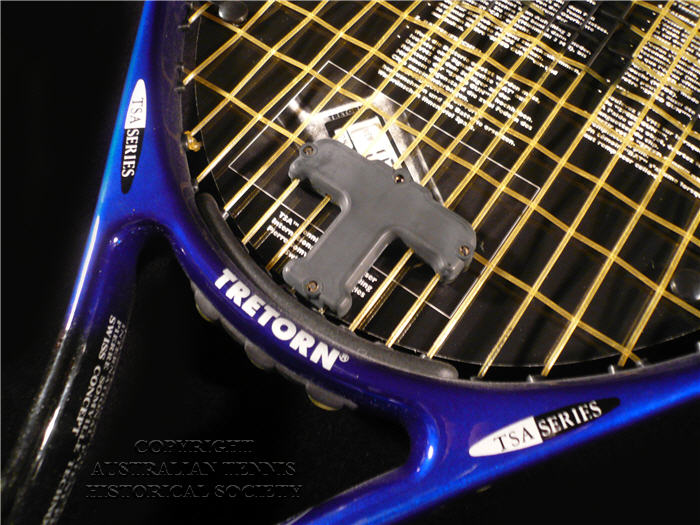
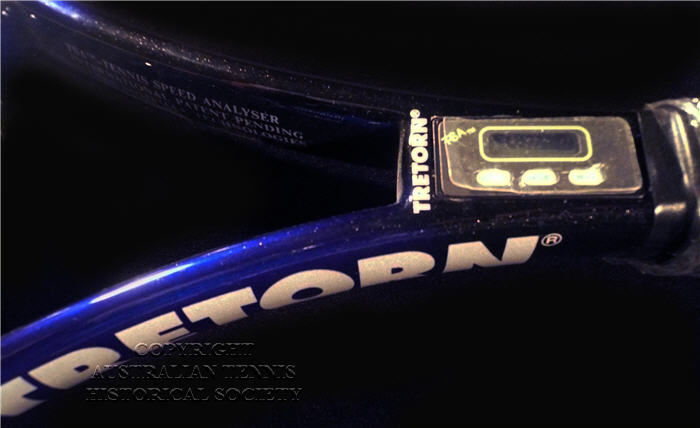
Tretorn Speedgun (Concept racquet) 2005

Computers meet tennis.

A string sensor picks up movement to determine shot speed to within +- 2.5kmh. Play a rally and see the last 10 shots on a screen built into the handle.

Only 1000 were made and they never achieved retail distribution. A rare find indeed and a great tennis brand name. Current ITF rules prevent information being relayed to a player during play.
Unususal Vintage Tennis Racquets 2

santor s pro (6)

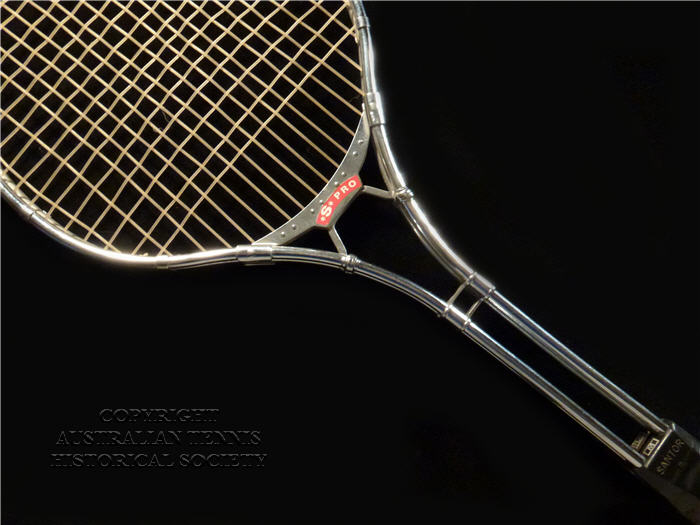
Santor S Pro

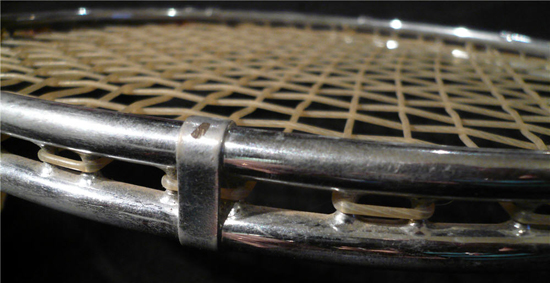
Santor S-Pro Steel racquet with really lovely industrial design cues.

It is essentially two frames joined together with welded or soldered pins.

SEAMKENR11

SEAMKENR5

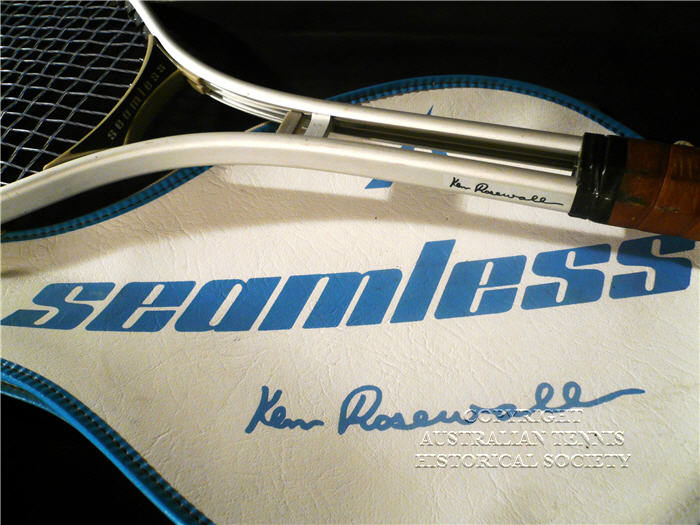
The “Ken Rosewall” Seamless (Seamco) c 1971

As you can see the string supports are located inside the extruded aluminium

frame leaving a very unusual smooth finish.

Ken was a consultant to the firm hence the interest to Australia.

If you like this smooth look out for a Wilson TX 6000 c1978 which has a smooth finish unlike the channeled look of the T2000.

STEEL SHAFT RANGE

Steel Shaft Models (late 1960’s and 1970’s)

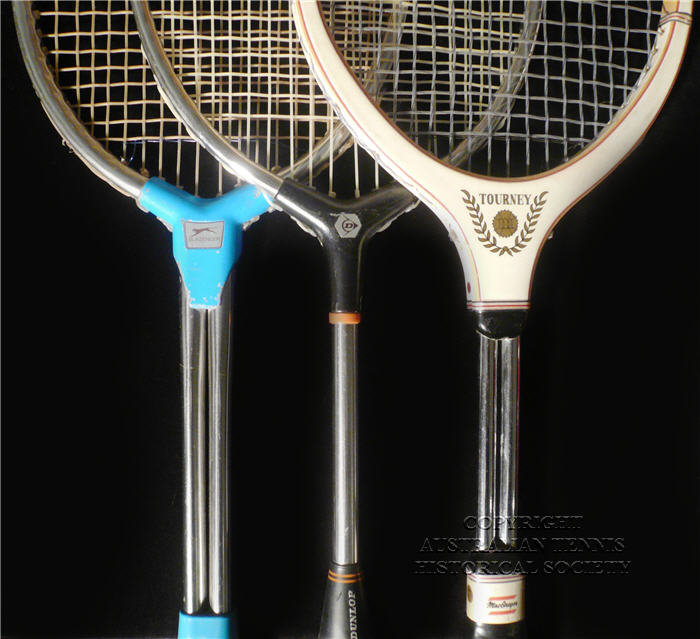
Slazenger twin shaft, Dunlop Monoshaft UK 1972, MacGregor Tourney USA

As the Wilson/Lacoste T2000 was booming, Dunlop produced these very nice looking racquets, often confused for squash racquets.

grays steelmaster (2)

Grays Silver Gray estimated 1954-1974 era (UK)

Steel Shaft with wooden head

tretorn demountable 2

tretorn demountable

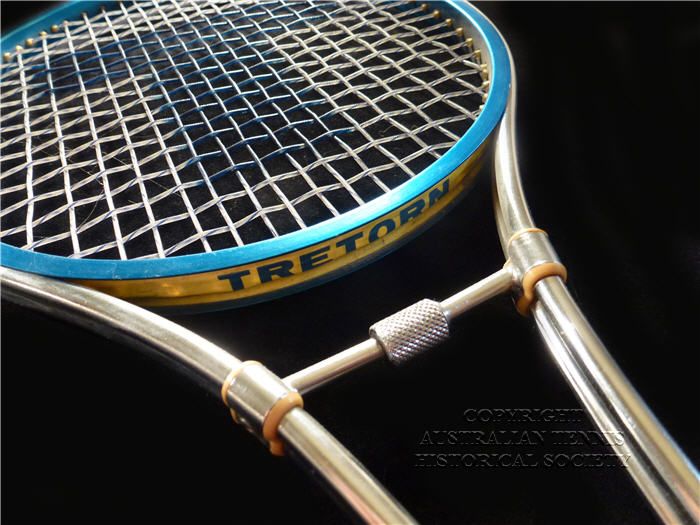
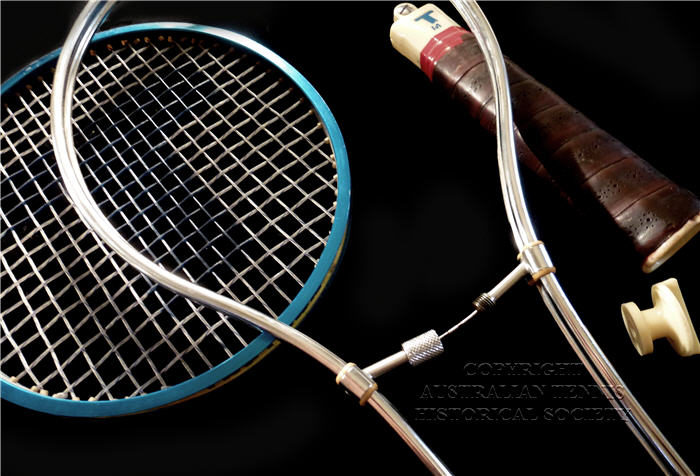
Tretorn ( Demountable) Sweden 1968

String set in the blue aluminium frame can be removed from the racquet frame by undoing the butt cap, sliding off the handle and undoing the spindle in the centre of the cross bar (pictured). This allows the frame to spring open so a new string set can be inserted. Takes a few minutes only.

They often came with 2-3 different string sets with different tensions or as back ups for breakage.

See the Maynard below for another string set removal option.

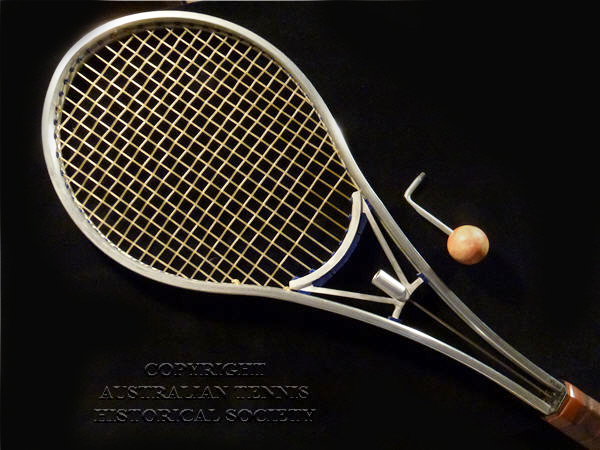
MAYNARD AIR RACQUET 5

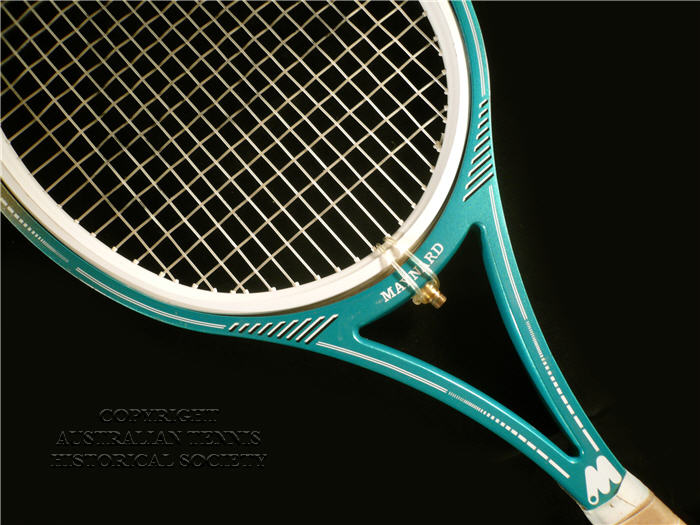
Maynard AirPower Racquet c late 1980’s

USA designed, the string set comes on a separate frame which is held in place by a tube filled with air.

Patent filed 1986 # 4 772 021  Michael Maynard

IMG_5652

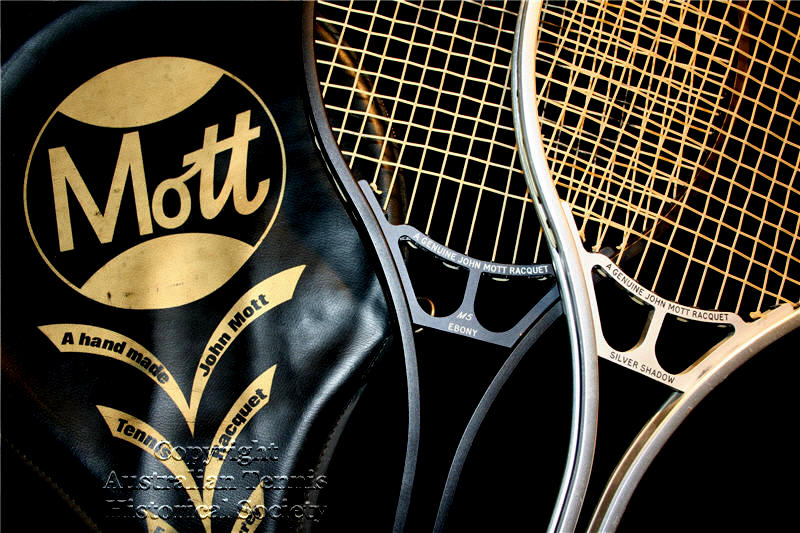
John Mott, Silver Shadow, UK (1980’s)

Hand made in Farnham Surrey.

The factory made tennis and squash racquets for a short time then sold the patents and left the industry.

The finish is superb with no visible rivets and the fit between the throat piece and frame is sheer precision.

We would like to learn more about this company.

wilson legacy

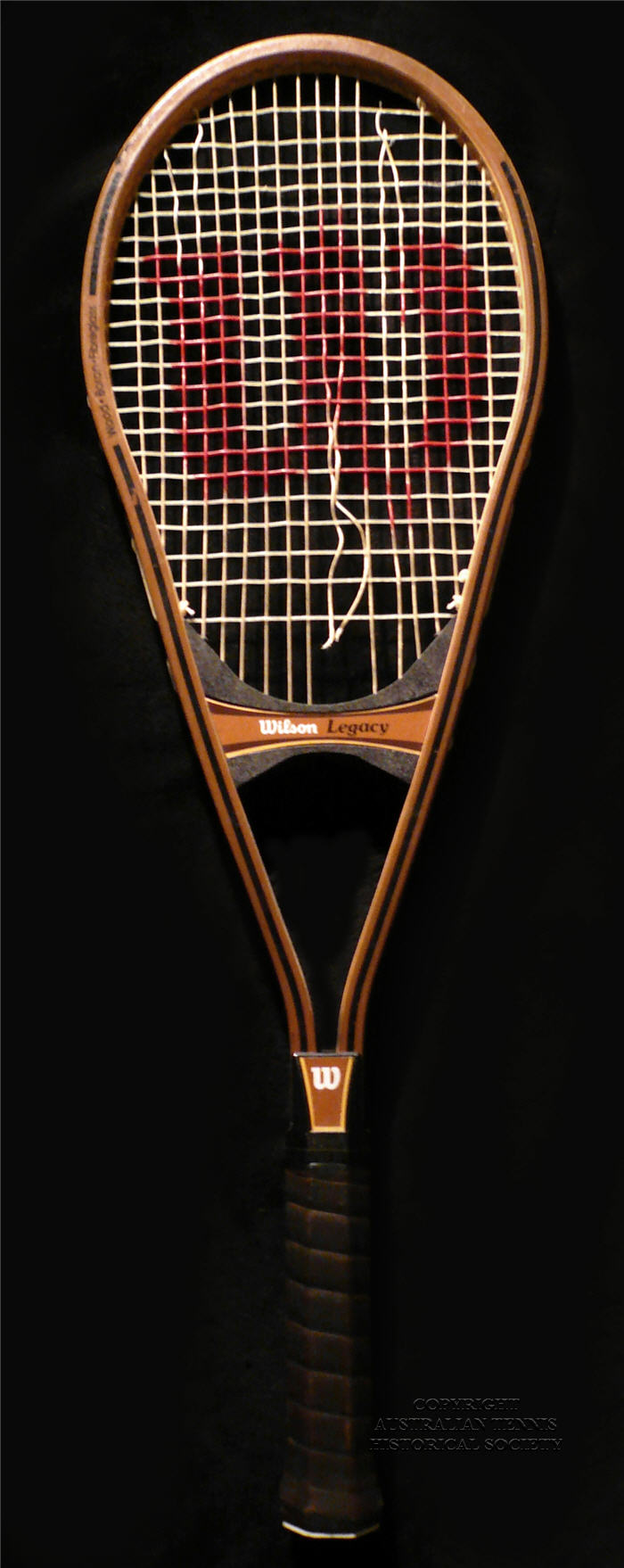
Wilson Legacy 1983

Rare shape. Wood with plastic throat.

A bit weird, but that’s interesting

wilson sting

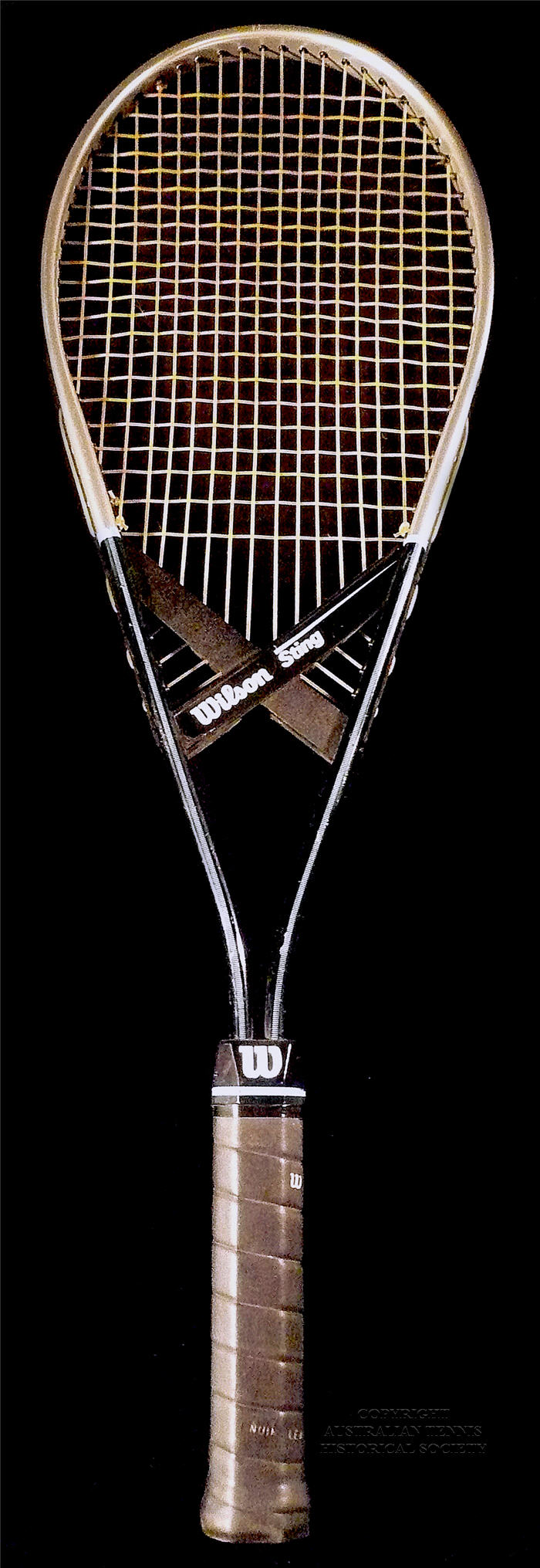
Wilson Sting 1985

Aluminium frame with nice string treatment at the throat.

You can tell they are from the same family as the Legacy above

Bancroft Slingshot

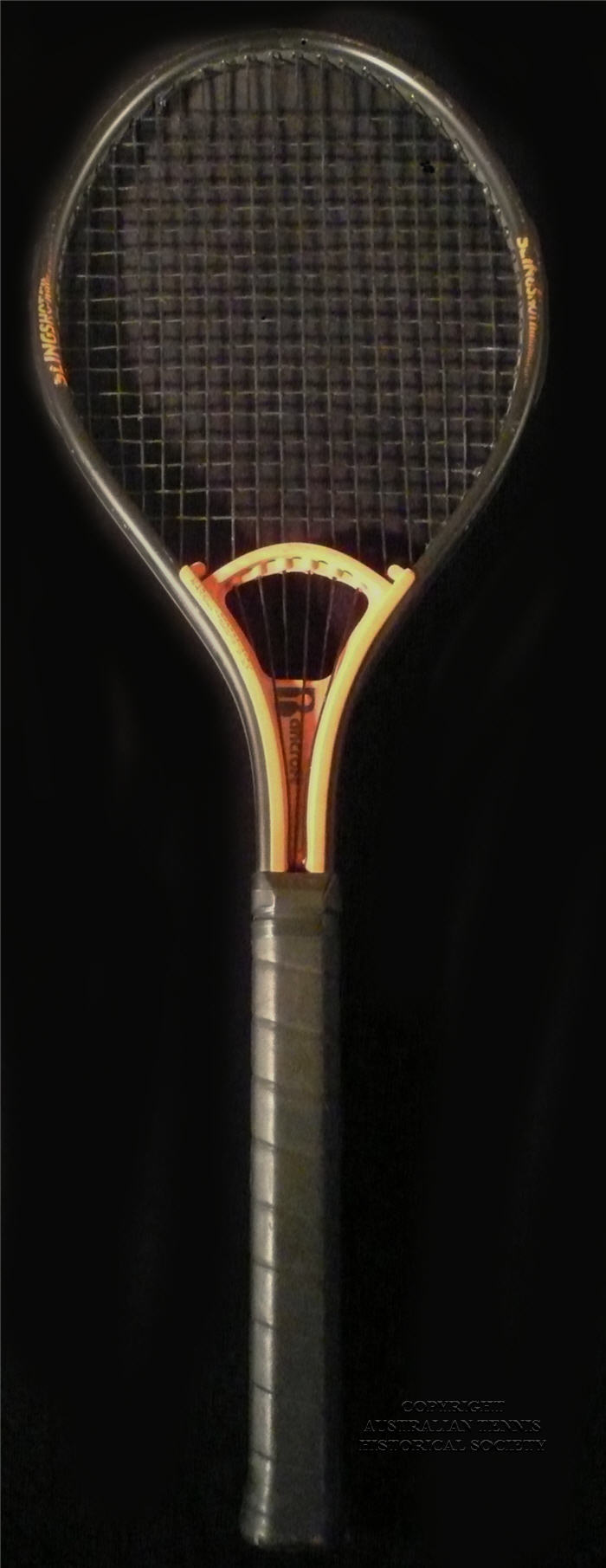
Bancroft Slingshot USA 1983

Made in Germany under license by Markhill.

Great extended string pattern to the top of the very long handle

BIO SPORTS GRIPPER

Bio sports The Gripper 1984

A curved grip.

You might think you have seen everything but this is meant to help with tennis elbow by keeping the racquet face up in line with the ball.

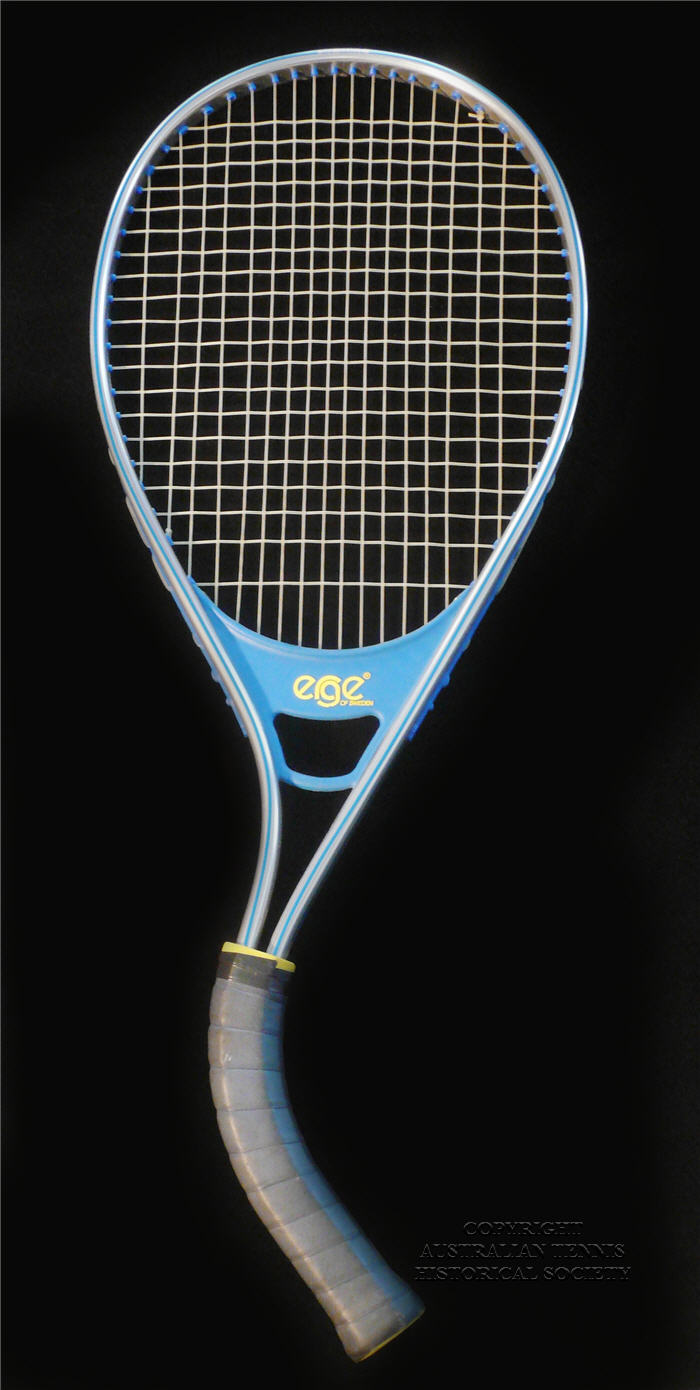
erge2

The Erge (Sweden 1983)

Ergonomic Curved Grip racquet.

Far more pronounced and clearly inspiration for the Neoxxline Range (listed under modern unusual).

Aluminium model came in 1983 followed by a graphite version in 1984

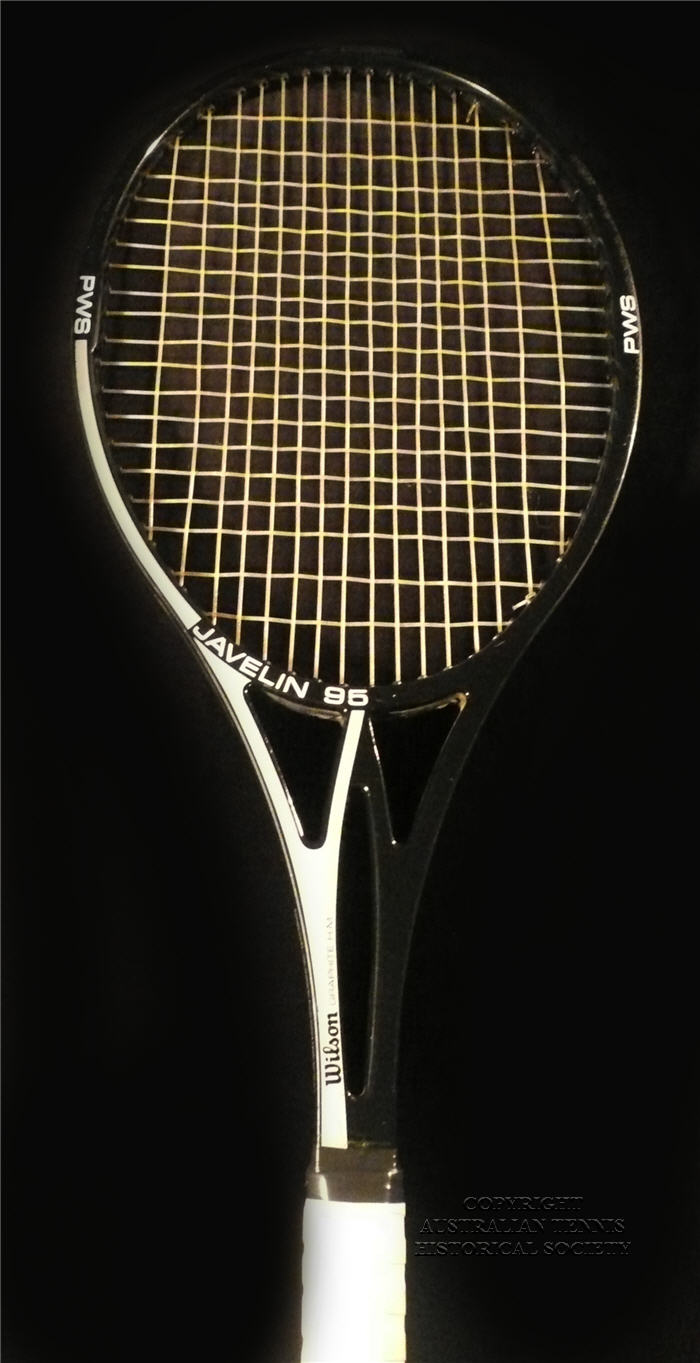
wilson javellin

Wilson Javelin mid 1980’s

A very interesting twin throat design highly sought after by collectors.

acro adjuster (4)

Acro Adjustable mid 1970’s (also s0ld under Hart name)

Two versions this one adjustable via throat piece which pulls the throat down the frame.

Later version moved tightening mechanism to butt cap as per below.

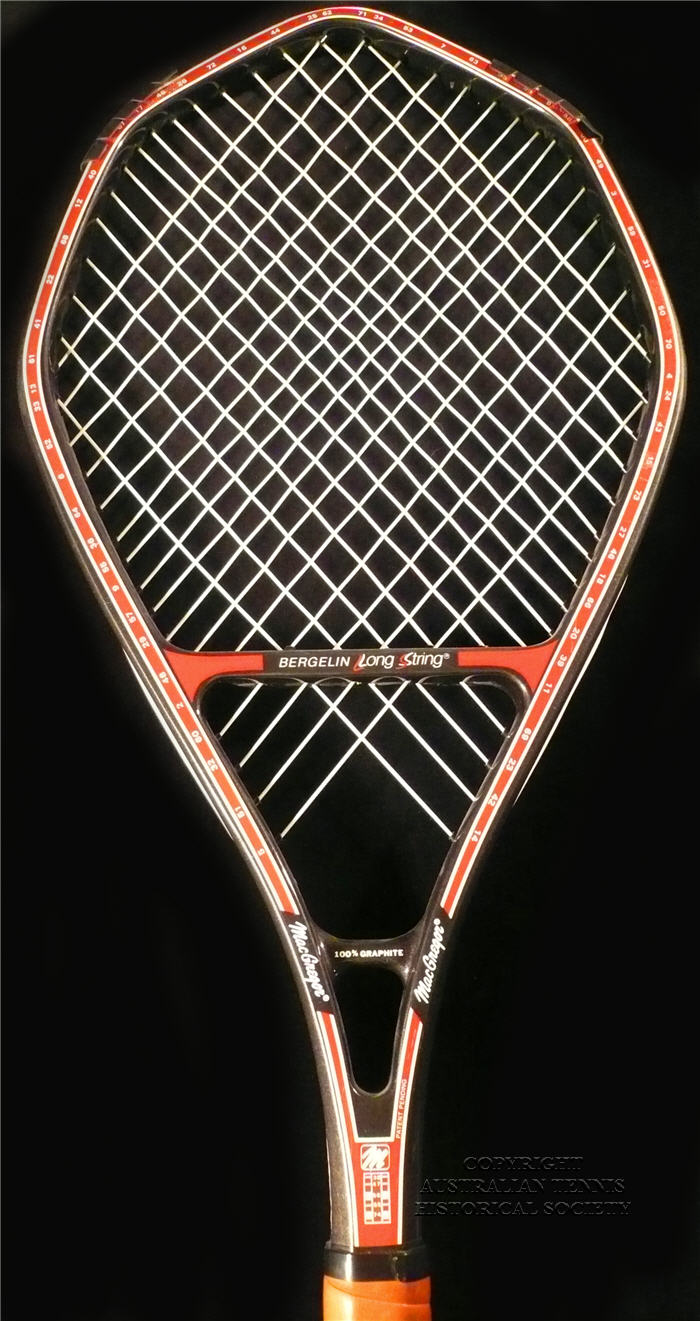
MACGREGOR BERGELIN

Macgregor Bergelin Longstring c 1985

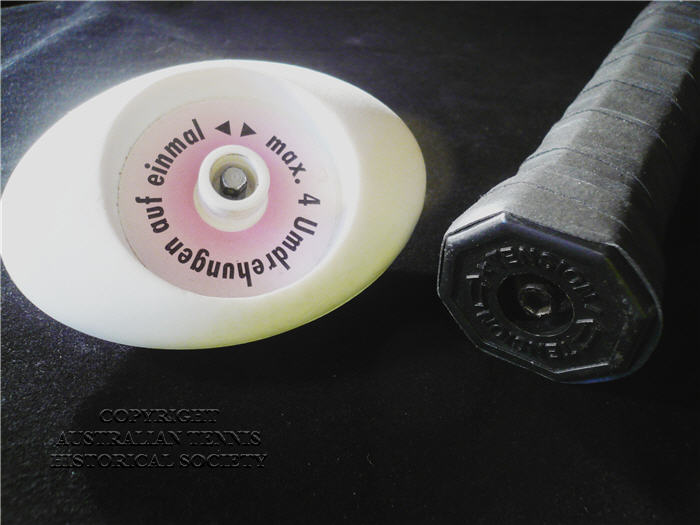
German idea designed by Herwig Fisher (Protagon Sportproukte) and endorsed by Bjorn Borg’s coach Lennart Bergelin. Sold in the USA under license as the MacGregor Bergelin Longstring. Owners can string themselves and then adjust tension via a tightening control system inside the handle. An allen key device connects into the butt cap allowing the owner to adjust tension at any point during a game. Racquet comes with a tension adjustment knob and stringing instructions.

After MacGregor went broke and lost the rights to sell the technology, Protagon went onto launch oval versions called Tension Master and Hi-Con.(page 293-295 Kuebler Book)

protagon (1)

protagon (2)

Protagon TM500 with tension adjustment.

The white knob has an allen key insert which is visible. The MacGregor design was similar.

Great diamond stringing also.

Mizuno Sirius

Mizuno Sirius +10 also incorporates an in handle system but not for tension adjustment.
Inside the handle is a movable weight which enables a change to balance and feel.

Rox Pro Space T 1 (1)edit

Rox Pro Space T1

Arms and fan stringing create an unusual combination.

SPIN OMNI LONG STRING

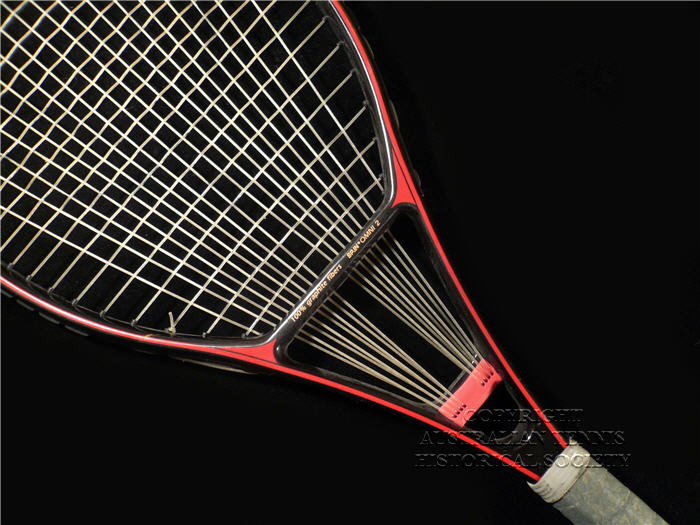
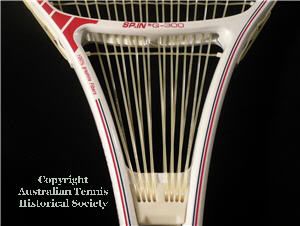
Spin Omni 2 (also G-300 USA & RoxPro Aust.) c 1987

Fancy stringing system with long vertical strings to improve sweet spot performance. Was not within ITF rules but may have received a positive ruling. Also produced a squash racquet with a similar design.

Sold in Australia by Lewis Sports.

rox pro delta 2000 2011 (10)edit

rox pro delta 2000 2011 (7)edit

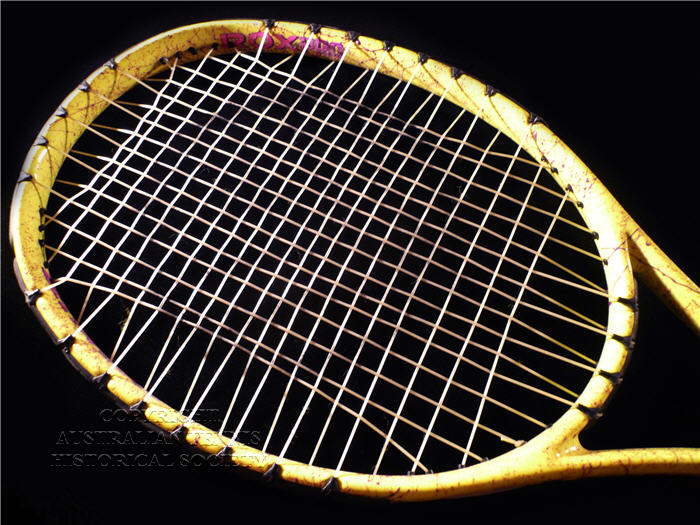
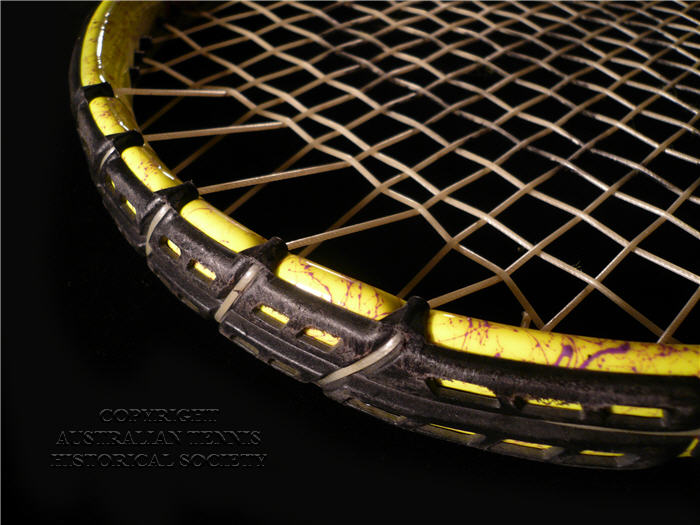
Rox Pro Delta 2000

(Also Estusa AmerPro American Pro Jimmy Connors model)

Loop Stringing around the frame not through holes. The added tenison and change to frame dyamics when striking a ball, keeps these strings super tight.

Not a bad idea!

deesse (16)

Swiss DEESSE (pronounced Dayus) Wizard Woody Graphite. (made in Korea)

There are 3 versions of this design under brands including ADVANCE SVS & ESQUIRE NT1 both sold in Asia.

The woody walnut burl type finish is really attractive. The whole concept was created by Australian, Barry Todd.

Seen Fin/Deesse story.

the natural handler 2014 (25) edit

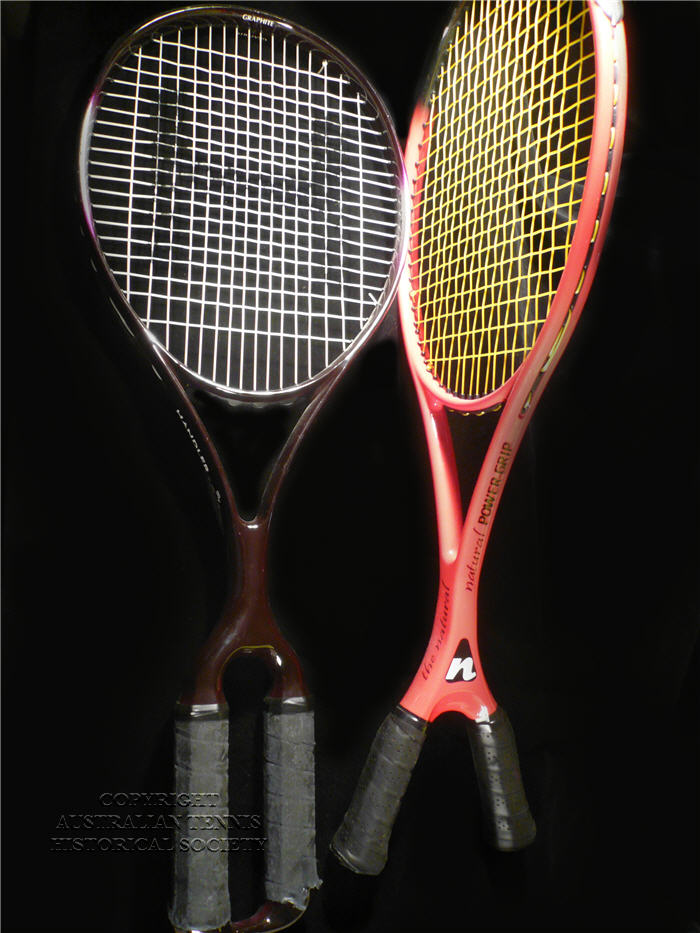
Double Handles:  The Handler c 1992 and The Natural (2007)

Two handled racquet to pick up on the latest teaching techniques for double handed players. Much harder to volley and serve due to single hand play being off centre so you might want be a solid baseline player that can run to shots.

This is just one of 3 different versions we have seen trying this concept.

In March 1995 from Tennis Magazine the male designer, Elie Ban-Kheir claimed to have sold about 2000.

The Natural takes a completely different angle along with an offer to customise your existing racquet if you wish.  Watching video of Brian Battistone serving with a volley ball style is recommended viewing.

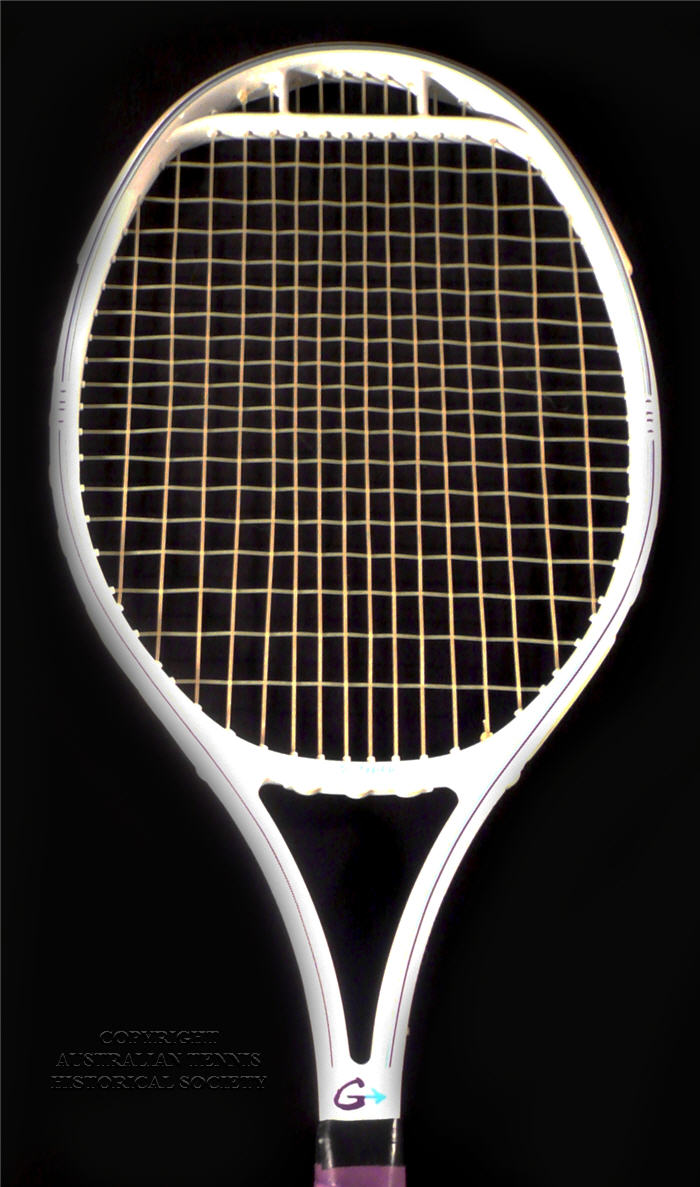
Gauthier G De G

Gauthier G of G

Bridge design attempts to alter string tension at sweet spot. Very similar to the Spalding Powertech which has two bridges top and bottom. See below.

Gauthier are a recognised French brand, but little is known about this model.

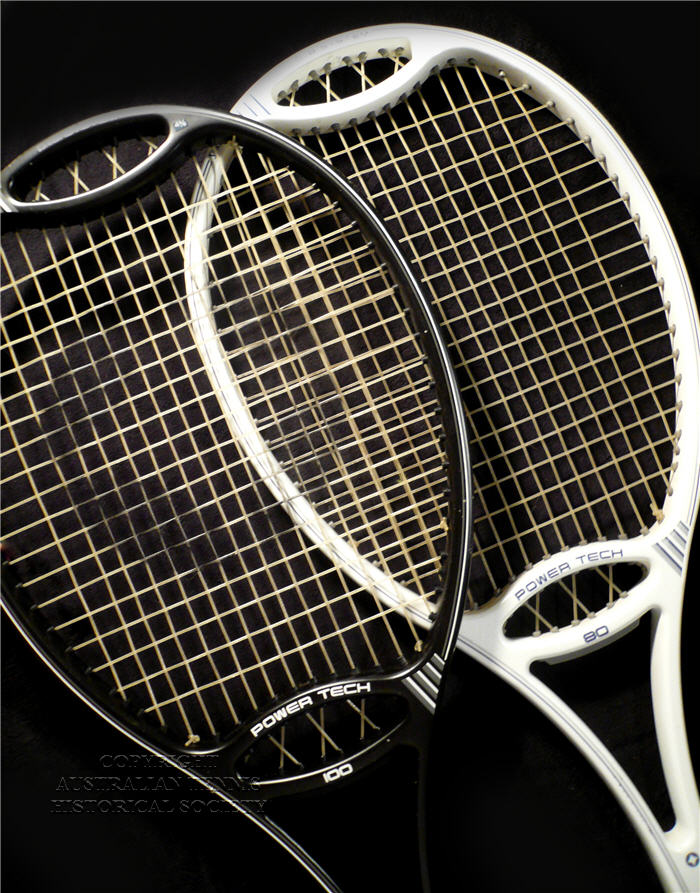
spalding power tech 2015 (11)

Spalding Powertech 80 & 100

Double Inverted Bridge.

Mid 1980’s made in Taiwan.

winsport 2015 (2)

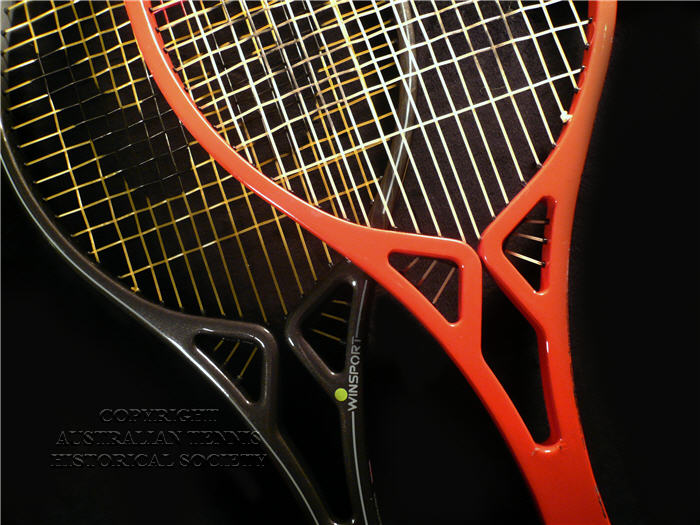
Winsport UK c 1985

Very unusual split throat design.

The Volkl Power Arm is another quite interesting throat treatment that will become collectable in the future.

snauwaert ergonom

Snauwaert Ergonom 1984 Belgium

Offset head to help players with a tendency to drop the racquet head to still keep the racquet in line with the flight of the ball.

There are a stack of these on ebay and since no-one bought them most are new. If you find a used one it will become a bigger collectors item. Or, I suppose you could buy a new one and try it out for a season.

The local tennis shop advises that being offset the string pattern which hits the ball as diagonal strings would, actually gives a serve that extra bit of top spin for a great kicker.

See the Neoxxline under modern unusual section.

snauwaert ellipse

Snauwaert Ellipse early 1990’s

Tri shaft racquet like the Hazell Streamline.

Head can be removed at the central shaft point but loathe to try this since this one is brand new. The company warranty was void if dismantling occurred so they weren’t designed to be interchangeable like the JENRO (modern unusual section)

Also of interest in this area are the French, Le Coq Sportif tri-shaft racquets made from 1987 and endorsed by pro player Yannick Noah

Unusual Vintage Tennis Racquets 1

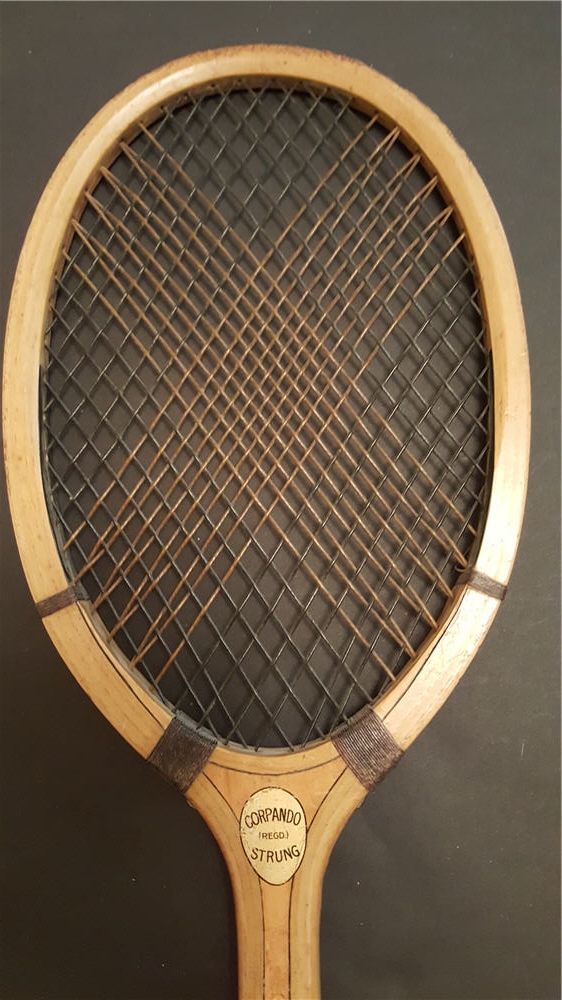
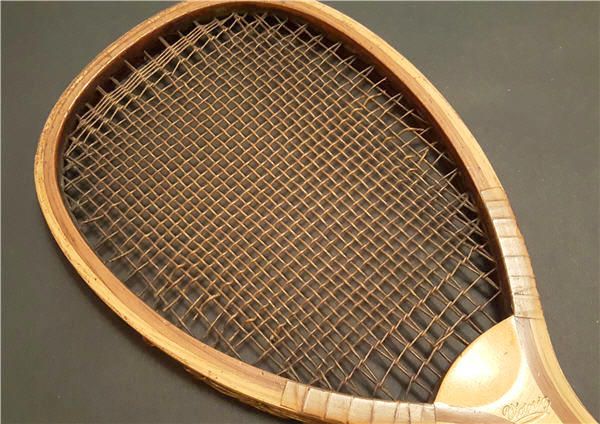
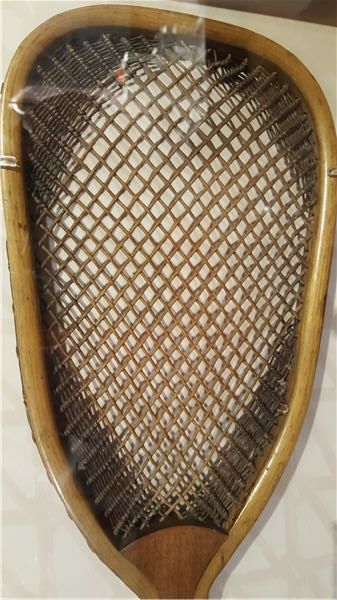
Collecting vintage Tennis racquets (rackets) is a wonderful hobby which has been expanded considerably thanks to Ebay. Racquets never seen in Australia can now be purchased and the array of brands and designs is quite staggering. To appreciate the subject we recommend you find a copy of Siegfried Kuebler’s book “The Book of Tennis Rackets”. It is a wonderful testament to the first racquet makers through to the 1990’s. More updates are planned, and presented here are some unusual designs that have broadened the horizon of shape, function, stringing and look. One of the most significant developments in tennis racquet design has occurred due to the new construction materials such as graphite. This has allowed designers to explore a variety of shapes and string surface areas, the latest being 137sq in. 32 inch, (then reduced to 28″ Gamma BIG BUBBA) that earlier wood materials could not withstand.

Some people like paintings, racquet collectors enjoy the skill of fine workmanship in wood, unusual designs and special effects in the very same way and artistically, look sensational along any wall.

This gallery includes racquets made all round the world from the early 1920’s to 2005. Please also see some modern unusual racquets under a separate heading and you will see more unusual designs, such as the variety of wooden handles under other sections devoted to very early and other style wood racquets, strings etc.

lillywhite hazell shoot (3)

grays streamline version 2 (1)

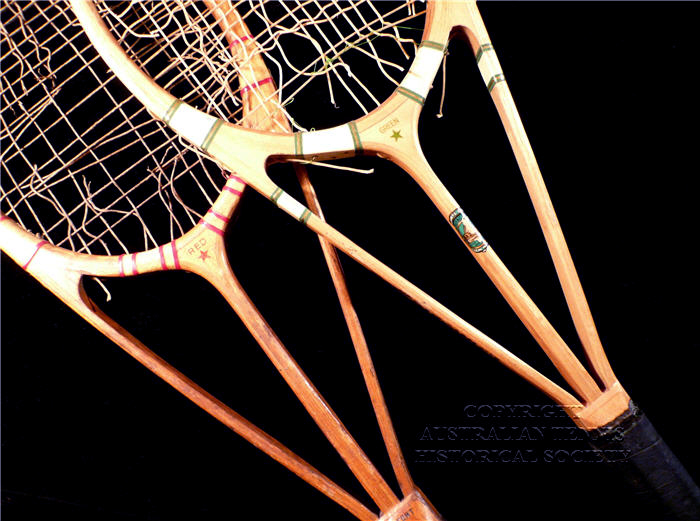
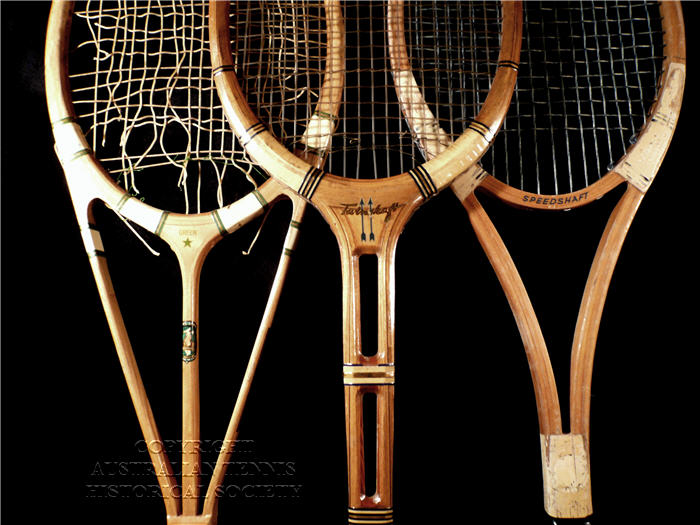
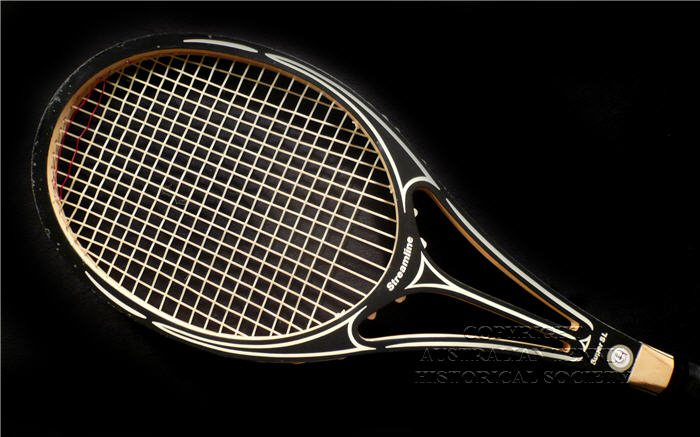
Hazell Streamline UK 1930’s

Made popular by Henry Wilfred “Bunny” Austin who played with these at Wimbledon.

Way ahead of their time, models were also produced for squash and badminton. Models were differentiated by coloured star logos and you may well find green, red, blue and white star examples all of which are very expensive.

Grays, famous even today for their Royal Tennis racquets acquired Hazell and produced a STREAMLINE version themselves in the 1970’s, also shown above.

In 1937, at around the same time, a very similar looking Snauwaert Triumph model hit the market in possible contravention of Hazell’s patent. Donnay made one in this style in the 1950’s called the Court King.

andreef hazell lillywhite 2016 (9)

Lillywhite & Frowd TwinShaft (1935) Andreef Open Throat (1950’s)

In addition to the Hazell, other wooden innovations were tried including by Frank Donisthorpe of Hazell fame an oversize frame he used at Wimbledon.

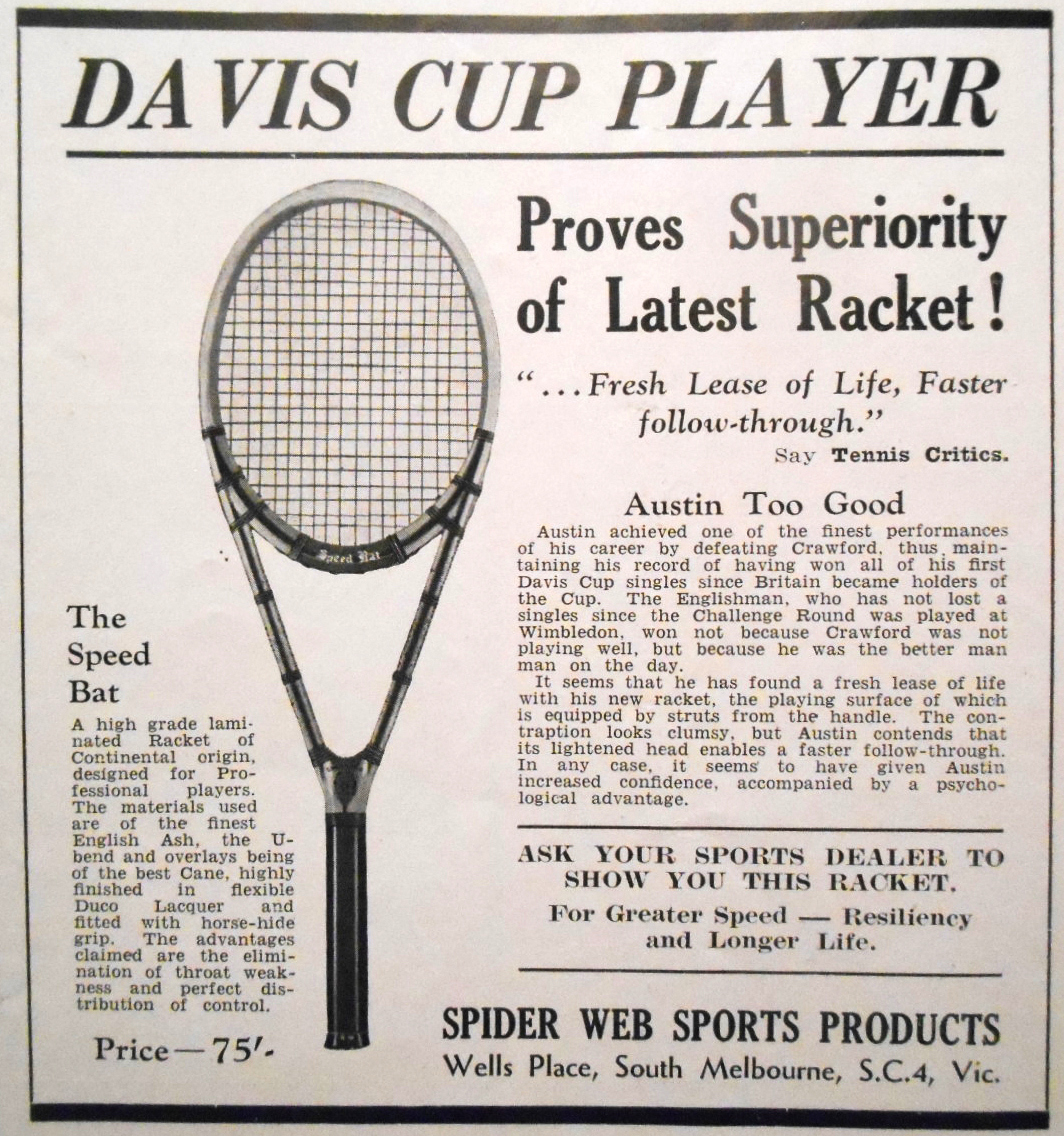
Donisthorpe Speed Bat 1936 ad Mary

Frank Donisthorpe also designed a Spanish made open throat model in the mid 1930’s called SPEEDBAT.  We finally found an example.  See under Spider Web post.darsonval trio aa (2)

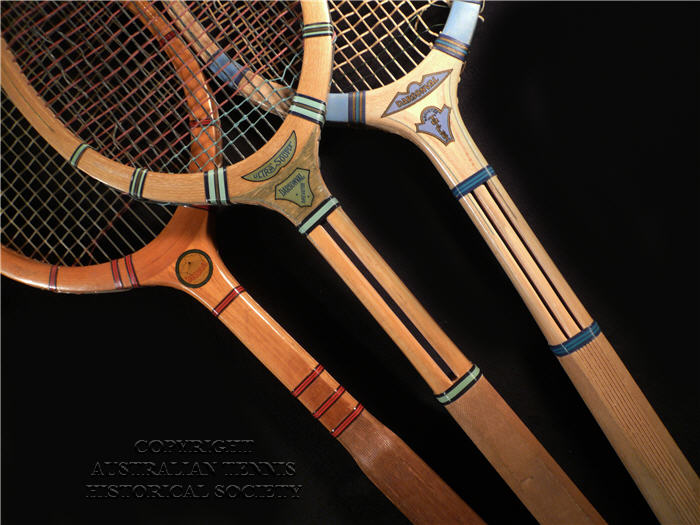
Darsonval (France) made some wonderful models throughout the 1930’s.

These split shaft models and even the contoured finish on the standard racquet ooze quality.

celluloid finish (5)

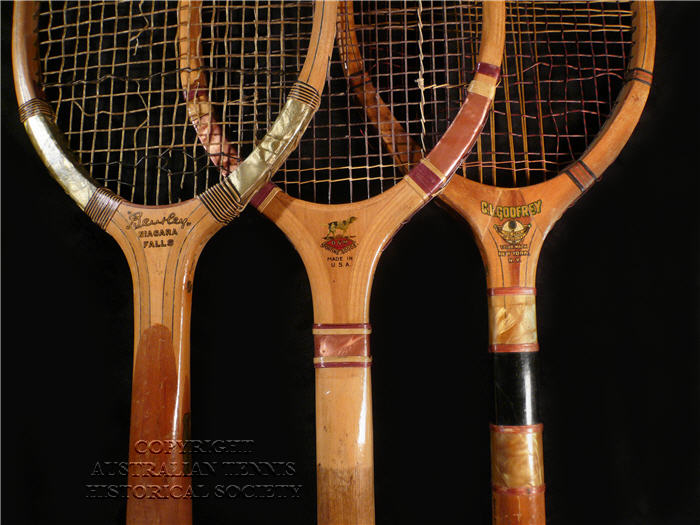
In America, some models in the 1930’s began to use a shimmering celluloid finish to enhance decoration and these three include,  Bentley, Draper Maynard & Godfrey NY

hillman2aa

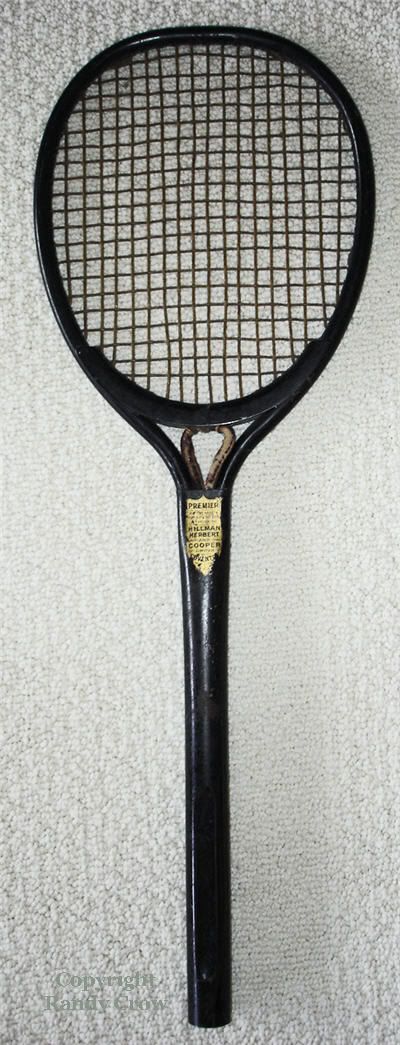
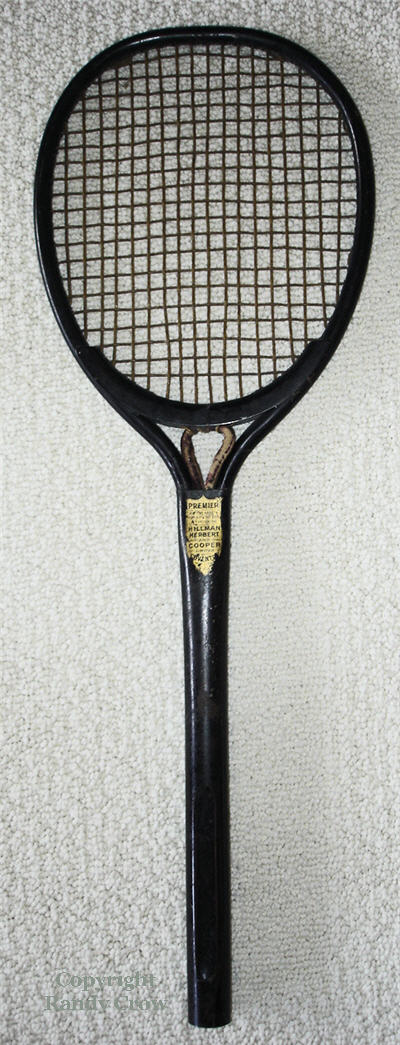
Hillman Herbert Cooper

‘Premier’ Model 1886

Patented tension adjustment system where a leather cord is tightened within the butt cap area. In addition, a steel racquet which may well be one of the earliest. The company was most well known for bicycle manufacture. A very rare item.

Thanks to US Collector, Randy Crow for the photos and history.

Patent # 346 751

As shown in Siegfried Kuebler’s book page 512. In Jeanne Cherry’s book she cites the earliest metal racquets to a Scottish company called the Metallic Racquet Corp. c 1887.

Copy of CRAVENS ADJUSTABLE 2

CRAVENS ADJUSTABLE 7

Craven Adjuster-tite 1928

(very rare)

A very early invention to change the string tension. Designed and patented by Edward Craven, the license was sold to Wilson, Magnan, Kent and Draper Maynard.

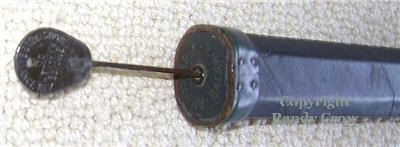
As you can see the butt cap permits the internal rod to be tightened or loosened.

Despite a few companies offering such technology, examples are scarce owing to the lack of uptake by customers.

Patent 1927 # 1 663 039

As shown in Siegfried Kuebler’s book page 539

CRAVEN RACQUET 1

Craven Proto-type 1929-1931

(very rare)

While known for the Adjuster-tite method, this design was patented in 1933 by Jacob Kleinmann. The crescent shape would wind down into a slot in the throat.

We are unsure if this ever made into production, but the International model name is a Craven racquet and we suspect they worked on a version.

Patent Application 1929 Given 1933 # 1 912 942

As shown in Siegfried Kuebler’s book page 546

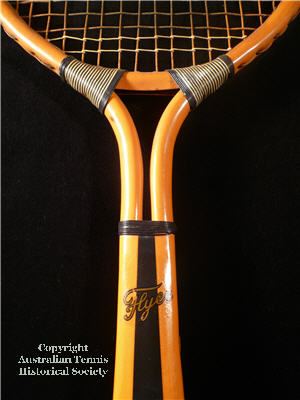
RACQUETS_DAYTONFLYER3

Dayton USA 1922 – 1990’s

One of the first metal head/wood handle combinations. They were strung with piano wire. The factory made this product almost without change, including the wood handles up to 1995.

From Randy Crow, USA collector, comes this valuable research information.

1.If the butt cap has “Dayton Ohio” printed on it, it was made between 1923 and 1934.

2.If the plastic butt cap says “Arcanum O” and the throat doesn’t have the three-racquet logo, it dates from 1934-1974.

3. If the racquet has a logo of three stylized racquets on the throat, it was made after 1974.

There were plenty of models and colours so whilst available the trick is to find them in good condition with not to much rust or paint loss and learn how to differentiate the age of various models.

They were sold in Australia late 1922 and used by Gerald Patterson and Pat O’Hara Wood in local tournaments over 1923/1924. Some of the famous French musketeers visiting Australia in 1929 also were introduced to them by Patterson on a drizzly day at Royal South Yarra Tennis Club.

So rather than importing them from the USA, some lucky collectors may find some local delivered examples.

Please note that the Birmal, below, was also sold in Australia.

birmal reshoot 2

Birmal Aluminium c1923 UK

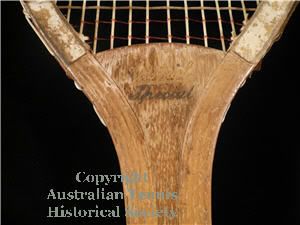
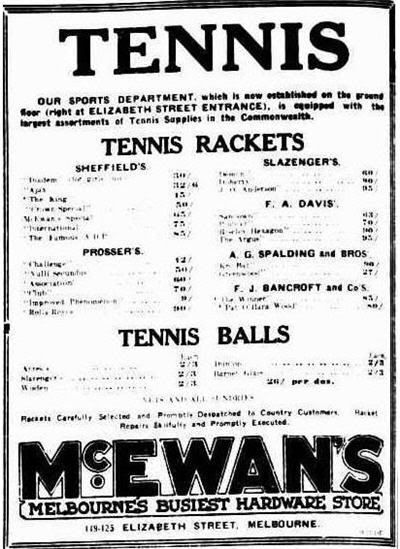
An all metal, steel strings racquet, which appeared at around the same time as Dayton in the USA. Originally with the pictured cord grip they eventually moved to a wrapped leather grip.   These racquets were sold in Australia in the mid late 1920’s and included in an ad from the Northern Territory on the basis of hot humid conditions and a 1927 McEwans catalogue at a mid price point of 55 shillings compared to 95 shillings for the best wood racquets. This is example was acquired from Australia whereas most are seen from the UK.

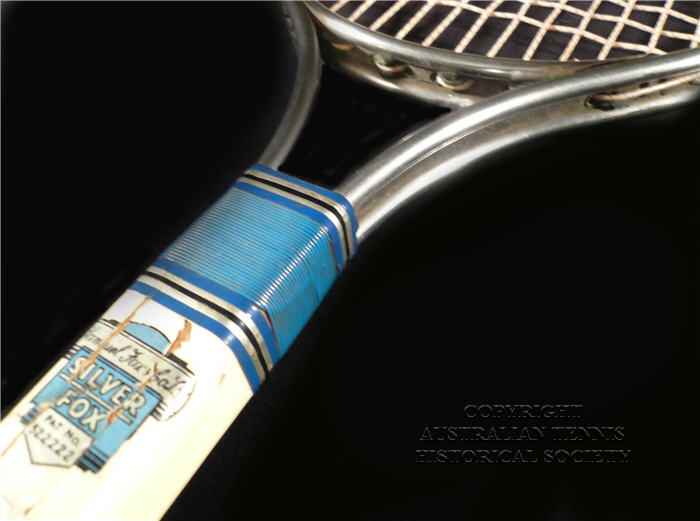
SILVER FOX (2)

Silver Fox UK c 1930’s

Potentially the first stainless steel metal racquet with a wood combination. Dayton used carbon steel.

A patent number printed with the logo cannot be confirmed as being correct.

Maybe a dummy patent was a good marketing idea back then?

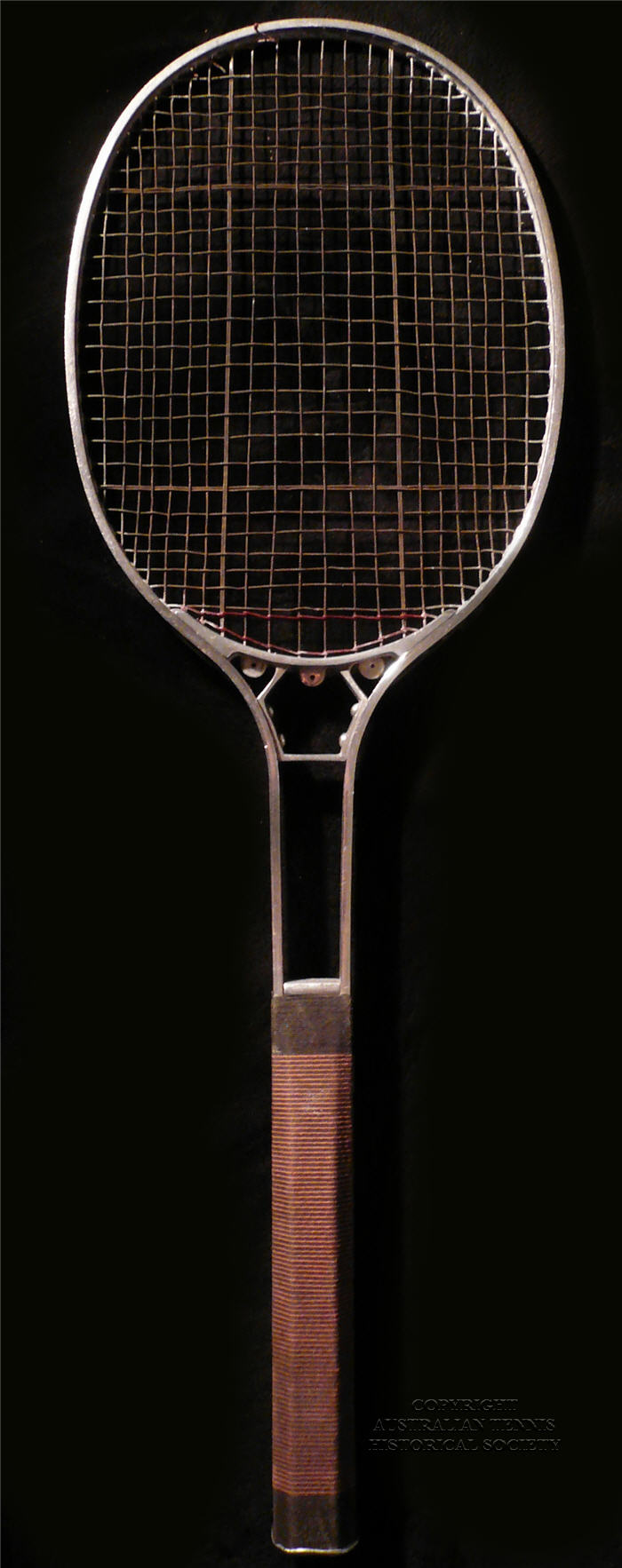
See Arco stainless steel racquets to read about the first full frame welded stainless steel racquet invented in Australia in the mid 70’s

ALLO (assumed) rod lack

‘Allo ‘French Prototype c1940’s

Solid cast aluminium. Might be a one off. Found in a full length Allo bag. Allo were making weapons and car parts c 1940’s and had made wooden racquets from about 1900. The workmanship in the casting is extraordinary and you can see the string waves in the throat and the guides on the inside of the racquet. The strings sit in a protected channel around the frame which deepens at the top where most damage occurs.

A lot of thought has gone into this.

WD aluminium 1933 (1)

Spalding and Wright & Ditson 1930’s (USA)

The US firm produced an Aluminium head wood handle model under a few model names including DURALITE.

pro am (6)edit

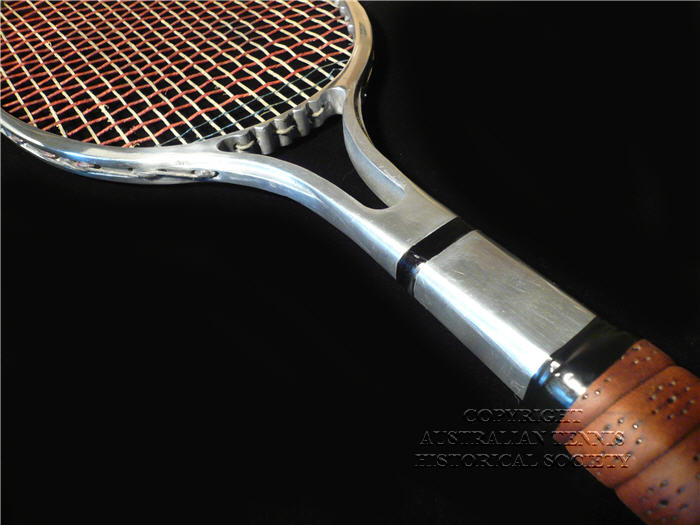
PRO AM early 1970’s (USA)

Commenced production of a fully cast Magnesium model racquet under the Centurion brand which then converted to an Aluminium edition under Pro Am.
The Pro Am has twin cross beams.

Designed by Tom Galich and used by Francoise Durr in events around 1973.

Single piece casting with an alloy construction and hollow handle. Not a rivet in sight.

dunlop twin shaft (34)

dunlop twin shaft (1)

Dunlop Twin shaft 1969

Very retro design steel shaft model used by Torben Ulrich in various events.

Racquet Stringing

Stringing is an equally fascinating subject given the many patterns tried over the years. The primary strings used were made from the intestines of animals mainly sheep and through the years was known as “cat gut”.
To make a string numerous very fine strips of the stomach lining are twisted and stretched together, then dried and coloured. The techniques used today are the same as back in the 1880’s. Being animal tissue it explains why gut, when wet or placed in humid conditions, can expand and contract to a point where breakages can occur even in storage and frames can be distorted or warped under the immense pressure strings are placed under.

In the 1880’s racquet design for tennis exploded with new shapes, grips and string patterns.

The public was inundated with weird patterns with the promise of more spin, more power, better sweet spots or less breakages.

A sample are presented below.

Looped Stringing

Looped Stringing

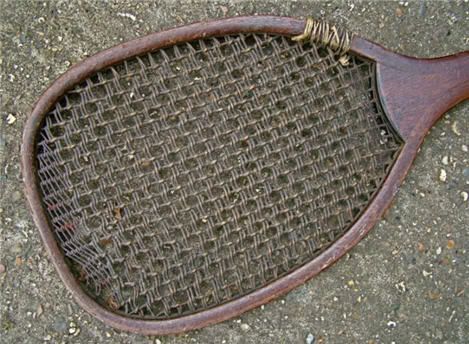
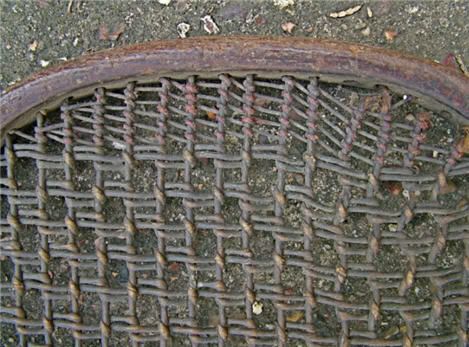
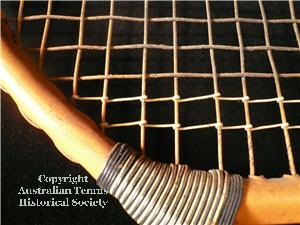
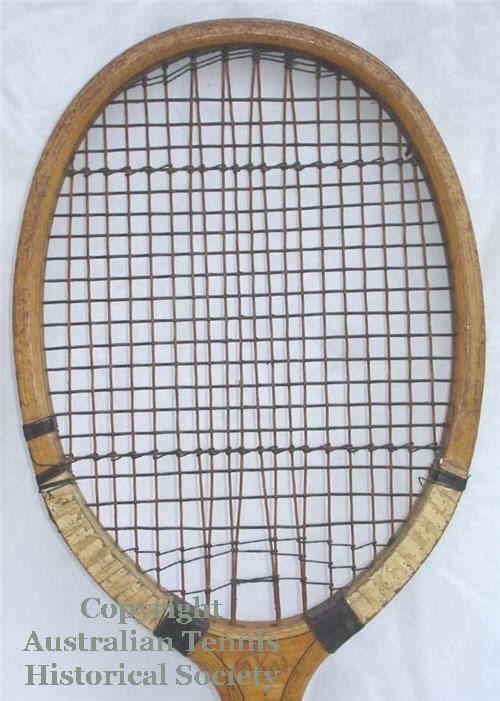
While early strings were made of ‘Gut’ often called cat gut, they were indeed made from animal intestines until the plastics and nylons appeared in the 1940-s-1950’s. Original gut was 1.5mm -2mm thick and often they tried different grades and thicknesses between vertical and cross strings to improve performance. The use of two vertical double strings and different cross strings are visible here with original trebling in place. This a common pattern on early racquets.

The small strings at the top are called ‘Trebling’. The strings wrapped across the mains and crosses, often in a square pattern around the sweet spot is called ‘Purling’.

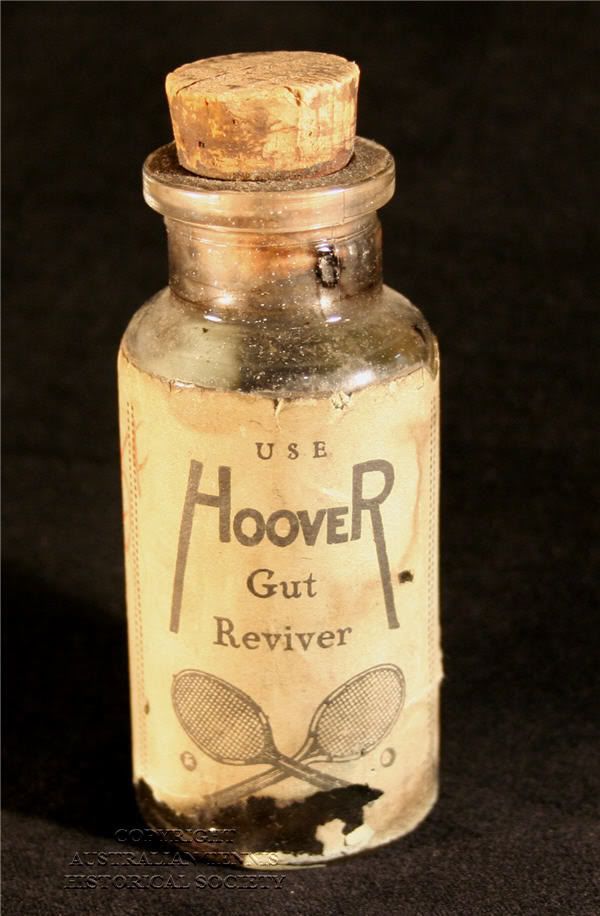
To keep strings in good dry condition was not always easy and one product launched from the mid 1880’s was a product designed to help maintain the strings.  The product as called “GUT REVIVER” and a user would lightly paint the strings with this product acting as a protection from dampness and drying out.

Stringing also changed direction, so to speak, in the 1920’s when the first metal head/wooden handle racquets arrived complete with piano wire stringing. Two well known companies were Birmal Aluminium Co. in the UK who launched an all metal racquet called the ‘Birmal’ followed by a metal wood combination called the ‘Birmal Ace’. Over in the USA, Dayton were very successful with their metal head wood handle products for over 50 years and are very popular with collectors for the variety of head styles and frame colours that became available. The picture below  is a Dayton Flyer with a nice trebling and frame wrap. They were renowned for a wonderful twang when the piano wire made contact with a ball and you can’t imagine how long balls would last.

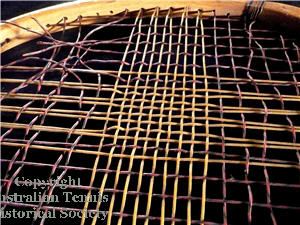
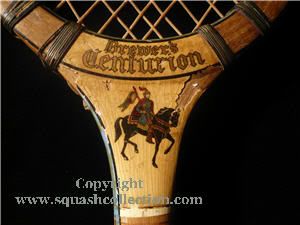
The stringing below is from an Australian Brewer Centurion. Note the green, double trebling and below this  a patented Godfrey (New York, USA c 1929) pattern which uses two different string types double strung in both the mains and cross strings to form a dense sweet spot. Based on the actual patent drawing the string set is close in overall look but not accurate, yet they may well be original.

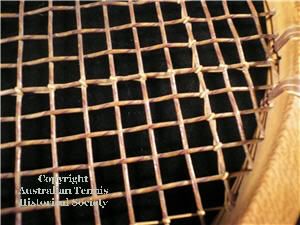
The photo below shows the additional double strung mains plus the purling strings.

Close up of purling strings

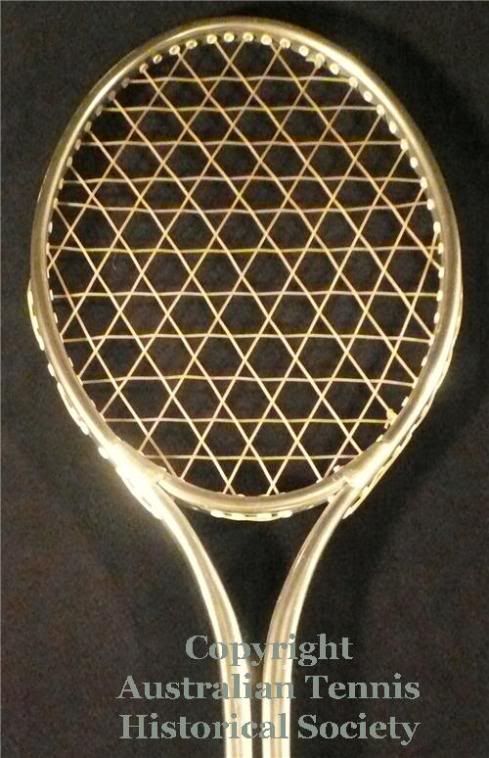
Older style string patterns included diagonals and verticals criss-crossed with diagonals which created a honeycomb style effect. Even today these still appear from time to time and in 2008 we have the recent launch of the ITF approved Power Angle racquets which feature diagonal string patterns. This product comes from the same designer of the Mad Raq stringing pattern that was patented in the early 1990’s. Other desirable diagonal strung racquets include the MacGregor Bergelin, Protagon Diagonal (Germany),  Major Octodiagonal, Geo Star, Aequalis, TAD Davis Top Spin and many from Volkl.

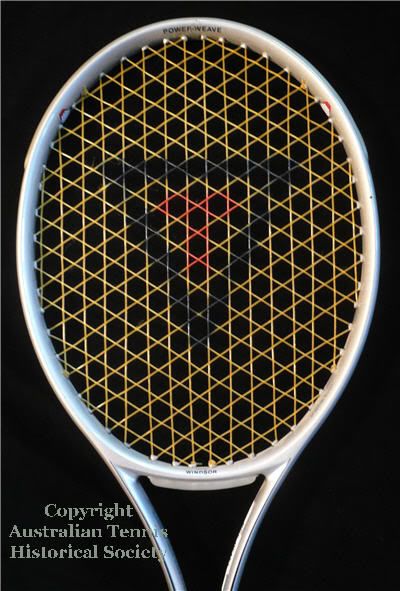
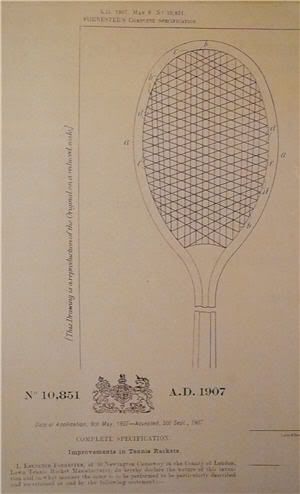
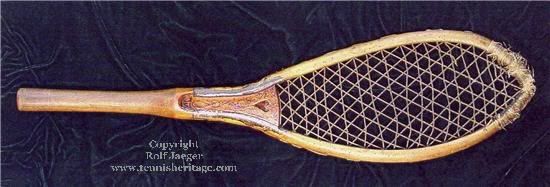
The MADRAQ design is shown below on the left, yet on the right we have a 1907 patent granted to Forrester, courtesy of Siegfried Kuebler’s book. In Jeanne Cherry’s book, ‘Tennis Antiques and Collectibles’ page 34 there is a shot of an equally similar design from 1887 by the Benetfink Co. The photo below these is a very early handmade racquet with diagonal and perpendicular stringing. Photo courtesy of Rolf Jaeger.The actual racquet now resides in Tennis Australia’s Collection.

Wood Tennis Racquet cross strung


The Sp.in G300/ Roxpro  shows how racquet design has allowed variable string lengths to improve sweet spot performance. Often these designs fall foul of the rules and are either banned or permitted after a review which is apparently what happened to this model.

The mid 70’s metal racquet is a Danlo with a ‘Spider web’ string set up.

A very rare treat is to see the German invented  “spaghetti” stringing system (Vilsbiburger racquets) which was used by Ille Nastase at the Aix-en-Provence tournament in early October 1977 against Vilas. So annoyed at being beaten by this amazing racquet, Vilas lobbied the ITF to have it banned which it promptly was under a ruling that deemed the two layered string pattern was a form of double hitting. The strings as they impact the ball,  slide across the surface to a point where under pressure they spring back delivering an incredible top spin effect, so much so, that on the receiving court the ball would literally bounce over your head.

Read the full story about this German Stringing  Invention from 80stennis.com
The racquets were called Vilsbiburger Tennis Racquets (Spaghetti Strings)
because the white plastic rollers are just like macaroni.

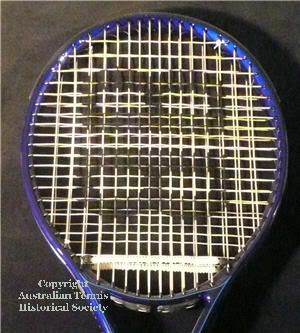
The Blackburne has two full independent sets of strings.
There is no double hitting so it is legal. The gap between the sets is 9mm.
Note that this design is shown in the black and white pic from 1881.
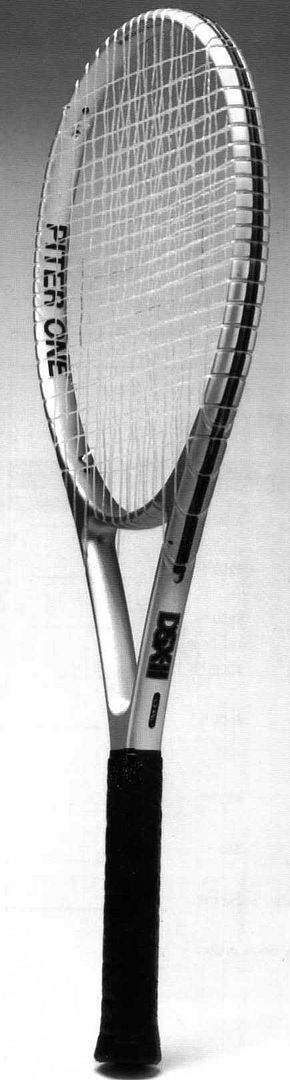
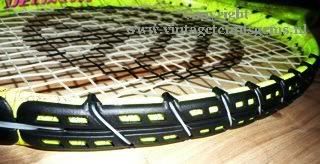
The 2001 racquet below is the DSX 11 which is also doublestrung but with looping strings around the
outside of the frame.
DSX 11 Doublestrung


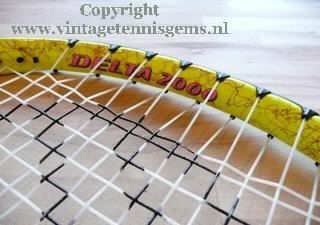
Roxpro Delta 2000


Roxpro Delta 2000

Above  is a Rox Pro Delta 2000 which also features an unusual stringing system.
Photos courtesy of Hans from www.vintagetennisgems.nl

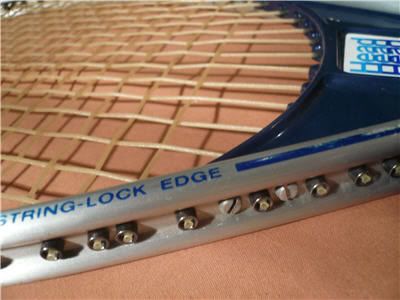
In the early 1980’s, Head marketed this String Lock system which enabled

owners to replace a cross or main as a single short string. No loops here.

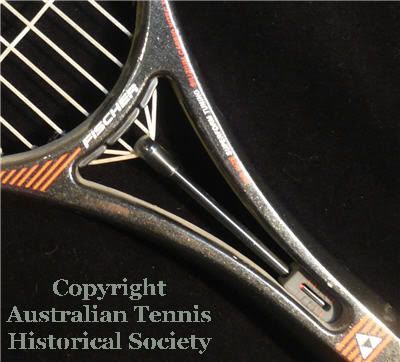
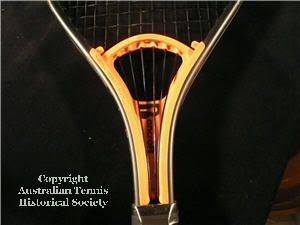
This Fischer Superform Tuning Racquet allows the player to adjust string
tension by using a key lock located in the butt cap.

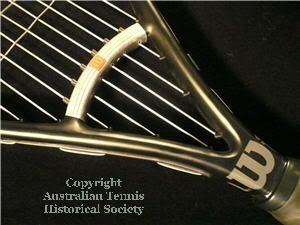
Other examples of Long main stringing by Wilson and Bancroft (Markhill Germany)

It again is interesting to note the new 2010 Prince long string models like the Wilson are on
the market once more.

Micro Stringing

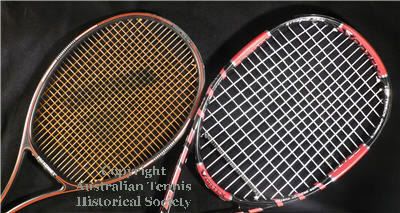
At the very top of this article, you will see how using double stinging in the main and cross strings produces a very tight stringing pattern.  In 1985, Pro Kennex produced a range of Micro Stringing racquets. This one is called the MICRO ACE. This pattern is 28 x 22 compared to the newly released Vortex Extra Spin 14 x16.

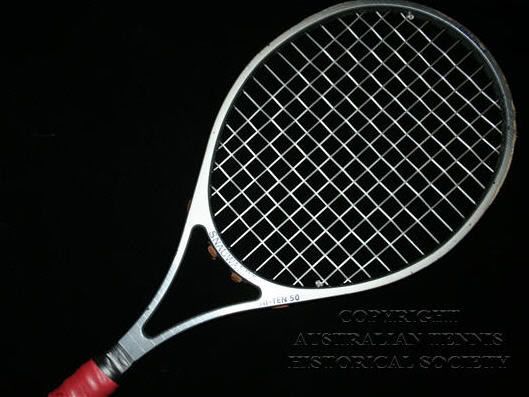
Snauwaert produced this amazing open strung racquet in the late 1980’s early 1990’s.

It is the Hi-Ten 50, graphite model.  The 16 x  12 strings are 1.85mm thick and finding replacement strings is very hard. Apparently whipper snipper grass cutting cord will give the visual effect.


Australian Tennis Racquet Manufacture

From the arrival of tennis in the late 1870’s tennis became the social game and courts began to spring up everywhere at bowls clubs, churches, stand alone tennis clubs were formed and home courts became very popular.The tennis boom globally saw the expansion of equipment suppliers and after reading Siegfried Kuebler’s Book of Tennis Rackets, in which there hundreds of racquet makers listed, very little is known about the Australian industry.

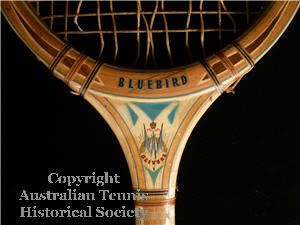
Up to the mid 1920’s most racquets were being imported from England and the USA, but tennis’ popularity reached levels which justified local production of racquets and balls. While there were some boutique racket makers such as A.H.Moore in NSW who promoted his range in the late 1890’s,  the first high volume and successful local maker may well be South Australian firm Stevens & Rowe.  J.T.Stevens was the former head stringer at UK tennis firm F.A.Davis while  E.T Rowe was a local champion player. Based on newspaper articles they produced around a 1000 racquets per year over the 1914 -1924 period  and distributed them around the country. We lose touch with them in the mid 1930’s and possibly they had a connection with Oliver owing to use of the Bluebird name on an E.T.Rowe model in our possession which went onto become an Oliver brand as well.

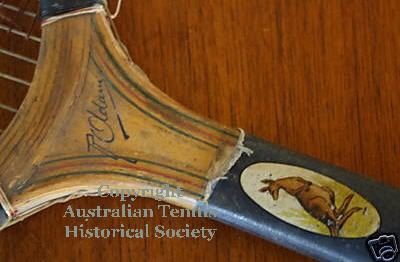
The racquet below was in all probability made in Australia and sold to a Company in France called Orion. Notice that it is a very early flat top and has a kangaroo graphic. Fellow collectors date this from around 1910, although being a 7 ply design it may be mid 1920’s.

The objective of this site is to try and source photos of and list as many models as possible which can be done from old ads, catalogues and even old receipts that people may have at home.

The racquet above was in all probability made in Australia and sold to a Company in France called Orion. Notice that it is a very early flat top and has a kangaroo graphic. Fellow collectors date this from around 1910, although being a 7 ply design it may be mid 1920’s.

One thing you will notice about the Australian racquets is that many are wonderfully presented with colourful decals or patina often over the frame, throat and shaft. Compared to other countries in the 1920’s-1940’s period, the local racquet industry was experiencing hot competition where customer presentation was concerned and this level of finish, in our view is unique to Australia, with all manufacturers presenting outstanding graphical finishes.

Certainly the Australian racquet industry was creating a booming export market in the 1930’s and both the UK and USA were complaining about the inroads Australian makers were having on sales.

Another really interesting aspect to early wood racquets is the collectability of photo decal and signature racquets. Many players were endorsed by sporting goods companies from the very early days and while you will find many from the 50’s featuring Frank Sedgman, Lew Hoad, Ken Rosewall, Margaret Court, Evonne Goolagong, Rod Laver and John Newcombe on Australian made racquets and many Australians found there way onto USA sold racquets thanks to companies such as Chemold and Rawlings which included other Aussies such as Owen Davidson and Tony Roche.  Very rare,  are the early 20’s & 30’s and 40’s racquets featuring Australian players such as James O. Anderson (photo decal and signature), Gerald Patterson (signature), Pat O’Hara Wood (signature), Jim Willard (signature) , Dinny Pails and Nancye Bolton (photodecal). Heading even further back, Ayres in the UK produced the Wilding and S.N.Doust (Australia) signature models around 1910. Anthony Wilding used to sell his Ayres racquets himself as he journeyed around the UK and Europe.

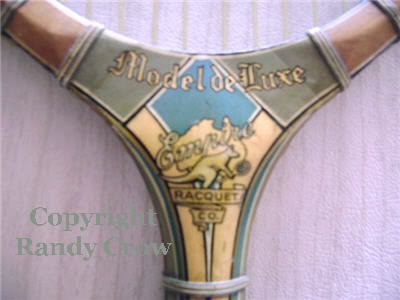
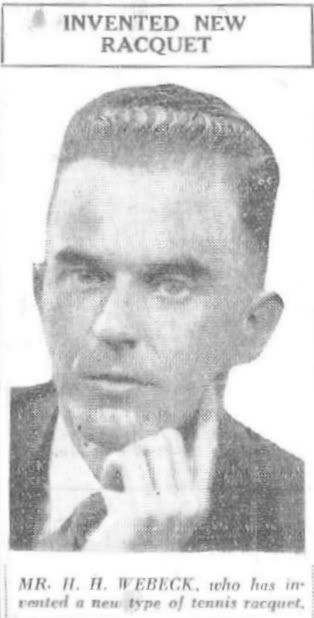
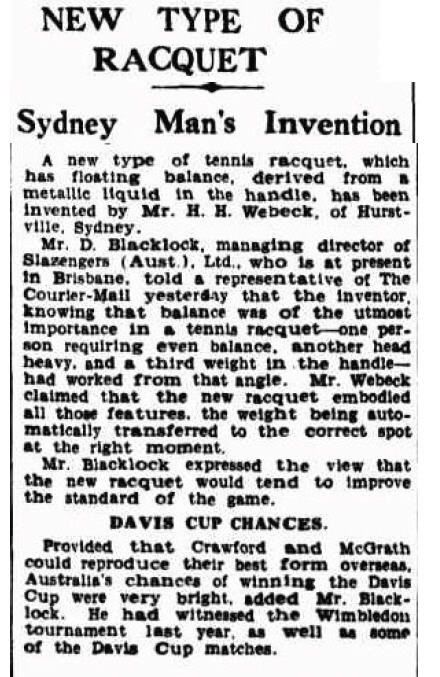
Also alive and well in the 1930’s was inventiveness.  The Empire Racquet company in Sydney created an adjustable balance system inside the racquet handle which featured a wind up device. So did Alexander’s with a model called the “Airstream”. Also, around the same time, Harry Webeck invented a mercury tube system inside the racquet which permitted the weight of the racquet to change during the motion of a shot. Slazenger adopted the patent and introduced models with this feature.  Spalding produced a slotted handle range and this too was designed by a Queenslander and adopted by Spalding in the USA.

Racquet making trends were also being driven from Australia.  More colourful graphics required new skills in air brushing, bindings  and decal making, the semi flat top re emerged thanks to Jack Crawford trying it one day and then using a new model of it to win Wimbledon in 1933.

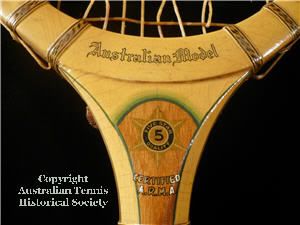
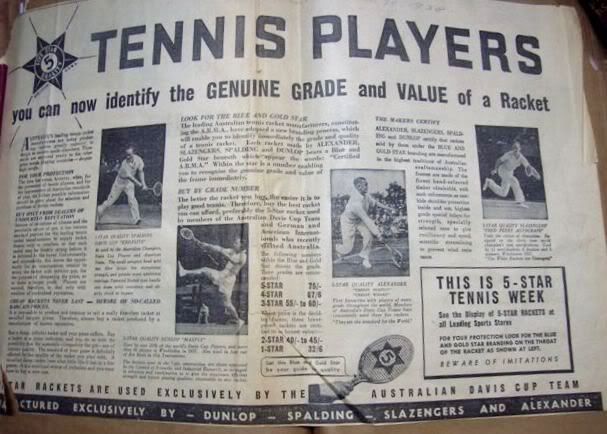
Towards the end of 1938,  the industry created a pricing cartel under a banner called the ARMA (Australian Racket Manufacturers Association)  which permitted fixed prices based on a 5 star quality programme.

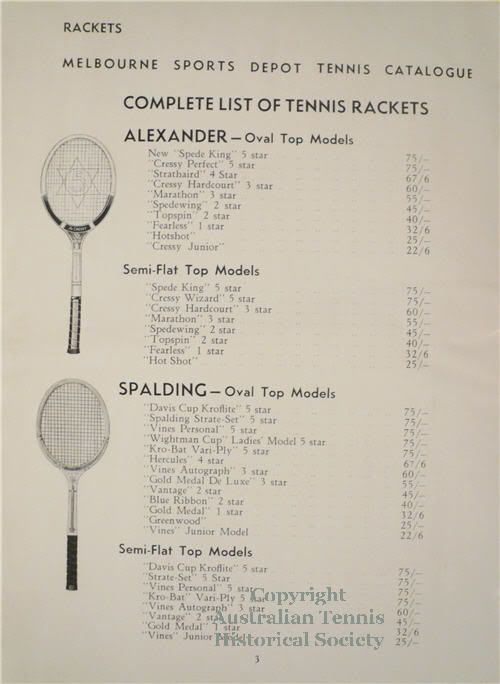
Below is a list of known small and large companies that produced tennis sporting goods in Australia, some photos of various vintage tennis racquets made here and a brand listing from a 1939 Melbourne Sports Depot retail catalogue which is a wonderful record of brands and individual model names.

While we are aware that tradesmen and even some companies made racquets in the late 1880’s to 1900’s we have little any reference at this time, hence the Kangaroo racquet may well be one of the earliest made in Australia.

Here is a list of companies which have come to light from all sources including tennis magazines and newspapers from the era.

Tasmania Racquet Company (pre Alexanders Patent Racquet Company) TAS

A.H.Moore – Sydney NSW (they seemed to sponsor top players of the day in the mid 1890’s)

A.B.Stewart – The Queensland Sports Depot 1891-2 (made, repaired racquets according to ads)

Francis J. Flavell – South Australia (suspect small scale)

The main companies in Australia that produced wood racquets from the 1920’s onwards were:

Alexanders – Tasmania (1921 from a merge between two companies, factory 1926)

Brewers – Victoria (c1928)

Chesterfield – New South Wales (c1923)

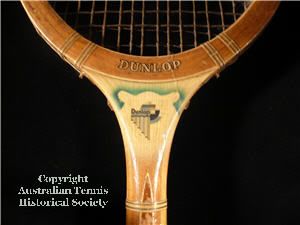
Dunlop (late 1930’s)  Created after Baker & McPherson acquired Empire and in turn was acquired by Dunlop

Hedley’s- Victoria (c 1924)

Oliver – Sth Australia (c 1930’s)

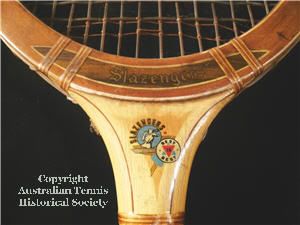
Slazenger NSW (c 1928) In the early 1960’s Dunlop and Slazenger merged

Spalding – Victoria (c1925)

Other smaller Australian companies producing locally or which began to market Australian designed racquets produced offshore are listed below. More information and photos are required given the obscurity and short life span some of these Companies. The other factor is whether some of these locally produced wood racquets were actually produced in-house or sub contracted to larger firms for manufacture.

Addison Bros. Melbourne 1924

Anderson Racquets NSW 1925-1930 

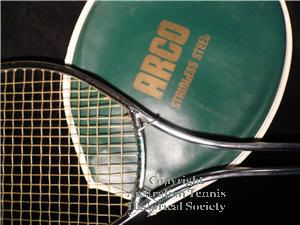
ARCO (Australian Racquet Company) SA – (First stainless steel racquet made in Australia in 1970’s.)

Australian Racket Company (pre-dating ARCO) Other details unknown circa 1930’s-1940’s

Baker & McPherson – New South Wales (Ovalo brand 1920’s)

Campbell’s – Qld

Claude Wood & Co -New South Wales (Seawood Brand 1920’s)

Eastway Brothers – New South Wales (R.E.E Special Racquet, 1920’s)

Empire Racquet Company -New South Wales (late 1920’s 1930’s adjustable weight racquets)

Emrik (c late 1970’s)

Fin- Australian owned Taiwanese made (c early 1980’s)

L.W.Dodge & Co -New South Wales (1920’s)

Master Racquets- QLD (First Aluminium extrusion racquets mid 1970’s)

Moon Racquet Company (VIC mid 1930’s)

Olympic Racquet Company (Petersham NSW)

Speedwood Racquet Company (NSW )

Spider Web – Victoria (mid 1930’s-1971 maybe not as long for racquet making)

Star Shot Tennis Company (Laverton, VIC unsure if racquets made)

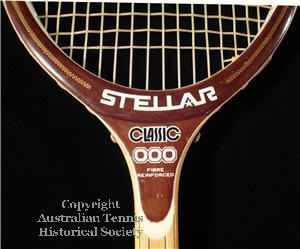
Stellar- imported from various countries (VIC)

Stevens & Rowe (SA) Claim production started in 1914 and concluded around 1933

Tasker Sporting Goods ( acquired Victorian Racquet Company 1971) – Victoria
(started late 1940’s by ex Hedleys staff- brands Champion & Southern Star)

Waddell’s Racket Co. ( Alexandria, NSW)

Walbow Racquet Company (1930’s) Alfred St Mascot, Sydney

We intend developing sections for each company over time and would appreciate any contributions to the list above and information about the racquets produced, brand names etc.

Learn more under the individual racquet manufacturers headings.

Known Australasian player models with signature or photo decal made and, or sold in Australia.

Anthony Wilding & Sidney N. Doust (signature models F.H Ayres UK 1905-1915)
Pat O’Hara Wood Bancroft and Spalding signature models
J.O.Anderson Slazenger, Alexander, Chesterfield and own brand signature & photo decal models (Alexander photo decal 1932)
Gerald Patterson Slazenger signature model
Jim Willard Alexander Signature model
Aubrey Willard had a named racquet by Chesterfield
Dinny Pails Hedley Photodecal
Nancye Wynne Bolton Spalding photo decal
Frank Sedgman Oliver signature, Oliver Photodecal, Dunlop Photodecal, Oliver signature,         Spalding signature, Master QLD signature, Sfida signature
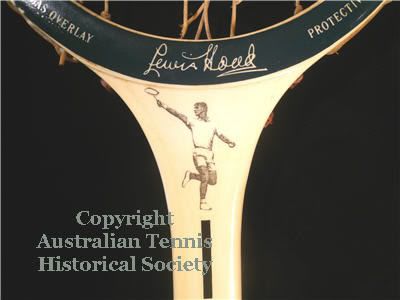
Lew Hoad Dunlop numerous photo decal
Owen Davidson Spalding Photodecal, Chemold signature
Ken Rosewall numerous Slazenger signature and photo decal
Ashley Cooper Spalding signature
Mal Anderson Oliver and Spalding signature
Fred Stolle Spalding signature
Margaret Court Slazenger photo decal
Evonne Goolagong Dunlop photodecal & signature, Emrik signature
Ken McGregor Slazenger signature
Russell Hedge Photodecal coaching model
John Hillebrand Photodecal (special Spalding production run of a coaching model)
Rod Laver Dunlop Photodecal and signature models
John Newcombe Slazenger Photodecal and signature models
Tony Roche Dunlop signature model
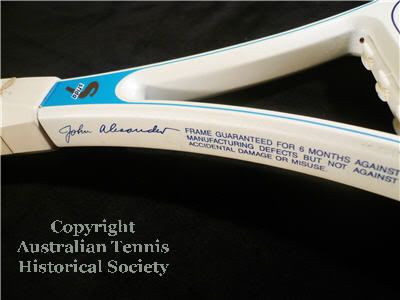
John Alexander had a Spalding named model but a couple Sfida signature models
Kim Warwick named Emrik model

More modern players having names on imported models includes:
Mark Philippoussis Dunlop signature with photo covers
Part Rafter Dunlop signature
Barry Phillips Moore branded models using his hi ten open stringing design

Also found  a Dunlop William Tilden photo decal model and a Slazenger Jack Kramer signature edition which he used here while on tour.

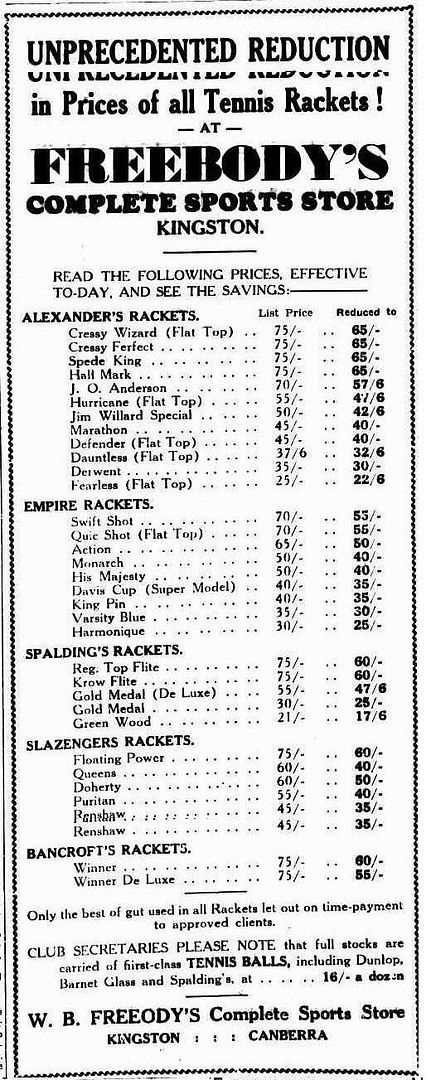
Harry Webeck invented a racquet which contained a mercury tube system that changed the weight distrubution during shot making.Subsequently banned but was tested and patent purchased by Slazenger.They did produce and market the racquet as the “FLOATING POWER” and below all the other pics is an ad in which it appears from 1934.
Subsequently, we found a racquet of a similar design was produced in the mid 1880’s and was called “The Mercury”

Stellar Taiwan Made as used by Pat Cash.  Dunlop UK Lew Hoad .

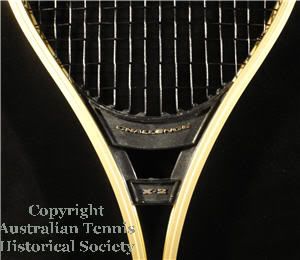
Australian Made Slazenger Challenge XII  with Qld Master Aluminium

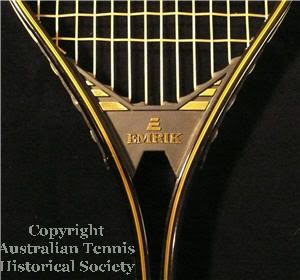
Asian Made Emrik and Fin with unique vibration dampening system

Australian Made Dunlop Volley Aluminium with imported John Alexander Sfida.

victorian racquet company victorian racquet company

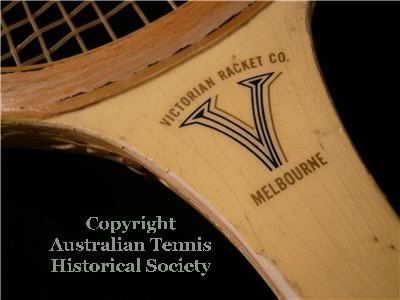
The Victorian Racquet Company evolved from the Tasker (Ex Hedley staff) business.  The primary business was in squash racquets as the ash wood racquets were being phased out due to the wood virtually no longer being available and as the alternate metal materials were arriving from the mainstream makers.

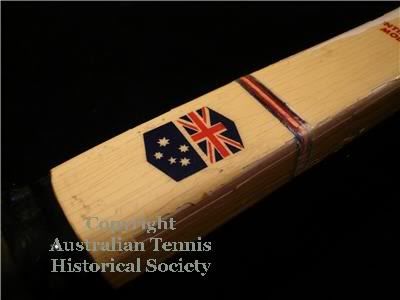
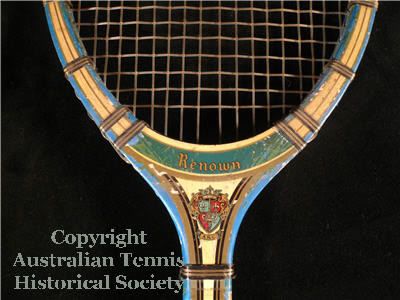
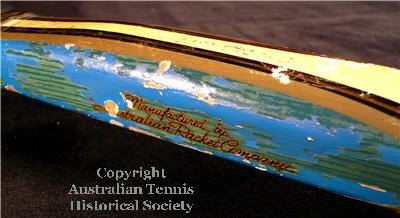
Australian Racket Company RENOWN Australian Racket Company RENOWN

A very obscure, Australian Racket Company model called Renown.  Very little known about this brand.

Early Tennis Racquet Retailing

The arrival of tennis was closely aligned to the early sporting goods stores and clubs which already had an association with cricket. Since Cricket was English and quite popular in the colonies and even in the USA, the ease at which tennis sets could be included with orders that were being sent around the world anyway simply led to rapid distribution. Of course, this was also assisted by the fact that many tennis manufacturers were also cricket equipment makers.

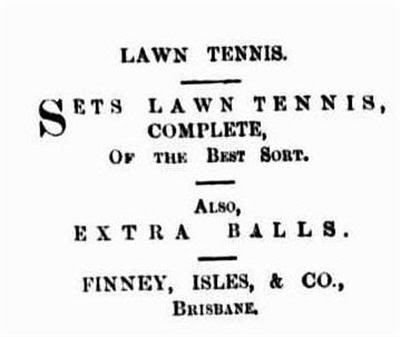
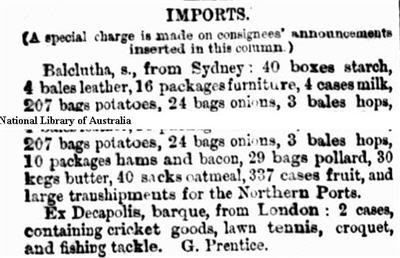
The earliest known retail ad comes from Tasmania in January 1876, but the game flourished quickly as evidenced by these two Queensland ads, the first from The Courier Mail 16-11-1877 and 22-12-1877.

G.Prentice was involved in the local cricket market with his Queensland Cricket Depot in Edward Street and is most likely to have been part of the formation of the Lawn Tennis and Badminton club which met weekly on Wednesdays from early 1878.(happy to be corrected)

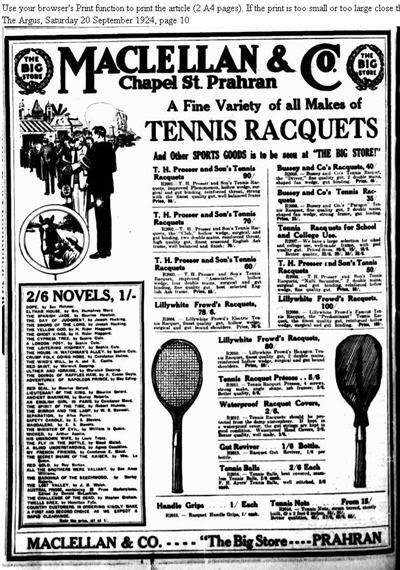
Most racquets came from the UK until the local industry developed. The major brands such as F.H.Ayres, Prossers, Lillywhite Frowds, F.A.Davis, Slazenger were all present and certainly some retailers also produced their own ‘housebrands’.

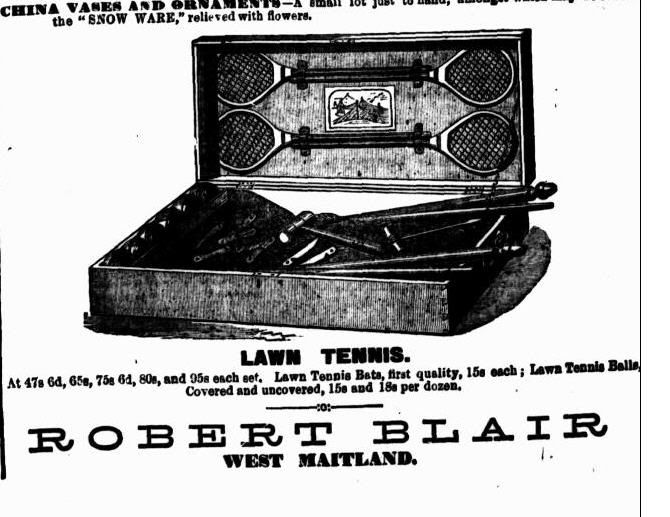
This ad below comes from the Maitland Hunter Valley region of NSW in July 1882 and is the earliest ad we have found with a picture of a tennis set.

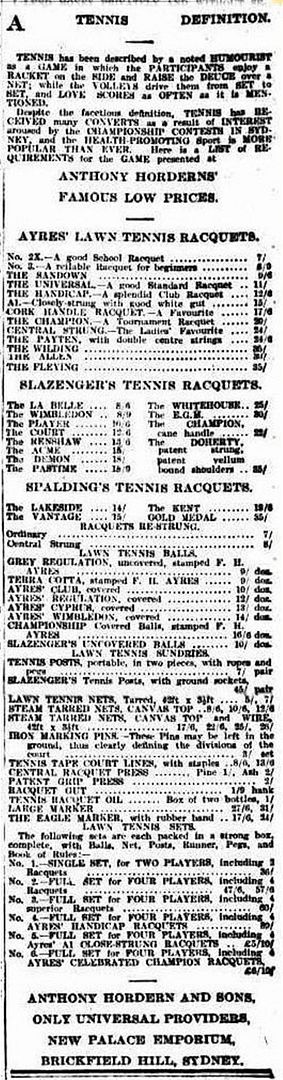
This article/ad from 1909 Sydney provides some social commentary on tennis as it developed interest amongst the population.
Ayres and Slazengers were battling for market share with Ayres having lost the prestigious ball contract at Wimbeldon in 1902 after 20 years to Slazenger.

Players were being sought out to assist with sales of racquets and you will notice the Wilding racquet by Ayres. Anthony Wilding by 1909 had participated in the Australasia Davis Cup wins and was becoming a prominent player. He went onto win Wimbledon in 1910, 1911, 1912, 1913.  Players such as Wilding promoted their racquets at tournaments and received commissions on sales.

This ad (Argus,March 1918) comes from Alcocks, Melbourne well known for billiard tables and other sports. While you may not be able to read closely here it is most useful to find brand names and the period they were sold. This store went on to become the primary retail store for the Melbourne made Brewer racquets. The racquet photo below is the Austral Special indicated in the ad. This import is quite unusual in that has a more oval shape than normal. Until this ad was uncovered we had few clues to the history.

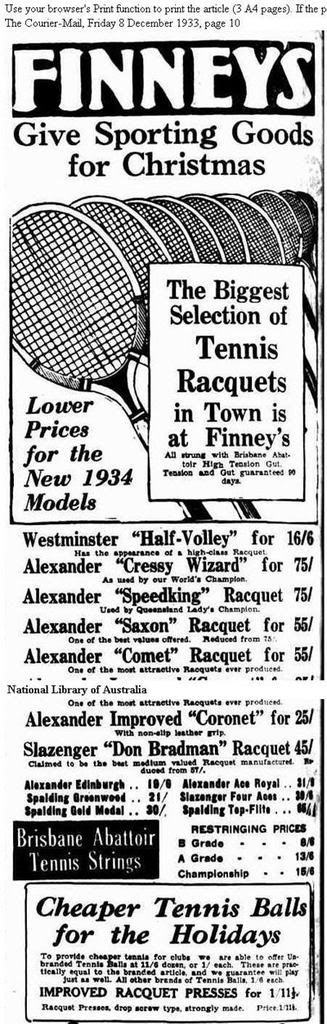
By 1933, we see the Australian brands appearing in ads. Note the Slazenger Don Bradman.
Not sure if this was locally produced but may well have been.

This MSD retail catalogue, below, is from 1938-39 and features Don Budge and Gene Mako on the cover. We are just beginning to learn more about a retail trading cartel which began in this era are under the guise of the ‘Combined Sporting Goods Association’. This body comprised both retail stores and the primary manufacturers and was a direct attempt to limit or prevent competition, which of course today would be highly illegal. Retail stores could veto rival sports stores from opening and manufacturers would simply not supply them directly. In turn, retail stores would only carry racquets from the member manufacturers (Dunlop, Alexander, Slazenger, Spalding) and even retail prices were agreed. You will find the top end racquets displaying the 5 star quality logo CERTIFIED BY THE ARMA (Australian Racquet Manufacturers Association). The set retail price was 75s, as per the newspaper ad launching the program in 1936. This is why other racquets from Brewer, and smaller companies failed to gain distribution beyond a few specialist stores or other non traditional retail outlets. Examples of their racquets are much harder to find for this reason along with the fact that manufacturing of wood racquets was highly labour intensive and with outputs of a couple of hundred per week many of the smaller firms would have struggled to deliver to a mass distribution network. Many Australian owned brands also developed markets overseas, particularly in the USA and examples with US distributor names sometimes appear on Ebay.

ARMA Cartel

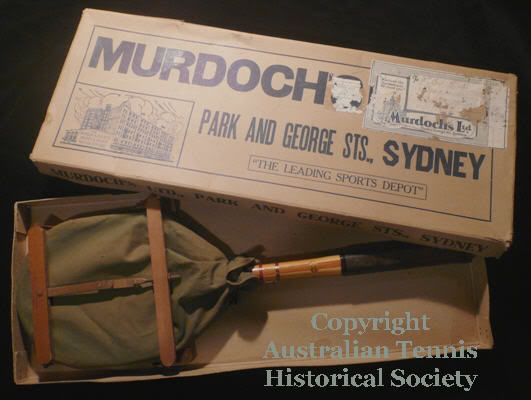
Mail order was also a big business as tennis became popular in all parts of the country. This is a rare example of a retail box.

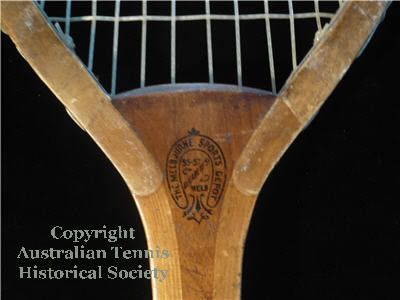
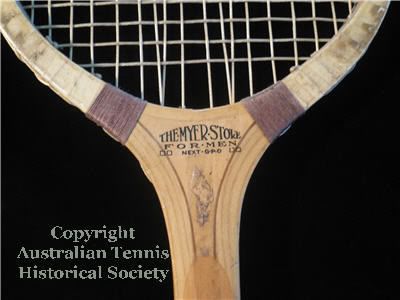
Retailers not only sold branded product from key manufacturers. They often introduced their own brands or imported overseas product and had their name also inscribed.  These two were supplied to Melbourne Sports Depot MSD and the large general commodity retailer Myer.

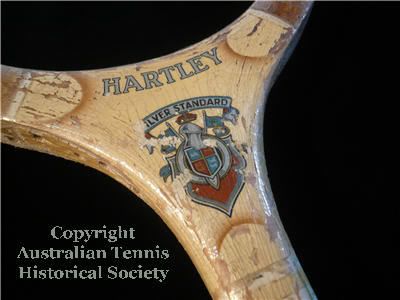
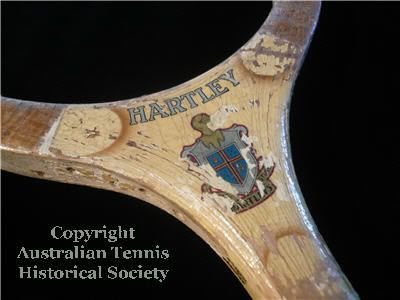
Hartley were a specialist sporting goods store yet they introduced their own racquet which was probably made by Hedley.

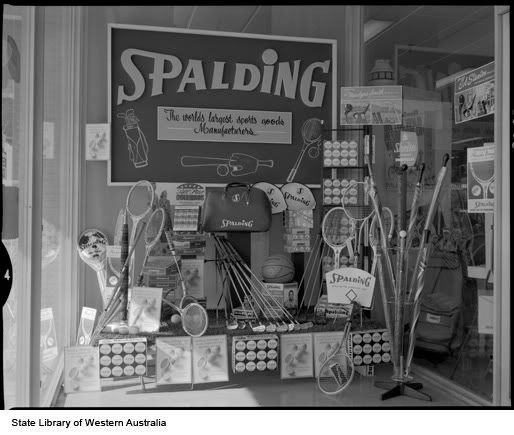
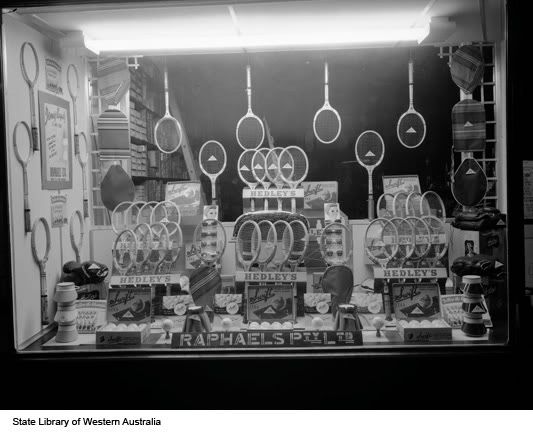
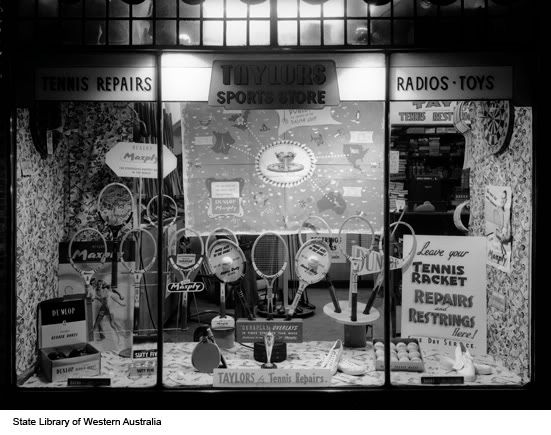
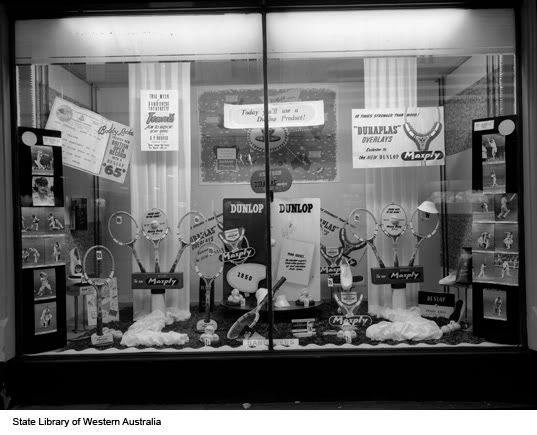
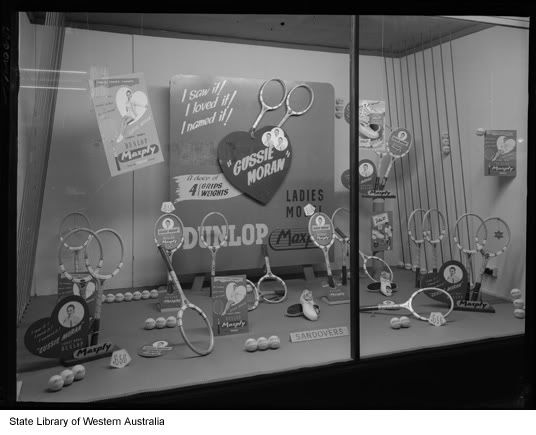
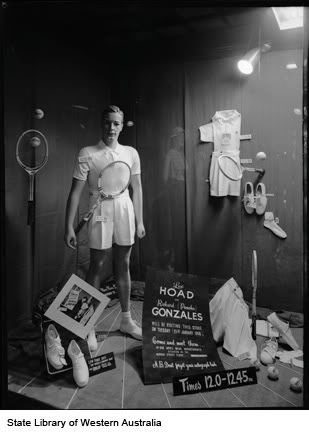
Back in the 1950’s tennis retail stores looked a little different than today. Here are some wonderful photos recovered from the State Library of Western Australia , The Battye Library.

Sporting Goods Salesmen used to visit all the stores to obtain orders and one way a sales rep could show next seasons racquet designs was by carrying scaled down racquets usually around 12″ tall with all graphics and even strings all looking exact.

They are very rare and while this 18″(470mm)  example maybe slightly larger than expected it has been made seemingly in the traditional method with a different wedge insert into the throat, correct cord wrappings, thin strand gut, well drilled holes and graphics.

Another example of unusual tennis memorabilia comes with the large display racquets produced to increase instore branding.

We can guess that these may have first appeared as marketing and advertising was really starting to ramp up within the retail environment.

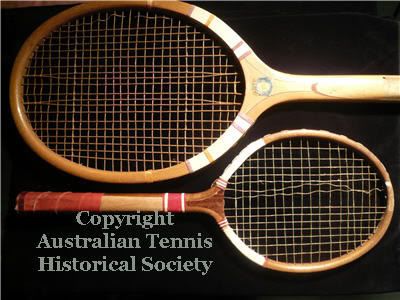
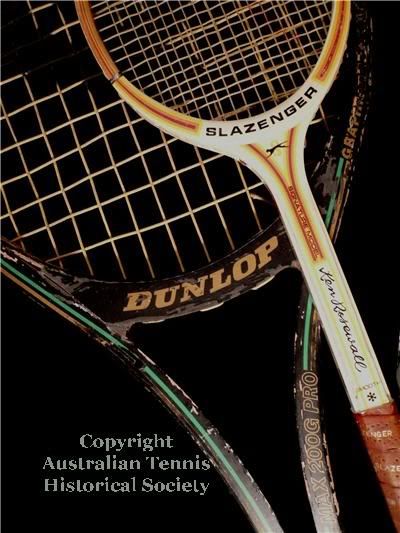
Here is an early 1970’s timber version of the Dunlop Max 200G Pro with a standard racquet for comparison. It stands 1.4 metres and you will find many modern examples in the tennis racquet stores.

Display racquet 200G

Early Racquet Design, Unusual Handles & Metal Frames

In 1874, Major Walter Wingfield created marketing history by packaging racquets, nets, posts and balls into sets to sell as the first outdoor tennis sets. Early racquets were also lop sided however as the game progressed so did the desire to provide racquets more suited to the game and so began an amazing evolution of design, materials and ingenuity. Racquets were beingReal Royal Tennis made for ball games and Real tennis from the early 16th century so by the time lawn tennis came into being the skills of racquet making and stringing were highly developed.

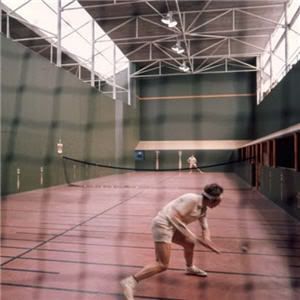
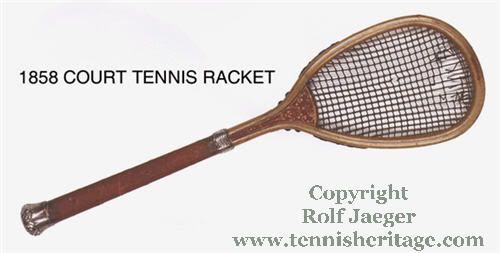
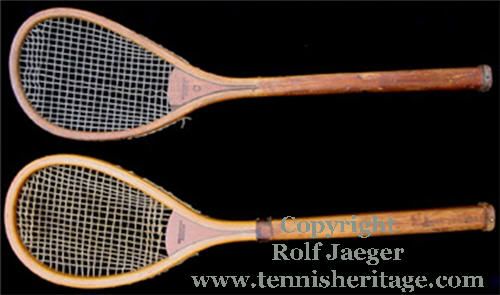
Real (Court) Tennis uses lopsided racquets and the pictures below are of the oldest surviving racquet known dating back to 1858, courtesy of Rolf Jaeger (Tennis Heritage).The picture right is from the National Archive of Australia ref. NAA A6135, K19/5/81/4 and shows the very unusual court featuring the angled roof effect which is included in the field of play.
old racquet

royal tennis racquets

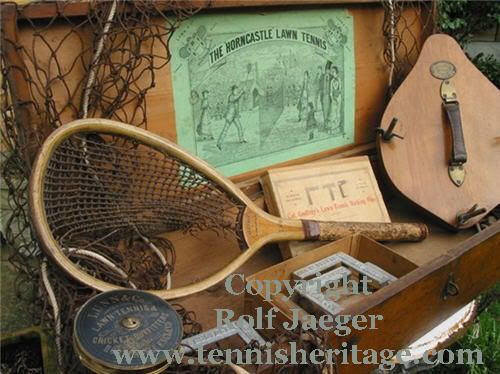
From 1874, the migration of tennis to other countries was quite rapid, as tennis sets like this one proved very popular. We know that tennis sets arrived in Australia soon after they were launched in 1874. A “Wingfield” set arrived in Queensland from the UK in August 1876. In Melbourne, a tennis set certainly arrived in Melbourne to the MCC (Melbourne Cricket Club) pre 1877 and we know that a retail store in Tasmania was advertising “new style” (non Wingfield design) lawn tennis sets in January 1876. The set pictured below shows a cork handled racquet, brass measuring tape, court makers (very rare) and a multi-press which holds more than one racquet. If you have a set let us know.


tennis box set

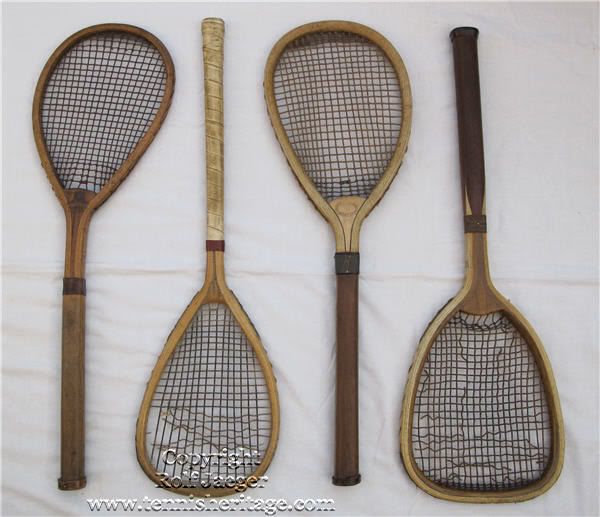
From the inception of lawn tennis racquet design evolved quite quickly in the first fifteen years from the lob sided style to the vertical shape which has persisted through to current times.  Mind you along the way many designers have reverted to unusual shapes as you will see under the unusual racquets section.

This photo below shows the progression.

From left…
a (lightweight) lobbed racket, circa 1876, by Henry Malings, a version of Real Tennis racquet
a Sphairistike racket by French and Co., circa 1875 and stamped accordingly
a (larger framed) lobbed racket by Jefferies, circa 1878. and
a more modern (in 1889) square headed and laminated racket by F.H.Ayres, circa 1886.

Racquet makers sprang up everywhere in the USA, France and the UK as the game blossomed. Often racquet making was an add-on business for example , you will find early wood racquets made by Winchester (famous firearms maker) and very often famous makers like F.H.Ayres, Horsman and Wright & Ditson were making other sporting goods for cricket and baseball.

Patents were taken out for all aspects of racquet design around the world. Head shapes, throat shapes, stringing styles, weight and even string tension adjustment. The diversity and the craftsmanship is what attracts so many racquet collectors into the hobby.

old racquet

Today, the various wooden handles provide considerable interest to collectors. Up until the late 1920’s most racquets had wooden handles after which leather grips became more commonplace.

You could imagine how slippery a wooden grip might become, so ingenious designs included full cork, inlaid cork strips, grooves of varying designs and quite radical handles shapes to help prevent loss of control.

cork handle

fish tail racquet

Baseball grip

Bulbous grip

swallowtail grip


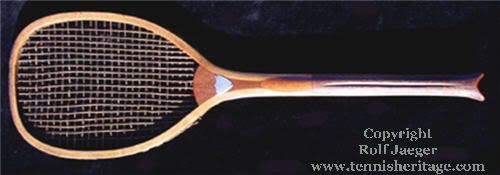
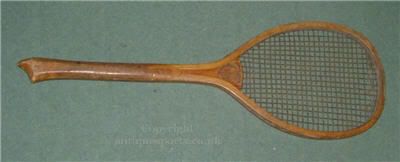
In addition to the famous fishtail, above, we have the bulbous, swallow tail, baseball, fantail and numerous groove patterns. Even when wooden handle shape was quite normal many designs focussed on the groove patterns varying by number, thickness or checker patterns.

You will notice also that the throat sections generally show a convex or concave shape. All through the history of racquet design these shapes are a recurring theme.

In April 2009, we received this photo of yet another new racquet handle shape which many collectors had never seen before.


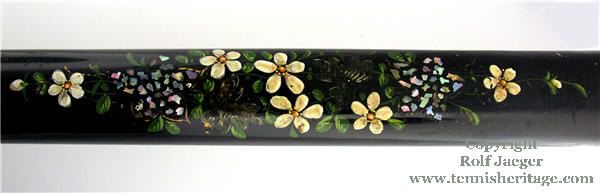
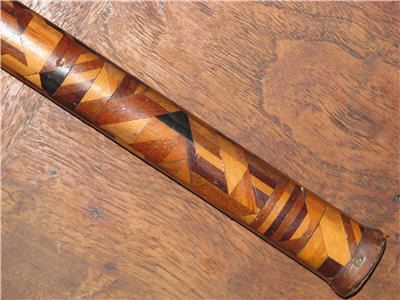
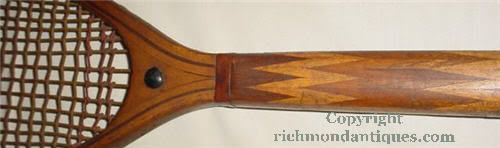
Not only were wood shapes interesting, some of the racquets designed for the more fashionable players featured some very intricate detailing such as this carved handle, inlaid mother of pearl or intricate inlaid wood grips from the late 1880’s.

Inlaid Grip

inl


While wood racquets were the dominant choice of materials, from mid 1880’s tennis racquets made of metal began to appear. It would be fair to say that most people relate metal racquets only to the late 1960’s when Jimmy Connors started to use the very unique, Lacoste (France) designed T 2000 by Wilson.

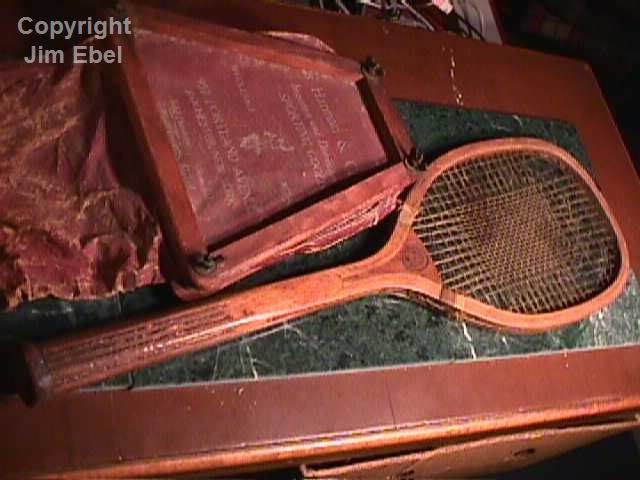
This racquet by Hillman Herbert Cooper, courtesy of USA Collector Randy Crow, even includes a leather strap tension adjustment system.

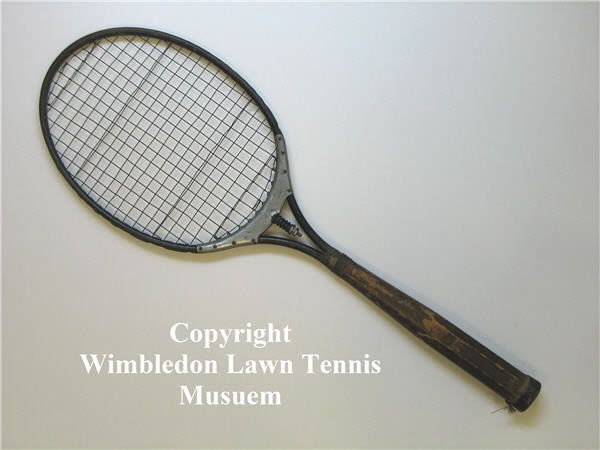
Hobbies metal racquet with spring tension system.
Courtesy Wimbledon Lawn Tennis Museum.

Another Hobbies Model with cord grip

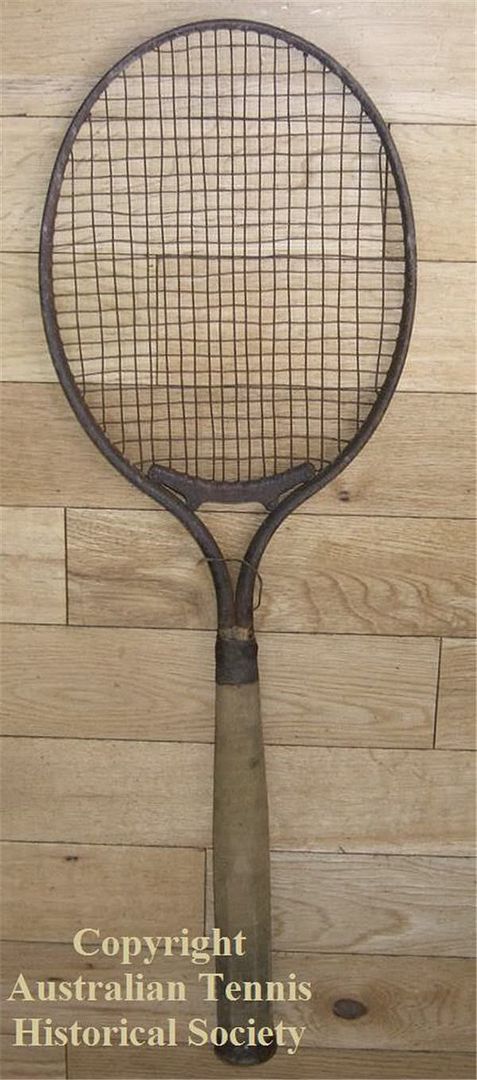
The most successful brands to be produced in metal came from the 1920’s in the form of the Dayton (USA) company which produced metal frame /wood handle racquets from 1923-to the mid 1990’s and the UK Birmingham Aluminium Company’s all 1924 all aluminium racquet called the ‘Birmal’  and like some of Hobbies product featured cord grips that you might expect to have found on early golf clubs.  The strings were often also metal wire offering players year round “all condition” equipment, where wood /gut was subject to damage in damp conditions.

Birmal Aluminium Tennis Racquet c 1924 (sold in Australia)

A Dayton (USA) metal head/strings with wooden scored grip


Oversize Wood Racquets

With the development of lighter and stronger frame materials, the size of the racquet head has grown to deliver a string surface area of up to 137sq.in. The reason a larger head area assists is due to the larger sweet spot which can be created making the game far more enjoyable. For those of you who may never have played with a wooden racquet try it some day for fun. You will certainly appreciate the added skill of bygone players who could serve, volley and smash with force not to dissimilar to todays racquets, albeit that modern materials do add power to players in the professional league.

Wooden racquets with larger heads were certainly experimented with.

This photo from Siegfried Kuebler’s book shows Frank Donisthorpe who used this oversized, racquet in Wimbledon in 1921 & 1922. It was 3″ all round larger than a standard racquet and was double strung.Oversize Racquet 1921

Oversize racquets never really caught the public imagination until Howard Head, then working for Prince, made popular the oversized metal Prince Classic.

There were however some attempts to compete against the new materials using wood and wood composites in the 70’s.

Spalding produced a (made in Belgium by Snauwaert) Challenge Cup Pro which was all wood. Prince also produced the highly collectible Prince Woodie 110sq.in racquet which was a wood graphite combination. The photo below shows the differences between these and a standard woodie.

Racquet Comparison


Below is a photo of a recently acquired Gamma Big Bubba 28″ 137 sq.in. which is legal. In the 1990’s makers also began experimenting with SUPER LONG models up to 32″ in length. The ITF was very concerned and in 1997 introduced rules regarding stringing, frame size and length in order to limit design.

It is amazing how the new graphite, titanium type materials allow larger frames with the strength to deliver sweet spots larger than a complete wood racquet. I hope all the young ones out there appreciate how much harder it was to hit and control a ball with a woodie and why many of the strokes seem more like a slice/push since the objective was to swing with the flight of the ball and use more weight transfer for power. This is still true for today but racquet strength allows for shorter swings and flick shots.

Unusual Modern Tennis Racquets 4

In this section we present some of the modern unusual models that designers have been trying to create some differentiation.

As pointed out previously, many different designs have been tried over the years, but still we have today new racquets being launched with unusual features that have been seen before in one form or another. With changing materials that provide greater strength who knows if these designs will create a new niche in the market that others may follow. They are certainly collector items for the future.


Copy of Vortex ES108

The company is called VORTEX www.vortextennis.com

Now while the racquet is pretty much a traditional shape, the reduced string pattern is designed along the Snauwaert Hi-10 lines of the 90’s which works on the theory that fewer strings increase the grip or cut on a ball.

Having just acquired one, I am amazed at how good this racquet feels and being a bit more of an old school player, the sliced backhands and serves are quite something.

x45 pro 2014 (3)

This new racquet picks up where Snauwaert’s Ergonom left off.  Call the X-45 it is pretty much the modern day version with a sleek look and better graphite. Visit www.X-45.com

POWER ANGLE

Powerangle: Diagonal strung low vibration racquets from the USA Company credited with the MADRAQ. Approved by the ITF for tournament play, these racquets do increase sting life and apply greater spin due to the lower string movement on impact with a ball.Visit www.powerangle.net


JENRO 2edit

JENRO 4 edit

Next we have the removeable head concept by JENRO. The head comes away from the handle as attempted by designs from Tretorn, Maynard and Snauwaert.
In the mid 1980’s a foldable racquet model called JEANROT, made by Snauwaert appeared and this is I guess the latest attempt to create a compact carry racquet.

Visit www.jenrosport.com

neoxxline fullaaa

A blend between the famous offset head of the Snauwaert Ergonom, the curved grip concept of Bio Sports ‘The Gripper’ and the Erge from Sweden here we have the NEOXXLINE (CARVING STAR)  tennis and squash racquets.
As of 2011, all websites no longer functioned so sadly the company we think based in Germany has most likely folded.

the natural handler 2014 (25) edit

The Double handle models are featured in the other sections but both are still being promoted today.
The Handler and The Natural.  There is a new model from The Natural Tennis Company called the Diamond
http://www.naturaltennis.com/os/diamond-racket/

TOALSON PANDORA (1)

This is the 2015 Toalson PANDORA model with a most odd shape head which 46 sq in. on one side and 52 sq in. on the other. The promise is amazing spin but I have no idea on what basis this happens.
 

BABOLAT SIDE DRIVERS (7) EDIT
Babolat Side Driver is a very pretty design with an open shoulder design.

uniflex (2)

The Racetrack design PRO SPEX UNIFLEX model is also quite odd.

ojoee (1)

The OJOEE with this pretty but counter intuitive to good play design is another attempt at string equilibrium tried in the Lacoste Equijet design and Spalding’s Orbitech circular shape.


wilson ultra xp 125

The Wilson XP 125 sq. in. frame features a quite odd long string pattern reminiscent of Prince’s Triple Threat RING and the SP.IN models. Apparently, these were recalled possibly due to breakage at the throat area where all the mains are under full pressure on a small surface area.  However as racquets go super attractive.


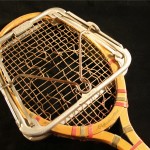
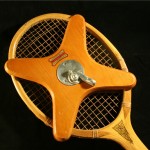
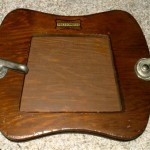
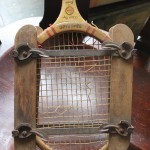
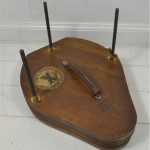
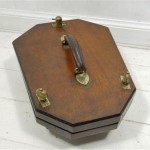
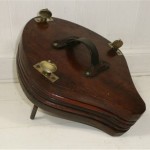
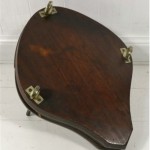
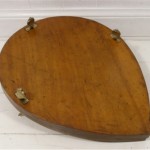
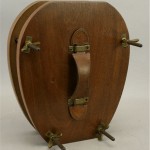
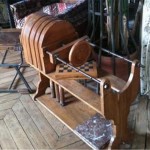
Tennis Racquet Presses

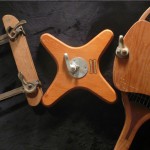
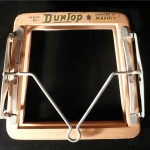
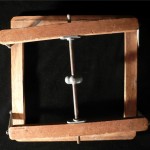
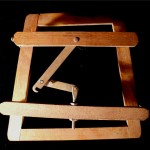
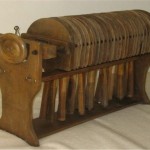
While creative design was certainly evident in the racquet shapes and construction methods, even the humble racquet press came in many shapes and sizes. Presses go back as far as the racquets themselves due to the fact that under enormous pressure from string tautness and combined with often damp or humid conditions racquets would warp or twist out of shape. Presses were essential for longevity of your frame and you will find many racquets have the caution printed on the butt cap, ‘ when not in use store in a press’. Although the ‘one press for one racquet ‘ system was predominant, some of the most highly collectable presses belonged to clubs which held multiple racquets for club players and many touring players had shapely 4-6 racquet presses featuring polished wood and large brass tightening screws.