Arthur B Carvosso Earliest Australian Winner Overseas

In the early 1890′s an ex student of Brisbane Grammar was reported in Scottish literature playing for Edinburgh University and achieving some pretty good results.

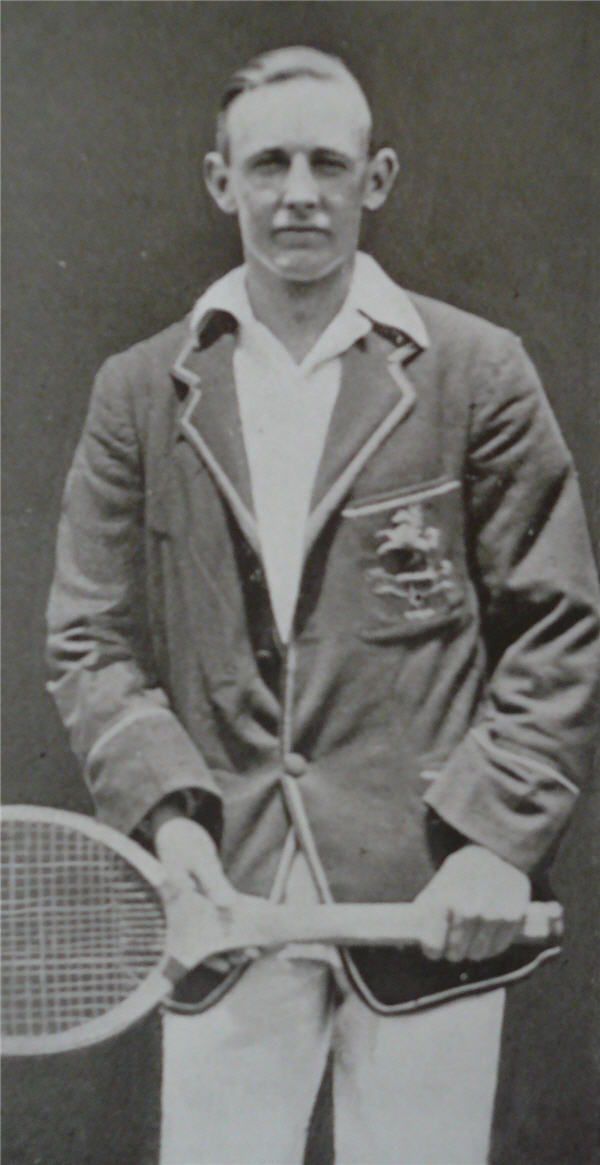
This was Arthur B Carvosso who was a student from 1876 to 1881 which corresponds with a new tennis set arriving with  new English head master Reginald Roe. After completing his BA in Sydney he returned to the school as a science teacher from 1884 to 1888. He decided to further he career by becoming a doctor and so headed for Edinburgh University to gain this qualification. Newspaper articles show that he was regarded as an excellent player prior to leaving and when attending EU quickly adopted tennis as his main pursuit joining the University Team and the famous Whiteside TC.  In his first year 1890 he was in the University second team but by 1891 had been promoted to the front rank.

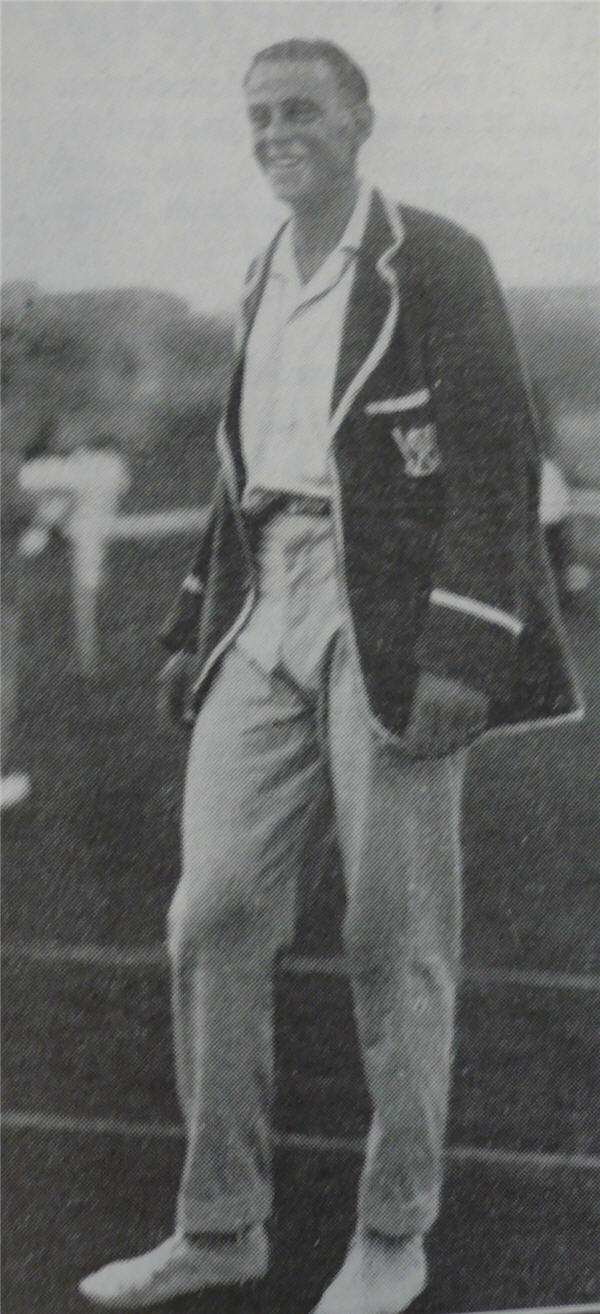
DR A.B Carvosso

Courtesy Brisbane Grammar School

1891 qld player AB Carvosso2

In a stellar year, Arthur entered and won the Open Singles of the Scottish Tennis Championships (but lost in the Challenge round against the defending champion), followed by the South of Scotland Championships a feat he repeated in 1892 along with the North of Scotland championships and Universities of Edinburgh championships.

As such, we cannot record any earlier “major” tournament win overseas by an Australian. Dr. Wilberforce Eaves was only just commencing his tournament journey and played his first Wimbledon in 1892 and was probably the most prominent Australian expat during this era.  Carvosso, was reported to have a very strong forehand and deadly overhead smash.

In 1893, Arthur was a team member of the successful Whiteside TC in the all of England inter-club championships played in London which was a highly regarded event containing many of the top rank players.

Having qualified, Arthur returned to Australia in 1894 and was an active community doctor and parent on the Brisbane Grammar School Old Boys Association committee for many years.

As an historian half the fun is locating information and in this case we contacted Brisbane Grammar School, who kindly supplied the photo and some excellent pics came from a very rare book called Apsects of Scottish Lawn Tennis in which a mention of an Australian was made in the text accompanying the team photo. Edinburgh University had little information and the Wimbledon Museum as able to find some valuable snippets. The most significant project was to find some Carvosso relatives here in Australia. With such a distinctive name  within a couple of phone calls I found a granddaughter who put me in touch with other family members. The hope to find old trophies and photos was dashed when we learnt that many of the silver trophies were melted to produce a silver tray in return for a debt arising from Arthur attending Edinburgh.

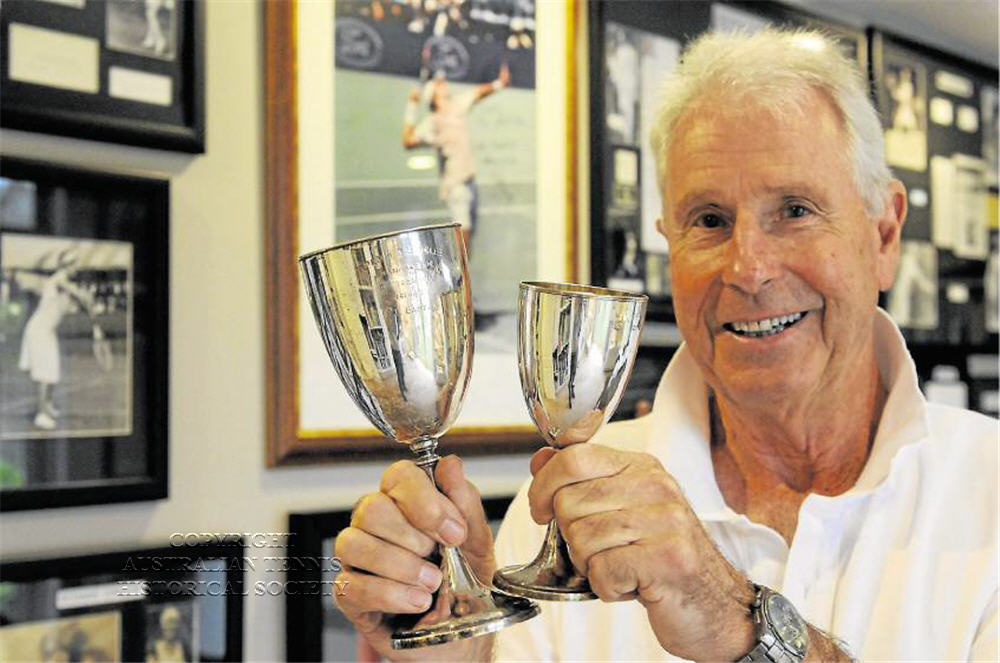
Luckily however we did receive this fantastic photo of the only surviving 1891 trophy, courtesy of the Carvosso family.

DSC_0413

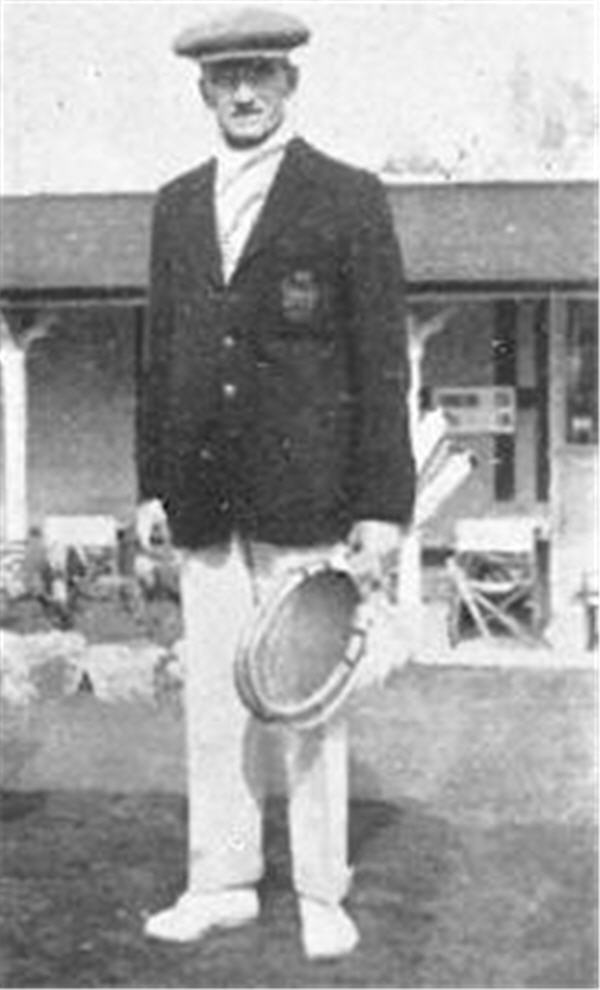
Unknown 1920’s Australian Player- H.L.Barclay

Within Tennis Heritage Australia we have a range of collectors and historians interested in books, equipment, autographs and of course researching the development of the game.

This next story highlights how valuable a small amount of information can unravel a story about an Australian Player who never really gets a mention in any of the published tennis books produced over the years.

Now that is not a criticism, because he is often listed as being British, however with a stroke of good fortune  and with today’s TROVE Australian Newspaper search engine we have been able to join some dots, so to speak about this most accomplished Australian player during the 1920’s.

OUR MYSTERY PLAYER IS HARRY SAMUEL LEWIS BARCLAY

In 1922, he was rated the 4the best Australian over in the UK by A. Wallis Myers a renowned tennis critic and writer.

He was rated in 1925 in the top 12 players in Britain just behind Randolph Lycett, who coincidentally was another Australian who went to the UK to live and enjoy a tennis career in England and Europe.

So how did Harry disappear off the Australian Tennis radar?

HLBarclay 1925 British HardCourt

This story begins a few months ago when a UK auction house was selling some old tennis trophies.  Being inquisitive, I explained that it is difficult to sell them unless your sale descriptions include who won them, the tournament and the dates, so some better pictures were provided.

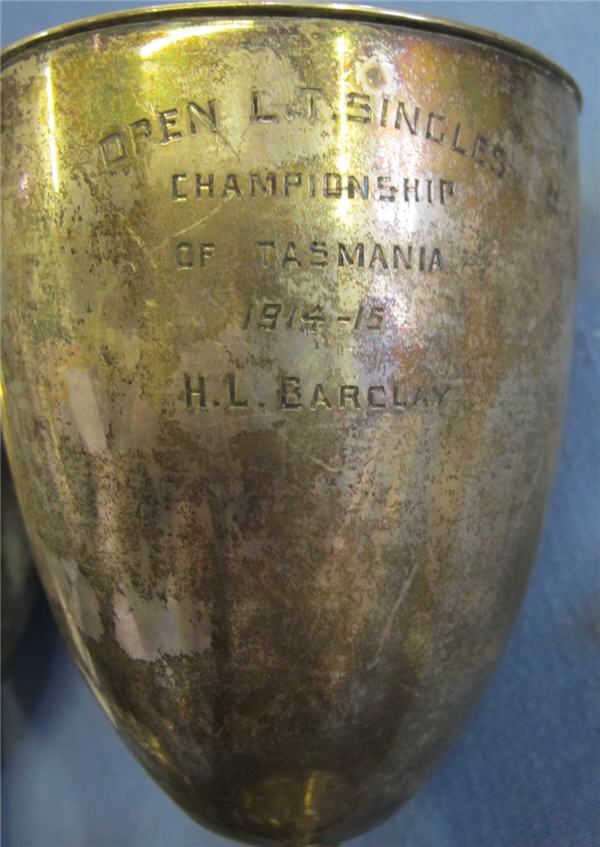
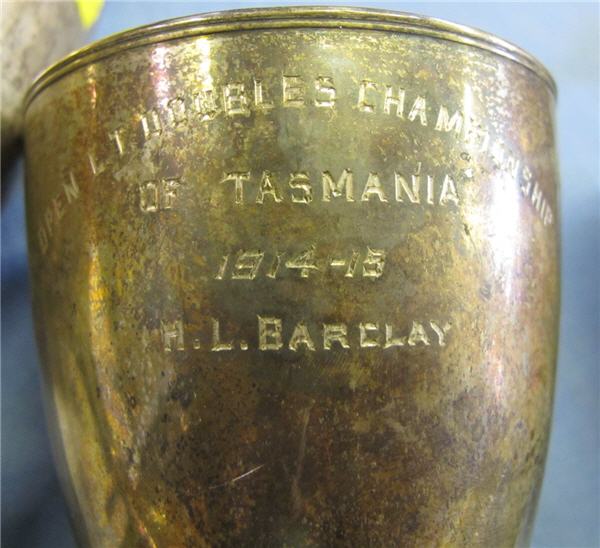
To my amazement there were two trophies from 1915, engraved with Tasmanian Singles and Tasmanian Doubles.

Surely then he must be an Australian and not a British player and so the Trove investigation immediately began.

Harry Samuel Lewis Barclay was born in Beaconsfield,Tasmania on 7th November 1892 and didn’t start playing tennis until 1911.

Only 4 years later aged 23, he won the 1915 Tasmanian State Singles and Doubles Championship playing with W. Sheehan of Alexander Tennis Racket fame (down the track). He had been rising in the ranks in Tasmania and pre the 1915 wins formed part of a Tasmanian team to play the MCC in Melbourne and the 1914 Autumn Championships. After winning the 1915 events he again traveled as part of a Tasmanian team to NSW.

With the outbreak of war, he joined the war effort and spent time on the front lines in the army.  He survived unscathed but at the end of the war became a career soldier and joined the British forces in the Indian Army where he attained the rank of Captain.

Tennis was still a passionate pastime and he played in India winning some major tournaments there and when he could organise extended furloughs would travel into Europe and England for the tennis season.

In 1920,  he played in the Beau Site Tournament in Cannes which was a very prominent tournament attended by many fine UK and European players over the years.  He struck good form and won the event beating  Fisher 6-2, 7-5, 3-6, 7-9, 6-1.

1920 Beau Site Cannes 2

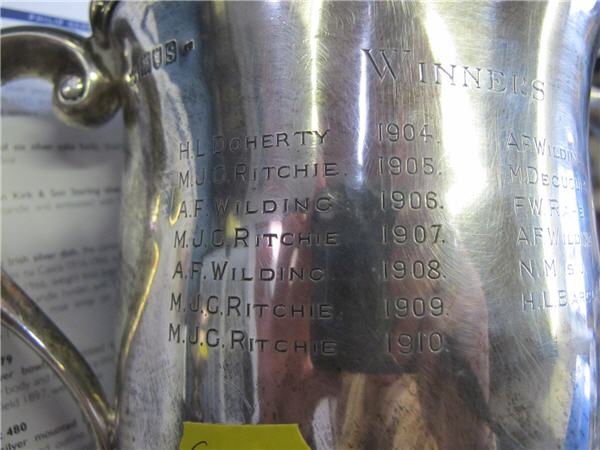
As you can see from the trophy (last entry on the right) he is in fine company.  It was a unique event for this was the first time an Australian had won the well contested title, owing to New Zealander Anthony Wilding defeating his doubles partner, Australian Norman Brookes in a  previous final. He wrote a letter to “Austral” (R.M.Kidston) of the referee giving details of tennis in India and his match at Cannes.

In 1921, he won the Indian Army Singles and Doubles and also the Open Doubles.  He lost the Open Singles in the final but was thoroughly exhausted from playing so many other matches during that day. So much different than players of today.

The Davis Cup association introduced a rule that only British or natural born Indians could play in the inaugural 1921 Indian Davis Cup Team.  It also stated that once a player had played Davis Cup for a country he could not play for another.  Interestingly two Japanese players living in India, Shimidzu and Oakamoto, were forced out of contention to play for India owing to this ruling.

Barclay and other British Officers were eligible to play with other native born Indian representatives including the Fyzee Brothers, M. Sleem and S M Jacob being the best of  the local players. My assumption is that Barclay and co really contributed to the standard of play in India to the point where these players not only could play in the Davis Cup but also achieved notable performances in some of the UK tournaments.

In a letter to the Referee in 1921 he suggested that being selected (if not for Australia, would be a dream he had had since 1915) however he mentioned a shortage of officers as perhaps the reason he could not be selected.

Owing to the ruling about players only playing for the one country,  in 1922 Harry ruled himself out of contention as a player but instead became the team captain. He could have been selected to play for Australia by birth or wait for residential status in England to play for the British Isles.   Harry headed back to the UK to play with the team with the thought that he would be soon living in England.  In the preliminary tournaments he had wins over Italian Davis Cup Player Baron DeMorpurgo in the North London Singles Championship, at Middlesex he beat prominent UK player Gordon Lowe and Australian Davis Cup player Rupert Wertheim.

His first Wimbledon tournament he played to the 3rd round where he was beaten by Brian Gilbert who made the semi finals along with three other Australian players, Anderson, Patterson and Lycett. In doubles with Wertheim, Harry made the Quarter finals being beaten by USA pair George Caner and Dean Mathey in 4 sets.

Over 1923 and 1924, Harry appears to have only spent time playing tennis in India for there is no record of him returning during this period.  He must have been playing regularly for in 1925 he came back to England presumably having left the Indian Army to take up residence in England and was in great form.

The tennis season in 1925 brought Harry tantalisingly close to the top ranks.

Captain Barclay 1924

Of particular note in the regionals was his performance in the KENT championships. Here he was defeated in the singles final by Lycett in 4 sets, remembering that Lycett lost to Patterson in the final on f the 1922 Wimbledon Championship and in doubles Barclay and Crawley lost to Lycett and J.O.Anderson, the Wimbledon Doubles champions in 1922. Lycett won them three time straight with separate partners.  The score at Kent was 3-6, 6-3, 6-8, 6-2, 6-1.  That really does show that even at 33 Barclay was a very strong player.

He won the Hurlingham singles championship but went down to Woosnan, a UK Davis Cup player at Manchester with a newspaper article suggesting Harry had not reached form.  However he and Lycett made the doubles final together losing a very close one to Woosnan and Godfree (both ex Lycett Wimbledon doubles champions) the score 2-6, 3-6, 10-8, 7-5, 6-4. He played J.O.Anderson is a warm up match to Wimbledon and won a set.

He also played in the Torquay singles final against UK Davis Cup player Kingsley.   Together, Barclay and Kingsley also went onto win the British HardCourt Doubles Championship.

In order to join the British Davis Cup team he played in the trial matches and beat Wheatley, yet despite this was overlooked for inclusion in the side, perhaps due to residential qualification issues since he hadn’t been living in England for less than a year. Wheatley, a previous Davis Cup player, was chosen again in 1925. Harry was however selected in an International side which toured Ireland.  He also won numerous UK Army tournaments.

At Wimbledon in 1925, the club introduced a new structure, like today, whereby a list of nominated players was included in the main draw with the final 8 having to compete via qualifying matches.  Harry Barclay was included in the main draw.

The first round was the most telling where he met Theodore Mavrogordato a veteran Davis Cup and  Wimbledon player. It was a massive 5 setter 12-14, 7-5, 6-1,3-6, 6-3 so Harry presumably out ran him in the fifth. The second round was against M. Temple, the third against P.M.Davson and he won both in 3 sets. In the fourth round he defeated Lt. Col. H.G.Mayes again in a close, come from behind 5 setter 6-2, 1-6, 4-6, 6-3, 6-3.  With this win Harry was now in the quarter finals along with fellow Indian player S.M.Jacob. Fyzee had made the fourth round.  This was the start of the French dominance and Harry was to play Jean Borotra.

The 1924 Champion began nervously and Harry was up three games to nil.  What must have been going through his mind. Borotra settled and came back to win the next 6 games straight. In the closer second set, Harry was up 4-3 and then Borotra won the next games. Harry squared at 5 all and then eventually took the second set 7-5.  The newspaper reports the match was a very thrilling one to watch with the scores moving like a pendulum. Even changing tactics in the final set to playing the net to some success, Borotra won the last two sets 6-3, 6-3.

In doubles with Gordon Crole-Rees, they made the third round.

In total Harry played at Wimbledon 8 years starting in 1922 and lastly in 1934.  1925 was his best performance in singles and in doubles 1922 with Australian Rupert Wertheim. After this his form fell away and he was defeated in the first rounds bar a second round in singles in 1931.

In an article from 1949, Harry had along the journey preferred the Christian name Lewis and so is listed as such in the Wimbledon records.  He remained in the Army, retiring as a Lieutenant Colonel and his match against Borotra was indicated as his career highlight.

So thrilled to re discover this additional personality from the 1920’s.

An article about him : Tasmanian Abroad. SUCCESS IN BIG TENNIS. CAPTAIN H. L. BARCLAY’S CHAMPIONSHIPS. International Players. 19TH JUNE 1920

Tennis players throughout Tasmania will be interested to learn of recent doings in the old world of a player who in pre-war days as a comparative youth achieved the distinction of singles and doubles champion of this state – Captain H. L. Barclay. Now an officer of the Imperial Army stationed in lndia, Captain Barclay has latterly been enabled to participate in big match tennis in France and; England, and won very appreciable successes. He has written chattily of recent happenings in the tennis world. My first tennis, he writes, was in Poona (India) last September. I had only been playing a month (the first since 1915), and managed to win the Open Championship Cup there. My leave to England was than granted. From October to February I played nothing but golf, and finished up with a handicap of scratch at Harry Vardon’s club. No lessons, either! In March I went to the French Riviera for the tennis. My doubles game came back quickly, but my condition wasn’t good for singles. At the Menton meeting I got to the final of the Open Doubles. At the Cannes club meeting my partner (Aslangul, a French man) and I heat F. G. Lowe and Dudley, 6-0,6-4, in the semi-final of the Open Doubles, but we were put out by M.G Ritchie and F. M. B. Fisher in the final. At the Beau Site (Cannes) meeting my singles game came back with a vengeance. Fisher was playing great tennis, and had beaten Ritchie and Lowe on his way to the final. I had come through without dropping a set. In the final Fisher and I had a capital match. I won the first set, 6–2, the second 7-6 lost the third 3–6, and after being within a point of match several times lost the fourth, 7-9. In the fifth I made no mistake, and won, 6-1. Ritchie came on the-court at the finish, and said it was the finest tennis he had seen on” the Riviera. Later in the day Aslangul and I were beaten again by Fischer and Ritchie in the doubles final. The Beau Site meeting is the oldest and biggest meeting on the Riviera, and my cup has some famous names on it. They may be interest ;H. L. Doherty-1904-. M. J. G. Ritchie–1905 A. F. Wilding–1906. Ritchie 1907. Wilding 1908, Ritchie-1909. Ritchie-1910. Wilding-1911, Max Decucuis-1912 F. W. Rahe-1913. Wilding l914. N Misu 1919 H. L. Barclay-1920. The newspapers were very nice to me, and predict all kinds of wonderful, things. You will notice this is the first time the Beau Site has been won by an Australian. Brookes unfortunately fell to Wilding when he tried. This week (late in April) I’ve been playing in the Surrey Hard Court championship. The field included Ritchie, Misu, Turnbull, and Sherwell (South Africa). The first three were in the top half. and Sherwell and I were in the bottom lot. Sherwell was my only danger, as he is playing awfully well. Last week at Queens he was 2 sets up and several times had match point against Mavrogordato, but just failed. 1 set about Sherwell in the third round, and beat him, 6–3, 6-0. Yesterday 1 met a man named Bell in the semi final, and was beaten two sets to one. It was appalling, as he is only second class, and people had said how easy he was, and that the cup was mine, etc. Also I was suffering from dysentery (which I picked up in India), but really lost through slackness. Then when I commenced to play everything went wrong. He never once beat me with a stroke. I beat myself. In the top half Ritchie beat Misu, Turnbull (an international) beat Ritchie by very fine tennis, but another “rabbit” beat Turnbull. The same thing happened there as with me. So today the final was held, and l believe Bell won. The moral is:-never under-estimate an opponent, and win 6-0, 6-0 if possible. On the 6th of May unfortunately 1 have to return to India. However, I intend to settle down to hard practice. and hope to get across to England again next year. I have improved greatly, and really believe I can do big things with some hard practice. Lycett is over here now, and he tells he intends to settle down in England. I met and played a good deal with Suzanne Lenglen in France. She’s a tophole player, and has every stroke in her bag. She doesn’t hit hard, but her accuracy is wonderful; also she gets about the court well, and altogether plays the game more like a man. Her strokes are just plain faced racket ones, with never any top spin or cut. She is steady on the low volley, and places them well. Overhead she is not severe, but puts them back with good length. A very short lob she finishes off across court in a very convincing style. By the way she is just’ 21. Off the court I find her very nice, and not at all spoiled. One often hears strange tales of how her father taught her to play by marking the court into small squares! The truth is, to simply used to mark the corners of the base line and get her to drive into them. Mr, G.M. Simond (the well-known player and referee of all the ‘Riviera tournaments) tells a good yarn about Suzanne. Before she was any good see was beaten in a handicap at Nice by a lady who owed 30, and Suzanne was to receive 15-3. Suzanne’s father (or Pa Lenglin, as he is known by) came up to Simond and said in a very indignant manner, “I consider my daughter’s handicap was disgraceful. If you don’t give her a bigger handicap I’ll never allow her to play in a tournament again.” Times have changed since that, eh?

Captain Barclay’s letter will be read with general interest, for recent English cables have brought news of important fixtures in which the international players he mentions have been participating. Lycett, the Victorian. now resident In England, particularly has been prominent .through the medium of the discussion as to the justice of his inclusion in the British Isles Davis Cup team. Suzanne Lenglen recently won all three French championships –singles, ladies’ doubles, and mixed doubles. Captain Barclay sends his regards to his many tennis friends in Tasmania.

The trophies are now back in Tasmania with fellow historian DenisTucker.

tas singles 1915

tas doubles 1915

harry barclay trophies with denis

A tennis journey in the Fifties: John (Peter) Cawthorn

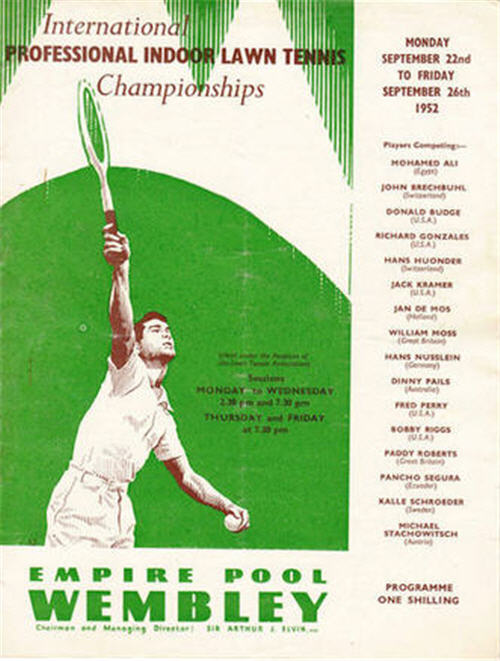
This article started due to finding the name John Cawthorn on UK pro tour programme and wondering who this player was and how he came to be there as a vitrual unknown. We invited John’s brother Tim along to one of our Tennis Heritage Australia meetings  to discuss this “unknown player”. It was, to say the least, a captivating story that interested all those attending.

This is a story about Australian Tennis in the early 1950’s.

Not from a position of Australian Champions but from a perspective of the many other Australians who made great inroads into the International tennis scene but for one reason or another never became household names.

But they could have, had the conditions been different. Sadly, while OPEN tennis was often discussed, even then and before, it wasn’t until 1968 that this occurred. In the interim it meant that amateur players turning pro couldn’t represent their country or play in the large amateur tournaments such as Wimbledon.

John Cawthorn (or Peter), as he was known, represents one of these stories.

Naturally, as a late comer to tennis history,  I had never heard of Peter before and although he died in 2002 we managed to find his brother Raymond (known as Tim, a family thing about names!) to discuss his journey through the tennis world. Tim, was also an A grade pennant player and participant in a few Australian Championships but in all his time as kids perhaps only won a set off Peter. I also found his old partner Don Tregonning to fill in a few gaps as well.

Growing up in Melbourne in the 1940’s Peter attended Box Hill High School, coincidentally the same school as Frank Sedgman. At sport he excelled and as a school prefect captained teams in swimming, football and tennis.

He started playing tennis at 13 1/2 years old. By 17 he was one of the top junior players in Australia having won many of the state junior titles and he played no.1 Linton Cup for Victoria. Players he mixed with included, Merv Rose, George Worthington, Don Tregonning, Brian Tobin, Clive Wilderspin.  Also coming through the junior ranks were the younger NSW pair  Lew Hoad and Ken Rosewall.

However in 1949 Peter Cawthorn was considered Victoria’s top junior and even in some literature as Australia’s top Junior since he won many of the State Junior Championships and the National hardcourt championship.

A p0tential highlight for Peter in 1950 was defeating Lew Hoad in the  Australian Junior Championships at Kooyong to eventually play Ken Rosewall for the title.  The finals match was played after the men’s final and saw Peter in front 6/4, 4/6, 3-1 when rain delayed the entire affair for nearly a week.  With momentum lost, the continuation permitted Rosewall come back to win the 3rd set7/5  and capture the title.

Later that year, Peter headed off to the UK on his own accord to play in various tournaments.  He was only the second player to tour outside of the LTAA touring teams policy so no doubt the administration were not impressed and I suspect Peter didn’t really care either.

Australian Tennis was in its Golden era with a talented list of adult players and the up and coming juniors.

Peter was joined in England by mate Don Tregonning in 1951 and together and separately they won many of the top regional tournaments leading up to Queen’s and Wimbledon. When they got together they were close to broke but making a few finals where they could cash in trophy money plus with expenses paid for by the clubs running the tournaments meant they could sustain themselves by playing around the counties.


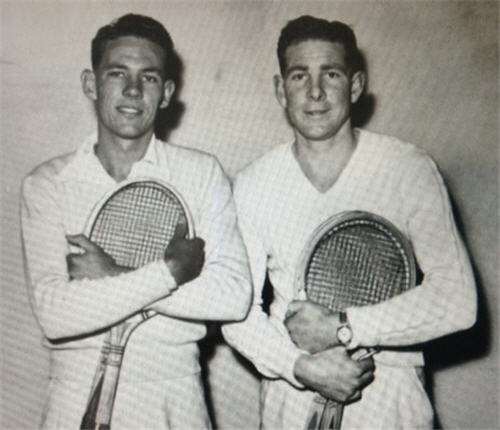
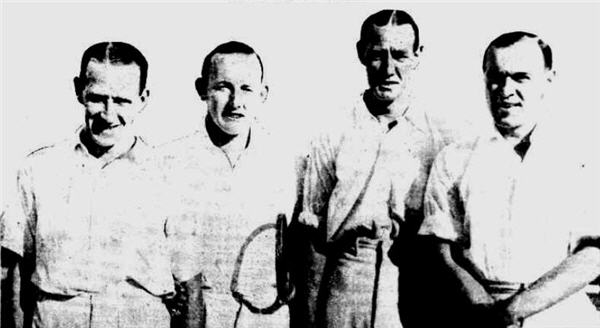
Don Tregonning and Peter Cawthorn

At Birmingham, Peter won the title beating Ignacy Tloczynski, former Polish Davis Cup player, 6-2, 7-9, 6-3.

In another shock win Peter beat Davis Cup hopeful John Horn in the semis 6-0, 6-3 at the Cumberland tournament in April.

He also played British Champion Tony Mottram in the Essex Connaught Club tournament taking the first set much to the shock of local pundits.

At Queens, Peter had the best win of his tour defeating Brazilian champion Almeda Vieira and was eventually beaten by Vladimir Cernik. But,  the Aussies dominated with Rose, McGregor and  Sedgman all making the 1/4’s. Peter and Don also did very well in the doubles.  Frank made the finals but lost to South African Eric Sturgess in the final probably due to not playing as many lead in tournaments as Peter and Don had done.

Peter and Don along with a host of other Aussies played at Wimbledon. Peter made it to the second round in singles and the third round in both Doubles and Mixed. Don and Peter were knocked out by Drobny and Sturgess the eventual losing finalists to Sedgman and McGregor.

1952 was a similar year for Peter and Don. They escaped the UK winter by heading across to India and Paksitan for a couple of months and then onto the Egyptian Tournament. Peter made the  1/4 finals being defeated by Ismail Adel 5/7, 6/3, 6/3. They made the doubles semi finals also, being defeated by Polish player Skonecki and USA’s Straight Clarke.

He played UK Davis Cup hopeful Gerald Oakley in the Cumberland finals and beat him 6/3,6/1 prompting the press to hail him as yet another strong prospect for Australia.

Unfortunately Wimbledon success proved illusive once more. It was the year Frank Sedgman won singles, doubles (2nd time) and the  mixed. Although beaten in the first round of singles and doubles, Peter and Lorna Cornell made the 4th round in the mixed being defeated by Australian Don Candy and USA’s Pat Todd.

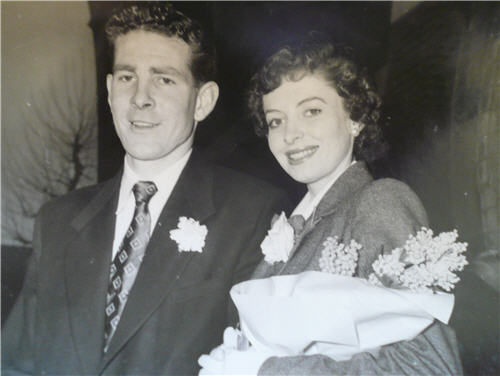
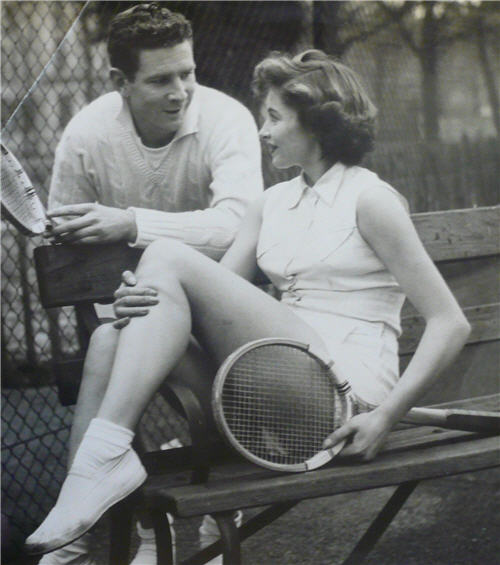
In January 1953, Peter announced his engagement to British heart throb, Lorna Cornell.  Lorna was an exceptional tennis player in her own right having won the Wimbledon Junior Championships in 1949 and 1950.


She was also modelling for Ted Tinling and was capturing attention in the same way as US player / model Gussie Moran.  Lorna appeared in a few editions of Australian Tennis modelling some of the latest Wimbledon wear.

To ensure an income Peter,aged 23. turned pro in February and thus his potential to enter the record books of major tournaments was at an end, probably way to early on reflection, but there was no money in tennis for the players, just some expenses recovery and that was it.

Peter turned to coaching and began a tennis school to which he invited Don Tregonning back from Australia to the UK to help organise. Peter was also coaching his new wife who continued to play the major amateur events and even after three daughters returned to play for the UK in the Wightman cup.

Mid 1953,  he and Don played in the Slazenger Pro tournament at Scarborough and was beaten by the other new Pro to join the ranks, namely, Frank Sedgman.


In November he played at the Pro Tournament at Lyon to be beaten  by Gonzales but not before he had taken the first set 3/6, 6/1, 6/2.  He also played Riggs in Switzerland taking a set off him also.
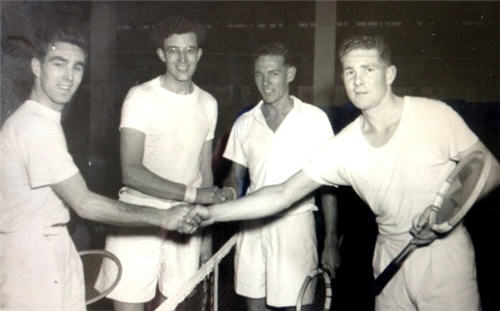
Peter is on the right next to Don.

Against a depleted (few Australian & USA player involvement)  field Peter won the Slazenger Pro Tournaments in 1954 and 1956. In 1954 he beat A G Roberts an ex Davis Cup player 6/4, 7/5, 7/5 and with Don won the doubles.

He was also conducting short term coaching roles for various Davis Cup teams over this period The Irish and Pakistan in 1955, Spanish, Irish and Dutch teams in 1956 and Dutch and German teams in 1958.

In 1958, he played along with Australians Jack Arkinstall, Lew Hoad, Ken Rosewall, George Worthington and Frank Sedgman.  The main stars were Gonzales, Trabert and Segura but Frank won this event.


Australians were prominent in this event 1958

Sedgman and Peter played many pro doubles events and one over 90% of matches.  Against Hoad, he lost in 5 sets in a  pro event conducted in Spain.  He also beat Tony Trabert, having just one Wimbledon in a French Pro event 6/2, 6/2, 6/2.

At the end of 1958, he was convinced by mates like Pancho Segura that the USA was the place to be and Peter headed over to the Rochester Country Club as the club pro, a position he held for 25 years.

Organising tournaments was part of the job and in one encounter with USA Davis Cup player Barry McKay, 15 years his junior, Peter beat him.

He returned to Australia in early 200o to retire, even with a pension from the Rochester Club for valuable services rendered.  Lorna and Peter were divorced prior to his leaving for the USA and he re married a couple of times.

Looking back on Peter,  he was probably unlucky to be an Aussie tennis player. We had so many talented players in the Davis Cup team from 1949 to the 1960’s.  Peter was probably marginally under them all.  He certainly would have made the British Davis Cup team and he clearly had the game to play with the pro’s.  Really, it came down to him turning professional at a young age because he had to finance a family. Who knows if it was the open era we may well have seen Peter in the Davis Cup team photos of the late 50’s.

Thanks to Tim (brother of Peter) and Don.


World Tennis Magazine (US) Australians On Tour from 1950’s & 1960’s editions

Recently we received approval from the magazine owner Randolph Walker to scan some photos from some of the early World Tennis Magazines from the 1950’s and 1960’s. In 2011, I was lucky enough to buy a package of magazines from Sydney that spanned late 1950’s to early 1980’s.

Greatly appreciated since copyright laws these days tend to stymie access to any material which deserves to be shared.

Naturally, throughout this period, the Aussies were well represented so it is again with sincere thanks to Randolph that we can present an array of photos not normally available.

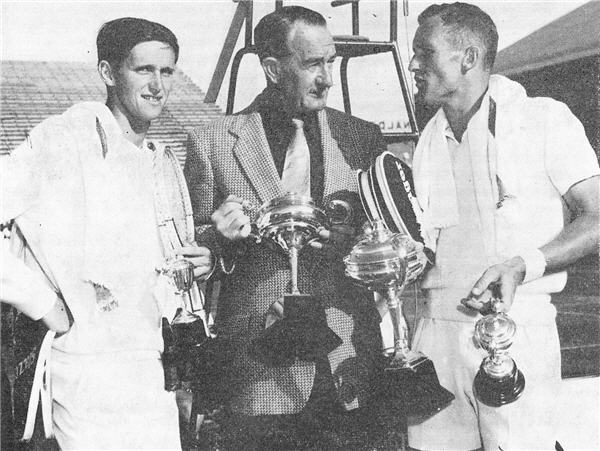
1939 Davis Cup Team Quist, McGrath, Crawford and captain Sproule

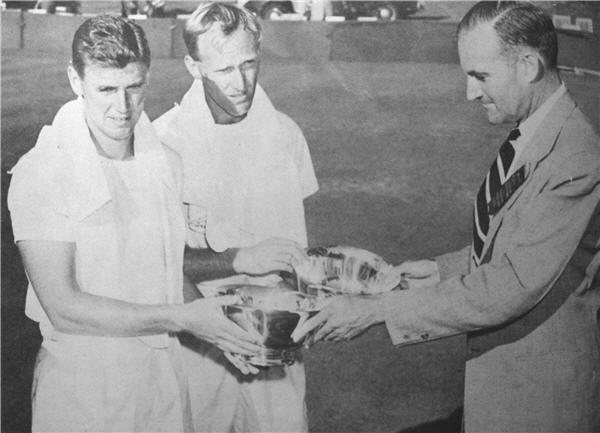
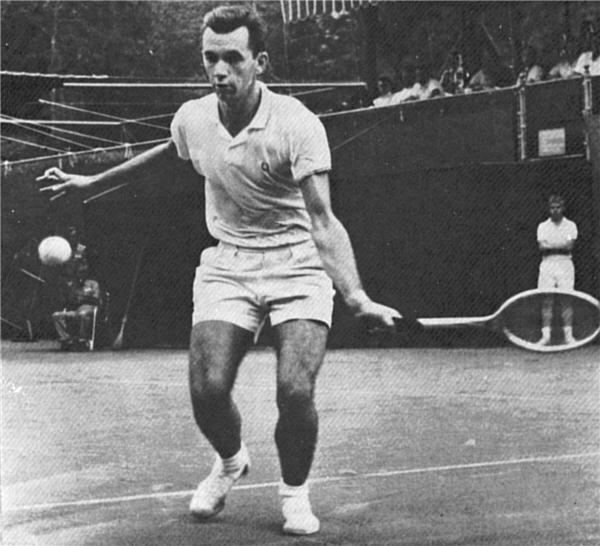
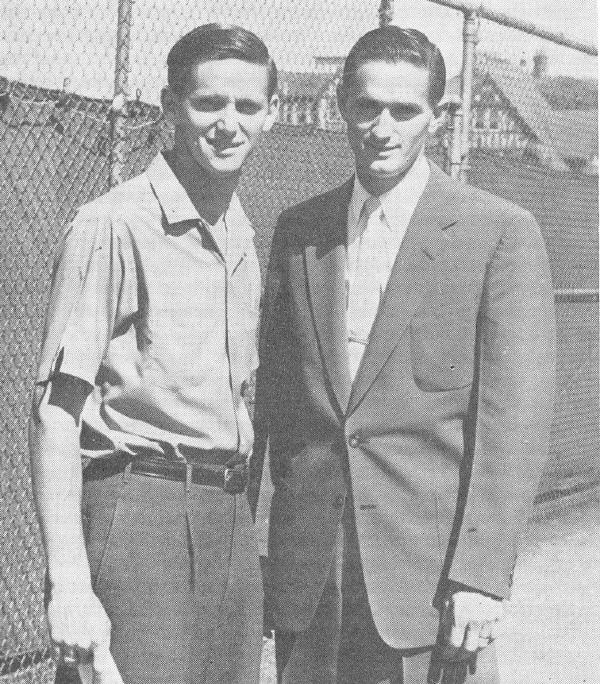
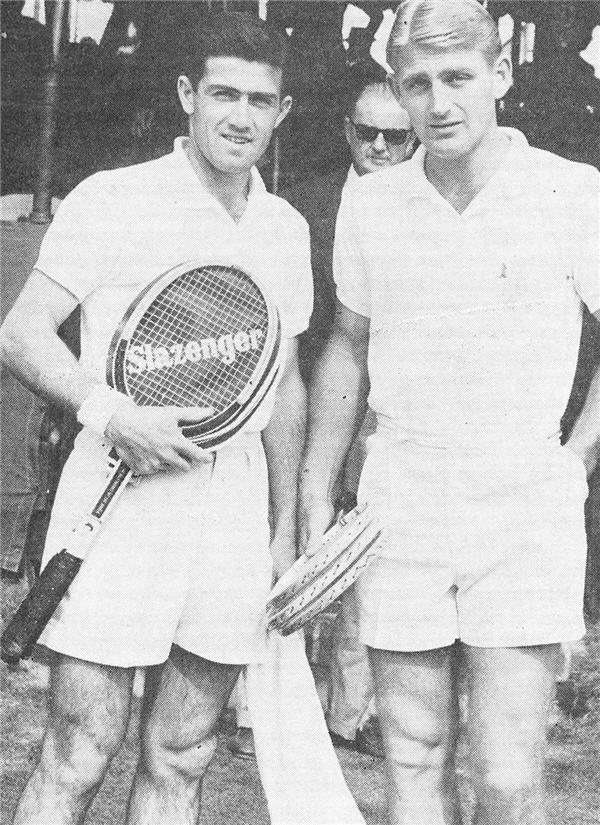
Longwood USA final 1950, Frank Sedgman and John Bromwich

Merv Rose 1957

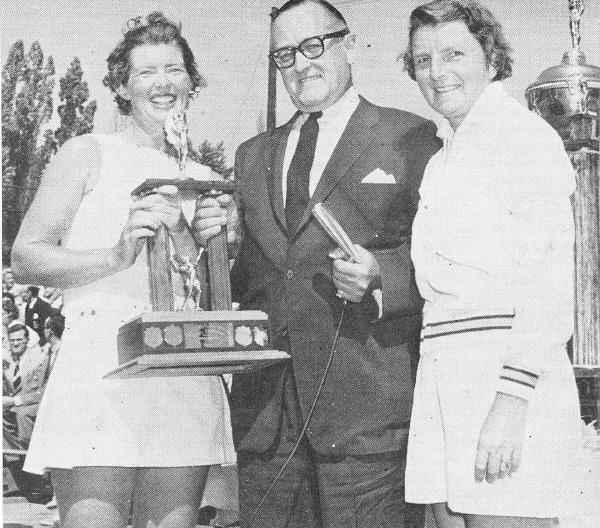
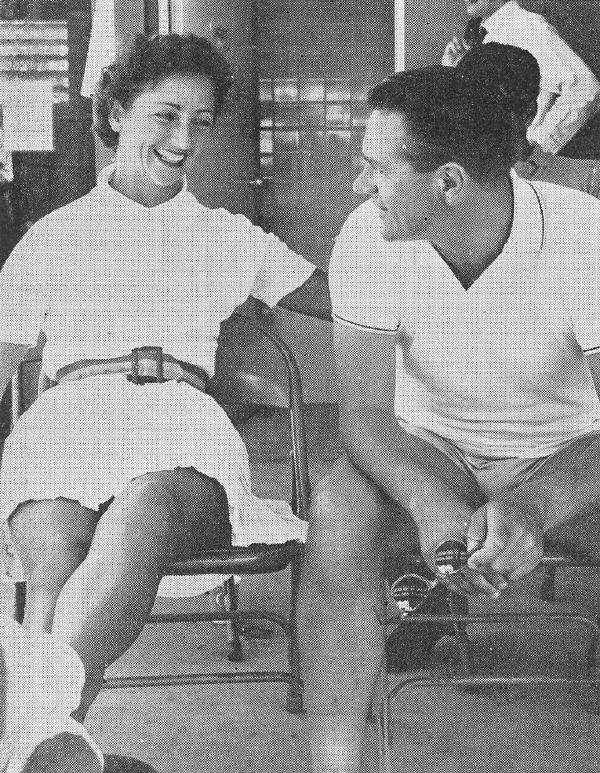
Thelma Long still playing competitive tennis (right) 1958

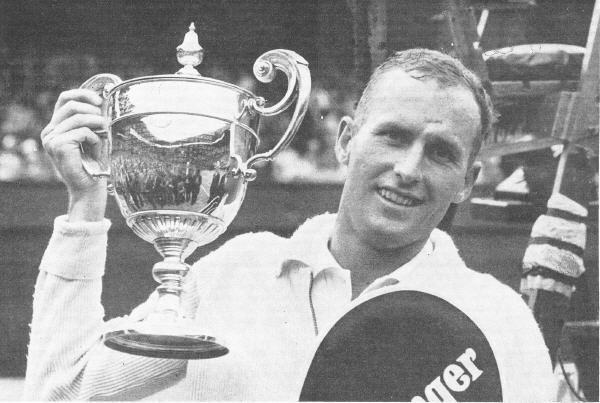
1960, Neale Fraser wins Wimbledon

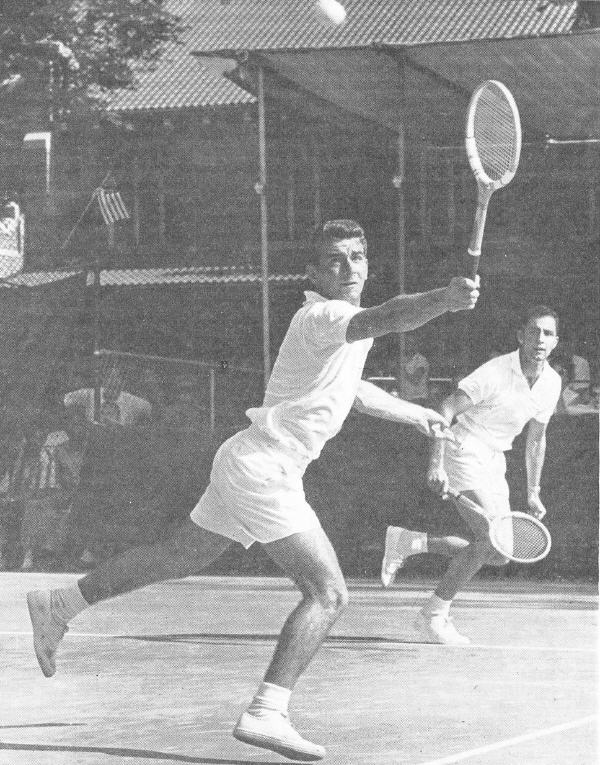
Marty Mulligan with Bob Hewitt 1960

1961 Jack Crawford with Roy Emerson and Neale Fraser

1962 Italian Championships Laver defeats Emerson

John Newcombe, Orange County USA Juniors

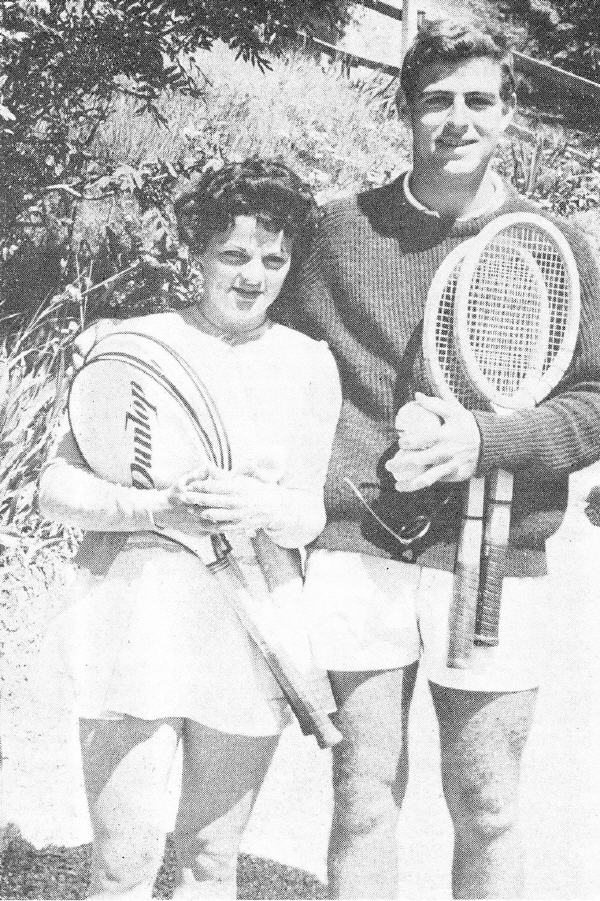
John Sharpe & Jill Blackman

Margaret Hellyer marries Carlos Fernandez 1961

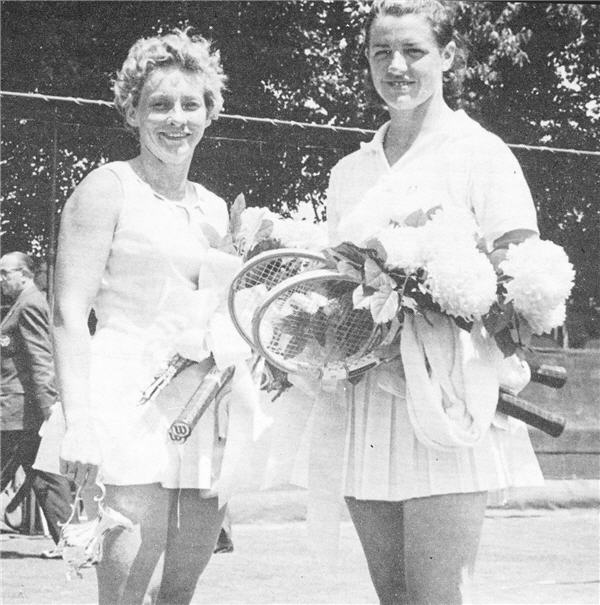
Dulcie Whittaker and Margaret Smith 1961

Lesley Turner defeating Margaret Smith in the Italian 1969

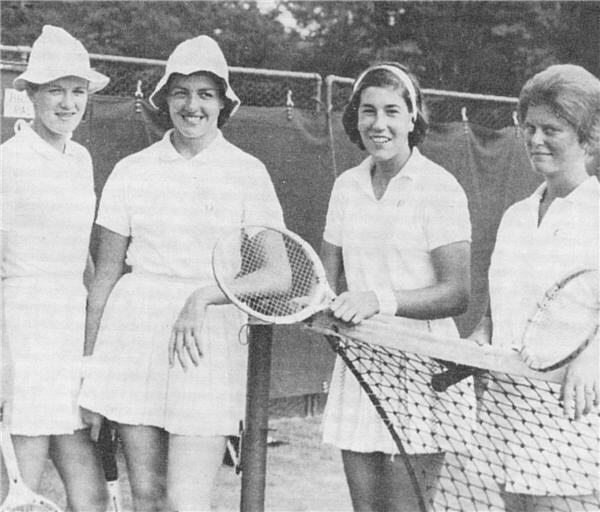
Jan Lehane and Lesley Turner 1963

John Cody, OS Tennis coach 1963

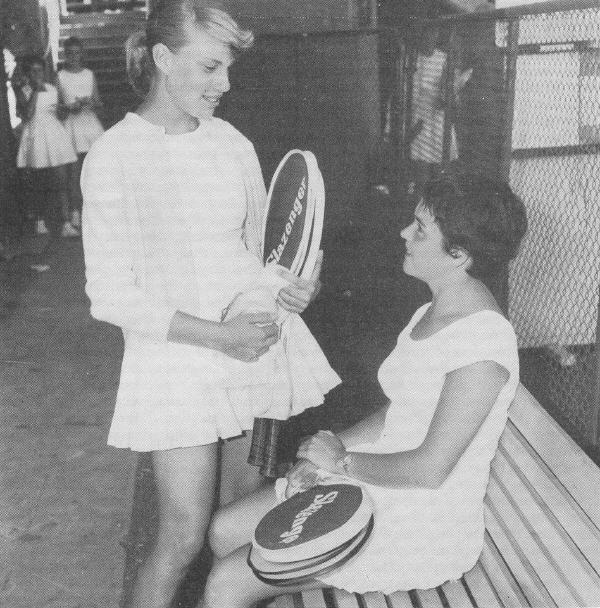
1963 Australian Women’s Team

Lesley Turner wins the French 1963

Roy and Joy Emerson 1963

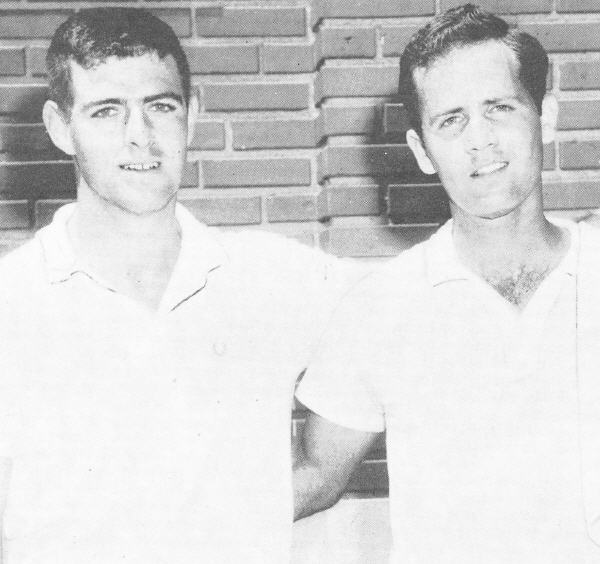
Mal and Roy married sisters to become brothers in law.  They look like brothers don’t they?

Margaret Smith defeating Darlene Hard Orange County USA 1963

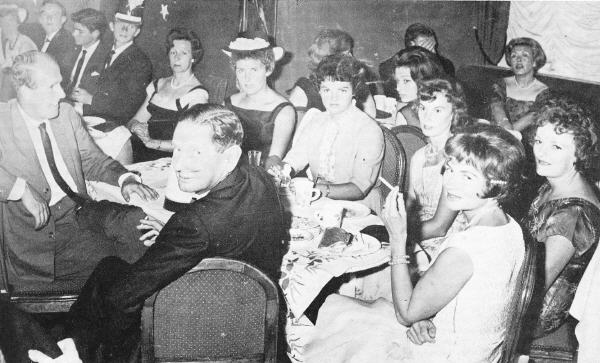
Lesley Turner and Jan Lehane at a flashy dinner party 1963

Robyn Ebbern and Margaret Smith (left) team up

Lorraine Coghlan with Margaret Smith 1960

Warren Woodcock (right and below) 1960 played the USA circuit

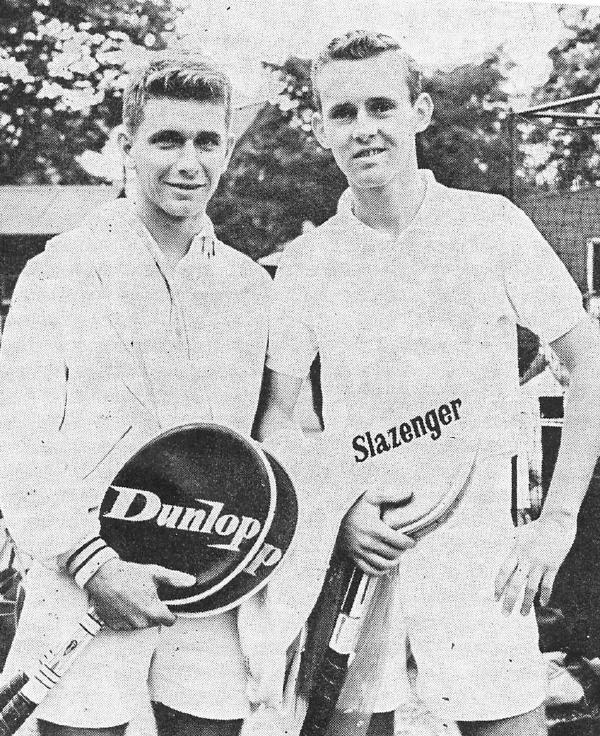
Rod Laver with Bob Mark 1960

Kay Denning with Val Wicks 1960

John Sharpe 1960

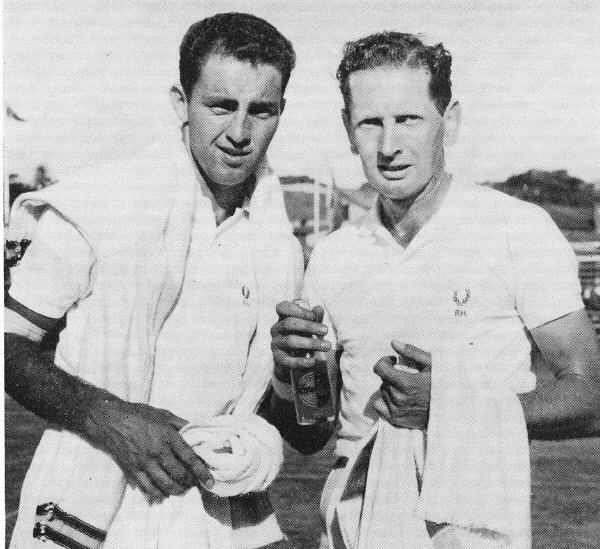
Bob Hewitt and Bob Howe 1960

Margaret Hellyer in Egypt 1960

Ken and Lew on the pro tour 1959

Marty Mulligan with Ken Fletcher 1959

Marie Martin 1959

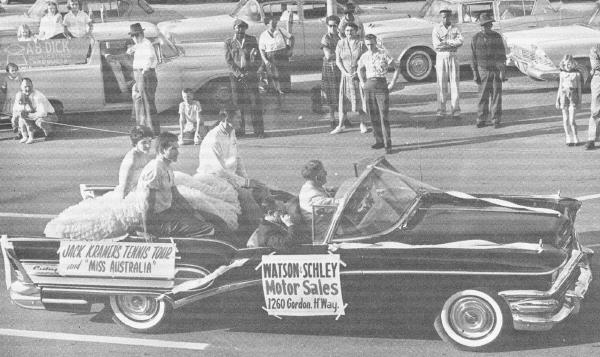
Pro tour procession for Cooper and Anderson 1959

Bob Howe in the New Zealand final 1959

Barry and Anne Phillips Moore 1959

Line Umpires having a joke with Ashley Cooper

Top Australian Men in the 1920’s

As a consequence of World War 1 and despite the heavy loss of life, including many Australasian  tennis players such as Anthony Wilding, Arthur O’Hara Wood and Jack Addison to name only 3, tennis in the 1920’s got off to a slow start since many of the young up and comers were enlisted and had no opportunity to develop their game.

Many of  potential leading Australians were serving in the forces via the UK and the first post war Wimbledon tournament in 1919, postponed since 1914, became an ideal platform to launch the new Australian Tennis assault. Out of respect for the losses in the war, the USA was most gracious indeed by not sending major players to Wimbledon or the Davis Cup challenge rounds.

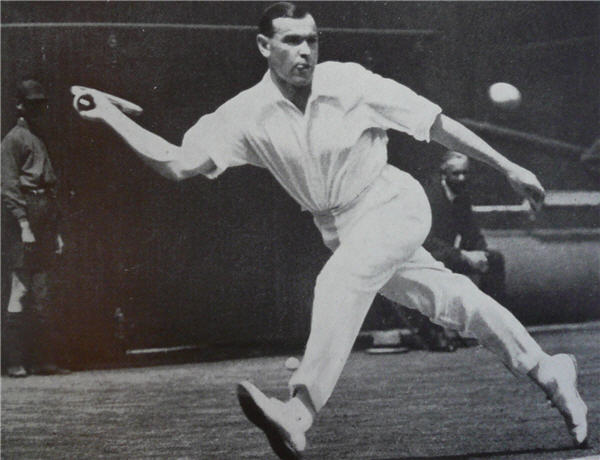
Gerald Patterson, Ron.V.Thomas and Pat O’Hara Wood all made it to the Wimbledon quarter finals and Patterson defeated UK champion Kingscote for the right to play Norman Brookes, the 1914 Australian title holder, in the challenge round. At half his age and Norman and not being in good health throughout the later stages of the war,  Patterson won the title without much effort.

In the men’s doubles, seven out of the eight finalists were from Australasia. Brookes – Patterson were defeated by O’Hara Wood and Thomas and Rod Heath and Randolph Lycett made the final which the former won. Lycett won the mixed with US lady E.Ryan.  A great Australian result.

Significantly, Brookes and Patterson & co went onwards to the USA to play in the 1919 US national championships, defeating Tilden and Vincent Richards in the doubles final. In the singles, while all the Australians were knocked out in the fourth round, Patterson lost to eventual winner Johnston in 5 sets, who then went on to defeat Tilden in straight sets in the final.

Pat O’Hara Wood was a fine doubles player and with Ron Thomas won the Australian Doubles championship in 1919/1920 and the singles in 1920 & 1923.

Gerald Patterson was born in 1895 in Victoria and was the nephew of Dame Nellie Melba, Australia’s then world famous opera singer. In 1911, aged 15 his talent saw him as the Senior Blue for tennis in Victoria and in 1912 he played in the Victorian championships against the visiting British Davis Cup team and beat A.E.Beamish.  He played fellow junior from NSW and soon rival, J.O.Anderson in the Public Schools Victorian Championships. He also played interstate tennis with her son George Armstrong. He was 6′ tall and modeled his game on the world champion Norman Brookes except his powerful serve and overhead compensated for his relatively weak backhand.  Norman Brookes in later years rued tremendously inspiring Patterson’s backhand for if he had a stronger all round game it may well have changed tennis results throughout the 1920’s.

James Outram Anderson was born 1894 in NSW so the interstate rivalry was at the fore. He also enjoyed a major victory in 1912 over the strong champion player of the day, H.A.Parker.  J.O beat Patterson in that first Victorian schoolboys tournament in 3 sets.  James had five brothers, all with the middle name Outram and all were competent tennis players. An E.O.Anderson was on the 1913 Australasian Davis Cup selection committee.

Both lads almost won their state championships in 1913 beating notable players on the way and succumbing to slightly older more experienced players Rod Heath (first Australasian Singles  Champion 1905) and Pat O’Hara Wood. Patterson was 2-1 sets up and lead in the final set but lost to Heath and Pat O’Hara Wood defeated Anderson.  Anderson also beat British player P.G.Lowe in that year providing a strong comparative performance to Patterson. Clearly they were destined for greater things.

J.O.Anderson

Gerald Patterson

The Davis cup team in 1919 comprised Brookes, R.V.Thomas and new timers Patterson and Anderson. As the cup was retained by Australia through the war, the British Isles sent a team to play in Sydney mid Jan 1920. Australasia won 4-1 with the only loss being Anderson by Kingscote.  Brookes played in the doubles with Patterson.

Over at Wimbledon in 1920, Patterson was defeated by Tilden in the Challenge round, but won the mixed playing with Suzanne Lenglen over Lycett and  Miss Ryan (USA-one of 5 consecutive finals together, 3 wins 2 losses both to Australian male opponents).

The 1920 Davis Cup was conducted in New Zealand as part of the relationship under the “Australasian” banner which shared Davis Cup play between Australian cities and New Zealand.  The team comprised Brookes, Patterson, RV Thomas and Rod Heath.  Brookes and Patterson played the singles and doubles against Tilden and Johnston and lost them all to the USA, scores 5-0 (rubbers). Although Brookes was in his early 40’s he actually provided more competition than Patterson and had he been 10 years younger may well have altered the outcome. Both Aussies took Tilden to 4 sets and while Johnston beat Patterson who won only 4 games, Brookes took Johnston to another tight 4 set match.

After New Zealand the teams came back to Australia for a Melbourne exhibition series against Victoria in mid January 1921. Tilden beat Hawkes 6-3,6-3, O’Hara Wood 8-6, 6-2 and Brookes 6-1,6-4.  Washburn, the USA 3rd player beat Patterson , but Patterson beat Johnston on day 3.  The Australians did win 2 out of the 3 doubles the highlight being Brookes and O’Hara Wood win over Tilden /Johnston 6-4, 7-5, 6-3.

The two teams then traveled to Sydney for a repeat match. The USA players won this 7-2 but again Brookes and O’Hara Wood won against Tilden and Johnston 6-3, 8-6, 4-6, 7-5.  In singles, Brookes took Tilden to three sets losing a close match regarded highly by the 3500 spectators, 4-6, 8-6, 5-7.

Tilden was really starting his career at this time and over the next 5 years would come dominate men’s tennis to the point where he was labelled that best tennis player to have played the game, a badge that would last into the mid 1930’s.

The 1921 year saw the introduction of some new blood into the Davis Cup team.  Norman Peach, the oldest, was named as Captain and the team of “Colts” comprised Clarence Todd,  Jack Hawkes and J.O.Anderson.  While not expected to do as well as a team including Brookes, Patterson and O’Hara Woods, since these players were unavailable the youth policy was well received as a pathway to developing a stronger team to battle the USA.

The team defeated Canada as expected followed by wins over the British Isles and Denmark. Against Japan at Newport, the team lost 4-1 which was disappointing, however the Japanese team of Shimizu & Kumagae were renowned strong players.

A most surprising result was that J.O.Anderson and Clarence Todd won all four of their doubles matches.  Clarence who was a country NSW farmer only occasionally came to Sydney to play the metrop0litan tournaments only played in the one Davis Cup contest and in 1923 purchased a sheep farm and decided to devote more time to the business.  He was highly regarded player through the 1920’s and on his day would beat many of the top ranked players.

A highlight of the tour, other than Anderson making the semi finals of the US singles championship, came later in the month when at the East West Championships in Chicago,  Anderson met Tilden and in what the newspapers described as the best match seen in the USA, Anderson won a marathon 5 set tussle 3-6, 6-4, 6-2, 1-6, 19-17

Early in 1922 Patterson and Anderson were engaging in exhibition matches in preparation for the journey to England to Wimbledon and onto the Davis Cup challenge. Each was beating the other in what would be ding dong type of year.

Other members of the team were J.B Hawkes, R.C Wertheim and Pat O”Hara Wood, his first time in the team. The team on paper looked to be a strong one and it needed to be against ever improving overseas competition. At first both Patterson and Anderson looked doubtful for the tour but satisfactory arrangements and a fund was being established to help Anderson look after his business interests while away on tour.

Although favoured to win Wimbledon, Anderson was defeated by Patterson in the semi finals who went onto beat fellow Aussie at heart Randolph Lycett in the grand final in straight sets, in what was the first year that the All Comers and Challenge rounds were abolished.  Even previous year winners now had to battle through the draw as happens today.

The Davis Cup challenges started well with defeats over Belgium, Czechoslovakia, France and Spain.  In a scare, Anderson was out ill against a strong French team but Patterson and O’Hara Wood beat Gobert and Cochet 4-1 rubbers. Anderson also missed the Final round against Spain where again the score was 4-1 which set up a challenge against the USA.   Patterson and O’Hara wood were tough doubles competitors although they had lost the US Doubles title to Tilden and Richards and few weeks earlier.

The Challenge round saw Anderson and Patterson lose both their singles against Tilden and Johnston with a highlight being, once again, a 5 set thriller where Anderson was 2-1 sets up losing, 4-6, 7-5, 6-3, 4-6, 2-6.  In a reversal of the US Championships,  O’Hara Wood and Patterson defeated Tilden/Richards 6-4, 6-0, 6-3 in doubles. On their return, both Australians pointed to a collective weak and defensive backhand style as being the issue against stronger offensive backhands shown by both the Americans.

1922 ended with the Australian Championships final played at White City between Patterson and Anderson.  The previous two years the Championships were conducted in Adelaide and Perth and traveling often reduced the quality of the field. The NSW tournament was at full strength and the evenness of the players was borne out in the semi finals Patterson defeating Hawkes 8-6, 4-6, 7-5, 3-6, 10-8 and Anderson over Peach 1-6, 6-2, 6-2. 6-4.  The final score was Anderson defeating Patterson 6-0, 3-6, 3-6, 6-3, 6-2 although it was quoted that Patterson was playing with a sore wrist. The first set was over in 10 minutes before Patterson rallied.  In doubles, Hawkes and Patterson defeated Peach and Anderson and remarkably in the middle part of the match the latter lost 12 games straight, scores 8-10, 6-0, 6-0, 7-5.

Having won the Australian Championships, Anderson was to be included in the 1923 Davis Cup team.  Again Patterson and O’Hara Wood were not available, however, Anderson was keen to go with a special condition that funding a business manager substitute in his business would be necessary as he couldn’t afford to leave and pay the salary of the manager for 5-7 months taken for the tour.  On the surface, this gained plenty of public sympathy, for in the 20’s not all players came from wealthy families where touring for expenses only was affordable.  Typically the issue of what defined an AMATEUR came to the attention of the International body, but since a definition was never really established much was overlooked and which as quoted from Wallis Myers, amateur must mean one thing in Australia and another thing here (UK).  However, at the end of the day, not sending a team would be a disappointment to the whole competition.

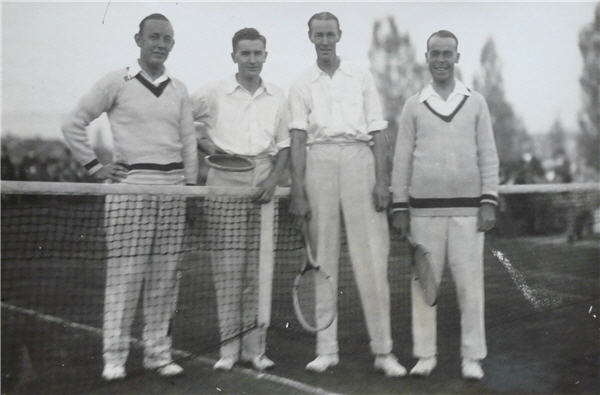
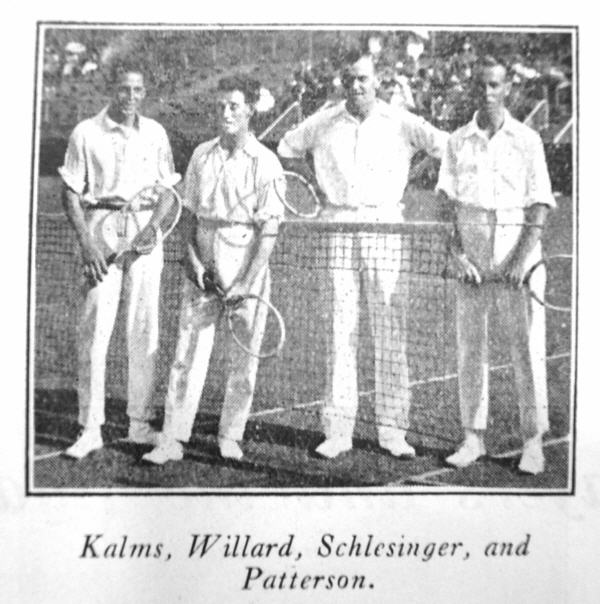
So the team of Anderson (captain), J.B Hawkes and newcomers Richard E  Schelsinger and Ian D McInnes was selected.  At 23, Schlesinger had come to the attention of selectors during a Sth Australia Victoria match at which he defeated R.V.Thomas and C.Stuart and at an MCC tournament he beat Wertheim, then Patterson and to0k eventual winner O’Hara Wood to a losing 5 sets in the final.  Ian McInnes only 21, had played well in the previous South Australian Championships beating R.V Thomas and then lost to Patterson in the final.

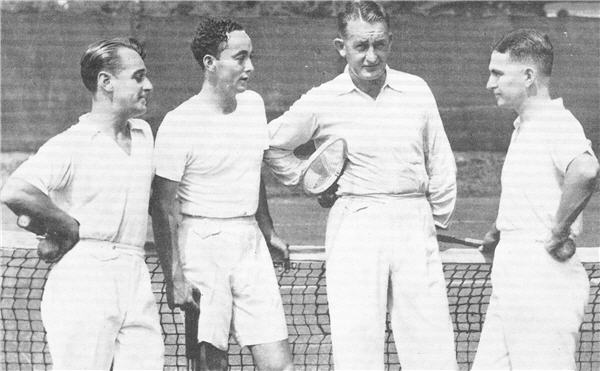
1923 Davis Cup Team:Jack Hawkes, Ian McInnes, J O Anderson & Richard Schlesinger

This was the first year that Australia played without association with New Zealand, primarily because  no New Zealand players were qualifying to make the combined team. The Davis Cup Team traveled direct to the USA for the American Zone playoffs bypassing the Wimbledon tournament.

With wins over Hawaii, Japan and France all rubbers being 4-1, Australia played the USA in the challenge round. Having been given a run in the preliminaries, the older players Hawkes and Anderson took on Tilden and Johnston.

Although losing 4-1 to the Americans, Anderson again proved his skill beating, for the first time in a Davis Cup round, William Johnston in 5 sets 4-6, 6-2, 2-6, 7-5, 6-2. Anderson lost to Tilden in 4, the doubles in 4 and Hawkes was beaten in straight sets comfortably in both singles.The doubles turned into the longest match in Davis Cup history with a win to Tilden/Williams over Anderson/Hawkes 17-15, 11-13, 2-6, 6-3, 6-2.

Hist0rically, it is of note that during this year, Tilden lost his middle finger above the knuckle on his playing hand as a result of an infection caused by a cut.  He spent much of the off season, relearning his grip and shots to minimise the impact.  While it was altering his game, Anderson seemed to think it forced Tilden to concentrate more and make even less mistakes.

In January 1924,  Richard Schlesinger proved a worthy finalist in the Australian Championships at the Albert Ground against Anderson by beating McInnes and Kalms. He lost in 5, 6-3, 6-4, 3-6, 5-7, 6-3.

No doubt, with some satisfaction Norman Brookes with Anderson defeated arguably the best doubles combination of Patterson/O’Hara Wood in straight sets 6-2, 6-4, 6-3.

Typically after the championships in January,  Anderson announced again he could not join the Davis Cup team. While a blow, since Wallis Myers had placed Anderson #3 on a World Ranking behind Tilden and Richards,  Patterson and O’Hara Wood made themselves available.  The final team included Fred Kalms and Richard Schlesinger, although neither played in any matches.  Australia defeated France in the interzone finals 3-2 with losses of both singles to Lacoste.  In the challenge round we lost 5-0 winning only one set in the doubles.

Jack Hawkes

Fred Kalms

While Wimbledon didn’t feature greatly on Australia’s radar,  Norman Brookes provided a highlight.  Twenty years after having first played the tournament he came up against American Frank Hunter the 1923 runner up and seventeen years his junior.  The plucky, Aussie out to enjoy himself while on a holiday had one last sensational way to say goodbye.  Amazingly, he won in 5 sets, old school versus new stylists 3-6, 6-3, 6-04, 5-7, 6-3 Fifteen thousand and the Royal Box were most impressed.

In 1925, to win his 3rd Australian Championship, Anderson defeated Patterson 11-9, 2-6, 6-2, 6-3.  Patterson / O’Hara Wood won the doubles over Anderson and Kalms.  The Davis Cup team was probably the best obtainable with Patterson, Anderson and J.B.Hawkes.   O’Hara Wood was considered as a 4th but finances wouldn’t permit his inclusion unless a public fund could raise 500 pounds.

Pat O’Hara Wood and Gerald Patterson

Pat O’Hara Wood, J.B Hawkes, JOA and Gerald Patterson

Traveling to the US via Wimbledon, Anderson made the semi finals, ominously in the company of three Frenchmen. He  lost to the eventual winner Lacoste in straight sets. In the US titles Anderson was beaten by Johnston in the 3rd round.

Australia played France in the Inter Zone final and lost 3-1.  It was close. Patterson beat Lacoste 6-3, 6-2, 6-2 and while Anderson lost to Borotra the doubles was down to the wire as Patterson and Hawkes lost in 5 sets 6-4, 3-6, 6-4, 1-6, 10-8.  It was in this match that a hard hit Patterson smash hit Borotra on the side of the head knocking him virtually unconscious.  France was beaten by  the USA 0-5 in the Challenge Round.

Not making the Challenge round had some financial implications.  Where profits were often expected by the ALTA arising from shared gate receipts, this tour lost 1000 pounds.  Patterson announced his retirement from Davis Cup play, presumably as he was now working for and would become the Managing Director of the newly constructed Spalding factory in Sunshine, Victoria.

J.B Hawkes won the 1926 Australian Championships beating Anderson in the semi finals and Jim Willard in the final in 3 low scoring sets.  Notably, this was the first championships for Jack Crawford and Harry Hopman. Second seed Patterson was bundled out by Queenslander Edgar Moon.  Still, the old guard held ground in the doubles with Hawkes/ Patterson defeating Anderson and O’Hara Woods.

Anderson decided to turn professional and began to coach and from 1923 already had a deal with Slazenger to market tennis racquets bearing his signature.

There was c0nsiderable pondering about sending a Davis Cup team in 1926 for without Patterson and Anderson it was felt the next leading men were not up to International standard and the ALTA didn’t want another financial loss.

This was a logical arrangement so that the aspiring newcomers could learn and practice with Australia’s best.

No Davis Cup team was sent overseas in 1926.

With plenty of gray areas surrounding the definition of amateur,  Spalding managing director, Patterson could play in the 1927 Australian Championships and Anderson couldn’t.  Patterson won the singles over Jack Hawkes in 5 sets and the doubles with Hawkes over Ian McInnes and Pat O’Hara Wood.

In 1927, again Australia passed the opportunity to send  Davis Cup team abroad.

As a professional the NSW Tennis Association entered an arrangement with Anderson to play exhibition games with amateurs like Jack Crawford and others.   They agreed on fixed incomes for Anderson based on whether the gate receipts were above or below 300 pounds.

Under some pressure, Anderson sent the LTAA a letter advising that he wished to revoke his professional status and resume playing as an amateur again.  In early 1928 they advised him he could return to being amateur only after a strict probation period whereby he relinquished his contract with Slazenger.

He seemed to ignore these conditions and continued on as a professional.

In 1928, The Frenchmen known as the “musketeers” visited Australia and Jean Borotra took off the singles title against Ron Cummings and with Brugnon won the doubles over Jim Willard and Gar Moon.

The old guard were now out of the picture and there was a void of talent in comparison to the emerging overseas teams.

Australia sent a Davis Cup team abroad to help bring along some young players.  Patterson was selected with Hopman and Crawford. We played Italy in the European Zone in hope to challenge France who defeated the USA.  Unusually, we lost 4-1 and were out of the cup in round one.   While not unexpected at least Crawford and Hopman were being exposed to International Tennis.

Hawkes and Patterson were runners up in the 1928 Wimbledon doubles beating Tilden and Hunter in a tough 5 set   semi.   Cochet and Brugnon were to strong and won in 3.  No Australians made the quarter finals in the singles, although Jack Crawford and Daphne Akhurst came runners up in the mixed event.    Daphne was one of Australia’s multiple Australian champions also on tour with a ladies team. See the separate story on Women’s team events.

As in 1928,  another foreign team turned up to test out the locals in 1929. This time it was the English including Ian Collins, Bunny Austin, E Higgs and Colin Gregory.

By no means a strong team the Australians capitulated to virtual unknown Colin Gregory who defeated Richard Schlesinger in 4 sets.  Collins and Gregory made the Doubles final, but at least Crawford and Hopman won albeit in 5 sets 6-1, 6-8, 4-6, 6-1, 6-3 coming from 2-1 sets down.

Anderson continued on as  a professional and played Crawford a lot under the deal with NSW tennis whereby Crawford remained an amateur and the association profited from gate receipts.  In addition, he started to play his own pro exhibition matches with ex competitor Les Baker who also turned pro. in support of Anderson and they planned tours of New Zealand and the USA.  He also left Slazenger for Alexander and then in the early 1930’s moved to Chesterfield Racquets. Pat O’Hara Wood also had signature racquets produced by Bancroft in the mid 1920’s and Jim Willard found his way to Alexander with some endorsements in the 1930’s.

Given the financial loss in 1928 and without Anderson, no Davis Cup team was sent overseas in 1929.

Anderson remained professional and Pat O’Hara Wood soon joined him.

The valiant attempts by Patterson, Anderson and their contemporaries to perform on the world stage was indeed admirable.   In Tilden and Johnston, the USA enjoyed a powerful combination that ruled world tennis for much of the first half of the 1920’s.  Towards the end, the French musketeers came to the fore.

Our Australians in this era were dominated more by the players who started junior tennis before the war and seemingly had more skill than many others who started post war.  While the scoreboard doesn’t shine with major successes in the Davis Cup or even Wimbled0n,  our players were certainly up there in the top ranks, particularly in Doubles. It is a pity that Anderson, Patterson, O’Hara Wood, Lycett, Hawkes and other top players like Todd, Kalms, McInnes, Jim Willard etc are not so well known.  They deserve to be, having given exemplary service to Australian tennis at home around the state and country tournaments and particularly on the 6 month plus tours away from business incomes and families.

Women’s Team Events 1920’s -1930’s

Although Australian Men were traveling and playing in tournaments over the 1890’s to early 1900 period, women’s tennis rated poorly.  The Davis Cup competition inspired the international tennis playing nations yet it was until 1963 that an equivalent event, the Federation Cup was instigated. In the 1920’s the UK and USA teams did play the Ladies International Cup and the Wightman Cup but neither were International events for all nations.

The 1920’s saw the growth in interest in Women’s tennis largely due to Suzanne Lenglen.  She won many of the major events and even turned professional which proved even more that crowds would attend ladies matches.

Sending tennis players and teams abroad was sanctioned by the National tennis associations along with invitations to play by host nations.  In 1925,  a team of Australian women left for the UK with approval but no financial support from the ALTA.  A fundraising committee was formed  in NSW and eventually they had enough funds to send three players to join a fourth  who was already in Europe on a private tour.  The girls also planned to play at Wimbledon and the lead up tournaments, then travel through Europe and onto the USA for more team events and the US National Championships.

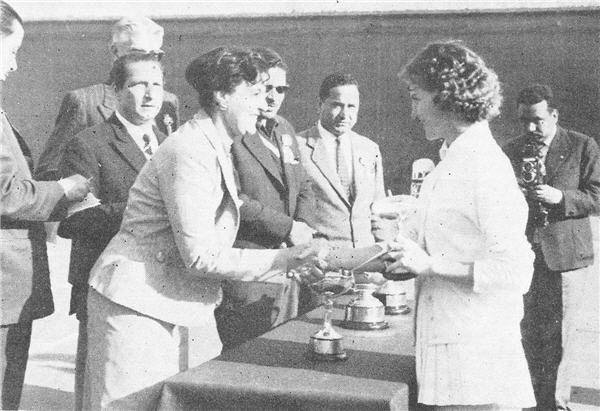
1925 Ladies Team

Akhurst was the current Australian Singles Champion, Mrs Harper the 1924 Champion and Miss George who joined the team whilst traveling privately.  Mrs Utz, not in the photo was also traveling in Europe. Miss St. George was an emergency who did play in Europe.


1925 Overseas

Sending a team on such an expedition was seen as an important method of assessing local sporting ability compared to the best if the UK, USA and other countries.

In June 1925, the Australian Team played the dominant English team.

At the end of the first day, the press reports were most flattering for the Australian Ladies had outperformed the USA team which had played the English ladies the previous year. At 2 rubbers all, in fact, the Australians were given a chance to win the event.

Day one

Mrs R Harper (AUS)  defeated Miss Joan Fry 6-3 6-2

Mrs Lycett defeated Daphne Akhurst (AUS) 7-5, 1-6, 6-1

Miss K McKane defeated Esna Boyd (AUS) 8-6, 6-3

Mrs H Utz (AUS) defeated Miss Harvey 4-6, 6-3, 6-3

Following the first day, a large crowd attended the doubles round and over both days Mrs Harper was praised, ahead of the English players as showing the best form.

Scores were:

Lycett/Fry beat Boyd /Utz 6-4, 5-7. 9-7

McKane/ Harvey beat Harper/ Akhurst 6-2, 6-4

McKane/ Harvey beat Boyd /Utz 6-0, 14-12

Harper/ Ackhurst beat Lycett/Fry 11-9, 1-6, 6-1

UK won 5-3.

Daphane Akhurst was not in the greatest form having recently undergone a minor knee operation the week prior to the event and may well not have been fully recovered or confident to play at her best.

Over the next few months, the Australian Ladies performed well, with both Boyd and Akhurst making the quarter finals at Wimbledon.

From a teams perspective the tour went extremely well, defeating Wales 12-0,  Ireland 6-2 and while there Boyd defeated Akhurst in the Irish Singles Championships, Scotland 11-1, then Holland 10-2 and Belgium 11-1.

Against France, Suzanne Lenglen’s inclusion into the strong French team resulted in a team loss of  7-4 in what the press once again proclaimed was credible performance.  Esna Boyd playing Lenglen on the second day astounded the critics by losing the first set 7-5 which was the best performance bar one other against Suzanne in the previous year. Readers need to remember that Lenglen played close to 300 tournament singles matches between 1919 -1926 and lost only one match and indeed only conceded two sets in this time, so to have pushed the champion to a 7-5 score was a major achievement.

In local Australian papers, we found quoted reference by Boyd that she won the first set 7-5 against Lenglen, which was an inaccuracy that was represented in other articles into early 1926, until an interview with Boyd clarified the actual result. Nevertheless having coming back from 5-3 down to 5 all, a frustrated Suzanne changed racquets three times and became quite vocal to her mother in the crowd.   Of course, in what appears to be a pattern of behaviour, Suzanne claimed some blistering to her hand as the excuse Boyd had got so close.  Boyd was in awe of Suzanne and the thought of winning a few games was excitement enough yet alone to push the first set to such a close result.

By September the ladies were playing Philadelphia in a close 3-4 match to the Americans and then down in San Francisco they played the famous Helen Wills and co. on asphalt courts which the Australians were not adjusted to and they lost convincingly 1-6.

On the journey home they stopped in New Zealand winning all matches there.

The tour was an outstanding success and despite being self funded, the team received 50% of the funds generated at the gate of the International Meetings, plus many invitations to stay within no cost accommodation permitted the team to preserve funds and even arrive home with funds much to the surprise of the original local fund raisers. In fact tour expenses were 676 pounds and receipts exceeded 1488 pounds.

In an article by Esna Boyd in November 1925 about the trip she explained disappointment at the lack of interest shown by the Australian tennis officials and the UK public, that was until they started to beat the English stars. In America while the results were not as impressive, the girls arrived in New York stayed three days then went to play at Philadelphia and that night caught the train across the continent to San Francisco, rested that day and played the top ranked Americans (Helen Wills) on asphalt the next day after a season on grass without practice on asphalt…. as she eluded,  imagine Gerald Patterson’s reaction to such preparation which he would rightly call madness. Many years later this was the life-style of the tennis professionals.

The upshot of the tour was that Australian Ladies were of world standard and if provided with the opportunity to acclimatise to different surfaces would hold their own against the best UK & USA players.  The excellent results on court and in the bank paved the way for a 1928 tour.

1928 Overseas

Having seen the ladies perform so well in 1925, the Australian Lawn Tennis Association actually decided to endorse the 1928 tour comprising Esna Boyd, Louise Bickerton, Daphne Akhurst and Mrs Pat O’Hara Wood.

It was to be an even more successful tour as far as results go but financially the effort resulted in a loss situation.

The following report was published by Harley Malcolm (Hon. Sec. of the Australian Association)

Ayres Lawn Tennis Almanack pages 21-28

” TOWARDS the end of 1927 one of the most comprehensive sporting tours ever organised was under consideration by the Australian Lawn Tennis Association. The object of the tour was twofold. Its first was to give Australian women players a chance of measuring their skill against the leading exponents of the world, its second to acknowledge officially the success of the first Australian ladies’ team, financed chiefly by subscriptions from New South Wales, which visited Europe in 1925.

True to their motto- Festina Lente- the Association, before planning such a lengthy tour, canvassed all the available players. The result was that virtually Australia’s strongest team – Miss Boyd (captain), Miss Akhurst, Mrs O’Hara Wood and Miss Bickerton- was nominated.

With myself as manager, the team left Melbourne on March 5 for an eight months’ tour. Journeying overland to Perth, the players joined the Demosthenes for South Africa, on board which were the French team bound for Durban. After an extended tour of the different provinces, against which they won six matches, the team left Cape Town on April 24 by the Nestor, arriving at Tilbury on May 24.

The French Championships in Paris were the team’s next objective, followed by a hurried return to England to practice on grass for the Championships at Wimbledon and the match against Great Britain at Bournemouth, the two chief fixtures of the tour. Tournaments and matches against Belgium, Germany, Hungary, Holland and France followed in quick succession, broken only by a sight-seeing trip to Switzerland and the beautiful Rhine Valley.

Returning to England for a brief and well-earned rest, the team played their last match against Ireland on the courts of the Fitzwilliam Club, Dublin. This encounter practically concluded the tour, for Miss Akhurst and Miss Bickerton, after brief visits to France, Switzerland and Italy, returned to Australia, via Naples and Singapore, with the manager, reaching home on November 24. Mrs. O’Hara Wood and Miss Boyd, deciding to stay longer in Europe, returning later.
SOUTH AFRICA BEATEN
Having summarised the tour – in which not a single match was lost – I may review the itinerary in more detail. The first task of the tourists on reaching South Africa was to accustom themselves to the climate and the hard courts, the latter almost unknown in Australia for official match play. The first match at Maritzburg against a Natal side which included Miss E Heine, resulted in an easy win for the tourists. But Miss Heine confirmed the promise shown on her European visit by defeating Miss Boyd 64 61, although it is only fair to add that the Australian visitor was undoubtedly affected by the unusual heat. The next side to be met -the Orange Free State- also included one of South Africa’s front rank players, Miss RD Tapscott. This time Miss Boyd won both her singles in two sets.

A stern fight was waged when Australia met South Africa in Johannesburg. Rain prevented practice, and the local players, familiar with the different bound and flight of the ball at an attitude of over 6000 feet, started with a distinct advantage. They appeared to be heading for victory when, leading by four matches to three, Mrs Neave and Mrs McArthur won the first set of the final contest against Miss Boyd and Miss Bickerton. But the Australian pair rallied pluckily, and, profiting by weak lapses on the part of their opponents, captured the second and third sets to two. As each side had won four matches and ten sets, it was decided to count games, when it was found Australia led by the narrow margin of six games. The chief fixture of the match was the defeat of Mrs Peacock and Miss Heine in singles, and their undoubted superiority, as a pair, in doubles. Miss Akhurst scored a decisive win over Miss Heine, but Miss Boyd, after winning the first set comfortably, allowed Mrs Peacock to reach 4/0 before finally banking the second set at 8/6. A large crowd watched the play on the second day, and gave a warm ovation to the Australians for their well-earned and, to the South Africans, unexpected victory.

Returning to Pretoria, where the ladies were taken for an aeroplane flight, the visitors scored a further win, although Miss Boyd did not compete in the singles. Visits to diamond mines and other forms of entertainment in this delightful city occupied the players in their spare time. On their return to Johannesburg they were invited to a farewell dinner and theatre party by the Johannesburg officials.

Kimberley was the next place to be visited, where the fifth match, against Griqualand West, was staged. Miss Tapscott was again on the opposing side and, judging by her fine fight against Miss Boyd, the Australian were not sorry this pertinacious player had not been included in the Test team the previous week. Miss Rogers, another Kimberley player, was expected to harass Miss Akhurst but, through nervousness, could only collect two games. More visits to mines provided interesting education, and after only one day’s stay the overnight journey to Capetown for the final match in South Africa was begun.

Here the interest was not quite so keen nor the audience so large as in previous centres, for the French team had visited the town two days earlier. Miss A de Smidt drove vigorously in the first set against Miss Boyd, but lack of experience prevented her turning this pace to advantage. At Capetown, as in all other towns, the visitors received unbounded hospitality, and they left many friends behind them when they set sail on April 24 for their Mecca -London.

After only three days on land a hurried departure was made for Paris, in order to compete in the French Championships. Although unsuccessful in winning any of the titles, much valuable experience was gained in meeting new and varied opponents.

Gipsy and Beckenham tournaments provided the teams next practice ground, but wet weather had made the courts particularly “dead”, a heavy factor against the invaders, accustomed to the sun-baked surfaces of Australia. Miss Boyd and Miss Akhurst felt this handicap when they met Miss Ryan, whose chops, drawing guile from the heavy turf, worried them both considerably. The defeat of these two players in the doubles at Gipsy was balanced by an Australian success in the mixed doubles, when EF Moon and Miss Akhurst defeated LA Godfree and Miss Ryan (score of final was 63 57 86) . Mrs O’Hara Wood raised Australian stock by capturing a set from Miss Ryan at Beckenham, and Miss Akhurst again figured in the mixed doubles final with PDB Spence.

WIMBLEDON – AND AFTER

If no championship titles from Wimbledon went overseas to Australia, the Dominion flag was worthily upheld by Miss Akhurst, who shared with Miss Ryan the honour of being the only competitor to reach three semi-finals. In the singles Miss Akhurst had victories over Miss Jacobs, who led 6/5 in the final set, and Miss Bennett. Against the latter, Miss Akhurst, new to the centre court, lost the first set easily. Once confidence came, her ground strokes, well co-ordinated, were sound enough to unsteady and ultimately to beat her opponent.

In the doubles, paired with Miss Boyd, Miss Akhurst reached the semi-final at the expense of Miss Anderson and Miss Jacobs, in spite of a 4/0 lead against her in the third set. In the mixed, partnered by J. Crawford, Miss Akhurst looked to have secured a commanding lead in the final, when her side led 5/3 and 40/15 in the first set. A costly double fault from Crawford, who did not concentrate enough on the vital points, and the chance was lost.

Miss Bickerton, having beaten Mrs. Mallory in the second round, achieved fame on her first apperance on the centre court before a large crowd by carrying Senorita de Alvarez to 9/7 in the first set. She led 4/1 in the second, but then the Spanish girl’s brilliance pierced her steady defence. Hawkes and Miss Boyd held Hunter and Miss Wills in a close three-set match, Miss Boyd showing a steady hand when her side were 0/4 down in the second set.

After Wimbledon, Bournemouth! Meeting England on courts more akin to the hard Australian surface than any previous courts, the team faced their task confidently, albeit the British side, with the exception of Miss Goldsack, had carried off the Wightman Cup a few weeks earlier. Miss Akhurst was again the heroine of her team. She defeated Miss Bennett and Mrs Watson without the loss of a set. The issue was decided when Mrs O’Hara Wood and Miss Bickerton, sounder in combination, defeated Miss Harvey and Miss Goldsack in two sets. Australia eventually won the contest by four matches to three.
A CONTINENTAL INVASION

The following week saw the start of the long Continental tour, in which the team had a series of victories, culminating with a close win over France at Deauville. At Knocke, against Belgium, the visitors lost only three sets of the twenty-five contested. Mlle Sigart showed most promising form, which should carry her to the front rank of European tennis.

At Cologne on August 4 and 5 the German opposition was more threatening. The slow courts were inimical to the fast play of the Australians, who found, after a few games, that their best policy was to keep the ball in play and wait for their opponent to make the mistake. The art of sliding across the court to conserve energy after a running stroke was also exploited for the first time, so that the visitors were playing under rather novel conditions. Miss Akhurst and Miss Boyd both went down to Frl Aussem, playing on her home courts. The only other German victory was scored by Frau Schomburgh, who beat Miss Bickerton. The only rain encountered during the whole of the European tour fell during this match, which affected the attendance.

Hamburg, for the German championships, was the next place of call. The team was in fine form. Miss Akhurst won the singles championship with victories over Miss Boyd and Frl Aussem, the holder. Miss Akhurst and Miss Boyd won the ladies’ doubles, and, with EF Moon, Miss Akhurst was runner-up in the mixed doubles. Incidentally, the mens doubles championship went to an Australian pair, RO Cummings and EF Moon of Queensland.

Two nights’ travel, via Berlin and Prague, brought the team to Budapest. Here the players were warmly welcomed by the Hungarian officials, who showed them the chief sights of the beautiful city on the banks of the Danube. Here, too, the opposition was weak, the Australians winning every match. Mixed doubles, in which Miss Boyd and Miss Akhurst were partnered respectively by B von Kehrling and Der Peteri, were included in the programme.

Anxious to see Switzerland, some of the players made a slight detour via Vienna, to Lucerne and Interlaken, before rejoining forces at Mayence for the river trip along the Rhine to Cologne. An early start was made the next day for Scheveningen, where the Dutch match was to take place. Continual travelling had weakened the Australian forces, and it was therefore not surprising that Mlle Bouman should defeat Miss Akhurst in two sets. Indeed, the Dutch champion won the first set in a few minutes. The home team scored a further success when Mlle Bouman and Mlle Couquerque defeated Mrs O’Hara Wood and Miss Bickerton after three sets.

A misunderstanding having arisen over the date of the match against France, a hurried departure, involving the team in another day and a half’s travelling, was necessary to keep the appointment at Deauville. However, only two matches were staged, out of courtesy to the visitors, on the first day.

Mme Lafaurie was perhaps the best player of a very even team representing France; her backhand, stroke was especially effective. Miss Akhurst was too accurate for Mme Desloges. France levelled the singles when Mme Bordes beat Mrs O’Hara Wood and Mme Mathieu defeated Miss Bickerton. A close finish was spoiled by the collapse of Mme Lafaurie and Mme Desloges in the final set of their match against Miss Boyd and Miss Akhurst, the French pair failing to win a game.

After victory was already secured, Mrs O’Hara Wood and Miss Bickerton scored a close win over Mme Bordes and Mlle Bourgeois, which brought the Australian total score to five matches to three. The umpiring and lining in some of the matches left much to be desired. On one occasion a small boy, who had scarcely had time to learn the rudiments of the game, occupied an important position on the baseline.

The last match was against Ireland at Dublin, where once again the home team seemed a little overawed by their opponents’ reputation. Of the sixteen sets contested, Australia only lost two. Mrs O’Hara Wood lost a set to Miss M French, and Miss Boyd and Miss Akhurst dropped the first set to Mrs Blair White and Miss Fleming. Here for the third time the Australians scored a victory without the loss of a match.

Their tour concluded, the team left in a very happy frame of mind for their long return journey. The total number of international contests won during the tour amounted to thirteen. Of these 76 matches, 159 sets and 1,159 games went to Australia, against the 16 matches, 46 sets and 691 games of their opponents. The total result of the eight Test matches played, included in the above, was 8 wins, 51 matches, 108 sets and 838 games, against 15 matches, 43 sets and 548 games.

The one regret of the Australians during their varied tour was they were not able to pit their strength against the representatives of the United States who competed in the Wightman Cup contest. The majority of the players were, it is understood, willing to play, but unless the American team was fully representative the Australians felt little honour would be attached to the victory if success had come their way.

The members of the team will long remember the many social functions to which they were invited in London. Chief among these was the International Club’s annual dinner and dance at the Royal Automobile Club, followed on Sunday by the I.C. Oversea Reception at Roehampton, and the dinner given by the Lawn Tennis Association on the concluding Saturday of the Championships at Wimbledon. Nor must we forget the little dinner at the House of Commons, when the Australian team were personally conducted over the two Houses by the Lord Chancellor and other M.P.’s, or the farewell dinner and theatre party, at which Lord D’Abernon was present, on the eve of their departure.”

1934 Australia

Despite a financial loss in 1928 the success of the ladies team in not losing a match should have  encouraged further tours however ALTA support was not forthcoming for another six years. Finally, a UK team was organised to visit Australia in 1934.

The NSW tennis association were largely responsible for this, principally because of three ladies, Mrs Roland Conway, Miss Lloyd and Mrs Warburton,  who uniquely were the only ladies represented on any tennis association in the world.

There was a strong push for the ALTA to hand over responsibility for International Women’s tennis to these three ladies since their male counterparts had a  pre-occupation with men’s tennis.

The agitation may have convinced the ALTA to organise an English team to visit Australia in 1934 which was the first time that the Australian public could witness first grade international ladies tennis.

Miss Joan Hartigan, Miss Louie Bickerton and Emily Westacott were selected for Australia against a strong UK team comprising Wimbledon Champion Dorothy Round, Miss Dearman and Miss Nancy Lyle.  Tennis in Australia was also excited by the visit of UK champion, Fred Perry.  At the same time, tennis fans were also mourning the loss of former team champion and five time Australian Championship winner, Daphne Akhurst (then Mrs Cozens) who died aged 30 in January 1933 whilst under anaesthetic during surgery.

The test match was played in Sydney at the Rushcutter Bay courts generated 400 pound profit to the ALTA.

Results Day 1 November 21st

Miss Westacott defeated E. Dearman  6-3, 10-8

Joan Hartigan defeated N. Lyle 2-6, 6-3, 6-1

Louie Bickerton lost to D Round 4-6, 2-6

Westacott Hartigan defeated Dearman Lyle 6-4, 2-6, 8-6

Australia wins the day 3 rubbers to 1, six sets to four, 52 games to 49 games.

Day 2 November 23rd

Louie Bickerton lost to N Lyle 4-6, 7-5, 1-6

Hartigan lost to Round 2-6, 6-2, 3-6

Westacott defeated Lyle 4-6, 6-3, 6-2

Bickerton Hartigan lost to Round Dearman 6-1, 4-6, 7-9

The net result 4 rubbers each, 11 sets each 108 games Australia 107 games UK,  so Australia won by one game.

Similar to the Australians traveling in the USA in 1928,  the UK team arrived only a few days before the test match and may well have performed better with additional time to acclimatise.

The UK team stayed onto play the NSW Championships a week later and Dorothy Round defeated Westacott in the final while Dearman and Lyle won the doubles over Round and Mrs Hopman.

In early 1935 the ladies played in the Australian Championships at Kooyong and Round defeated Lyle in the final 1-6,6-1, 6-3.  Doubles top seeds Dearman and Lyle defeated Bickerton and Hopman 6-3,6-4 (who had beaten Coyne / Round in the semis).

After this a series of capital city exhibition tours was organised after the Australian championships and an embarrassing incident occurred in Perth.  Having heavily promoted the arrival and exhibition matches would occur on January 31st,  the UK and French contingent actually arrived from Adelaide on the 22nd by ship without any fanfare whatsoever.   One of the players actually rang WA tennis officials to let them know they had turned up unannounced and due to touring schedules the matches had to be hurriedly organised, promoted on radio and played that day.  No doubt many keen tennis enthusiasts missed out.

Out of interest, famous tennis authority A. Wallis Myers travelled with the UK team and was highly supportive of future women’s tours.

1937 Australia

In March, 1937 the now known LTAA  announced it would ban funding of International team events because of the financial cost and risk, yet under pressure they attempted to negotiate a UK team visit formed by players in the Wightman Cup.  Once the UK had provided the proposed team without 2 of the major players, the LTAA broke off the negotiations  due largely to the belief that the quality of competition was likely to result in poor financial outcomes, particularly since they had also offered to fund player expenses.

Ultimately the LTAA did sanction an American team to visit in November.  Even though they were trying to support the women’s game, they resisted any financial assistance from both the newly formed UK & Australian International Tennis Clubs and generous individual funding offers  which were made in 1936 and 1937 in order to get an Australian team overseas. Incidentally, famous tennis writer A Wallis Myers also travelled to Australia for the first time in 1934 to see the UK team play was the Founder & Chairman of the UK club. The ladies couldn’t understand why the LTAA wouldn’t permit a self funded team to go;   losing control, I suppose, the major one.

The original US invitation was made to Alice Marble and two other of the top 4 ladies in the US.  Alice announced she was turning professional to join Helen Wills Moody and the two players who did come were the 8th ranked Miss Dorothy Bundy and 12th ranked Miss Dorothy Workman.  Based on the UK debacle, even this trip had the potential for problems given the mid rankings of both ladies.  Miss Bundy, however was the daughter of the famous US Davis Cup player in Norman Brookes era.

Quickly adopted by Australian crowds they were nicknamed “Do” and “DoDo” given both were named Dorothy.

The first of three tests was commenced at the Queensland Milton courts on Friday 19th November.

Australian players Miss Hardcastle and Mrs Westacott won their singles and lost the doubles.

Miss Hardcastle defeated Miss Workman 6-2,2-6, 6-2

Mrs Westacott defeated Miss Bundy 6-4, 6-3

Hardcastle Westacott lost to Workman Bundy 3-6, 8-10

Day 2 delayed due to rain on 22nd November

Mrs Westacott defeated Miss Workman 6-3,6-3

Miss Hardcastle lost to  Miss Bundy 6-3, 4-6, 6-8 (Hardcastle had 5 match points in the 3rd)

Hardcastle Westacott (unfinished)  Workman Bundy 6-4, 6-8, 5 all (darkness)

Australia won

Off to Sydney for a second test

Miss Thelma Coyne defeated Miss Bundy 5-7, 6-1, 6-3

Miss Nancye Wynne lost to Miss Workman 7-5, 0-6, 10-12

Australians won the doubles 6-2, 6-3

Day 2

Miss Thelma Coyne defeated Miss Workman 6-1, 8-6

Miss Wynne defeated Miss Bundy 4-6, 6-3, 6-2

Australia won the doubles 6-4, 4-6, 6-4

Australia won

Last test in Melbourne December 28th

Reports of a very small Kooyong crowd would have disappointed officials.

Dot Stevenson defeated Miss Workman 10-8, 3-6, 8-6

Miss Coyne lost to Miss Bundy 4-6, 5-7

USA won the doubles 6-2, 6-3

Miss Coyne defeated Miss Workman 6-4, 9-7

Dot Stevenson lost to Miss Bundy 6-8, 4-6

Australia won the doubles 6-3, 4-6, 6-0

Equal rubbers the USA won by one set and 3 games.

Dorothy Bundy went on to win the Australian Singles Championships in Adelaide in January 1938 over Dot Stevenson and they ( with Workman) were beaten in the Doubles final by Coyne and Wynne.

1938 Overseas

Ten years after the second tour, the ALTA sanctioned a Women’s tour in 1938.

The team comprised Thelma Coyne Long (alive today Jan 2012), Nancye Wynne, Dorothy Stevenson, Nell Hopman and team manager was Mr W.H.Walker.


1938 womens team hi res


Nell Hopman, Dorothy Stevenson, Thelma Long and Nancye Wynne.

Unlike the 1928 tour, this tour comprised of many more tournaments particularly throughout the UK as a lead up to Wimbledon.

Having arrived by ship in early May  prior to both Wimbledon and the Wightman Cup (UK/USA) the Australians played their first team event against the UK.

It was a very one sided affair played at Manchester June 4th.

Thelma Coyne was defeated by hard hitting Kaye Stammers 2-6, 2-6

Nell Hopman was defeated by Miss James 3-6, 4-6

Hopman/Long defeated Miss Dearman / Miss Ingram 6-2, 5-7, 6-1

Thelma Coyne was defeated by Miss Lumb 4-6, 6-4, 3-6

H0pman/ Stevenson defeated Lumb/ James 6-3, 6-2

Dot Stevenson lost to Miss King 1-6, 3-6

Nancye had to forfeit to Kay Stammers

Dot Stevenson played and exhibition singles and Nancye Wynne could not play due to illness.

June was full of tragedy.  Prior to leaving Dot Stevenson had lost two uncles one to illness before she left Australia and another in a motor accident after leaving and on her Wimbledon debut learned of the death of her brother.

Naynce’s mother passed unexpectedly and her father told the news only at the last, but just prior to Wimbledon. They were a close family and her father expressed that she should stay  since it was a great honour to be spearheading the team.

After the defeat by the UK team they left for the French Championships and would come back for the Wimbeldon tournament the week after.

Even though they were changing from damp grass to hard courts the girls still did well and Nancye made the mixed doubles final with French player B0ussus.

Wimbledon, as usual, was going to be the main test for the girls and with a full strength draw the Australians did not make the quarter final in singles or doubles. The experience of playing top ranked competitors was what the whole trip overseas was about.  In 1938, the key Australian men were in the USA for the Davis Cup.

The best thing to come out of the Wimbledon tournament was, having been asked to stay on tour by her family, Dot Stevenson won the All England Plate which is a tournament comprising all early round losers from the main draw. Mrs Hopman played a sensational games against the champion Helen Moody and although defeated was pleased not to have been slaughtered in front of the expectant Wimbledon crowds.

From Wimbledon the team moved to Europe and played in more key championships.

The girls played in Holland at the Dutch Championships early July.  Here they hit form with Wynne being runner up in the singles (although beaten easily) ,  Wynne and Coyne were runners up in the doubles and Mrs Hopman won the mixed final.

In the German Doubles the final was all Australian. Wynne and Coyne defeating Stevenson and Hopman. Nancye lost another close mixed final playing with Leseur 5-7,5-7.

While not making the singles finals, the newspapers were reporting the girls to be in the best form so far on the tour which was a great lead up to the USA leg.

At their first  US tournament held by the Essex club,  the girls led by Nancye did well although she was defeated by Alice Marble in the final owing to many shots going astray 1-6, 3-6.  Nancye with Dot Stevenson lost to Marble and Fabyan in the doubles final 6-1, 3-6, 2-6 a much closer affair.

Following this event in early September was the US  v Australian Teams event. These matches were held on private (milli0naires clubs) and watched by the very wealthy New Yorkers.

Spectacularly, the Australians won the event 6 rubbers all and by one set up, 15 sets to 14.

Day 1 Meadow Club, Southampton New York

Thelma Coyne defeated Helen Jacobs 6-2, 6-2
Dot Stevenson defeated Dot Bundy 6-4, 3-6, 6-2
Nancye Wynne defeated Mrs Fabyan 7-5, 6-2
Mrs Hopman lost to D Workman 6-4, 4-6, 6-8
Coyne/Wynne won Fabyan /Jacobs 7-5, 6-2
Hopman/Stevenson lost to Bundy/Workman 4-6, 6-8

Day 2 – On heavy court affected by overnight rain and at a different location

Coyne lost to Fabyan 5-7, 5-7
Stevenson lost to Workman 4-6, 7-5, 2-6
Hopman defeated Bundy 8-6, 6-1
Wynne Lost to Jacobs 7-5, 2-6, 0-6
Hopman/Stevenson lost to Bundy/Workman 2-6, 6-8
Wynne/Coyne defeated Jacobs/Fabyan 9-7, 3-6, 6-3

In the following weeks at the US Titles, the US ladies knocked out most of the Australians except for Nancye who made it to the final against Alice Marble who didn’t play in the teams event owing to illness.

The grand final was once a again a one sided affair, Nancye losing 0-6, 3-6, almost a repeat of the match a few weeks earlier. Helen Jacobs who was expected to do well lost in the earlier rounds to Miss Lumb who Nancye had defeated, so Miss Alice Marble seemed the player most likely to win the title.

The summary of the tour was that while not as successful as many had hoped, the girls had played in numerous finals matches but had simply been outclassed by many of the top UK and USA players.

From the total 9 month tour,  in the UK four months was spent playing non stop, tournament after tournament with only 7 days break.  It was considered that this was to much tennis whereas the visiting US players would only appear in the A grade tournaments leading up to Wimbledon. In addition, the constantly changing surfaces was difficult and the girls decided that Kooyong grass should never again be criticised after played on sodden grass courts at some of the B Grade tournaments.

With little prospect of earning money from team event gate fees, the overall tour lost 2000 pounds whereas the men’s Davis Cup team tour had generated a profit of 2300 pounds.
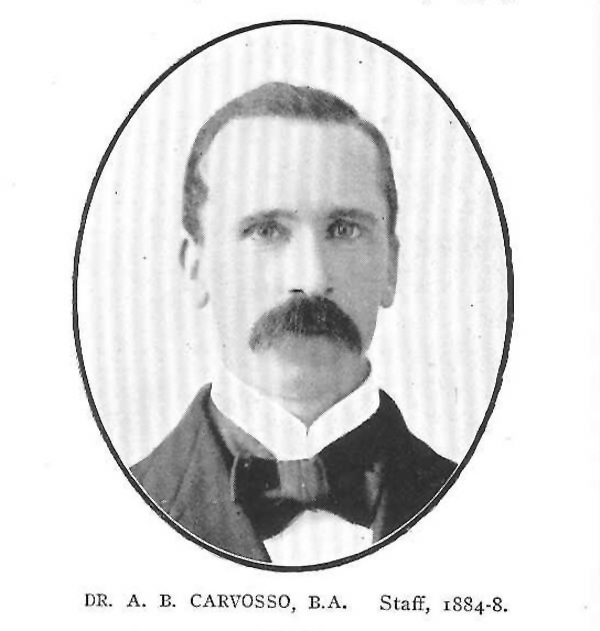
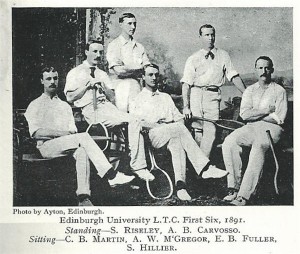
 

Early Tennis Movie Clips

Thanks to a relatively unknown newsreel production company called British Pathe who have converted their library to an online preview site, we can now link you to movie footage of some of Australia’s historic tennis events. Please note that there is a search engine and you can buy clips or still frames for personal use at quite reasonable prices compared to other sources.

If you spend some time searching tennis you will find plenty of clips featuring Suzanne Lenglen, Bill Tilden and many others….there are many other Australian clips also!

In addition to www.britishpathe.com also review the US equivalent http://www.criticalpast.com/

Then if you are into other sports or interests you will be amazed at what has been preserved.

TENNIS TRIFLES manufacture of tennis racquets 1930’s
excellent look at what was occurring throughout the world.

Making Tennis Racquets 

https://youtu.be/d1xiy3wv_UI

Making Tennis Balls 

https://youtu.be/VlJ_T6kviaA

CAUGHT BY THE CAMERA (NO. 9)
Precursor to the Donnisthorpe Streamline this modern looking
racquet looks similar to the Kovacs Model – Adreef Speedshaft

https://youtu.be/NAEk0E0JbVU

DUNLOP SPORTS SHOES – WATCH THEM MADE AT LIVERPOOL

1930’s look at tennis shoe production in the UK

https://youtu.be/usVLR1aBTQs

THE TENNIS MACHINE ( aka RENE LACOSTE ) 1929

https://youtu.be/gsSOrUU_eNU

NSW CHAMPIONSHIPS JOHN BROMWICH IN ACTION

https://youtu.be/nSSvsCh2E4U

WIMBLEDON 1961
with Slazenger ball making, notice the difference
to the 1930’s & tennis ball kid training 

https://youtu.be/jYCIkIyAYk4

IRELAND V AUSTRALIA
Crawford, Gar Moon, Hopman & Willard (silent)

https://youtu.be/xY4KzoUtCk4

1933 Don Turnbull and Quist lose the doubles (Alexander flat tops)

https://youtu.be/NKEO7cJKKMI

1939 Davis Cup Team Sails to Victory in the USA

 https://youtu.be/OWyiuyzan9g

BRITAIN IS PROUD OF YOU!
Perry beats Crawford 1933 and prevents the first Grand Slam which
is eventually won by Budge in 1938

https://youtu.be/TaLfWe0Wn-A

A TENNIS BATTLE ROYAL
Crawford defeats Vines 1934

https://youtu.be/u0RMmJX8SDQ

CRAWFORD v PERRY 1934 UK Sydney

https://youtu.be/RtXx9ExOOzQ

WELL PLAYED – SIR Perry Beats Crawford at Kooyong 1934

https://youtu.be/NV-i8fRvSOc

A COMING CHAMPION

Viv McGrath with his amazing double handed backhand defeats
Wimbledon Champion Fred Perry, a major surprise, again.
VIv shows his unique (world first elite player) to use double
handed backhand.

https://youtu.be/T4EG5f1WWBw

VICTORIAN LAWN TENNIS CHAMPIONSHIPS 1938 Budge / Bromwich

https://youtu.be/t-KLx3epb28

AUSTRALIA’S DAVIS CUP PROBABLES 1946
see Crawford, Pails and Bromwich tennis styles.
Bromich served right handed,  left hand forehand, double
handed backhand, right handed shots in recovery as well.

https://youtu.be/t-KLx3epb28

ONE LEGGED MAN FROM SYDNEY PLAYS TENNIS 1937

Various shots of John Paulin a one legged tennis player as
he plays a match. Paulin has a crutch under one arm and
moves around the court fast and freely. He even jumps over
the net at the end of the match. Anyone know of John or family?

https://youtu.be/ztllMIZXc0o

TENNIS IN SYDNEY AUSTRALIA 1945

Excellent shots of Jack Crawford’s style with Viv McGrath, Dinny Pails
& Bitzy Grant in some exhibition matches.

https://youtu.be/gQDisyjDEiY


WIMBLEDON TENNIS STARS IN FINAL
Good shots of Geoff Brown 1946 serving right hand, with
double handed backhand off the right hand side and left hand
forehand.  Just like John Bromwich.  Also Dinny Pails

https://youtu.be/eveHQ6JVt2Y

AUSTRALIA WINS DAVIS CUP
Bromwich & Sedgman v USA 1950

https://youtu.be/8Q_VhHOadPE

AUSTRALIAN TENNIS FINALS 1950 Sedgman Bromwich

http://www.britishpathe.com/record.php?id=30656

BROMWICH DEFEATS PAILS IN ADELAIDE AUSTRALIAN CHAMPIONSHIPS 1946

https://youtu.be/DNPuJzwy6-o

SEDGMAN FIRST AUSSIE TO WIN US SINGLES 1951

https://youtu.be/OJCJr-MVsC0

TRIUMPH FOR ROSE AND HARTWIG 1953 USA DOUBLES

(aka AUSTRALIA WINS DOUBLES)

https://youtu.be/zWUetY58AqI

AUSTRALIA RETAINS DAVIS CUP
Sedgman and McGregor in the 1952/53 Davis Cup Australia 

https://youtu.be/g3hJJlSq44E

TENNIS STARS OF TOMORROW
Harry Hopman Training some Queensland stars (were you there?)

https://youtu.be/VHliobdjbQ8

SPORT – MEN’S AND LADIES SINGLES
FINALS AT WIMBLEDON 1957
Sorry for the memories Ashley, but Lew was on fire!!!

http://www.britishpathe.com/record.php?id=34533

HOAD’S FIRST PROFESSIONAL MATCH USA 1957
versus Frank Sedgman as part of Jack Kramers Tour

https://youtu.be/I8x-yEjgb6U

NSW DOUBLES TITLE HOAD & ROSEWALL V ROSE & CANDY

https://youtu.be/eZuHFIljKzQ

WIMBLEDON FINALS 1960
Neale Fraser defeats Rod Laver

https://youtu.be/Pp2LJf0BNqA

AUSSIES HOLD DAVIS CUP
Neale Fraser and Roy Emerson v Italy 1961

https://youtu.be/gSLk_Qrnnp8

U.S. TENNIS NATIONAL TENNIS FINALS 1962
Margaret Smith v Darlene Hard & Rod Laver (FOR GRAND SLAM) v Roy Emerson

https://youtu.be/GBclf39hFmU

http://www.criticalpast.com/video/65675071412_tennis-match_Rod-Laver_Margaret-Court_National-Singles-Championship

WIMBLEDON FINALS 1968 (first Open major)
Laver v Roche,   Aussie Doubles Finals and Julie Teggart v
Billie Jean King (begins at the after finals ball)

https://youtu.be/jiAhfC-twMw

https://youtu.be/FsFkU4P00Ck


TENNIS “GREATS”

1952 doc about Wimbledon from 1900’s not long.
Early 1900’s clips, Suzanne Lenglen, French musketeers,Tilden, Wood, Budge, Elsworth Vines,
Fred Perry, Jack Crawford, John Browich post ww2 Jack Kramer, Dick Savitt, Frank Sedgman, Gussey Moran, Maureen Connolly

https://youtu.be/t8eEfjxDeHM


Rex Hartwig

Rex Hartwig played in the Australian Davis Cup team from 1953-1955.

This year Keith Jenkins caught up with Rex who is still actively farming in northern Victoria.

Rex was born on September 29th 1929 in Culcairn NSW. His parents both played tennis, his father one of the best in the area, so it comes as no surprise that young Rex took to the game and enjoyed countless hours off the court playing “the wall” which he envisaged to be NSW player Jimmy Matthews and the man to beat. At aged 10, Rex and his father played in a local tournament and won. The little cup they awarded to Rex is naturally one of his most treasured trophies even to this day.

At 13, Rex started to play in regular afternoon competitions and in this journey met Allan Kendall senior and junior, who were related to Jack Crawford and managed the grass courts in Albury. Rex took a job at the courts with Allan Kendall (junior) and they became a solid doubles pair winning the NSW, Victorian and Australian Junior titles. Allan Kendall later wrote the book “Australia’s Wimbledon Champions” in 1995 which is an excellent read.rex hartwig

These performances led Rex and Allan to be included in a country squad that played at White City in Sydney. On the first night out at Luna Park, he went down a slide awkwardly landing on his tail bone making walking and playing the next day very tough. Despite this, he won the mixed event. The junior development scheme designed to scout for up and coming talent claimed Rex was the first player to reach International success.

After playing regionally for the next few years, Spalding promoter Ian Trethowan and Melbourne based president of Lauriston Tennis Club, Les Exelby, enticed Rex to a career with Spalding and a position in the Lauriston A Pennant team. Perhaps not in the overall plan, Rex and Les’ daughter Madge became an item and consequently were married. Every Tuesday and Thursday Rex would leave work early to play tennis at Kooyong, practicing against Frank Sedgman, Ken McGregor and Colin Long among others which greatly added to Rex’s development. The stiff competition also made it difficult for Rex to gain a berth in Victoria’s interstate teams, so his career was comparatively slow to take off compared to the others, even though he was capable of beating all of them.

He was selected to represent Victoria in the Mars Buckely Cup and it was here that Harry Hopman and Rex became more than acquaintances. Rex trained with the 1952 Davis Cup Team and won the South Australian and West Australian Singles Championships. This was his entrée into the 1953 Davis Cup team as the then current tennis heroes Sedgman and McGregor both turned pro. Rex was to play vital roles in the Davis Cup team along with Lew Hoad and Ken Rosewall for the next three years.

The 1953 Davis Cup match against the USA was perhaps one of the most controversial, yet eagerly anticipated events in Australian Tennis Davis Cup history for the reason that the exciting new combination of Lew Hoad and Ken Rosewall both only turning 19 in that year were making their debut together. Lew had been in the 1952 team but had not played and this was Ken’s first time named in the team. Despite their young ages, both had performed very well on the international tournament scene and Australian public interest in the boys was immense. Hoad defeated Seixas in straight sets and Rosewall lost in straight to Trabert showing signs of nerves and sluggish form. The next day for the doubles the selectors dropped a bombshell, deciding to omit Rosewall from the doubles and opted to play Hartwig with Hoad in a combination not tried fully before. Although, Hartwig was probably the top doubles player his regular partner was Rose and this should have been the decision. Hartwig was about to catch a tram back home to collect his wife when he was told only half an hour before the game he was playing in the doubles. The mis-match didn’t inspire either player and this became Hartwig’s first and only defeat in a Davis Cup match.

The swap created public and press consternation, however Hopman in his book “Aces and Places” identified that Hoad and Hartwig had played together at a secret practice session at Royal South Yarra in the weeks leading up the contest. Luckily, Lew and Ken won the return singles to take the tie 3-2.

rex hartwig004ccc

In 1954, Rex unfortunately got the mumps! He was playing better than Lew and Ken and everybody else at the time but the poor timing meant he only was able to get in 2 or 3 practice days before the match started. Even so, “ I beat Lew still! As it turned out I wasn’t picked but I suppose I still got a game. Lew got hurt and I played the last match against Seixas, whom I beat”. Rex was indeed having a good couple of years in 1953 & 1954, being runner up in the Australian and US singles events and winning the doubles in the 1953 US Championships and at the Australian and Wimbledon in 1954. The Wimbledon win was no doubt a good one against familiar foes Trabert and Seixas.

Interestingly, the Hoad/ Hartwig combination was continued in the 1955 contests and in regaining the Davis Cup in 1955, they reversed the 1953 result against Trabert and Seixas.

Hartwig’s form was extremely good. On the USA tour against Mexico, Brazil, Canada, Japan, Italy and the USA, he lost only one service game. The doubles match against Seixas and Trabert rates as one of his best memories with the final score 12-14 6-4 6-3 3-6 7-5 and a record as the longest lasting doubles match in Davis Cup history up until then. They also won the Wimbledon doubles in 1955, the second time for Hartwig, having also won in 1954 with Rose against fellow Aussies Rosewall and Neale Fraser.

This was Rex’s last Davis Cup, for it was then that he turned pro in another bizarre series of circumstances. Jack Kramer had his eyes on Rosewall and Hoad to turn professional and although the youngsters had signed a provisional agreement tennis authorities did everything possible to create a situation to keep them in the amateur ranks. Kramer in desperation flew to Australia only to find the lads had decided not to turn pro. Hartwig saw an opportunity to join with the Kramer troupe and did so. While not a big name per se, Rex played 102 games on the American tour winning 87 and losing 15 with many matches against Pancho Segura, although he rated matches against Pancho Gonzales as the toughest. He came back home after some tours to Europe and South Africa and then only played pro events here, mainly in doubles with Rosewall and then Hoad the following year.

After that, Rex really did retire. He didn’t touch a racquet for close to 16 years.

In 1974, Frank Sedgman persuaded Rex into getting back into the game. The Grand Masters circuit for over 45’s was being developed very successfully into a 22 tournament circuit, mainly in the USA, some in Europe, the Philippines but not in Australia.

His first proper Masters tournament back is a testament to his natural ability and fitness. Only a few weeks after starting up again, he ended up in the finals losing to Frank, and together they won the doubles. From there Rex joined the Grand Masters tour for 5 years.

Canadian Champs with Rex

This suited Rex and his wife for they were treated like tennis royalty and could share the experience together. Unfortunately this was something not possible in the mid 50’s Davis Cup events when the family was just growing up. Australian tennis authorities back then even proclaimed, in writing, that no wives were to be in the same country as a Davis Cup event.

tennishistory.com.au would like to thank Rex for very kindly giving his time and for sharing his memories and recollections.

Thanks also to Keith Jenkins who travelled from Melbourne to interview Rex at his farm.


Rex Hartwig Tennis Records

Singles

Won Swiss International Championship

Coupe De Nations Deauville National Title

French Bordeaux Championship

West Australian State Championship [1952, 1955]

New South Wales State Championship [1954]

South Australian Championship [1952]

Queensland State Closed Championship

New South Wales Metropolitan Junior Championship


Runner-Up Australian Championship [1954]

Australian Hard Court Championship

USA Championship [1954]

Swedish Championship [1954]

Canadian Championship [1953]

Northern Tournament [Manchester, UK.] [1954]

Eastern Grass Court Championship [Orange, USA]

Victorian Hard Court Championship [twice]

Queensland Championship [twice]

Queensland Closed Championship

Tasmanian Championship


Doubles

Won Wimbledon [1954, 1955]

Australian Championship [1954]

US Open Championship [1953]

Queen’s Club Championship – London [1955]


Swedish Championship [1954]

Swiss Championship

Canadian Championship [1953]

Deauville Coupe de Nations National Title [France]

Bordeaux Championship [France]

Pacific South West Championship [1955]

Eastern Grass Court Championship [Orange, USA]

Northern Tournament [Manchester, UK] [1954]


Victorian Championship

Victorian Hardcourt Championship

West Australian Championship [twice]

Tasmanian Championship

South Australian Championship [1952]

Queensland Championship [1953]

Australian Junior Championship [1947]

Victorian Junior Championship

New South Wales Metropolitan Junior Championship [twice]


World Professional Championship – Cleveland, USA [1956]

Australian Professional World Round Robin Championship [twice]

Australian Pro Champs – Sydney, Aust. [1957]

Masters Round Robin Championship – Los Angeles, USA [1958]

Ampol $10,000 International Professional Championship

European Coupe de Nations World Professional Championship

New Zealand Professional Tournament [twice]

South African Professional Tour Doubles Competition

Wembly International Professional Indoor Championship

World Masters Round Robin [Los Angeles]


American Professional Tour Played 102 matches 85 won 17 lost


Runners-Up Wimbledon [1953]

Queen’s Club Championship [London] [1953, 1954]

Victorian Championship

New South Wales Championship

New South Wales Junior Championship


French Pro Champs [1956]

London Pro Indoor Champs – Wembley, UK [1956]


Mixed Doubles

Won Australian Championship [1953, 1954]

Australian Hard Court Championship

Queen’s Club Championship [London] [1953 shared]

Pacific South West Championship [1954]

New South Wales Championship [3 times]

Victorian Championship [twice]

Queensland Championship [1952, 1955]

Western Australia Championship [twice]

South Australian Championship [twice]

Tasmanian Championship

Victorian Hard Court Championship

Queensland Closed Championship


Runners-Up US Open Championship [1953]

Swedish Championship

Northern tournament [Manchester, UK.] [1954]


Davis Cup Represented Australia 1953, 1954, 1955

Singles 6 wins 0 losses def. Seixas, Reyes, Palafox, Main, Kamo, Miyagi,

Doubles 6 wins 1 loss [all with Hoad]

def. Palafox-Guerrero, Falkenberg-Moreira, Bedard-Fontana, Miyagi-Kamo,

Pietrangeli-Sirola, Seixas-Trabert [also only loss]


Winning Davis Cup Team 1953 def USA 3-2

1955 def USA 5-0

Runners-Up 1954 def by USA 3-2


Other Appointed Captain-Manager of Australian team that toured New Zealand in February 1953.

Team consisted of Hartwig, Neale Fraser, Ian Ayre and Clive Wilderspin.


Veterans

1975 Came out of retirement after 16 years and played in the Australian Veterans’ Championships.

1975 Runner-Up Australian Veterans’ Singles

Won Australian Veterans’ Doubles with Mervyn Rose

1976 Won Australian Veterans’ Singles

1977 Runners-Up Wimbledon Veterans’ Doubles with Victor Seixas

1978 Won Wimbledon Veterans’ Doubles with Frank Sedgman

1979 Won Wimbledon Veterans’ Doubles with Frank Sedgman


Grand Masters

1976 Joined the Elite Grand Master Circuit of former World Champions.

Played in 7 of the 10 Grand Master tournaments.

Finished 3rd in the bonus pool in singles.

Won the doubles with Victor Seixas.


1977 Played 20 Grand Master tournaments in Europe, USA and Puerto Rico.

Won the bonus pool and became the No.1 Seed.

Won the doubles with Frank Sedgman, winning 16 tournaments out of the 20 played.


1978 Played 22 Grand Master tournaments in England, Europe, USA and Australia.

Finished 3rd in the bonus pool.

Won the doubles with Frank Sedgman.


1979 Played 22 Grand Master tournaments world wide.

Finished 4th in the bonus pool.

Won the doubles with Frank Sedgman, winning 20 tournaments out of the 22 played.


1980 Played 16 Grand Masters tournaments world wide.

Won the doubles with Frank Sedgman, winning 16 tournaments.


Represented New South Wales in Junior Linton Cup tennis, being the first country junior to ever do so.


Represented Victoria in Interstate matches 1950 – 1955.


Won many major Country Championships in Singles, Doubles and Mixed. These include Albury, Ballarat, Benalla, Central Western Championships, Griffith, Geelong, Wagga Wagga, Wangaratta, numerous Country Week and ‘A’ Pennant titles.


Table Tennis

Played Table Tennis in Albury, starting in 1946 for 4 seasons, then 1 season in Melbourne.


After 13 years break began playing in Wangaratta in 1963.

Won the Wangaratta Table Tennis Championships from 1963 until retired in 1970.


Country Week Table Tennis.

Won the Mixed Doubles Country Championship [3 times], ‘B’ Singles [twice], Runner-Up in the Doubles Championships [twice].


Represented Albury and Border Table Tennis Association in Atlas Shield Competition.


From 1947 to 1970, never lost a singles match in competition play.


Randolph Lycett

To many Australian tennis fans , the name Randolph Lycett is not very well known, yet he played quite brilliant tennis for some three decades within Australia and overseas.

Which country will claim Randolph as their own? The UK seem to have a stake for he was born on the 27th of August 1886 in Birmingham England, however he arrived in Australia as a youngster with his family who became prominent in the Oil Business.

Randolph played at the top level of Australian tennis from the time he was still in his teens until the outbreak of the 1914-18 War. He then decided to remake his life in England and enjoyed a marvelous tennis career through this period also. He did play Davis Cup tennis for the British Isles and so he is often, albeit, in our view mistakenly referred to as a UK player when he really should be considered as Anglo/Australian.

A right-handed player, Randolph had an athletic physique and was on the short side in stature – being 5 ft 8 ins (173 cms) and 11 stone 5 lbs (72 kgs) when discharged from the armed forces in 1919. He retained his athleticism and a trim figure throughout his playing days.

Copy of RL - LT & Badm'ton mag Feb 1935 with obit

He played for Victoria’s second team when still at school, in 1902, having recently turned 16 years of age, and was highly ranked within the State from that time onwards. Weekend to weekend, he played A Grade Pennant for the Albert Park team.
Randolph played for Victoria’s first team in four other seasons (against SA and NSW), and would have played continuously in the State’s first team from 1906 up to the onset of the War had the calls of his job not interfered.

After claiming the New Zealand men’s doubles title in 1904, when only 18 years old with H.A.Parker, Randolph won the inaugural Australasian men’s doubles in 1905 with fellow Victorian player Tom Tatchell, at the age of 19, and won that event again in 1911 with Rodney Heath – immediately after which he gained selection for Australasia’s Davis Cup team, but had to withdraw due to pressures of work.

Since he grew up here from a young child, learned his tennis here developed a business here, was married here and had children and from February 1917 to July 1919 served in the Australian army as a field gunner, I am pretty confident that Australia can stake a solid claim on Randolph Lycett.

Added to Randolph’s achievements as an Australian, after World War 1 he traveled to the UK to play at Wimbledon in 1919 and under the Australian flag played with an AIF team and toured the USA with fellow Aussies. On his first Wimbledon outing he won the Mixed Doubles with USA’s Elizabeth Ryan and came runner up in the Men’s Doubles with Rodney Heath, losing to Aussies Pat O’Hara Wood and R.V.Thomas.
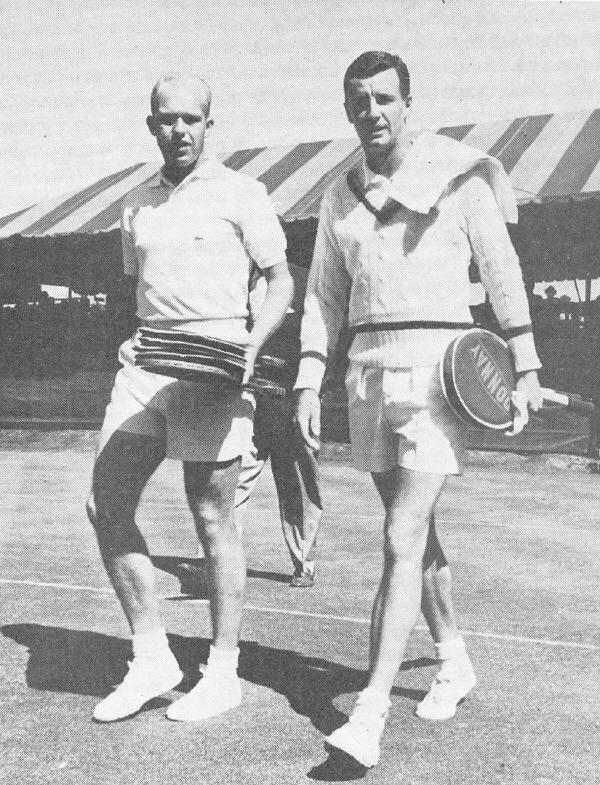
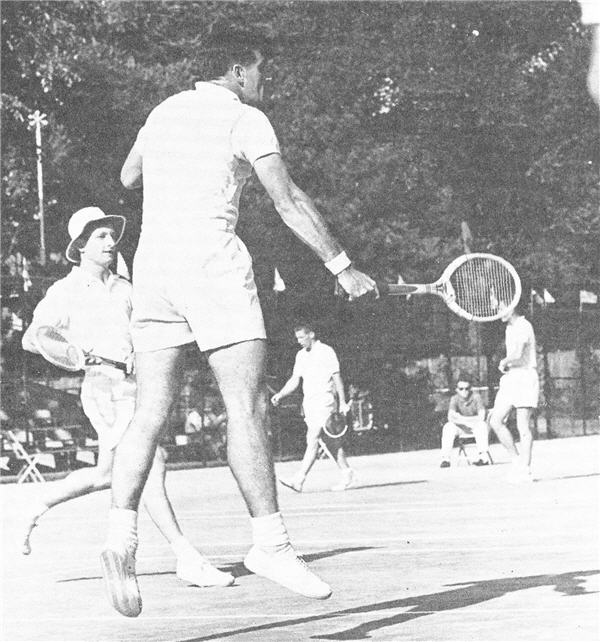
In 1920, he made the quarter finals to be beaten by the eventual winner Bill Tilden and came runner up in the mixed final. Tilden was the era’s best player yet Randolph put up a great fight going down 7-5, 4-6, 6-4, 7-5 which is a mark of his tennis expertise.

In 1921, he made the quarter finals again and lost to Japanese player Shimidzu in 5 sets, won the doubles with Englishman M.Woosnan and the Mixed with Elizabeth Ryan. Of particular note was his singles match which was played on a very hot day. During the 4th set the then 35 year old Lycett organised his trainer to serve champagne between breaks since the serving of beverages was not a regular component of competitive tennis at this time. The media portray Lycett as playing under the influence for it was reported that he fell over several times twisting wildly as he went for some power shots, yet despite having two match points ended up losing in a very closely contested 10-8 5th set. It is perhaps a little unfair to say he was greatly affected by alcohol and it is more likely that rather withdrawing due to exhaustion , Randolph managed to keep himself going in an attempt to win and very nearly did. Two days later, he won the other two finals.

1922 Patterson Beats Lycett

In 1922 he lost the singles grand final to fellow Aussie Gerald Patterson (his second Wimbledon singles title) 6-3, 6-4, 6-2 (photo left running off court), came runner up in the mixed and won the Men’s doubles with Aussie J.O.Anderson beating Pat O’Hara Wood and Gerald Patterson in an awesome 5 setter 3-6, 7-9, 6-4, 6-3,11-9.

In 1923 he made the 4th round in singles, won the mixed again with Elizabeth Ryan and won the doubles with USA’s L.A.Godfree. From 1924 to 1929 he played at Wimbledon regularly, even making the 4th round in the Men’s singles in 1926 losing against the Frenchman, Brugnon.

He amassed a quite amazing Wimbledon record from 1919 through to 1929 (age 33-43). A great effort indeed when you consider the above represents three straight Men’s doubles wins with three different partners and 5 consecutive mixed doubles finals appearances and a singles grand final in 1922.

In relation to Randolph playing Davis Cup for the British Isles, we need to step back for a moment to 1919 when Randolph left Australia to live once more in the UK. He had been charged in a Melbourne court with abandoning his Australian family from a divorce in 1914 upon returning from war service and his business interests had suffered due to a fire at the building he worked at in South Melbourne. So his move to the UK was really starting a new life one suspects.

Australian Tennis Stars Arriving for Games

Randolph (3rd left with) Patterson, Brookes & Rod Thomas

The English were reticent to immediately adopt Lycett into their Davis Cup Team because it was deemed to be unsportsmanlike and unfair to Australia. In 1920, Captain of the UK team Colonel A.F.Kingscote suggested writing a letter to Australia seeking approval for Lycett to join the British Team. Later that year, we presume with some agreement from Australia, the Davis Cup Committee eventually adopted a ruling to suit, allowing a player when as a “bona fide amateur shall be qualified to represent a nation if he shall be born in, be a citizen of or become a naturalised citizen of that country, or shall have resided therein for at least two years immediately preceding a tie, and when one player has represented a nation shall always be eligible for that Nation and no other”. Consequently, Randolph played his first Davis Cup match for the British Isles in 1921 as per the above ruling and therefore could not then play sometime in the future for Australia. Clearly had Randolph played for Australasia in 1911 he would not have been permitted to play for the UK. In the photo above c1919 we have Gerald Patterson, Norman Brookes, Randolph and Rod Thomas.

In England, Randolph later married Joan Austin, the sister of UK tennis great Henry “Bunny” Austin and we can only imagine enjoyed a fine lifestyle on the tennis circuit which included playing in the French Riviera.

Bunny Austin, who played a lot with Randolph in his own formative phase, summed up Randolph’s game thus:

“…his return of service was a joy to see, his overhead work the most deadly in the world. At his best he never missed. To lob him was to court disaster. His normal volley was not brilliant, but his tactics were to return the ball until his opponents either lobbed or hit the ball sufficiently high over the net for him to drive volley it. His drive volley was devastating. Our combination was good so long as they lobbed him. But when they lobbed me it was not so good.”

HW Austin: Lawn Tennis, Bits and Pieces, published in 1930.

Randolph was renowned for having a great time and tennis was the ideal vehicle to deliver a marvelous lifestyle.

He died in 1935 in Jersey aged only 49.

In 2005 a book was published after considerable research by Australian Peter Kettle. Please contact him by email pkettle@bigpond.net.au if you would like to acquire a copy or submit further information about Randolph Lycett. Tennishistory.com.au would like to thank Peter for his assistance in preparing this article.

Nancye Wynne Bolton

Six times Australian Champion, Nancye Wynne Bolton was a powerhouse in Australian tennis from the mid 1930’s to early 1950’s.

Inducted into the International Hall of Fame and of course into Australia’s tennis hall of fame with other greats such as Laver, she was an inspiration not only to her own generation, but to those who followed in the late 50′ and 1960’s.

Nancye was born in Melbourne on December 2nd 1916. Her first foray into tennis began at aged 10 on a bitumen court located on the roof of an office block in the city where a coach by the name of Leo Guiney.Colin Long Nancye Bolton

In 1933 as a very tall 5’10” sixteen year old she won the Victorian schoolgirl tennis championships which was followed by a couple of seasons playing A grade pennant for St Kilda. In 1936 she entered the Australian championships and made the final against previous winner, Joan Hartigan, losing 6-4, 6-4. In doubles she played with Thelma Coyne from NSW, who like Nancye had been winning state events, and surprisingly at 18 and 17 years old respectively won the event.

In singles, Nancye lost only one other match over the next 12 months. Overall, Nancye won six Australian singles titles and when you consider that WW2 interrupted tournament play for 5 years, you can only imagine what the record books may have been like had play been continuous.

In doubles, Nancey and Thelma formed a lifelong friendship which saw them take out the Australian doubles title 10 successive times and with another partner Thelma won an 11th.  In mixed doubles she played with Colin Long (pic) and they went onto win 4 successive Australian titles together.

With continuing good form, Nancye defeated Thelma in the 1937 semi final in a match that up to that point had them head to head 2-2.  The match was a see sawing event but the win 7-5, 4-6, 6-4 was exciting tennis and Nancye went on to win the final against Westacott 6-3, 5-7, 6-4, another tight match which showed the highly competitive level of tennis within the women’s ranks.  Nancye was the #1 ranked player in 1937 and please note the section on mens and womens player rankings in a different section.

In 1938, once again the LTAA was requested to send a Women’s team overseas and once again, as in 1925 they declined and even still more strangely, since the LTAA sanctioned the 1928 Women’s team which created a massive amount of interest along with a world class performance against all comers with only a major defeat at the hands of the Americans.  After much consternation and a generous expenses allowance paid for by the overseas associations who wanted the Australians, did the LTAA permit the tour to proceed with Nancye, Nell Hopman, Thelma Coyne and Dot Stevenson.

1938 Womens Tennis Team

1938 Womens Tennis Team for Overseas Tour
L-R Nell Hopman, Dot Stevenson, Thelma Coyne, Nancye Bolton

In 1947 Nancye went on another tour, but rather than give you to much detail in this article, we would like to assist Pam Stockley, Nancye’s daughter, with the sale of a magnificent book which covers Nancye’s tennis career and includes an excellent transcription of Nancye’s 1947 tour diary.  The book is extremely well written with heaps of photos and does take the reader back to the 1940’s when the “team” and friendships were in full swing.  There are only 196 copies left from a 400 limited run.

Please click this link to see a video clip of Nancye’s playing style   CLICK HERE

Please contact Pam on Australia 61 3 9872 5486  or email  pstockle at bigpond.net.au