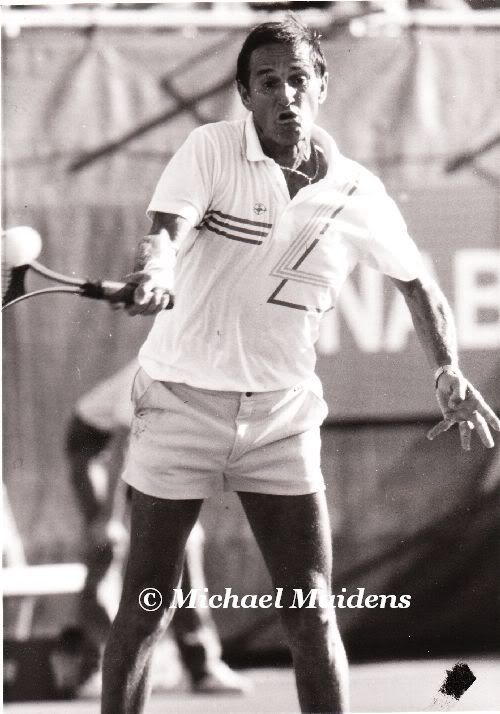
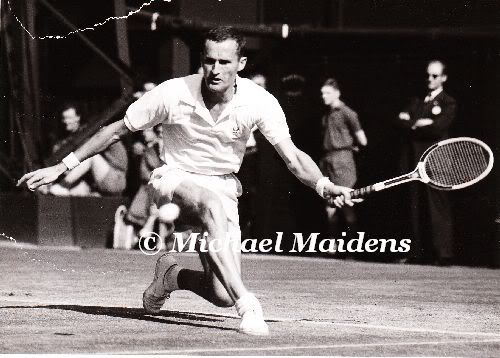
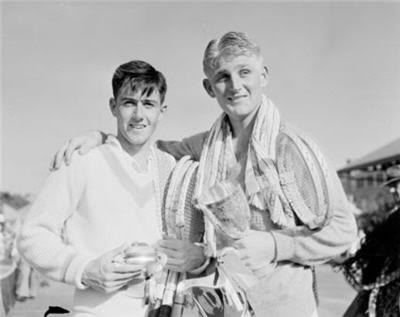
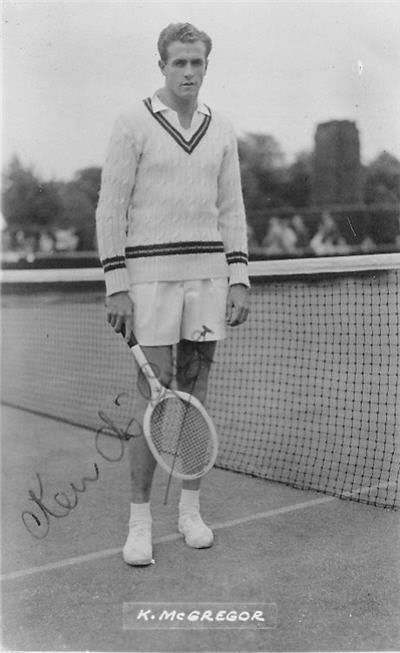
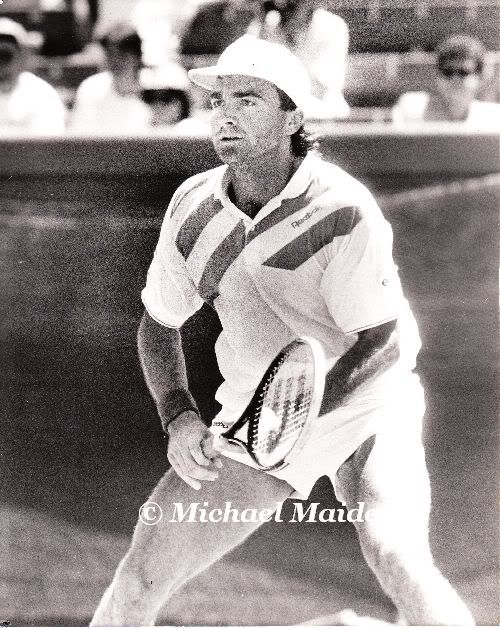
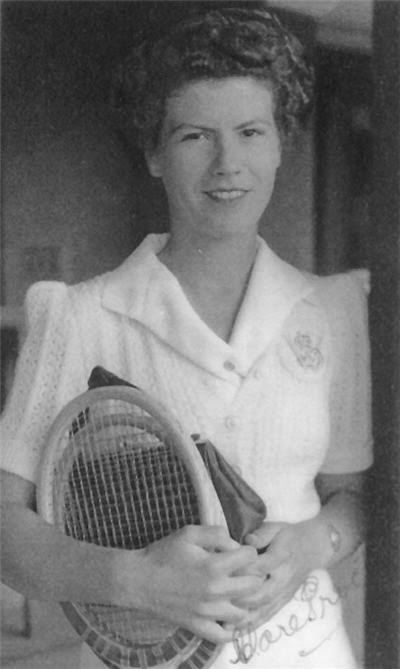
Dinny Pails

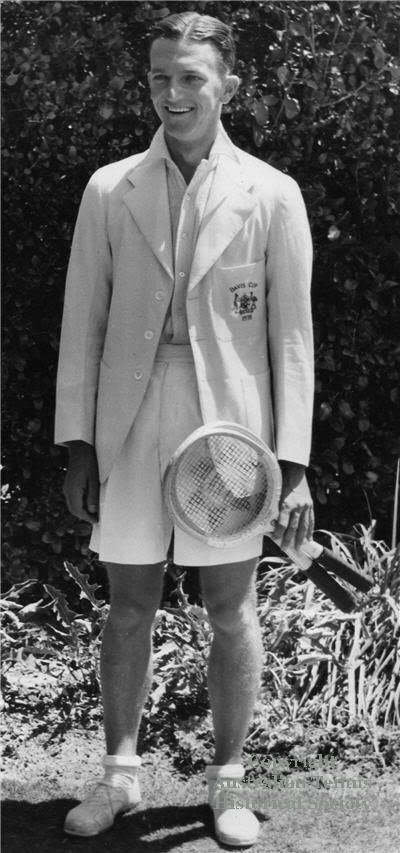
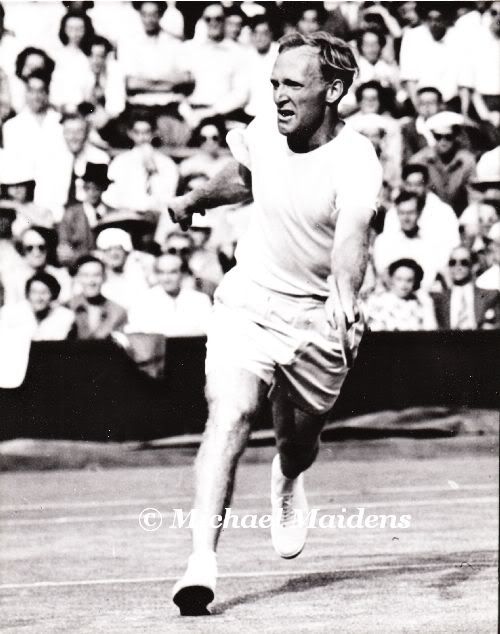
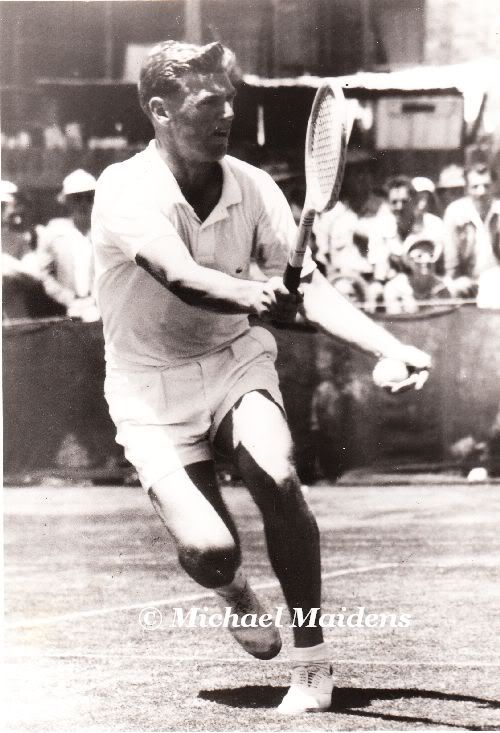
Born in Nottingham UK in 1921, Dennis Pails arrived in Australia at the age of 1 and began his boyhood in Enfield, Sydney. Like many players in the late 1920’s, he learnt tennis by playing against that most consistent competitor, the brick wall.  His mother seeing the passion for this pastime, bought him a second hand racquet affectionately known as the “onion bag” and with this racquet he progressed from backyard hitter to playing on a proper court in junior competitions. Without coaching or strategy advice, Dennis did find he could hold his own against the local competition.

His name conversion to “Dinny” came about due some poor handwriting on his part when completing a tournament entry card. He signed the card Denny Pails however it was misread as Dinny and the name stuck.Dinny Pails
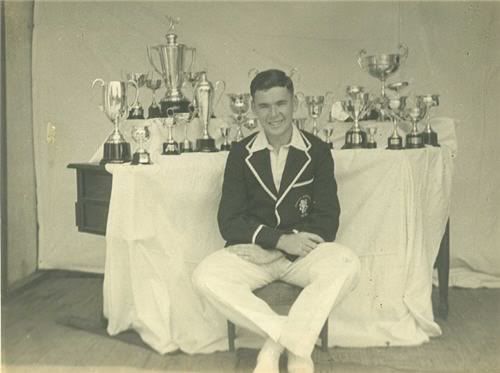
By 1936, aged 15 he was playing A Grade tennis against men in their 30’s. He was soon earmarked in junior development programmes and joined a junior coaching clinic conducted by Pat O’Hara Wood (1920’s champion player and doubles specialist) along with Bill Sidwell and others. Dinny quotes from his book “Set Points” that he felt he wasted the 4 weeks in Melbourne because Pat wasn’t checking grips and offered more advice than practical instruction.  Upon checking this coaching lesson with Bill Sidwell, Bill actually recalls learning a lot because the advice given was about strategy and game play which Bill maintains today did greatly assist him to become a very successful doubles player in his own right.  In an article written by Pat O’Hara Wood, about the juniors clinic he picked Dinny as having great promise, so perhaps the grip and shot making techniques Dinny was hoping to improve were not evidently in need of major repair.  But that was Dinny’s point. Because he had had no formal coaching, he was looking for some fundamental methods to help him improve his shot making. He was particularly conscious of his backhand which he considered his weakness and had to work hard on developing his all round game. Two players who picked up on Dinny’s high bounce backhand weakness were Viv McGrath and Bill Sidwell so he rarely defeated them. Yet, against John Bromwich, Dinny often won, where Bill Sidwell found Bromwich very hard to beat, which is telling about how different styles and strategies can work against some players and not others.

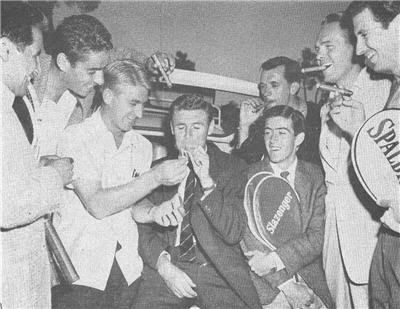
Dinny, like Bill commenced work with Slazengers where youngsters were given the opportunity to develop as players through exhibitions and tournaments at which company products were also promoted. In 1938, Dinny and Bill were attempting to get to the Wimbledon Junior championships, however the ALTA decided upon a policy of trying to prevent “burn-outs” in juniors and so what would have been a 4 month trip was cancelled.

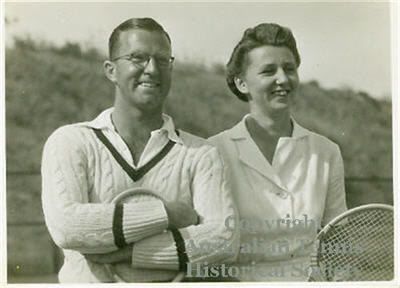
In 1943 Dinny married Mavis,coincidentally on exactly the same day that Colin Long married Florence, so the couples didn’t just have tennis as a common bond and they all remained life long close friends.

In 1946, Dinny came runner up to Bromwich in theAustralian Championships 5-7,6-3,7-5,3-6,6-2, although in 1945, Pails beatBromwich in the NSW Championships 6-1,6-2,6-4. Dinny had a really good year in 1946, having won theManly Seaside Championships, County of Cumberland, Western SuburbsChampionships, Northern Suburbs HC and West Australian Championships.

Dinny played at (post-war) Wimbledon in 1946. Amazingly at 25, Dinnyhad never played a major competitive match against a noted overseas player, due to the war years halting most international tournament events. The ALTA weren’t evenintending to send representatives in 1946, but having won many local statetournaments the Western Suburbs Hard Court Association fund raised on behalf of Dinny, as did the Catholic Association for Geoff Brown.   You need to understand that the ALTA and the English LTA worked hand in hand to permit amateurs to travel only if confirmed by their respective country tennis associations. Sometimes they travelled privately, funding their own expenses, although most often expenses were paid for by the National association. In the case of Dinny and Geoff, the ALTA had to be approached to sanction their right to receive and use the funds raised to enter the Wimbledon tournament.

Despite the political difficulties, the decision to go was fully justified.  Although in good form at home, Dinny found the experience at Wimbledon psychologically difficult due to the high expectations on him from both the media and well wishers at home, most of whom were predicting him as a real chance for taking the title. He also admitted being over anxious to do well which is hardly surprising. Despite not showing the form he had hoped, he did make the singles quarter finals to be beaten by the eventual winner Yvon Petra (Geoff Brown made the final) and in doubles he and Geoff lost the grand final to Kramer and Tom Brown. All in all a great result.  During this first Wimbledon trip an incident may have rattled Dinny immediately prior to his match against Petra. Normally reviewing the tennis court he was meant to play on pre-match to gain some pre-knowledge on wind, light and court conditions, on this day he had missed the underground train to the stadium and became only the second player in history to be late for a match (Susanne Lenglen was the other). On his arrival 8 minutes late he was chastised by  the organising committee and there was conjecture over whether he should forfeit the match. After the rebuke he was permitted to play but what a distraction on the major stage.

1946 also saw Australia defending the Davis Cup for the first time without New Zealand, having won the pre war challenge in 1939 Challenge Round as Australia (only) in the USA. The team comprised Pails, Quist and Bromwich.  The Quist and Bromwich selection was a surprise choice, largely due to the LTAA’s belief that Quist and Bromwich who had helped win the cup in 1939 should help defend it. While Brown had lost to Petra in the Wimbledon finals, Dinny had  had asensational year in 1946 beating many of the top names including Brownand was included in the team on that basis. Meanwhile, the support squad comprising Sidwell, Brown, Long and Brodie could argue better recent performances especially compared to the ageing Quist, hence there were some quarters that felt the team was not as strong as it should have been.  Dinny’s involvement in the Australian 1946 team was well deserved,however the English Davis Cup selectors also had their eye on Dinny fortheir 1946 team, since he was English born. Rejected out of order by the UK committee chairman on the basis that we (they) would  “upset the entire tennis world”,  Pails was quoted as being flattered but unequivocally pleased to be joining the Australian team later in the year.

At the Menzies Hotel in Melbourne where they practised in the weeks leading up to the Sydney Davis Cup Challenge round against the USA,  Australian team officials strictly enforced a healthy three big meals per day regime and Dinny felt like a “prize porker” gaining 7lbs to be the heaviest he had ever been.  In his match against Kramer he only felt his serve improved due to the extra weight behind it and he aced Kramer many times, however he couldn’t keep pace in the rallies. The team managed by Gerald Patterson lost 5-0.

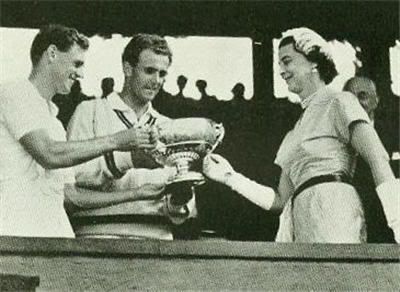
After the Davis Cup loss, Dinny joined the Americans on an Australian exhibition match tour and found the regular, top international play sharpened up his game immensely.  Typically, exhibition matches required constant travel and the boys had a lucky escape from car roll over accident in which only minor injuries were sustained.  Dinny in top form and having lost the weight gained pre the Davis Cup, beat USA #2 Tom Brown in the semis of the 1947 Australian Championships and John Bromwich in the finals to take his only major title in another grueling 5 set final 4-6, 6-4, 3-6, 7-5, 8-6

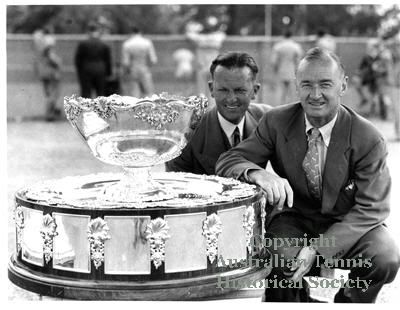
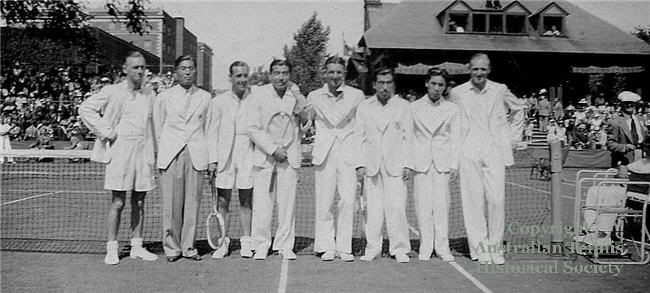
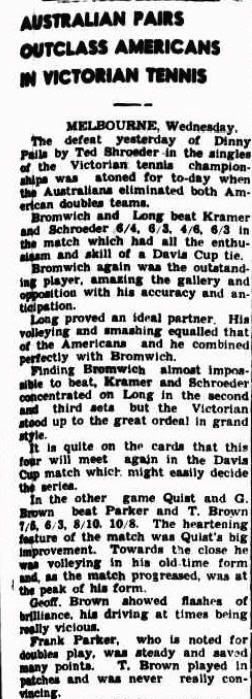
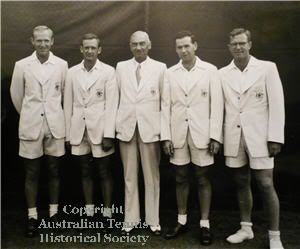
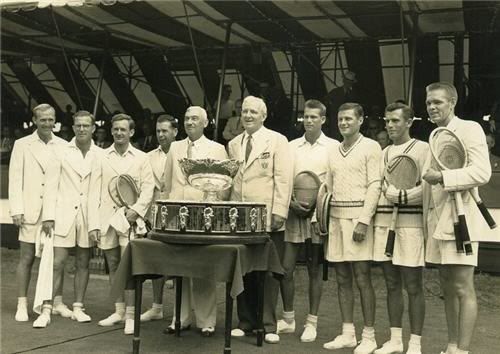
In 1947, the Davis Cup team comprised Dinny,Colin Long, Geoff Brown and John Bromwich. From Dinny’s perspective he felt the team unity was an issue with he and Colin travelling to the USA by plane and Geoff and John travelling by boat.  Bromwich had always disliked the thought of flying and had travelled by boat always. While critical of Bromwichs attitude to what matches he would and wouldn’t play and the way administrators pandered to him, Dinny was very impressed with the winning performance of Bromwich and Long against Kramer and Schroeder in the challenge round.  Dinny played Kramer in the first match and was beaten 6-1,6-1,6-2 , Bromwich lost to Schroeder.  Although, the strategy was to win the doubles and the two singles against Schroeder losing the first two singles and winning the doubles was going to leave them a difficult task.  In the second singles match Dinny had a match point against Schroeder but couldn’t capitalise so the Australians ended up losing 4-1.1947 Davis Cup Team
After the Davis Cup Dinny, aware that Kramer was going to turn professional, entered discussions with Kramer to join him on the pro circuit.  Foreseeing an average career path as a junior employee within a sporting goods company that would only last while he was playing top class tennis, he decided to join. This was the beginning of an entirely new era between professional touring players and amateurs, and Dinny led the way which many other top Australian players would follow. Naturally he was concerned about joining so young for it meant being prevented from playing in major tournaments, but he weighed up the options in favour of the professionals and his family’s financial future.

His leaving Australia for the first tour in the USA was clandestine, for he was fearful that his LTAA contract, still in force after arrived home from the Davis Cup, could prevent him from joining Kramer in the USA. Rather than risk the fight, he decided to book his November flight out under an assumed name ” Billy Jones”. With a sense of being a criminal his true identity was uncovered by customs officials checking his paperwork. Although, he had taken only one sporting writer for the Sydney Morning Herald into his confidence, someone rang the press who raced to the airport and next day there were photos of him sitting on the plane prior to departure. Dinny’s decision caused controversy in Australian tennis circles, yet Norman Brookes, in charge of the LTAA, simply wished Dinny well.  There had been rumours from October in the press about Dinny contemplating turning professional and in November Brookes was even quoted as being opposed to holding Dinny to his contract should he decide to turn pro.

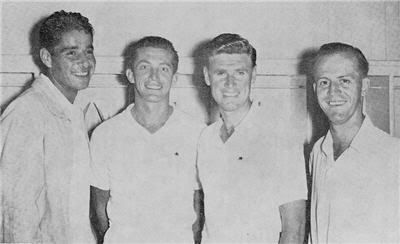
The first US professional tennis troupe comprised Bobby Riggs, Pancho Segura, Jack Kramer and Dinny, and was managed by Jack Harris. The first match was played on December 26th 1947 at Madison Square Garden on a freezing night, yet with public transport halted due to heavy snowfalls, 16,000 people braved the icy conditions to watch the matches.  Segura and Pails were the support act and after winning the first set 15-13 (Dinny won) their match was called off so Kramer and Riggs could play. In the first 30 days they played 21 matches travelling through out the night by road and rail.  It was a very successful tour.

From the US they travelled to South America to Segura’s home.  In one particular match against Segura, Dinny did not receive any crowd support for any point well played save for one lone woman who, as it happened, was an Australian married to the US Consul based in Guayaquil. He beat Segura in straight sets, a lonely experience in front of a 6000 strong, very biased crowd. As a wage while in the US both Pails and Segura were being paid $300 per week from which they paid their own travelling expenses. Outside the US tours they were to pick up10% a piece. The tour promoter Jack Harris fell out of favor with theplayers and they decided to manage future tours themselves. In the new deal, after travelling expenses were deducted from gross proceeds, Dinny and Segura ended up with 17.5% each, Riggs 25% and Kramer 40% so a much better deal all round.

They decided to tour Australia in October 1948 and Dinny flew home to organise the event which saw them play in all the major cities and large country centres. Spectator reaction was not as good as in the USA mainly because people didn’t believe the matches were being played on a “Fair Dinkum” level, yet reputations and pride were at stake (plus winning also had financial implications in future tour negotiations). During the Australian tour Kramer started the concept of running junior tennis clinics pre the matches to explain the strokes and techniques, so there may be many tennis fans out there still who might recall meeting the first Australian pro tour players with fond memories.

In 1949, they travelled the UK and Dinny tells of his best tennis experience not just on the specially laid wooden court at Wembley stadium, but for the fact that the night featured an orchestra playing before the event and between sets while dinner was served to the guests. The tour continued throughout Europe.

He moved into full time coaching throughout 1950 starting a clinic at Holmescourt Tennis Courts in Sydney and was employed to train with visiting Davis Cup squads.   In 1951, managed by Charlie Sam, Dinny organised an Australia New Zealand pro tour comprising himself, Don Budge, Pancho Gonzales and Frank Parker.

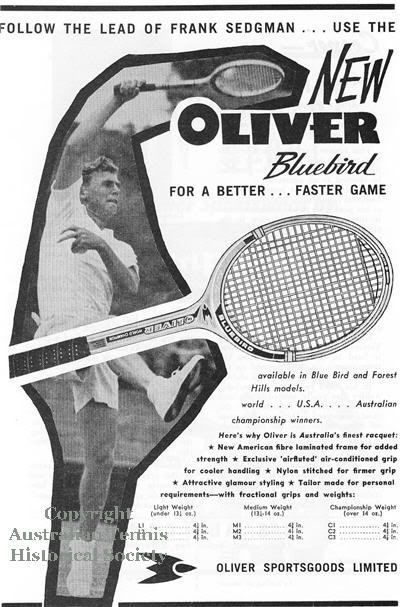
Although, Dinny started with Slazenger, he stayed only a short while before going to Spalding. In 1951, Dunlop introduced a “Dinny Pails” International Model Maxply and later he also joined Hedleys who produced one of the only locally made player photo decal racquets.
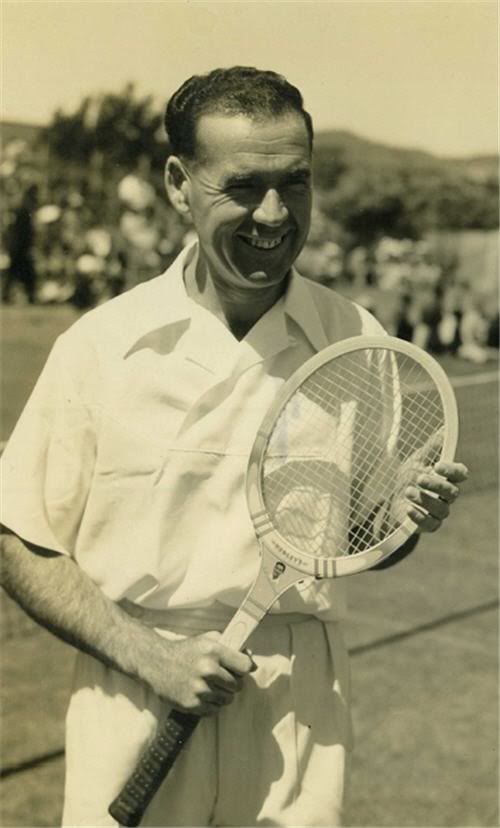
 

Dinny Pails

Dinny with the Hedley photo decal racquet


While attending the 1951 Linton Cup tournament at Kooyong, Dinny wrote a newspaper article expressing great interest in two young 15 year olds lads from Sydney, Lew Hoad and Ken Rosewall. He said that these two were better at aged 15 than any former Davis Cup players he could recall, so a telling prediction.  His media exposure was also enhanced by a regular tennis spot on radio station 2FC in Sydney.

In 1953, Dinny travelled to Italy all expenses paid, to train the Italian Davis Cup team,so he certainly enjoyed seeing the World in his career.  One of my colleagues tells the story of Dinny playing in Rome wearing a Scotch College (Melbourne) tennis jumper he purchased in Melbourne prior to leaving. When quizzed that my friend couldn’t recall Dinny at Scotch he had to advise that it was simply a lovely tennis jumper. I gather badging oneself in school colours wasn’t the done thing in those days. Fancy being ‘caught out’ miles away in Rome.

On the home front Dinny, wrote newspaper articles regularly for the Argus.  In 1953, he started to publicly promote pro tennis in a polictical battle with the LTAA. You can imagine the Norman Brookes raised eyebrows when Dinny’s  headline ” The LTAA is out to kill pro tennis” hit the news stands.  The issues related to revenue splitting between the club and pro’s and venue club member entitlements to free or discounted tickets. Often, the pros ended up playing at velodromes and other non traditional venues.

Also reaching the papers in 1953 was the public desire for a “tennis prize fight” between Pails and Frank Sedgman who had also turned professional and was playing the US tour with Kramer. Frank’s response to news reports that Dinny was keen for the challenge was “I’ll accept that when I get a chance and if I can’t beat Dinny then I will give up”!

They both met on a 1953 European pro tour and without all the scores, we think Frank took the honour and again in November 1954 they met in Perth at Australia’s first Professional Tennis Singles Championship, conducted at Subiaco Oval, West Australia.  The tournament included local player / organiser Max Bonner, Ken McGregor, Frank Sedgman, Dinny, Richard Gonzales and Pancho Segura. Frank one the event, defeating Dinny along the way 6-3,6-3, yet Dinny and Sedgman both beat Gonzales which was no mean feat.

Dinny continued to play tennis into the late 1960’s and also worked as a coach including a Nestle sponsored junior development programme.

Dinny aged only 65, died in 1986.

Although many tennis fans will know little about Dinny, if he hadn’t turned pro so early in his career he may well have won quite a few Australian titles. His skill and talent as a self taught player certainly took him to the heights of Kramer, Gonzales & Segura and co. and deserves a prominent place in Australian Tennis.

As a quick “Dinny” tip to players suffering from blisters on the feet, he used Friars Balsam pre match and found that he never experienced the blisters again.

Thanks to Margaret, Dinny’s daughter for assisting with photos and stories.
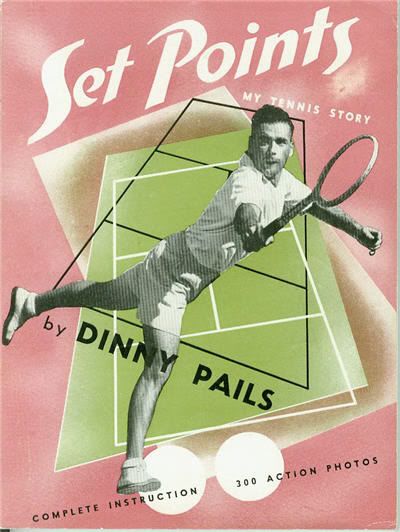
 

Dinny Pails Set Points

Dinny’s book Set Points, My Tennis Story.
Currawong Publishing 1952
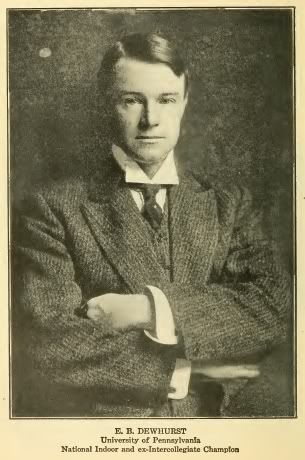


Edward Bury Dewhurst

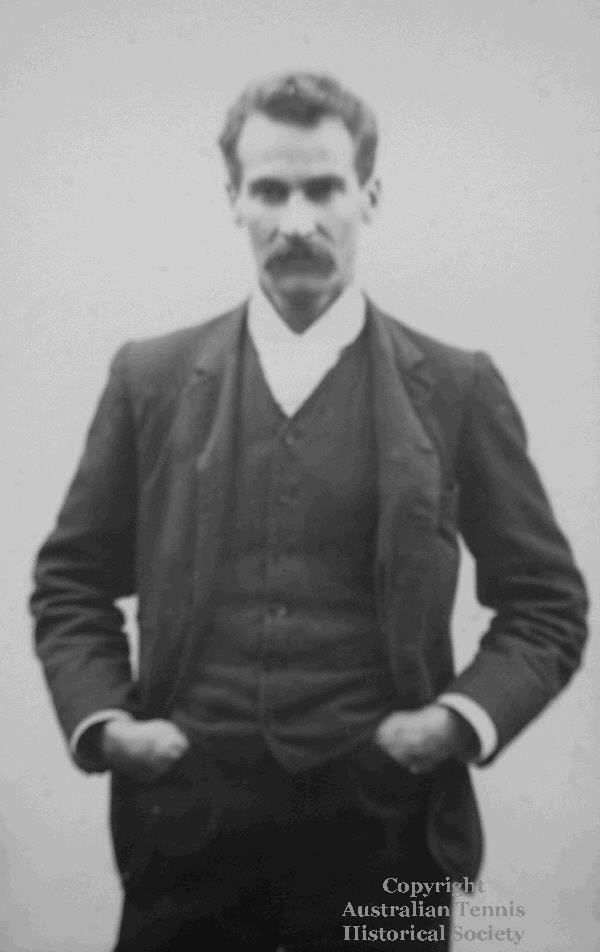
In the early days of Australian Tennis internationally, much of the focus has centred on performances of our players in England. Most noteworthy of this time were Norman Brookes, Tony Wilding (NZ), Rodney Heath, Alf Dunlop and others. From their arrival in 1905 to play Wimbledon and then the Davis Cup, their impact was significant over the next 8 years.

E B Dewhurst

In no way as dramatic, yet still significant, on the other side of the globe in the USA, another lone Australian was also having a noteworthy impact on the game.

Edward Bury Dewhurst was born in Tamworth NSW in 1870. At aged 23, in 1893, he commenced playing with the NSW team against Victoria in the Intercolonial contests and became quite a formidable player. In one notable match he defeated Victorian player Mr. Green who had played in 12 Intercolonial tournaments undefeated until being beaten by Dewhurst in 1895.

Overall he played non consecutively in these prestigious matches from 1893 to 1897 against Victoria and in 1902 against Queensland.

In local tournaments he won the NSW Doubles Championships in 1898 with D.Webb and 1900 with A.Curtis. He also won the Strathfield NSW Metropolitan Championships, singles in 1895 and doubles in 1895, 1897 and 1902.

Circa mid 1903, Edward left Australia for the University of Pennsylvania USA to undertake a tertiary course in Dentistry.

In America, Tennis was also developing quickly and the main events of the time were the Davis Cup which started in 1900, the US Championships which had begun in 1881, the National Intercollegiate Championships which started in 1883 and the USLTA National Indoor Championships which began in 1898.

Representing Pennsylvania University, Edward won the Intercollegiate Singles title in 1903, came runner up in 1904 and won again in 1905 along with the Doubles title playing with H.B.Register. He was team captain in these years and the first Uni. of Penn. winner of the intercollegiate title. The local papers felt that while his performance was an excellent result they were very interested in how Australian tennis was progressing against the USA’s finest players. W. Clothier the current title holder was not able to play so this comparison remained unanswered for the time being. Later Dewhurst did meet Clothier in the 1904 US National Championships and was beaten in the 3rd round.

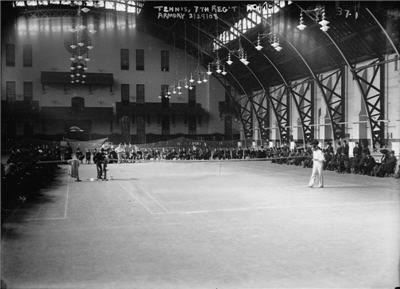
Perhaps his greatest achievement was winning the 1905 National Indoor Championships when he defeated the reigning champion of the previous two years, Wylie Grant 6-3, 8-6, 6-4. The event was played on board courts at the Seventh Regiment Armory and although in relatively poor light, Dewhurst managed to win by returning the serves he could, keeping the ball low and at the feet of Grant. Grant had a big serve and on wood courts the ball would fly through very quickly hence he was aced quite a few times.

E B Dewhurst

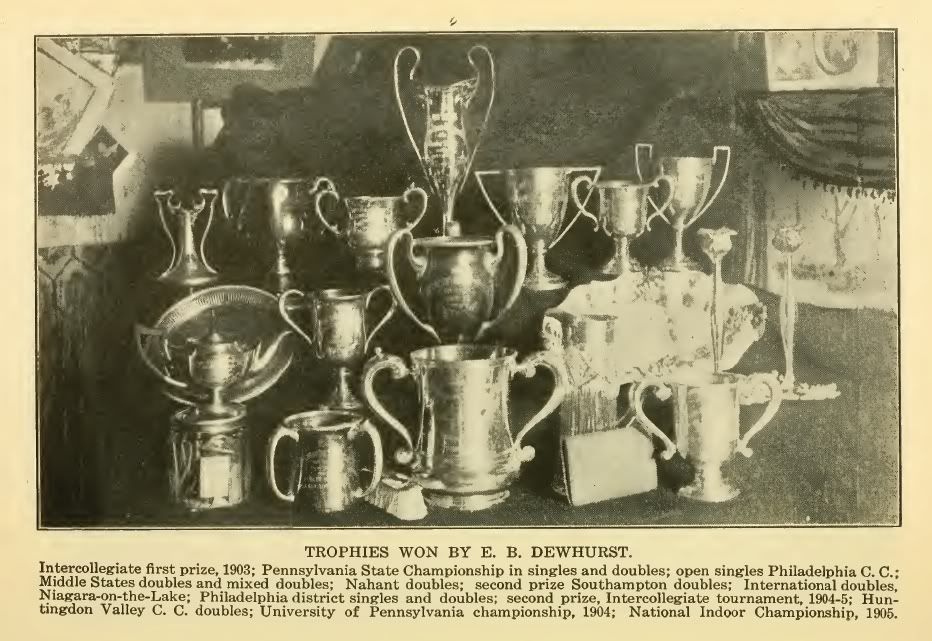
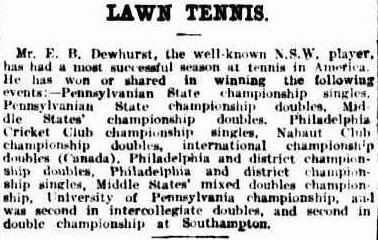
In addition, he also won the Pennsylvania State Championships 1904, 1905, 1908 and Maryland State Championships in 1906 and 1907. The above photo from the 1905 Spalding Lawn Tennis Annual shows what a great year he had in many tournaments.

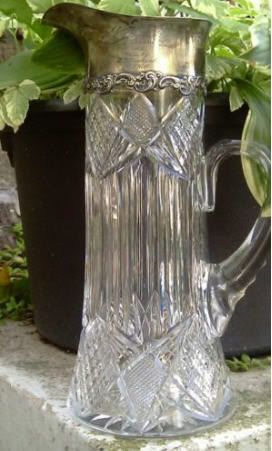
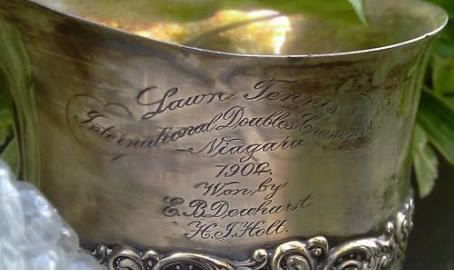
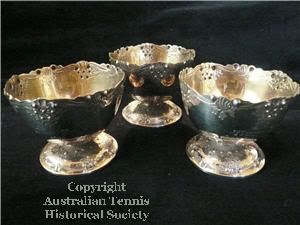
The Niagara trophy in the display above looks like this in real life.

Edward played was successful at the US Championships as well, reaching the Mixed Doubles final in 1905 with Elisabeth Moore to be runners up and then winners in 1906 partnering with Sarah Coffin. Interestingly, when attempting to pinpoint the first Australian to win “a major” outside of the Australasian championships which commenced in 1905,  Edwards win in 1906 gives him this title.  Norman Brookes did win the Wimbledon  All Comers event in 1905 but lost in the Challenge round for the title.  He did however win all three Wimbledon events in 1907.

Dewhurst Niagara Trophy

Dewhurst Niagara Trophy

The local SMH reported his results in 1905.

In 1906 he was ranked in the USA top 10 at #9.

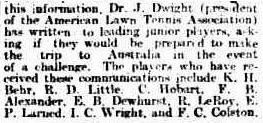
In 1908 with the Davis Cup in Australia and USA leading players Beals Wright and W. Larned expressing a desire to withdraw, being quite tired of International tennis, Dwight Davis was keen to establish a younger squad which also included an invitation to Dewhurst.

The US ended up sending Beals Wright and Fred Alexander to play Wilding and Brookes in what was an amazing challenge.

Edward was highly regarded on the subject of tennis techniques and strategies. In 1910 he published a book titled “The Science of Lawn Tennis” and participated in providing comments for the quite famous book “Methods and Players of Modern Lawn Tennis” published in 1915.

He was also quoted in US papers providing specialist commentary regarding the Australian Davis Cup Teams progressing to the Challenge rounds, often against the US.

According to the New York Times in 1910 Edward was forced out of the top ranks due some form of blood posioning disease. He stayed and lived in America practicing Dentistry and died in February 1941 aged 70.

He was inducted into the University of Pennsylavnia Tennis Hall of Fame along with two other well known tennis players Wallace Ford Johnson and William Tatem “Big Bill” Tilden.

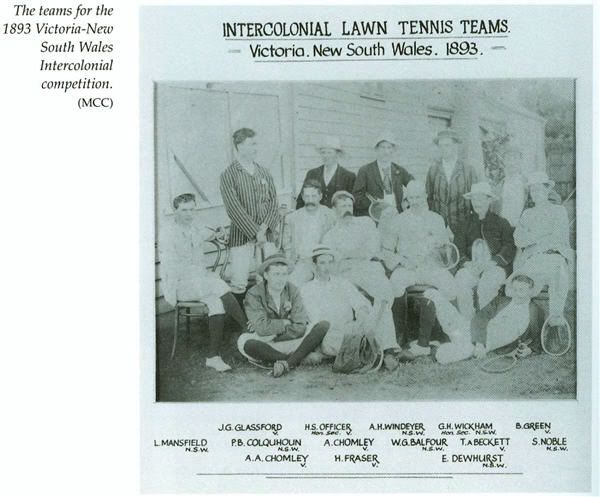
The photo below is taken from the “Serve to Authority” Story of Kooyong Page 14 which shows the 1893 Intercolonial teams of NSW & VIC.

Edward Dewhurst is lying on the ground to the right. We are attempting to source the original for greater clarity.

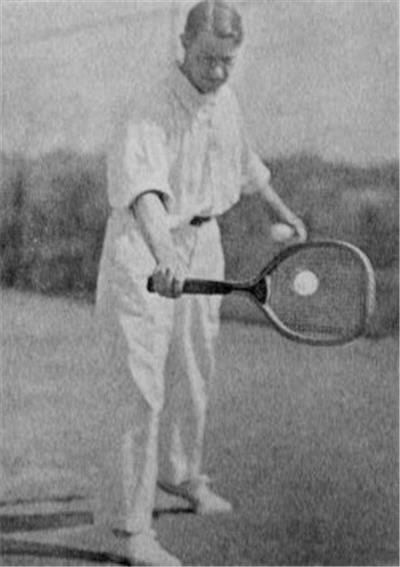
The photo of the 7th Armory iwas taken in 1908 yet it illustrates the setting.  Shots of EB Dewhurst (courtesy of his book in which he is showing readers shot making techniques). A special thanks to the 7th Armory who provided material and Keith Jenkins for information from EBD’s book.

Wilberforce Eaves

Within the history of tennis in Australia many simply start with Norman Brookes remarkable win at the All England Championships and Davis cup wins in 1907 or his earlier visit in 1905 to attempt to win the Davis Cup for the first time.

However, Australian tennis history can claim some connection with a remarkable man named Wilberforce Eaves, who not only had an excellent tennis record in the UK where he lived much of his middle aged life, but he also traveled extensively to Australia and had a significant impact on the way tennis developed and was played here in the years leading up to Norman Brookes successes in the UK. In fact he had a huge impact on the playing style of Norman Brookes.

Born on 10th December 1867, in St Kilda, Melbourne, the same suburb as Brookes and Randolph Lycett, he was 10 years older than Brookes.  His parents William and Eunice and older brother William returned to England c1881 where they appeared on the British census. Wilberforce was then 14.  No doubt, English schooling and local social activities introduced him to tennis  and after becoming a Doctor at University College and a member of the Royal College of Physicians, must have been quite proficient since he played in his first Wimbledon tournament aged 23 in 1890, where he was beaten in the second round.

Tragically, also, in 1890 his father William senior, passed away and his mother then decided to return to Australia with both boys, given her family had grown up in the Colac region of Victoria.

Eaves & Webb 30-05- 1891 Syd Mail

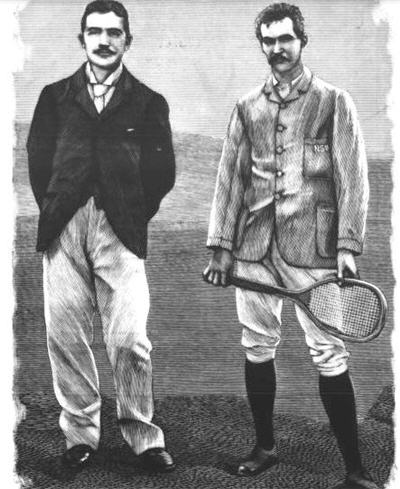
This wonderful line drawing of Eaves (left) and Dudley Webb comes from the Sydney Mail 1891.

Over the course of 1891, he played competitive tennis here with some of Australia’s best players who competed in the Intercolonial competitions for Victoria. His inclusion in the Victorian intercolonial side raised eyebrows since he just arrived from the UK but when it was confirmed that he was born in Victoria he was immediately accepted. A significant win for Wilberforce was the Buckley Cup which also carried with it the title of the Victorian Grass Championships and he also won the doubles with Alexander Chomley.  In the keenly challenged NSW championships, he partnered with Victorian champion Ben Green to win the doubles and in the much anticipated singles final defeated (ex Victorian) Dudley Webb, breaking what was Webbs only loss between 1890-1894. He really had proved himself against the best of the locals.

In what was his first influence on the game here, Wilberforce had demonstrated the need for the server in doubles to come to the net and volley instead of playing a baseline game. This method of play with increased focus on effective volleying became a prevalent difference between Victorian and NSW styles and probably helped our overall doubles tactics and techniques which has been a hall mark of Australian doubles tennis since.  He also suggested that if the states could conduct their tournaments in close date proximity then some of the best English “cracks” may well make the trip out, but not for one tournament.  He also stressed that proper covered lawn tennis should always be used, as in NSW not the uncovered ball as used in Victoria, where he stated the game could hardly be called tennis.

After 6 months his desire to get back to England and Europe where tennis championships were flourishing, saw him enter the 1892 Queens covered tournament doubles event as a member of the renowned Hyde Park Tennis club. From there he entered Wimbledon for a second time where he improved his performance to a 3rd round defeat.

During the next ten years, his feats in tennis were quite extraordinary.  However, because he never won a “major event” and  typically the runners up tend to disappear unfairly into obscurity very little has been published about him.  There is little doubt that many Australian tennis fans will know little of or anything about Wilberforce Eaves.

To summarise his results:

Queens Covered court tournament

Singles runnerup 1895, Winner 1896,1897,1899  Doubles winner with C.H.Martin 1895, 1896

Irish Championships

Won 1897

Scottish Championships

Won 1901

Wales Championships

Won 1895

Wimbledon Championships

1895 Runner up in 5 sets to Wilfred Baddeley (who’s book Lawn Tennis contains these results) There was only a few key points in this match 4-6, 2-6, 8-6, 6-2, 6-3 and he was leading two sets to love.

1896 All comers final, defeated by Mahony who was the eventual champion.

1897 All comers final beaten (retired) against Reg. Doherty the eventual winner over Mahony and major champion of the UK for many years with his brother Laurie Doherty.

1899 and 1905 Winner of the All England Plate which was a secondary singles event open to those players who were defeated in rounds one and two. As such this may well be considered the first major Wimbledon tournament won by an Australian. The event was conducted up into the 1970’s at least for both men and women.

French Covered Court Championships

Over in France Wilberforce won the French Covered Court Championships in 1892, 1893 and 1894 and like many of the other top rank English players traveled the area widely and no doubt this early experience gained by Wilberforce rubbed off on players like NZ Anthony Wilding, Norman Brookes and other leading Australian players who traveled extensively throughout Europe/UK in the early 1900’s.

US Open Championships

In 1897,  Wilberforce represented the UK in a four man tour to the United States in an attempt to encourage greater visitations of players between the two nations which, if you like, was a key forerunner to the decision to commence the Davis Cup in 1900.

While there, he entered the US Open Championships and in an unfortunate repeat performance at Wimbledon 1895, lost the grand final in 5 sets 4-6, 8-6,6-3,2-6,6-2 to Robert Wrenn.

W.D.EAVES from lawn tennis h &a by wallis myers p317    VAILE WVEAVES UK pic of him playing

In 1902, Wilberforce returned to Australia to visit family and participate in the local tennis scene. Once again he joined the Victorian Intercolonial team and it was here that he most likely met the up and coming Norman Brookes along with Rodney Heath, Alf Dunlop and others. Norman Brookes had won the Victorian Championships and the big test for Australian tennis,  compared to overseas standards, was going to be the NSW championships. It was here that Brookes and Eaves met in the final and Eaves won in a tight come back match of 5 sets (again)  12-14, 4-6, 6-4, 6-4, 6-3.  It was a turning point in Brookes career because he realised that he needed to change his game from being somewhat erratic basher at the baseline to one, like Eaves who used a net rushing strategy, or as Brookes summed up ” It’s time I used my head as well as my racquet”.

In addition, this was also the point at which Wilberforce educated the Australians and Brookes in particular, in the art of the American Twist serve which Brookes was later to become renowned as the “wizard” given the amazing spin and placement he could get on the served tennis ball. It would also appear that Eaves did coach Brookes and no doubt had an impact on his preparedness for the 1905-1907 contests.

Back in the UK, Wilberforce clearly, and in hindsight, accurately marked the Australians as future contenders in the Davis Cup and at Wimbledon in a tennis newspaper article published in 1903.   In fact the first Davis Cup team to play in the UK may well have been Wilberforce and Brookes because Eaves had invited Brookes over to create an Australian team in 1904.  This didn’t eventuate, but in 1905  Brookes did travel to the UK and with Wilding (NZ) and Dunlop (not Eaves) playing in the Davis Cup Australasia Team.  Eaves along with B.Murphy and H.A.Parker did however made up the Australasian International team, combined with the Davis Cup team members to  play in the first of a series of test matches against an English side.

The friendship with the Australians and in particular Brookes can only be measured by the fact that Wilberforce was the best man at Norman Brookes wedding and frequently visited Australia to catch up with his mates. In 1913, Wilberforce even played with Brookes in the Australian Open Golf Championships at Royal Melbourne.

Throughout the early 1900’s Wilberforce continued to play at major tournaments. In the year that Brookes won his first Wimbledon title (1907) Wilberforce lost in the semi finals to English champion A.W.Gore 9-7, 7-5, 6-2 who then went onto play and lose to Brookes in the final (no challenge round). So with a few games either way Wilberforce may well have been playing his mate Norman for the title adding to the three previous times when he was ever so close.  His last Wimbledon was in 1911 which meant that he was a regular there from 1890-1911, a sensational period remembering he was 40 in 1907 and 10 years older than Brookes.

While often considered an Englishmen in much of the tennis literature owing to the fact that he returned there to study and did spend much of his life living there, this was commonplace in those days for many Australians with English backgrounds to do. He represented the UK on various occasions including his bronze medal in the 1908 Olympics and the UK representative teams he joined that played in South Africa, Ireland and the USA. He was also intending to play for the UK in a side planned for a (non-eventual) trip to Australia, such was his desire to bring top players out to build player exposure to the top ranks.

Yet, he also joined teams under the Australasian banner at tournaments in the UK and Europe.

What a great tennis career and given his birth here and local family and sporting connections,  his deeds to assist Australian tennis players when he played here and when abroad permits this writer to claim Wilberforce Eaves to be a very important and largely unrecognised person within Australia’s Tennis history.

He died in England in 1920 aged 52.

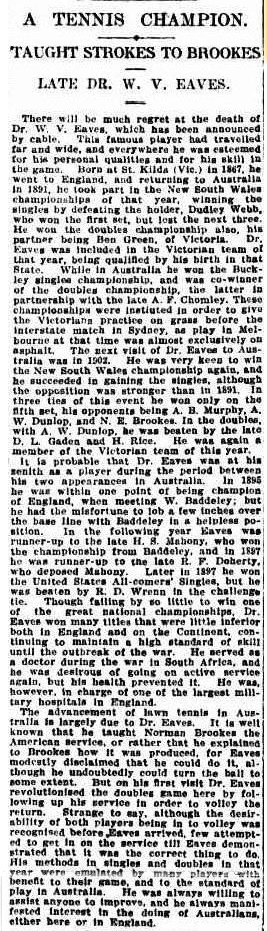
The top photo comes from the Wallis Myer book Tennis at Home & Abroad, the second from P.A.Vailes Modern Lawn Tennis and the article from the Sydney Morning Herald Feb 20th 1920.

W EAVES DIES feb 20 1920 obituray

Also of interest within this era, is another Australian playing a part in the development of tennis. I include it here because Robert Scott, while not a champion per se, did play at around the same time as Eaves and would no doubt have played against each other at some tournaments in the 1890’s.

This article was kindly researched by tennis book collector/ historian, Keith Jenkins,who uncovered the story due to the mention of an Australian player named Robert B Scott in a book and from there considerable research effort by Keith brought the following story to light.

Robert was born at Geelong, Victoria, Australia, 11 Feb. 1868. He was the son of Thomas King Scott of Kenley, Melbourne, and Emmeline Fincham Baldock. The family owned properties in  Buninyong, Victoria, and Walgett, NSW and on the death of Thomas the probate on his will was some 20,369 pounds, which was a huge amount in those days.

Being obviously from a very wealthy family, Robert was educated at Toorak and Scotch Colleges, attending Scotch from 1876 -1882 [where he also won the Bible Prize in 1880] and then attended Ormond College, Melbourne.

In relation to tennis, Robert was already playing at a top grade in Australia before leaving for the UK.  An R.B.Scott was playing doubles with his brother in an Adelaide tournament at aged 15 and is recorded as playing for Victoria in 1890 in an early Interstate carnival event. While not quite in the top rank, he was a competent all round player.

As many Australian lads did, he traveled back to the UK to further his education and entered Trinity College at Cambridge on 7 Oct. 1892. He graduated with a BA in 1895, but he is not listed among the students who took honours. He is also listed as having studied at Edinburgh.

robert baldock scott

At Trinity, there is an early record of an R.B.Scott playing for the second tennis team (Grasshoppers) in 1893 and then going on to play for the first team in the Varsity match. In the 1893 Varsity Match he beat W.V.Doherty 6-4, 7-5, beat J.W.Steadman 6-2, 4-6, 10-8 and lost to A.D.Kelly 2-6,4-6.

He also won two out of three doubles rubbers playing with H.V.Fedden (also of Trinity). They lost to Doherty and Kelly 13-15, 1-6, beat Hinde and Steadman 6-2,6-4 and beat Pritchard and Mears 6-2, 6-4.

While at Cambridge University, R.B. Scott was Hon. Secretary of CULTC (Lawn tennis club)  and in 1894-1895 R.B.Scott was President of CULTC. In the following years, R.F. Doherty was President in (1896) and H.L. Doherty in 1897. Both of these gents after the Renshaw brothers, virtually dominated tennis for a decade and in the process with a huge public following stimulated ongoing interest and growth in Wimbledon and the first Davis Cup matches.

As to Robert Scott’s involvement with these champions, in reading the book, “Fifty Years of Lawn Tennis in Scotland” edited by A.Wallace MacGregor in 1927, Scott is first mentioned as an “Australian player” in the 1892 Scottish Championships. Then MacGregor tells of the 1895 Champs where he played with “RB Scott, then President of Cambridge, one of the finest doubles players I have ever been privileged to partner, and one to whose enthusiasm and advice at Cambridge much of the Dohertys’ devotion to the game was ascribable”.

Apart from a huge enthusiasm for the game, Robert played at Wimbledon (at the same time as Eaves) in 1894 losing in the second round to Harry Barlow 11-9, 4-6, 2-6, 4-6. In 1896 he lost in the first round against top player Charles Allen 6-3, 0-6, 4-6, 6-1, 4-6 and then teamed with H.L.Doherty to lose in the 3rd round against the Allen brothers 6-3, 1-6, 1-6, 2-6.

In the Scottish Championships of 1897, Scott and his partner, R. Hamblin Smith were beaten by the Doherty brothers in the semi finals, losing 1-6, 13-15, 0-6.

Robert was licensed by the Presbyterian Church of Edinburgh May 1899; assistant at St Cuthbert’s, Edinburgh, North Berwick, and to garrison chaplain, Edinburgh; ordained minister at Humbie, 18 Jan. 1905 and was transferred to Rhu 9 Nov. 1922 and died there 7 May 1924.

To assist relatives in contacting us with additional information,  our Robert Scott married on 31 Aug.1904 an Alexa Evelyn MacLeod, born 21 Feb. 1872 died 18 Mar. 1937.  She was the daughter of Rev. John Macleod, D.D., minister of Govan.

Children of RB & Alexa – Mary Alexa Baldock, born 12 Aug. 1908; Celia Helen Baldock, born 9 July 1911.

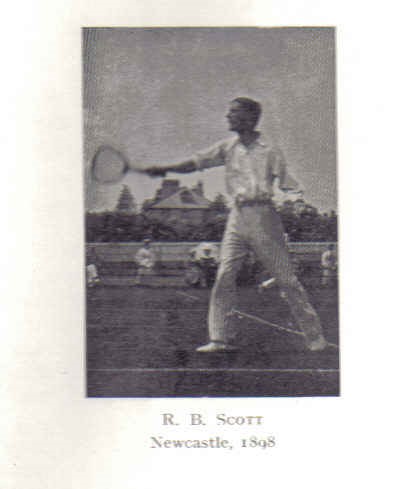
We only have the one photo and any new information would be gratefully received.

References:

“Fifty Years of Lawn Tennis in Scotland” edited by A.Wallace MacGregor. 1927 [photo]

Cambridge University Lawn Tennis Club – contact Nick Jenkins [no relation!!]

Jonathan Smith – Trinity College Archivist, Cambridge University.

Scottish Ministers – Humbie p.377

“The MacLeods-the Genealogy of a Clan” by Rev. Dr. Donald MacLeod/Alick Morrison 1970, p.33

“Wimbledon Championships” by John Barrett

“50 Years of Wimbledon” by A. Wallis Myers p.37, p.92.

Dr. Jim Mitchell – Scotch College Archivist

The Argus – 4 Jan. 1868 [List of old colonists]

The Argus – 17 Dec. 1880 [Scotch College prize]

The Argus – 27 Aug. 1889 [TK Scott – death notice]

The Sydney Morning Herald 27 Aug. 1889 [TK Scott – death notice]

The Argus – 8 Nov. 1889 [TK Scott – probate]

The Argus – 3 April 1890 [Ormond College concert]

Sydney Morning Herald – 13 Nov. 1890. [Intercolonial Tennis results]

The Argus – 2 Sept. 1904 [Wedding notice]

Australian Top 10 Rankings Men and Women

Australian Tennis player rankings were publicised from 1930 through to the mid 1970’s when the International Tennis Ranking system was largely adopted as the measure.

The information below does provide some interesting reading in relation to the longevity of some players and highlights some famous married couples like Jack Crawford and Marjorie (ne Cox) both number 1 in 1934 and Harry Hopman and wife Nell (ne Hall). Please do note that Thelma Coyne Long was not married to Colin Long but his brother, a point which is often confused.

Australian Rankings sometimes went past the top ten and so we have included a full list to expose the excellent performances of these individuals.

Thanks to Andrew Tasiopoulos for supplying the data.

Another note is that in the 1938/39 season officials decided to change the criteria of the men’s rankings to include only tournaments both overseas and in Australia which involved 5 set matches, as a measure of strength and stamina.  This meant that some 3 set match results from key metro or interstate tournaments etc. were not counted and hence some of the players moved positions (with not all the public agreeing with this change in precedent).

1930 (To 31st March 1930)
Mens
1. EF Moon
2. J Crawford
3. H Hopman
4. J Willard
5. RO Cummings
6. C Sproule
7. J Clemenger
8. R Dunlop
9. RE Schlesinger
10. AH Hassett
11. JB Hawkes
12. DP Turnbull

Womens
1. D Akhurst
=2. RR Harper
=2. L Bickerton
4. M Molesworth
5. E Hood
6. M Cox
7. K Le Messurier
8. G Toyne
9. U Valkenburg
10. D Dingle

1931 (To 31st March 1931)
Mens
1. J Crawford
2. H Hopman
3. EF Moon
4. RO Cummings
5. DP Turnbull
6. J Clemenger
7. J Willard
8. A Willard
9. C Sproule
=10. RE Schlesinger
=10. R Dunlop
=10. C Donohue

Womens
1. M Cox Crawford
2. C Buttsworth
3. M Molesworth
4. RR Harper
5. L Bickerton
6. U Valkenburg
7. F Hoddle Wrigley
8. K Le Messurier
9. J Hartigan
10. V Westacott

1932 (To 31st March 1932)
Mens
1. J Crawford
2. H Hopman
3. C Sproule
4. A Willard
5. VB McGrath
6. DP Turnbull
=7. EF Moon
=7. RO Cummings
9. AH Hassett
10. R Dunlop

Women
1. C Buttsworth
2. J Hartigan
3. M Molesworth
4. K Le Messurier
5. F Hoddle Wrigley
6. V Westacott
7. M Cox Crawford
8. GB Toyne
9. N Hall
10. D Weston

1933 (To 31st March 1933)
Mens
1. J Crawford
2. H Hopman
3. VB McGrath
4. A Quist
5. C Sproule
6. DP Turnbull
7. EF Moon
8. AH Hassett
9. BG Tonkin
10. LA Schwartz

Women
1. J Hartigan
2. M Cox Crawford
=3. C Buttsworth
=3. M Molesworth
=3. V Westacott
6. N Hall
7. K Le Messurier
8. F Hoddle Wrigley
9. N Lewis
10. U Valkenburg

1934 (To 31st March 1934)
Mens
1. J Crawford
2. VB McGrath
3. A Quist
4. H Hopman
5. DP Turnbull
6. EF Moon
7. EW Ewin
=8. R Dunlop
=8. WB Walker
10. LA Schwartz

Women
1. J Hartigan
2. M Molesworth
3. L Bickerton
4. V Westacott
5. N Chitty
6. N Hall Hopman
7. D Weston
8. F Hoddle Wrigley
9. K Le Messurier
10. A Hattersley

1935 (To 31st March 1935)
Mens
1. J Crawford
=2. VB McGrath
=2. A Quist
4. DP Turnbull
5. J Bromwich
6. H Hopman
7. EF Moon
8. D Thompson
9. RO Cummings
=10. AA Kay
=10. BG Tonkin

Women
1. J Hartigan
2. V Westacott
3. N Hall Hopman
4. L Bickerton
5. T Coyne
6. A Hattersley
7. N Chitty
8. M Blick
9. J Walters
=10. D Stevenson
=10. N Wynne

1936 (To 31st March 1936)
Mens
1. A Quist
2. J Crawford
=3. J Bromwich
=3. H Hopman
5. VB McGrath
6. AA Kay
7. DP Turnbull
=8. LA Schwartz
=8. EF Moon
10. D Thompson

Women
=1. J Hartigan
=1. T Coyne
3. N Wynne
4. N Hall Hopman
5. M Blick
=6. A Hattersley
=6. D Stevenson
8. G Griffiths
9. D Weston
=10. M Hardcastle
=10. J Wilson

1937 (To 31st March 1937)
Mens
1. A Quist
2. VB McGrath
=3. J Crawford
=3. J Bromwich
5. H Hopman
6. LA Schwartz
7. DP Turnbull
8. D Thompson
9. JE Harper
10. AA Kay

Women
1. N Wynne
2. T Coyne
3. V Westacott
4. J Hartigan
5. N Hall Hopman
6. D Stevenson
7. M Wilson
8. M Blick
9. V Selwin
10. M Hardcastle

1938 (To 31st March 1938)
Mens
1. J Bromwich
2. A Quist
3. VB McGrath
4. J Crawford
5. LA Schwartz
6. H Hopman
7. DP Turnbull
8. M Newcombe
9. R Ewin
=10. JE Harper
=10. GA Holland

Women
1. N Wynne
2. T Coyne
=3. N Hall Hopman
=3. D Stevenson
5. J Hartigan
6. M Hardcastle
7. V Westacott
8. M Blick
9. G O’Halloran
10. V Selwin

1939 (To 31st March 1939)
Mens
1. J Bromwich
2. A Quist
3. H Hopman
4. J Crawford
5. J Gilchrist
6. VB McGrath
7. LA Schwartz
8. L Brodie
9. CF Long
10. DP Turnbull

Women
1. V Westacott
2. N Hall Hopman
3. N Wynne
4. T Coyne
5. J Hartigan
6. D Stevenson
7. A Hattersley
8. M Blick
9. M Hardcastle
10. S Berryman

1940 (To 31st March 1940)
Mens
1. J Bromwich
2. A Quist
3. J Crawford
4. H Hopman
5. VB McGrath
6. M Newcombe
7. J Gilchrist
8. L Brodie
9. CF Long
=10. W Sidwell
=10. D Pails

Women
1. N Wynne Bolton
2. T Coyne Long
3. N Hall Hopman
4. J Hartigan
5. J Menzies
6. M Hardcastle
7. Mrs Waddell
8. A Hattersley
9. D Maugher
10. G O’Halloran

1945/ 1946
Mens
1. John Bromwich
2. Dinny Pails
3. Adrian Quist
4. Geoff E Brown
5. Harry Hopman
6. Lionel Brodie
7. Jack Crawford
8. Jack Harper
9. Robert R Barnes
=10 Max Bonner
=10 Frank Sedgman

Womens
1. Nancye Wynne Bolton
2. Nell Hall Hopman
3. Thelma Coyne Long
4. Joyce Fitch
5. Constance Coate Wilson
6. Alison Hattersley
7. Patricia Jones
8. Marie Toomey
9. Joan Hartigan
10. Dulcie Whittaker

1946/ 1947
Mens
1. John Bromwich
2. Dinny Pails
3. Geoff E Brown
4. Adrian Quist
5. Colin Long
6. Bill Sidwell
7. Lionel Brodie
8. Jack Crawford
9. James Gilchrist
10. Frank Sedgman

Womens
1. Nancye Wynne Bolton
2. Thelma Coyne Long
3. Nell Hall Hopman
4. Joyce Fitch
5. Patricia Jones
6. Constance Coate Wilson
7. Marie Toomey
8. Sadie Berryman Newcombe
9. Dulcie Whittaker
10. Mary Bevis

1947/ 1948
Mens
1. Adrian Quist
2. John Bromwich
3. Bill Sidwell
4. Frank Sedgman
5. Geoff E Brown
6. Colin Long
7. James Gilchrist
8. Jack Dart
9. Lionel Brodie
10. Robert McCarthy

Womens
1. Nancye Wynne Bolton
2. Thelma Coyne Long
3. Mary Bevis
4. Marie Toomey
5. Dulcie Whittaker
6. Esme Ashford
7. Nell Hall Hopman
8. Sadie Berryman Newcombe
9. Dorothy Jenkins
10. Patricia Jones

1948/ 1949 (issued April 11, 1949)
Mens
1. John Bromwich
2. Bill Sidwell
3. Frank Sedgman
4. Geoff E Brown
5. Adrian Quist
6. George Worthington
7. Colin Long
8. Robert McCarthy
9. Ken McGregor
10. Tom Warhurst

Womens
1. Nancye Wynne Bolton
2. Thelma Coyne Long
3. Joyce Fitch
4. Mary Bevis Hawton
5. Marie Toomey
6. Dulcie Whittaker Young
7. Esme Ashford
8. Alison Burton Baker
9. Nell Hall Hopman
10. Sadie Berryman Newcombe

1949/ 1950
Mens
1. Frank Sedgman
2. John Bromwich
3. Bill Sidwell
4. Geoff E Brown
5. Ken McGregor
6. Adrian Quist
7. George Worthington
8. Colin Long
9. Mervyn Rose
10. Don Candy

Womens
1. Nancye Wynne Bolton
2. Joyce Fitch
3. Thelma Coyne Long
4. Mary Bevis Hawton
5. Esme Ashford
6. Nell Hall Hopman
7. Sadie Berryman Newcombe
8. Marie Toomey Martin
9. Clare Proctor
10. Gwen Thiele

1950/ 1951
Mens
1. Frank Sedgman
2. Ken McGregor
3. Mervyn Rose
4. John Bromwich
5. Bill Sidwell
6. George Worthington
7. Adrian Quist
8. Don Candy
9. Brian Strofeldt
10. James Gilchrist

Womens
1. Nancye Wynne Bolton
2. Joyce Fitch
3. Esme Ashford
4. Mary Bevis Hawton
5. Beryl Penrose
6. Nell Hall Hopman
7. Sadie Berryman Newcombe
8. Dorn Fogarty
9. Pam Southcombe
10. Beverley Mance

1951/ 1952 (Released June 16 1952)
Mens
1. Frank Sedgman
2. Ken McGregor
3. Mervyn Rose
4. Ian Ayre
5. Ken Rosewall
6. Lewis Hoad
7. Rex Hartwig
8. Don Candy
9. Geoff E Brown
10. George Worthington

Womens
1. Thelma Coyne Long
2. Nancye Wynne Bolton
3. Helen Angwin
4. Mary Bevis Hawton
5. Beryl Penrose
6. Esme Ashford
7. Clare Proctor
8. Pam Southcombe
9. Beverly Mance Rae
10. Gwen Thiele

1952/ 1953 (Released on May 18 1953)
Mens
1. Mervyn Rose
2. Ken Rosewall
3. Lewis Hoad
4. Ian Ayre
5. Rex Hartwig
6. John Bromwich
7. Clive Wilderspin
8. Geoff E Brown
9. Bill Sidwell
10. Don Candy

Womens
1. Mary Bevis Hawton
2. Beryl Penrose
3. Dorn Fogarty
4. Helen Angwin
5. Pam Southcombe
6. Loris Nichols
7. Jenny Staley
8. Mary Carter
9. Norma Ellis
10. Gwen Thiele

1953/ 1954 (Issued May 17 1954)
Mens
1. Lewis Hoad
2. Ken Rosewall
3. Mervyn Rose
4. Rex Hartwig
5. George Worthington
6. John Bromwich
7. Clive Wilderspin
8. Ian Ayre
9. Neale Fraser
10. Don Candy

Womens
1. Thelma Coyne Long
2. Jenny Staley
3. Mary Bevis Hawton
4. Beryl Penrose
5. Mary Carter
6. Fay Muller
7. Helen Angwin
8. Norma Ellis
9. Loris Nichols
10. Daphne Seeney

1954/ 1955 (Issued May 16 1955)
Mens
1. Ken Rosewall
2. Lewis Hoad
3. Rex Hartwig
4. Mervyn Rose
5. Neale Fraser
6. Don Candy
7. George Worthington
8. Ashley Cooper
9. Mal Anderson
10. Roy Emerson

Womens
1. Beryl Penrose
2. Thelma Coyne Long
3. Jenny Staley
4. Mary Carter
5. Mary Bevis Hawton
6. Fay Muller
7. Elizabeth Orton
8. Margaret Hellyer
9. Loris Nichols
10. Daphne Seeney

1955/ 1956 (Issued April 16 1956)
Mens
1. Lewis Hoad
2. Ken Rosewall
3. Ashley Cooper
4. Neale Fraser
5. Mervyn Rose
6. Don Candy
7. Mal Anderson
8. Roy Emerson
9. Brian Tobin
=10. Neil Gibson
=10. Warren Woodcock

Womens
1. Mary Carter
2. Mary Bevis Hawton
3. Beryl Penrose
4. Fay Muller
5. Daphne Seeney
6. Loris Nichols
7. Lorraine Coghlan
8. Margaret Hellyer
9. Maureen McCalman
10. Beth Jones

1956/ 1957 (Issued May 20 1956)
Mens
1. Lewis Hoad
2. Ashley Cooper
3. Neale Fraser
4. Mal Anderson
5. Roy Emerson
6. Warren Woodcock
7. Bob Howe
8. Don Candy
9. Bob Mark
=10. Rod Laver
=10. Phillips Moore

Womens
1. Beryl Penrose Collier
2. Lorraine Coghlan
3. Mary Carter Reitano
4. Margaret Hellyer
5. Mary Bevis Hawton
6. Fay Muller Robinson
7. Beth Jones
8. Jenny Staley Hoad
9. Beverley Mance Rae
10. Pat Parmenter

1957/ 1958 Australian Rankings (Issued April 21 1958)

Mens
1. Ashley Cooper
2. Mal Anderson
3. Neale Fraser
4. Mervyn Rose
5. Roy Emerson
6. Robert Howe
7. Bob Mark
8. Rod Laver
9. Warren Woodcock
10. Neil Gibson

Womens
1. Lorraine Coghlan
2. Beryl Penrose Collier
3. Mary Carter Reitano
4. Mary Bevis Hawton
5. Jan Lehane
6. Maureen McCalman
7. Betty Holstein
8. Margot Rayson
9. Pat Parmenter
10. Beth Jones

1958/ 1959 Rankings (Issued April 19 1959)
Mens
1. Neale Fraser
2. Roy Emerson
=3. Rod Laver
=3. Bob Mark
5. Martin Mulligan
6. Ken Fletcher
7. Don Candy
8. Warren Woodcock
9. Bob Howe
10. Bob Hewitt

Womens
1. Mary Carter Reitano
2. Jan Lehane
3. Lorraine Coghlan
4. Mary Bevis Hawton
5. Beverley Mance Rae
6. Thelma Coyne Long
7. Betty Holstein
8. Maureen Pratt
9. Noelene Turner
10. Lesley Turner

1959/ 1960
Mens
1. Neale Fraser
2. Rod Laver
3. Roy Emerson
4. Bob Hewitt
5. Bob Mark
6. Martin Mulligan
7. Ken Fletcher
8. Bob Howe
9. Warren Woodcock
10. Francis Gorman

Womens
1. Jan Lehane
2. Margaret Smith
3. Mary Carter Reitano
4. Lorraine Coghlan Robinson
5. Lesley Turner
6. Beverley Mance Rae
7. Fay Muller Robinson
8. Betty Holstein
9. Margaret Hellyer
10. Madonna Schacht

1960/ 1961 (Issued April 18 1961)

Mens
1. Neale Fraser
2. Rod Laver
3. Roy Emerson
4. Bob Mark
5. Bob Hewitt
6. Fred Stolle
7. Barry Phillips Moore
8. Marty Mulligan
=9. Ken Fletcher
=9. Brian Tobin

Womens
1. Margaret Smith
2. Jan Lehane
3. Lesley Turner
4. Mary Carter Reitano
5. Mary Bevis Hawton
6. Maureen McCalman Pratt
7. Fay Muller Robinson
8. Robyn Ebbern
9. Jill Blackman
10. Madonna Schacht

1961/62 (Issued April 16 1962)

Mens
1. Rod Laver
2. Roy Emerson
3. Neale Fraser
4. Bob Hewitt
5. Fred Stolle
6. Ken Fletcher
7. John Newcombe
8. John Fraser
9. Owen Davidson
=10. Alan Lane
=10. William Coghlan

Womens
1. Margaret Smith
2. Jan Lehane
3. Lesley Turner
4. Mary Carter Reitano
5. Robyn Ebbern
6. Judy Tegart
7. Madonna Schacht
8. Jill Blackman
9. Norma Marsh
10. Fay Muller Robinson

1962/63 (Issued April 24 1963)

Mens
1. Roy Emerson
2. Neale Fraser
3. Ken Fletcher
4. Robert Hewitt
5. Martin Mulligan
6. Fred Stolle
7. John Newcombe
8. John Fraser
9. Anthony Roche
=10. Owen Davidson
=10. Robert Howe

Womens
1. Margaret Smith
2. Lesley Turner
3. Jan Lehane
4. Robyn Ebbern
5. Jill Blackman
6. Madonna Schacht
7. Kay Dening
8. Judy Tegart
9. Carol Newman
10. Joan Gibson

1963/64 (Issued April 20 1964)

Mens
1. Roy Emerson
2. Fred Stolle
3. Martin Mulligan
4. John Newcombe
5. Ken Fletcher
6. Robert Hewitt
7. Neale Fraser
8. Anthony Roche
9. Owen Davidson
=10. Barry Phillips Moore
=10. Warren Jacques

Womens
1. Margaret Smith
2. Lesley Turner
3. Jan Lehane
4. Robyn Ebbern
5. Judy Tegart
6. Madonna Schacht
7. Kay Dening
8. Gail Sherriff
9. Joan Gibson
=10. Kerry Melville
=10. Helen Gourlay

1964/ 1965 Australian Rankings (Issued April 26 1965)

Mens
1. Roy Emerson
2. Fred Stolle
3. John Newcombe
4. Anthony Roche
5. William Bowrey
6. Owen Davidson
7. Barry Phillips Moore
8. John Cottrill
9. William Coghlan
10. Ray Ruffels

Womens
1. Margaret Smith
2. Lesley Turner
3. Robyn Ebbern
4. Judy Tegart
5. Madonna Schacht
6. Gail Sherriff
7. Jill Blackman
8. Joan Gibson
9. Kerry Melville
10. Helen Gourlay

1965/ 1966 Australian Rankings (Issued April 27 1966)

Mens
1. Roy Emerson
2. Fred Stolle
3. John Newcombe
4. Anthony Roche
5. William Bowrey
6. Owen Davidson
7. Ray Ruffels
8. John Cottrill
9. John Cooper
=10. Barry Phillips Moore
=10. William Coghlan

Womens
1. Margaret Smith
2. Lesley Turner
3. Judy Tegart
4. Joan Gibson
5. Gail Sherriff
6. Jan Lehane
7. Madonna Schacht
8. Karen Krantzcke
9. Kerry Melville
10. Elizabeth Fenton

1966/ 1967 Australian Rankings (Issued April 17 1967)

Mens
1. Roy Emerson
2. Anthony Roche
3. John Newcombe
4. William Bowrey
5. Owen Davidson
6. Ray Ruffels
7. Allan Stone
8. Barry Phillips Moore
9. Richard Crealy
10. William Coghlan
11. Warren Jacques
12. Gary Penberthy
13. Colin Stubs
14. John Cottrill
15. Terry Addison
16. Gary Baulch
17. John Cooper
18. Phil Dent
19. Karl Coombes
20. Doug Smith

Womens
1. Lesley Turner
2. Kerry Melville
3. Judy Tegart
4. Karen Krantzcke
5. Gail Sherriff
6. Joan Gibson
7. Lorraine Coghlan Robinson
8. Jan Lehane O’Neill
9. Jill Blackman
10. Elizabeth Fenton
11. Fay Toyne
12. Helen Gourlay
13. A Lexie Kenny
14. Brenda Jenkins
=15. M Jones
=15. Mrs L Nette

1967/ 1968 (Year ending Mar 31,1968)
Mens
1. Bill Bowrey
2. Ray Ruffels
3. Barry Phillips Moore
4. Dick Crealy
5. Allen Stone
6. A John Cooper
7. Terry Addison
8. Ray Keldie
9. Phillip Dent
10. Colin Stubs
11. Rod Brent
12. Neale Fraser
13. Warren F Jacques
14. Will Coghlan
15. John Fraser
16. John Alexander
17. Bob Giltinan
18. Ray Wilson
19. Allan McDonald
20. Ian Fletcher

Womens
1. Judy Tegart
2. Lesley Turner Bowrey
3. Kerry Melville
4. Margaret Smith Court
5. Karen Krantzcke
6. Gail Sherriff
7. Helen Gourlay
8. Lesley Hunt
9. Jill Blackman
=10. Evonne Goolagong
=10. Brenda Jenkins
12. Kerry Harris
13. Elizabeth Fenton
14. Kaye Dening
15. A Lexie Kenny

1968/ 1969 (Year ending Mar 31,1969)
Mens
1. Bill Bowrey
2. Ray Ruffels
3. Dick Crealy
4. John Alexander
5. Phillip Dent
6. Barry Phillips Moore
7. Allen Stone
8. Terry Addison
9. Bob Giltinan
10. Ray Keldie
11. Rod Brent
12. Allan McDonald
13. Peter Doerner
14. Geoff Masters
15. Ross Case

Womens
1. Margaret Smith Court
2. Kerry Melville
=3. Karen Krantzcke
=3. Judy Tegart
5. Gail Sherriff Chanfreau
6. Lesley Turner Bowrey
7. Helen Gourlay
8. Lesley Hunt
9. Kerry Harris
10. Evonne Goolagong
11. Janet Young
12. Wendy Gilchrist
13. A Lexie Kenny
14. Helen Amos
15. Barbara Hawcroft

1969/ 1970  (Year ending Mar 31,1970)
Mens
1. Ray Ruffels
2. Dick Crealy
3. Allen Stone
4. John Alexander
5. Phillip Dent
6. John Cooper
7. Ian Fletcher
8. Barry Phillips Moore
9. Bob Giltinan
10. Geoff Masters
11. Colin Dibley
12. Peter Doerner
13. John Bartlett
14. Ross Case
15. Alan McDonald

Womens
1. Margaret Smith Court
2. Kerry Melville
3. Karen Krantzcke
4. Judy Tegart Dalton
5. Lesley Hunt
6. Evonne Goolagong
7. Kerry Harris
8. Wendy Gilchrist
9. Janet Young
10. Jan Lehane O’Neill

1970/ 1971  (Year ending Mar 31,1971)
Mens
1. Colin Dibley
2. Bob Giltinan
3. Barry Phillips Moore
4. Ross Case
5. Mal J Anderson
6. Ian Fletcher
7. John Cooper
8. Frank Sedgman
9. Geoff Masters
10. Peter Doerner
11. Syd Ball
12. John Bartlett
13. Allan McDonald
14. Ray Keldie
15. Greg Perkins

Womens
1. Margaret Smith Court
2. Evonne Goolagong
3. Lesley Hunt
4. Helen Gourlay
5. Kerry Harris
6. Barbara Hawcroft
7. Patti Coleman
8. Anne Coleman
9. Pat Edwards
10. Wendy Turnbull

1971/ 1972  (Year ending Mar 31,1972)
Mens
1. Mal J Anderson
2. Colin Dibley
3. John Cooper
4. Geoff Masters
5. Barry Phillips Moore
6. Ross Case
7. Kim Warwick
8. Ian Fletcher
9. Frank Sedgman
10. Syd Ball
11. John Bartlett
12. Allan McDonald
13. Greg Perkins
14. Cliff Letcher
15. Alvin Gardiner

Womens
1. Evonne Goolagong
2. Helen Gourlay
3. Patti Coleman
4. Barbara Hawcroft
5. Kerry Harris
6. Janet Young
7. Jan Lehane O’Neill
8. Marilyn Tesch
9. Sally Irvine
10. Pat Edwards

1972/ 1973  (Year ending Mar 31,1973)
Mens
1. John Newcombe
2. Ken Rosewall
3. Mal J Anderson
4. Colin Dibley
5. Geoff Masters
6. Ross Case
7. John Cooper
8. Barry Phillips Moore
9. Bob Giltinan
10. Kim Warwick
11. Syd Ball
12. John James
13. Alan McDonald
14. Greg Perkins
15. Michael Phillips

Womens
1. Margaret Smith Court
2. Evonne Goolagong
3. Kerry Melville
4. Karen Krantzcke
5. Patti Coleman
6. Kerry Harris
7. Helen Gourlay
8. Janet Young
9. Dianne Fromholtz
10. Barbara Hawcroft
11. Wendy Turnbull
12. Marilyn Tesch

1973/ 1974  (Year ending Mar 31,1974)
Mens
1. John Newcombe
2. Rod Laver
3. Ken Rosewall
4. John Alexander
5. Phil Dent  
6. Fred Stolle
7. Colin Dibley
8. Ross Case
9. Geoff Masters
10. Bob Giltinan
11. Dick Crealy
12. Allan Stone
13. Syd Ball
14. Barry Phillips Moore
15. Ian Fletcher
16. Kim Warwick

Womens
1. Margaret Smith Court
2. Evonne Goolagong
3. Kerry Melville
4. Lesley Hunt
5. Karen Krantzcke
6. Kerry Harris
7. Janet Young
8. Dianne Fromholtz
9. Helen Gourlay
10. Judy Tegart Dalton
11. Patti Coleman
12. Wendy Turnbull

1974/ 1975 (Year ending Mar 31,1975)
Mens
1. John Newcombe
2. Ken Rosewall
3. Tony Roche
4. John Alexander
5. Phil Dent  
6. Ross Case
7. Geoff Masters
8. Dick Crealy
9. Allan Stone
10. Colin Dibley
11. Syd Ball
12. Kim Warwick
13. Ray Ruffels
14. Bob Giltinan
15. Ernie Ewert
16. Cliff Letcher
17. Geoff Thomson
18. Peter McNamara
19. Chris Kachel
20. Bill Durham

Womens
1. Evonne Goolagong Cawley
2. Margaret Smith Court
3. Kerry Melville Reid
4. Lesley Hunt
5. Karen Krantzcke
6. Dianne Fromholtz
7. Helen Gourlay
8. Janet Young
9. Kerry Harris
10. Christine Matison
11. Wendy Turnbull
12. Lesley Turner Bowrey

1975/ 1976  (Year ending Mar 31,1976)
Mens
1. Tony Roche
2. Ken Rosewall
3. John Newcombe
4. Ross Case
5. John Alexander
6. Phil Dent
7. Ray Ruffels
8. Mark Edmondson
9. Geoff Masters
10. Dick Crealy
11. Allan Stone
12. Kim Warwick
13. Mal J Anderson
14. Paul Kronk
15. John Marks
16. Syd Ball
17. Colin Dibley
18. Peter McNamara
19. Bradley Drewett
20. Cliff Letcher
21. John James
22. Bob Giltinan
23. Peter Campbell
24. David Carter
25. John Trickey
26. Ernie Ewert
27. Trevor Little
28. Paul McNamee
29. Alvin Gardiner
30. Chris Kachel

Womens
1. Evonne Goolagong Cawley
2. Margaret Smith Court
3. Dianne Fromholtz
4. Kerry Melville Reid
5. Lesley Hunt
6. Cynthia Seiler Doerner
7. Helen Gourlay
8. Wendy Turnbull
9. Chris O’Neill
10. Lesley Turner Bowrey
11. Christine Matison
12. Judy Tegart Dalton
13. Jenny Young
14. Nerida Gregory
=15. Kaye Hallam
=15. Jan Wilton
17. Jenny Dimond
18. Kym Ruddell
19. Jenny Walker
=20. Julie Hanrahan
=20. Dianne Evers

1976/ 1977  (Year ending March 31 1977)
Mens
1. Ken Rosewall
2. Tony Roche
3. John Alexander
4. Ross Case
5. Phil Dent
6. Mark Edmondson
7. Ray Ruffels
8. Dick Crealy
9. Geoff Masters
10. Kim Warwick
11. Colin Dibley
12. John Newcombe
13. Allan Stone
14. Syd Ball
15. Paul Kronk
16. Barry Phillips Moore
17. Chris Kachel
18. John Marks
19. John James
20. Steve Docherty
21. Alvin Gardiner
22. Peter McNamara
23. Bradley Drewett
24. Terry Rocavert
25. Rod Frawley
26. Peter Campbell
27. Paul McNamee
28. Robert (Bob) Giltinan
29. David Carter
30. Warren Maher
31. Dale Collings
32. Ernie Ewert
33. Charlie Fancutt
34. John Bartlett
35. William (Bill) Lloyd
36. Graeme Thomson

Womens
1. Evonne Goolagong Cawley
2. Kerry Melville Reid
3. Dianne Fromholtz
4. Margaret Smith Court
5. Wendy Turnbull
6. Lesley Turner Bowrey
7. Karen Krantzcke
8. Helen Gourlay Cawley
9. Jan Lehane O’Neill
10. Jan Wilton
11. Mary Sawyer
12. Pam Whytcross
13. Nerida Gregory
14. Jenny Walker
15. Pam Bailey
16. Amanda Tobin
17. Kym Ruddell
18. Suzanne Saliba
19. Chris O’Neill
20. Christine Matison

1977/ 1978  (issued May,1978)
Mens
1. John Alexander
2. Tony Roche
3. Ken Rosewall
4. Phil Dent
5. John Newcombe
6. Colin Dibley
7. Kim Warwick
8. Ross Case
9. Dick Crealy
10. Allan Stone
11. Geoff Masters
12. Ray Ruffels
13. Paul McNamee
14. Bob Giltinan
15. John James
16. Steve Docherty
17. Mark Edmondson
18. John Marks
19. Rod Frawley
20. William (Bill) Lloyd
21. Bob Carmichael
22. Dale Collings
23. Noel Phillips
24. Chris Kachel
25. Paul Kronk
26. Alvin Gardiner
27. Syd Ball
28. Terry Rocavert
29. David Carter
30. Barry Phillips Moore
31. Peter McNamara
32. Brad Drewett
33. Ray Kelly
34. Charlie Fancutt
35. Peter Campbell
36. Keith Hancock
37. Warren Maher
38. Victor Eke
39. John Trickey
40. R Keighery

Womens
1. Evonne Goolagong Cawley
2. Kerry Melville Reid
3. Wendy Turnbull
4. Dianne Fromholtz
5. Helen Gourlay Cawley
6. Lesley Hunt
7. Pam Whytcross
8. Amanda Tobin
9. Diane Evers
10. Nerida Gregory
11. Suzanne Saliba
12. Mary Sawyer
13. Kym Ruddell
14. Kaye Hallam
15. Leanne Harrison
16. Keryn Pratt
17. Wendy Paish
18. Jan Wilton
19. Pam Bailey
20. Christine Matison

Frank Sedgman

Born in Melbourne in 1927 , Frank Sedgman was introduced to tennis through his parents association with the Blackburn Tennis Club. Playing in the popular schoolboy holiday tournaments which included Elsternwick, Glen Iris and Kooyong he learnt of Harry Hopman, who conducted coaching lessons at Kooyong. At his mothers insistence, at aged 14 Frank plucked up the courage to ring Harry and explain, quite brazenly, that he could beat most of the kids in Harry’s current clinic and wanted to join his coaching squad. With that much front, Harry permitted Frank to join and so began their amazing relationship.

Frank’s first job, like Harry’s at the Herald, was in the newspaper business and he worked for the Argus. Tennis coaching was scheduled every Thursday and the Argus structured his work hours so he could attend the lessons.

The 1945 Victorian Junior Championships was Frank’s first major win and in the seniors event he was beaten by Adrian Quist in the 2nd round. These performances led to his selection in the Linton Cup where he played interstate matches that helped him into Australia’s National Rankings as equal #10.

In 1946 he helped secure Victoria’s Linton Cup win and also won the Australian Junior Championships. One of his stand out performances that year was beating ex Wimbledon champion Jack Crawford (#7) in the first round of the NSW Championships in a tough 5 setter. In the NSW v’s VIC Mars Buckley test he lost to Geoff Brown and beat Gilchrist and so he was proving to himself and selectors that he could mix it with many of the then current Davis Cup players plus the Australian population were seeing the rising talents of a new young player.

Jumping to 1948, Frank won his first major in the West Australian Championships beating Colin Long in the singles final and with Colin also won the doubles. Frank was now the number 4 ranked Australian player behind Adrian Quist, John Bromwich and Bill Sidwell but didn’t make the 1948 Davis Cup Team, even though Bromwich withdrew because of his fear of flying, whereas the pre-war tours involved travel by sea. Instead, Bromwich planned to set sail for Wimbledon and it was felt that Frank should also go as Bromwich’s partner but couldn’t afford to fund the trip privately. Possibly with just a slight influence from Harry, the Herald ran a publicly promoted 10 day fund raising campaign which enabled Frank to go, only after the LTAA stepped in to control the fund and provided him with appropriate accreditation.

Just as well. Frank and John won the 1948 Wimbledon Doubles and Frank came runner up in the mixed finals playing with Doris Hart. Frank was also runner up in the French playing with Harry Hopman as a precursor to Wimbledon. Back then, players didn’t relate to the French Open as they do today as part of the Grand Slam and it was treated more as a warm up tournament. In fact, Frank holds the view that Doubles was very much an Australian strength mainly because many other countries focused on singles. Growing up at tennis clubs here usually meant playing plenty of club doubles and the record books stand testament to Australia’s longtime dominance of doubles events.

The other really important event in 1948, again through Harry’s stewardship, was the sponsoring of Frank to play in the USA. This was forthcoming from successful Australian Industrialist, Fred Small who lived and worked in New York. This was all about gaining experience and Frank lived near the LA Tennis Club which was a focal development point for American tennis and he played regularly with elite players including Kramer, Riggs, Budge Patty and Falkenburg. He recalls the courts to be cement and very fast and it was here that he honed his serve volley and power game.

1949 was one of Frank’s mixed performance years. Despite winning his first Australian Championship and making the Davis Cup team, he also played with Colin Long once more in the doubles to be defeated by the powerful doubles combination of Quist and Bromwich. Over at Wimbledon, he and Bromwich didn’t back up their 1948 win and in fact missed the finals. Even more demoralizing was that Frank had a match point against Ted Schroeder in a singles match and blew a second serve by running around to his forehand and hit one high for an easy put away volley. Schroeder recovered to win the match in 5 sets and then proceeded to win the championship. The USA then cleaned up Australia in the Davis Cup Challenge Round 4-1 with only the doubles win. Frank lost both singles to Schroeder and Gonzales.

Having won the 1950 Australian Open for the second time, he was now the #1 seed at Wimbledon. During the lead up trip he slipped on a sand box used on snow covered roads and injured his wrist which meant he missed playing all the warm up tournaments and literally only just made it to the opening round when his wrist started to feel better. In a great effort, he made the finals and on the way Frank recalled a remarkable match against A. Larson with the first two sets being lost in appalling, late evening wet weather conditions. It was so slippery that Frank actually decided to play in his socks. Harry Hopman sought out the referee for a postponement until the next day. Luckily, Frank came back to win the next three sets. The trend continued in the Semi’s against Drobny where, once again, from two sets down Frank fought back to win. In the grand final, Frank lost to Budge Patty in four sets. For both Frank and Budge it was tough singles match mainly because they played each other in a previous marathon 4 ½ hour doubles (with Ken McGregor) match in which the second set went 31/29 in over 2 ½ hours. This was lost in 4 sets. Frank explained that back then each set was allocated 6 new balls only and not the current 9 game rotation. Consequently, the balls became a total disaster to the point that from a serve they just shot through off the grass and so with a huge favour to the server the balls actually helped perpetuate the score.

The 1950 Davis Cup team was now captained by Harry Hopman and some younger players were promoted to join Bromwich. This was the first season for Merv Rose and Ken McGregor and the last for Bromwich who even agreed to fly to the USA in order to participate in his suspected last Cup Challenge. The Inter Zone final was a close 3-2 win over Sweden in pretty appalling wet conditions, aka, Frank played and lost to Bergelin again resorting to playing in socks in very slippery conditions. Bromwich lost to Bergelin also, but luckily they both won their singles matches against Johansson and the doubles. Norman Brookes and Harry threatened Frank that if he didn’t win the reverse singles he was on the next plane home. The Challenge Round was a great opportunity for McGregor to shine in singles and with one loss only, Australia captured the Davis Cup 4-1 against the USA. Frank played well beating Schroeder and T.P.Brown in singles and with Bromwich beat Schroeder and Mulloy in doubles. Whilst in the USA Bromwich and Frank won the US Doubles over Bill Talbert and Gardnar Mulloy.

If 1950 was good, 1951 was totally exceptional.Frank teamed up with Ken McGregor once more and won the first Men’s Doubles Grand Slam and was only the Australian Mixed Doubles final short of a Grand Slam in that event as well.He also won his first US Open singles over Vic Seixas which became his third major singles title. This was the first time an Australian player had won the event and only the fifth time for an overseas player.

The Davis Cup Challenge round in Sydney saw a controversial decision to play Rose ahead of McGregor against the USA. Although Rose had good form leading into the round, Frank always felt that McGregor was the more match fit player. The strategy back fired and with Rose losing the two singles rubbers. Sedgman won all three of his matches to secure the cup once more, but only just.

Frank was clearly established as one of the top players in 1952 and he won his second US Open Singles title and his first Wimbledon Singles title, three mixed tournaments except the Australian Open again and won three doubles events with Ken. The last “Slam” final of the USA doubles was played against Aussie Merv Rose and Vic Seixas (US). McGregor had pulled a stomach muscle and had difficulty serving so the match went to 5 sets which they lost. A win here would have meant their 8th consecutive Grand Slam doubles win in a row. Harry Hopman was so furious at Rose for siding with an American and ruining the party, that he didn’t speak to him for two months. Australian Tennis officials declared, as reported in the press, that Rose was not to play with Seixas in the 1953 US Doubles again, in preference for Aussie Clive Wilderspin. Such was the power play of officials versus players back then in trying to engineer partnerships that would assist in aiding Australia to win the Davis Cup which meant crowds and income ahead of individual tournament performances.

The 1952 Davis Cup in Adelaide was a pretty straightforward affair with good wins over Seixas and Trabert 4-1, but then every win over the Americans is good for national pride but also the cup stays in Australia for the next revenue generating year.

This third successive Davis Cup win marked the end of Frank’s amateur career. Everything changed in 1953 when he announced to the World that he was becoming a professional with the Jack Kramer Troupe and Ken McGregor joined also.

On reviewing Franks’ overall amateur performance some very unique and interesting stats appear.

Frank is the only male to have played and made the finals of every Grand Slam Event (singles. doubles and mixed). Over the three years 1950-1952 he won 11 of the 12 titles. He won a triple crown twice (singles, doubles and mixed at the US ‘51 and Wimbledon ’52) and played in 3 consecutive winning Australian Davis Cup Team 1950 -1952, plus, the prestigious achievement of winning the Doubles Grand Slam in 1951.

Turning professional was a fairly logical progression. This was hardly surprising. Back in 1950 Frank was quoted as saying he would consider becoming a professional at some point, so everyone new it was on the cards. In 1952 to keep him amateur for the Davis Cup, Frank Packer (Consolidated Press) provided a 5000 pound wedding gift to Frank’s new wife Jean and Slazenger paid for them both to travel Europe to play exhibition matches as well as the main tournaments. Naturally this blatant payment and “sporting goods employment” contracts created plenty of ill-will from the Americans yet even though the LTAA politically managed the situation, these backhand deals that many players were receiving highlighted the need for Tennis to move into an “Open” era, which still did not occur until 1967.

Kramer was a legendary tennis player.He had won Wimbledon, US championships and Davis Cup Challenge rounds in 1946 and 1947.Kramer turned pro in 1948 and set about delivering a quality road show to not only delight the fans but to create incomes for himself and other pro players. Frank had promised Kramer that he would join after the 1952 Davis Cup Tie.

The transition was rapid. On the 7th January 1953 Frank debuted against Kramer in Los Angeles in front of a 4000 plus crowd and won 3/6, 6/4. 6/4. The press were ecstatic at the win and although many felt sure Kramer had finally found a formidable opponent, Bill Tilden commented that Frank “was the fastest man he had ever seen on a court….”, however he believed “Kramer’s shots were better, but he suffers from a lack of high calibre competition”. And, indeed Frank did lead the “head to head” results early on but Kramer came back and eventually won the tour 54-41. Frank believes Kramer is the best player he has played against due to his skill and very tactical approach to the game. Gonzales had an amazing serve and power game but the ground shots weren’t as good as Kramer’s.

Professional tennis was grueling. Constant travel, new rooms every night and often low cost, self drive transportation between events. If today’s elite players don’t think they owe Jack for persevering to create an open professional stage, improve pay and conditions that allow a contemporary first class lifestyle to be derived from tennis they certainly need to. The venues could be ice skating rinks or velodromes. The court was usually a portable, taut canvas sewn in panels. The seams did create some odd bounces and while it was different Frank felt he became quite quickly accustomed to its playability. The photo right shows Pancho Gonzales, Tony Trabert, Frank and Rex Hartwig in 1955.

When quizzed about the intensity of Pro tennis, Frank said that his game went to a totally new level. Every game, although an exhibition, was played to maximum intensity. Kramer, Segura, Gonzales and even the ‘past his prime’ Don Budge never held back. Winning meant money and pride so to win the tour series, tournaments or head to head contests was a top priority. On the subject of amateur best players versus the pro’s, the pro’s standard was way above the amateur standard and of course had the era been Open the inscriptions on the Grand Slam trophies throughout this period would have been very different.

Frank nominates his best ever tennis performance was against Pancho Gonzales in the November 22nd 1953 Open Championship at Wembley UK. He blasted Gonzales off the court in a crowd stunning 49 minute display 6/1, 6/2, 6/2 to become the unofficial World Champion.

In late 1954, Frank organised a tour to Australia independently from Kramer who was taking a break after an exhausting 18 months on the road not just playing but organising two World tours. Local Australian cycling promoter, Ted Waterford managed the tour for Gonzales, Segura, Frank and Ken McGregor.

Over the next decade Frank participated in many overseas and Australian Professional tours and many top Australian players were being lured Ian Ayre, Rex Hartwig, Ken Rosewell, Lew Hoad, Ashley Cooper, Merv Rose and Mal Anderson all became Kramer Pros. The 1959 Australian Kramer tour was banned from any official LTAA venues so they played at some very obscure venues and then in 1961 the LTAA did approve play at key venues after satisfactory financial arrangements were negotiated.

In a European tour, in 1964/65, Frank played a series of Australian Professional tournaments against Gonzales, Laver and Rosewall which were pretty much his last premier pro level tennis matches. Below is a fun shot from 1963 with a few pro’s Sugura, Gonzales, Hoad, Rosewall, Merv Rose, Kramer and Cooper lighting up Frank’s cigar.

Thanks to the Open era, a truce between the pro’s and administrators saw Frank return to club tennis, playing A grade pennant for Grace Park from 1970-1978, where it is reported he did not lose a singles match.  He rejoined the 1970 Australian Open and played against the 1968 amateur winner Bill Bowrey but missed a sitter volley on his match point to eventually lose in 5 sets 6/2, 1/6, 6/3, 4/6, 7/5. He went onto play the Australian Open until 1976 aged 48 which is a sensational effort.

We discussed the ramifications for turning professional. The power struggle between administrators and players was always brewing particularly as independently wealthy or privileged players (aka Sir Norman Brookes) were being replaced by average kids coming from the country and average suburbia. These players needed to earn a living while devoting their time to practice and overseas touring. Controlling players and money making events like the Davis Cup was the ultimate objective of the LTAA, yet by the 1960’s crowd numbers at the Cup and major tournaments were being impacted by the large number of players turning pro and the obvious lack of star quality in the amateurs.

While a pro, Frank’s membership at Kooyong was cancelled, he couldn’t play pennant or participate in any LTAA event. Looking back, the players knew what they were in for if they did turn professional, but it was a very dismal way to treat Championship winners and Davis Cup Champions. Frank ended up playing championship squash because he wasn’t allowed to play in LTAA sanctioned tennis. events anywhere.

Thankfully the open era is allowing players and tennis associations to share the revenues from a game which still excites the population via record crowds, strong media and the degree of interest in local player support. The Australian Open today is attracting crowds who flock to see the best players at one of the best venues.

In relation to racquets used, Frank started tennis with a Dunlop Maxply, then was earning 8 pounds a week from Spalding until the 1949 Australian Championships. After this Oliver paid him 20 pounds per week and Frank won the US and Wimbledon titles with the famous Oliver “BlueBird”. As a pro he used Wilson in the USA and Dunlop produced a signature /photo decal racquet in the mid 1950’s . In the mid 70’s Frank went back to Oliver and also endorsed a small Queensland racquet maker called Master. Over in New Zealand there was a signature range from Feltex.

We can only look back over the record books for Frank Sedgman and truly admire and marvel at his achievements in Tennis on the court and off.  He has won every major event across Singles, Doubles and Mixed bar the French Singles title which is an amazing effort unlikely to be seen again.  We are pleased to report also that Frank is fit and well, is still actively involved in tennis administration, goes to the gym 3 times a week and plays golf. I suspect he would still give players years younger a run for their money.

Some good books: Jack Kramer’s “The Game. My 40 Years in Tennis”1981, Harry Hopman’s “Aces and Places” 1957, “Winning Tennis” by Frank Sedgman 1955, “Our Open” Tennis Australia 2004

Thanks for taking to the time to meet with us Frank, a great privilege.

Len Schwartz

Len passed away 23-11-2010 aged 97.  The article was produced in 2008.

Len Schwartz, was born in 1913 in the Barossa Valley, South Australia.  The other day Len kindly gave me some time to discuss his long and wonderful tennis career. His junior days were spent in country Strathalbyn where he practiced regularly against a brick wall and played at the Milang Tennis Club.

At 18 years old he went to search for a job in Adelaide and found himself employed by one of the largest retail groups, Harris Scarfe who still operate today in numerous states. On the very first weekend, Len dressed himself in his tennis gear, packed a racquet, jumped on his bike and began the search for a tennis club with grass courts. He found his new home at Unley Oval and promptly played in the West Torrence district team in the U21’s. Following good performances he found himself in the Linton Cup Team where he met Adrian Quist and Don Turnbull.  Quist was already a very promising junior having won the 1930 Australian Boy’s Doubles with Don Turnbull however he partnered with Len in 1932 to win the championship for the second time.

Len enjoyed more doubles success than in singles, yet he had match points to almost win the South Australian Championships at least once but appeared in the final four times against Hopman in 1933 in a massive 5 setter (10-8 in the fifth), Quist twice and Bromwich. As a demonstration of his doubles versatility, Len won the doubles event 4 times with four different partners (G.Hone, R Sheppard, John Wright and Adrian Quist) and the mixed event twice.

Len considers his best shot was the backhand volley however he played a constant serve volley attacking game.  He played for the South Australian Intercolonial team which enjoyed a massive public following and acted as an excellent lead-in tournament to the Australian Championships.

While somewhat in the shadow of Crawford who won Wimbledon in 1933, Quist, Viv Mc Grath and Bromwich, Len continued to impress and was selected as the 5th player in the 1937 Davis Cup team.  In those days with the Tennis Association picking up the overseas traveling expenses, it was decided that a five player team was not affordable and Len missed out.

In 1938, Len defeated Jack Crawford in the first round of the Australian Championships in front of his home crowd and then went on to be defeated in the quarter finals by the legendary Don Budge in his Grand Slam year 6-4, 6-3, 10-8. He recalls Budge changing ends saying something to him like “keep up the good work, you’re playing well”.

The dominance of Budge and the US team almost lead the LTAA to decide not to send a team in 1938. Luckily they approved a team and Len’s performances pushed him up the rankings and into side with Quist, Bromwich and Harry Hopman as Captain Manager. They toured the USA for 5 months.  The first round played was against Mexico in Kansas City which was a high altitude city and hot. Hopman, gave Len his chance to play his one and only singles match defeating D.Hernandez 6-4,6-1, 6-2.

After defeating Japan in the next round, the Australians went on to win the American Zone and then defeating Germany from the European Zone to meet the mighty US team in the final. It wasn’t the 5-0 whitewash many may have expected. The US team won 3-2 in Philadelphia, playing Riggs and Budge in the singles and Budge Mako in the doubles.Quist and Bromwich won the doubles and Bromwich won the only singles against Riggs.

On the tour Len and Harry used to play and practice alot against Quist and Bromwich. They were the ultimate doubles combination and from 1938 to 1950 with no play during the war, Quist and Bromwich won the Australian Doubles title 8 times (Quist won with Don Turnbull in 1936 1937 so he won it 10 times straight over 14 years. Whilst on tour the Australian team entered and played in the American National Doubles Tournament the feature event in that year.  Len and Harry were defeated by Quist and Bromwich 3-1 in the semi finals who in turn then lost to Budge and Mako in the finals.

The second most prestigious doubles tournament was held in Los Angeles.  Here Harry and Len defeated Quist and Bromwich and went on to defeat Budge and Mako.  Len not only sees this as his best series of wins, but he pointed out that in achieving their performance over the two tournaments they had defeated all four 1938 Doubles Grand Slam winners.

After the war in 1946, Len was asked to once again play in the Davis Cup team, however since he was married and needed a job, Len became a tennis coach and under the restrictive rules of the era that saw many fine players ineligible due becoming “tennis professionals” Len could not be selected.

Since we always have an interest in racquets, Len’s first racquet was an English made Prosser that his father gave him and after that as he became more prominent in South Australia he was approached by the local Slazenger representative to work for the company.  He did change to Spalding for a short time thanks to his mate Don Turnbull who worked there but went back to Slazenger and eventually moved to their head office in Alexandria, NSW where he was able to play exhibition matches and promote Slazeneger products to clubs and private homes. Len remained a coach until he was 70 and like many others demonstrated his sporting prowess by playing for the South Australian Lawn Bowling team for 10 years.

As a coach Len recalls teaching John Alexander and has enjoyed the many Davis Cup Dinners Tennis Australia invited him to and fondly remembers meeting fellow South Australian and AFL Crows supporter Lleyton Hewitt.

At 95, Len is still very with it and readily recalls his experiences in considerable detail which is a huge blessing. It was a great pleasure to talk with Len and to share these wonderful memories. He is very proud to have played in the Davis Cup team in 1938 and he and his family including 6 grandchildren and 4 great grand children should be thrilled that Len’s name is on the Cup.

Pictures show Len with Harry Hopman and the Cup.

Below, the Australian v Japan Teams in Montreal 1938. Harry Hopman far left, Adrian Quist 3rd left, Len 4th right and John Bromwich far right.


Bill Sidwell

O.W.Sidwell may not be a household name in Tennis, yet Bill who resides in Sydney aged 88, was a great player in the 1940’s era with Adrian Quist, Geoff Brown and John Bromwich.

Today, Bill still leads an active 88 year olds life, playing and organising veterans golf events. Sounding, nowhere near his age we are indeed fortunate that Bill can recount some of his amazing tennis experiences.

At aged 15 a friendship between Bill’s father and the then Managing Director owner of Slazenger Australia, David Blacklock, helped Bill into his first job. Normally, this may sound typical for a young lad in the thirties, however Bill started school at 3, completed his leaving certificate at 15 and majored in advanced mathematics and accounting. To Slazenger, these skills applied to business modelling and management were very desirable and Bill stayed on with Slazenger for 47 years from 1935 to 1982.

No doubt with the Slazenger experience close at hand, Bill who started playing when he was 7, became a very good tennis player.  In the picture right, post war 1945, the Allied forces played a UK charity match hosted by Queen Mary. Bill found it quite amusing that the US flew in one of their top players, Archie Henderson, especially for the match, however Bill won in four sets.  Bill at the rear is talking with Queen Mary. He was ranked #1 in the British Empire.

1947 was a stellar year, most notably in doubles and Bill came close on three occasions to win 3 of the Grand Slam doubles events. Unfortunately as runner up at Wimbledon with Anthony Mottram, the US Open with Bill Talbert and the French Open with Tom Brown.

The important breakthough came in in 1949 playing with John Bromwich, where they won the US Open Doubles against Frank Sedgman and George Worthington 6-4,6-0, 6-1 which was Bill’s only finals win despite many attempts.

For Australia, in the Davis Cup, Bill played in the 1948 team with Colin Long and Quist in Havana to defeat Cuba, followed by a 4-1 win over Mexico and a very close Inter Zone final against Czechoslavakia 3-2.

Bill considers his Win over Drobny and Cernik (Czechoslavakia) as his pivotal matches. Drobny was ranked #5 in the World and the first rubber 4 set tussle must have been nerve racking 6-3,6-2,9-11,14-12.  At two rubbers all Bill’s final match against Cernik was critical for a win which he did in 3 sets, however it was the Drobny match which gave the “under-dog” Australian side an edge.  Unfortunately, the USA team were very strong and we lost 5-0 in the New York Challenge Round.

Bill recounts that the Challenge round against the USA had created a media frenzy and that a TV station had negotiated film rights with the USA team.  Adrian Quist not happy with this imbalance in finances stormed off to the USA camp to negotiate half the proceeds for the Australian side.  Being subsidised only $5 per day for expenses, by tennis authorities made it very enticing for players to cross over to chase larger pay packets of the professionals.

The 1949 team which introduced Frank Sedgman into the side with Bromwich saw Bill in the USA Challenge Round, again to lose to the USA team of R.Gonzales, F. Schroeder, Bill Talbert and Gardner Malloy 4-1. The only win being doubles between Bill and Bromwich over Talbert and Malloy.

In 1949, Bill was ranked #10 in the World according to the USLTA records. At the 1950 Wimbledon event Geoff Brown and Bill teamed up for the doubles and made the finals to be defeated by the other Australian Team John Bromwich and Adrian Quist.

After this sensational effort both Bill and Geoff left the game to concentrate on  Slazeneger business.

The picture right shows Bill in action against F.Parker at  Wimbledon 1949.

The picture below right shows Bill and Geoff Brown in action against Drobny and USA Bob Faulkenburg also at Wimbledon in 1949.

We will add more information about Bill as we research this era of Australian tennis with his son Terry.

Thanks for the photos and stories from the Sidwell family.

Colin Long

The article below was published August 2008.  Sadly Colin passed away on November 8th 2009. We have elected to leave the article as written.

At aged 90, Colin Long and great mate Jack Noseda, both well known from Spalding Sporting Goods Management kindly gave me some time to discuss Colin’s interesting tennis career. Being nothing at all like his age,Colin has a great memories of his involvement with the Australian Davis Cup Team.

I thought Colin might be the oldest surviving Davis Cup player, but we learnt that Len Schwartz who played in the 1938 Davis Cup team is alive but not so well in Adelaide. We are not sure of Len’s exact age but it is the mid 90’s and we hope he recovers from a current stay in hospital.

What marvellous memories tennis has delivered to Colin. He really appreciates how lucky he has been to be part of this highly traditional and patriotic event.

As School captain at Melbourne Grammar, Colin was a promising junior and won a schoolboys doubles championship with Alistair Righetti in 1936. He joined Dunlop sporting goods for a couple of years having left school and then moved to Spalding in 1939. Back then, many players not wishing to turn professional were employed by sporting goods companies as a technical way around being professional and this argument between tennis administrators and amateur/professional players continued from the mid 1940’s to the mid 1970’s.

In 1939, he was runner up in the Australian Open Doubles with Don Turnbull and in the same year also enlisted in the army. For 5 1/2 years Colin was involved in action around the world. Despite not playing tennis anywhere near enough, he mentioned that while on leave in Egypt he managed to squeeze in their National tennis tournament.

At the end of the war, aged 28 he attracted the eye of team selectors and was included in the Davis Cup squad of 1946. This was done in fine style partnering, with John Bromwich in the Victorian Championships and playing sensational tennis against the visiting US Davis Cup team Kramer /Schroeder (see right). Colin, not noted for being a singles player also defeated Talbert in the same event.(see below).

Despite this good form and making the squad, Colin didn’t play in the 1946 Cup team which was lost 0-5 to the USA fielding the players Frederick, ‘Ted’ Schroeder, Jack Kramer and Gardnar Malloy. Throughout this period the USA team players were rightly rated the best in the world, hence a great performance in the Vic championships.

Having served throughout his formative, development years away from tennis, Colin sees his selection as an amazing piece of good fortune.

Here we have the 1947 Team- L to R John Bromwich, Geoff Brown, Manager Roy Cowley, Dennis ‘Dinny’ Pails and Colin.

In 1947, Colin played doubles with John Bromwich against Jack Kramer and Ted Schroeder in the challenge round and won in 4 sets again! ( 6-4,2-6,6-2,6-4). He rates this as a highlight of his tennis playing career due to the strength of the Americans and a concern that Bromwich was not 100% convinced he and Colin could win. The US won the 1947 Challenge 4-1.

Colin played in all the 1948 doubles matches which saw the team travel to Cuba (3-0), Mexico (4-1) and again went down to the USA (5-0)in the challenge round. So no wonder winning the one rubber in three years was a highlight.

These Challenge Cup trophies in silver were presented
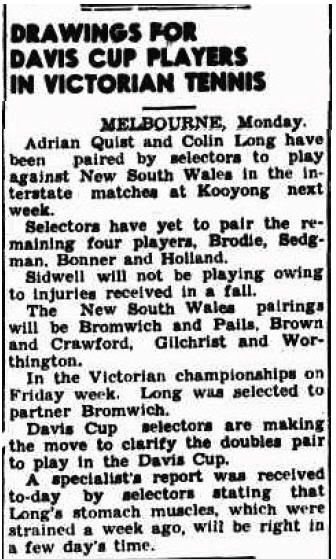
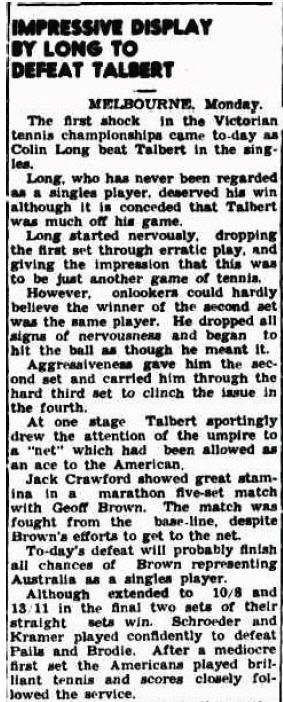
to the losing team members in 1946/47/48. Somewhere
in Jack Kramer’s (& others USA team member ) cupboards
will be the all gold versions.

Colin also had numerous local successes making the 1948 Australian Championships Doubles Grand Final playing with Frank Sedgman and then losing to Bromwich and Quist after leading 2 sets to 0, with a match point in the 3rd and losing the 5th set 8-6 (Colin says this is the worst memory). He also won the Australian Mixed Doubles Championships with Nancye Bolton in 1940/46/47/48 and was runner up in 1938. Pre 1968 Colin was the most prolific male winner of the mixed title event.

Colin has enjoyed tennis all of his life and enjoyed a long career at Spalding, on radio and at Channel 7 as the Tennis, Golf and squash presenter. His main racquet of choice thoughout his career was Spalding ( no surprises there)

Thanks Colin………..a pleasure to catch up and reminisce……. Rod

Tennis Players

Below are some photos of well known Australian Tennis Players in Alphabetical Order. We will continue to load photos as they become available.Please also follow the links to player profiles. Enjoy!


J.O.Anderson (Right) playing against Tilden  – 1920’s

Mal Anderson

Mal Anderson circa 1960’s


Tennis great Nancye Bolton (Wynne) with Mixed Doubles partner Colin Long.
A great combination in the 1940’s with many Australian Mixed Championship titles.

Some great lady players from 1949 Australian Championships
L to R Doris Hart (USA), Nell Hopman, Thelma Long, Joyce Fitch, Nancye Bolton,Marie Toomey


Brookes & Wilding

Anthony Wilding NZ & Norman Brookes won the 1907 Davis Cup and Norman was the first
international player to win Wimbledon. Anthony went onto win it 4 times straight between 1910,1911,
1912,1913 and then lost to Norman in 1914.  Anthony was killed in WW1. Norman went onto become
president of the Lawn Tennis Association of Australia for many decades. The Australian Open Men’s
Singles Cup is named in his honour.


 John Bromwich

John Bromwich late 1930’s and 1940’s Davis Cup and multiple tournament winner with Adrian
Quist in doubles in particular.

Ashley Cooper

Ashley Cooper makes a backhand return to Bob Howe in his semi final.
20th of March 1957


The great Jack Crawford who won Wimbledon in 1933 to again excite a nation.
Plus he won more Australian and State titles than any other man.
Edward Bury Dewhurst

Edward Dewhurst played as a young man against Brookes in the late 1890’s.
He went to the USA to study dentistry and while their won many tournaments including the presitigious Intercollegiate Indoor title.  An author, he wrote “The Science and Strokes of Lawn Tennis”


Mark Edmondson

 Roy Emerson

 John Fitzgerald

Victorian Open Kooyong 

29th of February 1984

 Neale Fraser

Neale Fraser


Joan Hartigan mid 1930’s 3 time Australian Champion

Ken Rosewall and Lew Hoad were dominant in the 1950’s as talented 18 year olds
NAA1805CU43 National Library

Ken played his best tennis with Frank Sedgman and together they won
the Grand Slam of doubles in 1951 plus others and solid Davis Cup performances.


 Wally Masur


Clare Proctor
Mid 1940’s player with Nancye Bolton et al.

 Frank Sedgman

Frank Sedgman had this shot from Ken Rosewall “well covered” during their match.

Sedgman will meet McGregor in the final tomorrow.

Dudley Webb

Dudley Webb was a major player in the pre 1900 era when the major competitions were a few key tournaments  and the all important Intercolonial clashes.  Dudley started his intercolonial career in Victoria and then moved to play for NSW.  While their he won major tournaments.In Victoria Ben Green became the equivalent player and the battles between them were watched by thousands.