EAST BROS.

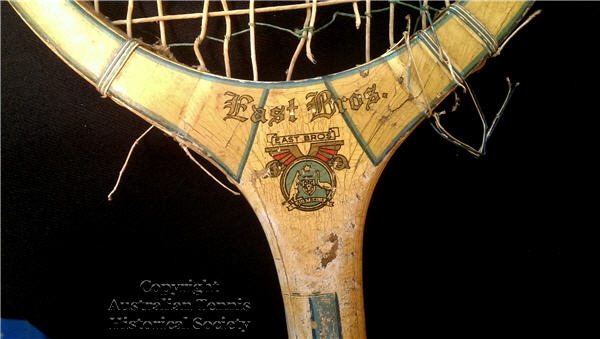
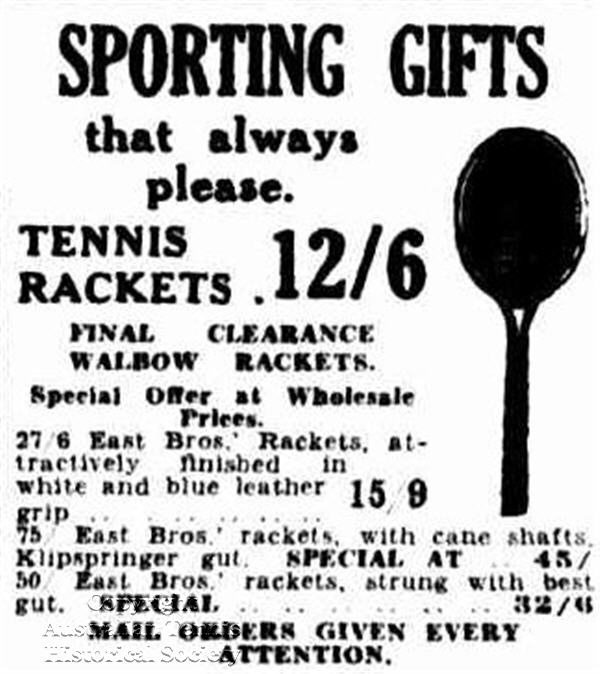
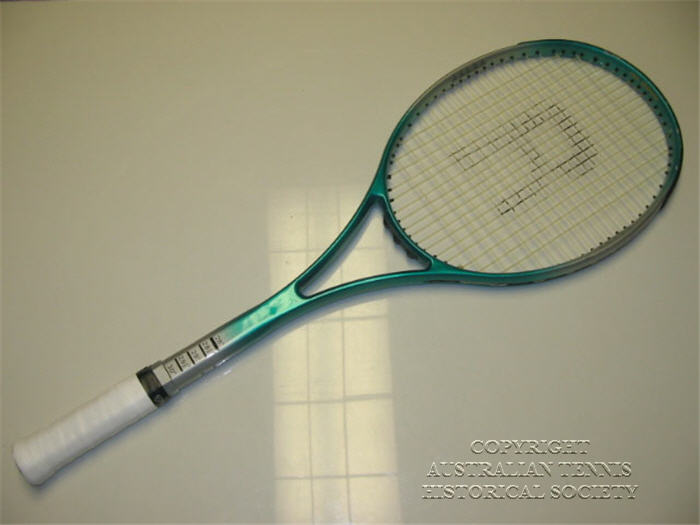
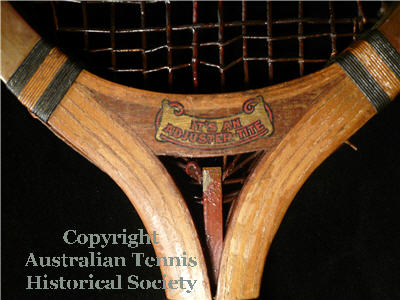
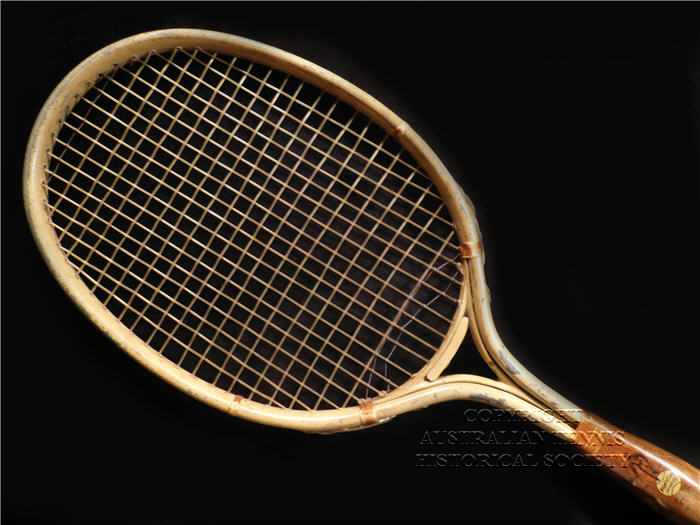
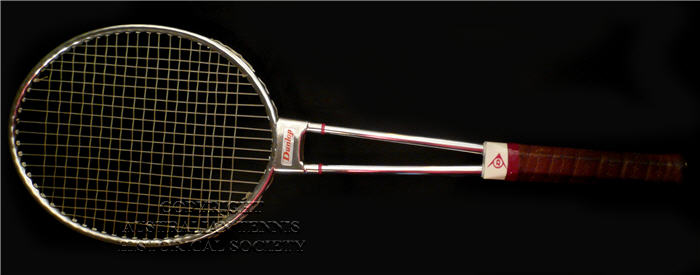
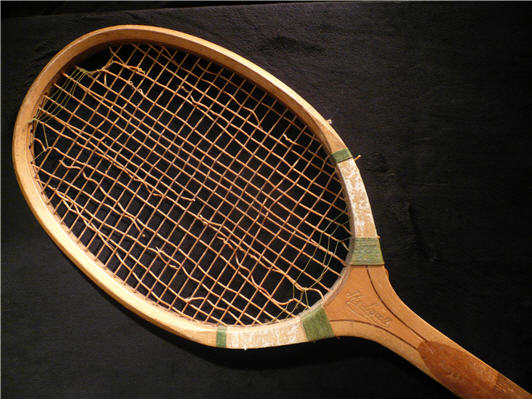
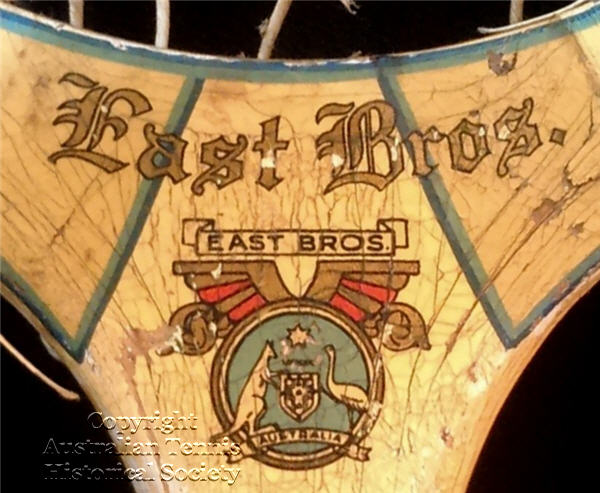
East Bros. were located in Melbourne and only in 2013 did we find a reference to this company given an extremely low level of advertising in the newspapers.

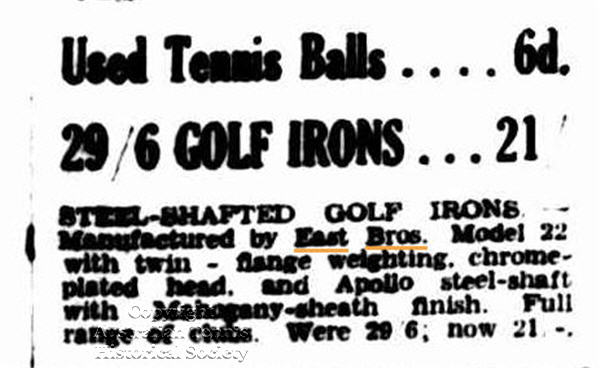
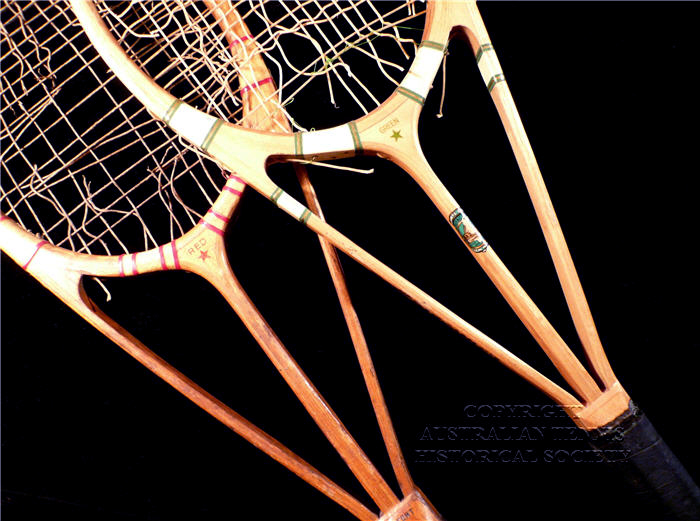
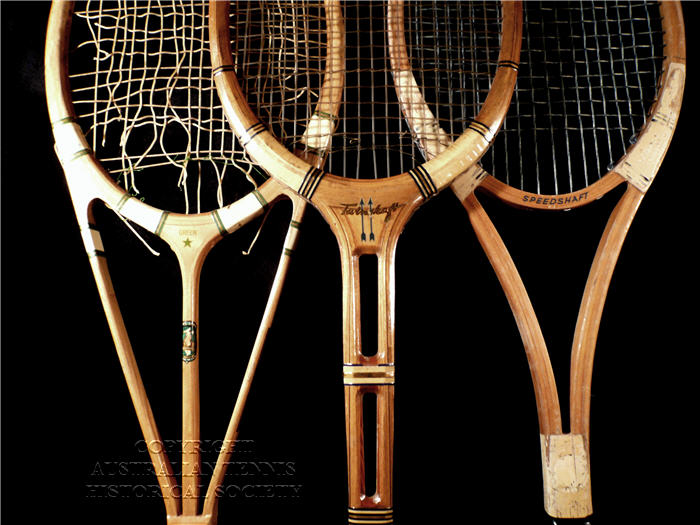
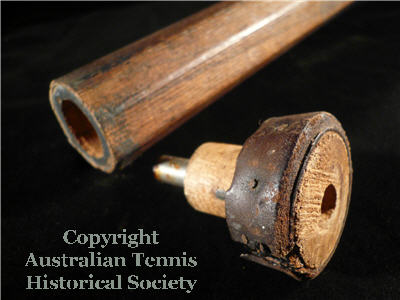
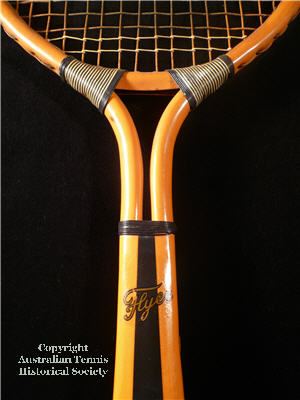
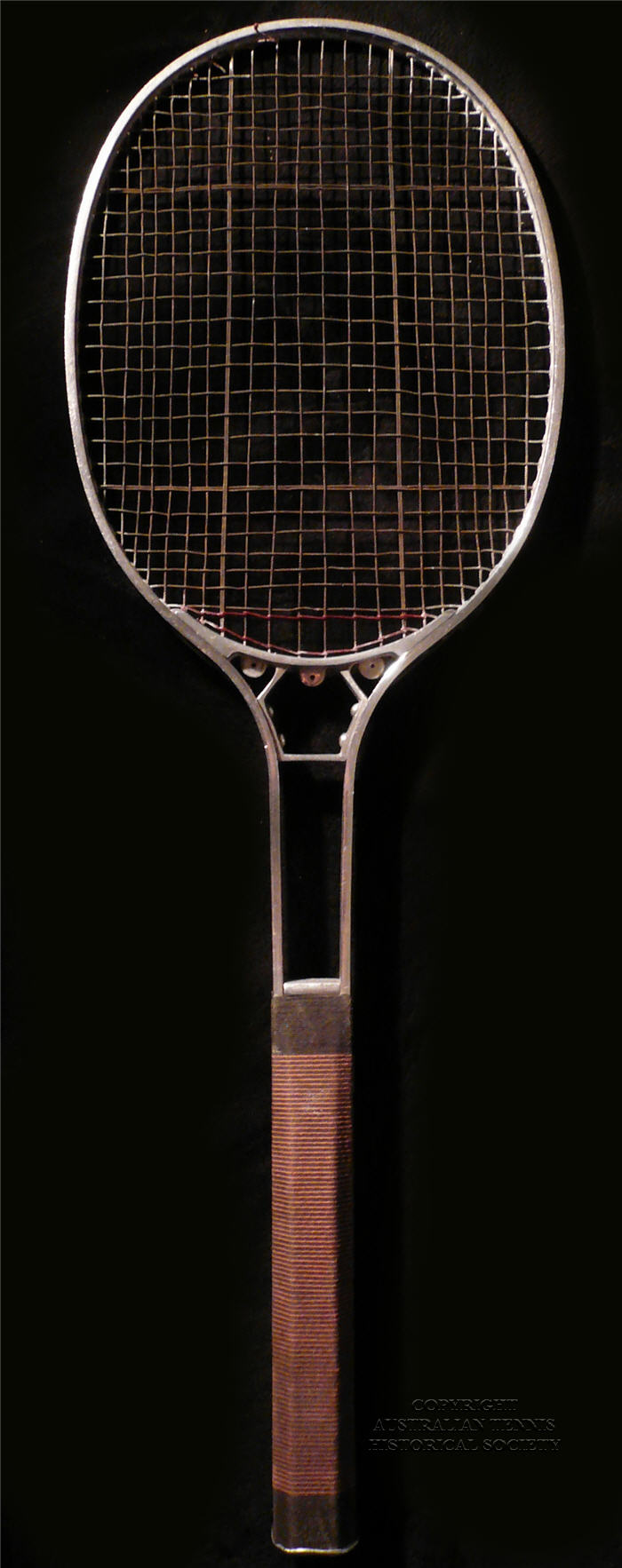
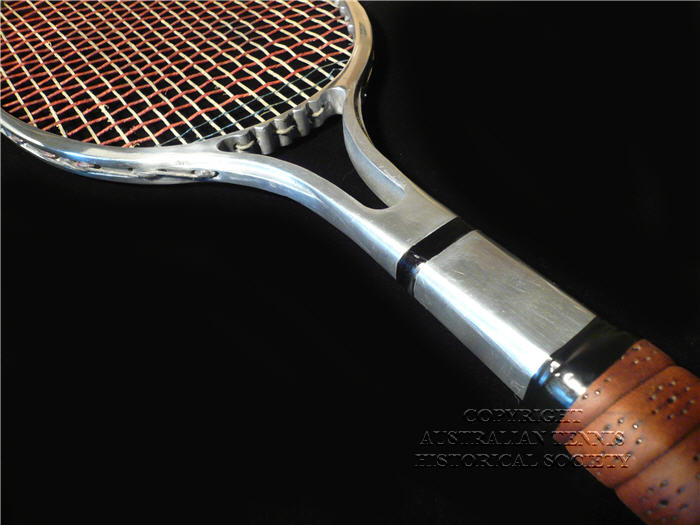
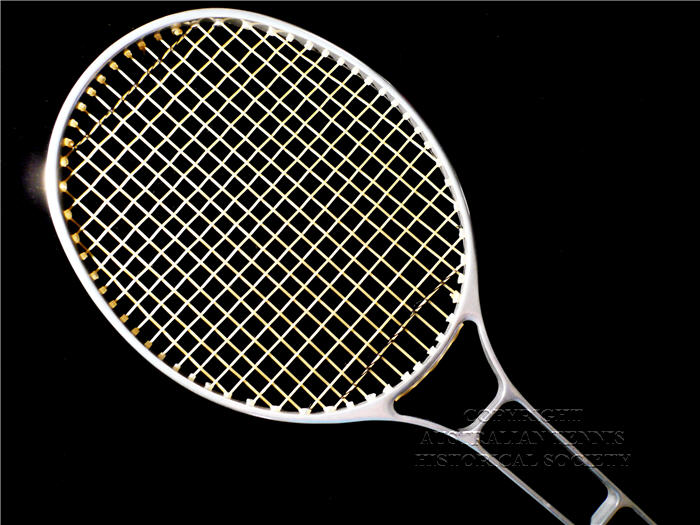
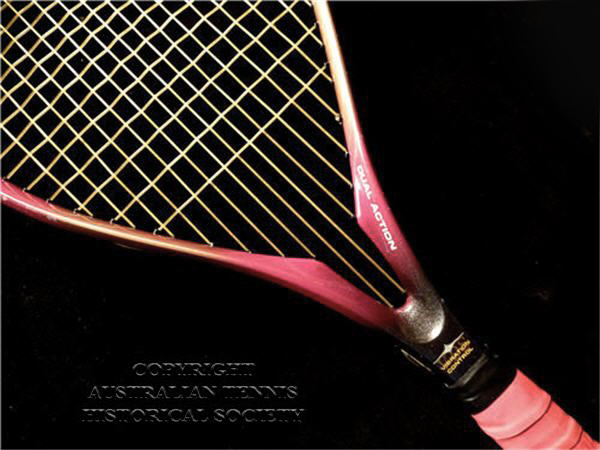
Thankfully we did find this example of a tennis racquet.  It would appear they did manufacture golf equipment from a Sydney plant as did other multi sport producers, Slazenger and Spalding.  Even Hedley, had a large vinyl sports products division that made golf club bags.  It is also likely that there was a connection between East Bros. and Chesterfield who made golf clubs as well.  A family member contacted us saying that they didn’t make racquets which lends support to the Chesterfield association.

Given this new information, it is possible that East Bros. made retail specific racquets to make up for a lack of “brand specific” product.

Tennis Heritage Australia Newsletter 2013

Tennis Heritage Australia currently has two active groups in Sydney and Melbourne.

Ideally, over time as more people learn about the group we may be able to develop further groups in other states or regions. Facebook now has 213 Likes and this newsletter heads out around the World to over 600.  All the International collecting groups and tennis museums are all connected via Facebook.

The premise for the group is to actively support the preservation and promotion of Australia’s fabulous Tennis past. This includes researching topics or players, assisting authors writing on tennis events, past players and even manufacturers. In the last three years books have been written on Randolph Lycett by Peter Kettle,  The Wizard- Norman Brookes , Muscles -Ken Rosewall, both by  Richard Naughton and the Alexander Racket Company – “What a Racket” by Gus Green.  Additionally, Chris Maron has done extensive work on the history of Sydney’s Eastern Suburbs Tennis Association and other works.

More books are in the pipeline, the trick being to find a publisher.

One very worthy project is that by Ron McLean who published “Country Cracks” NSW Country Tennis History some 30 years ago.   Over this period, Ron has amassed and written an impressive, 70,000 word history of the game from inception through to World War 2.  He has interviewed many players of the era and their families to obtain many stories and photos from this first “golden age” when Australia was gripped by being the first country to win the Davis Cup outside of the British Isles and with Norman Brookes winning Wimbledon in 1907 & 1914 and Australasian (NZ) Anthony Wilding his doubles partner who also won Wimbledon from 1910-1913, losing to Brookes in 1914.

T0 get this book published we need to find a publisher prepared to invest and willing customers happy to pre-order.

We are speaking with a publishing group now, but the $43,000  required to create the artwork and print 1500 copies needs come from a benefactor or in the main by pre-sales. More information will be provided in the next newsletter.

JULY MEETINGS

SYDNEY MEETING JULY 11th at AUSTRALIAN TENNIS MUSEUM, HOMEBUSH

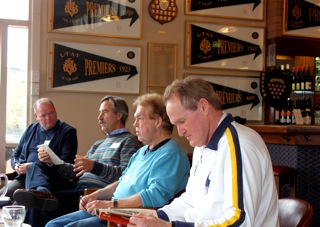
In Sydney, THA meets and associates with the Australian Tennis Museum. Members of the group include authors, researchers,  memorabilia collectors, tennis racquet collectors and  Real Tennis and Lawn tennis enthusiasts.

The museum with its wonderful collection of memorabilia and full support of patron Ken Rosewall provides an excellent back drop for the gathering.

Members of the Alexander family live in Sydney and actively search for examples of the companies products made from 1925-1959 including tennis, squash racquets, golf clubs and cricket bats.

Back  in the hey day when Australian champion Jack Crawford signed on to use Alexander product, as did many in the Davis Cup team the racquets were highly regarded around the country.

To enhance their retail store displays, Alexander produced a fancy wooden unit holding 5 racquets.

While a rare vintage example sold recently for over $600,  a gent in Tasmania has replicated the design to produce a small number to assist  the Launceston Tennis museum and one made its way to NSW (shown here).
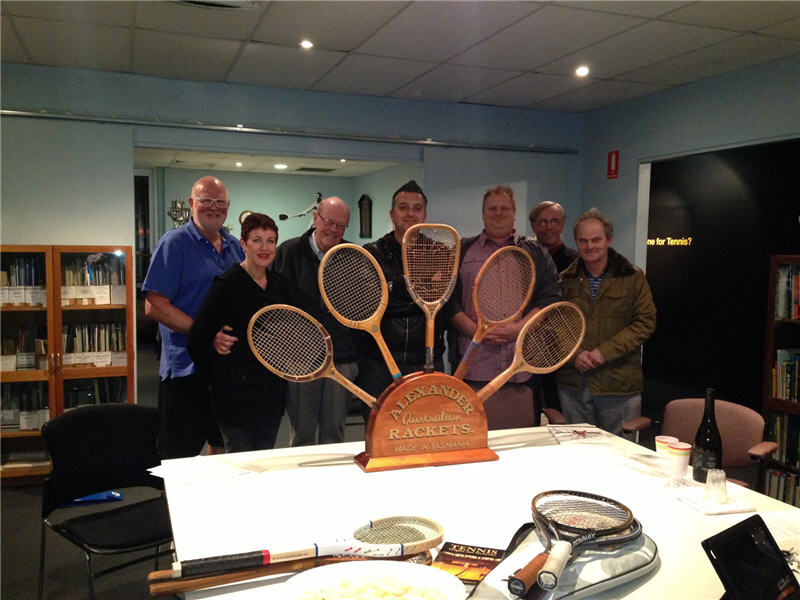
The Sydney group in front of this lovely Alexander racquet display with some examples of Alexander oval and semi flat top racquets popular in the 1930’s.

Other discussion points from the meeting included:

*   A viewing of some collectable racquets

*  Note that Noel Dodds has a Facebook page devoted to racquet collecting BREAKPOINT TENNIS COLLECTION (click link). Noel has over 900 racquets across a broad range and also works in the industry.

*  A new book on Tennis in the Sydney Southern Districts is being written by THA member David Graham

*  A discussion took place regarding local research as to the history of Real Tennis in Sydney and how early can a date be found in relation to the game being played.

*  A suggestion on racquet classifications taking into account condition and rarity which has merit.

* Trivia question who was the first tennis professional to wear shorts?

To join THA Sydney please call Michael Fitzgerald 0405 232 232
or email mfitzgerald (use the symbol @)  taliscivil.com.au

MELBOURNE MEETING JULY 19th at TENNIS AUSTRALIA HQ, MELBOURNE PARK

Meeting at various locations over the last couple of years, this meeting was conducted at Tennis Australia HQ where were kindly invited by Steve Wood, TA CEO.

Steve started his introduction with an explanation that what makes a “Grand Slam” tournament is the history,which we all agreed with.

Next he advised that the planned permanent museum to house some of the 68,000 items in storage following the acquisition of Rolf Jaegers collection is NO LONGER likely to be permanent. So we may only see parts of the collection during the tournament.

TOTALLY SHATTERED we toured the new multi million dollar facility wondering how commercial pragmatism over ruled the reason the Australian  Tournament is a grand slam event, its 100 year plus HISTORY and how inconceivable this is when considering Wimbledon, Roland Garros and Newport Rhode Island all have renowned and highly popular museums.

What an amazing opportunity lost.  Given the thousands of dollars being spent on storing the 16,000 items over the last decade, the collection may as well be sold off if only select pieces see the light if day.  That makes great commercial sense also.

Hopefully, with some LUCK we could see  reversal of this position, or perhaps a State Government with some foresight may see the opportunity to upgrade (NSW) or invest in a really first class museum to attract tourists and tennis followers alike.

Our meetings highlight was the bringing together for the first time family members of Alf Dunlop and Norman Brookes who played 1890’s-1915 era Melbourne club, Intercolonial and then International tennis events together. Tim and Norman, with wife Jillian, are the grandsons. It was a real treat to see some mementos belonging to Alf.
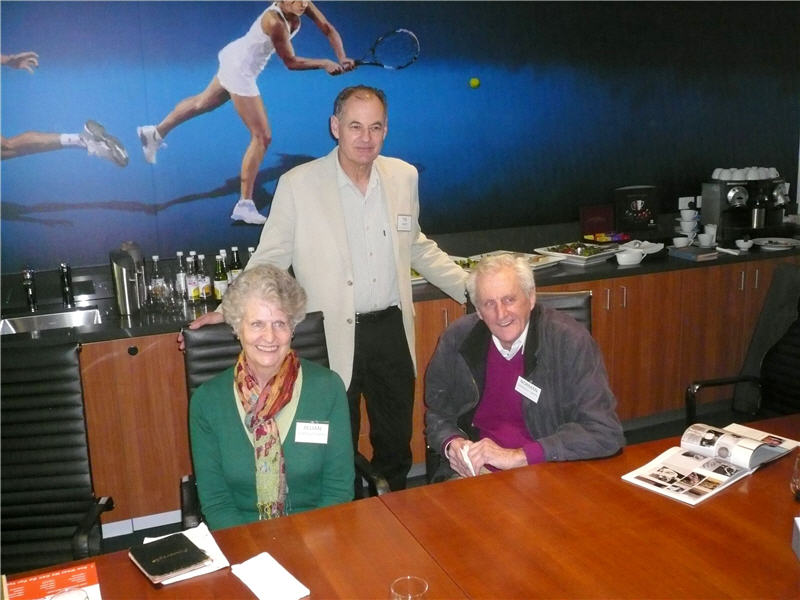
Jillian, Tim (Alf Dunlop)  and Norman (Norman Brookes) linked from the past.
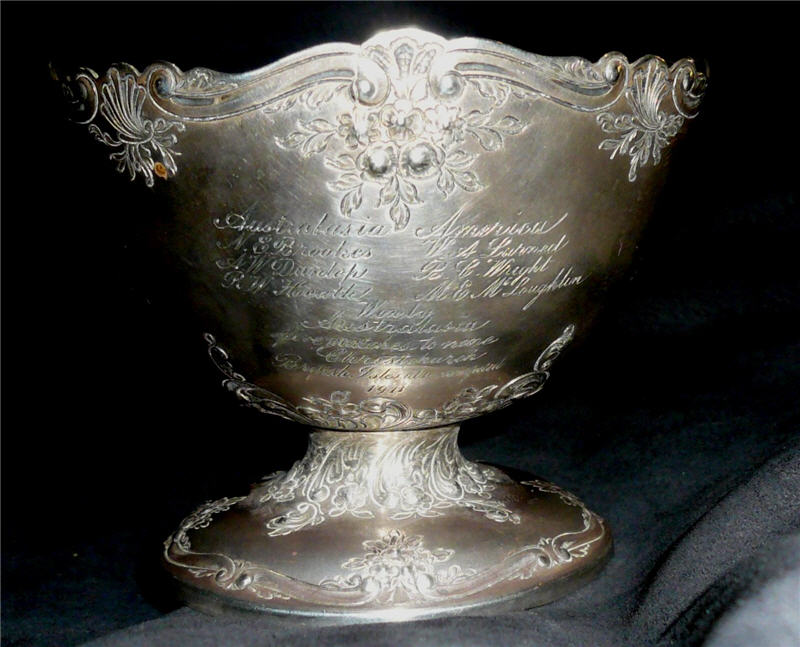
A famous Davis Cup 1911. Australasia won with Brookes, Dunlop, Heath against Larnard, Wright and McLoughlin in Christchurch, NZ. Australasia won the Davis Cup 1907, 1908, 1909, 1910 no contest, 1911 and 1914. We also saw an autograph book which represented the best Australian and Davis Cup player collection from this era I could ever imagine seeing.

Other Discussion points:

*  Group presented with Althea Gibson LP record. Not only was she a great player in the 1950’s, being the first African American to win the French & Wimbledon titles she was also a singer and saxophonist.

*  Three wonderful 1940’s tennis racquet catalogues were shown. These full colour examples are an excellent research tool.

* A Hillebrand photo decal racquet made by Spalding Australia was shown.

*  Fed Cup book with player signatures. The quest is to have all the Australian players sign there photo in the book so the quest is international.  Excellent progress has been made so far.

*  A 1900 decorative expandable belt was presented.

*  It was agreed that THA should charge $20 as a membership fee

*  THA should find a patron to assist with promoting the group and building the profile with over seas equivalent groups. On this matter we are helping with the formation of a EURO group. Strong US and UK groups already exist.

* US player Vic Seixas recently turned 90

*  Australian lady player from 1938-mid 1950’s Thelma Coyne Long inducted into the International Tennis Hall of Fame.  A wonderful tennis career. Thelma is in her early 90’s living in Sydney.

Pictures of the above can be found on Facebook AUSTRALIAN TENNIS HISTORY

NEXT MELBOURNE MEETING FOR DIARY

Xmas date as December 4 at Royal Melbourne Tennis Club with club
archivist and THA member Mike Garnett who will be able to show us the
first known tennis book, an original 1555 Scaino.

To join THA Melbourne please call Rodney Lack 0418 362 386
or email rod (use the symbol @)   tacticalresponse.net.au

OTHER TENNIS HISTORY TREASURES

One of our THA members acquired the 1909 Doubles trophy from the Australasian Championships conducted in Perth in 1909.  Winners were J.Keane and E. Parker defeating Anthony Wilding and L.Crooks 1-6, 6-1, 6-1, 9-7
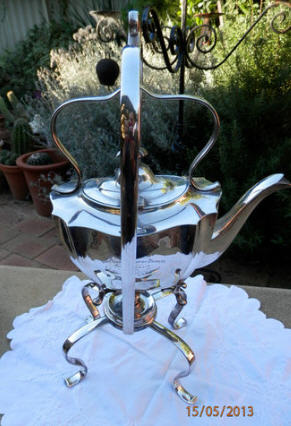
Back in the 1920’s Australian born Randolph Lycett married UK Davis Cup Player  “Bunny” Austin’s sister, Joan. They lived a grand life playing tennis along the Riviera and through out Europe.

A second book about this man who gets little recognition for his Wimbledon performances in particular has been written by Peter Kettle. This books tells of his life with Joan. For copies contact pbkettle(use the @ symbol) gmail.com

During this period a firm used Lycett’s name on a racquet. THE LYCETT
In April, THA was invited to participate in an event hosted by Rippon Lea. A group of us got a display together and headed down for a hit on the grass court wearing period costume and with a display of items for the visiting public to see.
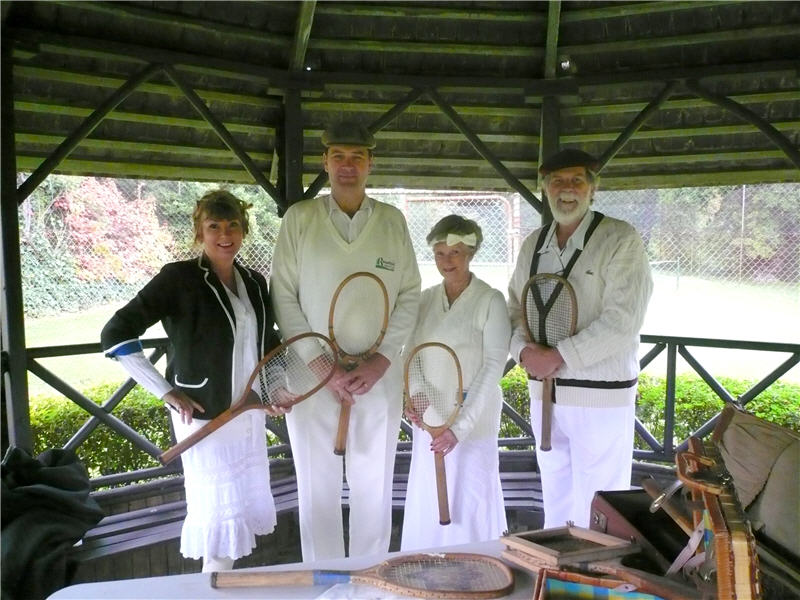
A grand day but owing to wet weather numbers were down on expectation. A great way to promote THA though none the less.

Up in Queensland Peter Rasey is mounting a spirited campaign to have the green at  FREW PARK, Milton  be named in honour of Wendy Turnbull.

PLEASE SIGN ON TO THIS ONLINE PETITION CLICK HERE

Thanks……….The THA team
Tennis Heritage Australia 2012 Q4 Newsletter

Greetings to our massive 580+ database of tennis enthusiasts,

There was no Q3 newsletter through lack of any real activity so we have jumped to Q4 in conjunction with meetings held in Melbourne and Sydney.

Please note that meetings are conducted two or three times per year and new members who have an interest in any aspect of tennis from being a past player to those collecting are most welcome to attend. Contact email addresses at the end.

TENNIS HERITAGE AUSTRALIA ( MELBOURNE MEETING) December 4th 2012

On December 4th, the Victorian group representing Tennis Heritage Australia met for the second time this year.  The venue was the historic Albert Reserve Ground, originally owned by the MCC and called WAREHOUSEMAN’S ground.  The first Australasian Championships were conducted there in 1905 on the actual cricket ground.  This venue was also used for many of the intercolonial matches that commenced from 1885 between Victoria/NSW/Queensland and South Australia.

When Australasia won the Davis Cup in 1907, it meant that for the first time the challenge round would be played outside of the UK and further away “downunder” than the USA and UK had ever envisaged.  So there was much consideration given to how the tournament would operate so far away.  In the end for 1908 the USA won the right to challenge from the playoff round played in the USA against the UK.  Norman Brookes also won Wimbledon in 1907 and in honour of such a successful campaign Melbourne was designated the town to host the Challenge round and in fact was just a few blocks away from his home.  New dedicated grass courts were constructed for the 1908 contest and largely the area looks remarkably similar to the 1908 photos even though court surfaces now replicate those of the Australian Open and many players practice on these courts pre tournament.

As viewed in 1908

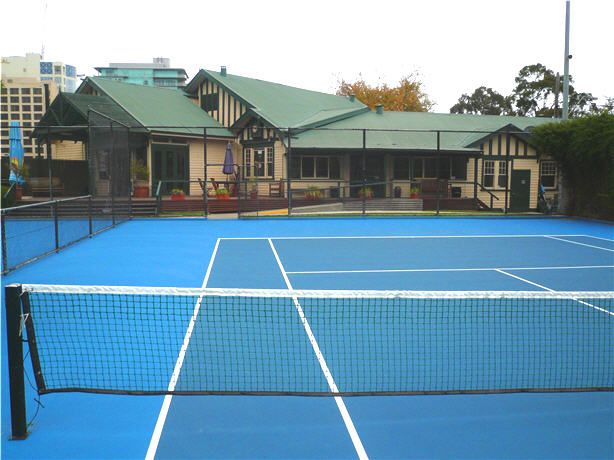
As the club is today. Luckily very well preserved with only minor extensions. It is such an historical tennis site.

The 14 attendees were well armed with some show and tell items, however, thanks to Keith Jenkins, Brett Steven was invited and provided us with a very interesting story about his 5 years with Pete Sampras on tour. Although from an Australian football background with the now defunct Fitzroy Football Club, Brett gained a reputation for being a good training coach with an ability to tackle the mental aspects of sport.  He first hooked up with Wally Masur at the US Open 1993 and then assisted Sandon Stolle on tour through Europe.  The impact for Sandon was quite immediate.  Having been in the top 200 he came up against Thomas Muster, the then number one player,  in the 1996 Dubai Tournament 1st round and won 6-1, 3-6, 7-6.  Maintaining performances and a great attitude is a tough thing for a player given high of winning can be offset by an unexpected defeat.  How true is it that top ten players are all there to be beaten by up and comers hoping to have a “off their brain” day on court.  One day a call came to Brett out of the blue from someone named Pete and while Brett didn’t twig straight away once he knew it was Pete Sampras asking for his services he took the role in a heartbeat as long as Pete understood that Brett was serious about advice giving and taking.   Brett’s work saw Pete through his last five years into his twilight career ending in amazing last US Open title 2002 when Pete had to play 5 matches in 7 days owing to rain delays.  What an outcome for all the effort from behind the scenes team and Pete himself.   Today, back in Australia, Brett is a new dad with tennis wife and eight time Wimbledon winner,  Cara Black.  He collects many things including tennis racquets for under $6….so hopefully meeting us will encourage some additional collecting. His role of mentor continues with Cara, now making a comeback at the 2013 Australian Open after giving birth only six months ago, along with some young golfers, but his inspirational message about being the best you can should see him once again helping some young tennis players.  Thanks Brett for coming and Keith for organising.
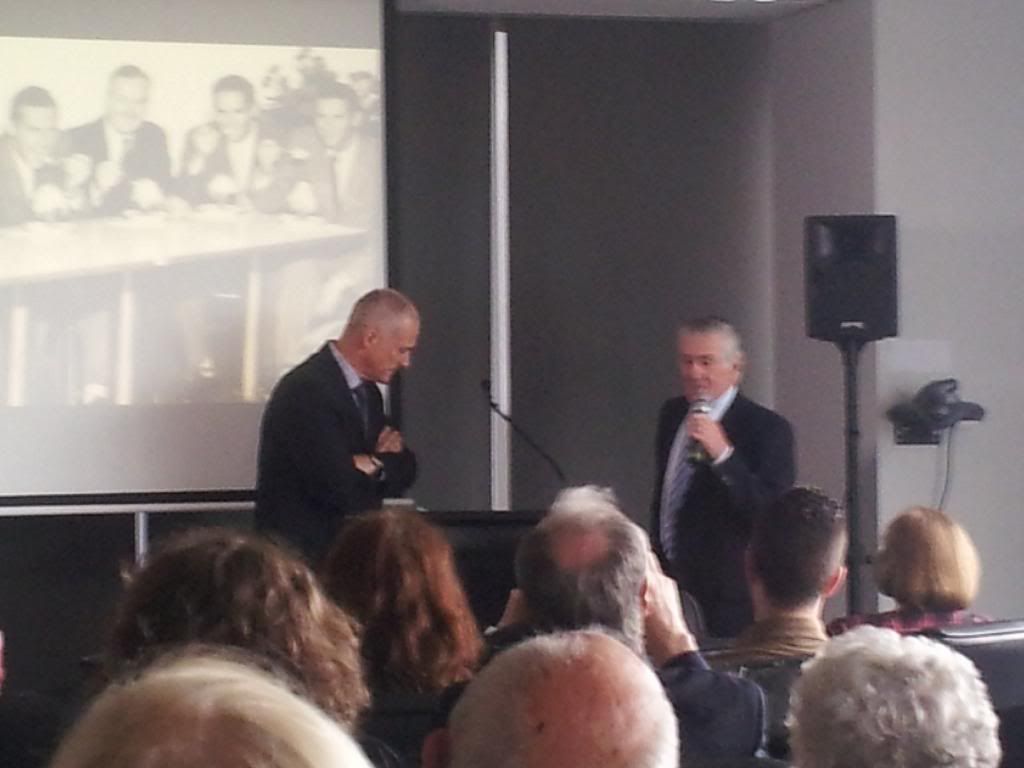
Brett outlining his interesting football career which led him into tennis and now a tennis family.

Attending this meeting were  Geoff Pollard, immediate past president of Tennis Australia and traveling from Interstate Ron McLean (by overnight Sydney train like the players of old) and Denis Tucker from Tasmania. The others are all local Melbourne residents many of whom also came to our previous Grace Park meeting.  It was great to have everyone together once more.

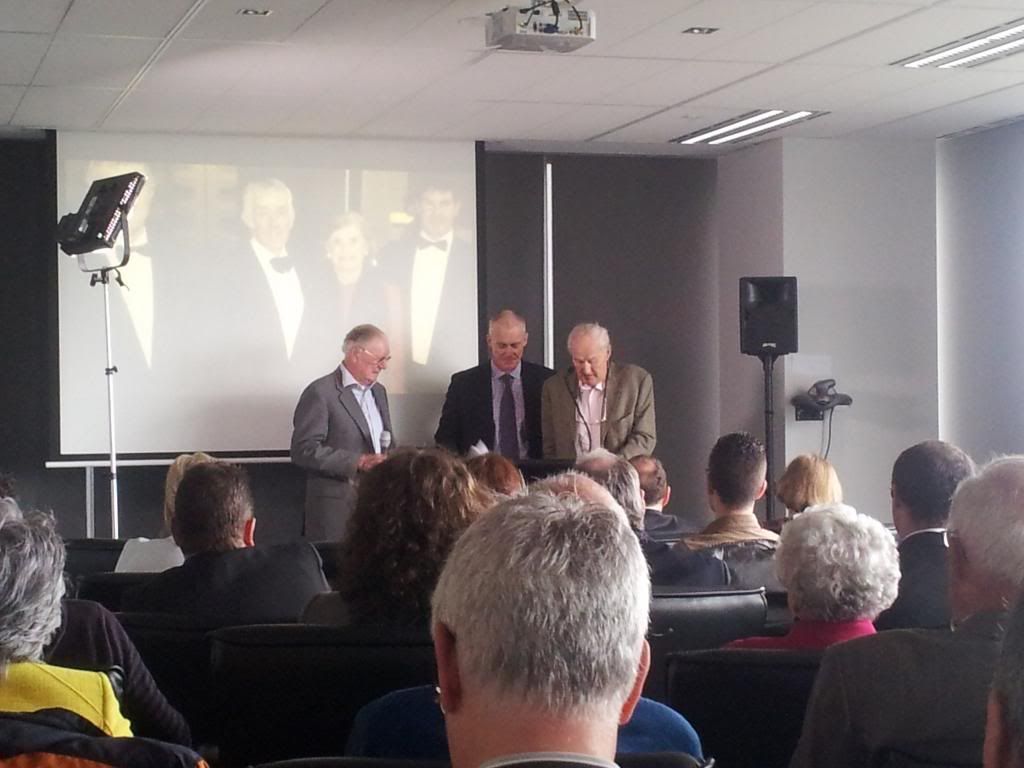
Geoff Pollard reported The Melbourne Park Tennis Musuem is still on the drawing boards and is getting closer.  The development is truly astounding now with new car parks, new clay courts and more under cover show courts.  Realistically, the museum will be about 3-4 years away.

On the subject of books, Norman and Jillian who are descendents of  Norman Brookes, were heavily involved in the launch last year of Richard Naughton’s book THE WIZARD.While Tennis Australia were involved financially a great deal of criticism was made over Tennis Australia’s inability to get behind promoting and selling the book when it would be quite easy to effectively promote such a book through the TA system to clubs and visitors attending the OPEN etc. https://edfarmaciaonline.com/comprar-generico-viagra-sem-receita.htmlRon McLean has devoted his last 30 years compiling a book about the history of tennis in Australia from arrival in our colonial days  to World War 2.  Needing a budget of around $43,000 for 1500 copies Tennis Australia has not shown interest in funding production even though sales would recoup production costs and Ron is contemplating donating the manuscript in order for his work to be published.It is frustrating but we need to work on some alternatives to get the work published somehow.

Michael Garnett sent an apology for missing the meeting. As an author of some impressive Royal Tennis books which also cross over into lawn tennis history, Mike has kindly donated two of his books for fellow members to borrow at anytime via Keith Jenkins or Rod Lack

Keith Jenkins also advised that limited copies in English of the JAN KODES story were also available for $30-40 depending on postage costs. See Facebook for more details http://www.facebook.com/pages/Australian-Tennis-History/195175473533  or email Keith   keithjenkinstennis@gmail.com

Show and Tell was very interesting.

David Shields announced the oddity that he believes he can source Frank Sedgman’s wedding to Jean on tape. We told Frank about this possibility at the Ken Rosewall book launch much to his disbelief!!!!  Will see how this evolves.

We had some excellent Bancroft O’HARA WOODS racquets sold in Australia around the 1915-1925 era.  Yet to be confirmed but we suspect the earlier model may have been named after Arthur (killed in WW1) and the later model Pat who was a Davis Cup and renowned doubles player in the 1920’s.

Also shown were  a metal 3D relief of a tennis scene we believe came from the 1920’s and no-one present could recall seeing another like it.  An excellent range of tournament and professional tour programmes from the late 1950’s were shown, some quite stunning gold fob medals and some 100 year old newspaper spreads featuring Norman Brookes and Co. at the 1912 Davis Cup.

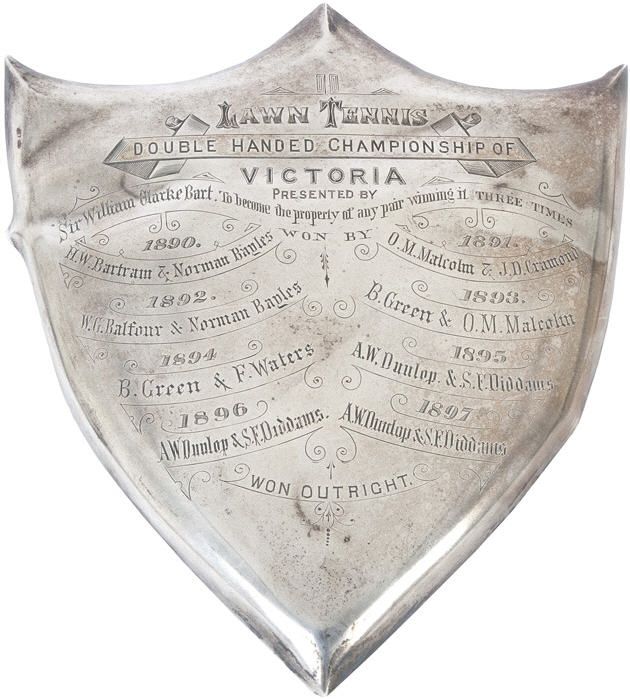
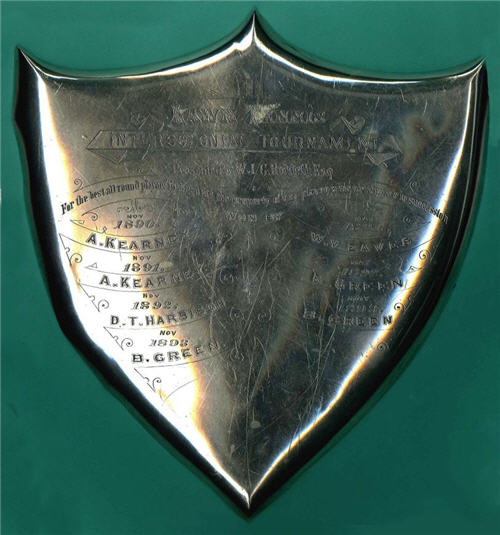
Pre the Australasian Championships in 1905 the premier Australian tournaments were the NSW and Victorian State Championships.  The 1890 -1897 perpetual shield awarded to the Mens doubles (double handed) champions was recently acquired by a member and although with a few dings has inscribed some very worthy champions indeed.  Ben Green for one, and of course the eventual owner Alf Dunlop (his trophy).  Alf was the first Australasian Davis Cup Captain/Player in 1905 and was a renowned doubles player, winning the Australasian Championship with Fred Alexander in 1908 and the Victorian Championship Doubles title a staggering 9 times with Diddams (5) and Brookes (2) and Rodney Heath (2).

Many attendees also met the following day in the city for the launch of Richard Naughton’s second book in 12 months, this one in collaboration with Ken Rosewall, entitled ‘Muscles” and his era covering Amateur/Professional/Open tennis.  With many tennis dignitaries present and with some rare footage of Ken playing, it was an excellent event. Books available online from http://www.slatterymedia.com/store

Ken with John Fitzgerald and Frank Sedgman with Neale Fraser reminiscing a few yarns about Ken….
The book was launched in Sydney the week prior by John Newcombe & others.

TENNIS HERITAGE AUSTRALIA ( SYDNEY  MEETING) December 13th 2012

Notes from Michael Fitzgerald

The meeting conducted at the Australian Tennis Museum (NSW) went well and we just wish we had longer.

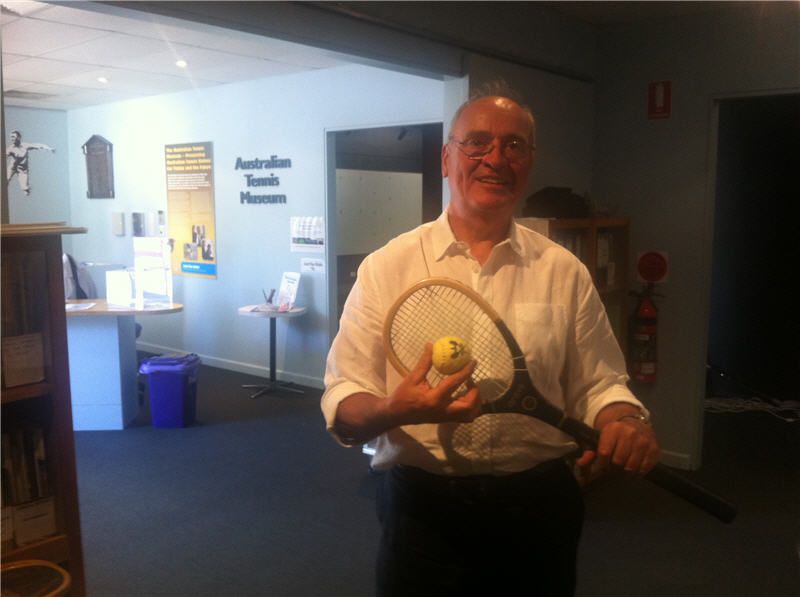
We had a guest speaker for the first hour, David Pinsent representing Sydney Real tennis club. David spoke about the history of the game and how lawn tennis developed from it, showed us a real tennis racquet and ball and did a good job at trying to explain the rules and scoring of the game but I think we needed a few more hours for that. We also discussed the Alexander racquet that we saw at the Royal Melbourne tennis centre and its history and journey. We discussed the fact that Sydney does not have a real tennis court presently however are getting close to finalising some detail on a future potential site which they are all excited about. Currently Sydney siders need to travel to Melbourne, Ballarat or Tasmania to play. One interesting thing we spoke about was Rob Fahey. Rob has been world champion of the sport continuously since 1994, one of the longest world champion runs in sports history and is a legend of the game. I think it was very interesting.

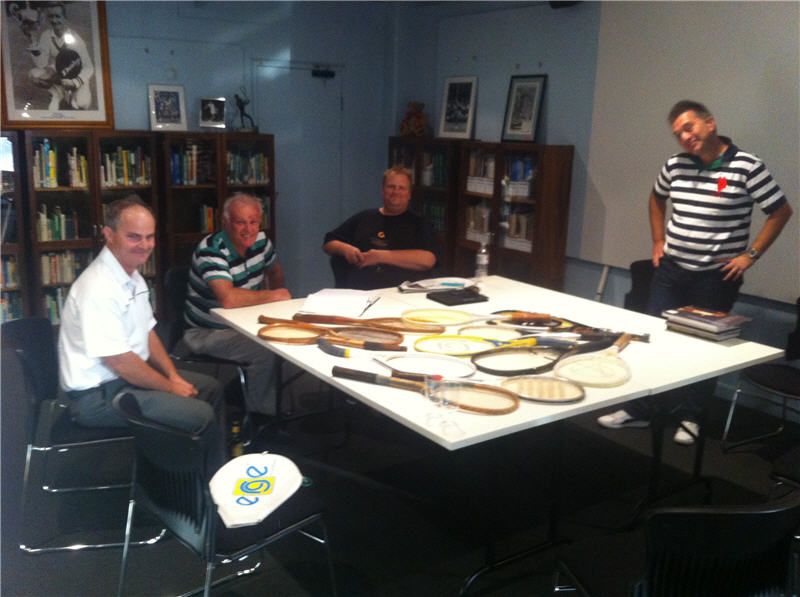
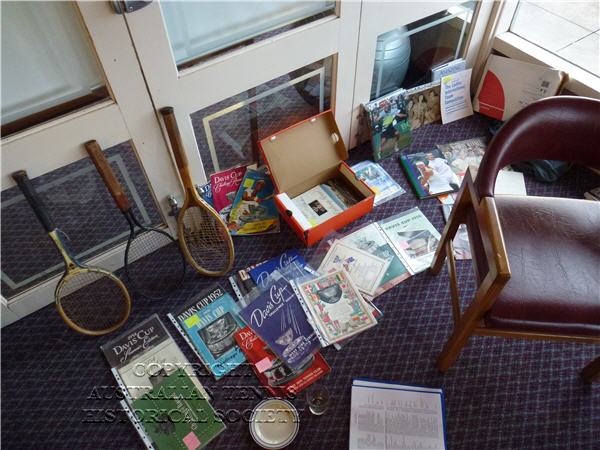
The rest of the meeting we discussed racquets as you can see from the second photo,  we had a lot more on the table but Noel had to keep his ones under wraps at the moment. We normally have around 20 racquets we look at. These guys have the most incredible racquets, between us we could have our own exhibition. We spoke about the museum and its new exhibition which will be ready for the Apia NSW tennis open, the whole facility is now in tournament set up phase so there was quite a lot of people around.

You can stay in touch with the Museum via http://www.facebook.com/AustralianTennisMuseum

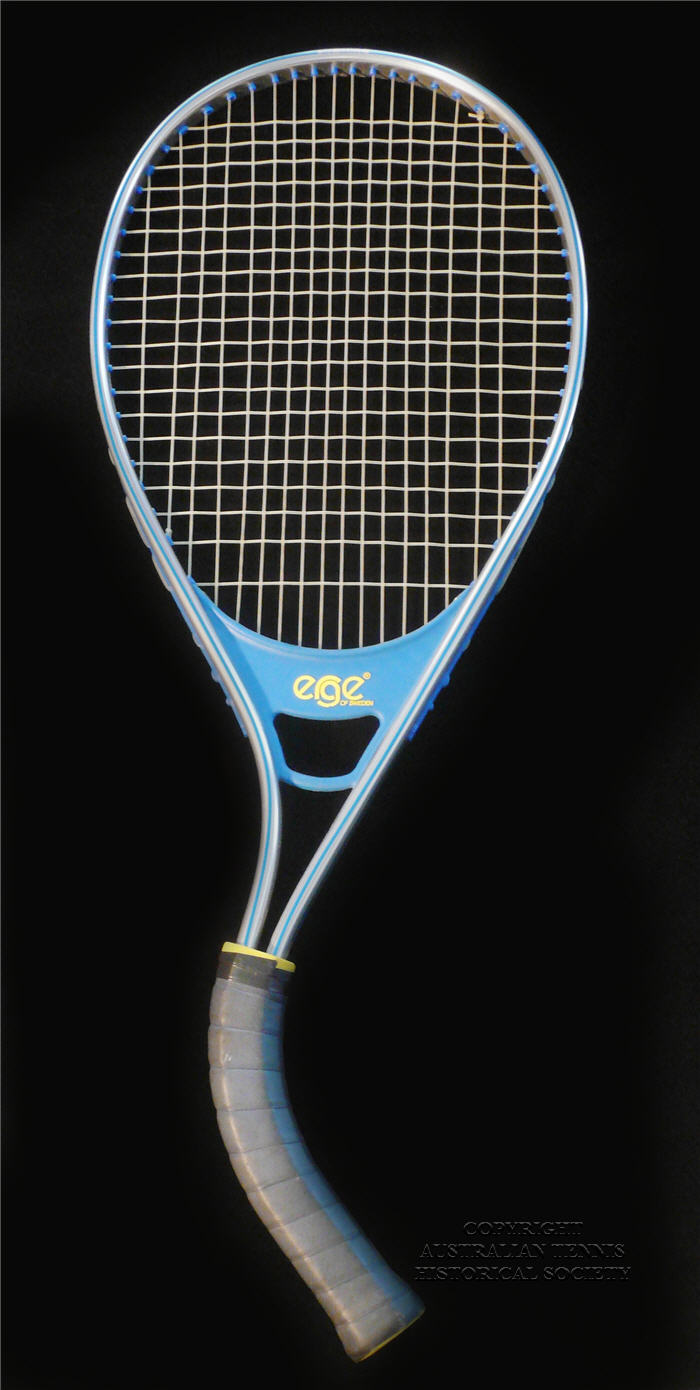
(Rod) I think I make out some nice unusual examples including a Spaghetti strung Fischer and the curved grip ERGE.

Not sure about the others on the table but seeing unusual gear is very educational.

Apart from that we just talked tennis History and had a good time.

I briefly discussed getting Bill Sidwell to come and talk with us, all agreed a great idea, I think Dora has met him and said he really can talk!  Bill is now into his nineties and still organising and playing veterans golf.   He started with Slazenger in 1935 and worked there until his retirement in the mid 80’s.  He and Ken Rosewall know a lot about the Slazenger company and the racquet manufacturing industry as it developed here so having Bill and Ken would be able to present an enlightening experience never really explored before.

TENNIS HERITAGE AUSTRALIA on FACEBOOK

Please do add a LIKE to the facebook pages of AUSTRALIAN TENNIS HISTORY http://www.facebook.com/pages/Australian-Tennis-History/195175473533

Our Australian group is now involved with groups all around the World and we share all sorts of information from promoting interesting items on ebay, to researching stories about players, equipment,  early ads etc so you will learn quite a lot from this very quick and easy format.

Please keep mentioning our Melbourne and Sydney groups to any friends, players, pro shop owners who might be keen to meet others who share an interest in tennis across a variety of fields from research to writing, photos, programmes, racquets, autographs, ornaments, artwork etc etc……….

Have a very safe Christmas break and we look forward to sharing more great times over the course of 2013.

Rod (Melbourne )  rod@tacticalresponse.net.au

Tennis Heritage Australia Newsletter Q2 2012

Greetings Tennis Enthusiasts, Apologies for being late, but some photos we have been waiting on went north as part of the ritual winter migration of the retired folk from way down south. Indeed the photos we are most lucky to have at all. STOLEN PROPERTY AWARENESS On the return trip, a car was broken into and apart from the camera,  some truly rare multi autographed books were stolen, presumably by some youngsters who had no idea what they have taken.  Sadly, we have no positive news yet from police in Forbes NSW and just hope that they may be found under some bushes.      If you are offered some tennis books containing autographs of a significant nature (Davis Cup /Federation Cup etc) please do call Denis Tucker on 0409 317 804 for advice. AUSTRALIAN TENNIS MUSEUM (NSW) LUNCH The Museum organisers of annual lunch were  deservedly please by the well attended function and with special guest, Margaret Court, it is easy t0 understand why.  It was a great opportunity for members of Tennis Heritage Australia VIC to meet the newly formed NSW group and we had a great day. Apart from meeting Margaret and Ken,  we were also lucky enough to catch up with Lesley Turner, Jan Lehane and Thelma Coyne Long who now over 90 is a direct link to the top tennis days from the mid 1930’s and beyond. Thelma played in many overseas teams and was an Australian Champion singles and doubles player for many years.

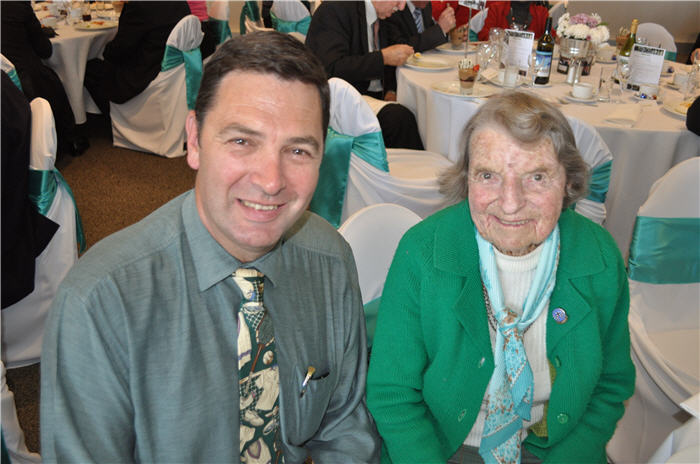
Rodney Lack with Thelma Coyne Long Australian Tennis Museum lunch 2012

Denis Tucker, Margaret Court, Ken Rosewall, Rod Lack, Keith Jenkins- Australian Tennis Museum lunch 2012

First time together Melbourne & Sydney Tennis Heritage Members who were able to attend the luncheon.

Margaret was interviewed on stage and gave a good account of her times in the game.  Even the recent protests at her views on gay marriage were discussed, a little unexpectedly, yet her quite emotional rationale from her perspective as a church minister was met with considerable understanding.

A special thanks to Ada and team for organising the event and to patron Ken for taking on the role to support the museum which has very little budget for acquisitions and relies heavily on these events and benefactors of tennis memorabilia.
We look forward to the next event.

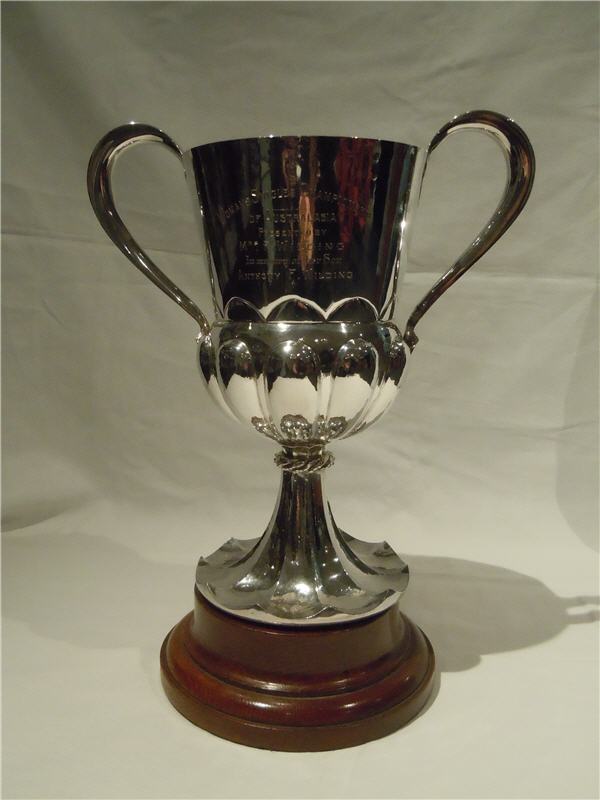
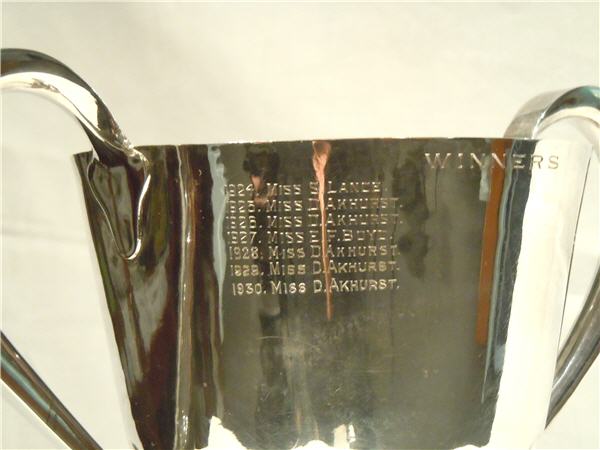
While at the Museum,  we were shown a very interesting trophy donated by the Roy Cozen family (husband of Daphne Akhurst).

The Australasian Championships for men commenced in 1905 at the Warehouseman’s Ground in St Kilda Rd, Melbourne but it was not until 1922 that the Women’s and mixed events were added to the calendar.

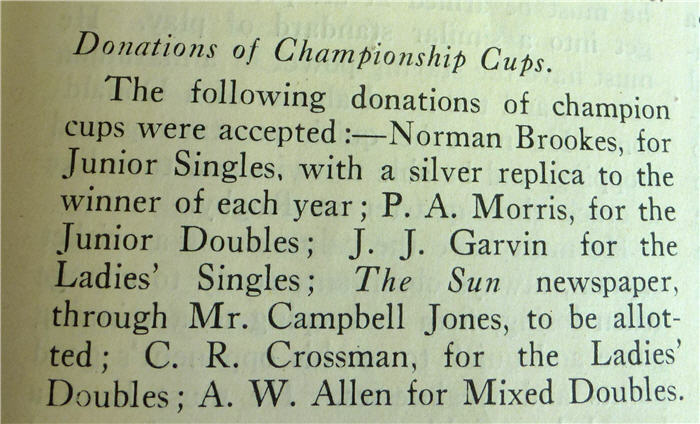
Funds to run competitions such as the event filled Australasian Championships were not excessive and so donations of funds or trophies were often made.  In 1922 the article from Australasian Tennis Magazine below shows this, including the Women’s singles trophy.

Prior to the confirmation of the Womens National championships, in 1921 the Association was moving forward with the plan to conduct a “Davis Cup” style competition between the states and New Zealand. While this may well have been for men,  the Wilding family donated one of Anthony Wilding’s trophy’s.   This state based competition never developed and so we find, presumably,  the Wilding Trophy being used to acknowledge the ladies singles champions from 1924 and beyond.

As you can see, Daphne Akhurst won the event 5 times and by claiming 1928-1930 in succession was entitled to take possession of the trophy.  As part of Australia’s championship, this trophy is very significant.

Tragically, Daphne died as a result of complications of a medical operation.  Also, in the early 1930’s the Men’s singles trophy was won outright by Jack Crawford for three wins in a row and in 1934 the tennis association introduced the current (always to be retained) Norman Brookes and Daphne Akhurst Challenge Cups a fine tribute to both Australian tennis greats.

As to the trophies supplied in 1922, 23 and 1931-1933 we are yet to uncover any historical reference, yet sitting on the mantlepiece in someones house.

AUSTRALIAN TENNIS HERITAGE MEETING MELBOURNE JULY 2ND

Thanks to the Grace Park Tennis Club President, Colin Davis and immediate past president, Terry Stone,  our meeting of some 15 interested participants was a great day.  Luckily both Colin and Terry are keen memorabilia collectors and this is reflected by the array of display cases filled with all manner of club and tennis equipment.   Grace Park is a quite famous club, spawning many champion players through its long association with Victorian Pennant.  The book AMAZING GRACE by Johnson & Oliver documents the clubs evolution. Players such as Frank Sedgman and Margaret Court have been members.

Highlights of the day were meeting a couple of new people and some special guests, Dirk Den Hartog ( great grand nephew of Ben Green the Victorian (Intercolonial champion) who brought along the impressive shield (SEE Q1 newsletter for a pic) and Tim Cawthorn who gave a fascinating account of the life of J0hn Cawthorn (as he was known), but that is another story.

With sandwiches, cakes, coffee & tea and potential of a full bar, Grace Park may well become a regular meeting place.

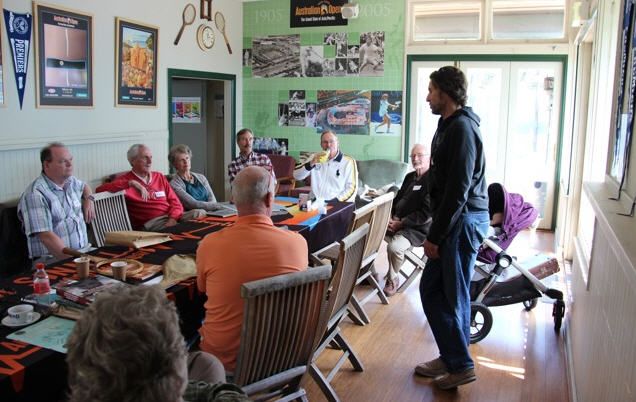
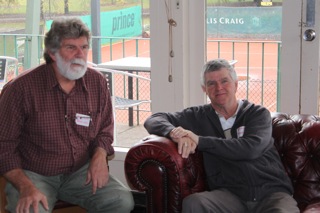
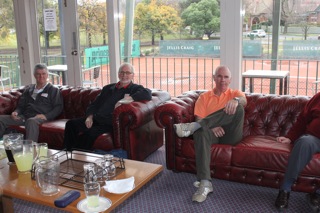
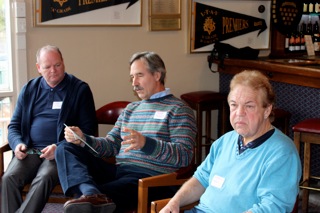
Settling down for a fine afternoon of show and tell.

ITEMS OF INTEREST

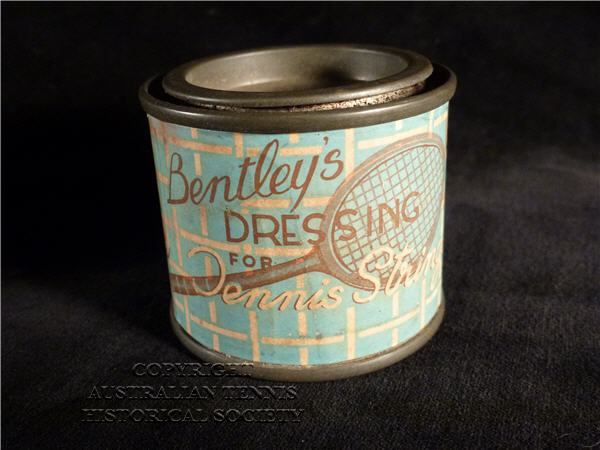
Last newsletter there was a picture of a string preserver bottle acquired from America. This tin of Bentleys Dressing for Strings (String Preserver) was sold in Australia in the 1940’s.  Finding examples is very rare.

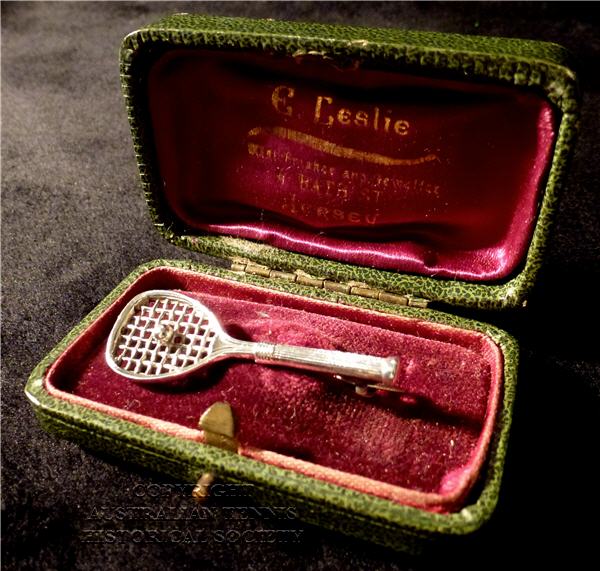
This brooch from the late 1890’s is silver and shows some very ornate detail.

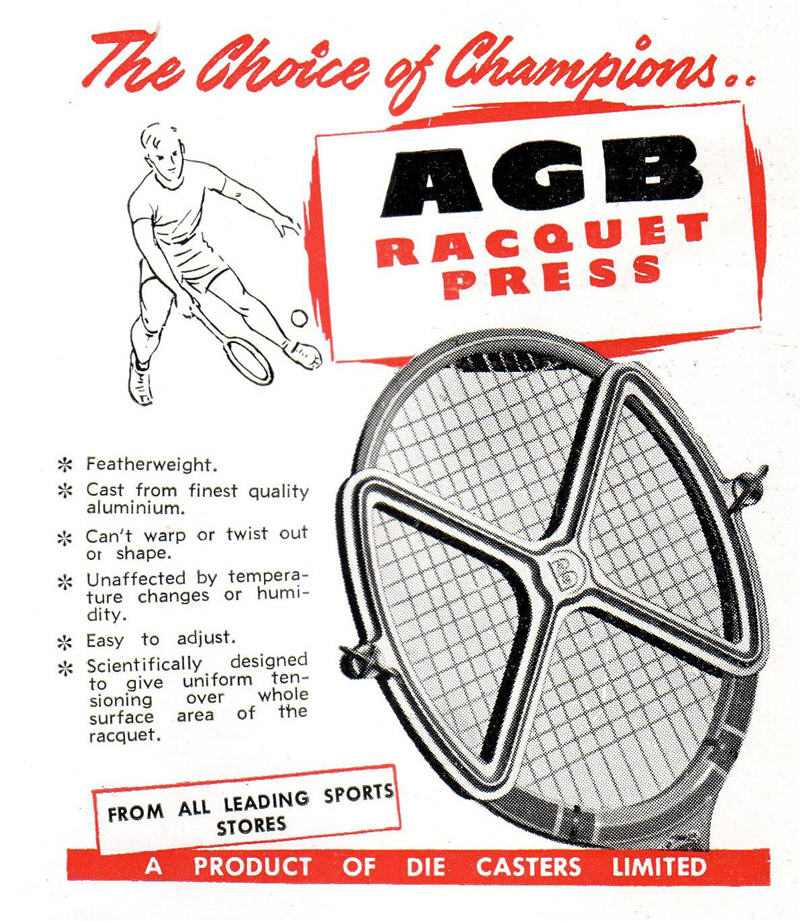
Finally, many collectors have an example of a BAG or AGB aluminium tennis press. The correct name came from an ad that appeared in tournament programme. These were made in Australia.

Anyone who has some interesting memorabilia or family history that relates to tennis, please contact me rod@tacticalresponse.net.au 0418 362 386 AND PLEASE JOIN AUSTRALIAN TENNIS HISTORY ON FACEBOOK link from here

Tennis Heritage Australia News Q1 2012

Greetings  Tennis Enthusiasts,

This last few months has typically been quite interesting but perhaps a little more so than usual owing to some major finds.

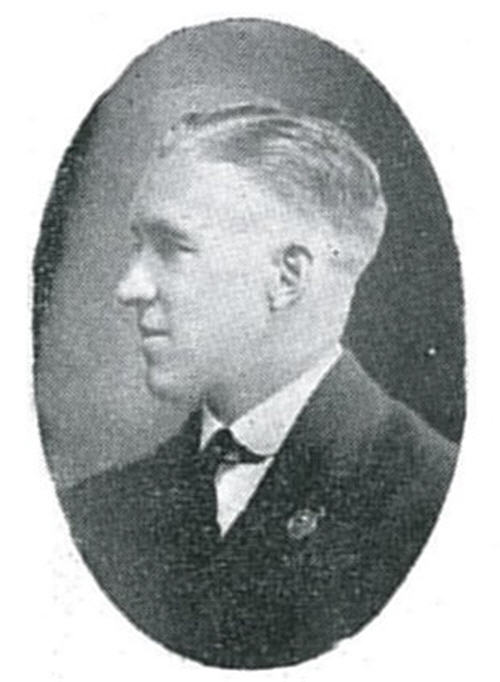
Unknown Australian Wins 1923 Irish Tennis Championships: George Eric Mackay

In January, we found a simple small article about an Australian player who in 1923 won the Irish Championships. We had never heard of him and so this set in motion a challenge to see if we could find out more about him and what happened to a trophy he received.

Having served in WW1 in Egypt in the Medical Corps,upon his return to Australia, he recommenced his medical studies at Ormond College, Melbourne University and while there became the University Captain of the Tennis team which played both Sydney and Adelaide Universities.  Having obtained double first class honours in 3rd year and honours in 4th and 5th year this then enabled him to apply to travel to London to complete the FRCS (Fellowship of Royal College of Surgeons).
Apart from playing for the University, George also represented Victoria in interstate matches against NSW and SA.

While in London between exams, George went to the Dublin Rotunda Hospital for some practical experience and while there entered the Irish Championships of 1923.  Impressively, he won the event defeating 1896 Wimbledon Champion Harold Mahony 1/6, 2/6, 8/6, 6/2, 6/3 with perhaps the advantage of youth against the much older Harold who from the score looked like he gave it all and just fell short in the 3rd set and had no reserve for the last two.

As to why a player of George’s capability won the prestigious event is a tad unclear. There was considerable turmoil in Ireland at that time between the Protestant and Catholic political debate. Many of the well known English players probably stayed away for fear of being caught up in some action off the court.  Although, the existing Irish champions, Cecil Campbell and D’Arcy McCrea were  engaged in Davis Cup matches against India and France in Dublin around early to late June.  In the doubles final four prominent Irish players played for the title so maybe George had some excellent wins leading up to the final.  Hopefully, we will learn more in time.

In September that year, George became very ill, with what was diagnosed as Military Tuberculosis and he sadly died at St Bartholomew’s Hospital London on October 25th.

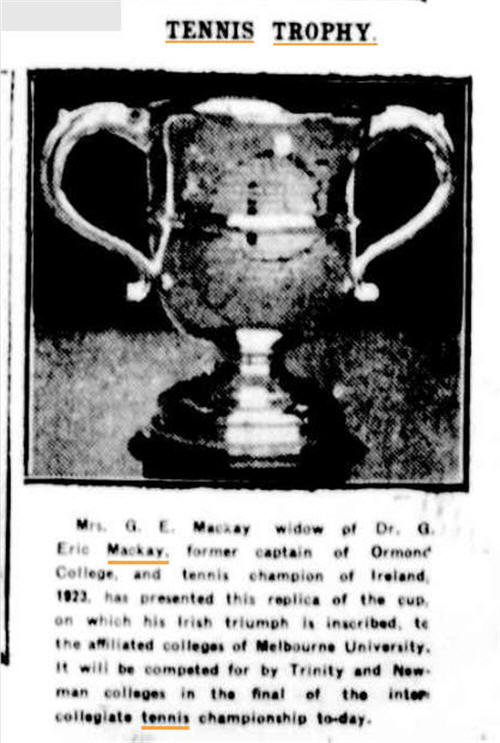
His body was returned for burial to Bendigo and his Irish Trophy, again from a snippet in a newspaper story, was donated to Melbourne University for presentation to the intercollegiate tennis champions.

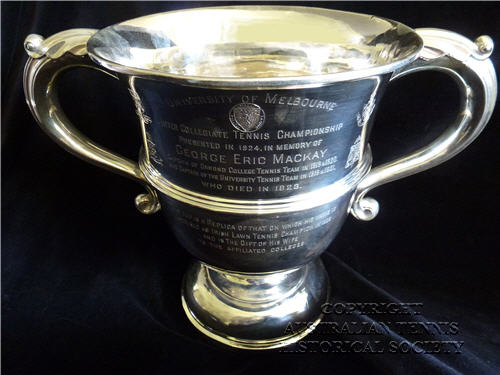
This week, Melbourne University invited us to photograph the trophy which had luckily been found still in use as the donation had intended and was just back from the Silversmiths where it had undergone some repairs and re-plating.  Needless to say it is in close to the  same condition in which it was provided back in 1924 except it it appears to be missing a plinth.

Inscribed

UNIVERSITY OF MELBOURNE INTERCOLLEGIATE TENNIS CHAMPIONSHIP
PRESENTED IN 1924 IN MEMORY OF
GEORGE ERIC MACKAY
CAPTAIN OF ORMOND COLLEGE TENNIS TEAM IN 1919 & 1920
AND CAPTAIN OF THE UNIVERSITY TENNIS TEAM IN 1919 & 1921
WHO DIED IN 1923
THIS CUP IS A REPLICA OF THAT ON WHICH HIS NAME IS INSCRIBED AS IRISH LAWN TENNIS CHAMPION IN 1923
AND IS THE GIFT OF HIS WIFE
TO THE AFFILIATED COLLEGES

One of the newspaper clippings that inspired the search.

Melbourne University has a rich tradition in Melbourne society and many famous early intercolonial and state championship players were taught there.

In another very exciting twist in the search for the Irish Trophy,  we also made contact with a relative of a prominent Intercolonial player Ben Green.  Ben was a famous Victorian Champion and when he and NSW champion Dudley Webb played the crowds numbered in the thousands.

This shield was presented to the Victorian team’s most valuable player and the other names inscribed are of equal value and importance to Australian Tennis History.  This wonderful shield measures 20 cm across and 22cm tip to tip.

We feel thrilled to be able to share this with you and thanks to Lesley from Melbourne University for sharing this with us.

Inscribed

LAWN TENNIS INTERCOLONIAL TOURNAMENT
Presented by W.J.C Riddell Esq.  (MCC Tennis Club Secretary & organiser of first event)

For the Best All Round Player. To become the Property of any player winning it twice in succession.

Nov 1890 A. Kearney   May 1891 W.Eaves  Nov 1891 A .Kearney May 1892 B.Green  Nov 1892 D.T. Harbison
May 1893 B.Green Nov 1893 B.Green and his for the keeping.

As a footnote W.V.Eaves was born in Australia and then went back to the UK to also become a doctor.  He won the same Irish Championship in 1897 and was very successful at Wimbledon and other events.  Please read the story about W.V.Eaves elsewhere on this site as he had a major influence on tennis development in Australia and our first Champion Norman Brookes.

Tennis Heritage Australia NSW Branch

Michael Fitzgerald put his hand up to organise the first and second meetings of tennis history fans in Sydney and for those on our database who wish to join the NSW group please email Michael at mffitzgerald@bigpond.com

On May 28th a few of us from Melbourne will be joining the Sydney group and meeting for the first time at the Australian Tennis Museum, Ken Rosewall lunch with this years guest, Margaret Court.

BOOKINGS INFO CLICK HERE

A new Tennis Museum in Tasmania

Denis Tucker has been collecting tennis autographs and memorabilia since he was a young lad.  His passion for tennis led him into state tennis administration and his collection has now reached the point where he would like to share the experience with other enthusiasts.

While the collection includes many racquets, trophies, books and clothing, his autograph collection is simply stunning. With a focus on Australian Championship players, Davis Cup Players and Wimbledon Champions there are a only a few missing and as you can see from the photos they are most impressively displayed.

Denis lives in Launceston and would enjoy hearing from anyone with autographs that might fill in the missing gaps.

Denis can be contacted on 0409 317 804

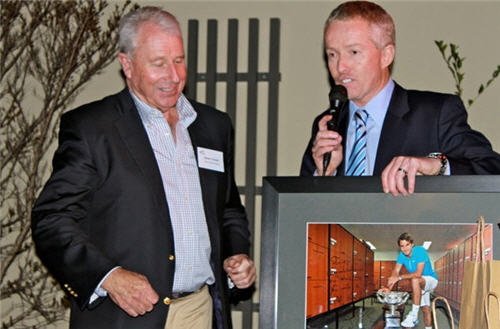
Craig Tiley, Director of Tennis Australia, helps open The Tucker Tennis Musuem and presents Denis with a Roger Federer signed “well wishing” photograph.

Australian Racquet Marketer of FIN:  Barry Todd

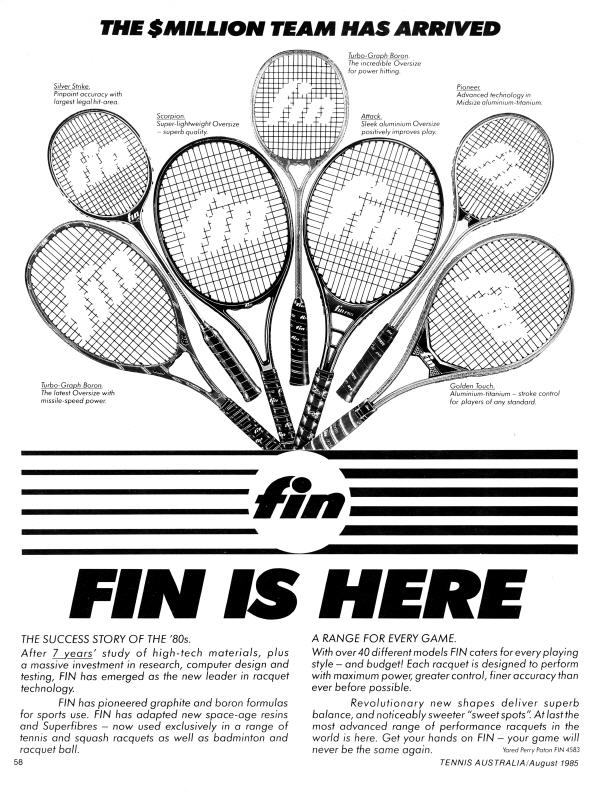
This quarter we found Barry Todd the designer and owner of FIN racquets living in London.  Barry has never really had the success deserved for all his effort in creating some terrific designs for FIN (1980’s)  and DEESSE.  Read more

Male Tennis Champions in the 1920’s J.O.Anderson & Gerald Patterson

An article on the development of tennis in the 1920’s has been added to the site.  The two great Aussies leading the charge were J.O.Anderson and Gerald Patterson.   While great players this was the era of Bill Tilden and W.Johnston from the USA in the early to mid 1920’s followed by the French Musketeers in the late 1920s’. Success in Davis Cups was hard to come by…..yet on home soil, Anderson and Patterson were great rivals from schoolboy days through to the end of their careers.

Anderson (right) beat Tilden (left) in the USA in a match described as the best ever seen.

Tilden played Davis Cup in New Zealand against Australia and also played exhibition tennis in Melbourne and Sydney with the rest of the team.  Read more

Other Interesting Memorabilia

In this section I will just present some nice tennis items to help educate viewers.

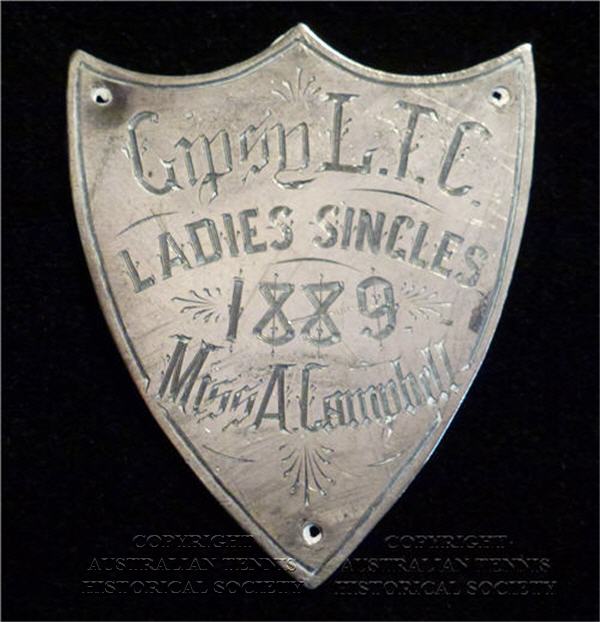
This badge would be mounted to a tennis racquet throat in honour of the win

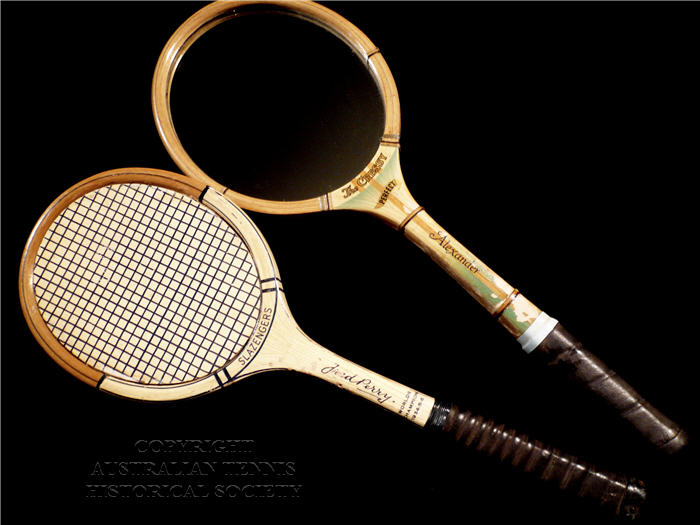
Manufacturer Alexander’s may have started this miniature racquet craze in the 1930’s with their mirrors while the  Slazenger Brush promotes the Fred Perry “All White” Model created in Australia to combat the public interest in Jack Crawford’s Semi  Flat top Alexander racquet.

To help pro long gut string life, reviver was sold in order to coat the strings for added protection from moisture.

The product would be brushed on lightly after a game.  Very hard to find bottles and kits so if you do come across one grab it.

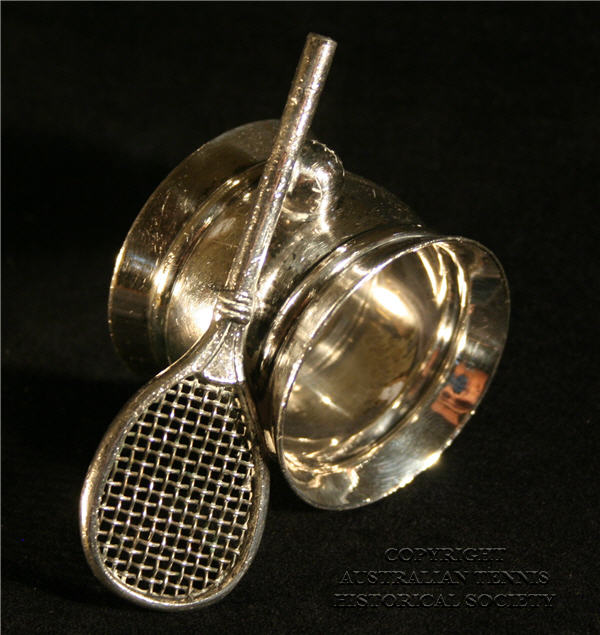
A nice old tennis racquet and ball napkin ring.

Anyone who has some interesting memorabilia or family history that relates to tennis, please contact me rod@tacticalresponse.net.au 0418 362 386

AND PLEASE JOIN AUSTRALIAN TENNIS HISTORY ON FACEBOOK link from here

Unusual Vintage Tennis Racquets 3


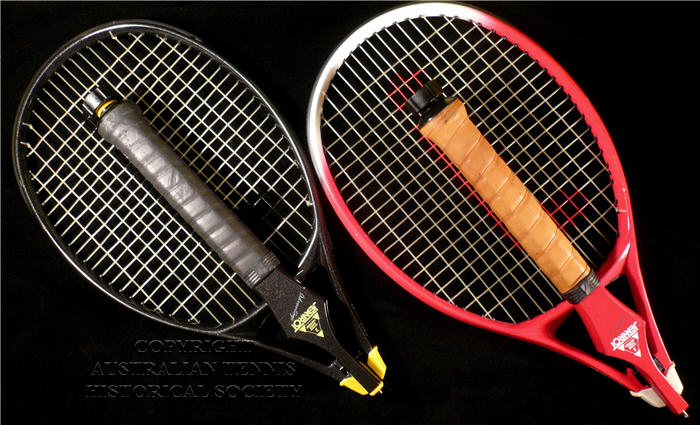
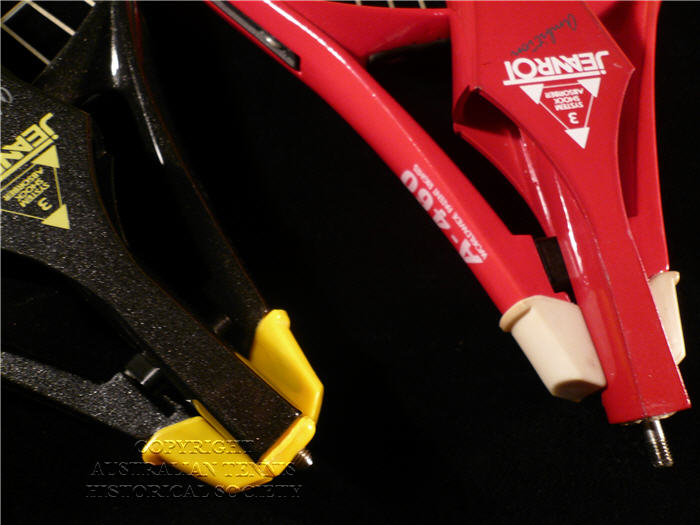
 The Jeanrot Foldable  Racquet c 1985

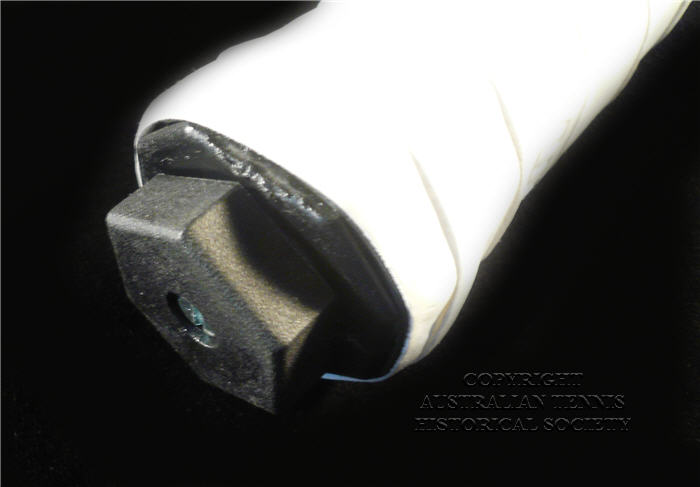
A butt cap unwind system untightens the screw section in the throat allowing the racquet to pivot apart.

In 2007 a reincarnation emerged called the JENRO which came apart completely for compact packing.
This is shown in the Modern Unusual section.


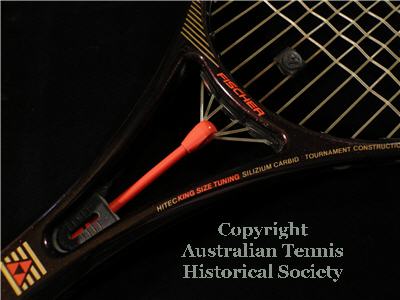
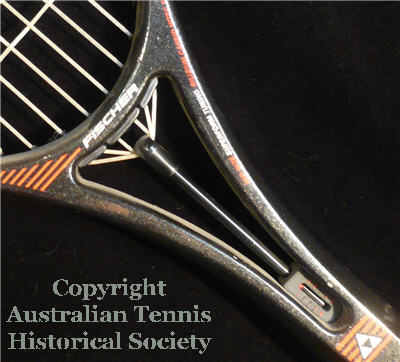
Fischer Superform Tuning c1985

Just like the 1928 Craven racquet above, the rod like device is tightened from the handle and the string tension is adjusted.

The red/deep purple version is the rarer of the two.


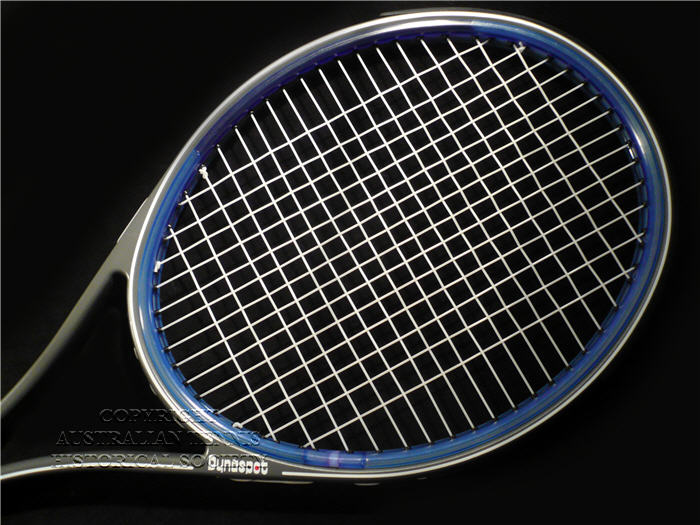
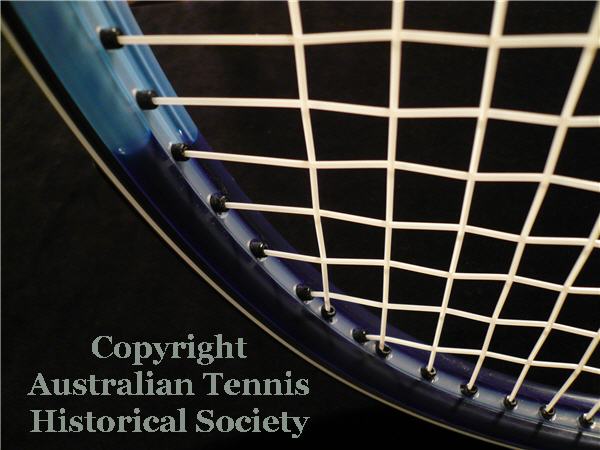
Dynaspot (USA)

c mid 1990’s

Fluid filled tube adjusts weight in the racquet head to counter offset hitting and vibration.

Banned under ITF rules.

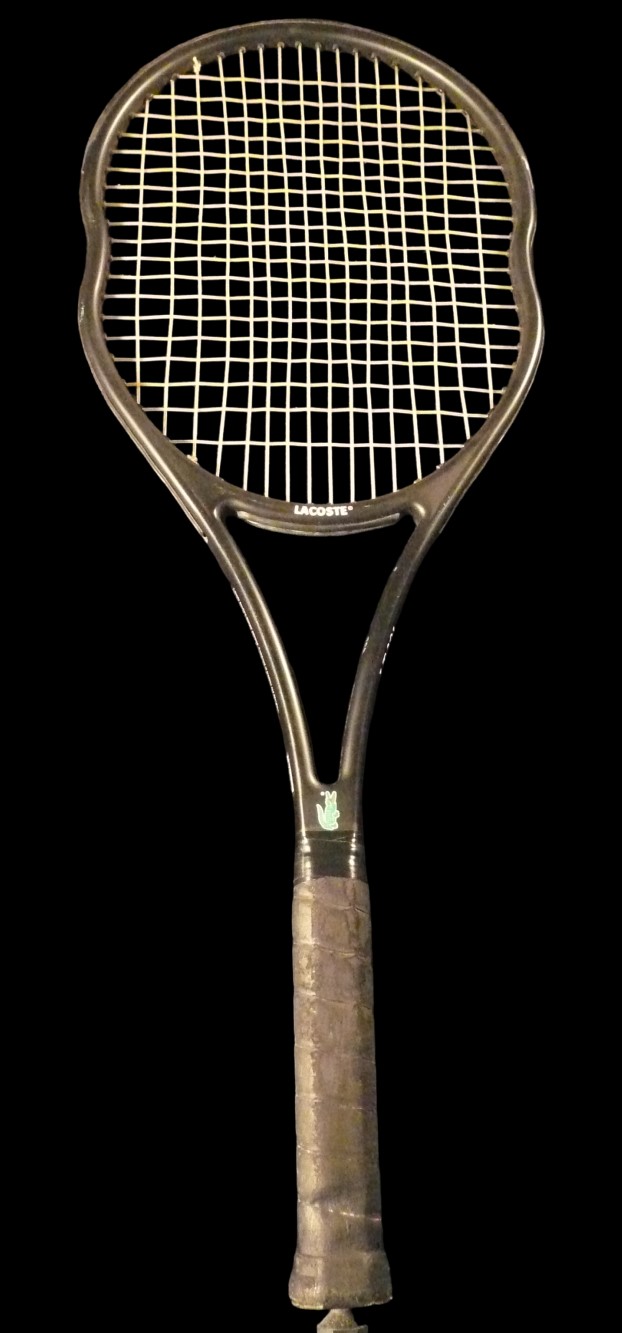
 Lacoste Equijet mid 80’s

Used by Guy Forget.

No it isn’t sun damaged! Another interesting Lacoste design which aims to change the sweet spot via altered string tensions. It has a unique Vibration system in the butt cap which carried through to the Wilson T5000 model

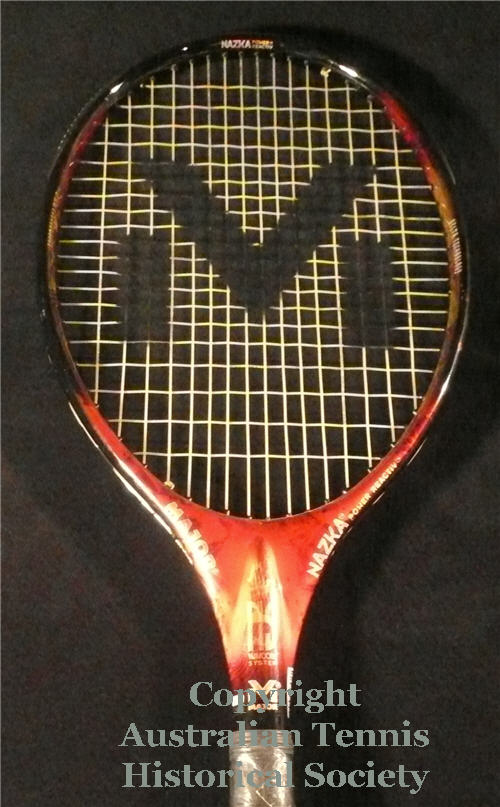
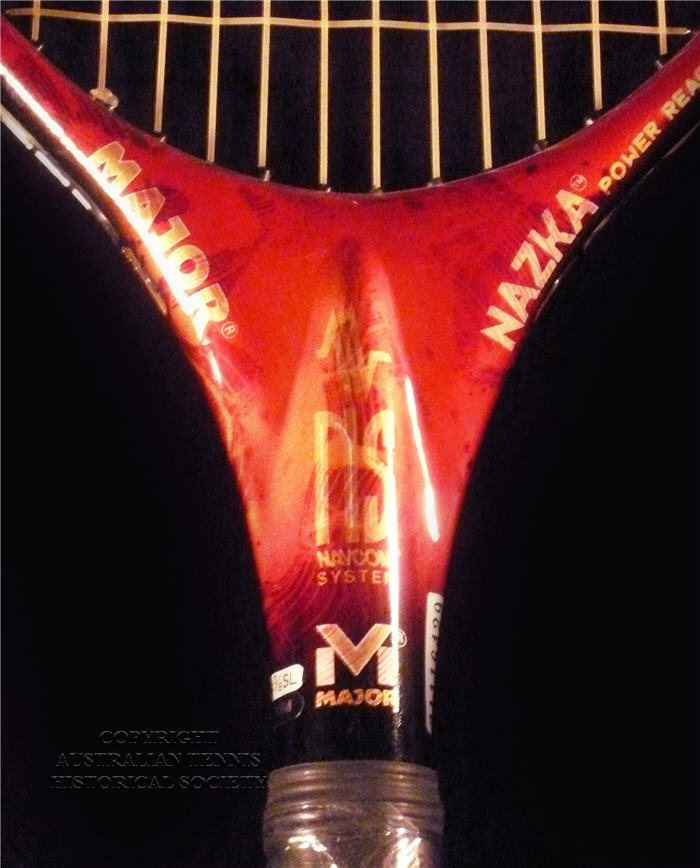
Major Nazka 1990’s

Retro design with vibration dampening system in the middle of the shaft. Graphics and shape are just great

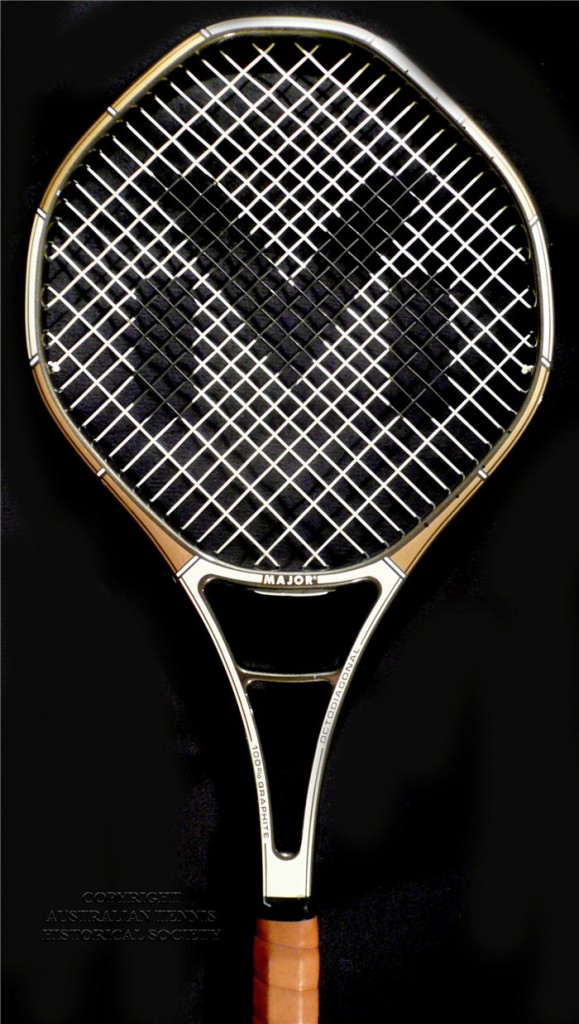
Major Octodiagonal

Terrific shape aka Macgregor Bergelin style.

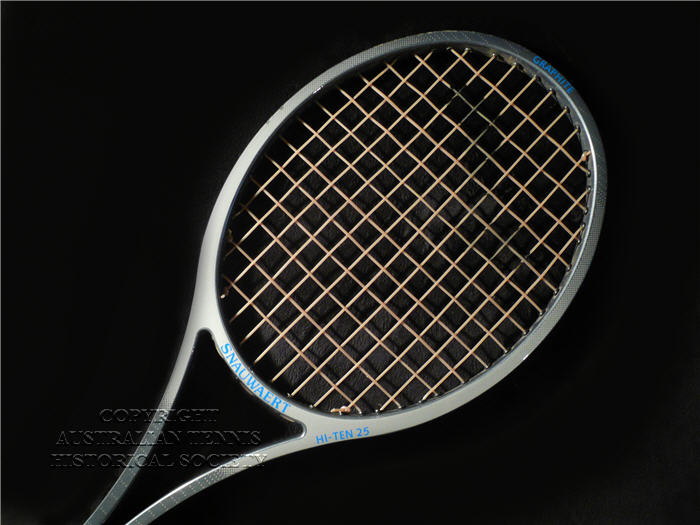
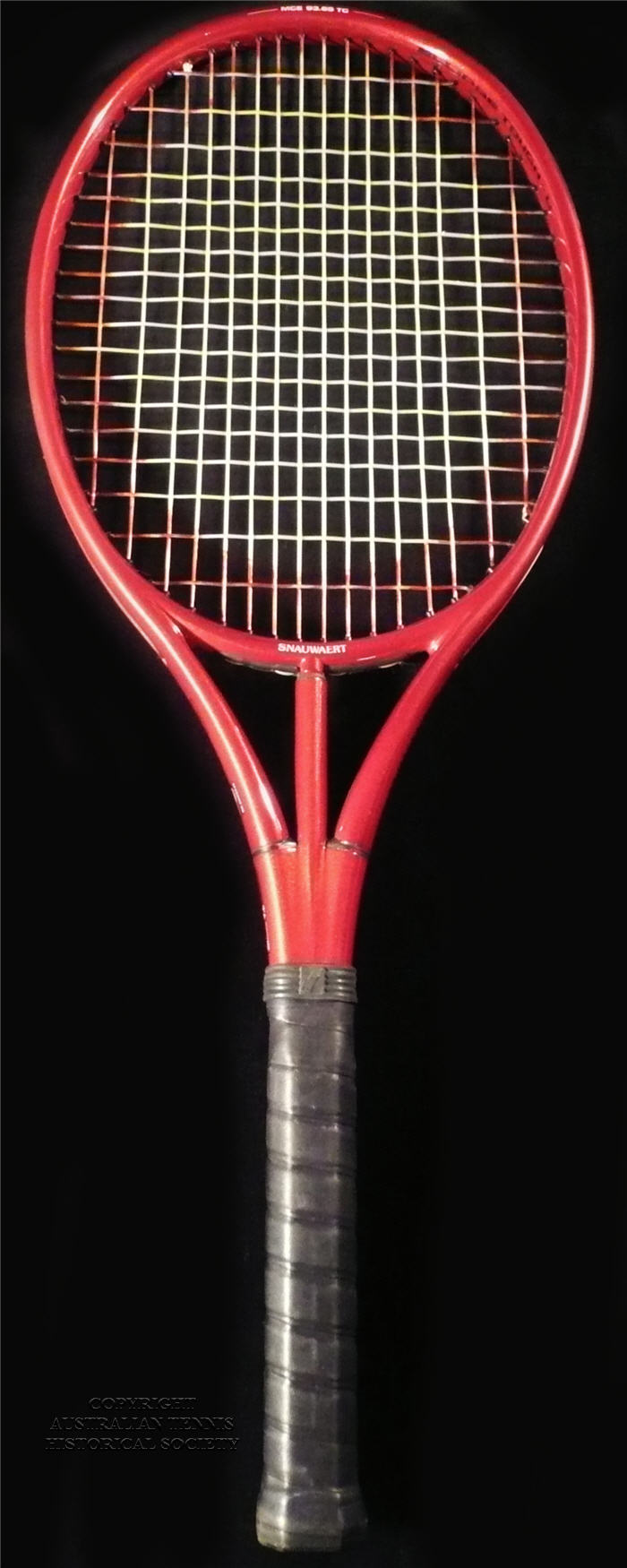
Snauwaert Hi Ten 25 (early 1990’s)

From a 3 range 25,30,50 using open pattern and 1.7mm strings. Designed by Australian player, Barry Phillips-Moore.

This one is a 12 main x 13 crosses. Other models  16 x 12 etc. as the heads get larger.

Mark Woodforde apparently enjoyed these racquets for the huge spin capabilities of the stringing pattern. He went on to use a version of this in a Wilson model. Barry licensed this idea to Josan ( a Yonex Distributor connected brand from Sydney)

Blackburne Double String Late 1990’s

Racquet with two sets of strings about 2mm from the lip of the frame designed to reduce frame hits. The racquet warps when being strung due to the string pressures on one side and then reverts to shape as the second set is fitted.

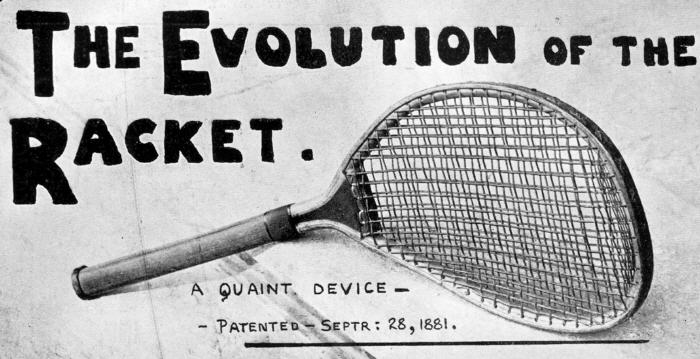
The earliest evidence if a similar comes from 1881 as printed in the UK Lawn Tennis and Badminton Magazine in 1914.

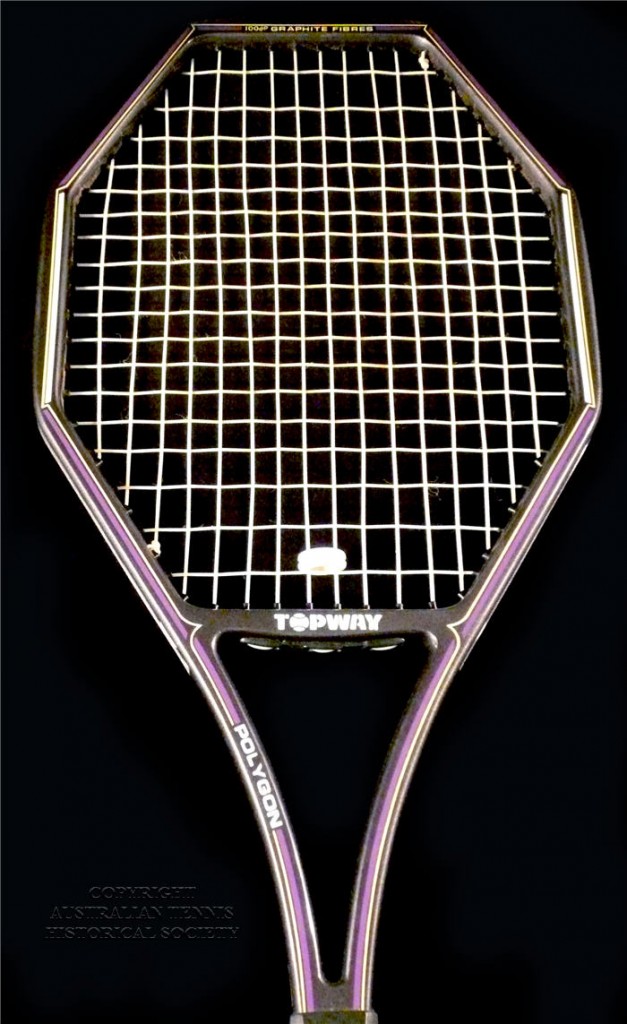
Topway Hexangonal

Very unusual shape made in Taiwan.

Dunlop Japan also marketed this design as their the Polygon model.

Tour Pro (nothing else known) great frame shape dividing the strings on all four sides.
Similar concept to a Bjorn Borg signature, Black Crystal racquet.

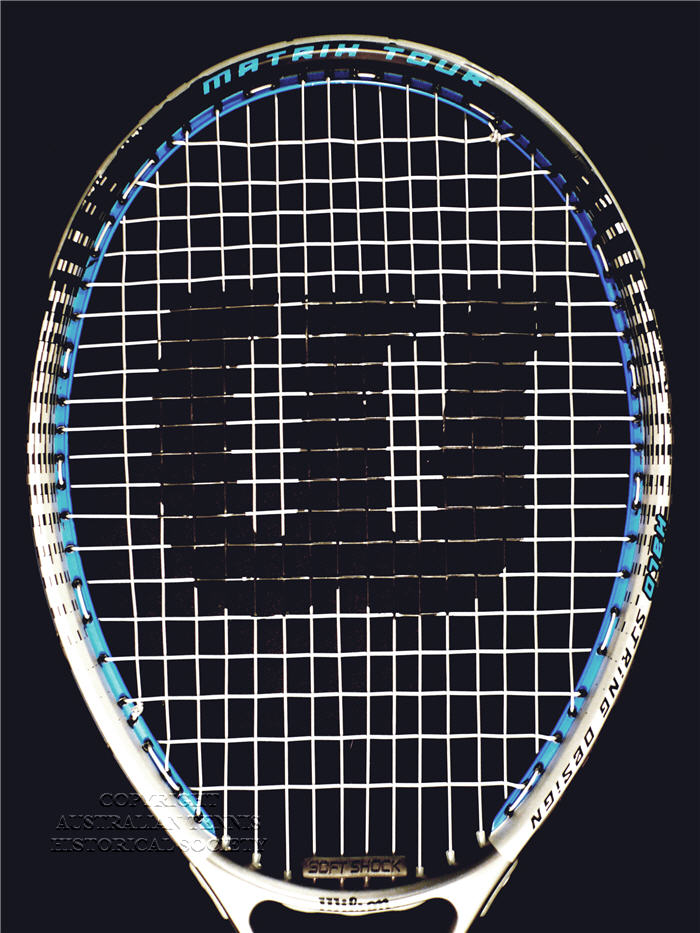
Wilson Matrix internal stringing system along the lines of the Seamco / Seamless model from the mid 1970’s

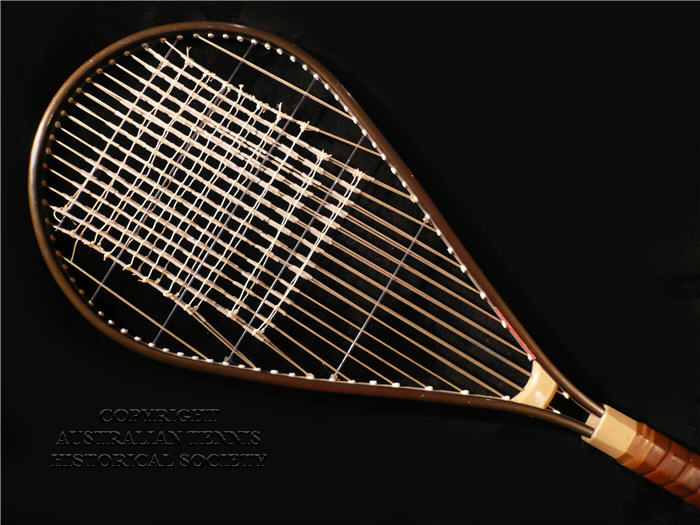
The Kuebler Phillps Moore c 1980 in Germany

Named after South Australian player and journeyman, Barry Phillips Moore.

This sample has been strung using a stringing technique called ‘spaghetti’ stringing.

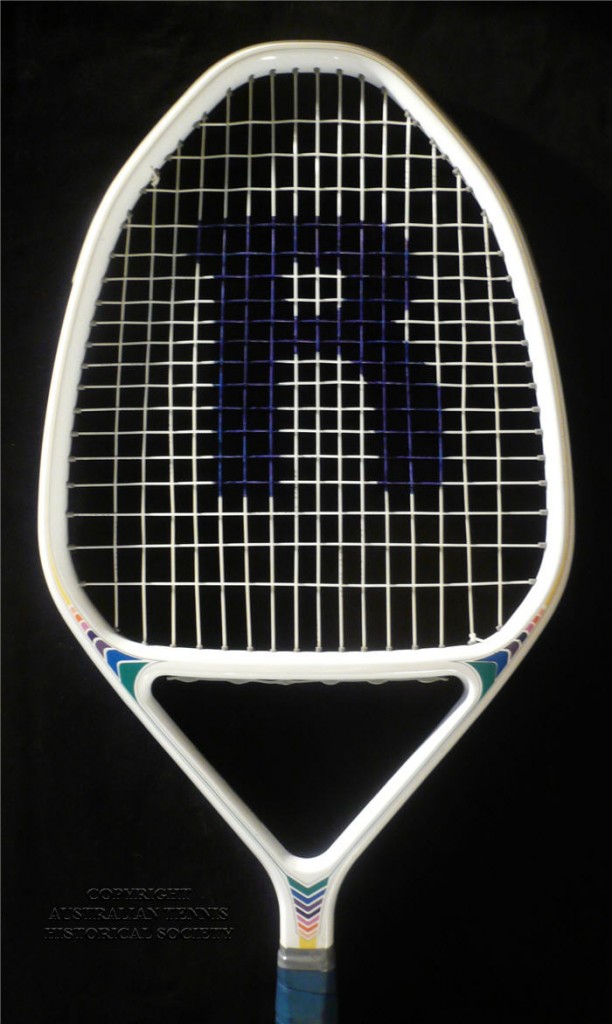
Rival AU 700

Ceramic Composition c1993

The premise behind the shape was that it represented an open hand and was designed to deliver greater feel and control plus bring the sweet spot closer to the bottom of the frame.

There were quite a few models:

AU 100, AU 300MS, AU 400, AU 500 from 1989-1993 and were sold mainly in the USA


Rayco Ruler c 1980’s?

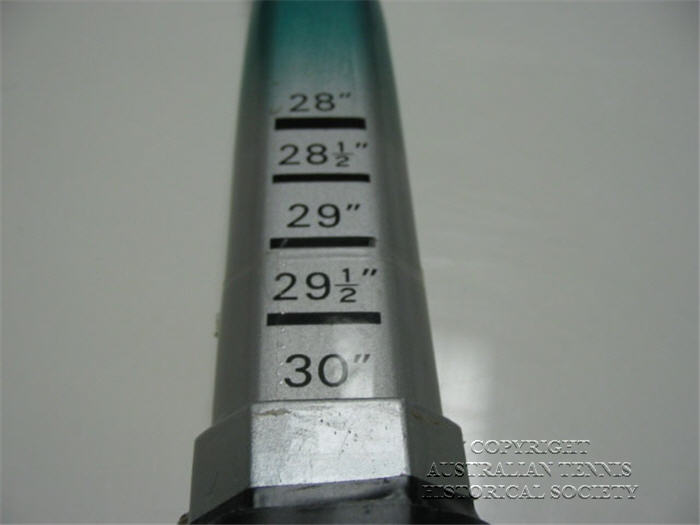
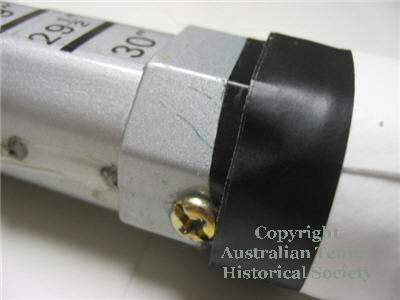
Adjustable racquet length from 28″ to 30″ via an in-handle extension. Just a screwdriver away from extra reach.

Very rare. Not sure how practical or what would happened if the screw broke, net players beware.

Apparently, this was a low cost Kmart style racquet

ADAM 4edit

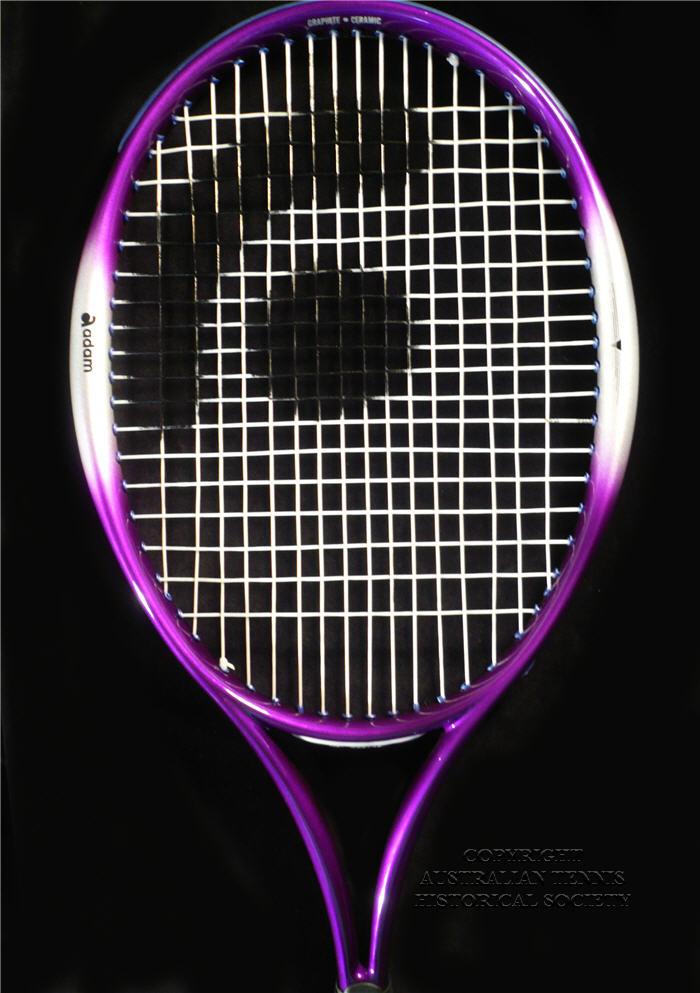
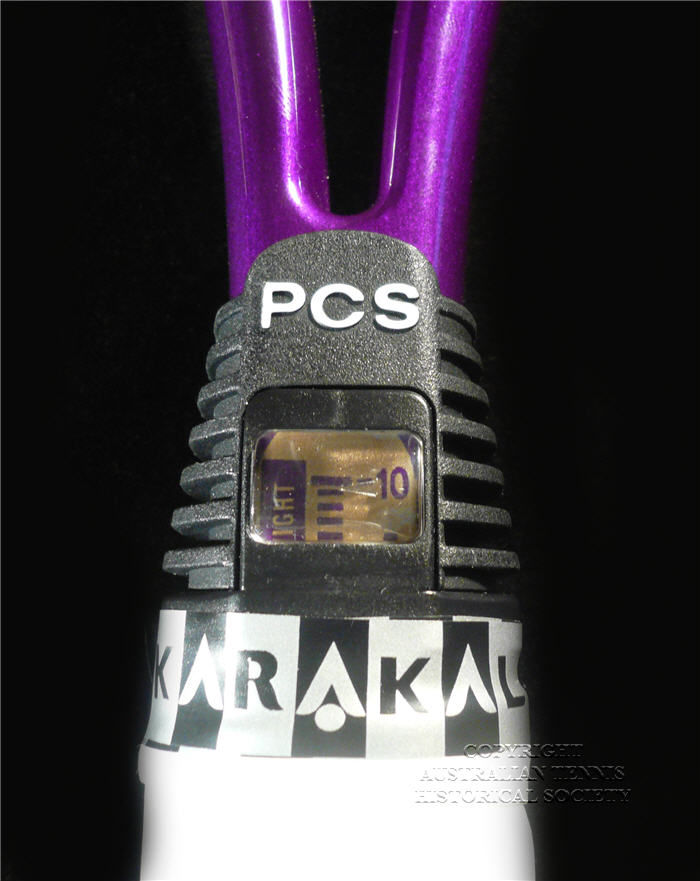
 Adam Pro Turbo adjustable length c1989

Adam Gunther was the head designer at Volkl before joining Puma where he designed the Boris Becker PCS. After Puma exited the market, Adams created his own modified version of the PCS with a knob winding system.

The knob in the handle turns to change the length of the racquet and therefore swing weight. The two pics left show the variation.

It is a beautifully balanced racquet with an excellent sweet spot. Notice the wider head areas on the sides.

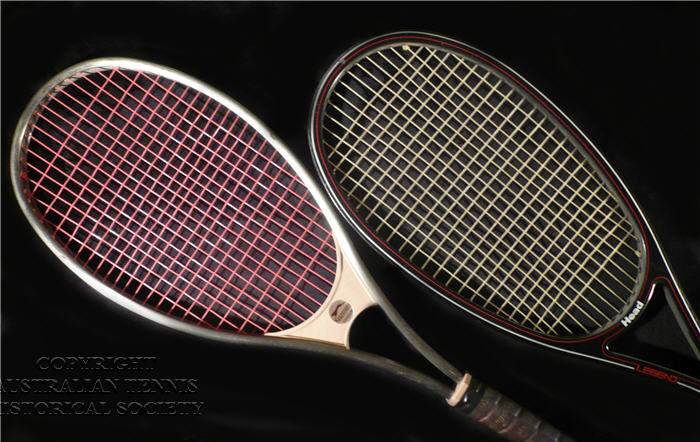
Head Legend c mid 80’s with Slazenger Omega Long head shape models

The elongated head shape really is quite fascinating and totally unique compared with the 65 sq in oval shapes typically seen in the day.

In the 1980’s 1900’s there were also long frame models.

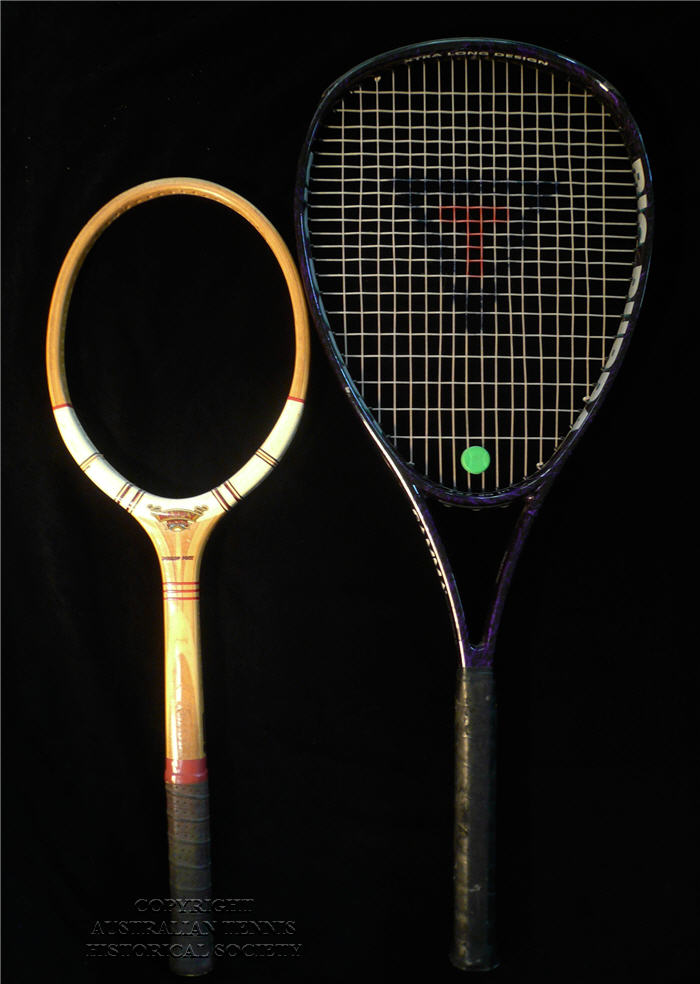
Gamma Big Bubba

32″ tall and 137sq.in head.

An amazing weapon which was banned in 1997 after being approved. Ultimately they simply chopped 4″ off to make it 28″.

Banned because it was thought that the game would end up being all serve and not much else. Our Aussie scud put these to a test against woodies.

Read the story under BLOG ARTICLES and scroll through a few others as well.

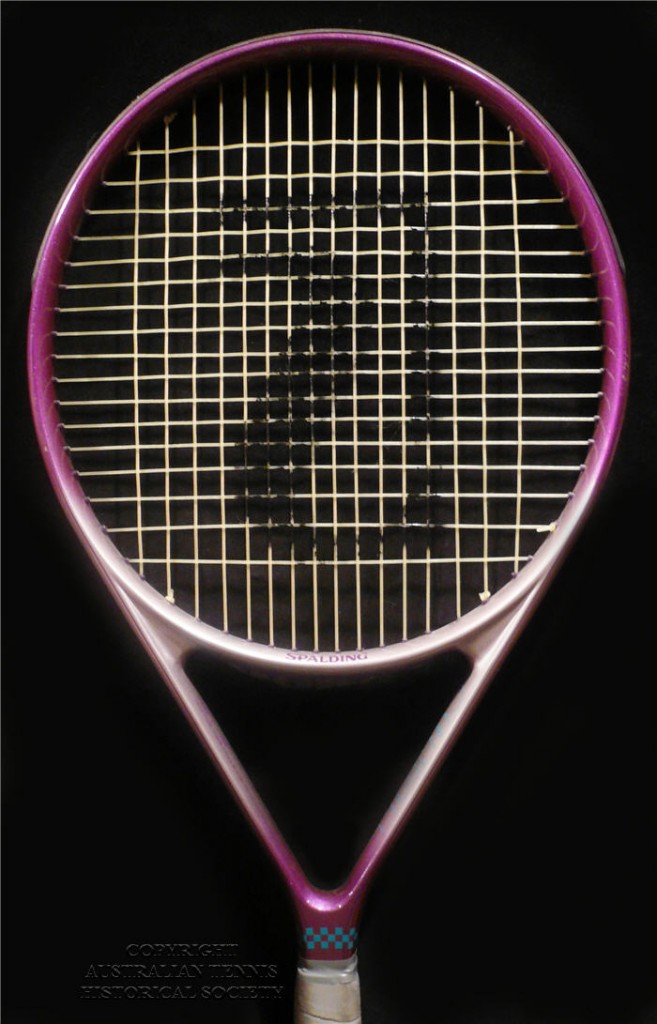
Spalding’s Orbitech was a given a big push in the early 1990’s

This is the XL-105.

Sold in the USA for $190 so an OK mid price racquet for the social players

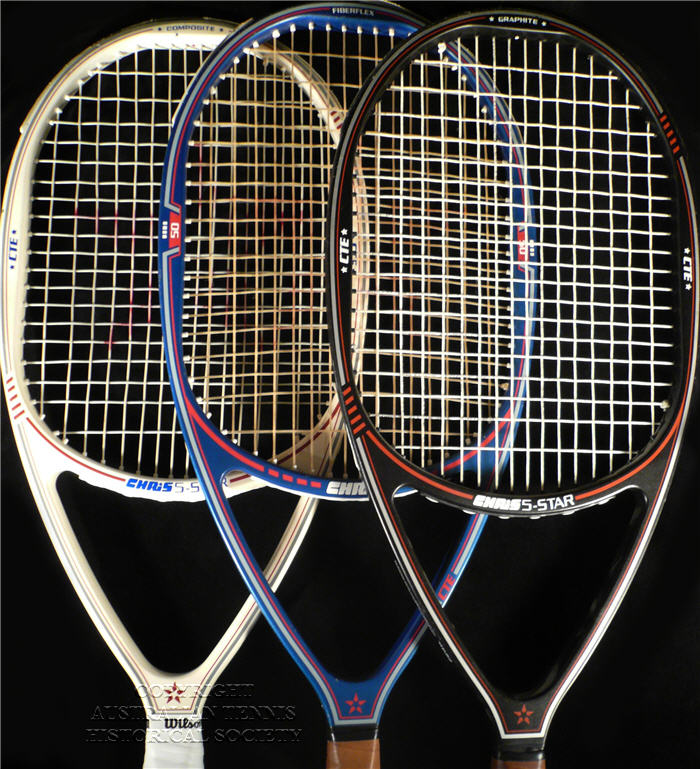
The Chris 5 Star USA mid 1980’s

Another wide bow racquet design.

Grey: Power G model 100% Graphite

White: Competition Composite

Blue: Avenger Fiberflex

Very well balanced and stable due to the wide bow and collectors still really enjoy playing with them even compared to current designs

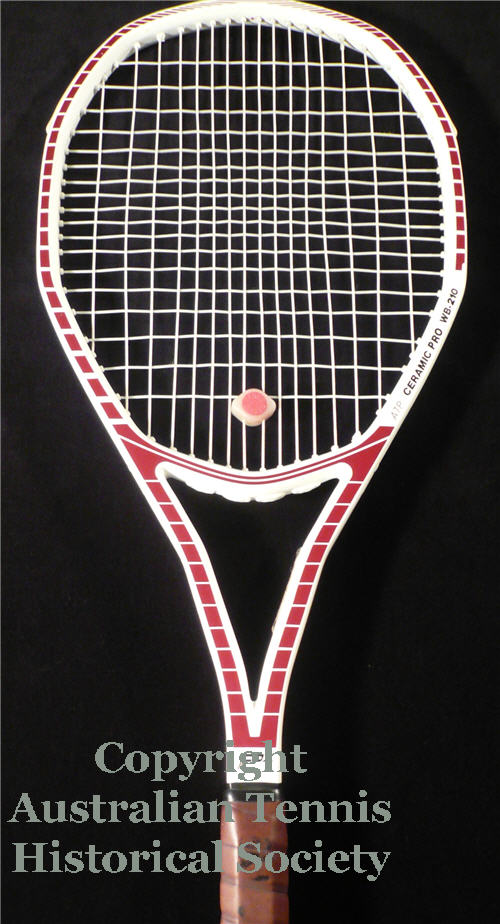
Fox Ceramic Pro WB-210 c 1985

Warren Bosworth was a highly regarded stringer to many professionals and was heavily involved in the design of these and many other Fox racquets. We recently found an Australian branded version of this racquet called CERAMIC PRO of which only 300 or so were made for promotional purposes.

This series are unusual due to their 10 sided shape.

Fox also produced a version model WB-215 traditional head shape long string model.

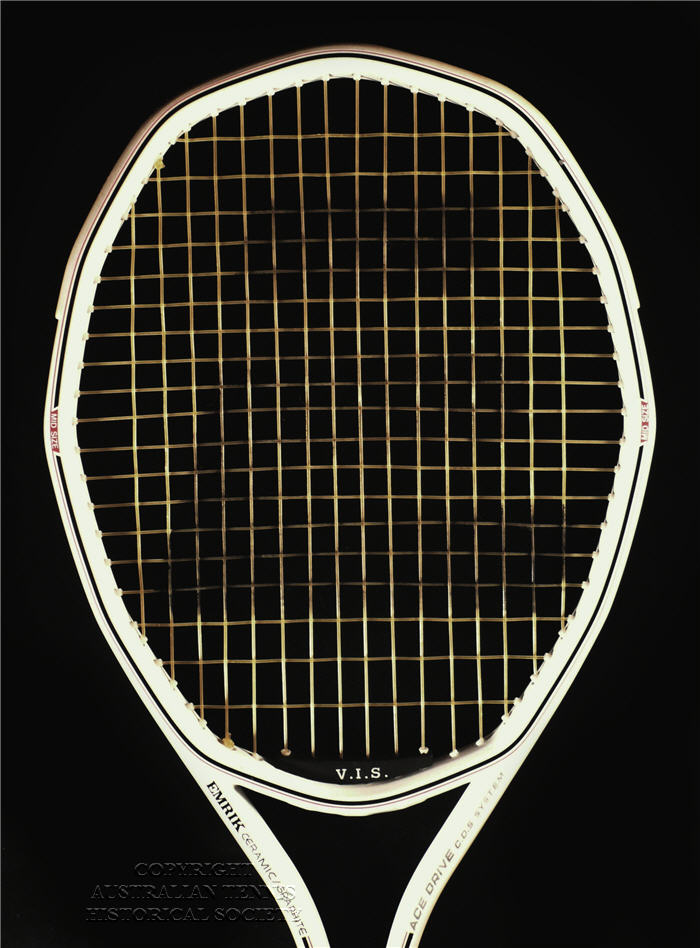
Emrik (Australia) Ace Drive Angular finish

Very rare multi angle model.

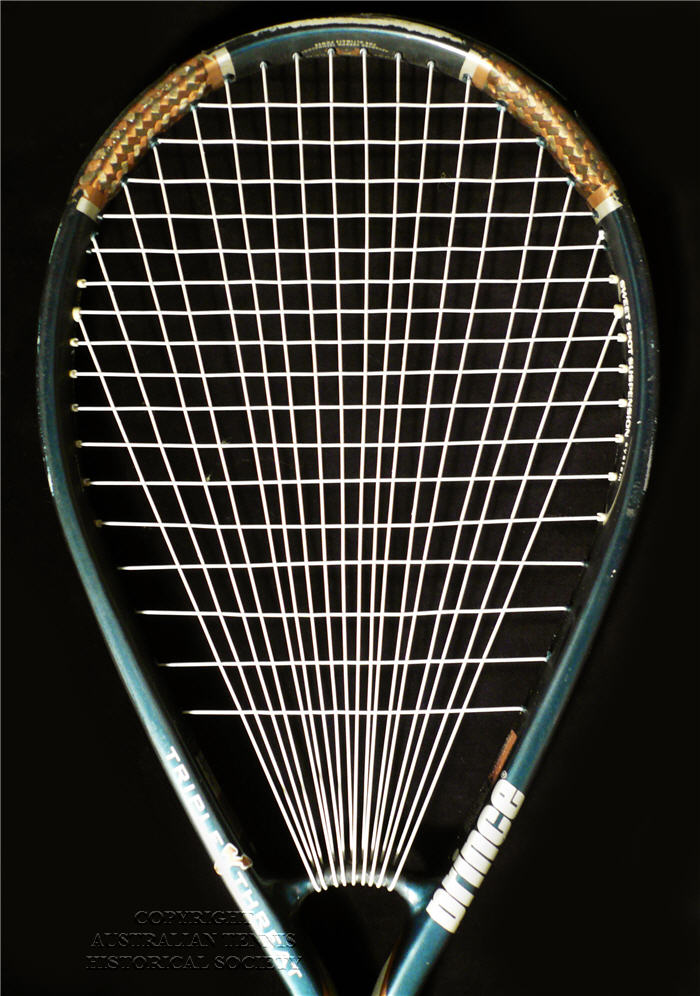
Apart from the SPIN racquet above, other makers have experimented with long string designs.

Pictured is the Prince Triple Threat Ring (1300 power level) and the Wilson Radius with Power Strings Technology.

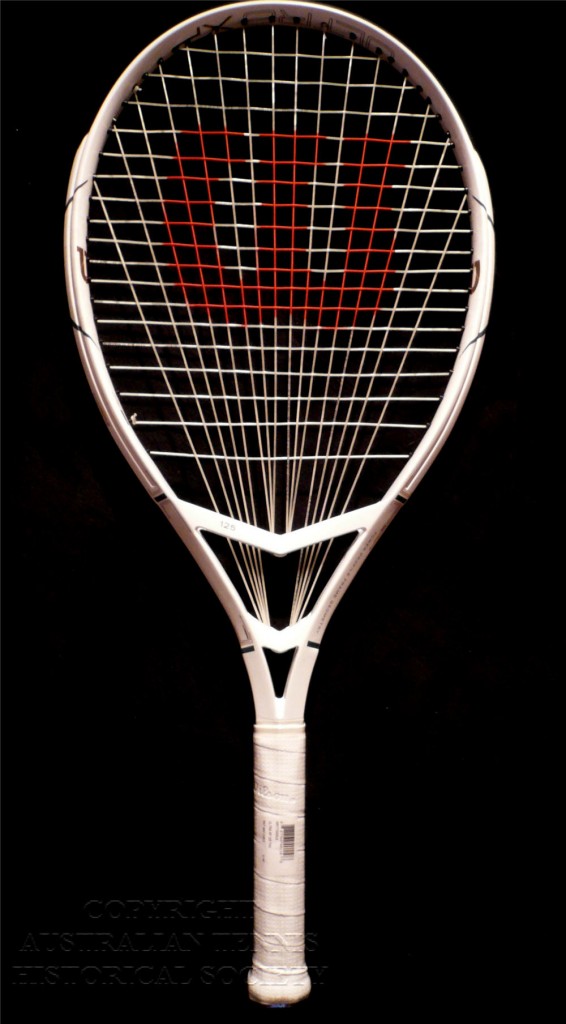
In 2015 Wilson introduced this ULTRA 125 Long string model which featured an outer long string and central throat stringing.
We believe it was withdrawn possibly due to breakage at the throat where considerable tension is applied to the one point.

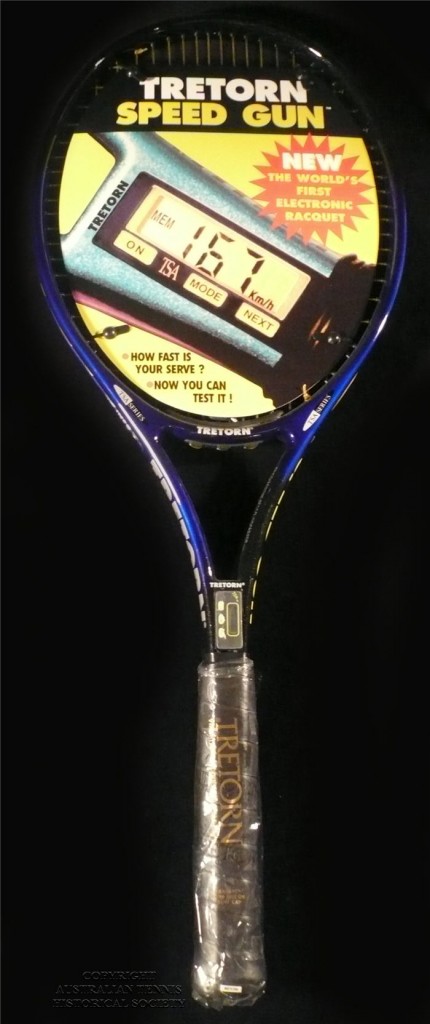
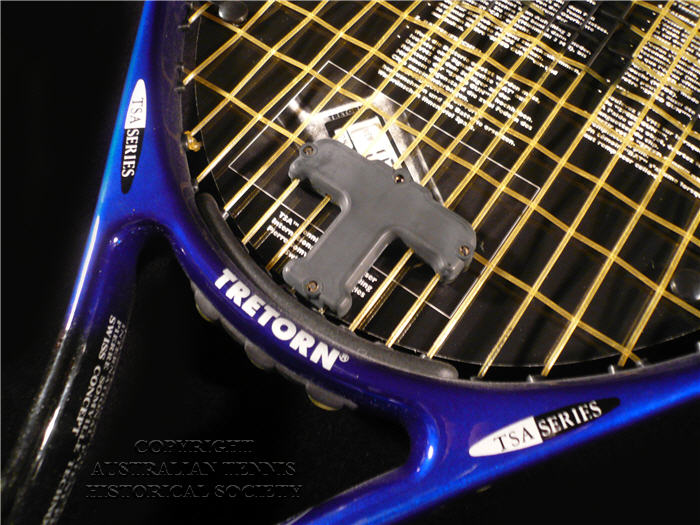
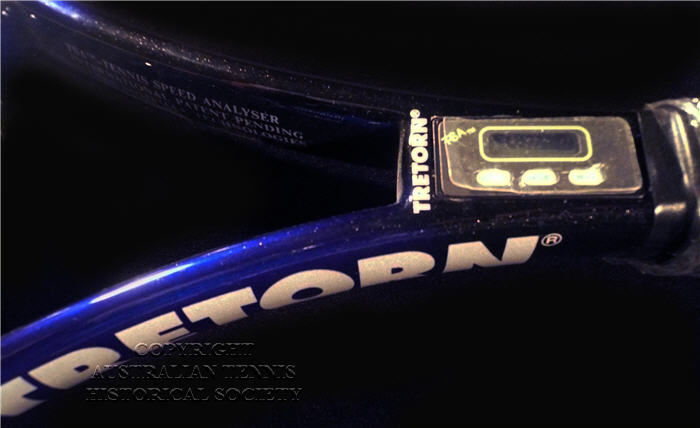
Tretorn Speedgun (Concept racquet) 2005

Computers meet tennis.

A string sensor picks up movement to determine shot speed to within +- 2.5kmh. Play a rally and see the last 10 shots on a screen built into the handle.

Only 1000 were made and they never achieved retail distribution. A rare find indeed and a great tennis brand name. Current ITF rules prevent information being relayed to a player during play.

Unususal Vintage Tennis Racquets 2

santor s pro (6)

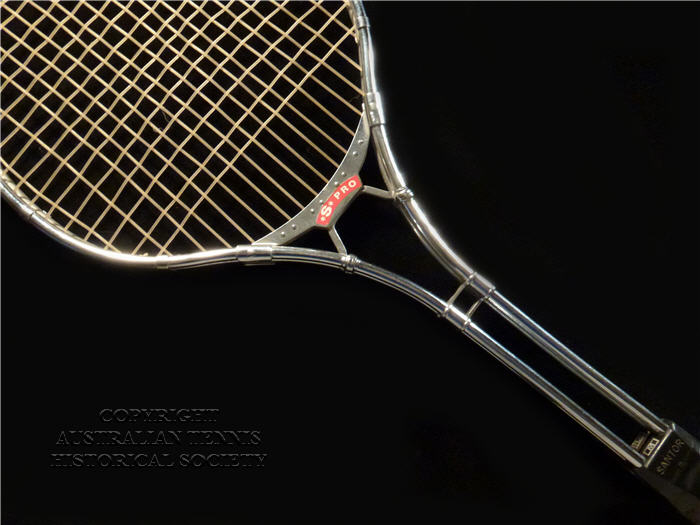
Santor S Pro

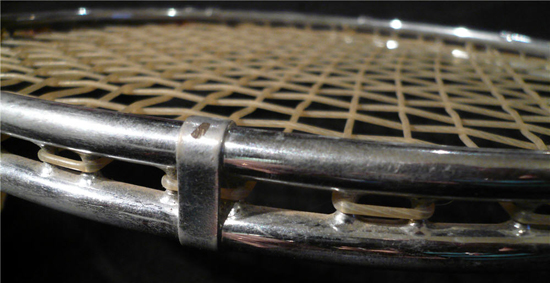
Santor S-Pro Steel racquet with really lovely industrial design cues.

It is essentially two frames joined together with welded or soldered pins.

SEAMKENR11

SEAMKENR5

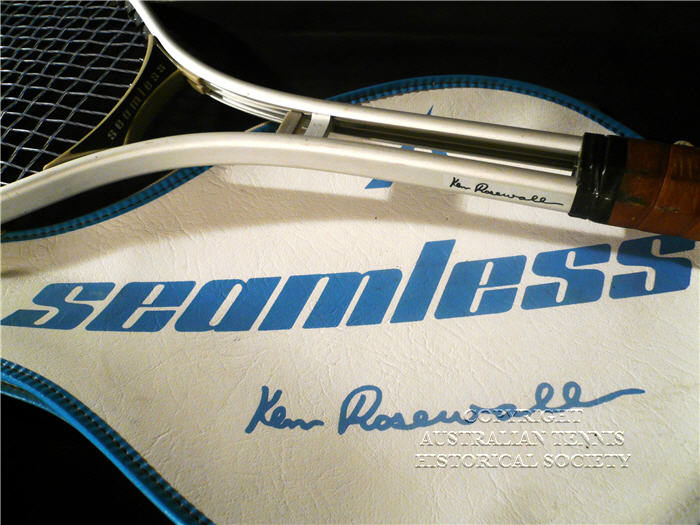
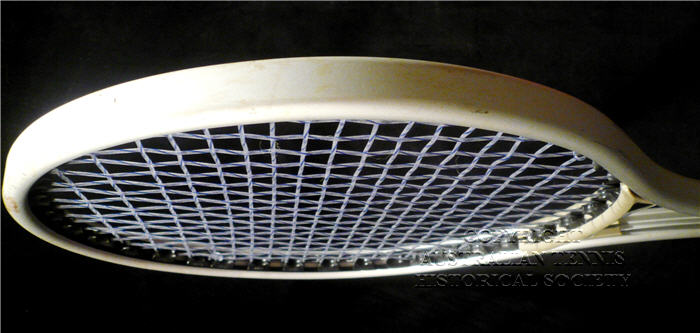
The “Ken Rosewall” Seamless (Seamco) c 1971

As you can see the string supports are located inside the extruded aluminium

frame leaving a very unusual smooth finish.

Ken was a consultant to the firm hence the interest to Australia.

If you like this smooth look out for a Wilson TX 6000 c1978 which has a smooth finish unlike the channeled look of the T2000.

STEEL SHAFT RANGE

Steel Shaft Models (late 1960’s and 1970’s)

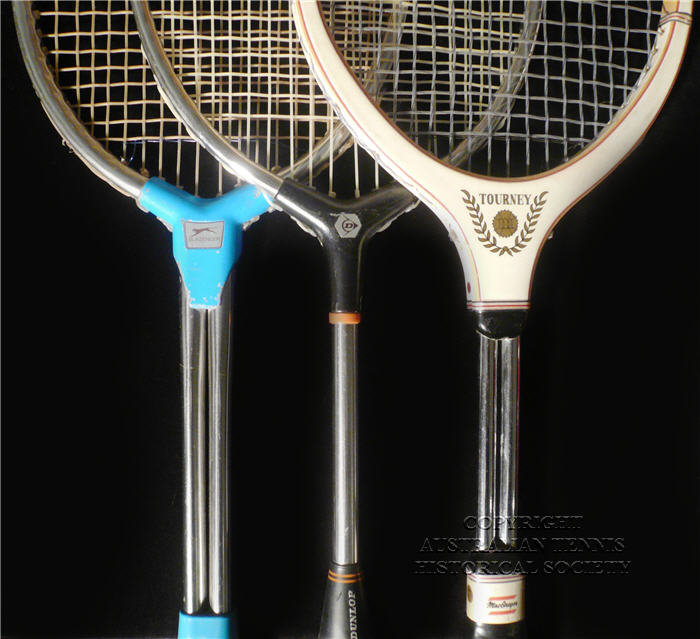
Slazenger twin shaft, Dunlop Monoshaft UK 1972, MacGregor Tourney USA

As the Wilson/Lacoste T2000 was booming, Dunlop produced these very nice looking racquets, often confused for squash racquets.

grays steelmaster (2)

Grays Silver Gray estimated 1954-1974 era (UK)

Steel Shaft with wooden head

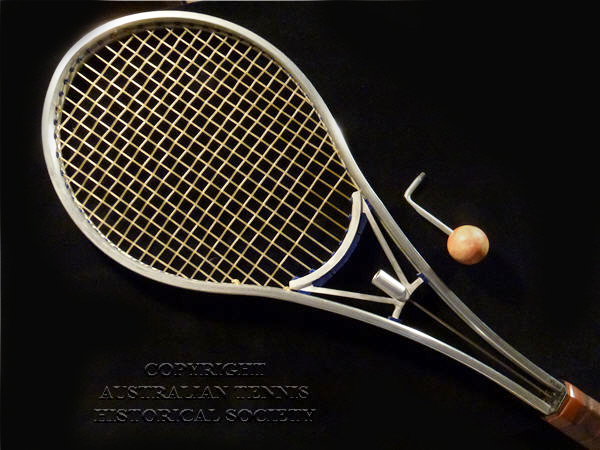
tretorn demountable 2

tretorn demountable

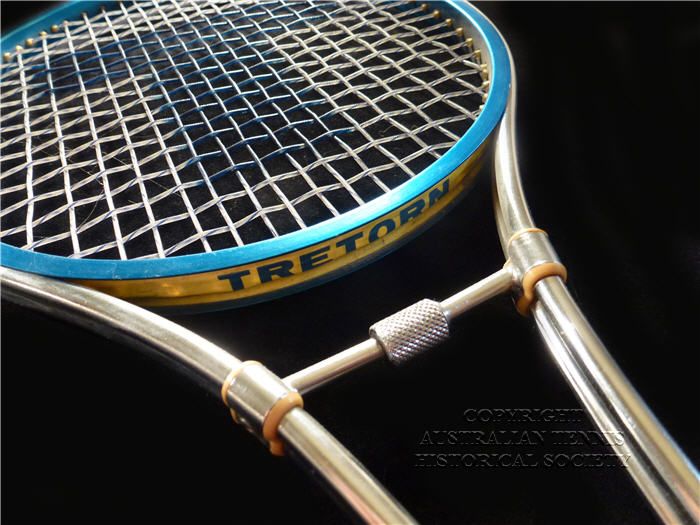
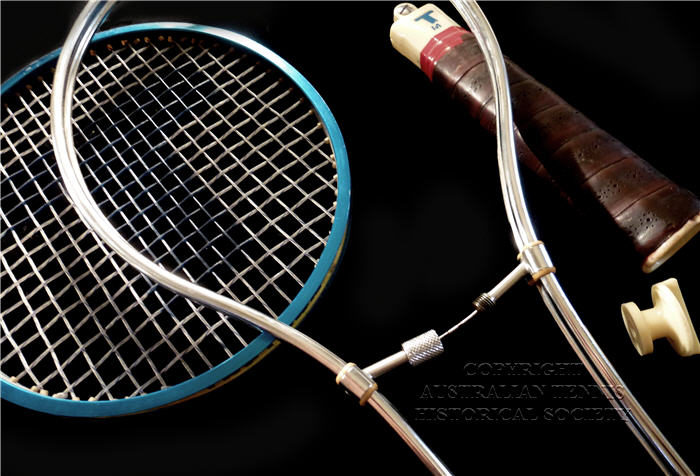
Tretorn ( Demountable) Sweden 1968

String set in the blue aluminium frame can be removed from the racquet frame by undoing the butt cap, sliding off the handle and undoing the spindle in the centre of the cross bar (pictured). This allows the frame to spring open so a new string set can be inserted. Takes a few minutes only.

They often came with 2-3 different string sets with different tensions or as back ups for breakage.

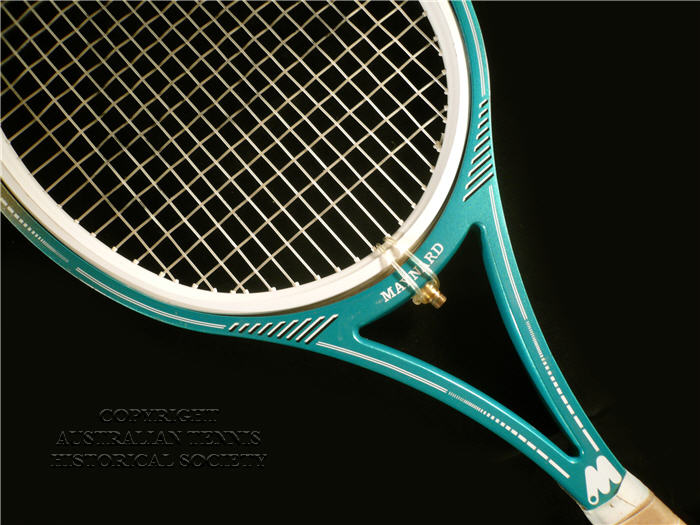
See the Maynard below for another string set removal option.

MAYNARD AIR RACQUET 5

Maynard AirPower Racquet c late 1980’s

USA designed, the string set comes on a separate frame which is held in place by a tube filled with air.

Patent filed 1986 # 4 772 021  Michael Maynard

IMG_5652

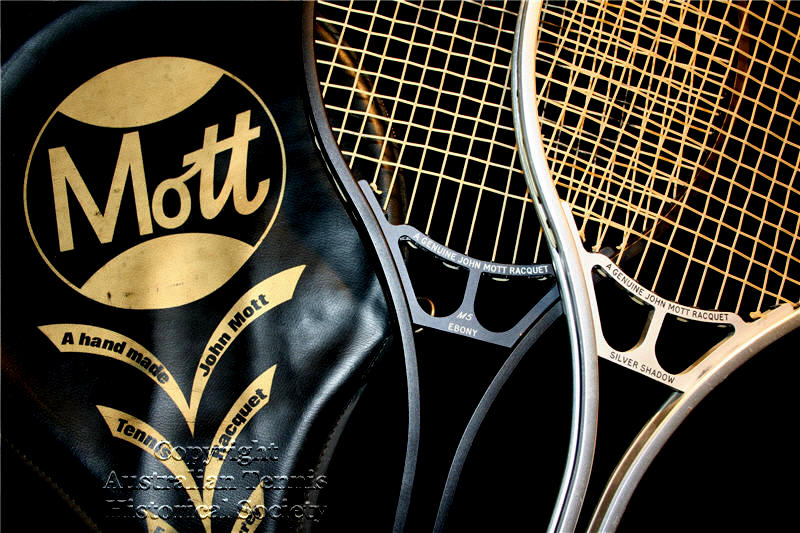
John Mott, Silver Shadow, UK (1980’s)

Hand made in Farnham Surrey.

The factory made tennis and squash racquets for a short time then sold the patents and left the industry.

The finish is superb with no visible rivets and the fit between the throat piece and frame is sheer precision.

We would like to learn more about this company.

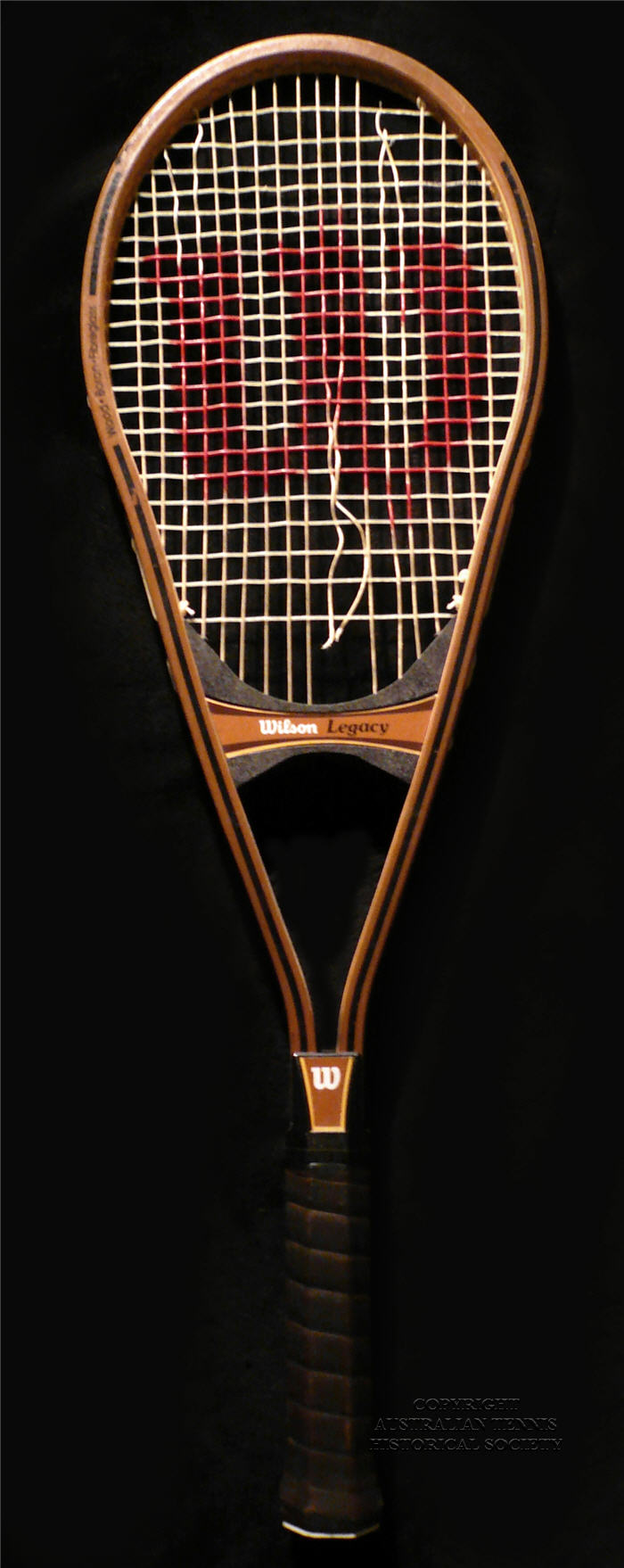
wilson legacy

Wilson Legacy 1983

Rare shape. Wood with plastic throat.

A bit weird, but that’s interesting

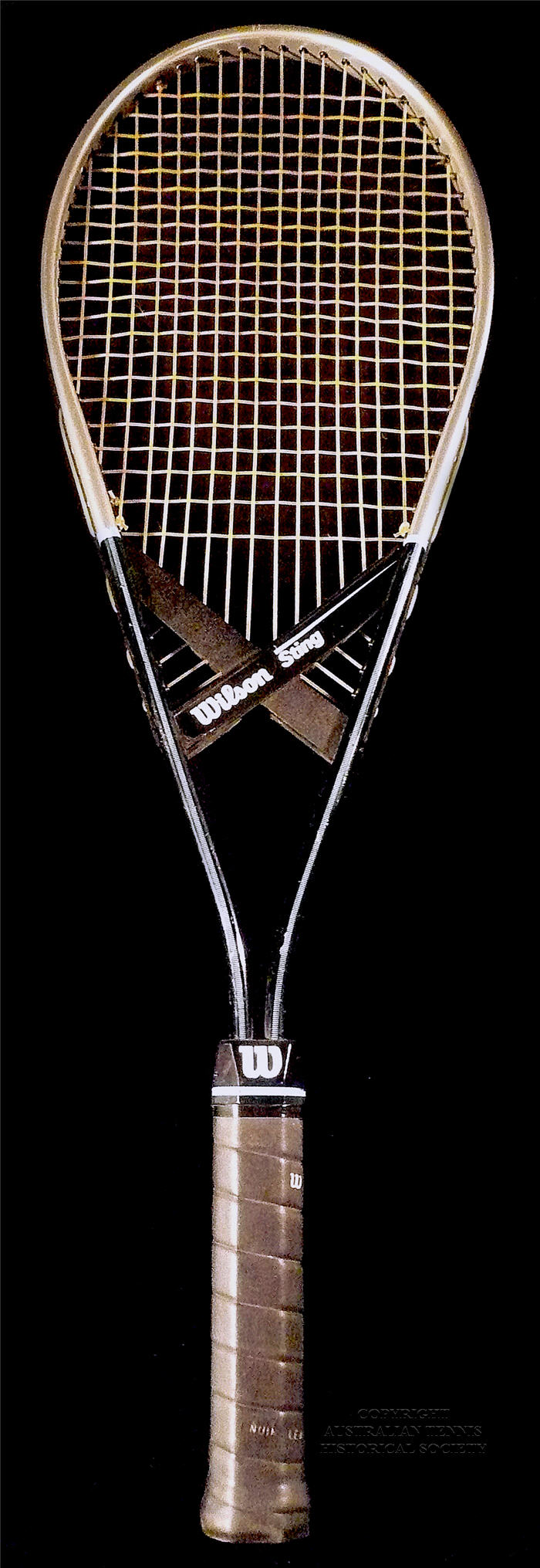
wilson sting

Wilson Sting 1985

Aluminium frame with nice string treatment at the throat.

You can tell they are from the same family as the Legacy above

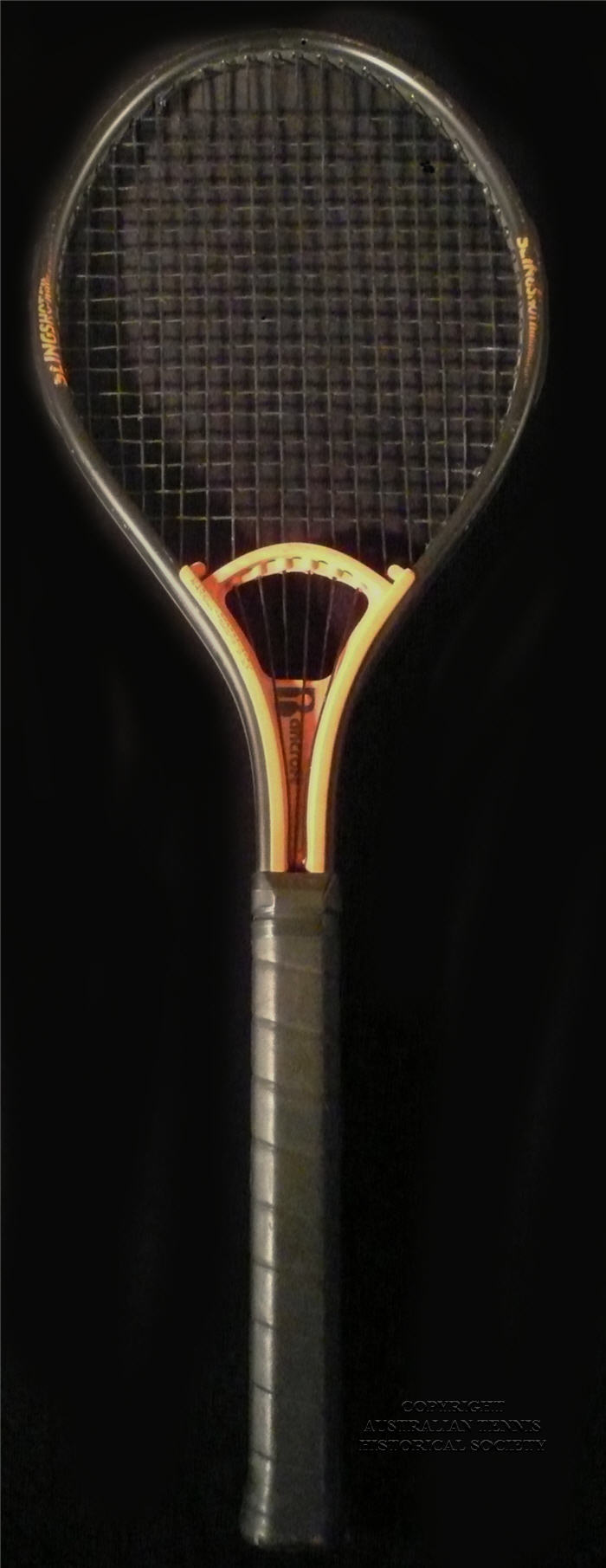
Bancroft Slingshot

Bancroft Slingshot USA 1983

Made in Germany under license by Markhill.

Great extended string pattern to the top of the very long handle

BIO SPORTS GRIPPER

Bio sports The Gripper 1984

A curved grip.

You might think you have seen everything but this is meant to help with tennis elbow by keeping the racquet face up in line with the ball.

erge2

The Erge (Sweden 1983)

Ergonomic Curved Grip racquet.

Far more pronounced and clearly inspiration for the Neoxxline Range (listed under modern unusual).

Aluminium model came in 1983 followed by a graphite version in 1984

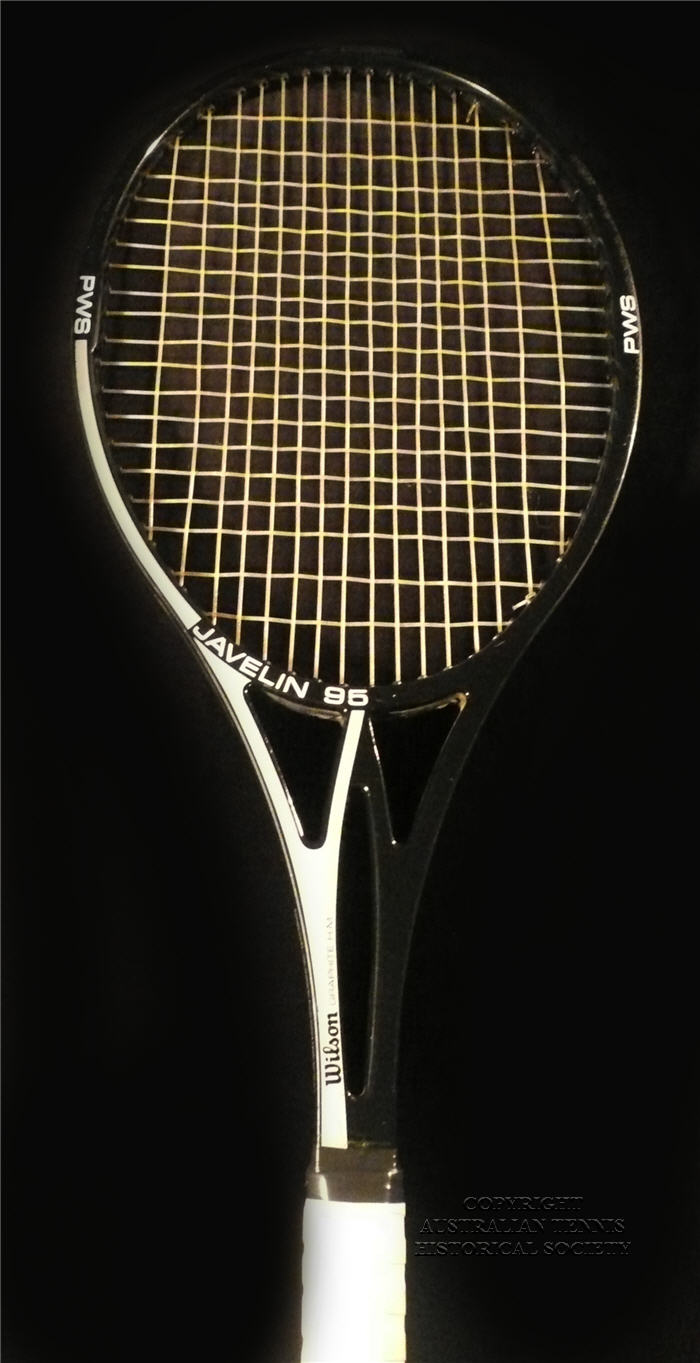
wilson javellin

Wilson Javelin mid 1980’s

A very interesting twin throat design highly sought after by collectors.

acro adjuster (4)

Acro Adjustable mid 1970’s (also s0ld under Hart name)

Two versions this one adjustable via throat piece which pulls the throat down the frame.

Later version moved tightening mechanism to butt cap as per below.

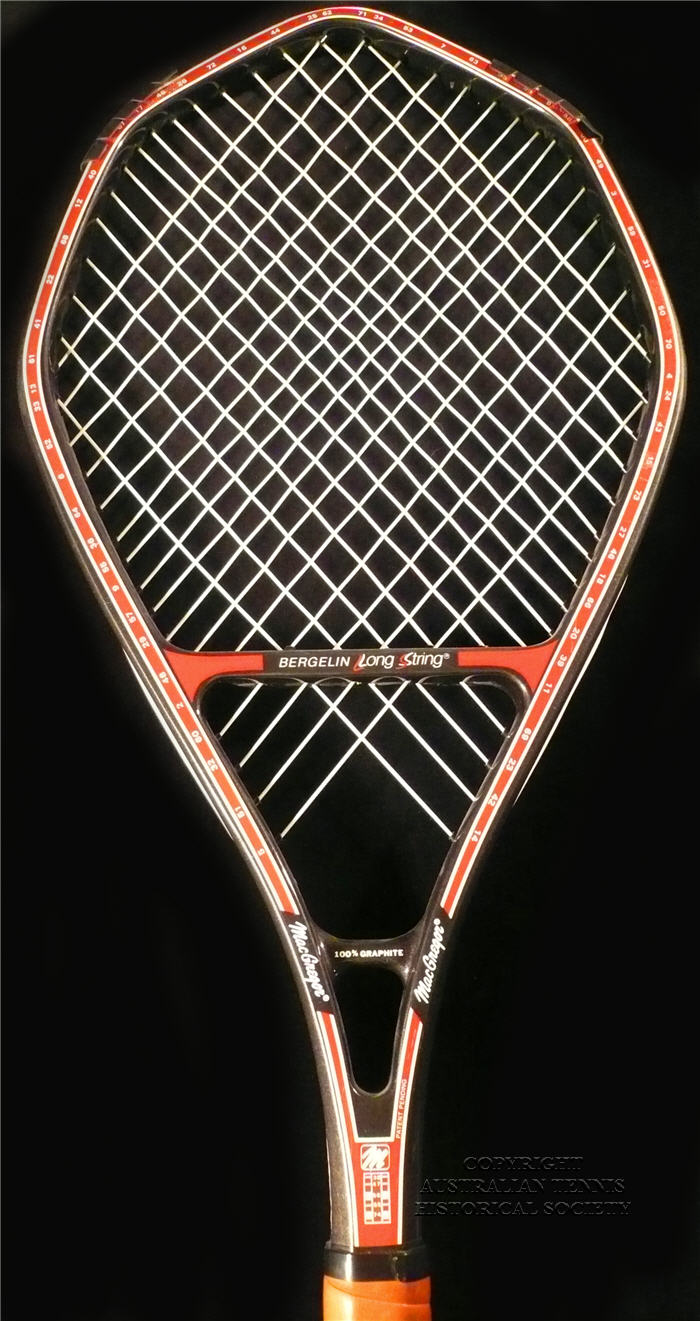
MACGREGOR BERGELIN

Macgregor Bergelin Longstring c 1985

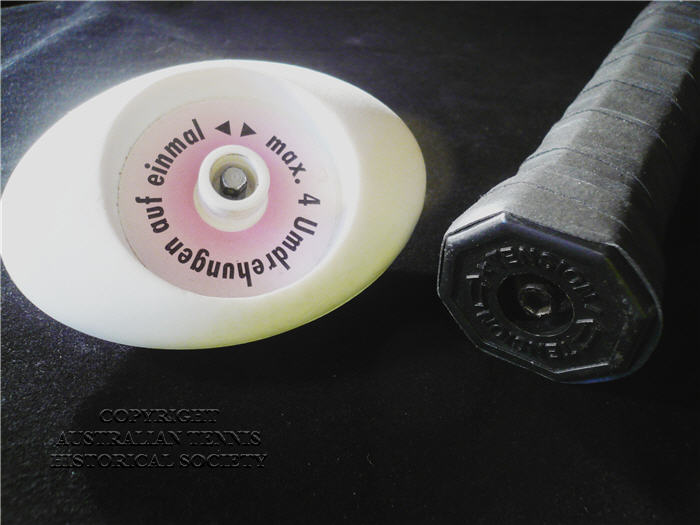
German idea designed by Herwig Fisher (Protagon Sportproukte) and endorsed by Bjorn Borg’s coach Lennart Bergelin. Sold in the USA under license as the MacGregor Bergelin Longstring. Owners can string themselves and then adjust tension via a tightening control system inside the handle. An allen key device connects into the butt cap allowing the owner to adjust tension at any point during a game. Racquet comes with a tension adjustment knob and stringing instructions.

After MacGregor went broke and lost the rights to sell the technology, Protagon went onto launch oval versions called Tension Master and Hi-Con.(page 293-295 Kuebler Book)

protagon (1)

protagon (2)

Protagon TM500 with tension adjustment.

The white knob has an allen key insert which is visible. The MacGregor design was similar.

Great diamond stringing also.

Mizuno Sirius

Mizuno Sirius +10 also incorporates an in handle system but not for tension adjustment.
Inside the handle is a movable weight which enables a change to balance and feel.

Rox Pro Space T 1 (1)edit

Rox Pro Space T1

Arms and fan stringing create an unusual combination.

SPIN OMNI LONG STRING

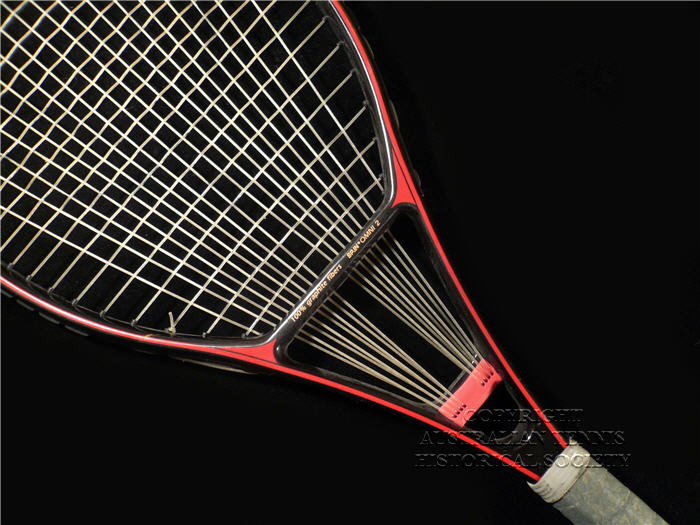
Spin Omni 2 (also G-300 USA & RoxPro Aust.) c 1987

Fancy stringing system with long vertical strings to improve sweet spot performance. Was not within ITF rules but may have received a positive ruling. Also produced a squash racquet with a similar design.

Sold in Australia by Lewis Sports.

rox pro delta 2000 2011 (10)edit

rox pro delta 2000 2011 (7)edit

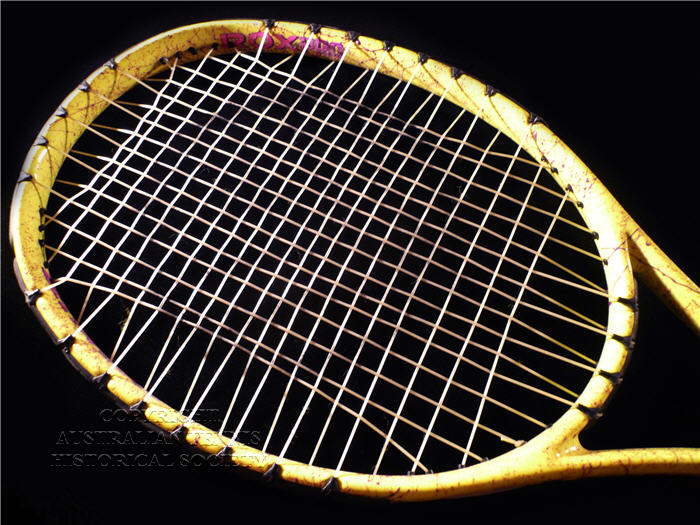
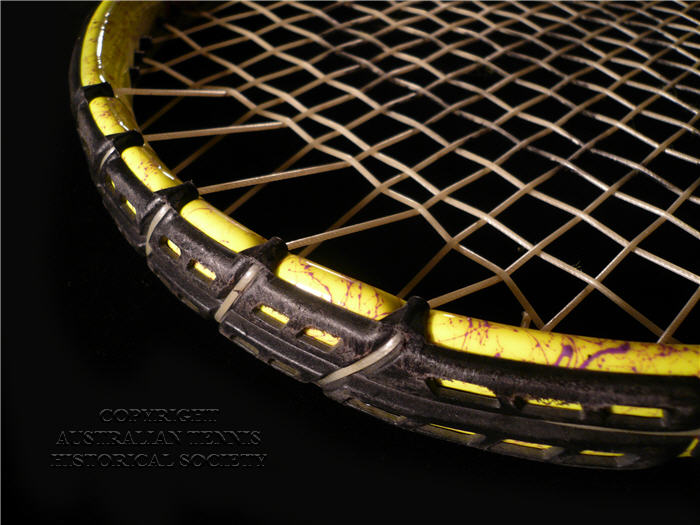
Rox Pro Delta 2000

(Also Estusa AmerPro American Pro Jimmy Connors model)

Loop Stringing around the frame not through holes. The added tenison and change to frame dyamics when striking a ball, keeps these strings super tight.

Not a bad idea!

deesse (16)

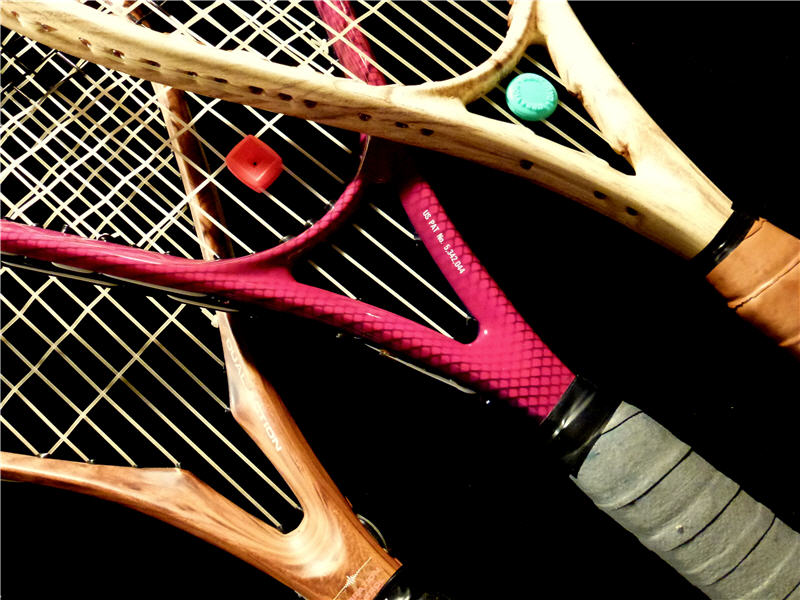
Swiss DEESSE (pronounced Dayus) Wizard Woody Graphite. (made in Korea)

There are 3 versions of this design under brands including ADVANCE SVS & ESQUIRE NT1 both sold in Asia.

The woody walnut burl type finish is really attractive. The whole concept was created by Australian, Barry Todd.

Seen Fin/Deesse story.

the natural handler 2014 (25) edit

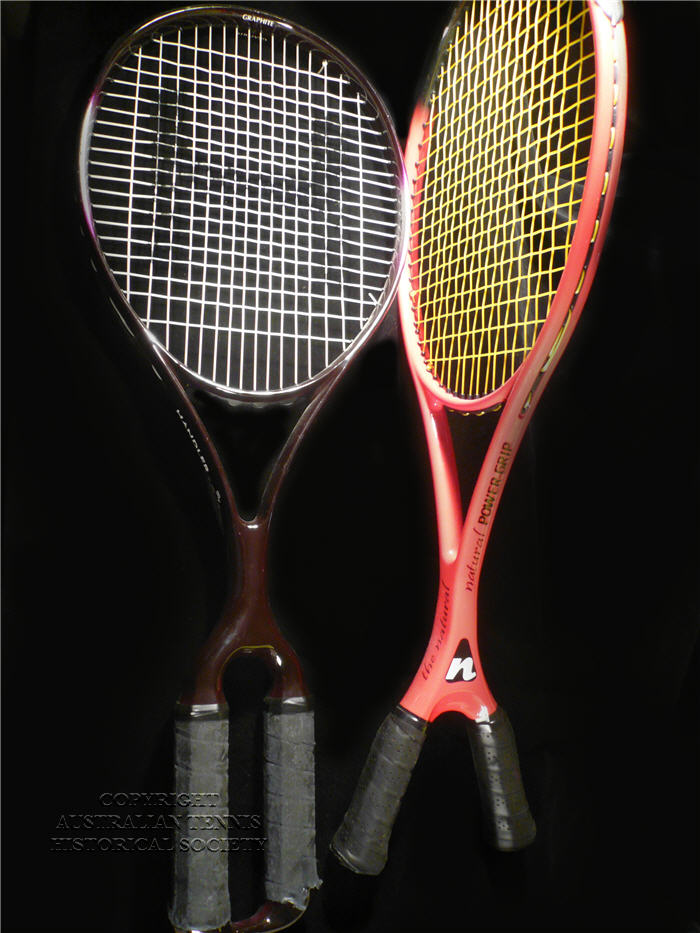
Double Handles:  The Handler c 1992 and The Natural (2007)

Two handled racquet to pick up on the latest teaching techniques for double handed players. Much harder to volley and serve due to single hand play being off centre so you might want be a solid baseline player that can run to shots.

This is just one of 3 different versions we have seen trying this concept.

In March 1995 from Tennis Magazine the male designer, Elie Ban-Kheir claimed to have sold about 2000.

The Natural takes a completely different angle along with an offer to customise your existing racquet if you wish.  Watching video of Brian Battistone serving with a volley ball style is recommended viewing.

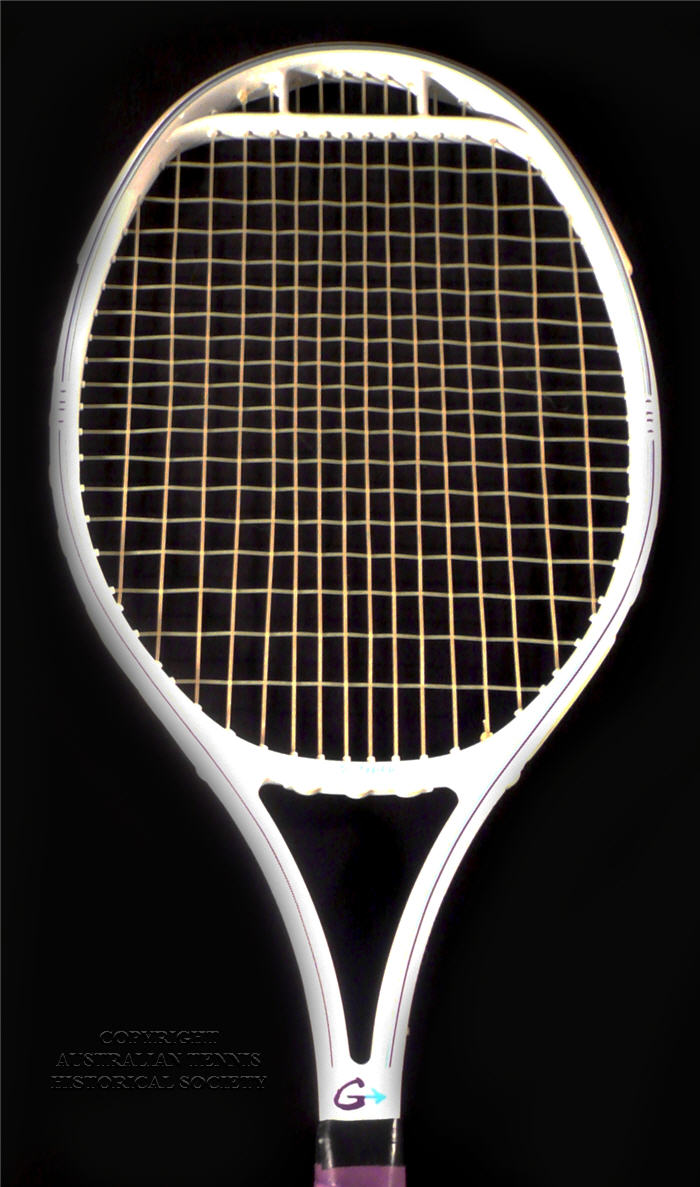
Gauthier G De G

Gauthier G of G

Bridge design attempts to alter string tension at sweet spot. Very similar to the Spalding Powertech which has two bridges top and bottom. See below.

Gauthier are a recognised French brand, but little is known about this model.

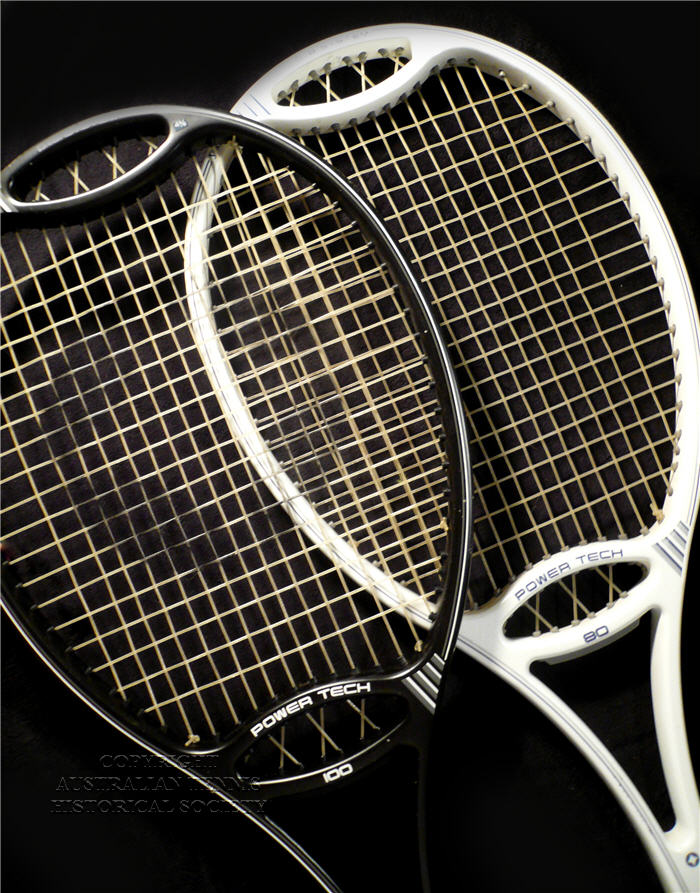
spalding power tech 2015 (11)

Spalding Powertech 80 & 100

Double Inverted Bridge.

Mid 1980’s made in Taiwan.

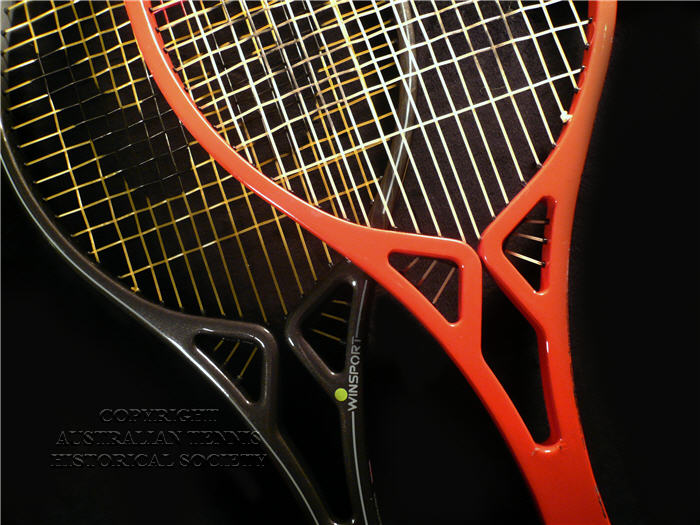
winsport 2015 (2)

Winsport UK c 1985

Very unusual split throat design.

The Volkl Power Arm is another quite interesting throat treatment that will become collectable in the future.

snauwaert ergonom

Snauwaert Ergonom 1984 Belgium

Offset head to help players with a tendency to drop the racquet head to still keep the racquet in line with the flight of the ball.

There are a stack of these on ebay and since no-one bought them most are new. If you find a used one it will become a bigger collectors item. Or, I suppose you could buy a new one and try it out for a season.

The local tennis shop advises that being offset the string pattern which hits the ball as diagonal strings would, actually gives a serve that extra bit of top spin for a great kicker.

See the Neoxxline under modern unusual section.

snauwaert ellipse

Snauwaert Ellipse early 1990’s

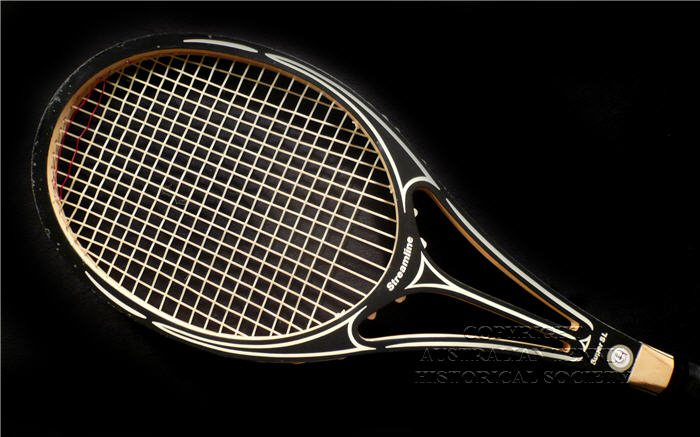
Tri shaft racquet like the Hazell Streamline.

Head can be removed at the central shaft point but loathe to try this since this one is brand new. The company warranty was void if dismantling occurred so they weren’t designed to be interchangeable like the JENRO (modern unusual section)

Also of interest in this area are the French, Le Coq Sportif tri-shaft racquets made from 1987 and endorsed by pro player Yannick Noah

Unusual Vintage Tennis Racquets 1

Collecting vintage Tennis racquets (rackets) is a wonderful hobby which has been expanded considerably thanks to Ebay. Racquets never seen in Australia can now be purchased and the array of brands and designs is quite staggering. To appreciate the subject we recommend you find a copy of Siegfried Kuebler’s book “The Book of Tennis Rackets”. It is a wonderful testament to the first racquet makers through to the 1990’s. More updates are planned, and presented here are some unusual designs that have broadened the horizon of shape, function, stringing and look. One of the most significant developments in tennis racquet design has occurred due to the new construction materials such as graphite. This has allowed designers to explore a variety of shapes and string surface areas, the latest being 137sq in. 32 inch, (then reduced to 28″ Gamma BIG BUBBA) that earlier wood materials could not withstand.

Some people like paintings, racquet collectors enjoy the skill of fine workmanship in wood, unusual designs and special effects in the very same way and artistically, look sensational along any wall.

This gallery includes racquets made all round the world from the early 1920’s to 2005. Please also see some modern unusual racquets under a separate heading and you will see more unusual designs, such as the variety of wooden handles under other sections devoted to very early and other style wood racquets, strings etc.

lillywhite hazell shoot (3)

grays streamline version 2 (1)

Hazell Streamline UK 1930’s

Made popular by Henry Wilfred “Bunny” Austin who played with these at Wimbledon.

Way ahead of their time, models were also produced for squash and badminton. Models were differentiated by coloured star logos and you may well find green, red, blue and white star examples all of which are very expensive.

Grays, famous even today for their Royal Tennis racquets acquired Hazell and produced a STREAMLINE version themselves in the 1970’s, also shown above.

In 1937, at around the same time, a very similar looking Snauwaert Triumph model hit the market in possible contravention of Hazell’s patent. Donnay made one in this style in the 1950’s called the Court King.

andreef hazell lillywhite 2016 (9)

Lillywhite & Frowd TwinShaft (1935) Andreef Open Throat (1950’s)

In addition to the Hazell, other wooden innovations were tried including by Frank Donisthorpe of Hazell fame an oversize frame he used at Wimbledon.

Donisthorpe Speed Bat 1936 ad Mary

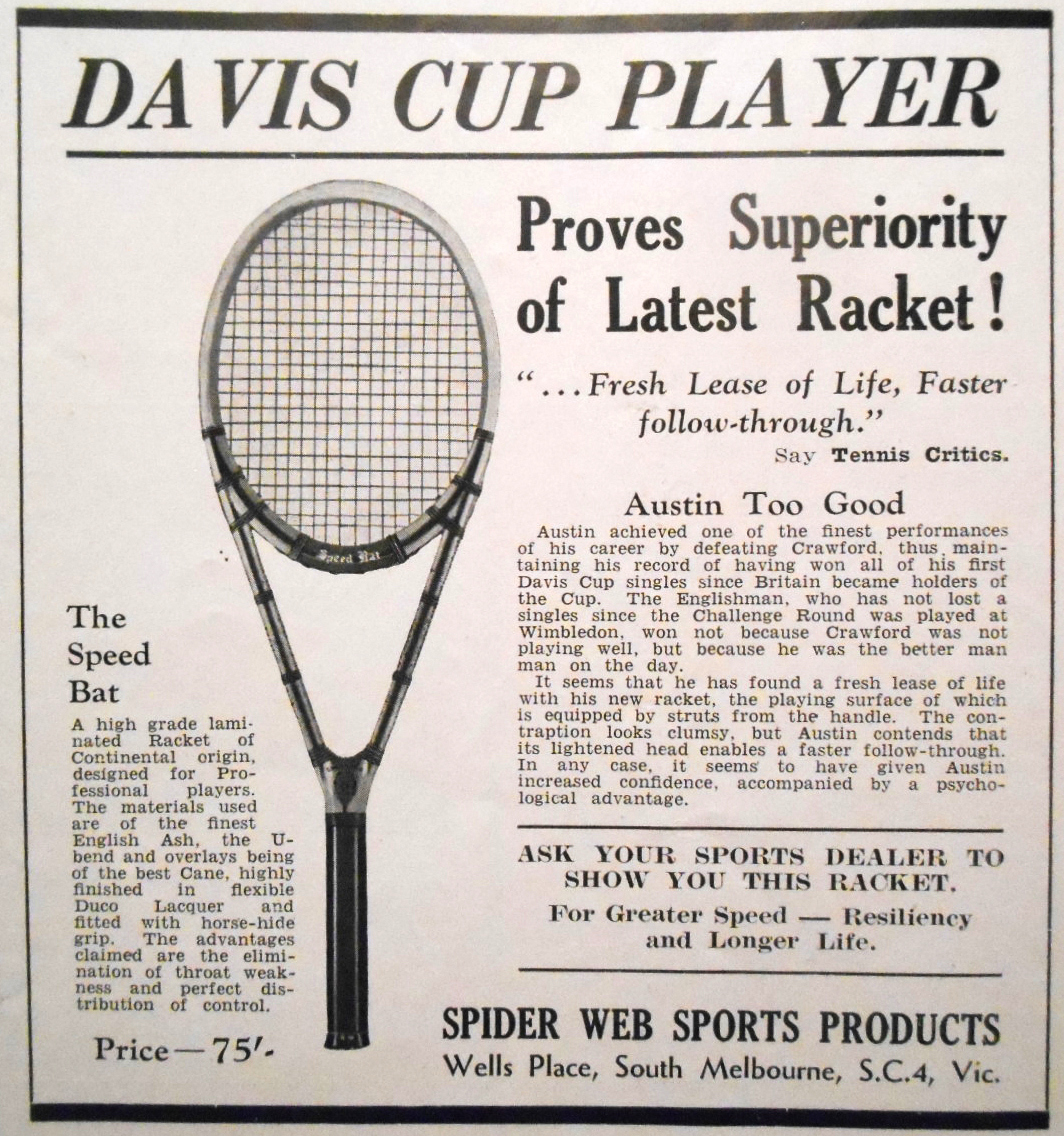
Frank Donisthorpe also designed a Spanish made open throat model in the mid 1930’s called SPEEDBAT.  We finally found an example.  See under Spider Web post.darsonval trio aa (2)

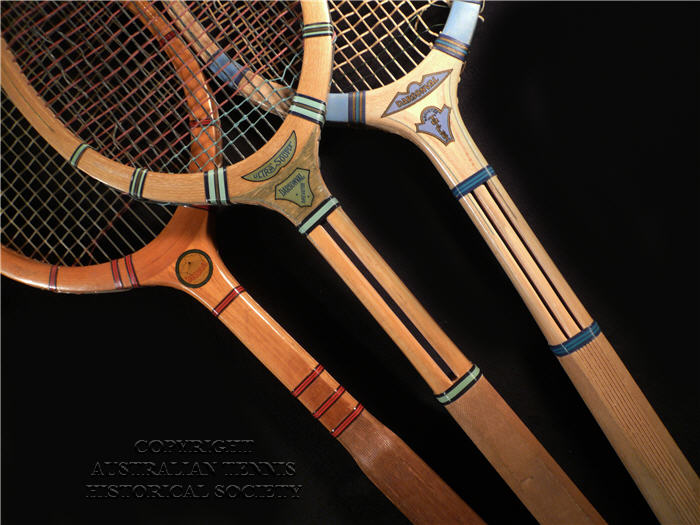
Darsonval (France) made some wonderful models throughout the 1930’s.

These split shaft models and even the contoured finish on the standard racquet ooze quality.

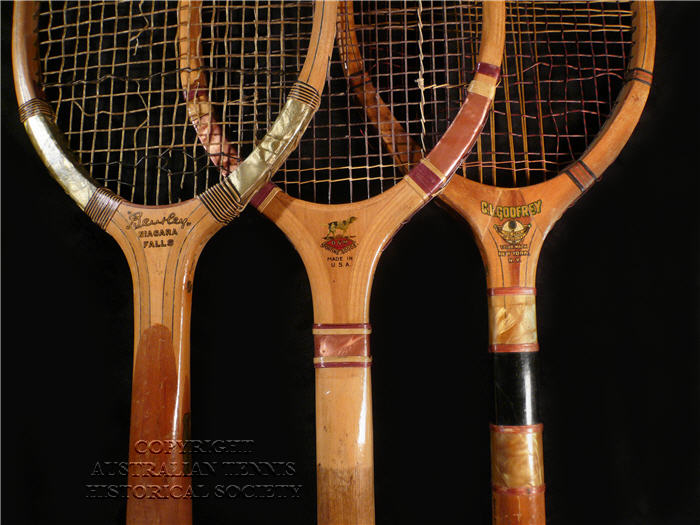
celluloid finish (5)

In America, some models in the 1930’s began to use a shimmering celluloid finish to enhance decoration and these three include,  Bentley, Draper Maynard & Godfrey NY

hillman2aa

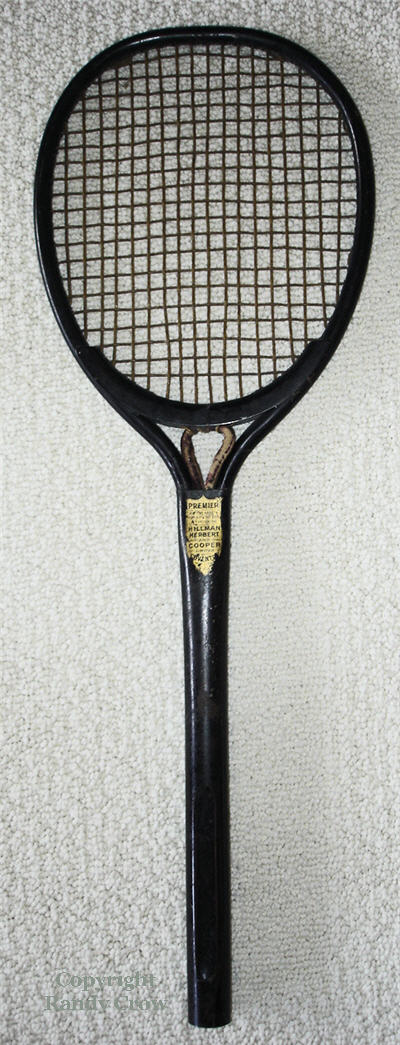
Hillman Herbert Cooper

‘Premier’ Model 1886

Patented tension adjustment system where a leather cord is tightened within the butt cap area. In addition, a steel racquet which may well be one of the earliest. The company was most well known for bicycle manufacture. A very rare item.

Thanks to US Collector, Randy Crow for the photos and history.

Patent # 346 751

As shown in Siegfried Kuebler’s book page 512. In Jeanne Cherry’s book she cites the earliest metal racquets to a Scottish company called the Metallic Racquet Corp. c 1887.

Copy of CRAVENS ADJUSTABLE 2

CRAVENS ADJUSTABLE 7

Craven Adjuster-tite 1928

(very rare)

A very early invention to change the string tension. Designed and patented by Edward Craven, the license was sold to Wilson, Magnan, Kent and Draper Maynard.

As you can see the butt cap permits the internal rod to be tightened or loosened.

Despite a few companies offering such technology, examples are scarce owing to the lack of uptake by customers.

Patent 1927 # 1 663 039

As shown in Siegfried Kuebler’s book page 539

CRAVEN RACQUET 1

Craven Proto-type 1929-1931

(very rare)

While known for the Adjuster-tite method, this design was patented in 1933 by Jacob Kleinmann. The crescent shape would wind down into a slot in the throat.

We are unsure if this ever made into production, but the International model name is a Craven racquet and we suspect they worked on a version.

Patent Application 1929 Given 1933 # 1 912 942

As shown in Siegfried Kuebler’s book page 546

RACQUETS_DAYTONFLYER3

Dayton USA 1922 – 1990’s

One of the first metal head/wood handle combinations. They were strung with piano wire. The factory made this product almost without change, including the wood handles up to 1995.

From Randy Crow, USA collector, comes this valuable research information.

1.If the butt cap has “Dayton Ohio” printed on it, it was made between 1923 and 1934.

2.If the plastic butt cap says “Arcanum O” and the throat doesn’t have the three-racquet logo, it dates from 1934-1974.

3. If the racquet has a logo of three stylized racquets on the throat, it was made after 1974.

There were plenty of models and colours so whilst available the trick is to find them in good condition with not to much rust or paint loss and learn how to differentiate the age of various models.

They were sold in Australia late 1922 and used by Gerald Patterson and Pat O’Hara Wood in local tournaments over 1923/1924. Some of the famous French musketeers visiting Australia in 1929 also were introduced to them by Patterson on a drizzly day at Royal South Yarra Tennis Club.

So rather than importing them from the USA, some lucky collectors may find some local delivered examples.

Please note that the Birmal, below, was also sold in Australia.

birmal reshoot 2

Birmal Aluminium c1923 UK

An all metal, steel strings racquet, which appeared at around the same time as Dayton in the USA. Originally with the pictured cord grip they eventually moved to a wrapped leather grip.   These racquets were sold in Australia in the mid late 1920’s and included in an ad from the Northern Territory on the basis of hot humid conditions and a 1927 McEwans catalogue at a mid price point of 55 shillings compared to 95 shillings for the best wood racquets. This is example was acquired from Australia whereas most are seen from the UK.

SILVER FOX (2)

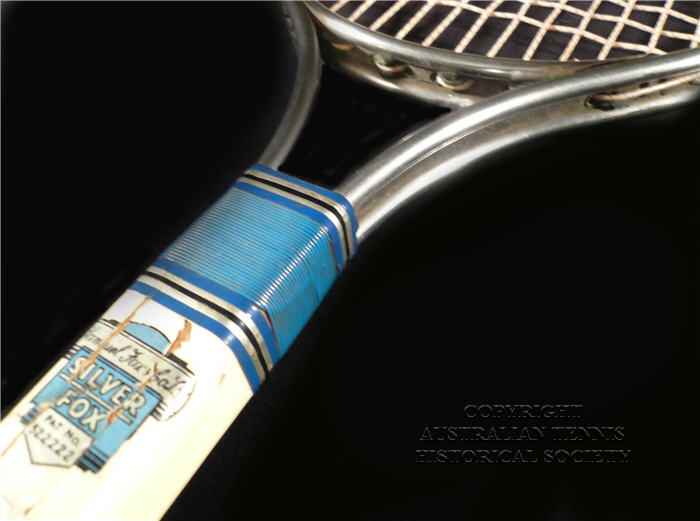
Silver Fox UK c 1930’s

Potentially the first stainless steel metal racquet with a wood combination. Dayton used carbon steel.

A patent number printed with the logo cannot be confirmed as being correct.

Maybe a dummy patent was a good marketing idea back then?

See Arco stainless steel racquets to read about the first full frame welded stainless steel racquet invented in Australia in the mid 70’s

ALLO (assumed) rod lack

‘Allo ‘French Prototype c1940’s

Solid cast aluminium. Might be a one off. Found in a full length Allo bag. Allo were making weapons and car parts c 1940’s and had made wooden racquets from about 1900. The workmanship in the casting is extraordinary and you can see the string waves in the throat and the guides on the inside of the racquet. The strings sit in a protected channel around the frame which deepens at the top where most damage occurs.

A lot of thought has gone into this.

WD aluminium 1933 (1)

Spalding and Wright & Ditson 1930’s (USA)

The US firm produced an Aluminium head wood handle model under a few model names including DURALITE.

pro am (6)edit

PRO AM early 1970’s (USA)

Commenced production of a fully cast Magnesium model racquet under the Centurion brand which then converted to an Aluminium edition under Pro Am.
The Pro Am has twin cross beams.

Designed by Tom Galich and used by Francoise Durr in events around 1973.

Single piece casting with an alloy construction and hollow handle. Not a rivet in sight.

dunlop twin shaft (34)

dunlop twin shaft (1)

Dunlop Twin shaft 1969

Very retro design steel shaft model used by Torben Ulrich in various events.

Fin & Deesse Tennis Racquets

The story about Fin is really a story about an Australian who single handedly set about to make the best possible racquets in Taiwan and launch the low cost of production graphite racquets into the global market and in the process establish himself as the foremost designer and innovator of racquet design with graphite technology.

Barry Todd was looking for a business opportunity in the late 1970’s and a friend had just returned from Taiwan with some metal and wooden tennis racquets.  After three hits the metal welding broke,  the tennis balls were flat,  the wooden laminations started to separate, yet these items were bought only for $6 whereas the current market was paying $30. Appearance wise they looked OK, it was only that their production and materials specifications were all wrong.

The only option was to fly there and start to work with companies to develop better technology that wouldn’t fail. The starting point was Pro Kennex. Barry refined the graphite formulas and techniques to create a range of racquets which he then took to America’s largest trade show and introduced Taiwanese Graphite to Wilson, Prince, Head and Donnay. His expertise included being able to design and produce a new model within 4-6 weeks compared to the usual 12-18 months manufacturers were used to waiting for. Orders rolled in.  Graphite racquets were certainly being made pre Barry visiting Taiwan because Emrik and Stellar were already marketing Taiwanese graphite product while Rossignol, Kawasaki and other brands were using high cost Japanese, European or USA production facilities.

While the first orders were small, Barry was able to manage the business, however as the orders grew in size,  his role as middleman was marginalised as the factories began to deal directly with the large brands.  Unfortunately, this same pattern continued as Barry was forced to leave one firm to assist another in an attempt to forge an income and sadly the “sell-out” process continued.

For two years Barry lived in Taiwan, he forged ahead with numerous innovations including the deep throat designs, the manufacture of synthetic gut and grips all of which were adopted and copied.

The technology advancements also moved into squash racquet design and amid a major backlash which was fought out in the courts (not on them) the International Squash federation was forced to accept the new racquets over the conventional wood.   I can hear my Real Tennis colleagues saying they are glad that their secretive 300+ year sport thankfully remained off the radar.

Barry as a player was no slouch, he used to be up there with Fred Stolle, Bob Hewitt  & company but it was pretty difficult to make a name when Rod Laver and others were at the elite end. While living in Taiwan, he was the only foreigner ever to win the Taiwan Open, for they changed the rules after this to be a “Taiwanese Only” tournament.

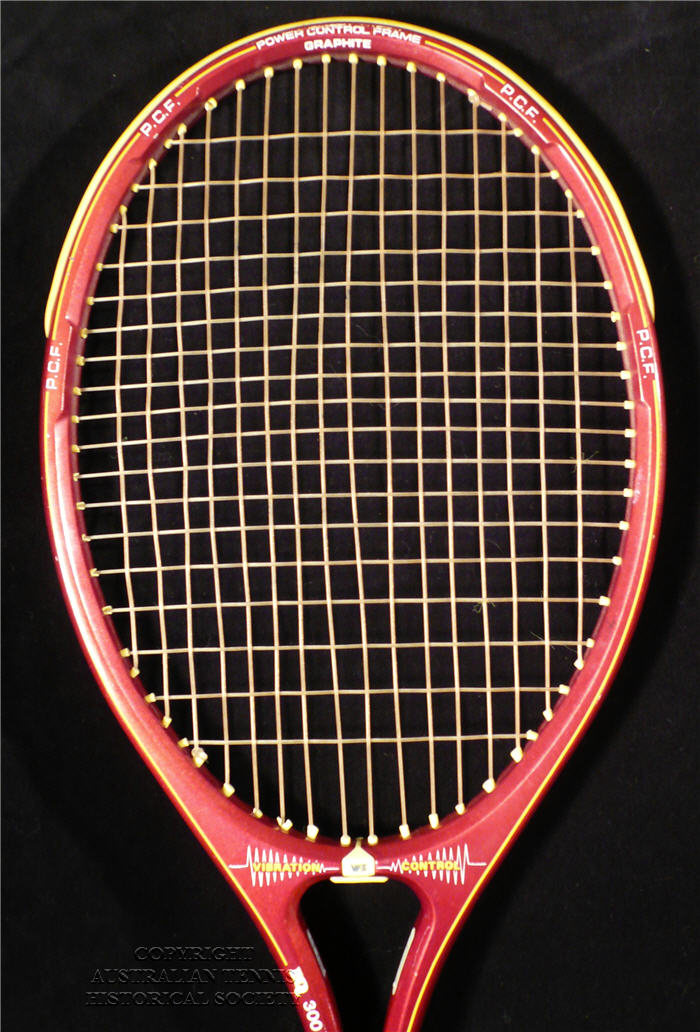
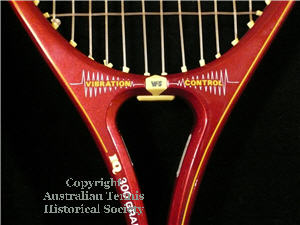
With the limited personal financial success of the introduction of high volume graphite racquets, a variety of consultancy positions and some major brand R&D roles that failed to materialise, Barry decided to create his own brand, FIN.  Given his design expertise he recognised the importance of vibration on tennis elbow  and proceeded to develop the first in-frame vibration dampening system involving a split throat design called “VFS”.  This was introduced into the top end range of the Fin IQ racquets. The racquets received excellent PR particularly in the USA when the publisher of a tennis magazine found he could play again, after years of tennis elbow with the new FIN IQ’s.  Protecting the system also came at a price.  To patent technology globally cost $130,ooo and then you need deep pockets to protect your patent against would be copy-cats.  He also fine-tuned manufacturing to incorporate a range of weight and balancing variations to create a range of racquets for major players.  The biggest name in the Australian market to use Fin was Chris Lewis from New Zealand.

The new range and network of agents was in place for the 1982 German Sporting goods show and in a matter of days Barry and team had amassed a staggering $3 million in orders.
Success comes at a price and Barry had to quickly find a way to fund order production.  The plan involved advertising for funding throughout Europe and 167 offers of support came in.

The one chosen was a group of Forklift truck manufacturers with some $60 million in turnover and with the offer to inject the funds quickly Barry signed a deal giving them 51% and control of  the business.  In yet another disastrous chain of events, this new investor was in fact cash strapped themselves and by the time the letters of credit had been organised with the Taiwan factory, the European summer was over and the orders could not be fulfilled.  Over in Australia, production was on time for the coming summer season, hence the FIN brand managed to grab a foothold in the Australian market.

On the IQ frames the following is labelled, ” This model is part of the new Fin tailor made collection of super performance racquets assembled in Taiwan. The exact cross blend by braiding the fibres together eliminate human error in the manufacturing process giving 100% uniformity throughout the racquet. This process combined with unmatched technology makes these racquets the most responsive racquets on the market today”  Tag line FEEL THE FIN DIFFERENCE.  (s0me Asian grammar retained)

Despite the rocky start, Fin survived for about 6 years even though the company was struggling financially.  In an attempt to resurrect the business Barry began to seek some joint venture arrangements.  One of these was Prince. At the time he was to first meet them, he instead had to return to Australia for his daughters wedding and various Fin UK board members followed him out attempting to negotiate a restructure of senior management.  Barry would have none of this and on his return to the UK found that the board, with control, had decided to sack Barry from his position.  Daft in the extreme since Barry was the technological genius behind the Fin range. The Prince deal never got off the ground.

Regrettably, he had to sit back and watch the financial disaster unfold and Fin went broke along with his 49% share.  No doubt, if the financial gods had been favourable, Fin may well have become, deservedly so, a major racquet brand which may well have been around today.

The next foray into the market was thanks to a mate who owned the Deesse (pro. Dayus) company in Switzerland.  They are today still a large cosmetic company and were keen to develop their own range of sporting goods because  they used sporting wear and equipment in many brand promotions.  Given a solid financial base,  Barry went to Korea this time to develop the range which included the “woody” graphite style which is a quite stunning finish, he also designed the long string concept and the inward angle of the side frame. In two years Deesse racquets were number 1 in Switzerland and then a deal was done for Barry to launch Deesse into the UK as his own business and globally with Deesse into other markets.  Again, another tragedy. Owing to a severe car crash Barry was hospitalised and his potential future involvement with the project was in doubt.  Deesse decided to pull the pin rather than continue without him and cutting it’s losses withdrew from the launch meaning that Barry was once again denied his opportunity.

Barry,  today aged 72 has retired from tennis racquet manufacture but he still owns some major patents available for a price. Sadly the journey has not been kind to Barry financially but the story itself is a great tribute to his Australian ingenuity and his “have a go- never give up” attitude.

He certainly paved the way to the greatest revolution in tennis playing style and techniques for the power generated by graphite racquets has altered stroke making,  ball spin,  court play and the retail market.   Remember that we used to buy one or two racquets a year when we played club tennis now we can own a graphite one for ten years….

From this story, I guess the only irony is that even today the greatest problem facing the racquet industry continues to be what plagued Barry and that is the ongoing knock offs created by rogue factories, not just copying technology but creating full graphics knock offs.

Thanks for your time Barry and sharing your story with Australian Tennis History

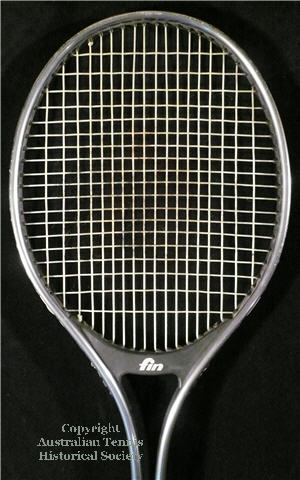
Fin metal products were launched with the graphites.

Fin IQ 300 with VFS vibration system

A stunning design all round

 Deesse (pron. Dayus)  Woody Graphite
One of the most attractive racquets made. Barry created the technique to print a wooden finish using various shades.

 An earlier Deesse model called the WIZARD Feather Pro

In a fashion like the Wilson PWS, Deesse used the long string technique
combined with additional frame support as shown here.

Apart from developing the first long string racquets, Barry also produced this alternate stinging system.

If you broke a string, the immediate strings would remain taut allowing you to complete the point.
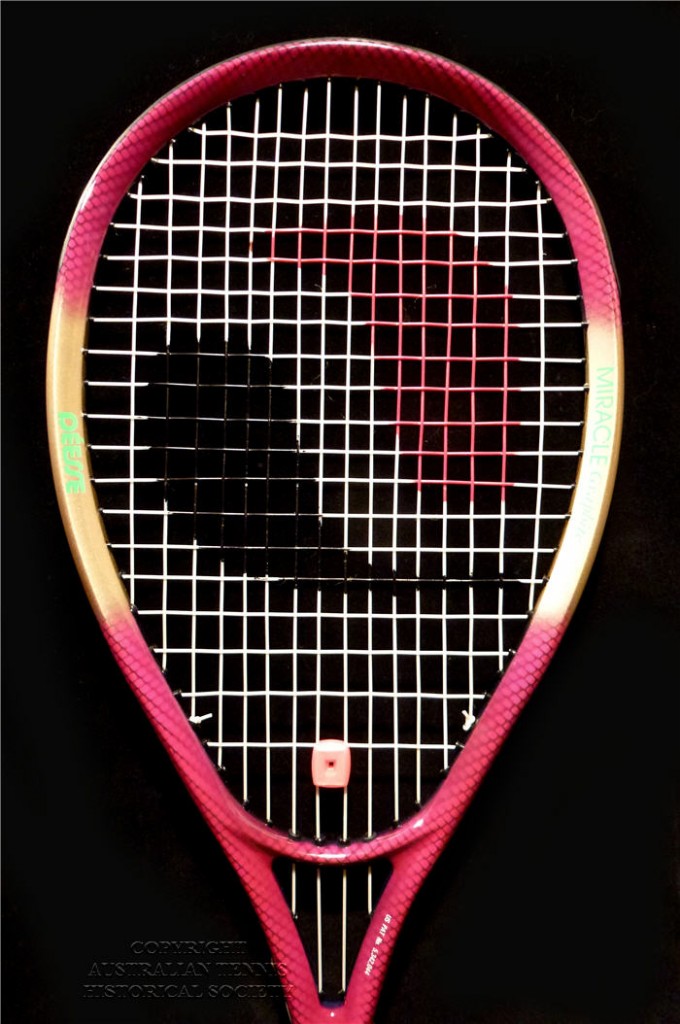
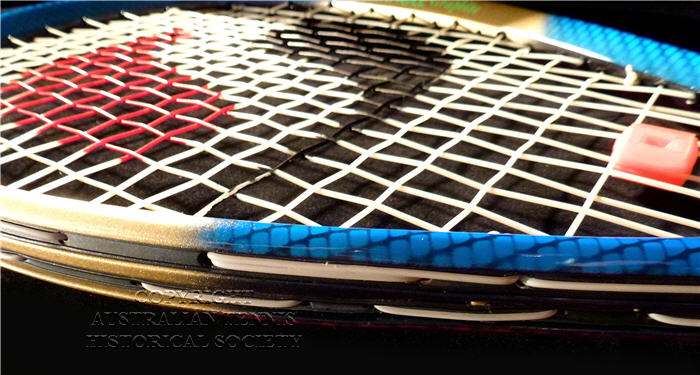
A fine and rare example to include in any collection, called the MIRACLE  (blue one side pink the other)