Nancye Wynne Bolton

Six times Australian Champion, Nancye Wynne Bolton was a powerhouse in Australian tennis from the mid 1930’s to early 1950’s.

Inducted into the International Hall of Fame and of course into Australia’s tennis hall of fame with other greats such as Laver, she was an inspiration not only to her own generation, but to those who followed in the late 50′ and 1960’s.

Nancye was born in Melbourne on December 2nd 1916. Her first foray into tennis began at aged 10 on a bitumen court located on the roof of an office block in the city where a coach by the name of Leo Guiney.Colin Long Nancye Bolton
In 1933 as a very tall 5’10” sixteen year old she won the Victorian schoolgirl tennis championships which was followed by a couple of seasons playing A grade pennant for St Kilda. In 1936 she entered the Australian championships and made the final against previous winner, Joan Hartigan, losing 6-4, 6-4. In doubles she played with Thelma Coyne from NSW, who like Nancye had been winning state events, and surprisingly at 18 and 17 years old respectively won the event.

In singles, Nancye lost only one other match over the next 12 months. Overall, Nancye won six Australian singles titles and when you consider that WW2 interrupted tournament play for 5 years, you can only imagine what the record books may have been like had play been continuous.

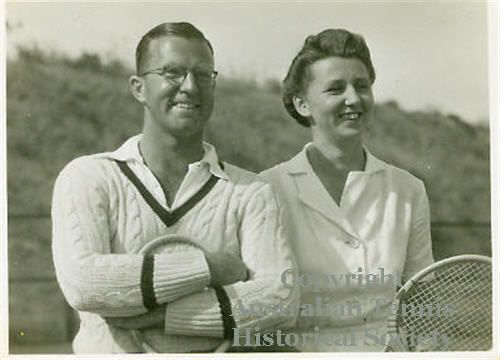
In doubles, Nancey and Thelma formed a lifelong friendship which saw them take out the Australian doubles title 10 successive times and with another partner Thelma won an 11th.  In mixed doubles she played with Colin Long (pic) and they went onto win 4 successive Australian titles together.

With continuing good form, Nancye defeated Thelma in the 1937 semi final in a match that up to that point had them head to head 2-2.  The match was a see sawing event but the win 7-5, 4-6, 6-4 was exciting tennis and Nancye went on to win the final against Westacott 6-3, 5-7, 6-4, another tight match which showed the highly competitive level of tennis within the women’s ranks.  Nancye was the #1 ranked player in 1937 and please note the section on men’s and womens player rankings in a different section.

In 1938, once again the LTAA was requested to send a Women’s team overseas and once again, as in 1925 they declined and even still more strangely, since the LTAA sanctioned the 1928 Women’s team which created a massive amount of interest along with a world class performance against all comers with only a major defeat at the hands of the Americans.  After much consternation and a generous expenses allowance paid for by the overseas associations who wanted the Australians, did the LTAA permit the tour to proceed with Nancye, Nell Hopman, Thelma Coyne and Dot Stevenson.
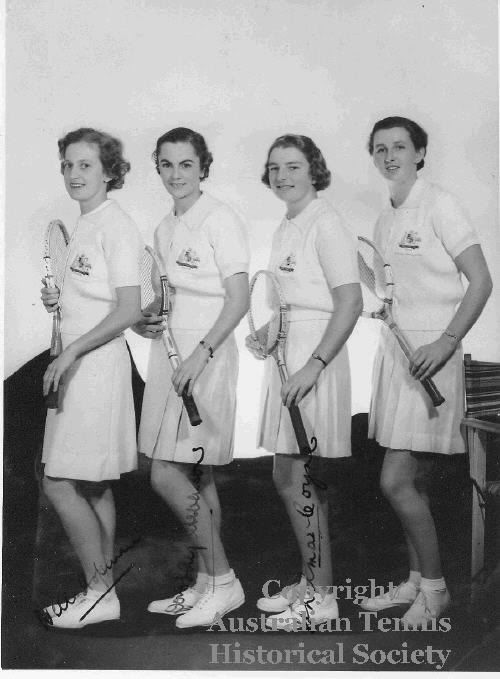
1938 Womens Tennis Team

1938 Womens Tennis Team for Overseas Tour
L-R Nell Hopman, Dot Stevenson, Thelma Coyne, Nancye Bolton

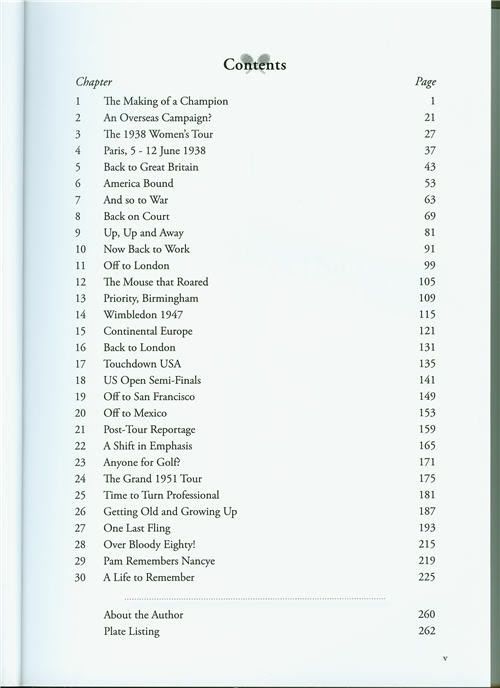
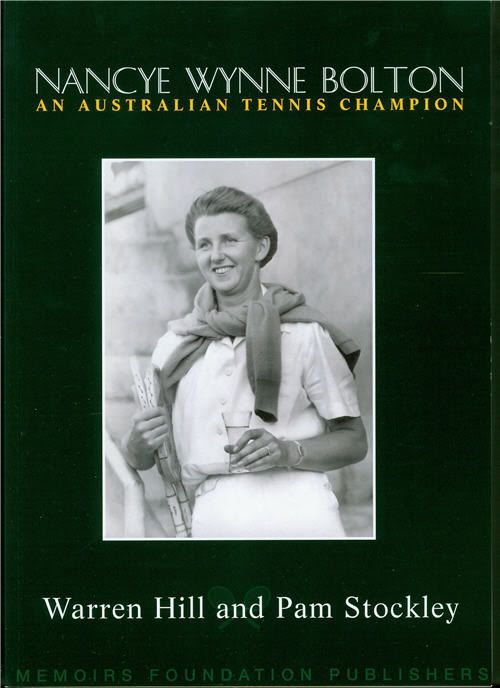
In 1947 Nancye went on another tour, but rather than give you to much detail in this article, we would like to assist Pam Stockley, Nancye’s daughter, with the sale of a magnificent book which covers Nancye’s tennis career and includes an excellent transcription of Nancye’s 1947 tour diary.  The book is extremely well written with heaps of photos and does take the reader back to the 1940’s when the “team” and friendships were in full swing.  There are only 196 copies left from a 400 limited run.

Please click this link to see a video clip of Nancye’s playing style   CLICK HERE
 

Soft Tennis

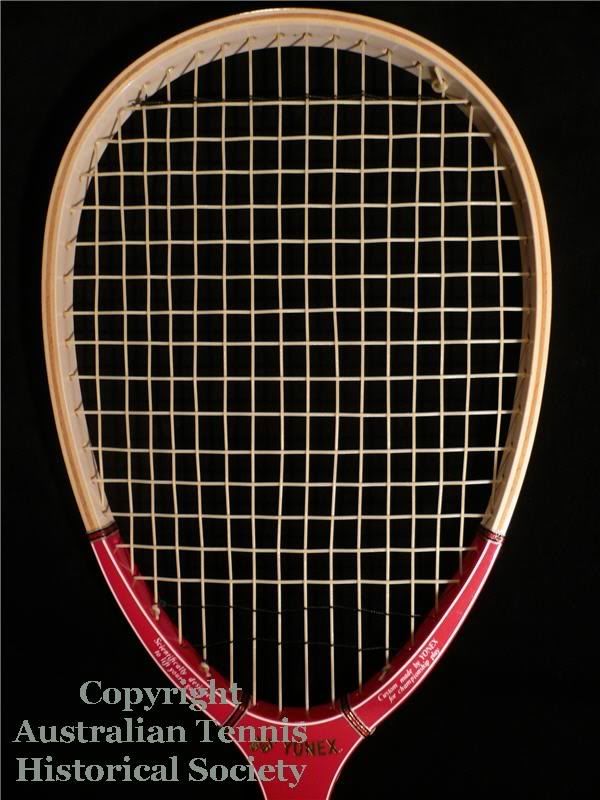
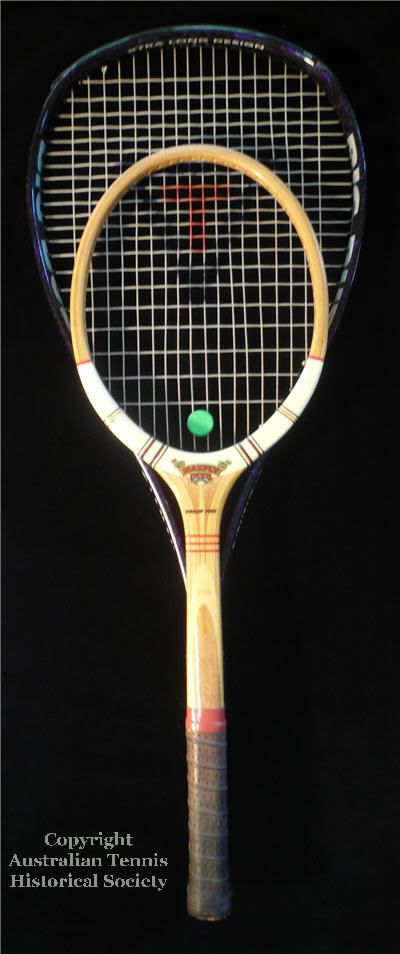
Occasionally a racquet style will come up for sale which perplexes both buyer and seller.  These racquets are the same length as a standard racquet, much the same width but have a narrower frame and lighter weight.  They’re not squash racquets either because the shaft is not as slim.

The answer is these racquets belong to another form of tennis usually played in Asia, called SOFT TENNIS.

It was introduced by a western missionary in Japan in the late 1800’s and given the history, Soft Tennis has become the choice version of tennis for about 40% of tennis players in Japan. It is also becoming increasingly popular in other areas of the world. A slowed down and more strategic version of the standard tennis game, Soft Tennis emphasizes longer rallies and a more exciting performance that is accessible to every age and ability level right from the very first serve.

The key to Soft Tennis is the use of an inflatable soft, rubber ball. Unlike the standard felt-covered version, the pressure can be adjusted. Players can speed up or slow down the game to suit their ability and training objectives. Its composition also makes it more difficult to generate as much force when hitting the ball. This keeps the ball on the court. The result is longer rallies and a focus on cardiovascular fitness, hand-eye coordination, ball placement and footwork.

The racquets are made by many Asian based makers and we have not seen any examples produced by local companies.

Soft tennis racquet

Soft tennis racquet

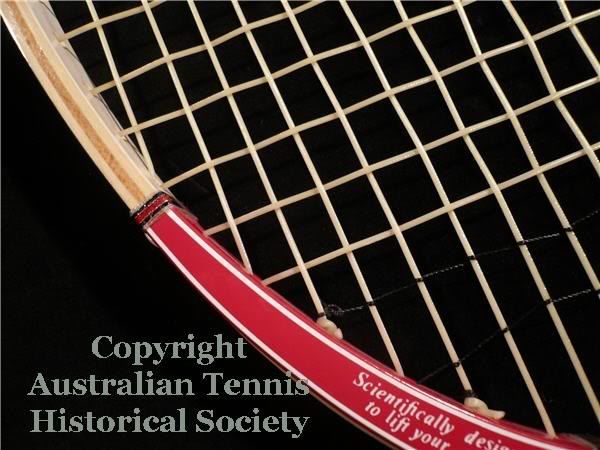
This is the YONEX TS 7000 and the thinner frame is evident. Weight is about 10oz.

A google search will find additional information.

Hire-a-grass-court

MELBOURNE VICTORIA

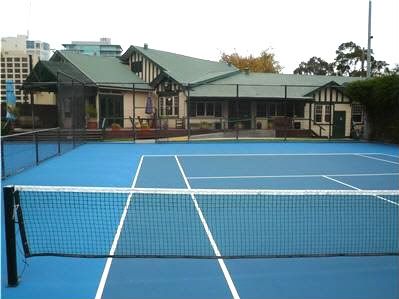
If you ever wish to play lawn tennis in the manner reminiscent of the early 1900’s, at least if you live down in Melbourne, Tennishistory.com.au has negotiated an arrangement to hire the lawn tennis court at historic mansion, Rippon Lea which is located in the inner south city of Elsternwick, 20 minutes from the CBD. Mention the website to book.

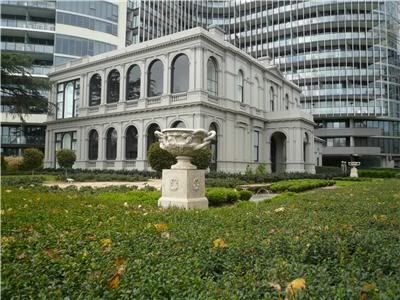
This grand manor is one of the most lavish private homes built in 1860’s and is now in the safe hands of the National Trust.
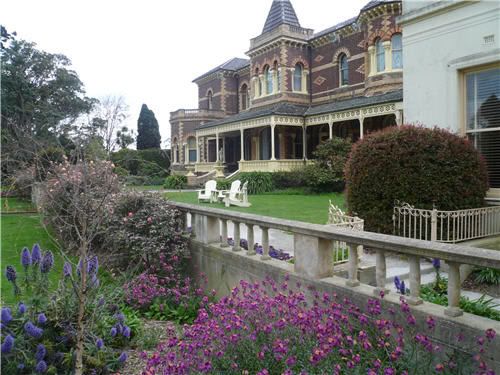
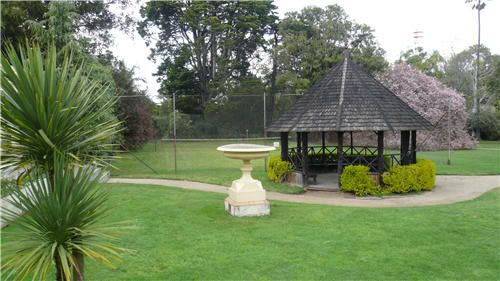
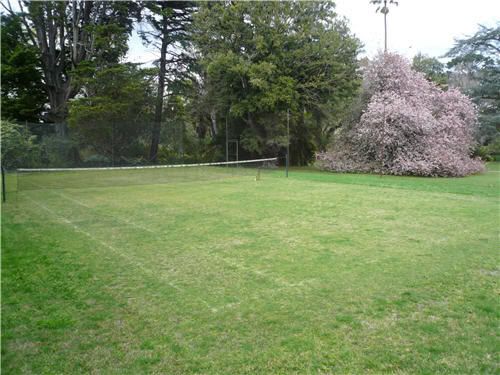
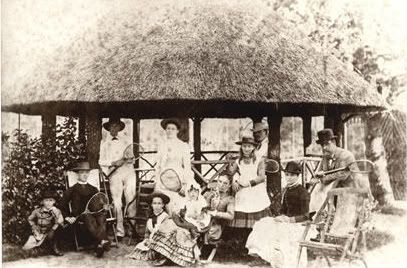
Typical of the day, Rippon Lea’s stunning gardens included a lawn tennis court for regular family use and for entertaining guests at garden parties.

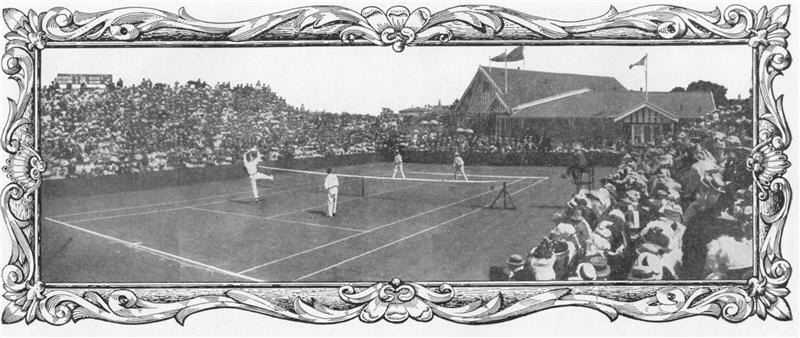
Tennis was a popular pastime for the original Sargood family as evidenced by this photo kindly supplied by the Ripponlea House and Garden’s collection.

The grass court is available for hire, so you can organise an olde world tennis event between10:00am -4:30pm as long as the booking doesn’t clash with the many wedding functions conducted in the grand Ballroom overlooking the swimming pool and gardens.

Court hire costs are a very reasonable $40 per hour or $60 for two.

Catering can be provided by a contracted group, or you are welcome to bring your own picnic or afternoon tea.

Equipment is your responsibility as no racquets or balls are available. It is your choice to play with your current racquets or find some old woodies to bring back a day from the past.

The photos below show you the magnitude of the house and wonderful gardens, pool area and tennis court.

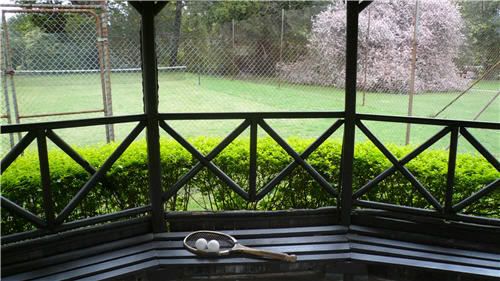
The court is now ready and playable and if available the nearby gazebo is ideal for shade, watching the tennis and delightful afternoon teas.

BOOKING QUERIES CAN BE MADE on 03 9523 6095 or email ripponlea@nattrust.com.au

DON’T FORGET TO MENTION the Tennis History Website as being your source of the booking.


Ripponlea tennis


Ripponlea tennis

Ripponlea tennis


TENNIS ITEMS FOR SALE

The following items are for sale.

Please email theteam@tennishistory.com.au if you would like to buy one or more. Or, contact the authors directly as per information supplied.

Payment can be made via PAYPAL and freight will be worked out subject to buyer destination.

International Buyers welcome also.


NEW BOOK RELEASE DECEMBER 2011

PLEASE NOTE OTHER NEW BOOK RELEASES ARE LISTED BELOW

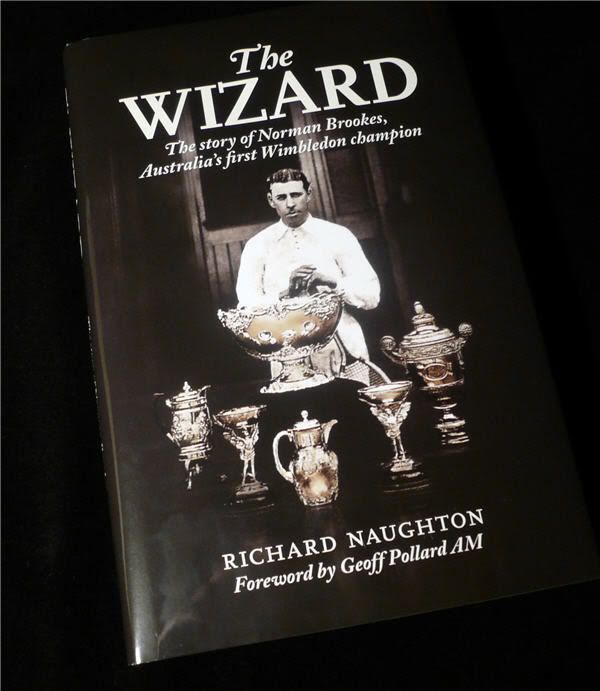
Long overdue, we are pleased to introduce a new book about Australian Tennis Legend, Norman Brookes.

Norman was the first to contest a Davis Cup contest in 1905.

The first to win the event in 1907 with some excellent support from Tony Wilding.

Won all three Wimbledon events in 1907 ……..and then the growth in tennis in Australia is spiked.

Called the “Wizard” for his aggressive spin serving and game strategy this is an important story to historians and those interested in a great man both as player and administrator and Davis Cup team selector.

TO ORDER PLEASE VISIT www.thewizardbook.com

PRICE $39.95 INC  P&H


NEW BOOK RELEASE OCTOBER 2011

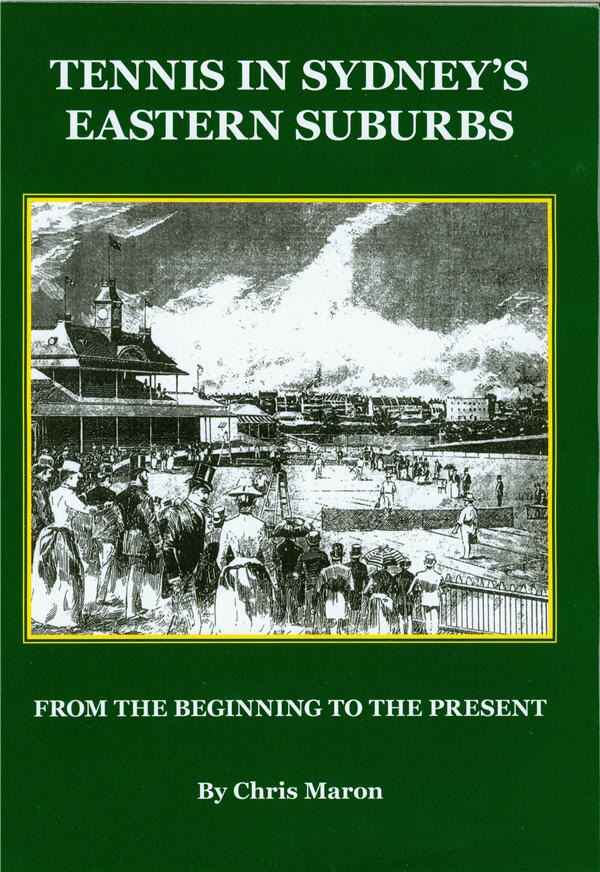
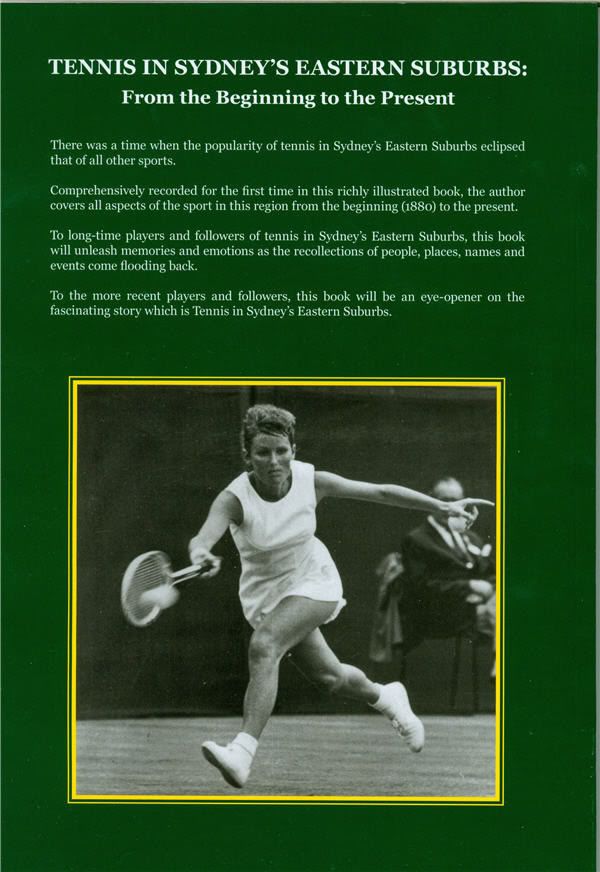
Our supporters  may be interested in a book  recently published, called “Tennis in Sydney’s Eastern Suburbs: From the Beginning to the Present”.
The book is most comprehensive: 193 pages with 134 illustrations and retails for just $20 excluding any postage.

The book, which covers both hardcourt and grasscourt tennis, has chapters on the significance of tennis in Sydney’s Eastern Suburbs to the history of tennis in NSW and Australia; the formation of the major tennis clubs and associations within Eastern Suburbs; the clubs, courts, competitions and tournaments in Eastern Suburbs; a detailed profile of fifty of Eastern Suburbs best players (six Davis Cup; four # 1 in Australia and 26 in Australia’s top ten); a profile of the significant coaches; the social side of tennis and finally a tribute to the officials in Eastern Suburbs.

To order please email cjmaron at optusnet.com.au  please change at to @ when emailing him.


PRICE $20.00 PLUS P&H


NEW ALEXANDER TENNIS RACKETS

BOOK 2011 (Australian Maker)


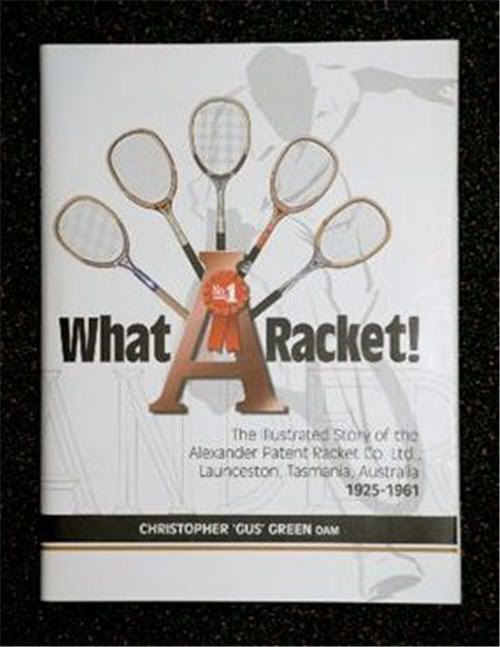
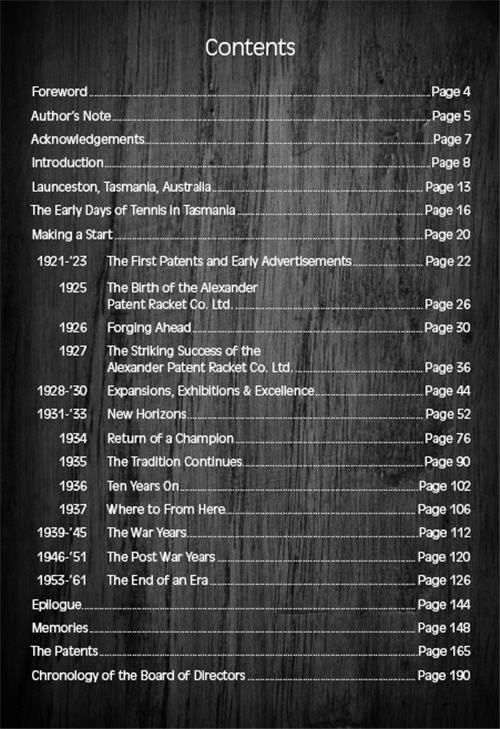
We are pleased to announce the launch of a new Australian Book about the history of one of our pre-eminent racquet makers from Tasmania called the Alexander Patent Racket Company c1925-1961.

This company not only changed the way racquets were made but through the genius of management combined with the leading Davis Cup players in the 1930’s changed the shape and decorative style of tennis racquets around the world.

Alexander book Alexander book

To order please email Author, Gus Green via  prossergreen@vision.net.au

Books are $45 plus postage c $11 Australia wide


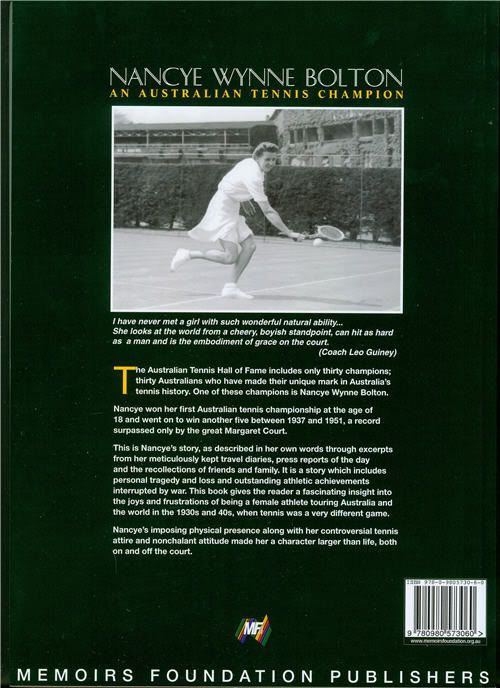
NEW BOOK- NANCYE WYNNE BOLTON


Written by Pam Stockley, Nancye’s daughter and friend Warren Hill, this book of 260 pages includes well reseached information about women’s tennis at the time mixed with a comprehensive diary Nanyce kept on her 1947 tour which makes fascinating reading.  Truly LIMITED EDITION only 400 books printed and 196 remaining.

Nancye Wynne Bolton $50 plus freight

Call Pam Stockley 03 9872 5486  email pstockle at bigpond.net.au (substitute at with@)


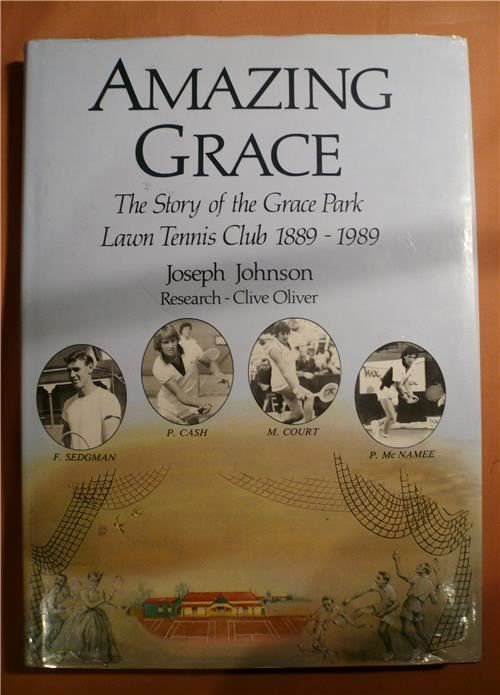
Amazing Grace is has been well reseached and provides an excellent history of tennis in Victoria and of course the Club.
1989

Amazing Grace Price $15 plus freight


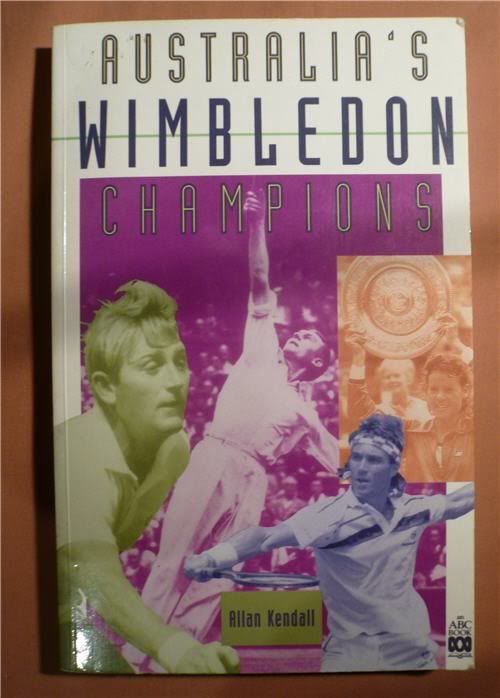
Well written in for the ABC this book focuses only the Wimbledon champions. The author is the nephew of Jack Crawford and a handy tennis player as well, so his knowledge and friendship with many in the book ensures a good series of stories

Australia’s Wimbledon Champions Price $15 plus freight


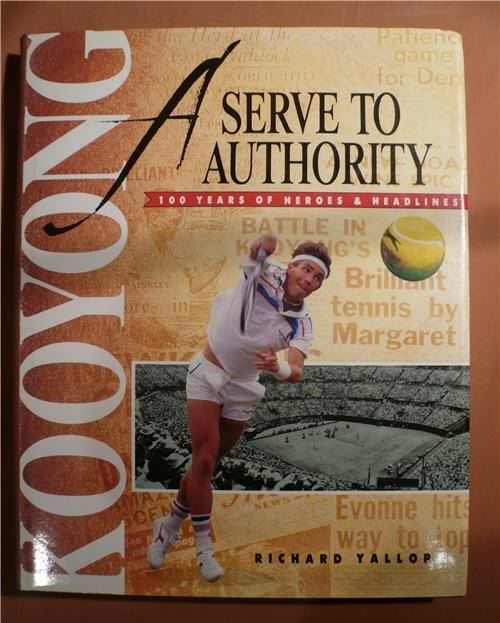
1992  Home of many famous players and events including the Australian Open and numerous Davis Cup encounters, this book provides an excellent array of stories about the development of tennis and some of the famous matches played on the renowned centre court.

A Serve to Authority Price $15 plus freight


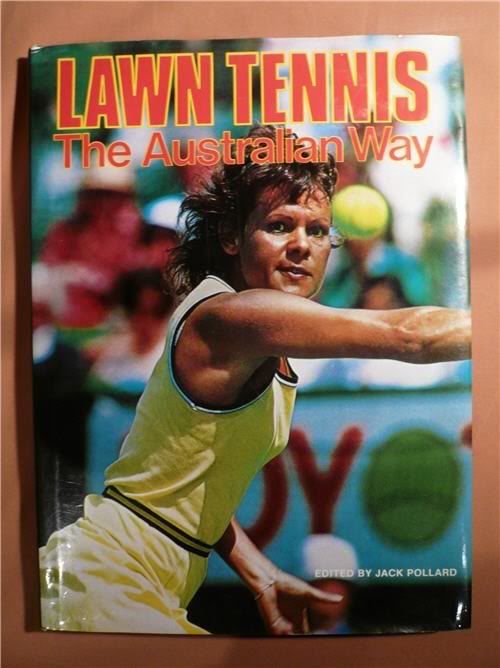
1980.  Edition 1 came out in 1963 and then was followed by second versions and impressions.

This book features sections written by players in their day across all subjects. Players include, Dinny Pails, Frank Sedgman, Jack Crawford, Evonne Goolagong, Merv Rose, Mal Anderson, Lew Hoad, Margaret Court, Viv McGrath, Roy Emerson, John Newcombe, Adrian Quist & Rod Laver.

Lawn Tennis The Australian Way Price $10 plus freight


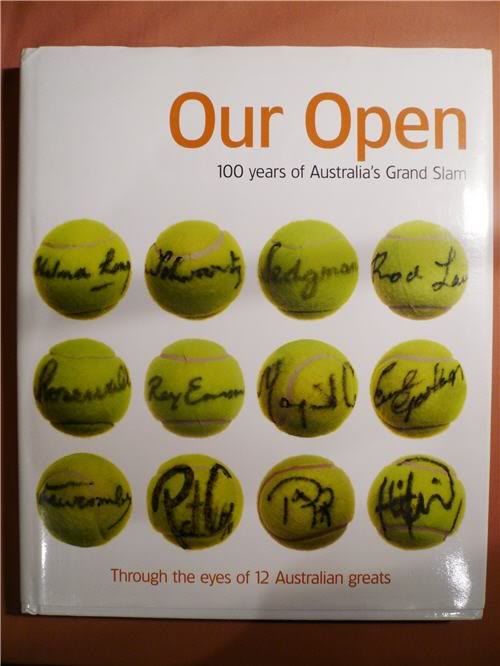
2004.  A fascinating presentation of the History of the Australian Open from players as far back as the 1940’s.

Includes results by event, so this book provides an excellent resource for scores and matches played from 1905.

Our Open Price $20 plus freight


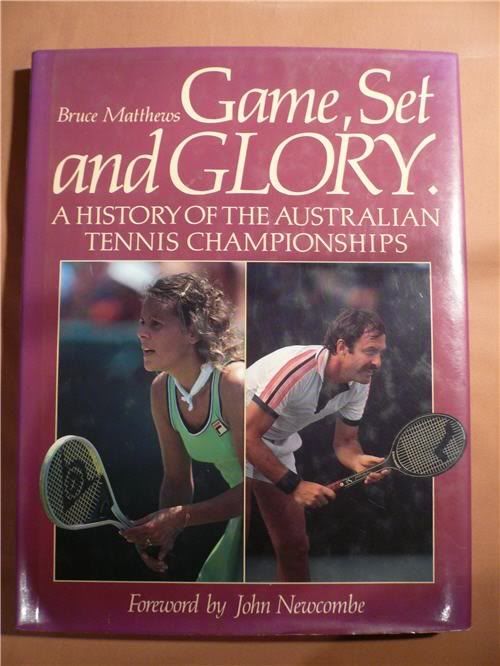
A longer term historical look at tennis from the 1905 Australasian Championships through to the professional era up to 1984

Game Set and Glory Price $10 plus freight(3 available)


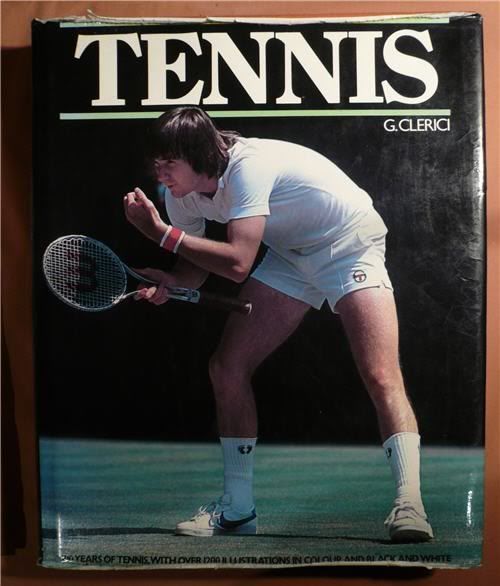
1976.  A mammoth 335 page history of tennis from the mid 1500’s when other racquet sports were played all the way to the Open era.  This book covers tennis development around the world, players through the decades and the major tourmanent events.

Tennis by CLERICI Price $45 plus freight

A good early Pressed Tin Advertising Sign. THE SLAZENGER LAWN TENNIS BALL. inWhite to centre.The sign could be either wall mounted or free standing witheasel stand to rear. Art Noveau design soI shoule think this sign dates from around 1900/1910.Size 10in by 8in.

Other Unusual Racquet Sports

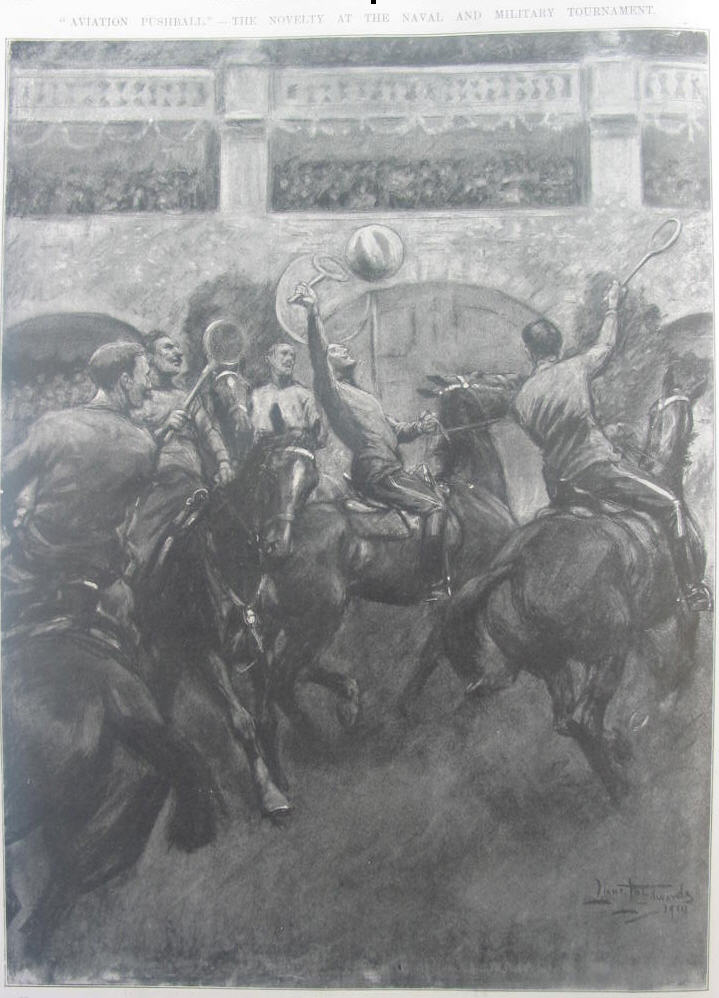
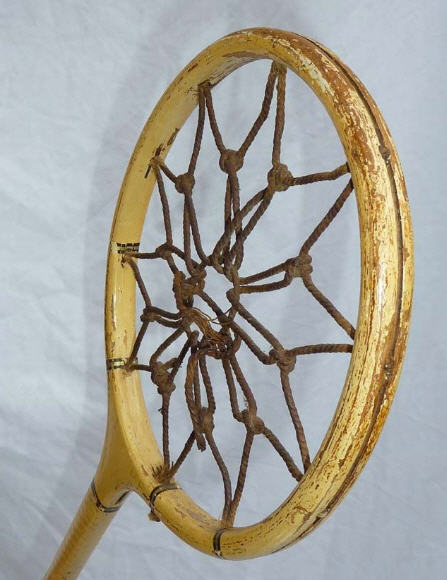
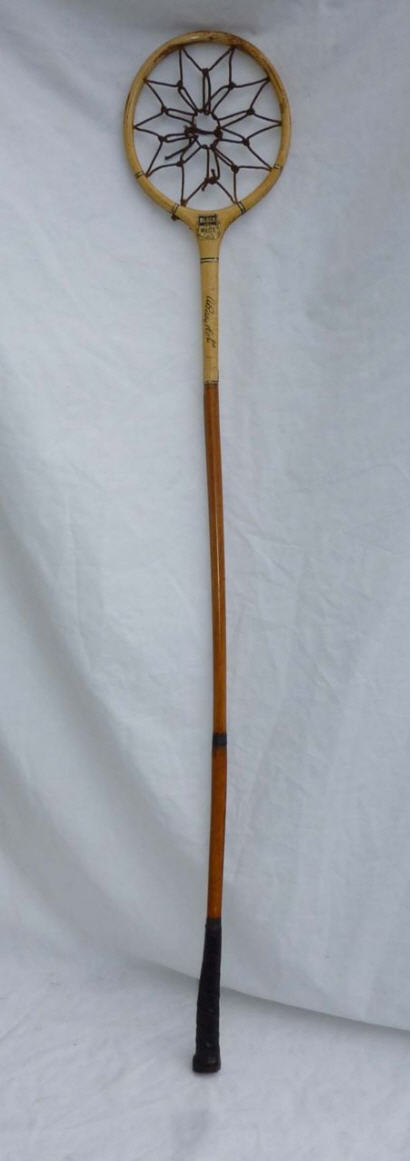
Recently when searching Ebay an unusual looking racquet came up for sale in England. Our good mate in the USA, Rolf Jaeger decided to buy it as part of his second tennis collection, having sold his first to Tennis Australia.  Neither of us had seen this before, but after some quizzing of his UK mate we found the racquet belonged to game played indoors on horse back, a winter polo variation if you will, with the extremely fanciful name “Aviation Pushball”.  The game involved a feather light, air filled ball which could be guided and hit from player to player to score a goal.


Aviation Pushball in action and the racquet right with a very intriguing stringing technique.

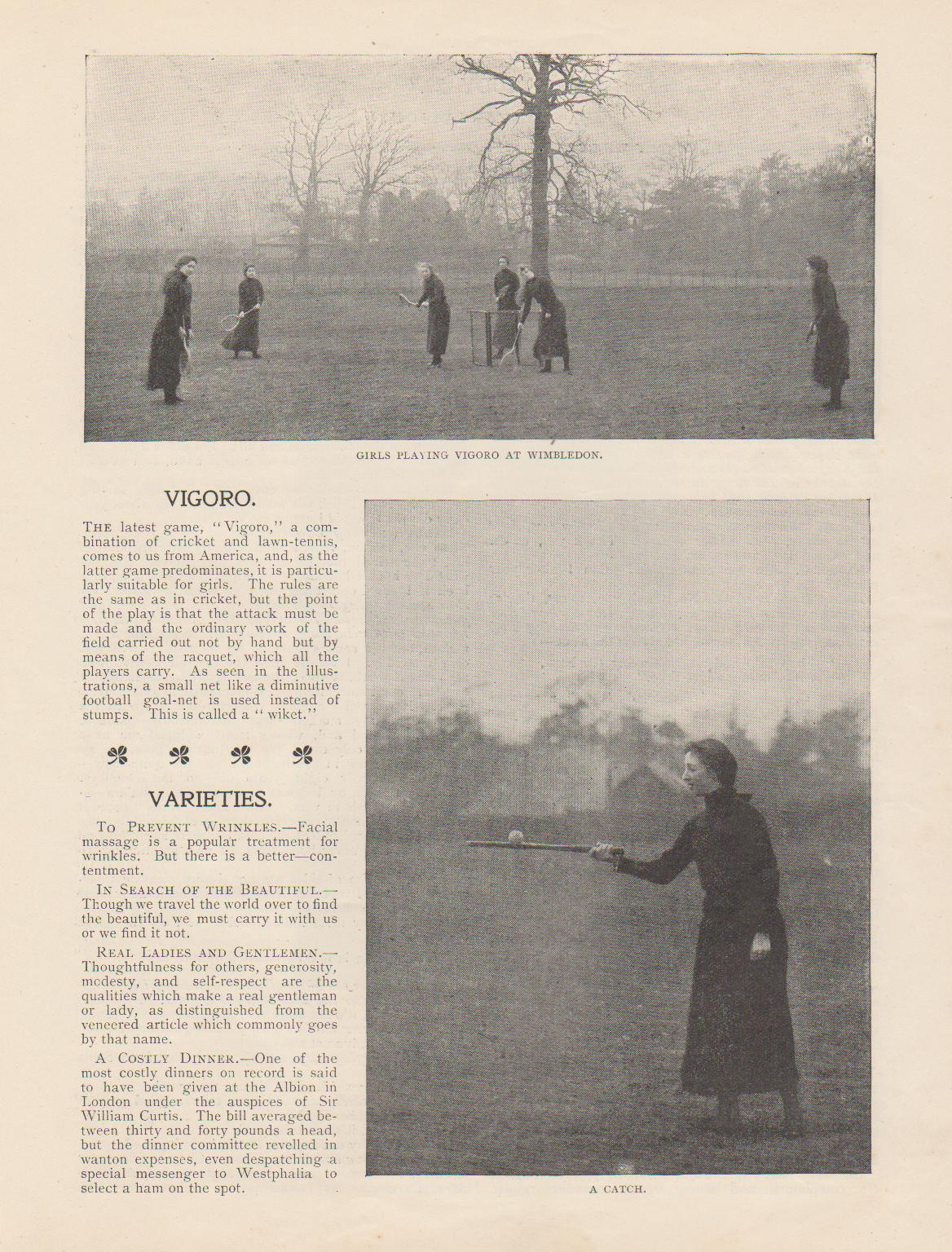
Within the Australian newspapers, we found at the same time a new game invented in England in the early 1900’s mainly for women, where in a type of cricket/tennis variation you hit/bowled the ball with a racquet to a batsman with racquet, to fielders with racquets where the ball could be caught using the strings. This game was called VIGORO and amazingly the game survived into the 1930’s when, as with lawn tennis, boxed sets were sold and even more surprising is the existence of Vigoro associations in NSW and Qld today. The racquets have been replaced by bats but it is great to see how other games evolve and survive.  See more at the NSW website www.vigoro.com.au

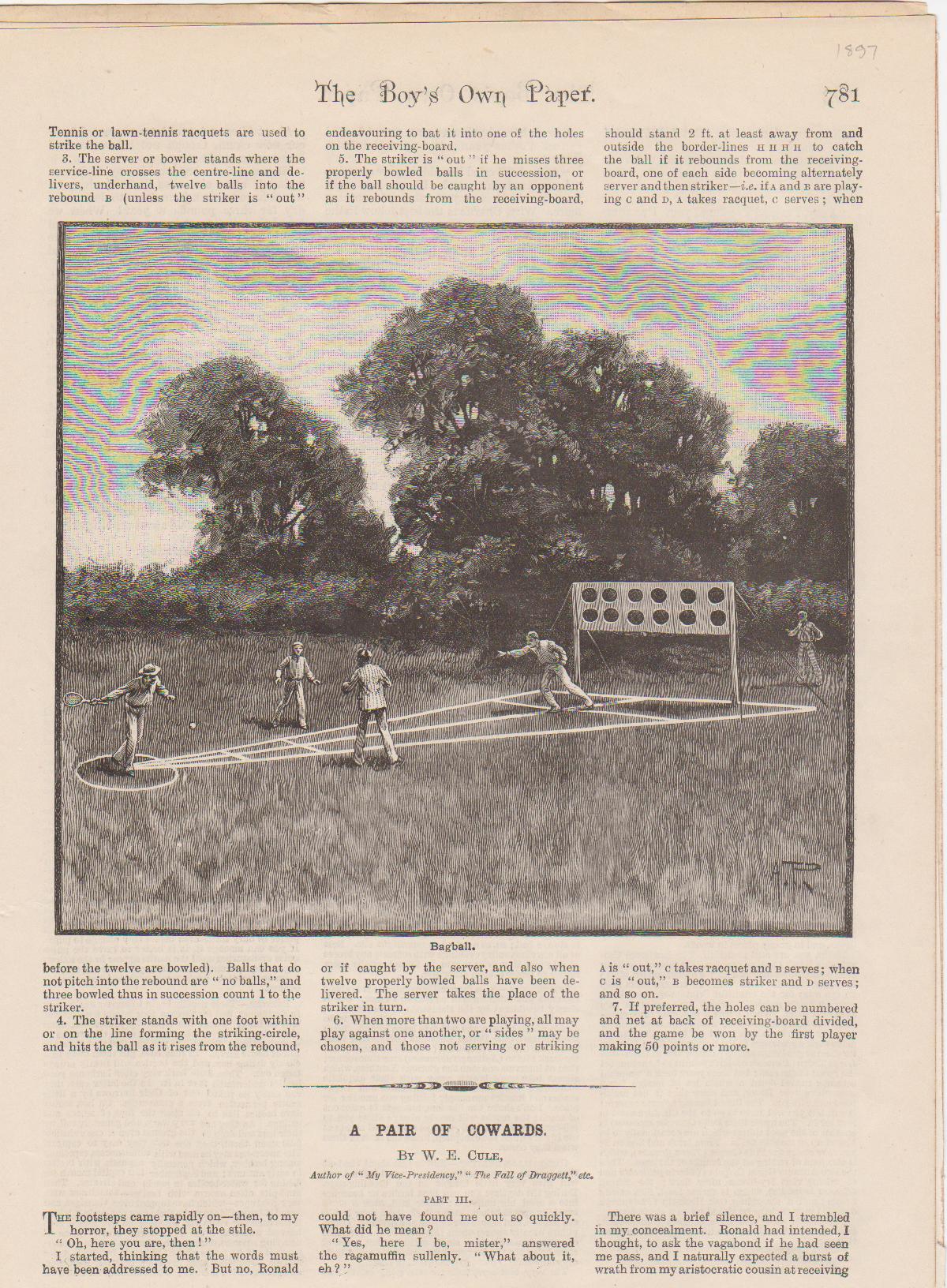
Finally, and thanks to our UK contributor, we find reference to another racquet sport called “BAGBALL” which it would appear did not survive the journey.

So great fun learning about these marvellous developments.

Vigoro in play c1903 & sets sold in 1930…still going strong today.

Bagball looks like points scored for accurate driving or volleying.

1920’s Metal Racquets in Australia (Dayton and Birmal)

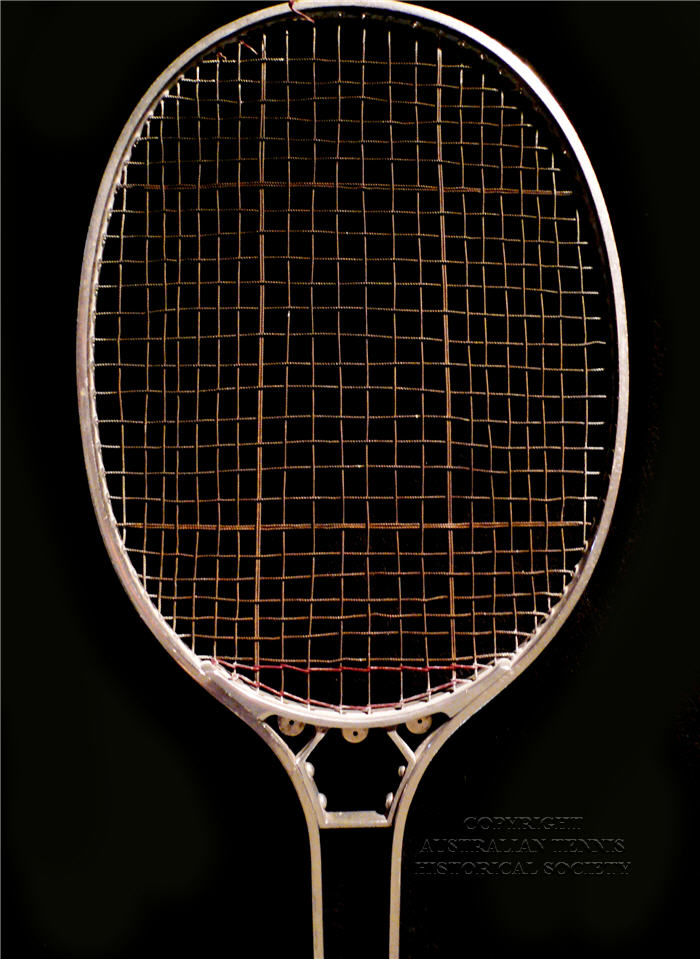
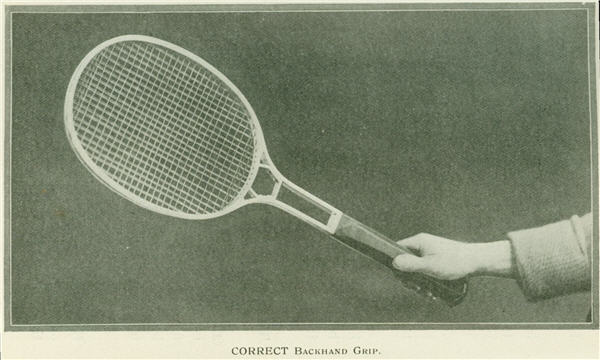
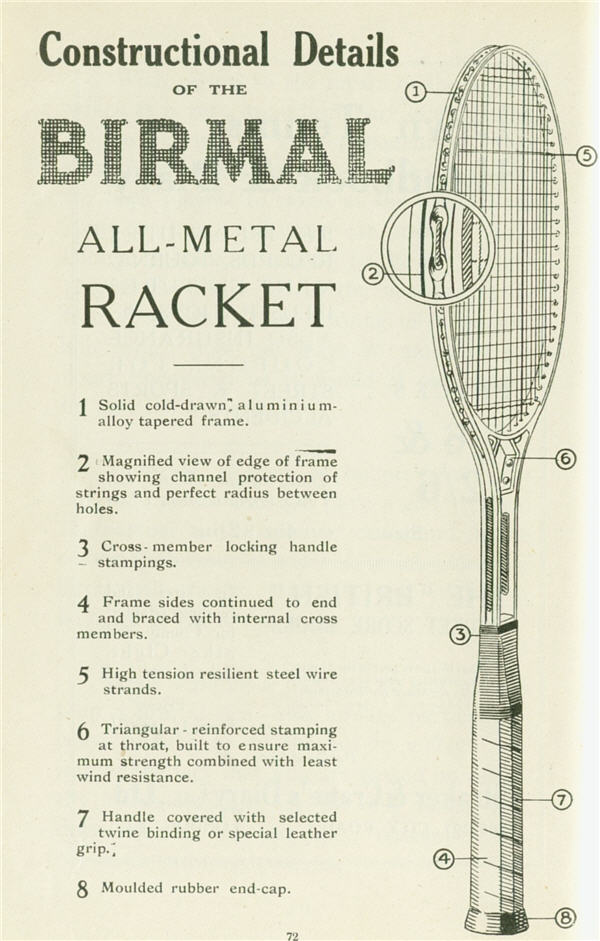
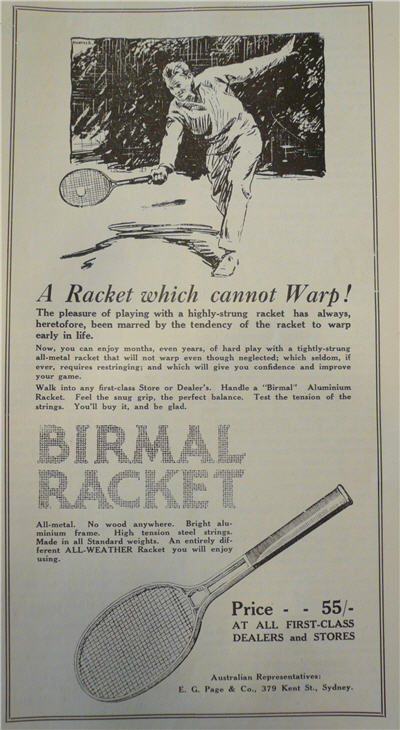
Under unusual racquets there are a couple of early metal racquets shown which made it to Australia.

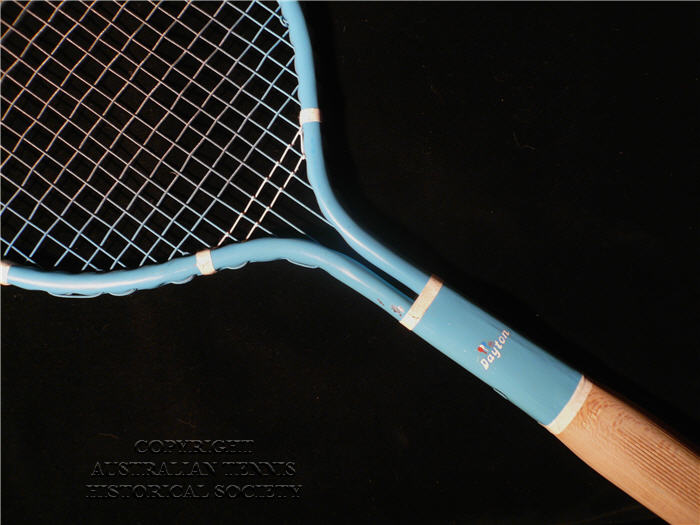
One is the US made Dayton, which commenced in 1922 and closed down after a magnificent span in 1995. The other was the 1924 UK Birmal Aluminium Racquet.

Both were sold in Australia.

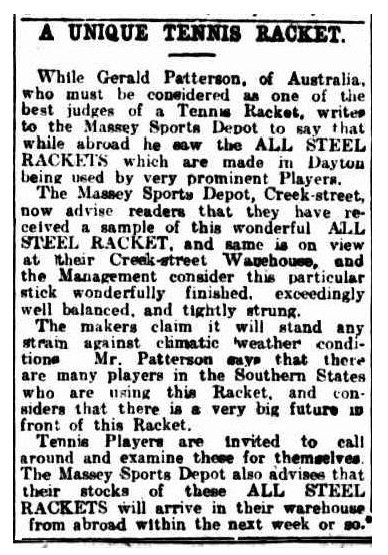
Dayton was imported very early in the piece via Gerald Patterson who was one of Australia’s top players at the time having won Wimbledon in 1919 and 1922.

These racquets, as you can read were strung with Piano wire and ideally suited to all weather conditions.  They were also strung with gut if desired.

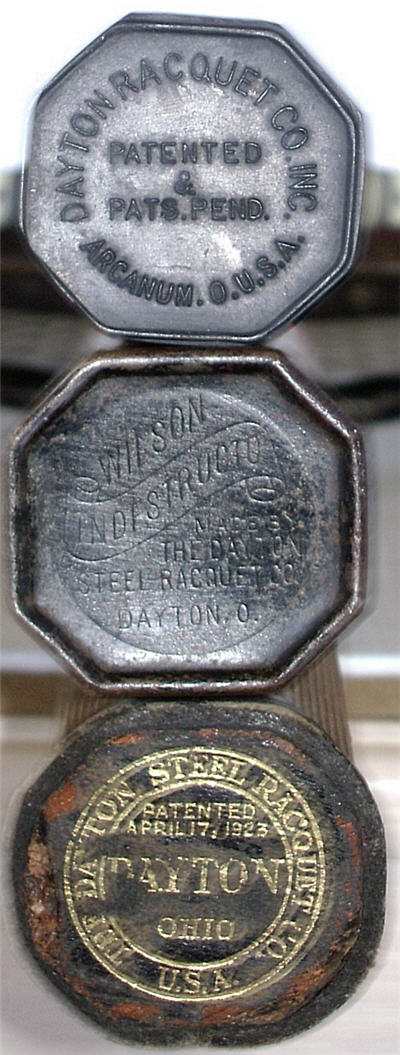
The colourful frames are great for collectors, but the trick is to learn about how to tell which models are older than the others. According to expert Randy Crow from the US Tennis Collectors Society,  if the butt cap has Dayton Ohio it will be 1922-1934,  if “Arcanum O” then 1934-1975 and if three stylised racquets appear on the throat then post 1975.

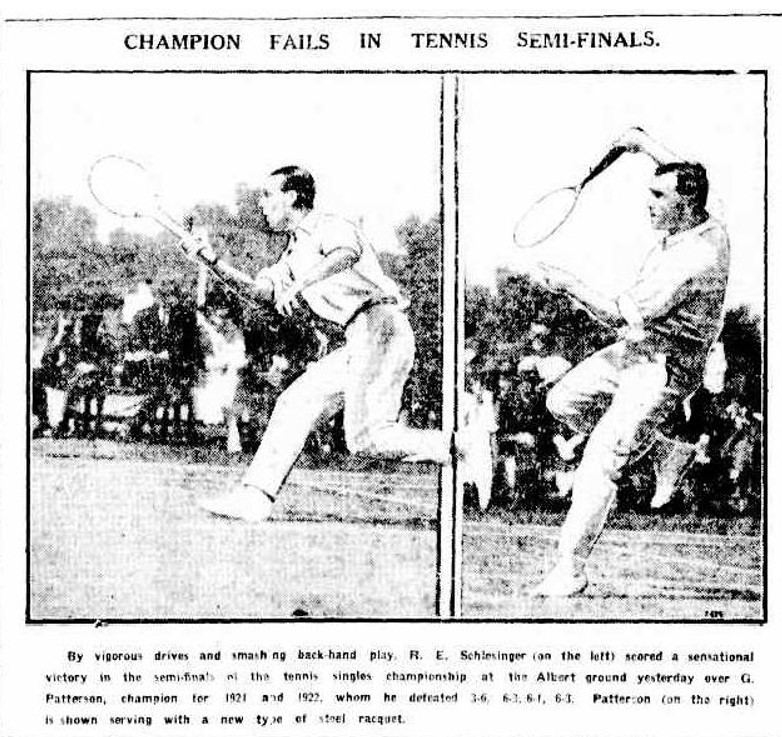
Gerald Patterson went onto become the MD of Spalding in Australia and also used these Daytons in tournament play, one of the top players to do so.  In 1928, on an international visit Jean Brugnon was introduced to these during some wet weather play at Royal South Yarra by Pat O’Hara Wood.

The racquets were not that popular amongst the top class players but did prove to be appreciated by schools.

The picture below from 1923 shows Patterson the right playing with his new racquet. The fact he lost what was meant to be a win, perhaps did not help the cause.

The Birmal racquet, was aluminium and also strung with piano wire. The grips however were not grooved wood handles like the Dayton but appeared with a wrapped cord grip and later on with a leather grip.

These were promoted most heavily in tropical Queensland and the Northern Territory.

These ads and PR from Australasian Lawn Tennis 1924

Invention of Electronic Scoreboards

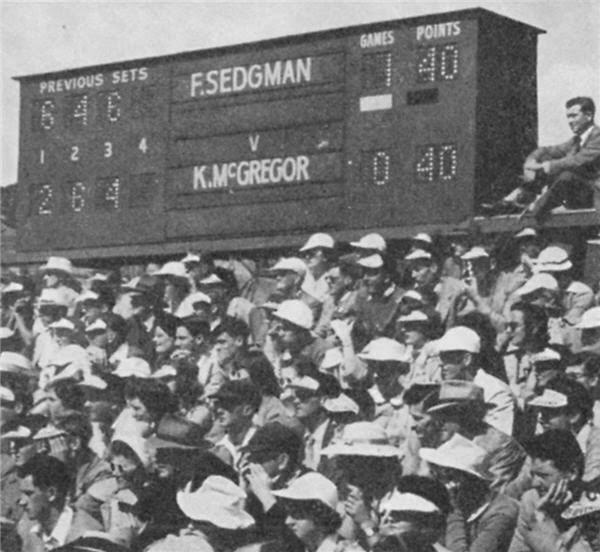
An Australian tennis enthusiast, named Edward Both invented the electronic tennis scoreboard around 1952.  He and brother Don designed and tested the unit in South Australia before its’ launch at the 1952 NSW championships.  The new technology took off and BOTH EQUIPMENT Pty Ltd became the supplier of these scoreboards to other venues including trotting, basketball and horseracing.  The technology with 9000 globes was used for the Melbourne Olympic Games in 1956.Both Scoreboard 1952

Not only were Edward and Don good players but they inherited their interest from R.V.Thomas (their Uncle) who won Wimbledon Doubles with Pat O’Hara Wood in 1919 and the Australian doubles in 1919 & 1920.

Now the scoreboard invention was no fluke, because Edward Both had also designed the World renowned, life saving IRON LUNG.

It took two people to operate, one for the games and the other for points. Looks like a great match between best mates and rivals here!


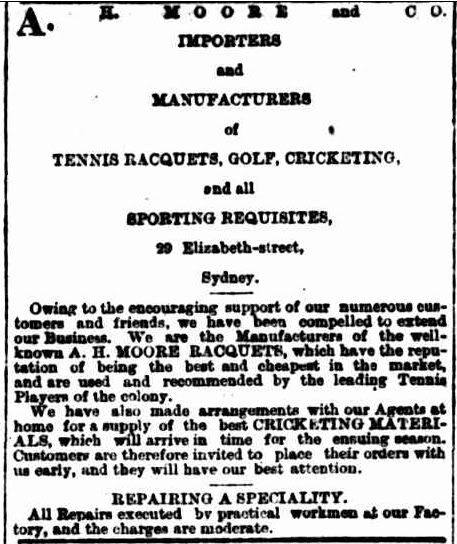
A.H.MOORE Sydney

With the spread of tennis throughout the colony from 1876 onwards, we have discussed how much of the tennis equipment was imported from existing UK, French and USA sporting manufacturers.

The Australian industry is recognised to have begun in the 1920’s as the popularity of the game moved more from a wealth based past time to a general community game. This saw the start of Alexanders and other Australian developed brands and the commencement of Australian operations for Spalding and Slazenger.

Pre 1920’s we assume that craftsmen here would have readily made racquets for customers, but finding information about these firms is difficult since many never promoted or advertised themselves.

One of the pioneer racquet makers that seemed to have created a niche was Arthur Henry Moore from the firm A.H.Moore in Sydney who commenced business in the early 1890’s.

In 1896, operating from A.H.Moore NSW maker Elizabeth St Sydney the firm was offering both imported and locally prodcued equipment.
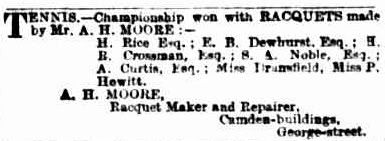
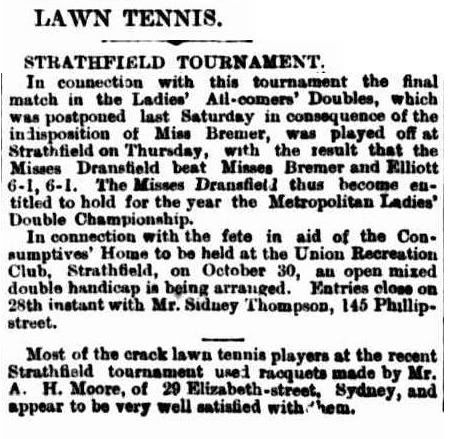
The racquets carrying the firms brand name seemed to have been well accepted and the company was involved with the then top grass court event, ” The Strathfield” Lawn Tennis Tournament.

You can read from the articles how linked with the leading players in the colony and from a different 1897 ad, below, names Horrie Rice and Edward Dewhurst amongst other prominent players who used and won with his racquets.

A.H.Moore NSW maker

In 1901, the factory and workshop were listed as being in Woolwich.

Also in this year, unfortunately, Moore ran into financial difficulties and as the company was heading into legal proceedings an argument over legal fees he couldn’t pre-pay led to him shooting a managing clerk for a solicitor in their Elizabeth St offices on December 6th and then shooting himself dead immediately after. The clerk, shot twice, survived.

A.H.Moore NSW maker

Tennis History Sacred Ground

Just in need for a bit of exercise we went for a bike ride today down to St Kilda Rd and Queens Rd in Albert Park, to a location which will hopefully remain a truly sacred site to the Australian Tennis Community nationally.

Down here in Melbourne, the MCC (Melbourne Cricket Club) were the driving force behind the early growth in tennis and the formation of local club competitions  in the late 1870’s. As with cricket, interstate tennis competitions also commenced and in 1892, despite having club courts at the MCG, it was decided to move the Intercolonial Matches to the Warehouseman’s Ground.  Today it is known as the Albert Ground.

The grounds, courts and clubhouse have been well maintained. The courts are no longer grass but the same surface as that now laid at the Melbourne Tennis Centre to enable tournament players some additional facilities to practice on.

In between, the courts are available for hire.

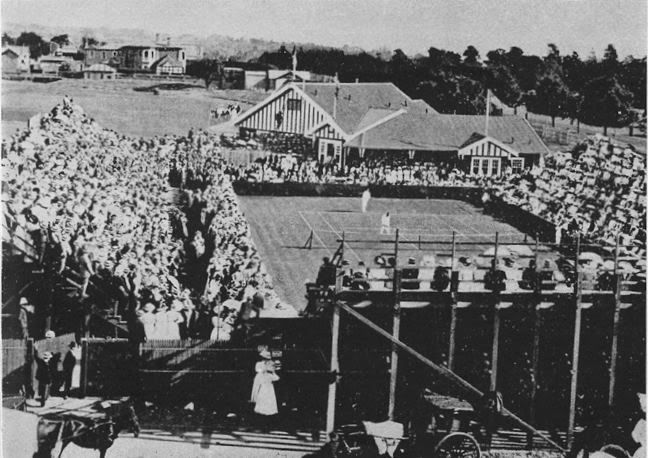
Bot not only were the Interstate tournaments played here, so were the Victorian Championships and eventually the first Australian Men’s Championships in 1905.  Lastly, and at the top of the list, these are the courts on which the very first Davis Cup, was played in 1908 (away from UK & USA), due to Australasia’s win in England in 1907. Here Norman Brookes, who lived just down the road and New Zealander, Anthony Wilding successfully defended the cup which the following year would be played in Sydney. The location was selected in Victoria as an honour to the new Australian tennis hero, Norman Brookes who had also won Wimbledon in 1907.

The clubhouse, with the exception of a new entrance room,  is almost as it was in the early 1900’s so we hope that the administrators continue to value this little corner at least to the point where it is protected from the property developers forever.

Warehouseman's Ground Davis Cup 1908  Warehouseman's Ground Davis Cup 1908

The photo was taken almost exactly where the forehand court would have been. Scaffolding surrounded the Davis Cup Court to accommodate the large number of keen spectators in 1908.  All along St Kilda and Queens Roads were stately mansions like this which have slowly been overun by the multi storey apartment and office complexes.  Thankfully some of these have been saved. Norman Brookes house is now a block of 1950’s style flats.

Davis Cup Melbourne 1908

This photo was copied from the 1953 Davis Cup Challenge Round program as used in a Melbourne Sports Depot Ad. As you can see, the clubhouse is little changed.

Here is another shot as well. Note the manisons in the background and the cricket ground also exists today.


Davis Cup Melbourne 1908


How Fast can you serve with a Woodie

This seems to be a question often raised around tables, at least when the veterans are sipping on a cup of tea (nee Bundy, Jack Daniels, Beer).

In an article, in USA Tennis Magazine March 1997, written by Tennis Authority Alan Trengove, Mark Phillippousis was given the task of testing out woodies versus a standard graphite (his own) and a superlong.  The reason the article was written was because the ITF had just banned the SuperLong’s being marketed by both Dunlop and Gamma. This meant that all professional racquets had to be under 29″ in length.  I recently saw a Gamma 32″ and it really is a massive racquet with a 137″ head size. See the pic below compared to a standard woodie.  To meet the new rules they just chopped the length back to 28″.

Anyway back to the test. All the racquets were strung by Mark’s personal stringer using the strings and tensions he was used to and grips were adjusted as well.  They were the Dunlop Superlong 29 1/2″, his standard 27″ Dunlop and the recently voted number one racquet of significance over the past 50 years, the wonderful Dunlop Maxply Fort specially flown over from the UK.

The test was conducted at the Melbourne Park, home of the Australian Open.

The results were very interesting.  Wood Ave Speed 122mph, Top Speed 124mph and accuracy 60%.  Standard length 124mph, 127mph, 52% and Superlong 126mph, 127mph, 80%.

On speed it is surprising that only 3 mph separates the woodie from the two hi tech racquets and the woodie even gave Mark some more accuracy over his standard racquet.  Maybe Bjorn should have persisted with his woodie in his infamous come back!!! Then maybe Mark should have tried a Woodie more often!!

In a separate, similar test in the USA, four players confirmed these results but found the woodies accuracy levels very low.  I guess this does highlight the impact of frame strength and sweet spot size.  However, given that these 4 hadn’t played with a Woodie at all or for many years, it also highlights how stroke techniques have changed with racquets.  The importance of hitting with woodies using a more flat stroke and good follow through is certainly not in vogue today as follow throughs are moving across the body or at seems in full circle watching the almost table tennis style forehands seen today.

Were the players of old serving at Speeds like Mark? There may have been some big guns back then, but the rules for foot faulting didn’t allow both feet to be off the ground and over the line, so the level of forward momentum couldn’t have been the same.

The other factor was championship play was continuous so there were no sit down breaks between end changes because there were no chairs and no tie breaks which meant a match could easily go 3-4 hours.  The wise players of the day relied more on accurate first serves with more twist than pace as way of conserving energy.

The conclusion of the test was that while extra longs seem to assist with accuracy, the additional size, weight and therefore swing speed didn’t create the massive increase in serve speed the ITF were worried about preventing.  It is also proves that you really can generate some service speed using an old woodie afterall and suprisingly not that much slower than today’s technologically advanced racquets.