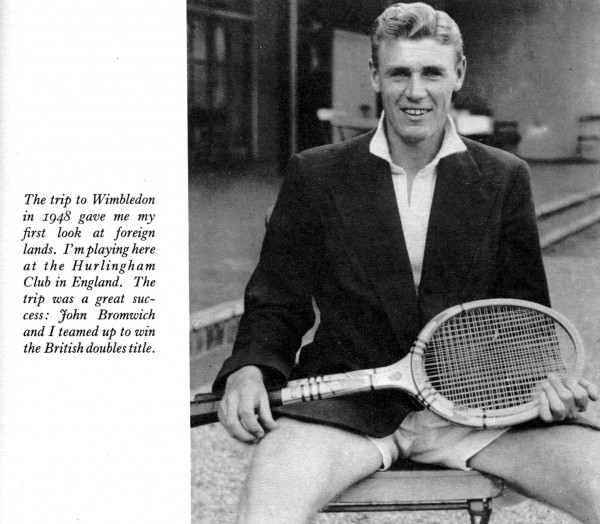
O.W.Sidwell may not be a household name in Tennis, yet Bill who resides in Sydney aged 88, was a great player in the 1940’s era with Adrian Quist, Geoff Brown and John Bromwich.
Today, Bill still leads an active 88 year olds life, playing and organising veterans golf events. Sounding, nowhere near his age we are indeed fortunate that Bill can recount some of his amazing tennis experiences.
At aged 15 a friendship between Bill’s father and the then Managing Director owner of Slazenger Australia, David Blacklock, helped Bill into his first job. Normally, this may sound typical for a young lad in the thirties, however Bill started school at 3, completed his leaving certificate at 15 and majored in advanced mathematics and accounting. To Slazenger, these skills applied to business modelling and management were very desirable and Bill stayed on with Slazenger for 47 years from 1935 to 1982.
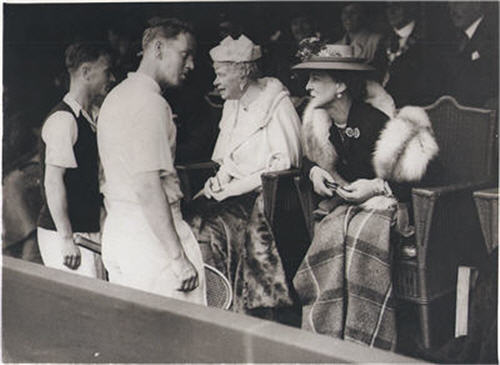
No doubt with the Slazenger experience close at hand, Bill who started playing when he was 7, became a very good tennis player. In the picture right, post war 1945, the Allied forces played a UK charity match hosted by Queen Mary. Bill found it quite amusing that the US flew in one of their top players, Archie Henderson, especially for the match, however Bill won in four sets. Bill at the rear is talking with Queen Mary. He was ranked #1 in the British Empire.
1947 was a stellar year, most notably in doubles and Bill came close on three occasions to win 3 of the Grand Slam doubles events. Unfortunately as runner up at Wimbledon with Anthony Mottram, the US Open with Bill Talbert and the French Open with Tom Brown.
The important breakthough came in in 1949 playing with John Bromwich, where they won the US Open Doubles against Frank Sedgman and George Worthington 6-4,6-0, 6-1 which was Bill’s only finals win despite many attempts.
For Australia, in the Davis Cup, Bill played in the 1948 team with Colin Long and Quist in Havana to defeat Cuba, followed by a 4-1 win over Mexico and a very close Inter Zone final against Czechoslavakia 3-2.
Bill considers his Win over Drobny and Cernik (Czechoslavakia) as his pivotal matches. Drobny was ranked #5 in the World and the first rubber 4 set tussle must have been nerve racking 6-3,6-2,9-11,14-12. At two rubbers all Bill’s final match against Cernik was critical for a win which he did in 3 sets, however it was the Drobny match which gave the “under-dog” Australian side an edge. Unfortunately, the USA team were very strong and we lost 5-0 in the New York Challenge Round.
Bill recounts that the Challenge round against the USA had created a media frenzy and that a TV station had negotiated film rights with the USA team. Adrian Quist not happy with this imbalance in finances stormed off to the USA camp to negotiate half the proceeds for the Australian side. Being subsidised only $5 per day for expenses, by tennis authorities made it very enticing for players to cross over to chase larger pay packets of the professionals.
The 1949 team which introduced Frank Sedgman into the side with Bromwich saw Bill in the USA Challenge Round, again to lose to the USA team of R.Gonzales, F. Schroeder, Bill Talbert and Gardner Malloy 4-1. The only win being doubles between Bill and Bromwich over Talbert and Malloy.
In 1949, Bill was ranked #10 in the World according to the USLTA records. At the 1950 Wimbledon event Geoff Brown and Bill teamed up for the doubles and made the finals to be defeated by the other Australian Team John Bromwich and Adrian Quist.
After this sensational effort both Bill and Geoff left the game to concentrate on Slazeneger business.
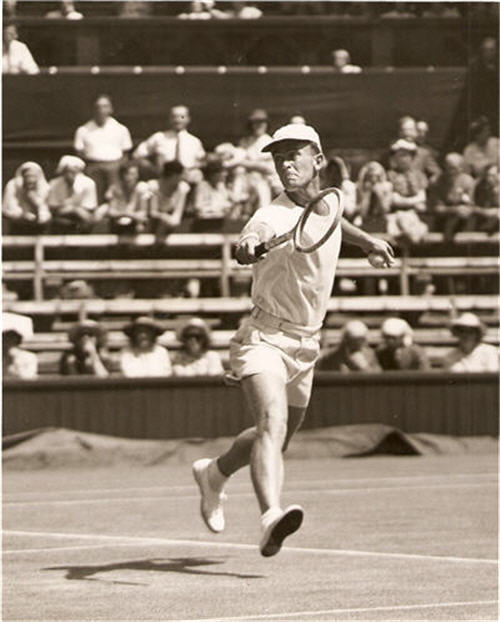
The picture right shows Bill in action against F.Parker at Wimbledon 1949.
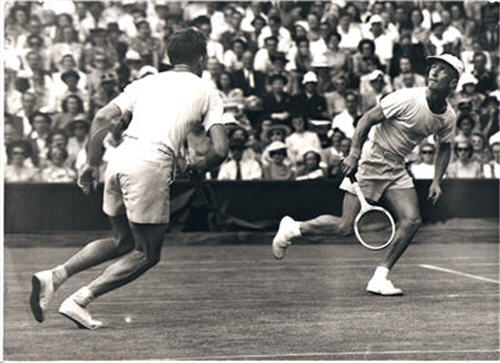
The picture below right shows Bill and Geoff Brown in action against Drobny and USA Bob Faulkenburg also at Wimbledon in 1949.
We will add more information about Bill as we research this era of Australian tennis with his son Terry.
Thanks for the photos and stories from the Sidwell family.
If ever there was a story about the egg coming before the chicken,the the story of the tennis ball may well be the most relevant.
Throughout the early 1800’s Indoor or Real tennis used balls made from leather stuffed with cotton or central cores twined with cord. Naturally this made use in outdoor situations unimaginable.
However, in the 1830’s in the USA, Charles Goodyear spent considerable time researching techniques to stop rubber from reverting back to being soft and sticky. He discovered the way to vulcanise rubber to maintain its rigidity and over in the UK between the 1850’s to 1870’s further inventions lead to the production of bouncy, hollow rubber balls.
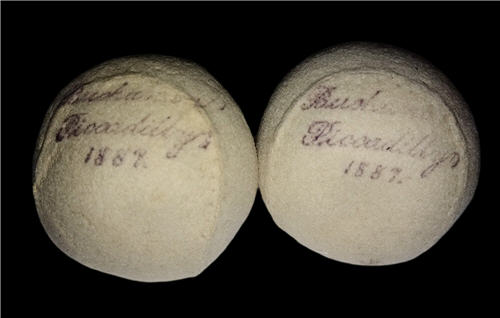
In 1874 the application of hand sewn cloth surfaces to the rubber ball provided the ultimate solution to allow an outdoor version of lawn tennis to become possible. These 1887 Buchanan balls are hand sewn and very rare. The other major event critical to outdoor tennis was the invention of the rotary lawn cutter which enabled finely cut grass courts to be prepared and line marked quite readily in gardens around the globe.
Both uncovered and covered balls were used according to different surfaces. On asphalt uncovered balls were used, while covered balls were best on grass. In Burnie, Tasmania a Victorian club team from Grace Park in 1901 played on wooden courts with uncovered balls, so strategy about balls and court surface selection for competition play was alive and well.
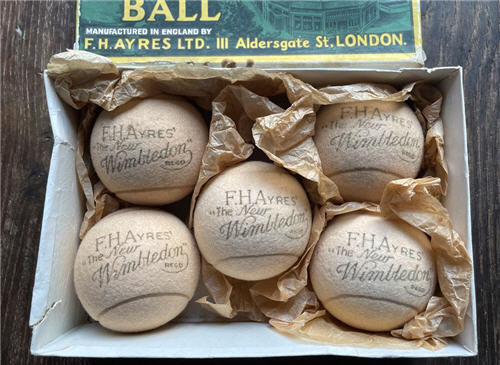
In 1902, Slazenger became the ball of preference at Wimbledon having succeeded F.H.Ayres after a 22 year association. Each ball featured a hand sewn cloth finish. The following years saw dramatic improvements to production techniques that led to more consistent finishes and uniformity. Packaging was changing also to help preserve ball pressures including sealed tins and some other surprising techniques such as wax coatings. The pictures of the 1906 Slazenger ball used at Wimbledon only have string around them as part of a display. Note the match the ball came from had one or both of the Doherty brothers playing.
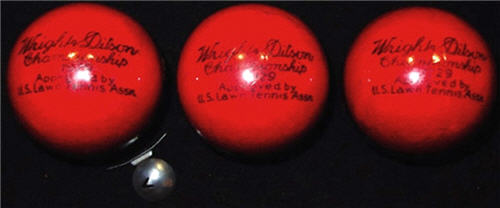
While you might have thought that white tennis balls were the norm until the 1980’s, Slazenger in a 1906 catalogue were promoting a “tropical” lawn tennis ball in all red, blue/yellow, black, red/white, blue/white, yellow/white, red/yellow, red/blue, blue/yellow, red/black. In 1977 Slazenger tried to launch a green ball to increase visibility but it wasn’t until 1982 that the fluoro yellow ball began to be used as the colour of preference over white. Mind you there were many other experiments in colour and two colour balls. I recall a story that Ivan Lendl killed off two colour ball use in tournaments because he claimed players could tell which way the ball was spinning through the air giving an unfair advantage.
The 1930 balls above, are wrapped in their original wax paper. These sold for 350 pounds on Ebay 2010.
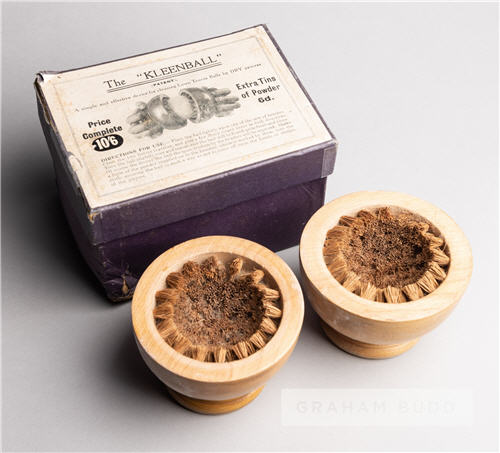
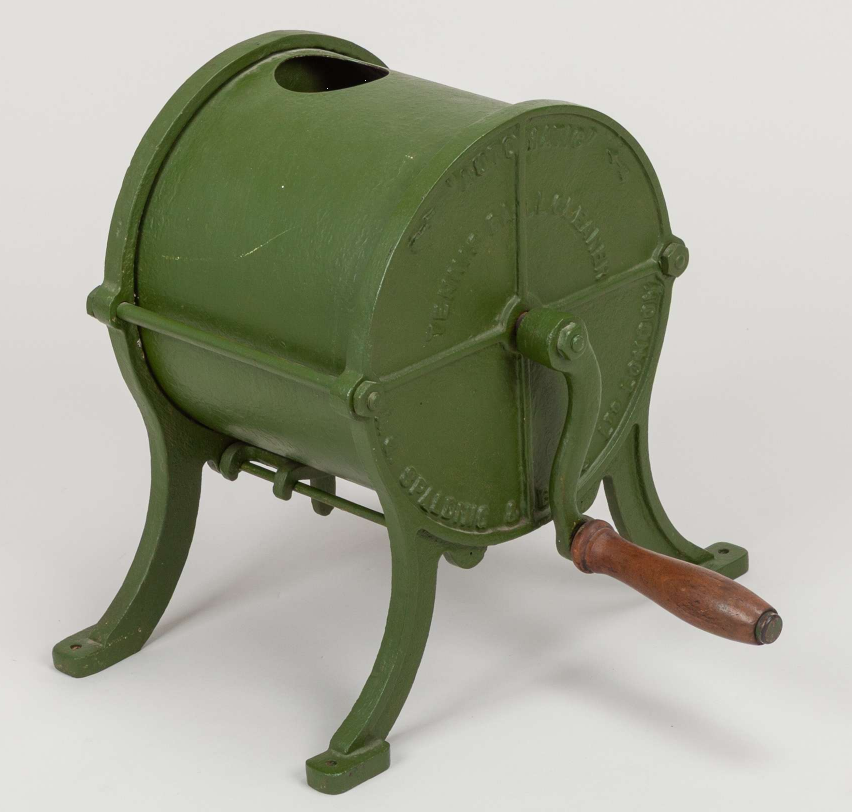
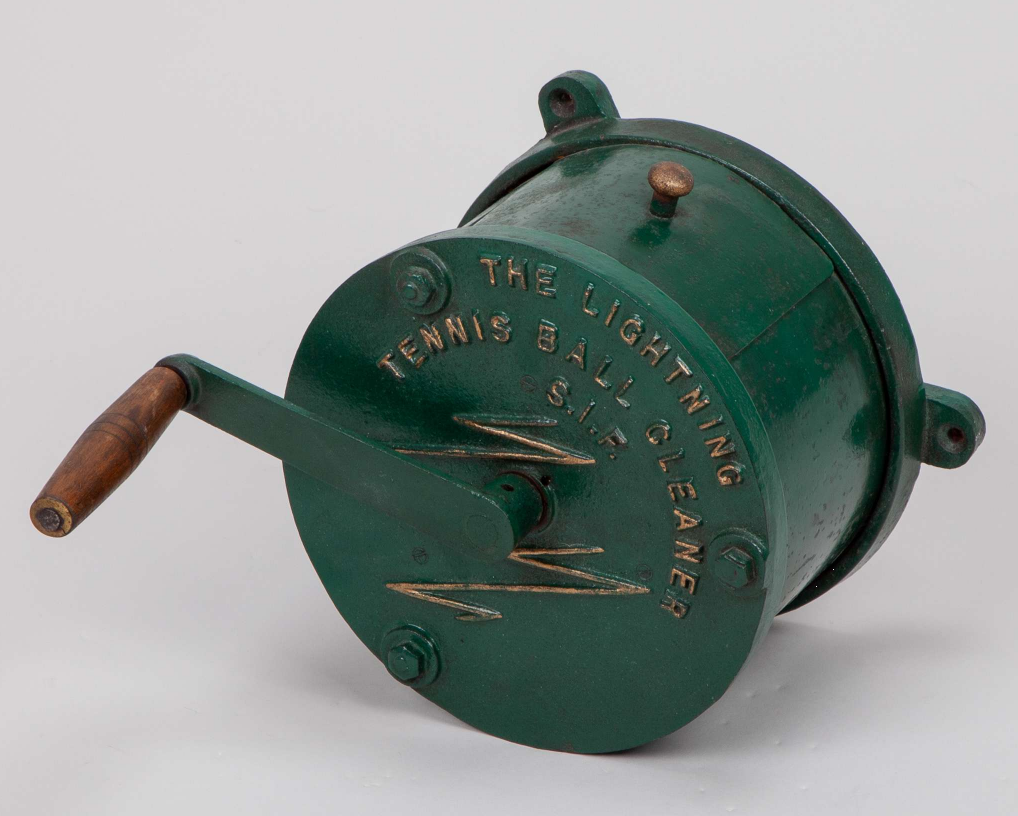
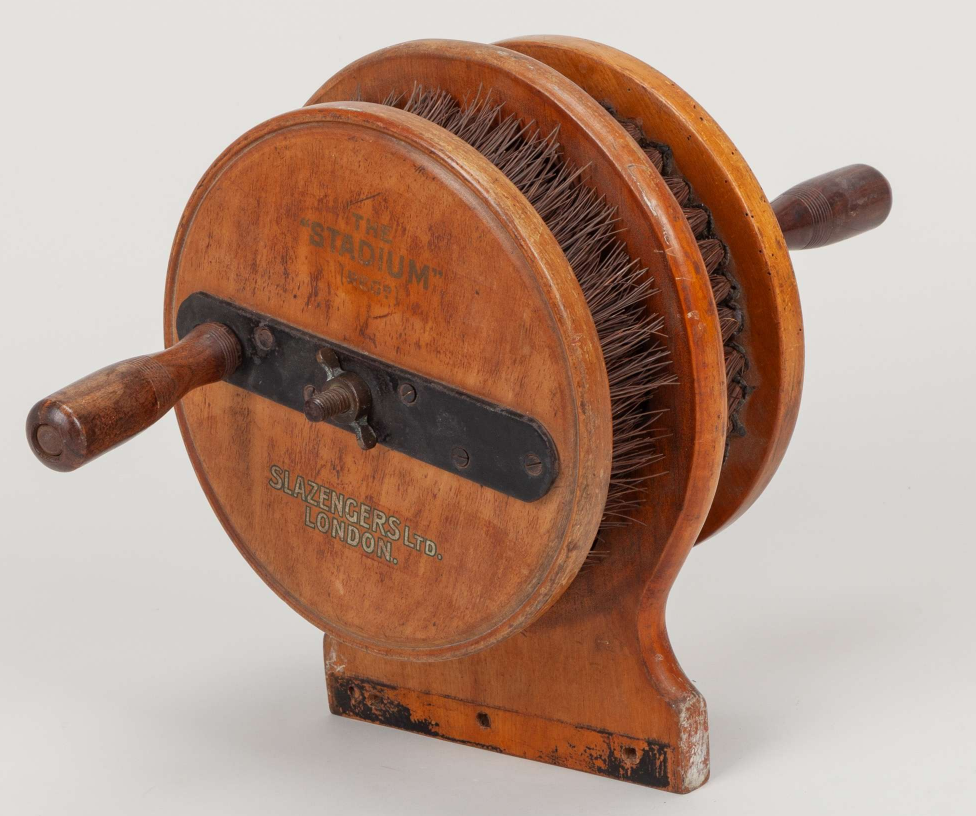
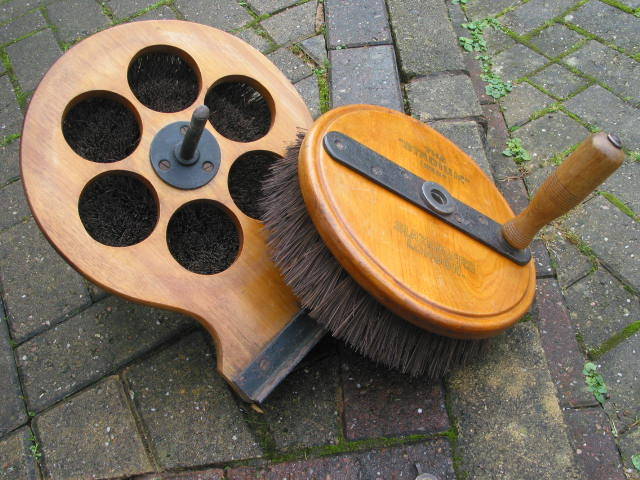
Closely related to the subject of tennis balls is ball cleaning. Early games played on grass and other surfaces combined with the expense and availability of balls meant preserving them for play was essential. No doubt mud was a major problem and so there are a variety of ball cleaners that were developed. Since they no longer grace the modern day tennis setting most players will have never seen them before.
These shots were obtained from the internet a couple of years ago. I present them in the interest of education only and do not claim copyright or ownership.
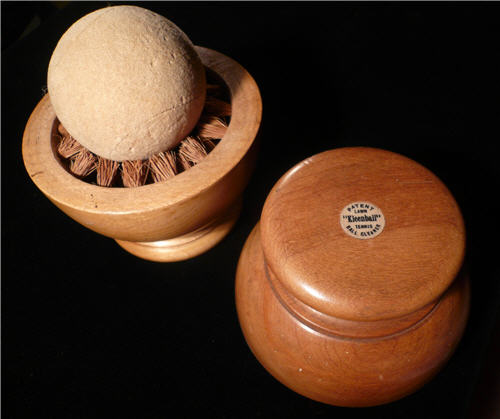
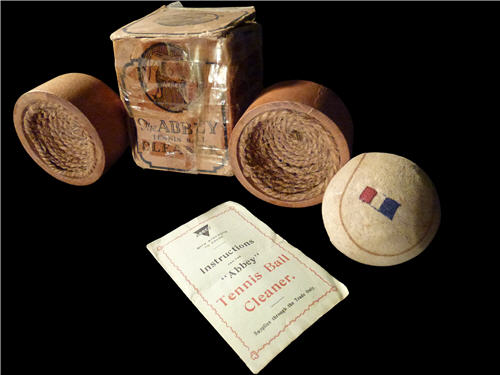
A single ball cleaner.
There have been two brands of a single ball cleaner. The first is KLEENBALL which used a bristle style device of two halves which would be hand wound.
The second was ABBEY which used a cord rope as the abrasive.
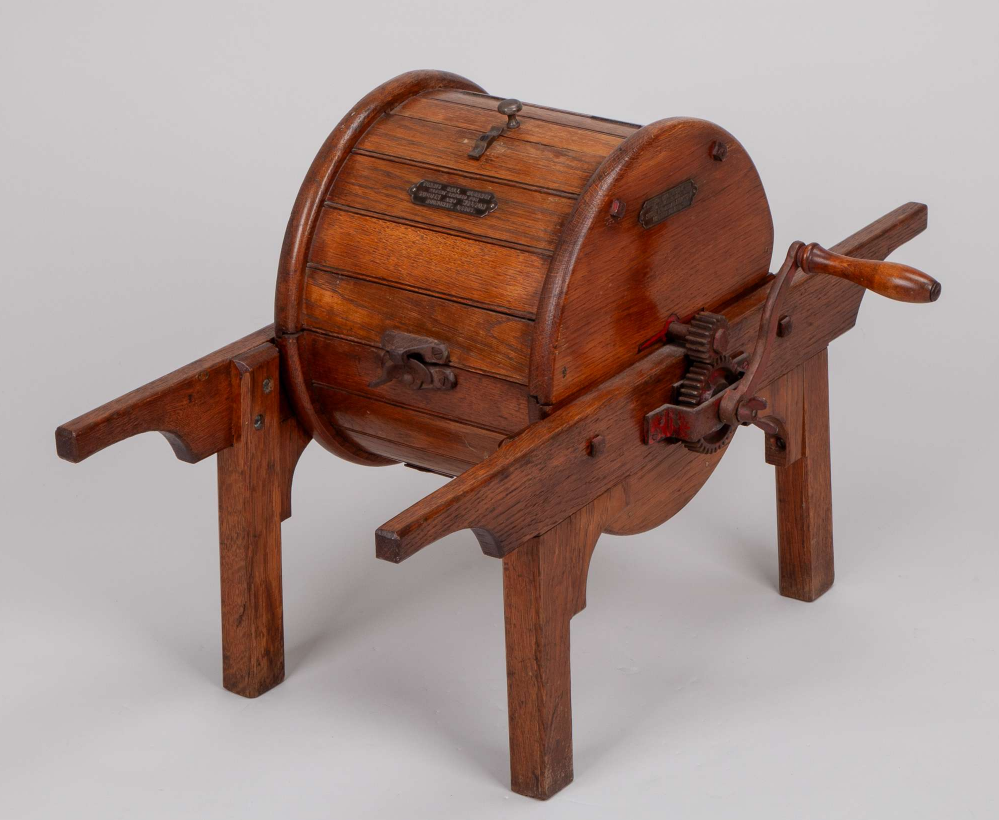
A Club ball cleaner. Probably does 20-50 balls at a time. A hatch at the base opens to allow the clean balls to be removed.
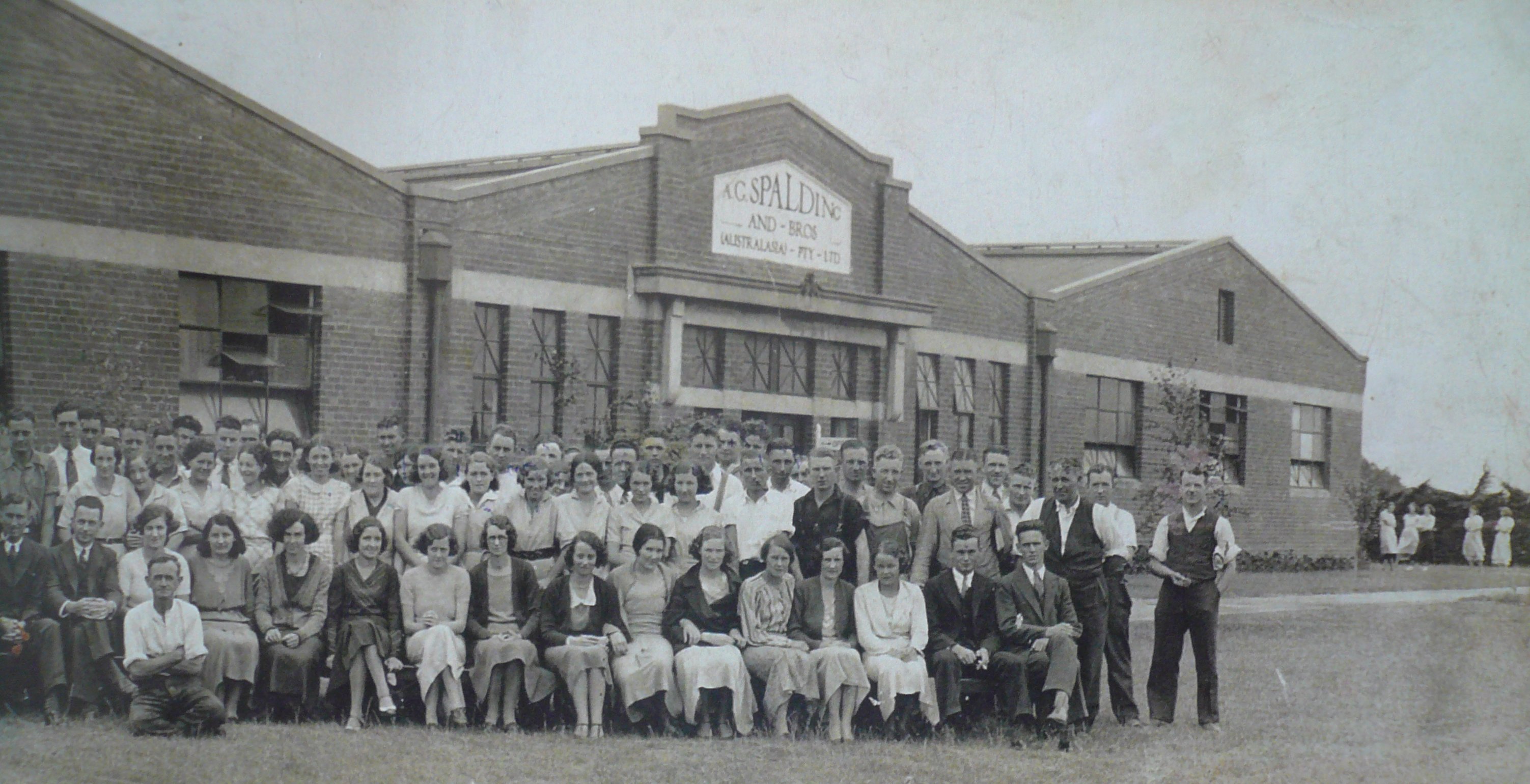
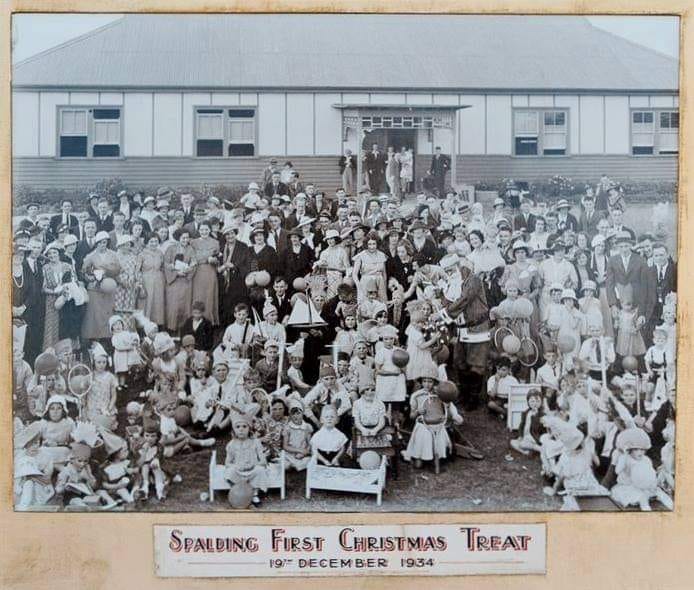
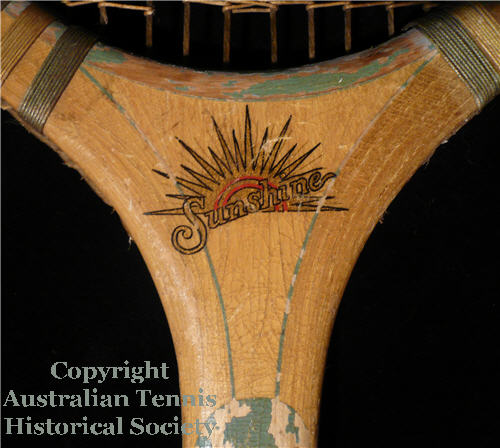
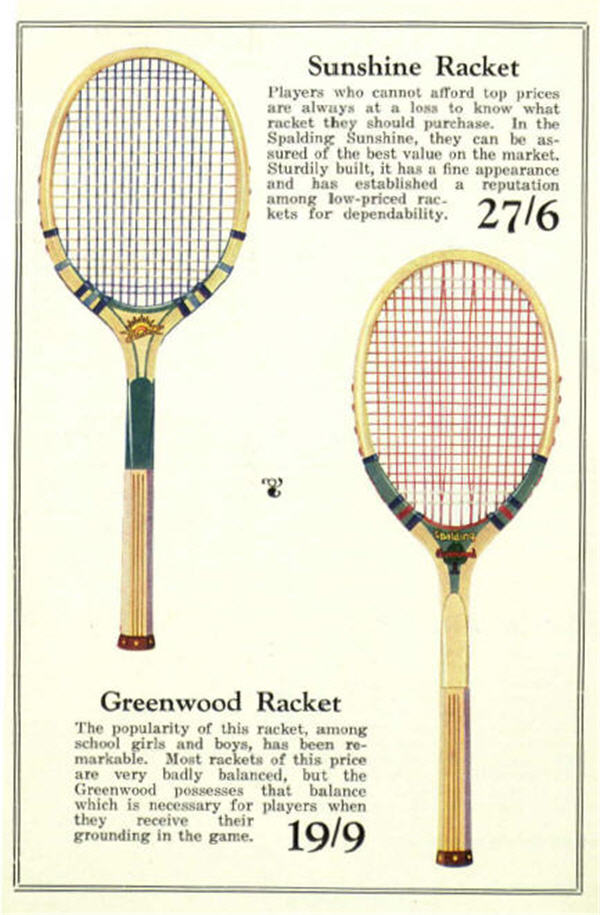
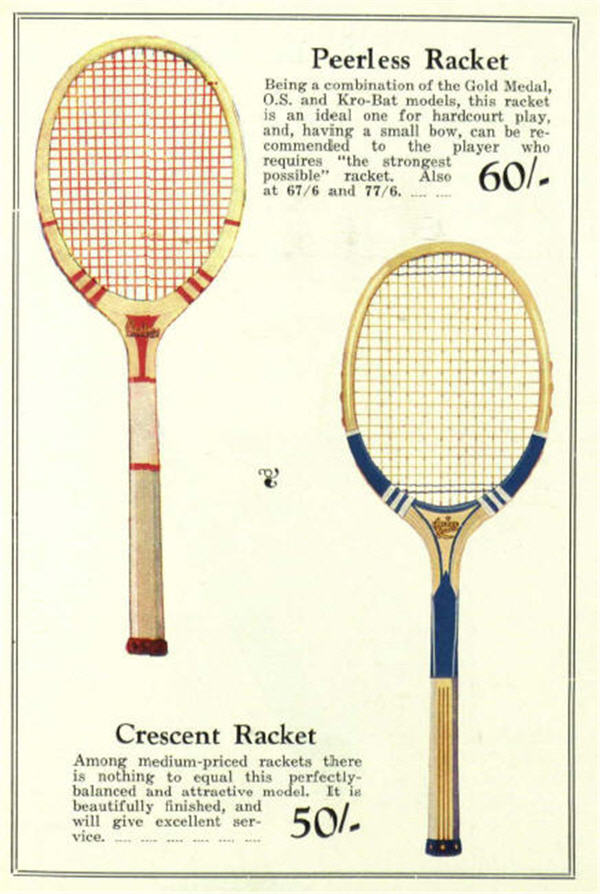
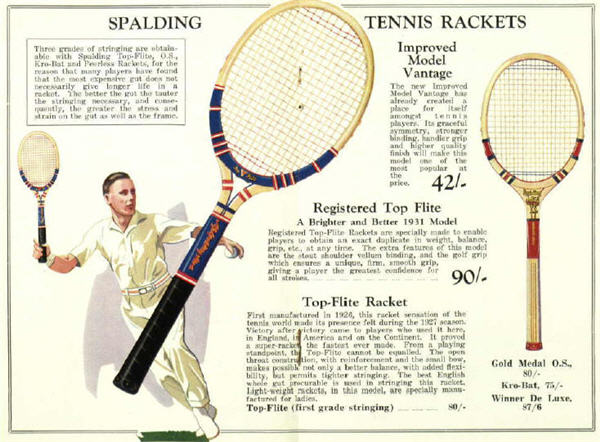
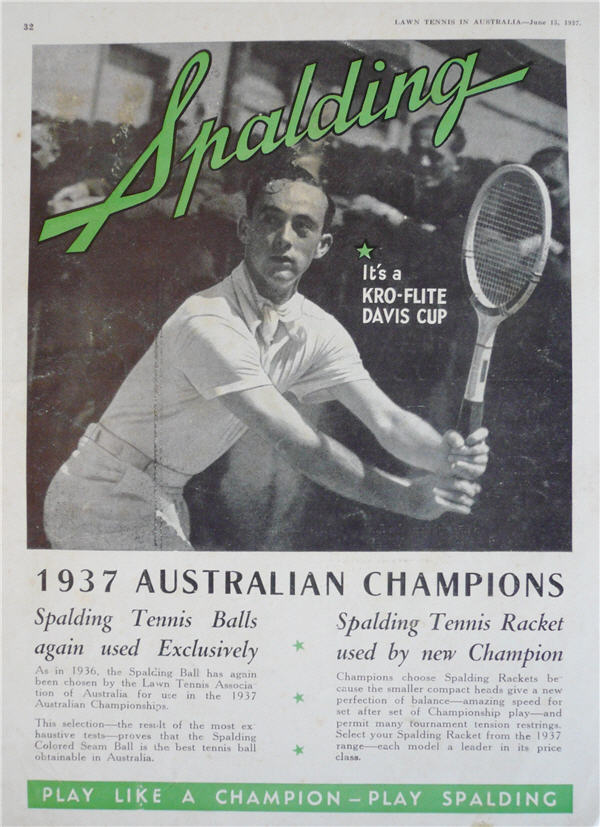
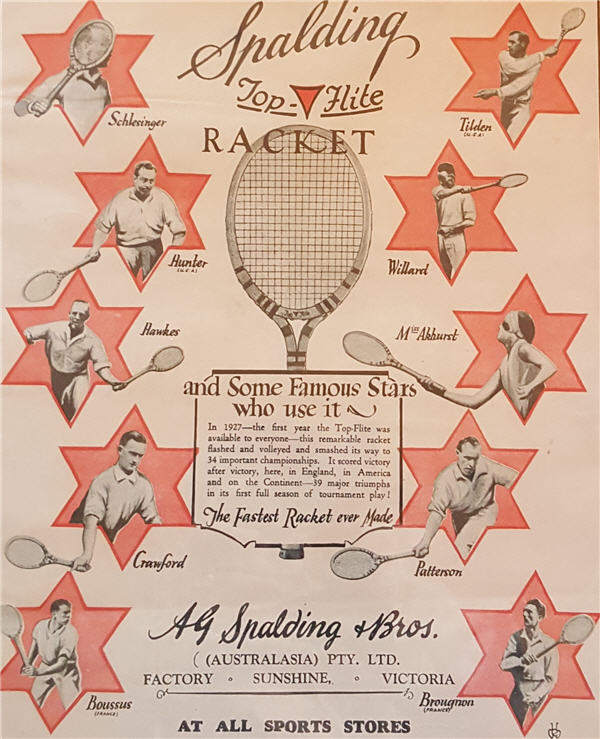
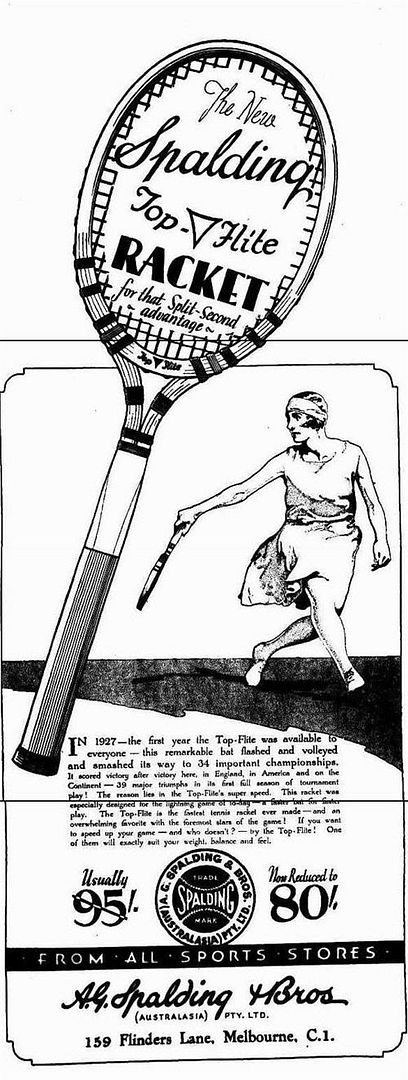
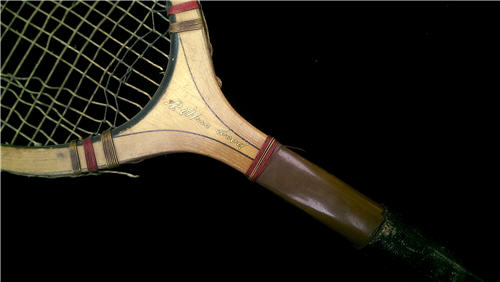
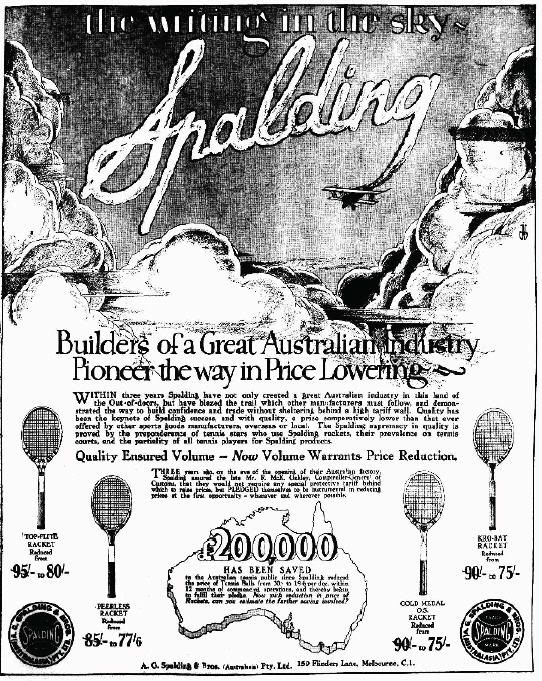
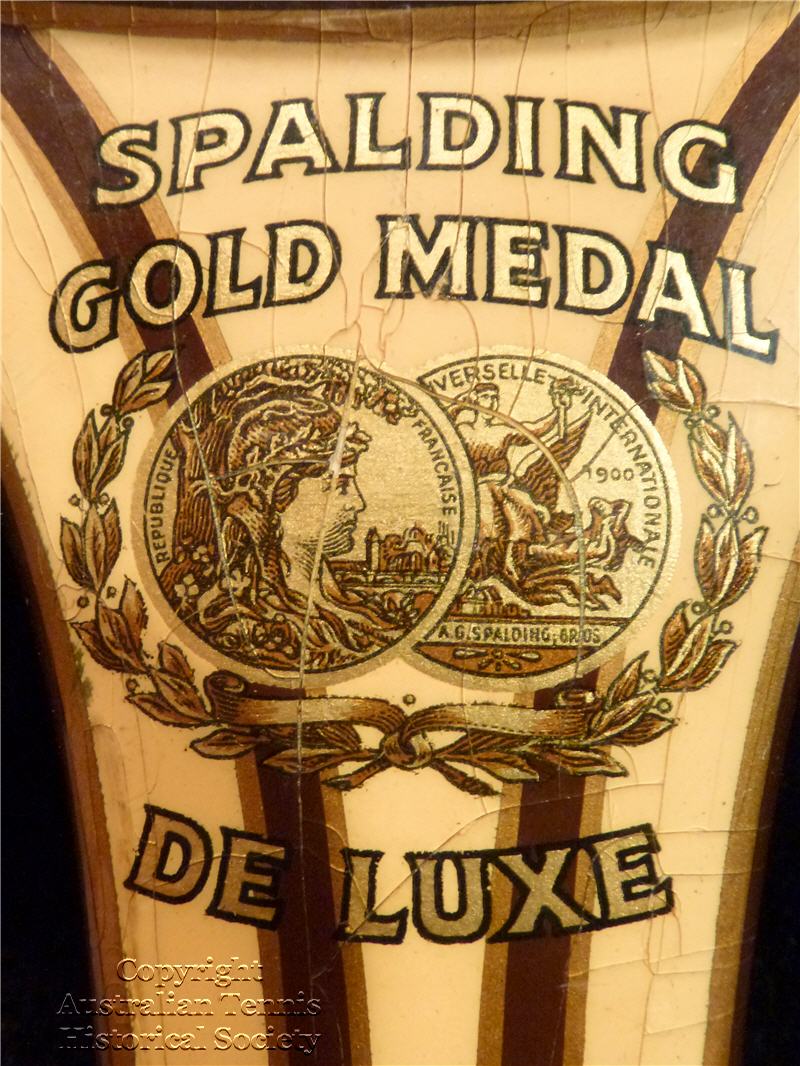
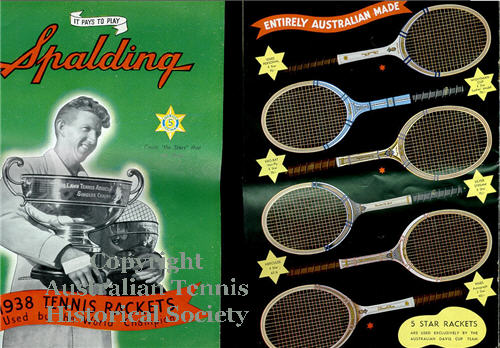
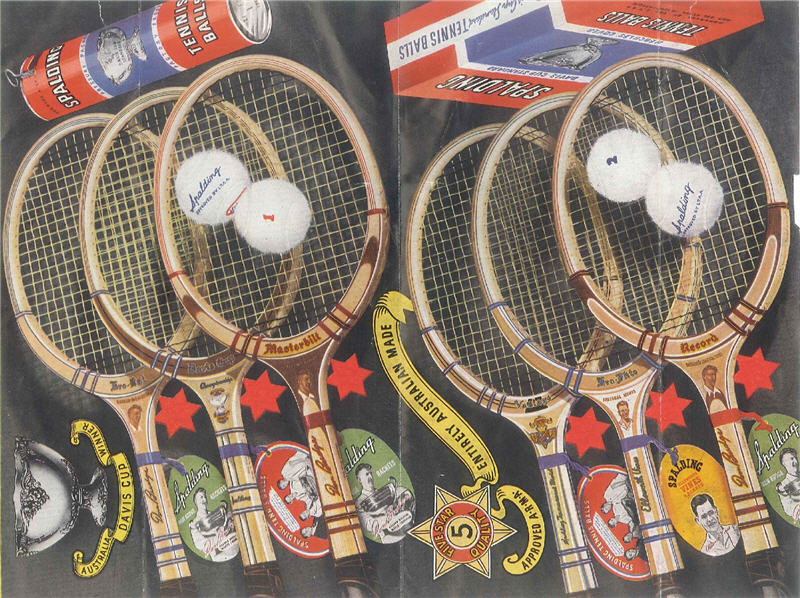
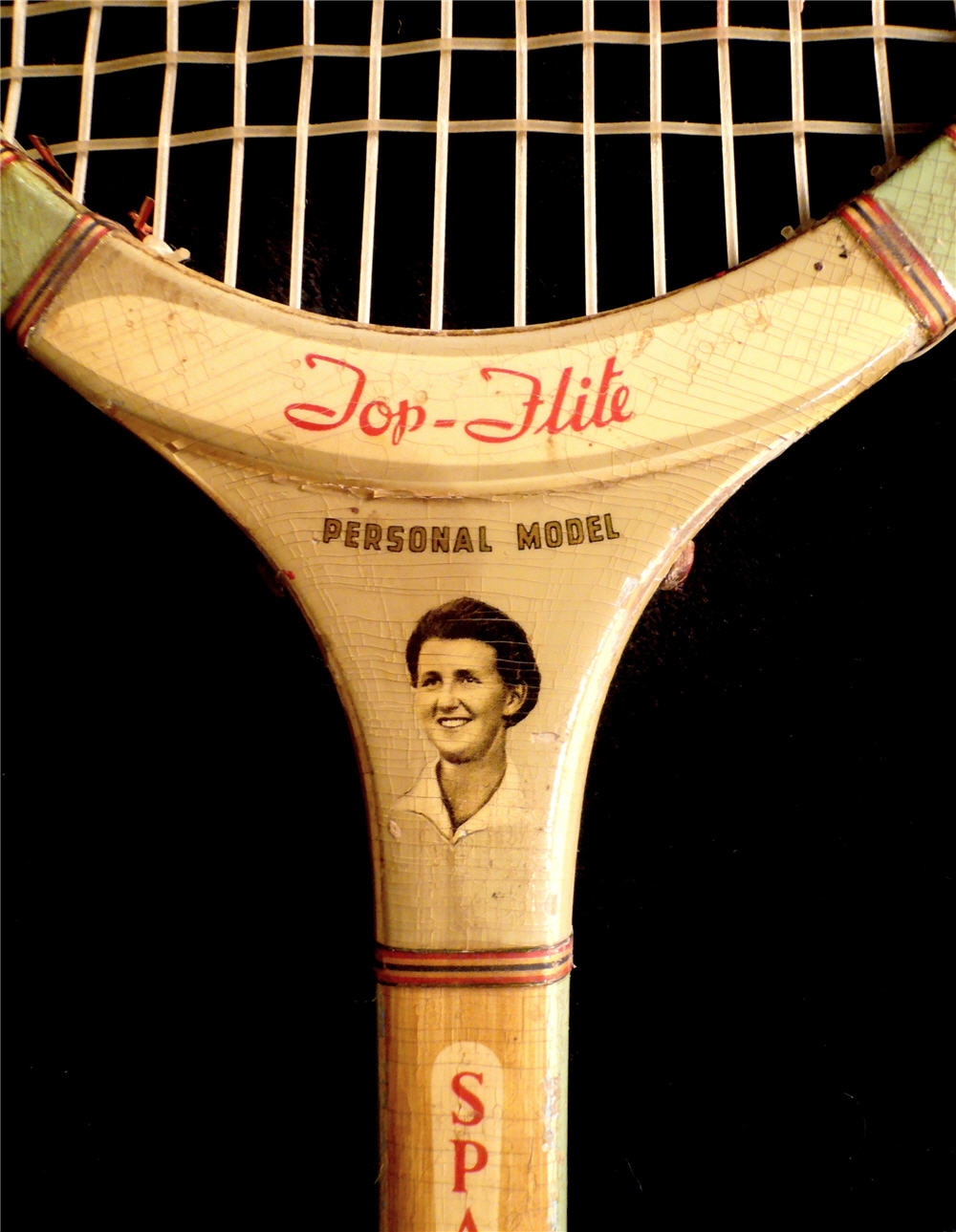
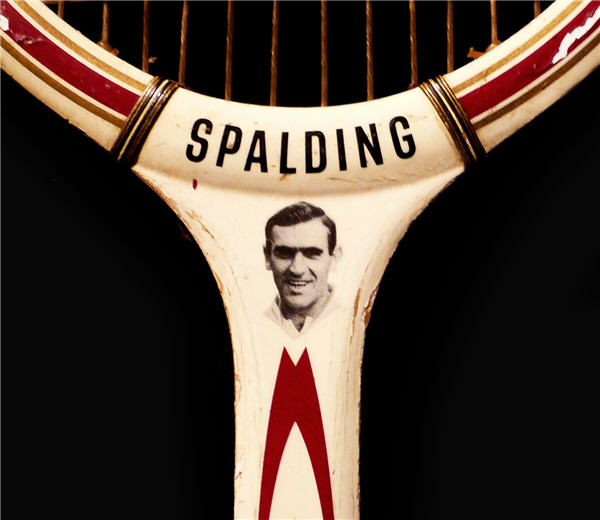
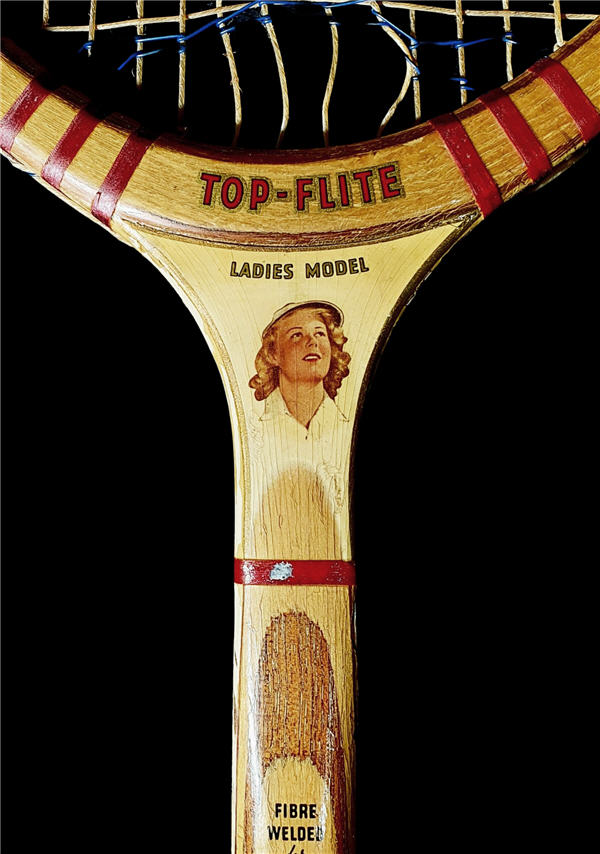
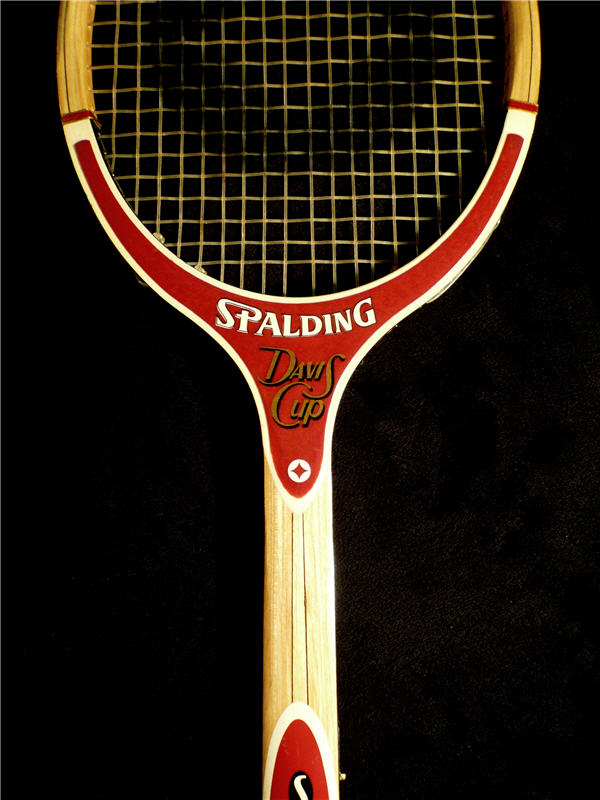
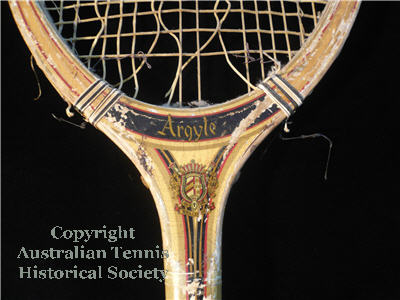
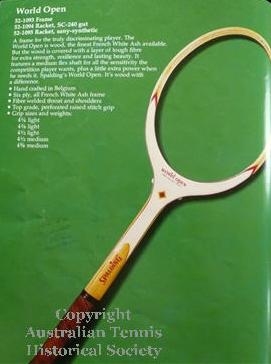
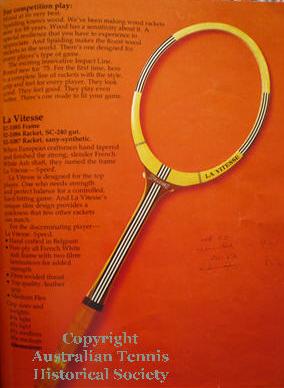
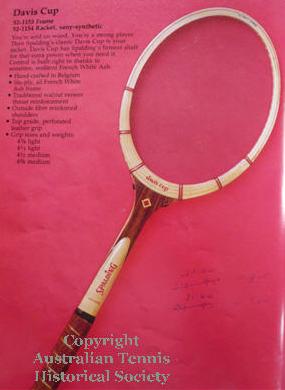
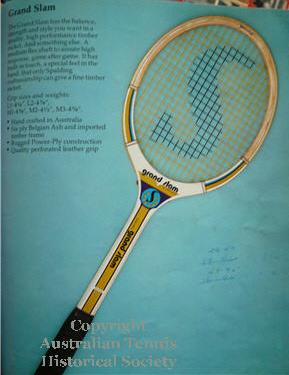
USA Company A.G.Spalding was founded in 1876 by Albert Goodwill Spalding a successful baseball player. While the business was based on baseball the company expanded into a variety of sports, tennis included and sold the famous name “Slocum Tennis Racket” after Henry Slocum who was the second US singles champion in 1888/1889. This racquet was made in Belgium. In 1925, Spalding made the decision to open their fifth plant globally in Australia, adding to those which already existed in the USA, Canada, UK and France. Melbourne was their preferred city and the suburb in which the new plant was constructed was Sunshine. Their decision to set up in Australia was based on the very protective trade tariff conditions which added quite considerably to the retail cost of imported racquets plus the growing popularity of tennis and golf in this country. Companies such as Alexanders and Chesterfield were taking advantage of local production and gearing up for growing demand. The plant was purpose built to make tennis racquets, tennis balls and golf balls. The tennis balls were the new two piece plugless and stitchless type which Spalding had invented. One of the first employees and Victorian Sales Manager was Gerald Patterson a famous Australian player of the era, known for his wins at Wimbledon in (1919 & 1922), the Australian Championship in 1927 and numerous Davis Cup teams. Tennis racquets were imported from the USA in a rough state and then on special machinery they were shaped to the various designs. They did however use Queensland maple and cedar woods for the handles. Projections in the first year were to produce 40,000 racquets. Key 1926 brands were the top of the range Kro-Bat, Gold Medal OS, Gold Medal HIC, Vantage, Greenwood, Crescent and the local (assumed) Sunshine models. Players of the era endorsing Spalding at the time in local advertising were W.Tilden, Bill Johnston and Australians Jack Hawkes, Pat O’Hara Wood and Gerald Patterson. By 1927, the famous Top Flite split throat made an appearance and given Spalding’s global marketing stance, racquets produced in the USA which are in more plentiful supply closely resemble designs made locally. In 1929, there was the Davis-Cup-De-Luxe and by 1930 models included the Peerless and the Endura.
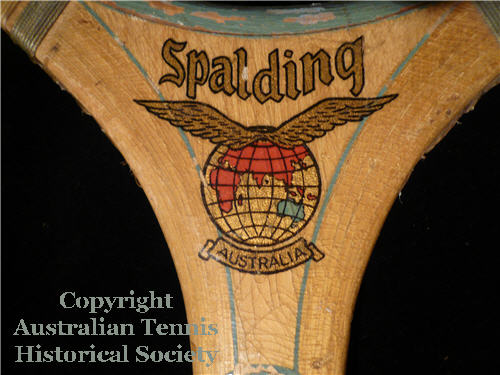
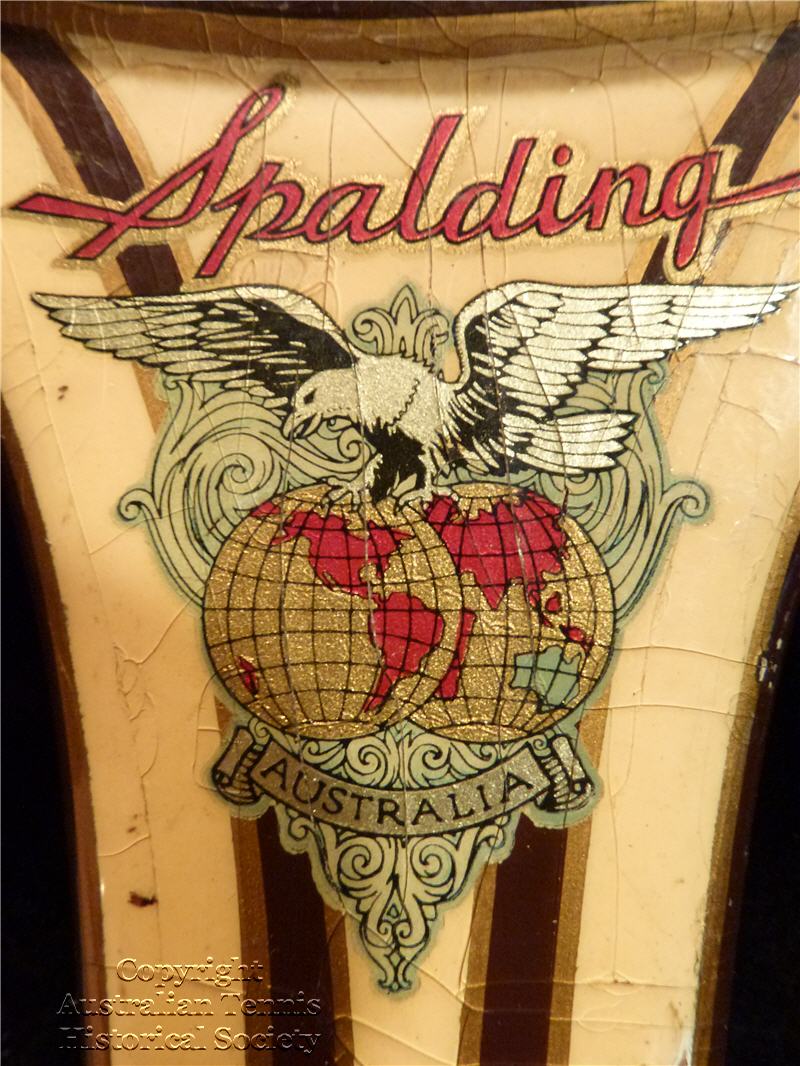
9th Sept. 1926 This is a very early truly Australian Spalding racquet featuring the suburb of “Sunshine” in the logo. Note Australia is highlighted in green which matched the paint colouring on the shaft.
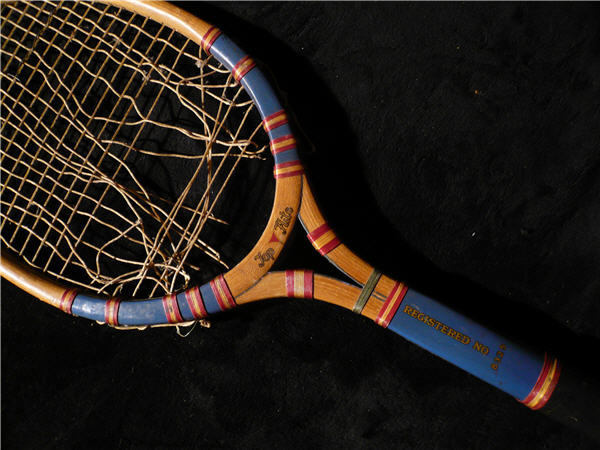
These colourful images were part of the Hartley Retail product catalogue 1930-1931. The real model below. The registered number indicates all the racquets were weighed and balanced at the factory allowing a store to order identical racquets for a customer.
Courtesy of State Library of Victoria. Note the Sunshine model.
The relationship between Pat O’Hara Wood and Spalding also saw an early signature racquet model being produced.
7th September1929
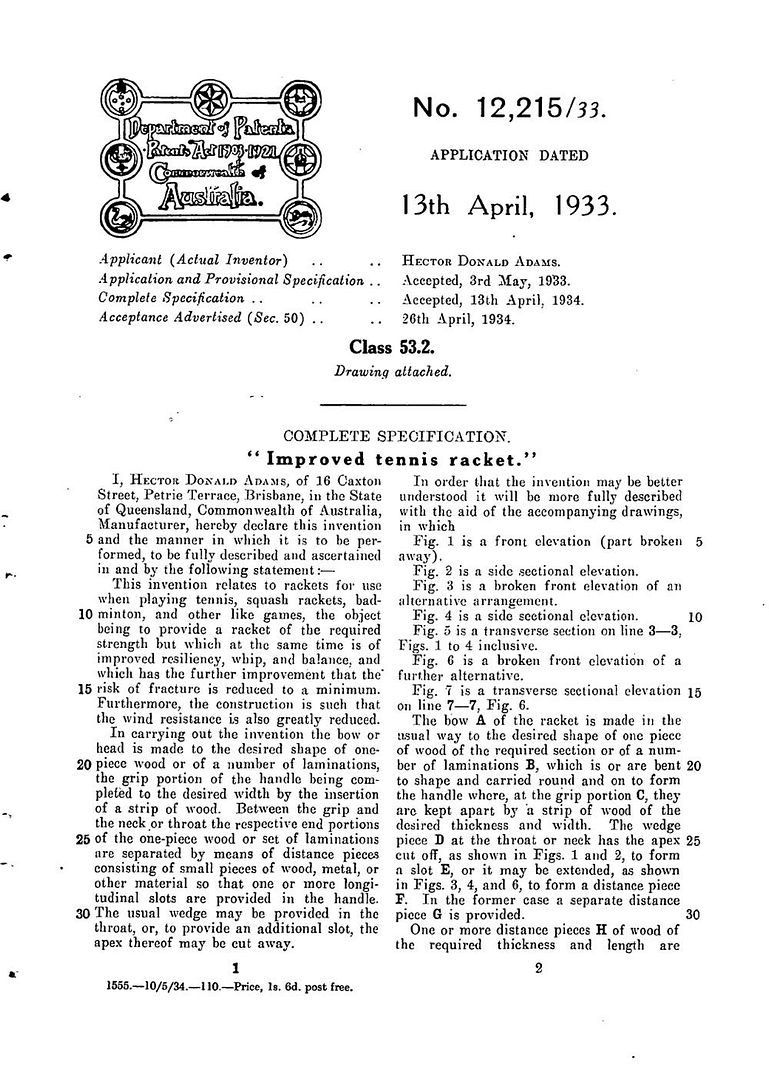
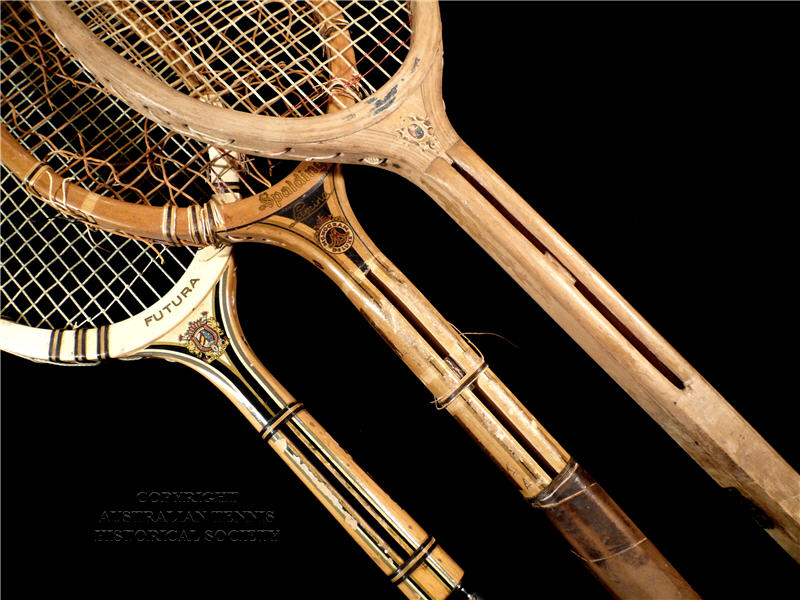
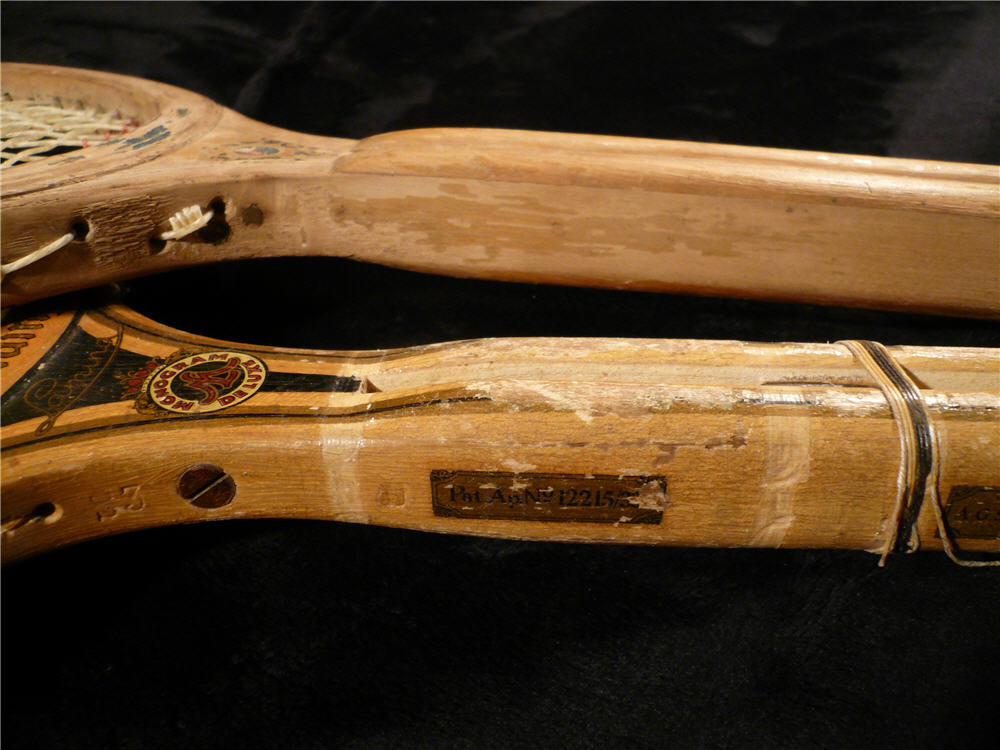
In the mid 1930’s Spalding introduced a range of split shaft models against some of the other competitor innovations including balance weight adjustment and semi flat top models. We discovered this new design was invented by a Queenslander, Hector Donald Adams (pic) and patented here in Australia in 1933/1934 patent number 12215/33.
Bluebird proto-type design, below, presumed made in Qld by inventor, Hector Adams.
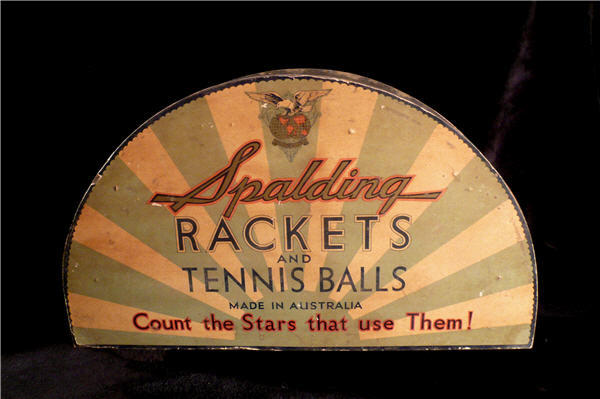
Another nice uncovering this year was this mid 1930′s Spalding retail store display stand used to hold 5 racquets
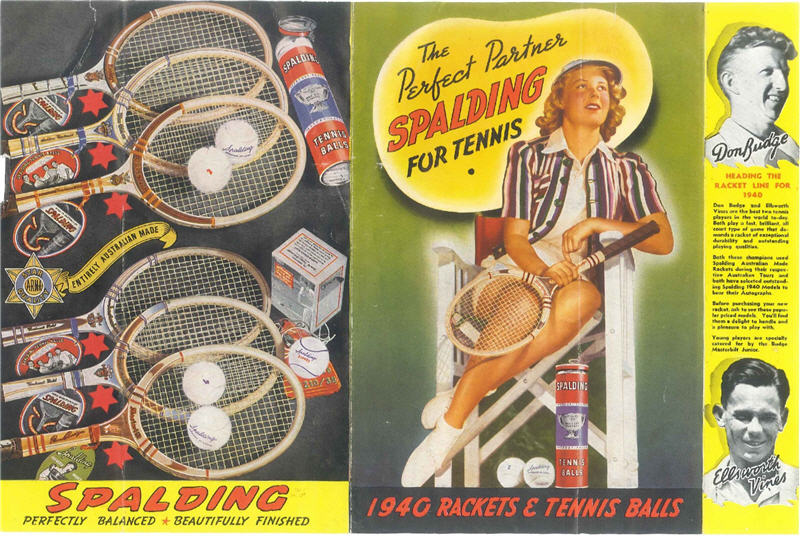
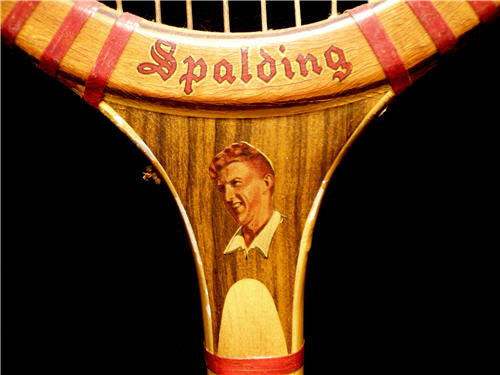
Below we have a shot of the first Grands Slam winner Don Budge who was used extensively as a Worldwide endorsed player. Racquets from the top are Vines Personal, Wightman Cup Ladies Model,Kro-bat Veri Ply, Silver Stream, Hercules (4 star), Vines Autograph (3 star). The first were 5 star as used by the Davis Cup Team.
1940 Catalogue featuring the Don Budge model
Frank Sedgman used the Spalding Don Budge model to win his first Australian title.
This locally made racquet from the late 1930-1940’s shows champion player Nancye Bolton (Wynne). She won the Australian Open in 1937, 1940, 1946, 1947, 1948, 1951, RU 1936, 1949 Spalding acquired Alexander Tennis Racquets over a period from 1957 to 1961 and integrated the machinery into the Sunshine plant. They even attempted to continue the ‘Cressy’ name with a Spalding model.
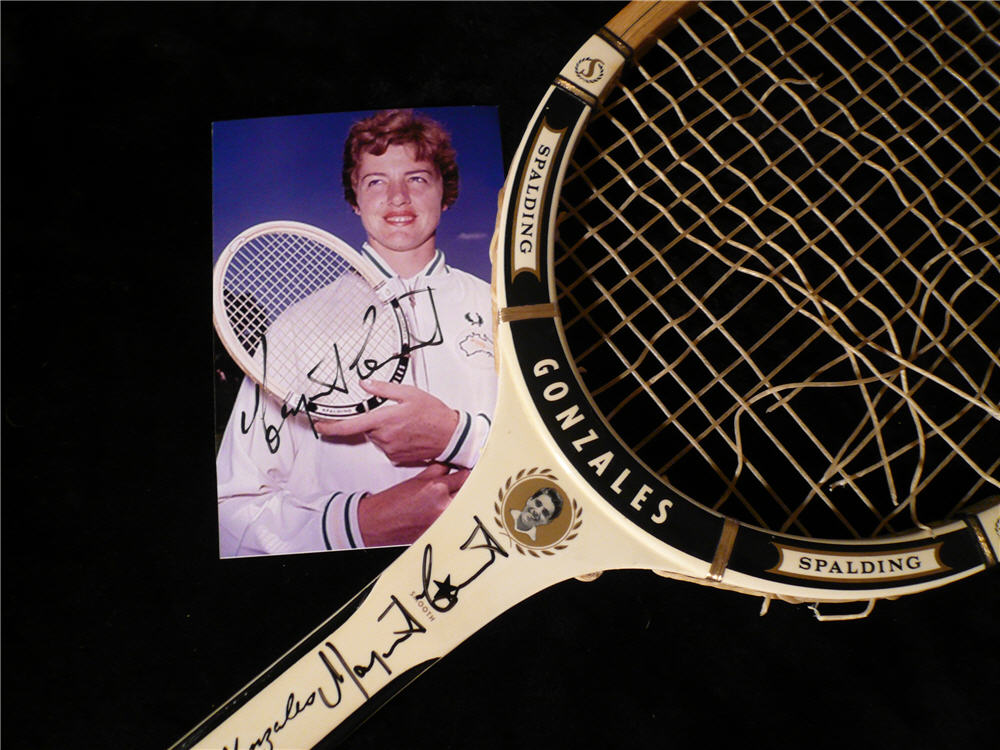
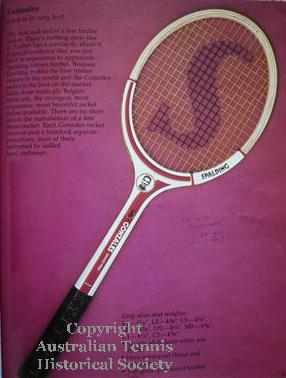
Margaret Smith (Court) won her first Australian Major singles title with an Oliver model but switched to Spalding Gonzales model. She switched to Slazenger for most of her career owing to a dispute over playing exhibition matches in Australia instead of letting her travel overseas.
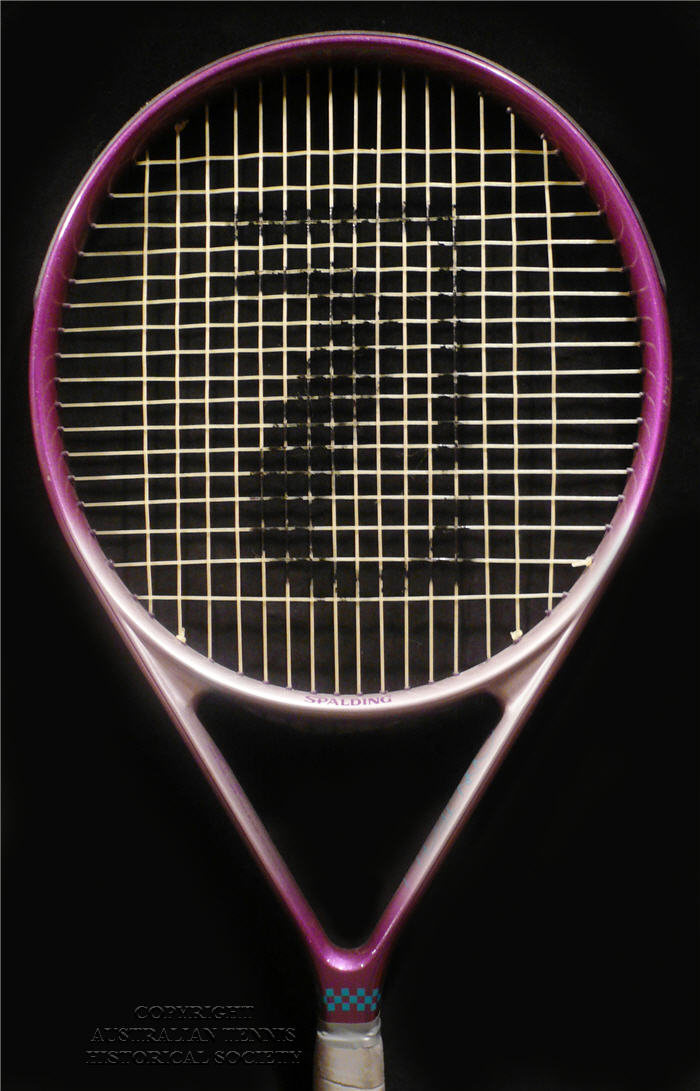
The 1975 Australian line up
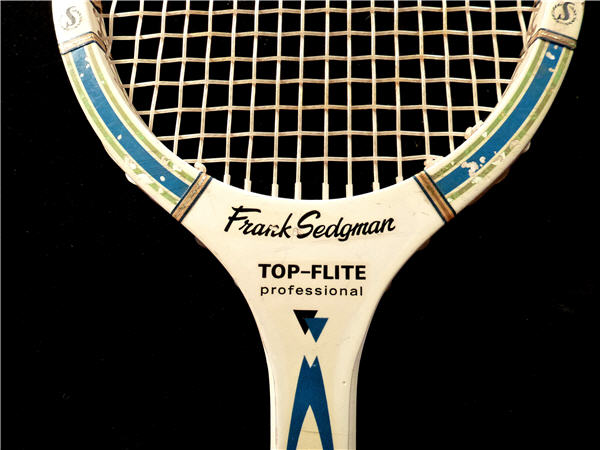
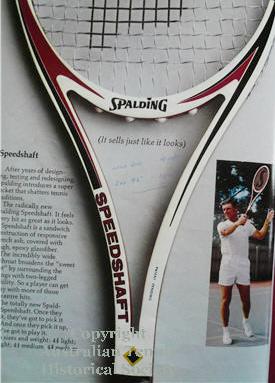
The very attractive Speedshaft racquets were made by Snauwaert in Belgium. Frank Sedgman as a retired Masters player endorsed Spalding.
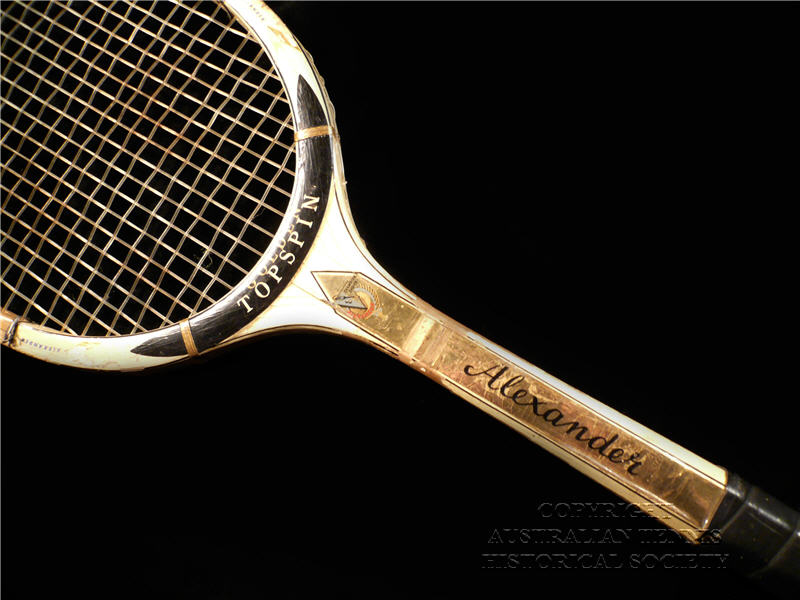
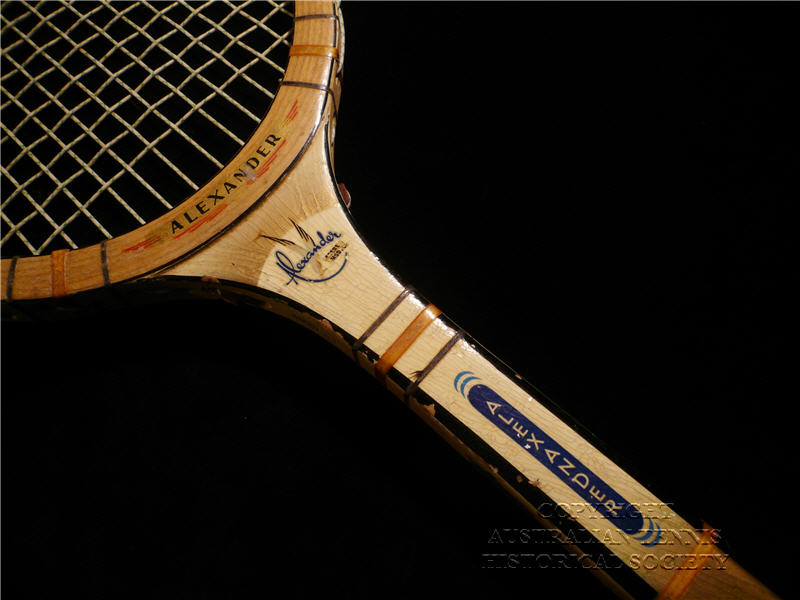
The Alexander Patent Racket Company is probably the most successful homegrown racquet manufacturer beginning in 1926 and operating until 1961. It is largely an untold story and thankfully family members have been researching the history to produce a book for release sometime mid 2011. (What A Racket by Gus Green)
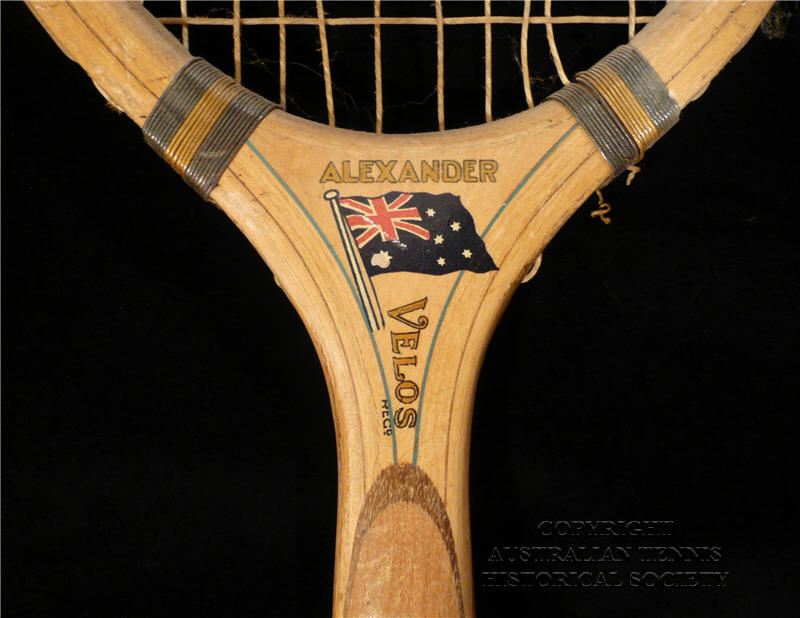
The original owners of the business were first involved with sporting goods retailing and were importing French racquets. However, they met Alfred Alexander who experimented, invented and patented the first form of dry bent timber racquet frame laminating, a process which would change wood racquet construction techniques forever. With this opportunity, the Alexander Patent Racket Company was formed and became one of the Worlds most prestigious brands.
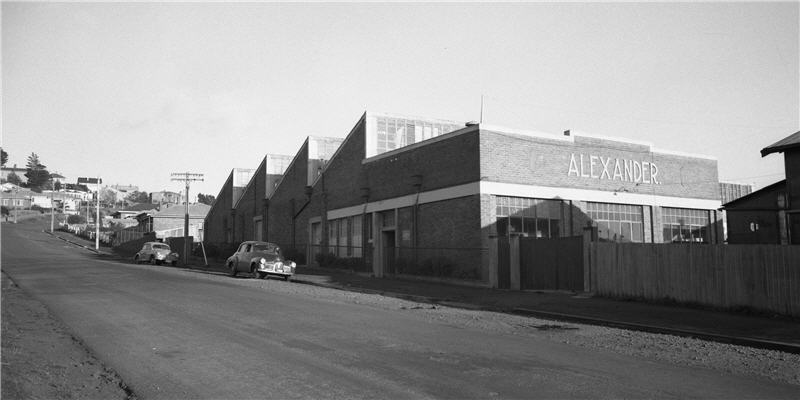
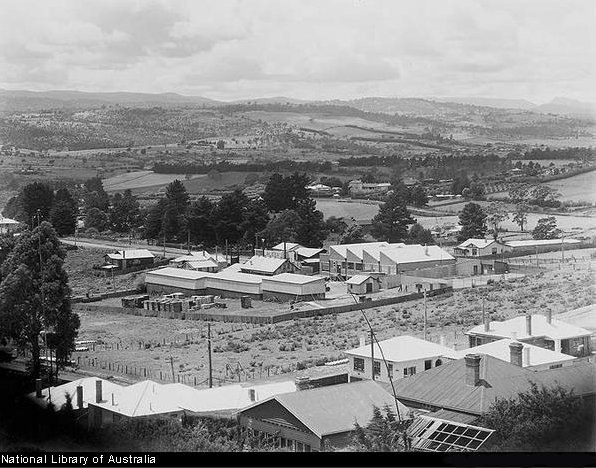
The Incoprorated Pty Ltd company was established in 1925 to acquire the patent and new factory facility commissioned by the existing owners Alfred Alexander and B.B. Hopwood a local sporting retailer opened in 1926. It was located on the Newstead estate, Launceston on Gunn Street and was powered by electricity to not have a smoke impact on nearby residences.
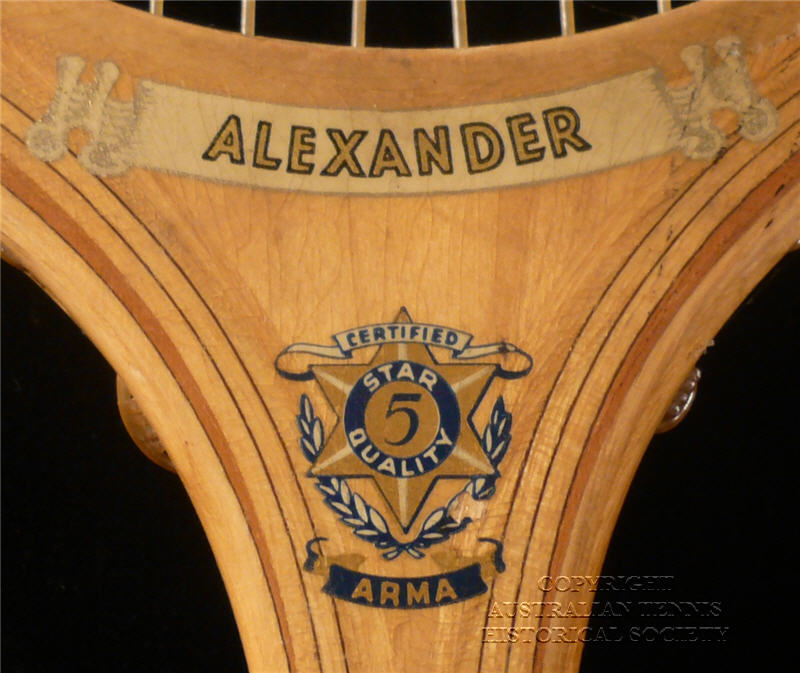
The original patent was issued on the creation of frames with more than 4 plys and from the outset racquets of 5 plys were being produced. Once formed in a dry bent manner they would take about 16 hours to dry compared to steam bent timber which required months if not years to dry as logs and then again for months after being shaped as racquets before being completed. The huge advantage with laminates is the speed at which racquets could be completed without tying up capital in inventory. The process revolutionised racquet production. As a laminated product, the company sometimes added Walnut strips in the middle of 4 English ash layers to create a a more attractive end result. Production numbers began at 140 per week with estimates of 530 per week within a few months using all the skills of mass production and modern machinery where possible and a workforce of 13. Interestingly, the retail policy was only to sell racquets that had been instore for 2 months, I presume to monitor any post production issues. At this time, Australian Made was not always considered high standard compared to the English product players were used to so no mention of location was presented on the early racquets just the Alexander name.
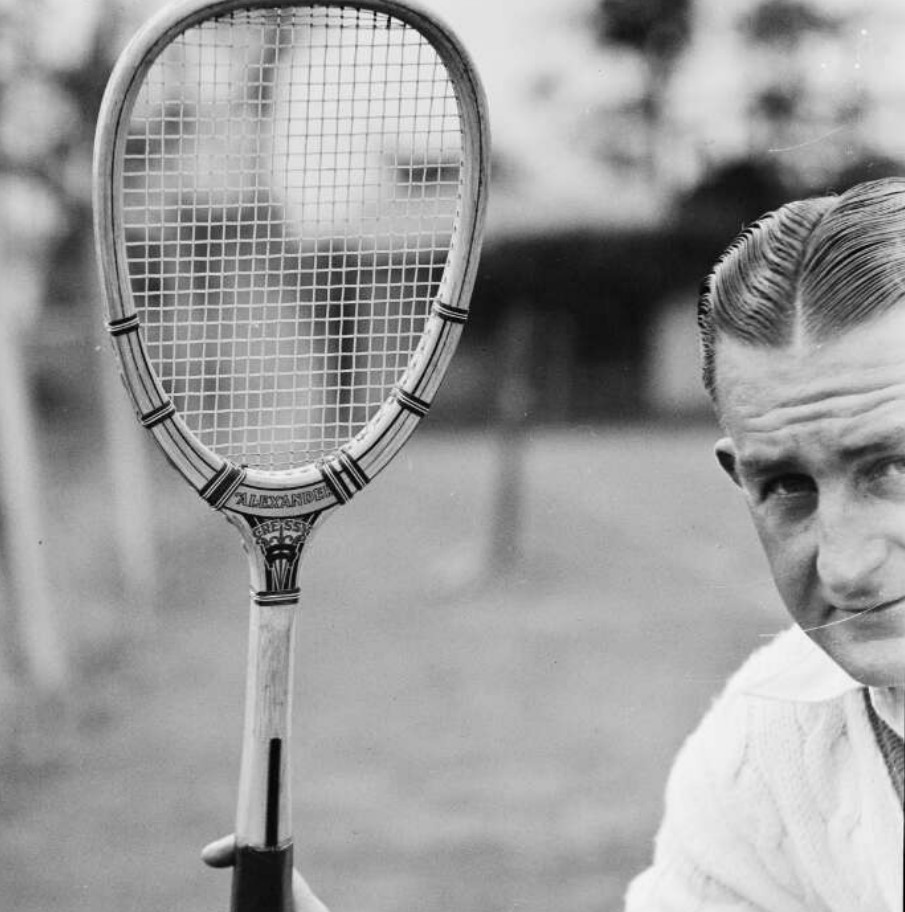
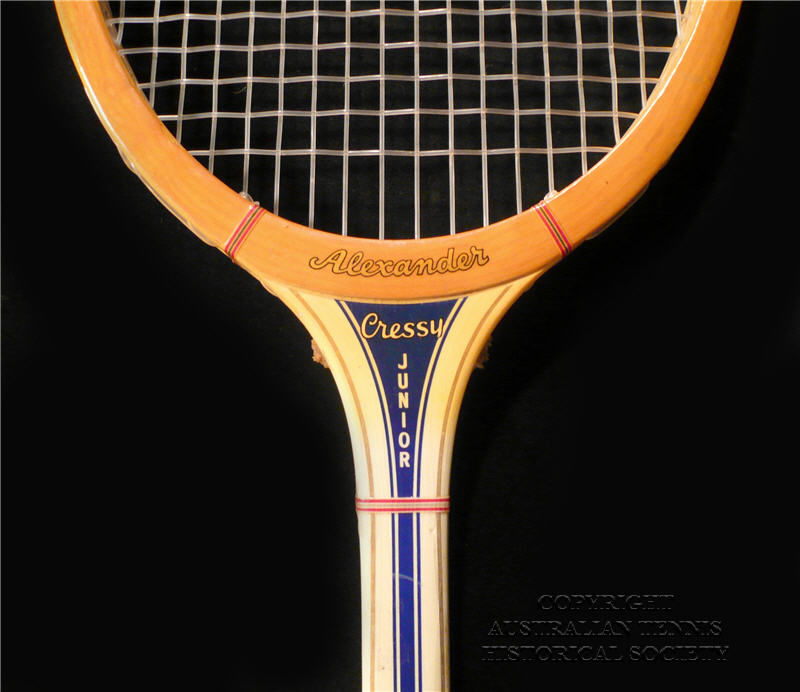
The first models included the: Dover, Murray, Understudy, Hunter, Cressy, Masterpiece, Mersey, Lismore and Red Seal. Naturally, other models followed, but it was the “Cressy” which remained a flag ship brand name from the start to the end. The name ‘Cressy’ is believed to have been derived from small town outside of Launceston which was the birthplace of one of Tasmania’s great champion players. When you think about it, Cressy’s longevity (37 years) as a brand certainly places it in the very rare group of long term brand names which includes the famous Dunlop Maxply model.
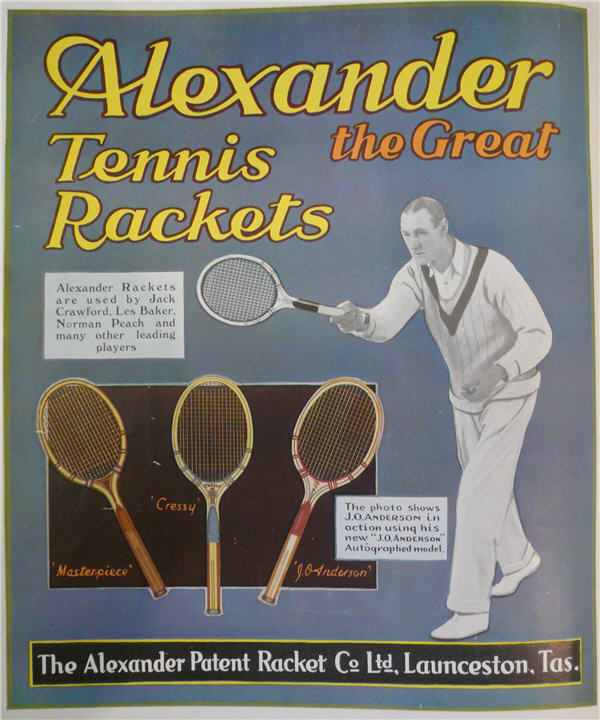
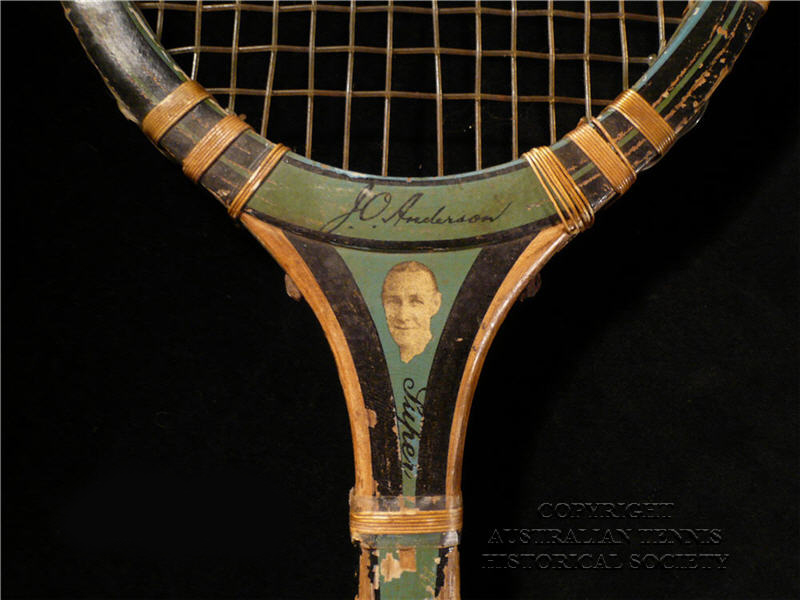
In 1927, a well known local Tennis player, champion and businessman from the area, Mr W.J.Sheehan, was appointed the Business Manager and it was under his guidance that the firm embarked on new directions in decorating models with more paint, decals and bindings and also opened opportunities to develop player endorsements. Very early on they signed up Australian Davis Cup and Champion J.O.Anderson and our lady Champion, Daphne Ackhurst. In the early 1930’s they company produced on the earliest known photo decal racquets featuring J.O.A.
The boom years came in the 1930’s & 40’s when Australian Champion, Jack Crawford won Wimbledon in 1933 using a Cressy “Wizard”. Also many of the Davis Cup players were using Alexander racquets as well. Jack Crawford’s racquet had a semi flat-top design reminiscent of the styles popular in the late 1880’s early 1900’s. In the early 1930’s, Sir Norman Brookes while playing tennis at his Frankston holiday house showed Sheehan his early style racquet he played with in the 1900’s. Jack Crawford, who was also there, like the way it played and so Sheehan went back to the Alexander factory and fashioned a new style of semi flat-top racquet which was given the name “Wizard” from the nickname previously given to Norman Brookes during his Wimbledon winning days. This new flat top design, inspired the entire industry in Australia with many manufacturers producing both oval and flat-top models. Diamond stringing also became fashionable again at this time.
The company produced a range of sporting goods including cricket bats, hockey sticks, golf clubs and squash racquets. As a promotional gimmick they produced a 12″ tall miniature “Cressy” replica tennis racquet hand mirror. They also produced a mandolin.
In the late 1950’s the Alexander factory was wound down and sold to Spalding in Victoria. The last racquets produced were in 1961 yet the Cressy name continued for a season under the Spalding banner when it was revived for just one more year in 1966.
The final days of the Alexander company really came about as Spalding, Dunlop and Slazenger dominated the mainland retail scene and also acquired most of the high profile players to endorse their racquets.
The Cressy Wizard was used by Jack Crawford to win the 1933 Australian, French and Wilmbledon men’s singles titles
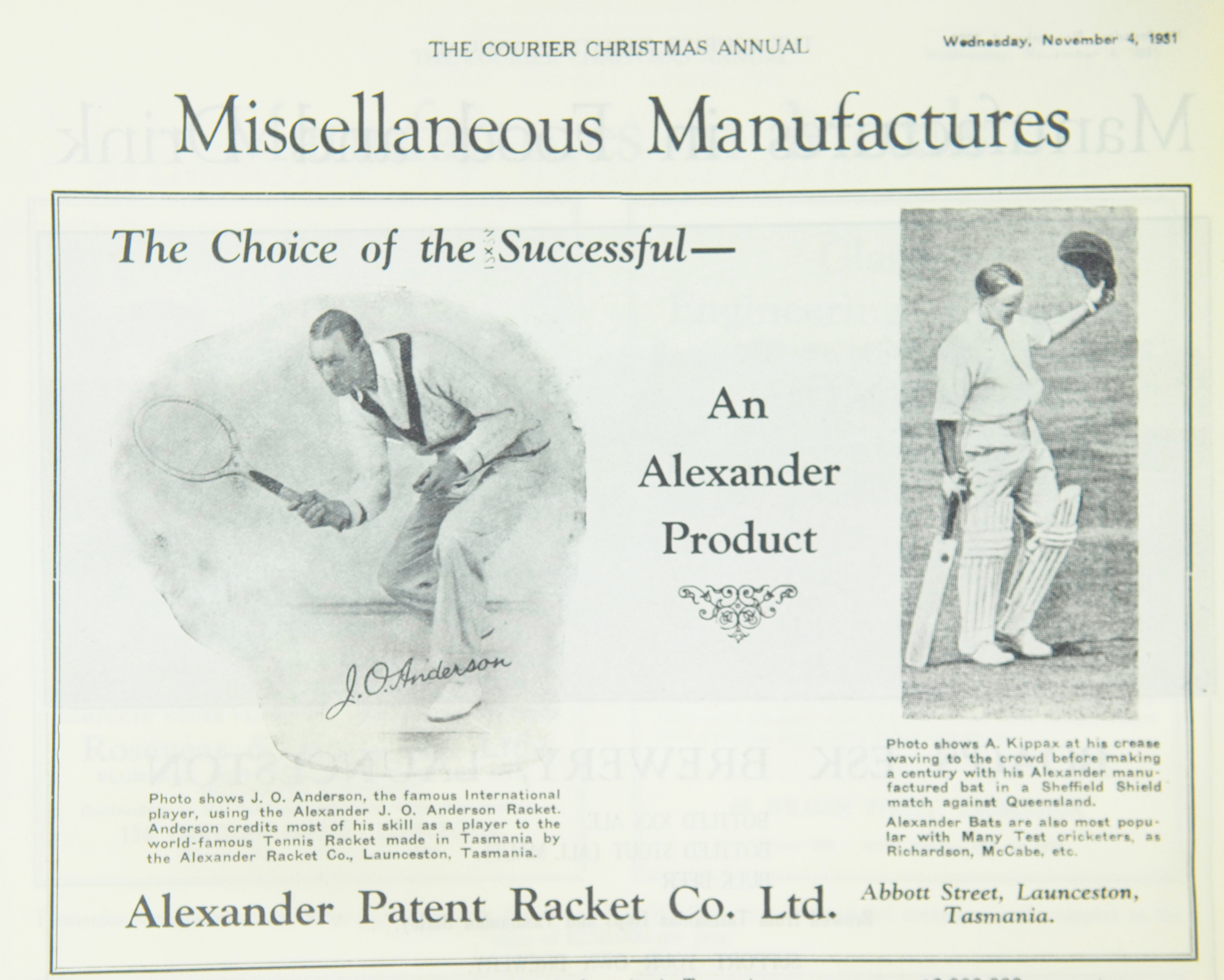
This ad from 1931 shows J.O.Anderson the primary sponsored player at this time.
This full page story comes from the Launceston Examiner 14th Jan 1927 and shows the exterior of the factory with various stages of production.
The actual patent related to the lamination of timber in a cross grain formation.
These words, kindly supplied by Gus Green (relative) are from the patent applied for in 1921 and granted to the company in 1922:
The Alexander Invention
Date line for the Patent application dated 12th July 1921 by Alfred Alexander jun. and his younger brother Douglas Davey Alexander both of Elphin Rd Launceston the complete Specification was accepted on 7th June 1922 and advertised on 20th June 1922
No 2594/21 Class 53.2.
The Complete Specification read “ Improvements in the construction of rackets for tennis and other like games.”
We, Alfred Alexander, Junior, Technical School Instructor,and Douglas Davey Alexander, Carpenter, both of Elphin Road, Launceston, in the State of Tasmania, Commonwealth of Australia, hereby declare this invention and manner in which it is to be performed, to be fully described and ascertained in and by the following statement:-
Our invention relates to the construction of tennis and other like rackets the rims of which have usually been made of a solid piece of wood bent to the shape of the racket and secured to the handle.
According to this invention, we form the rim of the racket entirely of thin strips of wood or other flexible material that are glued or otherwise secured tightly together. The strips are long enough to extend down-wardly from the rim and to lie against the core of the handle, thus forming part thereof The handle proper is therefore much smaller than the ordinary handle and is flared outwardly at the top where it enters the rim, the joints being reinforced in the usual way.
The strips will be composed, preferably, of long grained and cross grained woods disposed alternately in the rim which, when secured together, provide a strong and satisfactory construction of racket. The gut or strings are stretched between the rim sides as at present.
The rim is made to the usual shape by bending the strips 4 upon a former or mandrill, these strips are then tightly pressed and secured together, the lower portions of the same being upon each side of the handle
This member is really the handle core and extends upwards into the rim, flaring therein to the sides where it can be secured in the usual way. The said core should also be slightly tapered and widest at the lower end. To complete the handle the ordinary covering or filling strips are paced in position, giving the required octagonal shape to the handle, which is finished at the end with the usual leather piece.
This photo shows the original factory in Launceston, Tasmania (Photos Tasmania Libarary)
As imported Ash supplies were becoming in short supply and hotly contested for by every other manufacturer (globally), Alexander’s actually attempted to develop a local industry. The Company acquired the land at Hollybank in the Underwood district in 1933, comprising a total of 170 acres with a target to plant 109,200 English trees.
One hundred 100 acres were to be English Ash, however in the first three years only fifteen acres had been cleared, ploughed and planted with 21,600 trees.
After close monitoring over a period of 10 years, it became obvious that the ash trees were failing to thrive and not growing as expected. Nothing could be done to stimulate the growth of the plantation due mainly to the issue that Ash normally grows in deep, alluvial soils in the Northern hemisphere and that is not what was at Hollybank, the soils were too acidic and moisture was also a problem.
The project was abandoned in 1950 with the sale of land to the Forestry Commission in November 1956 the year of the Olympic Games in Melbourne. The sale price was £2809.
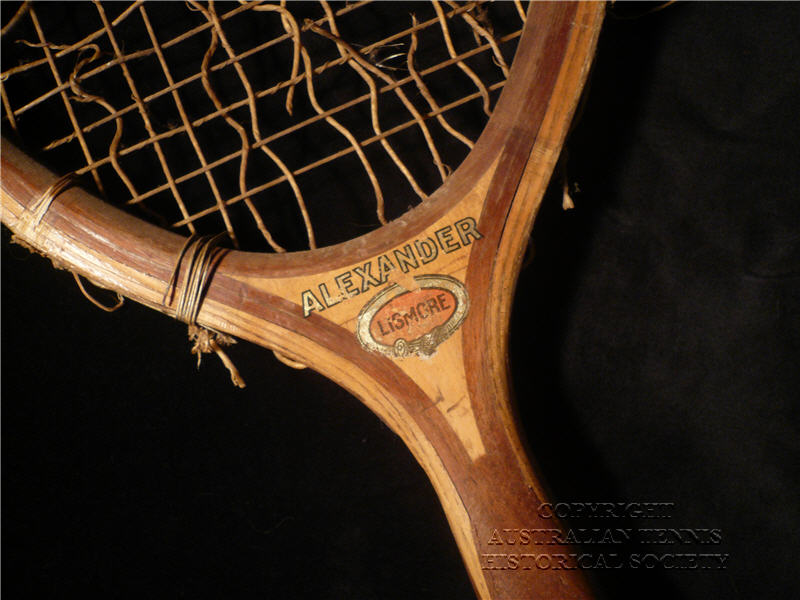
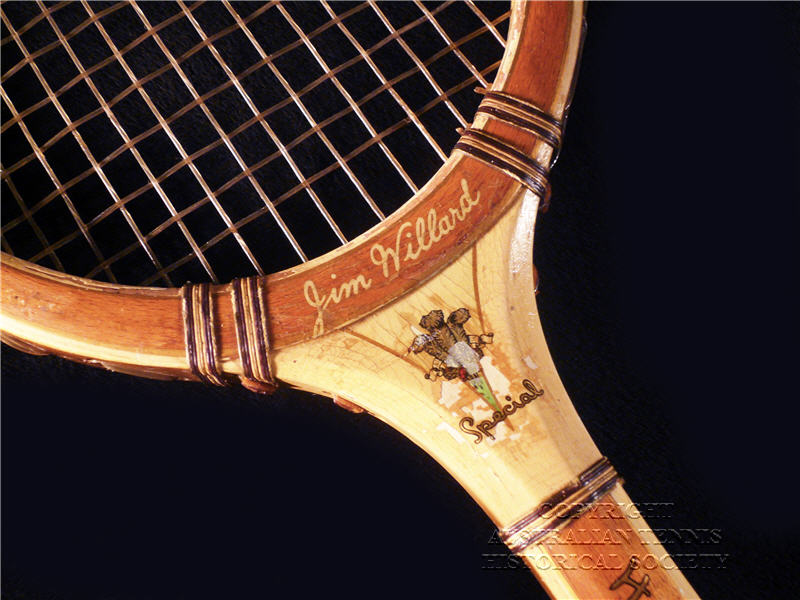
The Alexander Lismore is one of the earliest racquets promoted around Australia c1926. The patented lamination system is clearly visible, however, a feature of the design is the much thicker shoulder areas created by the additional layer on top of the wedge. It is advertised with sister racquet the ‘Cressy’ as being used by champions Messrs. Willard, Kalms (both NSW), Les, Baker and Dr. North. While Cressy and Lismore are both townships, we will need to dig around to find out how the Lismore connection came to be.
The workmanship is quite exceptional also due to the amount of contouring and beveling that exists.
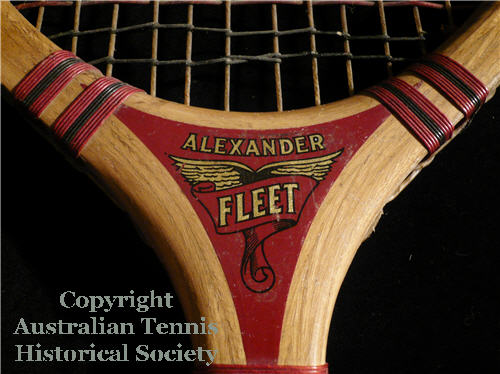
The Fleet model was introduced in the late 1920’s. This one is quite early as it has a grooved wooden handle. It has the patent stamped into the handle as was sold by Hartley’s, also stamped into the handle.
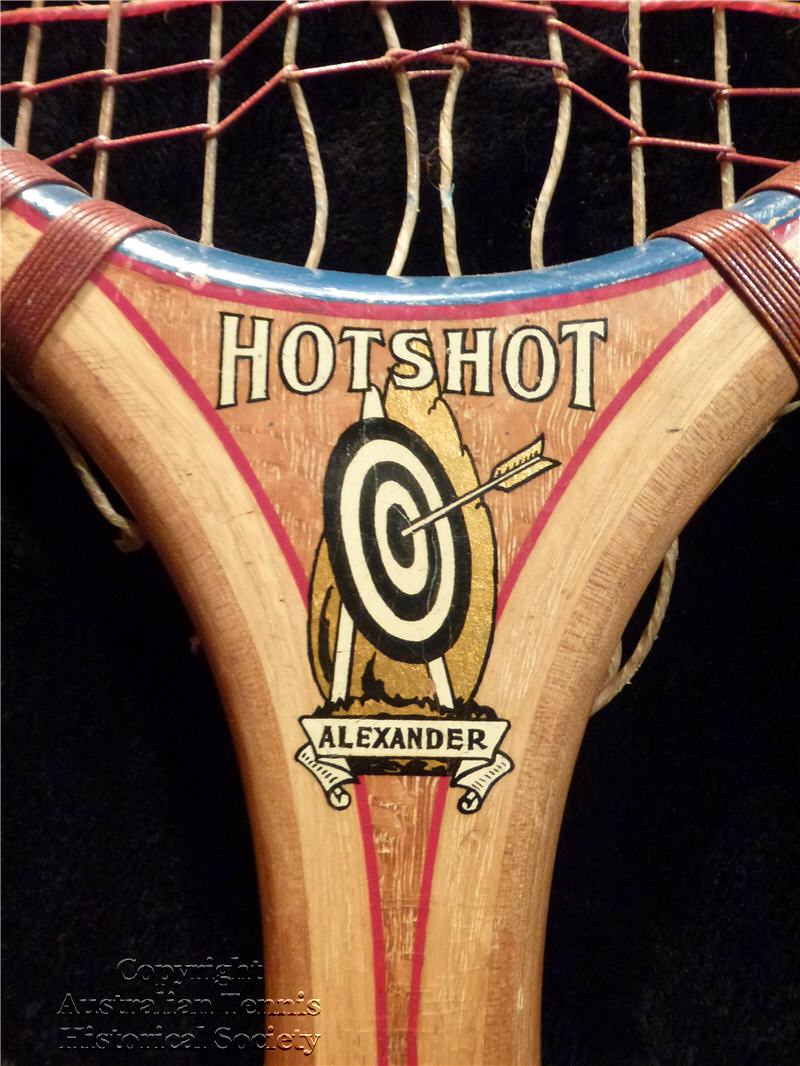
The Hot Shot model was introduced in the early 1930’s. This one is quite early as it has a grooved wooden handle.
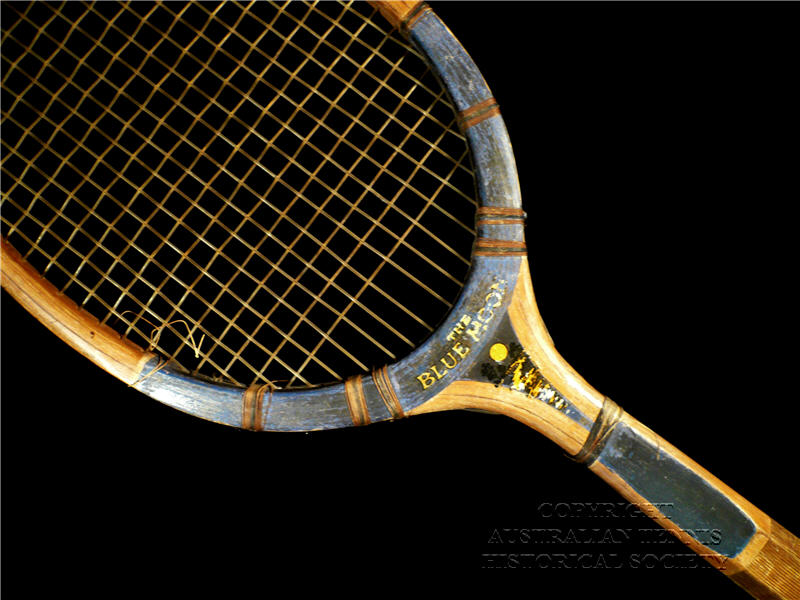
This Blue Moon model is one of the more elaborate colour/decal treatments. The night scene with a dark tree silhouette and the moon reflecting over water is hand painted and the Blue Moon wording is a gold transfer. Given this also has a grooved wooden handle it must be late 1920’s early 1930’s. Apart from the graphics, one other very nice finishing item is the leather strip around the base of the handle. This has also been grooved to match the handle.
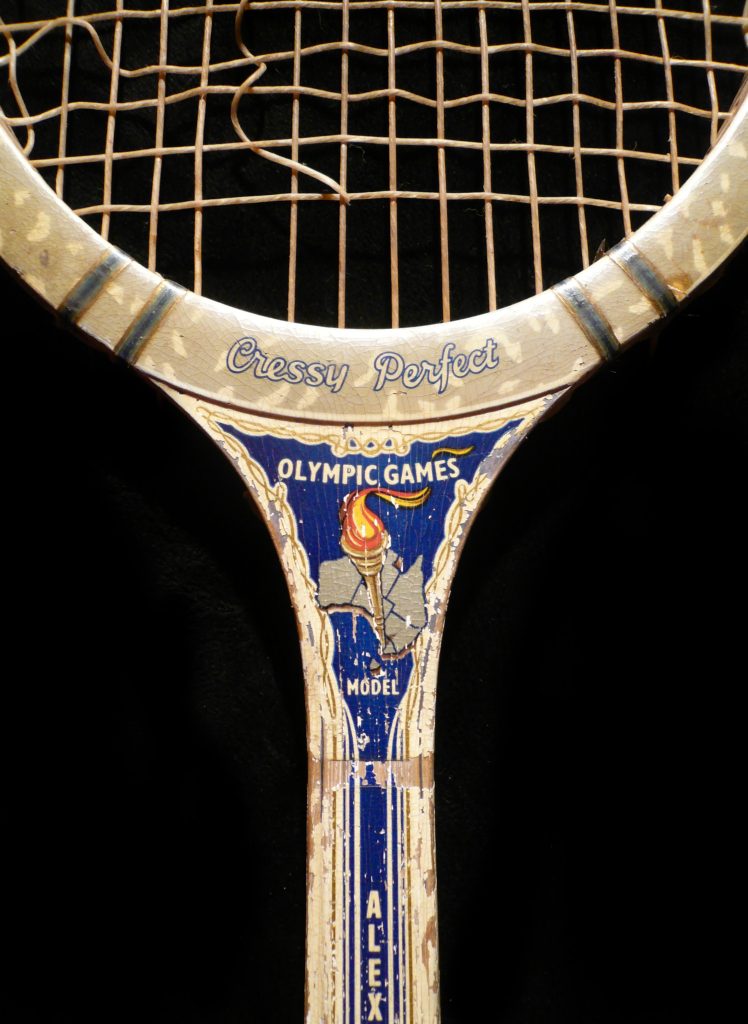
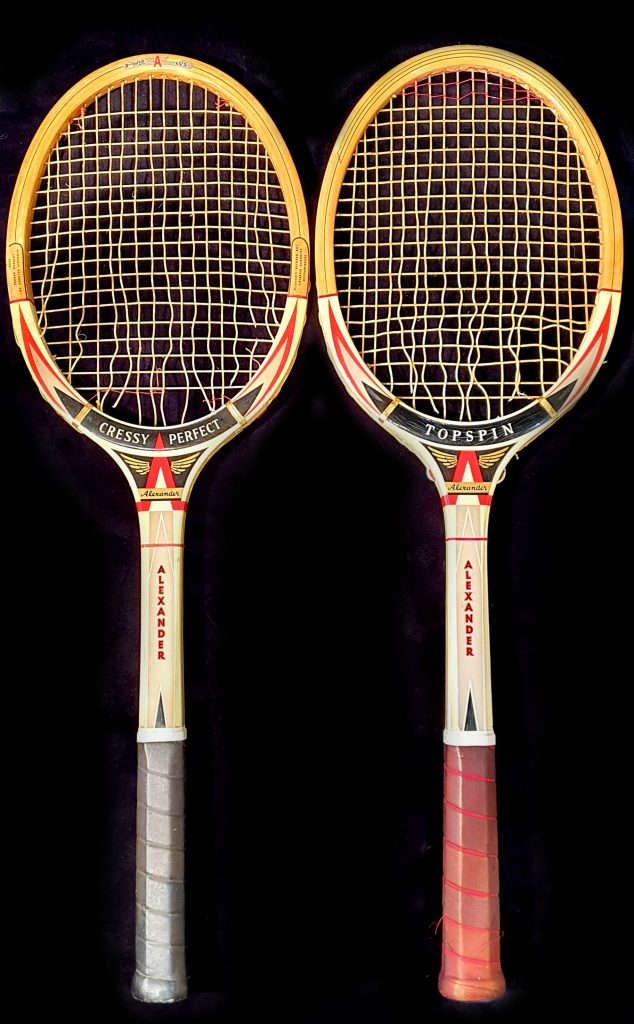
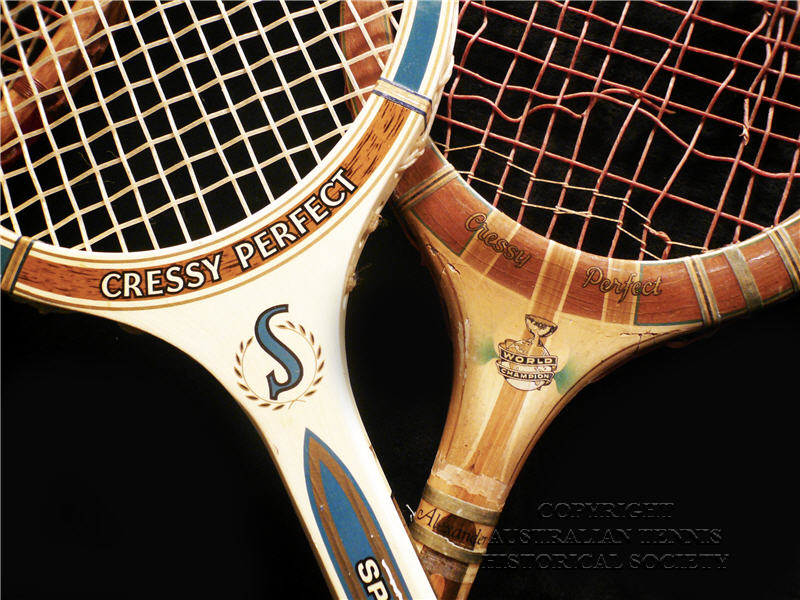
After Spalding took over in 1960, the Cressy name reappeared for a few seasons up to around 1966.
The last photo shows a Spalding Cressy Perfect model
Although born in Adelaide, Jack Oliver grew up in Port Pirie where his father was a carpenter. He left school at the end of grade 6 and went to work with his father where he no doubt learnt wood working skills. In addition, he was a competent sportsman and also also excelled as a painter winning many art prizes for his oil and water colour paintings. He was one of a handful of motor cycle enthusiasts who formed the Port Pirie Motor Cycle Club in the early 1920’s and went on to ride in the speedway in Adelaide.
By the late 20’s the family had returned to Adelaide and Jack opened a Sports Store on Henley Beach Road at Mile End near the corner of South Road, with tennis and fishing equipment (which he had grown up to enjoy in Port Pirie) his two major sales lines.
Jack played tennis for the Goodwood Tennis Club while living in Adelaide.
With the onset of the depression in the late 1920’s and early 1930’s, Jack was finding it difficulty to survive against the then 26 Tennis Racket Makers in Australia who would sell direct to the public at wholesale prices. (A clue for much research ahead)
And so, it was in the 1930’s Jack began “playing around” making his own rackets in his fathers carpenters shed at Grassmere Street at Grassmere (the now site of the K-Mart Complex on Anzac Highway at Kurralta Park).
The holes for the strings were drilled with a belly brace and bit, the rackets shaped with spoke shave and rasps and sprayed with the use of a Breager hand pump. The formers (what gave the rackets head shape) were of wood and the laminations which made up of the racket were all steam bent, wired to shape and left to dry before gluing.
At this stage his only outlet for these rackets was his own Sports Store located at Mile End.
In 1934 Jack married Marjory Gibbs and it was around this time that he bought at an engineering company’s bankruptcy sale a quantity of metal formers (racket head shape) and bands (to hold the laminations together). These had been ordered by a tennis racket maker who could not afford to pay for them at the time.
The Oliver tennis racquet company had begun.
By the mid 1930’s he was also making Table Tennis Bats and had bought a copying lathe (also at a bankruptcy sale) and started making Axe and other tool handles.
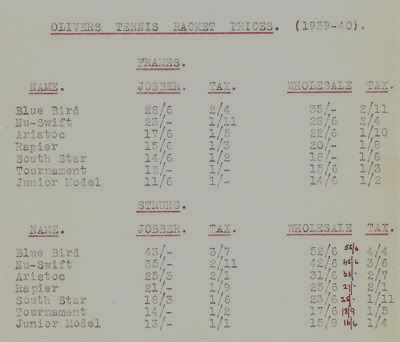
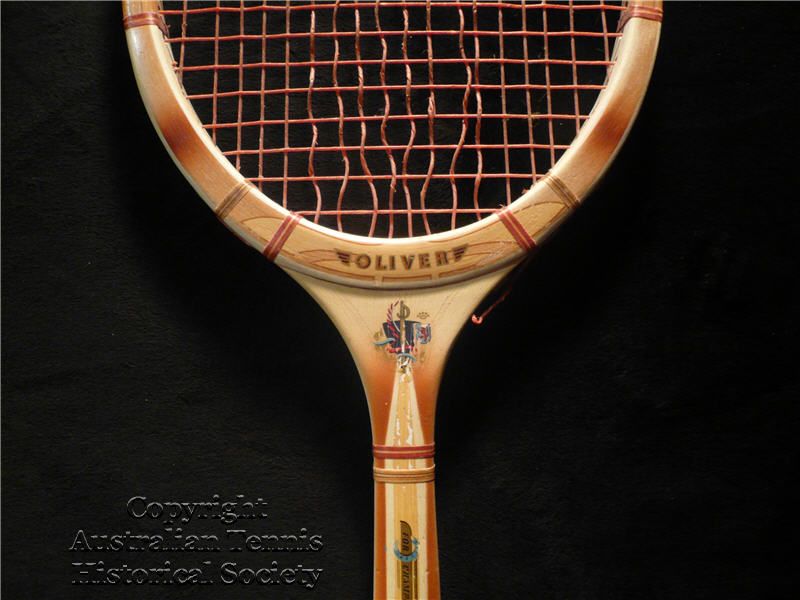
His early tennis rackets carried the name ‘Olivers’ which became just ‘Oliver’ by the late 1930’s (so anyone who has and ‘Olivers’ tennis racket knows its one of Jacks first Tennis Rackets). Jack at this time had purchased his fathers carpentry building and had commenced manufacturing tennis rackets full time.
By the late 1930’s Jack had established sales outlets for his tennis rackets in Melbourne, Sydney, Brisbane and Perth and had commenced exporting to Taylor’s (later to become Lord and Taylor) in New York. Post war, investment in new buildings at Grassmere and equipment led to a capacity five times greater than pre-war. Export sales had blossomed to include many European countries as well as Canada/ USA. Much of the equipment had been designed and built by Oliver company in house to ensure uniformity. It was mentioned that there were 78 processes required to construct and finish a racquet.
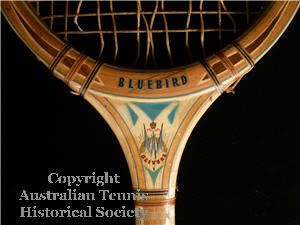
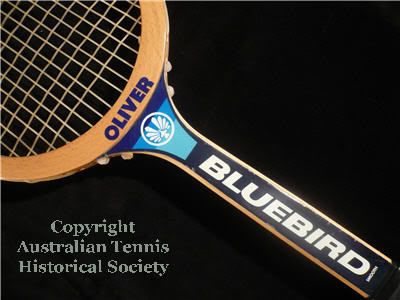
A Perth based department store (Boans later to become a Myer Store) who bought Jack’s rackets had registered the Trade Mark ‘Blue Bird’ which Jack purchased from them and thus the ‘ Blue Bird’ became the flagship model of the Oliver range of Tennis Rackets. The “Bluebird” model was named in honour of the 1930’s speed record holder, Malcolm Campbell’s famous car.
Wooden sporting goods manufacturing lasted 50 years until in 1984 the company could no longer justify local production as metal and graphite racquets produced in Asia began to dominate. In the mid 1970’s the factory was producing 50,000 + racquets a year, which by 1984 had fallen to fewer than 5,000.
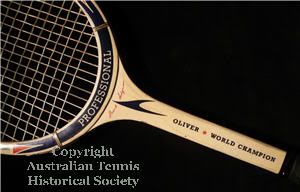
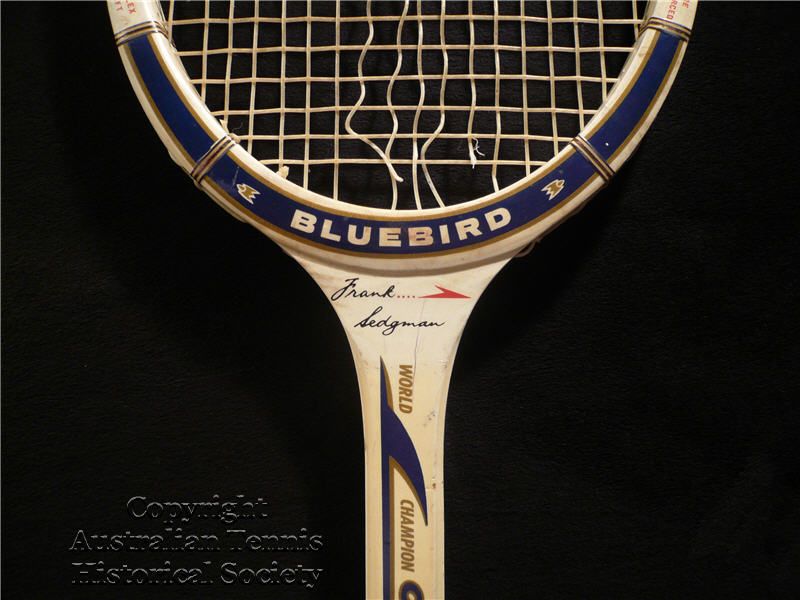
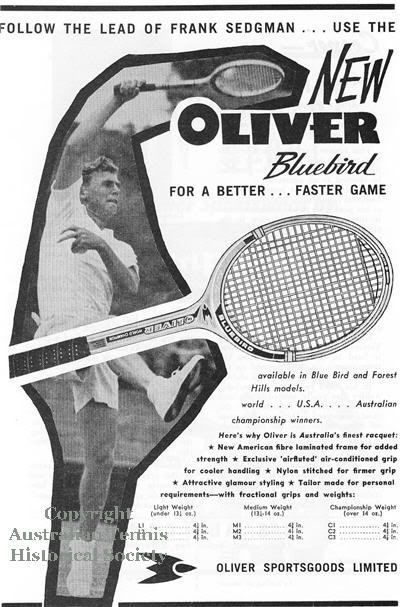
Key highlights for Oliver included Frank Sedgman winning Wimbledon in 1952 playing with an Oliver racquet and you will today still find examples of his signature models. In addition, another key Australian player to have a signature Oliver racquet was Mal Anderson.
By the time Oliver’s had made the decision to close all of the other major Australian makers had already ceased manufacturing here, making them the last. Indeed, much of Slazenger’s equipment went to Oliver’s when they closed their Sydney operation.
Despite the decline in Wood racquet production, the Oliver name did continue on with various metal and graphite models and they also were also involved with a merge/takeover of the local ARCO stainless Steel racquet business. (See Arco heading). Today Oliver squash racquets are still sold under a license agreement predominantly in Europe.
Jack’s son’s Bob and David were actively involved in the business and we have been fortunate enough to contact Bob who has kindly supplied the above information.
The Oliver business was sold to a US Firm in 1974 called ATO from Ohio. Sales were reported at the time of $17 million.
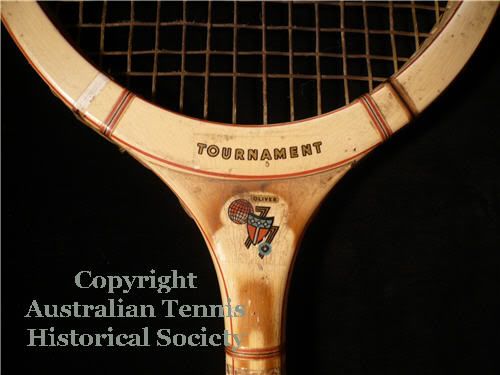
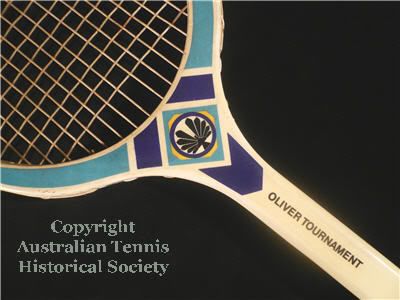
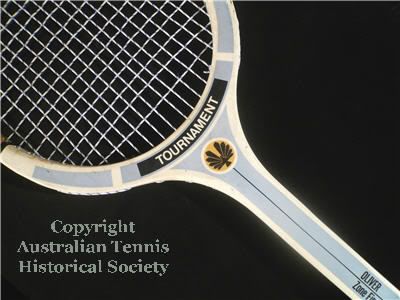
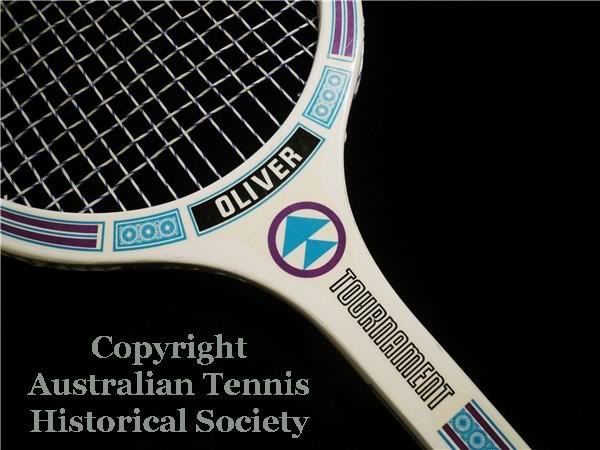
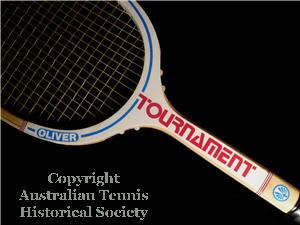
Tournament Model c late 1930-s 1940’s
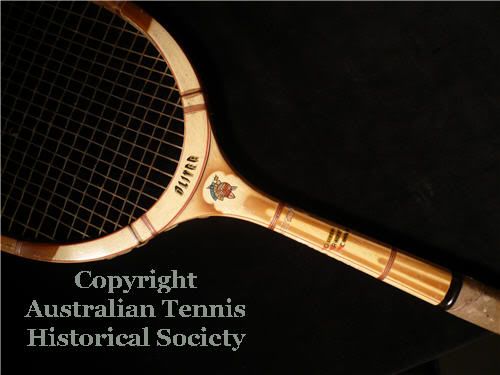
The Frank Sedgman Bluebird Model c 1949 1950 (Frank used Oliver to win Australian and Wimbledon Championships.
Frank Sedgman Professional Model
The Frank Sedgman Bluebird 30th anniversary model
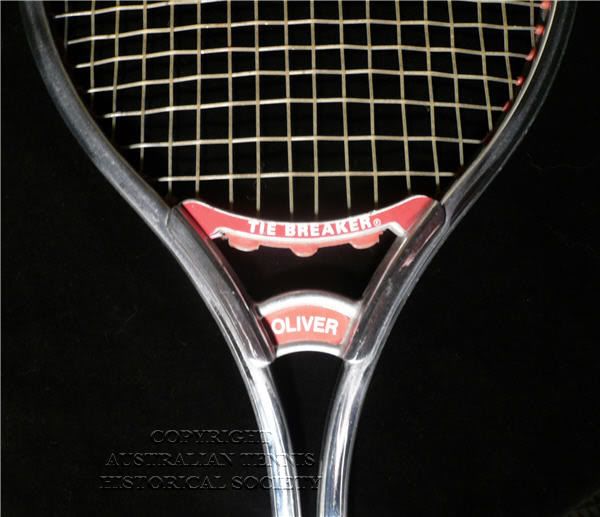
Aluminium Tie Breaker model, identical to Rawlings (USA) models including the John Newcombe signature version.
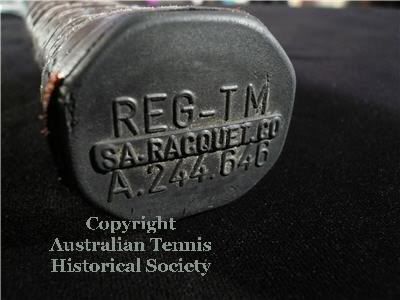
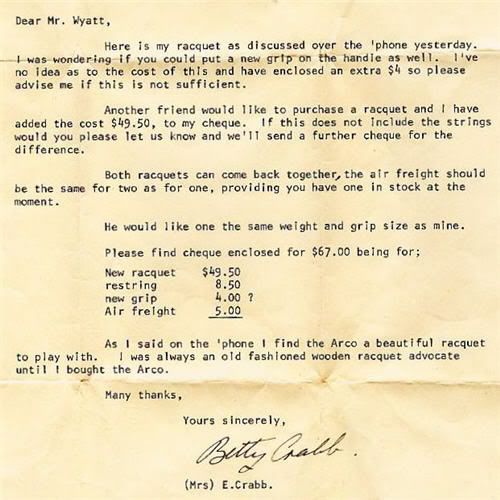
The South Australian Racquet Company began in South Australia in the early 1970’s as the Wilson T-2000 (Lacoste design), Yonex and other metal racquets were starting to gather momentum in the marketplace. The business was started and owned by Charlie Wyatt and he produced the SA Racquet & ARCO racquets at home in “the shed” with assistance from his son Gary.
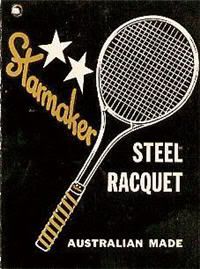
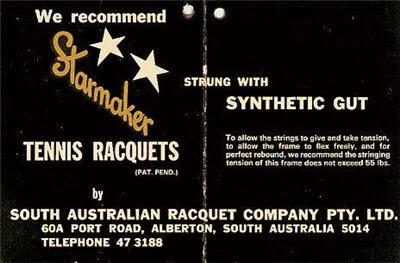
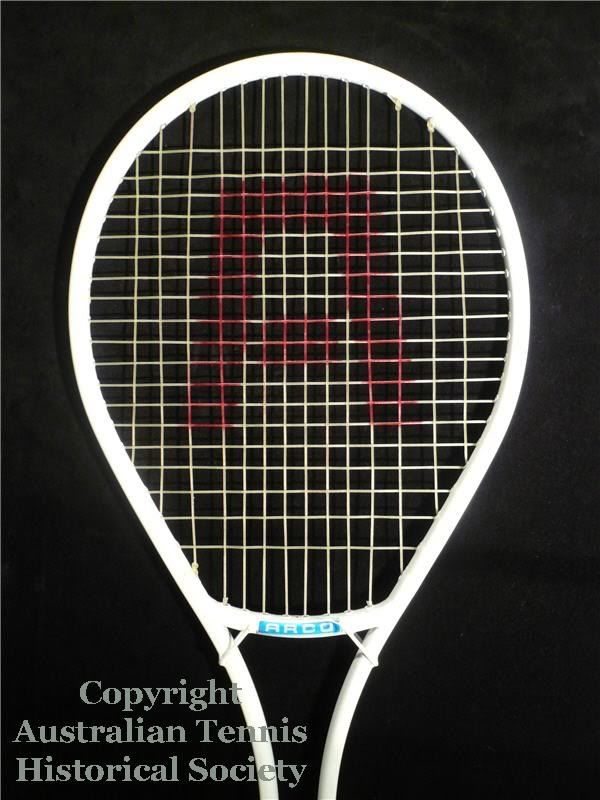
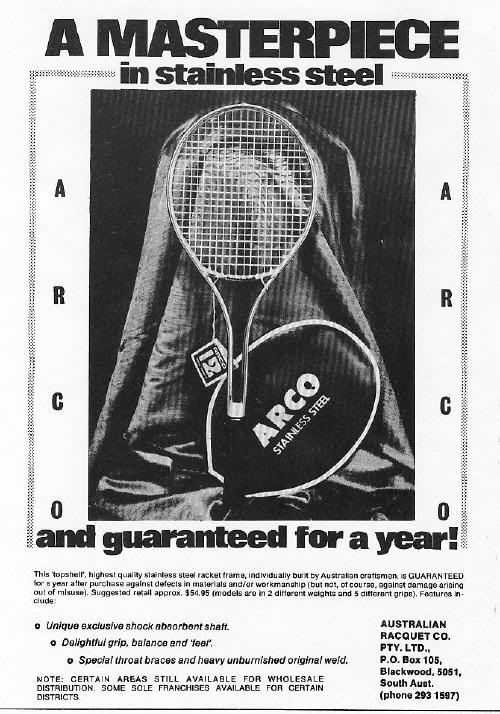
The decision to make racquets came from a conversation with a mate who owned a local squash centre and the first prototypes were squash racquets. These were not successful and so tennis racquets were tried. The very first models, called the Starmaker, were made from carbon steel like the Wilson’s but there were structual issues and so Charlie decided to try stainless steel. Stainless steel was not an easy material to work with and ARCO racquets may well have been a world first in this area, although we do have a photo of a Samuel Fox combination stainless steel/wood racquet, believed to be made in the 1930’s. Certainly, we have no additional knowledge of a full frame stainless steel racquet.
Charlie was an expert in Stainless Steel. He already had a business supplying stainless steel hospital trolleys and equipment and he was one of the pioneers in the development of stainless steel car exhaust systems, security doors and had worldwide patents on the construction of stainless steel yacht masts. His technology and skill included the creation of masts for the famous Australian yacht entered in the America’s Cup, Gretel 2.
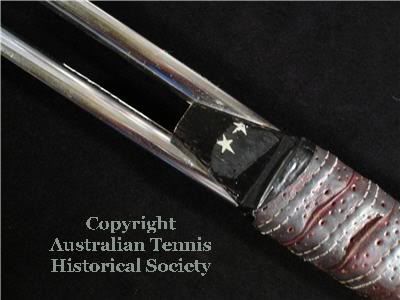
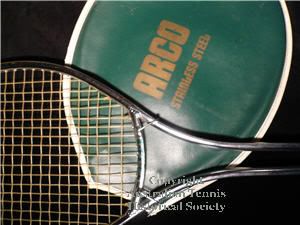
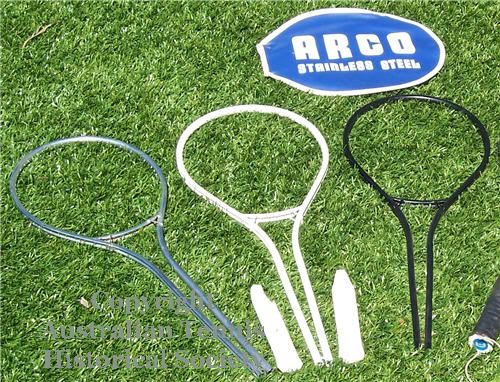
The only Australian made all steel racquet called the STARMAKER c 1970’s. Both the carbon and stainless steel models were of a similar design. The pics below are of the stainless steel version branded ARCO.
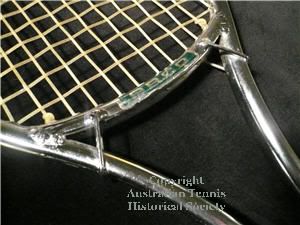
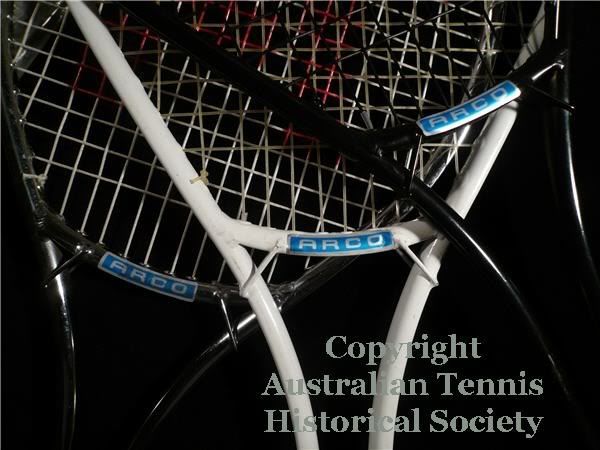
In collaboration with Tubemakers (a large Australia-wide metal fabrication business), Charlie had stainless steel tubing made in the right widths and lengths to create his racquets. The process involved pressing a groove on one side of the tube to create the indentations for the string holes and then the bending process to create the head shape and bringing the end pieces together to from part of the handle. As welding point strength at the throat was an issue in both the carbon steel and stainless steel designs, two support clips were also welded in place. Despite the clips not being overly attractive they made the racquet almost unbreakable. Customers often requested the clips be left off custom orders but they were essential to avoid some of the issues being faced by the likes of Yonex OPS, Spalding Smasher etc who experienced painfully high numbers of welding fracture warranty claims. Charlie was very secretive about the processes and techniques needed to work with stainless steel and guarded his production techniques closely. The racquets had quite a good deal of flex and were very strong, and after exhaustive testing using various string tensions typical for the era, 19lbs mains and 16lb cross tensions were recommended which gave the racquet excellent feel without the loss of power and control.
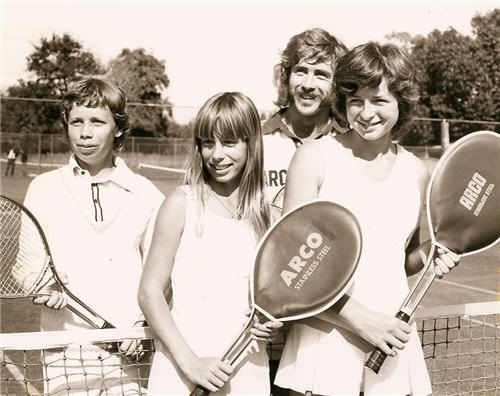
The very early ARCO’s came with a green cover, gold ARCO logo whereas later models came with blue covers, white ARCO logo and blue/white nylon strings. There were two weights medium M 4 3/8, 4 1/2, 4 5/8, 4 3/4 and Light 4 1/4, 4 3/8, 4 1/2.
As the mid 70’s saw the arrival of oversize racquets, ARCO developed a version in stainless steel and these proved to be even better than the traditional size versions. Charlie also introduced white and black powder coated variations.
While the initial Starmakers were sold in retail stores, the later stainless steel racquets never really made it into the mainstream retail store network and they were also sold via a Sydney distributor, LINC International. There was an attempt to merge with the Oliver Sporting Goods Company who were closing their wooden racquet production facility in 1984, but this JV did not proceed.
Most sales occurred due to Charlie’s own efforts building a very strong club and coach network which led to sales in the thousands. While most sales were in South Australia, racquets were sold to players throughout Australia and overseas. Charlie even sent a few over to the Wilson T-2000 legend Jimmy Connors but never heard back. Jimmy don’t hesitate to contact us if you recall a very powerful racquet from Oz landing on your doorstep. In 1977 performance survey showed that in the last 3 state age titles (boys and girls up to U19) ARCO racquets had featured in 50 finals and won 38. Not a bad record.
Small original frame size on the left with powder coated oversize in white/black
in pre-finished stages
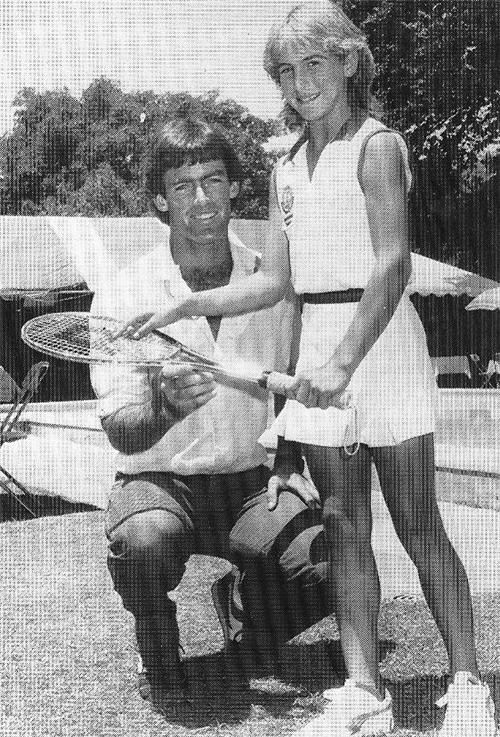
Juniors and Adults loved the racquet and below John Fitzgerald offers support.
The finished over sized product in black and below in white.
Charlie made a good living from racquet sales and was still making them when he passed away 20 years after starting production.
Here is a wonderful tribute to Charlie from a very happy customer:
For Charlie:
I know a man called Charlie whose skills are unsurpassed
He made my ARCO racquet which is another class
Some shots fly off my racquet that make me squeal with delight
While my opponents, beaten, just cringe in fright
Some may think I have a new invention
But no, my racquet is strung to a perfect tension
This ARCO of mine has given me pleasure
And hours of fun too many to measure
So sometime Charlie when you hear your name
It’s me saying thankyou for another game.
Alison November 1987
We thank Charlie’s wife Jean, son Gary and long time mate Ray Bastian for supplying this valuable information about ARCO. A wonderful tennis story about an ingenious Australian inventor.
Interview conducted early 2009. Sadly Jack Kramer a good mate of Tony’s passed away late 2009.
While it is always great to learn about what players think of their careers, we felt it would be interesting to catch up with someone close to the game but not a player. What better person to talk to than one of the famous voices behind player introductions and interviews than Tony Charlton, commentator extraordinaire at major Australian Tennis events for over 40 years.
Tony, to this day still stays in close contact with Jack Kramer and many other players who he met, not just in on-court interviews, but also shared many hours with in the commentary box and even socially on the golf course. So while not a tennis player, he was certainly representing Australia in a sort of golf davis cup challenge with Frank Sedgman, Jack Kramer and Ted Schroeder in a hard fought 18 hole event played on the days of the tennis Davis Cup Doubles when all had the morning off.
Tony started his tennis commentating career with the call of the 1951 Davis Cup Challenge Round in Sydney, where as he recalls, the crowds were very polite and the stadium was devoid of advertising material.
He has naturally met some great people and one he enjoyed particularly working with ‘Gorgeous’ Gussy Moran who was a co-commentator on special occasions.
In contrast, he recounts some very strange stories such as the on-court behaviour by Art ‘Tappy’ Larson, who was so superstitious that he was known to tap each shoe three times between points, talk to an imaginary bird on his shoulder and tapped everything with his racquet between points, the umpire, umpires chair, ball boys and so on. Today it would be classified as an obsessive compulsive disorder, but then again many players display some form of repetitious behaviour to help them focus and maintain rhythm.
The 1953 Davis Cup at Kooyong provided some scary memories as the temporary stadium scaffolding carrying a massive spectator crowd with a commentary box at the top, in which Tony was perched, was noticeably swaying during matches.
The big matches Tony recalls include Drobny’s win over Australian Bill Sidwell in the Victorian Championships which back then was a major lead up tournament to the Australian Championships. Scores 6-4, 6-3, 11-9.
Then we have the Professional tour in 1957 post the Kooyong Davis Cup Challenge round when new pro, Lew Hoad, played Pancho Gonzales in what has been written as one of the finest battles ever seen at the stadium. Crowds undeterred by arguments between administrators and professionals flocked to see the battle. One thousand people were locked out and 12,000 witnessed an amazing 4-6,9-7,11-9,18-16 match in favour of Hoad.
Finally, if you have ever read about significant Australian tennis matches, Tony cites the 1975 Connors v Newcombe match as a standout. There was certainly some niggling and words between the players as top seed Connors and second seed Newcombe methodically carved up the field into a finals showdown between old guard – new guard, etiquette – brash. A super tough effort against the odds saw Newk take home the event 7-5, 3-6, 6-4, 7-6.
Thanks for your time Tony and congratulations on your continuing career.
Grand Slam draws round by round, winners and losers etc. terrific resource.
Visit http://www.tennisarchives.com/index.php select tournament, select winner of that year and you will see the draw of the winner, if you click the YEAR itself, the whole draw will be displayed.
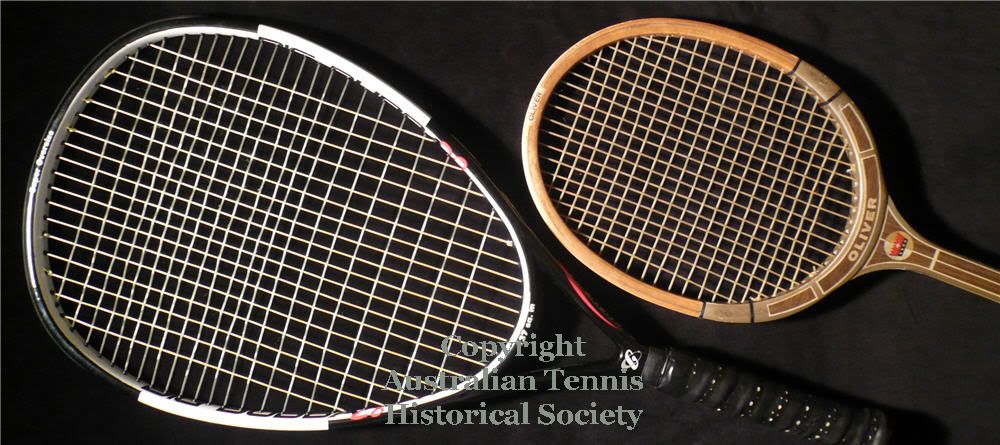
With the development of lighter and stronger frame materials, the size of the racquet head has grown to deliver a string surface area of up to 137sq.in. The reason a larger head area assists is due to the larger sweet spot which can be created making the game far more enjoyable. For those of you who may never have played with a wooden racquet try it some day for fun. You will certainly appreciate the added skill of bygone players who could serve, volley and smash with force not to dissimilar to todays racquets, albeit that modern materials do add power to players in the professional league.
Wooden racquets with larger heads were certainly experimented with.
This photo from Siegfried Kuebler’s book shows Frank Donisthorpe who used this oversized, racquet in Wimbledon in 1921 & 1922. It was 3″ all round larger than a standard racquet and was double strung.
Oversize racquets never really caught the public imagination until Howard Head, then working for Prince, made popular the oversized metal Prince Classic.
There were however some attempts to compete against the new materials using wood and wood composites in the 70’s.
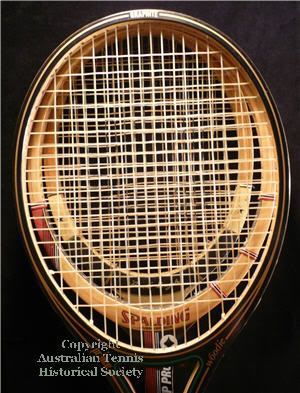
Spalding produced a (made in Belgium by Snauwaert) Challenge Cup Pro which was all wood. Prince also produced the highly collectible Prince Woodie 110sq.in racquet which was a wood graphite combination. The photo below shows the differences between these and a standard woodie.
Below is a photo of a recently acquired Gamma Big Bubba 28″ 137 sq.in. which is legal. In the 1990’s makers also began experimenting with SUPER LONG models up to 32″ in length. The ITF was very concerned and in 1997 introduced rules regarding stringing, frame size and length in order to limit design.
It is amazing how the new graphite, titanium type materials allow larger frames with the strength to deliver sweet spots larger than a complete wood racquet. I hope all the young ones out there appreciate how much harder it was to hit and control a ball with a woodie and why many of the strokes seem more like a slice/push since the objective was to swing with the flight of the ball and use more weight transfer for power. This is still true for today but racquet strength allows for shorter swings and flick shots.