Tennis Heritage Australia News Q4 2011

Hi tennis enthusiasts,

These last few months have been very interesting and exciting.

We recently decided to form a group of tennis enthusiasts to help promote the history and help foster programmes to expose tennis history to the public.  The group Tennis Heritage Australia has two groups, one in Melbourne and a very new group in Sydney.

As a tennis collector, you shouldn’t be without a book by Jeanne Cherry called Tennis Antiques and Collectibles.

Recently Jeanne was in Australia and it was great to catch up with her over lunch at Royal South Yarra. Her book contains so many wonderful pictures of tennis equipment and other paraphernalia that you can’t help but start looking for a multitude of interesting bits and pieces.

jeanne cherry & co 18th nov 2011 RSY

 Jeanne & Jim Cherry 4th & 5th from left

The following week a few of us met with Steve Wood, CEO, Tennis Australia to introduce ourselves and learn of TA’s interest in expanding its commitment to promoting tennis history as part of its Grand Slam status and pending museum planned in future development plans at Melbourne Park.

On November 24th our THA meeting in Melbourne was held at the MCC (MCG) and our  host David Studham, head librarian took us on a fascinating tour of the extensive library,  archive room and  sports museum.  The facility and content of the MCC library is first class, even on tennis, since the MCC was responsible for the development of tennis and local competitions from 1879.  The tennis collection comprises a range of very early newspapers, magazines and books, some very rare indeed.

The group comprised Geoff Pollard, 5 published authors, 2 official club archivists, a museum curator and the MCC Head Librarian. Special guests included the grandson of Sir Norman Brookes who have just assisted with the publication of a new book by Richard Naughton about the life of Norman Brookes and his tennis career in the 1900’s when he became the first international player to win Wimbledon (all three titles 1907) the Davis Cup in 1907 and subsequent highlights. A very interesting group of collectors across a multitude of interests.

jeanne cherry & co 18th nov 2011 RSY (12)

At the MCC a great day had by all

On the collecting side of things here are some interesting items.
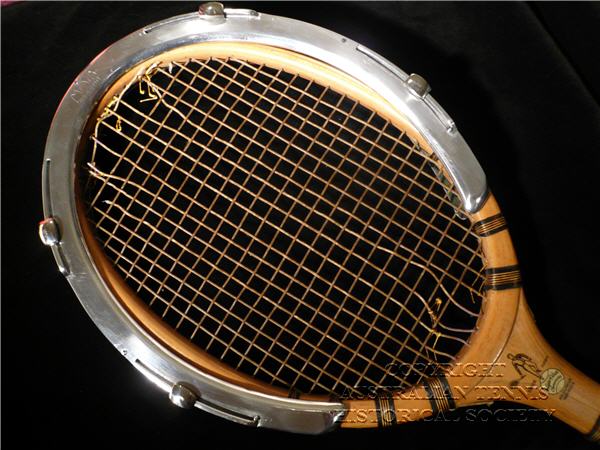
P1210783

This is an aluminium MAG tennis press. The racquet is a very nice Wright & Ditson model called WIMBLEDON.
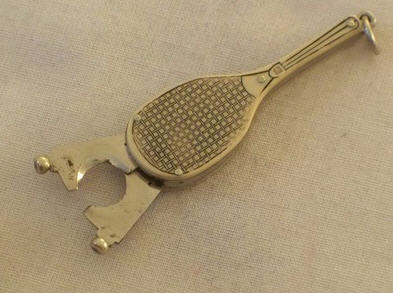
tennis cigar cutter 2

A cigar cutter in the shape of a tennis racquet.
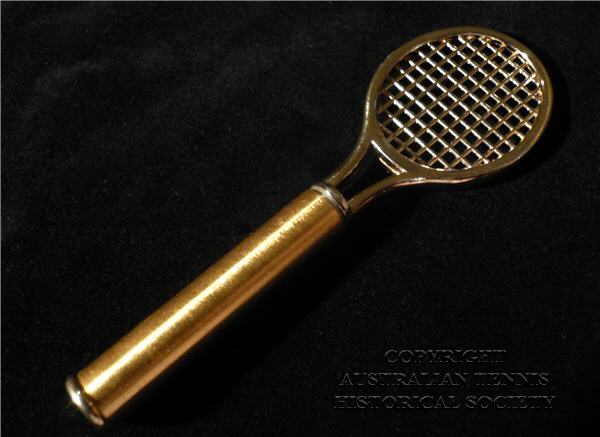
racquet lighter 1

Really cool cigarette lighter about 11cm long.
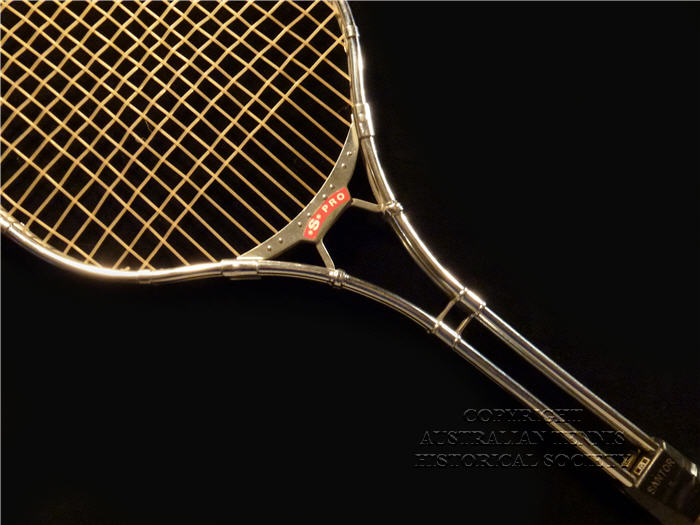
santor s pro (7)

A Santor S PRO racquet ( learning more but looks very nice)
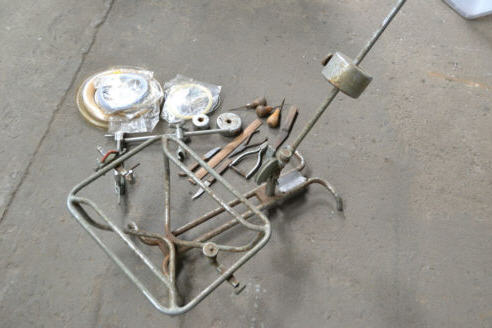
strachan1950's stringing machine

Early drop weight stringing system designed in Australia in the 1950’s.
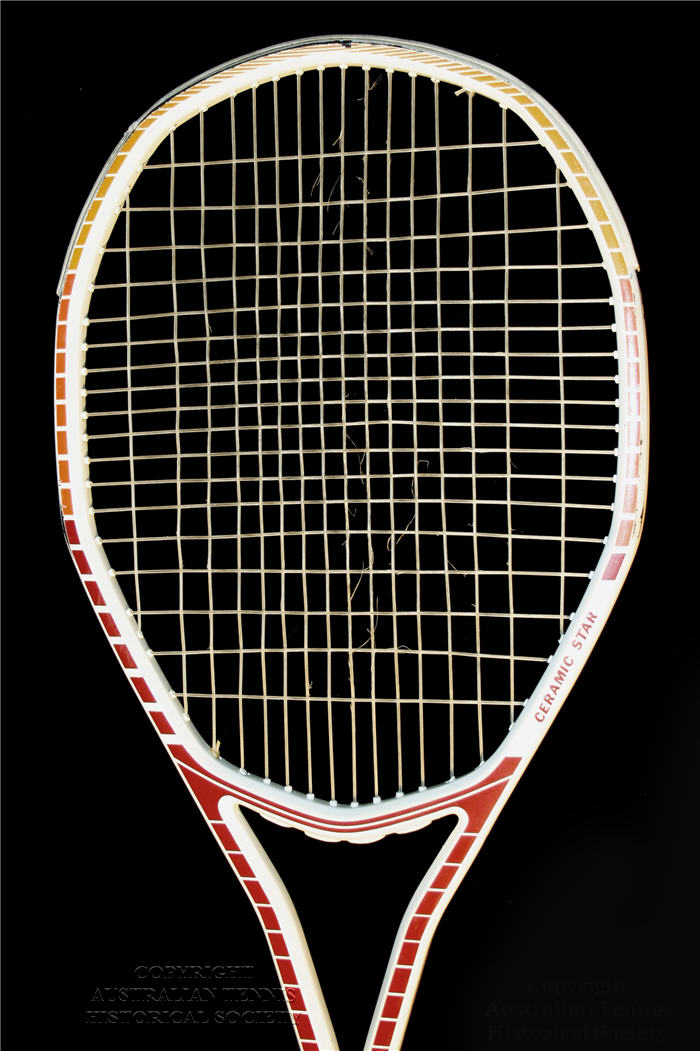
sfida ceramic star (3)

A Sfida 10 sided racquet which copies from the FOX WB 210. Only 300 or so made as expensive promotional racquets so rare as.
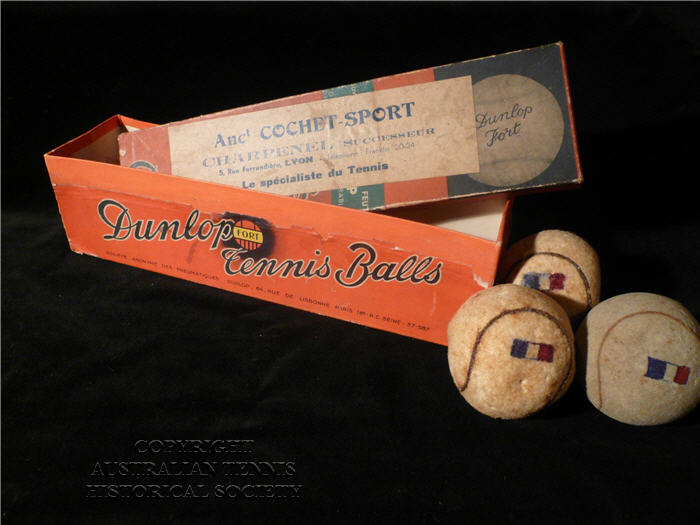
1939 DUNLOP BALLS FRANCE 5

Some 1939 Dunlop Tennis Balls sold in France from Cochets sports store, which we predict will be the great French champions business at this time.


Ok that’s it for the moment.

Stay in touch with us on FACEBOOK……….AUSTRALIAN TENNIS HISTORY


Thanks for your ongoing interest and support…….The Team


A Welcome to Australian Tennis History

There have been many books written about the history of tennis with a focus on the UK and the USA. In Australia, unlike other local sports like Football, Rugby and Cricket, Tennis has suffered from a void where much of the history has simply vanished or focused only on the leading players of the time. Australia, does have a significant place in the annals of tennis and it a pleasure to present, in the one location, some interesting historical aspects of the game as it developed here and spawned a sporting industry which catered to the demand.

Various racquet sports have been tried over the centuries and although the modern game has its direct roots back into the Real Tennis, Rackets and Fives era it wasn’t until 1865 when Harry Gem and  A.J.Perera played an outdoor grass court game on their home court “Fairlight” and proceeded to set up a club in Leamington Spa in 1874.  Theirs was called “Pelota”.   In 1874,  Major Walter Wingfield launched his game of Lawn Tennis called “Sphairistike” and it achieved rapid buyer acceptance due his clever marketing of boxed sets and rules.

It is highly likely that many racquets were taken out onto lawns to play some form of hit to hit game, but it was the fast public acceptance of Wingfield’s boxed game that tips favour his way as the inventor of  the sport which has blossomed into the lawn tennis we enjoy today.

Below is a very rare picture from 1837, which shows an illustration of an outdoor game using the descriptive name “LONG or OPEN TENNIS”.  Not only do you witness a doubles style event, but within the text is reference to scoring in 15/30/45, advantage & deuce, rough or smooth to determine serving and even mentions volleying.

Thanks to Sebastiaan Van Hoorn for the photo and information from the book titled “Games and Sports” by Donald Walker, Published by Thomas Hurst, St Pauls Church Yard 1837.

field tennis

The Wingfield game to be marketed was also enhanced by a couple of other technological developments. First, the rubber ball was invented and then some years later cloth covered balls were developed. Second, lawn mowers now enabled the grass courts to be prepared with less effort.

Tennis created a social revolution appealing at first to women but then men as well. Courts were prepared for home entertainment, cities converted public  gardens into tennis courts, and courts were constructed within cricket clubs, croquet clubs and within the grounds of churches.  Wooden boxed sets of equipment were loaded on ships and transported toall corners of the world, including Australia, at a truly rapid pace. Tennis here spread quickly also, from homes to clubs, to far off country towns and although “Lawn tennis” was the name, Australian courts made from asphalt, sand, clay or plain dirt appeared everywhere.

A myriad of sporting goods manufacturers already producing cricket, royal tennis (UK) and in the USA baseball equipment, began designing and experimenting with new racquet designs, stringing techniques and tennis balls. Tennis fashion for the ladies and men was dashing and many clubs and local club competitions evolved. Tournaments like Wimbledon were created, The Davis Cup began in 1900, champions were held in high esteem and spectators were keen to see the best players in action.

The evolution of tennis, the playing techniques, the equipment, the stories and the memorabilia surrounding the game is remarkable. In Australia, tennis competitions evolved from club versus club to Intercolonial matches, to state championships and eventually the Australian Championships.  While much of the equipment was imported at first, the Australian Tennis racquet and ball industry developed with many brands and models that no longer exist today.  Occasionally you will find an item in a cupboard and wonder where this came from and who made it.

On this site you will learn about how tennis came to Australia, which companies made tennis equipment, how Australian players forged their reputations both here and abroad and be amazed at the memorabilia, such as vintage tennis racquets (or rackets) that collectors around the world simply adore.

The site will continue to evolve over time and we trust you will enjoy learning about new aspects of Australian tennis you didn’t know about before and encourage family members of former players and those still with us today to make contact and submit some photos or information that will help  add some new pieces into this fascinating Australian story.

For inspiration, we thank existing collectors and publishers Jeanne Cherry (Tennis Antiques & Collectibles), Siegfried Kuebler (A Book of Tennis Racquets), our tennis researcher Clive Oliver, National and State libraries and individual contributors which have included clubs, players (relatives) and relatives of families involved in the local tennis industry. A special note of thanks also to USA collector Rolf Jaeger for supplying photos of some of his rare items in his second collection. His first collection was sold to Tennis Australia and is now in storage awaiting the construction of a permanent tennis museum at Melbourne Park.

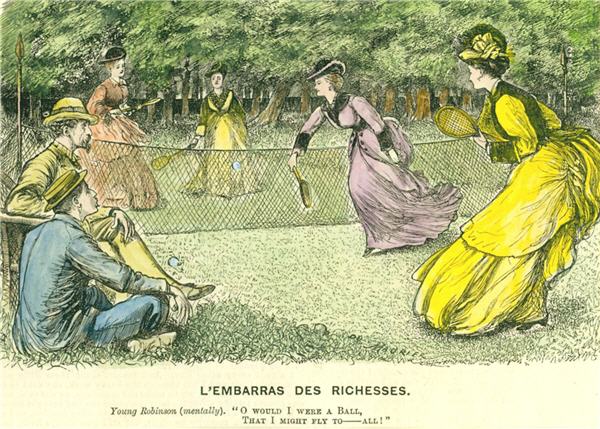
Punch Magazine ( black & white) Oct.10th 1874) but these hand coloured finishes of the original prints are very attractive.