Spider Web

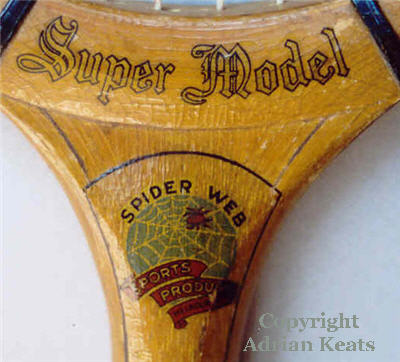
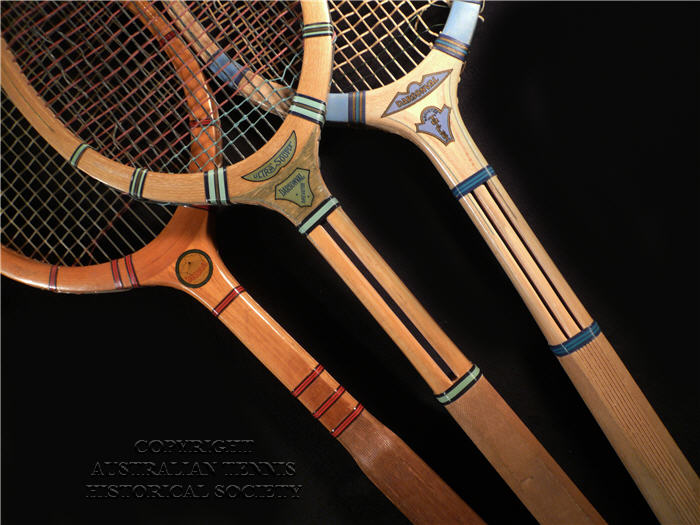
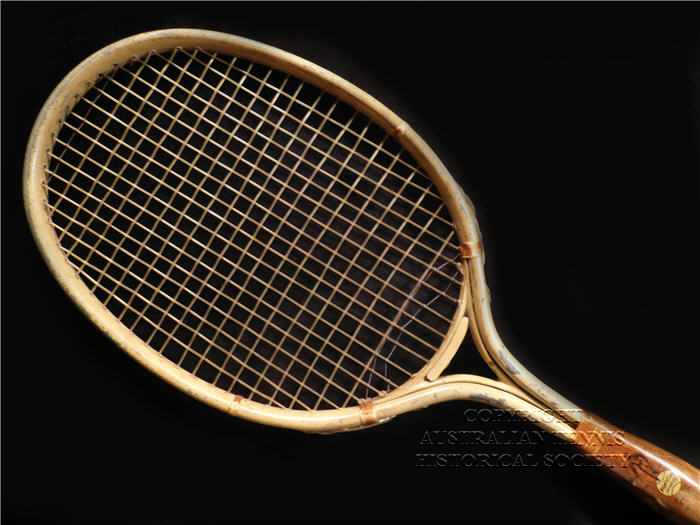
Spider Web Sport Products introduced tennis racquets into the range of archery and  hockey equipment in the early to mid 1930’s to take advantage of the games rapidly growing popularity.  Spider Web’s owner William Respini was a cabinet maker by trade and the factory was located at 133 Wells Place, South Melbourne, or as it was then known, City South.  His son John advises, that he recalls William had to buy some racquets being made at the time and steam them apart to learn how they had been constructed so he could copy them.

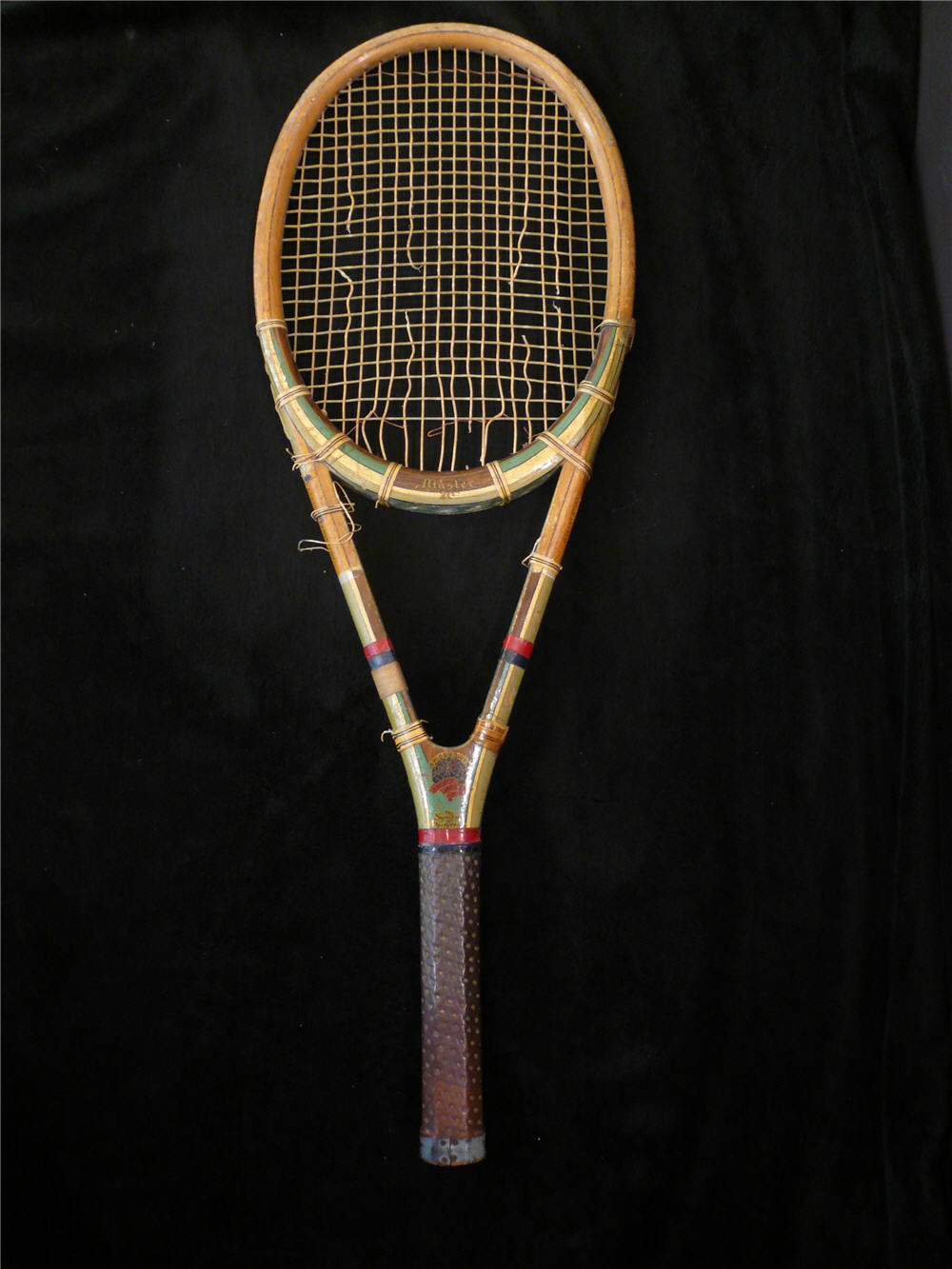
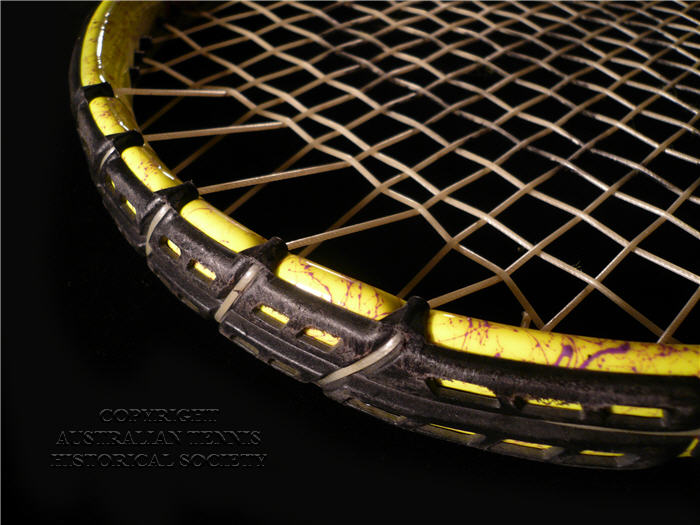
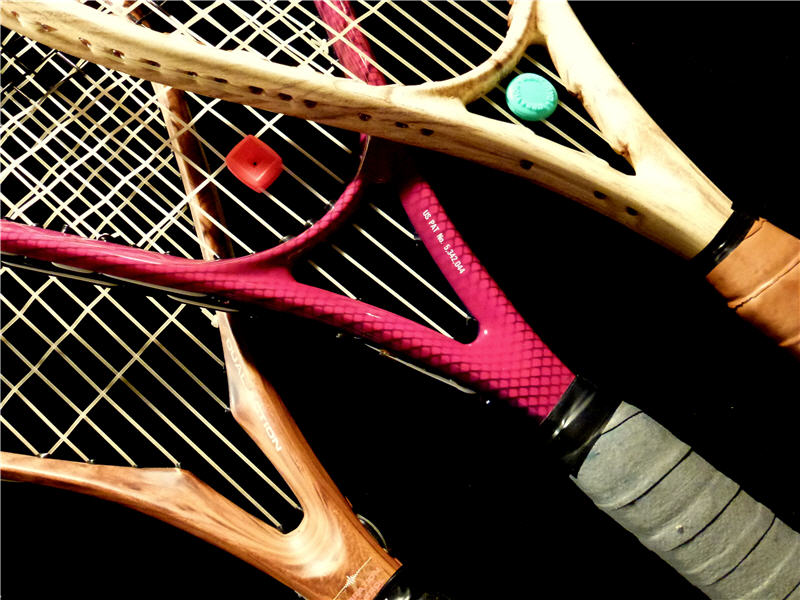
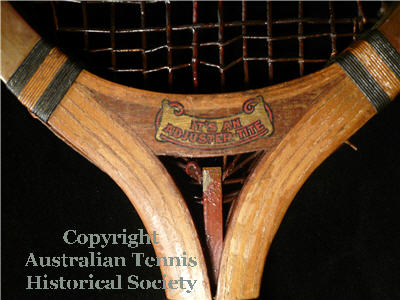
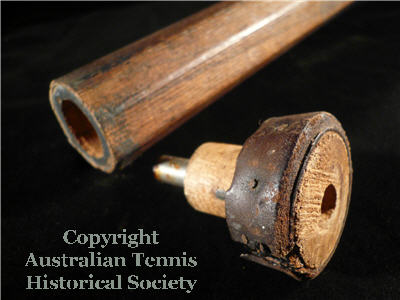
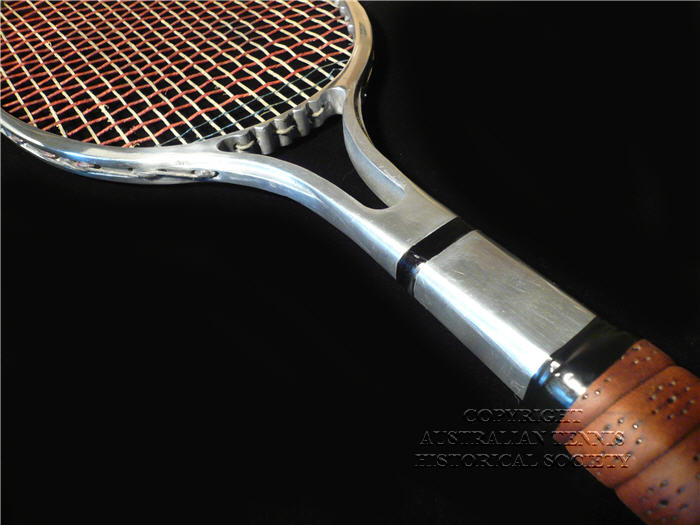
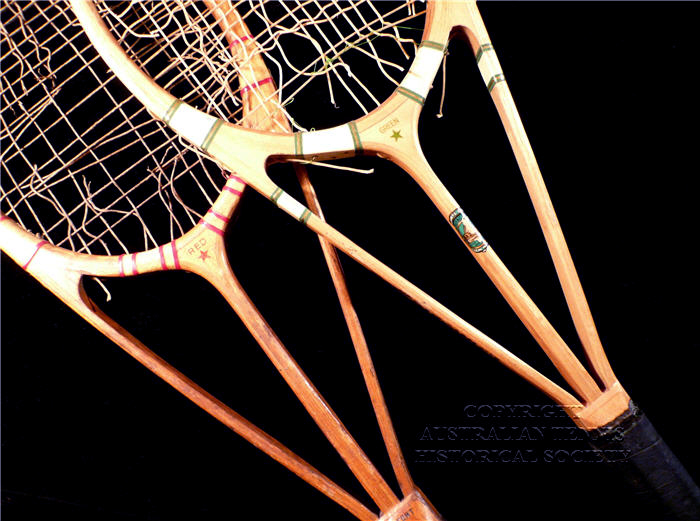
Given the trading Cartel of Spalding, Slazenger, Dunlop and Alexander,  as a boutique maker creating a distribution channel would have been very difficult.  Under the cartel and their Australian Racquet Manufacturers Association ARMA all of the branded 5 Star models were priced the same in all retail stores to prevent price cutting wars. On the only known example of a Spider Web racquet, you will see a cheeky reference to the cartel and one-upmanship where the number 6 appears in a star on the handle.

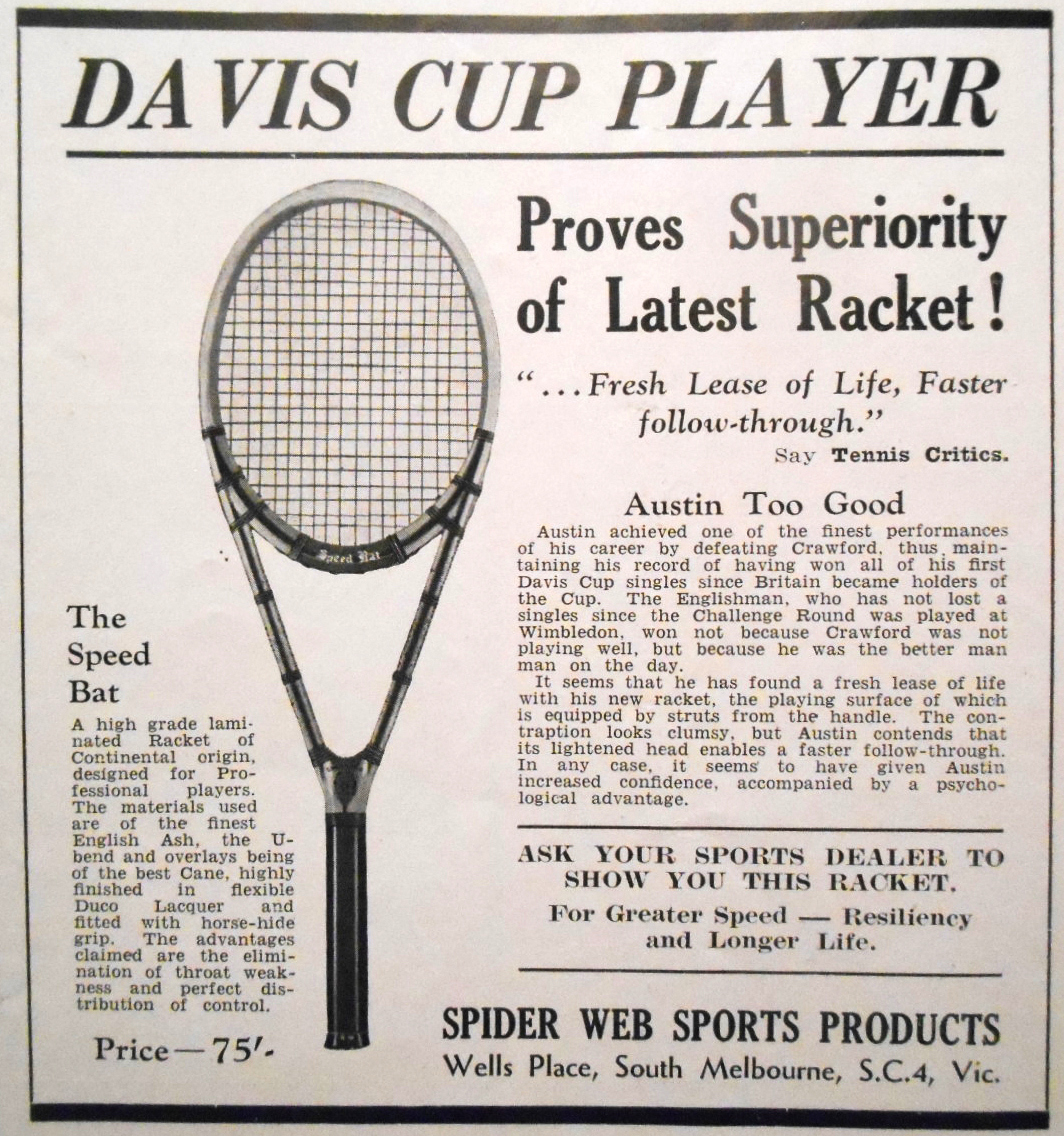
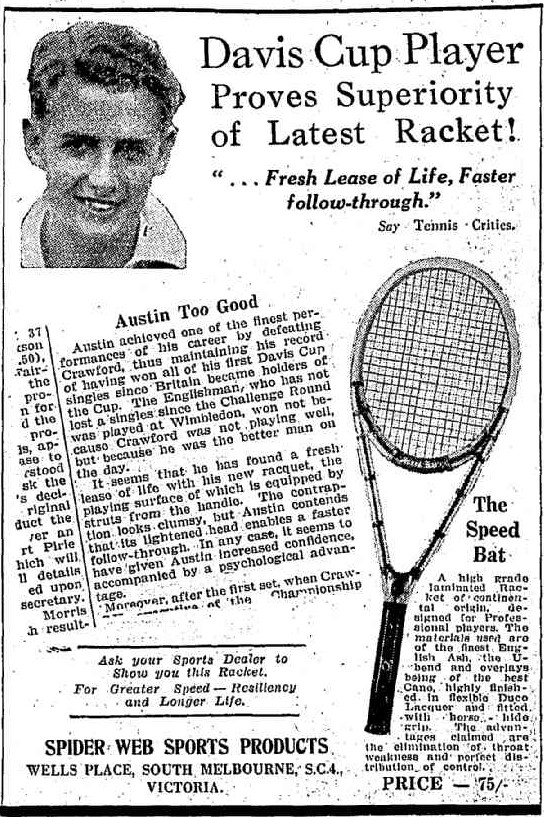
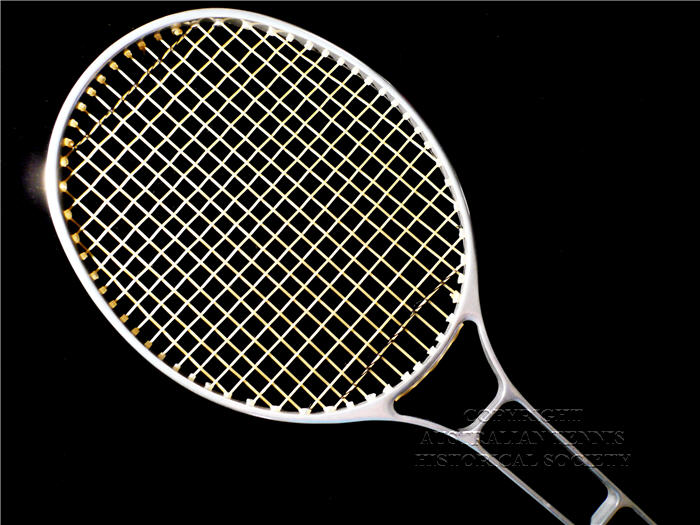
To differentiate, Spider Web also imported a model from Spain, we believe, called the Speedbat which was used by H.W. Austin who made the tri shaft Hazell Streamline famous. Perhaps the designer Donisthorpe also had a hand in the design of the Speedbat but to be sure it was far in advance design wise and towards the current shapes than any other racquet seen from the 1930’s.  We finally uncovered an example in 2023 donated to Kooyong via a former president.  What a gem!!

In South Yarra, the large retail store Maples in Victoria and Tasmania carried the Spider Web racquets for at least 4 years as evidenced by newspaper advertising, however with the onset of war all racquet makers couldn’t source the Ash timber and much of the production capacity was diverted to the war effort.

Myer Melbourne may also have been a retailer and in those days, and arguably nothing has changed today,  retailers had the power and basically told the manufacturers what they would pay for a product and even took settlement discounts when none were offered.

William was also selling direct to a number of tennis centre owners. who by comparison to manufacturing were looking very successful as more and more people played tennis, so he decided to diversify into tennis court management which involved building courts with lights. He also had a hairdressing/ tobacconist business.  The tennis enterprise, in these pre television times (1938-1955), was a huge success being open to midnight 6 days a week with no play on Sundays. On weekends people would wait all afternoon and get maybe 2 sets and pay sixpence a set. Frank Sedgman played an exhibition match at the Merri Creek centre and Nancye Wynn Bolton played a season.

Due to high demand he then took on a partner in about 1938 or 1939 to build an additional two courts which were also lit.
His partner was George Cochrane, one of the first professional coaches in Melbourne.

In the mid 60’s William bought out George Cochrane’s share and once again had sole ownership of the centre.

The accounting books for the tennis centre show that purchases were made from Spider Web Sports to the tennis centre from the late 30’s and into the early ‘40s.

We thank John for his recollections and hope to add more information as we find it.

The racquet photos come courtesy of Adrian Keats, Australian Racquet Collector. Click here for Adrian’s website

Spider Web racquet 2

Spider Web racquet 3

P1550459

P1550488-002

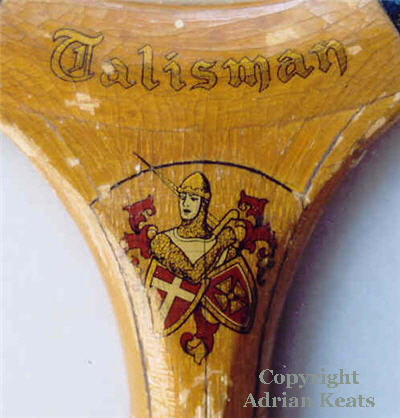
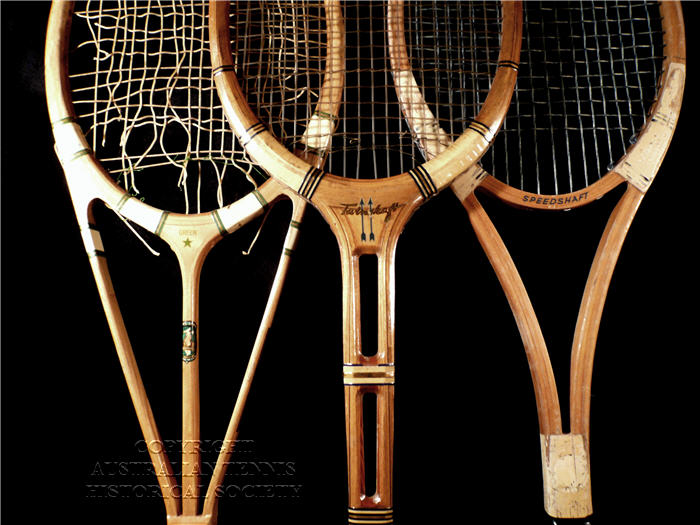
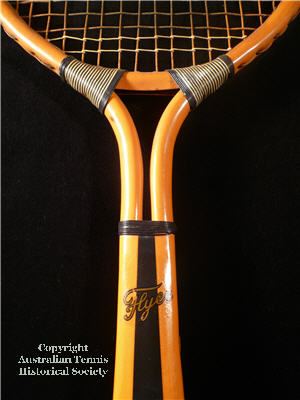
The Spider Web Sport “Talisman”. Looking very much like a Hedley racquet
the workmanship and decorative finishing look great. Note the 6 star decal
to combat the 5 star branding of the major manufacturers under the ARMA banner, representing the
best quality racquets.

Donisthorpe Speed Bat 1936 ad Mary

jul 1936 SPIDER WEB SPEED BAT MARY

Spider Web MSD Court Master Model (19)aaaa Spider Web MSD Court Master Model (4)aaa

Tennis Heritage Australia News Q1 2012

Greetings  Tennis Enthusiasts,

This last few months has typically been quite interesting but perhaps a little more so than usual owing to some major finds.

Unknown Australian Wins 1923 Irish Tennis Championships: George Eric Mackay

In January, we found a simple small article about an Australian player who in 1923 won the Irish Championships. We had never heard of him and so this set in motion a challenge to see if we could find out more about him and what happened to a trophy he received.

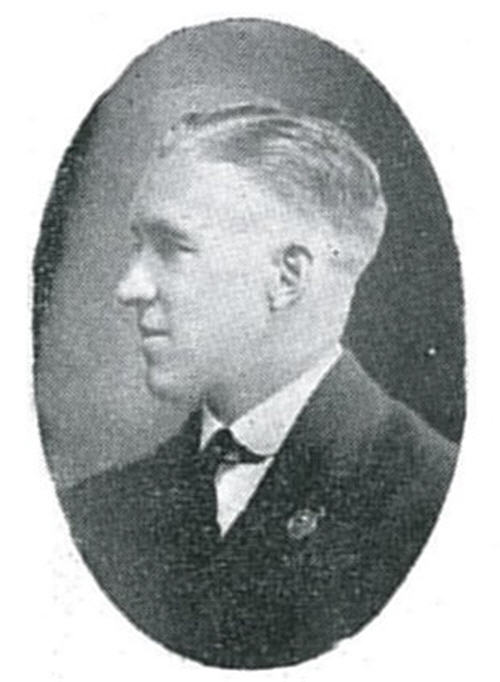
Having served in WW1 in Egypt in the Medical Corps,upon his return to Australia, he recommenced his medical studies at Ormond College, Melbourne University and while there became the University Captain of the Tennis team which played both Sydney and Adelaide Universities.  Having obtained double first class honours in 3rd year and honours in 4th and 5th year this then enabled him to apply to travel to London to complete the FRCS (Fellowship of Royal College of Surgeons).

Apart from playing for the University, George also represented Victoria in interstate matches against NSW and SA.

While in London between exams, George went to the Dublin Rotunda Hospital for some practical experience and while there entered the Irish Championships of 1923.  Impressively, he won the event defeating 1896 Wimbledon Champion Harold Mahony 1/6, 2/6, 8/6, 6/2, 6/3 with perhaps the advantage of youth against the much older Harold who from the score looked like he gave it all and just fell short in the 3rd set and had no reserve for the last two.

As to why a player of George’s capability won the prestigious event is a tad unclear. There was considerable turmoil in Ireland at that time between the Protestant and Catholic political debate. Many of the well known English players probably stayed away for fear of being caught up in some action off the court.  Although, the existing Irish champions, Cecil Campbell and D’Arcy McCrea were  engaged in Davis Cup matches against India and France in Dublin around early to late June.  In the doubles final four prominent Irish players played for the title so maybe George had some excellent wins leading up to the final.  Hopefully, we will learn more in time.

In September that year, George became very ill, with what was diagnosed as Military Tuberculosis and he sadly died at St Bartholomew’s Hospital London on October 25th.

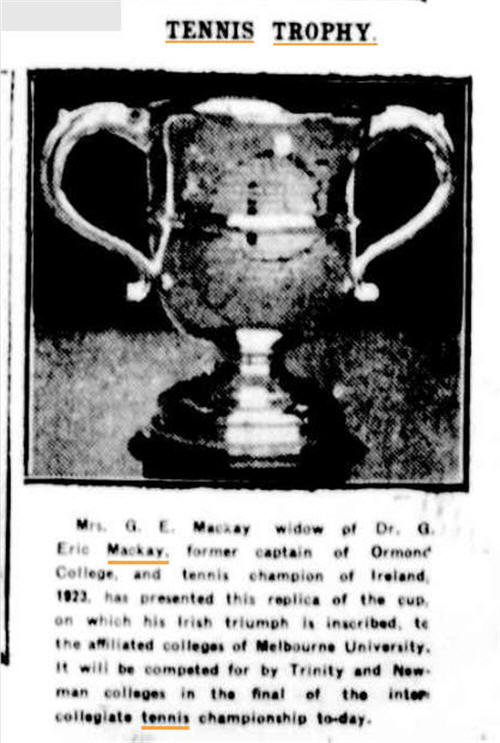
His body was returned for burial to Bendigo and his Irish Trophy, again from a snippet in a newspaper story, was donated to Melbourne University for presentation to the intercollegiate tennis champions.

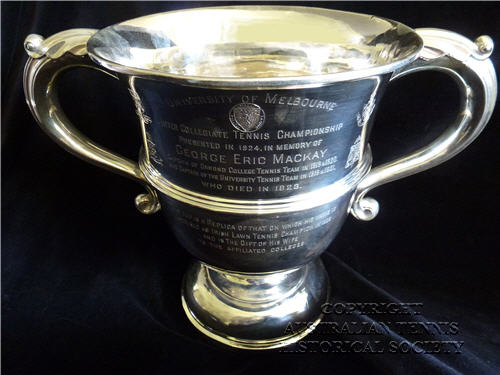
This week, Melbourne University invited us to photograph the trophy which had luckily been found still in use as the donation had intended and was just back from the Silversmiths where it had undergone some repairs and re-plating.  Needless to say it is in close to the  same condition in which it was provided back in 1924 except it it appears to be missing a plinth.

Inscribed

UNIVERSITY OF MELBOURNE INTERCOLLEGIATE TENNIS CHAMPIONSHIP
PRESENTED IN 1924 IN MEMORY OF
GEORGE ERIC MACKAY
CAPTAIN OF ORMOND COLLEGE TENNIS TEAM IN 1919 & 1920
AND CAPTAIN OF THE UNIVERSITY TENNIS TEAM IN 1919 & 1921
WHO DIED IN 1923
THIS CUP IS A REPLICA OF THAT ON WHICH HIS NAME IS INSCRIBED AS IRISH LAWN TENNIS CHAMPION IN 1923
AND IS THE GIFT OF HIS WIFE
TO THE AFFILIATED COLLEGES

One of the newspaper clippings that inspired the search.

Melbourne University has a rich tradition in Melbourne society and many famous early intercolonial and state championship players were taught there.

In another very exciting twist in the search for the Irish Trophy,  we also made contact with a relative of a prominent Intercolonial player Ben Green.  Ben was a famous Victorian Champion and when he and NSW champion Dudley Webb played the crowds numbered in the thousands.

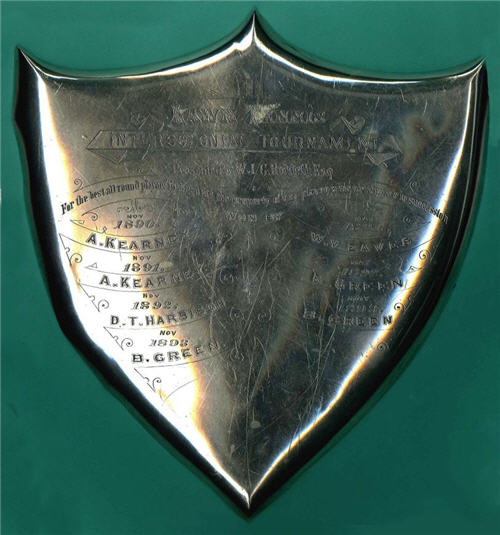
This shield was presented to the Victorian team’s most valuable player and the other names inscribed are of equal value and importance to Australian Tennis History.  This wonderful shield measures 20 cm across and 22cm tip to tip.

We feel thrilled to be able to share this with you and thanks to Lesley from Melbourne University for sharing this with us.

Inscribed

LAWN TENNIS INTERCOLONIAL TOURNAMENT
Presented by W.J.C Riddell Esq.  (MCC Tennis Club Secretary & organiser of first event)

For the Best All Round Player. To become the Property of any player winning it twice in succession.

Nov 1890 A. Kearney   May 1891 W.Eaves  Nov 1891 A .Kearney May 1892 B.Green  Nov 1892 D.T. Harbison
May 1893 B.Green Nov 1893 B.Green and his for the keeping.

As a footnote W.V.Eaves was born in Australia and then went back to the UK to also become a doctor.  He won the same Irish Championship in 1897 and was very successful at Wimbledon and other events.  Please read the story about W.V.Eaves elsewhere on this site as he had a major influence on tennis development in Australia and our first Champion Norman Brookes.

Tennis Heritage Australia NSW Branch

Michael Fitzgerald put his hand up to organise the first and second meetings of tennis history fans in Sydney and for those on our database who wish to join the NSW group please email Michael at mffitzgerald@bigpond.com

On May 28th a few of us from Melbourne will be joining the Sydney group and meeting for the first time at the Australian Tennis Museum, Ken Rosewall lunch with this years guest, Margaret Court.

BOOKINGS INFO CLICK HERE

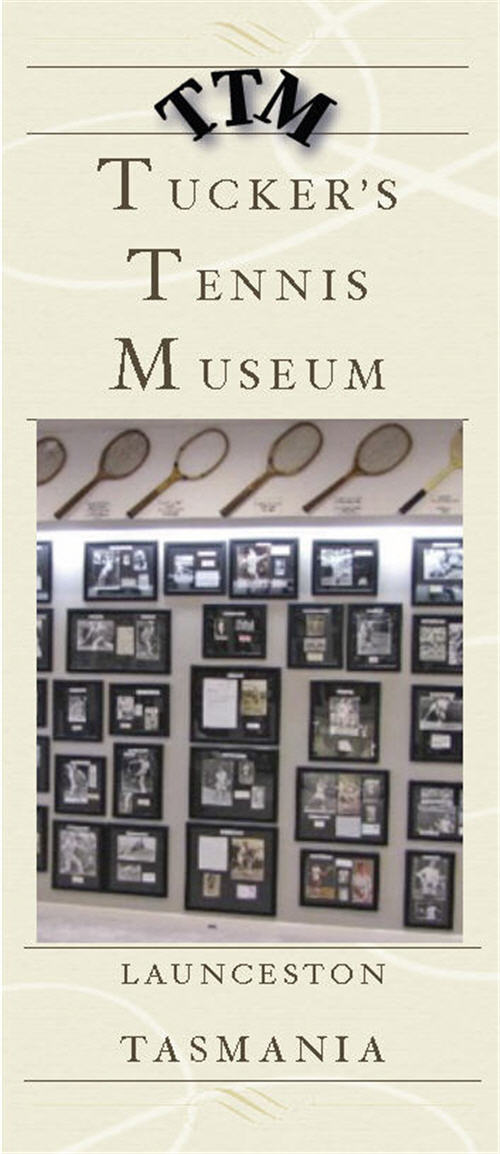
A new Tennis Museum in Tasmania

Denis Tucker has been collecting tennis autographs and memorabilia since he was a young lad.  His passion for tennis led him into state tennis administration and his collection has now reached the point where he would like to share the experience with other enthusiasts.

While the collection includes many racquets, trophies, books and clothing, his autograph collection is simply stunning. With a focus on Australian Championship players, Davis Cup Players and Wimbledon Champions there are a only a few missing and as you can see from the photos they are most impressively displayed.

Denis lives in Launceston and would enjoy hearing from anyone with autographs that might fill in the missing gaps.

Denis can be contacted on 0409 317 804

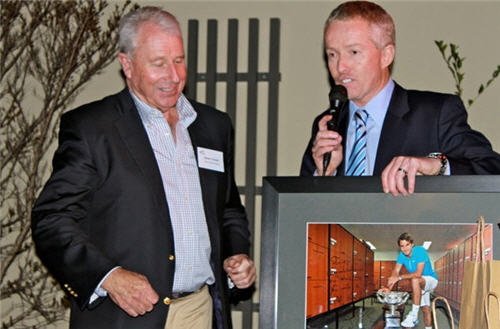
Craig Tiley, Director of Tennis Australia, helps open The Tucker Tennis Musuem and presents Denis with a Roger Federer signed “well wishing” photograph.

Australian Racquet Marketer of FIN:  Barry Todd

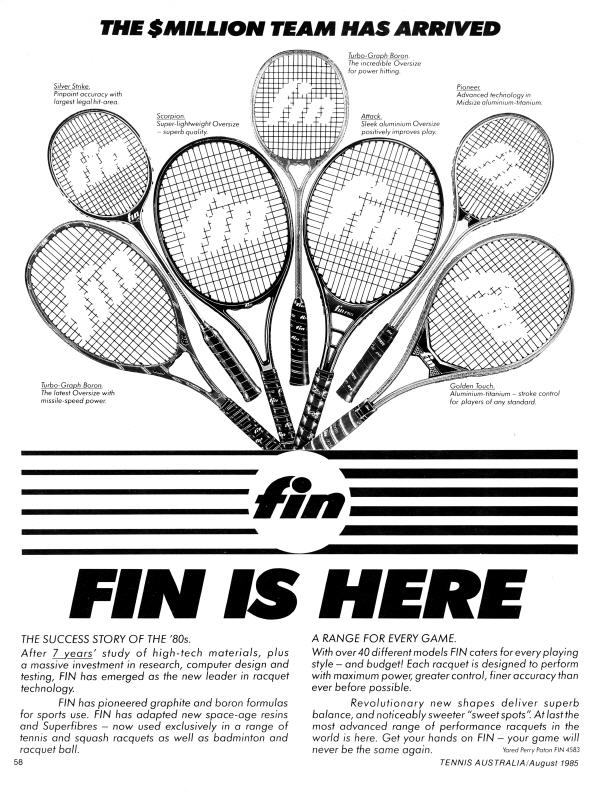
This quarter we found Barry Todd the designer and owner of FIN racquets living in London.  Barry has never really had the success deserved for all his effort in creating some terrific designs for FIN (1980’s)  and DEESSE.  Read more

Male Tennis Champions in the 1920’s J.O.Anderson & Gerald Patterson

An article on the development of tennis in the 1920’s has been added to the site.  The two great Aussies leading the charge were J.O.Anderson and Gerald Patterson.   While great players this was the era of Bill Tilden and W.Johnston from the USA in the early to mid 1920’s followed by the French Musketeers in the late 1920s’. Success in Davis Cups was hard to come by…..yet on home soil, Anderson and Patterson were great rivals from schoolboy days through to the end of their careers.

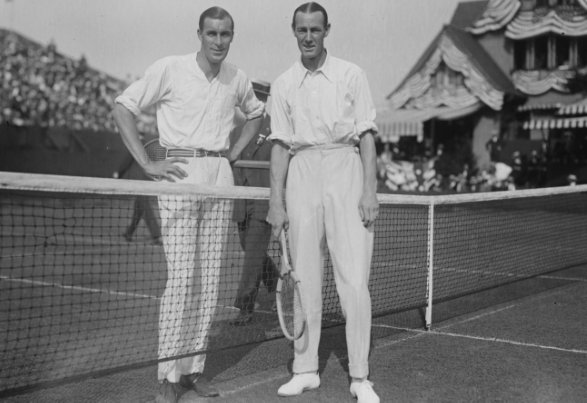
Anderson (right) beat Tilden (left) in the USA in a match described as the best ever seen.

Tilden played Davis Cup in New Zealand against Australia and also played exhibition tennis in Melbourne and Sydney with the rest of the team.  Read more

Other Interesting Memorabilia

In this section I will just present some nice tennis items to help educate viewers.

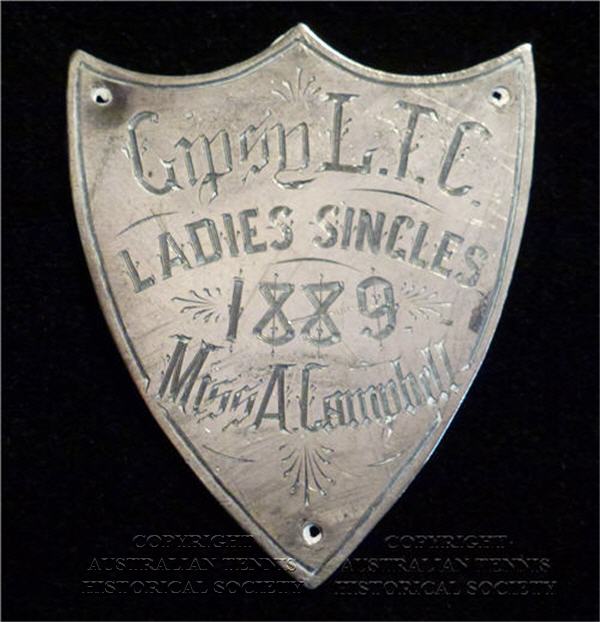
This badge would be mounted to a tennis racquet throat in honour of the win

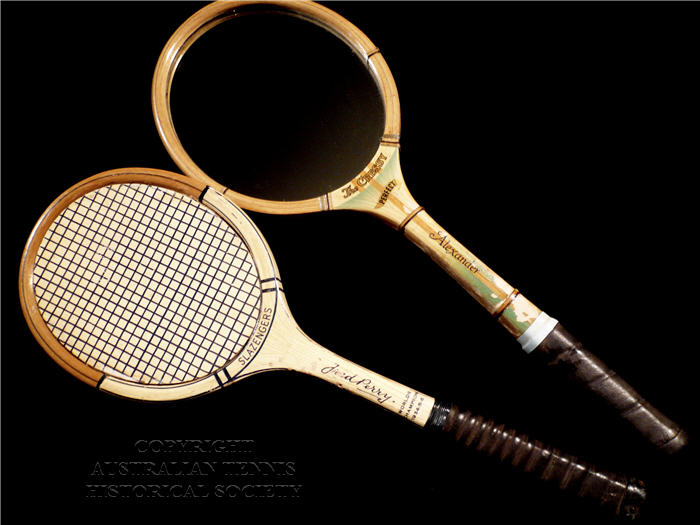
Manufacturer Alexander’s may have started this miniature racquet craze in the 1930’s with their mirrors while the  Slazenger Brush promotes the Fred Perry “All White” Model created in Australia to combat the public interest in Jack Crawford’s Semi  Flat top Alexander racquet.

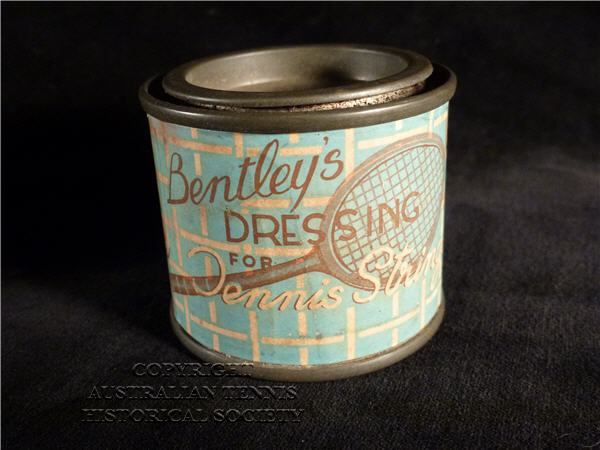
To help pro long gut string life, reviver was sold in order to coat the strings for added protection from moisture.

The product would be brushed on lightly after a game.  Very hard to find bottles and kits so if you do come across one grab it.

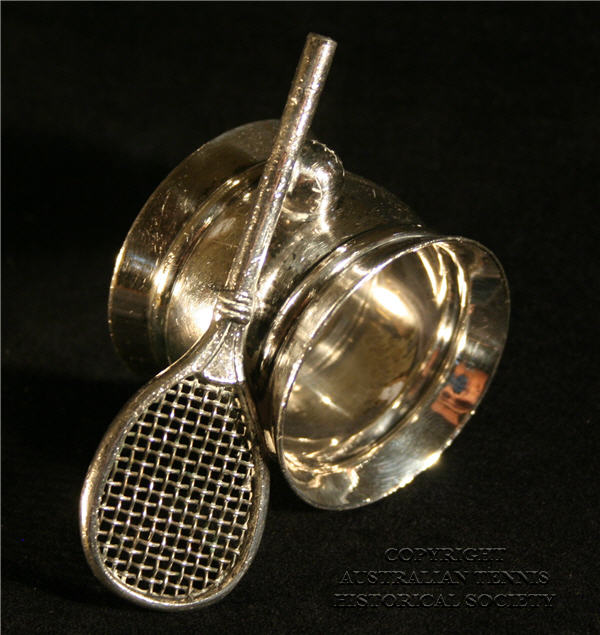
A nice old tennis racquet and ball napkin ring.

Anyone who has some interesting memorabilia or family history that relates to tennis, please contact me rod@tacticalresponse.net.au 0418 362 386

AND PLEASE JOIN AUSTRALIAN TENNIS HISTORY ON FACEBOOK link from here

Sportsmaster Racquet Company

Covered in patent numbers belonging to Alexander Racket Company, Sportsmaster is not really a manufacturer but a second marketing brand most likely. We are unclear at this point if Alexander’s were involved with the company financially. It was suggested that some ex-employees set this business up, obviously with some supply endorsement from Alexander’s.

SPORTSMASTER (1)

SPORTSMASTER (4)

Unusual Vintage Tennis Racquets 3


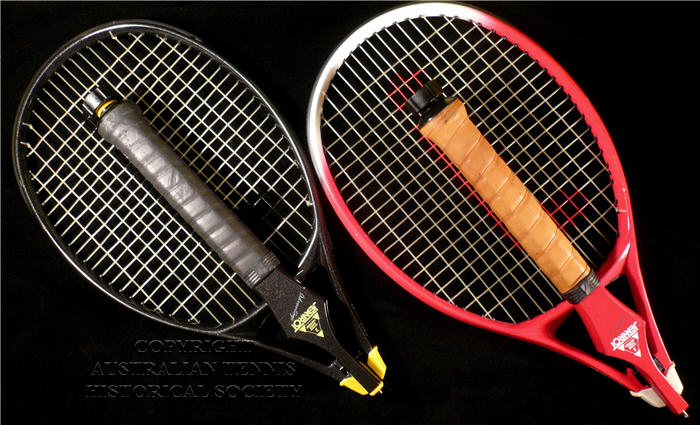
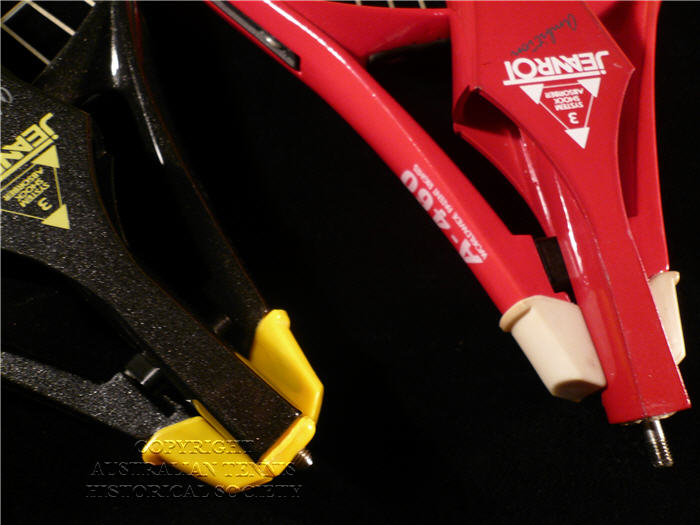
 The Jeanrot Foldable  Racquet c 1985

A butt cap unwind system untightens the screw section in the throat allowing the racquet to pivot apart.

In 2007 a reincarnation emerged called the JENRO which came apart completely for compact packing.
This is shown in the Modern Unusual section.


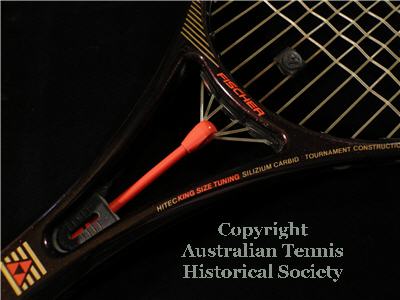
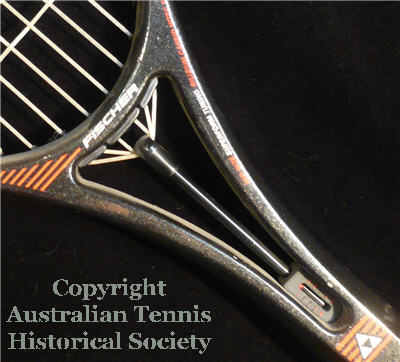
Fischer Superform Tuning c1985

Just like the 1928 Craven racquet above, the rod like device is tightened from the handle and the string tension is adjusted.

The red/deep purple version is the rarer of the two.


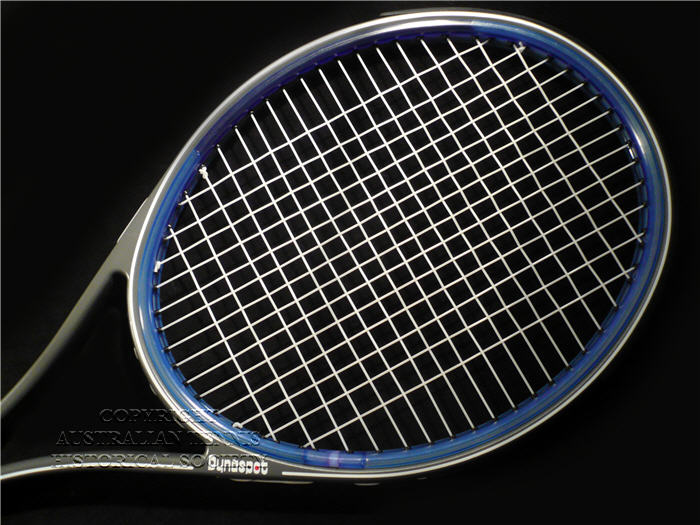
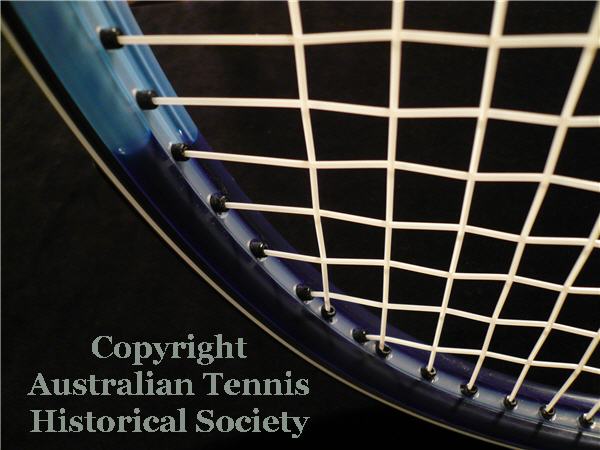
Dynaspot (USA)

c mid 1990’s

Fluid filled tube adjusts weight in the racquet head to counter offset hitting and vibration.

Banned under ITF rules.

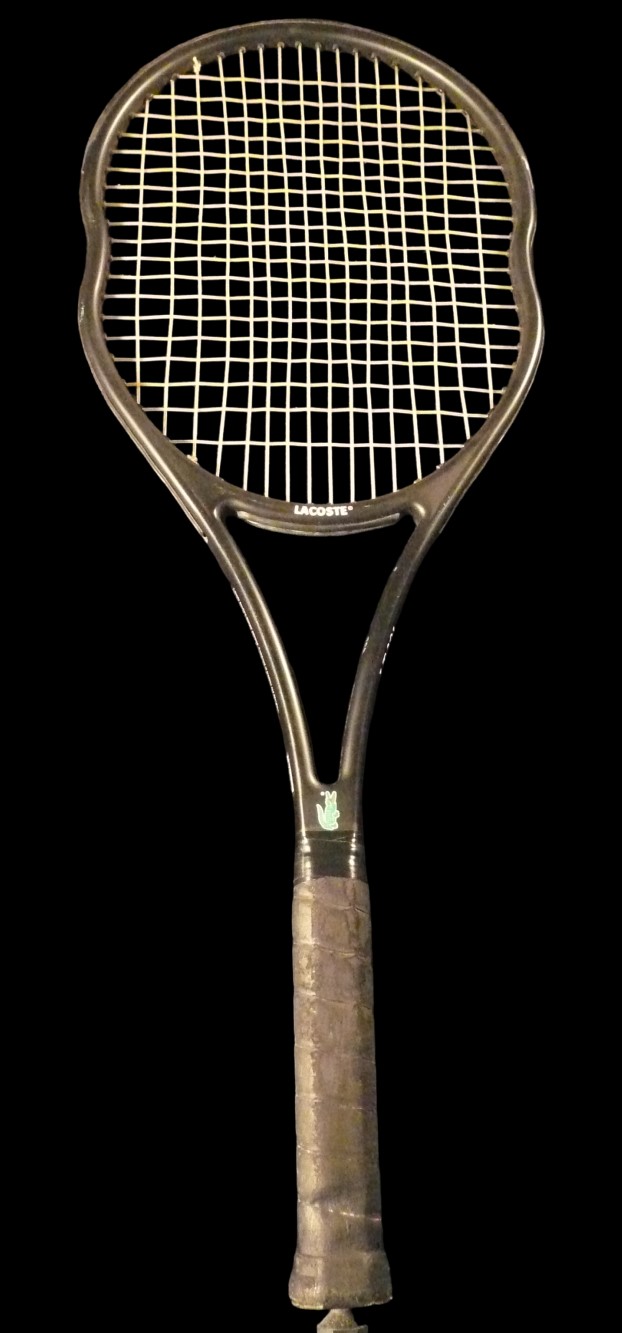
 Lacoste Equijet mid 80’s

Used by Guy Forget.

No it isn’t sun damaged! Another interesting Lacoste design which aims to change the sweet spot via altered string tensions. It has a unique Vibration system in the butt cap which carried through to the Wilson T5000 model

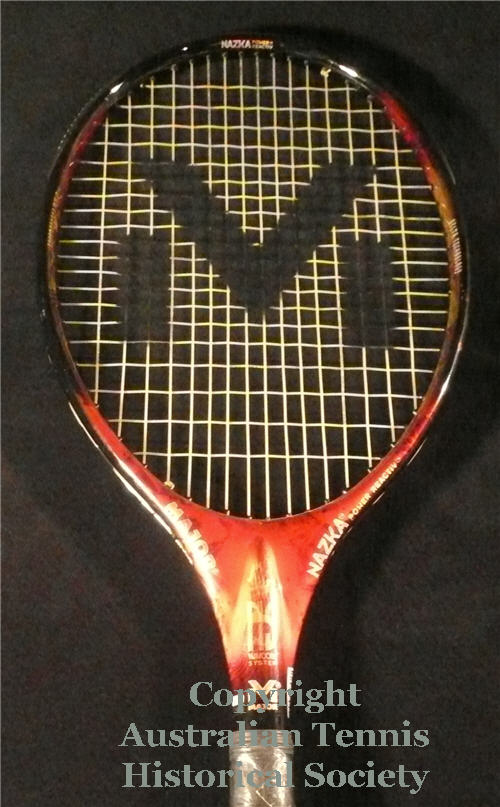
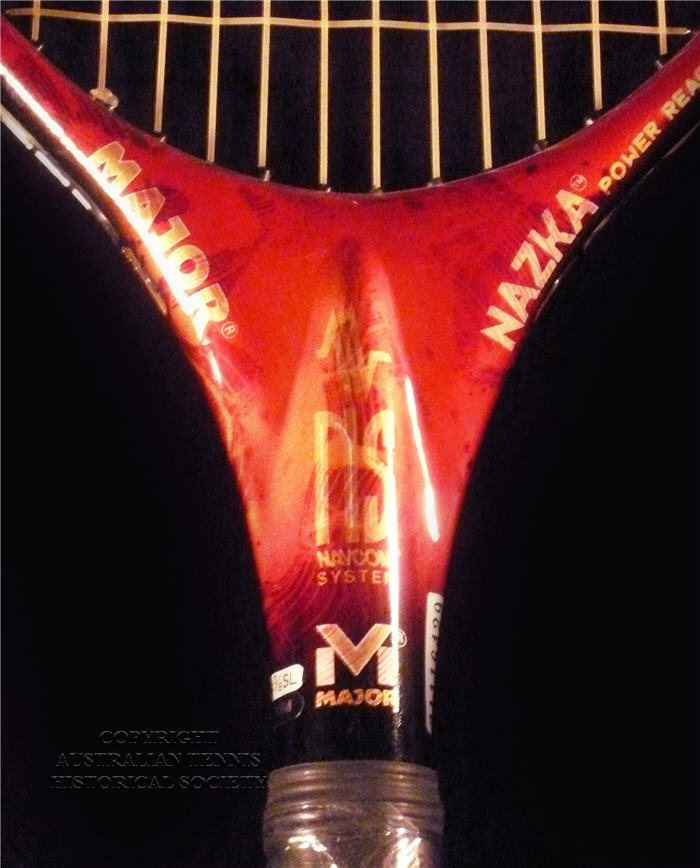
Major Nazka 1990’s

Retro design with vibration dampening system in the middle of the shaft. Graphics and shape are just great

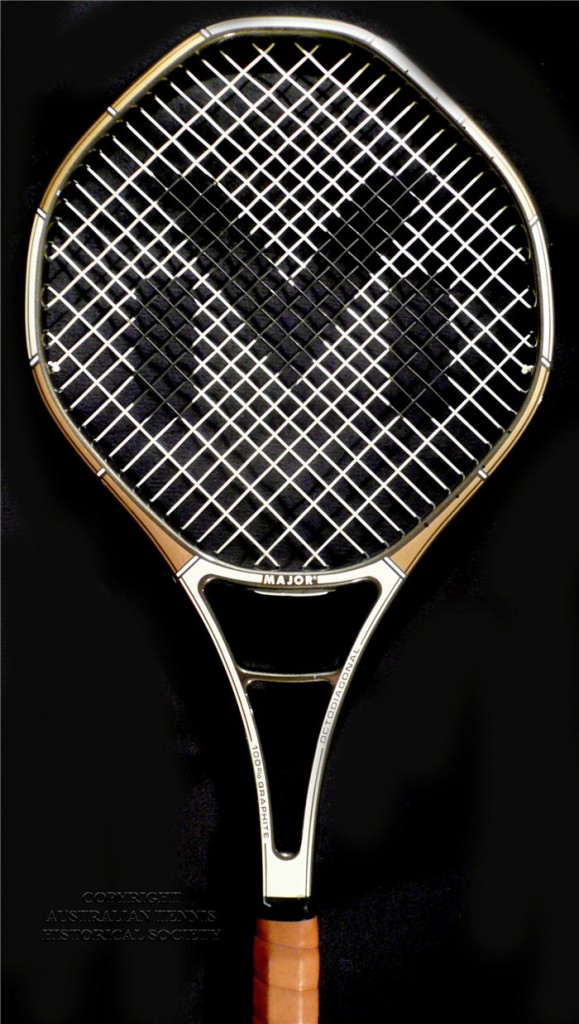
Major Octodiagonal

Terrific shape aka Macgregor Bergelin style.

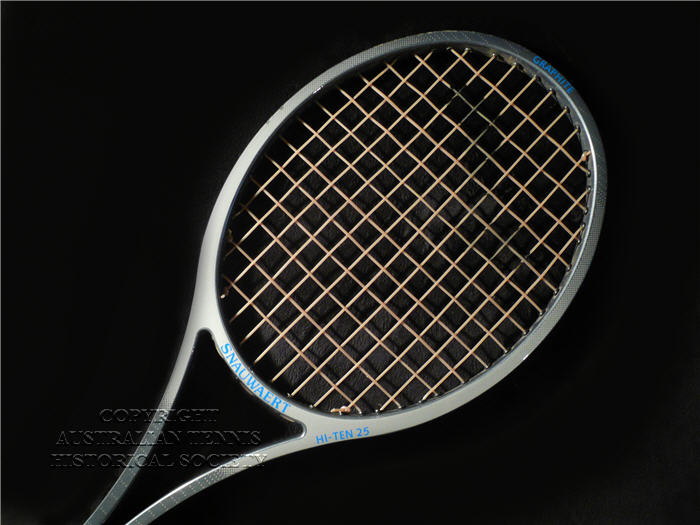
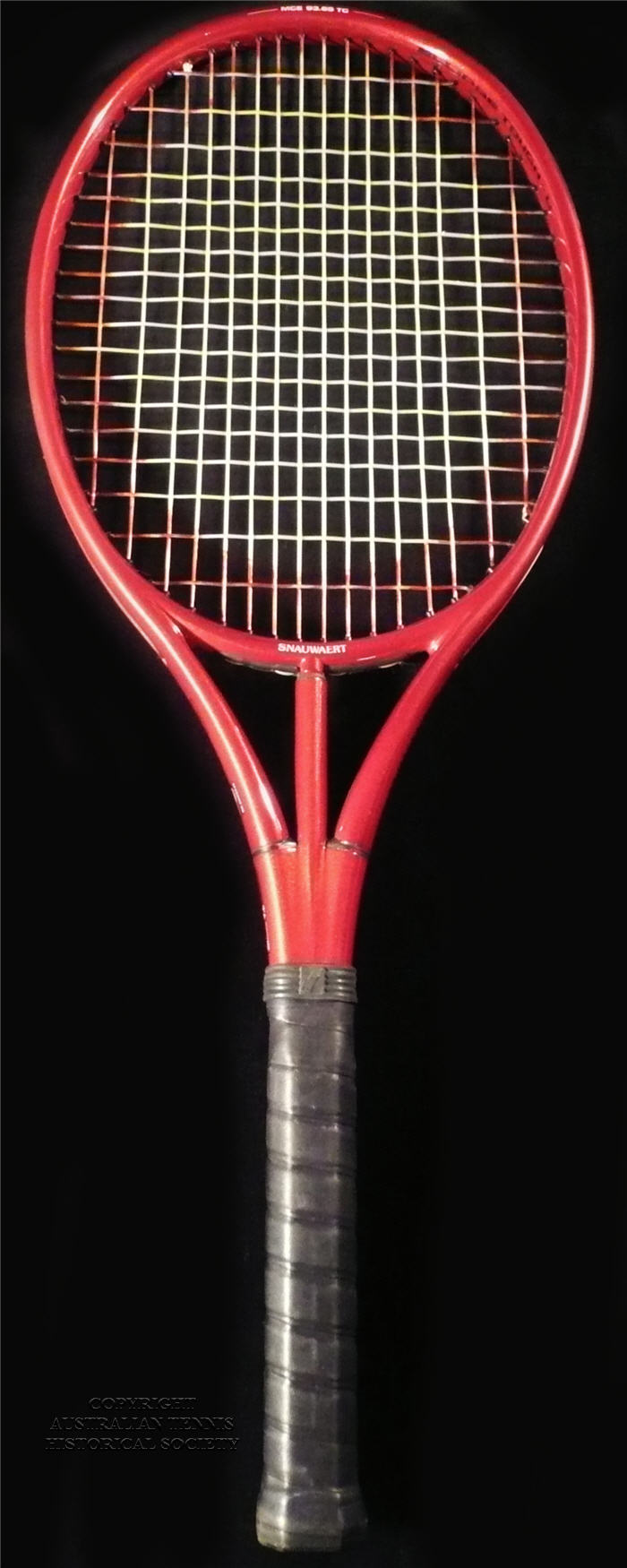
Snauwaert Hi Ten 25 (early 1990’s)

From a 3 range 25,30,50 using open pattern and 1.7mm strings. Designed by Australian player, Barry Phillips-Moore.

This one is a 12 main x 13 crosses. Other models  16 x 12 etc. as the heads get larger.

Mark Woodforde apparently enjoyed these racquets for the huge spin capabilities of the stringing pattern. He went on to use a version of this in a Wilson model. Barry licensed this idea to Josan ( a Yonex Distributor connected brand from Sydney)

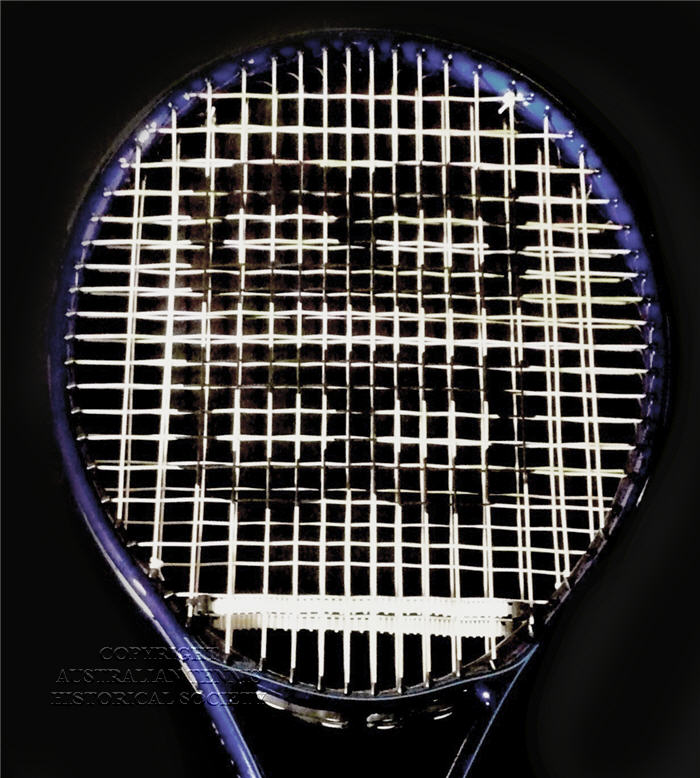
Blackburne Double String Late 1990’s

Racquet with two sets of strings about 2mm from the lip of the frame designed to reduce frame hits. The racquet warps when being strung due to the string pressures on one side and then reverts to shape as the second set is fitted.

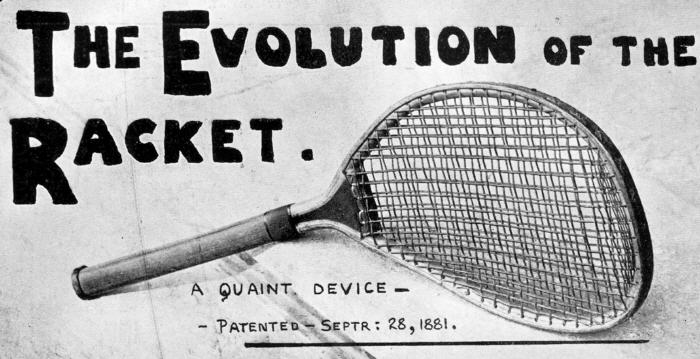
The earliest evidence if a similar comes from 1881 as printed in the UK Lawn Tennis and Badminton Magazine in 1914.

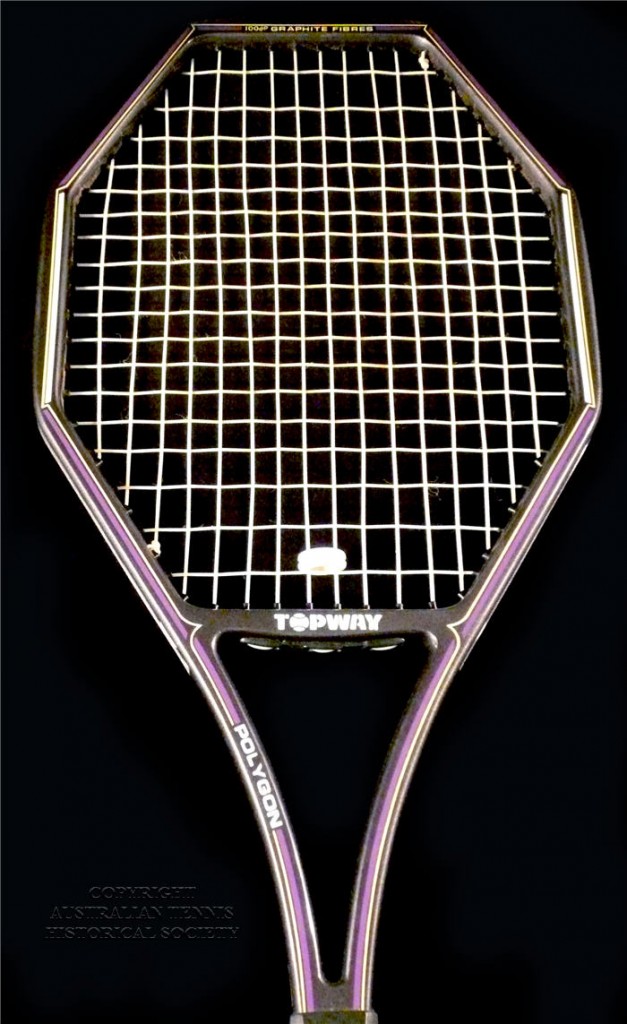
Topway Hexangonal

Very unusual shape made in Taiwan.

Dunlop Japan also marketed this design as their the Polygon model.

Tour Pro (nothing else known) great frame shape dividing the strings on all four sides.
Similar concept to a Bjorn Borg signature, Black Crystal racquet.

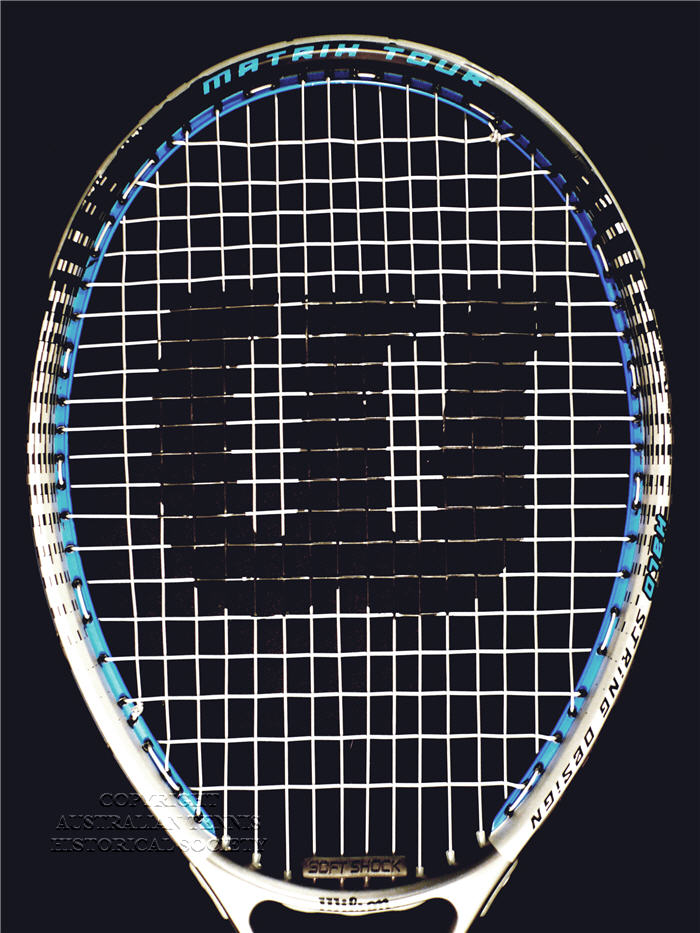
Wilson Matrix internal stringing system along the lines of the Seamco / Seamless model from the mid 1970’s

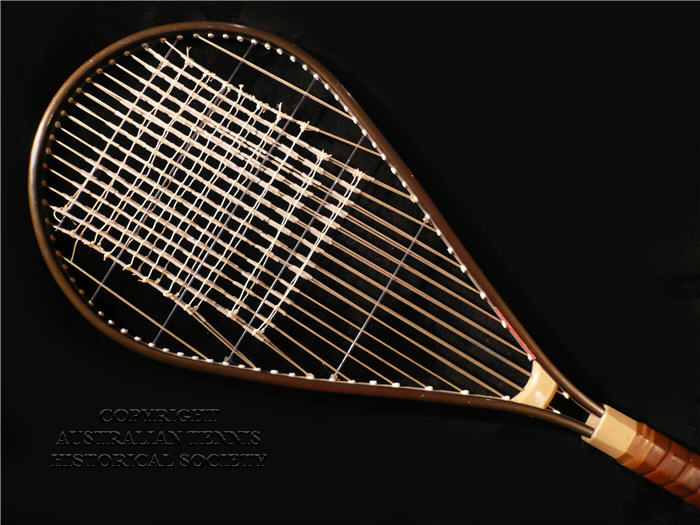
The Kuebler Phillps Moore c 1980 in Germany

Named after South Australian player and journeyman, Barry Phillips Moore.

This sample has been strung using a stringing technique called ‘spaghetti’ stringing.

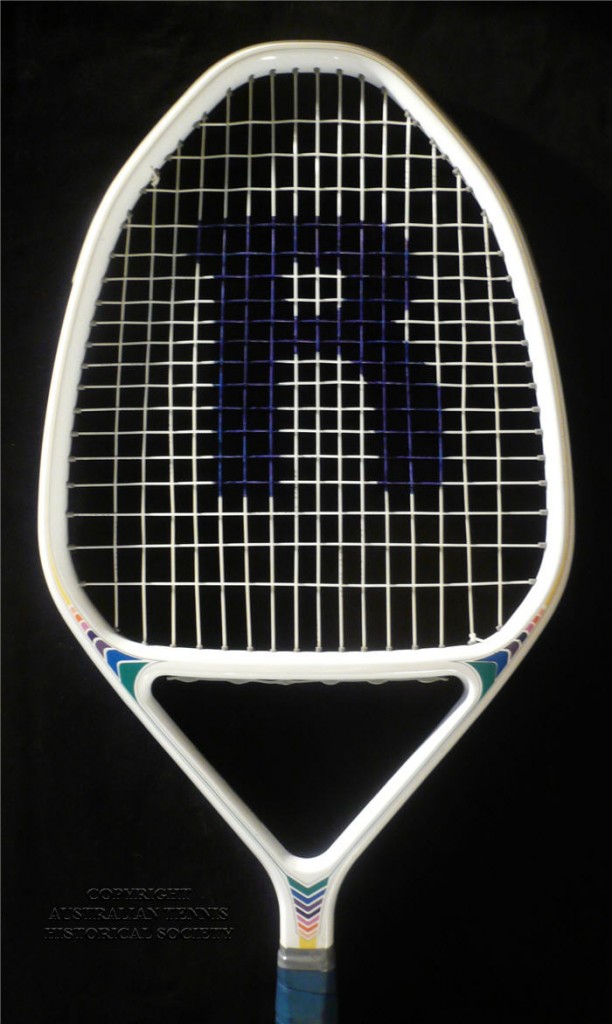
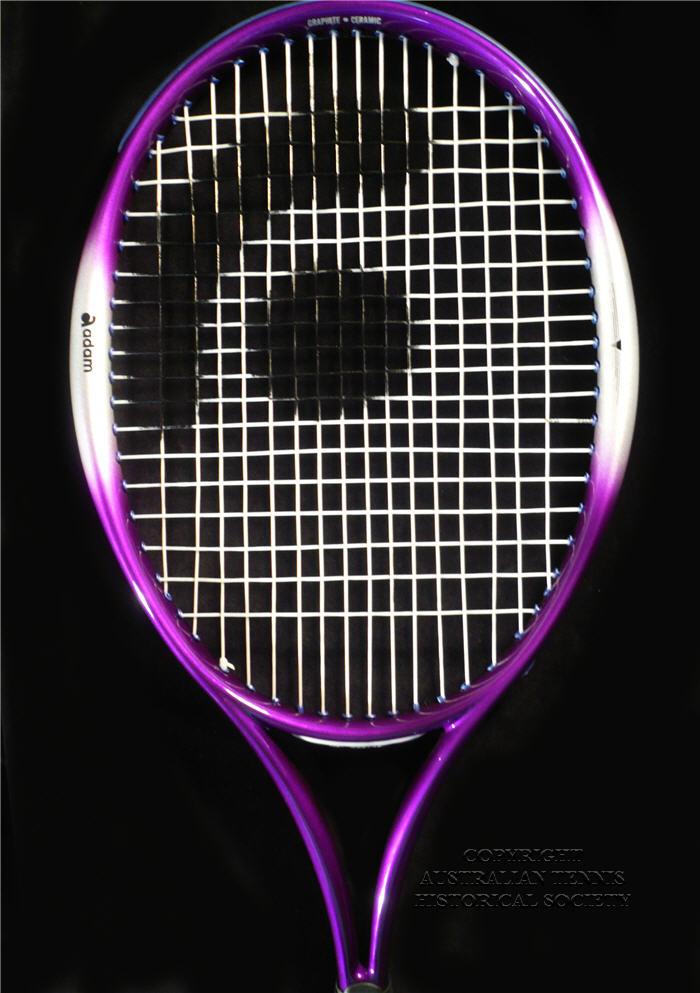
Rival AU 700

Ceramic Composition c1993

The premise behind the shape was that it represented an open hand and was designed to deliver greater feel and control plus bring the sweet spot closer to the bottom of the frame.

There were quite a few models:

AU 100, AU 300MS, AU 400, AU 500 from 1989-1993 and were sold mainly in the USA


Rayco Ruler c 1980’s?

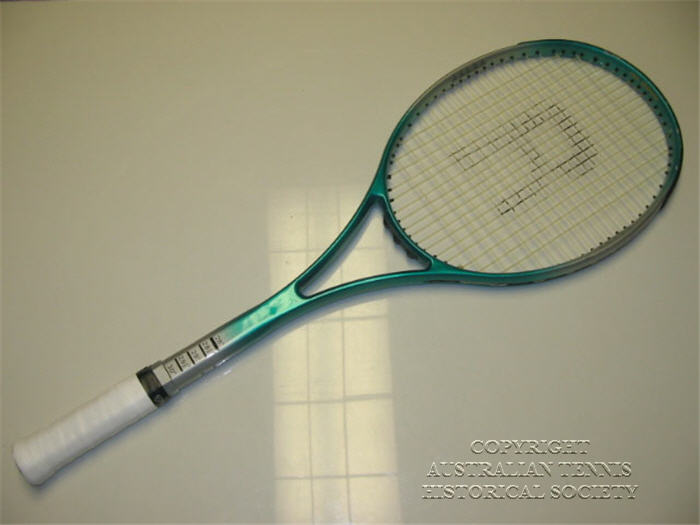
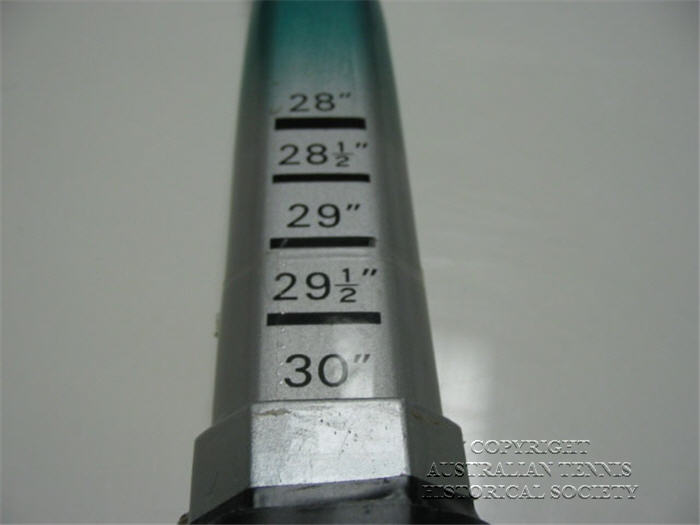
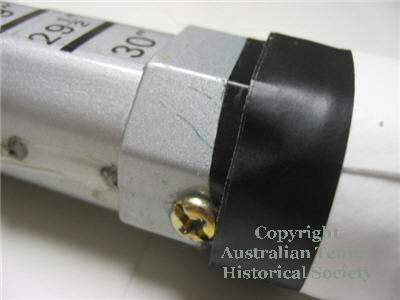
Adjustable racquet length from 28″ to 30″ via an in-handle extension. Just a screwdriver away from extra reach.

Very rare. Not sure how practical or what would happened if the screw broke, net players beware.

Apparently, this was a low cost Kmart style racquet

ADAM 4edit

 Adam Pro Turbo adjustable length c1989

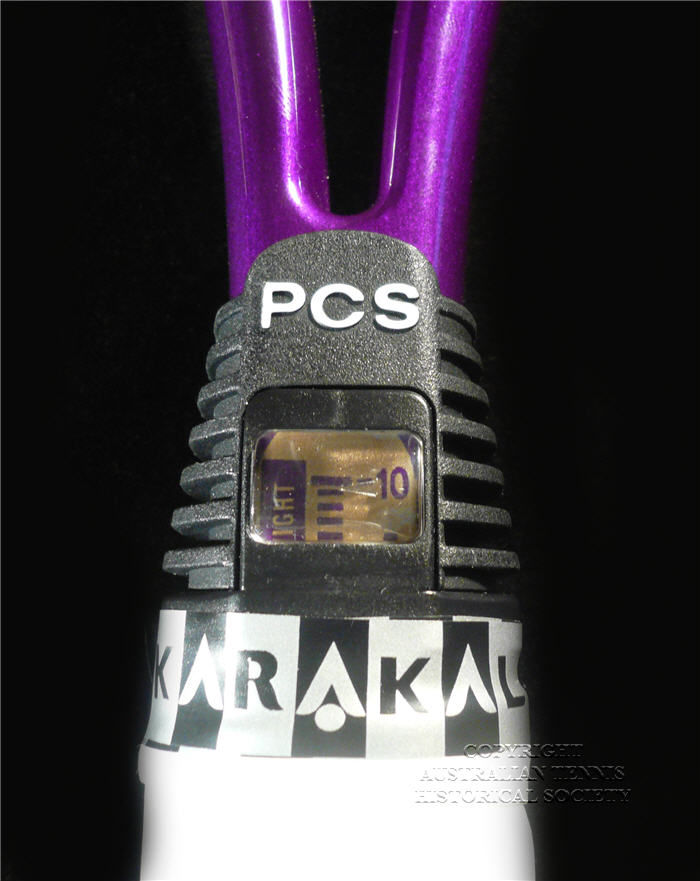
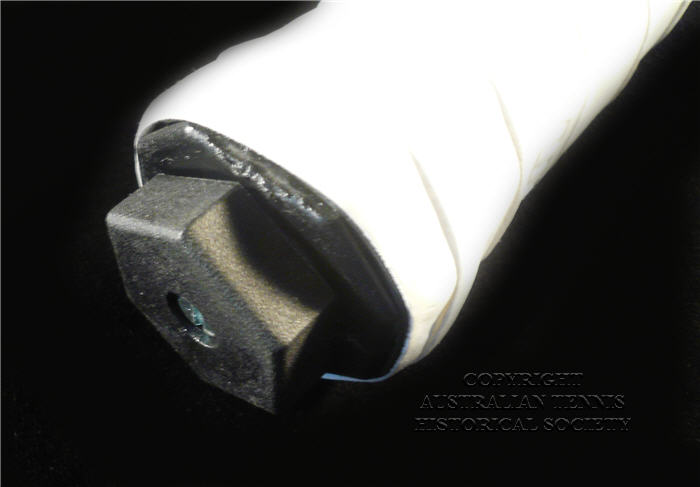
Adam Gunther was the head designer at Volkl before joining Puma where he designed the Boris Becker PCS. After Puma exited the market, Adams created his own modified version of the PCS with a knob winding system.

The knob in the handle turns to change the length of the racquet and therefore swing weight. The two pics left show the variation.

It is a beautifully balanced racquet with an excellent sweet spot. Notice the wider head areas on the sides.

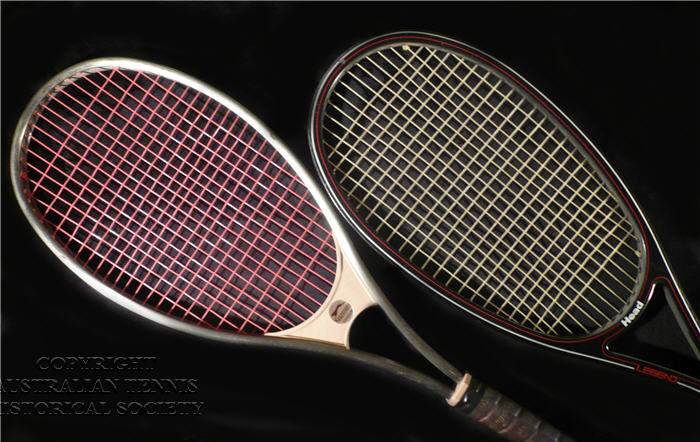
Head Legend c mid 80’s with Slazenger Omega Long head shape models

The elongated head shape really is quite fascinating and totally unique compared with the 65 sq in oval shapes typically seen in the day.

In the 1980’s 1900’s there were also long frame models.

Gamma Big Bubba

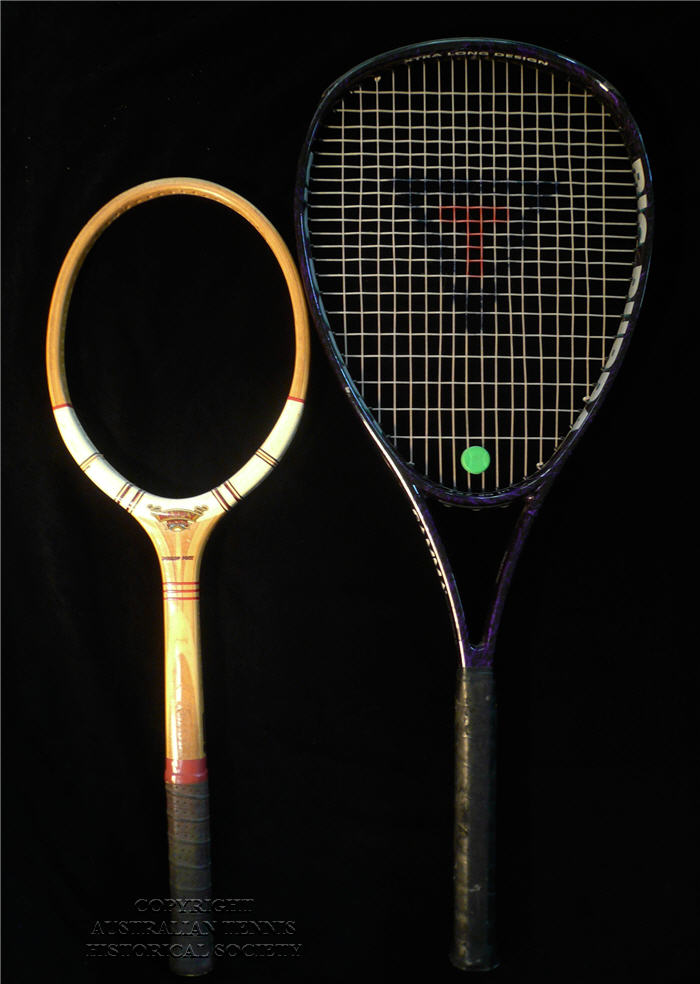
32″ tall and 137sq.in head.

An amazing weapon which was banned in 1997 after being approved. Ultimately they simply chopped 4″ off to make it 28″.

Banned because it was thought that the game would end up being all serve and not much else. Our Aussie scud put these to a test against woodies.

Read the story under BLOG ARTICLES and scroll through a few others as well.

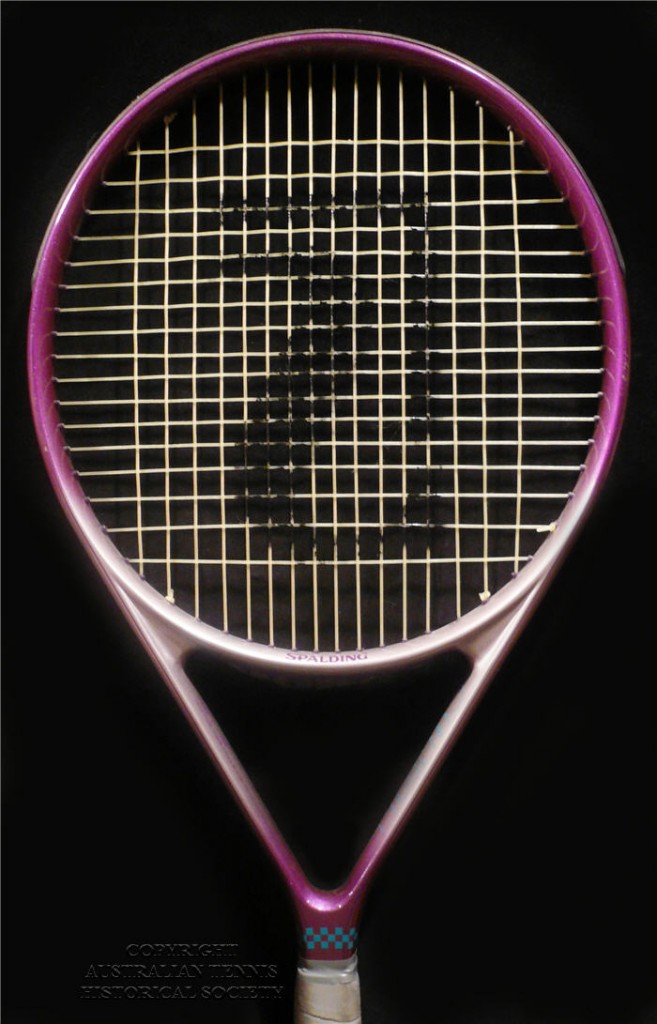
Spalding’s Orbitech was a given a big push in the early 1990’s

This is the XL-105.

Sold in the USA for $190 so an OK mid price racquet for the social players

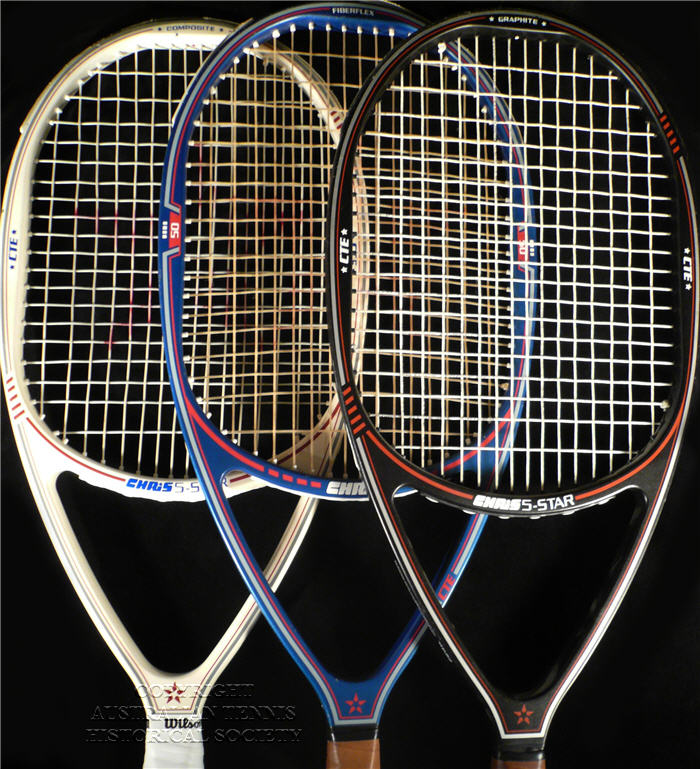
The Chris 5 Star USA mid 1980’s

Another wide bow racquet design.

Grey: Power G model 100% Graphite

White: Competition Composite

Blue: Avenger Fiberflex

Very well balanced and stable due to the wide bow and collectors still really enjoy playing with them even compared to current designs

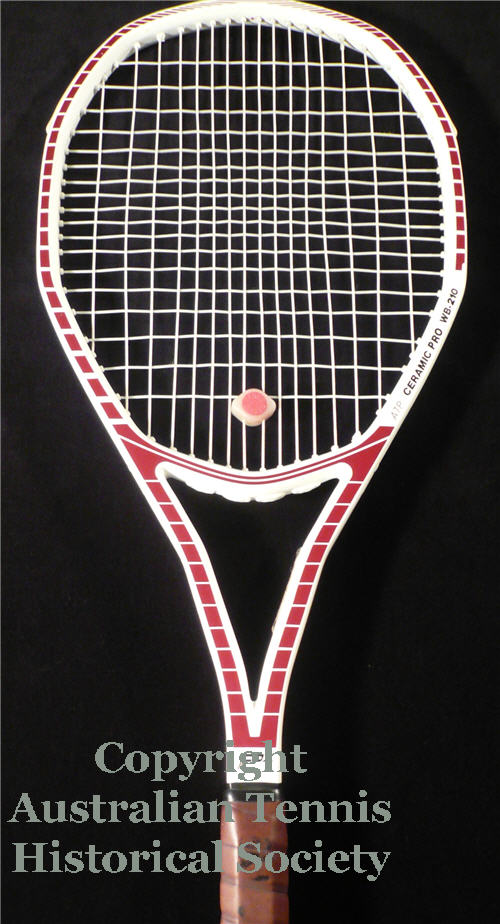
Fox Ceramic Pro WB-210 c 1985

Warren Bosworth was a highly regarded stringer to many professionals and was heavily involved in the design of these and many other Fox racquets. We recently found an Australian branded version of this racquet called CERAMIC PRO of which only 300 or so were made for promotional purposes.

This series are unusual due to their 10 sided shape.

Fox also produced a version model WB-215 traditional head shape long string model.

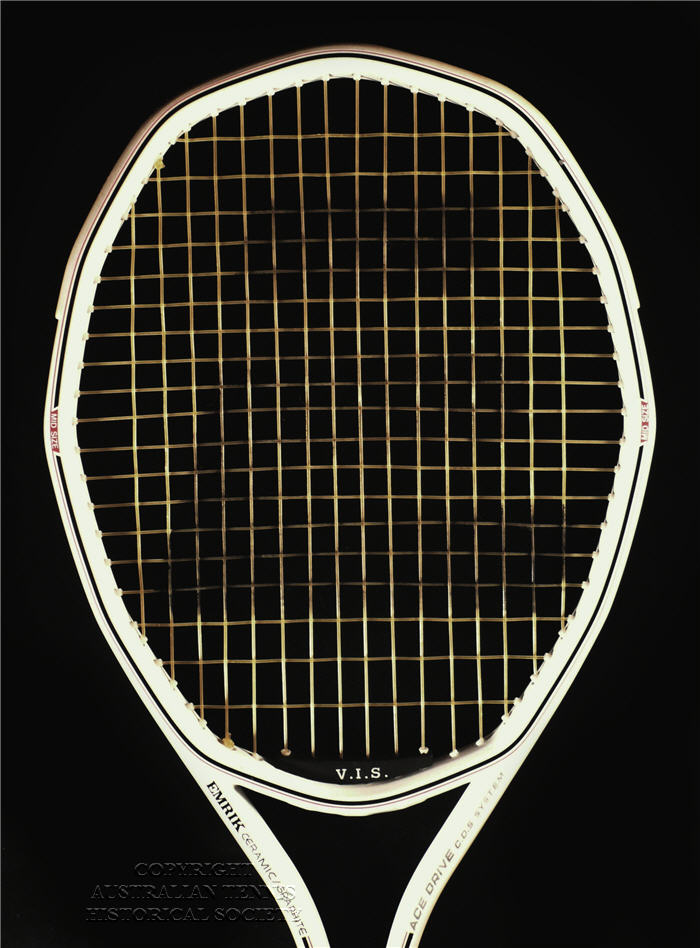
Emrik (Australia) Ace Drive Angular finish

Very rare multi angle model.

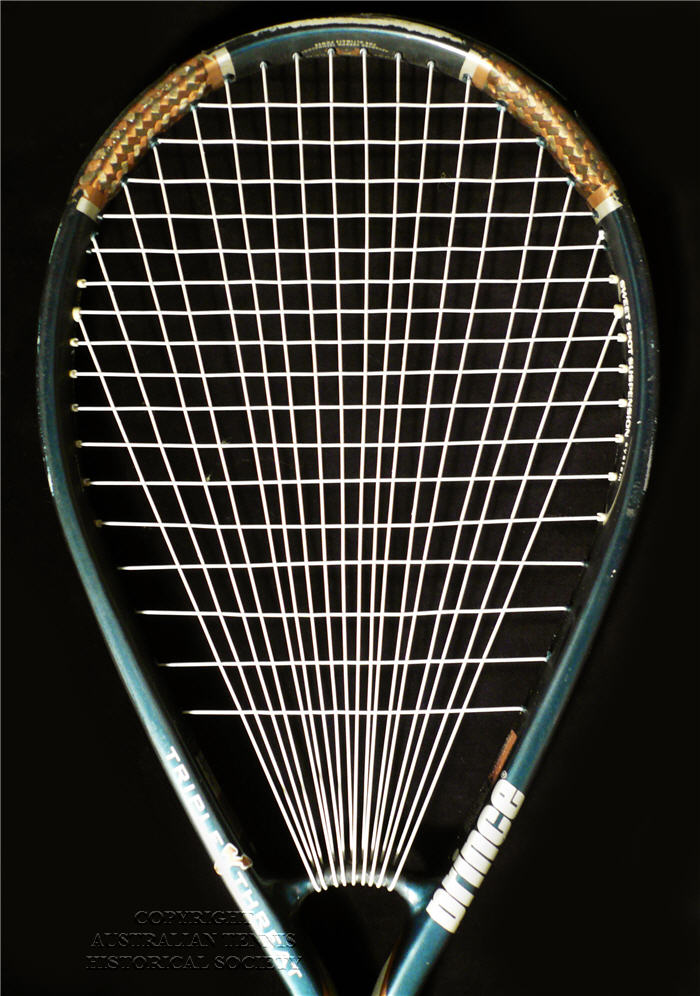
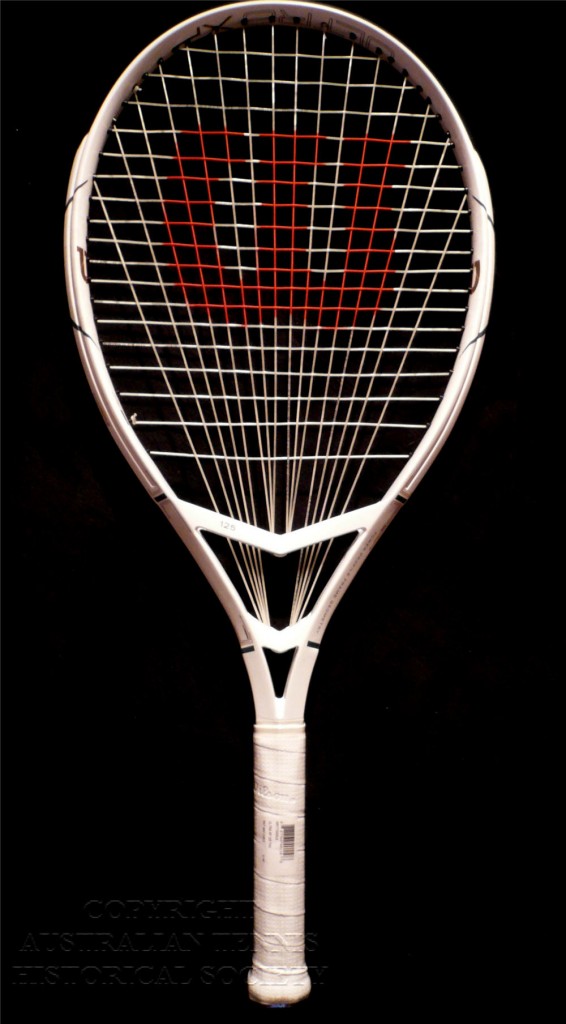
Apart from the SPIN racquet above, other makers have experimented with long string designs.

Pictured is the Prince Triple Threat Ring (1300 power level) and the Wilson Radius with Power Strings Technology.

In 2015 Wilson introduced this ULTRA 125 Long string model which featured an outer long string and central throat stringing.
We believe it was withdrawn possibly due to breakage at the throat where considerable tension is applied to the one point.

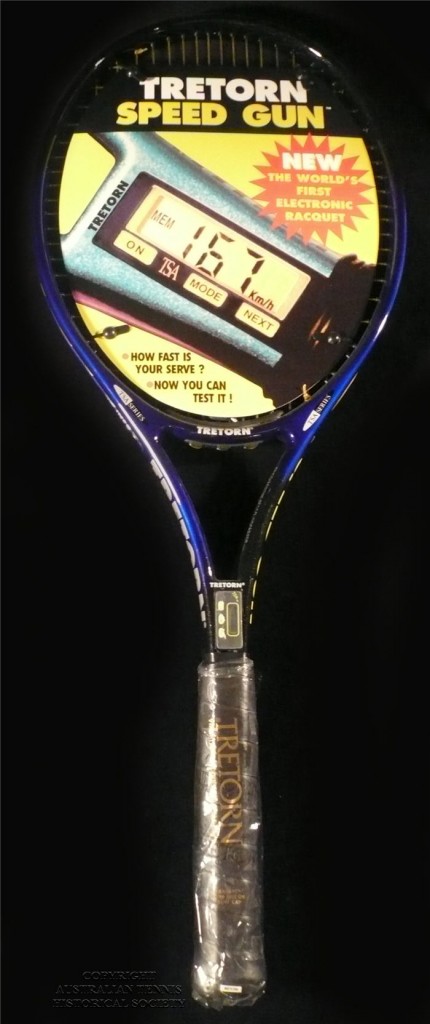
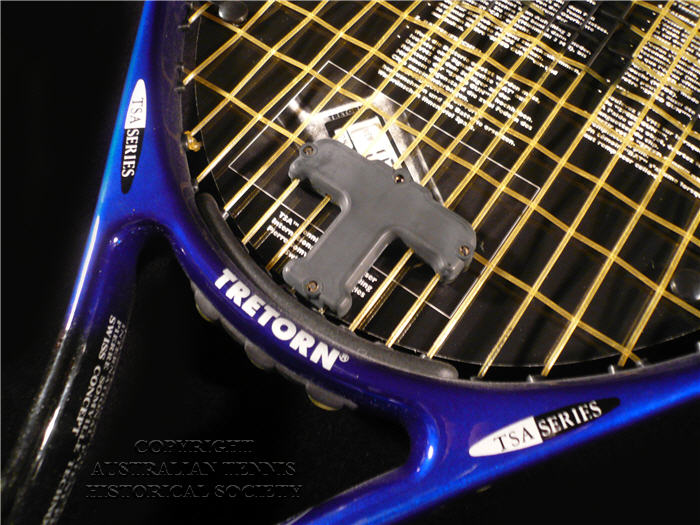
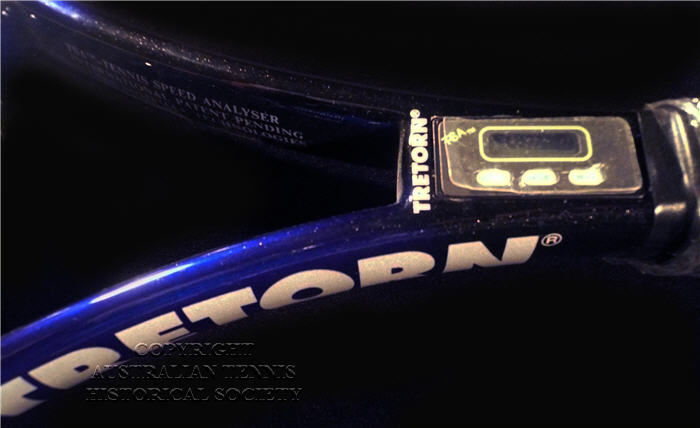
Tretorn Speedgun (Concept racquet) 2005

Computers meet tennis.

A string sensor picks up movement to determine shot speed to within +- 2.5kmh. Play a rally and see the last 10 shots on a screen built into the handle.

Only 1000 were made and they never achieved retail distribution. A rare find indeed and a great tennis brand name. Current ITF rules prevent information being relayed to a player during play.

Unususal Vintage Tennis Racquets 2

santor s pro (6)

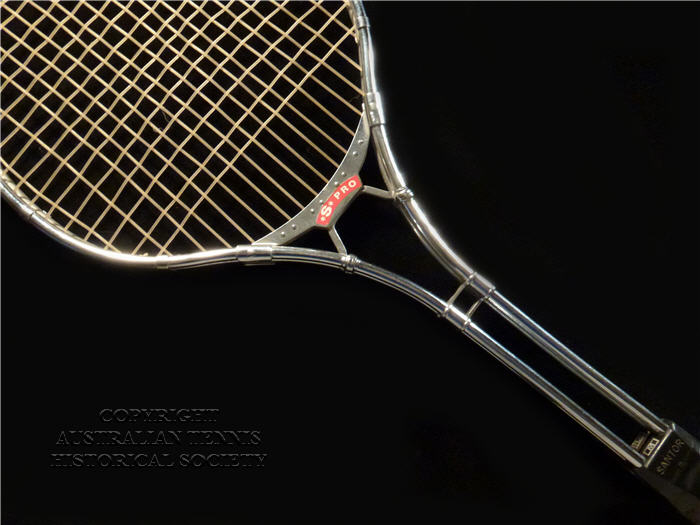
Santor S Pro

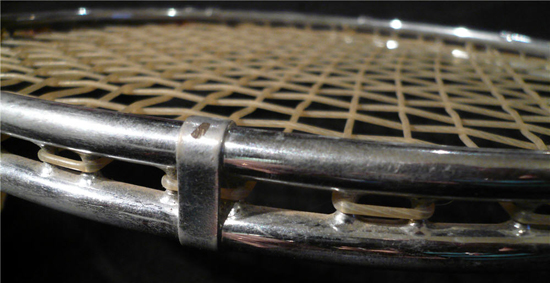
Santor S-Pro Steel racquet with really lovely industrial design cues.

It is essentially two frames joined together with welded or soldered pins.

SEAMKENR11

SEAMKENR5

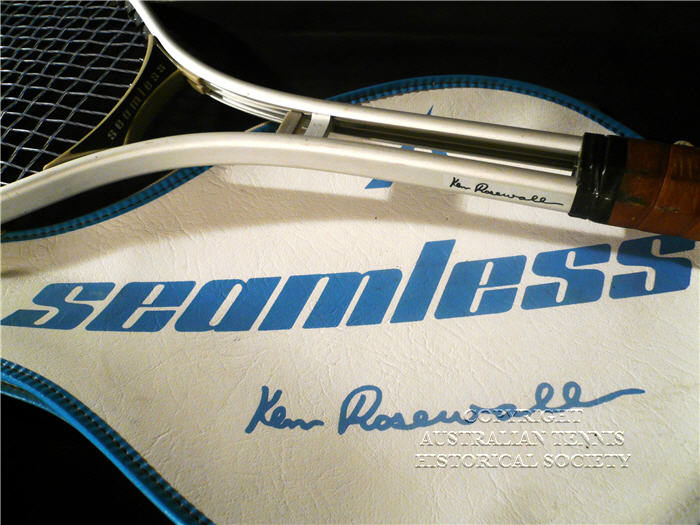
The “Ken Rosewall” Seamless (Seamco) c 1971

As you can see the string supports are located inside the extruded aluminium

frame leaving a very unusual smooth finish.

Ken was a consultant to the firm hence the interest to Australia.

If you like this smooth look out for a Wilson TX 6000 c1978 which has a smooth finish unlike the channeled look of the T2000.

STEEL SHAFT RANGE

Steel Shaft Models (late 1960’s and 1970’s)

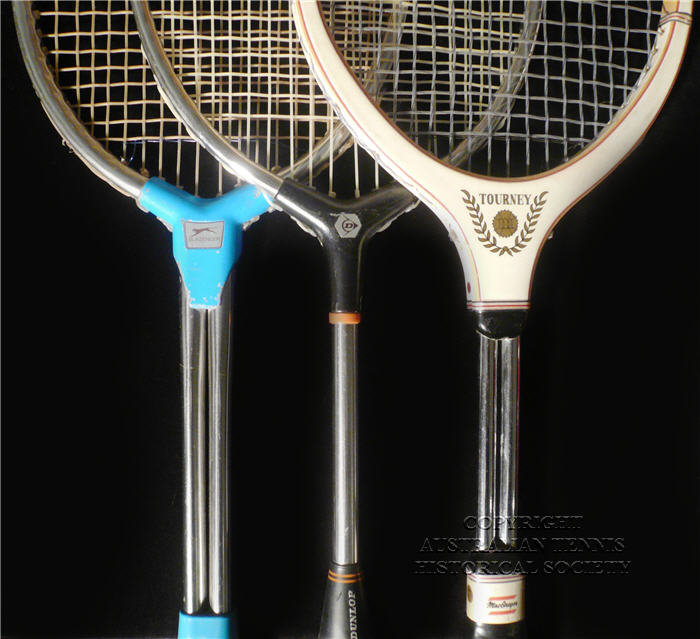
Slazenger twin shaft, Dunlop Monoshaft UK 1972, MacGregor Tourney USA

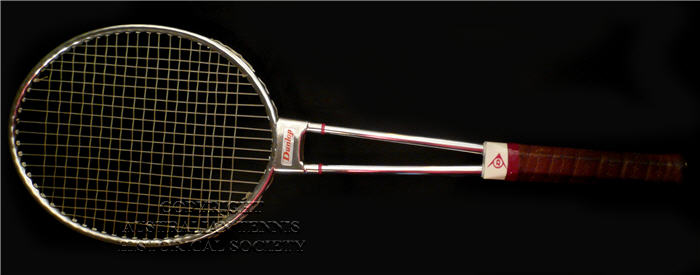
As the Wilson/Lacoste T2000 was booming, Dunlop produced these very nice looking racquets, often confused for squash racquets.

grays steelmaster (2)

Grays Silver Gray estimated 1954-1974 era (UK)

Steel Shaft with wooden head

tretorn demountable 2

tretorn demountable

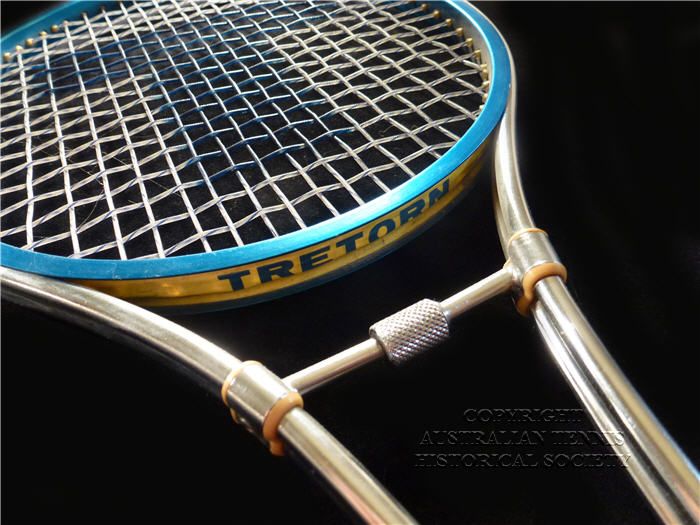
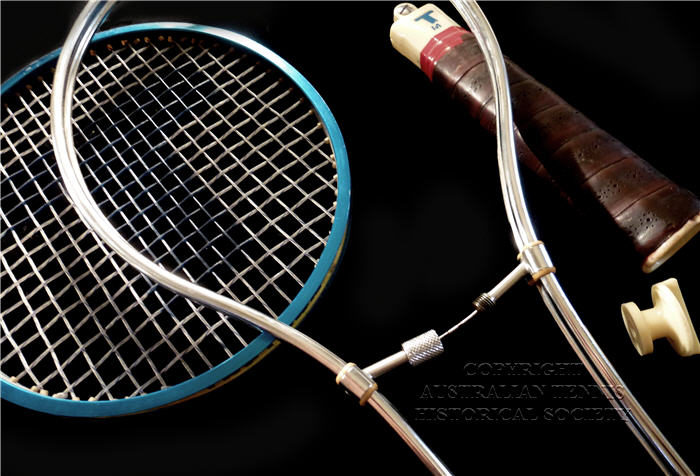
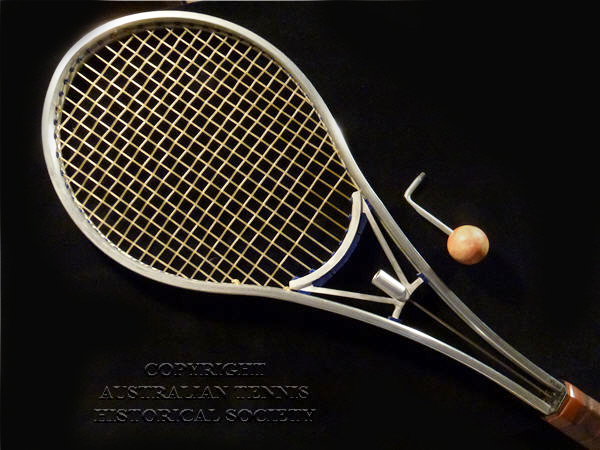
Tretorn ( Demountable) Sweden 1968

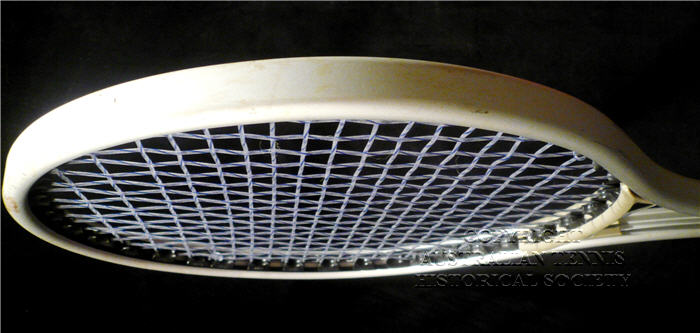
String set in the blue aluminium frame can be removed from the racquet frame by undoing the butt cap, sliding off the handle and undoing the spindle in the centre of the cross bar (pictured). This allows the frame to spring open so a new string set can be inserted. Takes a few minutes only.

They often came with 2-3 different string sets with different tensions or as back ups for breakage.

See the Maynard below for another string set removal option.

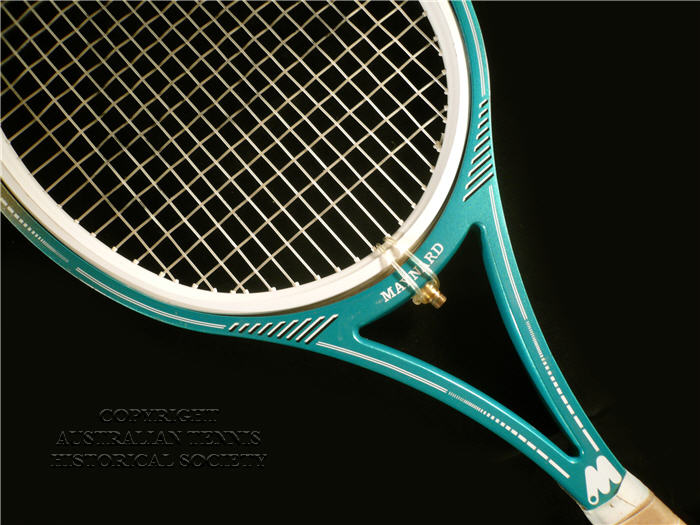
MAYNARD AIR RACQUET 5

Maynard AirPower Racquet c late 1980’s

USA designed, the string set comes on a separate frame which is held in place by a tube filled with air.

Patent filed 1986 # 4 772 021  Michael Maynard

IMG_5652

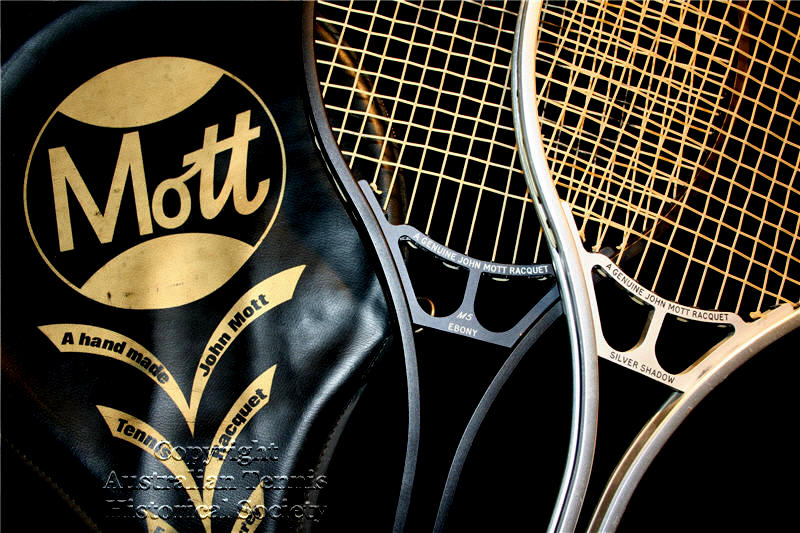
John Mott, Silver Shadow, UK (1980’s)

Hand made in Farnham Surrey.

The factory made tennis and squash racquets for a short time then sold the patents and left the industry.

The finish is superb with no visible rivets and the fit between the throat piece and frame is sheer precision.

We would like to learn more about this company.

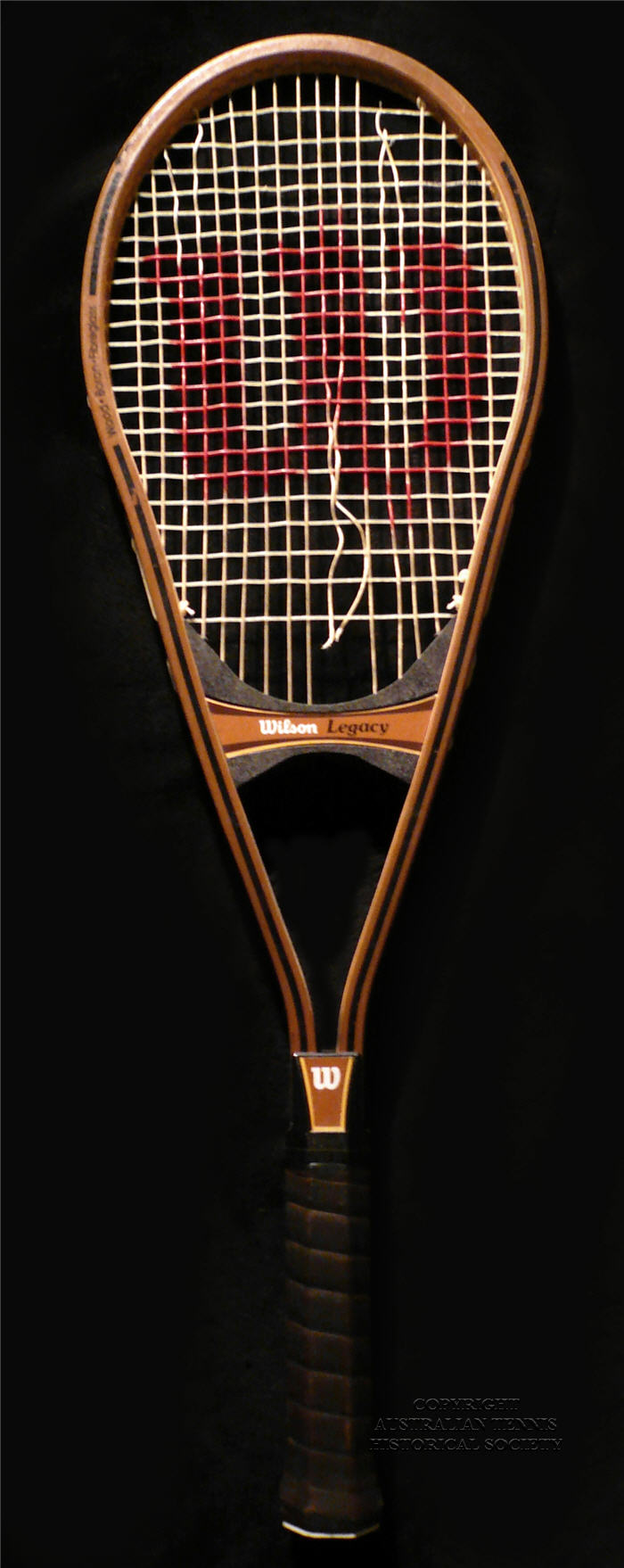
wilson legacy

Wilson Legacy 1983

Rare shape. Wood with plastic throat.

A bit weird, but that’s interesting

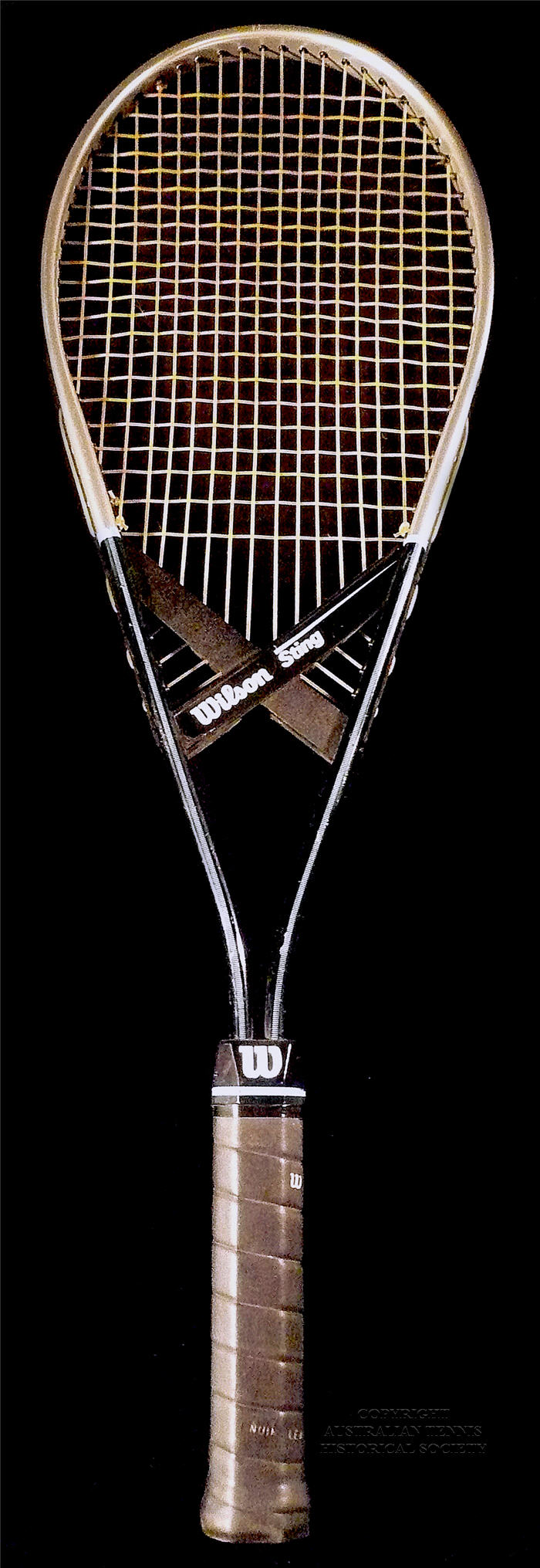
wilson sting

Wilson Sting 1985

Aluminium frame with nice string treatment at the throat.

You can tell they are from the same family as the Legacy above

Bancroft Slingshot

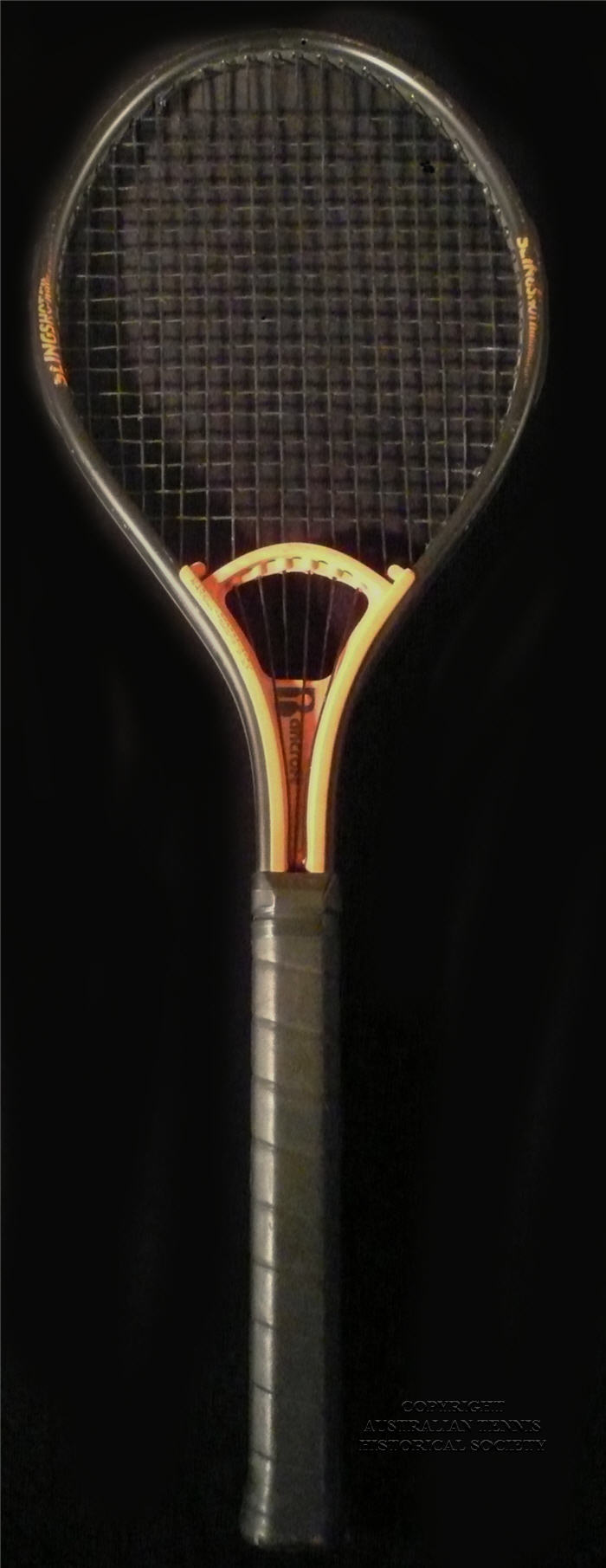
Bancroft Slingshot USA 1983

Made in Germany under license by Markhill.

Great extended string pattern to the top of the very long handle

BIO SPORTS GRIPPER

Bio sports The Gripper 1984

A curved grip.

You might think you have seen everything but this is meant to help with tennis elbow by keeping the racquet face up in line with the ball.

erge2

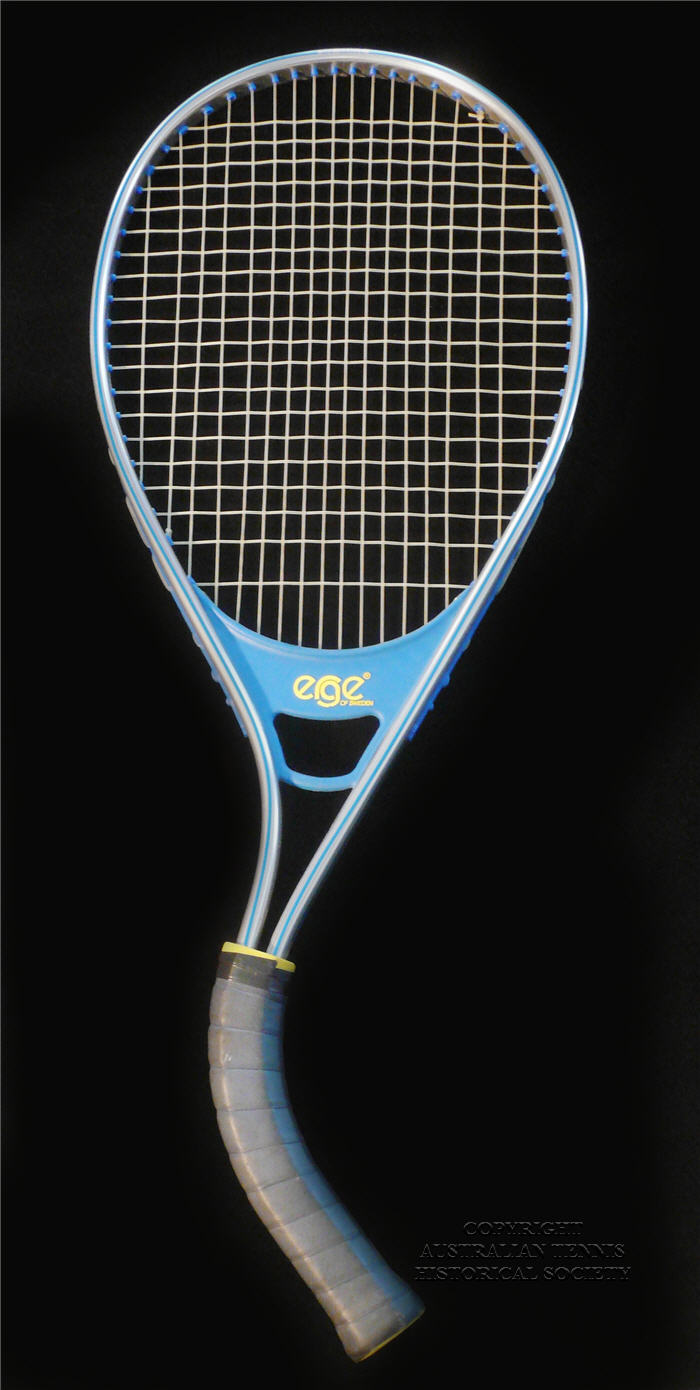
The Erge (Sweden 1983)

Ergonomic Curved Grip racquet.

Far more pronounced and clearly inspiration for the Neoxxline Range (listed under modern unusual).

Aluminium model came in 1983 followed by a graphite version in 1984

wilson javellin

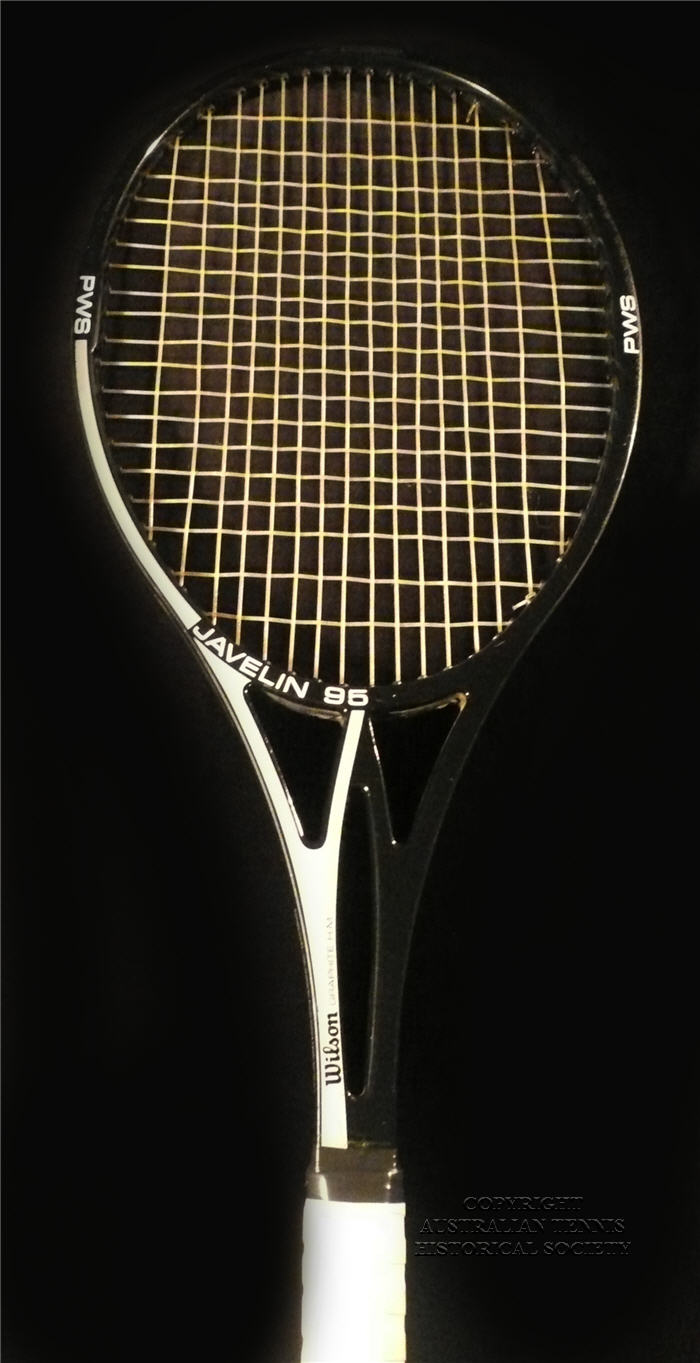
Wilson Javelin mid 1980’s

A very interesting twin throat design highly sought after by collectors.

acro adjuster (4)

Acro Adjustable mid 1970’s (also s0ld under Hart name)

Two versions this one adjustable via throat piece which pulls the throat down the frame.

Later version moved tightening mechanism to butt cap as per below.

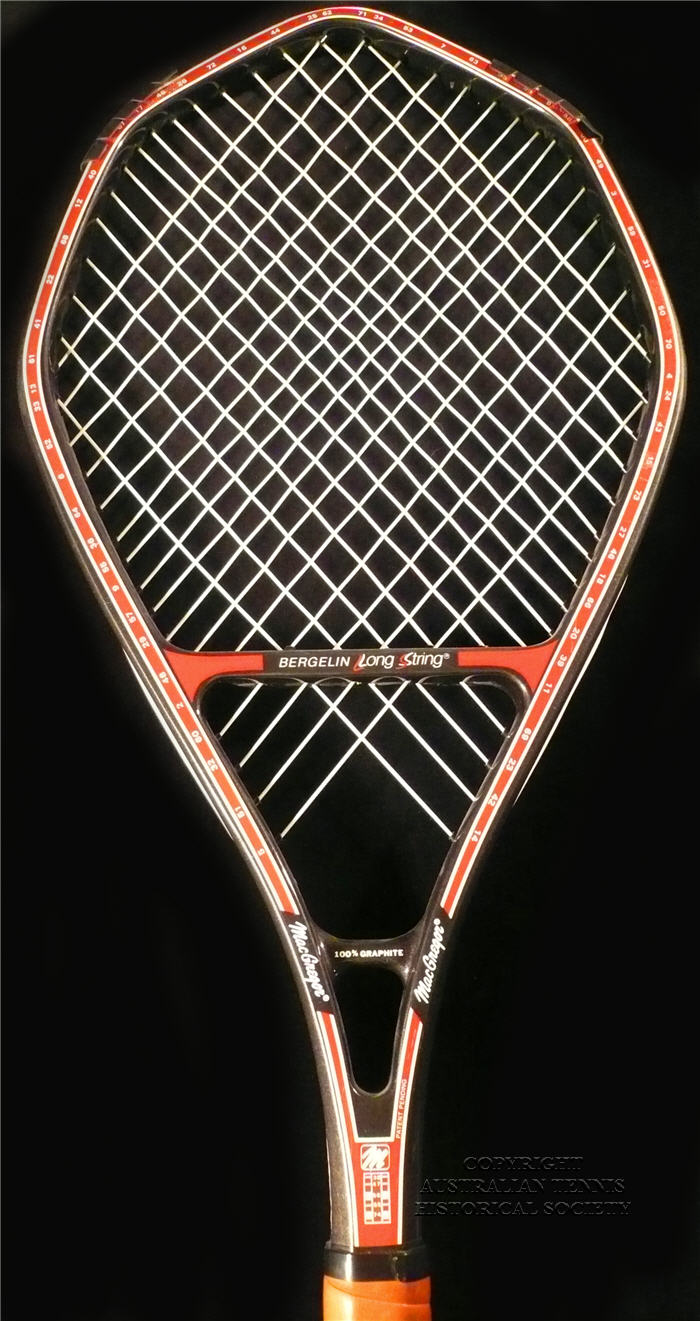
MACGREGOR BERGELIN

Macgregor Bergelin Longstring c 1985

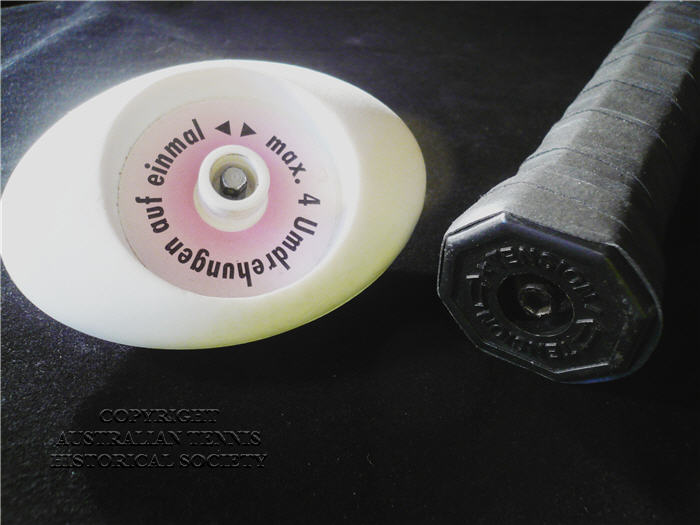
German idea designed by Herwig Fisher (Protagon Sportproukte) and endorsed by Bjorn Borg’s coach Lennart Bergelin. Sold in the USA under license as the MacGregor Bergelin Longstring. Owners can string themselves and then adjust tension via a tightening control system inside the handle. An allen key device connects into the butt cap allowing the owner to adjust tension at any point during a game. Racquet comes with a tension adjustment knob and stringing instructions.

After MacGregor went broke and lost the rights to sell the technology, Protagon went onto launch oval versions called Tension Master and Hi-Con.(page 293-295 Kuebler Book)

protagon (1)

protagon (2)

Protagon TM500 with tension adjustment.

The white knob has an allen key insert which is visible. The MacGregor design was similar.

Great diamond stringing also.

Mizuno Sirius

Mizuno Sirius +10 also incorporates an in handle system but not for tension adjustment.
Inside the handle is a movable weight which enables a change to balance and feel.

Rox Pro Space T 1 (1)edit

Rox Pro Space T1

Arms and fan stringing create an unusual combination.

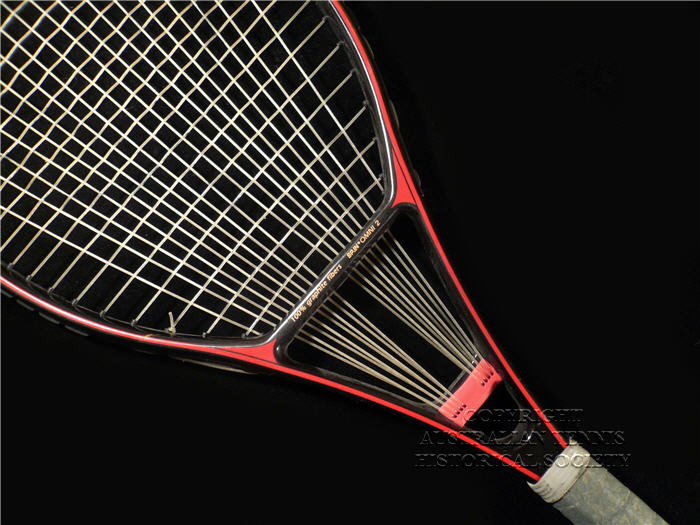
SPIN OMNI LONG STRING

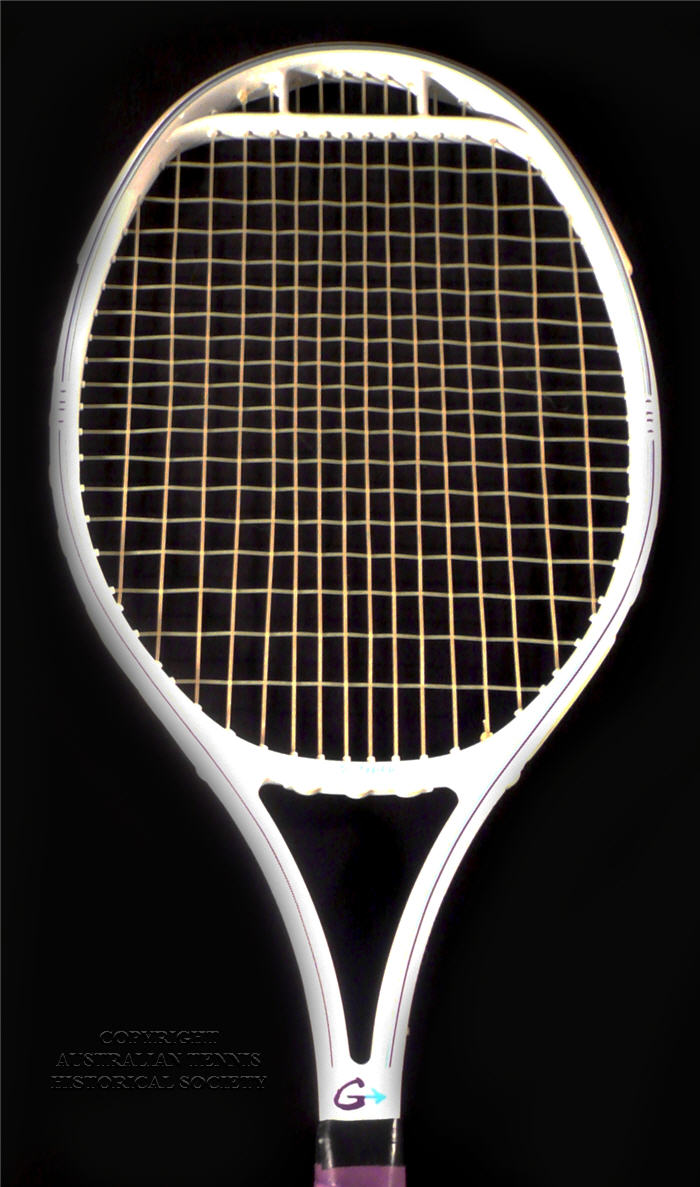
Spin Omni 2 (also G-300 USA & RoxPro Aust.) c 1987

Fancy stringing system with long vertical strings to improve sweet spot performance. Was not within ITF rules but may have received a positive ruling. Also produced a squash racquet with a similar design.

Sold in Australia by Lewis Sports.

rox pro delta 2000 2011 (10)edit

rox pro delta 2000 2011 (7)edit

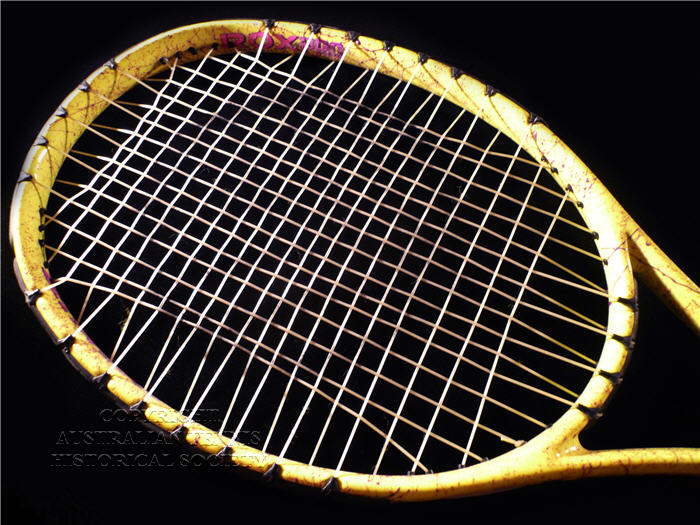
Rox Pro Delta 2000

(Also Estusa AmerPro American Pro Jimmy Connors model)

Loop Stringing around the frame not through holes. The added tenison and change to frame dyamics when striking a ball, keeps these strings super tight.

Not a bad idea!

deesse (16)

Swiss DEESSE (pronounced Dayus) Wizard Woody Graphite. (made in Korea)

There are 3 versions of this design under brands including ADVANCE SVS & ESQUIRE NT1 both sold in Asia.

The woody walnut burl type finish is really attractive. The whole concept was created by Australian, Barry Todd.

Seen Fin/Deesse story.

the natural handler 2014 (25) edit

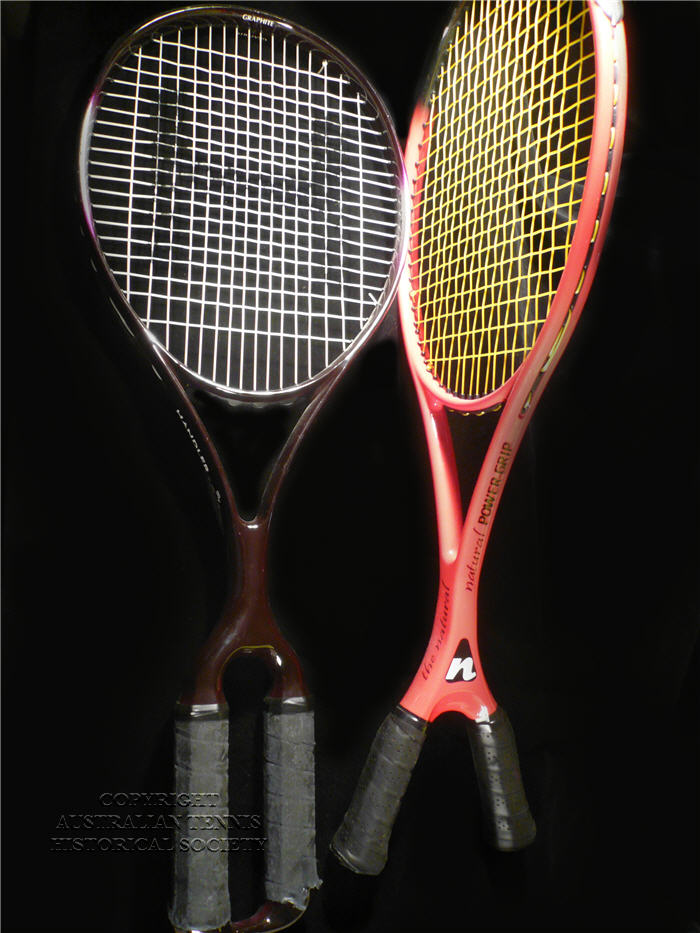
Double Handles:  The Handler c 1992 and The Natural (2007)

Two handled racquet to pick up on the latest teaching techniques for double handed players. Much harder to volley and serve due to single hand play being off centre so you might want be a solid baseline player that can run to shots.

This is just one of 3 different versions we have seen trying this concept.

In March 1995 from Tennis Magazine the male designer, Elie Ban-Kheir claimed to have sold about 2000.

The Natural takes a completely different angle along with an offer to customise your existing racquet if you wish.  Watching video of Brian Battistone serving with a volley ball style is recommended viewing.

Gauthier G De G

Gauthier G of G

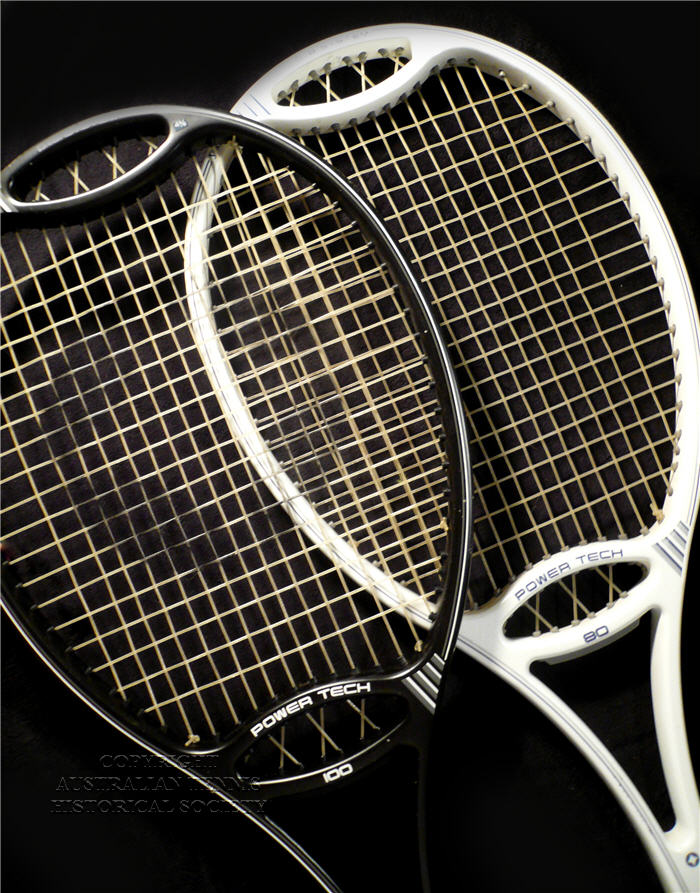
Bridge design attempts to alter string tension at sweet spot. Very similar to the Spalding Powertech which has two bridges top and bottom. See below.

Gauthier are a recognised French brand, but little is known about this model.

spalding power tech 2015 (11)

Spalding Powertech 80 & 100

Double Inverted Bridge.

Mid 1980’s made in Taiwan.

winsport 2015 (2)

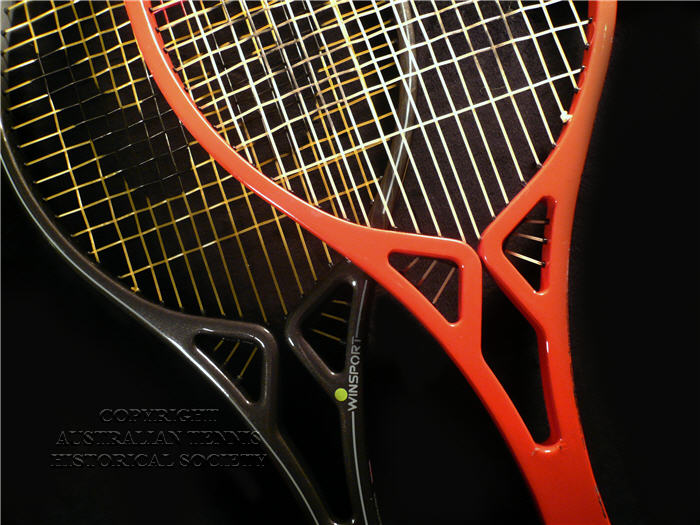
Winsport UK c 1985

Very unusual split throat design.

The Volkl Power Arm is another quite interesting throat treatment that will become collectable in the future.

snauwaert ergonom

Snauwaert Ergonom 1984 Belgium

Offset head to help players with a tendency to drop the racquet head to still keep the racquet in line with the flight of the ball.

There are a stack of these on ebay and since no-one bought them most are new. If you find a used one it will become a bigger collectors item. Or, I suppose you could buy a new one and try it out for a season.

The local tennis shop advises that being offset the string pattern which hits the ball as diagonal strings would, actually gives a serve that extra bit of top spin for a great kicker.

See the Neoxxline under modern unusual section.

snauwaert ellipse

Snauwaert Ellipse early 1990’s

Tri shaft racquet like the Hazell Streamline.

Head can be removed at the central shaft point but loathe to try this since this one is brand new. The company warranty was void if dismantling occurred so they weren’t designed to be interchangeable like the JENRO (modern unusual section)

Also of interest in this area are the French, Le Coq Sportif tri-shaft racquets made from 1987 and endorsed by pro player Yannick Noah

Unusual Vintage Tennis Racquets 1

Collecting vintage Tennis racquets (rackets) is a wonderful hobby which has been expanded considerably thanks to Ebay. Racquets never seen in Australia can now be purchased and the array of brands and designs is quite staggering. To appreciate the subject we recommend you find a copy of Siegfried Kuebler’s book “The Book of Tennis Rackets”. It is a wonderful testament to the first racquet makers through to the 1990’s. More updates are planned, and presented here are some unusual designs that have broadened the horizon of shape, function, stringing and look. One of the most significant developments in tennis racquet design has occurred due to the new construction materials such as graphite. This has allowed designers to explore a variety of shapes and string surface areas, the latest being 137sq in. 32 inch, (then reduced to 28″ Gamma BIG BUBBA) that earlier wood materials could not withstand.

Some people like paintings, racquet collectors enjoy the skill of fine workmanship in wood, unusual designs and special effects in the very same way and artistically, look sensational along any wall.

This gallery includes racquets made all round the world from the early 1920’s to 2005. Please also see some modern unusual racquets under a separate heading and you will see more unusual designs, such as the variety of wooden handles under other sections devoted to very early and other style wood racquets, strings etc.

lillywhite hazell shoot (3)

grays streamline version 2 (1)

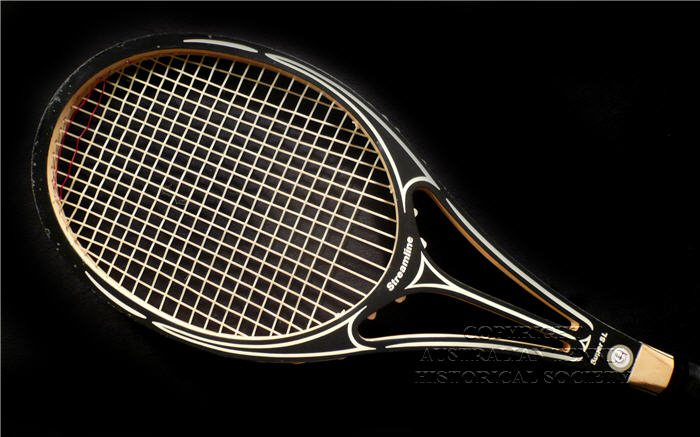
Hazell Streamline UK 1930’s

Made popular by Henry Wilfred “Bunny” Austin who played with these at Wimbledon.

Way ahead of their time, models were also produced for squash and badminton. Models were differentiated by coloured star logos and you may well find green, red, blue and white star examples all of which are very expensive.

Grays, famous even today for their Royal Tennis racquets acquired Hazell and produced a STREAMLINE version themselves in the 1970’s, also shown above.

In 1937, at around the same time, a very similar looking Snauwaert Triumph model hit the market in possible contravention of Hazell’s patent. Donnay made one in this style in the 1950’s called the Court King.

andreef hazell lillywhite 2016 (9)

Lillywhite & Frowd TwinShaft (1935) Andreef Open Throat (1950’s)

In addition to the Hazell, other wooden innovations were tried including by Frank Donisthorpe of Hazell fame an oversize frame he used at Wimbledon.

Donisthorpe Speed Bat 1936 ad Mary

Frank Donisthorpe also designed a Spanish made open throat model in the mid 1930’s called SPEEDBAT.  We finally found an example.  See under Spider Web post.darsonval trio aa (2)

Darsonval (France) made some wonderful models throughout the 1930’s.

These split shaft models and even the contoured finish on the standard racquet ooze quality.

celluloid finish (5)

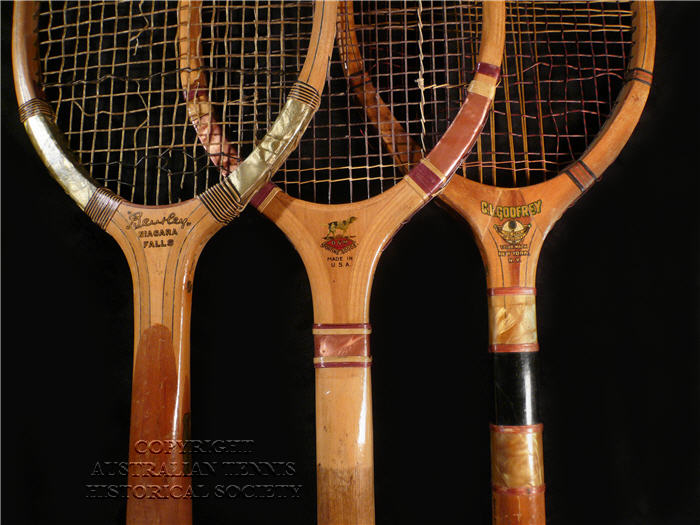
In America, some models in the 1930’s began to use a shimmering celluloid finish to enhance decoration and these three include,  Bentley, Draper Maynard & Godfrey NY

hillman2aa

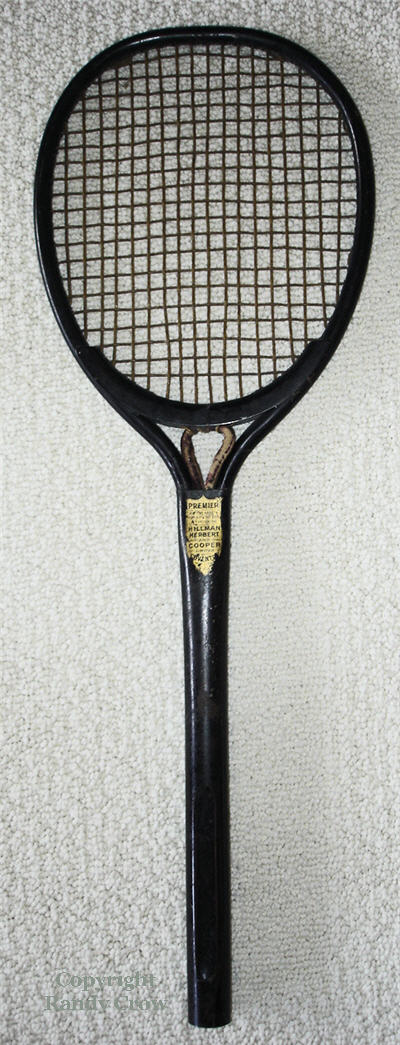
Hillman Herbert Cooper

‘Premier’ Model 1886

Patented tension adjustment system where a leather cord is tightened within the butt cap area. In addition, a steel racquet which may well be one of the earliest. The company was most well known for bicycle manufacture. A very rare item.

Thanks to US Collector, Randy Crow for the photos and history.

Patent # 346 751

As shown in Siegfried Kuebler’s book page 512. In Jeanne Cherry’s book she cites the earliest metal racquets to a Scottish company called the Metallic Racquet Corp. c 1887.

Copy of CRAVENS ADJUSTABLE 2

CRAVENS ADJUSTABLE 7

Craven Adjuster-tite 1928

(very rare)

A very early invention to change the string tension. Designed and patented by Edward Craven, the license was sold to Wilson, Magnan, Kent and Draper Maynard.

As you can see the butt cap permits the internal rod to be tightened or loosened.

Despite a few companies offering such technology, examples are scarce owing to the lack of uptake by customers.

Patent 1927 # 1 663 039

As shown in Siegfried Kuebler’s book page 539

CRAVEN RACQUET 1

Craven Proto-type 1929-1931

(very rare)

While known for the Adjuster-tite method, this design was patented in 1933 by Jacob Kleinmann. The crescent shape would wind down into a slot in the throat.

We are unsure if this ever made into production, but the International model name is a Craven racquet and we suspect they worked on a version.

Patent Application 1929 Given 1933 # 1 912 942

As shown in Siegfried Kuebler’s book page 546

RACQUETS_DAYTONFLYER3

Dayton USA 1922 – 1990’s

One of the first metal head/wood handle combinations. They were strung with piano wire. The factory made this product almost without change, including the wood handles up to 1995.

From Randy Crow, USA collector, comes this valuable research information.

1.If the butt cap has “Dayton Ohio” printed on it, it was made between 1923 and 1934.

2.If the plastic butt cap says “Arcanum O” and the throat doesn’t have the three-racquet logo, it dates from 1934-1974.

3. If the racquet has a logo of three stylized racquets on the throat, it was made after 1974.

There were plenty of models and colours so whilst available the trick is to find them in good condition with not to much rust or paint loss and learn how to differentiate the age of various models.

They were sold in Australia late 1922 and used by Gerald Patterson and Pat O’Hara Wood in local tournaments over 1923/1924. Some of the famous French musketeers visiting Australia in 1929 also were introduced to them by Patterson on a drizzly day at Royal South Yarra Tennis Club.

So rather than importing them from the USA, some lucky collectors may find some local delivered examples.

Please note that the Birmal, below, was also sold in Australia.

birmal reshoot 2

Birmal Aluminium c1923 UK

An all metal, steel strings racquet, which appeared at around the same time as Dayton in the USA. Originally with the pictured cord grip they eventually moved to a wrapped leather grip.   These racquets were sold in Australia in the mid late 1920’s and included in an ad from the Northern Territory on the basis of hot humid conditions and a 1927 McEwans catalogue at a mid price point of 55 shillings compared to 95 shillings for the best wood racquets. This is example was acquired from Australia whereas most are seen from the UK.

SILVER FOX (2)

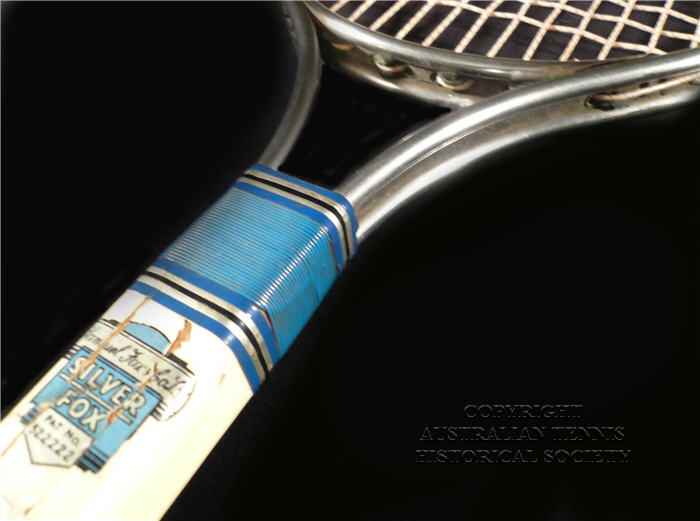
Silver Fox UK c 1930’s

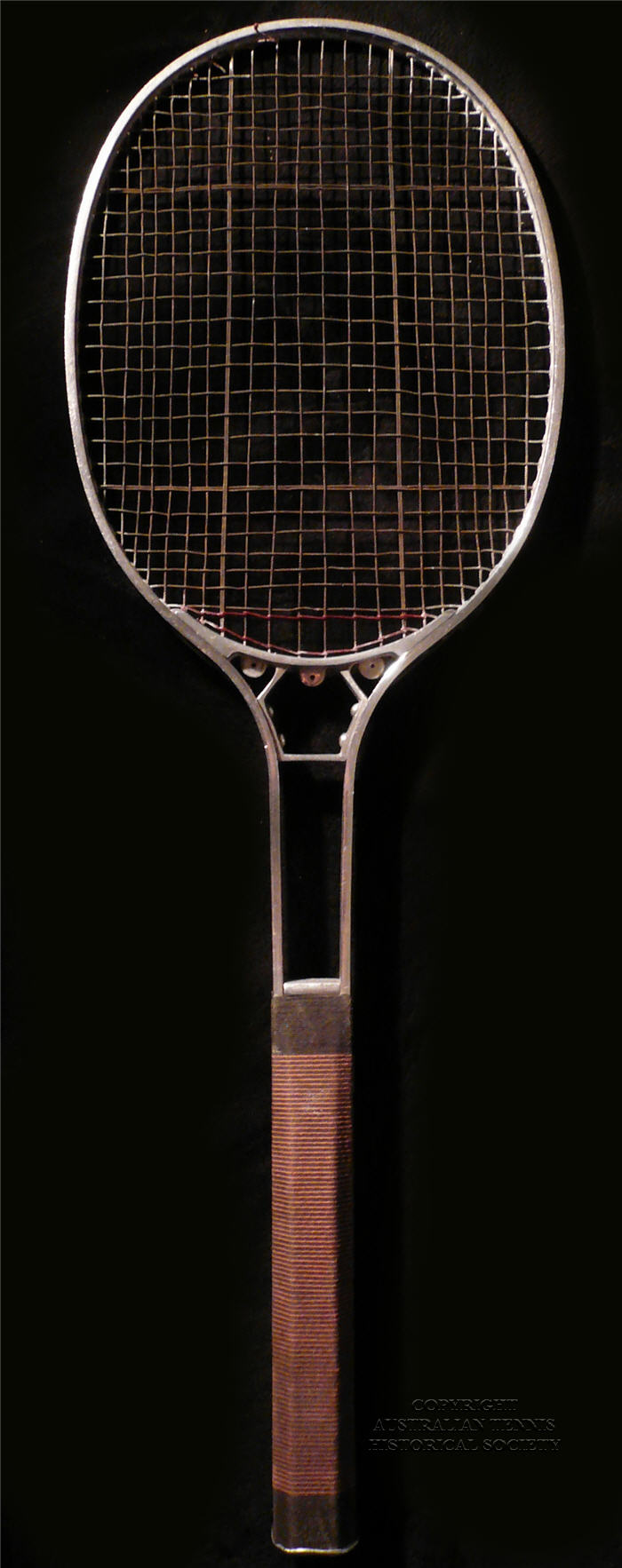
Potentially the first stainless steel metal racquet with a wood combination. Dayton used carbon steel.

A patent number printed with the logo cannot be confirmed as being correct.

Maybe a dummy patent was a good marketing idea back then?

See Arco stainless steel racquets to read about the first full frame welded stainless steel racquet invented in Australia in the mid 70’s

ALLO (assumed) rod lack

‘Allo ‘French Prototype c1940’s

Solid cast aluminium. Might be a one off. Found in a full length Allo bag. Allo were making weapons and car parts c 1940’s and had made wooden racquets from about 1900. The workmanship in the casting is extraordinary and you can see the string waves in the throat and the guides on the inside of the racquet. The strings sit in a protected channel around the frame which deepens at the top where most damage occurs.

A lot of thought has gone into this.

WD aluminium 1933 (1)

Spalding and Wright & Ditson 1930’s (USA)

The US firm produced an Aluminium head wood handle model under a few model names including DURALITE.

pro am (6)edit

PRO AM early 1970’s (USA)

Commenced production of a fully cast Magnesium model racquet under the Centurion brand which then converted to an Aluminium edition under Pro Am.
The Pro Am has twin cross beams.

Designed by Tom Galich and used by Francoise Durr in events around 1973.

Single piece casting with an alloy construction and hollow handle. Not a rivet in sight.

dunlop twin shaft (34)

dunlop twin shaft (1)

Dunlop Twin shaft 1969

Very retro design steel shaft model used by Torben Ulrich in various events.

Tennis History & Facebook

Owing to some recent contacts with UK & USA tennis collectors organisations,  they have decided to include separate Facebook pages in which to engage all subjects relating to tennis.

This access to expert collectors around the world is an invaluable resource.

UK Tennis Collectors’ Society

USA Tennis Collectors

Swiss Tennis History (Private collector – very knowledgeable)

Of course this website is also represented via Facebook at

Australian Tennis History

On Facebook we cover all manner of topics from history through to the latest ebay sales,  unusual items etc.

Come and join us!!!

Women’s Team Events 1920’s -1930’s

Although Australian Men were traveling and playing in tournaments over the 1890’s to early 1900 period, women’s tennis rated poorly.  The Davis Cup competition inspired the international tennis playing nations yet it was until 1963 that an equivalent event, the Federation Cup was instigated. In the 1920’s the UK and USA teams did play the Ladies International Cup and the Wightman Cup but neither were International events for all nations.

The 1920’s saw the growth in interest in Women’s tennis largely due to Suzanne Lenglen.  She won many of the major events and even turned professional which proved even more that crowds would attend ladies matches.

Sending tennis players and teams abroad was sanctioned by the National tennis associations along with invitations to play by host nations.  In 1925,  a team of Australian women left for the UK with approval but no financial support from the ALTA.  A fundraising committee was formed  in NSW and eventually they had enough funds to send three players to join a fourth  who was already in Europe on a private tour.  The girls also planned to play at Wimbledon and the lead up tournaments, then travel through Europe and onto the USA for more team events and the US National Championships.

1925 Ladies Team

Akhurst was the current Australian Singles Champion, Mrs Harper the 1924 Champion and Miss George who joined the team whilst traveling privately.  Mrs Utz, not in the photo was also traveling in Europe. Miss St. George was an emergency who did play in Europe.


1925 Overseas

Sending a team on such an expedition was seen as an important method of assessing local sporting ability compared to the best if the UK, USA and other countries.

In June 1925, the Australian Team played the dominant English team.

At the end of the first day, the press reports were most flattering for the Australian Ladies had outperformed the USA team which had played the English ladies the previous year. At 2 rubbers all, in fact, the Australians were given a chance to win the event.

Day one

Mrs R Harper (AUS)  defeated Miss Joan Fry 6-3 6-2

Mrs Lycett defeated Daphne Akhurst (AUS) 7-5, 1-6, 6-1

Miss K McKane defeated Esna Boyd (AUS) 8-6, 6-3

Mrs H Utz (AUS) defeated Miss Harvey 4-6, 6-3, 6-3

Following the first day, a large crowd attended the doubles round and over both days Mrs Harper was praised, ahead of the English players as showing the best form.

Scores were:

Lycett/Fry beat Boyd /Utz 6-4, 5-7. 9-7

McKane/ Harvey beat Harper/ Akhurst 6-2, 6-4

McKane/ Harvey beat Boyd /Utz 6-0, 14-12

Harper/ Ackhurst beat Lycett/Fry 11-9, 1-6, 6-1

UK won 5-3.

Daphane Akhurst was not in the greatest form having recently undergone a minor knee operation the week prior to the event and may well not have been fully recovered or confident to play at her best.

Over the next few months, the Australian Ladies performed well, with both Boyd and Akhurst making the quarter finals at Wimbledon.

From a teams perspective the tour went extremely well, defeating Wales 12-0,  Ireland 6-2 and while there Boyd defeated Akhurst in the Irish Singles Championships, Scotland 11-1, then Holland 10-2 and Belgium 11-1.

Against France, Suzanne Lenglen’s inclusion into the strong French team resulted in a team loss of  7-4 in what the press once again proclaimed was credible performance.  Esna Boyd playing Lenglen on the second day astounded the critics by losing the first set 7-5 which was the best performance bar one other against Suzanne in the previous year. Readers need to remember that Lenglen played close to 300 tournament singles matches between 1919 -1926 and lost only one match and indeed only conceded two sets in this time, so to have pushed the champion to a 7-5 score was a major achievement.

In local Australian papers, we found quoted reference by Boyd that she won the first set 7-5 against Lenglen, which was an inaccuracy that was represented in other articles into early 1926, until an interview with Boyd clarified the actual result. Nevertheless having coming back from 5-3 down to 5 all, a frustrated Suzanne changed racquets three times and became quite vocal to her mother in the crowd.   Of course, in what appears to be a pattern of behaviour, Suzanne claimed some blistering to her hand as the excuse Boyd had got so close.  Boyd was in awe of Suzanne and the thought of winning a few games was excitement enough yet alone to push the first set to such a close result.

By September the ladies were playing Philadelphia in a close 3-4 match to the Americans and then down in San Francisco they played the famous Helen Wills and co. on asphalt courts which the Australians were not adjusted to and they lost convincingly 1-6.

On the journey home they stopped in New Zealand winning all matches there.

The tour was an outstanding success and despite being self funded, the team received 50% of the funds generated at the gate of the International Meetings, plus many invitations to stay within no cost accommodation permitted the team to preserve funds and even arrive home with funds much to the surprise of the original local fund raisers. In fact tour expenses were 676 pounds and receipts exceeded 1488 pounds.

In an article by Esna Boyd in November 1925 about the trip she explained disappointment at the lack of interest shown by the Australian tennis officials and the UK public, that was until they started to beat the English stars. In America while the results were not as impressive, the girls arrived in New York stayed three days then went to play at Philadelphia and that night caught the train across the continent to San Francisco, rested that day and played the top ranked Americans (Helen Wills) on asphalt the next day after a season on grass without practice on asphalt…. as she eluded,  imagine Gerald Patterson’s reaction to such preparation which he would rightly call madness. Many years later this was the life-style of the tennis professionals.

The upshot of the tour was that Australian Ladies were of world standard and if provided with the opportunity to acclimatise to different surfaces would hold their own against the best UK & USA players.  The excellent results on court and in the bank paved the way for a 1928 tour.

1928 Overseas

Having seen the ladies perform so well in 1925, the Australian Lawn Tennis Association actually decided to endorse the 1928 tour comprising Esna Boyd, Louise Bickerton, Daphne Akhurst and Mrs Pat O’Hara Wood.

It was to be an even more successful tour as far as results go but financially the effort resulted in a loss situation.

The following report was published by Harley Malcolm (Hon. Sec. of the Australian Association)

Ayres Lawn Tennis Almanack pages 21-28

” TOWARDS the end of 1927 one of the most comprehensive sporting tours ever organised was under consideration by the Australian Lawn Tennis Association. The object of the tour was twofold. Its first was to give Australian women players a chance of measuring their skill against the leading exponents of the world, its second to acknowledge officially the success of the first Australian ladies’ team, financed chiefly by subscriptions from New South Wales, which visited Europe in 1925.

True to their motto- Festina Lente- the Association, before planning such a lengthy tour, canvassed all the available players. The result was that virtually Australia’s strongest team – Miss Boyd (captain), Miss Akhurst, Mrs O’Hara Wood and Miss Bickerton- was nominated.

With myself as manager, the team left Melbourne on March 5 for an eight months’ tour. Journeying overland to Perth, the players joined the Demosthenes for South Africa, on board which were the French team bound for Durban. After an extended tour of the different provinces, against which they won six matches, the team left Cape Town on April 24 by the Nestor, arriving at Tilbury on May 24.

The French Championships in Paris were the team’s next objective, followed by a hurried return to England to practice on grass for the Championships at Wimbledon and the match against Great Britain at Bournemouth, the two chief fixtures of the tour. Tournaments and matches against Belgium, Germany, Hungary, Holland and France followed in quick succession, broken only by a sight-seeing trip to Switzerland and the beautiful Rhine Valley.

Returning to England for a brief and well-earned rest, the team played their last match against Ireland on the courts of the Fitzwilliam Club, Dublin. This encounter practically concluded the tour, for Miss Akhurst and Miss Bickerton, after brief visits to France, Switzerland and Italy, returned to Australia, via Naples and Singapore, with the manager, reaching home on November 24. Mrs. O’Hara Wood and Miss Boyd, deciding to stay longer in Europe, returning later.
SOUTH AFRICA BEATEN
Having summarised the tour – in which not a single match was lost – I may review the itinerary in more detail. The first task of the tourists on reaching South Africa was to accustom themselves to the climate and the hard courts, the latter almost unknown in Australia for official match play. The first match at Maritzburg against a Natal side which included Miss E Heine, resulted in an easy win for the tourists. But Miss Heine confirmed the promise shown on her European visit by defeating Miss Boyd 64 61, although it is only fair to add that the Australian visitor was undoubtedly affected by the unusual heat. The next side to be met -the Orange Free State- also included one of South Africa’s front rank players, Miss RD Tapscott. This time Miss Boyd won both her singles in two sets.

A stern fight was waged when Australia met South Africa in Johannesburg. Rain prevented practice, and the local players, familiar with the different bound and flight of the ball at an attitude of over 6000 feet, started with a distinct advantage. They appeared to be heading for victory when, leading by four matches to three, Mrs Neave and Mrs McArthur won the first set of the final contest against Miss Boyd and Miss Bickerton. But the Australian pair rallied pluckily, and, profiting by weak lapses on the part of their opponents, captured the second and third sets to two. As each side had won four matches and ten sets, it was decided to count games, when it was found Australia led by the narrow margin of six games. The chief fixture of the match was the defeat of Mrs Peacock and Miss Heine in singles, and their undoubted superiority, as a pair, in doubles. Miss Akhurst scored a decisive win over Miss Heine, but Miss Boyd, after winning the first set comfortably, allowed Mrs Peacock to reach 4/0 before finally banking the second set at 8/6. A large crowd watched the play on the second day, and gave a warm ovation to the Australians for their well-earned and, to the South Africans, unexpected victory.

Returning to Pretoria, where the ladies were taken for an aeroplane flight, the visitors scored a further win, although Miss Boyd did not compete in the singles. Visits to diamond mines and other forms of entertainment in this delightful city occupied the players in their spare time. On their return to Johannesburg they were invited to a farewell dinner and theatre party by the Johannesburg officials.

Kimberley was the next place to be visited, where the fifth match, against Griqualand West, was staged. Miss Tapscott was again on the opposing side and, judging by her fine fight against Miss Boyd, the Australian were not sorry this pertinacious player had not been included in the Test team the previous week. Miss Rogers, another Kimberley player, was expected to harass Miss Akhurst but, through nervousness, could only collect two games. More visits to mines provided interesting education, and after only one day’s stay the overnight journey to Capetown for the final match in South Africa was begun.

Here the interest was not quite so keen nor the audience so large as in previous centres, for the French team had visited the town two days earlier. Miss A de Smidt drove vigorously in the first set against Miss Boyd, but lack of experience prevented her turning this pace to advantage. At Capetown, as in all other towns, the visitors received unbounded hospitality, and they left many friends behind them when they set sail on April 24 for their Mecca -London.

After only three days on land a hurried departure was made for Paris, in order to compete in the French Championships. Although unsuccessful in winning any of the titles, much valuable experience was gained in meeting new and varied opponents.

Gipsy and Beckenham tournaments provided the teams next practice ground, but wet weather had made the courts particularly “dead”, a heavy factor against the invaders, accustomed to the sun-baked surfaces of Australia. Miss Boyd and Miss Akhurst felt this handicap when they met Miss Ryan, whose chops, drawing guile from the heavy turf, worried them both considerably. The defeat of these two players in the doubles at Gipsy was balanced by an Australian success in the mixed doubles, when EF Moon and Miss Akhurst defeated LA Godfree and Miss Ryan (score of final was 63 57 86) . Mrs O’Hara Wood raised Australian stock by capturing a set from Miss Ryan at Beckenham, and Miss Akhurst again figured in the mixed doubles final with PDB Spence.

WIMBLEDON – AND AFTER

If no championship titles from Wimbledon went overseas to Australia, the Dominion flag was worthily upheld by Miss Akhurst, who shared with Miss Ryan the honour of being the only competitor to reach three semi-finals. In the singles Miss Akhurst had victories over Miss Jacobs, who led 6/5 in the final set, and Miss Bennett. Against the latter, Miss Akhurst, new to the centre court, lost the first set easily. Once confidence came, her ground strokes, well co-ordinated, were sound enough to unsteady and ultimately to beat her opponent.

In the doubles, paired with Miss Boyd, Miss Akhurst reached the semi-final at the expense of Miss Anderson and Miss Jacobs, in spite of a 4/0 lead against her in the third set. In the mixed, partnered by J. Crawford, Miss Akhurst looked to have secured a commanding lead in the final, when her side led 5/3 and 40/15 in the first set. A costly double fault from Crawford, who did not concentrate enough on the vital points, and the chance was lost.

Miss Bickerton, having beaten Mrs. Mallory in the second round, achieved fame on her first apperance on the centre court before a large crowd by carrying Senorita de Alvarez to 9/7 in the first set. She led 4/1 in the second, but then the Spanish girl’s brilliance pierced her steady defence. Hawkes and Miss Boyd held Hunter and Miss Wills in a close three-set match, Miss Boyd showing a steady hand when her side were 0/4 down in the second set.

After Wimbledon, Bournemouth! Meeting England on courts more akin to the hard Australian surface than any previous courts, the team faced their task confidently, albeit the British side, with the exception of Miss Goldsack, had carried off the Wightman Cup a few weeks earlier. Miss Akhurst was again the heroine of her team. She defeated Miss Bennett and Mrs Watson without the loss of a set. The issue was decided when Mrs O’Hara Wood and Miss Bickerton, sounder in combination, defeated Miss Harvey and Miss Goldsack in two sets. Australia eventually won the contest by four matches to three.
A CONTINENTAL INVASION

The following week saw the start of the long Continental tour, in which the team had a series of victories, culminating with a close win over France at Deauville. At Knocke, against Belgium, the visitors lost only three sets of the twenty-five contested. Mlle Sigart showed most promising form, which should carry her to the front rank of European tennis.

At Cologne on August 4 and 5 the German opposition was more threatening. The slow courts were inimical to the fast play of the Australians, who found, after a few games, that their best policy was to keep the ball in play and wait for their opponent to make the mistake. The art of sliding across the court to conserve energy after a running stroke was also exploited for the first time, so that the visitors were playing under rather novel conditions. Miss Akhurst and Miss Boyd both went down to Frl Aussem, playing on her home courts. The only other German victory was scored by Frau Schomburgh, who beat Miss Bickerton. The only rain encountered during the whole of the European tour fell during this match, which affected the attendance.

Hamburg, for the German championships, was the next place of call. The team was in fine form. Miss Akhurst won the singles championship with victories over Miss Boyd and Frl Aussem, the holder. Miss Akhurst and Miss Boyd won the ladies’ doubles, and, with EF Moon, Miss Akhurst was runner-up in the mixed doubles. Incidentally, the mens doubles championship went to an Australian pair, RO Cummings and EF Moon of Queensland.

Two nights’ travel, via Berlin and Prague, brought the team to Budapest. Here the players were warmly welcomed by the Hungarian officials, who showed them the chief sights of the beautiful city on the banks of the Danube. Here, too, the opposition was weak, the Australians winning every match. Mixed doubles, in which Miss Boyd and Miss Akhurst were partnered respectively by B von Kehrling and Der Peteri, were included in the programme.

Anxious to see Switzerland, some of the players made a slight detour via Vienna, to Lucerne and Interlaken, before rejoining forces at Mayence for the river trip along the Rhine to Cologne. An early start was made the next day for Scheveningen, where the Dutch match was to take place. Continual travelling had weakened the Australian forces, and it was therefore not surprising that Mlle Bouman should defeat Miss Akhurst in two sets. Indeed, the Dutch champion won the first set in a few minutes. The home team scored a further success when Mlle Bouman and Mlle Couquerque defeated Mrs O’Hara Wood and Miss Bickerton after three sets.

A misunderstanding having arisen over the date of the match against France, a hurried departure, involving the team in another day and a half’s travelling, was necessary to keep the appointment at Deauville. However, only two matches were staged, out of courtesy to the visitors, on the first day.

Mme Lafaurie was perhaps the best player of a very even team representing France; her backhand, stroke was especially effective. Miss Akhurst was too accurate for Mme Desloges. France levelled the singles when Mme Bordes beat Mrs O’Hara Wood and Mme Mathieu defeated Miss Bickerton. A close finish was spoiled by the collapse of Mme Lafaurie and Mme Desloges in the final set of their match against Miss Boyd and Miss Akhurst, the French pair failing to win a game.

After victory was already secured, Mrs O’Hara Wood and Miss Bickerton scored a close win over Mme Bordes and Mlle Bourgeois, which brought the Australian total score to five matches to three. The umpiring and lining in some of the matches left much to be desired. On one occasion a small boy, who had scarcely had time to learn the rudiments of the game, occupied an important position on the baseline.

The last match was against Ireland at Dublin, where once again the home team seemed a little overawed by their opponents’ reputation. Of the sixteen sets contested, Australia only lost two. Mrs O’Hara Wood lost a set to Miss M French, and Miss Boyd and Miss Akhurst dropped the first set to Mrs Blair White and Miss Fleming. Here for the third time the Australians scored a victory without the loss of a match.

Their tour concluded, the team left in a very happy frame of mind for their long return journey. The total number of international contests won during the tour amounted to thirteen. Of these 76 matches, 159 sets and 1,159 games went to Australia, against the 16 matches, 46 sets and 691 games of their opponents. The total result of the eight Test matches played, included in the above, was 8 wins, 51 matches, 108 sets and 838 games, against 15 matches, 43 sets and 548 games.

The one regret of the Australians during their varied tour was they were not able to pit their strength against the representatives of the United States who competed in the Wightman Cup contest. The majority of the players were, it is understood, willing to play, but unless the American team was fully representative the Australians felt little honour would be attached to the victory if success had come their way.

The members of the team will long remember the many social functions to which they were invited in London. Chief among these was the International Club’s annual dinner and dance at the Royal Automobile Club, followed on Sunday by the I.C. Oversea Reception at Roehampton, and the dinner given by the Lawn Tennis Association on the concluding Saturday of the Championships at Wimbledon. Nor must we forget the little dinner at the House of Commons, when the Australian team were personally conducted over the two Houses by the Lord Chancellor and other M.P.’s, or the farewell dinner and theatre party, at which Lord D’Abernon was present, on the eve of their departure.”

1934 Australia

Despite a financial loss in 1928 the success of the ladies team in not losing a match should have  encouraged further tours however ALTA support was not forthcoming for another six years. Finally, a UK team was organised to visit Australia in 1934.

The NSW tennis association were largely responsible for this, principally because of three ladies, Mrs Roland Conway, Miss Lloyd and Mrs Warburton,  who uniquely were the only ladies represented on any tennis association in the world.

There was a strong push for the ALTA to hand over responsibility for International Women’s tennis to these three ladies since their male counterparts had a  pre-occupation with men’s tennis.

The agitation may have convinced the ALTA to organise an English team to visit Australia in 1934 which was the first time that the Australian public could witness first grade international ladies tennis.

Miss Joan Hartigan, Miss Louie Bickerton and Emily Westacott were selected for Australia against a strong UK team comprising Wimbledon Champion Dorothy Round, Miss Dearman and Miss Nancy Lyle.  Tennis in Australia was also excited by the visit of UK champion, Fred Perry.  At the same time, tennis fans were also mourning the loss of former team champion and five time Australian Championship winner, Daphne Akhurst (then Mrs Cozens) who died aged 30 in January 1933 whilst under anaesthetic during surgery.

The test match was played in Sydney at the Rushcutter Bay courts generated 400 pound profit to the ALTA.

Results Day 1 November 21st

Miss Westacott defeated E. Dearman  6-3, 10-8

Joan Hartigan defeated N. Lyle 2-6, 6-3, 6-1

Louie Bickerton lost to D Round 4-6, 2-6

Westacott Hartigan defeated Dearman Lyle 6-4, 2-6, 8-6

Australia wins the day 3 rubbers to 1, six sets to four, 52 games to 49 games.

Day 2 November 23rd

Louie Bickerton lost to N Lyle 4-6, 7-5, 1-6

Hartigan lost to Round 2-6, 6-2, 3-6

Westacott defeated Lyle 4-6, 6-3, 6-2

Bickerton Hartigan lost to Round Dearman 6-1, 4-6, 7-9

The net result 4 rubbers each, 11 sets each 108 games Australia 107 games UK,  so Australia won by one game.

Similar to the Australians traveling in the USA in 1928,  the UK team arrived only a few days before the test match and may well have performed better with additional time to acclimatise.

The UK team stayed onto play the NSW Championships a week later and Dorothy Round defeated Westacott in the final while Dearman and Lyle won the doubles over Round and Mrs Hopman.

In early 1935 the ladies played in the Australian Championships at Kooyong and Round defeated Lyle in the final 1-6,6-1, 6-3.  Doubles top seeds Dearman and Lyle defeated Bickerton and Hopman 6-3,6-4 (who had beaten Coyne / Round in the semis).

After this a series of capital city exhibition tours was organised after the Australian championships and an embarrassing incident occurred in Perth.  Having heavily promoted the arrival and exhibition matches would occur on January 31st,  the UK and French contingent actually arrived from Adelaide on the 22nd by ship without any fanfare whatsoever.   One of the players actually rang WA tennis officials to let them know they had turned up unannounced and due to touring schedules the matches had to be hurriedly organised, promoted on radio and played that day.  No doubt many keen tennis enthusiasts missed out.

Out of interest, famous tennis authority A. Wallis Myers travelled with the UK team and was highly supportive of future women’s tours.

1937 Australia

In March, 1937 the now known LTAA  announced it would ban funding of International team events because of the financial cost and risk, yet under pressure they attempted to negotiate a UK team visit formed by players in the Wightman Cup.  Once the UK had provided the proposed team without 2 of the major players, the LTAA broke off the negotiations  due largely to the belief that the quality of competition was likely to result in poor financial outcomes, particularly since they had also offered to fund player expenses.

Ultimately the LTAA did sanction an American team to visit in November.  Even though they were trying to support the women’s game, they resisted any financial assistance from both the newly formed UK & Australian International Tennis Clubs and generous individual funding offers  which were made in 1936 and 1937 in order to get an Australian team overseas. Incidentally, famous tennis writer A Wallis Myers also travelled to Australia for the first time in 1934 to see the UK team play was the Founder & Chairman of the UK club. The ladies couldn’t understand why the LTAA wouldn’t permit a self funded team to go;   losing control, I suppose, the major one.

The original US invitation was made to Alice Marble and two other of the top 4 ladies in the US.  Alice announced she was turning professional to join Helen Wills Moody and the two players who did come were the 8th ranked Miss Dorothy Bundy and 12th ranked Miss Dorothy Workman.  Based on the UK debacle, even this trip had the potential for problems given the mid rankings of both ladies.  Miss Bundy, however was the daughter of the famous US Davis Cup player in Norman Brookes era.

Quickly adopted by Australian crowds they were nicknamed “Do” and “DoDo” given both were named Dorothy.

The first of three tests was commenced at the Queensland Milton courts on Friday 19th November.

Australian players Miss Hardcastle and Mrs Westacott won their singles and lost the doubles.

Miss Hardcastle defeated Miss Workman 6-2,2-6, 6-2

Mrs Westacott defeated Miss Bundy 6-4, 6-3

Hardcastle Westacott lost to Workman Bundy 3-6, 8-10

Day 2 delayed due to rain on 22nd November

Mrs Westacott defeated Miss Workman 6-3,6-3

Miss Hardcastle lost to  Miss Bundy 6-3, 4-6, 6-8 (Hardcastle had 5 match points in the 3rd)

Hardcastle Westacott (unfinished)  Workman Bundy 6-4, 6-8, 5 all (darkness)

Australia won

Off to Sydney for a second test

Miss Thelma Coyne defeated Miss Bundy 5-7, 6-1, 6-3

Miss Nancye Wynne lost to Miss Workman 7-5, 0-6, 10-12

Australians won the doubles 6-2, 6-3

Day 2

Miss Thelma Coyne defeated Miss Workman 6-1, 8-6

Miss Wynne defeated Miss Bundy 4-6, 6-3, 6-2

Australia won the doubles 6-4, 4-6, 6-4

Australia won

Last test in Melbourne December 28th

Reports of a very small Kooyong crowd would have disappointed officials.

Dot Stevenson defeated Miss Workman 10-8, 3-6, 8-6

Miss Coyne lost to Miss Bundy 4-6, 5-7

USA won the doubles 6-2, 6-3

Miss Coyne defeated Miss Workman 6-4, 9-7

Dot Stevenson lost to Miss Bundy 6-8, 4-6

Australia won the doubles 6-3, 4-6, 6-0

Equal rubbers the USA won by one set and 3 games.

Dorothy Bundy went on to win the Australian Singles Championships in Adelaide in January 1938 over Dot Stevenson and they ( with Workman) were beaten in the Doubles final by Coyne and Wynne.

1938 Overseas

Ten years after the second tour, the ALTA sanctioned a Women’s tour in 1938.

The team comprised Thelma Coyne Long (alive today Jan 2012), Nancye Wynne, Dorothy Stevenson, Nell Hopman and team manager was Mr W.H.Walker.


1938 womens team hi res


Nell Hopman, Dorothy Stevenson, Thelma Long and Nancye Wynne.

Unlike the 1928 tour, this tour comprised of many more tournaments particularly throughout the UK as a lead up to Wimbledon.

Having arrived by ship in early May  prior to both Wimbledon and the Wightman Cup (UK/USA) the Australians played their first team event against the UK.

It was a very one sided affair played at Manchester June 4th.

Thelma Coyne was defeated by hard hitting Kaye Stammers 2-6, 2-6

Nell Hopman was defeated by Miss James 3-6, 4-6

Hopman/Long defeated Miss Dearman / Miss Ingram 6-2, 5-7, 6-1

Thelma Coyne was defeated by Miss Lumb 4-6, 6-4, 3-6

H0pman/ Stevenson defeated Lumb/ James 6-3, 6-2

Dot Stevenson lost to Miss King 1-6, 3-6

Nancye had to forfeit to Kay Stammers

Dot Stevenson played and exhibition singles and Nancye Wynne could not play due to illness.

June was full of tragedy.  Prior to leaving Dot Stevenson had lost two uncles one to illness before she left Australia and another in a motor accident after leaving and on her Wimbledon debut learned of the death of her brother.

Naynce’s mother passed unexpectedly and her father told the news only at the last, but just prior to Wimbledon. They were a close family and her father expressed that she should stay  since it was a great honour to be spearheading the team.

After the defeat by the UK team they left for the French Championships and would come back for the Wimbeldon tournament the week after.

Even though they were changing from damp grass to hard courts the girls still did well and Nancye made the mixed doubles final with French player B0ussus.

Wimbledon, as usual, was going to be the main test for the girls and with a full strength draw the Australians did not make the quarter final in singles or doubles. The experience of playing top ranked competitors was what the whole trip overseas was about.  In 1938, the key Australian men were in the USA for the Davis Cup.

The best thing to come out of the Wimbledon tournament was, having been asked to stay on tour by her family, Dot Stevenson won the All England Plate which is a tournament comprising all early round losers from the main draw. Mrs Hopman played a sensational games against the champion Helen Moody and although defeated was pleased not to have been slaughtered in front of the expectant Wimbledon crowds.
From Wimbledon the team moved to Europe and played in more key championships.
The girls played in Holland at the Dutch Championships early July.  Here they hit form with Wynne being runner up in the singles (although beaten easily) ,  Wynne and Coyne were runners up in the doubles and Mrs Hopman won the mixed final.
In the German Doubles the final was all Australian. Wynne and Coyne defeating Stevenson and Hopman. Nancye lost another close mixed final playing with Leseur 5-7,5-7.

While not making the singles finals, the newspapers were reporting the girls to be in the best form so far on the tour which was a great lead up to the USA leg.

At their first  US tournament held by the Essex club,  the girls led by Nancye did well although she was defeated by Alice Marble in the final owing to many shots going astray 1-6, 3-6.  Nancye with Dot Stevenson lost to Marble and Fabyan in the doubles final 6-1, 3-6, 2-6 a much closer affair.

Following this event in early September was the US  v Australian Teams event. These matches were held on private (milli0naires clubs) and watched by the very wealthy New Yorkers.
Spectacularly, the Australians won the event 6 rubbers all and by one set up, 15 sets to 14.
Day 1 Meadow Club, Southampton New York

Thelma Coyne defeated Helen Jacobs 6-2, 6-2
Dot Stevenson defeated Dot Bundy 6-4, 3-6, 6-2
Nancye Wynne defeated Mrs Fabyan 7-5, 6-2
Mrs Hopman lost to D Workman 6-4, 4-6, 6-8
Coyne/Wynne won Fabyan /Jacobs 7-5, 6-2
Hopman/Stevenson lost to Bundy/Workman 4-6, 6-8

Day 2 – On heavy court affected by overnight rain and at a different location

Coyne lost to Fabyan 5-7, 5-7
Stevenson lost to Workman 4-6, 7-5, 2-6
Hopman defeated Bundy 8-6, 6-1
Wynne Lost to Jacobs 7-5, 2-6, 0-6
Hopman/Stevenson lost to Bundy/Workman 2-6, 6-8
Wynne/Coyne defeated Jacobs/Fabyan 9-7, 3-6, 6-3

In the following weeks at the US Titles, the US ladies knocked out most of the Australians except for Nancye who made it to the final against Alice Marble who didn’t play in the teams event owing to illness.

The grand final was once a again a one sided affair, Nancye losing 0-6, 3-6, almost a repeat of the match a few weeks earlier. Helen Jacobs who was expected to do well lost in the earlier rounds to Miss Lumb who Nancye had defeated, so Miss Alice Marble seemed the player most likely to win the title.

The summary of the tour was that while not as successful as many had hoped, the girls had played in numerous finals matches but had simply been outclassed by many of the top UK and USA players.

From the total 9 month tour,  in the UK four months was spent playing non stop, tournament after tournament with only 7 days break.  It was considered that this was to much tennis whereas the visiting US players would only appear in the A grade tournaments leading up to Wimbledon. In addition, the constantly changing surfaces was difficult and the girls decided that Kooyong grass should never again be criticised after played on sodden grass courts at some of the B Grade tournaments.

With little prospect of earning money from team event gate fees, the overall tour lost 2000 pounds whereas the men’s Davis Cup team tour had generated a profit of 2300 pounds.