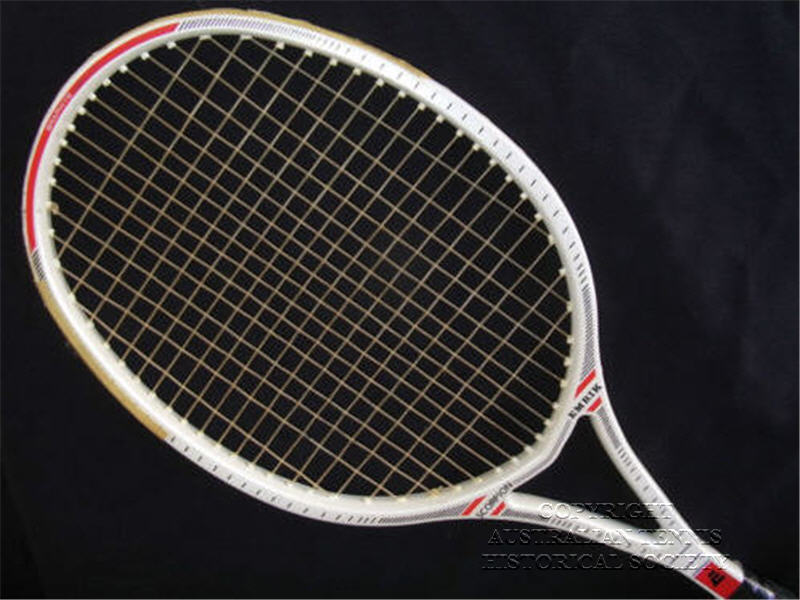
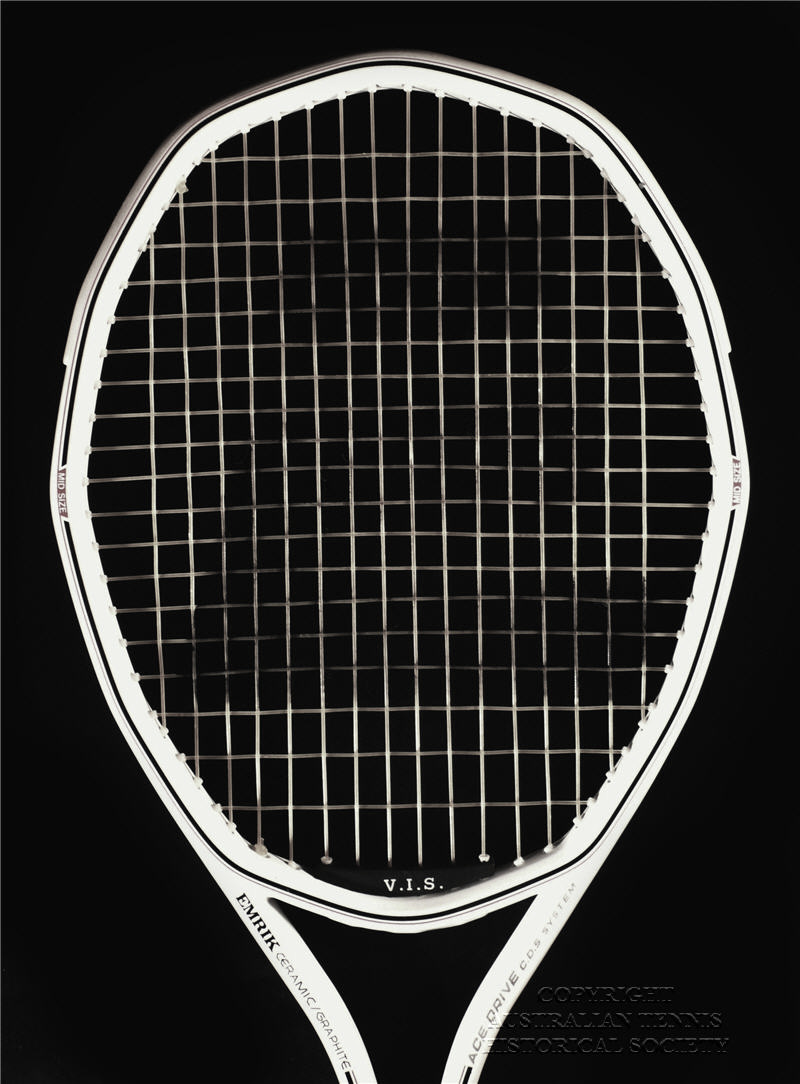
Emrik Racquets

As the transition from wood to graphite racquets took place in the late 1970’s, the established Australian Industry comprising Slazenger, Dunlop, Spalding and Oliver seemed to underestimate the potential of these new space age materials.

Metal racquets while novel were often the cause of tennis elbow and so wooden racquets got a reprieve.  The first graphite racquets were very expensive and so the wood racquets seemingly once again had another reprieve.  This was not to last long.

In Australia, in 1978, Russel Emerick Ekas had left university with an  entrepreneurial desire and while owning his own squash centre, identified a niche market in the Squash Racquets segment and commenced to import the first  EMRIK squash racquets.

Given the size of the squash market in terms of numbers of centres, Emrik forged an impressive name for itself and through running competitions such as the “EMRIK GOLD CUP” became a well regarded brand with a visibility vastly beyond the company’s actual size.

Searching for volume growth and with excellent relationships within the overseas racquet manufacturers, Emrik launched itself into the Tennis market in the early 1981. No local manufacturing was involved. All product was made in Taiwan and Russell often travelled there to oversee quality control.

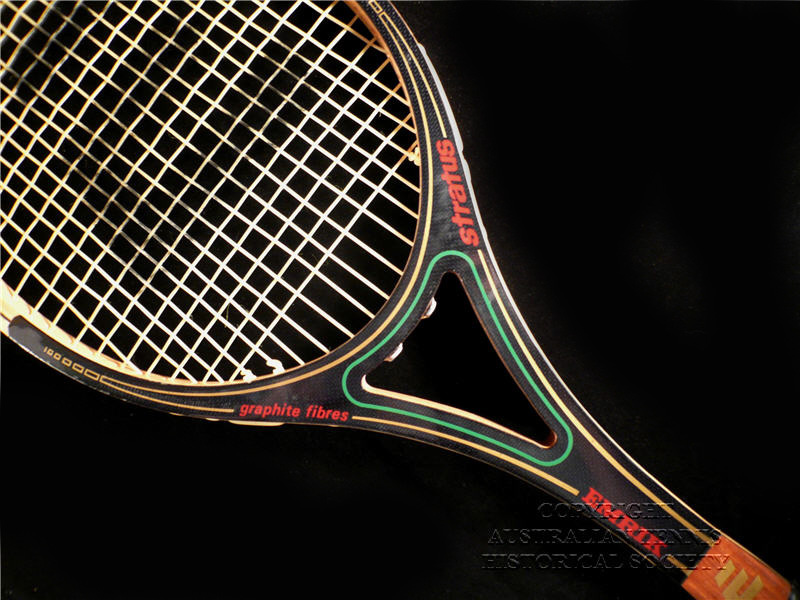
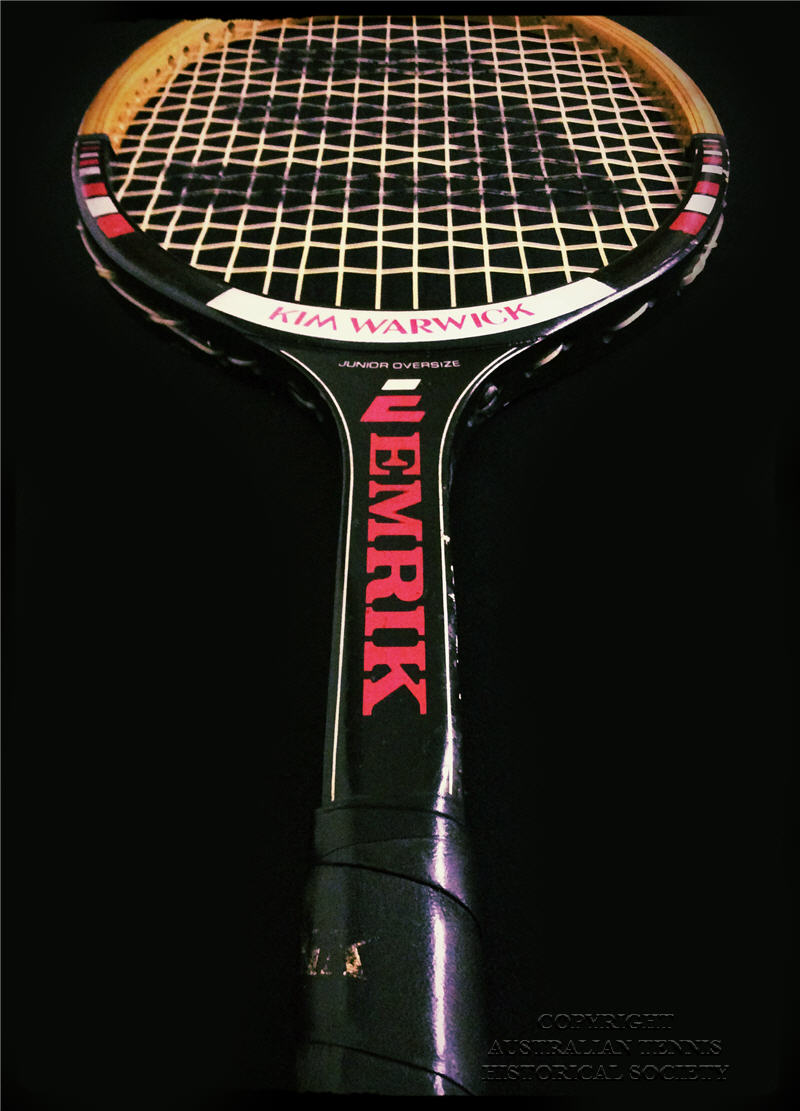
In somewhat of a marketing coup, three key Australian Tennis personalities were sponsored. Kim Warwick, Evonne Goolagong Cawley, then a new mum and aspiring junior Wally Masur.  Kim was the number one man in Australia, Evonne  won Wimbledon in 1980, creating history as being the first mother to win the tournament since the WW1 era, so signing her to the brand was great marketing and g00d timing. Evonne had played with Dunlop for over 20 years however given that Emrik was  an Australian owned company and liked their new mid size racquets she chose to move to Emrik on a five year six figure deal.  Her racquet of choice was the Stratus which was a wood, fibreglass composite. Wally, although an up and coming junior at the time, went onto play Davis Cup Tennis for Australia and also became a household name.
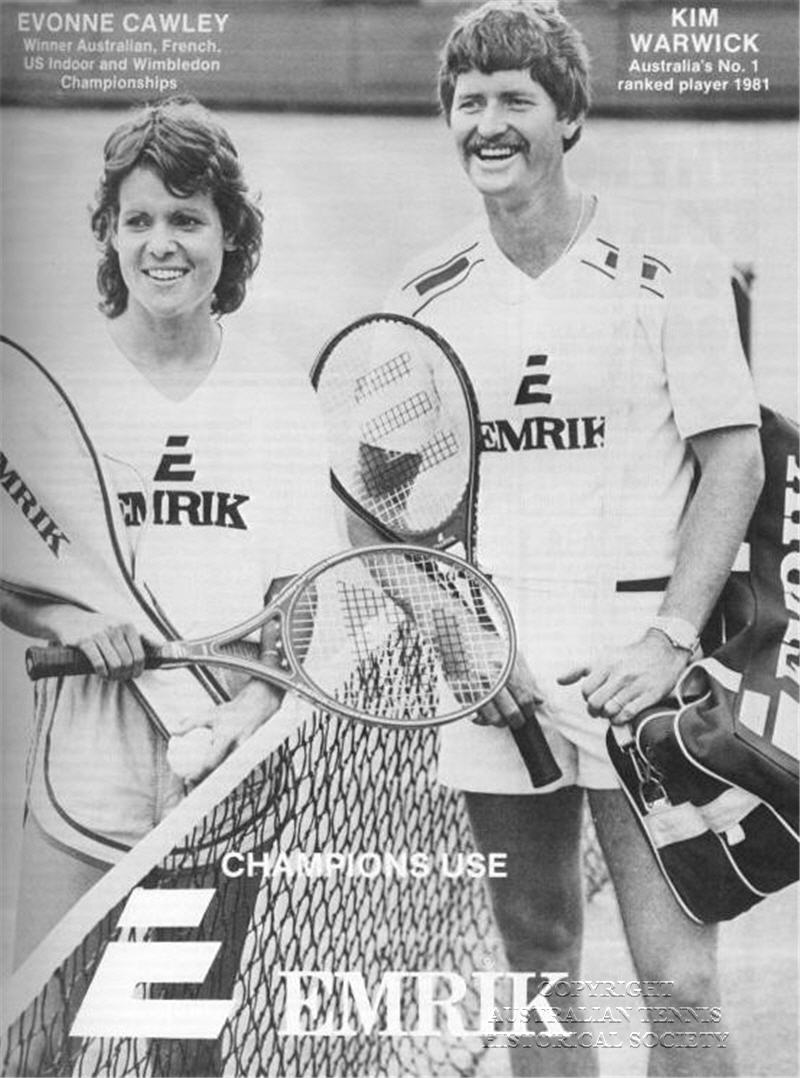
emrik 1982 ecg kw

Emrik adopted an approach to build market share using a similar strategy as past companies, by establishing a core group of branded product supported by other custom lines introduced specifically for various retail groups. The company readily adopted the emerging technologies and Russell claims that Emrik was the first company to bring graphite racquets into Australia.

The main factories producing Emrik product was Kunan and Pro Kennex however other companies were used as well.

In its heyday, Emrik sold to 2000 accounts, sold over 1 million racquets and had a market share for graphite racquets of 33%.   It was effectively the market leader in this segment and they also offered wood fibreglass models.

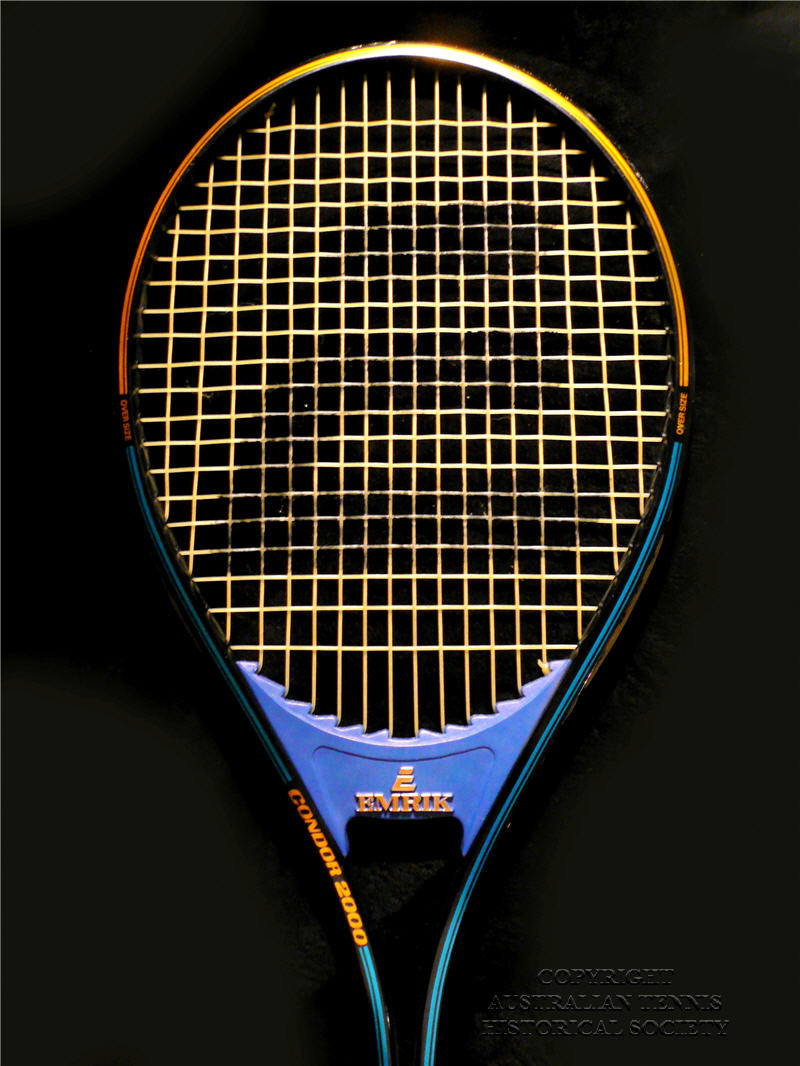
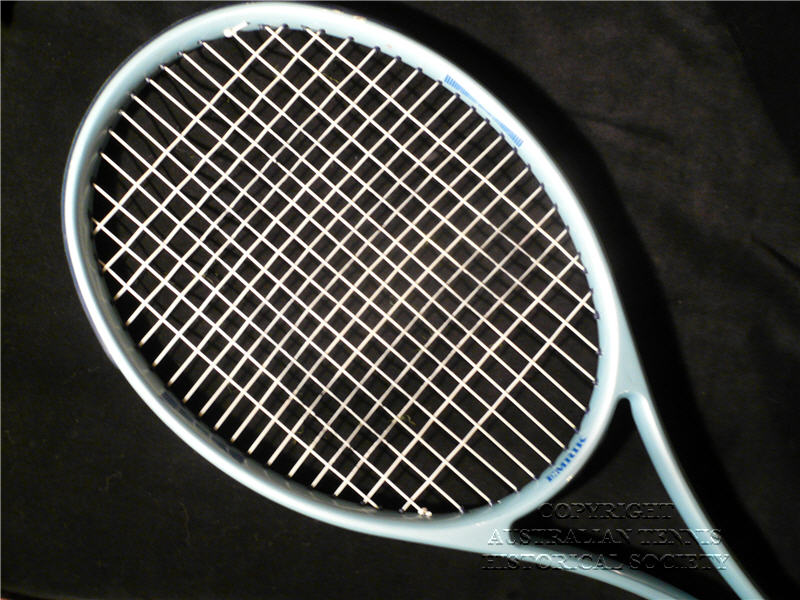
The company also continued to adopt new material technology and didn’t hesitate launching the first ceramic products and other composite graphite variants.

Over time the main brands such as Wilson, Prince and Yonex using global marketing and international player endorsements clawed back their market share and Emrik was sold to the Real Corporation in 1986-87 and as a name and product range survives today. In Canada, the APOLLO EMRIK name is marketing both squash and tennis products. Emrik also evolved back into a stable of brands which included Dunlop Slazenger and also Apollo product.

Emrik products come up in thrift shops all the time so you will find many nice examples.

Are they collectible?  The answer is yes, but not in the same way that Slazenger or Dunlop racquets of the 1950’s and 1960’s are given the connections with Australia’s leading world champions of that era.  Nevertheless, the quality of many of the models is very good and some of the designs are quite unusual.  The potential downside is the sheer number of models and the frequency you might  find them.

The real story here is that Emrik caught the big tennis companies sleeping and had a major influence within Australia du

ring the period when graphite racquets were evolving into the material of preference.
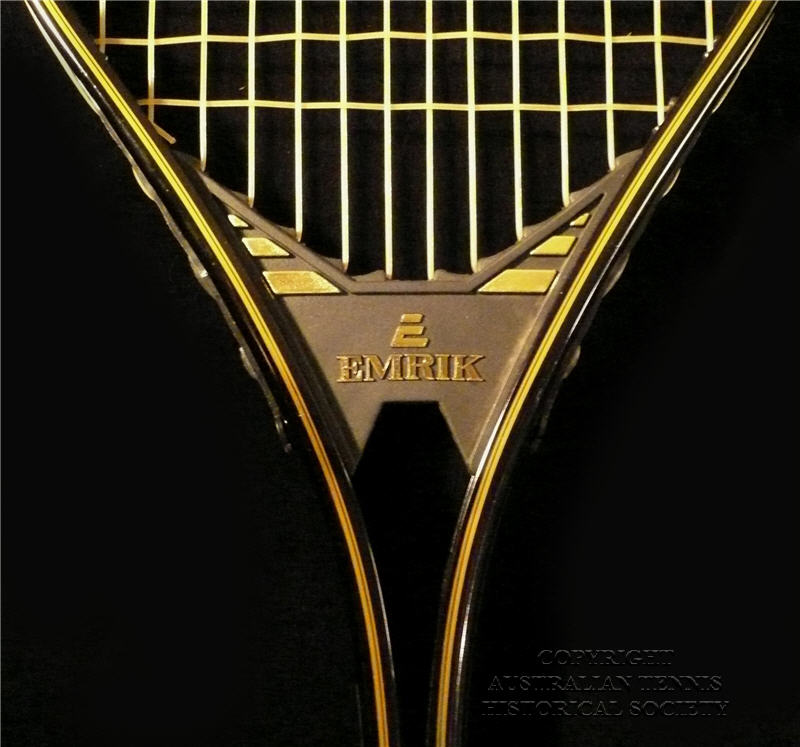
emrikpanza5

EMRIK 1

EMRIK 5

emrik kim warwick 2017 (2)

EMRIK KIM WARWICK CONDOR 2000 (3)

EMRIK VOYAGER PROFILE

Emrik Scorpion 2

emrik twin cross bar (15)

EMRIK ACE DRIVE 2

Earliest Known Interclub Tennis Tournament 1880

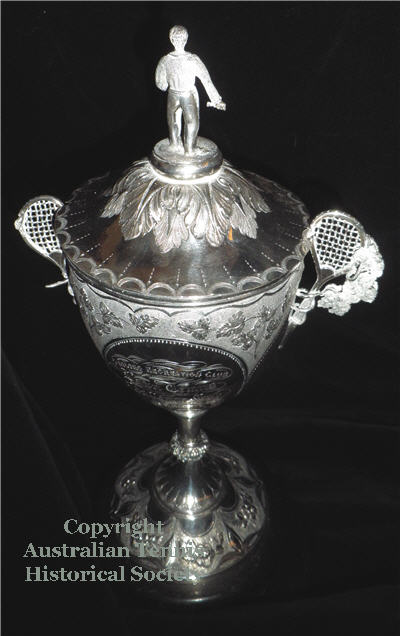
Local interclub competitions were conducted, certainly in 1880 in Melbourne, for we have just enjoyed seeing a trophy awarded to one of Victoria’s early champion players, Francis Highett.  This was the Geelong Recreation Club, Lawn Tennis Challenge Cup.  It was a bi annual tournament and another MCC member won it firstly and then Francis won the second in October 1880 and again in 1881 (first half).  After winning the Geelong tournament, a few weeks later in November he won the second Victorian Championships, which unlike the first was widely promoted to attract players from surrounding colonies.  Arguably, this constitutes a more legitimate Victorian Championship despite the records stating otherwise.

P2190006bbb

Encouraged to find out more about Francis, we stumbled onto some family papers in the state library for W. Riddell who was the secretary at the MCC during this time.

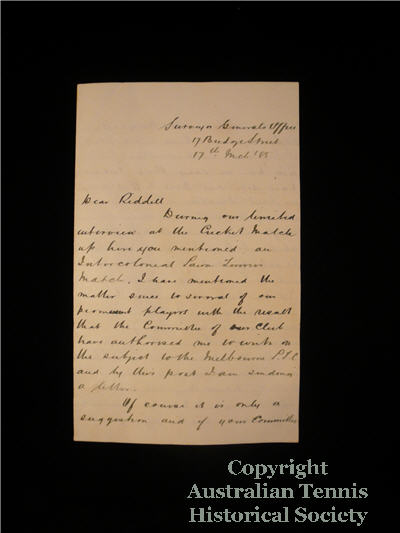
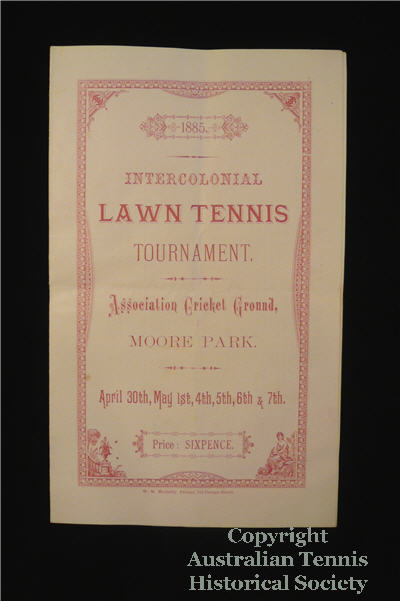
To my astonishment, included in his papers were a considerable plethora of significant tennis history documentation.  This included the letter from C Cropper the secretary of the NSW Cricket Club inviting a Victorian team to Sydney to play the first Intercolonial tennis tournament in 1885.  They even considered an All Comers Open Championship ( aka National Titles 20 years prior to this occurring in 1905).  While this letter is “gold”, the files also contained the original programmes for this first event and subsequent years. Naturally, not even knowing that such printed matter existed this is a truly amazing find. Featured on a page about Intercolonial tennis.

One should note that Intercolonial team events were not new, as Cropper and Riddell had discussed the matter on an earlier cricket contest.  Yet given tennis was still in its infancy, this was significant progress and the crowd reaction and numbers in the thousands proved the game was very popular.

P1190034

The front page of a 3 page letter from Cropper to Riddell inviting the first
Victorian tennis team to NSW in 1885

P1190042

The first major tennis tournament in 1885 which pitted the best of NSW against
the best in Victoria plus an array of other ladies, veterans and handicap
events, including the first NSW State Championships.

See more under the main EVENTS heading EARLY TOURNAMENTS.

A Welcome to Australian Tennis History

There have been many books written about the history of tennis with a focus on the UK and the USA. In Australia, unlike other local sports like Football, Rugby and Cricket, Tennis has suffered from a void where much of the history has simply vanished or focused only on the leading players of the time. Australia, does have a significant place in the annals of tennis and it a pleasure to present, in the one location, some interesting historical aspects of the game as it developed here and spawned a sporting industry which catered to the demand.

Various racquet sports have been tried over the centuries and although the modern game has its direct roots back into the Real Tennis, Rackets and Fives era it wasn’t until 1865 when Harry Gem and  A.J.Perera played an outdoor grass court game on their home court “Fairlight” and proceeded to set up a club in Leamington Spa in 1874.  Theirs was called “Pelota”.   In 1874,  Major Walter Wingfield launched his game of Lawn Tennis called “Sphairistike” and it achieved rapid buyer acceptance due his clever marketing of boxed sets and rules.

It is highly likely that many racquets were taken out onto lawns to play some form of hit to hit game, but it was the fast public acceptance of Wingfield’s boxed game that tips favour his way as the inventor of  the sport which has blossomed into the lawn tennis we enjoy today.

Below is a very rare picture from 1837, which shows an illustration of an outdoor game using the descriptive name “LONG or OPEN TENNIS”.  Not only do you witness a doubles style event, but within the text is reference to scoring in 15/30/45, advantage & deuce, rough or smooth to determine serving and even mentions volleying.

Thanks to Sebastiaan Van Hoorn for the photo and information from the book titled “Games and Sports” by Donald Walker, Published by Thomas Hurst, St Pauls Church Yard 1837.

field tennis

The Wingfield game to be marketed was also enhanced by a couple of other technological developments. First, the rubber ball was invented and then some years later cloth covered balls were developed. Second, lawn mowers now enabled the grass courts to be prepared with less effort.

Tennis created a social revolution appealing at first to women but then men as well. Courts were prepared for home entertainment, cities converted public  gardens into tennis courts, and courts were constructed within cricket clubs, croquet clubs and within the grounds of churches.  Wooden boxed sets of equipment were loaded on ships and transported toall corners of the world, including Australia, at a truly rapid pace. Tennis here spread quickly also, from homes to clubs, to far off country towns and although “Lawn tennis” was the name, Australian courts made from asphalt, sand, clay or plain dirt appeared everywhere.

A myriad of sporting goods manufacturers already producing cricket, royal tennis (UK) and in the USA baseball equipment, began designing and experimenting with new racquet designs, stringing techniques and tennis balls. Tennis fashion for the ladies and men was dashing and many clubs and local club competitions evolved. Tournaments like Wimbledon were created, The Davis Cup began in 1900, champions were held in high esteem and spectators were keen to see the best players in action.

The evolution of tennis, the playing techniques, the equipment, the stories and the memorabilia surrounding the game is remarkable. In Australia, tennis competitions evolved from club versus club to Intercolonial matches, to state championships and eventually the Australian Championships.  While much of the equipment was imported at first, the Australian Tennis racquet and ball industry developed with many brands and models that no longer exist today.  Occasionally you will find an item in a cupboard and wonder where this came from and who made it.

On this site you will learn about how tennis came to Australia, which companies made tennis equipment, how Australian players forged their reputations both here and abroad and be amazed at the memorabilia, such as vintage tennis racquets (or rackets) that collectors around the world simply adore.

The site will continue to evolve over time and we trust you will enjoy learning about new aspects of Australian tennis you didn’t know about before and encourage family members of former players and those still with us today to make contact and submit some photos or information that will help  add some new pieces into this fascinating Australian story.

For inspiration, we thank existing collectors and publishers Jeanne Cherry (Tennis Antiques & Collectibles), Siegfried Kuebler (A Book of Tennis Racquets), our tennis researcher Clive Oliver, National and State libraries and individual contributors which have included clubs, players (relatives) and relatives of families involved in the local tennis industry. A special note of thanks also to USA collector Rolf Jaeger for supplying photos of some of his rare items in his second collection. His first collection was sold to Tennis Australia and is now in storage awaiting the construction of a permanent tennis museum at Melbourne Park.

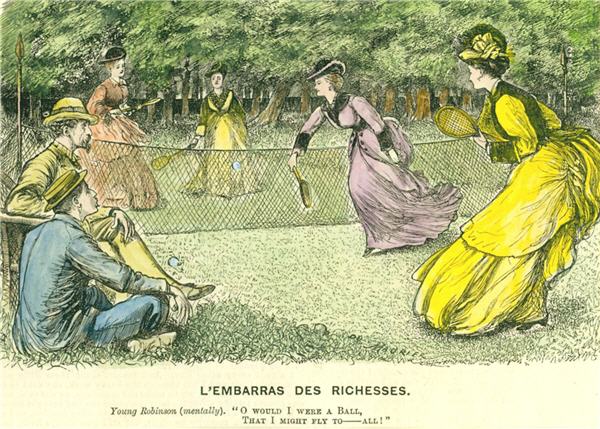
Punch Magazine ( black & white) Oct.10th 1874) but these hand coloured finishes of the original prints are very attractive.