Greetings Tennis Enthusiasts, Apologies for being late, but some photos we have been waiting on went north as part of the ritual winter migration of the retired folk from way down south. Indeed the photos we are most lucky to have at all. STOLEN PROPERTY AWARENESS On the return trip, a car was broken into and apart from the camera, some truly rare multi autographed books were stolen, presumably by some youngsters who had no idea what they have taken. Sadly, we have no positive news yet from police in Forbes NSW and just hope that they may be found under some bushes. If you are offered some tennis books containing autographs of a significant nature (Davis Cup /Federation Cup etc) please do call Denis Tucker on 0409 317 804 for advice. AUSTRALIAN TENNIS MUSEUM (NSW) LUNCH The Museum organisers of annual lunch were deservedly please by the well attended function and with special guest, Margaret Court, it is easy t0 understand why. It was a great opportunity for members of Tennis Heritage Australia VIC to meet the newly formed NSW group and we had a great day. Apart from meeting Margaret and Ken, we were also lucky enough to catch up with Lesley Turner, Jan Lehane and Thelma Coyne Long who now over 90 is a direct link to the top tennis days from the mid 1930’s and beyond. Thelma played in many overseas teams and was an Australian Champion singles and doubles player for many years.
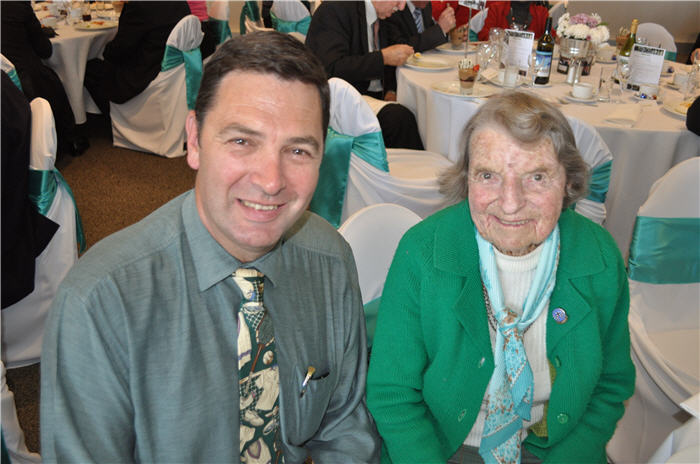
Rodney Lack with Thelma Coyne Long Australian Tennis Museum lunch 2012
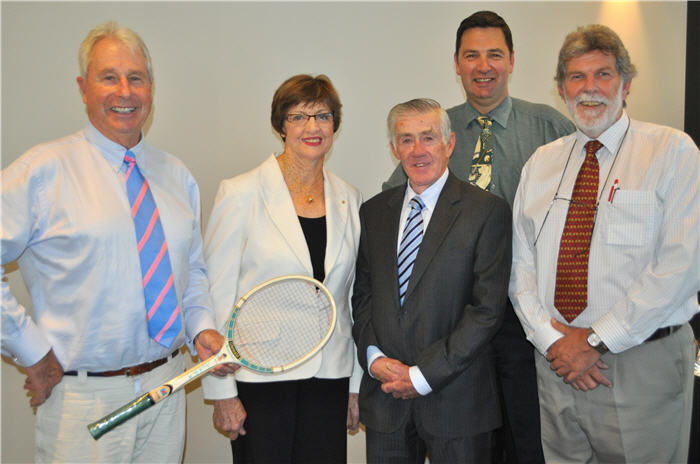
Denis Tucker, Margaret Court, Ken Rosewall, Rod Lack, Keith Jenkins- Australian Tennis Museum lunch 2012
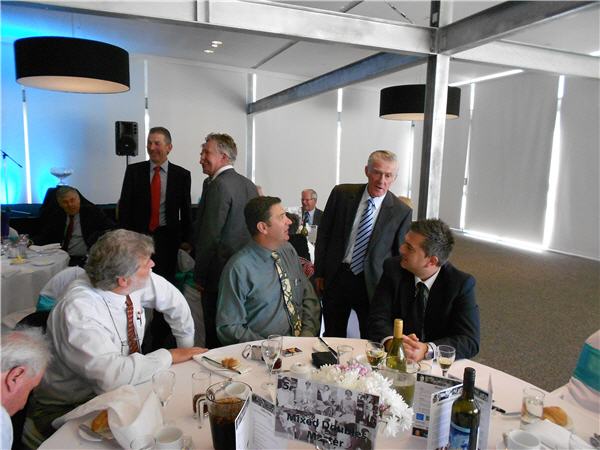
First time together Melbourne & Sydney Tennis Heritage Members who were able to attend the luncheon.
Margaret was interviewed on stage and gave a good account of her times in the game. Even the recent protests at her views on gay marriage were discussed, a little unexpectedly, yet her quite emotional rationale from her perspective as a church minister was met with considerable understanding.
A special thanks to Ada and team for organising the event and to patron Ken for taking on the role to support the museum which has very little budget for acquisitions and relies heavily on these events and benefactors of tennis memorabilia.
We look forward to the next event.
While at the Museum, we were shown a very interesting trophy donated by the Roy Cozen family (husband of Daphne Akhurst).
The Australasian Championships for men commenced in 1905 at the Warehouseman’s Ground in St Kilda Rd, Melbourne but it was not until 1922 that the Women’s and mixed events were added to the calendar.
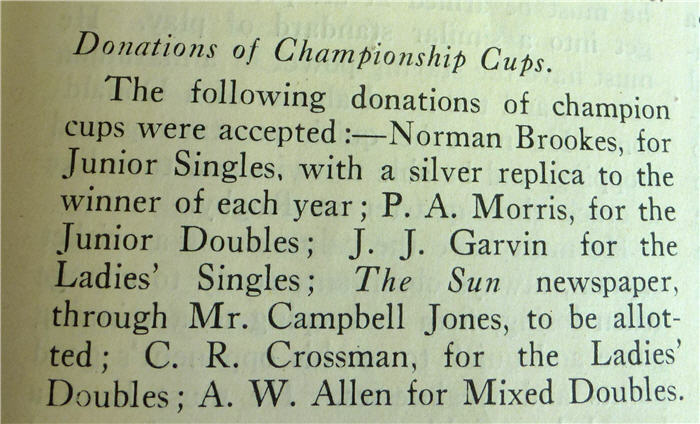
Funds to run competitions such as the event filled Australasian Championships were not excessive and so donations of funds or trophies were often made. In 1922 the article from Australasian Tennis Magazine below shows this, including the Women’s singles trophy.
Prior to the confirmation of the Womens National championships, in 1921 the Association was moving forward with the plan to conduct a “Davis Cup” style competition between the states and New Zealand. While this may well have been for men, the Wilding family donated one of Anthony Wilding’s trophy’s. This state based competition never developed and so we find, presumably, the Wilding Trophy being used to acknowledge the ladies singles champions from 1924 and beyond.
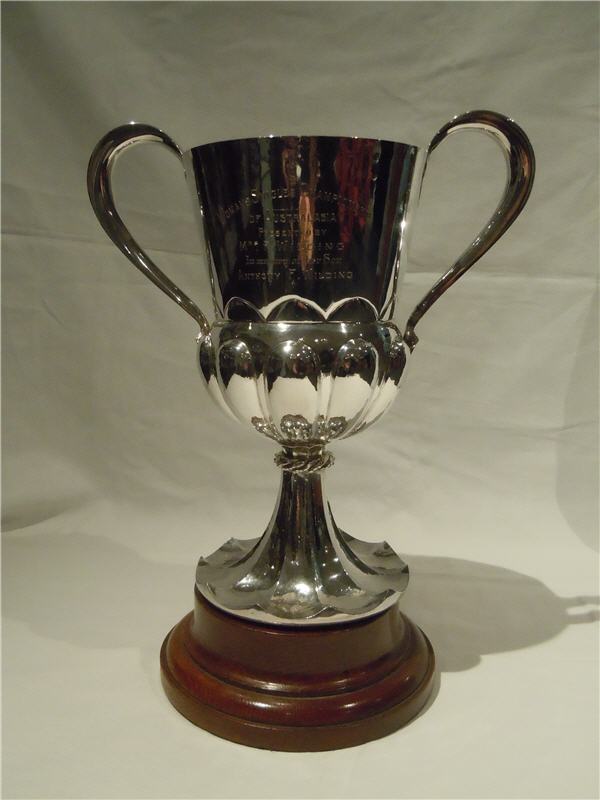
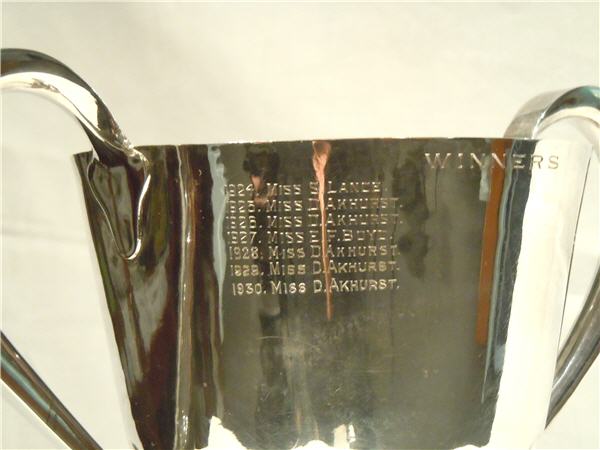
As you can see, Daphne Akhurst won the event 5 times and by claiming 1928-1930 in succession was entitled to take possession of the trophy. As part of Australia’s championship, this trophy is very significant.
Tragically, Daphne died as a result of complications of a medical operation. Also, in the early 1930’s the Men’s singles trophy was won outright by Jack Crawford for three wins in a row and in 1934 the tennis association introduced the current (always to be retained) Norman Brookes and Daphne Akhurst Challenge Cups a fine tribute to both Australian tennis greats.
As to the trophies supplied in 1922, 23 and 1931-1933 we are yet to uncover any historical reference, yet sitting on the mantlepiece in someones house.
AUSTRALIAN TENNIS HERITAGE MEETING MELBOURNE JULY 2ND
Thanks to the Grace Park Tennis Club President, Colin Davis and immediate past president, Terry Stone, our meeting of some 15 interested participants was a great day. Luckily both Colin and Terry are keen memorabilia collectors and this is reflected by the array of display cases filled with all manner of club and tennis equipment. Grace Park is a quite famous club, spawning many champion players through its long association with Victorian Pennant. The book AMAZING GRACE by Johnson & Oliver documents the clubs evolution. Players such as Frank Sedgman and Margaret Court have been members.
Highlights of the day were meeting a couple of new people and some special guests, Dirk Den Hartog ( great grand nephew of Ben Green the Victorian (Intercolonial champion) who brought along the impressive shield (SEE Q1 newsletter for a pic) and Tim Cawthorn who gave a fascinating account of the life of J0hn Cawthorn (as he was known), but that is another story.
With sandwiches, cakes, coffee & tea and potential of a full bar, Grace Park may well become a regular meeting place.
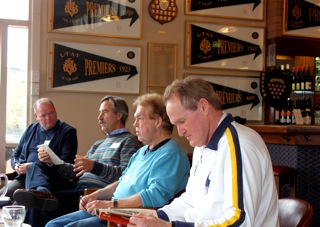
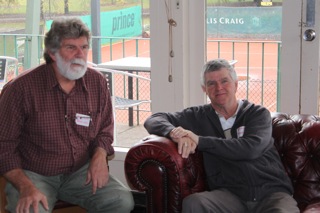
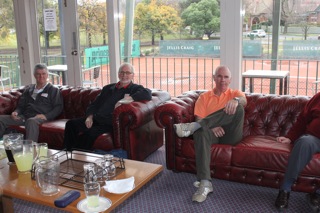
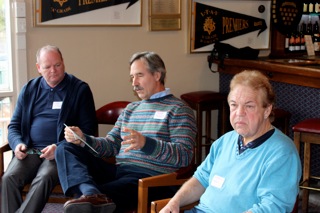
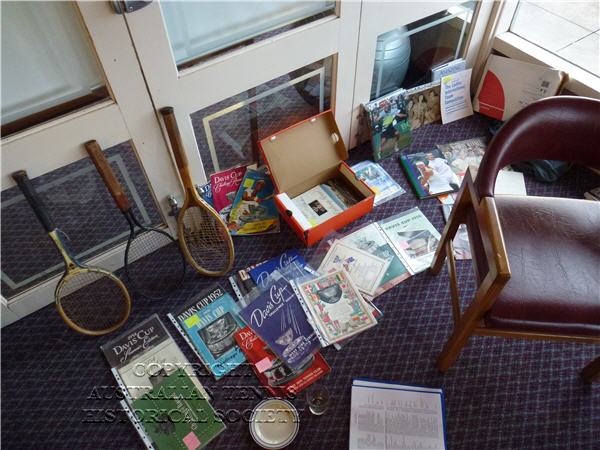
Settling down for a fine afternoon of show and tell.
ITEMS OF INTEREST
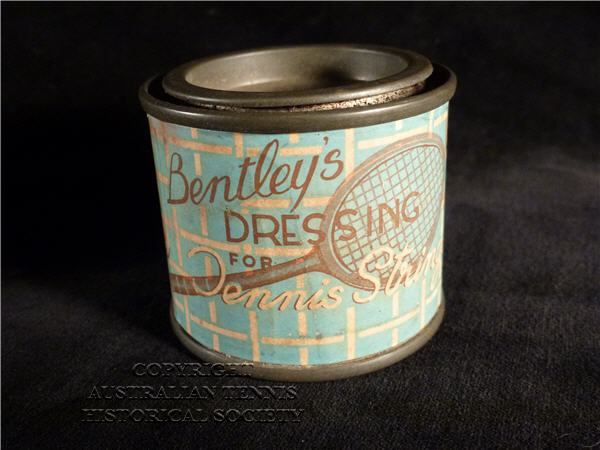
Last newsletter there was a picture of a string preserver bottle acquired from America. This tin of Bentleys Dressing for Strings (String Preserver) was sold in Australia in the 1940’s. Finding examples is very rare.
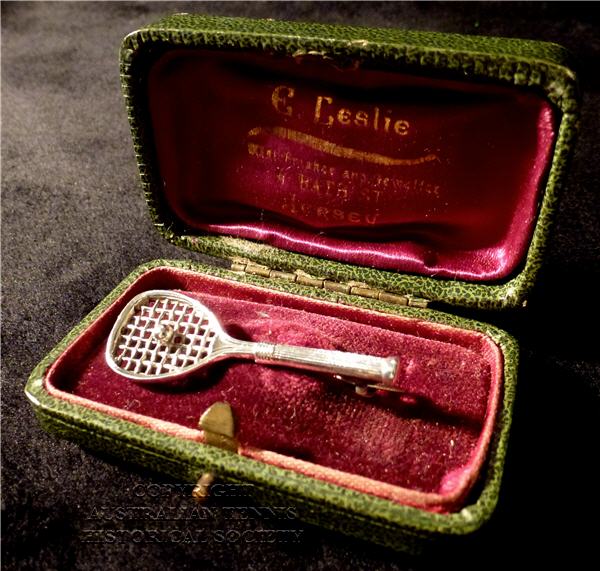
This brooch from the late 1890’s is silver and shows some very ornate detail.
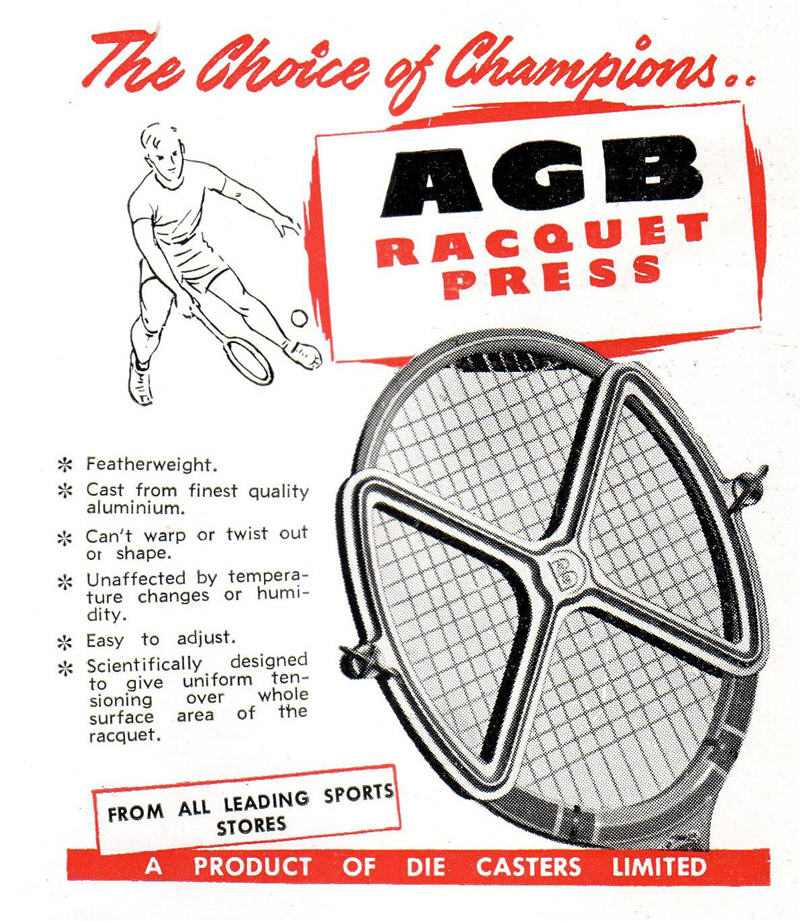
Finally, many collectors have an example of a BAG or AGB aluminium tennis press. The correct name came from an ad that appeared in tournament programme. These were made in Australia.
Anyone who has some interesting memorabilia or family history that relates to tennis, please contact me rod@tacticalresponse.net.au 0418 362 386 AND PLEASE JOIN AUSTRALIAN TENNIS HISTORY ON FACEBOOK link from here